Category Archives: Movies with Nudity

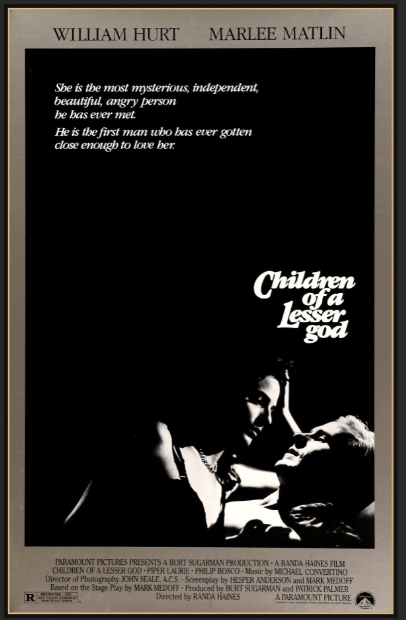
Children of a Lesser God (1986)

By Richard Winters

My Rating: 6 out of 10

4-Word Review: Romance with deaf woman.

James (William Hurt) gets a job as an instructor at a school for the deaf. He’s brought in to try and teach the students to become less reliant on sign language and to speak more. It is there that he becomes infatuated with Sarah (Marlee Matlin) a 23-year old janitor who used to be a student there. She refuses to speak despite James’ efforts to get her to. Eventually they get into a relationship where James still insists that she must learn to speak, which creates a wedge between the two that could eventually drive them apart.

The film is based on the play of the same name by Mark Medoff, which in turn was based on the real-life experiences of deaf actress Phyllis Frelich  and her relationship with her husband Robert Steinberg. The play was quite successful and ran for 887 performances, but when it transitioned to film several changes were made most notably that in the play the Sarah character was a former student to James, but here that’s not the case, which to me didn’t make a lot of sense. It almost seemed like James became more obsessed with a janitor than his own students even though they suffered from the same fears of speaking as she did and the story could’ve been just as riveting had it stuck to his dealings with them, who otherwise end up getting seen only intermittently.

The whole romance angle comes off as forced especially since James blurts out the ‘I love you’ line before any relationship had even been established as they had  previously gone out to dinner as friends and not as a date. In many real-life situations when one partner says the ‘love’ statement too soon it can drive the other person away instead of bringing them closer and with Sarah being as defensive as she was that’s exactly what I think would’ve happened in this case.

It would’ve been better, especially since film is a visual medium, had we seen the relationship go the next level through actions and not words perhaps by having James impulsively jump into the pool that Sarah is swimming in and then have the two playfully splash each other before ending up with a passionate embrace and kiss, which would’ve hit-home the same point to the viewer, but without the melodramatic dialogue.

The constant use of the sign language that the two used to communicate with each other I liked, but got annoyed with the way James had to not only verbally repeat everything he said with his hands, but everything Sarah communicates with her hands as well. I would presume that a conversation done with sign language should be in silence, much like at the party that Sarah goes to with her deaf friends where everyone speaks with their hands while saying nothing with their mouths. I realize that it’s to the viewer’s benefit that James verbally ‘narrates’ what’s being said, but it comes-off as unrealistic and using subtitles during these segments would’ve been better.

Matlin’s Academy Award winning performance is excellent and proves that great acting isn’t just about conveying lines, which she, sans one sentence, doesn’t have, but also about facial expression which she does brilliantly. The scene where she goes swimming in an indoor pool and the viewer hears nothing but silence is excellent as well and helps us get inside the head of a deaf person and sense what their world is like. The story though goes on a bit too long and never really confirms if their relationship permanently works out long term, or not and for having to sit through so many of the couple’s ups-and-downs that’s one question that should’ve gotten answered.

My Rating: 6 out of 10

Released: October 31, 1986

Runtime: 1 Hour 59 Minutes

Rated R

Director: Randa Haines

Studio: Paramount

Available: DVD, Amazon Video, YouTube
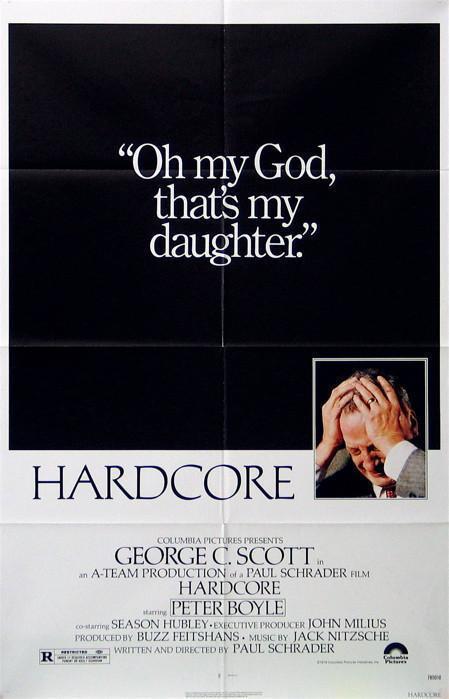
Hardcore (1979)

By Richard Winters

My Rating: 6 out of 10

4-Word Review: His daughter does porn.

Jake (George C. Scott) is a conservative businessman living in Grand Rapids, Michigan, who is raising his teenage daughter Kristen (Ilah Davis) as a single parent only to have her disappear while on a church sponsored road trip to California. Jake then hires a detective (Peter Boyle) to track down her whereabouts and after some searching he finds that she’s entered the world of porn, which compels Jake to go to California and pose as a adult film producer in hopes that he can get information from those working in the business that will eventually lead him to Kristen.

While the storyline has some potentially interesting aspects it gets handled in too much of an over-the-top way, particularly at the beginning, to be fully effective. The opening song sung by Susan Raye is too heavily tinged with a country music sound and the religious aspects of the citizens, who debate Bible passages even during a holiday dinner, gets overplayed. Having a brief scene showing Jake leaving church after attending a service was all that was needed to convey that the character was on the conservative end without having to throw in all of the other heavy-handedness.

The segments dealing with the porn scene are equally botched. For one thing with the advent of the internet the adult film business has changed drastically making what we see here quite dated and irrelevant.  We also learn barely nothing about the daughter, or how exactly she got into doing porn. The film implies that she meets some man on her trip who apparently ‘tricked’ or ‘drugged’ or ‘kidnapped’ her into doing porn and that could be the only possible explanation for why anyone would ever do it, which I suppose at that time was the answer most mainstream audiences would accept. However, there are many famous female porn stars from that era who insist they choose to get into the business and weren’t forced.

The film would’ve been far stronger had writer/director Paul Schrader actually done some research into the people who worked in the business, which I felt he hadn’t done as the porn producers are portrayed in the same broad caricature way as the religious people at the beginning. Having the daughter choose to get into the business and then cutting back-and-forth between her dealings inside the adult movie world and her father’s search for her would’ve made the movie more insightful.

I did however enjoy seeing conservative/small-town Jake get plunged into a dark, seedy world that he wasn’t used to and the many adjustments that he makes, including buying a whole new wild wardrobe in order to fit in. His friendship with one of the female porn stars, which is convincingly played by Season Hubley, is quite fascinating especially their conversations and an aspect of the film that I wished had been played-up more.

Spoiler Alert!

The ending, which involves a big shoot-out on the streets of L.A. gets too Hollywood-like and should’ve been avoided. Having Jake finally meet-up with his daughter and their subsequent stilted conversation, was equally dumb and really hurts the movie as a whole. Originally the script had the daughter dying in a car accident before Jake was able to find her and since her character remains pretty much an enigma anyways, that’s the ending that they should’ve kept.

My Rating: 6 out of 10

Released: February 9, 1979

Runtime: 1 Hour 48 Minutes

Rated R

Director: Paul Schrader

Studio: Columbia Pictures

Available: DVD, Blu-ray (U.K. release) Amazon Video, YouTube

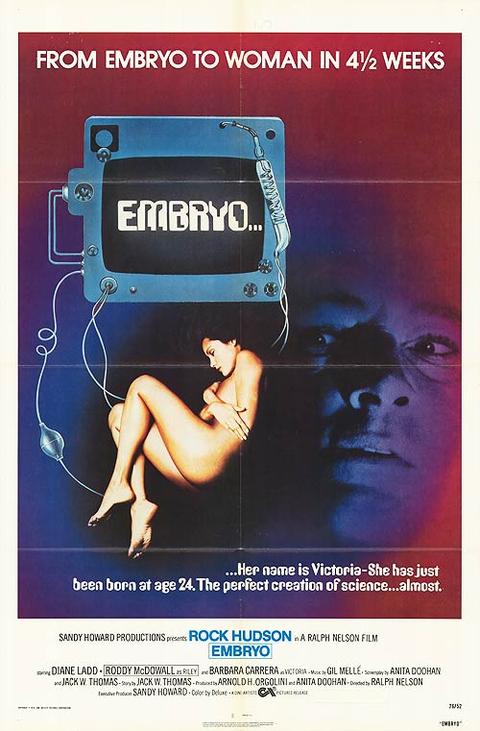
Embryo (1976)

By Richard Winters

My Rating: 6 out of 10

4-Word Review: Accelerating the growth cycle.

Late one night while driving home in raging thunderstorm Dr. Paul Holliston (Rock Hudson) accidentally hits a pregnant dog with his car. He takes the dog home to his lab and is able to save one of the embryos by placing it in an artificial uterus and then injecting it with an experimental hormone that speeds up its growth cycle. Paul is so excited about the results that he gets one of his colleagues (Jack Colvin) to agree to give him an unborn human baby from a mother who had committed suicide. Paul uses the drug on the fetus and finds that it grows at an even more accelerated rate, which leads to many unforeseen and horrifying scenarios.

For a grainy looking, low budget production (the DVD transfer is horrible) the plot isn’t too bad and had me guessing all the way up to the end at how it was going to turn out. The story has a lot of holes and most likely won’t be plausible to a science purist, but Ralph Nelson’s competent direction keeps the drama moving at a brisk pace, so you never dwell on the absurdities for too long and for the undemanding viewer it may come off as believable enough. The film also has a unintentionally funny moment that may not have floored audiences back in the 70’s as it did with me and features Barbra Carrera reading the Bible, which she finds ‘illogical’ only to have Hudson a supposed scientist tell her that it’s an ‘accurate account of how life began’, which blew me away as I’m sure there are few scientists who would say that today.

Carrera does surprisingly well in a difficult role, but her ability to retain knowledge and learn things happens a little too quickly and isn’t interesting. I realize she’s supposed to be super smart, which is fine, but even a smart person needs to be taught how to read and the meaning of words to communicate, which is something that the film just glosses right over.

I was glad that there was a big age difference between the two stars and that a romantic angle wasn’t forced into the proceedings that would’ve just bogged everything down, but having the two end up going to bed together was almost as bad. Hudson had taken a very paternal approach to Carrera almost like she were his daughter, so when she asks him to have sex with her, so she can feel what it’s like, I would’ve thought it would be too uncomfortable and too awkward a situation for him to go through with.

Roddy McDowall has a great cameo as an arrogant chauvinistic chess player. There’s also an interesting car chase, a neat twist ending, and some good aging make-up effects, but Carrera’s dilemma of suddenly going from being healthy and vibrant to on the brink of death is jarring. It’s almost like the writers wrote themselves into a hole and couldn’t think of any way out of it except to insert having the character die from some mysterious illness even though the dog, who went through the same treatment, is not affected, which is a shame as the premise is intriguing and works for most of the way.

My Rating: 6 out of 10

Released: May 21, 1976

Runtime: 1 Hour 44 Minutes

Rated PG

Director: Ralph Nelson

Studio: Cine Artists Pictures

Available: DVD-R, Amazon Video

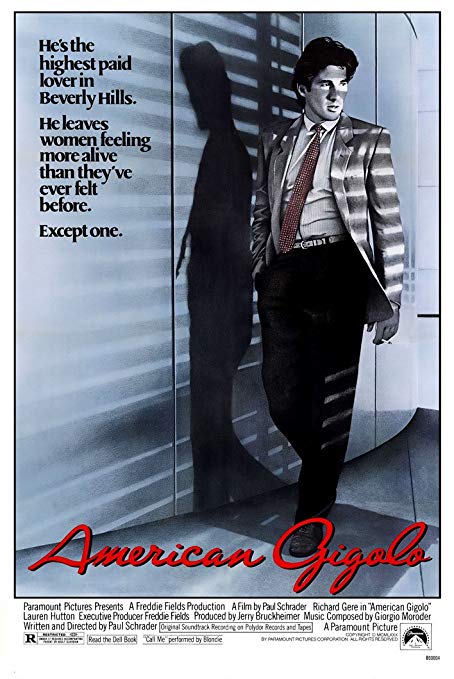
American Gigolo (1980)

By Richard Winters

My Rating: 5 out of 10

4-Word Review: Male escort gets framed.

Julian (Richard Gere) works as a male escort in the Los Angeles area servicing affluent female clients, which allows him to drive expensive cars and live in a luxury apartment. He even gets into a relationship with Michelle (Lauren Hutton) a senator’s wife, but just as everything seems to be going his way it comes crashing down when he gets accused of murder, which he didn’t commit. His only alibi is Michelle who he was in bed with that night, but she is reluctant to come forward fearing it will tarnish both her reputation and that of her politically ambitious husband (Brian Davies).

The film’s chief asset is Gere’s performance who puts a gritty edge in a film that is otherwise quite shallow. His character though is blah as we learn little about him, which I found frustrating. Male prostitution is not a profession most men get into, so why does Julian? Having a backstory dealing with his upbringing and showing his relationship with his family could’ve helped us better understand his motivations, but none is ever shown leaving us with a character that may look sexy, but is otherwise an empty shell that is neither interesting nor memorable.

The film offers no insights into the sex profession either. I kept wondering how he was always able to ‘get-up for the occasion’ with all of his clients especially when a lot of them were older women who were not all that attractive. Many male actors working in the adult film business will admit to taking Viagra or some other drug to guarantee an erection on cue. They also have women working behind-the-scenes as ‘fluffers’ who will give male performers a hand-job/oral sex, so when it’s time for his scene he’s erect, but Julian doesn’t have any of these things, so what’s his secret? The film makes it look like he can get-it-up on demand, which in reality I don’t think would always be the case.

I was also disappointed when Julian is told by the husband (Tom Stewart) of one of his clients to get rough with her by slapping her and Julian turns around with a shocked expression, but then the scene immediately cuts away without seeing what happened. I felt this was a crucial moment that needed to be played-out and it would’ve helped us understand Julian better by seeing how he responds to demands that he’s uncomfortable with. The film most likely cutaway because seeing him slap a woman would’ve made him unlikable to the viewer, but if he’s the type of person who will compromise his ethics to make money then we need to know this, or if he returns the money and walks away we need to see this as well.

Julian’s relationship with Michelle is ridiculous and unbelievable. Why would a guy who’s been to bed with hundreds of different women suddenly decide to fall-in-love with this one and why would a woman, who’s otherwise living a comfortable lifestyle, allow herself to fall for a man whose profession won’t allow him to be faithful to her? It doesn’t help either that Hutton gives a horribly wooden performance and it would’ve been far better had Julie Christie, who was the original choice for the role, played the part

The mystery angle is somewhat intriguing, but the wrap-up gets botched by suddenly instituting long pauses between scenes in which the screen goes completely black and silent for several seconds, which is jarring since this was not done at any earlier time and only helps to cement how over-the-top Paul Schrader’s directing is. Had more effort been put into character development instead of flashy lighting/camera angles we would’ve had a more interesting movie.

My Rating: 5 out of 10

Released: February 1, 1980

Runtime: 1 Hour 57 Minutes

Rated R

Director: Paul Schrader

Studio: Paramount

Available: DVD, Blu-ray, Amazon Video, YouTube

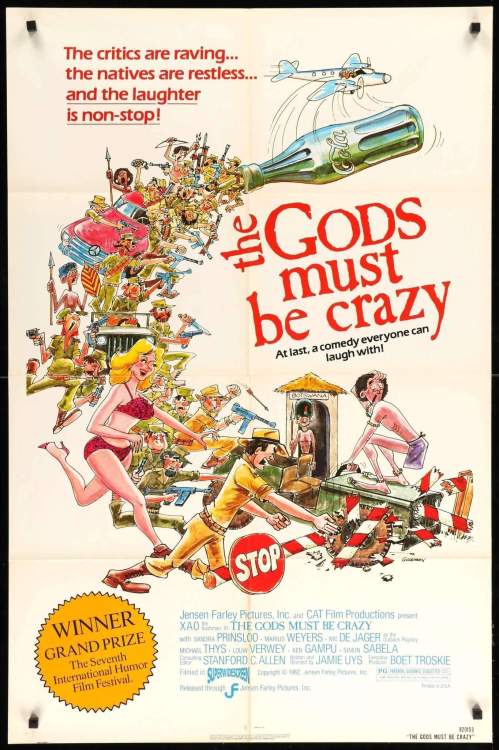
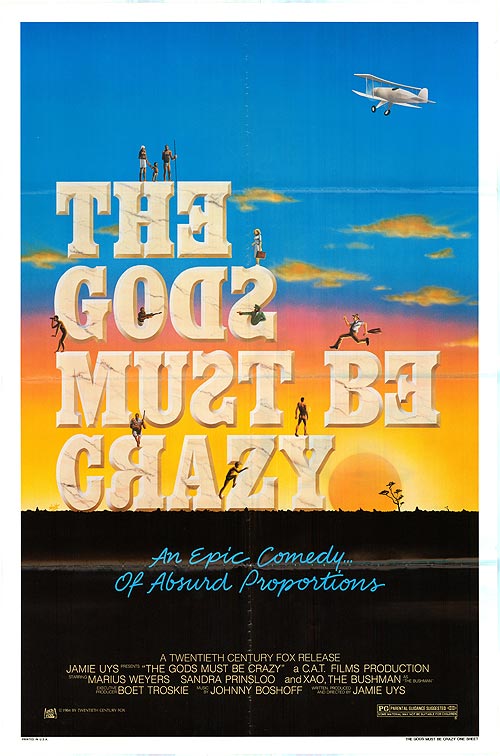
The Gods Must Be Crazy (1980)

By Richard Winters

My Rating: 8 out of 10

4-Word Review: Coke bottle causes problems.

One day while flying over the Kalahari desert a airplane pilot inadvertently throws a coke bottle out of his cockpit window, which falls to earth and is found by Xi (N!xau) and he brings it back to his nomadic tribe. At first everyone is intrigued with the object as they are an isolated people unaware of modern technology. They think it’s a ‘gift from the gods’ and make use of the bottle in different and creative ways, but eventually the bottle causes friction from within the tribe because there is only one and no one wants to share it. Xi decides to ‘give the bottle back to the gods’ by traveling to the end of the earth and throwing it off. During his journey he meets a clumsy biologist named Andrew Steyn (Marius Weyers) and a pretty school teacher named Kate (Sandra Prinsloo) while also saving school children who are kidnapped by a group of terrorists led by Sam (Louw Verwey).

This film became the biggest box office success in South African history and when released abroad became the most successful foreign film in the U.S., but the film initially comes off like a nature documentary complete with monotone voice-over narration by Paddy O’Byrne only to then shift uneasily into a flick dealing with political revolutionaries who systematically massacre the heads of state via machine gun. It’s not until about 30 minutes in that the gentle comical flow of the story gets going, but even then there’s a lot of sped up stop action photography, dubbed voices, and a cartoonish sounding musical score that gives it a choppy amateurish feel throughout.

Yet despite all this the concept is quite original and filled with genuinely funny moments. Writer/director Jamie Uys, who appears briefly as a Reverend, shows an amazing ability to squeeze laughs out of virtually any scene and sometimes in the most amazing of ways. Some of my favorite moments was when the jeep hangs upside down in a tree, or the scene showing the same disabled jeep getting tugged along by another vehicle and because the desert was so flat and barren the man driving the vehicle is able to get out of it and it simply drives itself with no fear it would run into anything. The shot where N!xau arrives at what he thinks is the end of the earth, but in reality is a place known as God’s Window is quite memorable and picturesque as well.

Of course the film does come with its fair share of controversy and accused of being racist with two countries, Trinidad and Tobago, banning the movie from being shown there because of it. The main complaint centers around the bushmen tribe that N!xau comes from being shown as completely cut-off from the modern world and unsophisticated when in reality this is not true. The 2004 Columia TriStar DVD edition has a wonderful documentary called ‘Journey to Nyae Nyae’ on its bonus section where a filmmaker travels to the real-life desert bushmen tribe that actor/star N!xau resided and found that although the people were quite poor they were far from ignorant and in fact excitedly embraced technology like a computer when it was shown to them. There’s even a really cute segment where the children get shown this film and laugh along at all the same antics just like American audiences.

This same documentary also has a very sad edge to it as it shows the impoverished life N!xau had even after the film became a worldwide hit. While the movie grossed over 200 million N!xau was only paid $2,000 for his work and the other actors who played the bushmen got paid nothing. Director Uys tried to rectify this by paying N!xau many years later an additional $20,000 and a monthly stipend, but by then he had already become sick with tuberculosis and ended up dying from it in 2003.

My Rating: 8 out of 10

Released: September 10, 1980

Runtime: 1 Hour 49 Minutes

Rated PG

Director: Jamie Uys

Studio: 20th Century Fox

Available: DVD, Amazon Video, YouTube
Birdy (1984)

By Richard Winters

My Rating: 7 out of 10

4-Word Review: Fly like a bird.

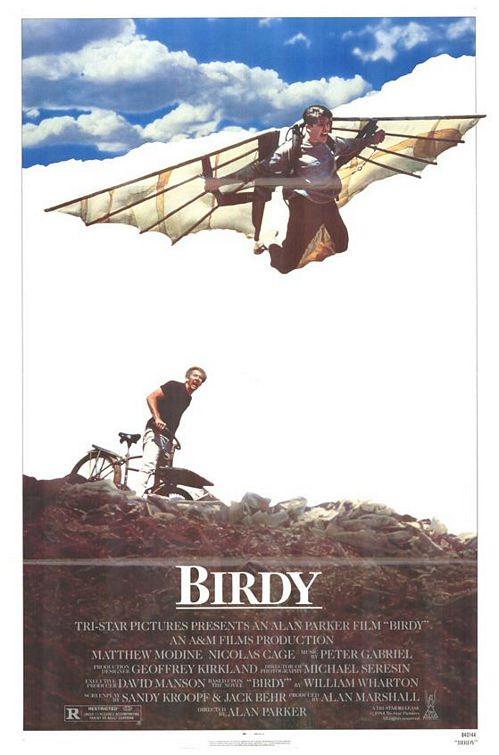
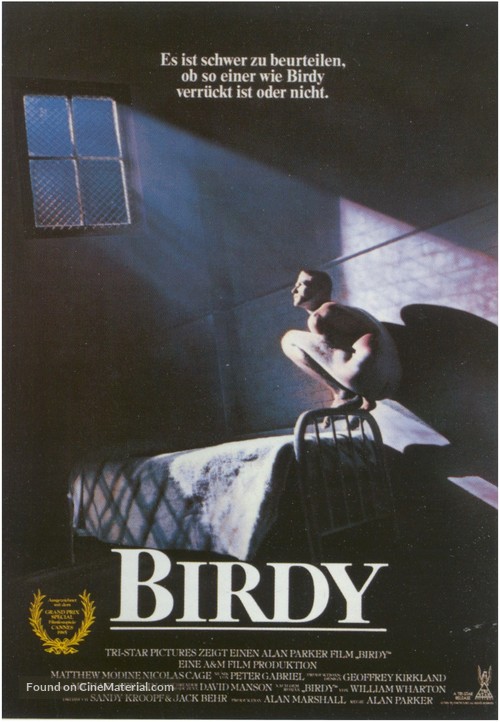
Al (Nicholas Cage) becomes friends with an introverted neighborhood boy (Mathew Modine) nicknamed Birdy due to his fascination with birds. Al begins to follow Birdy around as he collects pigeons and stores them inside an aviary that he has built in his backyard. The two share a strong bond, which is broken when they both get drafted and have to go off to war. Al returns from battle with facial injuries, but Birdy is sent to a mental hospital because after missing in action for a month, he refuses to speak. Al spends time with Birdy trying to get him to talk again, but finds it futile and fears that if he can’t get him to talk the Dr’s will confine Birdy permanently.

The film is based on the William Wharton novel of the same name that was initially rejected by director Alan Parker as a possible movie because he considered the story to be ‘uncinematic’, but after the screenplay was commissioned to writers Sandy Kroopf and Jack Behr who were able to restructure the thoughts of the main character from the novel into dialogue and action Parker was then willing to sign on. The result is a interesting drama that manages to have some touching, quirky moments, but it’s also quite reminiscent of Brewster McCloud and comes complete with the same winged flying contraption which Birdy uses to fly briefly over a junkyard that Bud Cort also used to fly around the Astrdome in that film.

While both Cage and Modine give excellent performances I found the friendship between the two to be confusing. They had very little in common and why Cage would want to follow Modine around all the time as he collected pigeons, which he himself thought to be kind of ‘weird’, did not make much sense. Had they both had an interest in birds then it would’ve worked, but they don’t, so what’s the bond that keeps them together? Having them portrayed as being gay would’ve been the solution and at times it seems that is what Birdy is since he shows no interest in women at all and in one amusing scene watches in boredom while Cage has sex with another women on a beach. Cage could’ve been portrayed as being bi-sexual, or not fully aware of his secret attraction to Birdy, but could later eventually come out and that could help explain why he’d stick with someone that he otherwise found ‘kooky’.

Despite the film’s length  and having some definite slow parts including Cage’s ‘conversations’ with Birdy when he’s inside the mental hospital, which are quite static and should’ve been trimmed, there’s still some memorable moments including a scene showing baby canaries hatching out of their eggs. I also like the tracking shot where Birdy imagines himself flying and done from the point-of-view of a bird, which gives one a very authentic feeling/experience of what it would be like and it was shot with a Skycam, at least partially, which is the first time that had ever been used in a movie.

I also enjoyed how the film examines the different dynamics of both Cage’s and Birdy’s family life and the contrasting personalities of the parents where in Cage’s family the father, played by Sandy Baron, was the dominant force while with Birdy it was his mother (Dolores Sage). My only complaint in this area is that there’s a running subplot dealing with the fact that Birdy’s mother would take all the baseballs that the neighborhood kids would accidentally hit into her backyard and keep them, but no one knew where she hid them. Cage then, years later, asks the Dr’s at the hospital to convince the mother to send the hidden balls to Birdy in an effort to get him to talk again and the mother complies, but the scene showing her retrieving the balls is never shown. So much time is spent talking about where she hid the balls that the film should’ve revealed the hiding place while also showing a tender side to the mother who otherwise came off as being quite cold, so not having this scene at all really hurts the film.

Spoiler Alert!

There’s also complaints by some viewers and critics about the ending, which some, like critic Leonard Maltin, refer to as a ‘gag’ ending. For me this wasn’t an issue as it offered some much needed levity in what is otherwise a very dramatically heavy film, but I was frustrated that there’s no conclusion given to what ultimately happens to the two characters. They’re shown trying to escape from the hospital, but never whether they were able to break-free permanently. After spending two hours following these two around the viewer deserves more concrete answers as to their ultimate fate and keeping it so wide-open is a bit of a cop-out/letdown.


My Rating: 7 out of 10

Released: December 21, 1984

Runtime: 2 Hours

Rated R

Director: Alan Parker

Studio: TriStar Pictures

Available: DVD, Blu-ray, Amazon Video, YouTube

Le Sex Shop (1972)

By Richard Winters

My Rating: 6 out of 10

4-Word Review: Bookseller turns to pornography.

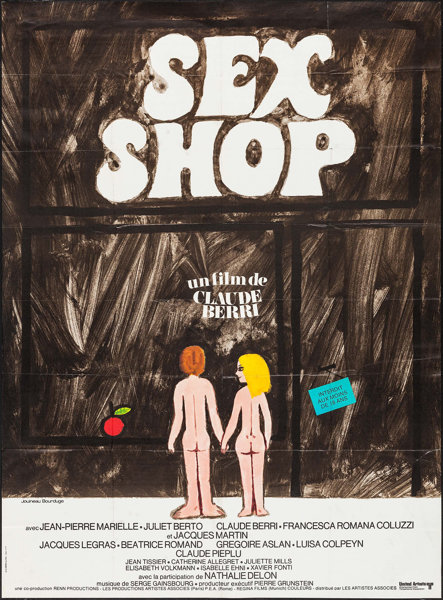
Claude (Claude Berri) runs a Paris bookstore, but finds his business slumping. In an attempt to make a profit he decides to start selling pornographic materials, which soon makes his place a popular hangout. It also attracts a different type of clientele including Lucien (Jean-Pierre Marielle) a local dentist who along with his beautiful wife Jacqueline (Nathalie Delon) are swingers who try to get Claude and his wife Isabelle (Juliet Berto) into their lifestyle, which ultimately begins to put a strain on their marriage.

Although billed as an X-rated movie it is really more of a satire of the public’s zest for sexual fantasy and the extremes they will go to enliven their sex lives only to in some ways end up needlessly complicating it. The film is full of a lot of keen moments that are both insightful and funny including both Claude and his wife lying in bed next to each other while each simultaneously having fantasies about sex with someone else. The part where Claude’s two kids, who are both under 10, sneak into the shop and start playing with the sex toys is a hoot too as is the scene where Claude lies in bed between two naked women and spends the whole time talking about his kids and sharing family photos.

I also liked how the sex shop itself gets captured. In real-life these places are usually quite dark and dingy giving off the idea that there’s something ‘sinister’ or ‘shameful’ about sexual fantasy while here the shop is bright, colorful and inviting with clientele not just made up of men either, but with equal amounts of women too.

Director Berri casts himself in the lead and while this can sometimes come-off seeming narcissistic I felt in this case it was a perfect touch as he looks very much like Rowan Atkinson’s Mr. Bean character and watching some of his shocked expressions as he gets himself more and more immersed into the seamier side of things is quite funny. I also enjoyed Beatrice Romand, as a young lady looking like she’s no older than 16, getting hired as a sales clerk at the shop and who shows great familiarity to all the sexual paraphernalia and expounds on how to use them to the older male customers like a teacher lecturing to her class.

The two women who play prostitutes (Francesca Romana Coluzzi, Catherine Allegret) are a lot of fun too and become the symbols of the old way of life as they fear that their services will no longer be needed. The scene where they challenge a topless author at a book signing in regards to the authenticity of her sexual conquests and how she, in their eyes, is not a ‘real whore’ is quite amusing.

The film though could’ve used a better buildup. The couple move into the sex business too quickly and thus watching their transition into swingers isn’t as impactful or interesting. The ending is too ambiguous and outside of the sex shop the film fails to have any type of visual flair. There is an abundance of nudity, but none of it is erotic or arousing. Maybe this was the intention, but a film about sex should have at least a few spicy moments while this thing, despite its very adult rating, falls completely flat in that area.

My Rating: 6 out of 10

Released: October 25, 1972

Runtime: 1 Hour 32 Minutes

Rated X

Director: Claude Berri

Studio: United Artists

Available: DVD (Out-of-Print)

The Little Drummer Girl (1984)

By Richard Winters

My Rating: 5 out of 10

4-Word Review: Actress infiltrates terrorist organization.

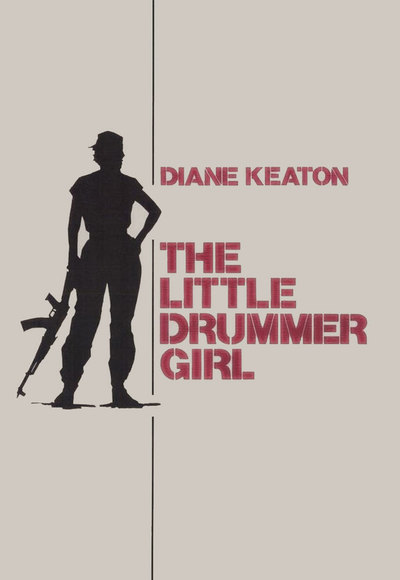
Charlie (Diane Keaton) is a stage actress with pro-Palestinian leanings who’s living in Israel. After a Palestinian bomber kills a Israeli diplomat and his family she gets recruited by a pro-Israeli spy organization to pretend to be the bomber’s brother’s girlfriend. At first she resists, but eventually she puts her acting skills to work until she gets deeper and deeper into the quagmire and begins to question what she really stands for.

The story, which is based on the novel of the same name by John Le Carre, who appears briefly in the film as a police chief, has a lot of exciting moments and a few unexpected ones. For the most part I found the plot intriguing and the twists and turns to be interesting although if the viewer doesn’t pay close attention they could easily become lost.

Klaus Kinski’s performance makes it worth seeing. He suffered from mental illness in his personal life and due to that as well as his unique facial features usually stymied him in roles of madmen, or troubled individuals, but here he plays someone who is actually normal and does a convincing job of it. His presence definitely enlivens the proceedings to the point that he should’ve been the sole face of the Israeli organization and not crowded out by a throng of assistant players who are not interesting and become clutter to both the story and visuals.

Keaton is great here too and one of the main reasons that the film remains as interesting as it does. Her emotional confusion comes off as sincere and the fish-out-of-water concept where she gets thrown into a world that she is not used to and must use her wits and acting talent to get by is at first riveting.

Unfortunately the second half goes too far to the extreme where Charlie no longer resembles the same person that we met at the beginning. Some may argue that this is her character arch, but she still needs to have a consistent foundation and not morph into something completely different with no roots to what she was before. She starts out as someone only going along with the charade because she’s forced into it. She’s very clumsy at first, but then by the second half is able to put a gun together while blindfolded and seamlessly detonate a bomb without a sweat like a seasoned spy with years of experience.

She’s given an opportunity to get out and yet she decides to proceed even as things get more dangerous, which makes little sense since she didn’t conform at all with the political sentiments of the organization that recruited her. Any regular person would have a mental/emotional breakdown at seeing someone killed before their very eyes, or required to go to bed with a stranger that she barely knew, and the fact that she doesn’t reveals how the filmmakers had a very poor grasp on the character.

All of this could’ve been avoided had they modeled her after the one in the book. For the film the producers decided to portray Charlie as being similar to Vanessa Redgrave, but in the book the character was inspired after Janet Lee Stevens who was an American journalist, human rights activist, and Arabic literature scholar who traveled to the Middle East as an interpreter and had no connection to acting. Having the film focus on a young activist whose extreme idealism ends up getting her in-over-her-head would’ve been more compelling and believable. Throwing in the acting angle just doesn’t work and ends up becoming its biggest liability.

My Rating: 5 out of 10

Released: October 19, 1984

Runtime: 2 Hours 10 Minutes

Rated R

Director: George Roy Hill

Studio: Warner Brothers

Available: DVD (Warner Archive), Amazon Video, YouTube

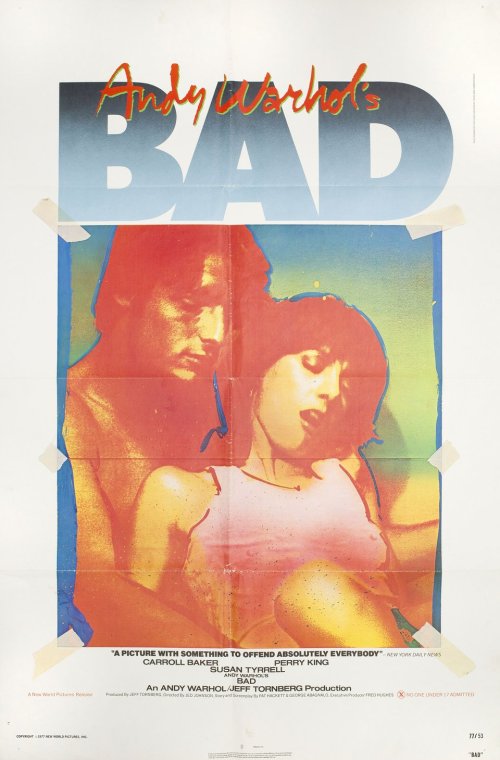
Andy Warhol’s Bad (1977)

By Richard Winters

My Rating: 7 out of 10

4-Word Review: Paying women to kill.

Hazel (Carroll Baker) runs a beauty parlor out of her home that specializes in unwanted hair removal, but secretly on the side she hires beautiful women to carry out contract killings of which she gets a part of the take. L.T. (Perry King) is a vagabond in desperate need of money who’s looking to get into the business, but Hazel prefers her killers to be women and is reluctant to take him, but eventually decides to hire him on a trial basis, but then everything starts to go wrong.

One of the best things about this movie is how truly dark it gets. Too many movies that proclaim to be dark comedies always pull back and never get as deliriously twisted as they initially convince you they will, but this film proudly takes things to the darkest extremes becoming a measurement to what true underground filmmaking once was where pushing the envelope was the only goal.

For the most part, depending on one’s sense of humor, it’s outrageously funny. Some of the more wicked moments feature twin sisters (Geraldine and Maria Smith) setting a movie theater on fire and then going home to watch the coverage of it on the TV. There’s also Warhol alum Brigid Berlin as an overweight woman with flatulence issues who’s obsessed at getting brutal revenge on anyone that she perceives as making fun of her weight.

The film also takes satirical jabs at the American obsession of making money and how one’s social standing hinges on how much they have without any concern with what exactly they had to do to get it. This come to a perfect hilt when Hazel throws L.T. out of the house when he refuses to go through with a hit but still somehow feels she’s the morally superior one by taunting him with “At least I pay my own way”.

Due to this being the biggest budgeted film that Andy Warhol produced they  were able to hire some well-known faces into the roles. Baker though was not their first choice as they originally wanted Vivian Vance, whose presence would’ve made this even more of a gem than it already is, but she turned it down fearing it would ruin her reputation with her fans. Shelley Winters, who was their second choice, also rejected the offer, which was rare as she usually accepted anything that came along and she would’ve been brilliant, but I’ll give props to Baker, who took the role simply in an attempt to resuscitate her career, for not holding anything back here and giving it her all.

King is also superb and I enjoyed seeing his character arch as he’s the only in the film that has one, but was disappointed that there was never a final, fiery confrontation between him and Hazel as the film spends the whole time priming you into believing that there will be. Tyrrell is also memorable in a rare sympathetic part where she becomes the only one with a conscious although I have no idea where they got the baby that she is seen constantly carrying around as he’s one of the stranger looking tykes I’ve ever seen.

The cinematic quality though is lacking with almost all of the action taking place inside the drab house. The basic concept isn’t completely well thought out either. While I appreciated the bad cop character, played by Charles McGregor, who gets paid to look the other way, which helps to explain how Hazel is able to get away with these killings for as long as she does, I was still confused with how she was able to bully people. Everyone adheres to her authority, which is never challenged, but you’d think someone running a dicey operation would have some sort of backup plan and weapon on hand should someone get out-of-line, which she doesn’t and for me this seemed questionable.

The film is notorious as well for a scene showing a young mother throwing her baby out of a high story building and watching it go splat on the ground. Supposedly Baker, King, and Tyrrell refused to do the film unless they were promised that this scene be taken out of the script and director Jed Johnson complied only to end up filming it once the rest of the production had wrapped. Years ago when  I first saw this I thought it was pretty funny especially as another mother walks by and says to her young child “that’s what’s going to happen to you if you don’t behave”. It’s clearly a doll anyways and no real baby was harmed, but when I viewed it this time around I found it unsettling, so like with a lot of things in this movie, it’s up to a person’s age and perspective on how much of it they may or may not enjoy.

My Rating: 7 out of 10

Release: May 4, 1977

Runtime: 1 Hour 45 Minutes

Rated X

Director: Jed Johnson

Studio: New World Pictures

Available: DVD

The Believers (1987)

By Richard Winters

My Rating: 6 out of 10

4-Word Review: Cult requires child sacrifice.

After the death of his wife (Janet-Laine Green) Cal (Martin Sheen) decides to move with his young son Chris (Harley Cross) from Minneapolis to New York City where he gets a job as a police psychologist. It is there that he councils officer Tom Lopez (Jimmy Smits) who worked undercover to infiltrate a cult that performed child sacrifices and is now paranoid that these same cult members are after him when it’s really Cal’s son that they want.

On the directing end I found this to be mildly engrossing and I enjoyed the way John Schlesinger vividly captured both surburbia as well as the inner city. Working into the false sense of security that the suburbanites have making them believe that they’re ‘immune’ to what goes on in the poorer areas, but here it shows how evil can seep into even the most affluent of areas and revealing just how vulnerable everyone is.

However, if you focus solely on the script, which is based on the Nicholas Conde novel ‘The Religion’, then there are a myriad amount of problems. The biggest one being the opening sequence that features the mother getting electrocuted in a freakish accident, which doesn’t really have all that much to do with the rest of the story. Some may argue that this was the catalyst to get Cal and Chris to move from Minneapolis to New York where the real meat of the plot begins, but why not just have them already in New York to begin with?

Having Helen Shaver enter in as Cal’s love interest is equally pointless. Their relationship happens too quickly and comes off as forced while Chris’ dismay at having a new mother figure in his life seems like an issue for an entirely different type of movie. I admit having a tumor grow on her face that eventually spawns spiders is my favorite part of the movie, but why not just have this occur to the mother instead of killing her off so quickly at the beginning?

Richard Masur’ character, who appears during the first act only to then disappear until the end is problematic as well. A good script has important characters appear throughout the story and not just vanishing until you’ve completely forgotten about them, which I did, and then conveniently reappearing and suddenly becoming an integral part of the plot.

Cal’s character arc is too extreme too. He’s portrayed as being a rationalist who does not believe in superstition, but then later on is shown taking part in a ritual requiring him to squeeze out blood of a decapitated chicken, which is too Jekyll and Hyde-like. Sure people can sometimes change their opinions on things, but not so quickly or so severely. Portraying him as initially being superstitious, instead of so adamantly against it, might’ve made this scene a little less jarring.

There are only an estimated 22,000 people who practice the Santeria religion in the United States, which has a population of 327 million, so the odds that a person such as Cal would come into contact with not only a police officer that dealt with the religion, but also relatives is astronomically low and hurts the plausibility. It’s equally hard to believe that a large group of educated, upwardly mobile yuppies would get caught up into a cult that required child sacrifice and that they would all be able to keep it a secret without any of them getting a guilty conscience and going to the police. This is a religion that’s prevalent in the Spanish-speaking parts of the Caribbean, so why a large group of white people would suddenly get so into it is never explained.

Spoiler Alert!

The twist at the end in which Helen Shaver’s character creates a shrine to the spirits composed of dead animals inside her barn makes no sense as there is never any hint earlier that she had a propensity for the ritual, so why all of sudden did she start embracing it? I’m not an animal expert either, but I don’t think a dog would behave so aggressively as he’s shown doing by jumping up and down and barking loudly at the barn door where the shrine of the dead animal is. I would think for him to act that way it would have to be the smell of a live creature and he’d know the difference, but again that’s just speculation.

End of Spoiler Alert!

A lot of these problems could’ve been avoided had the producers went with their original idea of portraying it as a satanic religion feeding off the hysteria of the satanic ritual abuse that was a prevalent headline catching conspiracy theory during the 80’s. Having some outcast teens and desperate poor people immersing themselves in a fringe ritual because they had nowhere else to turn would’ve made a heck of a lot more sense than a bunch of yuppies gleefully standing around and watching the killing of someone else’s child simply because they felt it would give them ‘good luck’ in their quest up the corporate ladder.

My Rating: 6 out of 10

Released: June 10, 1987

Runtime: 1 Hour 54 Minutes

Rated R

Director: John Schlesinger

Studio: Orion Pictures

Available: DVD, Blu-ray, Amazon Video