Category Archives: Movies Based on Novels

The Sunday Woman (1975)

sundaywoman

By Richard Winters

My Rating: 6 out of 10

4-Word Review: Murdered by phallic object.

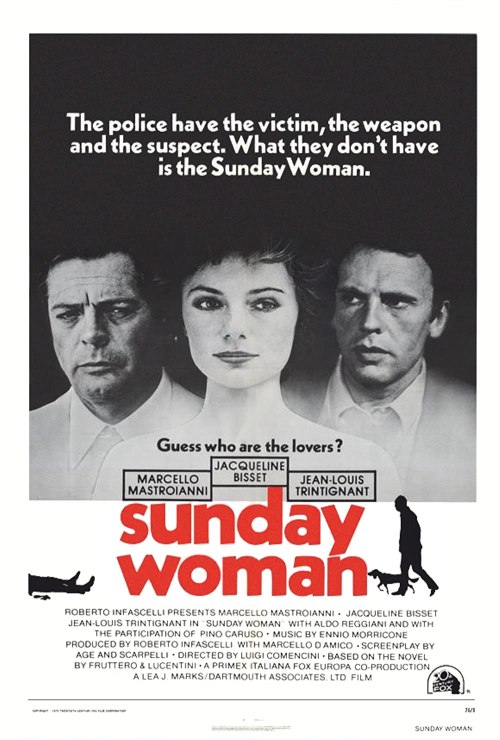
Based on the novel of the same name by Carlo Fruttero and Franco Lucentini, the story centers on the investigation of the murder of Mr. Garrone (Claudio Gora). Garrone is found bludgeoned to death inside his apartment by a giant penis statue. Garrone was a well known architect and a lecherous ladies man who couldn’t help but make unseemly passes at every woman he came by. Commissioner Santamaria (Marcello Mastroianni) is put in charge of the case, which has many suspects. Two of the biggest ones are Anna Carla (Jacqueline Bisset) and her platonic male friend Massimo (Jean-Louis Trintignant). Anna had written a note, found by her hired help the next day, stating her desire to ‘eliminate’ Garrone. Anna, who’s quite wealthy, insists that it was all a innocent misunderstanding and Massimo backs her up, but Massimo, who has an alibi, is reluctant to divulge it because it would require him to admit that he’s gay and at Lello (Aldo Reggiani) his lovers’ house. Santamaria begins looking into other potential suspects as does Lello who wishes to get his boyfriend cleared, but the deeper Santamaria gets into the case the more he connects with Anna and despite their age difference they begin to have a romantic relationship all while she remains at the top of his suspect list.

The film, on the technical end, is well done. Director Luigi Comencini nicely captures the visual beauty of the Italian landscape and the posh older homes of Turin a city in northwest Italy where it was filmed. The soundtrack by Ennio Morricone has a nice bounce that keeps the film moving along even while not a lot is happening. There’s an array of suspects and enough red herrings to keep it intriguing and impossible to guess who’s the true culprit.

The story has its share of offbeat moments though it’s disappointing that the funniest character, Garrone, ends up getting killed as he was amusingly sleazy enough to have kept things consistently comical. While the death by giant penis statue, if memory serves me correctly, had already been used in A Clockwork Orange, it’s still a novel idea and it’s funny how Santamaria visualizes each suspect he meets bashing Garrone over the head with it as he interviews them. Traveling to the shop where the statues are made and being surrounded with hundreds of them is certainly good for a chuckle, but outside of this there wasn’t all that much that stood out, or made this any better than any other murder mystery. The ingredients are good enough to keep sufficient interest, but nothing the makes it really memorable.

I was most disappointed that Bisset wasn’t in it more. She’s fabulous, as she is in most of her movies, and though I suspect that her voice, where she speaks fluent Italian, is dubbed, I still felt she gives a spectacular performance. Mastroianni on the other hand looks tired and worn-out and like his peak years of being a international sex symbol had passed. Yet when he’s together with Bisset it clicks and Jacqueline’s superior acting camouflages their extreme age difference making them seem more like a perfect couple than it should. The two should’ve investigated the case together and become a team, as every second Bisset is not seen it flatlines. Had the two shared the screen this might’ve been special, but ultimately it misses-the-mark and never fully gels.

My Rating: 6 out of 10

Released: December 16, 1975

Runtime: 1 Hour 45 Minutes

Rated R

Director: Luigi Comencini

Studio: Fox-Lira

Available: DVD-R (dvdlady.com) (Italian w/English subtitles), Amazon Video (English subtitles)
Digby: The Biggest Dog in the World (1973)

digby2

By Richard Winters

My Rating: 2 out of 10

4-Word Review: Dog grows really big.

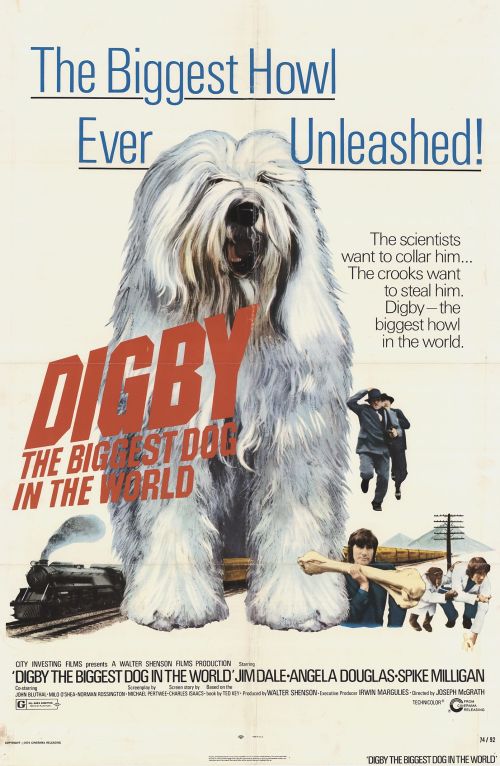
Billy (Richard Beaumont) is a young boy who buys an Old English Sheepdog from a local dog home manager ( Victor Maddern). However, when he brings the dog home his grandfather (Edward Underdown) doesn’t want it in the house, so his mother (Angela Douglas) tells him to give the pet to someone else. He then leaves him at the home of Jeff (Jim Dale), a researcher who works at a defense lab that is experimenting in growth formulas. Jeff is smitten with Billy’s mother, but too shy to ask her out. He ultimately agrees to take the dog as an excuse to be around the mother more. Things though turn chaotic when Jeff decides to borrow some of the growth formula at his lab, in order to feed it to his tomato plants, but instead it gets accidentally given to the dog, who then grows to gigantic proportions.

This is the type of movie that’s clearly meant for kids, but kids today, with the advanced computerized special effects seen in modern films, will quickly be turned-off by the cheesy effects here. The attempt to make the dog seem bigger by placing him in a miniaturized kitchen doesn’t exactly work. Other segments where he’s seen outdoors and at a circus don’t work either because it’s obvious that the animal was simply put in front of a green screen. The segment that has Jeff sneaking the dog outside while having him wear an outfit meant for a horse is stupid too because a horse’s head is shaped differently than a dog’s, so there would be no way it would fit over the dog like it does.

The only inspired effect is when Billy crawls into the dog’s giant mouth in order to feed it a formula that will supposedly get the animal to shrink back to normal size. The recreation of the dog’s mouth to a large size is impressive though a dog’s tongue is thinner and longer than a person’s and yet the tongue in this mouth is styled much more like a human’s. Having the kid command the dog not to swallow, as if he did it would’ve sucked the boy down the throat, is dumb because swallowing is a natural reflex when liquid is poured in, so I’m not sure it could’ve been prevented, or that the dog would’ve understood what the command ‘don’t swallow’ would’ve even meant.

The story is based on the novel by Ted Key, who besides creating the comic strip ‘Hazel’ also wrote the screenplays for Gus, about a mule who kicks field goals, The Million Dollar Duck, about a duck who lays golden eggs, and The Cat from Outer Space. Those movies fared a bit better as they were more imaginative and had better character development. Outside of a circus scene, which features an elderly and near-sighted knife thrower played by Bob Todd, there is nothing that is funny, or even slightly amusing.

A good story should have a protagonist that the audience can root for and and a clear antagonist that the audience hates, or at least fears. This film though doesn’t have that.  Jim Dale is a likable enough, but a scientist nerd who’s awkward around women is a tired stereotype that isn’t interesting. The kid had more appeal and could’ve easily been the hero without the Jeff character even being present. The supporting cast is essentially the same person; deluded, wacky folks who are lost in their own little worlds and clueless about what is really going-on. It’s okay to have one dumb character, but when everybody is goofy it gets tiring fast. There’s no bad guy either just a bunch of buffoons running around saying buffonish things and getting into cartoonish predicaments. If that’s your idea of entertainment then have-at-it, but most will find this to be a dated and silly though those that remember watching as a kid may for nostalgic purposes like it a bit more.

My Rating: 2 out of 10

Released: December 6, 1973

Runtime: 1 Hour 25 Minutes

Rated G

Director: Joseph McGrath

Studio: 20th Century Fox

Available: DVD (Region 2)

52 Pick-up (1986)

52

By Richard Winters

My Rating: 7 out of 10

4-Word Review: Blackmailed over sex tape.

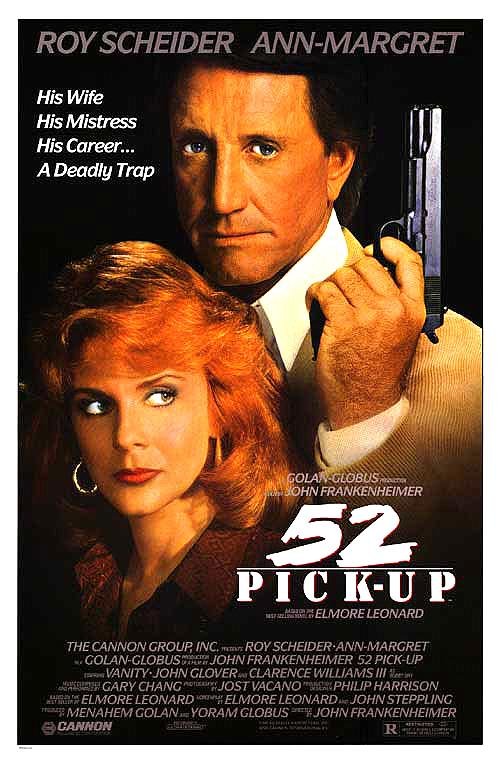
Harry (Roy Scheider) runs a successful construction company and is married to Barbara (Ann-Margret) who’s running for city council. One day Harry gets abducted by three men in hoods (John Glover, Clarence Williams III, Robert Trebor). They bring him to an abandoned building and show him a video tape that they’ve recorded featuring Harry’s steamy affair with a 20-something stripper named Cini (Kelly Preston). They demand $105,000 per year to stay quiet and if not they’ll release the tape to the press. Harry decides not to go to the police for fear it would jeopardize his wife’s political ambitions and instead does the investigating himself to find the tape and the men who made it and then turn-the-tables on them.

In 1984 The Cannon Group bought the rights to Elmore Leonard’s novel of the same name with the intent of turning it into a spy thriller with the setting changed from Detroit to Tel Aviv. Leonard was commissioned to write the script, but the drafts he submitted were deemed unacceptable and eventually someone else was hired as the screenwriter and the movie became known as The Ambassador. 2 years later John Frankenheimer, after having read the novel, decided he’d like to turn it into a movie in a more faithful version to the book. Since The Cannon Group still owned the rights they agreed to produce though several changes were made including having the setting in Los Angeles, which was mainly done for budgetary reasons.

While I’ve complained about other movies produced by The Cannon Group this one looks much more polished and could’ve easily been released by a major studio. I enjoyed the constantly moving camera that turns every scene into one unending tracking shot, which gives it a visual energy and allows the viewer to feel like they’re right there in the setting with the camera acting as their point-of-view as they move around amongst the action.

Many movies from the 80’s touched on the tawdry, underground lifestyles of Los Angeles, but would always pull-back before it became too distasteful and yet this one dives completely in and never leaves. By immersing the viewer into the seamy environment it helps them to better understand the sick nature of the bad guys and the elements that made them believe they could get away with it. It also features adult film stars from the era including Amber Lynn, Jamie Gillis, Tom Byron, and Barbara Dare. Porn legend Seka was also set to be in it, but the aging and apparently still quite horny Frankenheimer pestered her behind-the-scenes in an effort to have sex and even asked her out on a date, which was enough to get her to walk off the set.

The three antagonists are the most entertaining aspect. Glover gives a poetic quality to his character’s sliminess and is mesmerizing in his vileness. Clarence Williams III, best known for his work in the TV-show ‘Mod Squad’ has a creepy intensity that makes his scene riveting. Trebor, as the extremely anxious strip bar owner, makes breaking down in a panic an art form.

The problem is with the two leads who get upstaged by the baddies. In fact during the second-half the three villains receive more screen time than the heroes making it seem like the movie is more about them. Scheider’s insistence on trying to track down the culprits on his own with only an inkling of clues is intriguing to an extent, but he ends up finding their whereabouts too easily. Otherwise Scheider and Ann-Margret do nothing but react to the situation they’re in instead of propelling the action. It’s not because of bad acting either, but more due to the script that doesn’t flesh-out their characters enough to make them interesting, or for the viewer to care what happens to them.

My Rating: 7 out of 10

Released: April 16, 1986

Runtime: 1 Hour 50 Minutes

Rated R

Director: John Frankenheimer

Studio: The Cannon Group

Available: DVD, Blu-ray, Tubi

The Ambassador (1984)

ambassador

By Richard Winters

My Rating: 7 out of 10

4-Word Review: Searching for porno film.

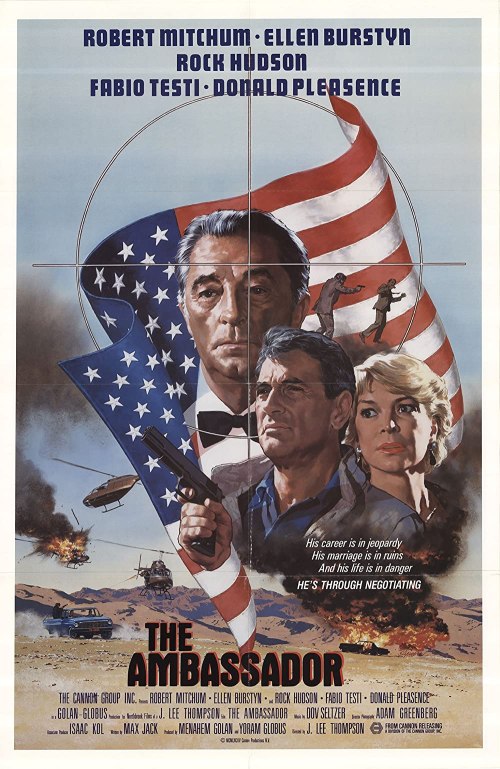
Peter (Robert Mitchum) is a US Ambassador to Israel who has an idealistic view on how to find peace in the Middle East by bringing together young Jews and Muslims who he hopes will work together for middle ground solutions. Not everyone including Peter’s own security agent Frank (Rock Hudson) thinks this is realistic. Peter’s wife Alex (Ellen Burstyn) feels ignored by her husband and falls into the arms of a much younger man named Hashimi (Fabio Testi) who just so happens to work for the PLO (Palestine Liberation Organization). Alex’s rendezvous with him are sexual in nature and during one of their meetups they are secretly recorded on film. Peter then gets blackmailed to pay a large sum of money, or risk having the movie broadcast on TV. Peter refuses to comply and orders Frank to find the whereabouts of the blackmailers hoping to retrieve the original print before it can be seen by anyone else.

This was yet another film shot on-location in Israel that was produced by Menahem Golan and his cousin Yoram Globus, who bought the production company known as the Cannon Group during the 70’s and were notorious for producing, and sometimes writing and directing, a lot of slap-dash action flicks that were made in such a quick, assembly line style, that it got them the nicknames of the Go-Go- Boys. This film isn’t as bad as some of those and features tight editing and interesting twists. It was inspired by the 1974 Elmore Leonard novel ’52 Pick-Up’ and Leonard himself was hired to write the screenplay, but after his first two drafts were rejected he walked-out. The only elements of the story that was retained was the sex film blackmail plot, but everything else was changed though 2 years later the Cannon Group produced 52 Pick-Up that starred Roy Scheider and Ann-Margaret that was more faithful to the original book.

Surprisingly the best thing about this version is Hudson and while I’ve been critical about some of his other performances he shines here despite being already quite ill and looking gaunt and not as muscular. The role had originally been offered to Telly Savalas, but due to scheduling conflicts he had to bow out and Hudson was brought in just a week before filming began. Even with his poor health he takes part in most of the action and has a strong presence though reports were that he and Mitchum did not get along and had many arguments throughout the shoot.

Mitchum, who took the role after getting accused of being anti-semitic and a holocaust denier, is wonderful despite his age and face that has a very tired and worn-out look. Burstyn is excellent too and I was genuinely shocked at her nude scene, no body double here, and at age 51 still looked great doing it.

Spoiler Alert!

The film’s ending had me rolling-my-eyes a bit with the way it’s able to bring together these Jewish and Muslin students at a remote location and somehow get them to see eye-to-eye on things, which seemed too easy and romanticized. The proceeding bloodbath did take me by surprise though having Mitchum conveniently leave the scene and is therefore not a part of the carnage that kills everybody else seemed like it would come-off as suspicious to others. The viewer knows he had no idea of the pending massacre, but the other characters don’t and having him quietly leave just before the shooting commenced would make some believe that he had something to do with it, or maybe even set-up the students to get killed and thus be despised by the other people at the end instead of considered a visionary hero like he is.

My Rating: 7 out of 10

Released: May 12, 1984

Runtime: 1 Hour 37 Minutes

Rated R

Director: J. Lee Thompson

Studio: Cannon Film Distributors

Available: DVD-R (MGM Limited Edition Collection) Blu-ray

Saint Jack (1979)

saint1

By Richard Winters

My Rating: 7 out of 10

4-Word Review: American pimp in Singapore.

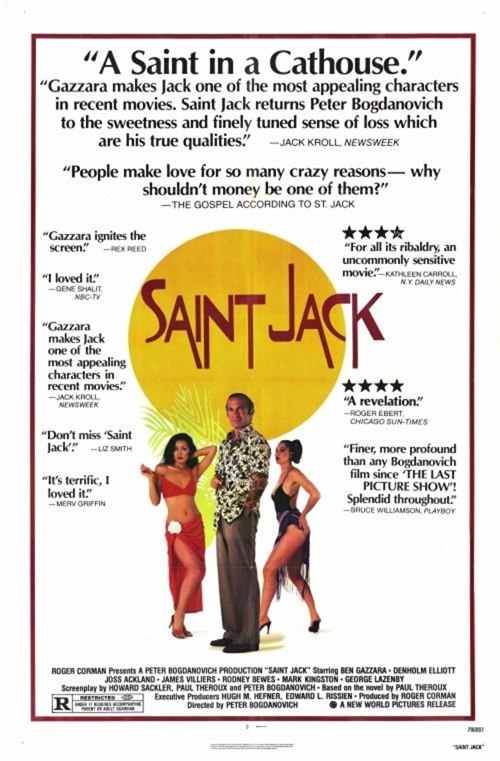
Based on the 1971 novel by Paul Theroux the story centers on Jack Flowers, an American who comes to Singapore in hopes of starting-up a profitable brothel and then moving back to the states a rich man. He finds the challenges more staggering than he initially thought and is constantly looking over his shoulder for the syndicate who would like to crush his business so it won’t compete with the other more established brothel’s in the region. In order to cover what he’s doing he works with a Chinese executive as a liaison for his clients. One such person is William (Denholm Elliot) a timid British accountant with a heart condition who has traveled to the area on an assignment. Jack enjoys William’s quiet demeanor and grows fond of him only to be heart-broken when he dies suddenly, which eventually changes Jack’s perspective on things specifically when he’s asked to take part in the blackmail scheme of a U.S. Senator (George Lazenby).

By the late 70’s director Peter Bogdanovich had fallen on hard times. He began the decade doing the acclaimed and award winning The Last Picture Show and followed it up with the equally impressive Paper Moon . However, after the critically panned musical At Long Last Love his career began to tumble. He tried following this up with Daisy Miller, but it appealed to only a small audience. Nickelodeon was his attempt at returning to slapstick comedy that had won him success with What’s Up Doc, but it dived at the box office too making this once promising young talent feel fully washed-up. In an attempt for a revival he decided to go in a completely different direction by doing something with a gritty realism.

Cybill Shephard, whom Peter was in a relationship with at the time, had read the Theroux novel when it was given to her by Orson Welles in 1973. She had suggested he make it into a movie, but he had initially resisted. Then in 1978 when she sued Playboy for publishing unauthorized nude photos of her she got rights to turn the book into a movie as part of the settlement and Bogdanovich decided at that point he would do the project. Since Singapore officials were aware of the book, which had not portrayed their country in a positive light, he was forced to create a mock synopsis called ‘Jack of Hearts’, a benign love story that he used to convince the government that was the movie he was making so he could get the permission to film there, which was worth the effort as the unique ambiance of the setting is the main thing that propels the movie and could not have effectively been recreated had it been done inside a Hollywood studio lot.

Gazzara’s performance is another chief asset as he’s never at a loss for quick quips, or sarcastic replies. I loved the way he’s shown constantly moving, never sitting still in one place for too long, which nicely accentuated his situation of needing to ‘on the move’ in order to stay one-step ahead of the bad guys. Elliot is excellent as well in an atypical role. Usually he does well playing stern, jaded, and detached types, but here conveys a genuinely sensitive person who seems cut-off from the worldly ways. Lazenby, best known as the one-and-done James Bond from Her Majesty’s Secret Service, gets a small, but pivotal role as a closeted gay politician who takes a stroll in the middle of the night to hook-up with a male prostitute while Jack secretly follows him that has a great voyeuristic quality and the film’s most memorable moment.

Out of all of his movies Bogdanovich has stated that this one and They All Laughed were his two favorites. Some may not agree as the story has a fragmented style where things happen all of sudden and without forewarning. Yet for me this helped emphasize the reality of Jack’s shaky environment. While hailed by many as a great director’s least known work it deserves to be seen more and when compared to his other output clearly unique and original.

My Rating: 7 out of 10

Released: April 27, 1979

Runtime: 1 Hour 52 Minutes

Rated R

Director: Peter Bogdanovich

Studio: New World Pictures

Studio: DVD, Blu-ray, Fandor, Plex, Tubi, Amazon Video

The White Buffalo (1977)

white

By Richard Winters

My Rating: 5 out of 10

4-Word Review: Buffalo haunts his dreams.

Based on the novel by Richard Sale, who also wrote the screenplay, the story, which takes place in 1874, centers around Wild Bill Hickok (Charles Bronson) who’s suffering from reoccurring dreams involving a giant white buffalo. He travels to the west in order to find the beast and confront it. It’s there that he meets Crazy Horse (Will Sampson). The two initially don’t get along. Bill is not a fan of Indians and once said “the only good Indian is a dead one”, but the two share a common bond as they’re both after the elusive buffalo in Crazy Horse’s case it’s to avenge the death of his infant daughter who was killed when the beast violently attacked their campsite. Having formed an uneasy alliance the two, along with old-timer Charlie Zane (Jack Warden) go out into the cold, wintry terrain in search for it while debating over whose land this country really belongs to: the white man or the Native Americans.  

Story-wise the film lacks any explanation for why Hickok is having these dreams, or what exactly the image of the white buffalo is meant to represent if anything. The plot goes off on a lot of tangents including a segment where Hickok visits an old-flame (Kim Novak) that doesn’t have much to do with the central story, nor propel the plot along, and could’ve easily been cut. There’s also a few proverbial gun fights though they’re generic in nature, don’t add much excitement, and quickly forgotten. 

Bronson gives his typical wooden performance though seeing him with dark circular glasses and sporting long hair does make him, in certain shots, resemble Ringo Starr. The rest of the cast if filled with familiar B-stars in minor roles including Stuart Whitman and Cara Williams, who have an amusing bit as a vulgar couple whom Hickok shares a stagecoach ride with. Jack Warden, who’s almost unrecognizable, has a fun moment when he takes out the glass eye that he’s wearing much to the shock of Crazy Horse.

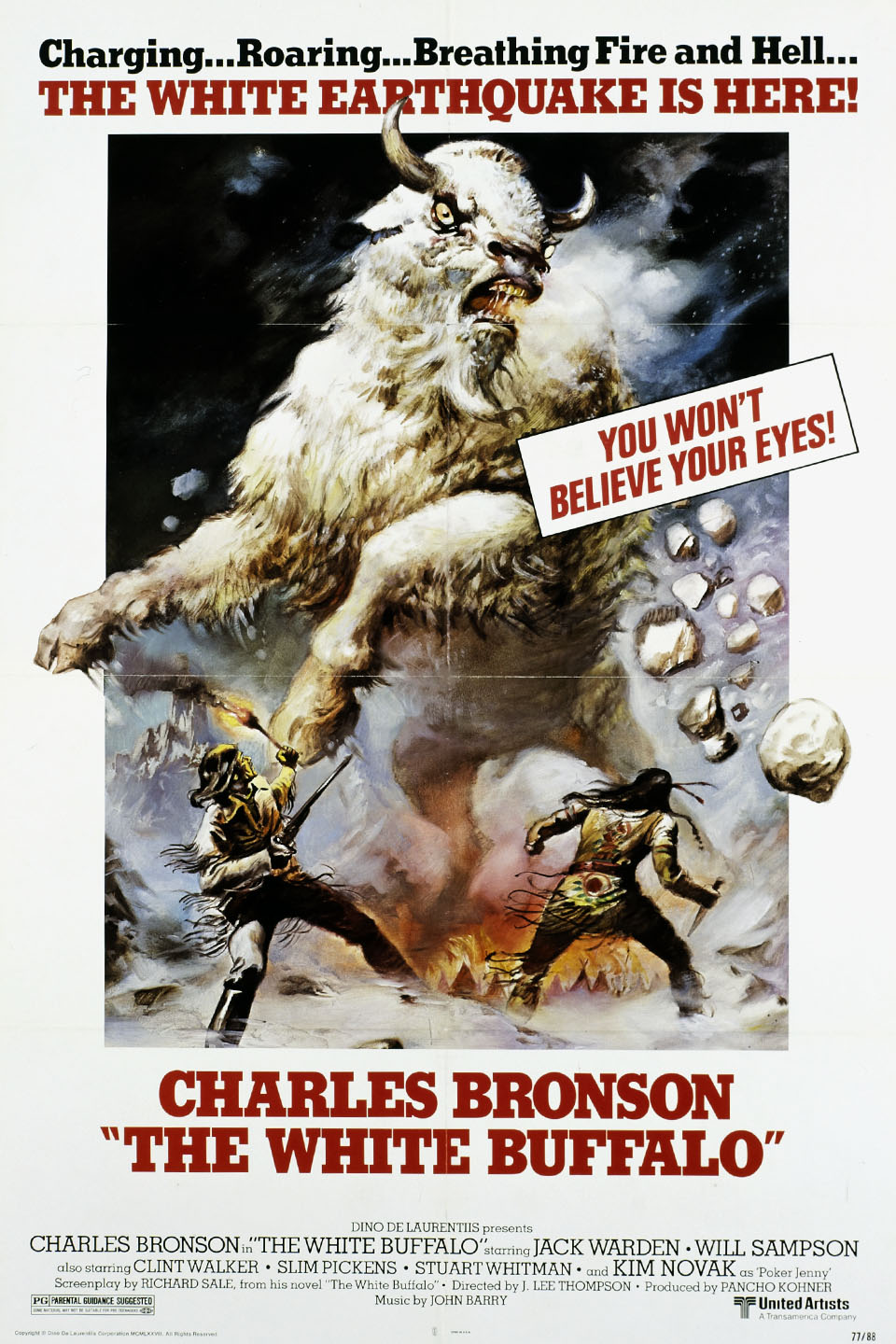
The only diverting element is the opening dream sequence that’s done over the credits where the viewer looks right into the eye of the beast close-up. Normally I’m not a fan of outdoor shots done on a sound stage, which always comes-off looking artificial, but in this instance it helps accentuate the surreal elements. The climactic sequence though in which both Hickok and Crazy Horse come face-to-face with the buffalo doesn’t work as it becomes painfully clear that the beast is special effects generated especially when Crazy Horse gets on top of it and repeatedly stabs it, which looks like someone stabbing into a sofa cushion with tacky fur stuck to it. We also never get to see a full-shot of the buffalo, just its head, so it’s difficult to gauge how big it really was. The truly disappointing part is that the illustration of the buffalo on the film’s promotional poster seen above is far more impressive looking than anything you’ll actually see in the movie.

Probably the only interesting aspect about the production is not what occurred in front the camera, but behind-the-scenes. Will Sampson, who’s by far the better actor and the story could’ve been centered around his character alone and it would’ve made it a more interesting movie, refused to read his lines for over 24 hours when he became aware that white actors had been hired to play the roles of the Native Americans and only went back to performing his role once the producers agreed to casting actual Indians for the parts. This then directly lead to the American Indian Registry of the Performing Arts, which he founded. 

My Rating: 5 out of 10

Released: May 6, 1977

Runtime: 1 Hour 37 Minutes

Rated PG

Director: J. Lee Thompson

Studio: United Artists

Available: DVD, Blu-ray, YouTube (with ads)


An Average Little Man (1977)

average1

By Richard Winters

My Rating: 9 out of 10

4-Word Review: Father avenges son’s death.

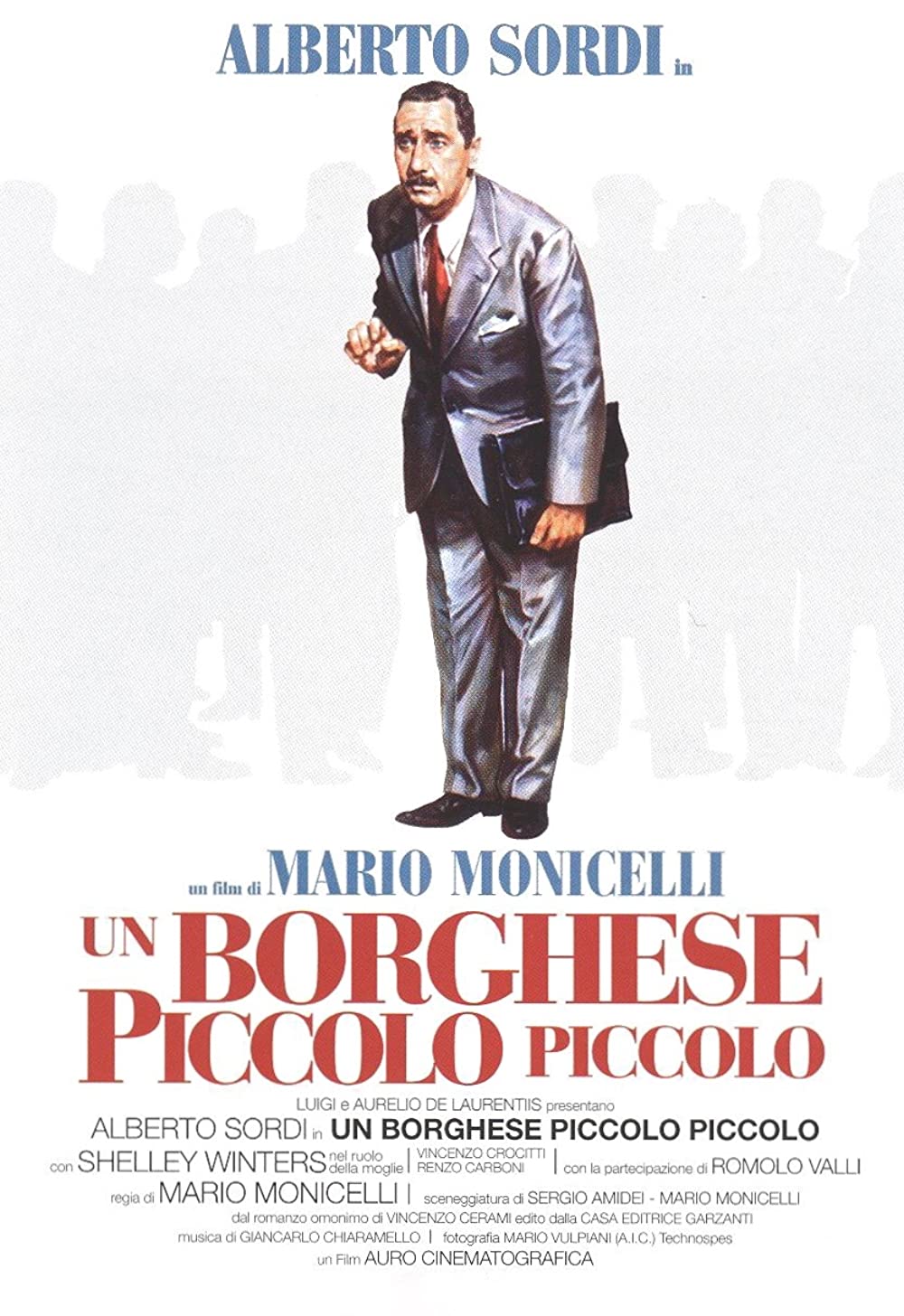
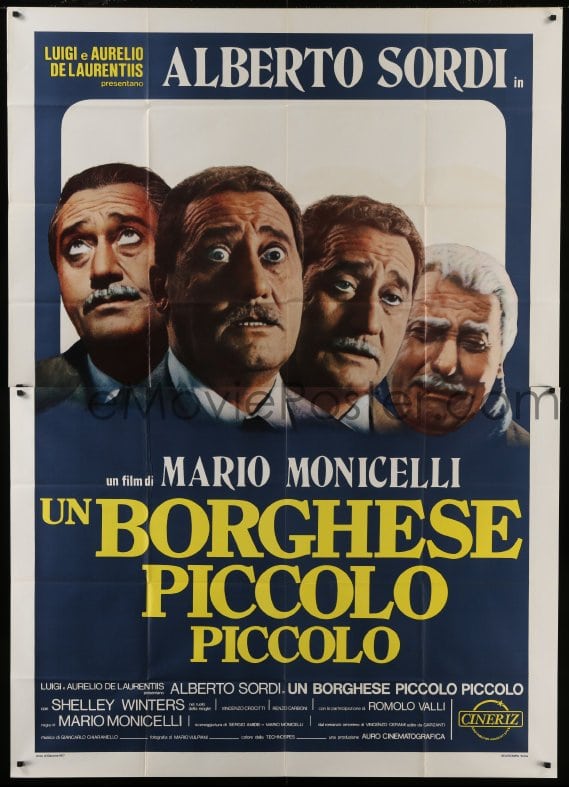
Giovanni (Alberto Sordi) is an accountant who’s ready for retirement. His son Mario (Vincenzo Crocitti) is following in his father’s footsteps by becoming an accountant as well. He has passed all of his exams and fully qualified, but competition is tough, so his father tries to use his leverage to get his son hired there, or at least have his name pushed to the top of the list. Unfortunately on the morning of the interview Mario is killed by a stray bullet from a bank robbery that was occurring across the street. Giovanni is devastated and the news is so shocking to his wife Amalia (Shelley Winters) that she has a stroke and is no longer able to speak, or walk, or even feed herself. Giovanni doesn’t trust the system to bring the killer (Renzo Carboni) to justice, so he decides he must do it himself by stalking the man and then eventually kidnapping him.

The film, which is based on the novel ‘A Very Normal Man’ by Vincenzo Cerami, who also wrote the screenplay, is filled with many memorable moments. I got a kick out of Giovanni’s tiny car that looked like something he could wear instead of ride and the way he gets around a traffic jam by driving it on the sidewalk. The mounds of paperwork in his office where no one can see each other because they’re literally swallowed up by them is a funny visual as is Giovanni’s supervisor (Romolo Valli) who cleans the dandruff off of his hair and onto his desk. There’s also a scene that is both darkly humorous and highly disturbing where because the cemeteries are filled to capacity the remaining dead bodies must be stored inside a warehouse with each casket put one on top of the other. Families and mourners crowd in to find which one has their loved one in it, but because of the gas coming out of the decomposing bodies that create sporadic explosions that cause the caskets to go tumbling.

The appearance of American actress Shelley Winters is another shocker in that she’s dubbed with an Italian speaking woman. Hearing her in a voice that is clearly not her own is at first disconcerting, but she gives a brilliant performance nonetheless. Normally she’s known for her talkative nature, both for the parts she plays in front of the camera, but also in her real-life interviews, yet she reflects a comatose woman quite convincingly and her facial expressions, particularly when she’s brought into the cabin to observe the killer’s torture, are excellent.

Sordi, a well known Italian film star and comedian, does well too and it’s interesting seeing his hair go from salt-and-pepper to fully gray as the movie progresses. His character though isn’t exactly likable. While he sees himself as being ‘selfless’ as he sacrifices everything, and potentially breaking the rules, for the love of his son, he seems more selfish because why should his son get a unearned break over all the other candidates? While he has his funny share of moments he’s also a bit unhinged even at the beginning with his almost naive belief that a system he knows is corrupt is now somehow ‘morally’ obligated to give him and his son a favor. Maybe this was the intended ironic point, but it would’ve played better had the son been less of a vapid, empty shell.

Spoiler Alert!

What makes this film stand-out from virtually any other is its extreme shift in tone where it starts as a satirical comedy, but ends as a grim thriller. Many script experts will insist this ‘can’t be done’ and in Hollywood would be considered forbidden. It also doesn’t have the inciting incident occur until an hour in even though books like ‘Save the Cat’, which is the ‘screenwriter’s bible’, will tell you it must happen within the first 5 pages of any script. There’s also no forewarning to the killing it’s just a completely random event with no connection to anything that came before, which again most people in the movie business will say is a ‘mistake’.

While I might’ve done it slightly differently by having Giovanni go insane when one of the supervisors refuses to hire his son after promising him they’d do it and then kidnapping that individual to make it seem a little more connected to the first half, I’m still impressed with how effectively it all works either way. It literally breaks every screenwriting rule and still succeeds and should be used as an example to anyone insisting that movie scripts that don’t stringently conform to the Hollywood formula will fail as this one clearly doesn’t.

average2

My Rating: 9 out of 10

Released: March 17, 1977

Runtime: 1 Hour 58 Minutes

Rated R

Director: Mario Monicelli

Studio: Cineriz

Available: DVD-R (Italian with English Subtitles) (Moviedetective.net)

The Prime of Miss Jean Brodie (1969)

prime1

By Richard Winters

My Rating: 8 out of 10

4-Word Review: Teacher influences her students.

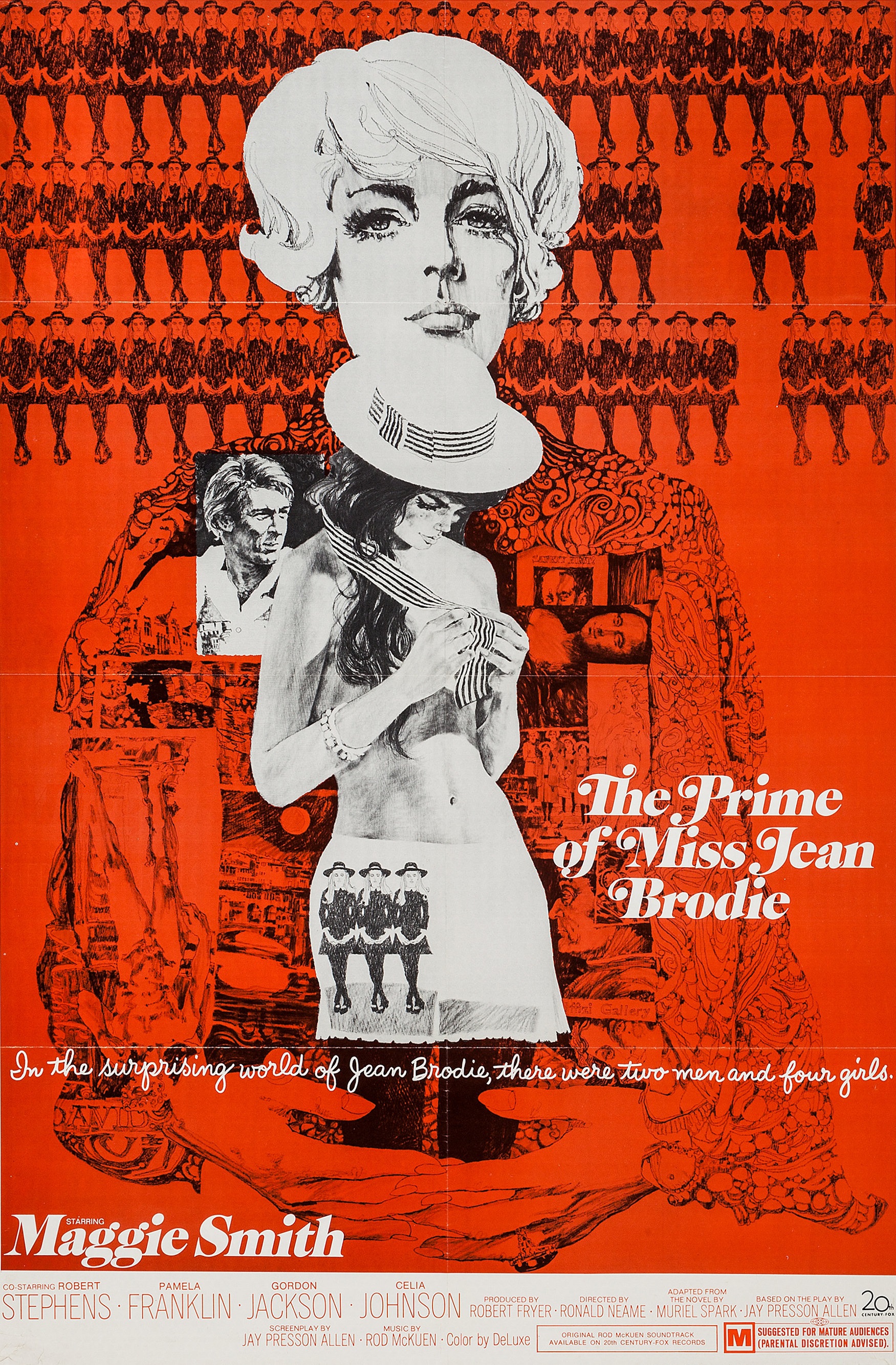
Jean Brodie (Maggie Smith) is a teacher at an all-girls school in Edinburgh, Scotland in 1932.  She routinely strays from the core curriculum and instead instills her own quirky value system, like her admiration for fascist dictators, onto her students. She views them as empty vessels there to be programmed to her liking as she routinely will say: “give me a girl at an impressionable age and she’s mine for life”. The school’s Headmistress, Miss Mackay (Celia Johnson) is aware of Brodie’s unorthodox teaching methods, but unable to do much about it, despite the repeated warnings that she gives to her, due to the fact that Brodie has tenure and been at the school longer than she. Sandy (Pamela Franklin) is one of Brodie’s students, who used to admire her teacher, but now has turned on her and comes up with a way to have her fired, which leads to a dramatic confrontation between the two.

One of the first things that struck me about the story, which is based on the play of the same name by Jay Presson Allen that was based on the novel by Muriel Spark that some feel was inspired by a teacher named Christina Kay who taught at James Gillispies School that Muriel went to as a child, is that it works against the grain of most films. In our individualistic culture the modern day movie centers around the rebel, or those that choose to work outside the system of an autocratic institution and the people that uphold those rules and enforce them are usually the villains. Here though it’s the stuffy authoritarians that ultimately become the makeshift heroes while the non-conformist gets exposed as a ‘loon’ that got too far off-base and needed a serious reeling-in.

It’s also the perfect study of someone who seeks control over others and cannot function in relationships were both sides are on equal footing. We see this not only with the way Jean openly humiliates her students by ridiculing them for even minor infractions like having their shirt sleeves rolled-up, but also in her maladjusted love life. Since she cannot have a healthy relationship with them as that would require selfless behavior from her, which she can’t give, so instead she emotionally manipulates two men (Robert Stephens, Gordon Jackson). She enjoys the attention they give her and gives them just enough incentive to keep on doing it, but never more than that. When the Jacskon character finally does get married to someone else, her sad expression isn’t about losing a person she loved, but more upset that she could no longer have this simp at her convenient disposal.

The recreation of the 1930’s girl school atmosphere was impeccable. Too many times I feel movies dealing with a bygone era don’t recreate it in an accurate way, or it gets viewed through a warped modern lens, but here I came away convinced it was accurate and this in large part could be credited to director Ronald Neame, who was alive when the story took place and therefore better able to feed-off his memory and experience. The scene where the girls all get up out of their seats and stand at attention the second the headmistress walks into the room is one of my favorite moments. To some degree it would be nice if kids today could show that kind of respect to an adult figure, but on the other hand it also reveals the dark side to extreme obedience to authority, which creates an atmosphere that allows someone like Jean to incorporate her will and beliefs onto the students without them ever questioning it.

In the end this is a terrific portrait of how teacher’s where viewed back in the day and the tremendous amount of influence they could hold over their pupils. There were no teen idols, singers, celebrities, or social media influencers back then, so the teacher was the center of most children’s lives sometimes even more so than their parents. While some things have changed the debate about what a teacher chooses to convey in the classroom and how far they should be allowed to stray from the core curriculum rages on today. No matter what side of that issue you may stand it just proves that this story is even more relevant now as it was back then.

My Rating: 8 out of 10

Released: February 24, 1969

Runtime: 1 Hour 56 Minutes

Rated M

Director: Ronald Neame

Studio: 20th Century Fox

Available: DVD/Blu-ray

Don’t Cry, It’s Only Thunder (1982)

dont

By Richard Winters

My Rating: 6 out of 10

4-Word Review: Medic helps out orphanage.

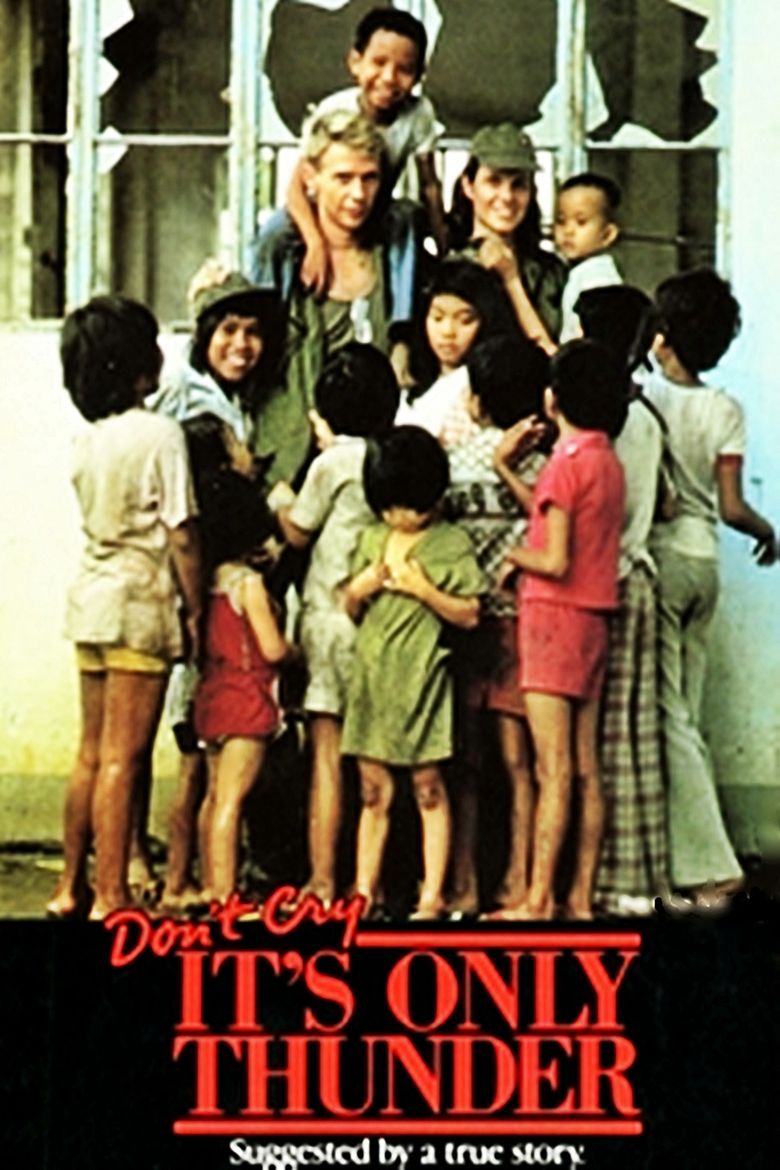
Brian (Dennis Christopher) is an army medic during the Vietnam War who’s stationed at a hospital in Saigon. Young and idealistic he initially cannot handle the death and carnage that he comes into at the clinic and feels he’s not making much of a difference especially as he sees the severely injured soldiers come-in and die with very little that they can do. He then makes a promise to one of them to look in on an orphanage and try to find a safe new location for the children and two nuns who look after them. At first Brian is not into the kids, but eventually he bonds with them especially Anh (Mai Thi Lien) a 12-year-old girl who cannot speak and who he wishes to adopt despite all the red tape that he must go through.

The film is loosely based on the actual experiences of Paul G. Hensler, who first wrote it into a novel before being commissioned to turn it into a screenplay. His motive was to show more of the humanitarian side to the war versus the battle scenes that made up so much of the other films that dealt with the Vietnam conflict. In a lot of ways it’s a refreshing change of pace and unlike with M*A*S*H, that focused on medics during the Korean War, there’s no humor, or pranks, but instead solely focuses on the serious side of taking care of the wounded and how emotionally exhausting it can become. There’s a few moments where a passing character will make a joke, I suppose as an ode to M*A*S*H, but instead of laughs from the others it’s met with eye rolls, which is how it should be as there’s certain situations where humor just isn’t going to help things and in some ways such as here just plain out-of-place.

Christopher, who’d been acting in films since he was 15, but rose to critical acclaim in Breaking Away only to make a bad career turn by starring-in the offbeat dud Fade to Black, redeems himself with his performance here. He does though look incredibly young almost like he’s only 14, but his youthful appearance helps explain his character’s sometimes naive nature and tendency to be overly idealistic and thus makes some of the things that he does, which an older more seasoned person might refrain from, more understandable.

I wasn’t as keen with Susan Saint James. She was 10 years older than Dennis, but looked more like it could’ve been 20 and thus making the eventual love scene between them come-off as forced and mechanical. I’ll give her credit she does have an effective emotional moment, but her character is too Jekyll and Hyde-like as she initially is really into helping the orphanage and even gets Brian more into it and then suddenly like a light switch doesn’t want to have anything to do with it, only to eventually to go back, kind of, to helping the kids out, which is like watching someone with a ping pong personality. If anything I really enjoyed the two Vietnamese nuns (Lisa Lu, Shere Thu Thuy) and the way they would sometimes compromise their moral beliefs for the sake of the kids.

The film manages to be gritty most of the way and despite being filmed in the Philippines still gives one an adequate feeling of the civilian experience in Vietnam during that time. However, the segment where a song gets played that was supposedly sung by the kids while we view a montage of them playing is over-the-top sentimental and even jarring as we were used to the background noise of battle and thus comes-off as sappy and out-of-place. Watching the kids having a bit of fun is fine, but we didn’t need the added music.

Brian’s insistence and almost obsession at adopting a preteen girl will be considered cringey by today’s standards. The film makes clear that his intentions are pure, I suppose this is why there was the sex scene thrown between he and Susan to alleviate any viewer concern that he wasn’t a red-blooded All-American guy who was into chicks his own age, but it still looks even in the most charitable way as kind of questionable especially since he can’t even have any conversations with her since she doesn’t speak. He contends that he’s the one guy who can help her, but how since he has shown no background in dealing with those with speech issues? The book cover of which the film is based has a picture of the real Hensler, of which Brian is supposed to represent, holding an infant girl, which I presume is who he wanted to adopt. Having the girl character being a baby like in the book instead of 12 going on 13 would’ve worked better, or having him try to adopt a group of kids to bring home with him, like 3 or 4 that was an even mix of boys and girls, but to have him get overly infatuated with just one makes it unintentionally seem likes his grooming her to being a Lolita in the making. A bratty child (Truong Minh Hai) even alludes to this at one point, which makes you wonder; did he know something the rest of us didn’t?

Spoiler Alert!

Overall, despite tanking at the box office, it’s an decent drama though its never been released on DVD and trying to find a print of it is difficult.  It also goes on about 15-minutes too long and loses some of its potency by the end. A perfect example of this is when the orphanage gets unexpectedly bombed without warning, which is genuinely horrific, but when another unexpected bomb goes off later the shock effect is no longer there and thus they should’ve kept it down to just one.

My Rating: 6 out of 10

Released: May 3, 1982

Runtime: 1 Hour 48 Minutes

Rated PG

Director: Peter Werner

Studio: Sanrio Communications

Available: VHS

The Prisoner of Zenda (1979)

prisoner

By Richard Winters

My Rating: 4 out of 10

4-Word Review: A king look-alike.

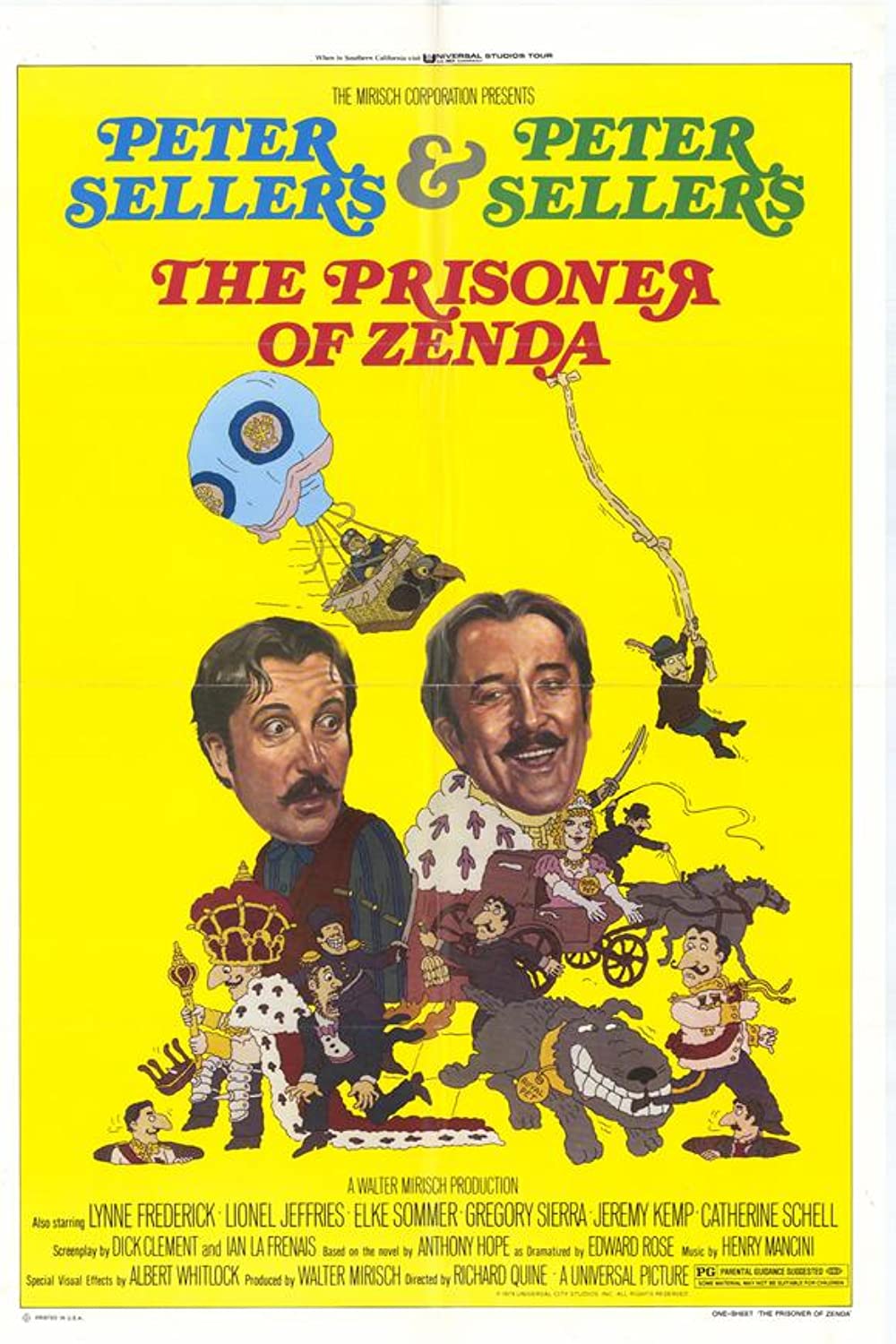
When King Rudolph IV (Peter Sellers) dies in a hot air ballooning accident his heir apparent, Rudolph (Peter Sellers), who spends his days in casinos gambling and carousing, gets summoned to be the next King. His half-brother, Prince Michael (Jeremy Kemp), feels he’d be more suitable for the throne. He sends out an assassin to kill Rudolph in order to allow Michael to become King. While the assassin tries to carry-out the mission his attempt fails due in large part to the quick thinking of Sydney (Peter Sellers) a local carriage driver. Sydney is actually Rudolph’s half-brother due to an affair that the King had with a British actress years earlier, but he is unaware of this and yet due to his striking resemblance to the new would-be King he gets hired as decoy in order to help prevent any more assassination attempts on Rudolph’s life.

While the film, which is loosely based on the classic Anthony Harvey novel of the same name, was met with a lot of criticism upon its release I did come away impressed with the look of it. This was the last film directed by actor-turned-director Richard Quine whose creative output in the early part of his career fared far better than his films towards the end, which were pretty much all box office bombs and critical duds. This one though has some great looking sets and excellent period piece costumes as well as impressive on-location shooting done at historical castles throughout Austria, which almost makes up for its other inadequacies.

Sellers for his part isn’t bad either at least on the acting end. While the reports were that his health was declining he certainly didn’t look it and his use of accents, particularly Sydney’s Welsh-Scottish one, is excellent. However, on a comic level his presence is quite bland. It’s almost like he put in so much effort into the characterizations that he forgot to be funny. Some may find Rudolph speaking with a lisp and unable to say the ‘R’ sound somewhat amusing though this gets overplayed and ultimately old, but outside of that he has nothing else that he says or does that’s humorous. The audiences are coming in expecting him to be the comic catalyst when instead it’s Gregory Sierra, in a very energetic Wily E. Coyote type role as a vengeful count, and Graham Stark as a prison guard who manage to get any genuine laughs.

Incorporating Sellers’ then wife Lynn Frederick into the proceedings doesn’t help. Frederick was fielding leading role offers for two TV-movies at the time including that of The Torn Birds, but Sellers convinced here that cinema work, even if the role was small, was superior to that of doing something for TV and thus she rejected those and took this one. Their marriage though was already in a rocky stage and their therapist advised them not to work together which resulted in Sellers routinely berating his wife in-between takes to the point that she’d sometimes break down into tears. The coldness between the two really shows onscreen as they share no chemistry and thus making their character’s romantic moments come-off as quite flat. If anything the scenes between Sellers and Elke Sommer, whom he co-starred with years early in A Shot in the Dark, works better.

While the production is polished and even has a nice action moment where the carriage that Sydney is in gets attacked the comedy is completely lacking and the film has a poor pace. You keep waiting for the humor to gel, but it never does. The attempts that you do get are corny and lame, or just too subtle to elicit even a chuckle resulting in yet another Sellers’ misfire.

My Rating: 4 out of 10

Released: May 25, 1979

Runtime: 1 Hour 48 Minutes

Rated PG

Director: Richard Quine

Studio: Universal

Available: DVD-R