Monthly Archives: September 2026

The Nickel Ride (1974)

By Richard Winters

My Rating: 4 out of 10

4-Word Review: No one to trust.

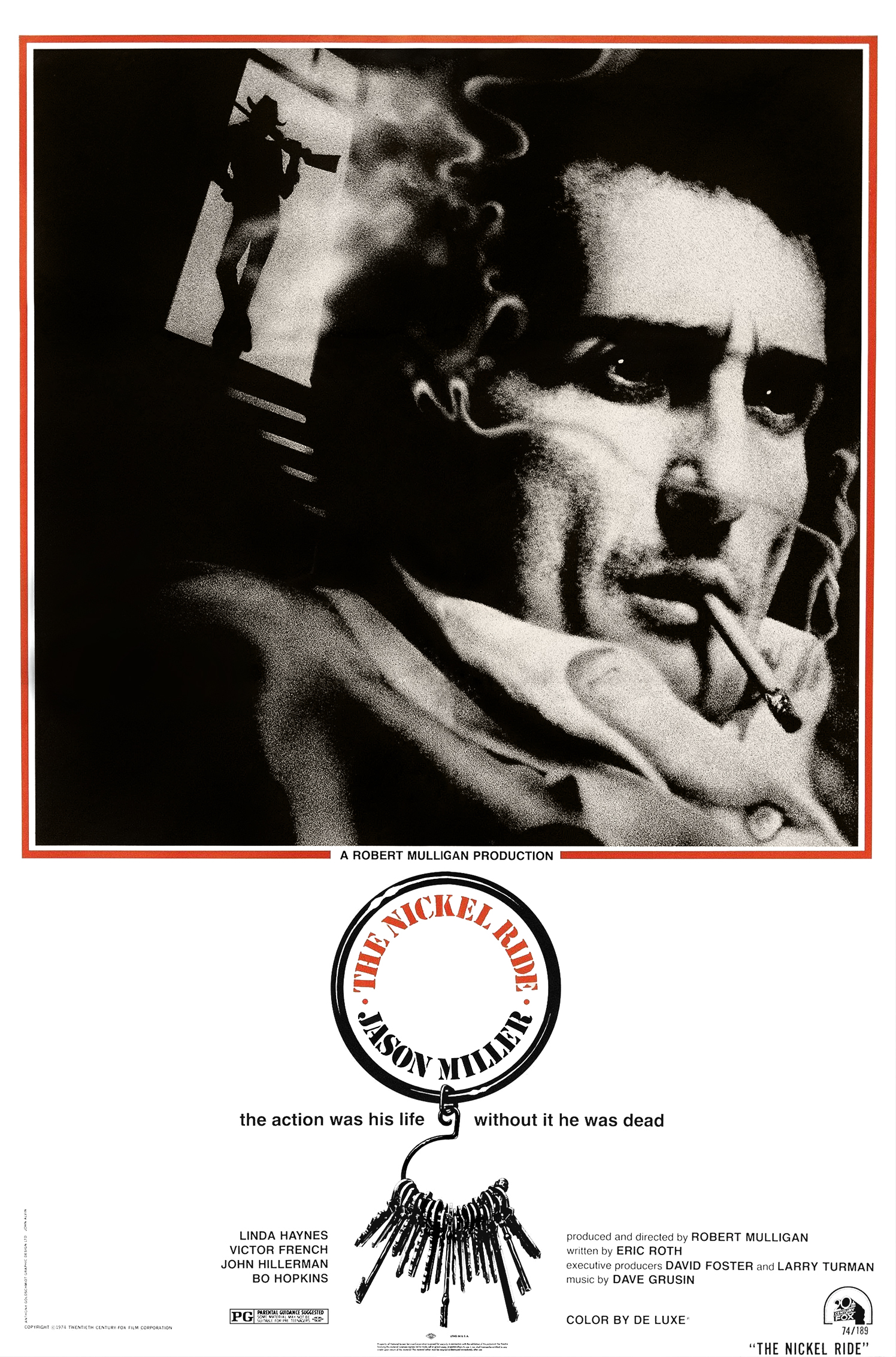
Cooper (Jason Miller) is a member of a Southern California crime family and harbors a large set of keys to local warehouses that are used to store stolen goods. Things though haven’t been good recently as he’s starting to feel that his crime ‘friends’ are turning on him. It all starts when Paulie (Lou Frizzel) whom he is close to, is unable to fix a fight, and then turns up dead. Feeling the pressure after a few close calls he takes himself and his girlfriend Sarah (Linda Haynes) out of the city and to a country cabin hoping the distance will protect them, but there’s soon signs that they’re being watched and the cabin even gets broken into while they’re away. Will Cooper be able to stave off those that want him killed, or become their next victim?

This film is best known as being the first screenplay written by Eric Roth, he wrote The Strangers in 7A in 1972, but that was a teleplay, and who later went on to win the Academy Award for writing Forrest Gump. While the script does start out with some good conversational dialogue where it shows criminals more as people than caricatures the element that really makes this film interesting is the cinematography by Jordan Cronenweth especially with the way it captures Los Angeles. So many other films focus on the glitzy side of the city, but here we’re treated only to its working-class neighborhoods filled with grimy old buildings and factories until it almost seems like it was shot in some rust belt city in the Midwest. The yellowish tint gives it a faded look and helps to symbolize, at least for me, Cooper’s fading out of favor with the syndicate.

The film also has stellar performances with Bo Hopkins being a stand-out. He plays this Joe Buck type of character. A self-styled cowboy who seems more performative than anything and who Cooper initially discards as a non-threat only to have him slyly start to tease that line. Haynes, looking at her most beautiful, is also excellent as a country girl with a hick accent, who quietly catches onto things quicker than Cooper expects, and who has a physical altercation with him, which is quite startling. The movie also features Victor French, who later found fame on the TV-Shows of ‘Little House on the Prairie’ and ‘Carter Country’, but here he doesn’t have a mustache and I didn’t recognize him until almost the very end.

Casting Miller in the lead is the most interesting aspect. Initially I thought he was given the part due to his breakout role as Father Karris in The Exorcist, but this movie was shot in the fall of 1973 well before the release of the other one, which didn’t come out until December of that year, so why the producers would take a chance on someone who was relatively unknown at the time I don’t know. His presence though works for the most part. The supporting cast do a better job at acting, but the stiffness that he displays helps accentuate his character being out-of-the-loop and essentially lost in his own movie. My only criticism with him comes when Hopkins enters his office and Miller displays a fearful look. Most people would be scared at that point as they’d have no idea if Hopkins, a rogue, quick trigger, is going to kill them, but when you’ve been in the criminal underworld environment, you’d know not to display such a vulnerable emotion to your would-be advisory.

The movies downfall, and the most likely reason why it did poorly at the box office, is that it’s way too talky. People are expecting action with these types of movies and for the first hour there’s very little. Things improve slightly during the second part when the couple moves to the cabin, but even here there’s some head-scratching moments like Cooper deciding to store his handgun in a drawer of a table that’s right next to the front door. If a bad guy breaks in, which would most likely be through the front door, he’d have no way to get to his gun as the intruder would be blocking his access to the drawer. Why even store the gun at all? Since he had no idea when they might be attacked why not keep the gun on him at all times?

Spoiler Alert!

The most annoying thing is when Hopkins steals away Miller’s rifle and then shoots Haynes dead. Cooper is then forced to try and run through the forest surrounding the cabin in an attempt at evading Hopkins. However, this all turn out to be a dream, which is a cop-out. Then about 8-minutes later, Hopkins again comes after Miller and shoots him with a rifle and this is not a dream, but why even have the dream aspect at all if the showdown between Hopkins and Miler is going to be inevitable anyways?

I did like the way Miller strangles Hopkins as it’s more delayed than in other movies where you’re made to believe you can successfully strangle a person in only a few seconds, but in reality, it takes much longer. Miller even makes grunting noises while he’s doing it in order to emphasize the amount of strength and pressure that would be required, which is great. However, when Hopkins does finally die, his neck does not display any abrasions or red marks even though it should’ve.

My Rating: 4 out of 10

Released: May 17, 1974

Runtime: 1 Hour 39 Minutes

Rated PG

Director: Robert Mulligan

Studio: 20th Century Fox

Available: DVD (2 Disc)
When Time Ran Out (1980)

By Richard Winters

My Rating: 0 out of 10

4-Word Review: A big volcanic eruption.

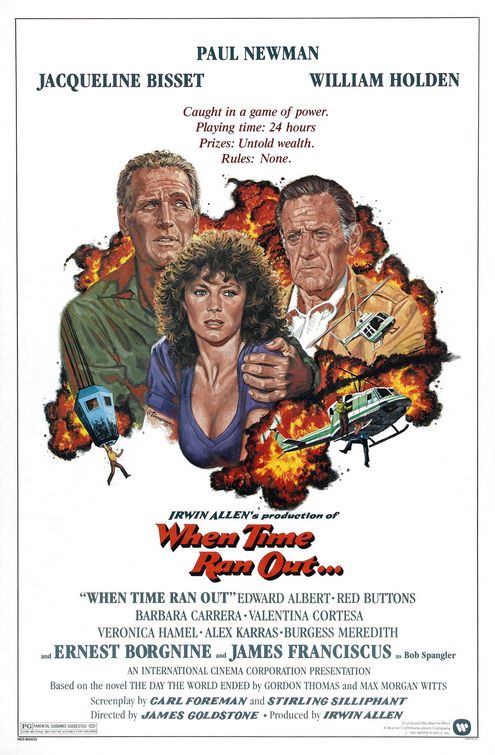
Hank (Paul Newman) works on an oil rig that’s on a small tropical island who becomes concerned that the giant volcano there is ready to erupt. Shelby (William Holden) owns and runs a resort hotel that’s also on the island and is reticent to accept the warnings that Hank gives him as he’s afraid the news might panic his guests and cause undue harm to his business. He’s further backed up by Bob (James Franciscus) who has inherited the island from his father and wants to turn the location into a tourist local. He tries to assure the guests that even if the volcano erupts the hotel will be sturdy enough to withstand it, but Hank openly disagrees and tells those that are willing to listen that they should come with him who will take them to a safer location.

While disaster flicks were quite plentiful during the 70’s and often times ridiculed, I found most of them to be marginally entertaining and sometimes even well done, but this one is quite clearly the absolute worst. The idea for the film was ‘inspired’ by the 1969 novel ‘The Day the World Ended’ by Gordon Thomas, which was the true account of when Mount Pelee erupted in 1902 and killed 30,000 people. Had it stuck to being a historical recreation it might’ve worked, but producer Irwin Allen decided to modernize the setting and characters until nothing from the original story is left making it just another generic formula piece too reminiscent of other better films that had done it before and which offers no substance, or anything new.

The characters are of a stock variety and unable to propel the story. Newman is especially weak, he’s one of my favorite actors, but here it’s quite obvious that his heart wasn’t in it and he’s just phoning it in the whole way. Bisset is also wasted and the secret love affair that they have, she’s supposed to be marrying Holden who proposes to her, isn’t interesting because there’s never any big clash between the two men, so what’s the point of introducing a dramatic element if it comes with no payoff?

The rest of the cast suffer similarly boring dilemmas including Red Buttons who plays a fugitive being tailed by a cop played by Ernest Borgnine. The two are immediately at odds, but then when Borgnine gets injured during the volcanic event Buttons decides to come to his aid. While this is initially touching it ends up getting overplayed as Buttons continues to help him more and more until you forget that they were ever adversaries and the original irony gets completely lost.

Veronica Hamel is wasted here too playing the wife of Franciscus who is apparently unaware that she’s been played throughout her marriage, as he’s been secretly carrying on with another woman. I just can’t believe that she would be that fooled that much. Most women have a sense when something in their relationship is off, and I think she would’ve internally known he was cheating even if she couldn’t prove it. The scene where she’s finally forced to face the harsh reality doesn’t have much energy as all she does is walk away. Having her angrily attack the cheater, or the other women, or maybe even pushed them into the lava when it hits the place, would’ve given it some interesting payoff, instead of it just ending on a flat note like everything else.

Having so many people refuse to go with Newman to seek safety I didn’t buy into. There was nothing special about the hotel, which resembled more like a business building, that would convince me that it was ‘specially built, for volcanoes and would be a safe place to stay. Most people when they’re in a dangerous situation want to be doing something and not just sitting in one place waiting to die and feebly hoping for the best. Granted there still might be some that would choose to stay behind, but I felt it would’ve been a much smaller number and with that in mind we should’ve seen them pay for their bad decision by observing the shocked looks on their faces when the hotel crumbles versus an explosion that gets matted onto the film negative and looks completely fake.

I could almost handle the cardboard characters and storyline if the special effects were at least halfway decent, but they end up being the biggest letdown. Apparently, the budget got slashed significantly halfway through the production forcing them to put up with subpar effects that is just so bad it’s laughable. What’s the point of even doing a disaster flick if the whole source of what we’re supposed to fear, which is the volcano, resembles nothing more than an animated painting? Even the flowing hot lava looks cheesy like it was all done in front of a green screen making the whole crossing the bridge segment, which was intended to be the film’s tension packed highlight, come off as boring and unconvincing.

The only positive thing I can say about it is that Franciscus plays an excellent antagonist. He spent most of his career as generic good guys, so having him go against type for once, was a refreshing change of pace, but unfortunately the rest of the film is so bad that his efforts were largely forgotten and didn’t help propel his career in any type of interesting way.

My Rating: 0 out of 10

Released: March 28, 1980

Runtime: 1 Hours 49 Minutes

Rated PG

Director: James Goldstone

Studio: Warner Brothers

Available: DVD, Amazon Video, YouTube


Phantom of the Paradise (1974)

By Richard Winters

My Rating: 7 out of 10

4-Word Review: Record producer exploits songwriter.

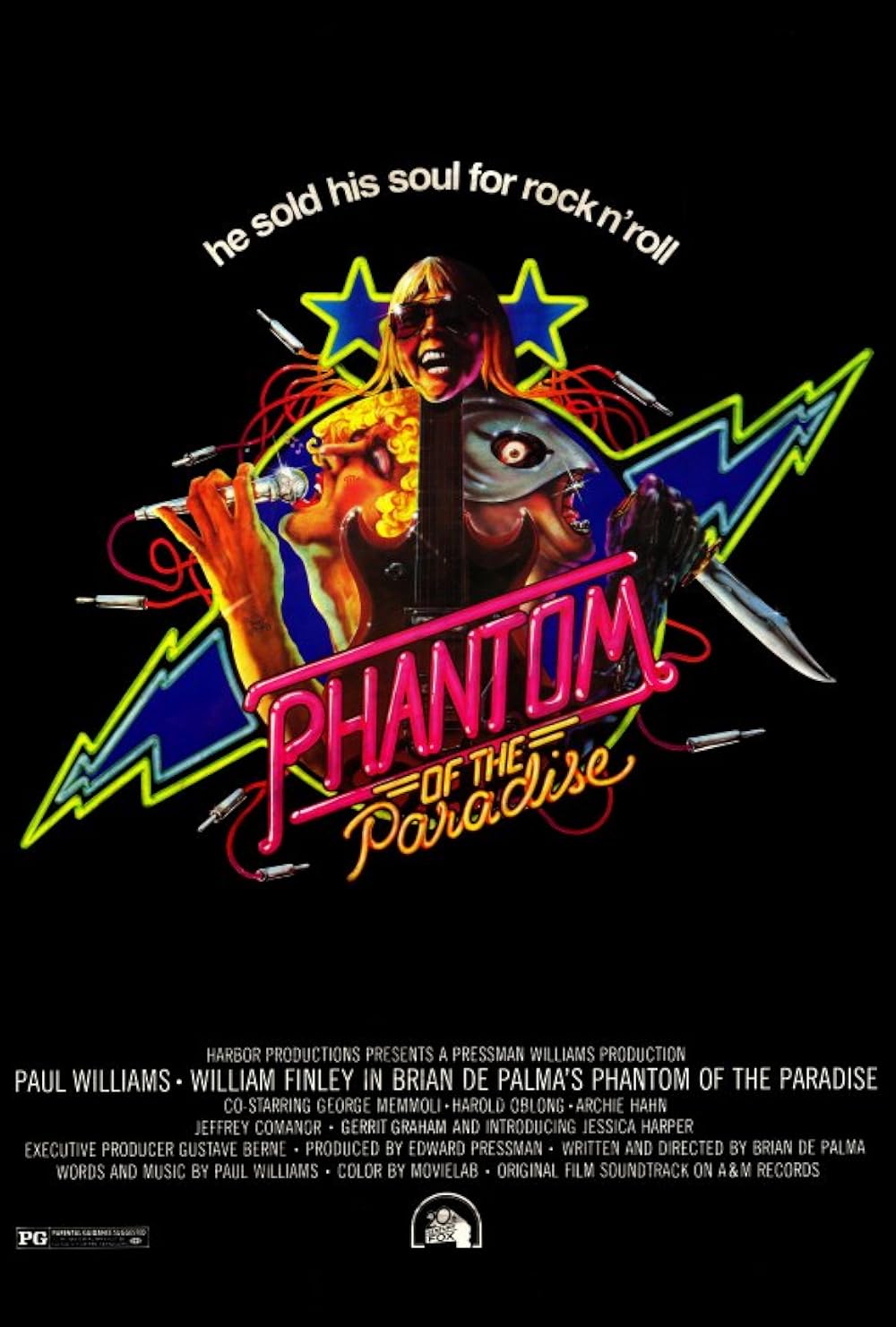
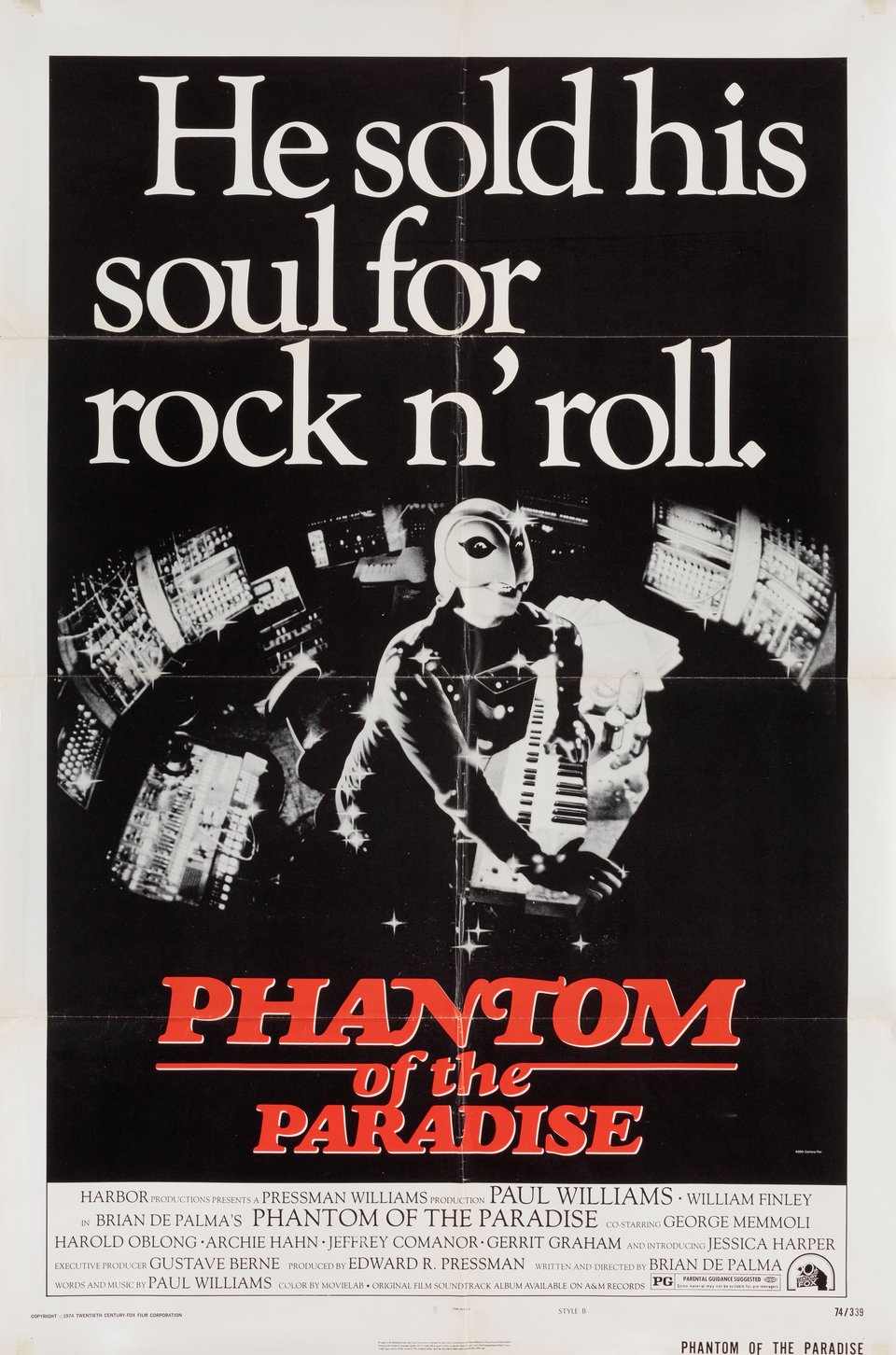
Winslow Leach (William Finley) is a talented, but unknown songwriter whose written a cantata based on the Faust legend. Famous record producer Swan (Paul Williams) overhears Winslow singing it and decides he’d like to use if for the grand opening of his new concert hall. Swan speaks with Winslow about the piece leading Winslow to believe he’s finally found his ‘big break’ but then doesn’t hear back from him for another month. Winslow then goes to Swan’s office but is kicked out when Swan refuses to see him. He then makes several other attempts to meet with him before Swan has him arrested on trumped up drug charges and sent to prison. It is there that Winslow realizes that Swan had his cantata stolen and now plans on using it to stage his own production while not giving Winslow any credit for having written it. This so enrages Winslow that he manages to escape from prison and storms the production headquarters only to accidentally fall into a record press machine that severely disfigures him. Now, while wearing a mask, Winslow continues to terrorize the place as ‘The Phantom’, which causes Swan to decide to make a deal with him. He asks Winslow to rewrite the cantata with beautiful new singer Phoenix (Jessica Harper) in mind to sing it. Since Winslow is secretly in love with her and also admires her immense talents, he agrees, but then Swan forces him to sign a contract in blood that has some very unusual clauses.

This was writer/director Brian De Palma’s attempt to mix horror with the irreverent quicky comedy of some of his earlier films from the late 60’s. The result is a mishmash of ideas with some of it mostly working. I really liked the visual style that has to be seen on the big screen, which I was fortunate enough to do at the Alamo Drafthouse recently, to fully appreciate it. I loved the over-the-top set pieces like Swan sitting in the center of his desk that’s made to look like a giant record. The outrageous costumes, garish music, quick edits, and his trademark split screens all help to make it highly entertaining on a visual scale.

Where it starts to have problems is with the humor. Like with De Palma’s earlier experimental films it has an engaging, offbeat quality that I liked and even found funny, but it gets a bit overboard and it ruins the tension. A good example of this is when Winslow goes to Swan’s office and gets kicked out, but in a very silly way that comes complete with cartoonish sound effects. This would’ve worked better had there been more of an attempt to make it a legitimate horror with only a little dark humor sneaked in versus an all-out camp feast that unfortunately hurts the story’s darker moments.

The acting though is quite engaging and does help save it even during its goofier moments. When I first saw this, years ago I felt Finley was miscast as the protagonist. With his thick glasses, bulging eyes, crooked teeth, and hair trigger temper, he actually comes off as scarier when he’s still looking ‘normal’ than after he gets disfigured, but in retrospect this helps create a more three-dimensional protagonist. A lot of people that are very talented in one area can also be quite dense in others, so the way Swan is able to con him so easily made sense. Also, if they spend a lot of time alone writing songs it would seem logical that they would be awkward socially, so his sometimes cringey behavior was a logical fit and thus the bespectled Finley, who would never be deemed a good-looking hunk like the conventional hero, was an astute casting choice.

Williams was another one that initially came off as wrong for the role. Originally De Palms wanted him to the play the part of Winslow especially since he is a real-life songwriter who wrote the entire soundtrack for this, but he wasn’t right physically for it, so asked if he could play the bad guy instead. Seeing such a short guy playing such an intimidating figure does come off as ironic, and Williams shows some surprising confidence in the role both with his terse delivery and facial expressions, but it would’ve been better had we not seen him right away. Instead, he could’ve been this voice we hear through the shadows and only had the big reveal occur during the second or third act, which then would’ve heightened the irony of his small stature even more.

Harper is fantastic in support. This gets labeled as being her official film debut and her angelic face, beautiful singing voice, and great dancing ability, solidify making her a joy to watch every time she’s on the screen. Gerrit Graham is hilarious as the bulky shock rocker Beef, who behind-the-scenes is quite effeminate, and the very rotund George Memmoli is great too as Swan’s no-nonsense henchman.

Spoiler Alert!

The way Swan makes a pact with the devil didn’t make sense and needed better elaboration. He apparently meets him while sitting in the bathtub contemplating suicide as he didn’t want to ever get old. The only question is why would the devil suddenly show up just because of that? There’re many people who contemplate killing themselves and some even do, but there’s no devil jumping in trying to make a deal with them, so why does he come into play here? A better idea would’ve had Swan, in an attempt to maintain his youthfulness, start dabbling in witchcraft and through this he would inadvertently summon the devil.

My Rating: 7 out of 10

Release: October 31, 1974

Runtime: 1 Hour 32 Minutes

Rated PG

Director: Brian De Palma

Studio: 20th Century Fox

Available: DVD, Blu-ray, Amazon Video, YouTube

Raise the Titanic (1980)

By Richard Winters

My Rating: 1 out of 10

4-Word Review: Vessel brought to surface.

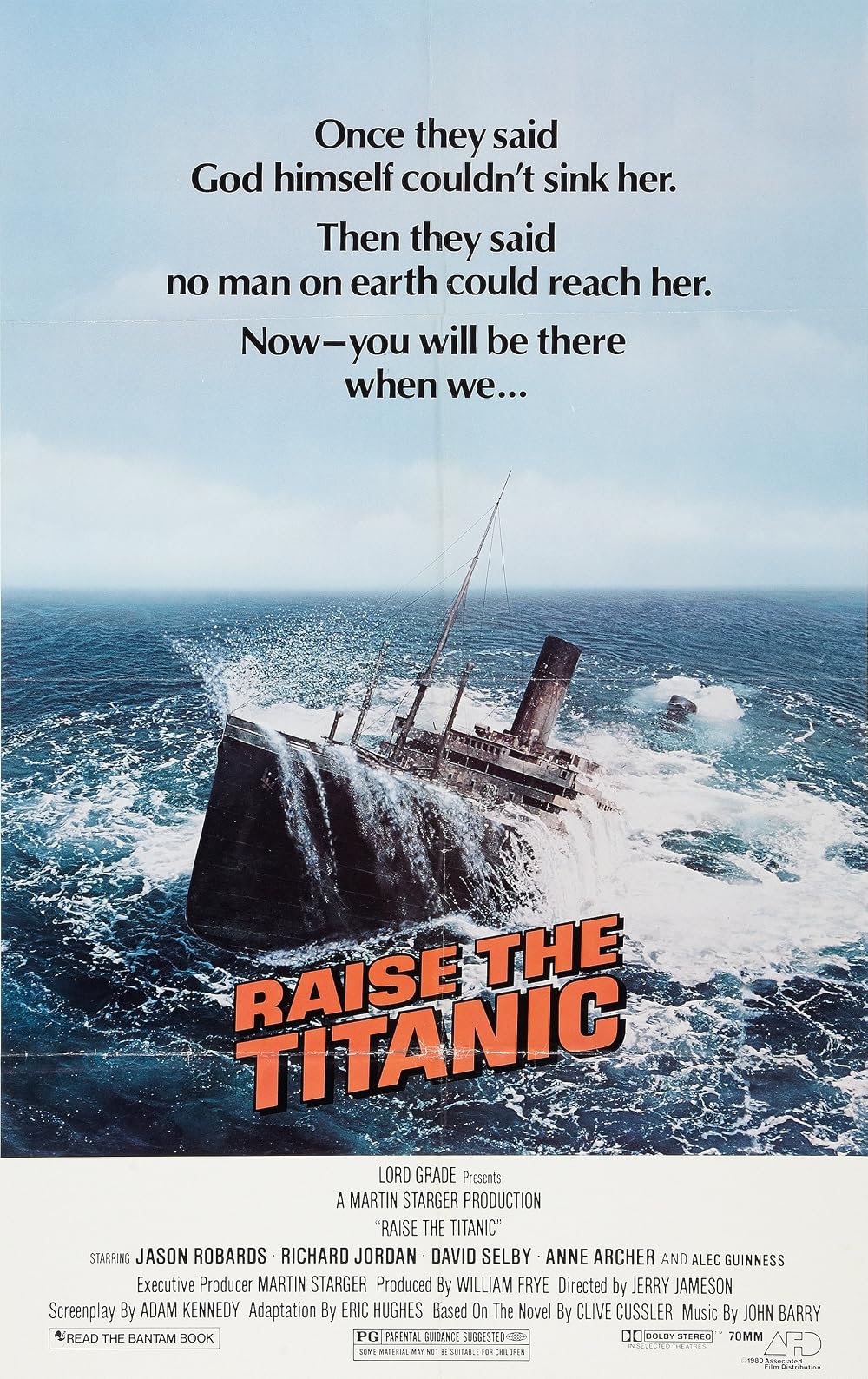
Government operative Dirk Pitt (Richard Jordan) along with the CIA become aware of an abandoned mine in Siberia that had a rare mineral called byzanium, which could be used to shoot down nuclear missiles. It was supposedly packaged into boxes and loaded onto the Titanic. The US Government now wants to obtain those boxes before the Soviets do and come to the conclusion that the only way to do it would be by raising the sunken ship to the surface.

The film is based on the 1976 novel of the same name written by Clive Cussler and universally panned for its weak characterizations and dialogue, but the plot itself was intriguing enough for Hollywood to take a stab at it. The result though isn’t much better as there’s too many people in the cast many of which are talking head figures like Jason Robards. He’s an excellent actor, but here his only task is to relay orders from other top officials and then stand around and look worried as the plans come into play. David Selby is also quite weak, but this is more because he isn’t an effective leading man and his overall presence is transparent and unnecessary.

Jordan is the only one that does well and had he remained at the center of it, it would’ve worked better. However, there’s no one to become attached to emotionally and the banal dialogue doesn’t give any of them any real distinction. They all seem alike and when one of the submersibles with several men on it implodes it has no impact and you really don’t care.

The book, as flawed as it may have been, actually did things a little better, at least plot wise. It had a hurricane come in, which allowed the soviets to take over the ship and hold the rest of the crew hostage, which then culminated in a battle. The movie though doesn’t touch on any of this. Here only one Soviet spy boards the ship but then realizes he’s easily outnumbered and essentially gives up making it all seem rather pointless to have introduced that angle at all. Granted the hurricane wasn’t included for budgetary reasons, but it certainly would’ve helped bring in more tension of which there isn’t much.

The way the ship gets brought back up to the surface is a bit suspect. I have no expertise in the matter, but it seemed too easy to the extent that it feels almost like a non-event. The special effects are subpar. It’s obvious that it’s a toy model and therefore not half as impressive to look at as it comes to the surface as I’m sure the producers thought it would be. The only moment that I did like is when Jordan boards the ship for the first time. Unfortunately, he only enters one room and then it cuts away. Would’ve been fascinating seeing him walk all around the ship going into many different rooms, but this was again likely scrapped due to the same budget constraints.

Spoiler Alert!

The biggest letdown is with the ending, which is similar to the one in the book where they find the boxes inside the ship’s vault to be filled with nothing more than sand. Then it is deduced, using wildly circumstantial clues, that the rare mineral was buried in a gravesite at a cemetery in Southby, England. However, when this is determined the American agents decide to leave it there, but why was it so important to get their hands on the mineral before, but now suddenly it isn’t? What if the Soviets, or some terrorist group, figure out the locations of the mineral and dig it up? Wouldn’t that still create the same frightening scenario that the US was hoping to avoid when they took so much time, effort, and money to bring up the ship?

This makes the whole thing not only a waste of time for the viewer, but also the taxpayers who funded what amounts to being just a wild goose chase. It becomes an inadvertent satire on government waste and misguided operations and on that level, it succeeds, but as a story it should remain sunk and submerged.

My Rating: 1 out of 10

Released: July 30, 1980

Runtime: 1 Hour 54 Minutes

Rated PG

Director: Jerry Jameson

Studio: ITC Entertainment

Available: DVD, Blu-ray, Amazon Video, Fawesome, Plex, Roku, Tubi, YouTube

M*A*S*H (1970)

By Richard Winters

My Rating: 7 out of 10

4-Word Review: Rebellious surgeons break rules.

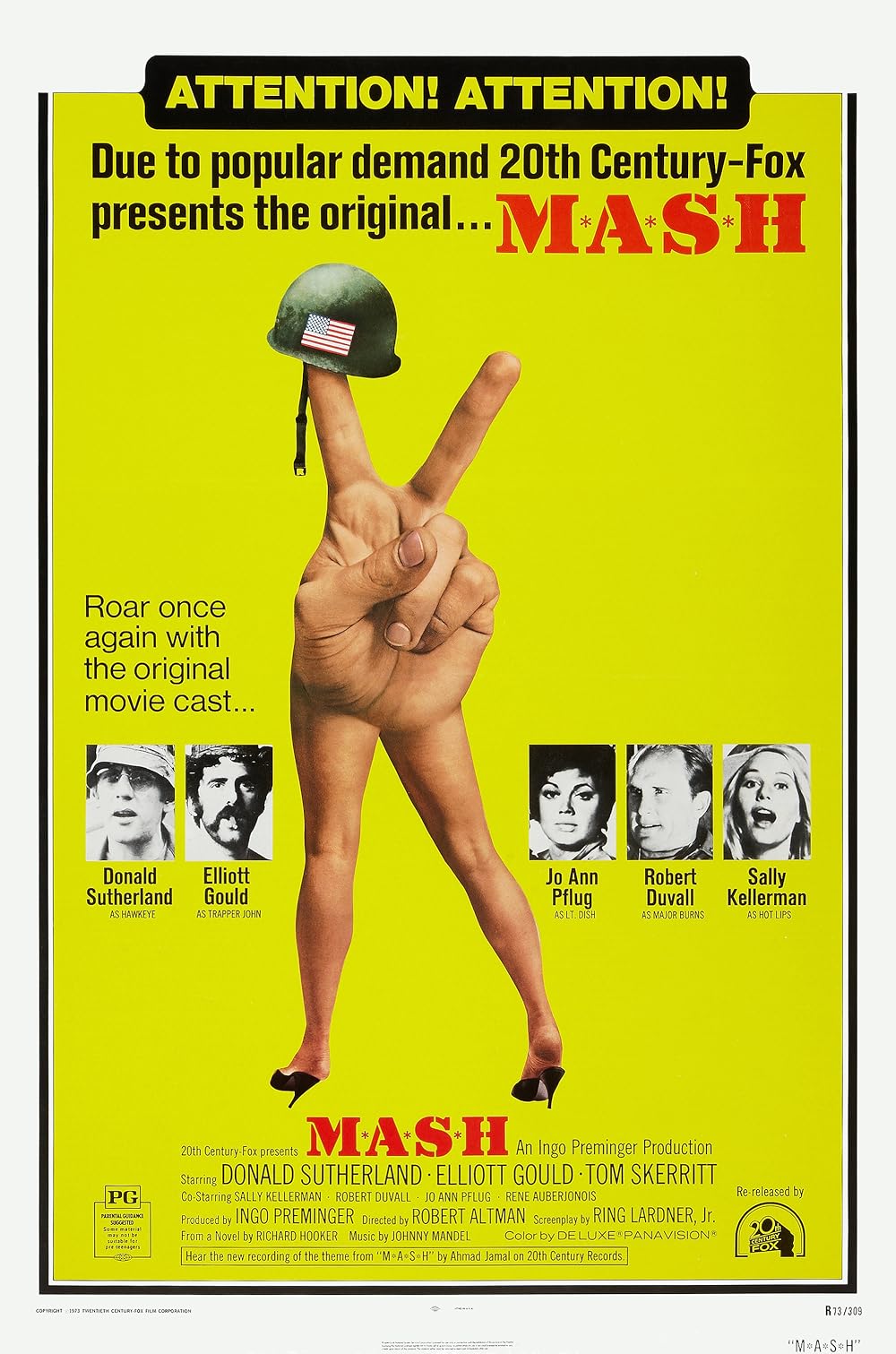
In 1951 during the Korean War Frank Pierce (Donald Sutherland), who goes by the nickname Hawkeye, arrives at the Mobile Army Surgical Hospital as their new surgeon. He gets placed in a tent with Frank Burns (Robert Duvall), but the two don’t get along due to Frank’s religious zealotry, so he gets transferred to another tent. Hawkeye then gets placed with another new surgeon nicknamed Trapper John (Elliot Gould) and the two, with their irreverent sense of humor and non-conforming ways, immediately become best friends. Not only do they break most of the rules, but they also routinely play pranks on others with their biggest ones being on Frank who falls for Margaret (Sally Kellerman) who is a head nurse.

The film, which is based on the 1968 novel ‘MASH: A Novel About Three Army Doctors” by Richard Hooker, which in turn was based on his experiences as an Army doctor during the Korean War, gets largely overshadowed by the TV-Series, which ran for 11 seasons and has become a huge cult hit. In retrospect I actually like the movie better. Robert Altman’s direction where conversations and actions overlap helps to give the setting a realistic kinetic feel where nothing seems staged. While I could’ve done without his patent whistling I still liked the portrayal of the Hawkeye character better here. In the series Alan Alda played him as a very talkative, loud, and opinionated person that dominated every scene he was in while here the character is more like just one of the guys that occasionally pushes-the-envelope, but only because he, like everyone else there, is a victim of the bleak circumstances that they’re in. This also has a much better balance between the humor and drama. The show had a tendency to get preachy but the movie manages to make the occasional serious point, but still overall remains consistently funny.

On the negative side it’s highly anachronistic with the characters behaving too much like it’s the late 60’s instead of the early 50’s almost like they’re a bunch of stoned, ‘free love’ hippies who found a time machine and decided to go back 20 years. While the sexual escapades are amusing it does tend to get one dimensional. Everyone is portrayed as being a sex maniac with no inhibition or restraint. Having some not engage, either because they just weren’t that into it, or wanting to remain faithful to their spouses/ romantic partners back home, would’ve given it a better balance and certainly been more realistic for the period.

Having Hawkeye immediately mock Frank when he wants to pray seemed off too. Granted there were atheists and non-religious people back then, but they tended to be in-the-closet as religion was still the dominant cultural force. If Hawkeye and crew got annoyed later on when Frank attempted to let’s say ‘convert’ them then it would be understandable, but upfront I’d think he’d not be so aggressive with his disdain and might even politely play along a bit, especially since he had just arrived there and wouldn’t know who else he’d be offending with his off-handed comments.

It’s all very disappointing the way Frank gets written out halfway through. I really liked the way Duvall played the role. On the TV-series the Frank character was a benign snobby dimwit that was constantly the butt of all the jokes and couldn’t do much about it, but here Duvall plays the part with an aggressive, even menacing edge that would’ve made him a great nemesis that should’ve allowed him to stay all the way through. Also, it’s a bit ridiculous that he gets put into a strait jacket after he has a confrontation with Hawkeye. Many people can and do get into fights and are not immediately deemed ‘insane’ because of it. If anything, he should’ve been handcuffed along with Hawkeye since it was Hawkeye who goaded him into it.

The Hot Lips character is another disappointment. Initially I thought she was great as her haughty ways helped give the proceedings some conflict, but then halfway through she does a complete Jekyll and Hyde. Initially she hates the place and just about everyone in it, even becomes a victim to a cruel prank, but then later during the big football game she’s seen on the side lines as a cheerleader aggressively rooting for them to win the game when logically you’d think she would be pulling for the other team.

Apparently, the movie’s logic is that since it gets revealed that she’s been having sex with Duke, played by Tom Skerrit, that this then ‘changed’ her. She’s now ‘liberated’ and no longer frigid/uptight, but it’s too drastic a switch that only further adds to the film’s overblown concept that sex can somehow ‘solve everything’.

My Rating: 7 out of 10

Released: January 25, 1970

Runtime: 1 Hour 56 Minutes

Rated R

Director: Robert Altman

Studio: 20th Century Fox

Available: DVD, Blu-ray, Amazon Video, YouTube