Category Archives: Movies Based on Novels

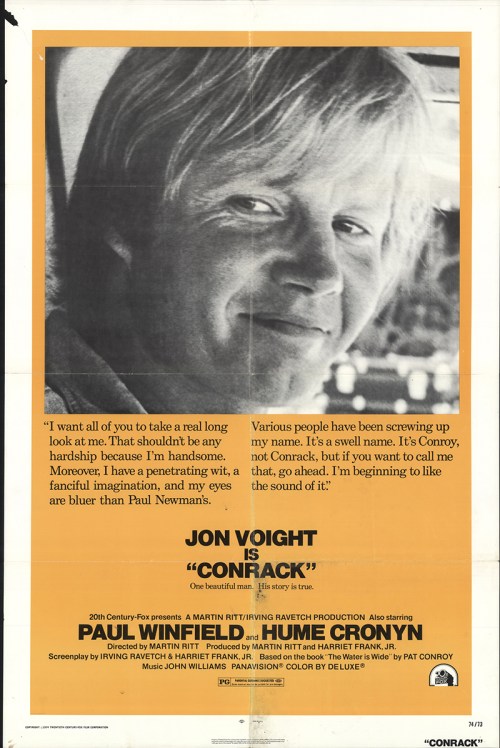
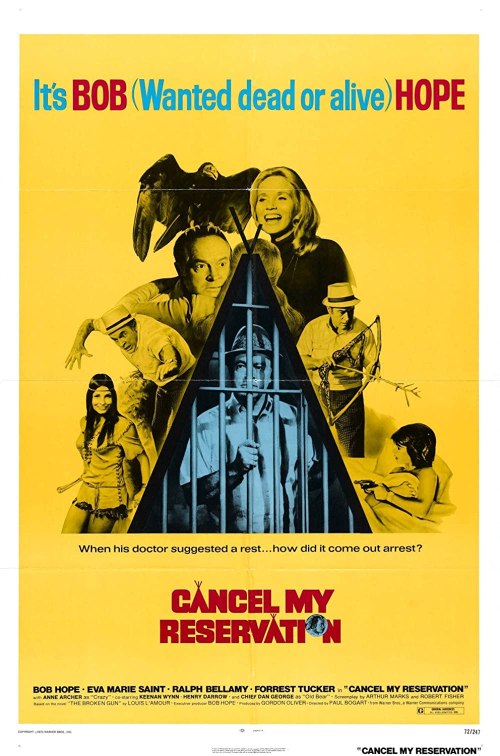
Cancel My Reservation (1972)

cancel

By Richard Winters

My Rating: 2 out of 10

4-Word Review: Celebrity accused of murder.

Dan (Bob Hope) is the exhausted TV-personality of a New York talk show that he co-hosts with his wife Sheila (Eva Marie Saint). The two have spent a lot of time bickering and on his Dr.’s advice decides he needs to retreat to a rural area to catch-up on some rest and relaxation. He travels to Arizona where he briefly meets Mary Little Cloud (Betty Ann Carr) at the Phoenix airport. Later on when he arrives at the ranch he discovers Mary’s dead body in his bedroom. When he goes back to the living room to notify the police and then returns to the bedroom her body is gone. Later the police find her corpse in the back of his car and immediately arrest him on the suspicion of murder. Now out on bond he and Sheila must follow the clues in order to solve the case themselves to prevent him from spending the rest of his life in the slammer.

This marked Hope’s last starring vehicle and may be close to being the worst film he did. Reports were that at the premiere he kept complaining to his wife that he looked too old on the screen and felt he was no longer leading man material. A lot of the fault for this goes to Hope himself had he played a character his same age, like a grandpa who enjoys spending his retirement being an amateur sleuth, then it might’ve worked, but instead he tries to play-it like he’s a middle-aged guy, which is just absurd. This comes to a ridiculous head right at the start when he’s brought into the police station and the sheriff, played by Keenan Wynn, asks him his age and Hope, who looks every bit of the 68 years of age that he was, replies that he’s ’42’. I had to actually rewind the film just to make sure I heard it right and the cops don’t look at him with an incredulous look like anyone else would’ve, which makes this the funniest moment in the film even though it’s unintentional.

Pairing with Saint was another mistake. Originally he was supposed to re-team with Lucille Ball, but at the last minute changed course and decided to go with Saint. Presumably this was again for his own vanity as he thought playing a character with a hot, youthful-looking blonde would make him come-off appearing younger even though it does the exact opposite and just makes him seem even older, like an aging daddy going out with his daughter. The two share no chemistry and Saint lacks the comic ability that Ball could’ve brought. The two don’t even fight. They do a little bit at the start while they’re still in New York, but once they reach Arizona they get along even though having them bicker would’ve at least allowed some comic banter, which is otherwise lacking.

The story, which is based on a Louis L’Amour novel ‘The Broken Gun’, is uninspired and gives away the identity of the killer half-way through. What’s the use of sitting through a mystery if you know well before it’s over who the bad guy is? Paul Bogart’s direction has no visual style with bland sets that would be better suited for a TV-sitcom than the big screen.

Hope’s voice-over narration are the only amusing bits. There’s also a dream segment where Hope imagines himself being hung in front of a large group of onlookers, which amongst the crowd is Johnny Carson, Bing Crosby, and John Wayne, who say brief quips as they watch the noose being fitted around his neck, which is the film’s only diverting sequence. I came away thinking it would’ve been more interesting had Carson, Crosby, and Wayne starred in the film alongside Hope playing a group of actors set to do a film, but then turn detectives when one of the cast gets murdered. It might not have been perfect, but certainly couldn’t have been any worse than this.

My Rating: 2 out of 10

Released: September 21, 1972

Runtime: 1 Hour 39 Minutes

Rated G

Director: Paul Bogart

Studio: Warner Brothers

Available: VHS

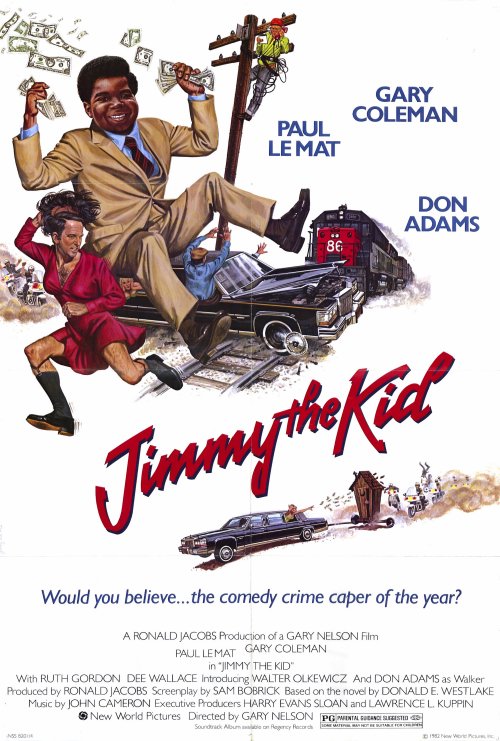
Jimmy the Kid (1982)

jimmy 1

By Richard Winters

My Rating: 1 out of 10

4-Word Review: Inept kidnappers bungle crime.

Jimmy (Gary Coleman) is the son of a singing duo (Cleavon Little, Fay Hauser) who feels neglected while his parents are out on the road singing in concerts. Kelp (Walter Olkewicz) is an inept would-be crook who’s finding it a struggle to successfully commit any crime. He then reads a book about kidnapping and convinces his reluctant brother John (Paul Le Mat), John’s girlfriend May (Dee Wallace) and even his own mother Bernice (Ruth Gordon) to get in on it. Their plan is to kidnap Jimmy and hide him out in a secluded cabin in the woods while extorting money from his rich parents for ransom. The problem is that Jimmy is quite intelligent for his age and outsmarts the crooks at every turn, but also forms a bond with them and they to him, so when his father and the private investigator (Don Adams) comes looking for him in order to ‘rescue him’ he resists their attempts.

The film is based on a Donald E. Westlake novel and while many of his books that were turned into movies were quite entertaining this one isn’t. The same story was filmed before in 1976 as Come Ti Rapisco Pupo and although that was no classic either at least was better than this version, which tries too hard to attract the family audience by being about as benign as you can get. Even a kiddie flick, at least the good ones, need some genuine tension and excitement, to keep the interest going. Classic kid’s films like Benji had some stressful moments where it seem like the kids, who had also been kidnapped, where in danger and you worried for their safety, which got the viewer emotionally caught up in it and intrigued enough to keep watching. This film though makes it quite clear from the start that the bad guys are too stupid to pull-it-off and the kid is never in any kind of real trouble, so the interest level is virtually nil. The crooks are also too dumb to be believable making their clueless remarks and pratfalls more eye-rolling than funny.

The supporting cast is filled with ‘zany characters’ that are equally pathetic. I’ll give some credit to Cleavon who goes out on stage with his wife wearing a get-up that looks like he’s apart of a soul duo, but instead sings a country-tinged song that wasn’t half-bad, Pat Morita as the legally blind limo driver though is ridiculous. I think his part was put-in to give the thing some action by showing all sorts of car pile-ups that he causes as he drives, but no sane person would ever get into a car with him and his ability to hold onto a job as a driver and not be arrested for endangering others, would-be non-existent.

Coleman is especially boring and never says or does anything that’s especially funny. Having him be this super smart kid gets played-up too much and is neither fun, nor amusing. He also shows no character arc other than supposedly ‘learning to be a kid’ though we don’t really see this, which in a good movie would be, but instead verbally explained by Coleman. The movie should’ve had a moment where the crooks, despite their dumbness, knew something that the kid, despite his smartness, didn’t because of the fact that they’d been around longer and a little more worldy-wise, which could’ve lent some insightful irony, but the stupid script wasn’t savvy enough to even go there.

The only two good things about the film are Don Adams and Ruth Gordon. For Adams he plays basically just an extension of his more famous Maxwell Smart persona even having him wear the same type of trench coat. While his pratfalls inside the home of Jimmy’s parents where he inadvertently tears-up the place borders on inane, the scenes where he dresses in drag are actually kind of funny. For Gordon you get to see her, at the age of 85, climb-up a telephone pole. While I’d presume they didn’t really make her do it and just filmed it in a way that made it appear like she did, it still ends-up looking authentic and she says some amusing things as she does, but outside of these two brief moments the movie clunks.

My Rating: 1 out of 10

Released: November 12, 1982

Runtime: 1 Hour 25 Minutes

Rated PG

Director: Gary Nelson

Studio: New World Pictures

Available: VHS

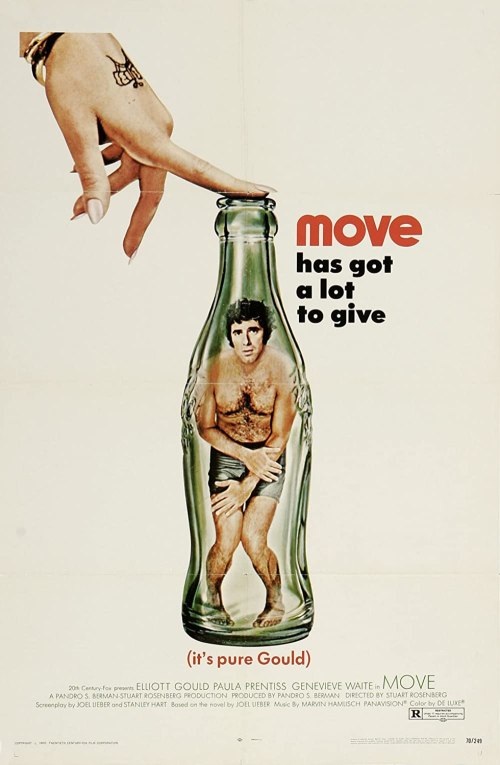
Move (1970)

move

By Richard Winters

My Rating: 1 out of 10

4-Word Review: Relocating to another apartment.

Hiram (Elliot Gould) dreams of being a successful playwright, but is only able to find work writing sex stories for adult magazines. He and his wife Dolly are both bored in their marriage, but find no alternatives, so they continue to exist in a union that no longer has any zing. They also prepare to move into another apartment, but complications with the movers and repeatedly strange phone calls from a man claiming to be holding their stuff hostage, only increases Hiram’s ongoing anxiety. Just when things begin to look completely bleak he bumps into a beautiful young lady (Genevieve Waite) one day while walking a dog. Just like a plot in one of his sex stories she invites him back to her apartment for an afternoon of unbridled passion. Hiram enjoys the visit and returns the next day for a rendezvous, but finds she no longer is there and no one he asks knows who she is. Was she simply a fleeting stranger, or a product of his over-active imagination?

While I’m a fan of quirky, offbeat comedies from the early 70’s this one doesn’t hit-the-mark. It’s quite similar in theme and style to Little Murdersa dark comedy that dealt with the alienation of living in New York City and also starred Gould, as well as The Steagleabout a man who enlivens his otherwise mundane life by living out wild fantasies in his head.  Both those movies had a far faster pace, which is what a zany comedy needs, and were able to distinguish the fantasy elements from the real-life. Here it gets confusing and you can’t tell it’s a dream until well into the segment. Since the rest of the movie is slow and boring the fantasy moments needed to be over-the-top to make-up for it, but instead they get underplayed making the whole thing a big, pointless mess.

Much of the blame could be squarely placed on 20th Century Fox who paid $85,000 for the rights to the novel before it had even been published. The studio execs apparently felt that the theme of apartment living in New York was trendy enough to be worth taking a risk on before even knowing if the story itself was workable. They labeled it ‘dirty Barefoot in the Park’ and gave the book’s author, Joel Lieber, who jumped to his death from his Upper West side apartment just a year later, the job of writing the screenplay. However, his lacking a background in screenwriting shows as there’s no cohesive structure. Assigning Stuart Rosenberg to direct, who up until then had solely focused on dramas, only helped to cement this thing into the disaster that it became.

I did enjoy the wild costume party that Gould goes to near the end where all the guests, many of them seen earlier in character roles, wear tasteless and provocative stuff, but the film doesn’t stay on this segment long enough to make sitting through the dull drivel that comes before it worth it. Waite, who’s the mother of Bijou Phillips and former girlfriend of Mama’s and Papa’s lead singer John Phillips, does offer some unique energy during her moments, which are alas too brief. Otherwise nothing else works. There needed to be more of a clear point to what we were seeing for instance revolving around all the crazy mishaps that can occur during a move, which could’ve been both funny and original, but examining the inner turmoil of the main character, in a medium that places emphasis on the visual, was a problematic idea that should never have been green-lit.

My Rating: 1 out of 10

Released: July 31, 1970

Runtime: 1 Hour 29 Minutes

Rated R

Director: Stuart Rosenberg

Studio: 20th Century Fox

Available: DVD-R

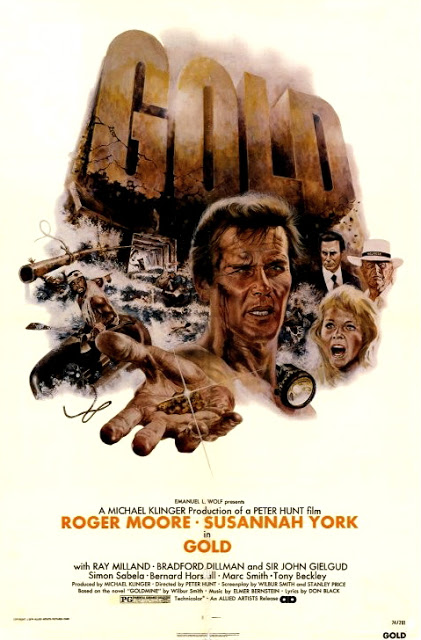
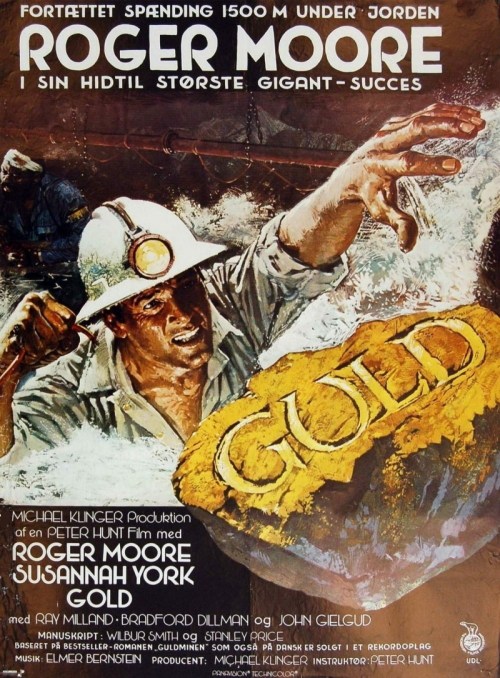
Gold (1974)

gold1

By Richard Winters

My Rating: 7 out of 10

4-Word Review: Flooding a gold mine.

Manfred (Bradford Dillman) is part owner of a South African gold mine, who has colluded with London bankers to have the mine destroyed. The plan is for the miners to drill into an underground water reservoir, which will then flood it. Manfred and the London syndicate will make a profit by quietly selling their shares of this mine while buying up shares in competing mines whose price will most assuredly go up once this one is no longer usable. To achieve this they must trick the miners into believing that there is gold underneath the water and that by drilling into it won’t cause their demise. They hire Rod (Roger Moore) as the miner’s new supervisor, whom they feel won’t be smart enough to catch-on to the scheme, but he proves sharper than they expected especially as he has an affair with Manfred’s wife Terry (Susannah York).

This film, which at the time was considered controversial as it was filmed on-location in South Africa while apartheid was still happening, and based on the novel ‘Gold Mine’ by Wilbur Smith, which in-turn was loosely based on the real-life incident that occurred in 1968, is deserving of a second-look. Filming it at an actual mine is the most impressive thing about it. The cast and crew were forced to go down 2-miles into the shaft and the camera follows the grim, black walls of the cave as the elevator takes them down and it’s really stunning how long it goes until they reach bottom and how the cave walls continuously streak across the screen the further they go. I’m not one to ever feel claustrophobic, but watching this gave me that sensation, which effectively gives you the idea of what the miners would’ve felt each time they went. The climactic flooding is equally hair-raising and the beginning segment where the process of refining the gold is shown over the opening credits is also quite fascinating.

Moore, who had just completed filming of his first James Bond installment, Live and Let Die, is excellent and I enjoyed the way he keeps it serious and doesn’t revert to any jokey quips like he did when he played Bond and his characterization here is how he should’ve handled 007. This is the first of two films that he did with York as the two would re-team later in the year for That Lucky Toucha romantic comedy that’s inferior to this one. York’s character here, where she plays a jaded and cool socialite is a more interesting and proves what a great actress she was as it’s completely unlike the part of the scared, pensive person that she was in The Killing of Sister George

Ray Milland, as the elderly, cantankerous, mine owner is great and there’s excellent support by Simon Sabela, better known as being South Africa’s first black film director, who plays Big King a large man who teams with Moore to single-handily save the mine. Dillman is the only detriment as his stale villainous presence doesn’t add much and would’ve been better played by Tony Beckley, whose sneering facial expression alone would’ve made him more suitable instead of stifling him into a small bit though his attempts to run Dillman down with his car at the end is still effective.

The DVD restoration is the only negative as it’s faded color and graininess makes it resemble a cheap production, which it really isn’t. The version used for Amazon streaming is the same as the DVD, which is unfortunate as the film deserves a quality Blu-ray release and hopefully one will be coming at some point.

gold2

My Rating: 7 out of 10

Release: September 5, 1974

Runtime: 2 Hours

Rated PG

Director: Peter R. Hunt

Studio: Allied Artists Pictures

Available: DVD, Amazon Video, Tubi

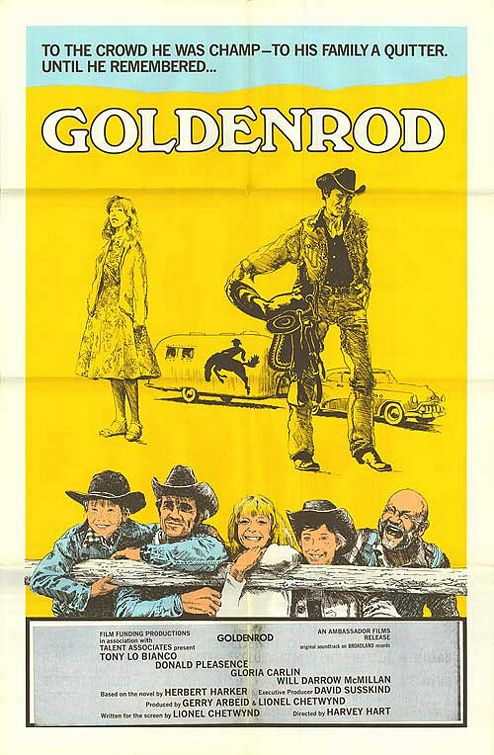
Goldenrod (1976)

goldenrod1

By Richard Winters

My Rating: 4 out of 10

4-Word Review: Injured champ seeks comeback.

Jessie (Tony Lo Bianco) is a successful rodeo rider who’s idolized by his oldest son Ethan (Will Darrow McMillan). His fortunes though take a turn for the worse when he’s seriously injured by a horse who stamps on his hip. Doctors tell him he’ll never be able to ride again, which causes him to become depressed. His wife Shirley (Gloria Carlin) leaves him for another man (Donnelly Rhodes) forcing him to go searching for other employment. After doing odd jobs he finally gets hired by John (Donald Pleasance) a alcoholic who lives alone on a farmstead and promises big things, but delivers little. Jessie’s depression worsens and he even attempts to kill himself, but his son Ethan saves him. Ethan then tells him that he wants to be a rodeo rider, hoping that the money he wins can help get the family back on track, but Jessie worries that Ethan will face the same hardships that he did and tries to talk him out of it, but to no avail.

This Canadian entry, which was filmed on-location in the province of Alberta, and partially shot at the world famous Calgary stampede, works off the same formula as the Canadian classic Goin Down the Road, which focused on two losers with big dreams who get in way over-their-heads. Jessie character is the same way. When he’s winning he’s arrogant and thinks he’s above the common man only to then learn a hard lesson. This type of character arc though isn’t interesting as the viewer shares no emotional connection in the protagonist’s plight and in some ways delights at seeing his misfortune since he was so diluted at the start that it all seems like a good comeuppance to bring him back down-to-earth.

Lo Bianco plays the part surprisingly well being that he was an Italian-American born and raised in Brooklyn, so why the producers felt he’d be a good pick to play a Canadian cowboy is a mystery, but he pulls it off and even manages to speak in a Canadian accent while losing his Italian one that he spoke with in The Honeymoon KillersThe character though is almost cartoonish with a child-like optimism that you’d think by middle-aged would’ve been vanquished. He starts to show some humility towards the end, but more of it should’ve come-out already at the beginning in order to make him appealing and relatable.

The film focuses quite a bit on the wife at the start only to have her disappear and then eventually come back at the very end, but this is too much of a departure and the movie should’ve cut back and forth, at least a little bit, showing how she was getting along with her new hubby while Jessie struggled raising the kids. Also, you’d think if she really loved the kids she’d want to stay in contact with them and not just abandon them, which is how it comes-off. Pleasance, who spent the 70’s dotting-the-globe working on films in three different continents, gets wasted in a role that starts out with potential, but ultimately doesn’t lead to much.

The picturesque scenery is nice, but the benign story doesn’t have anything unique or memorable. The dialogue lacks a conversational quality and used more to help narrate the story and describe what’s going on that in a good film should’ve been shown visually. I was surprised too that it takes place in the 50’s because it wasn’t until halfway through when a poster advertising a rodeo and the date on it is 1953 that I had even became aware of this. Up until then it could’ve easily been the 70’s. The only two things that give it a bit of a period flavor are the older model cars, but since some people like to drive these refurbished vehicles I didn’t consider it a tell-tale sign that it was a bygone decade. There’s also brief shots of the Canadian Red Ensign, which was the Canadian Flag before the Maple Leaf one, which didn’t come into effect until 1965. Otherwise this could’ve easily been a modern day story and probably should’ve been as setting it in the past doesn’t give it any added insight.

My Rating: 4 out of 10

Released: September 22, 1976

Runtime: 1 Hour 37 Minutes

Not Rated

Director: Harvey Hart

Studio: Ambassador Film Distributors

Available: None

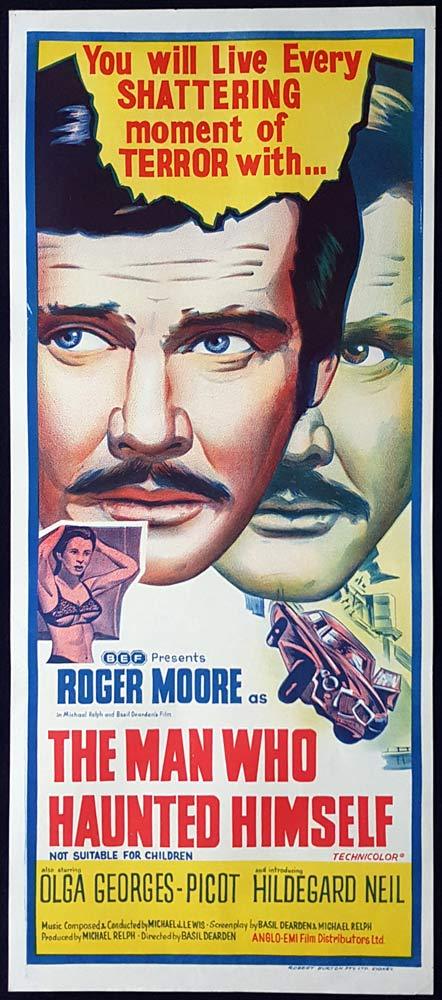
The Man Who Haunted Himself (1970)

man3

By Richard Winters

My Rating: 3 out of 10

4-Word Review: His doppelganger takes over.

Pelham (Roger Moore) is a conservative, staid businessman who is married with two kids and for all practical purposes leads a predictable life. One day he goes out driving and begins to pretend he’s a race driver in a sports car. He removes his seat belt and accelerates the vehicle before getting into an awful crash. The doctors at the hospital are able to save him, but as he returns to his normal way of doing things he keeps hearing about another man who looks just like him appearing all over town. The man associates with many of his same friends and eventually moves into his home and has relations with his wife while he’s not there. Pelham tries putting at stop to it only to find that his friends and family prefer the new Pelham over the old one.

While the concept has intriguing elements the way it gets handled is a letdown. Supposedly his doppelganger represents his more reckless side that he keeps oppressed, but then having him immediately give into his wild impulses through his driving doesn’t seem like dual personalities, but more like it’s all-in-one. His recovery, especially after such a life threatening accident, happens too quickly and the idea that he can just go back to normal and continue to drive the same car that he totaled (he buys a new one, but the same model) seemed dubious as I’d think in reality his license would’ve been suspended for causing a crash that put both him and others at extreme risk.

The movie makes clear through flashback that there really is a double versus keeping this aspect a mystery and allowing in the idea that it might be a person disguising himself as Pelham. There’s very little difference between the two, so having them both walking around adds nothing. If the twin is supposed to represent his wild side then this needs to be shown through his attire, hairstyle, and speech pattern. The only real difference is that one drives a flashy sports car, but that’s it. You’d also think that those around him, especially his family, would sense something was off instead of having the real one become the odd man.

Moore has stated in interviews that his was his favorite role, but I don’t know why because outside of having a perpetual confused look on his face his character has little else to do. The production values, for what it’s worth, are excellent, but the story is too thin for feature length. The second act gets especially boring as Pelham is constantly hearing from others about his double over and over again until it becomes redundant. It takes too long for the protagonist to become aware of something that the viewer catches onto early on. The ending is vague and offers no suitable conclusion or answers. Normally I’d say this is the type of story, which was based on the novel ‘The Case of Mr. Pelham’ by Anthony Armstrong, that would’ve been better as an episode for an anthology series, but in this instance that’s actually what occurred as 15 years earlier it was a first season episode of ‘Alfred Hitchcock Presents’. with Tom Ewell playing the part of Pelham and the compact 25-minute runtime did a far superior job with the concept than the 94-minutes does here.

My Rating: 3 out of 10

Released: July 18, 1970

Runtime: 1 Hour 34 Minutes

Rated GP

Director: Basil Dearden

Studio: EMI Films

Available: DVD

Freeway (1988)

freeway1

By Richard Winters

My Rating: 5 out of 10

4-Word Review: Killer in a car.

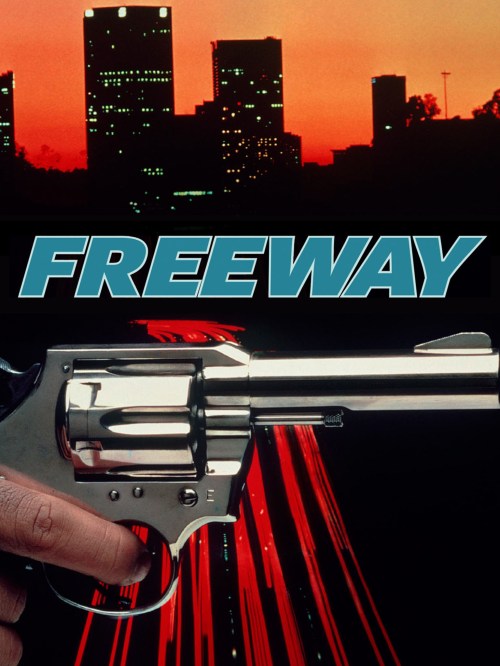
Sunny (Darlanne Fluegel) is an emergency room nurse still grieving over the senseless death of her fiancee at the hands of a highway killer (Billy Drago) who drove-up beside them one late night and shot him through their car window. Sunny is constantly hassling the police for updates on the case, but the police sergeant Lt. Boyle (Michael Callan) is aloof and put-off. Frank (James Russo) is an ex-cop who left the force when a drug gang he was investigating annihilated his whole family. He senses Sunny’s despair and the two team-up to find the killer along with radio talk show host David Lazuras (Richard Belzer) whose show gets calls from an unhinged man, who quotes Bible verses and claims to be the one they’re looking for.

The story has some intriguing elements and I liked how initially we don’t know the identity of the assailant, but the concept, which is based on the novel of the same name by Deanne Barkley, is poorly thought-out. This freeway shooter makes headlines for having killed many people, so Sunny wouldn’t be the only one getting on the police about finding the culprit as the entire city, which would be gripped with panic, would also be and if the city’s force wasn’t doing enough then federal agents would be brought-in.

The car that the killer drives, which is an older model with a broken front grill, is similar to the haunted vehicle used in the cult-classic The Carbut because it has a distinct appearance the guy wouldn’t be able to get away with his crimes for too long as surely other people on the very busy L.A. freeways would’ve spotted him and had his license plate, or general whereabouts, called-in. Some drivers would likely have tailed him and even cornered his car with theirs until the police got there. The car also smashes into several other vehicles, and since it was an old clunker, it would need body work, and thus pique the suspicions of the auto repairman who would likely alert authorities. In either event having the killer get away with as much as he does and with only one person emotionally vested into finding him doesn’t gel.

While the leads are bland the supporting cast is interesting. Callan, who was a semi-star during the 60’s before his career cratered, does well as the non-nonchalant police chief and still looking good despite some weight gain around the face. Clint Howard has a fun bit as a porn obsessed mechanic, who agrees to let Sunny drive his prized sports car while he gets her’s fixed. While allowing some random chick to take his car, which no auto mechanic in the history of the world would do, or feel obligated to do, I was willing to accept it using the rationale that he was hoping it might help him score with her later, but the fact that she keeps this ‘loaner’ for days, even weeks, without returning it gets ridiculous.

Country music legend Roy Clark is listed in the part of a CHP officer, but I didn’t spot him. I had a feeling it was played by someone with the same name, I know when I lived in Indy there were 7 other men in the phone book with my name, and since Roy and Clark are both quite common, it seems reasonable that it was somebody else, so listing it in Roy’s filmography on IMDb is a mistake.

The tension isn’t strong and weakens quite a bit by the third act, which is when it should’ve been the strongest. Director Francis Delia, who before this worked on music videos, tries hard to give the proceeding a stylistic touch, which might’ve fared better had the story and characters been thoroughly fleshed-out.

My Rating: 5 out of 10

Released: September 2, 1988

Runtime: 1 Hour 31 Minutes

Rated R

Director: Francis Delia

Studio: New World Pictures

Available: DVD, Blu-ray

The Taking of Pelham One Two Three (1974)

taking

By Richard Winters

My Rating: 8 out of 10

4-Word Review: Subway passengers held hostage.

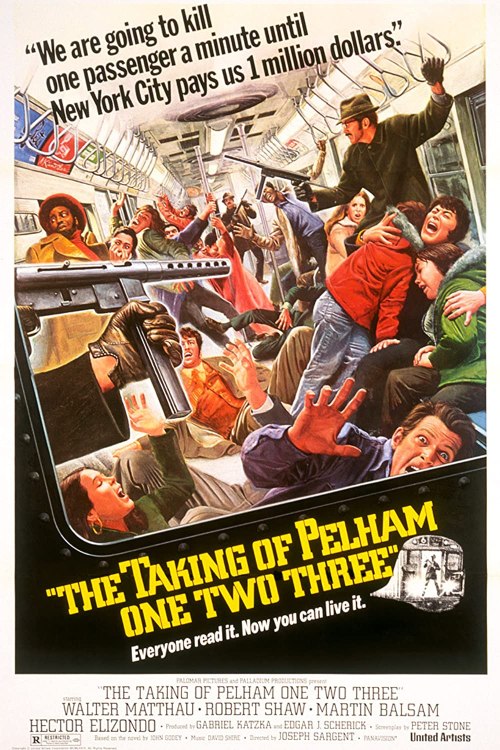
Four men wearing disguises and going by code names: Mr. Blue (Robert Shaw), Mr. Green (Martin Balsam), Mr. Grey (Hector Elizondo), and Mr. Brown (Earl Hindman) board the same subway car, this one being the Pelham 1-2-3, at different locations. Once all four are onboard they take out their guns and take over the subway car by holding both passengers and conductor hostage. For their release they demand $1 million in ransom to be paid in 1-hour and for every minute that it is late one passenger will be killed. They communicate these demands to Lt. Zack Garber (Walter Matthau) who is a part of the New York City Transit police. As Mr. Blue and Garber communicate with each other over the radio and the city races to meet the crooks demands Garber begins to try and surmise who these men are and how they’ll be able to get away with it since they’re trapped in an underground subway. Garber is convinced that it will not work and the men will eventually be caught unaware that Mr. Green, who used to work for the subway system until he was, in his mind, unfairly terminated, has come up with an ingenious contraption that can override the dead-man’s switch and allow the train to keep running even with no one at the controls.

The film is based on the best-selling novel of the same name by John Godey, who was a subway enthusiast and came-up with the plot after spending many years using the subway system. While the movie rights for the paperback were sold for $450,000, in anticipation that it’d make a great movie, the film almost didn’t get made due to the reluctance of the Metropolitan Transit Authority to allow the production to be filmed on-location.  Much of the reason stemmed from their fear that it might give ‘kooks’ the idea to pull-off a real-life heist, but eventually they caved once screenwriter Peter Stone added in the fictional contraption that could override the dead-man’s switch.

As a caper/action flick it is quite exciting from literally the first-frame to the last, but it’s some of the other added elements that make it a standout. I really enjoyed how the city of New York becomes like a third character and the unique, brash attitude of the people. Every character, no matter how small the part, has a distinct personality and memorable. My favorites were Mari Gorman as the feisty hooker, Michael Gorrin, as the elderly passenger convinced that the subway car must eventually come to a stop even as it careens out-of-control and everyone else panics. I also enjoyed Louie Larebee as an alcoholic woman, who is so drunk that she passes out when the crime begins and sleeps through the whole thing as well as Carolyn Nelson, the real-life wife of the film’s director Joseph Sargent, playing a college coed who believes she can stop the train through sheer mind control and meditation.

On the ground there’s some great character bits too including Tom Pedi as an aging, misogynist who doesn’t like the idea of having to work alongside women, nor that he should stop cursing because of it, who walks right into the line-of-fire when he stubbornly refuses to listen to the kidnappers warnings. Kenneth McMillan, is very funny as an exasperated street cop trying to direct traffic, and Dick O’Neill lends moments of drama as an outspoken transit employee who doesn’t like the idea of giving into the kidnappers demands and isn’t shy about voicing his disapproval, which leads to a tense confrontation with Matthau.

Matthau’s anti-hero take where he seems initially like nothing more than a aloof, laid-back guy, who doesn’t seem to have the cunning, or initiative to defeat the bad guys. At one point even openly insults a group of Japanese reporters who he thinks can’t speak English only to learn to his regret that they can, is excellent and in patented Matthau style seems to be able to do it without much visible effort.

Shaw is solid, but I felt there needed to be an explanation for how he got bought into the scheme, which never comes and ultimately is the film’s only real weak point. His personality is so different from the other men in the group that I couldn’t understand why he’d want to pull-off a robbery with them, nor why, being such a careful planner that his character is shown to be, he’d only realize as the crime is happening that the Mr. Gray was too much of a hot-head and not right for the job, as I’d think he would’ve observed this much earlier during the planning stage and had Gray removed before the actual crime had ever been carried out. Having scenes of the backstory spliced in would’ve helped made it more complete.

This was remade as a TV-movie in 1998 and then as another feature film in 2009 that starred Denzel Washington in the Matthau role and John Travolta playing Shaw’s part. I never saw the TV version and it’s been many years since I viewed the theatrical remake, but I remember finding it a letdown mainly because it centered too much around Travolta, who would go on long rants that bogged down both the pace and plot making it not nearly as exciting as this one.

My Rating: 8 out of 10

Released: October 2, 1974

Runtime: 1 Hour 44 Minutes

Rated R

Director: Joseph Sargent

Studio: United Artists

Available: DVD, Blu-ray, Amazon Video, YouTube

ffolkes (1980)

ffolks2

By Richard Winters

My Rating: 5 out of 10

4-Word Review: Loves cats, hates women.

Rufus Excalibur ffolkes (Roger Moore) is a cat loving misogynist who dislikes women because he grew up the youngest of five sisters and forced to wear their hand-me-downs until he was age 10. As an adult he is a counter-terrorism expert and trains a team of men to go onto ships at sea that have been hijacked. When a North Sea oil production platform nicknamed Jennifer gets taken over by a group of men posing as reporters their leader (Anthony Perkins) demands an enormous ransom and it’s up to ffolkes and his team to board the platformed and kill the terrorists without allowing the ship, which has been booby-trapped with bombs by the criminals, to blow-up.

The film, which was based on the novel ‘Esther, Ruth & Jennifer’ by Jack Davies, who also wrote the screenplay, starts out well and has all the ingredients to being a compelling thriller. The on-location shooting done on an actual ship makes the viewer feel like they’re out at sea themselves and I found the foot chase done on the vessel during a raging rainstorm to be riveting. Perkins makes for a particularly slimy villain and Micheal Parks, as the mastermind who constructs and implements the bombs, was also impressive wearing glasses that make his eyes look like they’re bulging and it’s just a shame these two men had to co-star together as they’d be able to eat-up the scenes had they been allowed to do it alone without any henchmen.

The ffolkes character works against type playing a good-guy that tests the viewer’s assumption of what’s acceptable behavior for a protagonist. Too many movies create a hero-like caricature of someone who is overly noble, brave, and virtuous until it becomes boring and contrived. At least here the guy we’re supposed to cheering for is interestingly flawed therefore more human-like than super-heroes in most other films, especially those made today, who are just too-good-to-be-true.

ffolkes though does spend too much time sitting in the background working on a crochet of a cat while giving-off glib remarks and not being as active as he should. He’s also constantly drinking scotch at all hours of the day, straight out of the bottle, which should’ve made him inebriated and this most likely would’ve come into play at some later point where he wasn’t able to pull-off an intricate task because he was too drunk, but after introducing his drinking problem during the first half, it gets completely forgotten by the second.

While the character acts extraordinarily arrogant and cocky he’s not able to pull-off the assignment quite as easily as you’d think for someone with his amount of confidence. One scene has him stupidly walking right into a gunmen and it takes the sheer luck of someone hiding in a lifeboat to save him. Another scene has him almost killed by one of his own men making him seem like he’s not as good of an instructor as his reputation suggests and all leads to him unintentionally coming-off more like a deluded idiot than the crafty mastermind with a few personality quirks that he’s supposed to be.

The story, while having a solid set-up, ultimately becomes the biggest letdown. For one thing it never shows us how they’re able to pull-off the fake explosion of Ruth, another oil platform. They talk about rigging it to seem like it exploded to fool the bad guys, and we do see something exploding, but no explanation of what it was since the real Ruth secretly remains standing. Also, most ships have a radar system, which should’ve shown that the real Ruth never went away and that they had been duped, but for whatever reason they never catch-on.

The ending surprisingly lacks very little action, which is what was blamed for the film’s poor reception at the box office. People are expecting a movie that stars Moore to have a lot of stunt work and special effects and for the most part it never happens. The villains go down too easily making it not very satisfying to see them go. There needed to be more wrinkles to the scenario and more unexpected twists as the pay-off and climactic finish is weak making one feel, despite the excellent performances, like it wasn’t worth sitting through.

Alternate Title: North Sea Hijack

My Rating: 5 out of 10

Released: April 3, 1980

Runtime: 1 Hour 38 Minutes

Rated PG

Director: Andrew V. McLaglen

Studio: Universal

Available: DVD, Blu-ray

Figures in a Landscape (1970)

figures1

By Richard Winters

My Rating: 5 out of 10

4-Word Review: Chased by a helicopter.

Ansell (Malcolm McDowell) and MacConnachie (Robert Shaw) are two men on the run in the middle of a bleak, desolate desert. What they are escaping from is never clear, but they’re constantly hounded by a helicopter that seems intent at stopping them. They come upon a small village and steal food and supplies and then continue on their escape, but find trying to get along with each other is just as challenging as avoiding the copter.

I’m a big admirer of Joseph Losey’s films and I also enjoy movies that have an air of mystery and don’t feel the need to have to explain everything, but this attempt at avante garde doesn’t work. The Barry England novel or which this is based and received high critical praise when it came out in 1968 at least made it clear that these two were soldiers who were deserting for whatever reason, but the movie doesn’t even mention this. We’re simply left with a nothing-burger of seeing two guys we have no emotional connection with scurrying around the countryside, which gets old fast and has nothing to keep it compelling though the bird’s eye shots of them on the ground looking like dots as they run at least allows it to live up to its title.

Fans of the film will admit that the story is lacking, but the helicopter sequences and stunt work more than makes up for it, but I found this aspect to be underwhelming. The camerawork of showing the copter bearing down on them while splicing in shots from the pilot’s point-of-view is well handled, but it’s not as exciting as could’ve been because when the pilots have a chance to shoot the men they don’t. McDowell’s character explains that they (the helicopter pilots) are just ‘toying with them’, but the viewer can’t be expected to get wrapped-up in a silly cat-and-mouse contest that has no life or death consequence.

Much of the blame for why this comes-off more like a misguided experiment than an actual movie, can be attributed to Shaw, who was given permission to rewrite the script and promised to have it completed by the time shooting began, but didn’t. Apparently revisions were being made on a daily basis and no one knew where the plot was going, or how to end it, which ultimately makes for a flat and detached viewing experience.

The two leads do quite well with McDowell interesting as the younger of the two, but still more emotionally mature. Shaw is equally fine giving off a maniacal laugh that I’ve never heard him do before. Their bout with diarrhea at a most inopportune time is amusing. While some may find it gross it’s something that could happen to those who haven’t eaten in awhile and feeding off canned food, so in that way the movie tackles a realistic subject other escapees-on-the-run movies shy away from though the shaving aspect was a problem in reverse. I didn’t understand why Shaw would feel it’s so important for them to remain clean shaven when they’re just trying to survive and there’s no explanation for how they were able to remain without beards at the beginning when they were running around with their hands tied behind their backs.

In any case the movie desperately needed a conclusion as way too much is left open-ended. There should’ve been a final twist, like in an episode of the ‘Twilight Zone’ that makes sitting through it worth it. Ultimately it lacks focus with a concept better suited for a novel and never should’ve been made into a movie in the first place.

My Rating: 5 out of 10

Released: July 14, 1970

Runtime: 1 Hour 50 Minutes

Rated R

Director: Joseph Losey

Studio: 20th Century Fox

Available: DVD, Amazon Video