Category Archives: Heist Movies

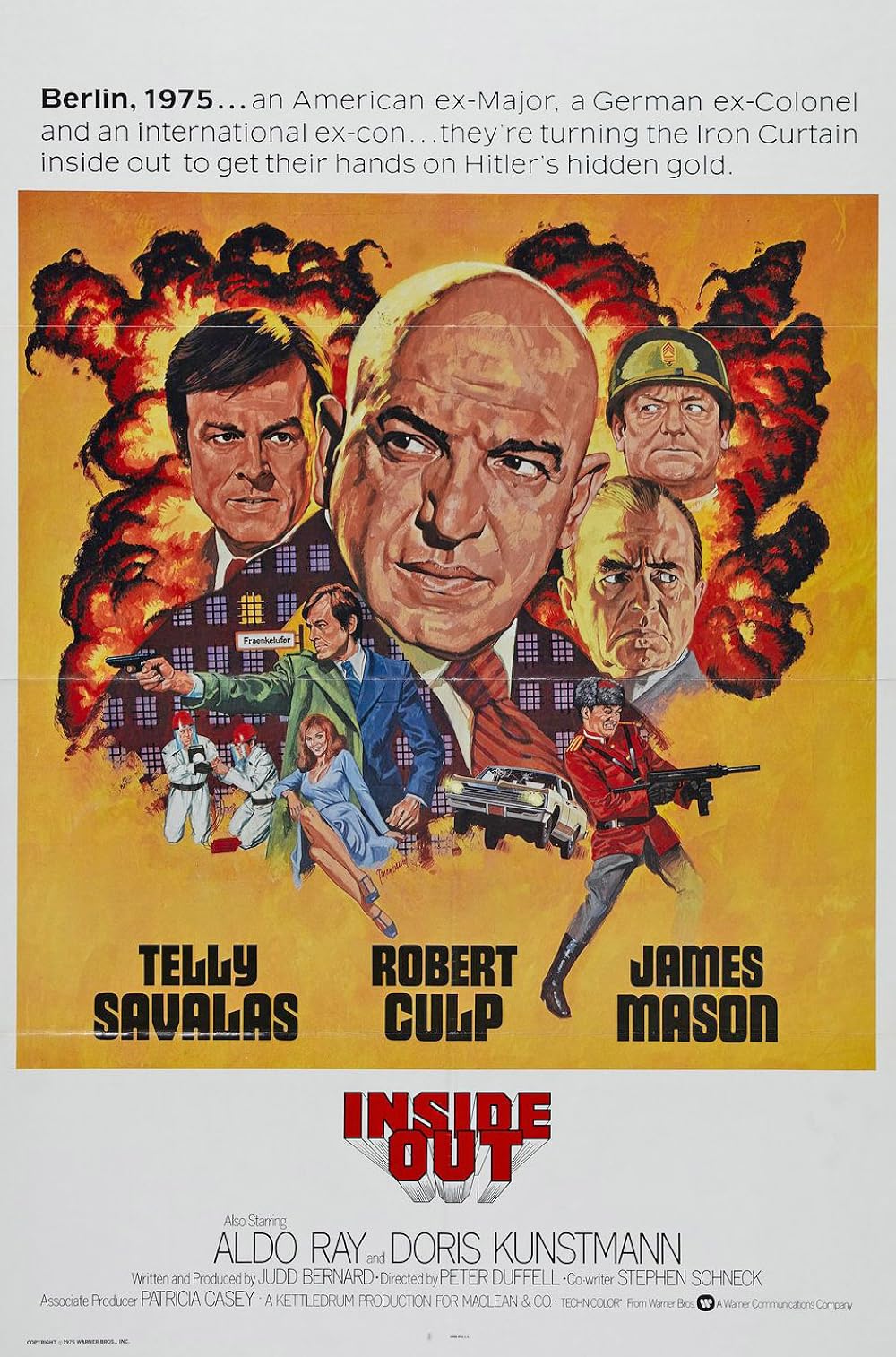
Inside Out (1975)

By Richard Winters

My Rating: 5 out of 10

4-Word Review: Tracking down nazi gold.

Harry (Telly Savalas) is head deep in bills when he comes across a letter from Ernst (James Mason) an old friend inviting him to meet him the next day at a hotel. Since Harry has nothing to lose he shows up at the agree upon location and learns that Ernst has plans to retrieve some gold that had been misplaced during the war. The problem is that the only one that knows the exact location of where it’s hidden is Holtz (Wolfgang Lukschy) who is locked up in a high security prison. Harry must then hire a team of men that can not only find a way to infiltrate the prison, but also trick Holtz into giving away the secret and then dig up the loot despite it being behind enemy lines.

The film, which was surprisingly written directly for the screen and not based on any book even though I think it would’ve made a great novel that could’ve been actually better than the movie, approaches the material in all the wrong ways. I’ll admit it’s a great concept, but director Peter Duffell unwisely decided to enter comedy into the proceedings, which wasn’t necessary. He also implements a goofy sounding music track that would’ve been better suited for a TV-sitcom. The facility that houses Holtz was shot at Plotzensee Prison in Berlin, which looks like an old rundown building that is barely able to stand on its own and like it’s ready to crumble at any minute. To really make it exciting and daring the place should’ve been modern and state-of-the-art and thus making it more of a challenge to break into.

Spoiler Alert!

Everything comes off too easily and thus hurts any potential tension. The kidnapping of Holtz is especially problematic. The group is able to infiltrate the prison by dressing up in guard costumes, but those costumes wouldn’t be an exact replica of the real guard’s uniform and thus should be easily spotted by a prison employee, and yet that doesn’t happen.

They blackmail Holtz’s doctor Maar (Adrian Hoven) to agree to take Hotlz’s place in the prison cell and pretend to be him while disguising Holtz as the doctor in order to sneak him out, but it’s unlikely anyone would agree to stay in a prison for even a day and trust that this group, whom he really didn’t know, would come back and get him out and not just leave him there. Maar, is also much shorter than Holtz, so the real guards would notice the difference in height and realize he was an imposter, but for whatever reason they don’t.

The drug that they inject Holtz with, which is never named, is unusual in that it puts him to sleep, but still allows him to walk. Most of the time drugs that could knock a person out would make their limbs go limp and force the group to have to drag him away as he slept versus here where they are somehow able to get him to sleepwalk.

The sequence where one of them disguises themselves as Hitler, played by Gunter Meisner, in an effort to trick Holtz to divulge the location of the gold since he had sworn only to give it out to the Fuhrer himself is highly improbable as well since the man really doesn’t look all that much like Hitler and you’d think Holtz, even in the drugged state that he is in, would notice the difference and not share the secret, or give out incorrect information.

I’ll give the script some credit as it does come up with a few unexpected wrinkles, but all these do is stymie the group’s efforts slightly and don’t really put a monkey wrench into the whole thing. For instance, they learn that an apartment building has been constructed on the site where the gold is buried, which most likely would’ve ruined their chances of getting at it, but here they’re able to sneak into the building’s basement via an unlocked door (don’t facilities lock their doors in East Germany?) and then create a ruse to get the tenants out of the building so they can plant a bomb that will cause an explosion to crack the cement floor. There’s even a little boy who sneaks in to witness their efforts and risks getting injured but like with everything else it gets quickly resolved when Telly spots him at the last second and whisks him away to safety and then eventually back to his mother’s arms. However, what’s to say he won’t tell his mommy what he saw? Apparently here he doesn’t, but in reality, he probably would’ve and thus another potential loophole that the film glosses over.

I enjoy Telly more when he’s playing bad guys, but he’s still fun as the protagonist and something that helps keep the movie watchable. Overall though the direction should’ve been tighter and the complex mission gets pulled off too seamlessly and thus seeing them walk away with the fortune isn’t all that satisfying as the complication would’ve been too immense for it to have ever succeeded in real life.

My Rating: 5 out of 10

Released: November 27, 1975

Runtime: 1 Hour 37 Minutes

Rated PG

Director: Peter Duffell

Studio: Warner Brothers

Available: DVD-R (Warner Archive)
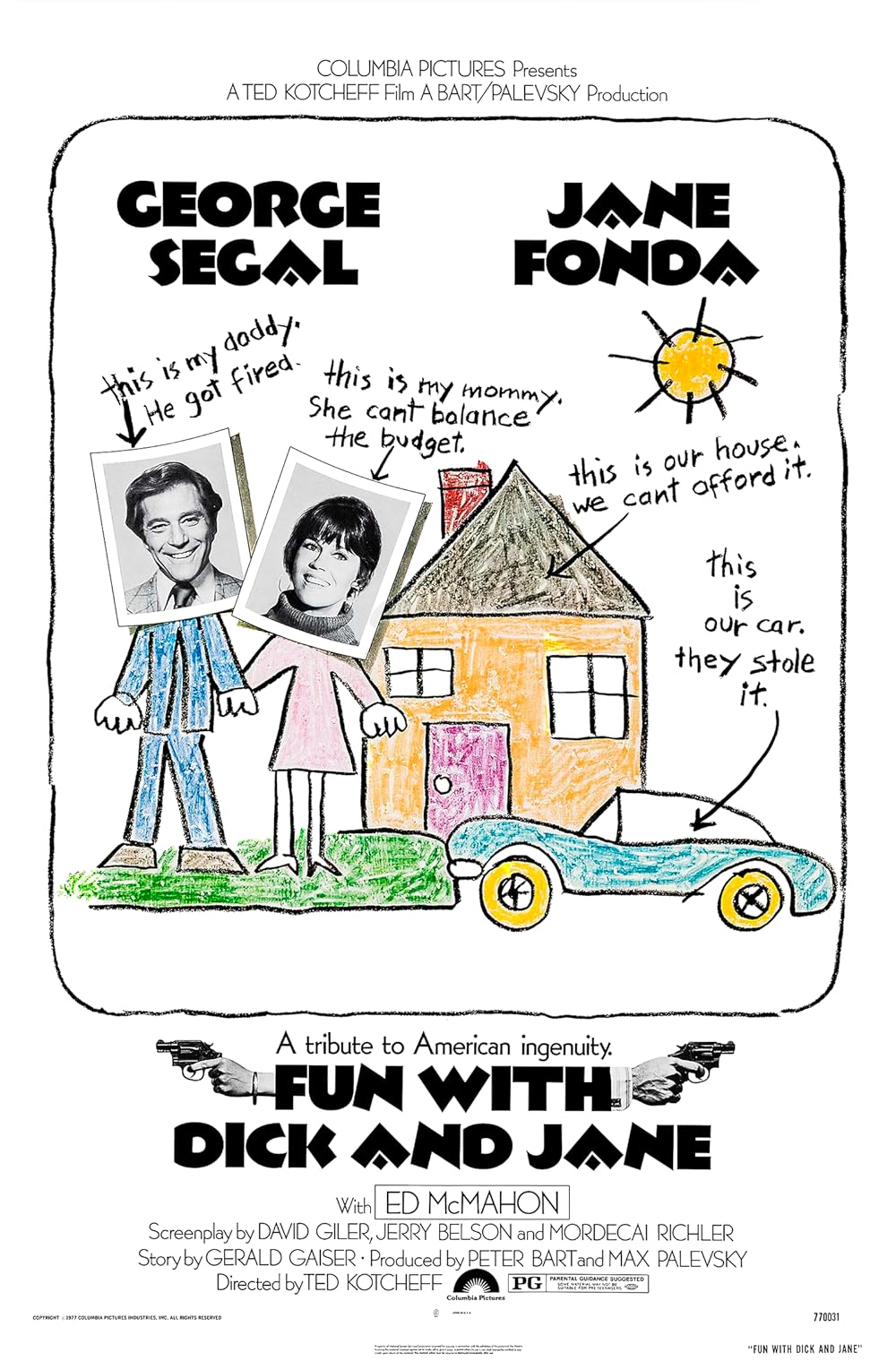
Fun with Dick and Jane (1977)

By Richard Winters

My Rating: 7 out of 10

4-Word Review: Suburban couple become robbers.

Dick (George Segal) suddenly gets laid-off from his job at an aerospace company and finds his financial situation to be dire. His wife Jane (Jane Fonda) tries to get a job modeling dresses but is soon fired. They then attempt to collect unemployment, but Dick is caught taking money on a side hustle, which then causes him to be disqualified. Having run out of all other options they then decide to begin robbing people. They start out small by holding up a drug store, which doesn’t go over well, and then sleazy hotels and even a TV Evangelists (Dick Gautier). Eventually Dick comes-up with the idea of robbing his old boss (Ed McMahon) as Dick knows that his boss has a safe in the closet of his office that is filled with illegal bribe money, so the couple can rob it, and his boss would not go to the police to report it.

The first half is absolutely on-target maybe even more so today as it analyzes just how easy it is to go from being middle-class to destitute in only a matter of weeks and how one’s ascent in society is totally contingent on their jobs and how quickly those places can cut their employees without much thought or concern. The couple’s attempts to rectify things by finding part-time employment that they’re overqualified for is very close to the truth as are the scenes dealing with a ‘friendly’ loan company that advertises they’re easy to work with but really aren’t. Dick’s interview with a potential employer, played by Walter Brooke, that’s interested in hiring him as long as he doesn’t get the vibes that he’s desperate is a keenly observant and a sadly true element in the real world as well. 

The film though veers away from its satirical elements when it gets too into the robbery moments, which takes up the bulk of the second half. The first one, where Dick attempts to rob a pharmacy, but only gets some condoms out of it, is quite funny, but after that it starts to become redundant. Seeing them steal from a sleazy adult hotel where the desk clerk, played by Richard Crystal, begs them not to as it will get him into trouble, but they do it anyways makes them seem callous and less likable to the viewers. The couple commit the robberies without disguises, or just meager attempts at one where they could be easily recognized in a line-up. They also at one point use their real names making it seem that they would be caught and it’s surprising that they aren’t.

Spoiler Alert!

Having them then ‘graduate’ into becoming safe crackers is too much of a stretch. They get only one week to prepare for it, which Jane feels confident they can do since they’re ‘quick learners’, but why even bother to have a safe at all if novice people can simply read up on how to crack one in only a short time and then be able to do it without a single hitch? Would’ve been better had they made partners with someone who was experienced in it and then agreed to give him half, which would’ve been more believable. Better yet would’ve been having Dick and Jane walking away with the loot thinking that they’re now ‘home free’ but then finding themselves surrounded by the police for the other robberies that they committed earlier. 

End of Spoiler Alert!

I also didn’t care for Segal’s performance who I’ve come to feel as an actor is a bit overrated. His character is obnoxious and initially laughs off his dilemma confident he’d land on his feet and remains in that arrogant mode until well into act two and even then, has a brash attitude that makes you want to see him fail versus siding with him in his predicament. Fonda is much more sympathetic giving her a far better presence to the extent it could’ve completely revolved around her, possibly as a single mother, and the movie would’ve worked better. I also really enjoyed McMahon who’s better known for his announcing work but perfectly cast as the corrupt boss and John Dehner is also memorable, particularly with the way he peels an apple, playing Jane’s father, who despite being financially well-off refuses to loan her any money and the goofy logic he comes-up with to justify it. 

This same story got remade in 2005 with Jim Carrey and Tea Leoni playing the leads, but that version doesn’t work as well. Granted I haven’t seen it since its release, but I remember that its theme is much softer and pretty much puts all the blame on Alec Baldwin, who played Carrey’s boss, and acted like he was the sole source of the problem, while this movie’s take is that the system as a whole is screwed up.  

My Rating: 7 out of 10

Released: February 9, 1977

Runtime: 1 Hour 35 Minutes

Rated PG

Director: Ted Kotcheff

Studio: Columbia Pictures

Available: DVD, Blu-ray, Amazon Video, YouTube

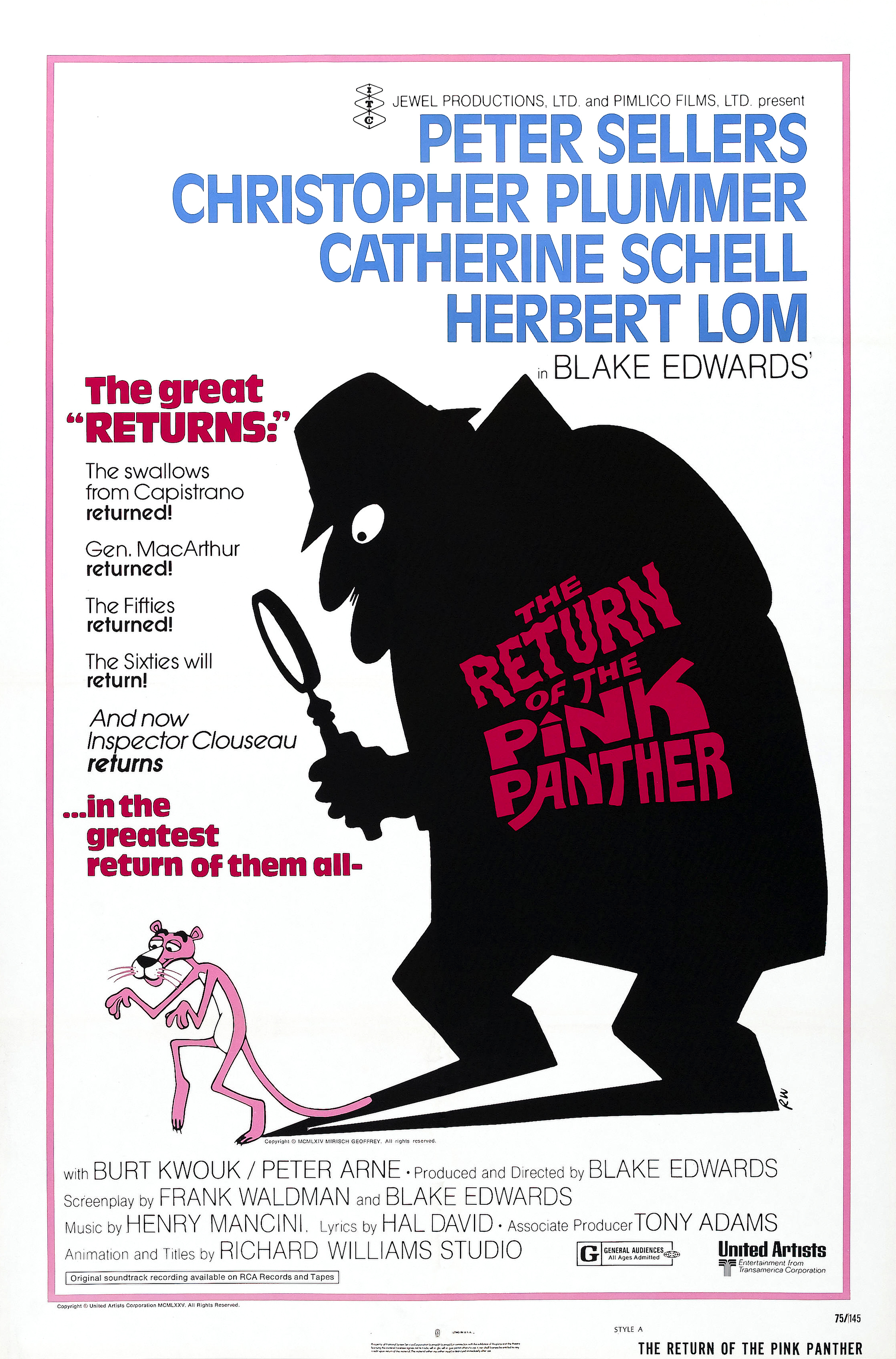
The Return of the Pink Panther (1975)

By Richard Winters

My Rating: 7 out of 10

4-Word Review: Tracking down stolen diamond.

Inspector Clouseau (Peter Sellers) has been demoted to street cop by Chief Inspector Dreyfuss (Herbert Lom) due to Clouseau’s continual incompetence, which is starting to drive Dreyfuss completely mad. However, inside the country of Lugash a prized diamond known as the Pink Panther is stolen and since Clouseau had success retrieving it the first time it went missing during a heist he is put on the case to find it again much to Dreyfuss annoyance. Clouseau suspects that the culprit is Charles Litton (Christopher Plummer), who is a notorious thief. Clouseau attempts to use several different disguises in order to infiltrate Litton’s home that he shares with his wife Claudine (Catherin Schell) in order to find incriminating evidence against Litton so that he can turn him in, but his attempts to try and a take Litton down prove to be comically inept. 

This marked the fourth installment of the Pink Panther series and the first in 10-years that reunited writer/director Blake Edwards with Sellers. Both had said after doing the second film A Shot in the Dark, that they never wanted to work with the other again due to much infighting during the production, but both had since then fallen on hard times. Edwards was by the early 70’s considered box office poison after the colossal failure of Darling Lilli which managed to recoup a measly $3 million from a $25 million budget and his other films from that era Wild Rovers and The Carey Treatment hadn’t done much better. Since Pink Panther had been his last success, he was interested in reviving it and even wrote up a 14-page treatment but found no takers amongst the major studios. Then producer Lew Grade agreed to finance it in exchange for Edward’s wife Julie Andrews agreeing to star in a British TV-special that he wanted to produce. Since Sellers career had also bottomed out, he came onboard to most everyone’s surprise without much hassle.

The film was shot in many scenic locations including Morrocco giving the optics an exotic flair and the proceedings a sophisticated European vibe making it seem like a step-up from just a silly comedy. In the first two installments all the characters were written to be funny and goofy particularly the second film, which had been based on a stage play. Here though the comedy is wisely given over to Sellers while the couple he’s after remain savvy, which makes it more intriguing as you want to see how this inept idiot takes them down, or is able to trip them up at their own game. I also liked how funny bits are interspliced with some legitimate action, especially the opening scene that features the heist, which could’ve easily fit into a realistic film dealing with a robbery. These moments help add a bit of relief from all the laughs, a sort of chance to catch your breath, while making the plot seem like it’s not just all about being a farce.

Lom adds terrific support as Clouseau’s exasperated supervisor, and his assertive acting style works nicely off of Sellers clownish one making the interplay between the two a highlight. It’s good too that Plummer replaced David Niven, who played the character in the first one, but wasn’t able to do it here due to scheduling conflicts, as Niven would’ve been too old and not plausible to have outrun the bad guys like Plummer does. 

My only issue is that Claudine is shown attempting to hold in her laughter at Clouseau right from the start like she knows he’s an idiot before she even met him, but this goes against the premise. Clouseau is considered an accomplished detective by the outside world hence why he was selected to head the case and it’s only the people that work with him and know him who are aware of his ineptness. This is the whole reason why Dreyfuss gets driven mad by him because the rest of the world celebrates the man that he knows is really a fool, so Claudine should’ve initially thought of him as being sharp and only came to the conclusion he was incompetent by the end after having dealt with him. It actually would’ve been funnier had she and Charles feared Clouseau upfront having believed his celebrated reputation and misreading his bumbling as being ‘genius’ ploys and remained that way throughout. In either case seeing her covering her mouth and shielding her giggles makes almost seem like she’s falling out of character and a blooper, similar to how Harvey Korman would unintentionally crack-up during Tim Conway’s antics on the ‘The Carol Burnett Show’ and for that reason it should’ve been avoided. 

My Rating: 7 out of 10

Released: May 21, 1975

Runtime: 1 Hour 54 Minutes

Rated PG

Director: Blake Edwards

Studio: United Artists

Available: DVD, Blu-ray, Amazon Video, YouTube

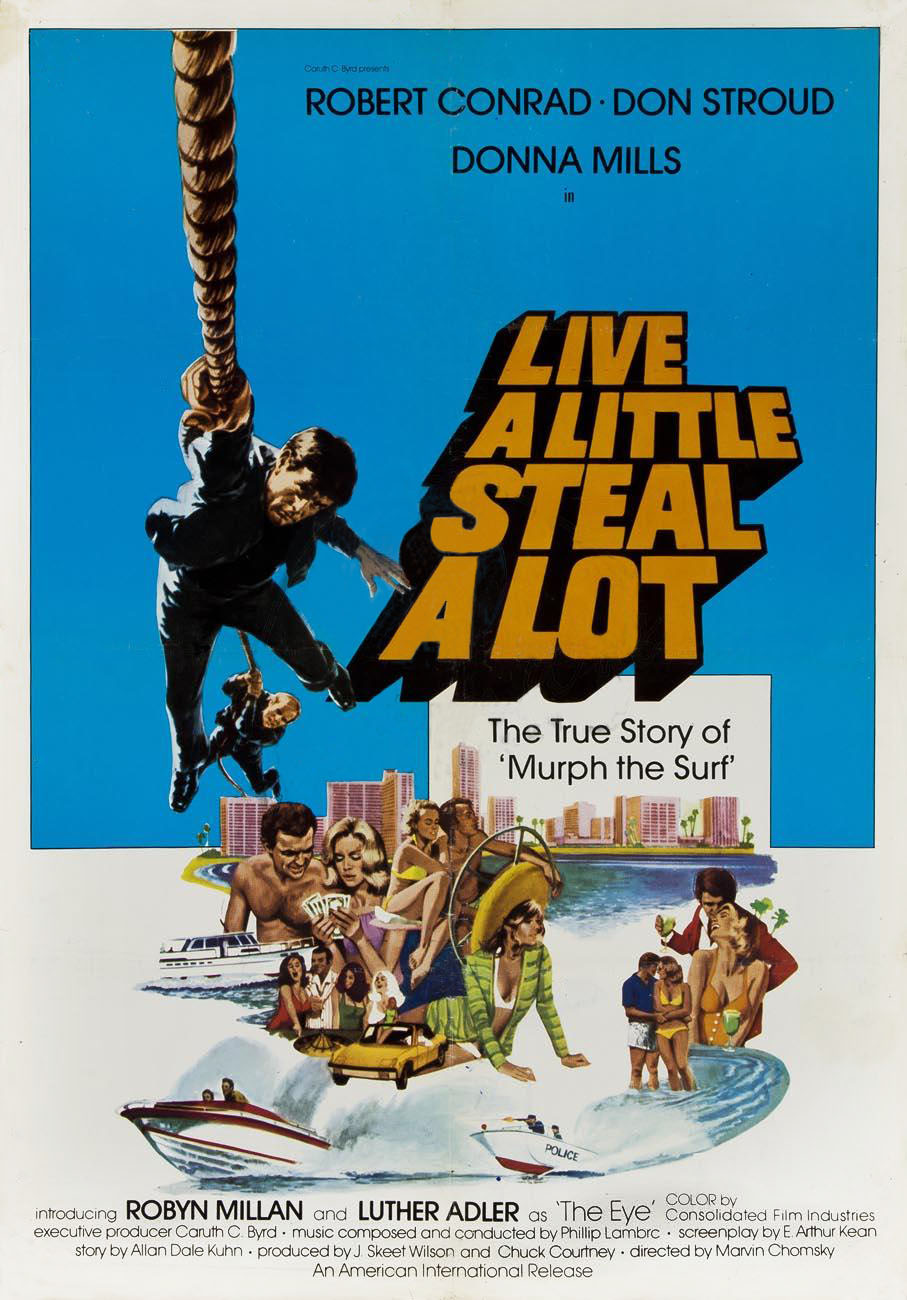
Murph the Surf (1975)

murph1

By Richard Winters

My Rating: 6 out of 10

4-Word Review: A brazen jewel heist.

Jack Murphy (Don Stroud), a successful surfer known as Murph the Surph, and Allan Kuhn (Robert Conrad) who is also a surfer and becomes friends with Jack where they decide to team-up to commit some daring robberies.  They start out robbing people’s homes during the day, but then graduate to even bigger heists including New York’s American Museum of Natural History taking the precious gemstone the Star of India and the Eagle Diamond. However, once they have the jewels in their possession they’re immediately tailed by the police, but Allan comes up with the perfect hiding spot where no one can find the stolen loot, but as the pressure from the cops mount one if not both seem liable to crack.

The film is based on the actual incident, which occurred on October 29, 1964, where three men, Jack Roland Murphy, Allan Kuhn, and Roger Clark robbed the New York Museum of 24 precious gemstones in what was called at the time The Jewel Heist of the Century. However, in retrospect the crime wasn’t as sensational as it originally seemed since the alarm systems, including the ones on the display cases, were all non-operational. All 19 of the exterior windows were left open 2-inches overnight to allow in ventilation and there was no security staff, which seemed to be almost inviting a robbery to happen. The film also changes the story a bit in that in the actual crime three men were involved, but for whatever reason the story here whittles it down to only two.

The unique way the plot gets structured where the heist is broken up into segments and the narrative handled in a non-linear way is what makes the movie interesting. In fact it’s the relationship between the two leads, and the amoral girlfriend that’s wonderfully played by Donna Mills, who sleeps around between the two and eggs them on to commit more and more daring crimes, keeps it engaging. The robbery itself, especially with how easy it becomes, is almost anti-climactic and the other robberies that they do including an amusing one where they rob a rich couple’s house while they are away and then initially get stopped by a cop during the crime only to then have the cop turn his attention to fighting off the homeowners guard dog, which allows the two men to escape, is funny. There’s also an amazing boat chase that’s as exciting as any car one out there.

The performances, particularly by Don Stroud, who used to be a surfer himself before entering into acting, is quite good. Conrad, best known for his work in the TV-show ‘Wild Wild West’ is not bad either though not as engaging. He’s usually best at doing macho types, which is what he is here too. The contrasting personalities of the two, and their constantly competitive natures where they try to one-up the other is entertaining as is how their friendship ultimately begins to dissolve.

The film’s one drawback, outside of  having a modest budget look better suited for a television movie, is there’s no tension. A heist film really needs that and while the irreverence is nice a balance is necessary. A distinct nemesis would’ve helped. There are an array of cops/detectives that are constantly haranguing them, but they don’t have much of a presence. All of the cop roles should’ve been combined into one and then have this person constantly on the radar hounding the guys at every turn, which would’ve then have given it the extra drama and clash that’s otherwise missing. Still it’s a neat idea for a movie and one that should be revisited.

Alternate Title: Live a Little, Steal a Lot

My Rating: 6 out of 10

Released: July 11, 1975

Runtime: 1 Hour 41 Minutes

Rated PG

Director: Marvin J. Chomsky

Studio: American International Pictures

Available: VHS, DVD-R

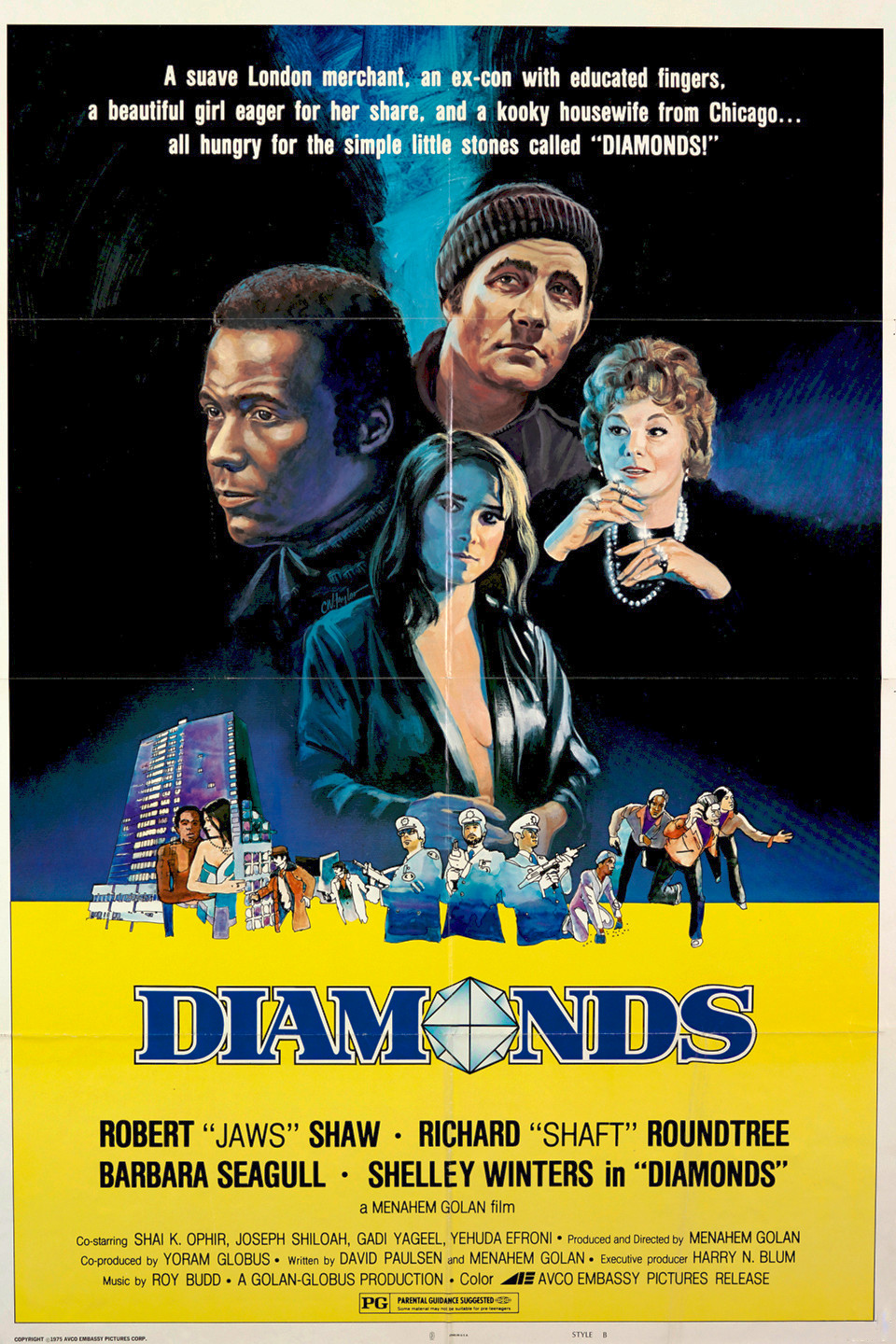
Diamonds (1975)

diamonds2

By Richard Winters

My Rating: 3 out of 10

4-Word Review: Testing a security system.

Charles and his twin brother Earl (both played by Robert Shaw) share an intense rivalry that comes-out during their judo karate contests. Charles wants to top his brother at everything including getting the better of him at his own expertise, which is that of security specialist who has created a vault in Tel Aviv that holds a cache of diamonds and is supposedly impenetrable. Charles is determined to rob it and uses the help of expert safe crackers Archie (Richard Roundtree) and Sally (Barbara Hershey).

While the film has some great location shooting of Israel making it seem almost like a travel log of the region and the final third where the three try to pull off the elaborate robbery does get a bit intense, though it’s nothing special, the movie on the whole falls flat. A major reason is that it was directed by Menahem Golan, who along with his cousin created the notorious film production company The Cannon Group, which produced a lot of cheesy, bubble gum action flicks during the 80’s. This film works very much like those with poor character development, in fact there’s really no development at all, and a plot that steals all sorts of elements from other and better heist movies.

Overall it’s pretty much the same storyline as $, Perfect Fridayand to a lesser extent Topkapibut all of the things that made those movies so much fun to watch goes missing here. The lack of interplay between the characters is the biggest issue. Shaw, Roundtree, and Hershey are all great actors, but they’re not given anything interesting to say. The twin brother concept does not get played-up enough and Charles’ twin is seen just a few times with the only difference being a shaggy wig that Earl wears as opposed to Charles crew-cut, but both brothers have the exact same mole on the left side of their mouths and while identical twins can have many similarities, skin blemishes isn’t one of them. Shelley Winters also pops-up sporadically as an American tourist, but her part is completely inconsequential and not needed at all.

The heist itself does involve some sophisticated maneuvers including having them walk on the ceiling by using a suction-cup type contraption, but the film fails to show any of the preparation. In the other heist films seeing how the crooks rehearsed the robbery and working through their disagreements and divergent personalities was half-the-fun, but that all goes missing here. How Shaw goes about meeting Roundtree and company is pretty flimsy too as he catches them during the middle of an attempted safe cracking and then hires them on-the-spot supposedly because he’s been monitoring them for 5 years and feels they’d be a perfect match for his scheme, but why should it take him so long to come to this conclusion and these safe crackers must not be as cunning as they seem if they’ve been watched closely for 5 years and not had any hint that it was going-on.

Spoiler Alert!

The crime itself gets pulled-off way too easily and there’s no moment where a crucial mistake gets made, or some sort of unexpected slip-up, so things never get as intense as it could’ve. There’s also an added character that gets thrown-in who kidnaps the son of the security guard in order to get the guard to give-out the combination to the safe, but no scenes are shown for how Shaw and company met this kidnapper, or what deal he made with him in order to get him to agree to along with their plans.

The finale has a very anti-climactic feel as Roundtree is able to retrieve the diamonds, but then Shaw forces him to put them all back, so they come away, after all that effort, empty-handed. Ultimately Shaw does hand him a $100,000 check, but this was paltry compared to the $10 million they would’ve gotten with the diamonds making the viewer feel like the film wasn’t worth sitting through if the characters just end up in the same situation that they were in when it began. While no movie that has Robert Shaw in it can be completely bad as his presence alone can elevate even the most inept material this one unfortunately does come close.

My Rating: 3 out of 10

Released: October 22, 1975

Runtime: 1 Hour 48 Minutes

Rated PG

Director: Menahem Golan

Studio: AVCO Embassy Pictures

Available: DVD-R

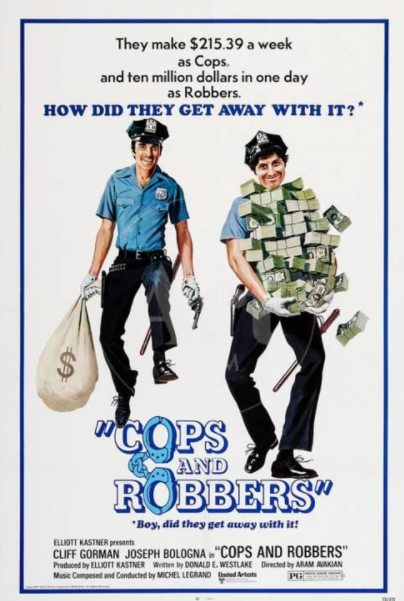
Cops and Robbers (1973)

By Richard Winters

My Rating: 8 out of 10

4-Word Review: Cops become the robbers.

Tom (Cliff Gorman) and Joe (Joseph Bologna) are two New York City policemen who are tired of their jobs and want to retire from the working world, but can’t because they need to support their families. They decide the only solution is to commit a heist by working with a local mob boss (John P. Ryan) to rob a Wall Street brokerage firm out of  bonds that cannot be traced. The two come up with an elaborate scheme  to pull it off during the day while the place is still open and they’re still in uniform. At first things go smoothly, but then two other cops show up forcing Tom and Joe to destroy the bonds they’ve just gotten their hands onto in order to avoid getting caught. While this helps them out of their immediate jam it still gets reported to the press that the place was robbed making the crime boss believe he has been taken advantage of and compelled to get revenge.

What stands out is how different this is from the conventional cop flick. Instead of having a loud, pounding score the music here is soft and tranquil like the breezy, warm climate of a tropical island, which is where both Tom and Joe wish they were. The cops aren’t portrayed as being authority figures either or compromised victims of a corrupt system, but just regular suburbanites trapped in a dead-end job like many people and looking for a way out.

The crime is done differently too. Usually, in most other cop flicks, once the robbery gets going you’ll see the pace speed up with fast edits, but here it gets played-out in real time, which actually makes it more intense. I enjoyed the camera cutting back and forth from showing things from Tom and Joe’s point-of-view as well as from the black-and-white monitor seen by the security guards. The authentic office atmosphere has many of the employees not even knowing a robbery is going on while the two main people who do realize what Tom and Joe are up to, well played by the elderly Shepperd Strudwick and a much younger African American actress named Ellen Holly, display odd reactions and facial expressions that doesn’t conform to the situation, but eventually gets explained by the big twist that comes later.

Gorman gives an awesome performance, which is made all the more impressive when you realize just 4 years earlier he was the highly effeminate gay character in The Boys in the Band, but here he’s a macho heterosexual. I kept waiting for him to reveal mannerisms of his past role, but instead he successfully pulls off being two diametrically different people with no connection to the other a feat not every actor, even some of the good ones, are able to do.

Bologna goes against type too. Usually he’s loud and brash, but here more quiet and nervous. In the Kino Lorber DVD bonus section he recounts a funny incident that happened to him during the production when he was forced to make a call home to his wife (actress Renee Taylor) in real-life. Since there were no such things as cellphones at the time he had to go to a nearby phone booth while still wearing the cop uniform of his character. It was there that he noticed a thug beating up a victim on the sidewalk and he shouted at the man to stop it. Since the man presumed Bologna was a cop it was enough to get him to run away, but then the other pedestrians started to harass Bologna for not chasing after the bad guy and arresting him. He tried to explain that he was just playing a policemen in a movie, but no one believed him.

The film’s final segment, which takes place in Central Park, is well choreographed and features a unique car chase.  It’s just a shame that Aram Avakian who burst onto the film scene with the provocative, ahead-of-its-time cult favorite End of the Roaddidn’t go on to direct more movies as he did only one more, 11 Harrowhouse, after this one before retiring to become the head of the film department at the State University of New York where he worked until his death in 1987. His approach here makes all the difference as he relies not on the typical cop formula action, but instead on the nuance.

My Rating: 8 out of 10

Released: August 15, 1973

Runtime: 1 Hour 29 Minutes

Rated PG

Director: Aram Avakian

Studio: United Artists

Available: DVD

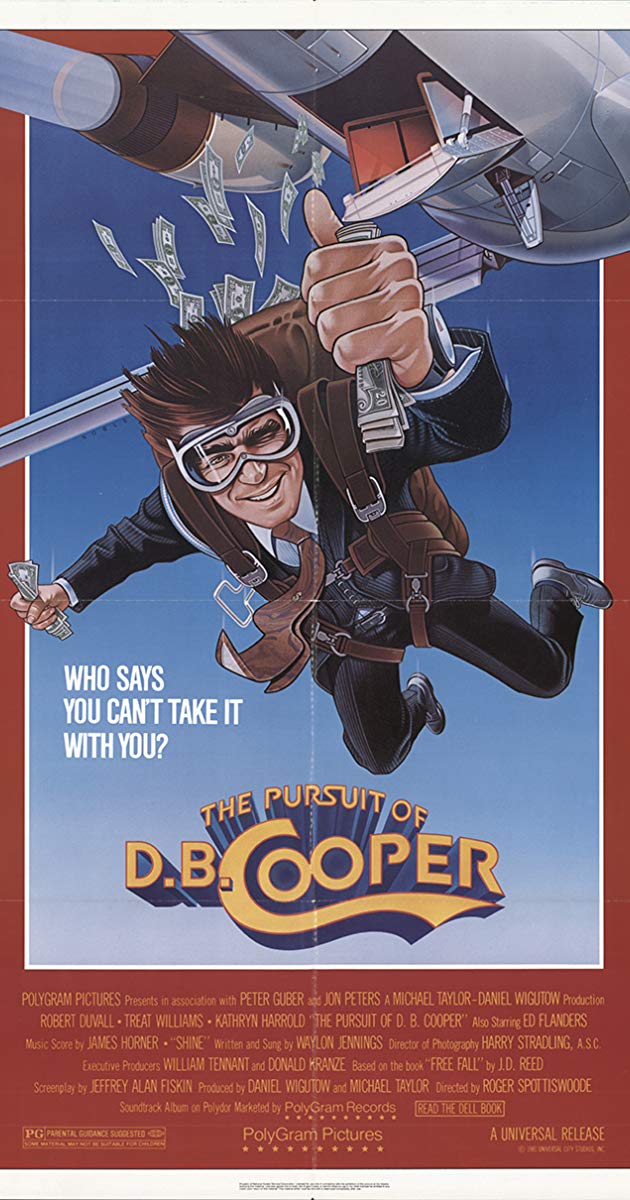
The Pursuit of D.B. Cooper (1981)

By Richard Winters

My Rating: 2 out of 10

4-Word Review: Hijacker eludes the authorities.

Loosely based on the real-life incident involving a man using the alias of Dan Cooper, but later reported in the media as D.B. Cooper, who hijacked a Boeing 727 as it flew towards Seattle, Washington on the night of November 24, 1971 and parachuted out of the plane with $200,000, but whose remains have never been found. In the film D.B. Cooper is the alias for Jim Meade and is played by Treat Williams as he parachutes into a wooden area and becomes chased by Bill Gruen (Robert Duvall) who was Meade’s sergeant in the army and feels he knows him better than anyone.

Had the film made some legitimate attempt at accuracy it might’ve been moderately intriguing, but right from the start it plays fast-and-loose with the facts including having the jump take places in the sunny daytime when in reality it occurred at night during a rainstorm. The time period is supposed to be late autumn, but many people are shown doing summertime activities like having a couple going skinny dipping in a pond even though it would’ve been too chilly for that. There’s also a ridiculous scene where Paul Gleason, playing a useless character that was not needed at all, going headfirst through the front windshield of a moving car and receiving a slight cut on his right cheek as his only injury.

John Frankenheimer was originally hired to direct, but after having numerous arguments with the producers over the film’s insipid script he was fired. He was then replaced by Buzz Kulik who tried turning it into a topical drama by portraying the Cooper character as being a disgruntled Vietnam Vet. Roger Spottiswoode and Ron Shelton were then brought it to ‘jazz-it-up’ a bit with some stunt-work and the chase scene down the rapids is impressive, but the humor they put in is dumb and the ‘Dukes of Hazard-like soundtrack ill-advised.

I started to feel that it would’ve worked better had it not connected itself to the real incident at all but instead had Williams portray a fictional character all together. It also should’ve analyzed the planning/preparation phase much more and shown him pulling off the actual hijacking instead of just starting out with the parachute jump.

While he doesn’t look anything like the sketches shown of the real Cooper I still found Williams to be fun in the lead and Kathryn Harrold lends great support as his resourceful wife. Duvall is solid as usual and even though it doesn’t take place in the Pacific Northwest, which is where the real incident occurred, I still enjoyed the sunny scenery, but that’s where the good points begin and end in a movie that clearly had misfired written all over it before even one frame of it was filmed.

My Rating: 2 out of 10

Released: November 13, 1981

Runtime: 1 Hour 40 Minutes

Rated PG

Director: Roger Spottiswoode, Buzz Kulik (Uncredited)

Studio: Universal

Available: DVD (Region 2), Amazon Video, YouTube.

Redneck (1973)

By Richard Winters

My Rating: 3 out of 10

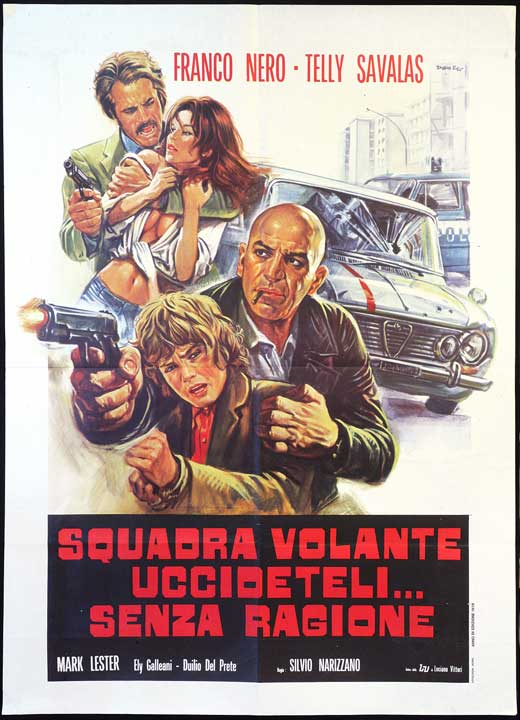
4-Word Review: Robbers accidentally kidnap kid.

Memphis (Telly Savalas) and Mosquito (Franco Nero) are two crooks who try to pull off a jewelry store heist, but end up nabbing much less than they wanted. During their getaway attempt the car being driven by their driver Maria (Ely Galleani) crashes forcing them to stop another car and physically removing its driver (Beatrice Clary) out of the vehicle. Yet as they drive off inside the stolen car they are unaware of a 12-year-old child (Mark Lester) hidden in the backseat who ends up stymieing all of their plans.

This was yet another ill-fated film project that Lester took on after the tremendous success of Oliver! that was supposedly done to help make him a solid big-screen star, but instead turned his career to literal ashes by 1977, which pushed him out of the acting altogether and into a career in sports medicine. The film starts out okay with some excellent action that’s vividly done and had it kept up its fast-pace throughout it might’ve done better.

Unfortunately whenever the story slows done it gets boring real fast. Part of the problem is there is no backstory given to any of its characters. Everything starts out very abruptly going right into the robbery and subsequent getaway, which is fine, but at some point we need to learn more about these people; what makes them tick and gives them distinction, which never happens. It’s hard to get caught up in the action or tension when everyone, including Lester, comes off as blah and transparent. The film’s original Italian title was Senza Ragione, which translates into ‘with no reason’ and that’s exactly what you get here: sadistic, mindless calamity that serves no purpose.

Lester’s presence isn’t interesting and he barely even has much dialogue. He’s too much of a passive victim that doesn’t fight back enough while his bonding with Nero happens too quickly. His  eventual downward spiral, where he goes from innocent child to a nutcase that craves violence is also too quick and does not seem genuine. The part where he tries to escape from the crooks and is chased through an empty field is jarring because playful, cartoon-like music gets played over it making it seem almost like a slapstick comedy even though the rest of the film is approached like a thriller with a pounding soundtrack, which makes the production come-off like it has a split-personality.

The film is also somewhat controversial because Lester, who was only 13 at the time of filming,  for no apparent reason strips naked although the viewer only sees him from behind, but it’s still a bizarre moment nonetheless. However, to me what was more shocking was having him watch an adult couple making love in the backseat of a car.

Savalas is certainly a lot of fun and can make the most of any low grade picture, but even here his campiness gets a bit overdone including his incessant whistling. The ending, in which the characters go from a summer climate to a winter one in seemingly a matter of a day is quite confusing. To some extent I liked the snowy landscape and howling wind, which created a surreal effect, but having a movie change seasons so drastically and without any explanation is a true sign of really bad filmmaking.

Alternate Title: Senza Ragione

My Rating: 3 out of 10

Released: January 26, 1973

Runtime: 1 Hour 29 Minutes

Rated R

Director: Silvio Narizzano

Studio: Crawford Productions

Available: VHS

Harry and Walter Go to New York (1976)

By Richard Winters

My Rating: 7 out of 10

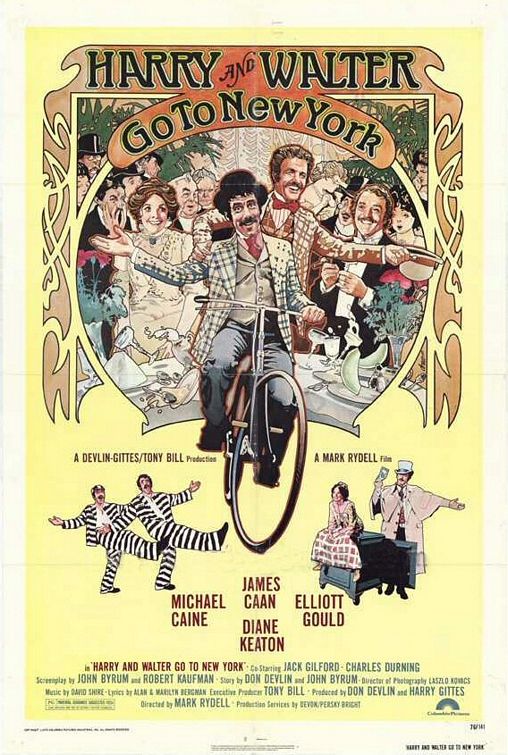
4-Word Review: Two vaudevillians rob bank.

Harry and Walter (James Caan, Elliot Gould) are two down-on-their-luck marginally talented comedians living in the 1920’s who go to jail when they’re caught trying to rob their audience members during a tacky onstage ‘psychic’ stunt that goes horribly wrong. While in the slammer they meet up with Adam Worth (Michael Caine) a rich man from society’s upper crust who enjoys robbing banks just for the thrill of it. They come upon the blue print for his next proposed heist and take a picture of it and then after they escape from jail challenge Adam on who will be able to rob the bank first.

This is one of those 70’s movies that I found to be refreshingly original and quite funny, but when it was released it was met with harsh reviews and was a bomb at the box office. After some bad test audience reactions it was heavily cut much to director Mark Rydell’s dismay who felt a lot of the better jokes went missing although producer Tony Bill and star Caan blame Rydell for the film’s failure and insist that much of the humor in the original script was never even filmed or used.

I can’t explain why the film didn’t do well as I personally found as bank heist movies go this one to be quite  unique. So many bank robbing films from that era, and even today, paint the scheme in a one-dimensional way by portraying the robbers, who we are usually supposed to sympathize with, as a modern-day Robin Hood, while the cops and those out to stop them are represented as being the greedy,oppressive establishment, but this film takes things a step further, which is what I found interesting. The competition aspect gives it an extra.,likable edge and really made me want to root for Harry and Walter and their gang of losers who take on the arrogant Caine and his snotty buddies. Instead of the viewer just being intrigued at how they’re able to pull of the robbery as is the case with most heist films we are much more emotionally invested with its outcome.

Caan and Gould are what Warren Beatty and Dustin Hoffman should’ve been in Ishtar. These guys are definite losers, but still appealing and comical at the same time. Caan has never been known for his comedy and he has referred to this movie as ‘Harry and Walter Go to the Toilet’, which is a shame because he shows nice energy here and is able to keep Gould in check by not allowing him to drone on and steal the spotlight as he can sometimes do when left alone or with a less capable co-star.

If the film fails at all it’s by entering in too many supporting players. The title mentions only Harry and Walter and they should’ve pulled off the heist alone with maybe only Keaton tagging along for balance. As it is though a whole massive group gets in on it to the point that the two leads have little to do. While the group is busily trying to figure out how to open the safe Harry and Walter are on stage trying to extend a stage play  The film still works pretty well despite this issue, but technically the two men should be at the center of the action and in a lot of ways they really aren’t and in fact become almost like supporting players by the end.

The film also goes on too long with the denouncement being far more extended than it should, but it’s still a fun, breezy watch that reflects the gilded age flavor well and uses leftover sets from Hello Dolly to enhance the scenery perfectly.

My Rating: 7 out of 10

Released: June 17, 1976

Runtime: 1 Hour 55 Minutes

Rated PG

Director: Mark Rydell

Studio: Columbia Pictures

Available: DVD, Blu-ray, Amazon Video

The Thomas Crown Affair (1968)

By Richard Winters

My Rating: 8 out of 10

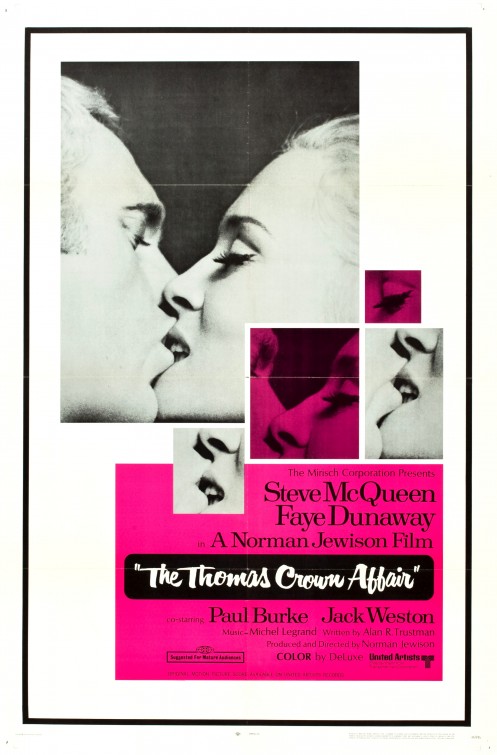
4-Word Review: Robbing his own bank.

Thomas (Steve McQueen) is a bank executive who devises what he feels is the perfect crime. He hires five men who he does not know nor do they know each other to rob his bank in broad daylight and then dump the money in a trash can at a cemetery where he retrieves it. The heist works flawlessly, but then insurance investigator Vicki (Faye Dunaway) comes on the scene and she almost immediately eyes Thomas as the culprit. The two begin a torrid affair with Vicki openly telling him her suspicions and that she’ll do whatever it takes to prove it, but Thomas has other plans.

What makes this film stand out from all the other bank robbing movies is that the heist scene was shot using a concealed camera. Only the bank officials and guards were aware that a movie was being made while the rest of the people were actual customers convinced that what was happening was real making their reactions of fear genuine. The best part of this sequence though is when director Norman Jewison has the camera put onto a dolly and glides it through the tear gas that the thieves set off.

The film is famous for its use of the split screen particularly during the opening credit sequence as well as Michel Legrand’s award winning music. Legrand wrote the score after viewing a five hour rough cut and the movie was then edited to be in tandem with the music instead of being done in reverse, which is how it’s usually done. For me the music comes off as sappy and out-of-place making it seem more like a romance when it’s really a game of cat-and-mouse and the blaring score almost gets in the way of it.

The best thing is Dunaway and I really don’t care how many face lifts she may have had, or how many years it’s been since she’s had a relevant role because she’s still a great actress and her presence here proves it. She filmed this before her breakout movie Bonnie and Clyde was released and she takes complete control of every scene she is in. Her character also works in what was still traditionally perceived as a man’s role and thus making it kind of groundbreaking. I also like that she’s never seen as weak or vulnerable in the traditional feminine sense and instead remains quite determined and focused throughout while never swaying from using her femininity as a weapon and nothing more.

McQueen unfortunately, and I can’t believe I’m saying this as he’s one of my favorite actors,  ends up being the film’s weakest link as the role goes against his rugged persona, which is what he’s good at. He had worked with Jewison before in The Cincinnati Kid and lobbied hard for the part, but Jewison rightly felt that character was not the right fit, but ultimately he relented, which was a mistake. The only time he is effective is when he’s doing his own stunts or driving on the beach in a dune buggy but otherwise he’s transparent and utterly dominated by Dunaway.

The supporting cast is good especially Jack Weston as a mope who gets hired on to partake in the robbery and then works as the clumsy catalyst that helps unravel it, but I was disappointed that his character ultimately disappears too soon and would’ve liked him to have remained for the duration. Otherwise this slick production, which was written by Alan Trustman who worked at a bank and would spend his idle time fantasizing on how to rob it, holds up well and includes the famous chess game sequence that still sizzles.

As for the 1999 remake, which changes many key plot points, I’ve never seen it nor do I have any interest to. Pierce Brosnan and Rene Russo certainly make for an interesting pair, but I feel that if the original is a classic then it shouldn’t be touched and a law should be written disbarring remakes when they aren’t needed or asked for.

My Rating: 8 out of 10

Released: June 19, 1968

Runtime: 1Hour 42Minutes

Rated R

Director: Norman Jewison

Studio: United Artists

Available: DVD, Amazon Video, YouTube