Tag Archives: Mark Rydell

On Golden Pond (1981)

By Richard Winters

My Rating: 10 out of 10

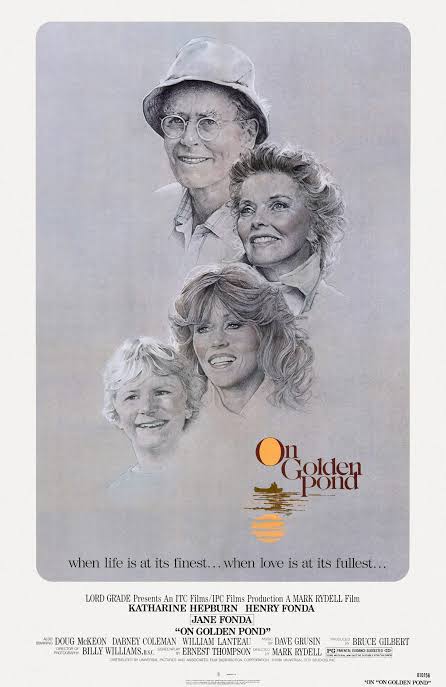
Ethel and Norman (Katherine Hepburn, Henry Fonday) are an older couple who spend each summer at their lakeside cabin. Norman, while being perpetually grouchy, is starting to show serious signs of aging. They receive word that their grown daughter, Chelsea (Jane Fonda), will becoming for a visit along with her new boyfriend Bill (Dabney Coleman) and his son Billy (Doug McKeon). She plans on traveling in Europe with Bill while leaving Billy with her parents. At first Norman does not take kindly to the news, but eventually he and Billy bond while taking the boat out to go fishing. When Chelsea returns, she finds the two have become quite close, but then her own past problems with Norman begin to seep through.

The film is based on the play of the same name that originally opened on February 28, 1979, and starred Tom Aldredge as Norman and Frances Sternhagen as Ethel, who were both only in their late 40’s at the time, but managed to somehow convincingly come off as elderly, and was written by 28-year-old Ernest Thompson who had struggled throughout the 70’s as an actor, co-starring in some short lived TV-shows, before finally finding his forte as a writer. The play, like the movie, was a big hit both with the critics and the audiences and it’s easy to see why. Instead of focusing on some bigger-than-life occurrence it captures the magical nuances of real life and how a simple visit to a cabin leads to unexpected results to what initially seems like two very different people with nothing in common.

The acting is a standout most especially Hepburn, who at the age of 73 did all of her own stunts including diving into the lake, is terrific and helps to hold the whole thing together. Fonda is great too, both won the Oscar for their work, though personally I would’ve liked his arc to have been more evident, he softens slightly at certain intervals, but I would’ve preferred it being broader and more permanent. It might’ve helped too had his mental decline not been telegraphed so quickly, make it seem like he was doing fine, which would’ve then made the scene where he can’t remember how to find his way home after picking strawberries more disturbing versus here where we’re pretty much expecting it before it even happens.

McKeon is adequate though Anthony Micheal Hall, who auditioned for the role, but lost out, might’ve been better. My main complaint is that I felt he was a bit too old. Leaving a 13-year-old who’s at that age where they begin to be rebellious and challenge authority alone with two frail, elderly people, might not have been the best idea, and having the kid be under 10, maybe like 8, where they’re more manageable, would’ve worked better.

The idea that the kid would’ve been ‘bored’ traveling in Europe made no sense to me. Exploring an entire new continent would’ve been quite memorable and something most kids would consider an exciting adventure especially if it was going to be done with their parents instead of spending it at a lonely cabin with old fogeys that he didn’t know, which is why I felt there needed to be a better explanation. For instance, he could’ve failed a class and thus forced to stay behind in order to attend summer school.

Having Jane bring up the idea of the kid staying with her elderly parents during the visit seemed audacious and really should’ve been discussed and planned out long before, like weeks or even months and having all parties agree to it. You couldn’t blame the kid for initially sulking about it and feeling like he had been ‘dumped’, which is exactly what it came off like especially since they weren’t even his grandparents and just people he had only met.

Coleman is splendid in support, and I really dug his manly beard, which actually makes him look younger. Jane’s role though seemed unneeded. Her conflict with her father was too broad and came-off more like padding than anything concrete. It’s not exactly clear what the specific problem is other than he was cold and distant to her growing up, but he’s that way to everybody, so why does she take it so personally? Having it revolve around some past incident of some kind would’ve been meatier.

While small in nature, the segment where Norman is reading the newspaper is a little confusing as he seems to be talking about the baseball scores, but when you look at the top of the page that he is reading it’s clearly the weather section and not the sports. I also felt it was dumb that Ethel asks for the aid of the mailman, played by William Lanteau, and his boat to help in her search when Norman and the kid don’t return home. Whatever state they lived in they had a working phone and were inside a county, so there would’ve been a police department and those should’ve been called as their boats would most likely been better able to go inside the treacherous rock area and they could’ve also had helicopters, which would’ve made the search easier and quicker.

Overall though the film succeeds on its vision and kudos should really go to director Mark Rydell, who as of this writing is still alive at the age of 97, which is considerable older than what Norman’s age was in the movie, which was 80. Rydell started his career as an actor and probably best known for his creepy performance in The Long Goodbyebut he’s helmed some really good films too with this one being his best. What I enjoyed the most was the imagery like when the kid takes the boat around the lake on his own and the brief shots of leaves growing out of the buds on trees and plants showing, like with the characters, the evolution of life.

My Rating: 10 out of 10

Released: December 4, 1981

Runtime: 1 Hour 49 Minutes

Rated PG

Director: Mark Rydell

Studio: Universal Pictures

Available: DVD, Blu-ray, Amazon Video, PlutoTV, Plex, Peacock, Roku, Tubi


Harry and Walter Go to New York (1976)

By Richard Winters

My Rating: 7 out of 10

4-Word Review: Two vaudevillians rob bank.

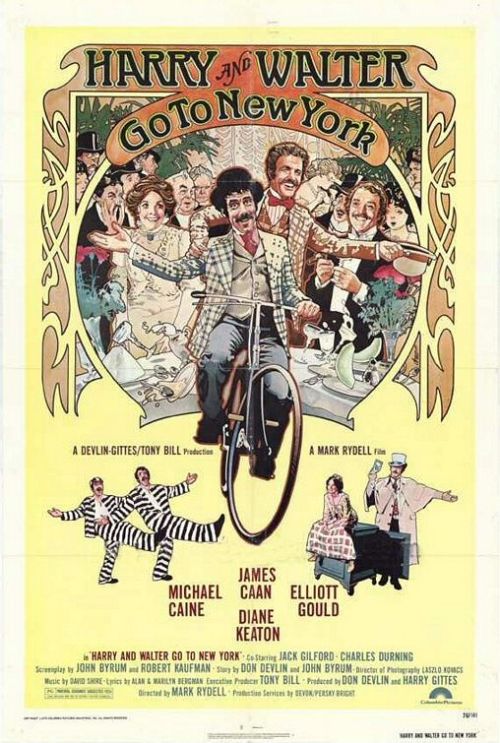
Harry and Walter (James Caan, Elliot Gould) are two down-on-their-luck marginally talented comedians living in the 1920’s who go to jail when they’re caught trying to rob their audience members during a tacky onstage ‘psychic’ stunt that goes horribly wrong. While in the slammer they meet up with Adam Worth (Michael Caine) a rich man from society’s upper crust who enjoys robbing banks just for the thrill of it. They come upon the blue print for his next proposed heist and take a picture of it and then after they escape from jail challenge Adam on who will be able to rob the bank first.

This is one of those 70’s movies that I found to be refreshingly original and quite funny, but when it was released it was met with harsh reviews and was a bomb at the box office. After some bad test audience reactions it was heavily cut much to director Mark Rydell’s dismay who felt a lot of the better jokes went missing although producer Tony Bill and star Caan blame Rydell for the film’s failure and insist that much of the humor in the original script was never even filmed or used.

I can’t explain why the film didn’t do well as I personally found as bank heist movies go this one to be quite  unique. So many bank robbing films from that era, and even today, paint the scheme in a one-dimensional way by portraying the robbers, who we are usually supposed to sympathize with, as a modern-day Robin Hood, while the cops and those out to stop them are represented as being the greedy,oppressive establishment, but this film takes things a step further, which is what I found interesting. The competition aspect gives it an extra.,likable edge and really made me want to root for Harry and Walter and their gang of losers who take on the arrogant Caine and his snotty buddies. Instead of the viewer just being intrigued at how they’re able to pull of the robbery as is the case with most heist films we are much more emotionally invested with its outcome.

Caan and Gould are what Warren Beatty and Dustin Hoffman should’ve been in Ishtar. These guys are definite losers, but still appealing and comical at the same time. Caan has never been known for his comedy and he has referred to this movie as ‘Harry and Walter Go to the Toilet’, which is a shame because he shows nice energy here and is able to keep Gould in check by not allowing him to drone on and steal the spotlight as he can sometimes do when left alone or with a less capable co-star.

If the film fails at all it’s by entering in too many supporting players. The title mentions only Harry and Walter and they should’ve pulled off the heist alone with maybe only Keaton tagging along for balance. As it is though a whole massive group gets in on it to the point that the two leads have little to do. While the group is busily trying to figure out how to open the safe Harry and Walter are on stage trying to extend a stage play  The film still works pretty well despite this issue, but technically the two men should be at the center of the action and in a lot of ways they really aren’t and in fact become almost like supporting players by the end.

The film also goes on too long with the denouncement being far more extended than it should, but it’s still a fun, breezy watch that reflects the gilded age flavor well and uses leftover sets from Hello Dolly to enhance the scenery perfectly.

My Rating: 7 out of 10

Released: June 17, 1976

Runtime: 1 Hour 55 Minutes

Rated PG

Director: Mark Rydell

Studio: Columbia Pictures

Available: DVD, Blu-ray, Amazon Video

Punchline (1988)

By Richard Winters

My Rating: 7 out of 10

4-Word Review: The perils of standup.

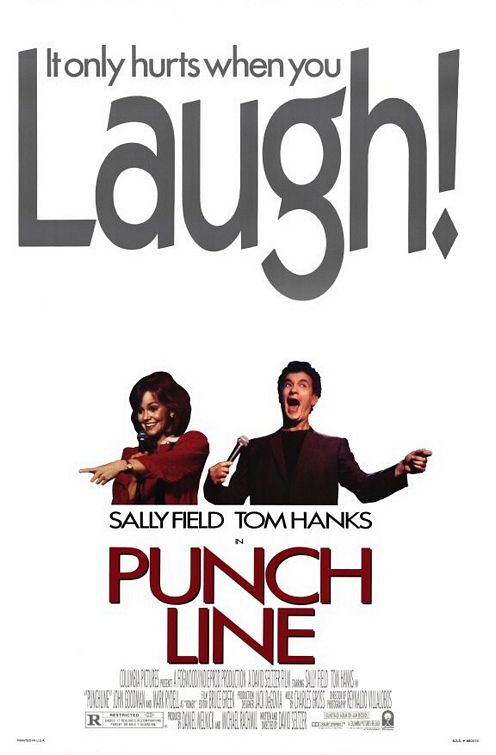
Lilah (Sally Field) is a New York housewife who enjoys making people laugh and takes a stab at stand-up, but finds the experience challenging and ends up paying someone $500 for jokes, but they don’t go over well. Then she meets Steven (Tom Hanks) a struggling med student who moonlights at the same comedy club that she does. Steven is genuinely funny, but so highly insecure that he ends up self-destructing at the most crucial times. He tries to help Lilah hone in her comedic skills while she gives him confidence.

The film, which is written and directed by David Seltzer, nicely analyzes the very unfunny side of the comedy business particularly its emphasis on how one must toil away at seedy clubs, hecklers, low pay, drunken audiences and a permeating sense of insecurity. Hanks abrasive character is spot-on and a good composite of those still stuck in the trenches and bitter about not yet being discovered. In fact I had wanted the surliness of his character to be played up even more as I had come into contact with struggling comedians during my time when I dabbled in improv and found a lot of them to be basket cases of insecurity and when not onstage were quite unpleasant to be around.

In fact it was because the Hanks character was so unlikable and even more so in some of the earlier versions that the script sat on the studio shelf for so long before it finally got the green light. To help compensate certain overreaching attempts were put in to soften his persona, which only ends up hurting the film’s authenticity. One scene has him inside a hospital doing one of his comedy acts for the patients and as he is leaving he suddenly shows this extreme concern for a sick child that he doesn’t even know and he immediately runs over to him, which seemed forced.

Another bit has him onstage and suffering from an extreme emotional breakdown when he sees his father sitting in the audience. Many people harbor demons from the past and frosty relationships with their parents, but they don’t have such over-the-top reactions especially when in front of an audience, which only helps to make this scene reek of hackneyed melodrama.

His friendship with Field, which I initially found cute as the two are complete opposites, gets ruined when a romantic angle unwisely gets thrown in. These two had very little in common, the Field character was married with three kids, ten years older than him and not particularly stunning, so I didn’t see the chemistry or reason for the sudden attraction on Hanks’ part. Having him gush all over her after only knowing her for a brief time is unrealistic. His personal struggles including the fact that he had been evicted from his apartment and had no money would be occupying his mind so much that a potential relationship wouldn’t even enter into it.

Fortunately the film recovers with a strong ending and Field is excellent, but I wished that we had seen more of a backstory to her character and were able to witness the very first time that she ever ventured out onto the stage. The supporting cast offers great performances including John Goodman as Field’s husband who initially isn’t supportive of her stand-up ambitions, but eventually warms up to it. Mark Rydell is solid as the club owner and Mac Robbins has a touching moment as an aging comedian who has seen it all before in a film that offers a revealing look at the comedy business.

My Rating: 7 out of 10

Released: October 7, 1988

Runtime: 2Hours 2Minutes

Rated R

Director: David Seltzer

Studio: Columbia Pictures

Studio: DVD, Blu-ray, Amazon Video, YouTube