Tag Archives: Review

Deathtrap (1982)

By Richard Winters

My Rating: 4 out of 10

4-Word Review: Playwright turns to murder.

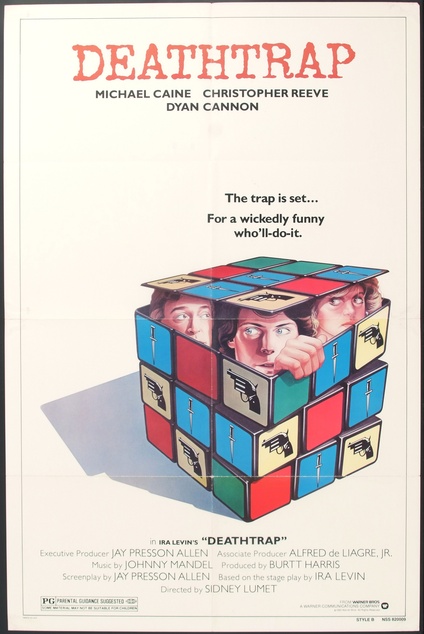
Sidney Bruhl (Michael Caine) was at one time a top playwright, but his latest play is a flop. To add to his depression he finds that one of his students who attended his writing seminar, Clifford Anderson (Christopher Reeve), has on his first attempt written a brilliant sure-fire hit. Something that makes Sidney jealous. He decides to invite Clifford over to his secluded cottage and while there, and with the help of his wife Myra (Dyan Cannon), kill Clifford and then steal his script and treat it as if it’s his own. Things though don’t work out quite as expected especially when their neighbor Helga (Irene Worth) arrives who has psychic visions that could ultimately implicate Sidney for doing the dirty deed.

The film is based on the Broadway play of the same name written by Ira Levin that ran for 1,793 performances from February 26, 1978 to June 13, 1982. The play was well received by critics and audiences alike including director Sidney Lumet who put up some of his own money to get it made into a film, but ultimately he relies too heavily on the twisting plot while failing to add any cinematic element to it.

The exterior of Sidney’s home was the picturesque DeRose Windmill Cottage, which sits in East Hampton, New York and helps add a visual flair, but the interior of the home was shot on a soundstage and the film becomes quite claustrophobic as almost the entire story takes place in this one setting. The movie desperately needed more cutaways, even some minor breakaway bits like Helga’s disastrous guest spot on the Merv Griffin Show, which gets talked about, but never shown, in order to make it seem less like a filmed stageplay, which it ultimately ends up being.

The script brings up some potentially interesting insights like how sometimes the characters in a writer’s play can closely parallel the authors themselves. In fact many people that knew him felt that the Sidney character here strongly resembled the real Ira Levin, but the film fails to pursue this in a satisfying way and is devoid of any interesting subtext or nuance. The characters end up being just boring one dimensional caricatures that are wholly unlikable. You could care less which one of them killed who, or whether any of them even survive.

Christopher Reeve is the film’s only real bright-spot and the way he plays a gay man is effective and believable. His onscreen kiss with Caine was considered controversial and daring at the time and even upsetting to fans to the point that purportedly one audience member in a Denver theater screamed out “Superman, don’t do it!” just as the kiss occurred. Irene Worth is fun too and her accent is so believable that I was convinced that she must’ve been born in Eastern Europe and was shocked to learn that instead she was from, of all places, Nebraska.

Caine is good, but his presence will remind many of the movie Sleuth, which he also starred in and is quite similar to this one. In fact a lot of viewers thought this was a sequel to that simply for that reason and because of this somebody else should’ve been hired to play the part.

Cannon on the other hand is annoying as the hyper wife and shares no onscreen chemistry with the other two actors. Marian Seldes had played the role on Broadway in every one of its 1,793 performances, which garnered her a citation in the Guinness Book of World Records as most durable actress and because of that alone she should’ve been given the part here.

Johnny Mandel’s soundtrack gives the proceedings a highbrow flair and I wished it had been played more. The plot twists may entertain and surprise some, but not if you think about them for too long, which ultimately makes this just a second-rate Sleuth.

My Rating: 4 out of 10

Release: March 19, 1982

Runtime: 1 Hour 56 Minutes

Rated PG

Director: Sidney Lumet

Studio: Warner Brothers

Available: DVD, Blu-ray, YouTube
Slither (1973)

By Richard Winters

My Rating: 5 out of 10

4-Word Review: Searching for embezzled money.

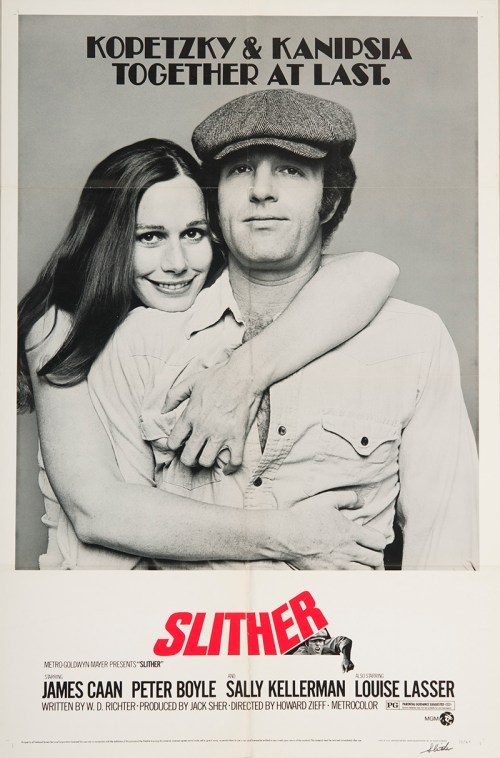
Dick Kanipsia (James Caan) is a former car thief who has just been released from jail and is now trying to go straight. While in prison he started up a friendship with Harry Moss (Richard B. Shull) and decides to go to his rural home for a visit. It is there that Harry suddenly gets shot by a mysterious gunmen, but just before he dies he informs Dick about a secret stash of stolen money that can only be retrieved by contacting his former partners in crime: Barry Faneka (Peter Boyle) and Vincent Palmer (Allen Garfield). Dick then goes on a road trip trying to find these two men while also coming into contact with a lot of oddball characters and situations along the way.

When I first saw this film over 20 years ago I really loved it and was impressed with W.D. Richter’s offbeat script that relies heavily on quirky scenarios and dryly humorous non sequiturs to help propel it. A theme he later polished to perfection in his most famous film the cult hit The Adventures of Buckaroo Banzai Across the 8th Dimension While I still enjoy the engaging set-up I’ve found that during subsequent viewings the unsatisfying ending ruins everything else that comes before it and ultimately hurts the movie as a whole, but first lets go over what I did like.

The chase element that gets incorporated into the story is cool and has a strong connection to the one in Duel. The idea of having these large black vans driven by a person we cannot see constantly chasing after our protagonist no matter where he goes is intriguing and helps create an interesting mystery angle. The unique design of the vans, which was a 1973 Dodge Rectrans Discover 25R,  featured no front doors, which coupled with its all-black exterior gives them a very threatening presence that is almost creepier than the truck used in Duel.

Caan’s detached persona helps separate him from all the nuttiness around him and makes him likable in the process. Boyle is amusing as his eventual cohort and Louise Lasser is surprisingly restrained as Boyle’s wife. You also get to see  film director Paul Thomas Anderson’s real-life mother, Edwina Gough, in a small role during a scene at a bingo tournament.

The only character though that I didn’t care for was Sally Kellerman’s who plays this semi-crazy lady that proceeds to just slow-up the pace of the film with every scene that she’s in. I admit the part where she robs a diner at gunpoint is kind of fun, but I’ve never been a fan of her breathless delivery and didn’t feel there was any need for her reappearing after her character was pretty much dropped from the story and forgotten and there’s never any explanation for how she was able to successfully track Caan down after he abandoned her.

Laszlo Kovac’s cinematography is good although it would’ve been nice had this been a genuine road movie where our main character would’ve been required to travel to highly varied settings/landscapes  in his quest to find the hidden money. I realize this would’ve upped the budget, but having to constantly stare at the dry, brown landscape of Stockton, California, where the majority of the shooting took place, is kind of depressing.

As I stated earlier it’s the ending that hurts the film more than anything. To sit through what is otherwise a creative plot only to find that it all just leads to nothing is a big letdown. I know that during the 70’s it was trendy to have anti-climactic movie finishes, but here there needed to be more of a payoff . Movies should also have the main character change in some way from what they were at the beginning, which doesn’t occur. Caan just quietly walks away from the chaos around him like everything he’s just went through was nothing more than a blip on his life’s radar and ultimately that’s the way the movie becomes with the viewer as well. Goofy enough to hold your attention, but never memorable enough to stay with you.

My Rating: 5 out of 10

Released: March 7, 1973

Runtime: 1 Hour 37 Minutes

Rated PG

Director: Howard Zieff

Studio: MGM

Available: DVD-R (Warner Archive), YouTube

History of the World, Part I (1981)

By Richard Winters

My Rating: 3 out of 10

4-Word Review: Making historical events funny.

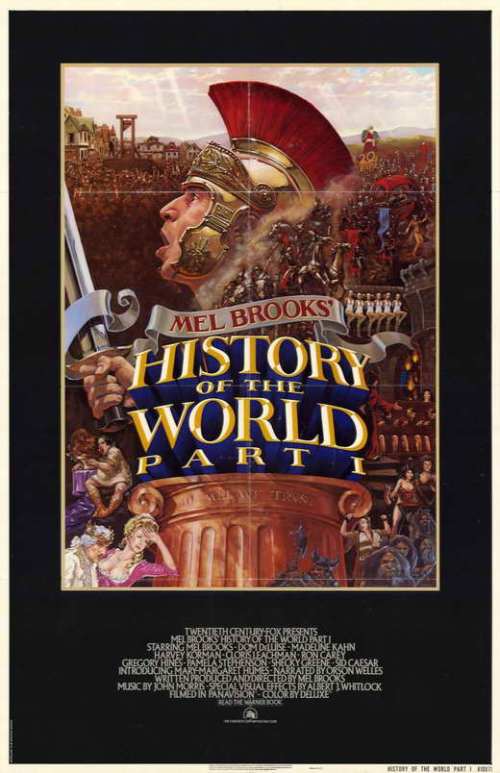
In 1979 Mel Brooks was riding high after directing 4 hit movies and as he was walking across a studio parking lot a man who had worked on his crew from his previous films asked him what his next project would be. Brooks, feeling the pressure to come up with something big and splashy, told him it was going to be about the history of the world. This film ended up being the result of that conversation although it’s hard to call it a movie at all since it’s really just a collection of vignettes dealing with 4 specific periods: The Stone Age, The Roman Empire, The Spanish Inquisition, and The French Revolution.

At first glance it’s almost shocking that something this overreaching could’ve been produced to begin with. Had anyone but Brooks approached the studio heads with this concept it would’ve been slapped down immediately and the person told not to come back until they had an idea that was more focused, but because of Brooks’ prior success these same executives decided to swallow their better judgement. Not only did they unwisely give it the green light, but they threw more money at it than any of his previous film budgets combined; a whooping 11 million, which all pretty much goes to waste.

It’s not like there aren’t a few funny moments here and there: the musical number during the Spanish Inquisition, the Last Supper parody, and the Jews in space all elicit a few chuckles, but the rest of it’s lame and corny like skits from some mediocre variety show. An overarching character that would’v been in all of the scenes was needed like a time traveler from the modern day who goes back and interacts with all the people from the time periods, which could’ve been a riot.

A lot of familiar faces pop in-and-out, but many of them are onscreen for only a few seconds. A better idea would’ve been to whittle down the cast list to only a handful of performers and then having them play the different roles in each time period instead of just introducing more stars into the mix, which only helps to give the already bloated production a very cluttered feel.

Not only does Brooks cast himself into too many of the film’s major roles, which makes the thing seem like a vanity project, but he also relies too heavily on his aging Hollywood friends in supporting parts instead of introducing a young vibrant talent into the mix that could’ve helped attract new, younger fans. It also doesn’t help that Richard Pryor was set to play a big role in this, but then just two days before shooting he suffered a serious accident that burned his face and forced him to bow out leaving Gregory Hines to replace him who is not nearly as funny or dynamic.

I couldn’t help but connect this thing with Bill Cosby’s mega-flop Leonard Part 6.  Apparently many people on the production crew of that film felt the material was subpar, but too afraid to approach Cosby, who was such a big star at the time, to tell him. I can only presume there were also people on the crew of this film who felt the same way, but didn’t want to jeopardize their careers by speaking up, which is too bad. While this movie did ultimately make money it was mainly during its first week and enthusiasm due to bad word-of-mouth quickly dwindled afterwards. Brooks reputation never fully recovered, which is why no one even a big star should be above constructive criticism, which  might’ve helped modify this clunker into becoming something better.

My Rating: 3 out of 10

Released: June 12, 1981

Runtime: 1 Hour 32 Minutes

Rated R

Director: Mel Brooks

Studio: 20th Century Fox

Available: DVD, Blu-ray

Sunday in the Country (1974)

By Richard Winters

My Rating: 4 out of 10

4-Word Review: Farmer holds robbers hostage.

Adam Smith (Ernest Borgnine) is a Canadian farmer living in a rural home who becomes aware via the radio of reports of three bank robbers (Cec Linder, Louis Zorich, Michael J. Pollard) on the run in the area who’ve just killed a young man and his girlfriend who were his friends. He prepares for their arrival and when they come he shoots and kills one of them while taking the other two into his cellar where he hangs them on meat hooks. Smith’s granddaughter Lucy (Hollis McLaren) finds this treatment inhumane and wants to call the police, but Adam won’t let her and the two quarrel until he locks her in her room, but she escapes and runs for help, which enrages Adam even more.

The film almost gets ruined by an obnoxious musical score that is so heavily tinged with country twang that it seems almost like a parody of itself and makes the entire production come off as cheesy and amateurish. It would’ve been better without any music at all as it ends up taking you out of the action like having someone sitting beside you and rudely talking and not letting you concentrate on what’s happening on the screen.

As for the story it makes some good observations about just how thin the line can sometimes be between the good guy, or those that feel they’re morally justified to inflict whatever style justice they deem necessary, and the so-called bad guy. Unfortunately the character arch of the protagonist happens too quickly without much of a back story explaining why this otherwise law abiding farmer would deviate so quickly into an abuser. What makes him different from others who would’ve called the police? Just saying that he’s ‘old fashioned’ and ‘from a different era’ I didn’t feel was enough of an explanation.

With the exception of Pollard the robbers aren’t intimidating enough and it some ways came off as pathetic and not like professional crooks at all. This might’ve been intentional on the filmmaker’s part in an effort to make the viewer more sympathetic to their quandary once they are held hostage, but in the process it lessens the tension and makes them seem not as threatening.

Borgnine does a terrific job through his facial expressions of showing the character’s inner turmoil as well as constantly exposing his human side even as he forges ahead to doing some not-so-nice things. McLaren is also superb and her interactions with Borgnine are the most compelling aspect of the film.

Pollard is great here too and I was surprised as he’s not always able to find roles that match his unique talents and sometimes has been relegated to thankless and forgettable supporting parts, but here he’s viscous with a most creepy sounding laugh.

Unfortunately the eye-for-an-eye concept doesn’t get examined enough and the film could’ve gone a lot farther with it than it does. It still manages to bring out many interesting issues but the story should be remade and without the corny soundtrack.

Alternate Titles: Vengeance is Mine, Blood for Blood

My Rating: 4 out of 10

Released: November 22, 1974

Runtime: 1 Hour 33 Minutes

Rated R

Director: John Trent

Studio: Impact Films

Available: Amazon Video

Shoot to Kill (1988)

By Richard Winters

My Rating: 7 out of 10

4-Word Review: Chasing killer through wilderness.

Warren Stantin (Sidney Poitier) is a veteran police officer who goes after a jewel thief when he kills his hostages while the two were negotiating for their release. Stantin feels like he failed them (the hostages) and must make restitution by personally seeing their killer brought to justice. The problem is that he doesn’t know who the killer is as he never saw his face. In an attempt to escape the authorities the killer then joins a group led by Sarah (Kristie Alley) who are hiking through the rugged forest terrain of northern Washington. Stantin joins forces with Jonathan (Tom Berenger)  an outdoorsmen who knows the area well and can lead Stantin on foot to where the hikers are as no one in that group realizes that one of them is a dangerous criminal.

The story is the inspiration of Harv Zimmel who wanted to incorporate his lifelong enthusiasm for hiking into a an exciting police story and for the most part it works. The story itself is kind of formulaic as cop thrillers go, but the vivid wilderness setting adds an extra element with a lot of hair-raising scenes including the point-of-view shots of Berenger dangling hundreds of feet in the air on a thin rope over a gulch and getting swung violently into the side of a rocky hill.

One of the coolest aspects of the film is the fact that the viewer, at least for the first half, has no idea who the killer is, which lends extra intrigue as you try to guess which one of the group members he is. In order to make it more interesting director Roger Spootiswoode cast actors who had played villains in past thrillers although I would’ve done the opposite by hiring actors who didn’t seem like killers at all and therefore making the ultimate reveal even more surprising and it’s a shame that the killer’s identity couldn’t have been kept a secret until the very end.

Poitier, who had spent the previous decade working behind-the-scenes as a director, is excellent in his first acting role in 11 years. He was 60 when he did this, but you’d never know it and he gets a few comical moments here too. It’s also nice that his skin color never comes into play as most of his other film roles always made his race a center issue. Berenger offers adequate support, but I was actually much more impressed with Alley who comes off as tougher and more resourceful than all of the other men.

There’s very little to complain about although one of my quibbles is that we never get to see Stantin’s personal life. Most cop films will always show a brief glimpse into a policeman’s home life in order to make him more ‘human’ or multi-dimensional. Here we see briefly Poitier talking on the phone with someone, supposedly his wife/girlfriend, but it would’ve been nice to have had a scene  showing the face of his significant other.

The film also has way too much music that lacks distinction and gets played over just about every scene. The story is exciting enough and there’s no need for a booming score to accentuate what we’re already caught up in. Since the majority of the pic takes place in the outdoors it’s best to allow the natural ambiance to work as the background sound and adding in anything above that comes off as heavy-handed.

Overall though the film is slick and exciting that starts strong and never lets up and includes a very unique final shootout that takes place underwater.

My Rating: 7 out of 10

Released: February 12, 1988

Runtime: 1 Hour 50 Minutes

Rated R

Director: Roger Spottiswoode

Studio: Buena Vista

Available: DVD

Jackson County Jail (1975)

By Richard Winters

My Rating: 5 out of 10

4-Word Review: Deputy rapes his prisoner.

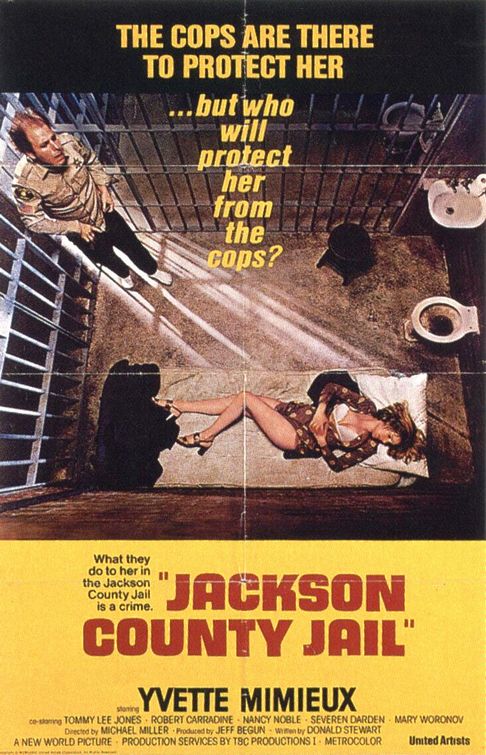
Nothing seems to be going right in Dinah’s (Yvette Mimieux) life. She quits her job as an advertising executive only to come home to find that her husband (Howard Hesseman) has been cheating on her. She decides to travel across the country and back to her old digs in New York. Along the way she picks up two hitch-hikers (Robert Carradine, Nancy Lee Noble) who end up robbing her at gunpoint and driving off with her car and money. When she walks to the nearest town she finds that no one is willing to help her since, without any identification, she can’t prove who she is. The sheriff (Severn Darden) throws her in jail temporarily until her identity can be confirmed. While there she gets raped by one of the deputies (Fredric Cook) and then goes on the run with Coley (Tommy Lee Jones)  a small-time crook and drifter.

This is yet another Roger Corman produced cheapie made to capitalize on the exploitative low budget drive-in fervor that was so popular during the early to mid 70’s. This one fares better than most as it manages to retain its gritty tone throughout without ever resorting to campiness. The car chase doesn’t have any of the cartoonish or humorous stunts as most others did during that time period, but instead like in Cannonball! shows more of the potential ugly side to them by having several of the vehicles crash and blow-up in flames and killing those that were inside them, which helps accentuate the realism.

The police aren’t quite as inept either although I did find it curious that the cops in the helicopter once they found where Mimieux and Jones’s hideout was didn’t continue to chase the two via the air as they tried to escape down the road in their pick-up. The part where the cop shoots at Jones who collides on foot into a marching band is absurd too as no policeman with half-a-brain would fire into an open crowd as it’s too dangerous and would almost assure innocent victims getting hit.

Mimieux is adequate and the funky 70’s style compact car she drives in with its roundish flying saucer body and oversized steering wheel is a laughable relic. However, for someone whose lived in L.A. she didn’t seem savvy especially when she decides to pick-up two hitch-hikers, which is just asking for trouble, or naively unaware that the obviously drunken, leering cafe owner (Britt Leach) is only being ‘helpful’ so he can have a chance to pounce on her.

Jones is excellent in support, but I found it odd that despite being considered a ‘good guy’ he makes no effort to stop her rape, which he witnesses by being in the adjoining cell, but then when she kills the rapist by beating him over the head with a stool he reaches through the bars and stops her.

The film’s most interesting performance is Fredric Cook’s who plays the rapist. His film career never really took off and he spent most of his life working as an acting teacher, but here in his film debut he really shines. I liked the way his character starts out as a redneck dope who seems put in for comic relief and then quietly becomes menacing as he serves Mimieux her food, explodes into a sudden massive rage, and then after the act is committed becomes guilt ridden and even ashamed, which creates a very interesting portal into the mindset of most male attackers.

The second half unfortunately slows up creating boring segments when the pace and tension should instead be revved up. The wide-open ending offers no conclusion to Mimieux’s ultimate fate and the film’s message is vague and transparent.

My Rating: 5 out of 10

Released: April 2, 1976

Runtime: 1 Hour 24 Minutes

Rated R

Director: Michael Miller

Studio: New World Pictures

Available: DVD, Amazon Video

The Pursuit of D.B. Cooper (1981)

By Richard Winters

My Rating: 2 out of 10

4-Word Review: Hijacker eludes the authorities.

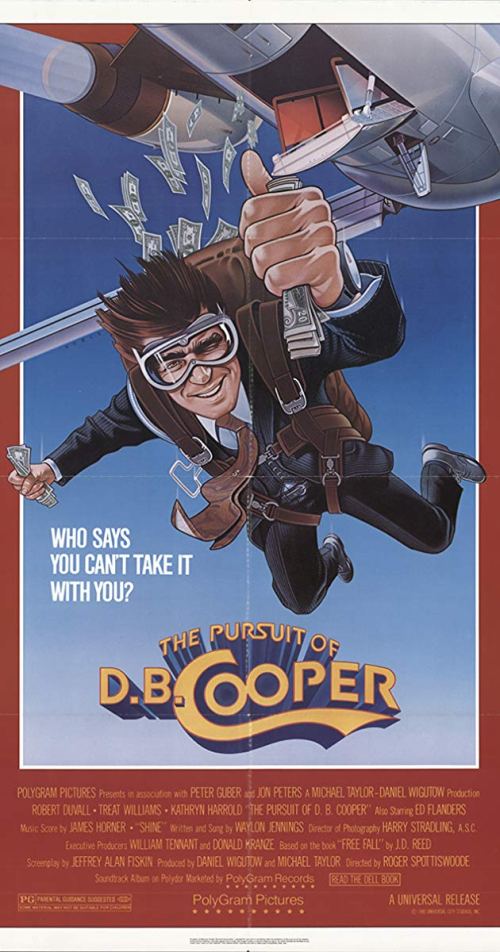
Loosely based on the real-life incident involving a man using the alias of Dan Cooper, but later reported in the media as D.B. Cooper, who hijacked a Boeing 727 as it flew towards Seattle, Washington on the night of November 24, 1971 and parachuted out of the plane with $200,000, but whose remains have never been found. In the film D.B. Cooper is the alias for Jim Meade and is played by Treat Williams as he parachutes into a wooden area and becomes chased by Bill Gruen (Robert Duvall) who was Meade’s sergeant in the army and feels he knows him better than anyone.

Had the film made some legitimate attempt at accuracy it might’ve been moderately intriguing, but right from the start it plays fast-and-loose with the facts including having the jump take places in the sunny daytime when in reality it occurred at night during a rainstorm. The time period is supposed to be late autumn, but many people are shown doing summertime activities like having a couple going skinny dipping in a pond even though it would’ve been too chilly for that. There’s also a ridiculous scene where Paul Gleason, playing a useless character that was not needed at all, going headfirst through the front windshield of a moving car and receiving a slight cut on his right cheek as his only injury.

John Frankenheimer was originally hired to direct, but after having numerous arguments with the producers over the film’s insipid script he was fired. He was then replaced by Buzz Kulik who tried turning it into a topical drama by portraying the Cooper character as being a disgruntled Vietnam Vet. Roger Spottiswoode and Ron Shelton were then brought it to ‘jazz-it-up’ a bit with some stunt-work and the chase scene down the rapids is impressive, but the humor they put in is dumb and the ‘Dukes of Hazard-like soundtrack ill-advised.

I started to feel that it would’ve worked better had it not connected itself to the real incident at all but instead had Williams portray a fictional character all together. It also should’ve analyzed the planning/preparation phase much more and shown him pulling off the actual hijacking instead of just starting out with the parachute jump.

While he doesn’t look anything like the sketches shown of the real Cooper I still found Williams to be fun in the lead and Kathryn Harrold lends great support as his resourceful wife. Duvall is solid as usual and even though it doesn’t take place in the Pacific Northwest, which is where the real incident occurred, I still enjoyed the sunny scenery, but that’s where the good points begin and end in a movie that clearly had misfired written all over it before even one frame of it was filmed.

My Rating: 2 out of 10

Released: November 13, 1981

Runtime: 1 Hour 40 Minutes

Rated PG

Director: Roger Spottiswoode, Buzz Kulik (Uncredited)

Studio: Universal

Available: DVD (Region 2), Amazon Video, YouTube.

Voyage of the Damned (1976)

By Richard Winters

My Rating: 4 out of 10

4-Word Review: This ship goes nowhere.

Based on the true story of the ill-fated voyage of 937 Jewish refugees who left the port of Hamburg, Germany in 1939 on the ocean liner St.Louis, which was supposed to arrive in Havana, Cuba where they hoped to start a new life free of the rising antisemitism that had plagued them in Europe. However, when the ship reaches Cuba they are not allowed to dock and when the ship’s Captain (Max Von Sydow) tries to take them to the US and Canada they are refused entry as well forcing them to return to Germany.

Given the high production values and riveting story-line I was expecting it to be far more compelling than it ends up being. It’s not like Stuart Rosenberg’s direction is poor either because it isn’t, but it never gains any dramatic traction and the more it goes on the more boring it gets. This is definitely one instance where cutting the runtime would’ve been advantageous. I know we live in an era where the ‘director’s cut’ is considered the gold standard, but sometimes there’s good reasons for why studios edit it and usually it’s because some of the footage just isn’t necessary. I watched the 158 version, but the theatrical cut was trimmed to 134 minutes and after watching this one I can only presume that version would’ve been an improvement and if anything could’ve gained a better pace, which is something that is seriously lacking here.

There also too many characters and it’s hard to keep track of all them or get emotionally invested in their quandary especially when by-and-large their all suffering from the same dilemma. The time span between when they show a character to when they return is so long that by the time you see them again you’ve pretty much forgotten all about them.

The large cast is full big names and familiar faces and a few of them do a terrific job. I felt Von Sydow’s performance as the beleaguered but stoic captain was right on-target and I also enjoyed Orson Welles as the glib Cuban politician. Kudos also should go to Lee Grant, who ended up getting nominated for a Best Supporting Oscar here, for her one shocking scene where she cuts her hair down to its scalp, but overall most of the talent gets wasted. This includes Denholm Elliot and Jose Ferrer who appear onscreen for only a few minutes and Katherine Ross who has only two scenes that come near the end, but still managed to somehow get a Golden Globe nomination for her efforts anyways.

Spoiler Alert!

The film ends on a supposed happy note when the ship’s captain informs the passengers that Belgium and France will accept them, but then the denouncement states that 600 of them ended up dying anyways during the German Occupation making the viewer feel much like the passengers that they’ve just spent almost 3-hours going in circles. Maybe that’s the point, but as an insightful drama it fails. I was almost hoping that the Captain would’ve gone through with his plan to have the ship crash off the shore of England and allowing the passengers to disembark as a safety precaution, but still trying to make it look like it was an accident and not intentional. Although this would’ve swayed from what really happened it could’ve been an interesting thing to see and brought some genuine action into the mix, which was otherwise missing.

My Rating: 4 out of 10

Released: December 22, 1976

Runtime: 2 Hours 38 Minutes

Rated PG

Director: Stuart Rosenberg

Studio: Embassy Pictures

Available: DVD, Blu-ray, Amazon Video

A Dry White Season (1989)

By Richard Winters

My Rating: 6 out of 10

4-Word Review: He fights social injustice.

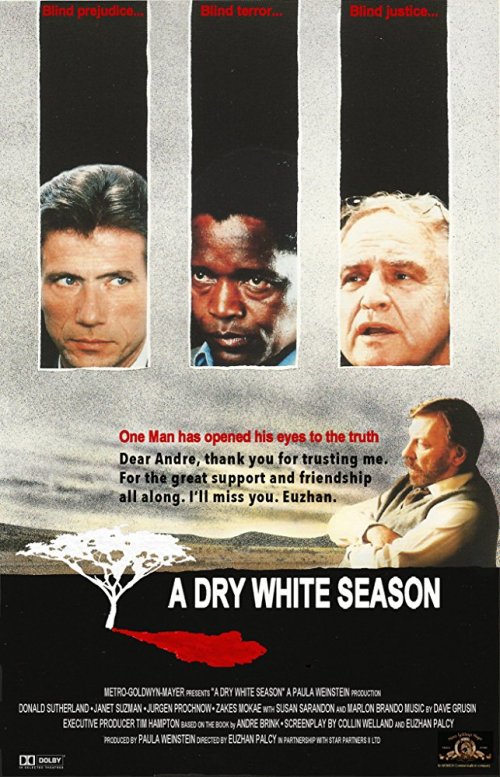
The story centers on South African schoolteacher Ben (Donald Sutherland) who has led a peaceful law abiding suburban existence and has no idea about the social injustices around him. One day his black gardener (Winston Ntshona) comes to him complaining about how his son was beaten by police simply for attending a peaceful rally. Ben initially dismisses the claims and insists the son must’ve done something wrong, but when he investigates the issue further he finds some startling revelations about how far the authorities are willing to go to stop dissent and when Ben decides to challenge the police on this his life and security get put on the line.

The film is based on the novel of the same name by Andre Brink and directed by Euzhan Palcy who became the first Black woman to direct a film that was produced by a major Hollywood studio. For the most part the film is polished and well made and at the beginning emotionally effective as we see first hand the brutal treatment of the protesters by the police. I also liked how it shows both sides of the issue by having Ben’s wife Susan (Janet Suzman) admit that apartheid is wrong, but too afraid for its abolishment as she fears it might put the whites at too much of a disadvantage.

Unfortunately somewhere along the way it starts to lose steam and ends on a whimper that is nowhere near the emotional level that it began with. Part of the problem is that it suffers from a weak main character. Sutherland plays the part well, but it’s hard to understand how someone could live well into his middle age years and still have such extreme naivety to what was going on in the country that he resided in. He’s also dependent on those around him to do most of the legwork and you have to question what difference does our hero’s actions ultimately make anyways since apartheid continued on for many years after this film’s setting, which is 1976.

All of this could’ve been resolved had Marlon Brando’s character been made the protagonist. Brando came out of retirement to take on the supporting role and agreed to do it at union scale, which was far below his usual salary demands. His presence adds zest to the proceedings as a lawyer who is quite attuned to the corrupt system, but decides to give it a fiery court battle anyways and it’s a shame that he’s only in it for a brief period and then just completely disappears during the second half.

Spoiler Alert!

The ending differs a bit from the book and was added in by director Palcy, which has a black cab driver Zakes Mokae taking the law into his own hands and shooting the Jurgen Prochnow character, who plays a policemen, after he intentionally ran Sutherland over with his car. Palcy did this to show how even decent people can be pushed to violence, which I agree with, but she seems to feel the need to justify this by having a flashback ‘replay’ of all the previous events that drove Mokae to pull the trigger, which comes off as heavy-handed. If we’ve watched the movie then we already know what happened and don’t suddenly need a ‘refresher course’.

End of Spoiler Alert!

As a drama it’s an adequately compelling, but there’s other movies on the same subject and I can’t say this one stands out from those. I was also disappointed to find that the book from which this is based was fictional as I initially thought it was a true story since it takes place in a very specific year. I’m not saying some of what goes on here didn’t happen in a broad sense, but having it centered on verifiable events gives it more relevance and makes it seem more like telling a story as opposed to just making a political statement.

My Rating: 6 out of 10

Released: September 20, 1989

Runtime: 1 Hour 46 Minutes

Rated R

Director: Euzhan Palcy

Studio: MGM

Available: DVD, Blu-ray (Criterion Collection), Amazon Video, YouTube

UFOria (1985)

By Richard Winters

My Rating: 4 out of 10

4-Word Review: She dreams about spaceships.

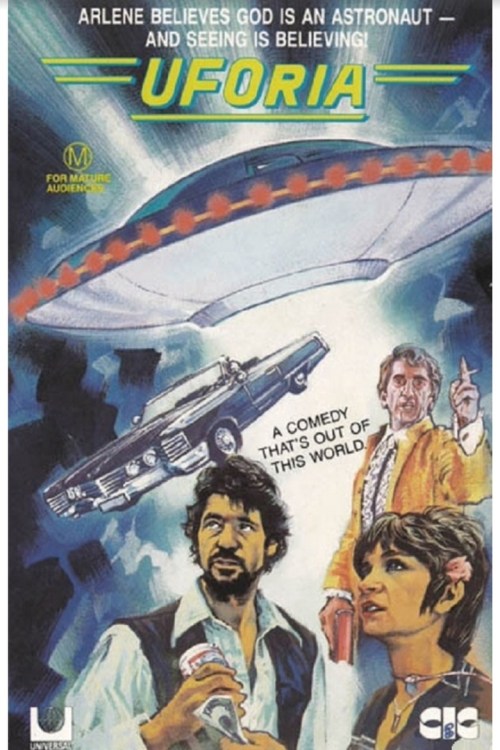
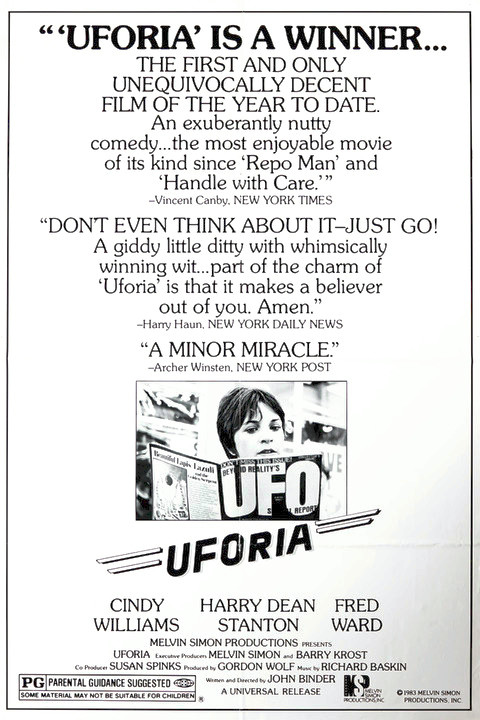
Arlene (Cindy Williams) is a lonely woman living in a small town and working at a local supermarket. One night she starts having dreams about a spaceship landing in town and taking her away. Her new boyfriend Sheldon (Fred Ward), who is a shady drifter always looking to make a quick buck, works with his brother Bud (Harry Dean Stanton), much to her consternation, to use her ‘visions’ to make money off of it by portraying her as communicating with some outer worldly messenger that’s connected to God.

This film was made in 1980, but sat on the shelf for 5 years and it’s easy to see why as it’s difficult to put it into any predefined genre. It’s certainly isn’t a sci-fi flick and in a lot of ways it really isn’t a comedy either. There are a few funny bits, but they get lost inside scenes that go on far longer than they should, which never allows the film to gain any traction or momentum.

Williams is not right for her part and fails to convey the downtrodden look of a lonely woman in a role that would’ve been better served had it been played by an actress with a more plainish, dumpy features like Kathy Bates. It’s also annoying that she has these vivid dreams, but the viewer never gets to see them. Movies are a visual medium and should take advantage of that element as much as possible by showing what’s happening instead of just having a character describe it.

Stanton isn’t right for his part either. In certain films his low-key style is perfect, but here he fails to effectively convey the animated, fiery delivery of a TV evangelist, which is a part that needed to be comically played-up much more.

Ward was the only one that I liked and he really comes into his own with a character that isn’t particularly likable, but has an interesting arch where he goes from being a cynical non-believer to eventually defending Arlene from those who mock her. He also drives his car in the most bizarre way that I’ve ever seen with his feet up on the dashboard and not on the pedals.

Spoiler Alert!

I was hoping that the ending would be a payoff for having to sit through such a slow, poorly paced film, but ultimately it falls flat just like everything else. I liked the idea of a spaceship suddenly appearing, but then the film cuts to the closing credits without examining what happened to the people, how they reacted to it, or what the aftermath was, which I found frustrating.

End of Spoiler Alert!

The small town setting filmed in Palmdale and Lancaster, California gives off just the right rustic look and prime stomping ground for fringey, eccentric people like the characters here.  While the film does have a definite cult appeal the offbeat elements get stymied inside a lethargic pace that never allows it to gel, or become captivating.

My Rating: 4 out of 10

Released: October 1, 1985

Runtime: 1 Hour 35 Minutes

Rated PG

Director: John Binder

Studio: Universal

Available: VHS