Category Archives: Movies with a rural setting

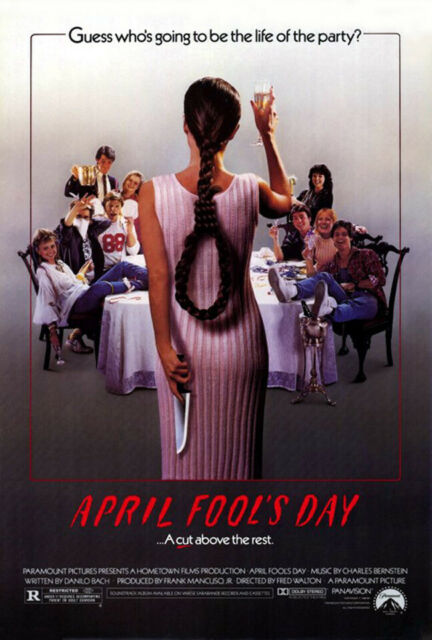
April Fool’s Day (1986)

By Richard Winters

My Rating: 3 out of 10

4-Word Review: It’s all a prank.

A group of college students get together at an excluded island home of one of their friends Muffy (Deborah Foreman) to celebrate their last year in school together. Then as the weekend progresses they find that a killer is knocking them off one-by-one. Will the remaining survivors be able to escape, or is there something more to these murders that no one realizes?

The film was an attempt to revive what at the time was a lost interest in the slasher genre by creating a irreverent tone to the staid formula and in that regard it does an okay job. The main issue though is that it gets too jokey making it seem more like a misguided comedy that losses sight of its intended horror fan audience completely.

I didn’t mind a few of the pranks, but too much time gets spent on them and 40 minutes seemed to be a ridiculous wait (if you don’t count the injury that occurs on the initial boat ride in, which seemed more like an accident) before we even get to the first killing. The pranks bordered on being too elaborate and something a regular person wouldn’t be able to pull off. For instance one deals with Rob (Ken Olandt) turning off one light in a room only to have another one turn on, all to the amusement of his girlfriend (Amy Steel) who apparently (I guess?) rigged the lights to do this, but where did she  get the electrical background or time to wire the room in this manner?

If the pranks are supposed to revolve around the fact that it’s April Fool’s Day then all the action should  take place within a 24-hour period instead of over several days. The scenery doesn’t have a spring-like look either as there should be blossoms and buds on the trees, but instead, since it was filmed in August, it looks more like late summer.

The cast comes-off too much like crude and obnoxious junior high kids whose only topic of conversation is sex instead of young adults ready to enter the working world and their dialogue doesn’t seem genuine.  One dumb bit has Harvey (Jay Baker) trying to make amends with Nikki (Deborah Goodrich) by trying to prove to her he really isn’t as much of a ‘dick’ as she thinks, but then proceeds to tell that he’d like to ‘plow her field’, which would only convince her otherwise.

Spoiler Alert!

The killings are brief and feature virtually no gore at all, which will disappoint those expecting to see at least a little. The ending, which reveals the killings to being just another gag, was novel, but there still needed to be a secondary twist. In the film’s original cut Skip (Griffin O’ Neal) kills Muffy after everyone else has left the island, but the studio execs nixed this opting for an ‘upbeat’ ending instead. Upbeat endings are fine if it’s a comedy, but a horror film should have a dark undertone and the fact that this one doesn’t have one at all makes it woefully undernourished.

My Rating: 3 out of 10

Released: March 28, 1986

Runtime: 1 Hour 29 Minutes

Rated R

Director: Fred Walton

Studio: Paramount

Available: DVD, Blu-ray, Amazon Video, YouTube.
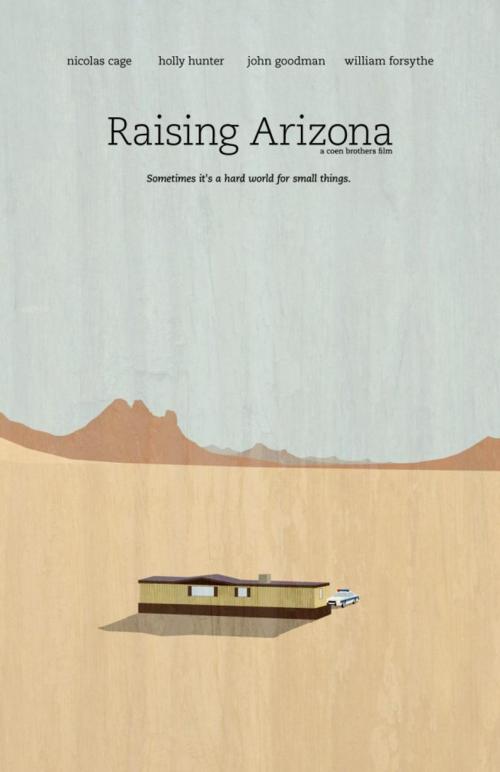
Raising Arizona (1987)

By Richard Winters

My Rating: 8 out of 10

4-Word Review: Childless couple kidnap baby.

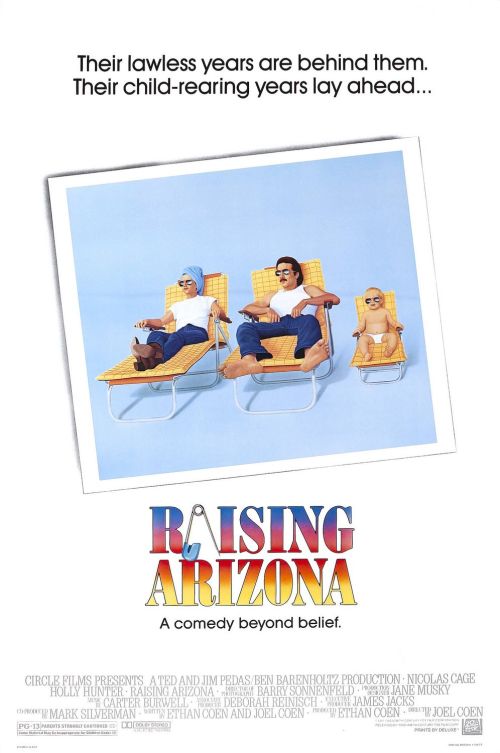
Hi McDunnough (Nicholas Cage) is a repeat offender who goes in and out of the state penitentiary. It is there that he meets Edwina (Holly Hunter) an officer in charge of taking his mugshot each time he gets rearrested for holding up convenience stores. Eventually the two form a bond and when he finally gets released they marry, but find that she’s unable to bear children. They then hatch a plan to kidnap one of the quintuplets of furniture store owner Nathan Arizona (Trey Wilson), but find this leads to more complications than they were prepared for.

While the Coen’s directing is sharp and on-target there were still those that criticized it as being overly stylistic and, as critic Vincent Canby stated, outside of the technical expertise the story has no life of it’s own, which is kind of true. The editing does give the film a personality, but there were times where slowing it down and allowing the scenes to breathe could’ve heightened the humor. For instance having Cage break into the Arizona residence to kidnap the baby happens much too quickly and there should’ve been a scene showing Cage trying to figure out which window to break into to get to the baby’s nursery as it was a big house, so how exactly would he have known where to go?

With that said there are still plenty of times where the distinct directorial touches spark the comedy and make it years ahead-of-its-time. I particularly liked the Coen’s patented camera tracking during Cage’s dream sequence where he views things from the bounty hunter’s (Randall ‘Tex’ Cobb) perspective as he rides his motorbike over obstacles on the front lawn and then supposedly straight into a bedroom. A chase sequence that starts out on the street and then winds up going through a person’s private residence is quite ingenious and the running-joke dealing Dr. Spock’s child rearing book is very funny too.

The script offers only caricatures, which would normally be a detriment, but here it just adds to the zaniness. I really enjoyed Wilson as the stereotypical aggressive, brash salesman and the scene where he talks to the police after the kidnapping has occurred I found to be the funniest moment of the movie. John Goodman and William Forsythe are also great as a pair of inept bank robbers and Sam McMurray and Frances McDormand are hilarious as the in-laws from hell.

Spoiler Alert!

My only real grievance, and it’s on a minor level, was the kidnap scenario, which could’ve been played-out more. I also thought it was weird that this rich couple would have all these kids and not hire a nanny to help them care for the babies. It’s a head-scratcher too that when Cage and Hunter decide to return the baby that they were able to break-into the same window that they did before. Wouldn’t you think that after a kidnapping this rich couple would’ve implemented crime alarms and cameras in ever room? Also, Nathan Arizona, catches the couple in the bedroom returning the kid to his crib and then after talking to them a bit he leaves the room with Cage and Hunter still with the baby, but you would think that after they took the kid once that the father would be too paranoid to ever leave the baby alone with them again.

The ending in typical Coen fashion doesn’t equal the same energy and imagination as the rest of the story and is a bit of a letdown. It deals with a dream that Cage has where he imagines having a really big family, but I thought it would’ve been funnier had the dream started out pleasant where he thinks about all the good things about family life only to have it slowly deteriorate into a nightmare where the harsh realities of raising kids come into play making him wake-up in a cold sweat and feeling lucky that they couldn’t have children after all.

My Rating: 8 out of 10

Released: April 17, 1987

Runtime: 1 Hour 34 Minutes

Rated PG-13

Director: Joel and Ethan Coen

Studio: 20th Century Fox

Available: DVD, Blu-ray, Amazon Video, YouTube

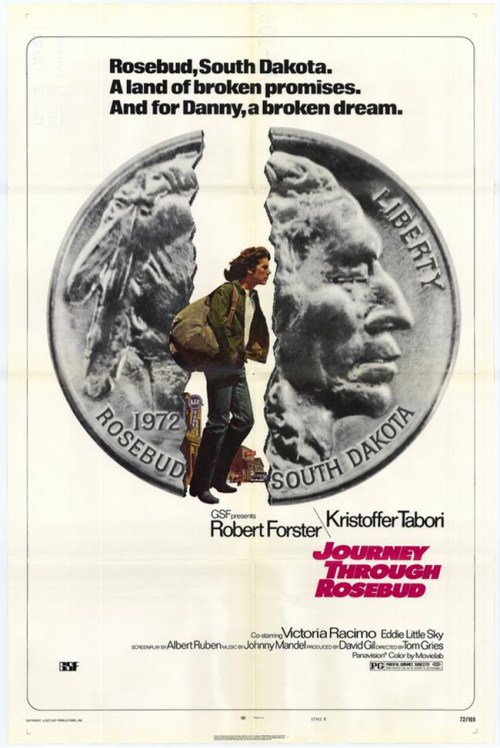
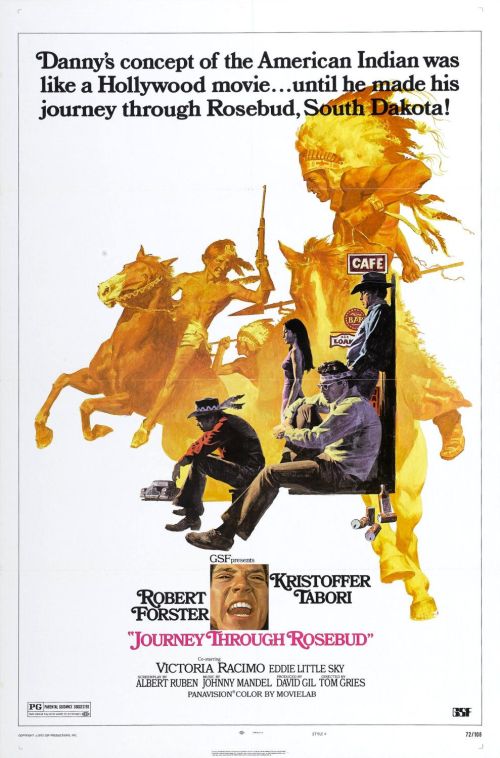
Journey Through Rosebud (1972)

By Richard Winters

My Rating: 3 out of 10

4-Word Review: Draft dodger visits reservation.

Danny (Kristoffer Tabori) travels to a South Dakota Indian reservation as he tries to escape the draft and troubles at home. He meets up with Frank (Robert Forster) who is an Indian living there and who has issues of his own, which is mainly his alcoholism and that at the age of 32 he still lives with his mother in a ramshackle home with no prospects at a secure, good paying job. Danny learns first-hand of the struggles of the modern-day Indian while also take part in some of their rituals and customs.

The film’s best element is the performance by Forster who goes outside his comfort zone by playing a Native American and doing it with conviction. Normally he’s entertaining as a brash-talking tough guys, but here his character is much more restrained and in one sad moment even falls to the ground and begins crawling around in a drunken state while those around him look on with contempt and disdain that is gut-wrenching to see while also exposing his courage as a performer by putting himself in such a pathetic looking state that not all actors would be willing to do even if the script called for it.

Tabori is equally enjoyable and in the few films that I’ve seen him in I’ve become convinced that he was a potentially strong leading man who never quite got his fair shot. His thin frame and youthful age belie a strong inner presence that helps to make his dynamic between Frank and himself potentially interesting, but the film neglects to follow through with it enough.

As for the action there is unfortunately not enough of it. The only time something does occur is when a group of Indians go on private land to rustle and kill cattle, which includes a very grisly shot of them slashing the animal’s throat that may make many viewers uncomfortable. Otherwise it flatlines from the first frame to the last and almost comes off like a minor league educational film dealing with the issues of reservation life than a movie with an actual story. In fact it’s so slow that I started to feel a group of amateurs with good intentions, but limited ability made it, but instead it was directed and written by a couple of Hollywood veterans who should’ve known how to better pace a story, so why that wasn’t done here I don’t know.

The film received a very limited release with the explanation that the studio didn’t think they could find the right target audience for it, but I think it was more to the fact that they knew it was boring and no one, even those that connected with the theme, would want to sit through it. The film is more like some small day trip excursion where someone visits a small no-name town, takes part in benign events there and then leaves without any of it having much impact on them, which is exactly how the viewer feels after watching the movie.

My Rating: 3 out of 10

Released: March 2, 1972

Runtime: 1 Hour 33 Minutes

Rated GP

Director: Tom Gries

Studio: GSF

Available: None at this time.

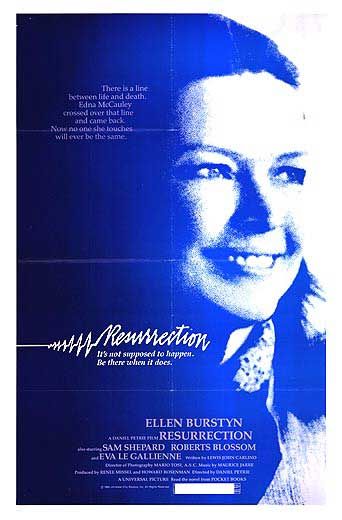
Resurrection (1980)

By Richard Winters

My Rating: 6 out of 10

4-Word Review: She can heal people.

Edna (Ellen Burstyn) manages to survive a car crash and briefly finds herself in the afterlife, but ends up coming back to this world along with an amazing power to heal sick people with the simple touch of her hands. This makes her a celebrity in the small Kansas community that she lives, but others question her ability and wonder, especially since she refuses to acknowledge religion, if it may have a satanic origin. Her newfound boyfriend Cal (Sam Shephard) thinks she may be the second coming and becomes determined to get her to admit this even if it’s through violent means.

The story is loosely based on the life of Rosalyn Bruyere a self-described clairvoyant and medical intuitive who also acted as a consultant to the film. Although initially conceived as a thriller the script by Lewis John Carlino instead takes a more spiritual route, which I found refreshing. I also enjoyed the way director Daniel Petrie captures the vast Texas landscape, which despite the setting being in Kansas, was fully shot inside the Lone Star state.

The scenes of the afterlife are interestingly captured, but I found it baffling why Edna would just write this off as being ‘weird dreams’ and not connect it to any religious connotations. Having these visions then get ‘interpreted’ by her Grandmother (Eva Le Gallienne) seemed heavy-handed as even if a person was not religious themselves they would still be able to connect-the-dots on their own without it having to be explained.

The healing scenes work off of a murky logic. Edna is told after the accident that she is paralyzed from the waist down due to a blood clot in her spine and yet after she learns of her healing ability she places her hands on her legs to help her walk again, but if the root cause of the issue is actually in the back shouldn’t that be where she places her hands instead? The scene where a woman (Madeline Sherwood) who suffers from 2 degenerative vertebrates in her back, but is able to stand-up  after she sees Edna doesn’t make sense either. Standing with missing vertebrae is liking walking without a knee or cartilage. It’s just not scientifically possible, so unless Edna’s healing can cause bone mass to grow where they isn’t any then I’m not sure how they her powers actually work.

I thought it was a bit loopy too that when Shepherd’s character gets injured in a bar fight his buddies take him to Edna’s isolated farmhouse miles away for her to stop the bleeding, but this is when Edna’s healing ability had not been fully established, before this she had only stopped the nose bleed of a young girl, which some might consider simply a fluke, so the most rational thing would’ve been to take him to a nearby hospital instead. The scene would’ve worked better had Edna been in the bar when Shepherd got injured and then jumped in to heal him after he got stabbed.

I didn’t feel Shepherd’s character had the right chemistry to make Edna want to have a relationship with him either. His beady-eyed stare made him look creepy and his father (Richard Hamilton) had accused Edna of being satanic, so why would she want anything to do with that family? He also came off too much like a nondescript redneck like all the other rednecks that made up that small town. Edna was clearly an outsider, so for her to be attracted to someone I would think that person would need to be an outsider as well.

I could never understand why Edna was so resistant to religion, or so completely confident that her powers weren’t heavenly sent. I got that her Christian zealot father (Roberts Blossom) may have turned her off from religion altogether and she didn’t want to deal with the pressures of being considered Christ-like, which is understandable, but I’m not sure Burstyn was the right choice to effectively pull off that type of character. I love Ellen and think she’s a great actress, but she’s also a very spiritual woman in real-life and it pretty much gets conveyed in her performance here whether that was the intention or not. An actress that displayed more of a cynical, snarky attitude, only to have her outlook change once these powers took hold would’ve created a more interesting and dramatic arch.

The third act has Edna going to Los Angeles where her powers are tested by researchers, but these scenes don’t have any satisfying conclusion to them, which I found frustrating. However, the scene that Edna has with her dying father I felt were strong and the best moment of the whole film.

The spiritual element gets left open to interpretation depending on one’s own perspective, which is good. It also has a really great, and to some degree, surprise ending, but I didn’t like the freeze-frame shots taken from the film shown over the closing credits, which cheapens it as this is typically something done on TV-shows and not movies.

My Rating: 6 out of 10

Released: September 26, 1980

Runtime: 1 Hour 43 Minutes

Rated PG

Director: Daniel Petrie

Studio: Universal

Available: DVD

Where the Red Fern Grows (1974)

By Richard Winters

My Rating: 6 out of 10

4-Word Review: Kid raises two hounds.

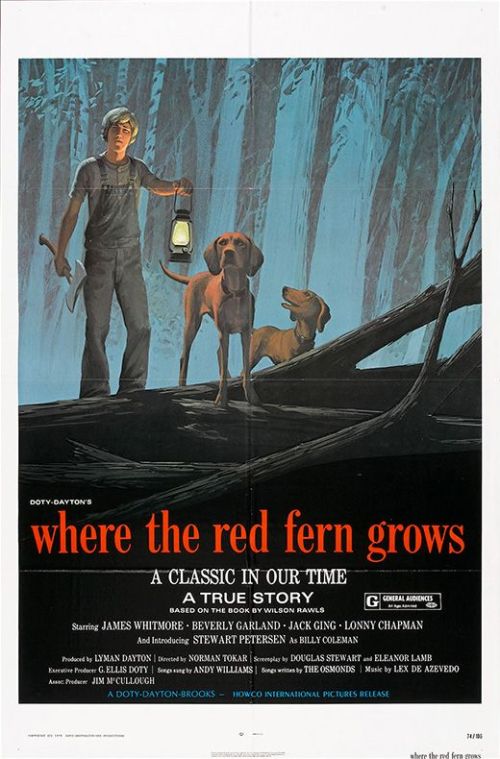
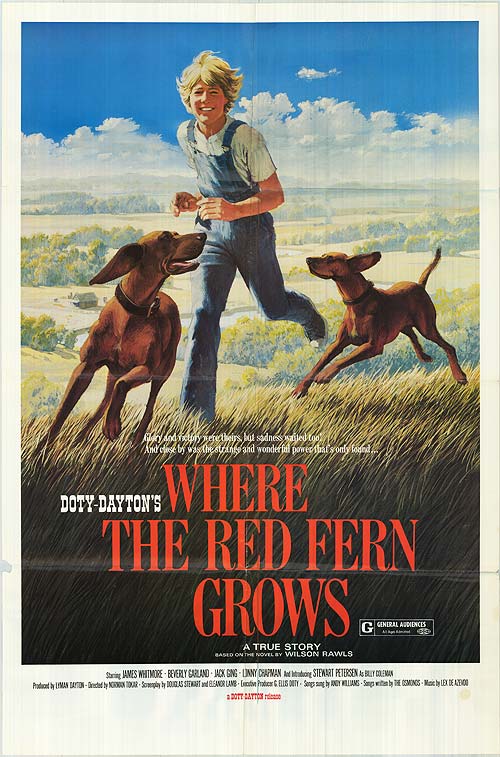
Billy Colman (Stewart Petersen) is a 12-year-old boy living on a farm in rural Oklahoma during the depression. He becomes obsessed with owning a coon hound which he can train to hunt raccoons. His family is too poor to buy him one, so he spends his summer doing a number of odd jobs until he’s finally able to buy two Redbone Coonhound puppies, which he raises and trains into becoming championship hunting dogs.

The film is based on the 1961 novel by Wilson Rawls, who provides the opening voice-over narration and the script here closely follows the action of the book. It was directed by Norman Tokar, who seemed to specialize in stories of young boys bonding with their pets as he also directed the film versions of Big Red and Rascal. The production was clearly done on the low budget side, which is distracting at first, but eventually meshes with the stark, rural, and economically challenged setting quite nicely.

While the story seems believable enough and may open some viewer’s eyes, such as my own, to the sport of coon hunting, which still thrives today in certain parts of the country, I found certain elements of it to be hard to believe.  For instance Billy decides to walk all the way from his lonely farmhouse to the town of Tahlequah, which is 30 miles away and apparently able to do it in one day. I was also not sure how he would be able to find the town since he did not travel along any type of highway or road, but instead trudged through open fields and without the benefit of either a map or a compass.

The scene where Billy intentionally trips a nasty boy by the name of Rubin (Rex Corley) which causes the kid to fall on the ax that he is carrying and dies seemed questionable from a modern day viewpoint simply because everybody believes the story that Billy tells them and no charges were made. The film and book, which I remember reading in the 6th grade and in fact this is the only part of the story that I remembered, portray this as being an unintentional accident, which it was. However, these days the kid could potentially be put on trial for manslaughter charges especially since there was clearly bad blood between the two, but maybe it is a testament of simpler times that everyone, including seemingly the victim’s parents, believe the story he tells them without question, but in any other era that might not have been the case.

I found it interesting to see Beverly Garland, whom I first became aware of when she played Fred MacMurray’s second wife in the TV-show ‘My Three Sons’ and who looked quite middle-aged then, but for some reasons gets cast here as a young housewife and manages to somehow pull it off despite nearing 50 at the time. Petersen though, who got cast after a long auditioning process of over 500 candidates, is only adequate, but doesn’t quite hit the mark especially with his inability to convey anything other than one facial expression. I also thought the coonskin cap that he ends up wearing made him come off looking like a Davy Crockett or Daniel Boone Jr. although maybe back in the day that was considered ‘cool’.

Certain animal right’s activists of today may not take kindly to what was once considered just a ‘charming’ coming-of-age tale. Although no actual killing of any animal is ever shown it is certainly heavily implied. It got to the point where I started to feel sorry for the raccoons particularly during the hunting competition where night after night different hunters would go out into the forest to see how any many they could catch and then come back with the numerous pelts that they skinned from them making me wonder if there could possible be any raccoons left to kill.

Spoiler Alert!

The film though does manage to end on a strong note although even here this gets botched because as the family goes to the dog’s grave to see this magical red fern growing on top of it we also see a big boom microphone hanging down from the top of the screen , which completely sucks all the magic right out of the scene. This same story was remade in 2003 and in 2018 a 45-minute documentary was released showing behind-the-scenes footage/stills of the movie as it was being made and also featuring interviews with the actors.

My Rating: 6 out of 10

Released: June 21, 1974

Runtime: 1 Hour 37 Minutes

Rated G

Director: Norman Tokar

Studio: Doty-Dayton Releasing

Available: DVD, Amazon Video, YouTube

Out of Africa (1985)

By Richard Winters

My Rating: 9 out of 10

4-Word Review: An illicit love affair.

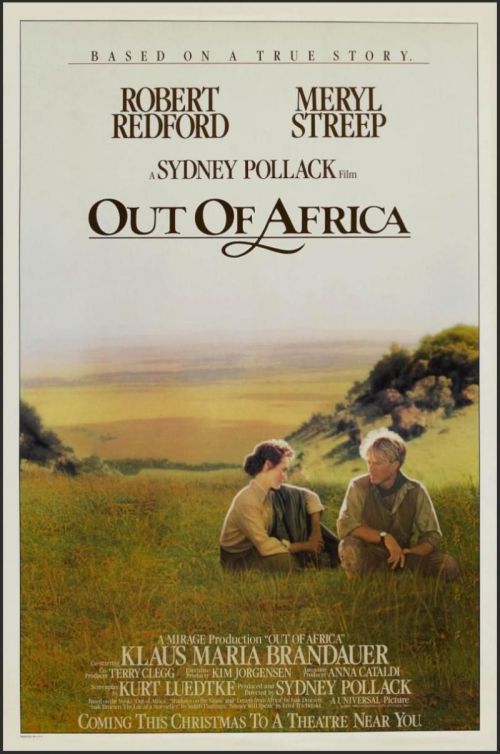
In 1913 a wealthy Danish woman named Karen Dinesen (Meryl Streep) gets spurned by the man she is in love with, so on the rebound she decides to accept the marriage proposal of the man’s brother, Baron Bror Blixen (Klaus Maria Brandauer) Despite the fact that neither she nor he are in love with the other, but decide to make it a marriage of convenience. They move together to Kenya where they plan to at first start a cattle farm, but it soon turns into a coffee plantation. Through the years Karen’s marriage to Bror begins to sour as he continues to have affairs with countless other women, so Karen turns her attention to the dashing big-game hunter named Denys (Robert Redford) and the two share a passionate and adventurous love affair, but when Karen tries to turn their relationship into a committed one he refuses.

The film, especially the first hour, comes off more like a broad sketch than a fluid story, or a highlight reel taken from a wide outline. I could never really get any type of handle of who this Karen person really was. I never understood why she would want to leave Denmark for Africa, or why she’d be so quick to settle down with a man that she didn’t love. So what if she got spurned by one guy there’s still other fish in the proverbial sea. Why not wait around for someone she could truly be excited about instead of just jumping in with someone that she really wasn’t?

To some degree I did find the marriage-of-convenience idea an interesting one. It’s rare that both parties admit that neither has the hots for the other, but still decide to make a go of it, which seemed like highly modernistic behavior especially for the time period and I was hoping this whole scenario would be explored more, but the film treats this mainly as a side-story that pretty much fades away after the first hour.

The introduction of the Denys character gets a bit botched too as he keeps popping in and out at the most convenient times out of literally nowhere, like when Karen finds herself ready to be attacked by a lion, and then just as quickly disappearing again almost like he were a magical genie.  The fact that Streep puts in so much effort into her Scandinavian accent, but Redford puts none into conveying an English one is off-putting. Supposedly Redford did initially try to speak with a light accent, but director Pollack apparently found it ‘distracting’ and advised him to speak without it, but in the process it makes the acting seem uneven.

It’s during the second-half where the film really comes together as it focuses solely on the affair though in real-life there was only a two year difference between Karen and Denys, but here there’s a 12 year difference between the actors playing the part and it shows, but despite that discretion this segment really works. I loved watching the different things that the couple did like playing a phonograph record to some monkeys and seeing how they responded to it and watching Karen taking an airplane ride for the first time and all the majestic scenery that she takes in.

The cinematography is indeed sumptuous and one of the things that holds it altogether even when the script jumps precariously and sometimes jarringly from one point in Karen’s life to another. The film would’ve worked better had it focused on only one area, like her relationship with Denys, which could’ve helped create a stronger, more immediate emotional impact with the viewer while also cutting down on the excessively long runtime.

My Rating: 9 out of 10

Released: December 10, 1985

Runtime: 2 Hours 41 Minutes

Rated PG

Director: Sydney Pollack

Studio: Universal

Available: DVD, Blu-ray, Amazon Video, YouTube

March or Die (1977)

By Richard Winters

My Rating: 4 out of 10

4-Word Review: Battle in the desert.

French Foreign Legion Major William Foster (Gene Hackman) suffers from memories of leading 8,000 of his own men into a failed battle, which has driven him to alcoholism. Now he and his regiment are assigned to protect an archaeology dig lead by Francois Marneau (Max Von Sydow) that sits in the middle of the Moroccan desert and is under constant threat  by an army of Arab revolutionaries lead by El Krim (Ian Holm).

The film was a labor of love for director Dick Richards who grew up watching the French Foreign Legion films in his youth and wanted to recapture that magic, but like with his earlier and much acclaimed western flick The Culpepper Cattle Company do it with a revisionist slant. Aesthetically it looks gorgeous and all the more impressive when you factor in that the majority of it was filmed in Nevada, but because the dunes in Morocco had a  different shade of color than the ones in North America the sand was flown in to camouflage this and you’d never know the difference. Watching the harsh treatment that the men had to go through as they trained to become soldiers is quite revealing as well and made the first hour of the film captivating.

Hackman though looks uncomfortable in his role and this could be attributed in large part to the fact that he fell off his horse during filming and was suffering from a great deal of back pain during the shoot. In either case he ends up getting sorely upstaged by Italian star Terence Hill, who up until this time had mainly done comedic styled westerns with his onscreen pal Bud Spencer, but here shines as a soldier who challenges authority and galvanizes the rest of the troops.

Marcel Bozzuffi is equally memorable as the cruel Lieutenant Fontaine who treats the men under him quite harshly most notably Top Hat played by Andre Penvern, but the theatrical/DVD release omits a crucial scene with him that was only shown in the TV print.  In that version he and his men chase after two deserters and then get involved in an ill-advised battle with some tribesmen, which ultimately causes him to break down in fear and kill himself, which would’ve been an interesting transition to witness since for the majority of the movie he remains cold and aloof otherwise.

Despite being a great actor Von Sydow’s presence here is a detriment as it will only remind viewers especially during the archaeology dig sequence of his work in The Exorcist where in the beginning of that film where scenes of him doing essentially the same thing. Catherine Deneuve is another excellent talent who is wasted in a part that doesn’t allow her much to do and only helps to slow down the already sluggish film with each scene that she’s in.

Spoiler Alert!

The film’s most disappointing aspect though is with its ending, which should’ve been its strong point. The final battle is exciting and the shots of hundreds of chanting Arab soldiers coming over the dunes to attack is indeed impressive and even harrowing to see, but watching the systematic slaughter of the French soldiers and ultimately learning that they walked themselves into a trap is quite dispiriting. I know I’ve complained about the formulaic happy endings from time-to-time in some other films, but this one is too much of a downer and offers the viewer no payoff at all for having to sit through it. It’s almost like giving someone a reasonably enjoyable ride only to drive the car off the cliff at the end and expect them to thank you for it.

My Rating: 4 out of 10

Released: August 5, 1977

Runtime: 1 Hour 47 Minutes

Rated PG

Director: Dick Richards

Studio: Columbia Pictures

Available: DVD, Amazon Video

Sunday in the Country (1974)

By Richard Winters

My Rating: 4 out of 10

4-Word Review: Farmer holds robbers hostage.

Adam Smith (Ernest Borgnine) is a Canadian farmer living in a rural home who becomes aware via the radio of reports of three bank robbers (Cec Linder, Louis Zorich, Michael J. Pollard) on the run in the area who’ve just killed a young man and his girlfriend who were his friends. He prepares for their arrival and when they come he shoots and kills one of them while taking the other two into his cellar where he hangs them on meat hooks. Smith’s granddaughter Lucy (Hollis McLaren) finds this treatment inhumane and wants to call the police, but Adam won’t let her and the two quarrel until he locks her in her room, but she escapes and runs for help, which enrages Adam even more.

The film almost gets ruined by an obnoxious musical score that is so heavily tinged with country twang that it seems almost like a parody of itself and makes the entire production come off as cheesy and amateurish. It would’ve been better without any music at all as it ends up taking you out of the action like having someone sitting beside you and rudely talking and not letting you concentrate on what’s happening on the screen.

As for the story it makes some good observations about just how thin the line can sometimes be between the good guy, or those that feel they’re morally justified to inflict whatever style justice they deem necessary, and the so-called bad guy. Unfortunately the character arch of the protagonist happens too quickly without much of a back story explaining why this otherwise law abiding farmer would deviate so quickly into an abuser. What makes him different from others who would’ve called the police? Just saying that he’s ‘old fashioned’ and ‘from a different era’ I didn’t feel was enough of an explanation.

With the exception of Pollard the robbers aren’t intimidating enough and it some ways came off as pathetic and not like professional crooks at all. This might’ve been intentional on the filmmaker’s part in an effort to make the viewer more sympathetic to their quandary once they are held hostage, but in the process it lessens the tension and makes them seem not as threatening.

Borgnine does a terrific job through his facial expressions of showing the character’s inner turmoil as well as constantly exposing his human side even as he forges ahead to doing some not-so-nice things. McLaren is also superb and her interactions with Borgnine are the most compelling aspect of the film.

Pollard is great here too and I was surprised as he’s not always able to find roles that match his unique talents and sometimes has been relegated to thankless and forgettable supporting parts, but here he’s viscous with a most creepy sounding laugh.

Unfortunately the eye-for-an-eye concept doesn’t get examined enough and the film could’ve gone a lot farther with it than it does. It still manages to bring out many interesting issues but the story should be remade and without the corny soundtrack.

Alternate Titles: Vengeance is Mine, Blood for Blood

My Rating: 4 out of 10

Released: November 22, 1974

Runtime: 1 Hour 33 Minutes

Rated R

Director: John Trent

Studio: Impact Films

Available: Amazon Video

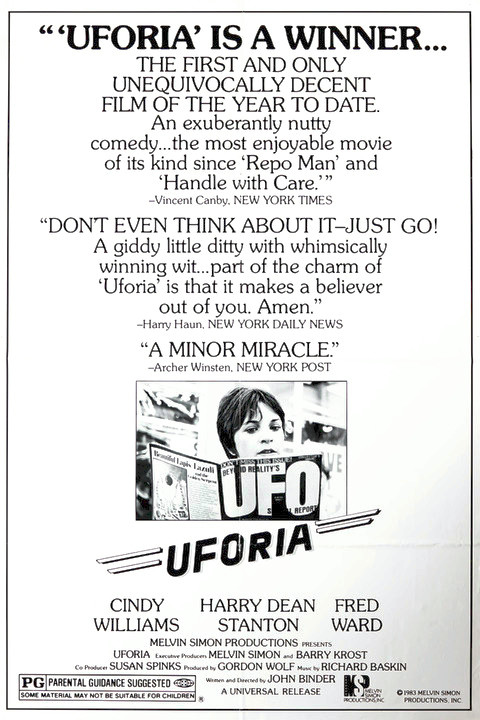
UFOria (1985)

By Richard Winters

My Rating: 4 out of 10

4-Word Review: She dreams about spaceships.

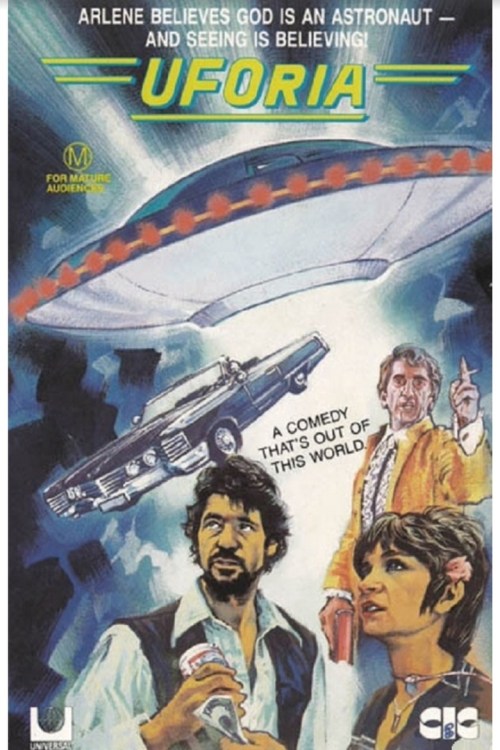
Arlene (Cindy Williams) is a lonely woman living in a small town and working at a local supermarket. One night she starts having dreams about a spaceship landing in town and taking her away. Her new boyfriend Sheldon (Fred Ward), who is a shady drifter always looking to make a quick buck, works with his brother Bud (Harry Dean Stanton), much to her consternation, to use her ‘visions’ to make money off of it by portraying her as communicating with some outer worldly messenger that’s connected to God.

This film was made in 1980, but sat on the shelf for 5 years and it’s easy to see why as it’s difficult to put it into any predefined genre. It’s certainly isn’t a sci-fi flick and in a lot of ways it really isn’t a comedy either. There are a few funny bits, but they get lost inside scenes that go on far longer than they should, which never allows the film to gain any traction or momentum.

Williams is not right for her part and fails to convey the downtrodden look of a lonely woman in a role that would’ve been better served had it been played by an actress with a more plainish, dumpy features like Kathy Bates. It’s also annoying that she has these vivid dreams, but the viewer never gets to see them. Movies are a visual medium and should take advantage of that element as much as possible by showing what’s happening instead of just having a character describe it.

Stanton isn’t right for his part either. In certain films his low-key style is perfect, but here he fails to effectively convey the animated, fiery delivery of a TV evangelist, which is a part that needed to be comically played-up much more.

Ward was the only one that I liked and he really comes into his own with a character that isn’t particularly likable, but has an interesting arch where he goes from being a cynical non-believer to eventually defending Arlene from those who mock her. He also drives his car in the most bizarre way that I’ve ever seen with his feet up on the dashboard and not on the pedals.

Spoiler Alert!

I was hoping that the ending would be a payoff for having to sit through such a slow, poorly paced film, but ultimately it falls flat just like everything else. I liked the idea of a spaceship suddenly appearing, but then the film cuts to the closing credits without examining what happened to the people, how they reacted to it, or what the aftermath was, which I found frustrating.

End of Spoiler Alert!

The small town setting filmed in Palmdale and Lancaster, California gives off just the right rustic look and prime stomping ground for fringey, eccentric people like the characters here.  While the film does have a definite cult appeal the offbeat elements get stymied inside a lethargic pace that never allows it to gel, or become captivating.

My Rating: 4 out of 10

Released: October 1, 1985

Runtime: 1 Hour 35 Minutes

Rated PG

Director: John Binder

Studio: Universal

Available: VHS

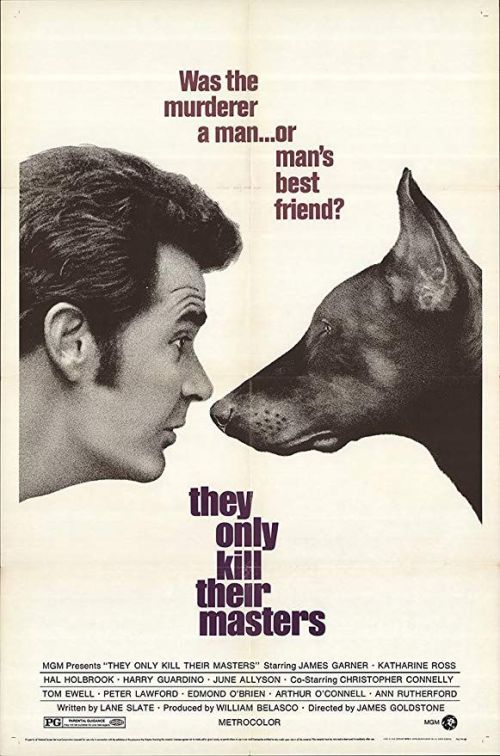
They Only Kill Their Masters (1972)

By Richard Winters

My Rating: 5 out of 10

4-Word Review: Dog turns on owner.

Abel Marsh (James Garner) is the police chief of a small west coast seaside town who’s put in charge of investigating a baffling case where a dog inexplicably turned on its owner and killer her. The clues though don’t match up convincing Abel that the dog is innocent and used simply as a ruse to cover-up an even more sinister crime.

This is the first of four films all written by Lane Slate to feature the character of Abel Marsh. All of the subsequent films featured the same small town setting and quirky themed murders, but where made for TV instead featuring Alan Alda in the role of Abel for Isn’t it Shocking and then Andy Griffith playing the part in The Girl in the Empty Grave and Deadly Game.

The mystery here has its share of intriguing elements and I liked the methodical pace, which is reminiscent of actual police work where the clues don’t just come easily and quickly. I also liked how the viewer remains just as in the dark about who did it as the investigator. The subplot involving the doberman is interesting as well and like in the film To Kill a Clown, which came out the same year, the dog ends up being the ultimate scene-stealer from his human counterparts.

Due to this being the last film made on MGM’s famous backlot many former stars from Hollywood’s golden age agreed to appear in small roles including Ann Rutherford in an amusing bit as a old-school secretary who can’t figure out how to work an electric type writer. The best bit though comes from June Allyson who doesn’t have any speaking lines until the very end where she gets a bravura-like finale similar to Betsy Palmer’s in Friday the 13th and even sports the same type of hairstyle as hers and sweater/pants, which makes it all the more ironic.

The thing though that I found annoying was the formulaic romance that starts almost immediately between Garner and Katherine Ross. For one thing the mystery could’ve worked just as well had Ross’ character not been in it at all, but if they did feel the need to throw in a romantic subplot it’s always more interesting when there’s some friction or resistance at first only to have it evolve into a relationship later versus making it a ‘love at first sight’ scenario, which is too quick and unrealistic especially when there’s a 15-year age difference between the two.

What gets even more aggravating is that after spending the night with her Garner then starts to suspect that she may know more about the crime than she lets on, so the next day he storms into her apartment and quite literally starts strangling her to get the info. Then when he realizes he may have jumped to the wrong conclusion he leaves her place in a huff without even bothering to apologize. Several hours later he sheepishly returns, but instead of slamming the door in his face she asks if he’s alright?!

Later near the end of the film she returns to his office and acts like somehow it was all her fault and seems to leave things open to rekindling the romance, but why? Unless she’s desperate (and she’s way too beautiful for that) or has extremely low self-esteem she should’ve ended things right when he attacked her because it was an obvious red flag and the fact that she doesn’t shows how dated and out-of-touch the film is in regards to modern day relationship dynamics.

The scenery is nice especially the Malibu location of the victim’s house and seeing it get burned quite literally to the ground is kind of cool too. However, the quirky elements don’t gel and overall the film ends up being transparent and flat.

My Rating: 5 out of 10

Released: November 22, 1972

Runtime: 1 Hour 37 Minutes

Rated PG

Director: James Goldstone

Studio: MGM

Available: DVD-R (Warner Archive), YouTube