Category Archives: Movies with a rural setting

The Great Outdoors (1988)

By Richard Winters

My Rating: 3 out of 10

4-Word Review: Friends ruin their vacation.

Chet (John Candy) decides to take his wife (Stephanie Faracy) and two kids (Chris Young, Ian Michael Giatti) on a well deserved family outing up to a lake resort town in Wisconsin. Unfortunately their fun excursion  gets crashed by their obnoxious friend Roman (Dan Aykroyd) and his wife Kate (Annette Bening) who along with their two creepy twin daughters (Hilary Gordon, Rebecca Gordon) proceed to turn the pleasant vacation into a nightmare.

Calling this John Hughes script paper thin is an understatement and it reminded me of an interview I once read where Hughes bragged that he could write his screenplays in a matter of only a day or two although with this one I’m surprised it took even that long. Not only is the premise devoid of any original ideas, but it seemed more like material for the Griswold family and I was confused why it wasn’t just made as part of the Vacation series although I preferred Candy over Chevy Chase as he’s much more likable without the sneering sarcasm, and his presence here helps make it at least modestly enjoyable.

The comedy also avoids becoming too farcical or lewd, which was nice, and manages to keep things semi-believable to what might occur to a regular family in the woods including my favorite part where the two men try to kill a bat that has gotten into the cabin. The setting, which was filmed on-location in Lake Bass, California is scenic and the woodsy cabin, built specifically for the film on a studio backlot, is impressive because you would never know the difference.

However, the animosity between the two characters, which is supposedly the heart of the humor, is not played-up enough or as half as much as I was expecting. In many ways it seemed almost like it was Candy who was more the obnoxious one particularly when he tells a scary story that gets everyone upset. The scene where he puts a candy bar on the hood of his car to attract a bear makes him look really stupid, and something that should’ve been done instead by the supposedly dopey second-banana character like Aykroyd.

The kids, especially the twin girls who seemed spookier than the twins in The Shining, are annoying and I thought it was weird that they are played-off as creepy for the majority of the film only to then near the end have the viewer expected to suddenly start caring for them when they get trapped in a cave.  As for the two boys they’re dull and transparent and the scenes dealing with the romance that the oldest one has with one of the teen waitresses (Lucy Deakins) are extremely formulaic and unnecessary and almost like it were put in simply to pad the runtime.

The running gag dealing with the talking raccoons is childish and the one dealing with a man (Britt Leach) constantly getting struck by lightning is completely ridiculous.  The story is nothing more than a procession of gags that lacks momentum or pace. The laughs are sporadic and subside after the 45-minute mark making the final half a chore to sit through and that includes the climactic bear attack, which is forced and over-the-top.

My Rating: 3 out of 10

Released: June 17, 1988

Released: 1 Hour 31 Minutes

Rated PG

Director: Howard Deutch

Studio: Universal 

Available: DVD, Blu-ray, Amazon Video, YouTube
To Kill a Clown (1972)

By Richard Winters

My Rating: 3 out of 10

4-Word Review: Couple harassed by veteran.

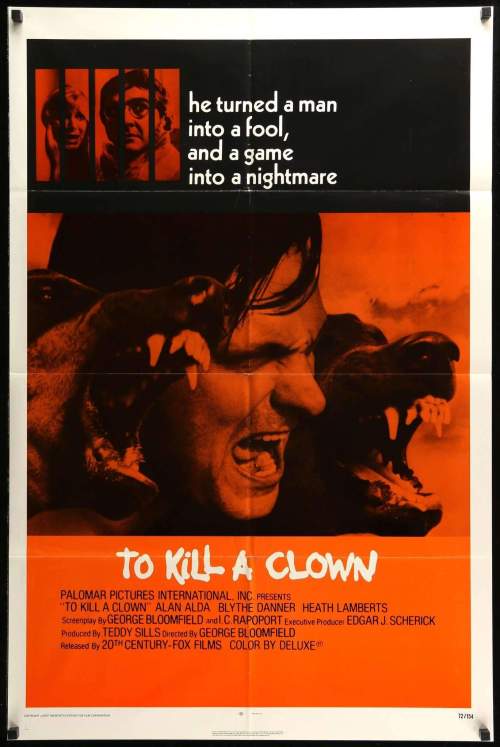
Timothy (Heath Lamberts) and Lily (Blythe Danner) are a couple suffering through a rocky marriage. In an attempt to try and save it they decide to rent a beach house for a summer where they hope the quiet seaside scenery can help mend the friction. Their landlord is Evelyn (Alan Alda) a crippled war veteran with two dobermans who resides in a large house next to theirs. Evelyn considers Timothy to be effeminate and ‘unfocused’ and decides to challenge him to a psychological game where he will put Timothy through the rigors of army training. Initially Timothy finds this challenge amusing, but the game becomes much harsher than he expected and when he tries to get out of it Evelyn won’t let him, which eventually leads to Timothy and Lily becoming hostages inside their own home where Evelyn’s two ferocious dogs guard them.

The film is based on the short story ‘The Master of the Hounds’ by Algis Budrys that appeared in the August 1966 edition of the Saturday Evening Post. The plot certainly has some intriguing qualities, but the pace is too laid-back and I spent much of the time rather bored with it. The tension comes in spurts and when it does get going it cuts away just as it gets interesting. The Timothy character is overly smug and to some extent I actually enjoyed some of the harassment that Evelyn gives him, which ultimately minimizes the ‘horror’ that the viewer is supposed to be feeling.

In the story the setting was supposed to be the Jersey shore and in the film it’s somewhere off the New England coast, but in actuality it was filmed in the Bahamas and in an attempt to mask the tropical surroundings they found one of the blandest looking beaches to film it on. The lack of scenery gives the film no visual flair and it ultimately comes off like something done on the cheap end by a director lacking talent of vision.

The only interesting aspect is seeing Alda, who was known throughout the 70’s and 80’s as being a very liberal, ‘sensitive’ male, playing someone who is the exact opposite and to a degree he does it well, but it could’ve and should’ve been played-up much more. Lamberts is good too, but it would’ve been better had the character been an actual army deserter, which would’ve then made the men’s contrasting personalities even more vivid.

Danner though, in her film debut,  comes off best by acting as a buffer between the two men. The dobermans though are the real stars and I wouldn’t have minded seeing more of them. In fact the film’s best moment involves one of them standing guard as it holds the frightened couple hostage in their living room and growling threateningly if one of them even moves their head in he slightest.

Unfortunately the action takes too long to get going and the whole thing gets misguidedly underplayed. I found the freeze-frame shots, which the film uses to transition from one scene to the next, distracting and overly artsy especially for a movie that is supposedly trying to be reality based.

My Rating: 3 out of 10

Released: August 23, 1972

Runtime: 1 Hour 44 Minutes (Reissued at 1 Hour 26 Minutes)

Rated R

Director: George Bloomfield

Studio: 20th Century Fox

Available: VHS

Clownhouse (1989)

By Richard Winters

My Rating: 4 out of 10

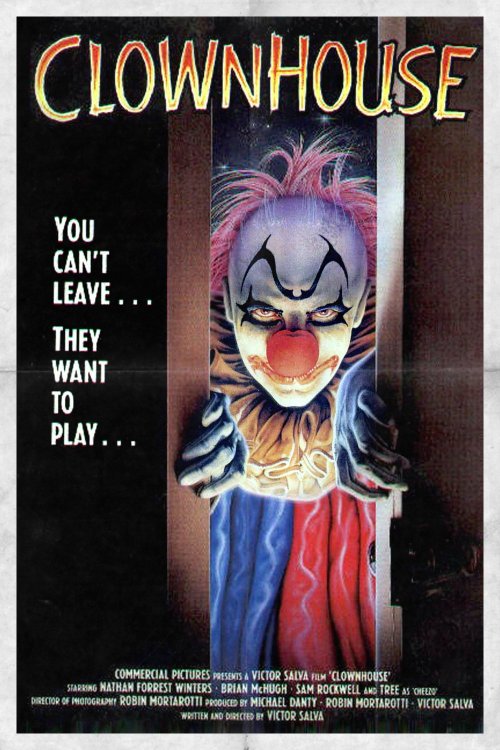
4-Word Review: Clowns terrorize three kids.

Three brothers (Nathan Forrest Winters, Brian McHugh, Sam Rockwell) find themselves alone late one night in their big house when their parents are away on business. They try to scare each other by telling spooky stories involving clowns, but little do they know that three mental patients (Michael Jerome West, Byron Weible, David C. Reinecker) have escaped from a nearby insane asylum. They kill some men working as clowns at a local circus and then disguised as clowns themselves sneak inside the home where the boys reside and try to kill them.

This film has become better known for what went on behind-the-scenes as writer/director Victor Salva was convicted of having sex with the 12-year-old star Winters (no relation) during the production and ended up serving 15 months of his 3-year prison sentence at which point he was then released and has since gone back to filmmaking. To some extent even without having known this one could almost suspect that idea because, like in the movie Salo, or The 120 Days of Sodom where the director featured a lot of underage nudity only to later be convicted of a similar charge, this filmmaker does the same thing by opening the movie with the boys walking around in their underwear and at one brief point capturing the young star’s naked behind, which was not needed and comes off as intentional voyeurism.

If you can get beyond the production’s notorious backstory then as a horror movie it’s not too bad as Salva shows a good ability at building a creepy, surreal-like atmosphere particularly the scenes done at the circus and then later at the large, ominous house. The only problem is that the setting is supposed to be a couple of weeks before Halloween even though all the leaves on the trees are green, which doesn’t exactly resemble fall.

The plot though is weak and it would’ve worked better had it not given away who these men in the clown costumes were until the very end, or maybe not at all. Having lunatic characters escape from a mental hospital is generic and it would’ve been more intriguing had the viewer suspected these clown as being a part of the child’s imagination instead.

Despite the short runtime the pace still bogs down with a premise that builds too slowly and drags out the suspense longer than need be. The mental patients behave more like professional clown performers and never even say anything once their make-up is applied, which is not believable and all the more reason for the film to have taken a surreal turn by portraying the clowns as figments of the boy’s imagination who have inexplicably come to life.

Ultimately it plays itself out too soon and lacks any type of final twist. Winters appears to be the same age as McHugh who was playing his older brother and at age 12 behaved more like a 6-year-old making me feel the the part should’ve been given to a younger performer. It is however fun seeing Sam Rockwell in his film debut and still looking very much like an adolescent.

My Rating: 4 out of 10

Released: January 28, 1989

Runtime: 1Hour 21Minutes

Rated R

Director: Victor Salva

Studio: Zoetrope Studios

Available: DVD

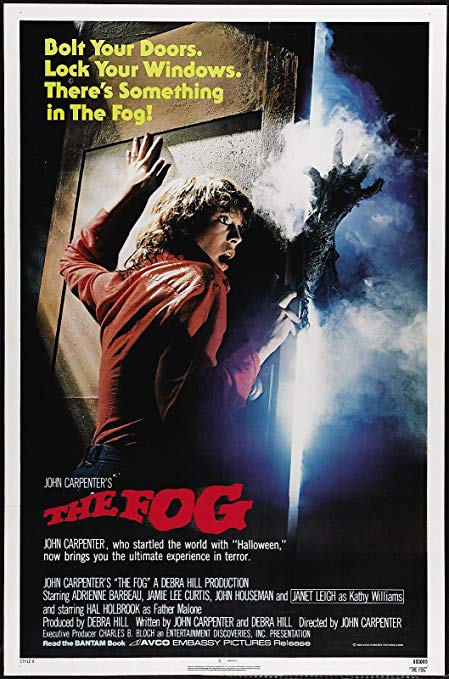
The Fog (1980)

By Richard Winters

My Rating: 3 out of 10

4-Word Review: Ghostly fog haunts town.

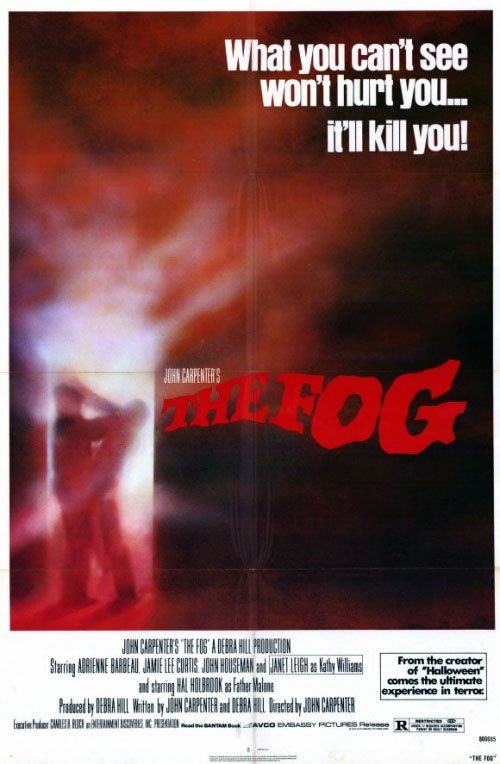
As the town of Antonio Bay gets ready to celebrate its 100th year of existence a mysterious fog creeps into the area at midnight and then strange unexplained events begin to occur. The town’s priest Father Malone (Hal Holbrook) finds a secret diary detailing how 6 of the town’s founders intentionally sank a ship 100 years earlier. Now the ship’s ghostly victims have returned seeking revenge by insisting that 6 people from the community must die in order to make-up for the 6 that originally killed them.

John Carpenter’s follow-up to his highly successful Halloween has gained a fervent following, but in the end it really doesn’t amount to much. Maybe my expectations were too high as I had a friend who talked this up as being great, but the scares are lacking despite a good first act that nicely builds the atmosphere and has some effective visuals particularly the shots of the fog rolling in.

The interesting premise though gets ruined by having things explained too quickly. Sometimes a little mystery can go a long way and not knowing what’s causing the strange occurrences and only having it answered at the very end, or possibly not at all, would’ve made it scarier and more intriguing. The backstory makes the ghosts come off like sympathetic victims looking for justice and therefore less threatening. Instead of being this entity with no known boundaries they become logical, emotional beings that makes the scenario too contained and civilized and less intense than it could’ve been.

You wait for things to finally gel, but it never really does. The victims get attacked in a matter of seconds and the camera then quickly cuts away before any blood or violence is shown. The ghosts aren’t seen much either and amount to shadowy figures from a distance when they are with occasional glowing red eyes, but otherwise they lack visual flair.

Having three heroines was a mistake especially since Jamie Lee Curtis seems bored in her role and almost like she didn’t even want to be there. Her real-life mother Janet Leigh conveys far more energy and she could’ve easily been the star with Curtis cut out completely. The two do share a few scenes together, but frustratingly never any lines of dialogue.

Adrienne Barbeau, who at the time was Carpenter’s wife, is okay as a late night DJ working out of a lighthouse, but her over-the-air pleas to her young son Andy (Ty Mitchell) to get out of his house to escape from the ghosts came off as unintentionally funny. The simultaneous climaxes that occur at two different locations with some cast members fighting off the ghosts inside a church while Barbeau does the same inside the lighthouse doesn’t work and if anything the finale should’ve happened completely inside the lighthouse since that was a more unique setting.

The direction is competent and it’s not like this film, which was remade in 2005, is a bad one it’s just not particularly exciting or interesting. The horror needed to be amped up and the pacing quicker particularly as it got into the second act. The only moment in the film that impressed me had nothing to do with the horror, but instead was the shot showing Barbeau walking down a long, winding outside stairwell to get to the lighthouse, which was filmed on-location at the historic Point Reyes Lighthouse in Marin County, California.


My Rating: 3 out of 10

Released: February 8, 1980

Runtime: 1Hour 30Minutes

Rated R

Director: John Carpenter

Studio: AVCO Embassy Pictures

Available: DVD, Blu-ray, Amazon Video, YouTube
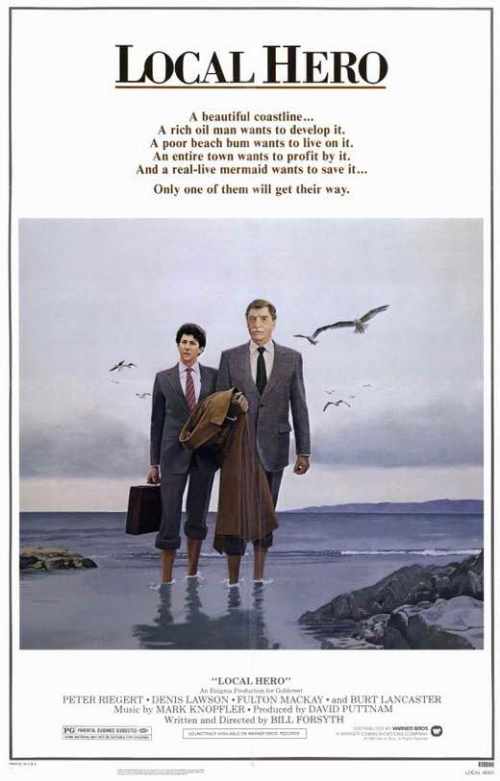
Local Hero (1983)

By Richard Winters

My Rating: 5 out of 10

4-Word Review: Businessman travels to Scotland.

Mac (Peter Riegert) works for a gas company out of Houston, Texas that wants to buy up the small town of Ferness, which sits on the north shore of Scotland and turn it into an oil refinery. It’s Mac’s job to travel to the town and offer the citizens a generous monetary offer to sell their homes. He is not excited about going as he enjoys doing business over the phone, but once there he grows attached to the more laid-back pace. The townspeople grow found of Mac as well and eager to take the money and become rich. The problem is that through research they find that it is actually Ben Knox (Fulton Mackay) an eccentric man who lives in a ramshackle house on the beach who owns the land and he is unwilling to sell no matter what the price.

This film received positive reviews at the time of its release and one of the few movies to get a 100% positive rating at rotten tomatoes and yet after watching this now twice I’m still mystified over what all the fuss is about. When I first saw it several decades ago I came away feeling like I had just viewed something where very little happens and upon the second viewing I felt the exact same way.

I get that the emphasis is supposed to be on the quirky humor and that’s fine, there’s even a few chuckles, but the script flat lines after its initial set-up.  The eccentric characters and offbeat quality becomes one-dimensional and the story offers no true conflict or tension. Everything gets handled in such a subtle, dry way that there’s barely any drama at all and seems not really worth the effort to watch.

It would’ve worked better had there been one true antagonist, somebody that would be in stark contrast to everybody else and create genuine upheaval to the otherwise benign complacency. Initially it seemed that Lancaster’s character, who owns the oil refinery, would be a perfect foil to the serenity. Most business owners are consumed with the profit margin, but this one is instead more interested in astronomy. I realize that writer/director Bill Forsyth wanted to work against the grain and not portray the typical caricature of a hard-driven business man, but how can a guy run a successful business if the financial bottom line isn’t his main drive? Making the business owner a lovable kook as the rest takes away any potential confrontation of which this movie could’ve used some.

Riegert is equally transparent. His yuppie tendencies should’ve been played up more and his dramatic arch from big city businessman to lover of small town life more apparent. I was hoping that after he slowly became fond of the place that he would be one to throw the monkey wrench into the proceedings by refusing to make a deal and fighting to save the town even as the other residents are more than happy to leave it, which would’ve been much funnier.

The townspeople are blah too. The viewer only gets to know a few of them and they’re indistinguishable from the other. The only one that stands out is the lady with a punk look and I was intrigued to learn more about her and how she was able to get along with everyone else despite dressing in such a radical style and yet we never hear her utter a single word.

Ben Knox is the only character that offers a twist as we initially perceive him to be a homeless nobody only to realize that he ultimately holds all the cards and yet it just teases the viewer with a potential confrontation between he and the townspeople that never comes to fruition. I was also disappointed that we didn’t get to see the inside of his makeshift home that looked so rundown and precariously put together that you truly wondered what the interior looked like or how someone could survive living in it for as long as he does. Lancaster goes into the home to negotiate a deal with him and I felt the camera should’ve followed him in.

If you’re looking for lightly amusing comedy that goes down easy then you may take a little more of a liking to this. If you desire a movie with something more than just incessant whimsy then this flick will not suffice.

My Rating: 5 out of 10

Released: February 18, 1983

Runtime: 1Hour 51Minutes

Rated PG

Director: Bill Forsyth

Studio: Warner Brothers

Available: DVD, Amazon Video, YouTube

Kid Blue (1973)

By Richard Winters

My Rating: 5 out of 10

4-Word Review: Bandit tries changing careers.

Bickford Wanner (Dennis Hopper) suddenly realizes that being a train robber is no longer worth the hassle, so he decides to go straight by moving into the town of Dime Box where he does a variety of menial labor jobs that he finds to be thankless. When his former girlfriend Janet (Janice Rule) shows up he gets a hankering to go back to his bandit days when he was nicknamed Kid Blue and acquired a legendary status throughout Texas.

There were a lot of revisionist westerns during the early 70’s and most of them made an impact, but this one got lost in shuffle. Personally I was impressed with the first 30 minutes where the small town residents are portrayed as being prickly, cold people whose personalities reflected the harsh, dry, desolate landscape that surrounded them. The way Bickford gets treated as an ‘outsider’ simply because he wasn’t originally born there is exactly the way anyone would’ve felt in the same situation and thus it creates an accurate and vivid setting environment.

The counter-culture movement of the late 60’s gets puts it into a western motif giving the viewer a firsthand feel how oppressive the establishment (in this case the town’s citizens) were and what a lonely, frustrating experience it is to somehow try to fit into a system that doesn’t want you to begin with. Having this theme captured outside of the modern trappings makes the message stronger and when Bickford finally does lose his cool you relate to his rage and enjoy seeing him lash out.

Unfortunately it loses focus by the second act as director James Frawley can’t seem to decide whether he wants to turn this into a comedy or gritty drama. Both Ralph Waite and Ben Johnson make for good antagonists, but there’s never a satisfying one-on-one moment where Hopper stands up to either of them in any cinematic way even though you sit through the whole thing hoping that at some point he will.

Hopper looks the part of a young man even though he was already 36 at the time, but the character’s motivations are confusing. This was a man who at one point was supposedly a successful train robber, so why does he put up with all the crap and not go back to his old ways sooner? He tolerates their abuse for far longer than any normal person would and for seemingly no reason. Having the character suffer from a physical ailment that wouldn’t allow him to return to his bandit lifestyle would’ve helped make his situation more understandable.

The ending in which Bickford robs the factory and the whole town gives him chase has strong, colorful potential, but the film doesn’t go far enough with it. It also introduces too much of a bouncy musical score that gives the action a lighthearted/slapstick quality that undermines the realism. The third act should’ve focused entirely on the chase while nixing an ill-advised story thread dealing with a love triangle that adds nothing and seemingly put in solely to pad the undernourished plot. Even though the setting is supposed to be Texas it was actually filmed in Mexico.

My Rating: 5 out of 10

Released: September 29, 1973

Runtime: 1Hour 40Minutes

Rated PG

Director: James Frawley

Studio: 20th Century Fox

Available: DVD-R, Amazon Video

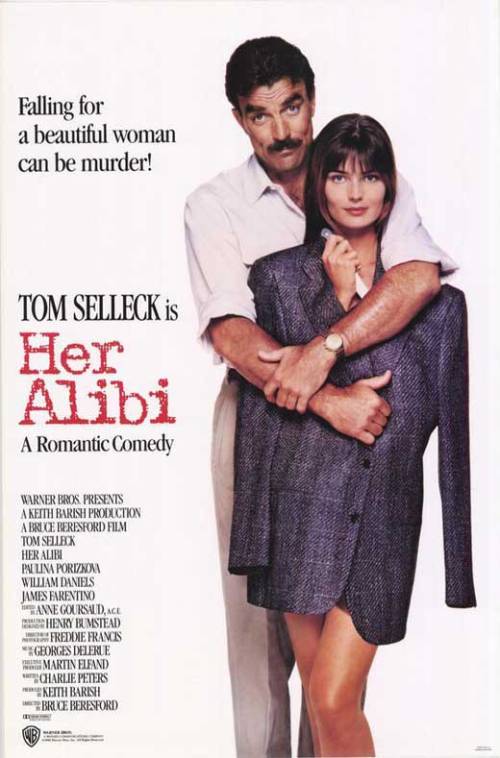
Her Alibi (1989)

By Richard Winters

My Rating: 2 out of 10

4-Word Review: Novelist falls for suspect.

Phil Blackwood (Tom Selleck) is the author of a successful series of mystery novels, but now finds himself dealing with writer’s block and unable come up with a plot for his next book. Then he meets the beautiful Nina (Paulina Porizkova) a Romanian woman charged with murder. With the help of his publisher Sam (William Daniels) they concoct an alibi that allows her to be released from jail on bond. She then moves in with him in his large home where Phil feeds off her presence to come up with his next story idea while also keeping an eye on her to make sure she won’t try to kill him when he is not looking.

Although Paulina got nominated for a Golden Razzie award for worst actress of 1989 (eventually losing out to Heather Locklear) I still came away feeling she was the best thing about this otherwise threadbare film. The former swimsuit model’s face is of course appealing and her accent is sexy, but what I liked even better is that she does not behave like most American beauties and instead is quite feisty, self-sufficient and opinionated. In many ways she upstages her more famous co-star by a mile and easily the one thing that helps propel this limp movie along.

Selleck has his charm, but he is not convincing at all as an author who should be nerdier and resemble a book worm.  The character appears to have had a very successful writing career already as evidenced by all the book covers of his novels that gets shown during the film’s opening credits, which is the coolest part of the movie. His large home makes it seem that he could retire in luxury and thus the storyline involving his writer’s block adds no urgency.

The film’s lighthearted tone makes it clear that Paulina is not a dangerous killer and that she’ll somehow be found innocent in the end making the scenes showing Selleck’s paranoia about her seem silly and adds no true tension or multi-dimension.

The romantic angle is equally botched as there is too much of an age difference between the two (20 years) making Selleck seem almost like a father figure. It’s also hard to understand why this beautiful young woman would fall for such a clueless idiot who comes off as a benign bumbling dope that she can easily manipulate. What’s worse is that she throws herself at him an hour into the runtime, so there’s no longer any question of romantic intent making the final 30 minutes virtually pointless.

Lots of slapstick scenes get thrown in that has nothing to do with the main story and simply there to pad the runtime. The dumbest of these occurs near the end where Selleck and friends think that they’ve eaten a dinner that was poisoned. In a misguided attempt to flush the poison out, Patrick Wayne, who plays Selleck’s brother, drinks Drano which is quite obviously dangerous. He spits it out, but that wouldn’t stop his mouth from burning, blisters from forming, or flesh from peeling away from his mouth, which doesn’t occur, but normally would’ve. Film characters drinking Drano had already been done before in the movie Magnum Force and it inspired real-life criminals to force their victims to drink it in the infamous Hi-Fi murders that happened in Ogden, Utah in 1974, so for that reason alone it should never be shown in another movie again and for such a superficial production like this to just randomly putting it in and acting like it’s ‘funny’ is utterly irresponsible.

The film starts out engagingly enough, but loses the air in its tire long before it’s over. Even the normally reliable William Daniels gets wasted. He is quite adept at playing pompous authority types, like in the TV-show ‘St. Elsewhere’, but not as a passive schmuck like here.

My Rating: 2 out of 10

Released: February 3, 1989

Runtime: 1Hour 34Minutes

Rated PG

Director: Bruce Beresford

Studio: Warner Brothers

Available: DVD (Warner Archive), Amazon Video, YouTube

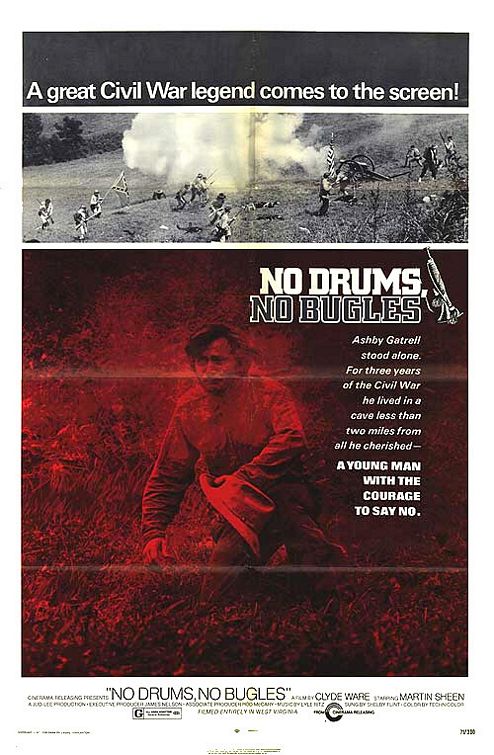
No Drums, No Bugles (1972)

By Richard Winters

My Rating: 6 out of 10

4-Word Review: Living in a cave.

Ashby Gatrell (Martin Sheen) is a conscientious objector. When the Civil War begins he wants nothing to do with it, so he escapes into the West Virginia wilderness where he hides out inside a cave for the 4 years that it goes on. He talks to no one during this time, which becomes a strain on him mentally and emotionally.

The one cast member concept is interesting, but few films have succeeded using it. Even Castaway doesn’t really count because the Tom Hanks character is only stuck by himself during the first two acts, but then comes home at the end to interact with others, but here it’s all just Sheen and if it weren’t for his brilliant performance it wouldn’t have worked.

What I liked most is that it shows how isolation can have its benefits. Watching the scenes where Sheen runs uninhibited through the endless fields with no one else around almost like he were a playful child brought out just how freeing being alone can sometimes be and something that other films dealing with the same subject never effectively tackle instead it gets portrayed as being a complete negative, which it isn’t.

I was also impressed at how the film captures all four seasons. I felt that this was needed, but presumed with its low budget that it wouldn’t be and was willing to forgive it for that reason and yet to my surprise it gets shown anyways. What’s even more amazing is that they have the camera stay focused on a certain natural setting for instance a grove of trees and then merge the summer season slowly into the winter one, so you see how these exact same trees and area looks during both times of the year, which I found to be really cool!

On the negative end there are segments where the character overhears conversations from other people as he hides nearby and listens in. The conversations though sound stilted like they were spliced in later after they had been recorded inside a sound studio and not the natural surroundings. We also never see the faces of these other characters as they speak, or very few of them, with the camera instead focusing only on their lower body making them seem unintentionally dehumanized.

The film should’ve started out with the war not yet begun and Sheen still in his family man role, which would’ve created a vivid character arch that is otherwise lacking. The brief scene where he does go back to his home late at night doesn’t work since he never speaks to any one there and we are given no real understanding of what he was like before he became a nomad.

Spoiler Alert!

The ending is confusing as it shows the war ending and he goes back into his town, but finds no one there almost like they’d been kidnapped by some alien being or something. He finally hears some people singing inside a church, but the film never has him going inside, so the viewer doesn’t experiences his readjustment, or whether he was ever accepted back into the community at all, which makes the story incomplete. Too much time is spent on the wilderness scenes when that should’ve only been a part of the plot with the other stages of his life being examined as well.

End of Spoiler Alert!

My Rating: 6 out of 10

Released: February 23, 1972

Runtime: 1Hour 25Minutes

Rated G

Director: Clyde Ware

Studio: Cinerama Releasing Corporation

Available: VHS

The Right Stuff (1983)


By Richard Winters

My Rating: 6 out of 10

4-Word Review: The American space program.

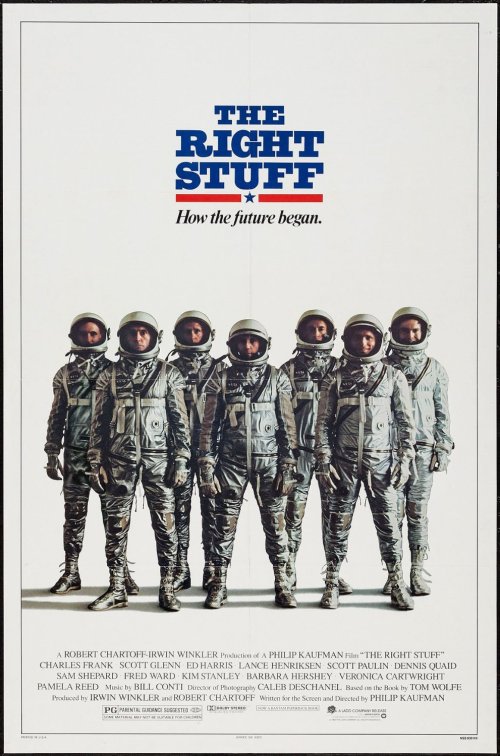
Based on the 1979 best-selling novel by Tom Wolfe, the film explores the history of the American space program starting in 1947 when test pilot Chuck Yeager (Sam Shepherd) successfully broke the sound barrier and then moving into the selection and training of the men who would lead the exploration into space culminating with John Glenn’s historic orbiting flight of the earth on February 20, 1962.

The film was a darling of the critics, but did poorly at the box office and I suspect this is due mainly to over reliance on comedy that eventually becomes off-putting. When doing a film dealing with historical events I don’t mind some comedy as real-life can always have its fair share of funny moments, but writer/director Philip Kaufman becomes obsessed with squeezing every ounce of humor that he can from each and every scene, sometimes even going off on tangents with it, until it seems like that’s more of the film’s focus. At the start there’s an okay blend, but then it gets out-of-control wacky, which creates a surreal world that seems to mock the events instead of tell them. The viewer also has to question whether the filmmaker’s, in their zeal to get a laugh in any way that they can, are really showing us something that is accurate or whether that was even a concern.

There’s also too many characters and they all possess the same clichéd all-American-fearless-good-ole’-boy charm that makes them indistinguishable from the other. The film should’ve had only one central character that the rest of the story revolved around. Supposedly the Chuck Yeager character (the actual Chuck Yeager appears briefly as a bartender) was supposed to do this by having him reappear throughout, but he is gone for so much of the time that you essentially forget about him.

This also becomes a problem when dealing with the story thread of Gus Grissom (Fred Ward) who supposedly ‘panics’ when his spacecraft splashes down. Because we never really get to know any of these characters on any deep level we have no clue why he behaves the way that he does. The scene where he supposedly explodes the hatch’s bolts, which in turn sinks the craft is disputed in its accuracy anyways, but it hurts the film’s pace either way. Spending virtually three hours being comical and then throwing in a highly dramatic element almost out of nowhere is jarring and then just as frustratingly it drops it without any suitable conclusion or exploration as to what might’ve really happened or why.

The production values are excellent, which is why I couldn’t hate it, but the movie also has tendency to one-up itself with each and every progressing scene and thus making John Glenn’s orbiting flight, which should’ve been the film’s highpoint, get lost in the shuffle. There’s also too much of a flag-waiving mentality that almost resembles a government produced propaganda film and helps give the movie an overblown, overreaching feeling when it’s over.

My Rating: 6 out of 10

Released: October 21, 1983

Runtime: 3Hours 13Minutes

Rated PG

Director: Philip Kaufman

Studio: Warner Brothers

Available: DVD, Blu-ray, Amazon Video, YouTube
Mr. Majestyk (1974)

By Richard Winters

My Rating: 6 out of 10

4-Word Review: Don’t touch his watermelons!

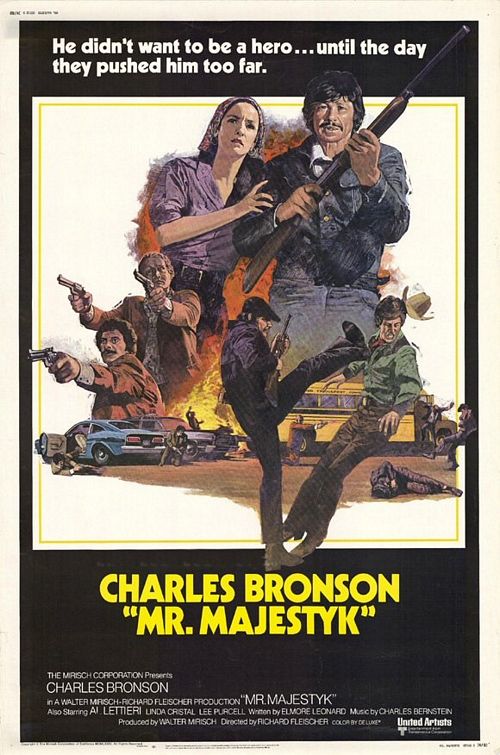
Vince Majestyk (Charles Bronson) is a Colorado watermelon farmer who gets into a conflict with Bobby (Paul Koslo) who wants to force Vince to use unskilled drunks to harvest his crop instead of migrant workers. When Vince successfully forces Bobby and his crew off of his property Bobby then goes to the police with assault charges, which lands Vince in jail. It is there that he comes into contact with Frank Renda (Al Lettieri) a notorious hit man. While the two are being transferred by bus to another prison Renda’s men attack it in a shootout, but when the driver is killed Vince takes control of the bus and drives it off into the Colorado wilderness. There he holds Renda hostage while trying to broker a deal with the police where he’ll ‘trade’ Renda for his freedom, but things don’t go quite as planned.

Many people don’t realize that during the ‘70s Bronson did quite a few offbeat films with St. Ives and From Noon Till Three being his two biggest, but this one comes in as an honorable mention. I’ve watched a lot of movies in my lifetime and can usually guess where they’re going, but this one kept me genuinely intrigued most of the way. The script is enlivened with its vivid on-location shooting done mostly in La Junta, Colorado, which includes a well-staged shootout done in the center of town as well as a car chase that takes advantage of an area with scenic rock formations.

The biggest surprise though is Bronson. Sometimes he comes off as stiff and wooden, but here he’s engaging and even reveals a playful side. His character also makes a few miscalculations, which helps him seem more human as opposed to the standard rugged good guy who is always able to think-on-his-feet and constantly able to achieve miraculous split-second decisions.

I was disappointed though with Al Lettieri. He was so effectively nasty in The Getaway that I didn’t think it could be topped or even attempted and yet just two years after that one he again gets cast in virtually the same type of role making it seem like typecasting to the extreme. I was hoping that he would expose a softer side to his persona at some unexpected moment, but it never occurs and he just proceeds to being one mean, angry s.o.b. which quickly becomes boring and one-dimensional.

Lee Purcell though is terrific as his girlfriend. She had played only rural, country girl types before this, so it was great seeing her portray someone more sophisticated and despite her young age, only 26 at the time, she shows great composure alongside her much older male co-stars. Her cool, collected manner makes for an intriguing contrast to Lettieri’s hyper one and should’ve been explored more.

Linda Cristal as Bronson’s love interest is less impressive. Playing a feisty Hispanic woman comes off almost like a cliché and their relationship is forced. She does come in handy as the getaway driver, which I feel is the only reason her character was put into the story to begin with.

Despite the unpredictable touches the beginning is quite contrived, which includes an opening title sequence better suited for a TV-show. The script was written by Elmore Leonard, which made it disappointing as I was expecting there to be some sort of subtext to it, but in the end it’s rather run-of-the-mill with the offbeat elements not enough to make it anything more than a transparent diversion.

My Rating: 6 out of 10

Released: July 12, 1974

Runtime: 1Hour 43Minutes

Rated PG

Director: Richard Fleischer

Studio: United Artists

Available: DVD, Blu-ray, Amazon Video