Category Archives: 70’s Movies

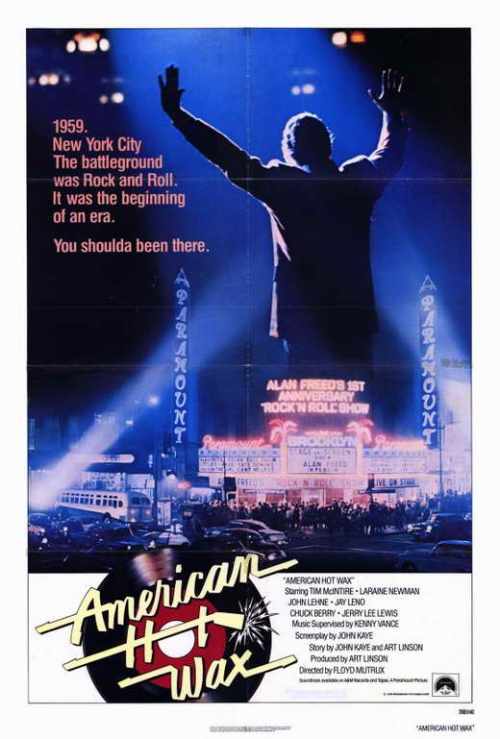
American Hot Wax (1978)

By Richard Winters

My Rating: 3 out of 10

4-Word Review: DJ plays the hits.

The film centers on real-life disc jockey (Alan Freed) who was instrumental in bringing rock ‘n’ roll music to the airwaves during the late 50’s and even credited with coining the phrase. Unfortunately he also got wrapped up in a payola scandal in which record companies paid him under-the-table to play their records on the air, which destroyed his career and left him in virtual poverty before dying in 1965 at the young age of 43 from cirrhosis of the liver.

I’ll admit I never longed for the nostalgia of the late 50’s or early 60’s.  Everything from that period seemed silly and antiquated to me and yet this film nicely brings out the excitement that people living then had. There clearly was a feeling of change on the horizon particularly in the music scene and it’s fun seeing all the young people jumping in and trying to become a part of it. The recreation of that energy is great and the one thing that this movie does well. Unfortunately it quickly becomes one-note with an unending procession of different music groups clamoring to become the next big act. Watching people stop Freed on the street and giving him a impromptu audition is at first fun, but seeing that scenario get repeated continuously is tedious.

There are some famous fresh young faces in the cast including Jay Leno, Fran Drescher, and Laraine Newman, but their parts are small and their appearances erratic. The story desperately needed a central character for the viewer to latch onto and none gets forthcoming. The barrage of people that get thrown in and then just as quickly forgotten makes the film unfocused and lacking any type of real plot.

McIntire is excellent, but his character badly undernourished. There’s a hackneyed dramatic segment where we see him conversing with his father on the phone and are given the idea that he is on rough terms with him, but it never gets explored further and for the most part we learn nothing at all about his personal life including the fact that he was married three times and had four kids, which never even gets mentioned while the payola scandal is only briefly touched on. The film would’ve had more substance had they explored the man’s personality and life more, but instead he remains as a frustratingly distant figure.

Clearly the filmmakers were looking to cash-in on the success of American Graffiti and hence the similar title, but just recreating the look and music of a bygone era isn’t enough. Even the appearances of Chuck Berry and Jerry Lee Lewis fail to save a superficial effort that justifiably bombed badly at the box office.

My Rating: 3 out of 10

Released: March 17, 1978

Runtime: 1 Hour 31 Minutes

Rated PG

Director: Floyd Mutrux

Studio: Paramount

Available: None at the time.
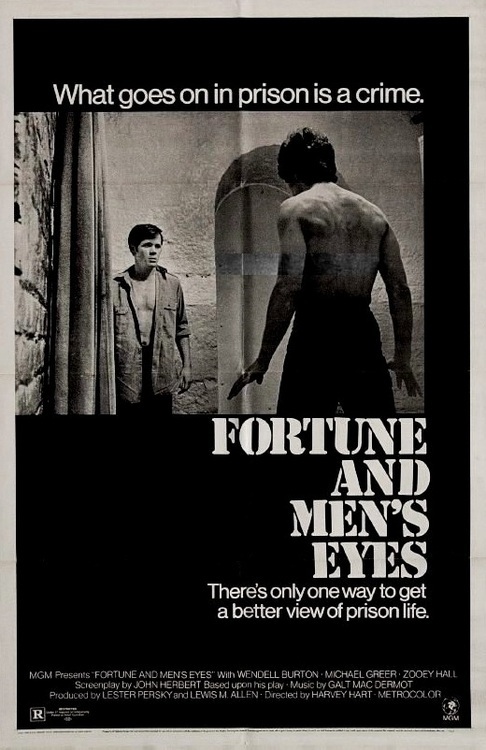
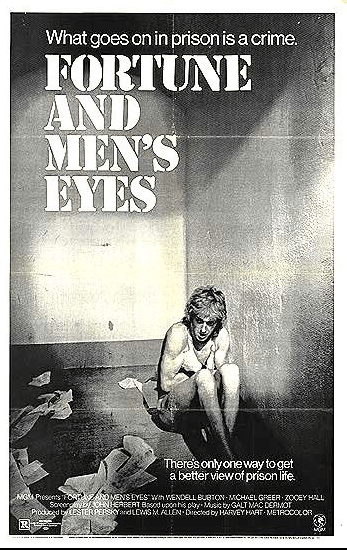
Fortune and Men’s Eyes (1971)

By Richard Winters

My Rating: 6 out of 10

4-Word Review: His life in prison.

Smitty (Wendell Burton) is a young first-time offender who’s sent away to the Canadian penitentiary for six months. He gets assigned to a cell with three other men: Rocky (Zooey Hall), Mona (Danny Freedman), and Queenie (Michael Greer). Queenie is an openly gay drag queen while Mona is a soft-spoken young man who likes to write poetry. Rocky is the tough guy who offers Smitty ‘protection’ if Smitty agrees to become his subordinate and do anything he asks including sexual favors. To avoid the harassment that he sees others getting that don’t have the same ‘protection’ he agrees, but eventually he grows tired of Rocky’s dominance and decides to challenge it.

The film is based on  a play written by John Herbert who also wrote the screenplay. It is based on actual experiences that he received when he was arrested for dressing in drag in 1947 and taken to a reformatory at the age of 20. The play, which was written in 1967 initially had a hard time getting produced due to the subject matter, but was eventually put on the stage by Sal Mineo who directed and also played Rocky while Don Johnson played Smitty and Greer, like in the film, played Queenie.

The film version though makes many changes to the story some of which I’m not sure I liked. The one thing though that I thought was excellent is that it was shot inside an actual prison, which helps add authenticity. As opposed to most movies which shoots things from outside the cell looking in this one captures everything from inside the cell, which makes the viewer feel like they’re locked in the jail with the rest of the men and gives one a true feeling of the claustrophobic prison experience.

The shock element may not be as strong as it once was. The scene where Rocky rapes Smitty in the shower as the camera fixates on the running faucets and we hear only Smitty’s cries may be a bit too stylized and even kind of hokey by today’s standards. The segment though where Mona is grabbed from behind by a brute and taken into a dingy cell where he’s gang raped while the guards look away was to me far more potent. A later scene dealing with a prisoner being taken to a back room and beaten by the guards could’ve been stronger had it been extended.

For me personally the most shocking element is seeing Smitty’s transformation from naive man who we the viewer can mostly relate too, to someone who becomes almost as bad as Rocky. However, I found it annoying that it’s never made clear what he did that got him into prison in the first place and his character arch would’ve been stronger had the film started with him in the outside world committing the crime and subsequently getting arrested.

Burton’s acting abilities don’t seem quite on par with the demands of the role. His blank-eyed stare and monotone delivery make him seem like a one-dimensional actor and he was most likely given the role simply because of his babyface. Greer though in many ways steals it as the flamboyant drag queen and the outrageous performance that he puts on during the Christmas show at the prison is quite memorable.

Spoiler Alert!

The film remains compelling, but is hampered visually by being done almost entirely in one setting. The ending though leaves open too many questions. Does Smitty ever get out? How does he behave once he does and how has his experiences in prison changed him? None of these things get answered, which to me made the film incomplete and despite some good dramatic efforts here and there unsatisfying.

My Rating: 6 out of 10

Released: June 15, 1971

Runtime: 1 Hour 42 Minutes

Rated R

Director: Harvey Hart, Jules Schwerin (uncredited)

Studio: MGM

Available: VHS

The Apple Dumpling Gang (1975)

By Richard Winters

My Rating: 6 out of 10

4-Word Review: Orphaned kids strike gold.

Russell (Bill Bixby) is a slick gambler living in the old West who finds that he has unwittingly become the guardian to three orphaned children ( Clay O’Brien, Brad Savage, Stacy Manning). Initially he tries to pawn them off on other people, but eventually he takes a liking to them when he realizes that they’ve inherited a mine that has gold in it, which soon makes everyone else in town want to adopt them.

This Disney film, which was based on the 1971 Jack Bickham novel of the same name, fares better than most of their other films and in fact became its biggest money maker from the 70’s. It helps that the main character of Russell isn’t as squeaky clean as the typical Disney leading man as it’s strongly implied that he cheats at the poker games that he wins and the fact that he gradually softens towards the kids through time creates a nice character arch. Susan Clark, who’s the love interest, is good here too as she plays against type for a Disney leading lady by being more tom boyish and masculine despite the fact that apparently behind-the-scenes she was scared to death of horses and every scene that required her to ride one had her instead on a mechanical one although you could never tell.

The typical Disney comical trappings are given a unique spin here too, which also helps. Instead of having another boring barroom brawl, which is so common in many western comedies, we are treated to a funny lovers spat between Clark and Bixby inside the bar where props get thrown around between the two while everyone else sits frozen and unsure of what to do. There’s no cartoonish car chase at the end either, but instead a genuinely hair-raising battle between Bixby and Slim Pickens, who plays one of the bad guys, down the white rapids of a river. The shooting was also done on-location at Deschutes National Forest in Oregon, which improves the setting from the usual studio back lot.

Even the kids are tolerable without having their cuteness or innocence get overdone even though the running joke dealing with the young girl constantly having to go pee isn’t as funny as it seems when you think about it and most likely in reality would’ve been a warning sign of a very serious medical condition instead. Also, the scene showing the kids getting trapped in the mine after an earthquake should’ve also shown how they were able to get out instead of simply cutting to the next scene with them back in town of it without any explanation as to how they got there.

The real stars of the film though are Don Knotts and Tim Conway as the comically bumbling would-be crooks. This marked the first of five film appearances that the two did together and in many ways this is probably their best effort. I always liked seeing them together because it was a rare chance for Knotts to play the smarter of the two instead of always being the dope himself although some may find Conway’s extreme ineptness more annoying than funny. In either event they help enliven the proceedings and became the stars of the sequel The Apple Dumpling Gang Rides Again, which will be reviewed next week.

My Rating: 6 out of 10

Released: July 1, 1975

Runtime: 1 Hour 40 Minutes

Rated G

Director: Norman Tokar

Studio: Buena Vista

Available: DVD, Amazon Video, YouTube

I Never Promised You a Rose Garden (1977)

By Richard Winters

My Rating: 7 out of 10

4-Word Review: She suffers from schizophrenia.

Based on the semi-autobiographical novel by Joanne Greenberg, which was written under the pen name of Hannah Green, the story focuses on Deborah (Kathleen Quinlan) a 16 year-old who is put into a mental institution during the 1950’s by her parents (Ben Piazza, Lorraine Gary). A pretend secret kingdom that used to be a childhood fantasy has now completely taken over her life and she is unable to deal with reality. At the institution she works with a sympathetic therapist named Dr. Fried (Bibi Andersson) who tries to get Deborah out of her fantasy world an back into the real one.

The film was produced by Roger Corman better known for his cheap, sleazy drive-in fare, so seeing him try to take the helm by producing a serious picture is a concern since exploitation always seemed to be his foray, but with the then recent success of One Flew Over the Cuckoo’s Nest he felt stories with a mental institution theme was a potential money-maker. The production values though right from the start look pretty cheap especially when compared to the Milos Foreman film making this a very weak cousin to the 1975 classic.

The producers made many changes from its source novel much to the consternation of the book’s author who was never consulted during the making of it and who ended up disliking this film version immensely. One of the biggest difference is that the film completely omits the antisemitism, which the filmmakers felt was too much of a ‘hot button topic’, that the main character in the book had to deal with and instead blames her mental health problems solely on her bout with cancer.

For me though the biggest issue centers more on the recreation of Deborah’s make-believe, mystical world which she calls The Kingdom of Yr. In the book the kingdom starts out as a beautiful magical place that slowly turns ugly and threatening while in the movie it’s portrayed as scary from the very beginning, which is confusing as there’s no explanation for how the whole thing started. The sound of the whispering voices going on inside Deborah’s head is creepy, but sight of the characters inside the kingdom, which was played by members of Oingo Boingo looks cheesy and like the singers from the Village People, which gives the film an unintended camp feeling. Instead the characters should’ve been captured from a distance where they were seen as ominous shadowy figures whose faces were never shown.

Despite these drawbacks I still found myself caught-up in much of the drama especially the cruelty that Deborah and her fellow patients received at the hands of an abusive orderly played by Reni Santoni. Unfortunately some of the scenes showing Deborah interacting with the other mentally-ill people in the hospital gets watered-down by having a lighthearted melody played during it, which gives off the idea that this is ‘lightly comical’ instead of the gritty no-holds-barred drama that it should be.

Quinlan gives a great performance, possibly the best of her career and I particularly enjoyed the way she uses her expressive blue eyes to convey her inner madness and turmoil. You also see her as a relatable human being who you want to see get well as opposed to being some sort of ‘freak’. Susan Tyrrell is great in support as one of the patients as well as Martine Bartlett who plays another troubled patient and who starred just a year earlier as the cruel mother in Sybil, which was a TV-movie with a similar theme. Casting Bibi Andersson though as the psychiatrist was for me a distraction since she also played one in Persona, which was her signature role and therefore I couldn’t separate her from that one.

In 2004 the novel was turned into a play under the full cooperation of Greenberg who acted as a consultant. The antisemitism from the book was incorporated into the play as well as several other things that had been omitted making me believe that a remake based on the play should be given a much needed green-light as this film unfortunately is adequate, but not great.

My Rating: 7 out of 10

Released: July 14, 1977

Runtime: 1 Hour 36 Minutes

Rated R

Director: Anthony Page

Studio: New World Pictures

Available: DVD, Amazon Video

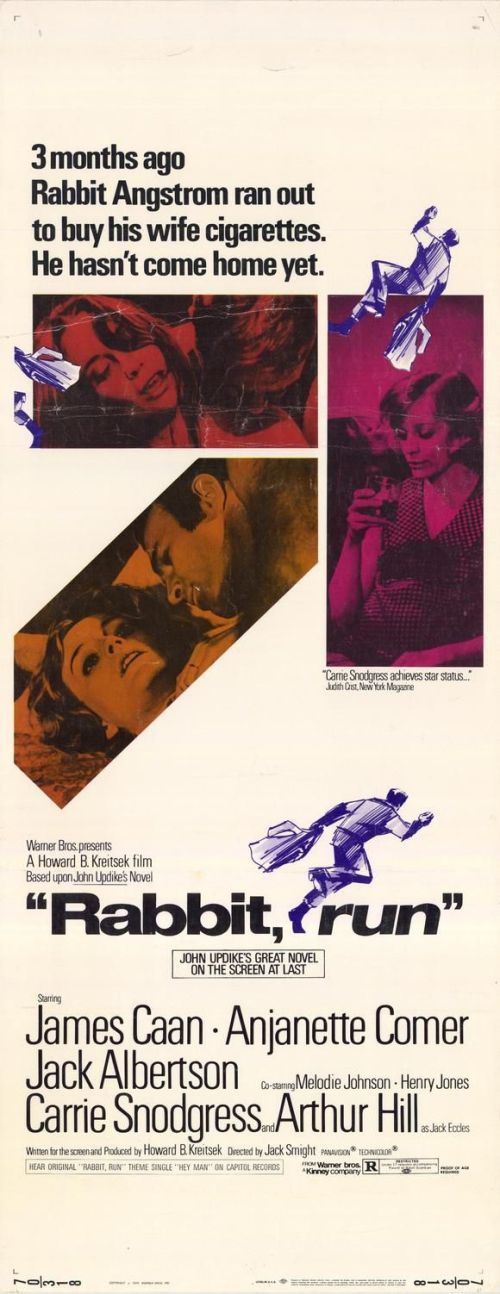
Rabbit, Run (1970)

By Richard Winters

My Rating: 7 out of 10

4-Word Review: He’s maladjusted to adulthood.

Harry (James Caan) was a basketball star in high school and nicknamed Rabbit because of his speed. Now he’s a middle-aged man working a thankless job and stuck in a loveless marriage with an alcoholic wife (Carrie Snodgress). One day he decides to just jump into his car and drive away from all of it. He meets his former coach (Jack Albertson) who hooks him up with a prostitute (Anjanette Comer) and the two begin a makeshift relationship, but that doesn’t work out either. Rabbit then decides to return to his wife just as she’s ready to deliver their second child only to ultimately have tragedy strike.

Although the film was not as well received by the critics as the John Updike novel that it’s based upon was I still cam away liking it. There are indeed some lulls but director Jack Smight nicely incorporates the on-location shooting of Reading, Pennsylvania where Updike was born into the story, which gives it a distinctive visual flair. The scene where Rabbit walks into his gray, dingy old apartment only to see his wife slouched on the sofa with a liquor bottle would make anyone want to get up and run out of there and visually you get a sense of what Rabbit is feeling and therefore you don’t totally blame him for doing what he does even as irresponsible as it is.

Caan gives a great performance in a part he was born to play and I was impressed with his long distance running that occurs both at the beginning of the film and the end. However, if would have been nice to have had some flashbacks showing the character in better times. It’s one thing to talk about the character’s success on the basketball court and it’s another to actually see it. It would’ve also helped explain his weird rendezvous with his coach as the old man tells him, much to Rabbit’s shock, that the most important thing in life is ‘tits and pussy’. I think the reason for this, without having actually read the book, is that as a teen the coach acted as a role model and put up a moral facade for his players, but now as both are adults he sees the more jaded side of the guy, but without the benefit of a flashback this point gets lost.

The characters are nicely multi-dimensional, which makes watching them interact fascinating. I enjoyed Arthur Hill as a minister who tries to redeem Rabbit only to admit that he has fantasized about doing the exact same thing that Rabbit did although his wife, played by Melodie Johnson, is too young and dresses too provocatively to ever be taken seriously as being an actual pastor’s wife.

Spoiler Alert!

Smight captures the book’s shocking elements nicely including the baby drowning scene in the bathtub where the viewer sees it from the infant’s underwater point-of-view. However, the moment where Comer gets pressured to ‘go down’ on Caan in an effort to perform fellatio with him, which she apparently did with some of her other customers, has clearly lost its edge since it’s a more mainstream sexual practice between couples now than it was back then although the pounding music that gets played over this sequence as they ‘debate’ whether to do it or not is good.

The ending though I found disappointing as it’s too similar to the one in Adam at 6 AM, which came out around the same time and had the film’s star Michael Douglas driving away from his obligations in a car while here Caan does the same, but only on his feet yet one can’t run away from things their whole lives. I was hoping to see how he changed during the different stages of his life, which this film doesn’t show. Updike wrote three follow-up novels to this story ‘Rabbit Redux’, ‘Rabbit is Rich’, and ‘Rabbit at Rest’, and I hope that they can remake this film while adding elements of those stories into it, which will create a fuller composite to the Rabbit character and his life, which this film lacks.

My Rating: 7 out of 10

Released: October 10, 1970

Runtime: 1 Hour 34 Minutes

Rated R

Director: Jack Smight

Studio: Warner Brothers

Available: DVD (Warner Archive), YouTube

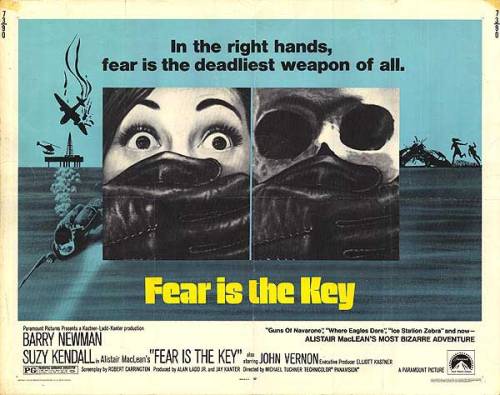
Fear is the Key (1972)

By Richard Winters

My Rating: 4 out of 10

4-Word Review: He has secret motives.

Based on the 1961 novel by Alistair MacLean the story centers around John Talbot (Barry Newman) who finds himself inside a small town courtroom standing trial for the murder of a policeman that he did not commit. He manages to escape while kidnapping a woman named Sarah (Suzy Kendall) who he takes as his hostage. He evades the authorities only to ultimately end up inside the home of Sarah’s father (Ray McAnally) where another man named Vyland (John Vernon) hires him to operate a submarine that will salvage a cargo of diamonds housed inside an underwater plane wreck.

I never read the novel, but to me the whole thing comes off in a haphazard style where the twists aren’t interesting at all and only help to make the plot even more confusing and unfocused. The car chase sequence is genuinely well done to the point that it had me riveted and quite impressed with how it was shot and looking like one of the more realistic chases I’ve seen amongst the many that are already out there. Unfortunately to go from what initially seems to be a fugitive-on-the-run-flick to an underwater espionage, sci-fi thriller is not intriguing, but jarring instead and comes off like two entirely different movies crammed together with only the thinnest of plot threads to hold it together.

Spoiler Alert!

The biggest disappointment though is when at the film’s midway point John confides to Sarah that everything that we’ve seen before has been staged and none of it was real. For that to happen though would’ve taken many different people working together to pull it off and it’s never explained how he was able to do that. For instance who gave John the blank bullets to shoot at the police officer to escape from the courtroom and why did the policeman agree to pretend he was shot if he really wasn’t and what was in it for him to get in on John’s elaborate scheme? None of this gets explained and only helps to make it even more absurd and ludicrous until you can’t take any of it seriously.

End of Spoiler Alert!

Newman is not strong enough actor for the part and conveys a rather transparent presence when he should’ve had the exact opposite effect. His appearance here is too similar to the one he just gotten done doing in Vanishing Point including driving around in a similar type of car making this film seem like an extension of that one. It also comes-off like typecasting and makes viewers think this is the only type of role he can play, which could explain why his leading man career pretty much tanked after this.

The film’s only interesting aspect is the appearance of Ben Kingsley in his film debut, which was his only movie role during the 70’s as he didn’t appear in another one until 10 years later when he starred in Gandhi. Here he plays one of Vyland’s henchmen who figures prominently in the climactic finish where they must fight for air after the oxygen in the sub gets turned off, which isn’t bad.

This is also a rare production that was financed by a British studio, but filmed on-location in the US. The result captures America through a European perspective, which makes the entire thing a bit off-kilter from the very beginning.

My Rating: 4 out of 10

Released: December 26, 1972

Runtime: 1 Hour 43 Minutes

Rated PG

Director: Michael Tuchner

Studio: Anglo-EMI

Available: DVD (Region 2), Amazon Video, YouTube

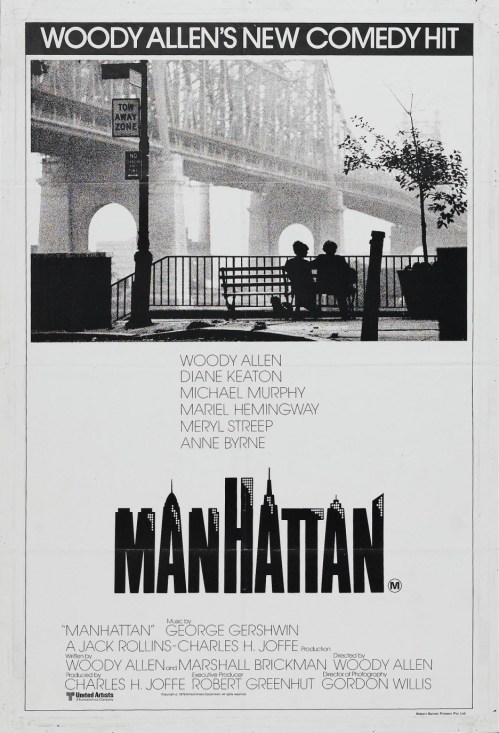
Manhattan (1979)

By Richard Winters

My Rating: 5 out of 10

4-Word Review: Writer has relationship issues.

Isaac (Woody Allen) is an unemployed TV writer who’s currently dating Tracy (Mariel Hemingway) a 17-year-old girl, but he feels guilty about this and thinks it’s only a matter of time before she moves on to someone else that is more her age. In the meantime he begins seeing Mary (Diane Keaton) who is the mistress to his best friend Yale (Michael Murphy). Eventually Isaac falls for Mary, but she then goes back to Yale forcing Isaac to beg Tracy to come back to him even as she’s prepares to go off to London to study acting.

Although this film became a critical darling I agree more with Allen himself who considers this to be the least favorite out of all of the movies he’s directed. The much ballyhooed black-and-white cinematography is a detriment especially when it shows the fireworks going off above the skyline, which if done in color would’ve been vibrant, but here it’s less than thrilling. The film also doesn’t give you much of a feel for the city since all it does is give brief shots of the skyscrapers and never any of its eclectic neighborhoods, shops, street life, or people. Looking at various photos of the city in Wikipedia gives one a far better visual taste of Manhattan then this film ever does and the George Gershwin score has unfortunately lost its uniqueness since United Airlines used it for many years for its ad campaign and I kept thinking of that the whole time it gets played here.

Allen’s trip with Keaton to a planetarium is interesting visually and their facial expressions during a visit to a concert is amusing, but otherwise the storyline dealing with their budding romance is boring and predictable. It’s fun to see, and a testament to Keaton’s great acting ability,  her playing a completely different type of person than the one she did just two years earlier in Annie Hall, but the character itself is off-putting and not someone most men would want to warm-up to. Maybe it’s the way she thinks that just because she’s from Philadelphia that makes her or anyone else from there morally superior, which I realize is meant to be amusing, but I didn’t find it that way mainly because I know people in real-life who are actually like that.

Allen’s visits with his ex-wife, played by Meryl Streep doesn’t jive either because I could not believe that they were ever compatible enough to ever have gotten married in the first place.  It’s also weird that her new partner Connie (Karen Ludwig) remains so civil and calm when in Allen’s presence since he apparently tried at one time to run her over with a car, which to me would make her not want to be anywhere near him, or even allow him into her home.

Allen’s relationship with Hemingway is the film’s only interesting aspect. Some of course may consider this to be controversial due to the wide age differences between the two although technically in the state of New York the age of consent is 17, so in the eyes of the law it was legal even though the characters themselves amusingly don’t seem aware of this. What I liked though was that Hemingway, despite being so young, comes off as the mature one in the relationship and when they’re shown walking side-by-side she is actually taller, which I found to be the funniest part of the whole movie. She also does a very convincing cry, which isn’t easy.

Unfortunately the relationship also leaves open a plethora of questions that the movie never bothers to answer. For instance where are her parents and what do they think of her living with a 42-year-old man? What do her friends think of Allen and what exactly does she see in this scrawny, whiny little man to fall-in-love with him anyways?

Supposedly her character is based on actress Stacey Nelkin who had a on-going relationship with Allen for 8 years starting when she was 16, but that made more sense because she was a young would-be starlet who most likely was mesmerized by Allen as a well-established director and who she probably saw as being her ticket to possibly breaking into the business, but here Isaac is an unemployed nobody yammering incessantly about things like Ingmar Bergman, which is something most teens can’t get into, so again I ask what does this Hemingway character see in this guy that would make her want to move in with him?

I’ve been a fan of many of Allen’s other films especially his comedies from the early 70’s and some of his dramas too, but this one left me cold. I felt that way when I first saw it over 20 years ago and nothing changed upon the second viewing as it seems to be cramming in three diametrically different storylines giving it kind of a jumbled narrative instead of just focusing on one.

My Rating: 5 out of 10

Released: April 18, 1979

Runtime: 1 Hour 36 Minutes

Rated R

Director: Woody Allen

Studio: United Artists

Available: DVD, Blu-ray, Amazon Video

Butterflies are Free (1972)

By Richard Winters

My Rating: 7 out of 10

4-Word Review: Blind man digs blonde.

Don (Edward Albert) lives alone in a studio apartment as a blind composer trying desperately to break into the music scene while his mother (Eileen Heckart) wants him to move back home with her, but he resists. In comes free-spirited new neighbor Jill (Goldie Hawn) who has a hard time remaining in long-term relationships. The two quickly hit-if-off, but when Don pushes for a commitment she begins to back away.

The film manages to retain the charm of the hit Broadway play that it is based on and this is mainly due to the fact that that Leonard Gershe, who wrote the play also did the screenplay and Milton Katelas, who directed the Broadway version also does the film, but the claustrophobic setting becomes a detriment. To some degree I liked the apartment’s layout, which was shot on-location in an actual apartment building that still stands today at 1355 Grant Avenue in San Francisco, but the gray decaying walls and overall grimy interiors become depressing to look at and having almost all the action take place in it makes the film visually boring.

Changing the story’s setting from New York to San Francisco though is a major plus. The bit done over the opening credits showing the hippie subculture of the area gives off a great vibe and helps to explain Jill’s very free-spirited ways that may not make much sense to viewers living in today’s world. Seeing a man staring at her from the neighboring apartment may scare most women today and have the guy considered a ‘creep’, but Jill instead sees it as a ‘turn-on’ and even playfully flashes him, which is something that back then, in a more trusting, experimental, and ‘anything goes’ culture might have been even predicted and this goes along with her hopping into bed with Don on the first day she’s met him without even a second thought.

The scenes showing the couple walking down the city sidewalks has an eclectic energy because regular people were used in the background instead of paid extras, which helps to create an  authentic feel. All shapes and sizes of the subculture folks that made up the city’s neighborhoods get captured including one guy seen walking around with what looks to be a headcast. More scenes should’ve been done outdoors as it’s the one thing that gives the film an added ambiance and the fact that there aren’t enough of them causes an unintended static quality.

Albert, who is the son of actor Eddie Albert, is pretty good, but I was surprised why the introducing label gets listed next to his name in the opening credits as if this were his first film when just 7 years earlier he appeared prominently in The Fool Killer with Anthony Perkins. Hawn is solid too in a part tailored made for her persona and she also looks great running around in her skimpy underwear, but Blythe Danner who played the role in the stage version, might’ve given the character a more earthy quality.

My favorite person though was Heckart who adds some much needed drama with her presence and the film drags when she’s not in it. She is portrayed as being a heavy, but instead I found her to be completely relateable with her worries about her handicapped son living alone and something I would think most any other parent would also have. The fact that she starts out as controlling only to eventually let go and allow her son to finally spread-his-wings at a most critical time is the film’s best moment and deservedly helped her net an Oscar.

Unfortunately there are some dumb parts to the story as well. The first is the fact that it all takes place over a two day period, which makes Don’s emotional devastation at finding out that Jill plans to move in with some other guy seem too severe since he didn’t even know she existed just 48 hours earlier. Jill’s willingness to get involved in the personal affairs of Don and his mother and at one point even lectures the mother on her parental failings seem almost over-the-top since she technically barely even knows the woman. All this would’ve made more sense had the  relationship been going on for several months before either the mother or rival boyfriend arrived.

The segment where Jill tells Don that she’s moving in with her newfound boyfriend, which she knows will hurt him, and then goes back to her apartment to pack while Don has it out with his mother is problematic too since it was made clear earlier that the walls between the two apartments were paper thin. Therefore you’d expect that Jill would’ve overheard the conversation between the two and yet the film makes it seem like she hadn’t.

Spoiler Alert!

Having Jill reject her boyfriend and comeback to Don was a bit hard-to-swallow as most people don’t change their lifelong behaviors so quickly especially for someone they’ve just met, but fortunately the film doesn’t overdo it by having her rush back into his arms, but instead just shows them sitting down on the floor and talking. To me this signified a long lasting friendship as opposed to a romance, which in these types of circumstances is better and ultimately helps to make the movie, despite some of the grievances described above, a winner.

My Rating: 7 out of 10

Released: July 6, 1972

Runtime: 1 Hour 49 Minutes

Rated PG

Director: Milton Katselas

Studio: Columbia Pictures

Available: DVD, Amazon Video, YouTube

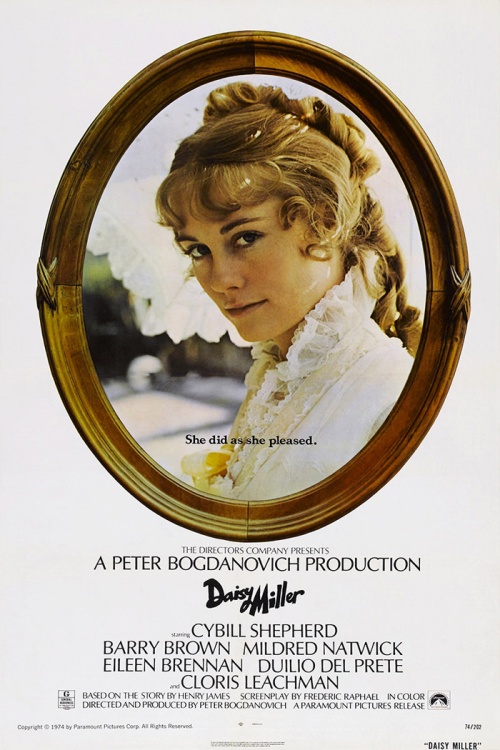
Daisy Miller (1974)

By Richard Winters

My Rating: 7 out of 10

4-Word Review: She’s a real tease.

While studying in turn-of-the-century Switzerland Frederick (Barry Brown) comes upon the beautiful Daisy Miller (Cybill Shepherd) who’s touring Europe along with her nervous and talkative mother (Cloris Leachman) and precocious younger brother Randolph (James McMurty). Frederick is smitten with her beauty, but unable to handle her free-thinking ways. Nonetheless he follows her around Europe where he continually becomes confounded with whether she likes him or not, or whether he’ll ever be able to convey his true feelings towards her.

This film, which is based on a short story by Henry James, was originally conceived by Peter Bogdanovich as being a vehicle for both him and his then girlfriend Shepherd to star in with Peter playing the part of Frederick and Orson Welles directing it. Peter had become mesmerized with Cybill while directing her in The Last Picture Show and left his then wife and children to move in with her in a situation that was later satirized in Irreconcilable Differences. Fortunately Welles realized that Peter’s obsession with making Cybill a big screen star had sapped him from all common sense and bowed out of the film project considering the material to be weak and lightweight, which it is, but this only then helped to convince the determined Peter to direct it himself.

The result isn’t as bad as I had initially presumed and in a lot ways it’s strangely engaging and certainly  far better than At Long Last Love another Bogdanovich/Shepherd concoction that was rejected by both audiences and critics alike. This one though takes advantage of Cybill’s conniving, flirtatious nature, which is something I feel she’s been doing her whole life and therefore makes this character a reflection of who she truly is. Leonard Maltin described her performance as “hollow”, which I agree as we only see one side to her personality, but when she plays that one side as well as she does then it becomes entertaining nonetheless.

Brown is excellent too and far better in the role than Peter ever would’ve been as Brown manages to retain the necessary modicum of self-respect even as he chases her around like a lovesick mope. Instead of this becoming off-putting we sympathize with his internal quandary and this then helps to propel the story forward even as it seems to be going nowhere.

The film’s other big asset is its on-location shooting. Some viewers have described the period costumes and set-pieces as being great, but for me this was only so-so. What I really liked though was the scene done inside the Coliseum at night under the moonlight, which gives off both a surreal and creepy feeling and adds an extra ambiance making me wish the segment had been extended as well as adding a trip to Rome on my own personal bucket list.

Spoiler Alert!

The film’s biggest failing though comes at the end where Daisy catches malaria and promptly dies, but we never see her sick and only gets told this after she’s already dead. Having a scene showing her ill and vulnerable as opposed to always being free-spirited and in control would’ve helped give the character an added dimension especially if it had been done with Frederick at her bedside.

The idea that if Frederick had just been less ‘stiff’ towards her that the relationship might’ve blossomed is ridiculous as I think this was the type of woman who enjoyed manipulating men and even if she got married to one she’d continually toy with them until she got bored and moved on to the next. Having her die isn’t ‘sad’ as the film suggests, but instead a happy one for Frederick as now he’s ultimately out of her grip and able to free himself to find someone who would really care for him.

My Rating: 7 out of 10

Released: May 22, 1974

Runtime: 1 Hour 31 Minutes

Rated G

Director: Peter Bogdanovich

Studio: Paramount Pictures

Available: DVD, Amazon Video, YouTube

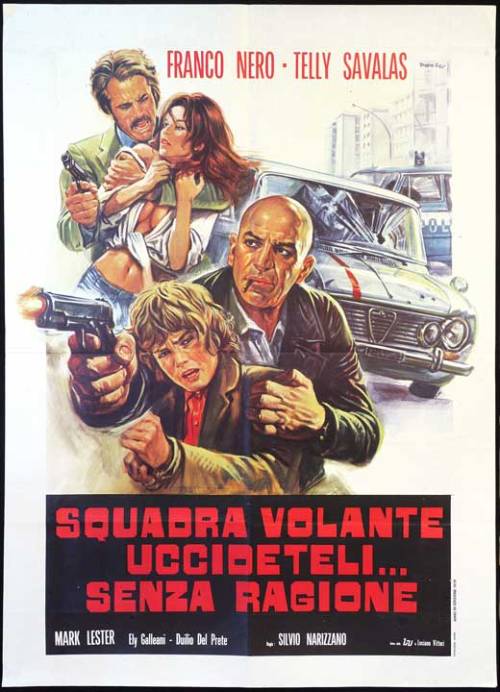
Redneck (1973)

By Richard Winters

My Rating: 3 out of 10

4-Word Review: Robbers accidentally kidnap kid.

Memphis (Telly Savalas) and Mosquito (Franco Nero) are two crooks who try to pull off a jewelry store heist, but end up nabbing much less than they wanted. During their getaway attempt the car being driven by their driver Maria (Ely Galleani) crashes forcing them to stop another car and physically removing its driver (Beatrice Clary) out of the vehicle. Yet as they drive off inside the stolen car they are unaware of a 12-year-old child (Mark Lester) hidden in the backseat who ends up stymieing all of their plans.

This was yet another ill-fated film project that Lester took on after the tremendous success of Oliver! that was supposedly done to help make him a solid big-screen star, but instead turned his career to literal ashes by 1977, which pushed him out of the acting altogether and into a career in sports medicine. The film starts out okay with some excellent action that’s vividly done and had it kept up its fast-pace throughout it might’ve done better.

Unfortunately whenever the story slows done it gets boring real fast. Part of the problem is there is no backstory given to any of its characters. Everything starts out very abruptly going right into the robbery and subsequent getaway, which is fine, but at some point we need to learn more about these people; what makes them tick and gives them distinction, which never happens. It’s hard to get caught up in the action or tension when everyone, including Lester, comes off as blah and transparent. The film’s original Italian title was Senza Ragione, which translates into ‘with no reason’ and that’s exactly what you get here: sadistic, mindless calamity that serves no purpose.

Lester’s presence isn’t interesting and he barely even has much dialogue. He’s too much of a passive victim that doesn’t fight back enough while his bonding with Nero happens too quickly. His  eventual downward spiral, where he goes from innocent child to a nutcase that craves violence is also too quick and does not seem genuine. The part where he tries to escape from the crooks and is chased through an empty field is jarring because playful, cartoon-like music gets played over it making it seem almost like a slapstick comedy even though the rest of the film is approached like a thriller with a pounding soundtrack, which makes the production come-off like it has a split-personality.

The film is also somewhat controversial because Lester, who was only 13 at the time of filming,  for no apparent reason strips naked although the viewer only sees him from behind, but it’s still a bizarre moment nonetheless. However, to me what was more shocking was having him watch an adult couple making love in the backseat of a car.

Savalas is certainly a lot of fun and can make the most of any low grade picture, but even here his campiness gets a bit overdone including his incessant whistling. The ending, in which the characters go from a summer climate to a winter one in seemingly a matter of a day is quite confusing. To some extent I liked the snowy landscape and howling wind, which created a surreal effect, but having a movie change seasons so drastically and without any explanation is a true sign of really bad filmmaking.

Alternate Title: Senza Ragione

My Rating: 3 out of 10

Released: January 26, 1973

Runtime: 1 Hour 29 Minutes

Rated R

Director: Silvio Narizzano

Studio: Crawford Productions

Available: VHS