Category Archives: Movies Based on Stageplays

Nuts (1987)

nuts

By Richard Winters

My Rating: 7 out of 10

4-Word Review: Fighting for her sanity.

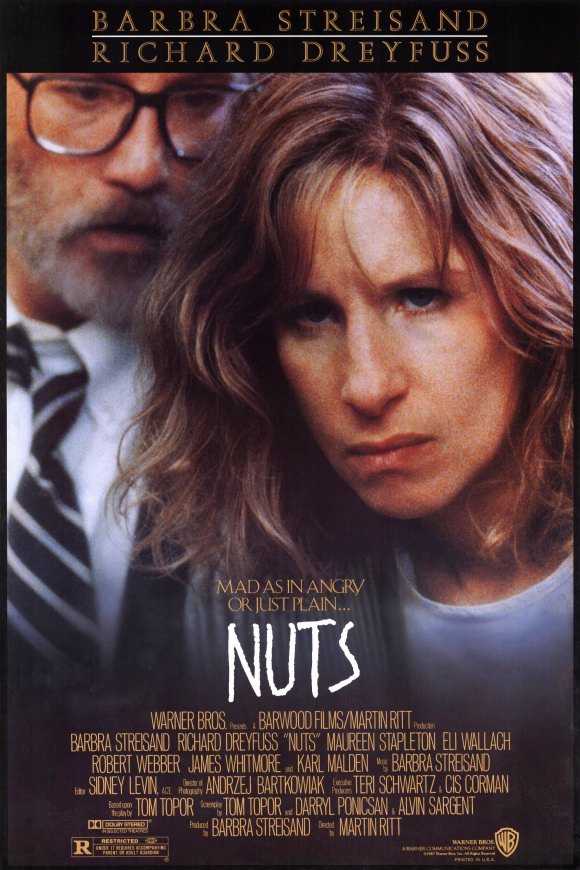
In celebration of Barbra Streisand turning 72 on April 24th we will be reviewing three of her films, one from each decade during the week. This one is based on the Broadway play by Tom Topor dealing with a high priced call girl named Claudia Draper (Barbra Streisand) who murders one of her customers (Leslie Nielson) in self-defense and is arrested. Her mother (Maureen Stapleton) and step father (Karl Malden) think she should be diagnosed as incompetent to stand trial and sent to a mental institution, but she with the help of her lawyer (Richard Dreyfuss) fight for her right to stand trial.

The story and characters evolve in layers, which I liked, but Streisand doesn’t seem right for the part. Her presence makes it seem too much like a star vehicle instead of the character driven story that it should be. Her cantankerous outbursts become a bit excessive and self-destructive making it hard at times to cheer for her or empathize. In the Broadway play the character was played by a woman in her twenties, which made more sense and would’ve worked better instead of casting someone who was already 45.

Seeing her in provocative poises in snapshots that her lawyer obtains is a bit weird but fun as a novelty as is the scene where she spreads her legs without the benefit of any underwear for Dreyfuss, but having her constantly shown with a bright spotlight around her seems disconcerting. It gives her a ghostly appearance and makes her stand out in the wrong way.

The veteran supporting cast comes off better since they wisely underplay it as opposed to her overplaying. Stapleton is quite good especially the moving scenes showing her crying as she listens to her daughter’s testimony. James Whitmore is solid as the thoughtful judge, but it’s Dreyfuss who carries it as the feisty and sometimes exasperated counsel.

This film is also a milestone as it is the last time Leslie Neilson performed in a non-comedic role. He is surprisingly chilling as the psychotic attacker who was apparently so convincing that it scared Streisand during the filming of the scene.

There are times when it gets a bit too theatrical. The judge advises Claudia to quit disrupting the proceedings, but then she continues to do so anyways, which would have gotten most people thrown out of the courtroom. The scene where she sits on the witness stand and describes being a hooker in a very sensual and seductive way seemed over-the-top in a court of law as is the part where she is allowed to wander around the courtroom going on a long rant while everyone else just sits there and passively listens.

Still on the whole I found most of it to be quite riveting and as a drama its first- rate. I just felt Striesand’s presence didn’t help it. She can be quite good in certain other roles just not here. The part was originally intended for Debra Winger who I feel would have fared better.

My Rating: 7 out of 10

Released: November 20, 1987

Runtime: 1Hour 56Minutes

Rated R

Director: Martin Ritt

Studio: Warner Brothers

Available: VHS, DVD, Amazon Instant Video
The Tiger Makes Out (1967)

tiger makes out 1

By Richard Winters

My Rating: 5 out of 10

4-Word Review: Mailman kidnaps suburban housewife.

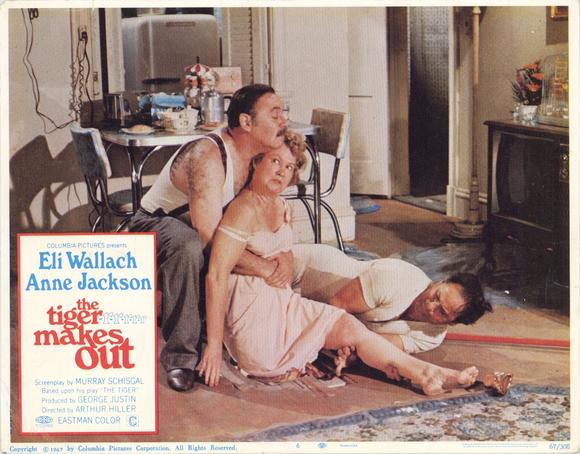
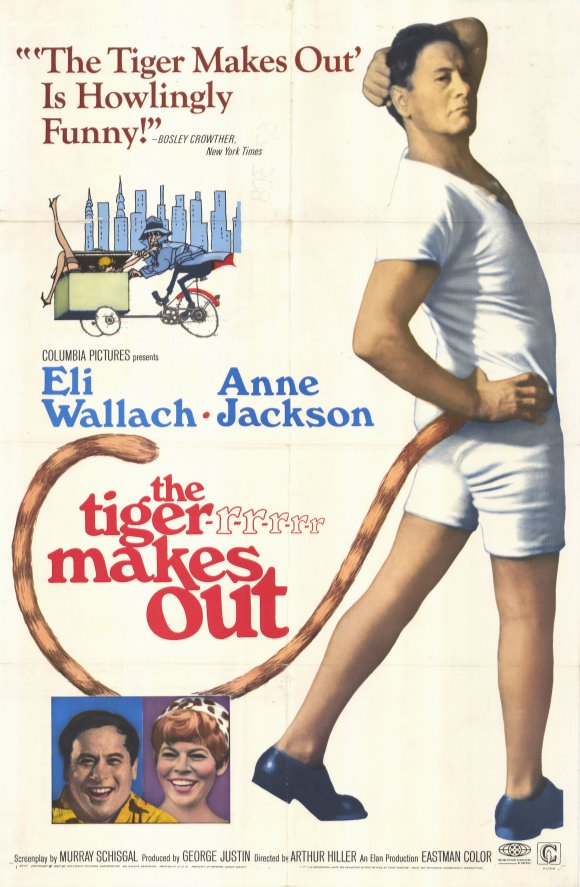
Ben Harris (Eli Wallach) is a middle-aged mailman living in a crummy, rundown basement apartment. He is bitter and angry at the world around him, which he feels is filled with a lot of vapid followers to a rigid and dehumanizing system. When his upstairs neighbor puts a hole in his roof and both his landlord and the housing authority refuse to do anything about it he decides to kidnap a young beautiful women as a form of insurrection. Instead he mistakenly nabs middle-aged housewife Gloria (Anne Jackson) who has similar issues and the two slowly form a budding friendship.

The screenplay is written by Murray Schisgal and is based on his one-act, two-character off-Broadway play ‘The Tiger’. The film is filled with a lot of diverting, offbeat humor some of which works and some of it doesn’t. I liked the part where Gloria’s neighbor Leo (John Harkins) gets his entire family on their knees to pull out crabgrass from their otherwise ‘perfect’ lawn and we eventually see them tear the entire lawn to bits from a bird’s-eye view and in fast-motion. Wallach’s confrontation with Sudie Bond inside the housing authority office is also amusing, but his attempts at kidnapping a woman come off too much like Wiley E. Coyote trying to get the roadrunner and turn the film into an ill-advised live action cartoon.

Director Arthur Hiller does a fabulous job of disguising the fact that this was originally a play. The editing is quick and the locales varied particularly at the beginning. The pace has a kinetic late 60’s feel, which gives it a certain time capsule quality. However the choice of music, which includes a studio group singing the film’s theme, is quite sterile.

Wallach gives a flawless performance and Jackson is also good. The two have been married since 1948 making them Hollywood’s longest lasting couple. Unfortunately the scenes of the two of them inside the apartment are rather stagnant and the one-time that the film gets boring.

There are also some great supporting performances including Rae Allen as a paranoid woman who thinks every man is a potential stalker and Charles Nelson Reilly as a goofy college registrar. The film also marks the film debuts of Dustin Hoffman and Mariclare Costello as his jilted girlfriend, Bob Dishy as an exasperated husband and John P. Ryan as an escort to a female impersonator. You can also spot a young Joe Santo inside the housing authority office and Frances Sternhagen as a passenger on a bus as well as Barbara Colby who in 1975 ended up getting murdered in mysterious and yet unsolved circumstances.

The one error that I noticed in the film is the gaping hole in Ben’s apartment ceiling somehow gets strangely taken care of and is nonexistent when he comes back to the place with his victim. I realize this movie borders on the bizarre and quirky to begin with, but I still felt there needed to be some explanation for that and none is given.

tiger makes out 2

My Rating: 5 out of 10

Released: August 18, 1967

Runtime: 1Hour 34Minutes

Not Rated

Director: Arthur Hiller

Studio: Columbia Pictures

Available: None at this time.

The Public Eye (1972)

the public eye 1

By Richard Winters

My Rating: 3 out of 10

4-Word Review: He follows her around.

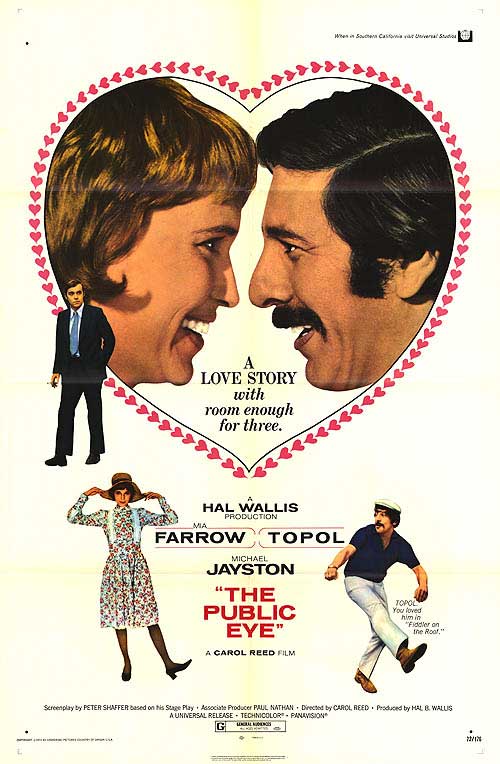
This film, which is based on the Peter Schaffer play, deals with Charles (Michael Jayston) an uptight British accountant who thinks that his wife Belinda (Mia Farrow) is having an affair. He hires Julian (Topol) a goofy private detective to follow her around and see where she is going and what she is doing everyday while he is at work. Unfortunately for Charles Julian starts to fall in love with Belinda as he is following her and she in him, which only further complicates matters since she was initially not seeing anyone and all those trips that Charles thought were so suspicious were simply innocent excursions.

The biggest problem with this film is that it is too lightweight probably more so than even other lightweight films. Nothing really happens. Julian just follows Belinda around much to her amusement, but the two don’t share any dialogue nor ever consummate their pseudo-relationship. The film simply spends long drawn out sequences showing the two following each other throughout the streets of London and occasionally giggling at their ‘little game’ and that is about it. You keep waiting for that second act to kick in, but it never does, which after 95 minutes starts to make the whole thing almost pointless.

Topol is miscast in the lead and ends up being the film’s weakest link when he should have been the strongest. He was fresh off his award winning performance in Fiddler on the Roof and this movie was supposed to make him into a leading man, but the attempts at turning him into a variation of Inspector Clouseau fail badly. His bright white suit that he wears looks garish and ridiculous especially for an undercover spy. Watching him constantly stuffing his face with food starts to get obnoxious and his buffoonery becomes more annoying than engaging.

Farrow is appealing and her natural child-like fragility is perfect for the part. The scene where she states to the shock of an upper-crust crowd at a formal dinner party that rapists should be punished by having their ‘thing’ cut off publicly is amusingly edging and the film would have been better had it gone a little more in this route.

Jayston is the one that comes off best. He plays the proper British gentlemen with all his staid mannerisms perfectly. What I really like though about him is the fact that he does love Belinda, but just doesn’t know how to show it effectively.

This was an odd project for legendary director Sir Carol Reed whose final film this was. The story doesn’t allow for much visuals although the way Reed captures London both from aerial shots as well as the downtown streets that Belinda visits is excellent. The movie almost seems to work as a tour guide of London, which in some ways is the best thing that can be said about the film.

My Rating: 3 out of 10

Alternate Title: Follow Me

Released: July 18, 1972

Runtime: 1Hour 35Minutes

Rated G

Director: Carol Reed

Studio: Universal

Available: Netflix streaming

They Might Be Giants (1971)

they might be giants

By Richard Winters

My Rating: 4 out of 10

4-Word Review: He thinks he’s Holmes.

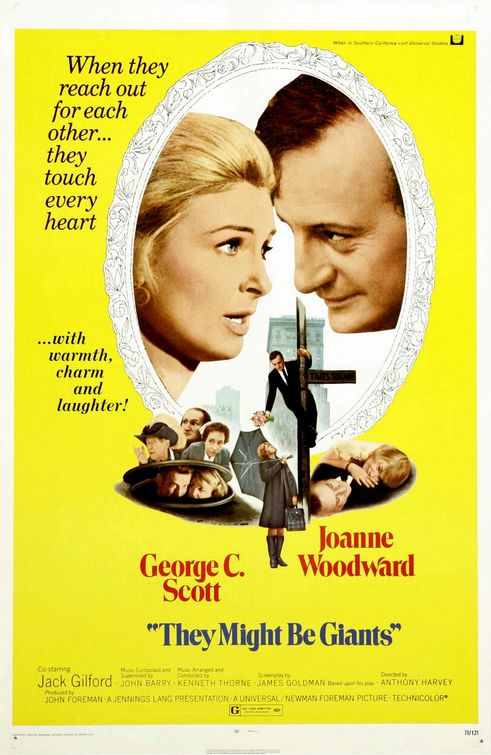
After the death of his wife Justin Playfair (George C. Scott) starts to think he is Sherlock Holmes and begins playing the part by smoking a pipe, wearing a deerstalker cap and playing a violin. His brother Blevins (Lester Rawlins) feels he needs to be institutionalized and hires a psychiatrist named Dr. Watson (Joanne Woodward) to analyze him. Watson finds Justin’s fantasy role-playing to be intriguing and reluctantly begins following him around on his fanciful jaunts to find clues from the evil Professor Moriarty and eventually the two begin a quirky romance.

The film, based on a play written by James Goldman, starts out with some potential. The musical score by John Barry has an interesting ominous quality to it. The idea of pitting the practical minded Dr. against the fanciful Playfair is initially engaging. Watching Woodward getting more and more exacerbated by Scott’s constant whims of fancy and refusal to ever to see reality is funny and lightly satirical. The film though drops off terribly when Watson loses all judgment and falls in love with the man despite the knowledge that he is clearly mentally ill. Watching the two frolic through New York City searching for meaningless clues to a mystery that doesn’t really exist makes the film pointless as well as losing all tension, momentum and plot. Having her fall in love with him at the very end might have worked, but having this otherwise sensible and intelligent woman get sucked into Playfair’s fantasy world so quickly is jarring and unbelievable. What is worse is that initially Playfair seems to be working on a real case and there is even a scene where he gets shot at, but then this side-story is frustratingly dropped without any explanation or conclusion.

Scott is in top form and this is an interesting follow-up to his Patton role that he did just before this. Woodward though steals it. She has never done much comedy in her career, but proves to be quite adept to it here. One of the funniest scenes has her trying feebly to cook a meal for Playfair in her cramped apartment despite having no skill at it.

Anthony Harvey’s direction is okay. I liked the way he captures the downtown streets of Manhattan during the rain. However, the film’s most interesting segment takes place in an all-night grocery store where over a loudspeaker are announcements of great sales and deals despite the fact that there are no customers. Eventually a police chase takes place inside there, which ends up being genuinely amusing on a silly level.

The vague wide-open ending cements this as being a complete waste of time and makes the whole thing a big build up to nothing. I realize that this is intended to be whimsical, but even then there needs to be some grounding and this film has none.

My Rating: 4 out of 10

Released: June 9, 1971

Runtime: 1Hour 38Minutes

Rated G

Director: Anthony Harvey

Studio: Universal

Available: VHS, DVD, Netflix streaming

Becket (1964)

becket 2

By Richard Winters

My Rating: 7 out of 10

4-Word Review: Betrayed by his friend.

King Henry II (Peter O’Toole) is finding himself at continual odds with the Archbishop of Canterbury (Felix Aylmer) particularly in their disagreement of taxing the church to help fund Henry’s war with France when the elderly Archbishop suddenly dies Henry decides to appoint his longtime friend Thomas Becket (Richard Burton) into the position.  Becket had always shown extreme loyalty towards Henry and many times gotten him out of several jams so Henry expects this will continue in his new role, but finds that Thomas takes his position much more seriously than expected and shifts his loyalty from the king to the almighty, which causes serious conflict between the two.

The film which is directed by Peter Glenville is based on the 1959 stageplay written by Jean Anouilh that starred Laurence Olivier in the role as Becket and Anthony Quinn as Henry. This film version isn’t bad, but not quite the epic spectacle that we are so used to from these types of films from that period. The action is quite minimal and there is a definite staginess. I would have liked more camera movements and even a few scenes with a hand-held to help make it seem a little more authentic and less of a filmed drama. The scene where Henry and Becket are seen riding on horseback appears very corny as it was clearly done in front of a blue-screen. There is also too much music one scene has Henry and Becket running away from a farmhouse after being caught fooling around with a farm girl that has a cartoonish sounding melody that seems completely inappropriate especially for the time period.

Having Henry and Becket go from being friends to bitter enemies seemed to happen too quickly. I got the feeling we were seeing the ‘Cliff Notes’ version of events were they analyze only the important plot points and then quickly moved to the next. I realize the runtime of the film is already long, but spending more time showing the friendship gradually devolve would have been more realistic.

Normally I love Sir John Gielgud and his performance as King Louis VII is amusing, but he is clearly British and speaks with an English accent that doesn’t even come close to sounding French. The part of the Pope is given to an Italian, so the King Louis role should have been done by a Frenchman.

O’Toole is excellent. He has brown hair here instead of his patented blonde and his ability to stay in step with Burton by giving an almost comic performance of a King who is nothing more than an overgrown adolescent is brilliant. The royal food fight is good as are the many putdowns that he gives to both his wife and kids and even his own mother.

Burton is fantastic as expected playing a role different from any of the others that he has done. His piercing blue eyes have never been stronger particularly when he becomes the Archbishop.

The killing scenes done inside the church near the end has some nice camera work and Henry’s final emotional speech as well as his flogging by the monks are all strong and make this worthwhile viewing, but I couldn’t help but feel that we have ‘grown-up’ a bit in the way we do period pieces today and this is one that could use a remake.

My Rating: 7 out of 10

Released: March 11, 1964

Runtime: 2Hours 28Minutes

Not Rated

Director: Peter Glenville

Studio: Paramount

Available: VHS, DVD, Blu-ray, Amazon Instant Video, Netflix streaming

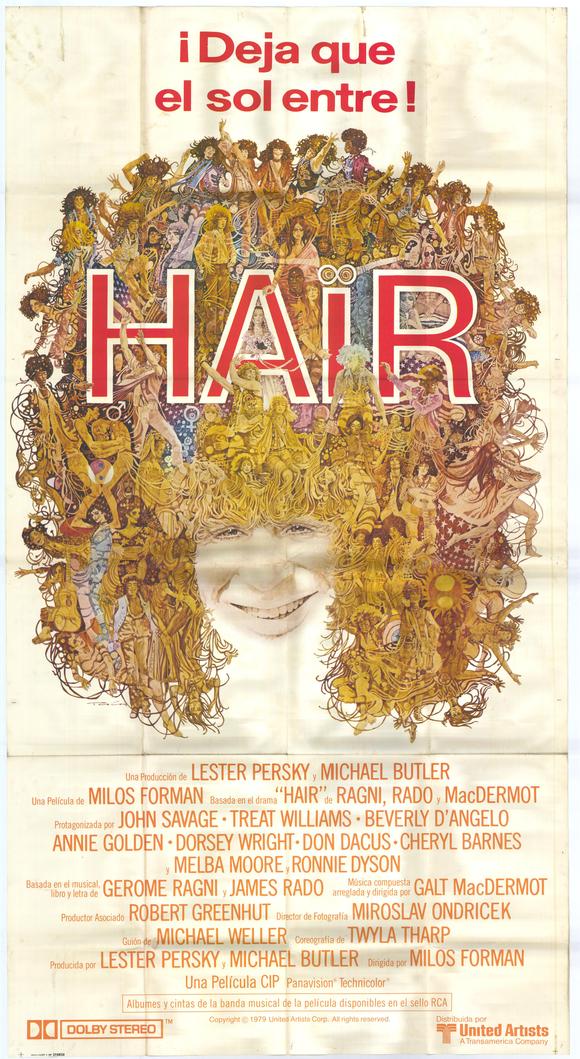
Hair (1979)

hair 2

By Richard Winters

My Rating: 5 out of 10

4-Word Review: Hippies versus the establishment.

A young draftee (Savage) goes to New York to join the army. Along the way he inadvertently walks into a ‘happening’ of hippies in Central Park who begin to socialize with him and the rest of the film looks at their efforts at trying to get him not to go.

It is easy to see how during its era this stage play would have been an exciting even vibrant experience. It perfectly captures the moods, thoughts and uniqueness of the period. However this film version doesn’t. It’s made ten years too late and the spirit just isn’t there. Even the protest rallies seem mechanical and manufactured. The period was known for its bright psychedelic colors and yet here everything is gray and bland. The camera angles should have been more unconventional and Twyla Tharp’s much ballyhooed choreography looks like nothing more than jumping around with song renditions that are horrible.

The hippies themselves are also a problem. For one thing Treat Williams looks too old as their leader. They also appear too clean-cut as these guys are literally sleeping on the streets and yet none of them have a beard.

hair 3

A few good moments do abound. Williams’ constant confrontations with the establishment are fun. Having them crash a society party and then having Williams dance on a table with Charlotte “Facts of Life” Rae is great. The dramatic twist at the end is powerful and really hits home at how impersonal and sad that war really was.

Savage looks and talks like the country boy he is playing, which is good, but his brief attempt at singing is downright awful. Brad Dourif was the original choice for the part and I think he would have done better.  Beverly D’Angelo is enticing as a snooty girl who transforms into a hippie one and Miles Chapin is amazing simply because he was a 28-year-old man that managed to convincingly look and act like a 17-year-old.

One quibble involves the wearing of the same army outfit by several different people. The uniform is originally worn by a general who is on the short side. They steal it and put it on Williams who is much taller and yet it still fits perfectly. They then put it on Savage who is much thinner and yet strangely it fits perfectly on him as well.

hair 4

My Rating: 5 out of 10

Released: March 14, 1979

Runtime:  2Hours 1Minute

Rated PG

Director: Milos Foreman

Studio: United Artists

Available:  DVD, Blu-ray, Amazon Instant Video

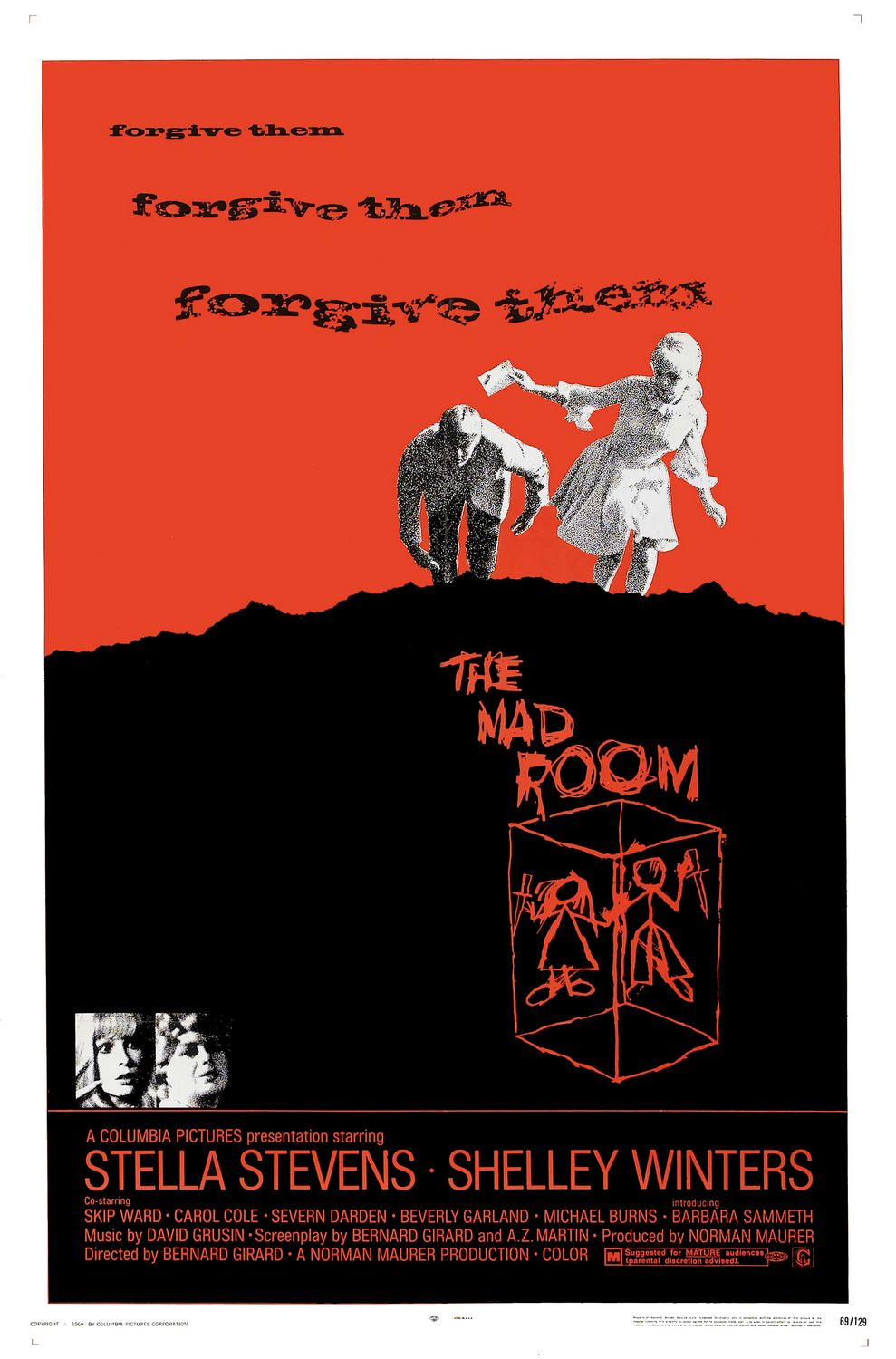
The Mad Room (1969)

the mad room

By Richard Winters

My Rating: 4 out of 10

4-Word Review: Children murder their parents.

In 1957 George (Michael Burns) and Mandy (Barbara Sammeth), a brother and sister ages 6 and 4, murder their own parents in cold blood. No one knows for sure which one of them did it except that their older sister Ellen (Stella Stevens) witnessed them standing over their dead bodies in blood soaked clothes. It was her testimony that got them locked away into a mental institution, but now 12 years later they are set free into Ellen’s care. Ellen is now living with and working for wealthy widow Mrs. Armstrong (Shelley Winters) who agrees to allow the children to move in to her sprawling mansion, but then the murders begin to reoccur, but this time Ellen decides to cover up for them in order to avoid the humiliation and publicity.

This film, which is a remake of 1941’s Ladies in Retirement starring Ida Lupino, starts out with a bang by using some interesting visuals during the opening credit sequence. We are also shown flowers finger painted by the children using the dead parent’s blood on the walls of the victim’s bedroom, which I felt sent this thing to unprecedented darker depths especially for its time period. Unfortunately the film cannot sustain its initial momentum and devolves into a talky script that lacks much action or scares. Director Bernard Girard’s stylish direction keeps it watchable, but the film fails to achieve its full potential. Dave Grusin’s excellent music score manages to keep the tension going even when the script can’t.

Stevens looks gorgeous, but unfortunately her acting is sterile. Her wide blue eyes seem to reflect her empty performance and her presence weakens the film. The younger performers who play her brother and sister upstage her particularly Sammeth in her film debut.

I have always loved Winters as a character actress, but her goofy character hurts the dark undertones at least at the beginning. She does improve as it goes along and I enjoyed the way she reacts when Ellen tells her about her sibling’s dark secret and I was disappointed she didn’t remain through the film’s entire duration. Beverly Garland is a scene stealer as an embittered alcoholic wife who makes a big stink at a party and then a little later commits a shocking act.

If there is one thing that really ruins the movie it is the lame, limp ending, which has to be one of the most uneventful finales I have ever seen especially for a thriller. When the credits started to roll I literally did a double-take and asked myself. That’s it?? We just sat through 95 minutes of buildup just for that?? This was also another film where I figured out its twist ending long before it happened and when the ‘surprise’ revelation does come about it is unexciting and even anticlimactic.

My Rating: 4 out of 10

Released: May 1, 1969

Runtime: 1Hour 33Minutes

Rated M

Director: Bernard Girard

Studio: Columbia Pictures

Available: DVD, Amazon Instant Video

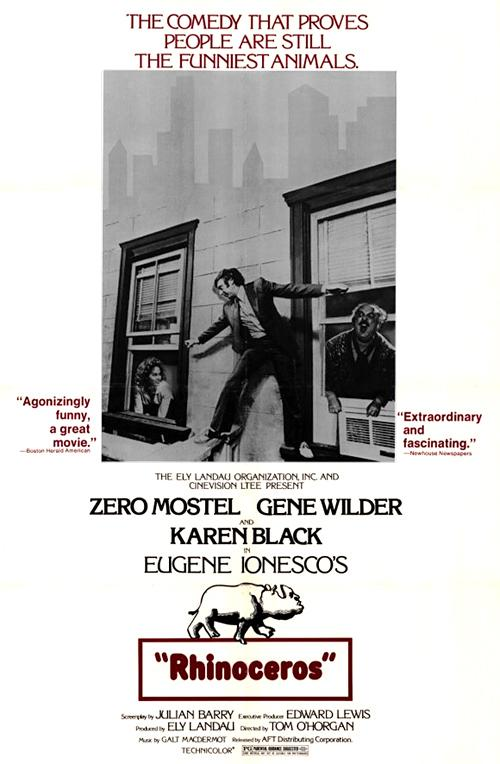
Rhinoceros (1974)

rhinoceros

By Richard Winters

My Rating: 6 out of 10

4-Word Review: People turn into rhinos.

Much maligned film is really not as bad as its reputation states. Yes the scenes and scenarios are at times awkward and stilted. The sets and color schemes run from being drab to horribly garish. The music is loud and obnoxious and doesn’t fit the mood of the film at all. Also despite having the name in its title and being all about rhinos you never actually see one. Sure it’s low budget, but even some stock footage of one from “Wild Kingdom” would have helped.

Yet even with all this the film still has its moments. It’s based on the Eugene Ionesco play and involves everyone getting turned into a rhinoceros. Zero Mostel, Gene Wilder, and Karen Black all resist, but slowly unravel to the ‘peer pressure’ and wanting to be ‘part of the crowd’. The outrageous premise is simply a front to examine the human phenomenon known as conformity, both on those that do and those that don’t. It is rare that anything tackles this subject with any serious study, yet this one does. The observations are, believe or not, quite interesting and accurate and Wilder really does make a terrific non-conformist.

The best part though may actually be one of filmdom’s most bizarre scenes ever. It features Wilder and Mostel alone in a room where Mostel slowly turns into a rhino. The scene goes on for well over twenty-five minutes and features no special effects or makeup. It relies totally on Mostel and his acting range to pull it off. He gives it an amazing amount of energy and seems more than up to its weird demands. It’s definitely worth a look for this scene alone.

My Rating: 6 out of 10

Released: January 21, 1974

Runtime: 1Hour 44Minutes

Rated PG

Director: Tom O’Horgan

Studio: American Film Theater

Available: DVD, Amazon Instant Video

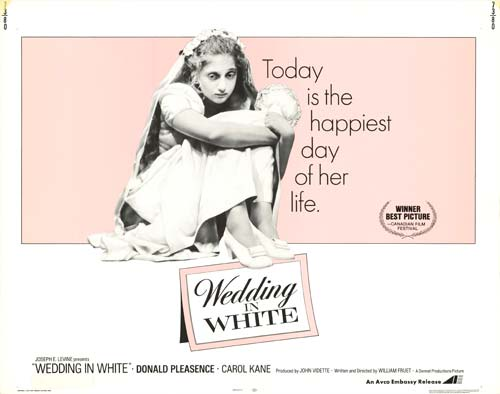
Wedding in White (1972)

wedding in white 1

By Richard Winters

My Rating: 8 out of 10

4-Word Review: Ending is a kicker.

Jeannie (Carol Kane) is a shy 16-year-old girl living in a small, bleak Canadian town just after the war who is raped by her older brother’s army buddy. Her parents (Donald Pleasance, Doris Petrie) respond as if it is her fault and resort to some extreme even shocking measures in order to ‘save the family honor’.

This is a solid little drama with good scene construction. The pacing is deliberate and an ending that really packs a wallop. The sets and location look authentic for the period and the characters are believable. Jeannie’s friend Sara (Christine Thomas) seems like a very typical teenager no matter what time period and her interactions with Jeannie show the realities of teenage friendships and makes for an interesting sidelight from the main story.

Kane is impressive acting in a style I’ve never seen from her before. Pleasance is solid as usual and his Canadian accent sounds almost authentic, but it is a bit overdone. Petrie is also quite good as the mother. She really brings to surface a character that is so cloistered she is unable to make any clear decision for herself.

The story itself is the real strong point. It is convincing, insightful, and well-crafted and brings out a sort of darkness and ‘evil’ that can come from ‘wholesome small towns’ and ‘God fearing people’. It shows how having a rigid morality can sometimes create a sort of immorality and also brings to light the lies people wish to live by and how at times it can cloud their better judgment, but most of all it’s a study at  how easily sensitive, fragile people can get sucked away and how sadly common it is.

This is a film designed to leave you feeling shocked, angered, saddened, and maybe even a little repulsed. This is quality viewing that deserves more attention.

My Rating: 8 out of 10

Released: October 20, 1972

Runtime: 1Hour 43Minutes

Rated R

Director: William Fruet

Studio: Cinepix

Available: DVD

Casual Sex? (1988)

casual sex

By Richard Winters

My Rating: 3 out of 10

4-Word Review: Sex in the 80’s

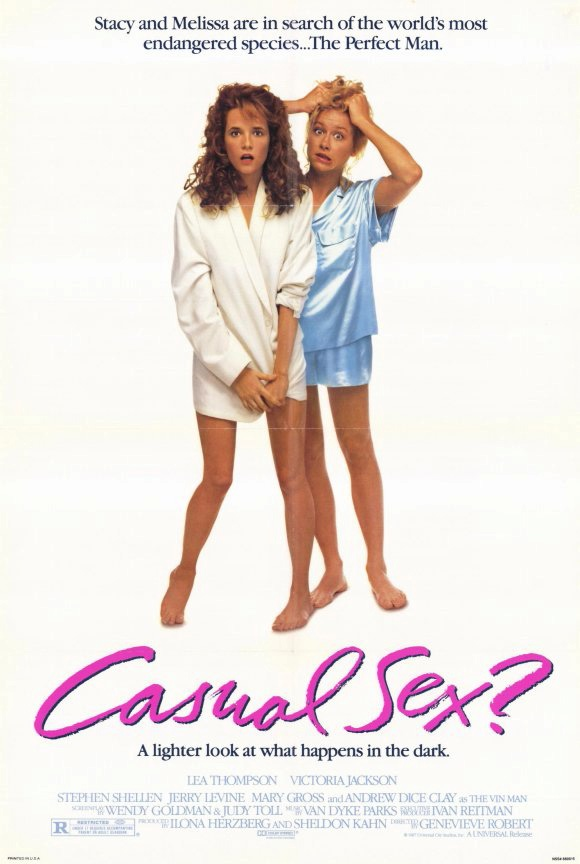
Stacy (Lea Thompson) and Melissa (Victoria Jackson) are lifelong friends with very different sexual pasts. Stacy has slept with a lot of guys including some one-night-stands while Melissa has had sex with only a few and never achieved an orgasm at least ‘not when someone else was in the room’.  Because of the AIDS epidemic they decide to reanalyze their sexual mores and join a singles resort where they hope to meet their Mr. Right and settle down.

The film is based on the stage play that was originally produced for The Groundlings Theater in Los Angeles. You can tell this right away at the start where the two women stand on an empty stage and talk about some of their past sexual encounters. This proves to be the funniest part of the film with a lot of keen observations on human behavior. Unfortunately after the first five minutes of this the film digresses into a more conventional narrative by having the girls go to a single’s resort and the attempts at satire get either over-played or not played up enough. What is even worse is that it throws in a romance angle by having Stacy fall for an irritatingly perfect looking heartthrob named Nick (Stephen Shellen) who is an aspiring rock star. The two quickly move in together and then all of sudden he becomes completely clueless and harbors a lot of annoying habits that leads to a drawn-out, boring break-up session.

There are still a few funny moments including an amusing dream sequence where Stacy imagines making love to Nick while her boyfriends from the past start to pop up all around her, but overall the film fails to gain any traction, is filled with clumsy characterizations and falls flat. A much better approach would have been to structure it around a collection of vignettes with a sexual theme much like Woody Allen’s Everything You Always Wanted to Know about Sex, but Were Afraid to Ask, which is far more original and funnier than anything you will see here.

Lea is really cute and gives a good performance. Normally ditzy blondes get on my nerves, but somehow I have always found Victoria’s cute-as-a-button face and squeaky voice appealing. Her acting skills aren’t up to Lea’s level, but her more natural delivery makes for a nice contrast. Skin hounds will be happy to know that both women appear nude from the backside.

However, it’s Andrew ‘Dice’ Clay who steals the film with an engaging performance as the proverbial lounge lizard. Every scene he is in is funny and he tells a lot of lame jokes, but the way he says them is hilarious ‘they can’t all be golden’. In his attempt to get more connected to women he reads a book entitled ‘How to Pretend Your Sensitive’, which is amusing as well. My only complaint is that in the end Lea marries him and he becomes more ‘normal’, which takes away from the goofy caricature.

My Rating: 3 out of 10

Released: April 22, 1988

Runtime: 1Hour 37Minutes

Rated R

Director: Genevieve Robert

Studio: Universal

Available: VHS, DVD, Amazon Instant Video