Category Archives: 70’s Movies

A Fan’s Notes (1972)

fan-notes

By Richard Winters

My Rating: 4 out of 10

4-Word Review: He writes about himself.

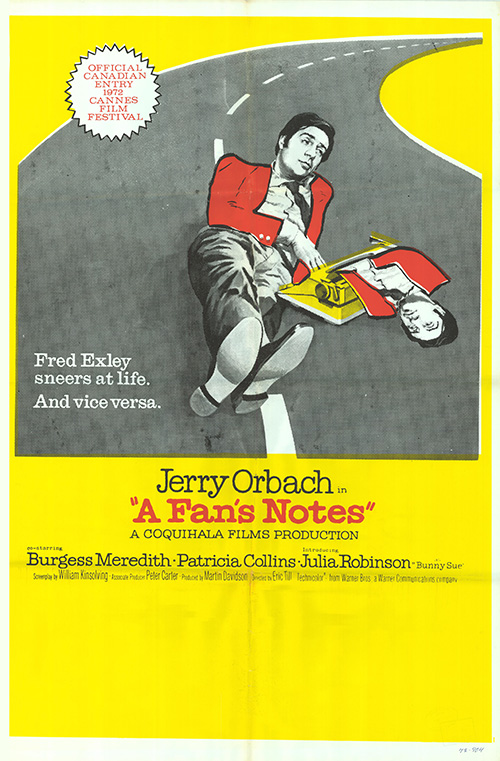
Exley (Jerry Orbach) is a loner residing in and out of mental institutions. He imagines having conversations with beautiful women, but is rarely able to approach them in real-life. He also obsesses over New York Giants running back Frank Gifford and wishes one day to achieve that same type of success, but fears that he’ll be a spectator in life just like he is in sports. He decides to begin writing about his nomadic existence in hopes that it will be a cathartic effort only to find that too harbors its own share of frustrations.

The film is based on the Frederick Exley novel of the same name, but despite the filmmaker’s best efforts it’s not able to achieve the book’s cult potential and in fact Exley himself stated that the movie “bore no relation to anything that I had written”. The idea of trying to somehow visualize a story that was never meant for the big screen is the film’s biggest issue and one that it cannot overcome no matter how hard it tries. The pacing is poor and tries awkwardly to make profound statements while at other points being zany and absurd, which is off-putting.

Orbach does well in the lead and helps hold it together. This also marks the official film debut of Julia Anne Robinson who appeared in only one other movie King of the Marvin Gardens before she tragically died in a house fire at the young age of 24. Like in that movie her acting is poor, but here it works in the positive because it makes her character seem transparent and accentuates the dream-like theme. The segment where she dresses up like a nun and then later as a street hooker, as part of Exley’s sexual fantasy, is fun as is his visit with her quirky parents (Conrad Bain, Rosemary Murphy).

Burgess Meredith appears only briefly, but practically steals it with his outrageousness. Watching him lie down on the floor in an effort to look up a blind woman’s skirt is a real hoot as is his ability to walk on his hands across the edge of a sofa.

Had the film stuck solely with the goofy comedy it might’ve worked and there are indeed a few memorable bits. The part where Exley punches an obnoxious woman (Elsa Raven) in slow motion is arresting and the segment where he imagines himself inside a scene of a his favorite soap opera where he directs the cast to strip off their clothes and have sex right in front of the camera is pretty funny too, but the best moment is the telephone conversation he has with a couple where he pretends to be a lawyer pleading with them to take-in the husband’s mentally unstable brother.

My Rating: 4 out of 10

Released: July 21, 1972

Runtime: 1Hour 32Minutes

Rated R

Director: Eric Till

Studio: Warner Brothers

Available: YouTube
All the President’s Men (1976)

all-the-presidents-men

By Richard Winters

My Rating: 6 out of 10

4-Word Review: They take down Nixon.

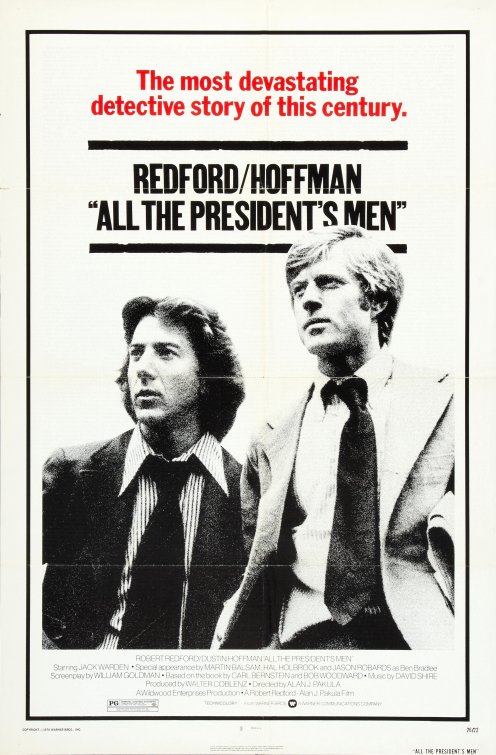
In the early morning hours of June 17, 1972 five men are found burglarizing the Democratic Headquarters at the Watergate Office complex in Washington D.C. The next day a young Washington Post reporter by the name of Bob Woodward (Robert Redford) is assigned to cover the case. Initially it was considered only a minor story, but as he digs further into the details he finds wider connections including links that lead directly to the White House. Together with Carl Bernstein (Dustin Hoffman),who is another reporter, the two men continue to research and end up battling one roadblock after another in their quest the uncover the truth.

If there is one area where this film really scores in it’s in the way that a journalist’s job gets portrayed. In fact many colleges show this film to their student who are majoring in the field in order to given them a realistic perspective of what the profession actually involves. For me I found it quite enlightening particularly the first hour. The many people and steps that a reporter has to go through just to get one solid lead is interesting as is the protocol system determining which story gets the front page and which don’t.

The layout of the newsroom was also fascinating as it all seemed very authentic and like they were working in an actual one. To my absolute shock I found out later that it had all been constructed on a film set, but so meticulously done that you couldn’t tell the difference. Initially several scenes were filmed in the real office using actual employees in the background, but the knowledge of being on camera made some behave in ways that they normally wouldn’t and this ultimately forced the filmmakers to decide to recreate it on a soundstage and use actors as the office crew.

The performances by the two leads are good, but neither of them resembles their real-life counterparts. Both Redford and Hoffman were already pushing 40 at the time and looking it while Woodward and Bernstein were still in their 20’s when this story occurred so the line that the Jack Warden’s character makes about these two being ‘young and hungry’ and looking for a good story to build their careers on doesn’t make as much sense.

The characters aren’t well fleshed out either. No time is spent on what these guys were like when not ardently following up leads, which is absolutely all we see them doing.  The original screenplay, which was written by Woodward and Bernstein, had a subplot involving the two trying to score with women, which would’ve helped add a comical touch and parts of that should’ve been kept in.

The second half lags as there are too many leads and names that get bantered about that don’t have faces connected to them making it seem like information overload that doesn’t help the viewer get as emotionally involved as they should. Having cutaways showing Nixon and/or is aides becoming increasingly more paranoid as the reporters closed in on them could’ve added that much needed extra dimension.

There is a stunning bird’s-eye shot of the inside of the Library of Congress, which is amazing and the fact that many of the scenes get filmed at the actual sites where the real-life instances occurred is both impressive and commendable. I also enjoyed the wide-array of recognizable faces that show up in bit parts including Valerie Curtain as a frightened source and Polly Holliday as an evasive secretary. They even cast Frank Wills the real-life security guard who broke the case wide open playing himself in the film’s opening scene, which is cool even though for me the film’s second half fails to be as entertaining as the first, which prevents it from being a classic.

My Rating: 6 out of 10

Released: April 4, 1976

Runtime: 2Hours 19Minutes

Rated PG

Director: Alan J. Pakula

Studio: Warner Brothers

Available: DVD, Blu-ray, Amazon Video, YouTube

Racquet (1979)

racquet-1

By Richard Winters

My Rating: 0 out of 10

4-Word Review: Tennis champ gets old.

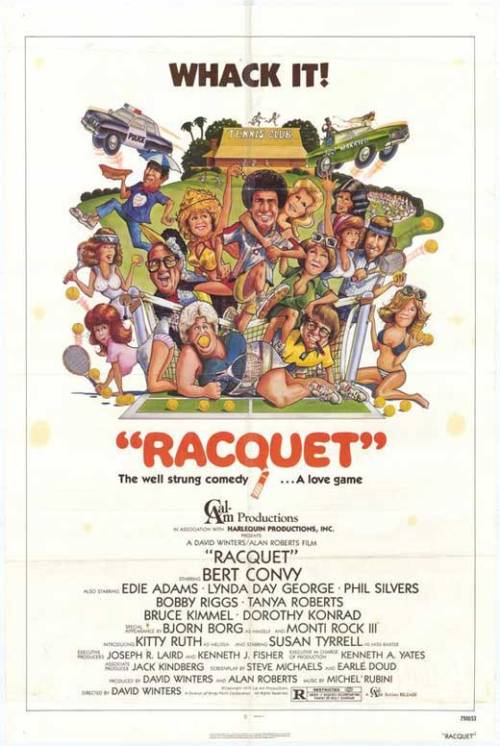
Tommy Everett (Bert Convy) is an aging tennis star who is learning to accept that he no longer has the skill that he once did. His life though is not in order and he needs money so that he can purchase his own tennis court and use it to give lessons to the rich clientele of Beverly Hills. Since he doesn’t have the capital for a down payment he sleeps with Leslie (Edie Adams) who is the wife of Arthur (Phil Silvers) a rich financier. During their lovemaking he asks her for the cash and she initially agrees even though she doesn’t intend to come through with it. In one last attempt to prove his virility he decides to take on tennis great Bjorn Bjorg in a televised match that he hopes will prove that he still has what it takes.

This so-called comedy is so frighteningly unfunny that you have to wonder why anyone would’ve been paid to write-it as its desperate attempts at humor are downright embarrassing. The script went through many rewrites and it shows as there is no cohesion and the action meanders badly until it all becomes quite pointless.

Supposedly this was an attempt to cash-in on the success of Shampoo, which was far better and so superior to this one it’s isn’t worth trying to compare except to say that was a classic and this isn’t. The jokes here are too strained and the innuendoes so juvenile that it makes sitting through not worth it on any level. The movie would’ve been improved had it stayed focused on the tennis angle, but instead it goes off on Convy’s romances and sexual conquests until you completely forget about the tennis part until it finally goes back to it at the very end.

Convy’s presence, especially in the lead, makes things even worse. He was a great game show host, but in the acting realm he was a hack to the point that he comes off looking like he never had even a day of acting training.

The supporting cast if filled with an array of familiar faces, but due to the script’s limitations end up being badly underused. Susan Tyrrell’s take of a snobby real estate agent should’ve been great, but isn’t. Tennis legend Bobby Riggs is fun, but not funny and Dorothy Konrad gets a few laughs, but it all comes at the expense of her obesity, which is tacky.

Phil Silvers is the only good thing in the movie and he even manages to elicit a few chuckles especially the part where he dresses and acts like a giant turkey. Yet even this, like with everything else in the film, is pretty sad and only proves to what pathetic extent it was willing to go to just to get a cheap laugh.

My Rating: 0 out of 10

Released: June 7, 1979

Runtime: 1Hour 29Minutes

Rated R

Director: David Winters

Studio: Cal-Am Productions

Available: None at this time

Superdad (1973)

superdad-1

By Richard Winters

My Rating: 0 out of 10

4-Word Review: This movie is awful.

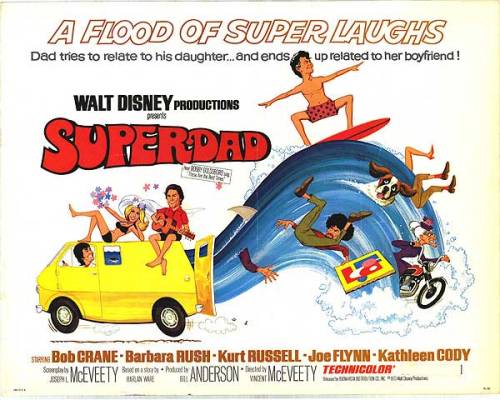
Charlie McCready (Bob Crane) is worried that his daughter Wendy (Kathleen Cody) is hanging out with the ‘wrong crowd’ and dating a guy (Kurt Russell) that has no ambition. He tries spending more time with her and her friends in order to get her to appreciate his more conservative viewpoints, but finds that this doesn’t work. He then concocts a scheme to have her go to a different college than her boyfriend by pulling some strings and having someone on the board come up with a phony scholarship, but when she finds out about this she runs away in a rage and begins hanging out in a hippie commune run by a cult leader named Klutch (Joby Baker) who intends to force Wendy to marry him while Charlie tries his best to stop it.

This was Disney’s attempt at tackling the generation gap phenomenon, but the results are shallow with characters and issues that are too one-dimensional and generic to be considered relevant. There isn’t even any of that patented Disney slapstick, which could’ve at least allowed some diversion from the otherwise tedium. To top it off the music is excruciatingly sappy including an opening tune sung by Bobby Goldsboro, which could be enough to make most people want to turn it off before the film has even barely begun.

In hindsight having Crane cast as a character who preaches old-school values when in reality he was living such an excessively hedonistic lifestyle is the height of all irony. The way his character is so preoccupied with his daughter to the point that he even dreams about her is borderline creepy and makes it seem like he has some sort of latent incestuous obsession with her.

The worst thing though is his acting specifically with the way he would scream out whenever his character is in some sort of danger like when he goes water skiing. Larry Hagman always had the best yell especially as Tony Nelson in the TV-Show ‘I Dream of Jeannie’ as his shrieks sounded masculine while Crane’s sound more like a high pitched scream from a female and are disconcerting instead of funny.

The Wendy character is another weak point. First she has parents who have brown eyes and in Crane’s case jet black hair as well, so if the dark gene is always the dominant one then how where they able to produce a blonde, blue-eyed offspring? Her character is also too transparent and too subservient to adult authority and not like an actual teen at all. There is one brief moment where she rebels by becoming a hippie chick, which could’ve at least added an interesting dimension to the otherwise sterile role, but unfortunately the film drops this thread just as soon as it gets introduced.

The depiction of the cult-like hippie group that is run by a controlling leader who happens to also be a painter, which ironically gets played by actor Joby Baker who later quit his acting career to become a full-time painter, is like with everything else in this movie quite generic. Clearly it was based on the Manson cult, but I got the feeling that the filmmakers were trying to send a broader message by inferring a judgmental view that all hippies ended up this way, which just proves how out of touch they were with the younger generation as they clearly didn’t understand or appreciate their lifestyle at all, which ultimately proved they were unfit to make a movie dealing with the generation gap subject in the first place.

My Rating: 0 out of 10

Released: December 14, 1973

Runtime: 1Hour 35Minutes

Rated G

Director: Vincent McEveety

Studio: Walt Disney Productions

Available: DVD, Amazon Video, YouTube

The Cassandra Crossing (1976)

cassandra-crossing-2

By Richard Winters

My Rating: 6 out of 10

4-Word Review: Virus on a train.

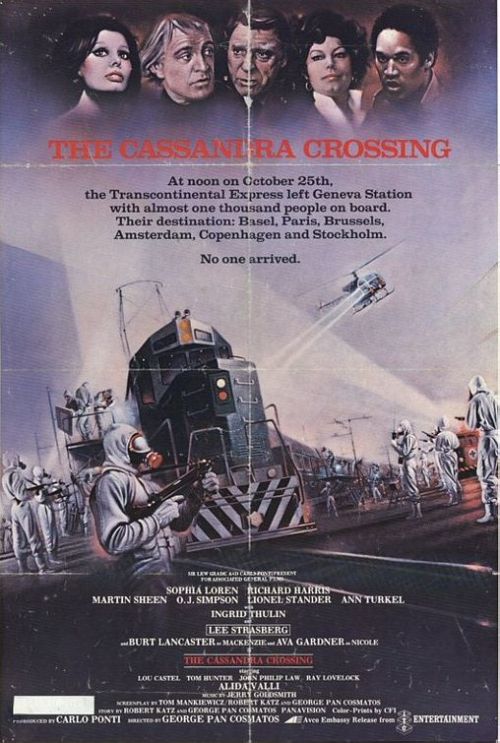
A terrorist (Lou Castel) who’s infected with the pneumonic plague sneaks onto a train in order to escape capture, but in the process infects the other passengers. U.S. Colonel MacKenzie (Burt Lancaster) devises a plan to have the train rerouted to a quarantine camp in Poland, but this will require the train to go over a bridge known as the Cassandra Crossing, which has not been used since 1948 and could be structurally unsound. When the passengers realize what the plan is they revolt and make an attempt to stop the train before it gets there, but will it be too late?

The way the bridge gets photographed is excellent and helps make it seem like a third character. An actual working bridge known as the Garabit Viaduct was used and is still in operation today, so the filmmaker’s ability to effectively make it look old and weakened is impressive. The climactic sequence showing the train going over the bridge is very exciting and well shot even if certain angles look conspicuously like a toy train instead of a real one it’s still a showstopper and well worth sitting through just to get to that point.

The film though fails on many other levels. For one thing the characters are not likable, or even all that interesting, so the viewer has little empathy as to whether they are able to make it through their quandary or not. The train is too ordinary looking with little pizazz or visual appeal and more attempts should’ve been made to have a luxury one used instead. The fact that the patients begin to miraculously recover from the disease during the second half makes sitting through the first part almost pointless.

The cast is filled with a lot of familiar faces. Ava Gardner is great in a role that allows her to show some key comic touches, but Sophia Loren, who was cast because her husband at the time was the producer, is completely wasted and forgettable. Lancaster is equally stymied in a role that has him virtually locked inside a control room with not much to do except look perpetually worried. Having his character decide to not panic the passengers by telling them about the virus, but instead he chooses to lie and inform them that the train is being rerouted to avoid bombs planted onto the railway line by terrorists ends up inadvertently getting the passengers just as upset to the point that it’s unintentionally funny.

Richard Harris who plays a doctor trying to treat the infected people while also working to prevent the train from driving into an impending disaster is the only cast member who gives the film any life. Like in the similarly themed Juggernaut his brash and irreverent approach that openly stands up to authority without hesitation helps to make his anti-hero persona seem genuine and refreshing, which in turn makes the film more gripping. His attractive real-life wife Ann Turkel, who plays a singer in a hippie band here, isn’t bad either, or at least not on the eyes.

My Rating: 6 out of 10

Released: December 18, 1976

Runtime: 2Hours 8Minutes

Rated R

Director: George P. Cosmatos

Studio: 20th Century Fox

Available: DVD

A Pain in the A__ (1973)

pain-in-the-ass-1

By Richard Winters

My Rating: 6 out of 10

4-Word Review: Loser irritates hit man.

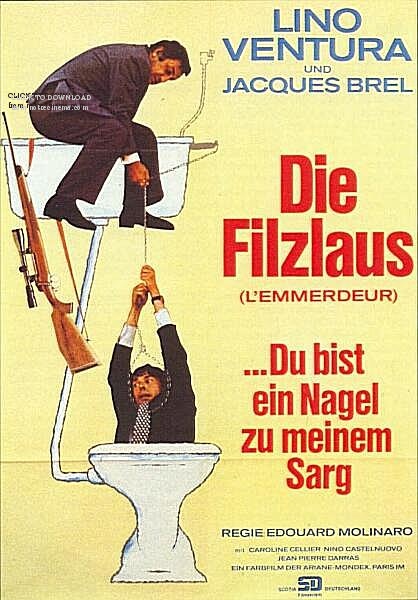
Ralf (Lino Ventura) works as a hit man and is hired to assassinate Louis Randoni (Xavier Depraz) who plans to testify against the mob. Ralf checks into a hotel room and plans to shoot Louis as he tries to enter the courthouse from his hotel window, which sits across the street from the court building. As he prepares for the hit he becomes distracted by Francois (Jacques Brel) in the neighboring room who attempts to kill himself after his wife leaves him. Ralf is concerned that Francois’s actions will elicit unwanted attention, so in an attempt to quiet him he ‘befriends’ him, which leads to many ironic scenarios.

The film was written by the prolific Francis Veber and based on his play. Ultimately it’s just a one-joke premise, but what makes it work are the two characters particularly the hit man who is portrayed in a serious way and never once betrays the essence of who he truly is, which is that of a cold blooded killer intent on doing his job and then moving on to his next. The comedy comes from his perturbed reactions at having to deal with a loser that despite his best intentions he can’t seem to ever get rid of.

Famous singer Brel does quite well as the clingy pest who is so wrapped up in his own personal quandaries that he fails to notice that his new ‘friend’ really isn’t his friend at all. Brel’s boyish looks plays well off of Ventura’s constantly stern expression and the plot becomes almost a constant play on errors as each one misreads the other.

The overall set design though is boring and the majority of action takes place solely inside the two hotel rooms, which eventually makes the proceedings quite static. It would’ve been nice to have had more of a conversation between the two as Brel does almost all of the talking while Ventura simply remains quiet while looking bored and angered, which is fun for a while, but more of a character arc could’ve been implemented.

The ending is a cop-out and not satisfying at all. I also felt Ventura was a bit too old and the character would’ve been more intimidating had it played by someone younger and more rugged although for the record Ventura plays the role perfectly especially when he gets injected with a drug that makes him tired and reluctantly  dependent on Brel’s guidance.

In 2008 Veber directed a remake of this film, which met with some success. Also in 1981 director Billy Wilder did an American version of this with Jack Lemmon and Walter Matthau playing the two leads. That film ended up adding a few changes and will be reviewed tomorrow.

pain-in-the-ass-2

My Rating: 6 out of 10

Released: September 20, 1973

Runtime: 1Hour 31Minutes

Rated PG

Director: Edouard Molinaro

Studio: Mondex Films

Available: VHS

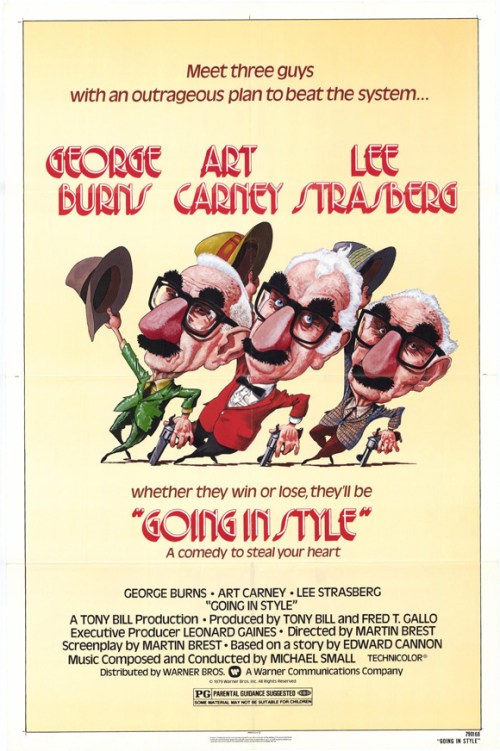
Going in Style (1979)

going-in-style

By Richard Winters

My Rating: 5 out of 10

4-Word Review: Old guys rob bank.

Three elderly men (George Burns, Art Carney, Lee Strasburg) who are living together in a rundown Brooklyn apartment and on a fixed income decide one day to liven up their lives by robbing a bank. None of them have ever committed a crime before and don’t even know how to handle a gun, but end up pulling off a major heist nonetheless and getting away with $35,000 in cash. However, things begin to fall apart once the crime is completed and even a side-trip to Vegas can’t keep the feds from slowly moving in.

On the outset the plot seems like a very funny idea and some of the social context about the difficulties of growing old that gets mixed in with it is right on-target. However, to me it just doesn’t come together. The men latch on to the idea too quickly and I would’ve expected more resistance or having at least one of them chickening out at the last second. These are individuals with no criminal record and although I realize that they are bored why couldn’t they have just taken up a new hobby or social cause instead. It’s not like they were out on the streets or completely desperate. The apartment they resided in looked livable enough and I might’ve bought into the premise better had one of them needed a major operation and thus the others were forced to go to extremes like robbing a bank to help pay for it.

The part where they sit around a table trying to figure out which stack of bullets goes into which gun is amusing and quite possibly the best bit in the film, but there’s a lot more comic potential that could’ve been squeezed out of this otherwise quirky plot that is never taken advantage of. The crime gets carried off in too much of a seamless fashion with a myriad of possible problems that could’ve and should’ve cropped up being completely overlooked.

The second half that deals with two of them taking a trip to Vegas seems like a plotline to a whole different movie.  Writer/director Martin Brest should’ve chosen one or the other by either playing up the bank robbery premise and its preparation more or just rolled from the beginning with the Vegas trip, which has a lot of funny untapped potential as well, but cramming the two together or not taking enough advantage of either one was a mistake.

Burns gives an excellent performance and I was amazed how very talented this 83 year-old gentlemen was especially when you factor in that he never had any formal acting training and was basically just a vaudeville comedian, but here he creates a convincing and surprisingly savvy character. Strasberg, who spent years as an acting teacher and didn’t do any film roles until much later in his life, is superb as well and I was disappointed his character wasn’t in more scenes.

A reboot of this film has already been completed and set for an April 7, 2017 release. It will star Michael Caine, Morgan Freeman and Alan Arkin as the three elderly men and I’m quite interested to see how the two versions deviate from the other. I’m hoping that the comedy angle gets played up more and from reading the synopsis I have an inkling it will. It hopefully will be an improvement as I came away from this one feeling like it had missed-the-mark.

My Rating: 5 out of 10

Released: December 25, 1979

Runtime: 1Hour 38Minutes

Rated PG

Director: Martin Brest

Studio: Warner Brothers

Available: DVD, Amazon Instant Video, YouTube

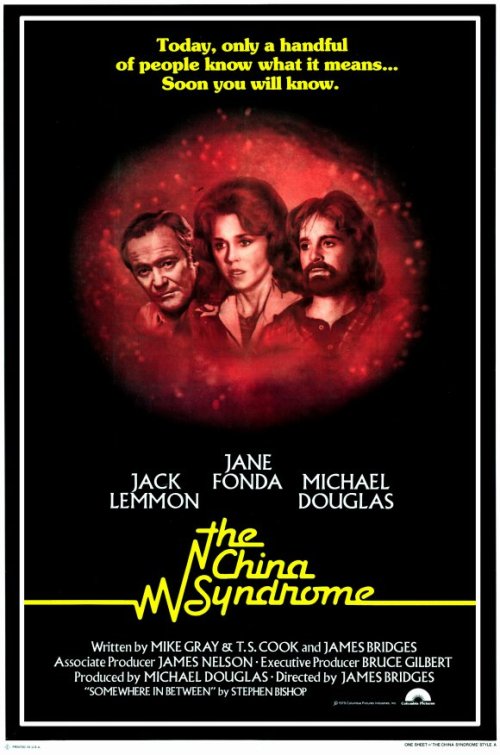
The China Syndrome (1979)

china-syndrome

By Richard Winters

My Rating: 8 out of 10

4-Word Review: He senses the vibration.

Kimberly Wells (Jane Fonda) is a television news reporter who along with Richard (Michael Douglas) her cameraman gets a chance to go inside a nuclear power plant and film its operations. While inside they witness the plant going through an emergency shutdown when the coolant to one of the nuclear reactors becomes dangerously low. Richard secretly films the nervous reactions of the men in the control room during the incident and wants to broadcast the footage on the news, but the station managers refuse for fear they might get sued. Later Kimberly comes into contact with Jack (Jack Lemmon) who is a shift supervisor at the plant and he informs her that the welds on the pumps are compromised and could lead to a core meltdown at some point. Richard, Kimberly and Jack then conspire to somehow get this information out to the public before it is too late while also avoiding those who wish to silence them.

One of the things I really enjoyed about this film is the way it remains completely realistic throughout and never once compromises anything simply for the sake of cheap drama. The behind-the-scenes politics of an on air news show is quite fascinating particularly how it is decided what constitutes ‘news’ and what doesn’t as well as the staff’s pecking-order and how an individual reporter has limited say on what topics they can actually report on.

The inside of the power plant is impressive particularly the scene where Jack goes inside the massive pump room to investigate a leak. The control room looks quite authentic and the film’s final twenty-five minutes take place solely inside of it, which makes for a gripping climax.

The film also has the distinction of having no musical soundtrack. Other than a song by Stephan Bishop which is played at the beginning there is no other music to be heard and quite frankly I didn’t miss it at all. The sound of the power plant’s emergency alarm going off is all that is needed to create tension and having the closing credits scroll to a deadening silence leaves a powerful impact. Apparently a score was composed by Michael Small, but it was rejected and rightly so as I listened to some of it and it had way too much of a disco sound and didn’t fit the theme at all.

The stars are excellent, but I was surprised how Fonda’s part gets increasingly pared down as the movie progresses. Douglas steals it away from her during an angry confrontation with his superiors, but ultimately Lemmon is the real star even though it deceptively doesn’t start out that way. The supporting cast is equally good including Wilford Brimley as a loyal, but quiet employee, Scott Brady as the cantankerous plant manager and Richard Herd as the steely and conniving owner.

As for the merits of the film’s message it’s hard to say. What was once a hot/trendy topic during the ‘70s and ‘80s now seems long forgotten. However, the script still brings up many good points no matter what one’s political leanings are and it’s great to watch a film that can be intelligent and entertaining at the same time without ever going overboard on either end.

My Rating: 8 out of 10

Released: March 16, 1979

Runtime: 2Hours 2Minutes

Rated PG

Director: James Bridges

Studio: Columbia Pictures

Available: DVD, Blu-ray (Region 0), Amazon Instant Video, YouTube

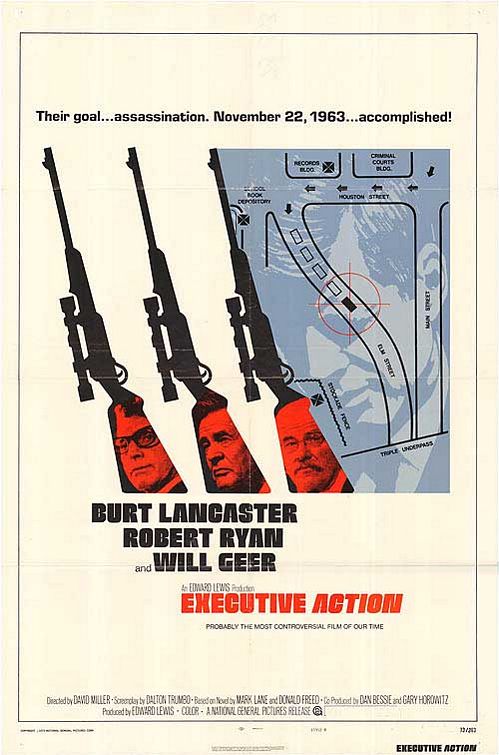
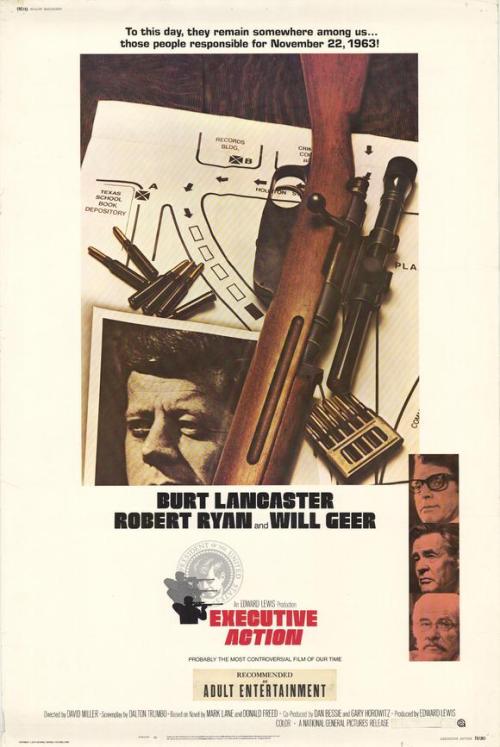
Executive Action (1973)

executive-action-3

By Richard Winters

My Rating: 4 out of 10

4-Word Review: Who really killed JFK?

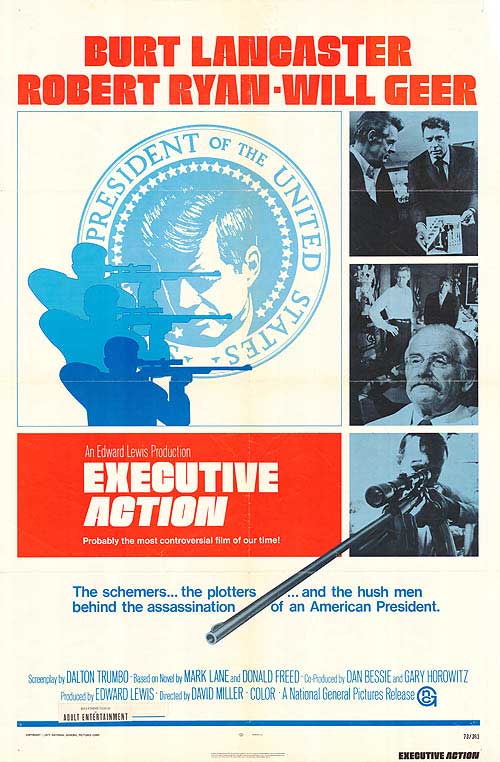
A group of former intelligence officials along with right-wing corporate capitalists conspire to assassinate President John F. Kennedy whose agenda they feel has gone too far to the left. Two teams of assassins are hired and they work in the desert to hone their shooting skills so as to be able to hit a moving target at 15 mph. Once this is accomplished they set-up a fall guy by the name of Lee Harvey Oswald to take the wrap while hiring another man, Jack Ruby, to kill him outright should he begin to squeal.

It may be a shock to some that in this age where conspiracy theories of the JFK assassination have now almost become the norm the cultural climate at the time of this film’s release was not for it. All the major Hollywood studios declined to offer financing and it was up to the film’s star Burt Lancaster and his good friend Kirk Douglas to put up the necessary funds just to get it made. Many television stations refused to run ads for it and due to the negative press it was pulled from theaters after only two weeks and resided in virtual obscurity before finally getting released onto VHS in the early ‘90s.

While I commend their attempt at getting the conversation going the results are less than compelling and the film fails to be riveting at any level. The reasons for planning the assassination are too broad and the characters are all uniformly colorless. The shooters themselves have no stake in the ultimate agenda other than they were paid to do it and in real-life there would’ve been a high chance that one of them would crack at some point or get nervous and make a mistake. The money that they were paid to do the job was not as much as you might think making me believe that once they ran out of it at least one of them would’ve gone to the press or authorities and divulged what really happened. The Jack Ruby link is weak. It is inferred that he does get hired to kill Oswald, but it never explains how they were ever able to get him to agree to do something that would most assuredly have him sitting in jail for the rest of his life.

There is also too much stock footage of actual news events of Kennedy and even Martin Luther King Jr. that gets shown. It doesn’t help propel the plot in any way and almost seems like it was put in simply to pad the running time. The recreation of the Dallas parade and Kennedy’s limo ride down the streets of the city is badly botched. While it’s nice that they filmed it on the actual site where it occurred it becomes painfully clear that there is no parade or crowds there. Instead they splice in old news reel footage of the actual parade, which they intercut with scenes of the actors playing the shooters, which they hoped would give the viewer the impression that they were all in tandem, but it doesn’t.

It was fun seeing veteran Hollywood stars playing bad guys for a change particularly Lancaster although he comes off as comatose and his hair looks disheveled in every shot. The film though doesn’t succeed at putting to rest anything. The plot is not believable and does nothing but create more questions than answers.

executive-action-2

executive-action-1

My Rating: 4 out of 10

Released: November 7, 1973

Runtime: 1Hour 31Minutes

Rated PG

Director: David Miller

Studio: National General Pictures

Available: DVD, Amazon Instant Video, YouTube

Please Don’t Eat My Mother! (1973)

please-dont-eat-my-mother

By Richard Winters

My Rating: 2 out of 10

4-Word Review: His flower eats people.

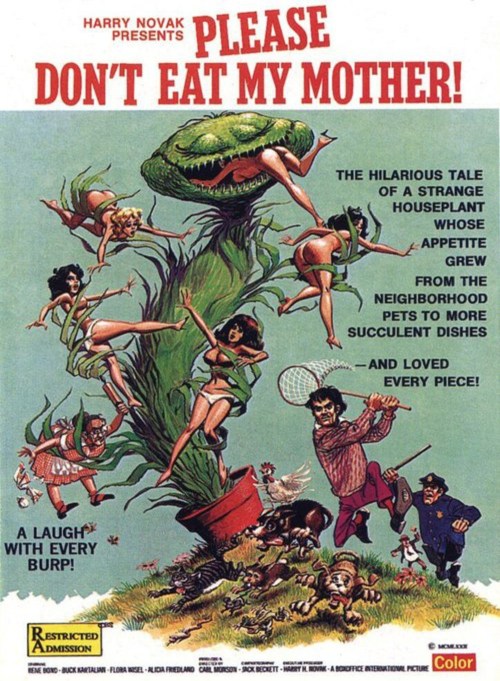
Henry Fudd (Buck Kartalian) is a man in his 40’s whose still living at home with his mother (Lynn Lundgren) and very down on life. One day while walking down the sidewalk he passes by an outdoor florist shop and becomes intrigued by a small plant that he is convinced spoke to him. He buys it and brings it home. As the weeks go on he realizes that the plant really can talk, but it also has an insatiable appetite and forces Henry to feed it. First it begins with insects, then dogs and then finally…people.

This is a low budget remake of Little Shop of Horrors, but it fails to have the same sense of fun and imagination. The biggest problem here is the plant itself. In the first film is was created in a way that made it seem kind of real, but here it looks quite tacky. The flower’s lips do not match the way it speaks making it look like very bad puppetry. Supposedly it can also see and hear, but nowhere on the thing are eyes and ears present. It grows to gargantuan heights and when it does so does the pot that it sits in, but how does that happen? Some may argue that Henry replants the flower into bigger pots as it grows, but this should’ve been either shown or inferred and it isn’t. The plant’s voice has a banal speaking quality like that of an airline stewardess with no interesting inflection. The way it eats people is equally boring. You never actually see it happen as the camera conveniently cuts away as the person moves in closer to it and then later cuts back with the plant burping and having acid indigestion.

The plot is threadbare and the majority of time has nothing to do with the central story. Instead the viewer gets treated to long, drawn out segments of couples making out in a car while our protagonist and a few other peeping toms look on. The sex by today’s standards is quite sterile and the innuendos that get bounced about wouldn’t elicit a chuckle from even a 7th grader.

The only thing that saves it to a degree is the performances by its cast. Kartalian, who at one time was a professional wrestler, is surprisingly engaging and I found his skipping down the city’s sidewalk after he buys the plant to be quite amusing. Lundgren as his meddling and snoopy mother is also funny even though she doesn’t look much older than him and in some ways could easily have been his same age. The film’s director Carl Monson is fun as well as he appears in a hammy bit as a police detective.

Unfortunately despite the noble efforts by its cast this thing is a cheesy mess and in no way worth seeking out while also being a complete embarrassment to all those involved.

My Rating: 2 out of 10

Released: March 3, 1973

Runtime: 1Hour 38Minutes

Not Rated

Director: Carl Monson

Studio: Box Office International Pictures

Available: DVD (Something Weird Video)