Towing (1978)

towing

By Richard Winters

My Rating: 2 out of 10

4-Word Review: Fighting a corrupt company.

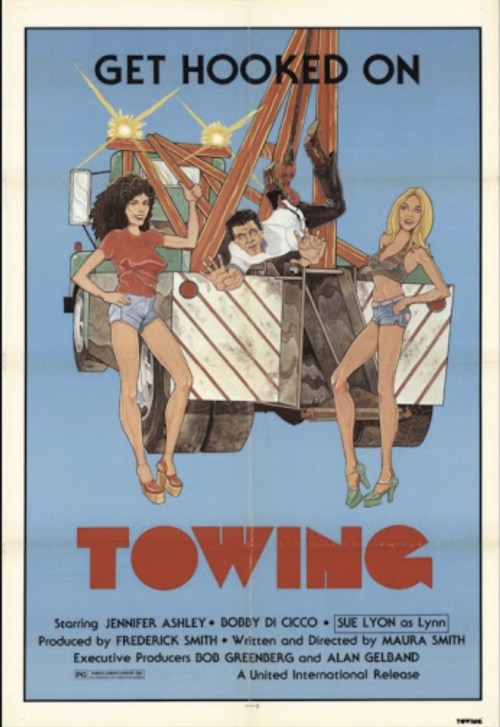
Lynn (Sue Lyon) and Jean (Jennifer Ashley) are two friends who work at a bar and become increasingly aware of a corrupt towing company in town run by Butch (J.J. Johnston) that tows away cars for questionable reasons and then demands hefty fees for the owners to get them back. Many people in the city of Chicago have been affected and are considering starting-up protests, but when Jean gets fired from her job when a customer has his car towed that she parked is when things really get going. She then gets a job at a gas station across the street from where the towing company is located. She and Lynn as well as Lynn’s new lawyer boyfriend Chris (Joe Mantegna) trick Butch into towing away the Mayor’s daughter’s car, which soon gets him in on notice with the mayor himself.

Although she’s worked on several documentaries, for feature films this was a one-and-done project for writer/director Maura Smith as she hasn’t done another one since. The film looks cheap right from the start and initially I feared this was going to be rock-bottom fare, but it does improve enough to have a slight amiable quality. The story though is too threadbare to hold much interest and in attempt to ‘go for something deeper’ incorporates a side-story dealing with the challenges of being a single woman and going through a lot of empty, dead-end dates, but these segments don’t mesh with the frivolity and overall silliness of the rest and ultimately give the film an amateurish feel.

This obscurity’s biggest claim-to-fame is that it marks both the beginning and end of two careers. For Joe Mantegna this was his film debut and he does have one funny moment, probably the only funny moment of the whole film, where he tries to connect the chains of a tow truck to a car, but being a lawyer he doesn’t really know how to do it. For Sue Lyon this was her final starring role as her brief appearance in Alligatorwhich she did 2 years later was basically just a walk-on. This was also the final time she wore her patented long blonde hair as it was after this that she became a brunette and then ultimately raven-haired. For the most part she seems to be having fun while sporting an engaging smile and amused laugh throughout. She even at one point puts on a wig and pretends to be a hooker and in another part disguises her voice to sound like an old woman, but the production was about as low budget as you can get and I can see why she felt staying in the business wasn’t going to be worth it if this was all the better she was going to be offered.

Jennifer Ashley lends unique support as the flirtatious one who exudes a sensual energy and Johnston, who was at one time an amateur boxer who has written 4 books on the subject, is solid as the heavy and even, despite the script being written by a woman, allowed say to the C-word. My favorite though was Steven Kampmann, probably best known for playing Kirk Devane in the first two seasons of ‘Newhart’ before turning his energies full-time to screenwriting, who plays an angry citizen who helps the two women get back at the towing company though having him break-off to commit hi-jinks of his own along with his girlfriend (played by Audrie Neennan) takes away too much from the central lead characters and dilutes the plot.

The on-location shooting done in Chicago is nice especially with the way it focuses on the working class neighborhoods though I was surprised that even though it was filmed in October and November the scenery already looked quite cold and the actors appear to be shivering as they say their lines. The cool soundtrack has a funky beat and fun lyrics. Had the music been sold separately it would’ve attained a lot of fans and helps give the film some much needed personality and distinction that it otherwise lacks.

Alternate Title: Who Stole My Wheels?

My Rating: 2 out of 10

Released: May 5, 1978

Runtime: 1 Hour 16 Minutes

Rated PG

Director: Maura Smith

Studio: United International

Available: Amazon Video

C.O.D. (1981)

cod1

By Richard Winters

My Rating: 1 out of 10

4-Word Review: Signing-up bra models.

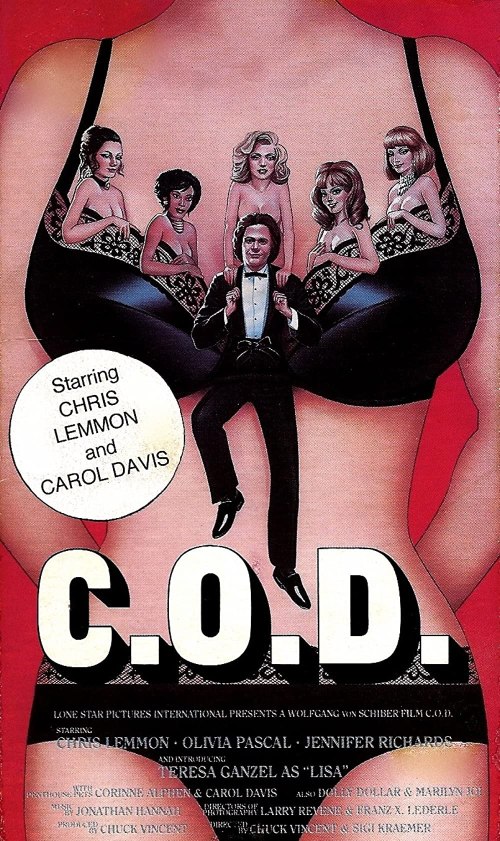
T. B. Dumore (Nicholas Saunders) is the aging owner of the Beaver Bra Company who’s finding that consumer interests in their product is waning, so he comes-up with what he feels is a ‘can’t-miss’ campaign, which entails them bringing-in 5 world famous women, including the President’s daughter (played by Teresa Ganzel in her film debut) to model their bras in their new ads. Albert Zack (Chris Lemmon), the company’s advertising salesmen, is commissioned to seek out the women and get them signed to a contract. Albert feels the task is monumental, but uses the help of Holly (Olivia Pascal), a beautiful German woman that he meets as he travels the globe to find the 5 women, to help him do it.

This film was directed by Chuck Vincent, who gained notoriety in the 70’s for directing a lot of X-rated fare, but decided to break into mainstream movies in an attempt to list a more ‘respectable’ product on his resume. His first stab at ‘legit’ filmmaking was American Tickler, a slap-dash, skit oriented parody of the current hit movies of the 70’s that was universally derided by both critics and audiences alike. This feature marked his second go at ‘legit’ that fared even worse and sent him pretty much back to porn making where he was slightly better until dying at the young age of 51 from AIDS in 1991.

At least with the porn flicks they had some redeeming value, namely helping those get-off while this movie offers nothing. To call the humor mind-numbingly lame would be an understatement, but the plot, which is incredibly stupid to begin with, goes nowhere and filled with a lot of cheap unimaginative gags that wouldn’t impress a 4-year-old. There isn’t even any nudity, a little bit, but not as much as you’d expect making you wonder what exactly was the audience that they were aiming for as the insipid comedy alone was clearly not going to cut-it.

Chris Lemmon, the son of the far more famous Jack Lemmon, is the one who should be really embarrassed. His father prodded him to become a professional pianist, of which he’s apparently quite good at, but Chris wanted to follow in his father’s foot steps and get into acting. Some children of famous stars, like Michael Douglas, the son of Kirk, can end up having a flourishing career of their own, but Chris’ was nothing to write-home-about mainly because of being in cheap-o stuff like this making me believe his dad knew what he was talking about when he prodded him to stick with the piano playing. It’s not like his acting is bad, he resembles his father with a fuller head of hair, but the material gives him little to work with.

Unbelievably there are a few scenes that had me chuckling a little. The best one is where a guest at an upscale dinner party is forced to fight with a live lobster on his plate because Lemmon, who was pretending to be a gourmet cook, didn’t have the heart to kill it, which had potential, but needed to be played-up more. Everything else though falls flat. Had they approached it in a satirical vein, or had a synopsis that people could actually relate to, then maybe, but playing it as an unrestrained farce that nobody asked for is a dismal failure that’s best left at the bottom of the forgotten movie vault shelf.

Alternate Title: SNAP! 

My Rating: 1 out of 10

Release: July 3, 1981

Runtime: 1 Hour 36 Minutes

Rated PG

Director: Chuck Vincent

Studio: Metro Film

Available: dvdlady

Ice House (1989)

ice1

By Richard Winters

My Rating: 4 out of 10

4-Word Review: Transient wants girlfriend back.

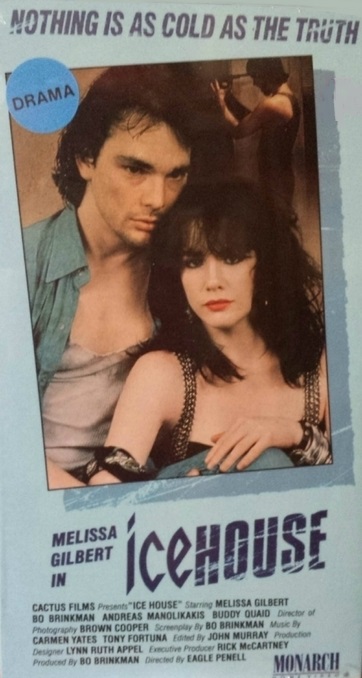
Pake (Bo Brinkman) and Kay (Melissa Gilbert) grew up in a small town in Texas and were high school sweethearts. Despite having a good paying job in the Texas oil fields Pake longs to pursue his dream of making it in the music industry, so he and Kay head-off to Hollywood, but Pake finds it more challenging than he thought to break into the business and be discovered. He becomes homeless and eating out of trash cans. Kay turns to prostitution and eventually meets Vassil (Andreas Manolikakis). He is a Greek immigrant looking to marry her so he can become a permanent U.S. citizen while Kay likes the fact that his family has money and feels if she marries him she’ll have a more stable life than with Pake, but just one day before the wedding Pake arrives at Kay’s cramped apartment wanting to win her back.

This was the third film directed by Eagle Pennell who shot to fame with his break-out indie flick The Whole Shootin’ Matchthat won him a Hollywood contract, which didn’t pan out, but it did at least get him enough financing to make a couple of other movies, with this one being one of the few that he did in color. Yet, the production, like in his first film, is mired in the constraints of shooting on a threadbare budget including having the entire thing take place in one tiny apartment. Some films have shot things in one setting and gotten away with it, but this location lacks any visual flair and quickly becomes static. There’s a few cutaways to flashback scenes shot back in Texas, but they aren’t particularly interesting. The most frustrating aspect is having Pake describe a surreal dream he had, but instead of having it recreated onscreen like a smart movie should we just see his sweaty face talking about it, which diminishes its impact.

Having Melissa Gilbert, better known as Laura Ingalls Wilder in ‘Little House on the Prairie’ helps a little though she’s a long way away from Walnut Grove including being dressed in a provocative 80’s style hooker outfit. I realize she wanted to prove herself as an actress by taking on more edgy fare in order to get away from her ‘goody-goody’ image and she certainly does that here where at one point she even described guys ‘cumming in her mouth’ and does a simulated sex scene with Vassil while Pake, tied-up, is forced to watch. Some may be impressed with her acting range, or shocked, but in either case, she’s effective.

Brinkman, who also wrote the script, which is based on his play ‘Ice House Heat Waves’ is excellent in his role as well, but the dialogue needed serious work. Too much of a colloquial sound including such overused phrases as ‘you can talk until you’re blue-in-the-face’ and ‘you don’t have a pot to piss in’, which gives the conversation a remedial quality and like it was thought up by a teenager. At one point the character even describes Hollywood as being ‘Hollyweird’ and he thinks he’s being clever in saying it even though that’s been a mocking phrase used by many to describe the California scene and shows how a script rewrite by a professional script doctor was needed.

Despite the flaws I still found on a modest scale for it to be strangely compelling. Maybe it’s Pennell’s way of capturing Texas showing a couple carrying on an elicit affair under the nigh sky alongside a dark oil rig that gives it a moody vibe that I liked. Pennell, who later became homeless himself, seems to understand the desperation of the characters, which helps give it some grounding and may make it worth it for viewers who are patient.

My Rating: 4 out of 10

Released: June 16, 1989

Runtime: 1 Hour 21 Minutes

Not Rated

Director: Eagle Pennell

Studio: Cactus Films

Available: None

Figures in a Landscape (1970)

figures1

By Richard Winters

My Rating: 5 out of 10

4-Word Review: Chased by a helicopter.

Ansell (Malcolm McDowell) and MacConnachie (Robert Shaw) are two men on the run in the middle of a bleak, desolate desert. What they are escaping from is never clear, but they’re constantly hounded by a helicopter that seems intent at stopping them. They come upon a small village and steal food and supplies and then continue on their escape, but find trying to get along with each other is just as challenging as avoiding the copter.

I’m a big admirer of Joseph Losey’s films and I also enjoy movies that have an air of mystery and don’t feel the need to have to explain everything, but this attempt at avante garde doesn’t work. The Barry England novel or which this is based and received high critical praise when it came out in 1968 at least made it clear that these two were soldiers who were deserting for whatever reason, but the movie doesn’t even mention this. We’re simply left with a nothing-burger of seeing two guys we have no emotional connection with scurrying around the countryside, which gets old fast and has nothing to keep it compelling though the bird’s eye shots of them on the ground looking like dots as they run at least allows it to live up to its title.

Fans of the film will admit that the story is lacking, but the helicopter sequences and stunt work more than makes up for it, but I found this aspect to be underwhelming. The camerawork of showing the copter bearing down on them while splicing in shots from the pilot’s point-of-view is well handled, but it’s not as exciting as could’ve been because when the pilots have a chance to shoot the men they don’t. McDowell’s character explains that they (the helicopter pilots) are just ‘toying with them’, but the viewer can’t be expected to get wrapped-up in a silly cat-and-mouse contest that has no life or death consequence.

Much of the blame for why this comes-off more like a misguided experiment than an actual movie, can be attributed to Shaw, who was given permission to rewrite the script and promised to have it completed by the time shooting began, but didn’t. Apparently revisions were being made on a daily basis and no one knew where the plot was going, or how to end it, which ultimately makes for a flat and detached viewing experience.

The two leads do quite well with McDowell interesting as the younger of the two, but still more emotionally mature. Shaw is equally fine giving off a maniacal laugh that I’ve never heard him do before. Their bout with diarrhea at a most inopportune time is amusing. While some may find it gross it’s something that could happen to those who haven’t eaten in awhile and feeding off canned food, so in that way the movie tackles a realistic subject other escapees-on-the-run movies shy away from though the shaving aspect was a problem in reverse. I didn’t understand why Shaw would feel it’s so important for them to remain clean shaven when they’re just trying to survive and there’s no explanation for how they were able to remain without beards at the beginning when they were running around with their hands tied behind their backs.

In any case the movie desperately needed a conclusion as way too much is left open-ended. There should’ve been a final twist, like in an episode of the ‘Twilight Zone’ that makes sitting through it worth it. Ultimately it lacks focus with a concept better suited for a novel and never should’ve been made into a movie in the first place.

My Rating: 5 out of 10

Released: July 14, 1970

Runtime: 1 Hour 50 Minutes

Rated R

Director: Joseph Losey

Studio: 20th Century Fox

Available: DVD, Amazon Video

Super Fuzz (1980)

super fuzz1

By Richard Winters

My Rating: 2 out of 10

4-Word Review: Cop acquires super powers.

Dave (Terence Hill) is a newly hired policeman sent to do tasks non of the other officers want to do, which is why he’s given the assignment to deliver a speeding ticket to a remote Native American village deep within the Florida Everglades. Once he arrives he finds the place evacuated due to a secret nuclear missile test being done that he wasn’t aware of. When the bomb goes off and he becomes exposed to the radiation he begins to have various super powers including: super human strength, speed, telekinesis, psychic ability, and even hypnotism. He puts these new found abilities to use during his police work even though his partner, longtime cop Bill Dunlop (Ernest Borgnine), is skeptical about it at first. While the powers come in handy in their efforts to thwart a local counterfeit ring Dave soon realizes that there’s one hitch; if he sees the color red, which was the same color as the plutonium explosion, his powers will temporarily cease.

This was the third and final attempt to make Hill, who’s quite legendary in Italy especially in films where he teamed with Bud Spencer, into an American star. The first two attempts that he did here, Mr. Billion, March or Diewere flops and this effort, which was aimed solely at the kiddie crowd, wasn’t much better and its dismal failure both critically and financially sent Hill back to Europe permanently. Many adults who grow up in the 80’s will remember seeing it on Pay-TV where it was in heavy rotation. I recollect catching bits and pieces of it on Showtime, but the only thing that stood out for me was its cheesy soundtrack that had a chorus singing: ‘Super, Super, Sup-eee-rrr’ every time Dave did one of his tricks.

The film’s biggest downfall are the special effects that amounts to a lot of tacky, fast-action photography that can be seen in a wide assortment of other mindless low budget fare and is nothing special. There’s also just not enough trickery, too much dim witted dialogue, and lame humor in a plot that evolves too slowly to hold the interest of either a child or adult.

Having Dave acquire all these powers after being exposed to nuclear energy instead of getting terminal cancer like anyone else would makes no sense. The story would’ve been helped somewhat by reeling-in the powers aspect and giving him only one special ability instead of allowing him to do virtually anything making him almost like superman. Entering in more limitations than just the color red would’ve, if done right, brought in some tension and creativity, which is otherwise lacking.

While it’s sad in some ways to see a legendary, Academy Award winning star like Borgnine in such mindless tripe he is the best thing in it as he provides much needed energy, which help contrast Hill’s overly laid-back demeanor. Watching the tubby guy dance on top of a giant balloon, or try to dance with Joanne Dru is funny as are his overreactions, which would be considered cartoonish in any other movie, but here only helps to lift it up from its simplistic foundation. It’s also a great chance to see Dru, her first movie appearance in 15 years and also her last, ham it up as the villainous of which she’s pretty good.

The ending though, where Hill is somehow able from a tiny piece of gum to form this gigantic bubble is where the thing, which wasn’t floating too well to begin with, really sinks. How can Dave’s super powers get a piece of gum to expand far more than it should and since bubbles from bubble gum are very flimsy and can easily pop why doesn’t this one end up doing the same? You can also clearly see the seam of the sewn fabric on the bubble, which an actual bubble would never have.

While the movie was notoriously ridiculed by the critics at the time of its release, some critics today have taken more of a softer stance. Maybe it’s because they remember growing up watching it on TV, but feelings of nostalgia doesn’t make it any less stupid. This isn’t even good for kids who I believe are more discerning than adults think and will right away recognize the dated quality, tacky effects and won’t be impressed. 

Alternate Title: Super Snooper

My Rating: 2 out of 10

Released: September 18, 1980

Runtime: 1 Hour 37 Minutes

Rated PG

Director: Sergio Corbucci

Studio: AVCO Embassy Pictures

Available: DVD, Amazon Video

A Town Called Bastard (1971)

town

By Richard Winters

My Rating: 6 out of 10

4-Word Review: Where is rebel Aguila?

In 1895 a rebel leader named Aguila (Robert Shaw) massacres a small Mexican town. Ten years later he resides as a reformed priest in a town run by the corrupt Don Carlos (Telly Savalas). One day a beautiful widow named Alvira (Stella Stevens) arrives looking for the man who killed her husband during the massacre from 10 years earlier. Don Carlos agrees to help her despite having no idea who the killer is, or that it might have something to do with the priest. Things get more complicated when the army colonel also arrives determined to seek out justice by finding the elusive Aguila.

The film has many issues most of which is it comes off as a spaghetti western wannabe that has some of the entertaining elements of those films, but put together in a clumsy fashion. The town really doesn’t resemble an actual place, or a destination that people would live in since there only seems to be about 4 buildings, a church, a salon, and a couple of shops, making me wonder where all the townspeople that are seen milling about resided. There’s also an overuse of dubbing. Al Lettieri, who can be a spectacularly great villain especially in his unforgettable performance in The Gatewayand while he plays another bad guy here, but he gets wasted since his voice is dubbed with a high pitched one that takes away from his menacing quality. Even Robert Shaw has his voice dubbed from time-to-time, which is quite disconcerting.

The narrative is confusing as it jumps back and forth from the present to the past, but doesn’t make it clear that it is doing this, so you’ll see scenes with Shaw at the beginning as a rebel leader and then suddenly he’s a priest without explaining how the two are connected. The Fernando Rey character and the actor playing Alvira’s husband look too much alike making me think, especially since the story jumps between different time periods, that the characters were one and the same with one being slightly younger with the scenes done 10 years earlier though that ends up not being the case.

The cast does help particularly Savalas who seems to relish playing the bad guy and although he’s done this type of part a few too many times is still perfect, but his character gets killed-off too quickly and way too easily, which is a big letdown since his presence helps drive the movie. He gets replaced in essence with Landau, who plays a sociopath in the same over-the-top way, but a good film needs only one crazy not two men playing the same character in the same type of way until it becomes like a caricature.

Shaw is of course quite good though his character for the most part hangs back and doesn’t do much until near the end. The opening scene where he leads the attack on the village has energy, but the shot of a long line of spit oozing out of his mouth as he shouts orders left an icky lasting impression. Stevens is quite beautiful in a natural way without the help of make-up and this was the last film where she had a youthful look as she appeared increasingly more middle-aged after this one.

The nasty subtext was the one thing that makes it fun. There’s a lot of stuff shown here that they just couldn’t do today like the opening bit where the townspeople are viciously gunned down inside their church and the gunmen than laugh and celebrate while the dead, bloody bodies lay at their feet. The scene where a desperate man gleefully hangs his own, innocent wife in an attempt to save himself is memorable and it’s this type of element that keeps it interesting because you just don’t know what it’s going to show next and in the process reflects the ugly savagery of the true, old west.

Alternate Title: A Town Called Hell

Released: June 17, 1971

Runtime: 1 Hour 37 Minutes

Rated R

Director: Robert Parrish

Studio: Benmar Productions

Available: DVD, Blu-ray (Import Non-English), Amazon Video, Plex

Fandango (1985)

fandango

By Richard Winters

My Rating: 6 out of 10

4-Word Review: The privileges of youth.

Gardner (Kevin Costner), Phil (Judd Nelson), Kenneth (Sam Robards), Dorman (Chuck Bush) and Lester (Brian Cesak) are five college friends from the University of Texas in 1971, who are getting ready to celebrate their impending graduations when Kenneth announces that he’s been drafted into the Vietnam War and Gardner has too. To help lighten the mood the boys decide to take an impulsive road trip where they travel to unique areas of Texas, including searching for buried treasure in the Rio Grande, sleeping under the stars at the old filming site of Giant, and even taking part in parachute jump near Pecos.

This film is based on a 24-minute film that Kevin Reynolds directed while attending the USC film school. In that movie the boys were all from Baylor University and traveled to Pecos, Texas in order to test the courage of their most frightened member and use the help of eccentric flight instructor Truman Sparks, played by Marvin J. McIntyre, who reprises his role in this one, to teach and train the young man on how to jump from a plane. The student film managed to catch the attention of Steven Spielberg, who was so impressed with it that he offered Reynolds the chance to turn it into a full-length movie. Unfortunately once it was completed Spielberg for whatever reason disliked it and had his name removed from the credits while also refusing to help distribute it forcing the film to suffer a limited engagement though in recent years its cultivated a cult following.

The movie does have many funny moments including the opening bit where Phil’s parents (Stanley Grover, Jane A. Johnston) visit his frat house during one of their raucous parties. The sky diving sequence, which gets copied shot-for-shot from the original is quite engaging as is their attempts to hook their disabled car up to a speeding train. Costner is also very amusing, he had actually auditioned for the student film, but lost out, but when he found out it was going to be remade into a feature film he re-auditioned. I’m so used to seeing him play serious roles that I didn’t realize he had such great comedic timing, but for the most part, he’s the life of the movie.

Where the film fails is that it’s too unfocused. The setting is supposedly 1971, but you’d hardly know it and very little effort is made to give it a feel of that era. Even the opening song sung by Elton John that gets played by over the credits was released 2 years after the events in the movie supposedly took place, so to keep it accurate with the time setting only songs that came out in 1971, or before should’ve been used.

The side-story involving Gardner having dated Kenneth’s fiancee, played by Suzy Amis, seems unneeded and really doesn’t go anywhere. Normally, in most real-life friendships, having a friend date and ultimately marry one’s former girlfriend could be a deal-breaker that would lead to a lot of jealousy and potential anger. I’m sure there’s a minority of friendships where the participants would be mature enough to overcome this issue, like here, though this isn’t interesting, so why bother introducing this wrinkle if its dramatic elements aren’t going to get explored?

The part where it really jumps-the-shark is during the planning of the wedding, which is too full of logic loopholes to be able to buy into even on a whimsical level. It features Gardner and Phil being able to pull off his massive wedding ceremony in the town’s square on very short notice by conning too old guys sitting on a nearby park bench into agreeing to help out, which leads to more people getting involved until the whole town, even the mayor, takes part in a wedding ceremony, and its preparation, of people they don’t even know. If anyone can show me an example in the whole history of the world of when this has ever happened in reality then I’ll take it back, but otherwise I found it ridiculous.

The ending is way too abrupt. The whole reason Phil agreed to go on the parachute jump was for Kenneth and Gardner to agree to not dodge the draft, but whether they withhold their end of the bargain is never shown. Everyone just basically wanders off like they have better things to do, which is how the viewer, despite some fun moments, ends up feeling about the movie, which would’ve had more impact had it chucked the whimsy and had a little more serious drama.

My Rating: 6 out of 10

Released: January 25, 1985

Runtime: 1 Hour 31 Minutes

Rated PG

Director: Kevin Reynolds

Studio: Warner Brothers

Available: DVD, Amazon Video, YouTube

Diamonds (1975)

diamonds2

By Richard Winters

My Rating: 3 out of 10

4-Word Review: Testing a security system.

Charles and his twin brother Earl (both played by Robert Shaw) share an intense rivalry that comes-out during their judo karate contests. Charles wants to top his brother at everything including getting the better of him at his own expertise, which is that of security specialist who has created a vault in Tel Aviv that holds a cache of diamonds and is supposedly impenetrable. Charles is determined to rob it and uses the help of expert safe crackers Archie (Richard Roundtree) and Sally (Barbara Hershey).

While the film has some great location shooting of Israel making it seem almost like a travel log of the region and the final third where the three try to pull off the elaborate robbery does get a bit intense, though it’s nothing special, the movie on the whole falls flat. A major reason is that it was directed by Menahem Golan, who along with his cousin created the notorious film production company The Cannon Group, which produced a lot of cheesy, bubble gum action flicks during the 80’s. This film works very much like those with poor character development, in fact there’s really no development at all, and a plot that steals all sorts of elements from other and better heist movies.

Overall it’s pretty much the same storyline as $, Perfect Fridayand to a lesser extent Topkapibut all of the things that made those movies so much fun to watch goes missing here. The lack of interplay between the characters is the biggest issue. Shaw, Roundtree, and Hershey are all great actors, but they’re not given anything interesting to say. The twin brother concept does not get played-up enough and Charles’ twin is seen just a few times with the only difference being a shaggy wig that Earl wears as opposed to Charles crew-cut, but both brothers have the exact same mole on the left side of their mouths and while identical twins can have many similarities, skin blemishes isn’t one of them. Shelley Winters also pops-up sporadically as an American tourist, but her part is completely inconsequential and not needed at all.

The heist itself does involve some sophisticated maneuvers including having them walk on the ceiling by using a suction-cup type contraption, but the film fails to show any of the preparation. In the other heist films seeing how the crooks rehearsed the robbery and working through their disagreements and divergent personalities was half-the-fun, but that all goes missing here. How Shaw goes about meeting Roundtree and company is pretty flimsy too as he catches them during the middle of an attempted safe cracking and then hires them on-the-spot supposedly because he’s been monitoring them for 5 years and feels they’d be a perfect match for his scheme, but why should it take him so long to come to this conclusion and these safe crackers must not be as cunning as they seem if they’ve been watched closely for 5 years and not had any hint that it was going-on.

Spoiler Alert!

The crime itself gets pulled-off way too easily and there’s no moment where a crucial mistake gets made, or some sort of unexpected slip-up, so things never get as intense as it could’ve. There’s also an added character that gets thrown-in who kidnaps the son of the security guard in order to get the guard to give-out the combination to the safe, but no scenes are shown for how Shaw and company met this kidnapper, or what deal he made with him in order to get him to agree to along with their plans.

The finale has a very anti-climactic feel as Roundtree is able to retrieve the diamonds, but then Shaw forces him to put them all back, so they come away, after all that effort, empty-handed. Ultimately Shaw does hand him a $100,000 check, but this was paltry compared to the $10 million they would’ve gotten with the diamonds making the viewer feel like the film wasn’t worth sitting through if the characters just end up in the same situation that they were in when it began. While no movie that has Robert Shaw in it can be completely bad as his presence alone can elevate even the most inept material this one unfortunately does come close.

My Rating: 3 out of 10

Released: October 22, 1975

Runtime: 1 Hour 48 Minutes

Rated PG

Director: Menahem Golan

Studio: AVCO Embassy Pictures

Available: DVD-R

Double Deal (1983)

double1

By Richard Winters

My Rating: 6 out of 10

4-Word Review: Double crossing each other.

Christine (Angela Punch McGregor) is a young model married to Peter (Louis Jourdan) a much older man. While Peter is rich and they live in a big house their marriage lacks passion and Christine becomes bored with her existence while Peter continues to have a long-running affair with his secretary Miss Stevens (Diane Craig). One day while out shopping Christine meets a handsome young man (Warwick Comber) on a motorbike. Even though she doesn’t know his name she becomes entranced with his good looks and carefree demeanor. He’s the exact opposite of the stuffy and exacting Peter, so she decides to run-off with him. The two go on many quirky adventures including robbing a grocery store while in clown make-up not so much because they need the money, but just for the thrill of it. They then plot a scheme where the man will pretend to have kidnapped Christine and insist that Peter relinquish his prized opal gemstone in order to get her back. Peter complies, but in the process sets off an array of unexpected twists where nothing is as it seems.

Normally I like films with an offbeat slant and this one certainly has its moments, but the characters aren’t well fleshed-out, which makes for a placid experience. A good case-in-point is the way Christine comes upon the young man, which is while she’s in a shopping center parking lot. Having found that someone has double parked their car behind hers she patiently waits for the owner of the vehicle to come out and move it, but in the process the young man comes along, and noticing that the keys of the car are still in the ignition, jumps into the car and drives away with it while also following Christine home. Once there the two proceed to tear up the place before she packs her bags and runs off with him onto the open road without ever even learning what his first name is.

While as an actress McGregor is quite competent she doesn’t have the looks of a fashion model, which she herself admitted to, and her role and that of the secretary should’ve been reversed with Diane Craig looking far more the model type especially with her piercing blue eyes. Comber is a bit off as the handsome stranger as well. He certainly has a hunky build and chiseled face, but his droopy eyelids give him a odd, sad eye appearance. I also got tired of seeing him constantly wearing a silver bike riding suit that seemed to resembled more of an outfit worn by someone on a spaceship.

Jourdan’s presence helps a lot. This was at the twilight of his career where he was no longer getting leading man roles in his home country of France and therefore open to accepting offers abroad, which is what lead to him traveling to Australia to do this. The filmmakers wanted a big name star to help give the production stature and the movie definitely works better with him in it though the scene where he and McGregor are in bed together was reportedly quite awkward for the two stars given their wide age difference of almost 33 years and took many takes to film.

There are a few memorable moments with my favorite being the grocery store robbery, which occurs in a small outback town, where Christine accidentally releases the money they have just stolen into the air as she gets into the getaway car causing the store owners, who had just been robbed, to run out and busily try to recollect the money blowing in the wind. However, the story lacks soul. The twists get thrown in for the sake of being offbeat, but the characters never grow, or resemble real people in any way. The winding plot ultimately burns out and ends with a fizzle.

My Rating: 6 out of 10

Released: September 15, 1983

Runtime: 1 Hour 30 Minutes

Not Rated

Director: Brian Kavanagh

Studio: Roadshow Films

Available: dvdlady.com

A Reflection of Fear (1972)

reflection

By Richard Winters

My Rating: 4 out of 10

4-Word Review: His daughter is disturbed.

Marguerite (Sondra Locke) is a lonely teen girl living with her mother Katherine (Mary Ure) and grandmother Julia (Signe Hasso). Through her alienation she creates an imaginary world with her dolls including one named Aron who she routinely has conversations with, but who also argues with her from time-to-time. Marguerite’s estranged father (Robert Shaw) comes to visit in order to ask Katherine for a divorce, so that he may marry Ann (Sally Kellerman). He also starts to rekindle things with Marguerite though Ann feels the two are getting much too close and fears they may be forming an incestuous relationship. Soon after both Katherine and Julia turn-up dead having been bludgeoned to death by a mysterious intruder, but who did the dirty deed? Was it an angry Marguerite, or her father, or was it the doll named Aron, who Marguerite insisted spoke to her even though no one else believed her.

The only reason to catch this obscurity is for the performance of Locke who’s absolutely brilliant. Despite being 27 at the time, she still looked like a teen and her attempt at speaking in an English accent is effective and I almost thought it had been dubbed, but it wasn’t. Her presence completely dominates the film making the supporting players seem almost non-existent and it convinced me that her relationship with Clint Eastwood, in which he according to her autobiography wouldn’t allow her to do any other projects that he wasn’t involved in, was a big mistake as she was clearly, as evidenced here, a highly gifted actress that never got her full due.

With that said I was kind of surprised to see Shaw in a film that didn’t allow him to shine and forced him to take a backseat. I can only imagine the reason that he did it was so he could work with his wife Ure, whose alcoholism had relegated her to only supporting parts toward the end of her career and in fact this was her last film before she was discovered dead in her dressing room at the young age of 42 from an accidental drug overdose. The two, for what it’s worth, do work well together. The hateful looks that she gives Shaw here seem authentic and you’d never know the two were a couple in real-life.

The story, with a screenplay co-written by Lewis John Carlino and based on the book ‘Go to Thy Deathbed’ by Stanton Forbes, has potential, but never gels. The scenario seems like it would’ve been better for a half-hour episode of the ‘The Twilight Zone’ and stretching it to a 90-minute length offered in too many slow spots where nothing much seemed to happen. The only time there’s any action is during the murder sequences, which could’ve been played-up more, otherwise it’s a lot of talk that fails to build-up the suspense or mystery in any interesting way.

Spoiler Alert!

The main problem that I had was that it was obvious to me that the doll was just a projection of Marguerite’s repressed anger, so the big reveal where she’s found to be the killer was not a surprise at all and in a lot of ways just a letdown. Had the filmmaker’s made an attempt to show the doll actually speaking instead of only been glimpsed in a shadowy way, which made it clear that he was just a figment of her imagination, then maybe there would’ve been more suspense because the viewer might actually have been made to believe that he was real, but the way it gets done here is not intriguing.

Having Shaw find out at the end that his daughter was actually a boy just made things even more confusing. Some have lauded this has being the first film with a transgender theme and a precursor to Sleepaway Camp, which is great, but what’s it all supposed to mean? Was Marguerite’s transgender issues the reason for her anger and why she lashed out into murder? Was this also the reason why her mother and grandmother kept her locked away and cut-off from potential friends, or was this instead Marguerite’s choice? None of this gets answered, which ultimately makes the film a pointless excursion.

My Rating: 4 out of 10

Released: November 15, 1972

Runtime: 1 Hour 29 Minutes

Rated PG

Director: William A. Fraker

Studio: Columbia Pictures

Available: DVD-R, Blu-ray