Category Archives: War Movies

Love and Death (1975)

By Richard Winters

My Rating: 5 out of 10

4-Word Review: Attempting to assassinate Napolean.

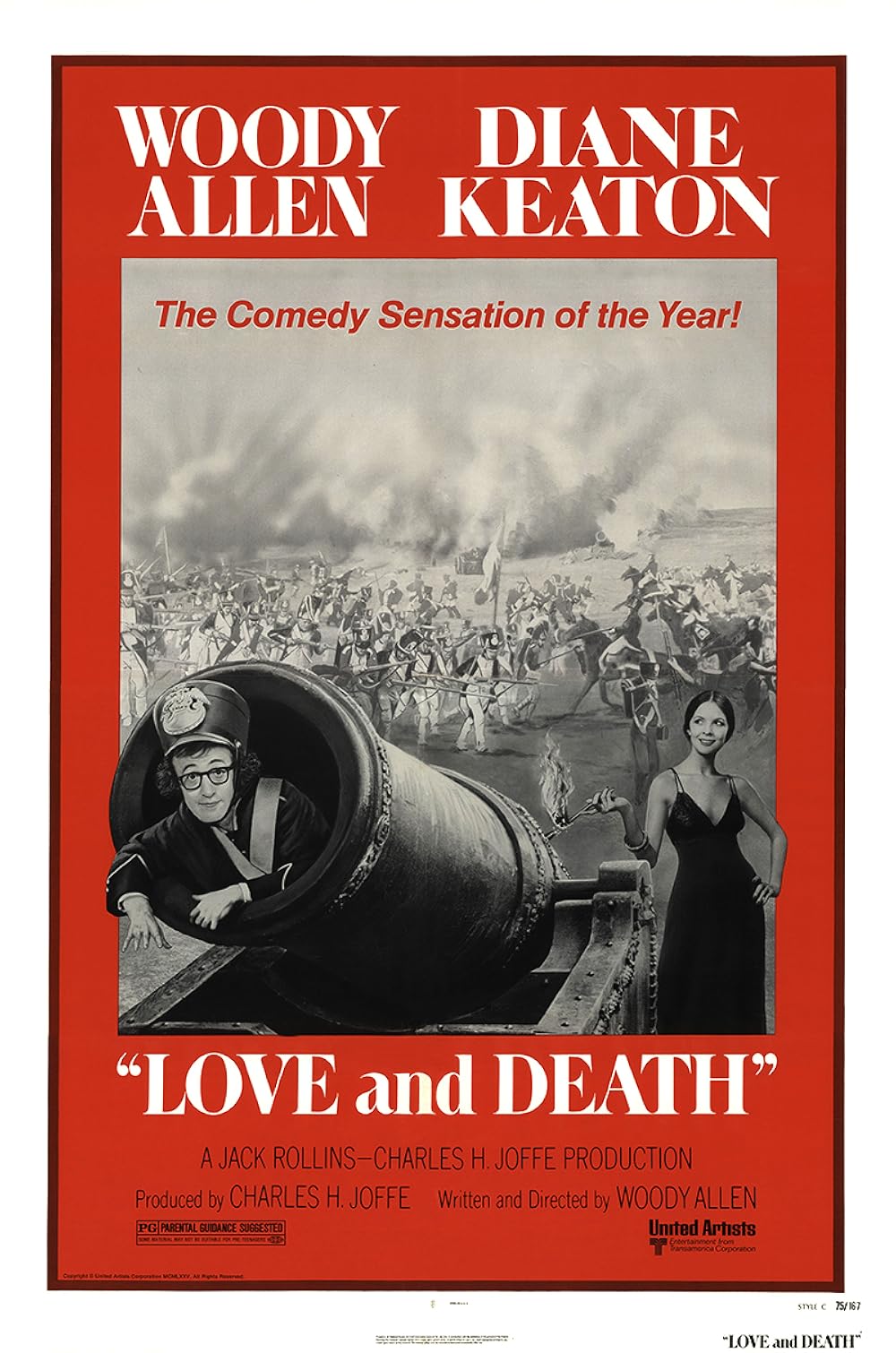
Boris (Woody Allen) is a scrawny guy who gets overlooked by others as his three brothers tower over him. He’s secretly in love with Sonja (Diane Keaton) who he’s been friends with since childhood, yet she’s instead infatuated with Ivan, one of Boris’ brothers. However, none of his brothers are into her, so she marries someone else while Boris remains a bachelor who occasionally fools around with beautiful women like a Countess (Olga Georges-Picot), which causes her lover Anton (Harold Gould) to challenge Boris to a gun duel. Thinking Boris won’t be able to survive the dual Sonja agrees to marry him if he survives, which he miraculously does. Once married they then concoct a plan to assassinate Napolean (James Tolkan) unaware that who they’re really going after is actually an undercover double.

Allen was in the midst of writing a screenplay dealing with a New York couple who try to solve a murder, which became Manhattan Murder Mystery, but was going through a writer’s block, so he began reading a novel about Russian history, which then inspired him to write this script. Since it was nearing the deadline to have a script ready for production, he decided to submit this one, which immediately went into filming while the other one didn’t end up getting completed until 1993.

Many critics and fans at the time liked this one and it ended up making $9 million at the box office off of a $3 million budget with Gene Siskel especially enjoying it as he gave it 4 stars while commenting that he liked Allen’s return to a ‘gag driven dialogue’ versus ‘attempting to develop a story’, but personally for me I felt this was what was wrong with it. While it does start out funny as it parodies 18th Century Russian society and has one really great bit dealing with a ‘hygiene play’ warning soldiers about VD and condoms it does tend to meander quite a bit. The middle part is the most sluggish with many of the gags falling flat almost like he’d run out of ideas and was just trying to desperately throw anything in to keep it going making it come off more like an unending skit instead of a movie.

Allen’s presence while amusing most of the way becomes a bit of a detriment. Much of this can be blamed on the fact that he’s playing essentially the same character that he does in all of his movies. Case in point comes at the beginning before he officially says anything on screen and I thought to myself I bet he’s going to mention something about atheism and sure enough that’s exactly what he does talk about making it predictable and redundant. Would’ve been nice for irony’s sake had he played someone who had a deep belief in God only to lose his faith after he goes through the war, which would’ve created a nice character arc of which there really isn’t one.

There’s also the issue of him having no Russian accent nor making even a slight attempt at one. Granted Keaton doesn’t speak in an accent either though maybe you can chalk it up to her great acting that she still seems of the period anyways while Allen very much comes off like someone who doesn’t really belong there. He repeatedly makes anachronistic statements, which from time to time are amusing, but technically don’t fit within the setting. It actually would’ve made more sense to have Allen simply be a modern-day New Yorker who finds a time machine and gets zapped away into 18th Century Russia and then wanders around making comments about things, which wouldn’t have disrupted the film all that much and besides adding one little scene at the beginning showing him going into the time travel contraption there wouldn’t have needed to be anything else changed. It literally would’ve been the exact same movie and in some ways been a lot funnier, and perceptive, because of it.

It does end on a strong note as it pokes fun of Ingmar Bergman movies and even has Jessica Harper showing up. Yet I still felt most of the way it throws in whatever it can for a cheap laugh with much of the jokes, particularly in the middle, not really landing. Many fans didn’t like the way Allen crossed over to doing drama just a few years later, but after watching this I started to believe he had used up all of his comical concepts that by this time was just repeating itself and thus his foray into more serious subjects was inevitable.

My Rating: 5 out of 10

Released: June 10, 1975

Runtime: 1 Hour 25 Minutes

Rated PG

Director: Woody Allen

Studio: United Artists

Available: DVD, Blu-ray, Amazon Video, YouTube
Johnny Got His Gun (1971)

johnny1

By Richard Winters

My Rating: 4 out of 10

4-Word Review: Left with no face.

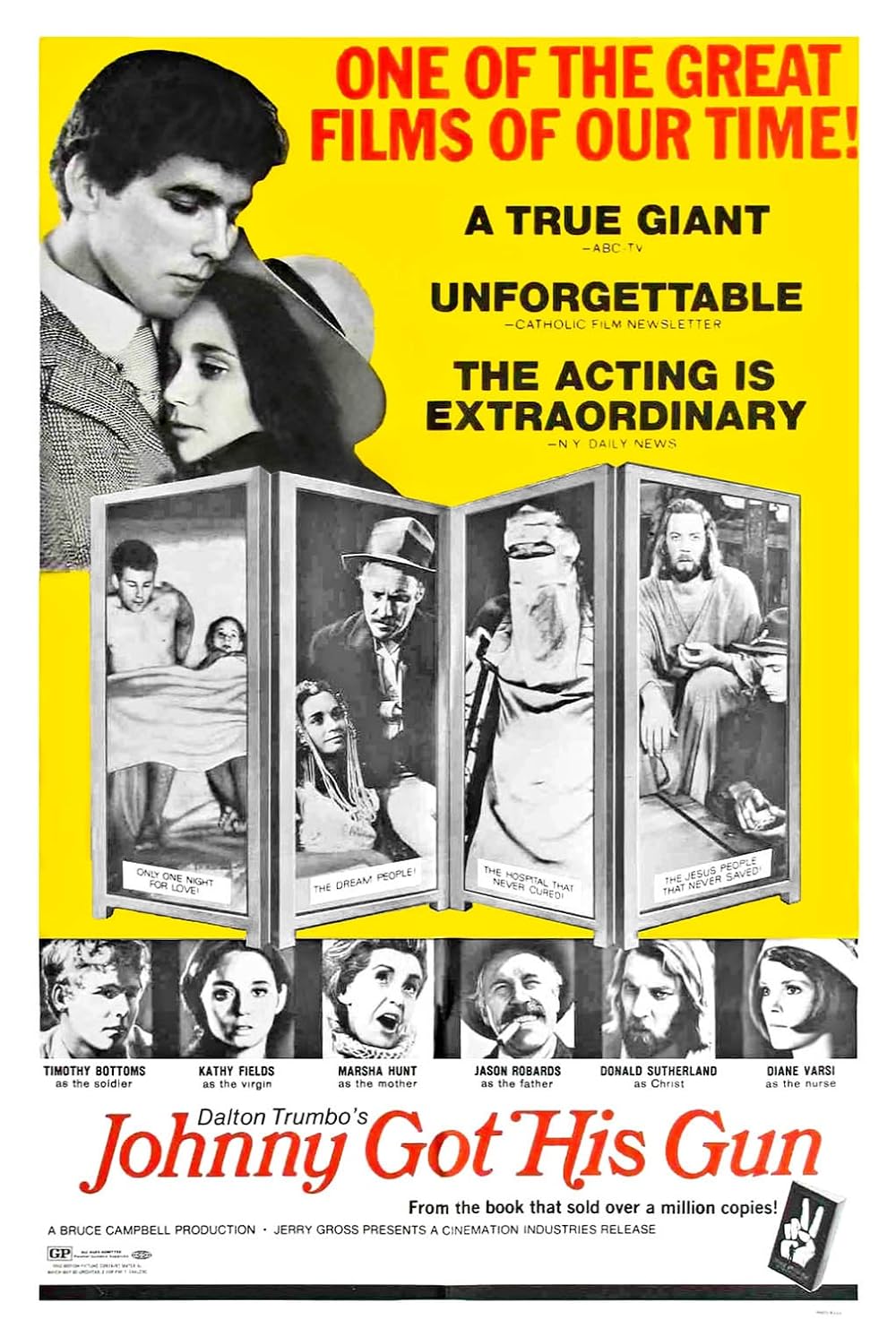
Joe (Timothy Bottoms) finds himself stuck on a hospital bed, covered with a white sheet and unable to communicate with any of the doctors or nurses. As a soldier fighting in WWI, the last thing he remembers is being hit with an artillery shell and he presumes he’s injured and the medical staff is just trying to make him well again, but ultimately, he comes to the conclusion that he’s lost all of his limbs and even his face. The only thing left is his brain, which allows him to relive the memories of the past, but with no ability to express himself, or see or hear anything, like a prisoner in his own body. Locked away in a utility room, so his disturbing condition won’t be seen by others, he tries to suffocate himself but finds even that to be impossible. Eventually he’s able to use morse code by banging his head against his pillow to alert the staff that he’s still conscious and not a vegetable, but his demands to be toured around in a glass coffin in order to show the public the horrors of war go unheeded.

The film is based on the 1939 novel of the same name by Dalton Trumbo, which was inspired by the real-life case of Curly Christian, a Canadian WWI soldier who lost all four of his limbs during battle. The book was met with many accolades from the critics and was even considered for a movie as early as the 1940’s when it was to star a young William Holden, but funding for the project fell through. By the 1960’s when anti-war sentiment grew during the Vietnam years renewed interest in bringing the novel to the big screen mounted and plans were put in place to have Luis Bunuel direct, but yet again funding became an issue and the pre-production was paused for several years until Trumbo himself decided to take it on by working with private investors to get the required capital. The modestly budgeted film was then given a limited release in the summer of ’71 but was never a hit and largely forgotten until revived in 1989 when the heavy metal group Mettalica used footage from the film in their music video ‘One’.

The film has some interesting aspects including having the present-day scenes shot in black-and-white while Joe’s memories and dreams are done in color. Timothy Bottoms, in his film debut, is excellent. For most of the movie we only hear his voice-over of his thoughts, but within that limitation he plays it well and uses his tone eloquently to convey his emotions and inner angst. The supporting cast such as Jason Robards as Joe’s caustic father help give the movie a bit of an edge and Diane Varsi as the sympathetic nurse who shows compassion with Joe’s dismal predicament and quarrels internally about what to do including considering shirking her professional responsibility in order to put him out of his misery, is quite good too.

The structure though doesn’t fully work. The memories of past events, including his home life and upbringing, are too general, stuff that could’ve happened to anybody and thus nothing stands-out. The dream sequences don’t have enough visual flair and are much too talky. Trumbo may be the master of the written word, but his cinematic sense is lacking, and the film drones along putting the viewer to sleep instead of reeling them in emotionally. The anti-war message may have been ground-breaking for the ’30’s, but by the time of the movie’s release there were too many other art mediums saying the same thing, so what gets said here is nothing new and comes-off as redundant and even preachy.

My biggest complaint though is that we never see Joe’s actual physical state. During the whole movie he remains conspicuously covered by a white sheet, which I found to be a cop-out. I wasn’t opposed to keeping what he looked like a mystery for most of the way as revealing it right away would’ve taken away the shock effect, but at some point, it needed to be exposed to the viewers horrified eyes. Just constantly describing something doesn’t work in movies, maybe in books, but in film one should always go for the visual. Not sure why it wasn’t done here. Maybe they thought it would be too costly to create the special effects, or the gruesomeness would sicken the audience, but wasn’t that supposed to be the whole point? By keeping it at a ‘tasteful’ level it misses-the-mark and one of the main reasons why the movie doesn’t have as strong of an impact as it could’ve.

My Rating: 4 out of 10

Released: August 4, 1971

Runtime: 1 Hour 52 Minutes

Rated PG

Director: Dalton Trumbo

Studio: Cinemation Industries

Available: DVD, Blu-ray, Amazon Video

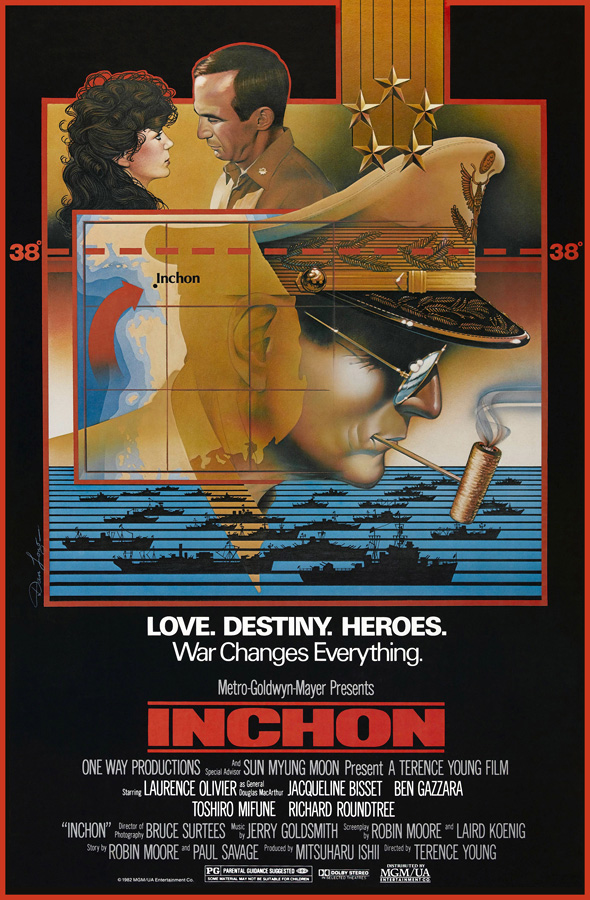
Inchon! (1981)

inchon1

By Richard Winters

My Rating: 3 out of 10

4-Word Review: Turning point in war.

Inspired by actual battles during the Korean War the film centers on the Battle of Inchon, which many consider the pivotal turning point that allowed American forces to achieve victory and was lead by General Douglas MacArthur (Laurence Olivier). While he exudes great outwardly confidence to others he does confide to his wife Jean (Dorothy James) that his age is creeping up on him and he fears he may no longer have the energy or mental acuity to take on the same types of challenges like he had done in the past. The film also has several side stories including that of Barbara (Jacqueline Bisset) whose husband Frank (Ben Gazzara), a Major in the U.S. army, is openly having an affair with a Korean woman (Karen Kahn). When the war fighting breaks-out near her she quickly tries to hitch a cab ride to get out, but soon finds herself straddled with some young Korean children who want to use her car to escape from the war with her.

The film is notorious for having been financed in large part by Reverend Sun Myung Moon who was head of the ‘Moonie’ cult that hit it’s peak during the 70’s and 80’s and gets credited with being the film’s ‘Special Advisor’ during the opening credits. He even used the help of psychic Jeanne Dixon who said she spoke with General MacArthur’s spirit and this spirit reiterated that he approved of the production, which was enough to get Moon put down a whooping $46 million to get it produced, but the film failed badly when it was released and was savaged by the critics. It was shelved for a year and then rereleased in a much shorter 105 minute version, which did not improve things and audiences stayed away causing them to only recoup of meager $5.2 million and turning it into a huge financial loss.

Overall the original 140-minute cut is the better version, if you can find it, and the movie wasn’t quite as bad as I had feared going in. The scenario dealing with Bisset and the kids is the best and I found the children to be genuinely appealing. I liked how well behaved they were and respectfully bow their heads when coming into contact with adults and won’t eat their dinner, despite being really hungry, until Bisset is sitting at the table with them. While this storyline does have a lot of similarity to The Inn of the Sixth Happiness, and in fact the hotel they stay at is named this, I still felt it was engaging enough to keep me semi-involved and had the film centered solely on this it would’ve done better though it’s still filled with some incongruities like having Bisset shoot and kill a man right in front of them where she’s not concerned about the psychological effects this may cause them, but then later when they come to a battlefield with dead soldiers laying about she warns the kids to ‘shield their eyes’, but if they’ve already witnessed one dead body and gotten through that what’s the harm of seeing a few more?

The drama dealing with her husband Gazzara and his affair is a bore and her conversations with him about it goes nowhere and slows the pace up badly as it offers up no spark and I found Gazzara’s constant smirking no matter what situation he was in to be annoying and wished someone else had been cast in the part. Olivier’s moments as MacArthur are equally cringey and should’ve been a source of complete embarrassment. However, he was at least honest about it and admitted in interviews he was only doing it for the money, so that his family would have something to keep them comfortable after he died, which he felt was coming soon and thus ‘nothing was beneath him’ as long as the ‘price was right’, which in this case was a payout of $1.5 million and included a $250,000 signing bonus.

Much of the problem with his part is with the ghoulish looking make-up that was put on and took 2 and a half hours each day to apply, but makes him look like some wax figure, his hair literally shines off his head every time it comes into any light. The effect makes him look like a walking dead person, or a strange alien from another planet and his moments come-off as either creepy, or laughable. His attempts at replicating MacArthur’s accent, which he had been informed sounded like W.C. Fields, is ineffective especially when you hear the real MacArthur speak during archival footage that appears near the end.

David Janssen as a crotchety and cynical news reporter, whose scenes were entirely cut in the abbreviated prints, is terrific and gives the movie a much needed sense of brashness and I wished his character was in it more though due to his death during filming he’s not in it as much. Everything else though unfortunately falls flat including the battle scenes that become quite redundant and surprisingly uninteresting to watch. The finale that deals with the illumination of a lighthouse and MacArthur’s reliance of banking on the ‘spirit of God’ to get it lighted was fabricated making it corny and forgettable.

My Rating: 3 out of 10

Released: May 4, 1981

Runtime: 2 Hours 20 Minutes (Original Cut) 1 Hour 45 Minutes (Reissue)

Rated PG

Director: Terence Young

Studio: MGM/UA

Available: DVD-R

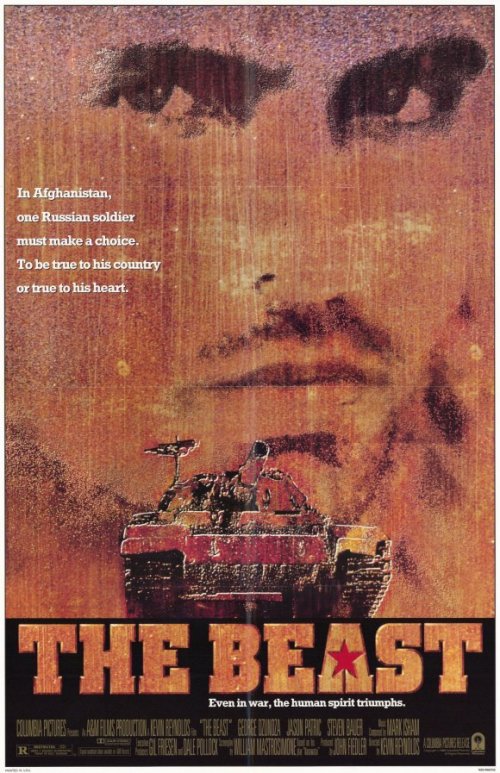
The Beast (1988)

beast1

By Richard Winters

My Rating: 9 out of 10

4-Word Review: Tankers stranded in desert.

During the invasion of Afghanistan in 1981 a group of Soviet tanks roll into a small village and callously bomb every home and building to a cinder. One of the tanks, led by Commander Daskal (George Dzundza), orders his driver Konstantin (Jason Patric) to run over an Afghan man to the shock and horror of everyone else. When Taj (Steven Bauer), who is one of the Afghan fighters, returns to the village and sees all the carnage, including the death of his father and brother, he becomes committed to seek revenge. He assembles a small group of fighters to go out into the desert to search for the tank, which they call the beast, and which has become lost when it takes a wrong turn and thus stranding them in the middle of nowhere with no option but to turn around and go back to where they came from, which they want to avoid. As the gas and rations become scarce the tensions mount particularly between Daskal and Konstantin who share widely different viewpoints as well as with Samad (Erick Avari) an Afghan interpreter who Daskal no longer trusts and now considers to be a traitor.

This film was requested for review by a reader of this blog named Nick (it was requested over a year ago and I do apologize that I got caught up with things and forgot about watching it). What struck me though is how he said it was such a gripping film and one of the best war movies, in his opinion, ever made and yet few people, including myself, had ever heard of it. I figured if the movie was as great as he said it should be better known and feared it might not live up to his billing, but when I watched it I found myself just as caught up in it as he said and impressed with how emotionally compelling it was from beginning to end.

Why this great film fell into obscurity and was dismal at the box office where it managed to only recoup a paltry $161,000 out of an $8 million budget is yet another example of the cruelty of the Hollywood business. It was directed by Kevin Reynolds who had just come-off doing the breezy road comedy hit Fandango and who wanted to follow that up by doing something completely different. He decided to do a filmization to the stageplay ‘Nanawatai’ by William Mastrosimone who was inspired to write the play after witnessing a group of mujahideen fighters capture and execute a Soviet tank crew in 1986. David Puttnam, the then head of Columbia Pictures, loved the script and threw his full support to the project. However, during the course of the filming Puttnam was ousted and Dawn Steel took over. She wasn’t as enthusiastic about the movie and when it was completed it got released to only a few theaters with no promotion. Few people heard or saw it and it went into oblivion only to finally several decades later get the recognition it deserved through the release of the DVD and has now acquired a fairly sizable cult following.

The use of a hand-held camera and graphic violence, including seeing the man get run over by a tank and then afterwards the remains of his mangled body, all help accentuate the harsh realism of war. Having it shot in a desert in Israel helps add to the authenticity as deserts in North America look different and cannot match the distinct topography of a Middle Eastern one. Leonard Maltin in his review, which I didn’t read until after viewing the film, describes the plot as ‘predictable’ and the pace ‘ponderous’ while the characters are in his opinion ‘stereotyped’, which I couldn’t disagree with more. While I haven’t seen every war movie out there I found this one to have many intriguing twists that I wouldn’t have guessed. The characters have distinct personalities and the pace is perfect with each scene and line of dialogue opening up a new story wrinkle.

My only two complaints is that the Afghan townspeople at the beginning are a bit too blissful as after all a war was going around them, which they were aware of, so I’d have thought they’d be more guarded and only cautiously gone outside if completely needed versus behaving as if they’re in a bubble with no worries about the horrors around them until it finally happens. The Russian soldiers are too Americanized. Great effort was put into the Afghans to make them seem authentic including having them speak in their native tongue with subtitles, but actors playing the Russians not only speak in English, but do it with American accents. I’m okay with them talking in English as forcing them all to learn Russian would’ve been too exhausting and requiring the movie to be completely subtitled, so I’m okay with that compromise, which seemed almost necessary. I presume for the project to get financed the studio insisted on American actors to play the parts in order to make it more marketable, so I understand that concession as well, but at least have them sound Russian should’ve been a requirement as many times throughout the movie  I had to keep reminding myself this was a Russian army as outside of George Dzundza’s brilliant performance, the rest hardly seemed foreign in any way.

Alternate Title: The Beast of War

My Rating: 9 out of 10

Released: September 16, 1988

Runtime: 1 Hour 51 Minutes

Rated R

Director: Kevin Reynolds

Studio: Columbia Pictures

Available: DVD, Amazon Video, Tubi

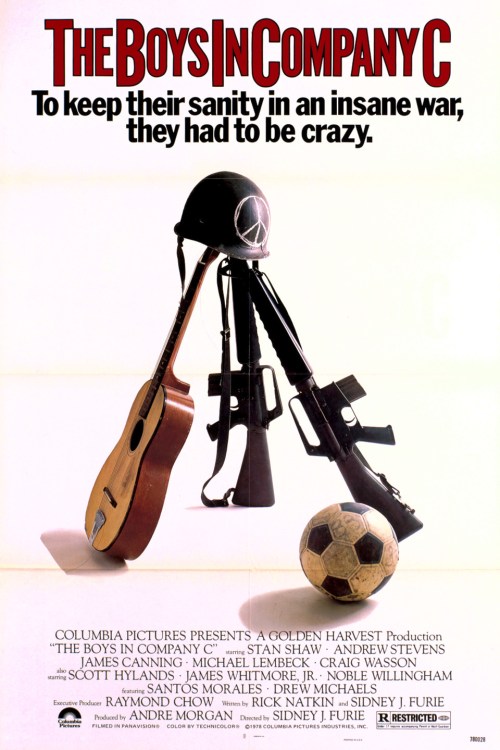
The Boys in Company C (1978)

boys1

By Richard Winters

My Rating: 7 out of 10

4-Word Review: Going through boot camp.

Tyrone (Stan Shaw), Billy Ray (Andrew Stevens), Alvin (James Canning), Vinnie (Michael Lembeck), and Dave (Craig Wasson) are five young men from varying backgrounds and wildly different temperaments who get drafted into the army in August of 1967. Their experiences in boot camp, which is harshly run by the demanding Sergent Loyce (R. Lee Ermey) and the equally stern Sergeant Aquilla (Santos Morales) prove challenging both physically and psychological, but the real test comes when they’re put out onto the battlefield and their personalities begin to disintegrate.

While the film acts like everything that goes on is based on fact and even includes specific dates for each event and at the end small bios of what occurred to the characters after they returned to civilian life it’s actually all fictional and based on a screenplay written by Rick Natkin in 1972 while attending a film class at Yale and then later expanded. It’s noted as being the first film in the 70’s to deal with the Vietnam War on the field of battle as well as the film debut of R. Lee Ermey playing a similar role to the more famous one that he did in Full Metal Jacket. Here though he’s thinner and while the things he says are certainly still aggressive it’s not in quite the over-the-top way as in the Stanley Kubrick film. In fact I sympathized with him here and the challenges he faced in trying to get the rag-tag group conditioned and how he supported the Tyrone character and the racism he had to deal with. Morales also plays the same type of drill sergeant and found it ironic that both men had some missing front teeth in the same areas of their mouths and wondered what the story was behind that.

Shot in the Philippines where its similar type of topography to Vietnam lends an authentic look and the viewer is given a vivid feeling for what wartime life was like where things could be calm and peaceful one moment and then bombs going off the next. While I’ve had my issues with Wasson, Stevens, and Lembeck in some of their other films where I considered their acting to be weak here their performances are solid and the transitions their characters go through during the course of the movie are compelling though without question Shaw is the standout.

While the first half shows the realities of war the second part becomes mired in the darkly comical absurdities. This was clearly inspired by the era where such films as M*A*S*H took the Korean conflict and turned it into a surreal comedy, but mixing the grittiness with moments of levity cheapens the reality. Scott Hylands’ character is particularly off-putting. He plays a captain who makes one insane blunder after another until he becomes more of a caricature. I’m sure it’s quite possible for high-ranking officials to make the occasional misjudgment, but this guy becomes clownish to the top degree making it almost farcical in the process. The climactic soccer game has the same issue where the soldiers can get out of fighting on the front line if they just agree to lose the game, but this scenario never actually occurred to any veteran I’ve ever known and it’s jarring to go from action on the battlefield to kicking a ball around like a war movie that suddenly turns into a sport’s one.

It’s still well enough directed to keep it engaging and there are some strong even profound moments despite the severe shifts in tone, but it would’ve been better had it maintained the realism from the beginning and not thrown-in stuff that would’ve been better suited for satire.

My Rating: 7 out of 10

Released: February 8, 1978

Runtime: 2 Hours 5 Minutes

Rated R

Director: Sidney J. Furie

Studio: Columbia Pictures

Available: DVD, Blu-ray, Amazon Video

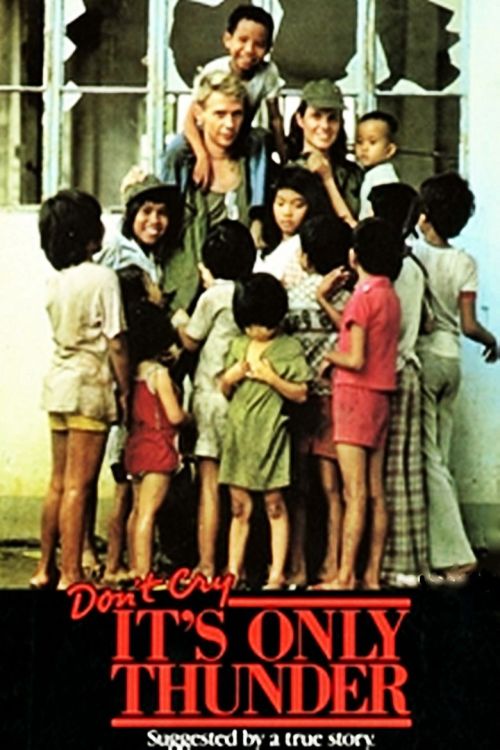
Don’t Cry, It’s Only Thunder (1982)

dont

By Richard Winters

My Rating: 6 out of 10

4-Word Review: Medic helps out orphanage.

Brian (Dennis Christopher) is an army medic during the Vietnam War who’s stationed at a hospital in Saigon. Young and idealistic he initially cannot handle the death and carnage that he comes into at the clinic and feels he’s not making much of a difference especially as he sees the severely injured soldiers come-in and die with very little that they can do. He then makes a promise to one of them to look in on an orphanage and try to find a safe new location for the children and two nuns who look after them. At first Brian is not into the kids, but eventually he bonds with them especially Anh (Mai Thi Lien) a 12-year-old girl who cannot speak and who he wishes to adopt despite all the red tape that he must go through.

The film is loosely based on the actual experiences of Paul G. Hensler, who first wrote it into a novel before being commissioned to turn it into a screenplay. His motive was to show more of the humanitarian side to the war versus the battle scenes that made up so much of the other films that dealt with the Vietnam conflict. In a lot of ways it’s a refreshing change of pace and unlike with M*A*S*H, that focused on medics during the Korean War, there’s no humor, or pranks, but instead solely focuses on the serious side of taking care of the wounded and how emotionally exhausting it can become. There’s a few moments where a passing character will make a joke, I suppose as an ode to M*A*S*H, but instead of laughs from the others it’s met with eye rolls, which is how it should be as there’s certain situations where humor just isn’t going to help things and in some ways such as here just plain out-of-place.

Christopher, who’d been acting in films since he was 15, but rose to critical acclaim in Breaking Away only to make a bad career turn by starring-in the offbeat dud Fade to Blackredeems himself with his performance here. He does though look incredibly young almost like he’s only 14, but his youthful appearance helps explain his character’s sometimes naive nature and tendency to be overly idealistic and thus makes some of the things that he does, which an older more seasoned person might refrain from, more understandable.

I wasn’t as keen with Susan Saint James. She was 10 years older than Dennis, but looked more like it could’ve been 20 and thus making the eventual love scene between them come-off as forced and mechanical. I’ll give her credit she does have an effective emotional moment, but her character is too Jekyll and Hyde-like as she initially is really into helping the orphanage and even gets Brian more into it and then suddenly like a light switch doesn’t want to have anything to do with it, only to eventually to go back, kind of, to helping the kids out, which is like watching someone with a ping pong personality. If anything I really enjoyed the two Vietnamese nuns (Lisa Lu, Shere Thu Thuy) and the way they would sometimes compromise their moral beliefs for the sake of the kids.

The film manages to be gritty most of the way and despite being filmed in the Philippines still gives one an adequate feeling of the civilian experience in Vietnam during that time. However, the segment where a song gets played that was supposedly sung by the kids while we view a montage of them playing is over-the-top sentimental and even jarring as we were used to the background noise of battle and thus comes-off as sappy and out-of-place. Watching the kids having a bit of fun is fine, but we didn’t need the added music.

Brian’s insistence and almost obsession at adopting a preteen girl will be considered cringey by today’s standards. The film makes clear that his intentions are pure, I suppose this is why there was the sex scene thrown between he and Susan to alleviate any viewer concern that he wasn’t a red-blooded All-American guy who was into chicks his own age, but it still looks even in the most charitable way as kind of questionable especially since he can’t even have any conversations with her since she doesn’t speak. He contends that he’s the one guy who can help her, but how since he has shown no background in dealing with those with speech issues? The book cover of which the film is based has a picture of the real Hensler, of which Brian is supposed to represent, holding an infant girl, which I presume is who he wanted to adopt. Having the girl character being a baby like in the book instead of 12 going on 13 would’ve worked better, or having him try to adopt a group of kids to bring home with him, like 3 or 4 that was an even mix of boys and girls, but to have him get overly infatuated with just one makes it unintentionally seem likes his grooming her to being a Lolita in the making. A bratty child (Truong Minh Hai) even alludes to this at one point, which makes you wonder; did he know something the rest of us didn’t?

Spoiler Alert!

Overall, despite tanking at the box office, it’s an decent drama though its never been released on DVD and trying to find a print of it is difficult.  It also goes on about 15-minutes too long and loses some of its potency by the end. A perfect example of this is when the orphanage gets unexpectedly bombed without warning, which is genuinely horrific, but when another unexpected bomb goes off later the shock effect is no longer there and thus they should’ve kept it down to just one.

My Rating: 6 out of 10

Released: May 3, 1982

Runtime: 1 Hour 48 Minutes

Rated PG

Director: Peter Werner

Studio: Sanrio Communications

Available: VHS

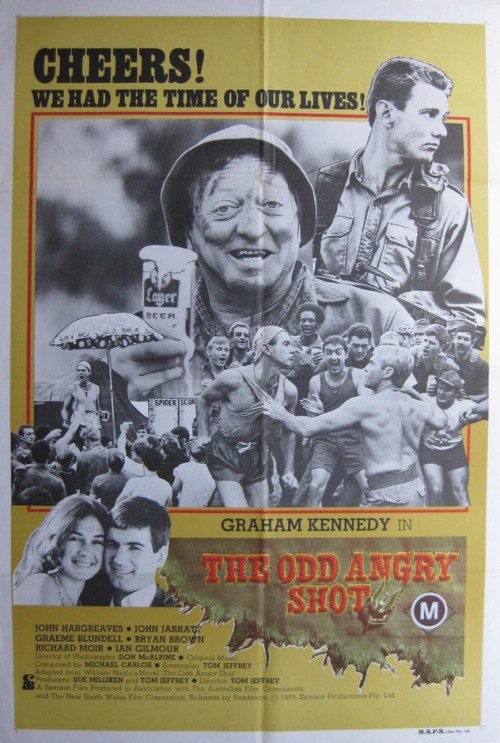
The Odd Angry Shot (1979)

odd3

By Richard Winters

My Rating: 5 out of 10

4-Word Review: Aussie soldiers in Vietnam.

Based on the novel of the same name by William Nagle, who wrote about his actual experiences fighting in Vietnam as part of the Australian army, the story centers on a small group of Aussie men who go to a war that they feel they have no business being in. The story centers on Harry (Graham Kennedy) a bitter middle-aged man who believes his country doesn’t care whether he lives or dies, Bill (John Jarrat) who faces army life for the first time, and Rogers (Bryan Brown) who must deal with crippling injuries when he steps on a landmine as well as Bung (John Hargreaves) who goes through tremendous grief after receiving heartbreaking news in a letter from back home.

To some extent the film features a fresh take as most other movies dealing with the Vietnam War were done from the U.S. perspective and many people may not even realize that Australia had involvement in the conflict and at one point over 7,000 troops stationed there. However, the tone is confusing as it wants to be irreverent like M*A*S*H at certain intervals while at other times more like Apocalypse Now. Some of the amusing moments do work particularly the scene where the U.S. soldiers challenge the Aussies to a contest to see if a deadly spider can kill a scorpion and then having the spider take on the scorpion inside a dish pan that you get to see close-up, which is pretty cool. There’s even some weird imagery involving a dream that Bill has, which is visually arresting. While these scenes are passively entertaining they also make the story come-off as meandering and pointless. The concept may have been to show how boring the war experience can be, but this still needed to be done in a way that kept things gripping, which ultimately the film isn’t.

Having the story center around one main character would’ve prevented this. Initially it starts off like Bill is that person by showing his going-away-party with his friends and family, but then once the setting changes to Vietnam he isn’t seen much and if anything Harry becomes the main star. Observing how Bill’s perspective and personality evolved and become more hardened as the war progressed could’ve been intriguing, but the film fails to deliver. With the exception of Harry there’s not much distinction between the other men in the group, which impedes the viewer from ever becoming emotionally invested in any of them and thus less impactful overall.

The way the violence gets portrayed is interesting as it occurs at random periods without warning. The group can be having a lighthearted time one minute only to be doused with enemy fire the next, which helps recreate the reality of battle where death and destruction can be sudden and unexpected. This put me as a viewer quite on edge, but the characters never reflected that same unease, or by seeing their comrades dying, or injured changed them in any way even though I felt it should’ve.

On the technical end it effectively looks like it was shot on-location even though it really wasn’t. Dramatically though it suffers from not have a centralized character and a vague point-of-view.

My Rating: 5 out of 10

Released: March 1, 1979

Runtime: 1 Hour 32 Minutes

Not Rated

Director: Tom Jeffrey

Studio: Roadshow Films

Available: DVD, Blu-ray

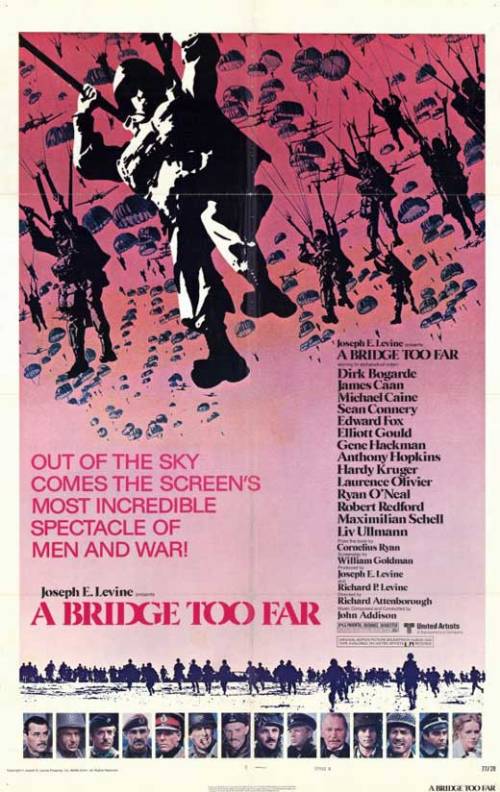
A Bridge Too Far (1977)

By Richard Winters

My Rating: 8 out of 10

4-Word Review: Conflict behind enemy lines.

Based on the true story of Operation Market Garden that occurred in September, 1944.  The strategy was, in an effort to hasten the end of WWII, to have allied forces drive into Germany and lock up key bridges, which would then block any attempts at German escape, but errors in judgement and planning occurred that caused many unnecessary casualties.

At the time this was one of the most expensive films every produced, but the reaction from critics was tepid.  While the producers insisted that every attempt was made for accuracy they also admitted to taking certain liberties for logistical reasons, which ultimately did not go over well with everyone. Many friends and spouses of the soldiers depicted in the film who were still around at the time complained about what they felt was misrepresentation in regards to what really happen and threatened to sue the filmmakers for libel.

Despite some obvious flaws, which can occur in any film that is this long, I came away quite impressed and even genuinely moved by what I saw. Some of the most memorable moments for me was seeing the parachute drop of thousands of allied paratroopers onto the Netherlands. It is one thing to see old pictures of this, and there are many available, but a completely other thing to have it done via live action in living color.  Another moving scene features Robert Redford reciting a prayer out loud as he and other men maneuver a boat across a river while bombs and artillery fire blast all around them, which is so vivid it made me tense up like I was at risk of getting hit just like the other men.

Another running segment I really liked dealt with the army taking over a couple’s house that was right next to a crucial bridge by barging in unannounced and turning the place into their headquarters. So many other war movies that I’ve seen have never shown this side of battle where innocent pedestrians and homeowners can literally just lose all of their rights on-the-spot and have no recourse. Watching their home get more and more torn-up  by the army as the film progresses is both darkly comical and horrifying as is the eventual mental breakdown of the home’s family.

Many of the complaints that critics had about the movie resided around the large cast and how certain actors were miscast especially Ryan O’Neal as Brigadier General James Gavin. While I admit O’Neal is a weak actor in most cases I came away feeling he did quite well here although if you see a picture of the real Gavin the two look nothing alike. My main criticism in this area was more around the appalling amount of money that the cast made with all of them collecting a fee of $250,000 per week, which would come out to $1,157,540 in today’s dollars while Redford made $500,000 per week that came out to $2,315,000. Now I have nothing against actors making as much money as they can, but many of the parts were just walk-ons and had only a few lines, so to make that kind of money for that little of work seemed obscene, but I guess if I were one of them I wouldn’t complain either.

A much bigger problem was the extreme shifts in tone and a misguided use of music. War time flicks, especially those made in the 40’s and 50’s had a lot of music, which was fine for the period, by many post 60’s films tried to stay away from an excessive soundtrack in order to capture more of the sounds of battle and heighten the realism. This movie though seems to want it both ways having virtually no music during the first-half and then suddenly without warning bombarding the viewer with a lot of it during the second-half, which gets the viewer caught up in the natural sounds of war only to ultimately take them away from it by the end.

While the film has many serious moments it also allows some quirky comedy to seep in, which like with the music issue came-off as jarring and unnecessary. Older war movies kept things on a patriotic level, but post 60’s the trend was to be irreverent, which in movies like Catch-22, can be done brilliantly. Here though it cheapens the effect making the viewer wonder how authentic it is when trendy, modern sentiments get haphazardly thrown-in.

Overall it succeeds at showing the absurdity of war in a profoundly visual way as we see first-hand the brutal injuries and deaths of the soldiers just trying to carry out their orders while the general who came up with the bad plan that killed so many sits in his plush office far removed the destruction that he created and never forced to face the horror of his mistakes.

My Rating: 8 out of 10

Released: June 15, 1977

Runtime: 2 Hours 55 Minutes

Rated PG

Director: Richard Attenborough

Studio: United Artists

Available: DVD, Blu-ray, Amazon Video, YouTube
Birdy (1984)

By Richard Winters

My Rating: 7 out of 10

4-Word Review: Fly like a bird.

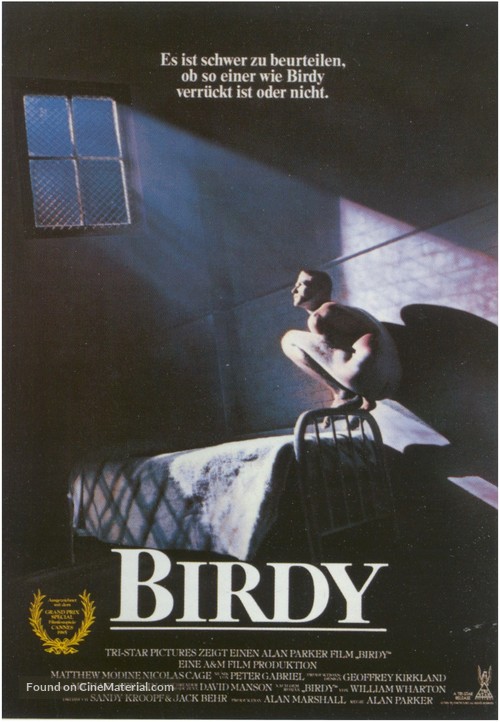
Al (Nicholas Cage) becomes friends with an introverted neighborhood boy (Mathew Modine) nicknamed Birdy due to his fascination with birds. Al begins to follow Birdy around as he collects pigeons and stores them inside an aviary that he has built in his backyard. The two share a strong bond, which is broken when they both get drafted and have to go off to war. Al returns from battle with facial injuries, but Birdy is sent to a mental hospital because after missing in action for a month, he refuses to speak. Al spends time with Birdy trying to get him to talk again, but finds it futile and fears that if he can’t get him to talk the Dr’s will confine Birdy permanently.

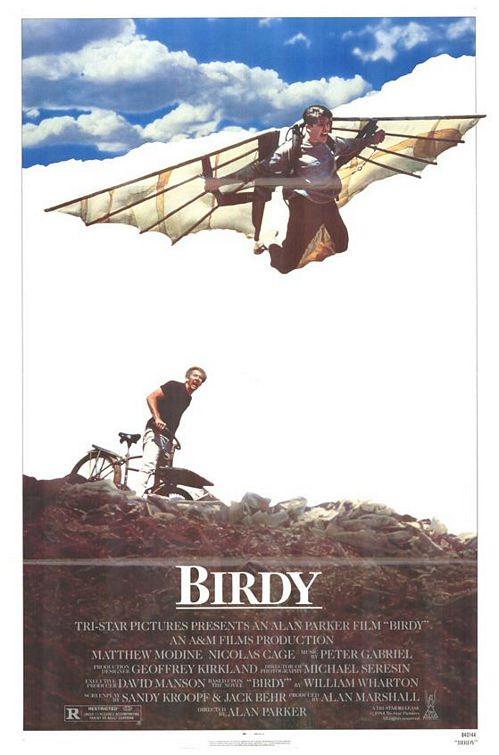
The film is based on the William Wharton novel of the same name that was initially rejected by director Alan Parker as a possible movie because he considered the story to be ‘uncinematic’, but after the screenplay was commissioned to writers Sandy Kroopf and Jack Behr who were able to restructure the thoughts of the main character from the novel into dialogue and action Parker was then willing to sign on. The result is a interesting drama that manages to have some touching, quirky moments, but it’s also quite reminiscent of Brewster McCloud and comes complete with the same winged flying contraption which Birdy uses to fly briefly over a junkyard that Bud Cort also used to fly around the Astrdome in that film.

While both Cage and Modine give excellent performances I found the friendship between the two to be confusing. They had very little in common and why Cage would want to follow Modine around all the time as he collected pigeons, which he himself thought to be kind of ‘weird’, did not make much sense. Had they both had an interest in birds then it would’ve worked, but they don’t, so what’s the bond that keeps them together? Having them portrayed as being gay would’ve been the solution and at times it seems that is what Birdy is since he shows no interest in women at all and in one amusing scene watches in boredom while Cage has sex with another women on a beach. Cage could’ve been portrayed as being bi-sexual, or not fully aware of his secret attraction to Birdy, but could later eventually come out and that could help explain why he’d stick with someone that he otherwise found ‘kooky’.

Despite the film’s length  and having some definite slow parts including Cage’s ‘conversations’ with Birdy when he’s inside the mental hospital, which are quite static and should’ve been trimmed, there’s still some memorable moments including a scene showing baby canaries hatching out of their eggs. I also like the tracking shot where Birdy imagines himself flying and done from the point-of-view of a bird, which gives one a very authentic feeling/experience of what it would be like and it was shot with a Skycam, at least partially, which is the first time that had ever been used in a movie.

I also enjoyed how the film examines the different dynamics of both Cage’s and Birdy’s family life and the contrasting personalities of the parents where in Cage’s family the father, played by Sandy Baron, was the dominant force while with Birdy it was his mother (Dolores Sage). My only complaint in this area is that there’s a running subplot dealing with the fact that Birdy’s mother would take all the baseballs that the neighborhood kids would accidentally hit into her backyard and keep them, but no one knew where she hid them. Cage then, years later, asks the Dr’s at the hospital to convince the mother to send the hidden balls to Birdy in an effort to get him to talk again and the mother complies, but the scene showing her retrieving the balls is never shown. So much time is spent talking about where she hid the balls that the film should’ve revealed the hiding place while also showing a tender side to the mother who otherwise came off as being quite cold, so not having this scene at all really hurts the film.

Spoiler Alert!

There’s also complaints by some viewers and critics about the ending, which some, like critic Leonard Maltin, refer to as a ‘gag’ ending. For me this wasn’t an issue as it offered some much needed levity in what is otherwise a very dramatically heavy film, but I was frustrated that there’s no conclusion given to what ultimately happens to the two characters. They’re shown trying to escape from the hospital, but never whether they were able to break-free permanently. After spending two hours following these two around the viewer deserves more concrete answers as to their ultimate fate and keeping it so wide-open is a bit of a cop-out/letdown.


My Rating: 7 out of 10

Released: December 21, 1984

Runtime: 2 Hours

Rated R

Director: Alan Parker

Studio: TriStar Pictures

Available: DVD, Blu-ray, Amazon Video, YouTube
March or Die (1977)

By Richard Winters

My Rating: 4 out of 10

4-Word Review: Battle in the desert.

French Foreign Legion Major William Foster (Gene Hackman) suffers from memories of leading 8,000 of his own men into a failed battle, which has driven him to alcoholism. Now he and his regiment are assigned to protect an archaeology dig lead by Francois Marneau (Max Von Sydow) that sits in the middle of the Moroccan desert and is under constant threat  by an army of Arab revolutionaries lead by El Krim (Ian Holm).

The film was a labor of love for director Dick Richards who grew up watching the French Foreign Legion films in his youth and wanted to recapture that magic, but like with his earlier and much acclaimed western flick The Culpepper Cattle Company do it with a revisionist slant. Aesthetically it looks gorgeous and all the more impressive when you factor in that the majority of it was filmed in Nevada, but because the dunes in Morocco had a  different shade of color than the ones in North America the sand was flown in to camouflage this and you’d never know the difference. Watching the harsh treatment that the men had to go through as they trained to become soldiers is quite revealing as well and made the first hour of the film captivating.

Hackman though looks uncomfortable in his role and this could be attributed in large part to the fact that he fell off his horse during filming and was suffering from a great deal of back pain during the shoot. In either case he ends up getting sorely upstaged by Italian star Terence Hill, who up until this time had mainly done comedic styled westerns with his onscreen pal Bud Spencer, but here shines as a soldier who challenges authority and galvanizes the rest of the troops.

Marcel Bozzuffi is equally memorable as the cruel Lieutenant Fontaine who treats the men under him quite harshly most notably Top Hat played by Andre Penvern, but the theatrical/DVD release omits a crucial scene with him that was only shown in the TV print.  In that version he and his men chase after two deserters and then get involved in an ill-advised battle with some tribesmen, which ultimately causes him to break down in fear and kill himself, which would’ve been an interesting transition to witness since for the majority of the movie he remains cold and aloof otherwise.

Despite being a great actor Von Sydow’s presence here is a detriment as it will only remind viewers especially during the archaeology dig sequence of his work in The Exorcist where in the beginning of that film where scenes of him doing essentially the same thing. Catherine Deneuve is another excellent talent who is wasted in a part that doesn’t allow her much to do and only helps to slow down the already sluggish film with each scene that she’s in.

Spoiler Alert!

The film’s most disappointing aspect though is with its ending, which should’ve been its strong point. The final battle is exciting and the shots of hundreds of chanting Arab soldiers coming over the dunes to attack is indeed impressive and even harrowing to see, but watching the systematic slaughter of the French soldiers and ultimately learning that they walked themselves into a trap is quite dispiriting. I know I’ve complained about the formulaic happy endings from time-to-time in some other films, but this one is too much of a downer and offers the viewer no payoff at all for having to sit through it. It’s almost like giving someone a reasonably enjoyable ride only to drive the car off the cliff at the end and expect them to thank you for it.

My Rating: 4 out of 10

Released: August 5, 1977

Runtime: 1 Hour 47 Minutes

Rated PG

Director: Dick Richards

Studio: Columbia Pictures

Available: DVD, Amazon Video