Category Archives: Movies Based on Novels

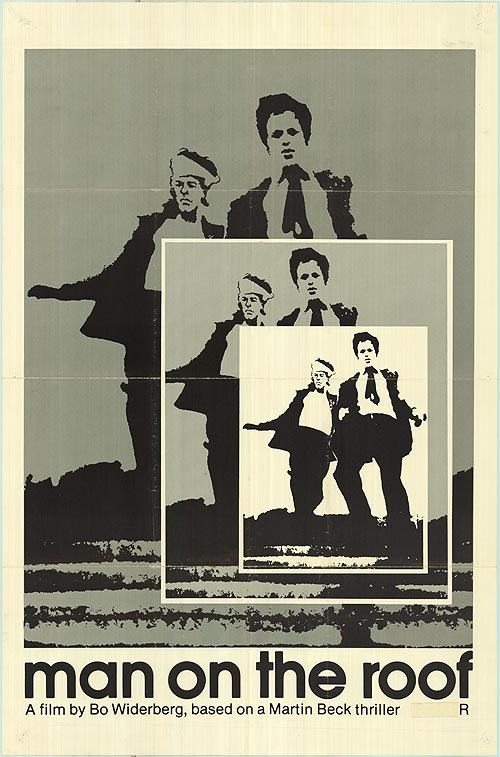
Man on the Roof (1976)

man on the roof 3

By Richard Winters

My Rating: 6 out of 10

4-Word Review: Sniper shoots at police.

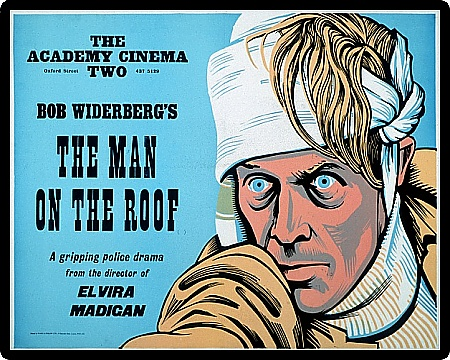
Police officer Stefan Nyman (Harald Hamrell) is shot and killed by an unknown gunman. During the investigation police detective Martin Beck (Carl-Gustaf Lindstedt) finds that Nyman was an officer who used brutal and sometimes unethical conduct in his dealings with suspects. Beck begins to consider this as a possible motive, but before he can decide on that the sniper climbs on top of a high rise building in downtown Stockholm and begins shooting and killing all uniformed officers.

The first hour of this Swedish production is different from just about any other police drama you’ve seen. The investigation is slow and meticulous and the identity of the killer is kept a complete mystery.  There is no heart pounding soundtrack and all the scenes are handled in a nicely subdued fashion.  The tension mounts slowly, but deliberately until it finally wraps you into it and becomes riveting.

By contrast the second hour is handled completely differently to the point that it almost seems like two movies in one. The second half becomes this high adrenaline action pic that includes an exciting helicopter crash, but it all proves jarring when compared to the first hour.
man on the roof 1

The story is also too reminiscent of the real-life Charles Whitman incident that occurred in Austin, Texas in 1966.  The ending is much too abrupt and leaves open too many loose ends and a more composite portrait of the killer would have also helped.

This film definitely has its moments both in action, drama and dialogue and is considered highly influential to the modern police dramas that we see today, but the way it comes together is a mishmash. Director Bo Widerberg was known for his poor planning and constantly rewriting scenes and dialogue sometimes while he was sitting on the toilet. The behind-the-scenes atmosphere of his productions was filled with chaos and confusion and the results can be easily detected here. Viewers that enjoy the first half may not like the second one and vice versa.
man on the roof 2

My Rating: 6 out of 10

Released: October 1, 1976

Runtime: 1Hour 50Minutes

Rated R

Director: Bo Widerberg

Studio: Svensk Filmindustri

Available: DVD (Region 2)

Clara’s Heart (1988)

claras heart

By Richard Winters

My Rating: 3 out of 10

4-Word Review: Clara dispenses her wisdom.

Leona (Kathleen Quinlan) is spending some time at a Jamaican resort trying to recuperate from the sudden loss of her infant daughter. There she meets Clara (Whoopi Goldberg) who is working as a maid there. The two quickly strike up a friendship and Leona then hires Clara to come home with her and take care of her 10-year-old son David (Neil Patrick Harris). David does not like Clara at first, but the two eventually attain a strong bond especially after his parent’s divorce.

After some box office failures with her comical films Goldberg decided to go back to doing drama with so-so results. The whole way that Clara gets hired on as a nanny seems awkward, forced and too quick and screenwriter Mark Medoff should have thought up a better scenario. Clara isn’t completely likable as she has a pushy personality and dispenses her opinions on her employers whether they ask for it or not. Eventually David’s father Bill (Michael Ontkean) stands up to her, but I think others would have confronted her sooner or even fired her.

The runtime is much too long for such slight and predictable material. The whole second half gets consumed with this deep dark secret about the death of Clara’s son Robbie and when she does finally tell David the story it is a nasty one especially for a supposedly ‘family friendly’ film such as this one. It also brings out the question that if Clara raised a son that was so very troubled why then would she be so confident about knowing how to raise someone else’s?

Harris is outstanding in his film debut and really helps to carry the movie along. The sarcastic and glib comments that he spews out is the film’s highlight.  The big glasses that he wears seemed too reminiscent to the Corey Haim character in Lucas, which came out just a couple of years before this one. I was also confused why during a school swim meet he would be the only one wearing a T-shirt when all the other swimmers weren’t.

Spalding Gray appears in support as Leona’s new boyfriend. The script though does not take advantage of Gray’s unique talents and the film would have been better served had they allowed him to ad-lib and improvise.  Also, the woman who plays Bill’s new love interest looks too much like Leona and in a visual medium such as this it is usually better to emphasize contrast.

The production values are good and I loved the large home that David’s family lives in and the by-the-lake location. However, the material is too formulaic and Clara’s and David’s bonding sessions become strained and corny. The film’s ‘feel-good’ message is lost in an approach that is sterile, mechanical, and by-the-numbers.

My Rating: 3 out of 10

Released: October 7, 1988

Runtime: 1Hour 48Minutes

Rated PG-13

Director: Robert Mulligan

Available: VHS, Amazon Instant Video

The New Interns (1964)

the new interns

By Richard Winters

My Rating: 6 out of 10

4-Word Review: More interns more drama.

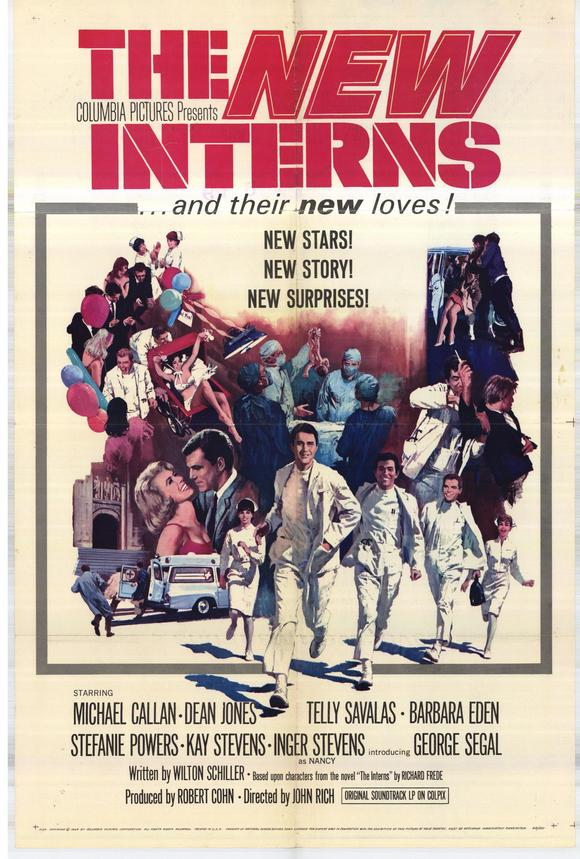
It’s another year and time for a new set of young interns to infiltrate the New North Hospital.  Lew (Dean Jones) and Gloria (Stefanie Powers) who became engaged at the end of the first film are now married, but Lew is diagnosed as being sterile and the couple cannot have children, which causes a strain on their marriage.  The caustic Tony (George Segal) who used to be a gang member on the streets and has worked his way up to being an intern looks to leave his troubled past far behind only to have his new girlfriend Nancy (Inger Stevens) attacked and raped by his former gang member friends, which sends him on a one man mission for revenge.

Although the film goes on a bit too long and isn’t quite as compelling as the first one I still felt it was an improvement.  The stories and themes are grittier and don’t have the fluffy or formulaic romance angle. The fact that the interns are housed in a rundown condemned building in order to save on costs allows for some amusing moments as the tenants must make due with all sorts of quirks that come with the old building. There is also a rather startling scene showing an actual baby coming out of the womb who is not crying or breathing  and the doctors attempts to revive it, which is both disconcerting and vivid.

The only story thread that doesn’t work is the rape one. The biggest issue here being that Nancy flirts and even jokes with Tony while she is in the hospital and only a few hours after being attacked, which seemed highly unrealistic as is her acting like the whole incident was ‘no big deal’ and they should just move on from it and not bother to catch the perpetrators. Then a couple of days later she attends a party and something there subtly reminds her of the incident, which sends her into an irreversible catatonic state, which seemed too extreme in the other way. However, Tony’s confrontation with the rapist inside the hospital and his later operation on him to save is life is good.

Segal is impressive. He played so many touch feely lead roles during the 70’s that he acquired almost a benign persona, but here his character is quite brash and acerbic and his confrontations with the equally acerbic Dr. Riccio (Telly Savalas) are fun. Stevens is also quite good as his love interest and it is a shame that she ended up killing herself in 1970 just as it seemed that her film career was ready to take off.

As with the first film one can spot a lot of up-and-coming stars including Barbara Eden, Dawn Wells, George Furth, Marianna Hill, and Adam Williams. One can also spot Bob Crane very briefly during a wild party segment. There is also Sue Ann Langdon as a drug addicted prostitute who speaks in a hip lingo and fakes paralysis simply to get some drugs that will satisfy her fix. This also a unique chance to see Jimmy Mathers the younger brother of Jerry famous for starring in ‘Leave it to Beaver’ and who looks just like him.

A few actors reprise their roles from the first one including Savalas who appears here completely bald even though in the first one he had hair. Powers is effective as the opinionated and stubborn Gloria a woman unhappy that she can’t have a baby and unwilling to accept adoption as the answer. Kaye Stevens reprises her Didi character and takes part in a funny vaudeville act. There is also Michael Callan reappearing as Alec who in the first film ended up having a nervous breakdown, but no mention of that here. The part where he dresses up as a woman to get into the girl’s dorm and his ‘conversation’ with his therapist offer some added levity.

My Rating: 6 out of 10

Released: June 1, 1964

Runtime: 2Hours 3Minutes

Not Rated

Director: John Rich

Studio: Columbia Pictures

Not available at this time.

The Big Fix (1978)

the big fix

By Richard Winters

My Rating: 6 out of 10

4-Word Review: 60’s radical turned detective.

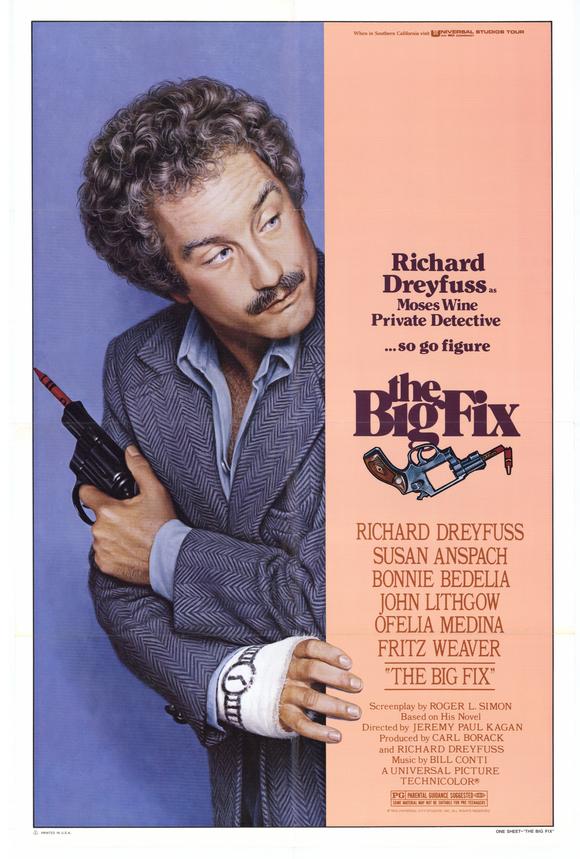
Moses Wine (Richard Dreyfuss) was at one time a student radical during the tumultuous 60’s, but now it is 1978 and he is working as a private eye. Most of his cases are unexciting and even mundane, but then Lila Shay (Susan Anspach) a woman he had a fling with during his college days shows up asking for his help. She is now working for a candidate running for governor and she wants Moses to find Eppis (F. Murray Abraham) a former student radical himself who has now gone underground, but seems to be smearing her candidate’s campaign and hurting his ability to be elected. Moses takes the case on a whim, but finds it to be much more complex and dangerous than he bargained for.

The film is based on the novel by Roger L. Simon who also wrote the screenplay and it is almost like a revisionist private eye movie. Everything that we’ve come to accept in this genre gets turned upside down and for the most part with great and amusing success. Moses is not a tough, brawny, stoic figure like most detectives in these films, but instead a little shrimp of a guy that can easily get hyper and frazzled and is certainly never cool under pressure. Many times he will bring his two young sons on the case with him and even use there insight to help him solve the case. He makes mistakes and even has to write certain things down to avoid forgetting them unlike those other detectives that always seem to remember even the smallest tidbits of information. By making the Moses character more human he becomes better relatable and the viewer feels almost like they are in his shoes, which is what makes the story work.

Simon’s script also is a great character study showing how the student protestors from the 60’s have now begrudgingly and awkwardly taken on adult roles and even become a part of the dreaded ‘establishment’. This comes to a head with the Abraham character the one time head of an underground movement that now is seen living in suburbia as a ho-hum family man. His line about why so many of his fellow radicals ‘sold-out’ and became a part of the suburban culture is an excellent and keen observation.

Dreyfuss is perfect in the role as a wise-guy, cynical smart ass. Most of the times characters and actors with these traits are off-putting, but somehow with him it is always engaging. The character is also nicely multi-dimensional. He is acerbic and brash one minute, but then singing lullabies over the phone to his children the next. He acts like his has ‘moved on’ from the 60’s, but then later on tears come to his eyes when he looks at a film of some old student protests. Dreyfuss also broke his wrist just before filming began and so they wrote it into the script and it becomes a funny running gag as different people ask him how he broke it and each time he tells them something that becomes increasingly more outrageous and amusing.

Bill Conti’s musical score is bouncy and distinctive and gives the film an added kick. He also employs several different styles including ragtime, disco, electronic and even a ballad by Leon Redbone.

The mystery is full of twists and close attention must be paid, but it is doubtful anyone will figure the surprise at the end. Baby boomers that lived through the period may be more connected to this than others, but it is still entertaining and a terrific time capsule.

My Rating: 6 out of 10

Released: October 6, 1978

Runtime: 1Hour 48Minutes

Rated PG

Director: Jeremy Kagan

Studio: Universal

Available: VHS, Netflix streaming

The Interns (1962)

the interns

By Richard Winters

My Rating: 6 out of 10

4-Word Review: Training to become doctors.

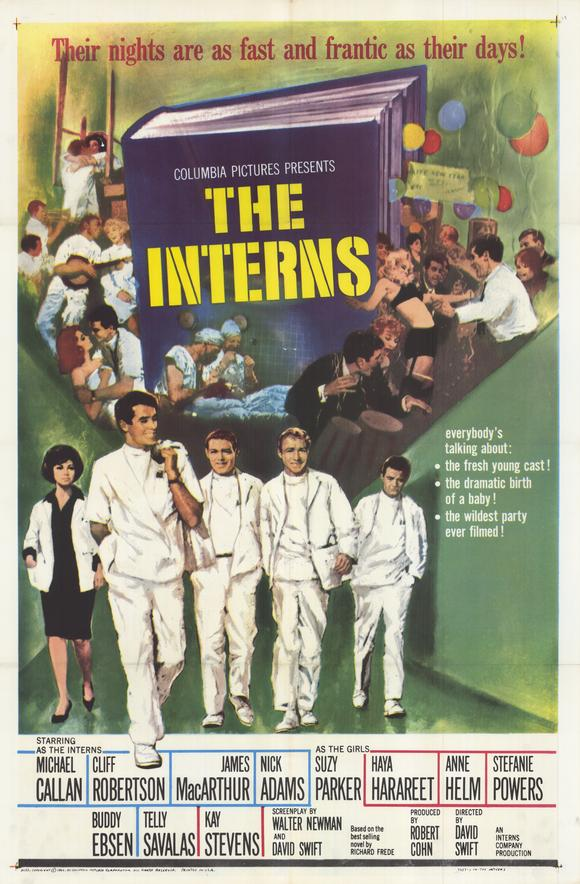
Based on the Richard Frede novel the film looks at a group of medical students going through a rigorous first year internship at the New North Hospital. All aspects of an intern’s experience are analyzed from their various moral quandaries to dealing with deaths of patients that they’ve become attached to and even sexism. We also get a glimpse of their private lives from their relationships and stresses to even their partying.

Although the film is entertaining and well-paced it is a bit too much like a soap opera. This comes to a particular head during the relationship sequences.  The characters seem to fall in love at first glance and the word ‘love’ gets expressed excessively until it becomes as irritating to hear as nails on a chalkboard.  It also has a mentality that every character ‘must’ magically find their life mate even if it seems particularly forced like with John (Cliff Robertson) who relentlessly chases after fashion model Lisa (Suzy Parker) even though she continually gives him the cold shoulder and the two can’t agree on anything including her need for an abortion from a unwanted pregnancy she had with another man. Alec’s (Michael Callan) is the only thread in this area that works as he proceeds to try to juggle two at the same time and the way he avoids a confrontation with the two while at a party is amusing.

There are some good scenes and even memorable moments. The best is when Lew (James MacArthur) finds an interest in obstetrics and delivers his first baby. The acrimonious relationship between Dr. Riccio (wonderfully played as usual by Telly Savalas who has hair here and isn’t completely bald as he usually is) and Dr. Bruckner (Haya Harareet) who he looks down upon simply because she is a woman, but eventually learns to respect is great. I also liked the party sequence the one moment in the film that gets lighthearted especially when 37 people try to cram themselves into a small closet in order to beat the world record.

The cast is interesting and eclectic. One can spot either an older veteran actor, up-and-coming star, or famous character actor in literally every shot. Robertson who sometimes comes off as stiff gives a strong all-around performance, which may be his best. MacArthur who would later costar in the long running series ‘Hawaii Five-O’ is also really good. Buddy Ebsen does well as a wise-cracking chief surgeon and it is great seeing the very young and beautiful Stefanie Powers as a nurse. John Banner who would later become famous for playing the incompetent prison guard Shultz on the long-running sitcom ‘Hogan’s Heroes’ can also be seen, but he is not given a single line of dialogue.

The film is glossy, but still compelling and if anything gives the viewer a good taste of what life of a medical intern is like. In 1965 the film was followed by a sequel The New Interns, which will be reviewed next Sunday.

My Rating: 6 out of 10

Released: August 8, 1962

Runtime: 2Hours

Not Rated

Director: David Swift

Studio: Columbia Pictures

Available: VHS, DVD

High and Low (1963)

high and low

By Richard Winters

My Rating: 7 out of 10

4-Word Review: Pay ransom go bankrupt.

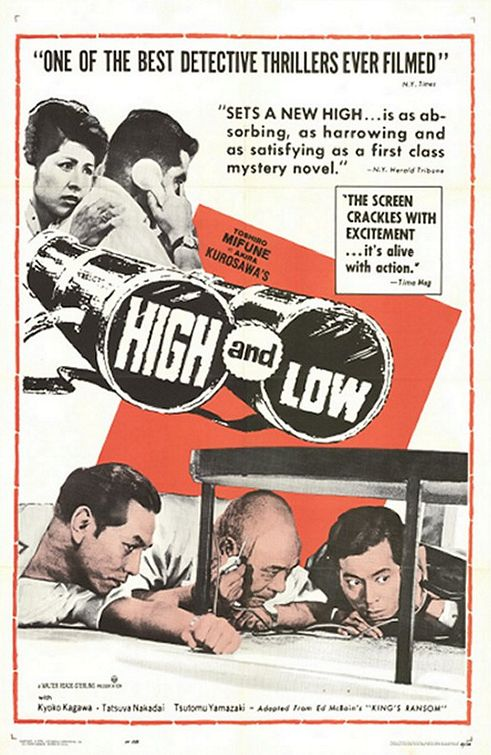
Kingo (Toshiro Mifune) is an executive of a shoe company who finds out that his chauffeur’s son has been kidnapped and comes under tremendous pressure to pay the ransom even it will make him bankrupt.

As with all of Akira Kurosawa’s films the production values are solid and the story is well paced. The very methodical police work and investigation is interesting and enlightening. It’s certainly nothing like today’s CSI shows, but well done for its period. The ending scene where Mifune faces the kidnapper leaves a strong and memorable impression.

However, on the negative side the set-up to the kidnapping happens too quickly without any type of buildup or tension. Almost the entire first hour takes place inside the living room of Kingo’s hilltop house and it would’ve helped to have some cutaways to other locales.  Mifune, who is billed as the star and gives a great performance disappears during the second hour only to finally reappear at the very end and I felt it would’ve been stronger had he been involved more in the investigation. Also, the revealing of the kidnapper is unexciting and a big letdown.  I had a hard time understanding why a guy who was so very crafty and sophisticated in every facet of his planning of the kidnapping would suddenly get so conveniently dumb and sloppy at the very end.

This is a decent Kurosawa entry, but in my opinion not one of his best. Yet it is still good enough to keep you captivated from beginning to end.

My Rating: 7 out of 10

Released: March 1, 1963

Runtime: 2Hours 23Minutes

Not Rated

Director: Akira Kurosawa

Studio: The Toho Company

Available: DVD, Blu-ray (The Criterion Collection)

Death Race 2000 (1975)

death race 2000

By Richard Winters

My Rating: 5 out of 10

4-Word Review: New meaning to roadkill.

Based on the novel ‘The Racer’ by Ib Melchior the year is 2000 and a highly rated cross-country race takes place on television between many colorful individuals. There is Frankenstein (David Carradine) who has lost an arm and a leg in past races and must wear a leather mask to cover up his facial scarring. Then there is his chief rival Machine Gun Joe Viterbo (Sylvester Stallone) and also Calamity Jane (Mary Woronov) Nero the Hero (Martin Kove) and Matilda the Hun (Roberta Collins). Of course this is no ordinary race as crossing the finish line isn’t really as important as how many innocent bystanders they can kill along the way.

The idea is outrageous and for the most part director Paul Bartel manages to pull it off especially within the limitations of the budget. There are real kick-ass car explosions here and none of that computerized crap, which in itself gives it a few extra points. I liked the scene were an actual car is seen dropping down a steep cliff and how they were able to block off long sections of highways in order to be the only cars on the road. Some of the dark humor is funny although more so in the beginning. The best moment is when a group of doctors and nurses wheel up some elderly patients onto the middle of the roadway in order to be slaughtered by the racers as part of the their annual ‘euthanasia day’.

Sly is really funny. I know some critics have gotten on him over the years about his acting, but here he steals it from his costars and the film wouldn’t have been as effective without him. Carradine is pretty good in his part and his more subdued acting style makes a nice contrast to Stallone’s flamboyant one. The two even end up in a nice fist fight. However, I liked the idea of having the Carradine character being this walking gimp of a man so intoxicated with winning that he continues to drive and compete even as his body falls apart. Having him take of his mask and look completely normal and making that all a sham was disappointing and took away the unique gritty mystic of the character.

The initial treatment of the script was written by producer Roger Corman and then Bartel was hired in to put a more humorous spin on it. Although I like the idea of having some comedy I still wanted more gore and grittiness. Instead it becomes too campy and cartoonish and losing the potential edge that it has at the beginning. There also needed to be more of a focus on the race itself. As it is it goes too fast with pit stop segments that bogged the whole thing down. They manage to get from New York to St. Louis in one day, which if going on I-70 would be 953 miles and doesn’t seem possible even at high speeds. There is also a question of the speed of these cars. Supposedly they are ‘real fast’, but there is one segment where Joe tries to run down a kindly fisherman and the guy is able to out run the car for quite a distance before he is hit, so they can’t be all that fast.

There is also a secondary storyline involving an underground group called the People’s army that is trying to sabotage the race and put an end to it. Initially I felt this thread would allow for more intrigue, but instead it makes the whole thing too over-the-top. The short running time doesn’t allow for such a convoluted plot and the whole thing would have been better served had they stuck to the race and racers personalities itself. The sappy ‘feel-good’ twist ending is terrible and ruins whatever potential edge the film had.

My Rating: 5 out of 10

Released: April 27, 1975

Runtime: 1Hour 20Minutes

Rated R

Director: Paul Bartel

Studio: New World Pictures

Available: VHS, DVD, Blu-ray, Amazon Instant Video

Audrey Rose (1977)

audrey rose 2

By Richard Winters

My Rating: 6 out of 10

4-Word Review: Dead daughter gets reincarnated.

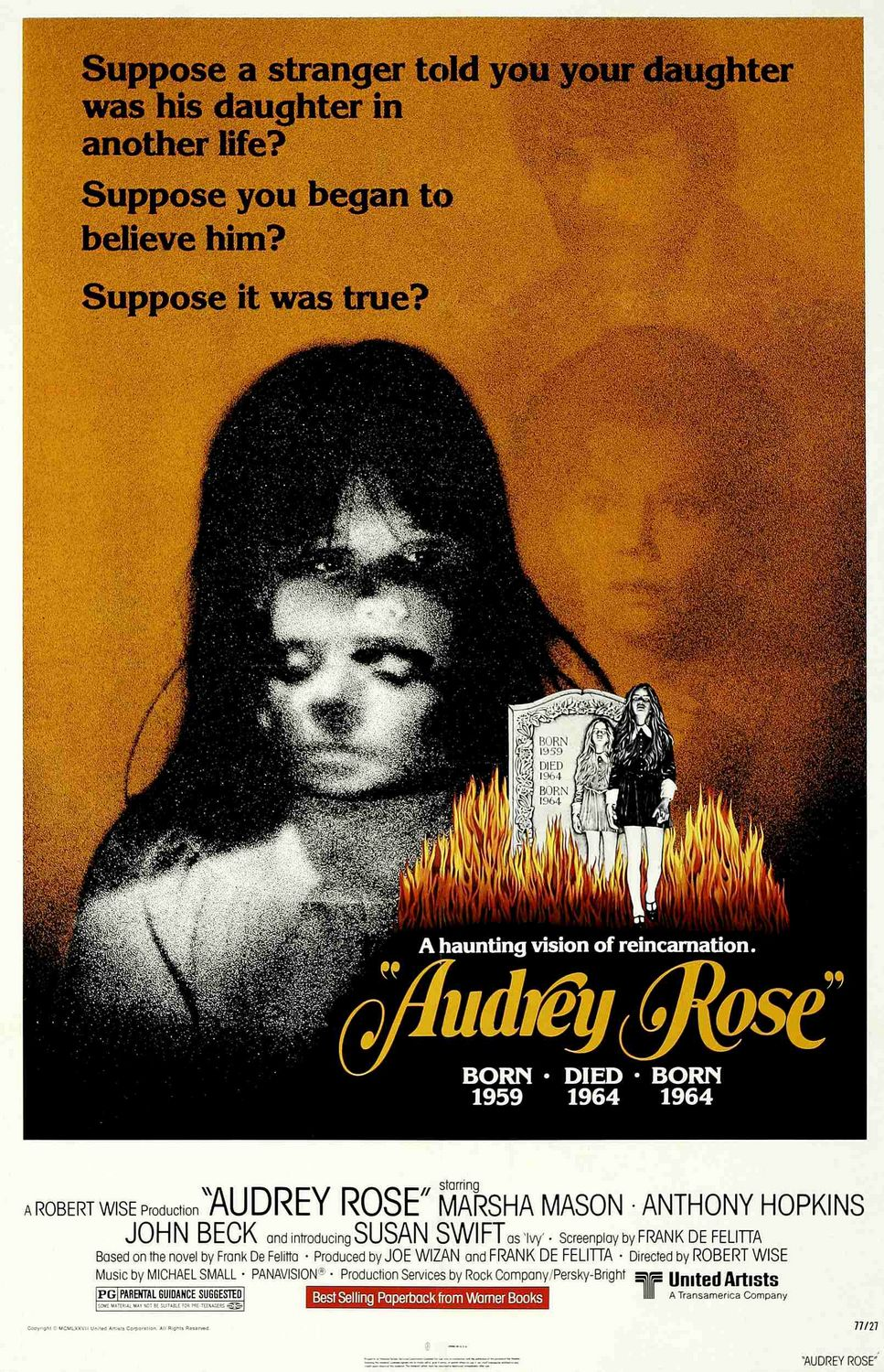
On October 3rd, 1965 at precisely 8:20AM a young Audrey Rose dies in a fiery car crash. At 8:22AM on that same day Ivy (Susan Swift) is born to Janice and Bill Templeton (Marsha Mason, John Beck). Several years later after talking to a couple of psychics Audrey’s father Elliot (Anthony Hopkins) becomes convinced that his dead daughter has been reincarnated in the body of Audrey. When he approaches Ivy’s parents about it they scoff and then when he tries to take her they have him arrested. He then goes on trial where he tries to get 12 jurors to believe that reincarnation is a reality.

Based on the Frank De Felitta novel, and who also wrote the screenplay, this odd hybrid of a horror film never really takes-off.  Director Robert Wise does a terrific job of capturing the Manhattan skyline and a late 70’s New York City ambience as well as the gorgeous classic paintings that line the ceiling of Janice’s and Bill’s apartment, but he has a story that is light on action. The restrained and genteel narrative creates a film that seems more like a conventional drama than a horror film despite a storyline that is brimming with supernatural elements.

Every effort is made to keep the proceedings as realistic as possible only to have the entire second hour delving into a court room drama with a defense strategy that is so outlandish it becomes almost ludicrous. Having Elliot become convinced of the reincarnation through talking to psychics is another weak point. The few so-called psychics that I have been to have proven to be inaccurate and unreliable and most people that I know have had the same experience. In the past few years several famous psychics have been outed in the media as being frauds and charlatans. Having the film treat these people like they are a reliable source puts the entire premise on poor footing from the very beginning.

Mason can play a distraught and beleaguered character about as well as anyone and her teary-eyed presence helps give the film a few extra points. Beck is also good as her husband and their contrasting personalities and approaches to the situation add an interesting subtext.

Not to necessarily sound cruel but Swift as the young girl has a big pair of buggy eyes that to me became more of a distraction as it went along. Also, with her long brown hair she starts to resemble the Linda Blair character from The Exorcist, which was a far more intense, scary, and exciting film than this one. The producers would have done well to have cast a blonde or redhead in the role simply to avoid the comparison.

The scares are almost non-existent and the only slightly spooky moment is the scene where Swift looks into a mirror and chants the Audrey Rose name repeatedly, which is the only time where her buggy eyes come into good use. The several scenes showing her running around the place and banging onto the widows while screaming become old pretty fast. The direction is slick and the production values good. It is compelling enough to be entertaining, but the ending is very unsatisfying and as a thriller it is transparent and unmemorable.

My Rating: 6 out of 10

Released: April 6, 1977

Runtime: 1Hour 53Minutes

Rated PG

Director: Robert Wise

Studio: United Artists

Available: VHS, DVD, Amazon Instant Video

The Strange Vengeance of Rosalie (1972)

the strange vengeance of rosalie

By Richard Winters

My Rating: 7 out of 10

4-Word Review: She can’t be trusted.

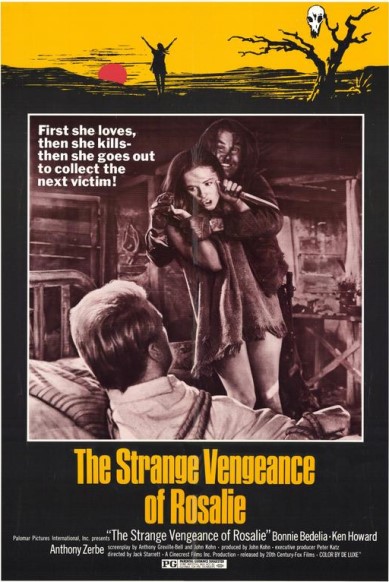
This is an okay obscurity about an Indian girl named Rosalie (Bonnie Bedelia) whose grandfather has just died and in an attempt to stave off loneliness tricks Virgil (Ken Howard) a traveling businessman into coming back to her isolated ramshackle place. Once there she breaks his leg in order to trap him and hopes that in the time it takes to heal he will learn to love her.

Critic Leonard Maltin calls this film “farfetched” and going “way off base” yet nothing could be further from the truth. If you accept the initial premise then the rest of the film is carried out in a plausible and believable fashion.

Director Jack Starrett certainly has a vision here. The remote desert like local is captured well and gives it a distinct feel. The premise is static, but the story keeps moving and new elements are added in nicely. The second hour does begin to meander, but it is finished off by a surprise ending that comes out of nowhere and is completely unexpected. You have to watch it all the way through to really appreciate it yet it does help the film come together and even helps explain its title.

The similarities between this and Misery are quite evident and in some ways this film wins out. It is not as slick or polished, but it is also not as formulated either. This is not your standard thriller as you have no idea where it is going. It runs the gamut between drama, adventure, and even human interest. There is also the added sexuality element and a genuine relationship between the two, which Misery did not have.

The best thing is the Rosalie character. She is young and beautiful. Her intentions and motivations are constantly surprising. In some ways she is like the Barbara Eden character in ‘I Dream of Jeannie’. She is naive and trusting, but also headstrong, self- sufficient and cunning and Bedelia is perfect in the role.

Being made in the early 70’s and at the height of political awareness there is some thought to there being meaning to the fact that she is Indian and Howard the typical white businessman. She is constantly trying to win approval of this white man who otherwise seems oblivious to her conditions or needs. He is also too self-absorbed and too locked into his mindset of minorities being ‘inferior’ to realize how consistently she outsmarts him. Like with a lot of minorities there is a great deal of frustration with the attitudes of the establishment. Howard is just too stuck in to his preconceived notions to ever see her as an equal no matter how hard she tries.

Overall this is a decent film especially when compared to other low budget, independent films of that same era. The twist ending helps, but you have to stick with it.

My Rating: 7 out of 10

Released: June 16, 1972

Runtime: 1Hour 47Minutes

Rated PG

Director: Jack Starrett

Studio: 20th Century Fox

Available: Amazon Instant Video (Edited Version)

Drive, He Said (1971)

drive he said 1

By Richard Winters

My Rating: 5 out of 10

4-Word Review: Player doesn’t like coach.

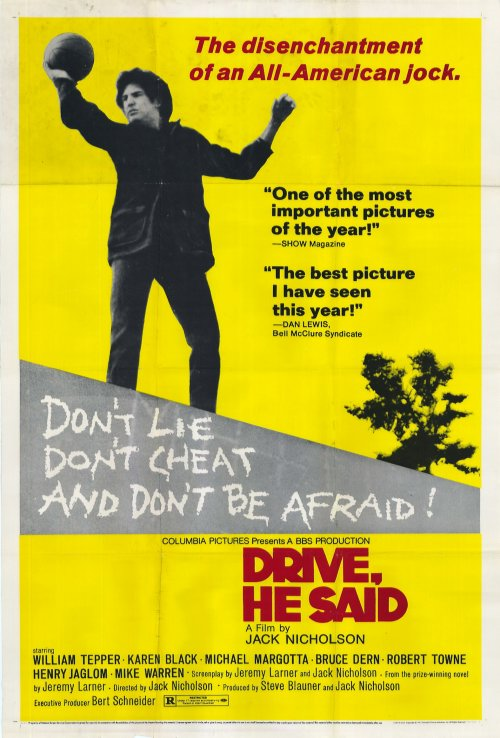
This is one of those movies that shows signs of being a really great movie trying to break out, but never does. It’s about Hector (William Tepper) a college basketball star who is being tugged at different directions by those around him and by society at-large. This creates inner turmoil that leads to outbursts, apathy, and even anti-social behavior.

Tepper as the star isn’t the best of actors. He has a constant blank look and way too much hair. The character he plays has potential. It is nice to see a portrait of an athlete that isn’t one-dimensional sports, but instead shows intelligent and sensitivity to things that go well beyond the court. Yet he is also too self- absorbed and displays a selfish behavior that in most cases would alienate him from his teammates. What is supposed to be betrayed as angst instead comes off as an obnoxious, spoiled college kid. His constant rebellion with his coach (Bruce Dern) doesn’t mesh.

The film makes some good observations and brings up great issues. Unfortunately it ends up becoming diluted. In some ways it should have just stuck with the basketball angle. The camera shots that glides with the action during the games is excellent. Some of the scenes during the practice and some of the locker room segments of Dern coaching the team gives the viewer a good taste of the college basketball experience and makes you want to see more of it. However, incorporating late sixties politics into it only makes it redundant and in this area the film offers no new insight.

The film does have its moments and some of them are even memorable. The best ones involve actor Michael Margotta’s character as a student radical wavering on insanity. His assault on the Karen Black character while inside a large, darkened house is striking both visually and emotionally. The scene where he, while naked, runs into a science lab and releases all sorts of rats, rodents, and reptiles is a sight in itself.

Dern with his glazed stare and intense acting style seems like a natural for the part of the hard-driven coach. It’s too bad the film doesn’t make the most of it, but Black is looking at her best.

Jack Nicholson as a director is not as good as Nicholson the actor although he does show potential, but it doesn’t come together as a whole. The film should best be viewed as a curio or artifact of its era. There is also a surprisingly high amount of male nudity as well as homo-erotic overtones.

drive he said 2

My Rating: 5 out of 10

Released: June 13, 1971

Runtime: 1Hour 35Minutes

Rated R

Director: Jack Nicholson

Studio: Columbia Pictures

Available: DVD (Region 1 & 2)