Category Archives: Movies Based on Novels

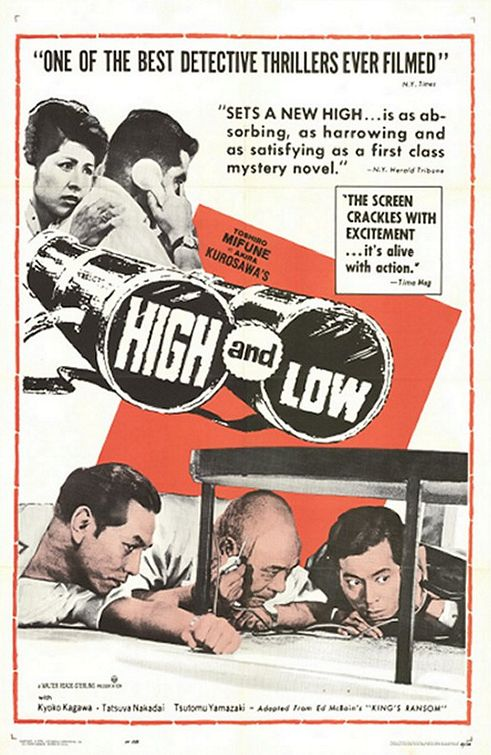
High and Low (1963)

high and low

By Richard Winters

My Rating: 7 out of 10

4-Word Review: Pay ransom go bankrupt.

Kingo (Toshiro Mifune) is an executive of a shoe company who finds out that his chauffeur’s son has been kidnapped and comes under tremendous pressure to pay the ransom even it will make him bankrupt.

As with all of Akira Kurosawa’s films the production values are solid and the story is well paced. The very methodical police work and investigation is interesting and enlightening. It’s certainly nothing like today’s CSI shows, but well done for its period. The ending scene where Mifune faces the kidnapper leaves a strong and memorable impression.

However, on the negative side the set-up to the kidnapping happens too quickly without any type of buildup or tension. Almost the entire first hour takes place inside the living room of Kingo’s hilltop house and it would’ve helped to have some cutaways to other locales.  Mifune, who is billed as the star and gives a great performance disappears during the second hour only to finally reappear at the very end and I felt it would’ve been stronger had he been involved more in the investigation. Also, the revealing of the kidnapper is unexciting and a big letdown.  I had a hard time understanding why a guy who was so very crafty and sophisticated in every facet of his planning of the kidnapping would suddenly get so conveniently dumb and sloppy at the very end.

This is a decent Kurosawa entry, but in my opinion not one of his best. Yet it is still good enough to keep you captivated from beginning to end.

My Rating: 7 out of 10

Released: March 1, 1963

Runtime: 2Hours 23Minutes

Not Rated

Director: Akira Kurosawa

Studio: The Toho Company

Available: DVD, Blu-ray (The Criterion Collection)

Death Race 2000 (1975)

death race 2000

By Richard Winters

My Rating: 5 out of 10

4-Word Review: New meaning to roadkill.

Based on the novel ‘The Racer’ by Ib Melchior the year is 2000 and a highly rated cross-country race takes place on television between many colorful individuals. There is Frankenstein (David Carradine) who has lost an arm and a leg in past races and must wear a leather mask to cover up his facial scarring. Then there is his chief rival Machine Gun Joe Viterbo (Sylvester Stallone) and also Calamity Jane (Mary Woronov) Nero the Hero (Martin Kove) and Matilda the Hun (Roberta Collins). Of course this is no ordinary race as crossing the finish line isn’t really as important as how many innocent bystanders they can kill along the way.

The idea is outrageous and for the most part director Paul Bartel manages to pull it off especially within the limitations of the budget. There are real kick-ass car explosions here and none of that computerized crap, which in itself gives it a few extra points. I liked the scene were an actual car is seen dropping down a steep cliff and how they were able to block off long sections of highways in order to be the only cars on the road. Some of the dark humor is funny although more so in the beginning. The best moment is when a group of doctors and nurses wheel up some elderly patients onto the middle of the roadway in order to be slaughtered by the racers as part of the their annual ‘euthanasia day’.

Sly is really funny. I know some critics have gotten on him over the years about his acting, but here he steals it from his costars and the film wouldn’t have been as effective without him. Carradine is pretty good in his part and his more subdued acting style makes a nice contrast to Stallone’s flamboyant one. The two even end up in a nice fist fight. However, I liked the idea of having the Carradine character being this walking gimp of a man so intoxicated with winning that he continues to drive and compete even as his body falls apart. Having him take of his mask and look completely normal and making that all a sham was disappointing and took away the unique gritty mystic of the character.

The initial treatment of the script was written by producer Roger Corman and then Bartel was hired in to put a more humorous spin on it. Although I like the idea of having some comedy I still wanted more gore and grittiness. Instead it becomes too campy and cartoonish and losing the potential edge that it has at the beginning. There also needed to be more of a focus on the race itself. As it is it goes too fast with pit stop segments that bogged the whole thing down. They manage to get from New York to St. Louis in one day, which if going on I-70 would be 953 miles and doesn’t seem possible even at high speeds. There is also a question of the speed of these cars. Supposedly they are ‘real fast’, but there is one segment where Joe tries to run down a kindly fisherman and the guy is able to out run the car for quite a distance before he is hit, so they can’t be all that fast.

There is also a secondary storyline involving an underground group called the People’s army that is trying to sabotage the race and put an end to it. Initially I felt this thread would allow for more intrigue, but instead it makes the whole thing too over-the-top. The short running time doesn’t allow for such a convoluted plot and the whole thing would have been better served had they stuck to the race and racers personalities itself. The sappy ‘feel-good’ twist ending is terrible and ruins whatever potential edge the film had.

My Rating: 5 out of 10

Released: April 27, 1975

Runtime: 1Hour 20Minutes

Rated R

Director: Paul Bartel

Studio: New World Pictures

Available: VHS, DVD, Blu-ray, Amazon Instant Video

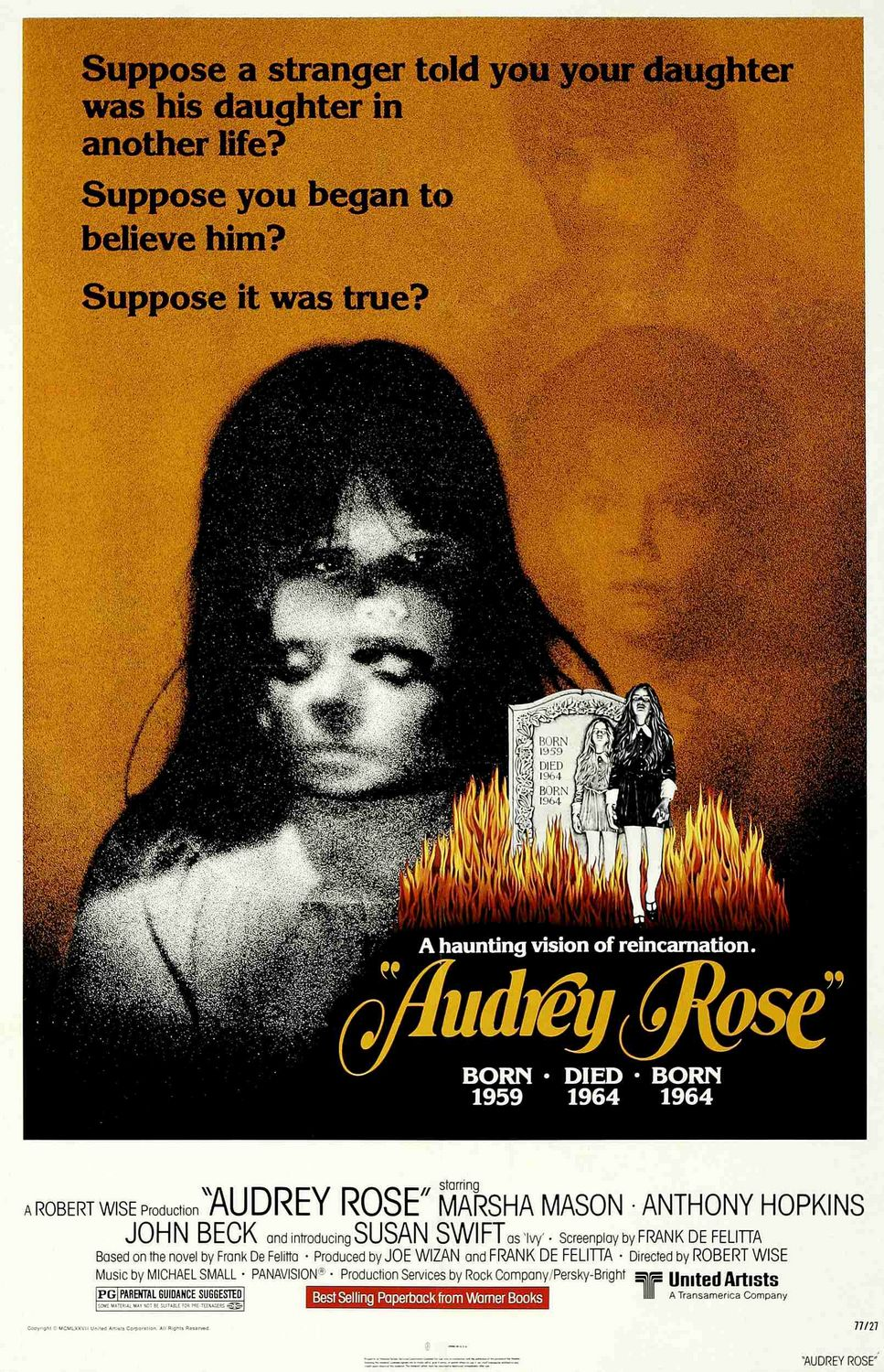
Audrey Rose (1977)

audrey rose 2

By Richard Winters

My Rating: 6 out of 10

4-Word Review: Dead daughter gets reincarnated.

On October 3rd, 1965 at precisely 8:20AM a young Audrey Rose dies in a fiery car crash. At 8:22AM on that same day Ivy (Susan Swift) is born to Janice and Bill Templeton (Marsha Mason, John Beck). Several years later after talking to a couple of psychics Audrey’s father Elliot (Anthony Hopkins) becomes convinced that his dead daughter has been reincarnated in the body of Audrey. When he approaches Ivy’s parents about it they scoff and then when he tries to take her they have him arrested. He then goes on trial where he tries to get 12 jurors to believe that reincarnation is a reality.

Based on the Frank De Felitta novel, and who also wrote the screenplay, this odd hybrid of a horror film never really takes-off.  Director Robert Wise does a terrific job of capturing the Manhattan skyline and a late 70’s New York City ambience as well as the gorgeous classic paintings that line the ceiling of Janice’s and Bill’s apartment, but he has a story that is light on action. The restrained and genteel narrative creates a film that seems more like a conventional drama than a horror film despite a storyline that is brimming with supernatural elements.

Every effort is made to keep the proceedings as realistic as possible only to have the entire second hour delving into a court room drama with a defense strategy that is so outlandish it becomes almost ludicrous. Having Elliot become convinced of the reincarnation through talking to psychics is another weak point. The few so-called psychics that I have been to have proven to be inaccurate and unreliable and most people that I know have had the same experience. In the past few years several famous psychics have been outed in the media as being frauds and charlatans. Having the film treat these people like they are a reliable source puts the entire premise on poor footing from the very beginning.

Mason can play a distraught and beleaguered character about as well as anyone and her teary-eyed presence helps give the film a few extra points. Beck is also good as her husband and their contrasting personalities and approaches to the situation add an interesting subtext.

Not to necessarily sound cruel but Swift as the young girl has a big pair of buggy eyes that to me became more of a distraction as it went along. Also, with her long brown hair she starts to resemble the Linda Blair character from The Exorcist, which was a far more intense, scary, and exciting film than this one. The producers would have done well to have cast a blonde or redhead in the role simply to avoid the comparison.

The scares are almost non-existent and the only slightly spooky moment is the scene where Swift looks into a mirror and chants the Audrey Rose name repeatedly, which is the only time where her buggy eyes come into good use. The several scenes showing her running around the place and banging onto the widows while screaming become old pretty fast. The direction is slick and the production values good. It is compelling enough to be entertaining, but the ending is very unsatisfying and as a thriller it is transparent and unmemorable.

My Rating: 6 out of 10

Released: April 6, 1977

Runtime: 1Hour 53Minutes

Rated PG

Director: Robert Wise

Studio: United Artists

Available: VHS, DVD, Amazon Instant Video

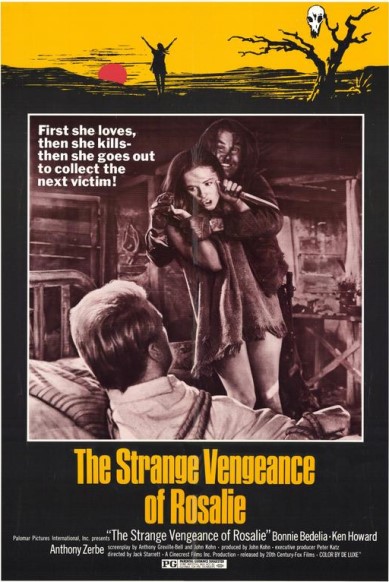
The Strange Vengeance of Rosalie (1972)

the strange vengeance of rosalie

By Richard Winters

My Rating: 7 out of 10

4-Word Review: She can’t be trusted.

This is an okay obscurity about an Indian girl named Rosalie (Bonnie Bedelia) whose grandfather has just died and in an attempt to stave off loneliness tricks Virgil (Ken Howard) a traveling businessman into coming back to her isolated ramshackle place. Once there she breaks his leg in order to trap him and hopes that in the time it takes to heal he will learn to love her.

Critic Leonard Maltin calls this film “farfetched” and going “way off base” yet nothing could be further from the truth. If you accept the initial premise then the rest of the film is carried out in a plausible and believable fashion.

Director Jack Starrett certainly has a vision here. The remote desert like local is captured well and gives it a distinct feel. The premise is static, but the story keeps moving and new elements are added in nicely. The second hour does begin to meander, but it is finished off by a surprise ending that comes out of nowhere and is completely unexpected. You have to watch it all the way through to really appreciate it yet it does help the film come together and even helps explain its title.

The similarities between this and Misery are quite evident and in some ways this film wins out. It is not as slick or polished, but it is also not as formulated either. This is not your standard thriller as you have no idea where it is going. It runs the gamut between drama, adventure, and even human interest. There is also the added sexuality element and a genuine relationship between the two, which Misery did not have.

The best thing is the Rosalie character. She is young and beautiful. Her intentions and motivations are constantly surprising. In some ways she is like the Barbara Eden character in ‘I Dream of Jeannie’. She is naive and trusting, but also headstrong, self- sufficient and cunning and Bedelia is perfect in the role.

Being made in the early 70’s and at the height of political awareness there is some thought to there being meaning to the fact that she is Indian and Howard the typical white businessman. She is constantly trying to win approval of this white man who otherwise seems oblivious to her conditions or needs. He is also too self-absorbed and too locked into his mindset of minorities being ‘inferior’ to realize how consistently she outsmarts him. Like with a lot of minorities there is a great deal of frustration with the attitudes of the establishment. Howard is just too stuck in to his preconceived notions to ever see her as an equal no matter how hard she tries.

Overall this is a decent film especially when compared to other low budget, independent films of that same era. The twist ending helps, but you have to stick with it.

My Rating: 7 out of 10

Released: June 16, 1972

Runtime: 1Hour 47Minutes

Rated PG

Director: Jack Starrett

Studio: 20th Century Fox

Available: Amazon Instant Video (Edited Version)

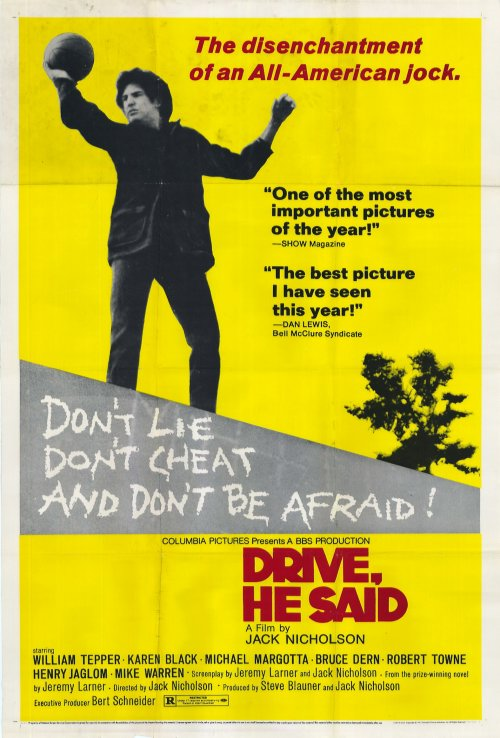
Drive, He Said (1971)

drive he said 1

By Richard Winters

My Rating: 5 out of 10

4-Word Review: Player doesn’t like coach.

This is one of those movies that shows signs of being a really great movie trying to break out, but never does. It’s about Hector (William Tepper) a college basketball star who is being tugged at different directions by those around him and by society at-large. This creates inner turmoil that leads to outbursts, apathy, and even anti-social behavior.

Tepper as the star isn’t the best of actors. He has a constant blank look and way too much hair. The character he plays has potential. It is nice to see a portrait of an athlete that isn’t one-dimensional sports, but instead shows intelligent and sensitivity to things that go well beyond the court. Yet he is also too self- absorbed and displays a selfish behavior that in most cases would alienate him from his teammates. What is supposed to be betrayed as angst instead comes off as an obnoxious, spoiled college kid. His constant rebellion with his coach (Bruce Dern) doesn’t mesh.

The film makes some good observations and brings up great issues. Unfortunately it ends up becoming diluted. In some ways it should have just stuck with the basketball angle. The camera shots that glides with the action during the games is excellent. Some of the scenes during the practice and some of the locker room segments of Dern coaching the team gives the viewer a good taste of the college basketball experience and makes you want to see more of it. However, incorporating late sixties politics into it only makes it redundant and in this area the film offers no new insight.

The film does have its moments and some of them are even memorable. The best ones involve actor Michael Margotta’s character as a student radical wavering on insanity. His assault on the Karen Black character while inside a large, darkened house is striking both visually and emotionally. The scene where he, while naked, runs into a science lab and releases all sorts of rats, rodents, and reptiles is a sight in itself.

Dern with his glazed stare and intense acting style seems like a natural for the part of the hard-driven coach. It’s too bad the film doesn’t make the most of it, but Black is looking at her best.

Jack Nicholson as a director is not as good as Nicholson the actor although he does show potential, but it doesn’t come together as a whole. The film should best be viewed as a curio or artifact of its era. There is also a surprisingly high amount of male nudity as well as homo-erotic overtones.

drive he said 2

My Rating: 5 out of 10

Released: June 13, 1971

Runtime: 1Hour 35Minutes

Rated R

Director: Jack Nicholson

Studio: Columbia Pictures

Available: DVD (Region 1 & 2)

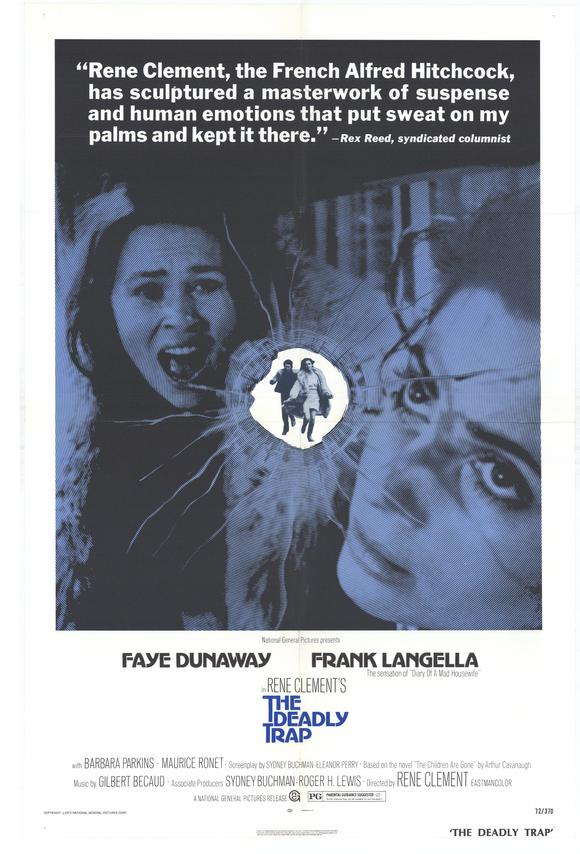
The Deadly Trap (1971)

the deadly trap

By Richard Winters

My Rating: 4 out of 10

4-Word Review: They have their kids.

Philippe (Frank Langella) works at a high-tech job in a large corporation. For years he has been giving trade secrets to a mysterious organization that pays him handsomely for his efforts. Now that he is married and has children he has decided he no longer wants contact with this underground entity, but they refuse to leave him alone. When he is no longer willing to corporate they kidnap his two children, which sends his emotionally and mentally fragile wife Jill (Faye Dunaway) over-the-edge.

Dunaway’s amazing performance is the one thing that really helps propel a film that is otherwise too laid-back. I have always been an admirer of hers, but her performance here is great because it is so different from any of the other characters that she has played. Normally she is cast in parts of strong or manipulative women, but here she plays someone who is very fragile and does it with amazing effectiveness. I felt like she was a completely different person and showed a side to her that I didn’t think she possessed. Her face and expressions accentuate the fragility and she looks quite beautiful.

Langella is good on the opposite end. He plays a cynical and aloof man who snaps at his wife in an annoyed manner at regular intervals. The contrasting personalities and dialogue between them is interesting. In many ways he seems to playing an extension to the character that he did in Diary of a Mad Housewife and given the fact that Eleanor Perry wrote the screenplays for both films makes me believe that there had to be more than just a passing connection there.

The story has some interesting underlying elements that manage to retain a modicum of intrigue, but Rene Clement’s direction is too leisurely. The first hour gets bogged down with too much conversation and certain tangents that go nowhere. It is only in the last half hour that things finally get going and has some interesting twists, but by then it is too late. It would have been better had we seen some sort of face to the organization instead of having them portrayed in such a vague way. The movie is also in need of a lot more action although the part where Jill and her kids get into a car accident and get thrown from the vehicle is impressive since actual bodies where used, which is something I had never seen done before.

Spoiler Alert!

The film features several loopholes that will end up confounding anyone. One is that when the children are kidnapped they are locked in an upstairs room that has a loaded gun stashed away in the closet. The children get their hands on it and use it against their captors, but you would think that a sophisticated and large criminal group that this organization supposedly is wouldn’t be so utterly careless as to leave it there. Also, when it is found that the couple’s downstairs neighbor Cynthia (Barbara Parkins) has a connection to this organization and kidnapping the police shoot her dead at point-blank range instead of just arresting her and interrogating her in order to find the whereabouts of the kids. The biggest problem though is the ending itself where the kids are saved and everybody becomes one big happy family, which doesn’t jive at all with the rest of the film that had a constant murky undertones and a couple that was always squabbling. By having this otherwise dark thriller suddenly become ‘The Brady Bunch’ at the end is jarring in tone. It also doesn’t answer the fact that the organization was never caught and therefore will continue to harass him again, so why should they be all happy when the bad guys could strike at any moment?

My Rating: 4 out of 10

Released: June 9, 1971

Runtime: 1Hour 36Minutes

Rated R

Director: Rene Clement

Studio: National General Pictures

Available: VHS, Warner Streaming

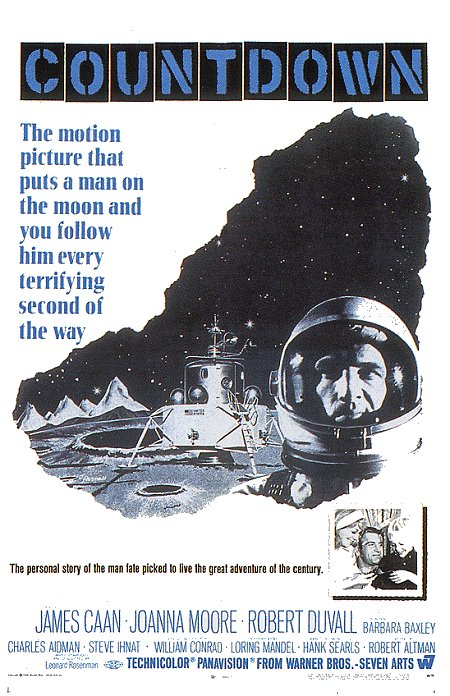
Countdown (1967)

countdown

By Richard Winters

My Rating:  7 out of 10

4-Word Review: Man lands on moon.

Lee (James Caan) and Chiz (Robert Duvall) are astronauts who are part of the Apollo 3 mission training to land on the moon. The liftoff date is still a year away when it is found that the Russians have already built a rocket ready for takeoff and plan on sending a man to the moon within the next few days. NASA decides to beat the Soviets by sending one of their men in an older style rocket and then having him live there for one year inside a shelter. Lee is chosen to go instead of Chiz much to his consternation and despite the fact that he had more training, but the project proves to be even more difficult than expected and Lee’s inexperience creates concerns that it might not succeed.

This is an unusual space drama in the fact that you see very little action that takes place in outer space or the moon. The main emphasis is on the human point-of-view both with the people directly involved with the project as well as their families and loved ones. The movie focuses on the behind-the-scenes competition and politics and in the process creates a realistic and vivid viewpoint. The story is engrossing and compelling wrapping the viewer in right away and never letting them go. Despite being over 40-years-old it doesn’t seem dated at all and I had to keep reminding myself that I was watching a 60’s movie.

Duvall is a standout as the very emotional and competitive Chiz. I enjoyed seeing the way he initially refuses to help Lee train for the mission when it is found that he was chosen instead of himself, but then reluctantly comes around and becomes both Lee’s mentor and biggest source of support. Caan’s more restrained performance is a nice contrast to Duvall’s volatile one and it is interesting to compare the work the two do here with The Godfather film that they both starred in 5 years later where they played the completely opposite characters.

Joanna Moore is also excellent as Lee’s wife Mickey who goes through a mixed bag of emotions during Lee’s tumultuous training and eventual flight. She’s the first wife of Ryan O’Neal and the mother of Tatum and Griffin who never achieved stardom due to her bouts with alcoholism and guest starred more in TV-shows than movies, but I have always found her to be impressive and unique in everything that I have seen her in. This is also a great chance to see up-and-coming actors in bit roles including Ted Knight, Mike Farrell, and Michael Murphy.

This was director Robert Altman’s first theatrical feature and he does great work here although you will not see any of his trademark ‘Altmanisisms’.  I did see it budding in certain small ways including a party scene that seemed like a real get together with people actually congregating and having lingering background conversations as the camera moves through the crowd versus the conventional way where the main characters stand directly in front of the camera and then only shows stand-ins in the background who are out-of-focus and moving their mouths, but not really saying anything. I also liked that when they are counting down for liftoff it gets paused when a technical issue is found.  This reminded me of the many times when I would watch on television in the 80’s the countdown for the Space Shuttle liftoff and how it would get paused in a similar way sometimes with just a few seconds to go because of certain similar glitches. Most films fail to show this, so it was nice to see it here.

My Rating: 7 out of 10

Released: August 20, 1967

Runtime: 1Hour 40Minutes

Not Rated

Director: Robert Altman

Studio: Warner Brothers

Available: DVD (Warner Archive)

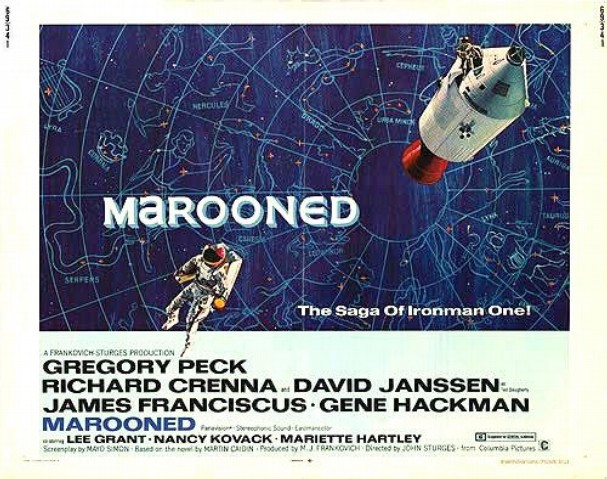
Marooned (1969)

marooned 1

By Richard Winters

My Rating: 7 out of 10

4-Word Review: Astronauts stranded in space.

Unfortunately this film’s biggest claim to fame is that it is the only movie nominated for an Academy Award to be shown on ‘Mystery Science Theater 3000’.  As much as I enjoy that show I think it is unfair to throw this movie into the pile and make fun of it as I think it holds-up well and is a solid space drama.  The story based on the novel by Martin Caidin is about three astronauts (Richard Crenna, Gene Hackman, James Franciscus) who have been orbiting the earth for several months in a space lab, but as they try to return to earth they find that their retro rocket won’t fire and they’re stranded. Initially NASA, which is headed by Charles Keith (Gregory Peck) decide they have no alternative but to leave them there however, Ted Daugherty (David Janssen) puts up enough of a raucous that they decide to allow him to head a rescue mission. An impending hurricane and the astronaut’s dwindling supply of oxygen all cause further problems and force everyone to work at break-neck speed to pull it off.

One of the things that grabbed me initially was the lack of music. Instead we just here beeping sounds of a computer and the hum of a rocket during the opening credits, which helps give the film a futuristic and distinctive flair. I also liked the cool sounding hum that the viewer hears every time the men are outside of their capsule and in space. It has kind of a hypnotic tone to it and makes things a bit surreal. The special effects were decent for its era. You do have to forgive it a little particularly the scenes showing the rocket and men floating in space, which were clearly matted over a blue screen, but at least when the men are shown floating around with no gravity there are no visible strings. My favorite moment out of the entire film is when one of the men goes floating off motionless into the dark abyss while the other two watch solemnly from the capsule door.

The narrative could have been handled better. Instead of starting things out right away with the rocket taking the men off into space I felt there should have been more of a backstory to the main characters so we got to know them better and felt more empathy to their predicament. Even having flashbacks of the characters at different times in their life dotted throughout the film would have helped make them seem less cardboard. The scenes involving all three wives of the astronauts (Nancy Kovack, Mariette Hartley, Lee Grant) talking to their respective husbands via satellite just before the rescue mission takes off becomes too extended, predictable and maudlin. However, the scene involving the conversation that the astronauts have amongst themselves when it is learned that there isn’t enough oxygen for all three and one of them must be willing to die to save the other two I found to be gripping and compelling.

Peck is as usual incredibly stiff and delivers his lines like he is preaching some sort of sermon. Here though his style works with a character that is no-nonsense and locked into being completely practical at all times. His looks of nervousness as the rescue rocket gets ready to take off are great as is his delicate conversation that he has with Crenna involving which of them must sacrifice their life for the other two. Hackman is solid as usual playing an emotional Gus Grissom-like character, but he has played these roles so much it would have been interesting to see him play one of parts that required more restraint. The beautiful and talented Grant is wasted in a non-distinguished role as one of the wives, but her line about ‘the girls’ leaving the men alone so they can get back to their jobs seemed incredibly sexist especially from her.

The rescue mission is exciting, but excruciating and the ending is way too abrupt. However, my biggest complaint about this film that I otherwise find to be realistically and plausibly handled is that no explanation is ever given for why the rockets failed to fire, which I felt there should have been especially since there is a moment showing the green light on their dashboard stating that the rockets did fire and this light mysteriously stays on even when they shut down the power to the rest of the cabinet.

marooned 2

My Rating: 7 out of 10

Released: December 11, 1969

Runtime: 2Hours 14Minutes

Rated G

Director: John Sturges

Studio: Columbia

Available: DVD, Amazon Instant Video

Burnt Offerings (1976)

burnt offerings 1

By Richard Winters

My Rating: 2 out of 10

4-Word Review: Evil house menaces family.

Marian and Ben (Karen Black, Oliver Reed) are a couple who takeover for the summer as caretakers for an old gothic-like mansion.  They bring along their son Davey (Lee Montgomery) and Aunt Elizabeth (Bette Davis). Soon there are strange occurrences as well as a transformation of their personalities, which makes them believe that the place is haunted.

The attempt at going back to an old-fashioned type of horror movie doesn’t work. Dan Curtis’s direction is too restrained and most likely will be a turn-off to even those that like these types of films. The pace is slow and the film takes way too much time telling a story that in the end adds up to nothing. The scares are non-existent and I didn’t even find it to be the slightest bit creepy. The only impressive scene involves a body flying out of an upstairs window and crashing head first into the windshield of a car, but that doesn’t occur until the very end. There is also a potentially interesting subplot involving Ben’s reoccurring nightmares about a traumatic childhood experience with a chauffeur, but it is never fully explained what this is about, which ultimately makes this more frustrating instead.

The soft lighting approach is another mistake as it makes the whole thing look like a shampoo commercial and adds nothing to the atmosphere. There is also the backyard pool that was clearly shot at another location from the summer house one that they reside.

Probably the only fun element of this otherwise blah film is the eclectic cast. Burgess Meredith, who shows up at the beginning, should’ve won an award for campy performance of the decade. Black plays another one of her flaky characters with her usual flaky style and Montgomery is good as the no-nonsense kid. Reed is outstanding as he ends up showing the widest array of emotions.

However, it is Davis whose latter day presence gives the film its broadest appeal. She spent a career playing strong-willed women with electrifying performances and yet here her character is downright ordinary. The change of pace is interesting especially the scene where she gets shouted down by Black. She also has a pretty good deathbed sequence and there is even a moment where Reed pats her on her rear. Depending on one’s point-of-view you will either find this to be amazing, amusing, or really gross.

On the whole though I found this to be a pretty hopeless excuse for a horror film with the most horrifying thing about it being having to sit through it.

burnt offerings 2

My Rating: 2 out of 10

Released: October 18, 1976

Runtime: 1Hour 56Minutes

Rated PG

Director: Dan Curtis

Studio: United Artists

Available: VHS, DVD

The Grass is Singing (1981)

the grass is singing 1

By Richard Winters

My Rating: 7 out of 10

4-Word Review: Farming isn’t her thing.

In memory of Karen Black who died on August 8th we will review on each Monday of this month an 80’s film that she starred in as well as a 70’s movie that she was in on Fridays. This film is based on the Doris Lessing novel and was filmed on-location in Zambia. The story centers on Mary a racist woman from South Africa who is bored with her job and lonely. She meets Richard (John Thaw) a simple man who becomes smitten with her. She is not as crazy about him but decides to accept his proposal of marriage simply as a way to escape her dreary existence and loneliness. He moves her to his farm where she finds the rigorous lifestyle difficult to adjust too. The isolation begins to wear on her already tightly wound temperament and eventually she begins to show erratic behaviors that become more disturbing and shocking.

The Zambia locations are captured in vivid style with a grainy film stock that makes it look like it were a documentary. The farm setting is indeed desolate and makes for great atmosphere. Director Michael Raeburn wisely refrains from using too much music and when he does he uses instrumentals from the native culture, which further elevates the film and gives it distinction.

The film stays pretty faithful to the novel and starts out in startling fashion with Mary being stabbed and bloodied on her backdoor step and then shifts back seven years where we see what lead up to it. The pace is slow, but involving and the characters are three-dimensional and believable. Mary’s breakdown happens in a deliberate and realistic fashion starting with little things that work into bigger ones. In the end you feel more sorry for her than frightened and thoroughly engulfed with her sad and pathetic circumstances.

This was Black’s last serious role before being quarantined in B-movie purgatory. This may also be one of her finest moments as she brings out the manipulative nature of the character quite well and I love the way she always seems to add quirky qualities to her parts. She also speaks with an authentic sounding South African accent.

Thaw is quite good in support and creates empathy from the viewer playing a very humble man looking for simple companionship with no idea what he was getting into.

There is some serious filmmaking going on here in a movie that makes some great points about life and human nature that is well worth checking out. The original theatrical release which is what I saw and able to obtain from a private collector runs a full 105 minutes. However, the American release which is available on DVD from Synergy Entertainment as well as Amazon Instant Video and goes under the title Killing Heat runs only 90 minutes and heavily edits out the explicit violence and nudity and has a narrative that is choppy and at times confusing.

My Rating: 7 out of 10

Alternate Title: Killing Heat (U.S. version)

Released: September 18, 1981

Runtime: 1Hour 45Minutes (Original Version)

Not Rated

Director: Michael Raeburn

Studio: Chibote

Available: VHS, DVD, Amazon Instant Video (as Killing Heat)