Category Archives: Movies Based on Novels

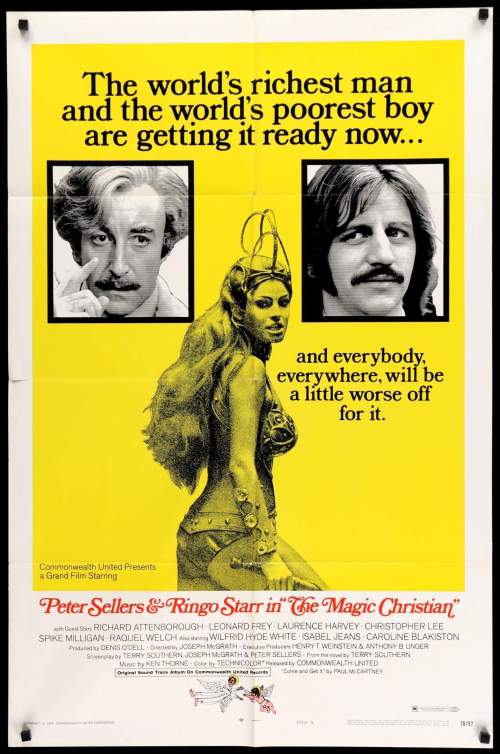
The Magic Christian (1969)

magic2

By Richard Winters

My Rating: 8 out of 10

4-Word Review: Everybody has a price.

Sir Guy Grand (Peter Sellers) is a billionaire with an eccentric side, who wants to prove the powerful influence money has over other people. He meets Youngman (Ringo Starr),a homeless man in a park, and decides to adopt him as his son. Together they proceed to play elaborate pranks on the public by watching how far they can push their theory and what humiliating lengths people will go to get their hands on some money.

The film is based on the 1959 novel of the same name written by Terry Southern, who also wrote the screenplay, and while the novel was considered a success the movie, at least when it was first released, wasn’t. My critics complained of the film’s heavy-handed satirical nature and unrelenting jabs at capitalism even though all the same pranks done in the movie were also in the book. The film also has the exact same satirical theme as O Lucky Man, which starred Malcom McDowell and came out just a few years later that also took numerous potshots at capitalism and yet many of the same critics adored that one, but came down hard on this one.

Fortunately through the years the film has managed to find a cult following. I supposed if one has more of a socialist bent they may enjoy it more, but it has such a surreal, creative vibe to it that it’s fun to watch no matter if you agree with it’s message, which is kind of muddled anyways, or not. Some of my favorite bits included snotty, rich aristocrats boarding a ship cruise that puts them in increasingly more humorously challenging and bizarre situations. The final segment, which has the classic song ‘Something in the Air’ by Thunderclap Newman playing during it, features a giant outdoor vat filled with urine, blood, and animal feces and then having Grand throw money into it and challenging onlookers to jump into the mess in order to get at the money, which despite the awful stench they readily do.

There’s many cameo appearances by famous stars who agreed to take small roles as a favor to Sellers who at the time was a top star and friends with many of the big headliners of the day. Some of the best bits here include Laurence Harvey who does a striptease while onstage and in front of a packed house of onlookers while reciting ‘Hamlet’. Yul Bryner, looking almost unrecognizable in a female wig, is great as a transvestite who comes-onto a shy Roman Polanski while at a bar. Spike Milligan is hilarious as a traffic cop who agrees to eat his own traffic ticket for the right price as well as Raquel Welch as a slave commander with a whip, Wilfred Hyde-White as a drunken ship captain, and John Cleese as a perplexed auctioneer.

The problems that I had with the film dealt mainly with the relationship between Sellers and Starr. Sellers meets Starr one day in a park by chance and then begins to have a conversation with him, but there’s music playing over this, so we never hear what they’re saying, which is frustrating as the having a rich man suddenly offer a poor man the chance to be his adopted son seemed like dialogue that should be heard. Starr is also not given much to do and it seemed almost pointless for having even in the movie. In the novel there was only the Grand character creating the pranks, but it was decided for the movie to make it a two man show, but Ringo has so little to do that it didn’t seem worth it and this reportedly was due to Sellers’ insecurity of being upstaged and thus insisting that all the best lines had to go to him.

It’s also never clear why the Sellers’ character does what he does. What’s the motivation for why this rich man feels the need to expose other people’s foibles and vanities? Does he feel guilty about being so rich and therefore has decided to ‘take-it-to’ the others in his own social circle? None of this gets explained or analyzed at all, which on the character end makes the film quite superficial and confusing.

My Rating: 8 out of 10

Released: December 12, 1969

Runtime: 1 Hour 32 Minutes

Rated M

Director: Joseph McGrath

Studio: Commonwealth United Entertainment

Available: DVD, Blu-ray, Amazon Video

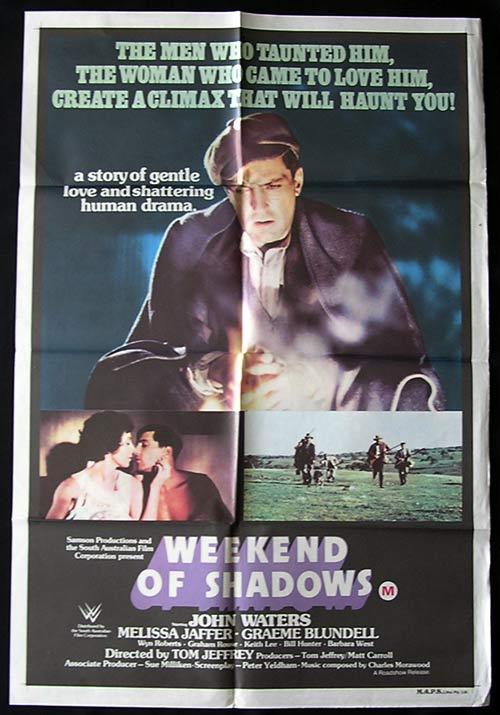
Weekend of Shadows (1978)

weekend1

By Richard Winters

My Rating: 6 out of 10

4-Word Review: Manhunt for murder suspect.

In rural Australia during the 1930’s a farmer’s wife is found murdered inside her home. Suspicions immediately fall on a Polish laborer who had always been deemed ‘peculiar’ by the locals and while there’s no other evidence pointing to his guilt it’s enough to get the men in the community together to form a posse. Sergeant Caxton (Wyn Roberts) hopes that if he can capture the suspect it will help mend his reputation, which had been tarnished while working in Sydney and got him demoted to the small town that both he and his wife (Barbara West) don’t like. Vi (Melissa Jaffer) feels this will be a perfect opportunity for her shy husband, Rabbit (John Waters) to bond with the other men by going along on the hunt, but he resists thinking that the whole thing is just a knee-jerk, mob reaction and wants nothing to do with it, but at the behest of his constantly prodding wife he eventually joins, but learns to regret it.

Out of all of the manhunt movies that are out there this one may be the most unusual in that it doesn’t focus on the suspect at all, in fact you barely ever see him, but instead on the various men in the group. Surprisingly though this manages to be quite effective and I found myself wrapped-up in the various personalities of the participants and how all of them clash with each other at various times. The budget though is quite low, screenwriter Peter Yeldham and director Tom Jeffrey were forced to make many concessions on the script just to get the necessary funding, and while the stark production values will initially be a turn-off, the overall drama, which is based on the novel ‘The Reckoning’ by Hugh Atkinson, will eventually compensate.

I didn’t though like the flashbacks showing Vi and Rabbit’s courtship, which I felt wasn’t necessary and bogged down the tension. The relationship between them is intriguing on a certain level as it shows how wives can have a strong influence over their husbands and get them to do things they wouldn’t otherwise, this same scenario also gets played-out between the constable and his wife, but the scenes showing their dating period offers no further insights and no effort is made to make the actors appear younger even though the courtship had been many years prior.

Spoiler Alert!

While the film was a hit with the critics it sank at the box office recouping only $61,000 of the $495,000 that had been put into it, which soured Jeffrey from directing movies and he helmed only one other, The Last of the Knucklemenafter this one. Ironically Hugh Atkinson was quite impressed with the finished product, which was odd since most of the time author’s of the book which the movie is based are usually not happy with the director’s interpretation of their work, but Atkinon felt Jeffrey ‘got it’ particularly with the ending, which he stated represented the crucifixion. Personally I didn’t see this connection, and neither did Jeffrey, who felt like I did that the story was more about how group dynamics can get out of hand, but Atkinson insisted the crucifixion element was the centerpiece. The ending will be a surprise to many and leaves open many questions, but what you ultimately make of it will be up to your own personal perspective.

My Rating: 6 out of 10

Released: April 12, 1978

Runtime: 1 Hour 25 Minutes

Not Rated

Director: Tom Jeffrey

Studio: The South Australian Film Commission

Available: VHS

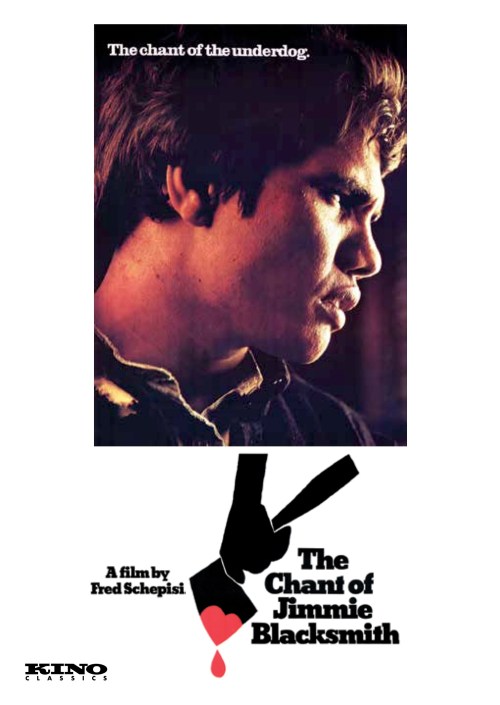
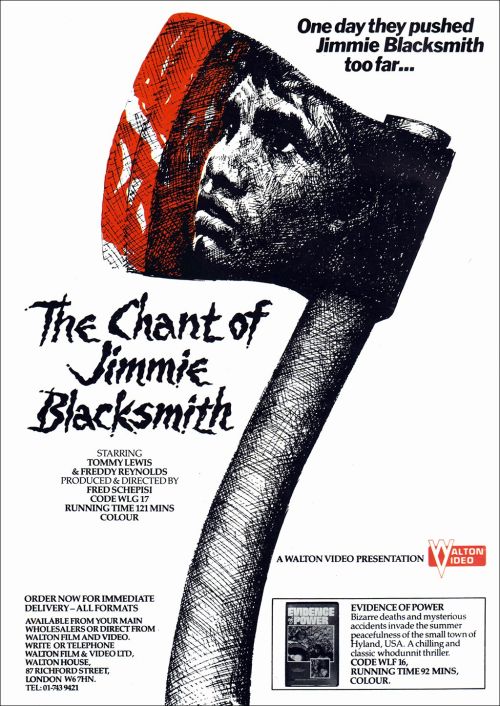
The Chant of Jimmie Blacksmith (1978)

chant1

By Richard Winters

My Rating: 9 out of 10

4-Word Review: Aborigine driven to murder.

Jimmy Blacksmith (Tommy Lewis) is an aborigine living in Australia during the turn of the century while being raised by the Reverend Neville (Jack Thompson) and his wife Martha (Julie Dawson) as his foster parents. Once he reaches adulthood he goes out into the world looking for a job, but finds racism at every turn, which affects his ability to make an honest living as he’s continually cheated out of wages by his white employers. While doing work for the Newby family he meets Gilda (Angela Punch McGregor) a white woman whom he marries after he thinks he got her pregnant only to later learn that the child was not his. Once the baby is born the Newby’s try to convince Gilda to leave Jimmy and refuse to pay him his salary or provisions for the work that he’s done. Furious at his mistreatment Jimmy enlists the help of his uncle Tabidghi (Steve Dodd) to threaten the Newby women with axes while the Newby men are away in hopes that this will scare them enough to pay Jimmy what he’s owed, but instead things get quickly out-of-control leading to the brutal slaughter of the women and forcing Jimmy and his family to go on the run.

The film is based on the 1972 novel of the same name by Thomas Keneally, which in turn was inspired by the life of Jimmy Governor an Indigenous Australian who was involved in the killings of nine people that precipitated him going on the run for 14-weeks and created one of the largest manhunts in Australian history. While the film did well internationally and was highly acclaimed it was received poorly at the box office in its native country where films dealing with Australia’s troubled history are generally avoided by the public causing director Fred Schepisi to lose his entire investment of the $250,000 that he put into the production.

The film though on its own terms is excellent particularly with its revisionist history approach where the gloss and romanticism of the past get stripped away leaving the viewer with a stark sense of the desperation and cruelty that existed back then. The terrific acting also helps including Lewis, who at the time was working as a bricklayer before being spotted by Schepisi’s wife at the Melbourne airport while he walked by her and this lead to him being given the starring role. Ray Barrett, as a corrupt constable and Punch McGregor, whose lost and forlorn facial expressions allow you to perfectly read her character without much dialogue being needed, are stand-outs as well. My favorite part though, or what resonated with me long afterwards, were the scenes filmed inside the Bundarra Dorrigo State Forest in New South Wales during the manhunt where the unique foliage and large boulders give off an almost surreal vibe.

Some of the issues that I had with the movie, which overall is quite good, centered mainly around its music. For the most part the score is subtle and nonobtrusive, but during the murder sequence it gets loud and obnoxious like it’s warning us something bad is happening, which we really don’t need since we can easily see this with our own eyes. The killings are recreated in a very vivid way and quiet horrifying, so the heavy-handed music hurts the graphic moment instead of accentuating it like it was intended. I also noticed while researching the real Jimmy Governor that he had a beard especially in the photo of him after his capture and yet here Jimmy has no beard even after being on the run, which seemed implausible.

The fact that we have a main character who commits several heinous acts, but we still emotionally side with him is what helps this movie stand-out from Hollywood films that feel compelled to makes protagonists likable to the point that they sanitize history. Here we’re shown that the ‘good-guy’ can do, even if they feel it’s justified, some ugly things and in the real-world the line between right and wrong can sometimes be merged and subjective. This is a message that Australian movies do a great job of conveying while Hollywood, in their zest to create ‘audience pleasers’ tend to modify the facts to conform to what they feel are the accepted pre-conceived narrative/tastes of the audience they’re trying to attract, which ends up creating a weaker product that doesn’t reflect reality.

chant2

My Rating: 9 out of 10

Released: June 22, 1978

Runtime: 1 Hour 48 Minutes

Rated R

Director: Fred Schepisi

Studio: Hoyts Distribution

Available: DVD, Blu-ray, Amazon Video, Tubi

Hoffman (1970)

hoffman3

By Richard Winters

My Rating: 6 out of 10

4-Word Review: Executive blackmails a secretary.

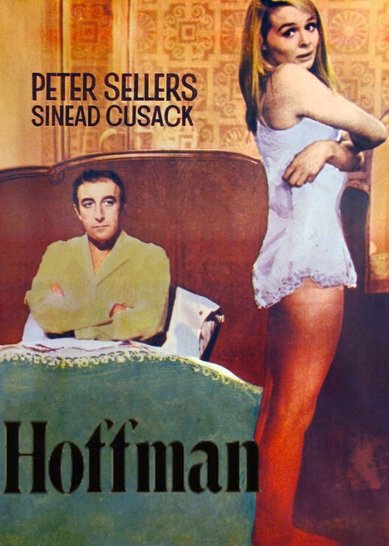
Janet (Sinead Cusack) is engaged to be married to Tom (Jeremy Bulloch), but tells him that she must spend a week away while visiting her sick grandmother in another city. Yet what she really does is go to the residence of Benjamin Hoffman (Peter Sellers). She has no love for him and there’s a wide age difference between the two, but Hoffman is blackmailing her in hopes that, if given enough time, that she’ll fall for him and leave her fiancée, but she resists his advances and when she threatens to leave he comes up with another plan to keep her there.

This unusual movie was based on a TV-play broadcast in 1967 in the UK that starred Donald Pleasance and Judy Cornwell. It had been written by Ernest Gebler and titled ‘Call Me Daddy’. When it received much acclaim it convinced Gebler to turn it into a novel, which was called ‘Shall I Eat You Now?’ and published a year later. When the response to that was positive Alvin Rakoff, who had directed the TV version, then decided to turn it into a feature film.

Having a movie centered around only two characters and take place almost entirely in one setting is usually a recipe for a static disaster and I felt this would’ve worked better as a stageplay, which Gebler eventually did turn it into in 1975. However, the initial mystery involving what Hoffman is blackmailing Janet about, who otherwise comes off as this innocent wide-eyed young woman who you can’t imagine could’ve ever done anything that wrong to be blackmailed in the first place, is what held my interest and kept me watching.

A lot of the credit to what keeps this movie watchable also goes to the two stars. Cusack, who is the wife of actor Jeremy Irons and the daughter of legendary performer Cyril Cusack, is fantastic especially with her constant shocked and perplexed expressions, which makes the movie consistently amusing. Sellers is excellent as well in his one and only serious turn. Initially he had wanted to give it his patented comical touch and using an Austrian accent, but Rakoff convinced him to play it straight and the result is a surprisingly dark, creepy performance, which made me believe he had untapped potential to being a memorable film villain had he wanted to be.

Spoiler Alert!

My grievances involve the character motivations which are poorly fleshed-out. Initially I thought Hoffman was blackmailing Janet over some wrongdoing she had done and was desperately trying to cover-up, but instead it was a crime committed by her fiancée Tom that Hoffman became aware of. If this was the case then why didn’t she alert Tom about what Hoffman knew? If she’s going to be marrying him then she should want to let him know if someone like Hoffman has it in for him. The two could’ve conspired a defensive strategy against Hoffman in an effort to turn-the-tables, but in any case there was no rational reason why she should keep it a secret. Again, if it was something she personally did that could’ve made her look bad in Tom’s eyes I could understand, but this other scenario just doesn’t make much sense.

Having her end up rejecting Tom and going back to Hoffman and becoming his girlfriend was equally ridiculous. It becomes quite obvious that Tom was not right for her, so dumping him was fine, but she didn’t have much in common with Hoffman either. The way he manipulated her should’ve been a red flag and unless there’s some weird quirk with her character that never gets explained the eventual love angle twist is pretty stupid and ultimately makes this film, despite the great acting, a rather pointless experience.

My Rating: 6 out of 10

Released: July 16, 1970

Runtime: 1 Hour 53 Minutes

Rated GP

Director: Alvin Rakoff

Studio: Anglo-EMI Distributors

Available: DVD, Amazon Video

A Hero Ain’t Nothing but a Sandwich (1978)

hero2

By Richard Winters

My Rating: 6 out of 10

4-Word Review: Getting hooked on heroin.

Benjie (Larry B. Scott) is an African American teen living with his single mother (Cicely Tyson), her boyfriend Butler (Paul Winfield) and her mother (Helen Martin) in a rundown area of Los Angeles. Benjie harbors a low self-esteem at being abandoned by his biological father years earlier and has not adjusted to Butler acting as his surrogate father and the two have many fights. To deal with his alienation he gets into drugs after befriending a local dealer named Tiger (Kevin Hooks). At first he dabbles in marijuana and likes the high it gives him, so he tries heroin, which eventually gets him hooked and it starts a downward spiral. His family tries to help him as best they can, but when he gets suspended from school they feel they have no other choice but to send him to a drug rehabilitation hospital where they hope he’ll recover.

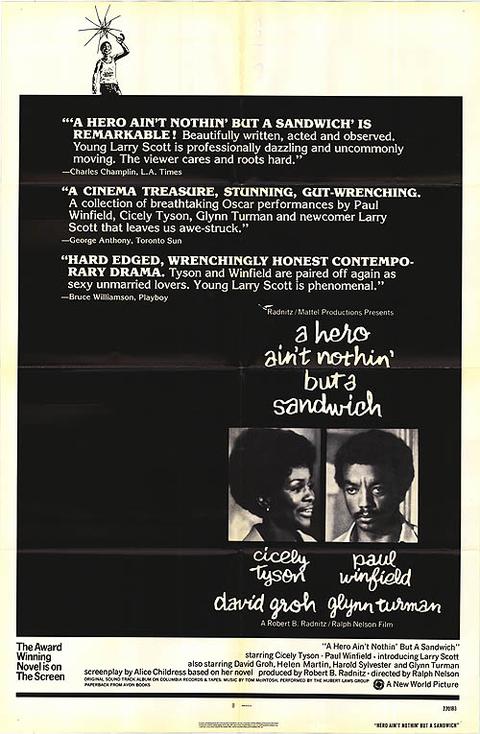
While there were some critics, as evidenced by the film poster above, that did like the film there were also others at the time that labeled it as ‘preachy’ and coming off more like an after school special than a movie. Despite being based on the novel of the same name, which had been highly praised, and with a screenplay written by Alice Childress, who had also been the author of the book, I still came into it a bit leery wondering if the negative reviews had merit and I’d be spending the 2-hours bored, but I came away impressed with how captivating and sincere it overall was.

A lot of the credit goes to Scott, who although was 15 when it was filmed, but effectively looks only 13 like his character, which makes the scenes where he shoots-up all the more shocking. Winfield is also excellent playing someone who’s bitter about life due to a failed music career and reluctant to take on a fatherly role particularly when the kid lashes out at him at seemingly every turn. Glynn Turman is solid too as Benjie’s African studies teacher as well as David Groh, better know as Joe in the TV-series ‘Rhoda’, playing the only white teacher in an all-black school who feels like an outsider himself. Helen Martin though steals it as the elderly grandmother who gets violently mugged by two kids on the street at the beginning and then later on does a provocative dance for the family in remembrance to her days as a young dance hall girl.

What I did have a problem with were the scenes inside the drug rehabilitation clinic that get shown through a series of black-and-white photographs. I don’t mind directors throwing in artistic elements into the narrative, but when the film had been working as a straight forward drama for the entire first hour then it kind of needs to stay that way and suddenly changing the approach becomes distracting. I’m not sure why these hospital scenes get glossed over the way they do, but it makes the viewer feel more distant from the character and what he’s going through.

Winfield’s bonding with the kid ends-up being problematic as well. I didn’t have an issue with it at the start as I kind of liked seeing this guy, who clearly had no blueprint on parenting, being forced into a situation that he really didn’t ask for, or know how to navigate. However, he becomes a little too emotionally bonded with Benjie by the end that just didn’t seem genuine. After all this really wasn’t his biological child and he hadn’t even married the mother, so to take on all of this extra responsibility, that should’ve been the mother’s, didn’t seen realistic. Tyson needed to play a stronger role here having her stand side-by-side with Winfield as they help her son through the withdrawal process. Having her instead getting written-off as this kook who’s into voodoo and at one point strips her teenage son naked and throws him into a bathtub filled with potions that she feels will ‘cure’ him and eventually jumps into the tub with him is a definite cringe moment, particularly by today’s standards, and a low point in a movie that otherwise is adequately done most of the way.

My Rating: 6 out of 10

Released: February 3, 1978

Runtime: 1 Hour 47 Minutes

Rated PG

Director: Ralph Nelson

Studio: New World Pictures

Available: DVD, Amazon Video, Tubi, Plex

Careful, He Might Hear You (1983)

careful2

By Richard Winters

My Rating: 8 out of 10

4-Word Review: Custody battle between sisters.

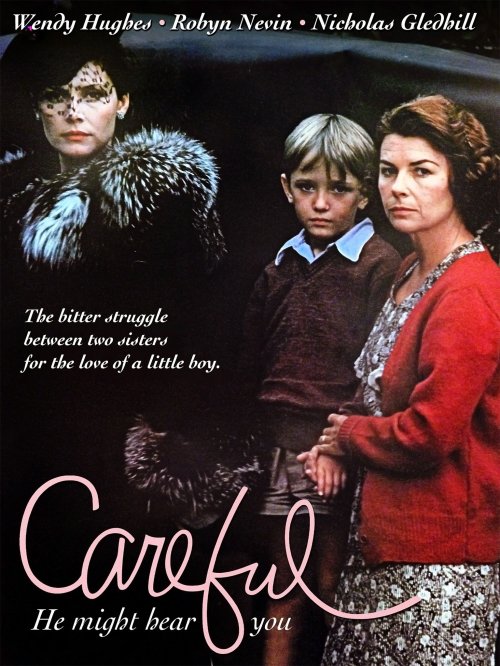
When his mother dies just a few days after his birth PS (Nicholas Gledhill) moves in with his Aunt Lila (Robyn Nevin) and Uncle George (Peter Whitford). There he has a happy childhood growing up in a working-class neighborhood. Then Lila’s wealthy sister Vanessa (Wendy Hughes) arrives stating she wants custody of the child on weekdays since she has more money and because PS’s absentee father (John Hargreaves) named her as co-guardian. PS doesn’t like going to Vanessa’s as she’s much more rigid and authoritarian forcing him to go to a private school filled with snotty kids and doing other things like taking piano lessons, which he doesn’t like. Vanessa also suffers from a fear of thunderstorms while Lila and George are unemployed making it hard for the judge to decide who the better guardian should be once the battle goes to court.

The film is based on the 1963 novel of the same name written by Sumner Locke Elliot who in turn based it on events of his own life after his mother died just one day after his birth. The film succeeds mainly from the sincere performance of its child star who is quite cute, at times maybe a little too cute, but then surprises the viewer in one completely unexpected moment of nastiness near the end. I also liked the way director Carl Schultz frames of the point-of-view shots where we see things from the child’s height making the adults appear foreboding and like he’s being swallowed up into their world, which is pretty much what happens.

While the film is billed as being this big court battle between two women it really comes-off like a character study of Vanessa, who gets much more screen time and a more of in-depth personality. This is good because Nevin’s character is a bit too basic and offers no real surprises though she does have an unexpected asthma attack while testifying in court, which I felt was a bit over-the-top since this was something that should’ve been introduced earlier if it was going to come into play during a pivotal moment. Hughes though is excellent. She had been only in supporting roles up to this point, mainly that of youthful girlfriend types to the main character, but here she successfully carries the film in an atypical part of a frigid woman.

Spoiler Alert!

The film’s crowning achievement though is the way it takes a character, in this case Vanessa, who you really don’t like for most of the movie, and then turns her into someone you sympathize with and even feel sorry for by the end. A lot of movies don’t do this, especially the Hollywood ones where the good guys and bad guys must work within a rigid formula, so it’s refreshing seeing a film do something differently and it really works. I found myself thinking about this one long after it was over and feeling emotionally conflicted by it and it’s all because of Hughes’ ability to create a three dimensional person that doesn’t fit into any stereotype even though you initially think she can be. A highly recommended film for those who understand how difficult it can be to deal and communicate effectively with children and how one’s best efforts can sometimes backfire badly.

My Rating: 8 out of 10

Released: September 22, 1983

Runtime: 1 Hour 49 Minutes

Rated PG

Director: Carl Schultz

Studio: Hoyts Distribution

Available: DVD, Amazon Video, YouTube

The Gang That Couldn’t Shoot Straight (1971)

gang1

By Richard Winters

My Rating: 4 out of 10

4-Word Review: Challenging a crime boss.

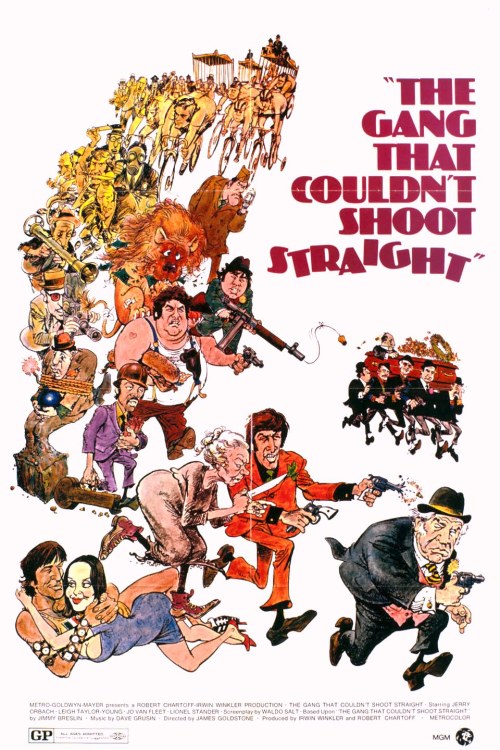
Kid Sally (Jerry Orbach), who works within a crime family where he’s in charge of a small group of crooks, becomes increasingly frustrated at what he feels is a lack of respect that he gets from mobster boss Baccala (Lionel Stander). When Kid is put in charge of supervising a bicycle race that does not go over well he gets demoted, which convinces him to take down Baccala and become the mob boss himself, but the men under him prove inept at every turn. Each time they try to kill-off Baccala the only ones who die are Kid Sally’s guys.

The film is based on the novel of the same name written by Jimmy Breslin and inspired by real-life mobster Joe Gallo who was also the inspiration for Crazy Joe that starred Peter Boyle. However, the Boyle film approached the material in a serious way and tried to keep things more closely tied-in with the actual events while this thing veers-off from what really happened and instead simply uses the situation as a springboard for a lot of zany, comical antics.

One of the main problems is the casting of Orbach who looks nothing like the real Gallo, Boyle was not a perfect match for him either, but he was at least in the same ballpark while Orbach appears too old and without any signs of the mental health issues that had afflicted Gallo who had been diagnosed with schizophrenia in his youth. There are also too many characters to keep track of and Orbach half the time is barely even seen becoming more like a supporting player in his own movie.

The film does have a few amusing moments including the gang’s attempts to bring in a lion, which they use to blackmail the client’s of their opposition. Van Fleet is also quite funny as Kid’s mother who looks and walks like she’s ready to die from old age, but speaks as if she’s a young tough guy. The location shooting isn’t bad either and seeing the entire group of men crammed into Joe’s mother’s apartment as they partake in their weekly spaghetti dinner brings the Italian ambience to a nice head, but director James Goldstone approaches the material in a haphazard fashion and it’s edited in a way that makes it seem more like a collection of vignettes than a story.

The only interesting element is seeing Robert De Niro, complete with long hair, as this young con who comes to New York straight from Italy. He speaks with an authentic accent, which he acquired by going to Italy for a week and recording the people around him and then playing back their voices while he rehearsed. He even prepared for his role as a thief by stealing 2 shirts from a Macy’s department store requiring producer Irwin Winkler to intervene in order to keep him out of jail. Leigh Taylor-Young is excellent as his love interest and her performance as the Kid’s younger more idealistic sister has an organic quality and a far cry from the psycho role that she played in The Big Bounce just 2 years earlier. The romance between her and De Niro and their attempts to forge a relationship while living in a cramped, rundown apartment is kind of touching and had the film focused on these two it would’ve worked better.

My Rating: 4 out of 10

Released: December 22, 1971

Runtime: 1 Hour 36 Minutes

Rated: PG

Director: James Goldstone

Studio: MGM

Available: DVD, Amazon Video, YouTube

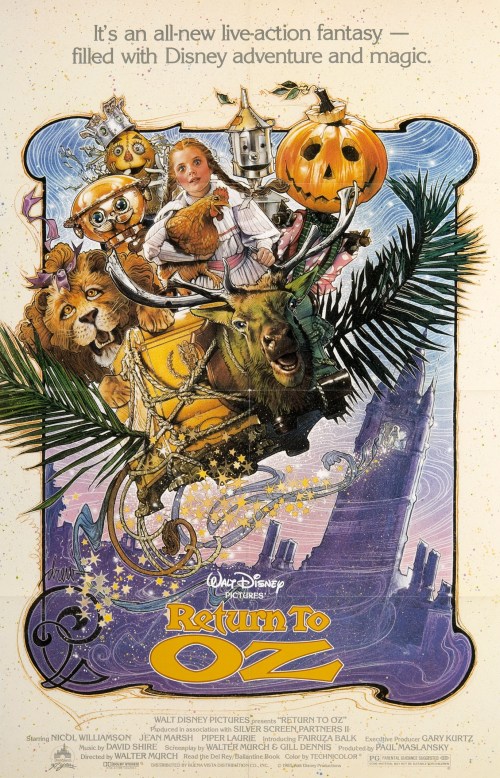
Return to Oz (1985)

returnoz2

By Richard Winters

My Rating: 5 out of 10

4-Word Review: Nobody believes Dorothy Gale.

Dorothy Gale (Fairuza Balk) has returned to Kansas and the home of Auntie Em (Piper Laurie) and Uncle Henry (Matt Clark), but she continues to talk about her adventures in the Land of Oz and can’t get any sleep. Both her aunt and uncle think she’s become delusional and decide to send her to a doctor (Nicol Williamson) who practices electro shock therapy. It’s there that she’s left under the care of Nurse Wilson (Jean Marsh) while also hooked-up to one of their machines only to be saved when a lightning storm knocks the power out. Dorothy then escapes out of the hospital and runs into a river where she climbs aboard a floating raft and makes friends with a talking chicken. She then gets whisked back to Oz, but this time finds everything in ruins including the citizens of the Emerald City who’ve been turned to stone.

The plot is loosely based on two of L. Frank Baum’s other novels: ‘The Marvelous Land of Oz’ and ‘Ozma of Oz’. The rights to the story had been purchased way back in 1954 by Walt Disney with plans to turn it into a film that would’ve starred Annette Funicello. It was to be a live action movie called Rainbow Road to Oz, but while filming had started and even preview segments aired on TV it was never completed as producers ultimately feared it would be compared unfavorably to the highly popular Wizard of Oz, so the production got scrapped. Then in 1980 film editor Walter Murch convinced Disney executives to give the idea another shot and since they were ready to lose the story rights anyways decided to green light the project with Murch acting as the director. Things though did not go smoothly as Murch had no directing experience and fell behind in the shooting schedule, which got him fired 5-weeks in only to be reinstated when his good friend George Lucas (the two had worked together on THX-1138) convinced Disney to give him another chance by promising that he personally would step-in to direct if Murch was unable to complete.

As a whole, at least in the beginning, I really liked the gothic look of the set design and while some critics complained about the dark tone I actually felt this made it more appealing. Despite being a children’s book the story does have, when you think about it, some very creepy aspects to it, so approaching it in a darker way made sense and the imagery especially during the first half is pretty cool. I particularly liked when Auntie Em takes Dorothy to the doctors via a horse carriage, in which you see a longshot of the carriage traveling across the flat brown prairie, which really brought the desolate quality of Kansas to life, (far better than the original film did, which was shot on an indoor soundstage) with the only irony being that was filmed in Salisbury Plain in the U.K., but the lay out of the land of the Sunflower State, of which I’ve been to many times, still gets replicated authentically.

Initially I liked the way the Land of Oz gets captured as well including the Wheelers, who come off like a punk street gang who have wheels in place of hands and feet. Unfortunately so much has changed here from the original that this ultimately doesn’t seem like a sequel, but a completely different movie instead. There’s no yellow brick road (only shown briefly in a decrepit state, no wicked witch or flying monkeys either.) There is the tin man, lion, and scarecrow, but their look has changed significantly including having the scarecrow appear more like a wide-eyed ventriloquist dummy and not the friendly, amusing character that we’re used to.

The story as it gets played-out is not as interesting. There’s no sense of plot progression, but instead just a constant flow of dangers that Dorothy and her newfound friends get into that are too loosely connected and become more redundant than tense. Dorothy never gets overly upset about anything, which impedes the viewer from becoming emotionally wrapped-up into her peril. After all if she’s taking the whole thing in stride, no matter how dangerous things may initially seem, then why should we. Jean Marsh creates a colorful villain, I enjoyed her closet full of different heads and how she can take one off and put on another one, but she ultimately gets too easily taken down.

The film received only a lukewarm reception and despite working off of a $28 million budget managed to recoup only $11 million. Many felt that director Murch, while showing great eye for visual detail, failed to match it with a riveting story and despite some good elements it’s a misfire.

My Rating: 5 out of 10

Released: June 21, 1985

Runtime: 1 Hour 53 Minutes

Rated PG

Director: Walter Murch

Studio: Buena Vista Pictures

Available: DVD, Blu-ray, Amazon Video, 

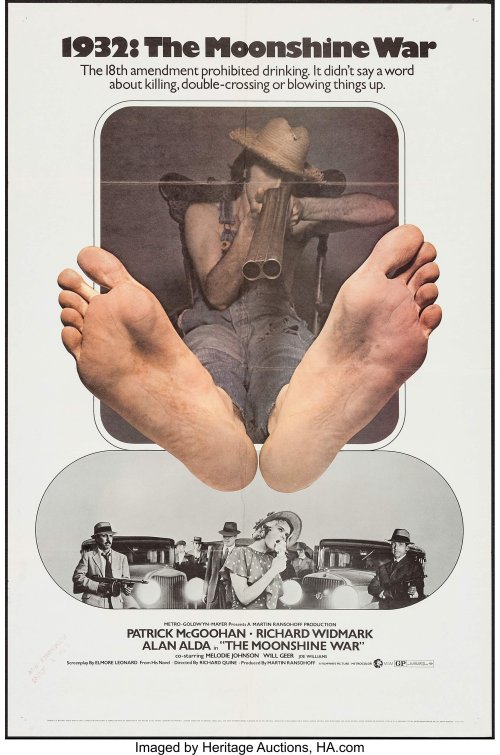
The Moonshine War (1970)

moonshine1

By Richard Winters

My Rating: 4 out of 10

4-Word Review: Battle over illegal distillery.

John (Alan Alda), who goes by the nickname of Son, and Frank (Patrick McGoohan) were buddies during the war, but now Son has started up a profitable moonshine business while Frank has become a government agent in charge of arresting those that run illegal distilleries. Frank though is also corrupt and willing to look the other way as long as Son gives him a take of the profits, which Son refuses to do. This forces Frank to bring in Emmett (Richard Widmark) and Dual (Lee Hazlewood) who have violent ways of getting what they want, but when Son still refuses it turns into a shootout with the rest of the town sitting on the sidelines and viewing it as spectators.

The film is based on the novel of the same name written by Elmore Leonard who also penned the script, but Richard Quine’s poor direction impedes the story from achieving its full potential. There’s only a couple of interesting bits one of which takes place inside a café where Dual forces a young couple, played by Claude Johnson and a young Teri Garr who sports a brunette wig, to strip and run around naked, but outside of this there’s not much that’s unique. The editing is choppy as the action jumps from the middle of one scene to another with no set-up in-between. The atmosphere, which is supposed to be the 1920’s does not seem authentic, and the homes, which appear more like shacks, look like they were built in an unimaginative way on a studio backlot. The setting is Kentucky but filmed in Stockton, California where the dry, sandy landscape doesn’t look anything like the Bluegrass state.

I’ll give some high marks to the casting, McGoohan is fun as the agent especially as he tries to speak in an odd sounding American accent, but when Widmark comes along he completely upstages him, which is a big problem. There’s so many offbeat characters within the bad guy clan that putting them all together ends up hurting their potential since Widmark steals it away from all of them. I did like Hazelwood, who’s better known as Nancy Sinatra’s singing partner, in a rare acting bit where he’s genuinely creepy, but not used enough to make the lasting impression that it should’ve. The same goes for Suzanne Zenor, making her film debut, who’s quite delightful as the ditzy blonde, (she played the original Chrissy Snow in the first pilot for ‘Three’s a Company’), but needed to be in more scenes to make her presence truly worth it. Alan Alda is also problematic as his character isn’t seen enough to justify having the viewer root for him and things would’ve worked better had it simply been McGoohan versus Widmark.

The ending is amusing seeing the whole town sitting on the riverbank observing the shootout as if it were some sort of sporting event and the explosive finale, which comes as a bit of surprise, isn’t bad either, but the heavy-handed direction really sinks it. In better hands it might’ve worked better, but ultimately comes-off as a head-scratching misfire that is not one of the author’s best work.

My Rating: 4 out of 10

Released: July 5, 1970

Runtime: 1 Hour 40 Minutes

Rated GP

Director: Richard Quine

Studio: MGM

Available: DVD-R (Warner Archive)

White Dog (1982)

white dog1

By Richard Winters

My Rating: 6 out of 10

4-Word Review: Dog attacks black people.

Late one night while driving home aspiring actress Julie (Kristy McNichol) hits a stray dog, which she takes immediately to an emergency vet. They find that his injuries were minimal and she’s allowed to take him home until his owner can be found. She soon starts to bond with the White Shepherd dog, who at one point saves her from a would-be rapist. She also becomes aware that he attacks black people when he goes after one of her African American friends unprovoked. She takes him to an elderly dog trainer named Carruthers (Burl Ives) who advised that the dog should be put to sleep, but another trainer named Keyes (Paul Winfield), who is black, wants to rehabilitate the animal, but finds this undertaking far more challenging than he initially expected.

The story is based on a real-life incident of novelist Romain Gary and his actress wife Jean Seberg, who during the early 60’s took in a stray dog that had previously been an Alabama Police dog, who they later learned, was trained to attack black people. Gary wrote about this experience in a short story that was published in Life Magazine in 1970 and this was eventually turned into a novel. The novel though incorporated many things that had not occurred in real-life, nor in the movie, including having the dog trainer being an angry black Muslim who gets the dog to start attacking white people including Gary himself.

The story rights were purchased by Paramount in 1975 with Roman Polanski set to direct, but when he was forced to flee the country due to statutory rape chargers the projects was put on hold. Then after the success of Jaws producers decided to turn it into a ‘jaws with paws’ storyline with the racism angle taken out, but when director Samuel Fuller was signed on he returned the plot to its original theme, which caused controversy when the NAACP, without ever having seen the film, accused it of being ‘racist’, which frightened Paramount executives enough that they gave the movie a very limited engagement with no promotion, which led to it recouping only $46, 509 out of its original $7 million budget. Despite eventually getting released on VHS and shown sporadically on cable outlets such as Lifetime, it languished in obscurity until finally getting a DVD/Blu-ray issue in 2008 where it’s now seen in a totally different light.

For me the biggest problem is the hackneyed drama starting with the dopey way the dog gets hit by a car and yet miraculously healed enough to go home that very same night and never showing any lingering injuries. The potential rape scene is too manufactured as well as it has the rapist magically appearing in the apartment without showing how he broke-in and later having one of the cops state that he had just arrested the same guy earlier that year for another rape attempt, so if that’s the case then why wasn’t he still in jail? It also has the dog sleeping as the bad guy sneaks in, but I’ve found dogs have a keen sense of awareness and would’ve heard the guy trying to bust in and growling or barking long before he actually made it into the apartment. Having Kristy go on a late night jog with the dog and then being chased by a masked assailant, which the dog would scare away, would’ve been a better way to have done it.

I also didn’t like the part where Kristy meets the dog’s owner and he openly admits to training him to attack black people, which to me didn’t seem believable. I liked the idea of having the owner being this seemingly kindly old man, played by Parley Baer best known for voicing the Keebler Elf, that you’d never expect as being someone who’d train an animal to do such a thing. However, freely admitting this to a stranger is like a murderer admitting to their crime. Most won’t fess up because they know it would get them into a lot of trouble if they did. Movies should also not be obligated to explain everything and like in real-life should leave a few things open-ended. When Kristy accuses him of this he could reveal a funny look on his face, giving the viewer insight that he most likely was guilty, but then have him verbally deny it like most people would.

While I could’ve done without the slow motion and booming music I did find the dog’s retraining sessions with Keys to be the film’s best moments and Winfield’s strong presence is excellent. However, trying to use a dog as a metaphor to racism doesn’t really work, nor hold-up to logic. Winfield explains that the dog was most likely beaten by a black person hired by a white man to get the dog to become the way he does, but I don’t think this could be achieved as the dog would just hate that one individual and not connect it to the man’s skin color unless he was abused by a whole group of black people. We’re also told that the dog does not hate black people he just fears them, but if that’s the case then why does he go out of his way to attack and kill them. Animals will only go on the attack if they feel threatened, but if the perceived threat keeps their distance then the dog shouldn’t feel the need to be aggressive making the blood splattering attacks that the dog does come off as quite over-the-top.

white dog2

My Rating: 6 out of 10

Released: November 12, 1982

Runtime: 1 Hour 30 Minutes

Rated PG

Director: Samuel Fuller

Studio: Paramount

Available: DVD/Blu-ray (Criterion Collection)