Category Archives: Comedy

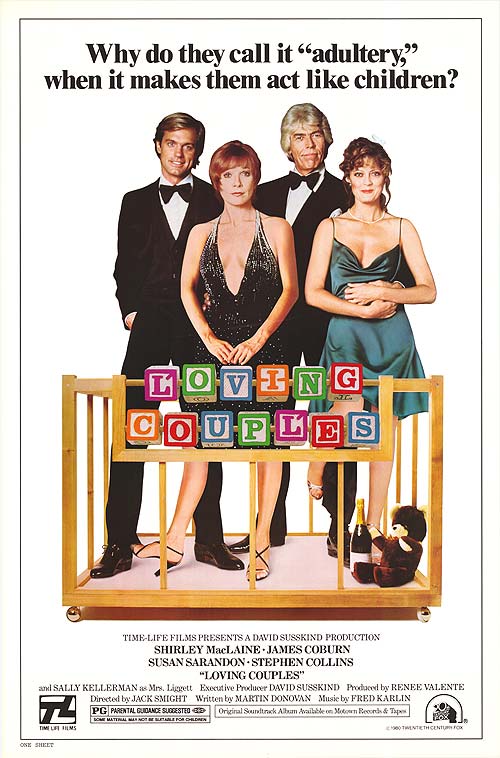
Loving Couples (1980)

loving couples

By Richard Winters

My Rating: 1 out of 10

4-Word Review: Everybody is fooling around.

The marriage between Evelyn and Walter (Shirley MacLaine, James Coburn) has grown stale. When dashing womanizer Greg (Stephen Collins) sets his sights on Evelyn and makes a play for her she is all too happy to take him up on it. Then Greg’s girlfriend Stephanie (Susan Sarandon) finds out about the affair and tries to put a stop to it by informing Walter only to find that they have a special chemistry and soon they are in a relationship as well, but the more time the couples spend with their new mates the more they end up longing for their old ones.

The flat, unoriginal script was written by famed TV-show writer Martin Donovan and is not worthy for even a second-rate sitcom. Outside of a brief amusing segment where Walter demonstrates to Stephanie how to perform brain surgery by using a hamburger bun as a patient’s cranium there is nothing much that is funny. The plot itself is dull and placid and becomes increasingly more boring as it goes along.

The Greg character and how the women respond to him is a big issue. His methods at seduction could easily get him charged with harassment or stalking these days, but he is also an obvious player and yet Shirley MacLaine’s character still gets into a relationship with him despite the fact that she is old enough to know better and then ends up stung and shocked when he starts fooling around with another woman even though anyone else with half-a-brain could have easily predicted it.

Stephanie’s attempts to somehow ‘win him back’ when she finds out that he is cheating on her is equally absurd since by her own admission he has already done it several times before with other woman, so why waste time trying to stop this latest fling when he’ll most likely start it up with another woman regardless?

The film lacks any quarreling, which could have spiced things up. Instead when they find out about their partner’s transgressions the conversations are civil to a sterile degree, which is not only uninteresting, but unrealistic. Let’s face it all couples fight and if you can’t get into a shouting match with your spouse when you find out they’ve been cheating then when can you?

Coburn manages to be engaging despite the weak material, but his curly silver haired mop-top looks better suited for a male gigolo than an otherwise staid and conservative middle-aged doctor. Helena Carroll has a few witty lines as the couple’s maid and she should’ve been given more screen time, but it was actually Sarandon that I liked the best as she plays a shy, slightly naïve character that was unusual for her.

This is quite similar to A Change of Seasons, which came out later that same year and also starred MacLaine and although that film was certainly no classic it is still far superior to this one.

My Rating: 1 out of 10

Released: October 24, 1980

Runtime: 1Hour 40Minutes

Rated PG

Director: Jack Smight

Studio: 20th Century Fox

Available: DVD

The Thief Who Came to Dinner (1973)

the thief who came to dinner 3

By Richard Winters

My Rating: 5 out of 10

4-Word Review: Detective hounds jewel thief.

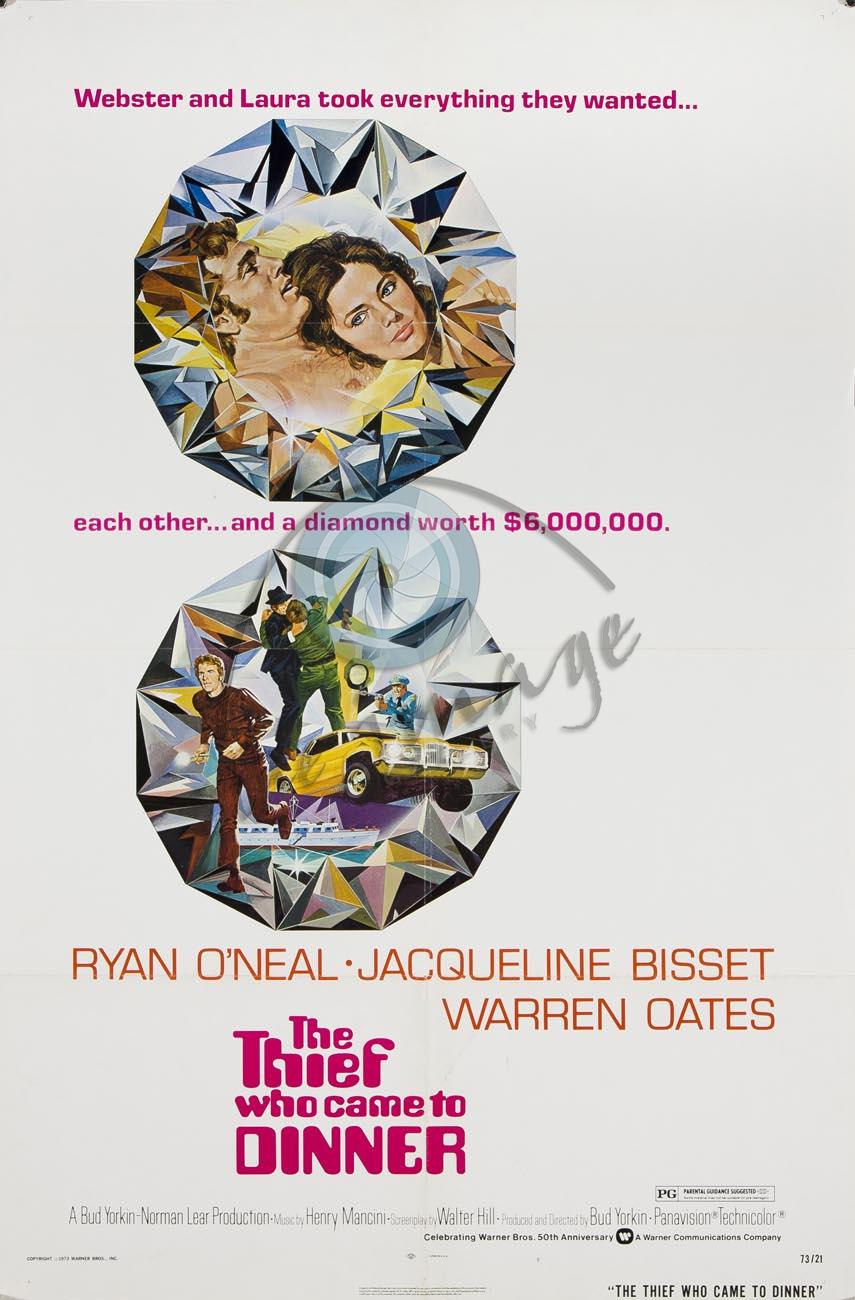
Webster (Ryan O’Neal) is a bored computer programmer who has grown cynical of the business world and decides to become a modern day Robin Hood. He does so by stealing paperwork listing illegal activities of a corrupt politician (Charles Cioffi) and uses this to blackmail him into giving the addresses of his rich and equally corrupt pals. He then robs them of their jewels while with the help of a local fence (Ned Beatty) resells them and keeps half the profits. He even manages to get into a hot relationship with a beautiful woman (Jacqueline Bisset), but just as things start to click insurance investigator Dave Reilly (Warren Oates) gets on the case who’s determined to expose and nab Webster anyway he can.

The film, which was written by Walter Hill and based on a novel by Terence Lore Smith, has a slick even smug attitude about it. It has some interesting ingredients, but never really gels. Webster pulls off these robberies with such relative ease that they are barely interesting to watch. The scene where he gets rear-ended by an old lady and then chased throughout the streets of Houston when he cannot produce proper identification to the police is fun, but there needed to be more of this and the otherwise laid-back pace does not help.

the thief who came to dinner 2

Despite his good looks O’Neal is a weak leading man although here he isn’t too bad. Still the supporting cast easily upstages him especially Oates and had he been made the star this film would’ve been far better. The scene where his car breaks down while tailing O’Neal and then having O’Neal turn around to help him fix it is quite amusing as is Oates’ final act of defiance towards his superiors after he gets fired.

Austin Pendleton is quite funny as an obsessed chess player and Beatty is great as a caricature of a ‘good ole’ boy’ Texas con-man and he really deserved more screen time. Bisset is wasted, but looks beautiful as always and I really digged her ritzy, spacious house that outside of a two lamps had no furniture at all.

The production has very much of a European flair, but its sophisticated façade quickly wears thin. You keep waiting for it to catch its stride, but it never does making it fluffy and forgettable including its wide-open non-ending.

the thief who came to dinner 1

My Rating: 5 out of 10

Released: March 1, 1973

Runtime: 1Hour 40Minutes

Rated PG

Director: Bud Yorkin

Studio: Warner Brothers

Available: VHS

Norman…Is That You? (1976)

norman is that you

By Richard Winters

My Rating: 4 out of 10

4-Word Review: Gay son comes out.

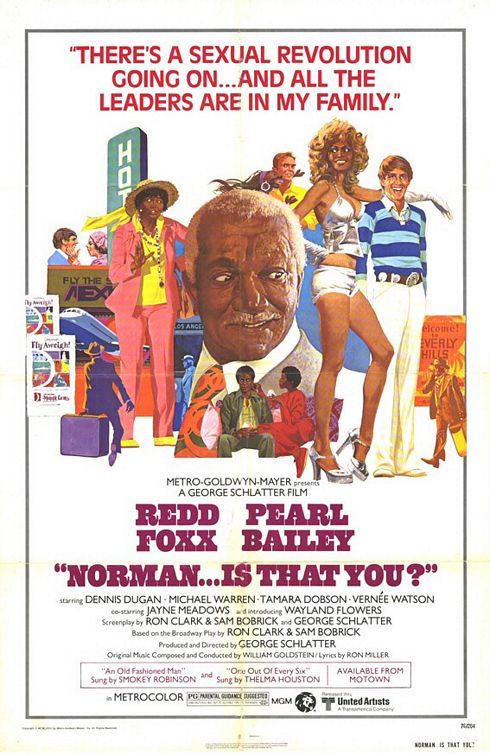
Ben (Redd Foxx) travels to L.A. to visit his son Norman (Michael Warren) after his wife Beatrice (Pearl Bailey) leaves him for his brother. However, unbeknownst to Ben Norman has come to terms with his closeted homosexuality and is now living with Garson (Denis Dugan). When Ben arrives unannounced Norman tries to keep his gay relationship a secret, but Ben eventually finds out about it and goes on a mission to have him ‘cured’.

The story was originally written as a play, but flopped and ran for only 12 performances in 1970. For whatever reason it was decided 6 years later to revamp the idea, but do it with a black cast instead. However, times have changed and most everything here seems quite dated. The Ben character could easily be considered homophobic by today’s standards and the gay jokes he makes seem out-of-line and even offensive.  The production, which was shot on video and then transferred to film, looks stagy and cheap with ‘the view’ of L.A.’s skyline that can be seen outside Norman’s patio door clearly being a painting. George Schlatter who is best known for producing the 60’s variety TV-show ‘Laugh-In’ makes his one-and-only cinematic directorial effort and is unable to overcome the script’s limitations.

Foxx is the only reason it is even slightly enjoyable. Just watching him walk around with his patented strut is amusing. However, the way he treats Garson simply for being gay is no longer considered funny and I felt the Garson character shouldn’t have put up with half as much as he does. Still, the part where Foxx dreams that he is a gay actor accepting the Academy Award is the film’s best moment.

Dugan plays up the flaming gay character relatively well, but Warren is a weak link as he says his lines like he is reading them off of a teleprompter and shows no emotion or variety of facial expressions. Having Bailey cast as Foxx’s wife seemed inspired, but the character gets wasted in trivial husband-and-wife arguments that knock this thing down to a TV-sitcom level. Jayne Meadows who appears as Garson’s mother is equally wasted and is in only one scene even though the character had great potential especially with the idea of setting her up on a date with Foxx.

There is enough comedic banter to save this from being a bomb, but just slightly. Although it is shown that the parents reluctantly come to terms with their son’s sexuality it still conveys the message that it is ‘okay’ to be openly prejudice towards the lifestyle, which likely could rub most of today’s viewers the wrong way.

My Rating: 4 out of 10

Released: September 29, 1976

Runtime: 1Hour 31Minutes

Rated PG

Director: George Schlatter

Studio: United Artists

Available: VHS, Amazon Instant Video, YouTube

The Sure Thing (1985)

the sure thing 2

By Richard Winters

My Rating: 7 out of 10

4-Word Review: Love blossoms between opposites.

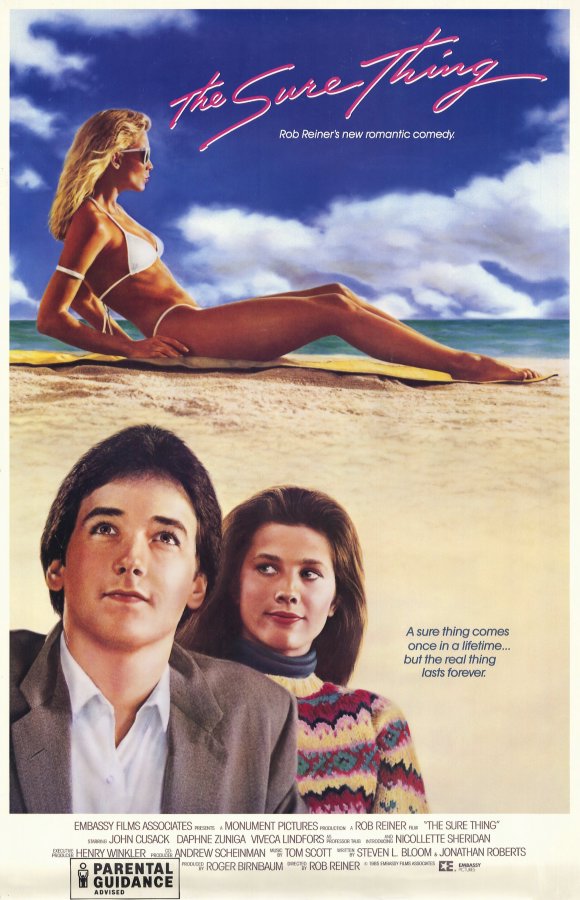
Walter Gibson (John Cusack) becomes smitten with Alison (Daphne Zuniga). He is a slacker while she is a very studious student. Both attend the same college English class and he uses the ruse of needing help with his studies as a ploy to get closer to her, but it doesn’t work and she ends up hating him. Then his friend Lance (Anthony Edwards) invites him out to California where he has a really hot girl (Nicollette Sheridan) waiting for him and promises that she is a ‘sure thing’. So Walter takes a ride with a couple (Tim Robbins, Mary Jane Persky) that is also going out there only to find that Alison is riding with them as she wants to visit her boyfriend.  Needless to say it is a rocky ride, but after several misadventures love finally begins to blossom between the two.

On a purely romantic level this film scores big time. It nicely recaptures the period in one’s life where everything is still new and exciting and before such things as marital discord, ugly divorces, child custody battles and all that other crap. Instead it emphasizes the rush one feels at being in the presence of someone they are really crazy about and learning to know them through layers. It’s the magical innocence of young love that makes it so endearing and engaging.

Zuniga is beautiful but fortunately not in an overdone, glamorous type of way. My favorite scene with her is when she tries to drink a beer for the first time ‘shotgun style’ and becomes a bit overwhelmed by it. Cusack shows his usual charm, but his social graces seem severely lacking at points near the beginning and I wouldn’t have been surprised if every girl would have found him to be an annoying geek.

In support Edwards is good as his friend and I especially liked his room that is lined with empty bottles of every different brand of beer that he has drunk. Viveca Lindfors is sexy and appealing in her own way as the English teacher and George Memmoli in his last film role has an engaging bit as an overweight man that Walter meets and befriends at a bar in a scene that I wished had been more extended.

The film though does have a few problems. One scene has Walter accusing Alison of being ‘repressed’ and so to prove him wrong she strips off her shirt and bra and then flashes some other cars that they are passing, which to me seemed like too much of an extreme shift in behavior and not realist for that type of character. There is another scene where the two are stranded in the middle of nowhere during a rainstorm and with no money since Alison forgot it at their last hotel stop only to find out that she has a credit card. The film then cuts to showing them eating at a fancy restaurant, which was too much of a jump as a credit card isn’t going to get them from an empty field by itself and the scene needed to show more of a connection on how or who got them out of there.

The biggest problem though is that we have this stunning beautiful, bikini clad blonde in the form of Nicollette Sheridan who apparently can’t get a guy on her own and needs to be ‘set-up’ on a date, which makes no sense. The scenes showing her walking around all alone at a party are absurd because in reality just about every guy in the room would be showing her some attention and she would have no reason to waiting around for an average guy like Cusack to come by to date here. This is the one segment in the movie were it goes dangerously close from being this pleasing slice-of-life romance to a crazy 80’s teen fantasy.

Despite the issues listed above I still thoroughly enjoyed it. It should appeal to the romantic in all of us and nicely balances the old-fashioned love story formula with modern day sensibilities.

My Rating: 7 out of 10

Released: March 1, 1985

Runtime: 1Hour 40Minutes

Rated PG-13

Director: Rob Reiner

Studio: Embassy Pictures

Available: VHS, DVD, Blu-ray

Lover Come Back (1961)

lover come back

By Richard Winters

My Rating: 6 out of 10

4-Word Review: They all want VIP.

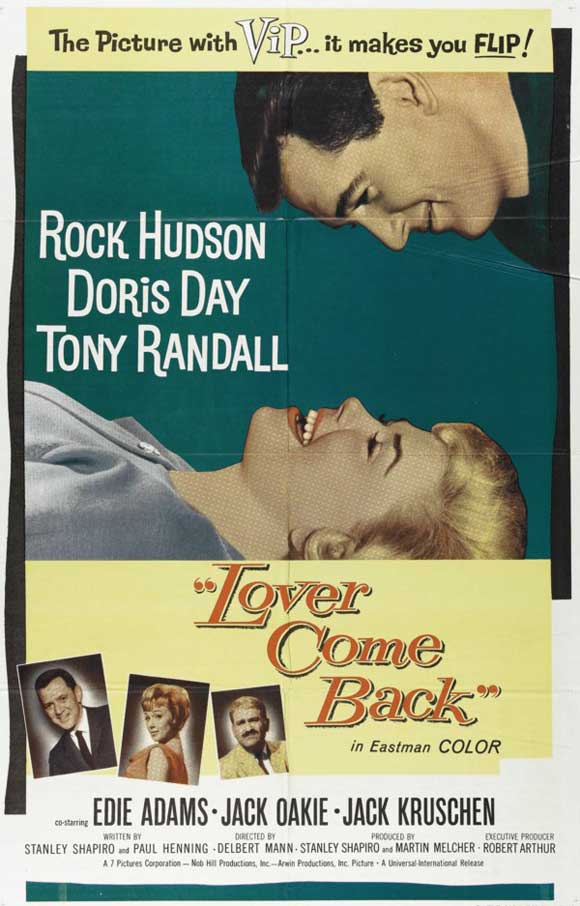
Jerry Webster (Rock Hudson) steals clients from other ad agencies by throwing them parties filled with a lot of liquor and loose women. When Carol Templeton (Doris Day) who works at a competing ad agency finds out about this she goes on the offensive by getting Rebel (Edie Adams) a woman who attended one of Jerry’s wild parties to testify against him at the ad council board, which she hopes will get Jerry severely reprimanded. Jerry though gets Rebel to soften her testimony by promising her that she will be involved in the advertising campaign for a new product called VIP. The problem is that there is no such product, but Carol thinks there is, which leads to a lot of confusion including having Carol start a relationship with Jerry under the misguided notion that he is the chemist working on the new product.

The film is fast and fun for the most part although there isn’t as much physical comedy as in some of Day’s other vehicles, but makes up for it with some sharp dialogue. Although Day’s films have always been considered family friendly the film probably has just as much sexual references and innuendoes as any other movie.  There is even a scene where Day takes the Hudson character out to a strip club and has a stripper shed her pasties right on him. Even more amazing is the scene where the Day character actually considers having sex with Hudson before she is married to him. She ultimately doesn’t go through with it, but the fact that she was about to and even takes out a revealing nightie to wear seemed shocking enough.

Day’s costumes, which were designed by Irene Lentz who just a year after this film came out jumped to her death from a 14-story window, are chic and heighten the film’s visual appeal. I especially liked the variety of hats that she wears some of which go humorously over-the-top. I also got a kick out of Hudson’s garish suit that looks like it got splattered by twelve different cans of paint. My only complaint here is the absurdity of Day going to work looking like she is dressed for an elegant dinner party.

Day is gorgeous as ever, but her performance seems a bit one-note and amounts to nothing more than a collection of exasperated and perturbed reactions. It is actually Hudson who is typically a weak actor that steals it. The cocky way his character tries to finagle his way out of everything and his interactions with Tony Randall are the best.

The film ends with the two characters getting married, which I am sure fans of Day’s movies like and expect, but it really doesn’t make a lot of sense and seems quite contrived and formulaic. The script’s original ending had the two characters getting drunk and then checking into a hotel room, but Day insisted the characters get married instead even though it is unlikely any judge or minister would marry two people in a drunken state. The Hudson character was a raging playboy who could get attractive women whenever he wanted and clearly viewed sex as a conquest. It is most likely that after a few years of marriage he would get the itch to fool around again, which would culminate in an ugly divorce and make this ‘happy ending’ not so happy after all.

My Rating: 6 out of 10

Released: December 20, 1961

Runtime: 1Hour 46Minutes

Not Rated

Director: Delbert Mann

Studio: Universal

Available: VHS, DVD, Amazon Instant Video

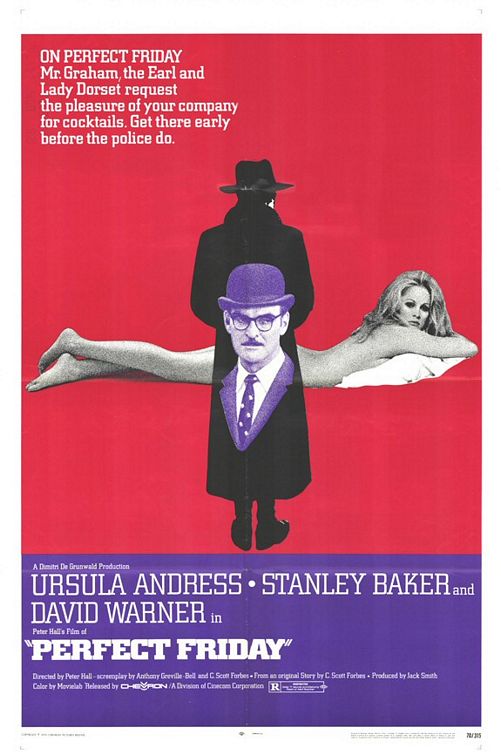
Perfect Friday (1970)

perfect friday

By Richard Winters

My Rating: 7 out of 10

4-Word Review: Kooky trio robs bank.

This uniquely structured and offbeat sleeper details an elaborate bank heist where staid bank employee Mr. Graham (Stanley Baker) uses his inside knowledge to pull off an ingenious robbery. Unfortunately he is dependent on the oddball couple of Nick (David Warner) and Britt (Ursula Andress) to help him.

This film is probably more of a kooky character study than it is a heist flick. The three characters are intrinsically different from each other and their constant bickering, feuding, and interplay are a treat. In fact they never get into the actual robbery or even the details of it until the last forty minutes.

Baker is fun in the lead. He is the perfect caricature of the stuffy British businessman. His contained pomposity and cryptic deliveries are right on-target. Warner makes for a good contrast. He is lazy and undisciplined with a tendency to wear outrageous looking outfits. It is interesting though that he can get serious when he needs to particularly during the crime itself.

Andress is the scene stealer and this is a perfect role for her limited acting abilities. She plays a greedy woman prone to outrageous extravagance and indulgence even if she lacks the funds for it. Her caricature of the materialistic woman gets taken to the extreme and is hilarious. In most cases she would be disliked, but here her beauty and innocuous way she delivers her lines make her amusing instead.

Director Peter Hall seems to pride himself on making it offbeat and full of many twists and succeeds most of the way even with his use of the glass offices that the bank employees have to work in. The robbery itself is intricate and believable and full of mounting tension. The film’s only real problem comes with its ending that is too abrupt and in many ways almost like a cop-out. There is such a fun chemistry between the three characters that it really could have been played out much more.

My Rating: 7 out of 10

Released: November 10, 1970

Runtime: 1Hour 34Minutes

Rated R

Director: Peter Hall

Studio: Chevron Pictures

Available: None at this time.

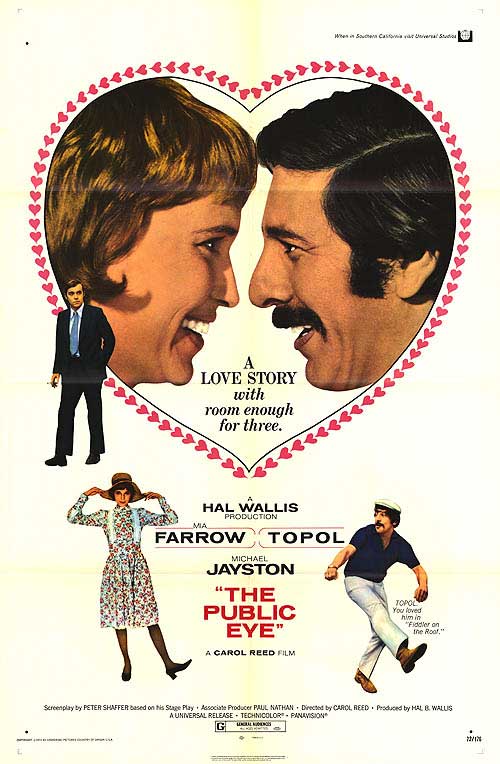
The Public Eye (1972)

the public eye 1

By Richard Winters

My Rating: 3 out of 10

4-Word Review: He follows her around.

This film, which is based on the Peter Schaffer play, deals with Charles (Michael Jayston) an uptight British accountant who thinks that his wife Belinda (Mia Farrow) is having an affair. He hires Julian (Topol) a goofy private detective to follow her around and see where she is going and what she is doing everyday while he is at work. Unfortunately for Charles Julian starts to fall in love with Belinda as he is following her and she in him, which only further complicates matters since she was initially not seeing anyone and all those trips that Charles thought were so suspicious were simply innocent excursions.

The biggest problem with this film is that it is too lightweight probably more so than even other lightweight films. Nothing really happens. Julian just follows Belinda around much to her amusement, but the two don’t share any dialogue nor ever consummate their pseudo-relationship. The film simply spends long drawn out sequences showing the two following each other throughout the streets of London and occasionally giggling at their ‘little game’ and that is about it. You keep waiting for that second act to kick in, but it never does, which after 95 minutes starts to make the whole thing almost pointless.

Topol is miscast in the lead and ends up being the film’s weakest link when he should have been the strongest. He was fresh off his award winning performance in Fiddler on the Roof and this movie was supposed to make him into a leading man, but the attempts at turning him into a variation of Inspector Clouseau fail badly. His bright white suit that he wears looks garish and ridiculous especially for an undercover spy. Watching him constantly stuffing his face with food starts to get obnoxious and his buffoonery becomes more annoying than engaging.

Farrow is appealing and her natural child-like fragility is perfect for the part. The scene where she states to the shock of an upper-crust crowd at a formal dinner party that rapists should be punished by having their ‘thing’ cut off publicly is amusingly edging and the film would have been better had it gone a little more in this route.

Jayston is the one that comes off best. He plays the proper British gentlemen with all his staid mannerisms perfectly. What I really like though about him is the fact that he does love Belinda, but just doesn’t know how to show it effectively.

This was an odd project for legendary director Sir Carol Reed whose final film this was. The story doesn’t allow for much visuals although the way Reed captures London both from aerial shots as well as the downtown streets that Belinda visits is excellent. The movie almost seems to work as a tour guide of London, which in some ways is the best thing that can be said about the film.

My Rating: 3 out of 10

Alternate Title: Follow Me

Released: July 18, 1972

Runtime: 1Hour 35Minutes

Rated G

Director: Carol Reed

Studio: Universal

Available: Netflix streaming

For Love or Money (1963)

for love or money

By Richard Winters

My Rating: 3 out of 10

4-Word Review: A lawyer becomes matchmaker.

Deke Gentry (Kirk Douglas) is a lawyer appointed trustee of Chloe Brasher’s (Thelma Ritter) estate and is shocked to learn the terms of her will state that any of her three daughters will be cut off from their inheritance if they marry a man that she does not approve of. After debating with her about this Deke agrees to try to match up the girls with men that Chloe has already picked for them, but finds it to be much more difficult than he expected.

This was an odd career move for Douglas who is best known for his westerns, dramas and adventure roles. In some ways seeing him do light comedy is a nice change-of-pace, but the plot is too banal and the character is dull and gets overshadowed by the supporting cast of old comic pros. His best moment is when he hoists actor Gig Young over his shoulder and carries him from the hospital to his apartment and even gives him a spanking along the way.

The three actresses who play the daughters (Julie Newmar, Leslie Parrish, Mitzi Gaynor) are all quite attractive, but in the case of Newmar and Parrish aren’t given enough screen time. Gaynor is solid in the lead in what is to date her last film appearance. I am also happy to note that all three actresses as well as Elizabeth MacRae who play’s Deke’s girlfriend are still alive and well as of this writing.

Young is a very talented character actor who manages to come into his own during the second hour. Having him end up getting stuck out at sea while clinging in the nude to a pole sticking up out of the water is funny, but the scene where he starts throwing some vintage bottles of champagne overboard had me cringing.

The story is too lightweight for a feature film and although it starts out okay ends up becoming quite stretched and tedious during the second half. The scenarios are more silly and inane than actually funny and the only time it is ever amusing is when Ritter and William Bendix are in front of the camera and otherwise it falls flat. The contrived ‘happy ending’ merely emphasizes how predictable and formulaic the whole thing is.

My Rating: 3 out of 10

Released: August 7, 1963

Runtime: 1Hour 48Minutes

Not Rated

Director: Michael Gordon

Studio: Universal

Available: DVD (Universal Vault Series)

How to Steal a Million (1966)

how to steal a million 2

By Richard Winters

My Rating: 8 out of 10

4-Word Review: They steal a statue.

Bonnet (Hugh Griffith) is a successful art forger who lends his Cellini Venus statue to a Paris Museum. He also has it insured, but doesn’t realize that for the coverage to take effect it would have to go through a test by the insurance company to make sure it is authentic, which sends him into a panic. His daughter Nicole (Audrey Hepburn) decides to help him by enlisting the help of Simon (Peter O’Toole) who she thinks is a professional burglar. Simon though is actually an investigator who is on to Bonnet’s racket, but decides to play along and steal the statue back despite the place being under tight security simply because he has fallen for Nicole and she for him.

Directed by William Wyler this film is engaging from beginning to end and perfectly blends the comedy with the caper. The story itself has limited action and a moderately slow pace, but I was never bored and enjoyed the plush sets and wide array of supporting characters making this a perfect tonic for those looking for light forget-your-troubles entertainment.

O’Toole’s detached manner works well with the character who allows Nicole to take charge or at least think she is while still secretly holding all the cards. The chemistry between the two is good, but I felt the romantic angle got played out too quickly. Sometimes it is more interesting not knowing if they are going to fall in love or not until the end and having them get all romantic with each other while trapped in a cramped janitor’s closet at the museum and during the tension of the robbery seemed a bit of a stretch.

Hepburn is elegant as ever and as usual it is her chic outfits that become almost as fun as her performance and the one that she wears to a restaurant when she meets Simon to set-up their plan has to be seen to be believed. The funniest one though is when she dresses in a very frumpy un-Hepburn-like dress and hat and then gets down on her hands and knees to pretend to be a cleaning lady.

Griffith hams it up marvelously as the crazy father and makes the most of every scene he is in. His cross-eyed stare makes him look almost like the twin brother of character actor Jack Elam.

Eli Wallach is underused in a supporting role that really doesn’t offer much and there is never any explanation of why he becomes so infatuated with the statue like he does. However, the way he describes his love for the statue in an aroused type of way is funny.

The robbery itself features some interestingly intricate moments. The best is when the couple is locked in a closet and Simon uses a magnet to take the key, which is hanging on the other side of the wall off of its hook and along the wall and into the lock, which I found to be totally cool.

how to steal a million 1

My Rating: 8 out of 10

Released: July 13, 1966

Runtime: 2Hours 3Minutes

Not Rated

Director: William Wyler

Studio: 20th Century Fox

Available: VHS, DVD, Amazon Instant Video

Candleshoe (1977)

candleshoe

By Richard Winters

My Rating: 8 out of 10

4-Word Review: Treasure hidden on estate.

            Jodie Foster stars as Casey a teen living on the tough streets of New York and reselling stolen items for a living. Her abilities come to the attention of small-time crook Harry Bundage (Leo McKern) who gets her to pretend that she is the long lost granddaughter of a rich matriarch by the name of Lady St. Edmund (Helen Hayes).  Bundage has become aware through a former servant that worked there that there is a trove of treasure hidden somewhere on the premises and it is up to Casey to follow the clues and find it.

I saw this movie when it was released in 1977 and the only thing I could remember from it was the little boy who would slide across the polished floors of the mansion. It’s a surprisingly elaborate plot for a children’s movie, but one that is engrossing and interesting. The characters are believable and diverse and it is fun seeing them evolve and learn to get along. Parents should find this as enjoyable as the kids. I was impressed with the way the filmmakers never talk down to their young audience and trust that they will be sophisticated enough to pick up on the little nuances and subtitles, which the film does have.  I found myself longing for this type of family entertainment again. It seems like the family films of today either have kids spewing out a lot of crude nasty things, or they are so sugary sweet and benign that they make you want to throw up, but this film nicely straddles the middle and it really works.

Jodie is great in the lead and the movie wouldn’t have worked as well with another actress in the role. The part nicely takes advantage of Foster’s confident, smart, streetwise persona and almost had me believing that the part was written specifically for her. Later I read how the original director for the film, David Swift, dropped out of the project because he felt Foster was ‘all wrong’ for the role even though I felt she was perfect and other viewers should feel the same.

Helen Hayes is okay in her role, however the character isn’t all that interesting, nor has that much to do. It seems like once she won the Academy Award for Airport in 1970, which helped revive her career, these were the typical ‘sweet old lady’ roles she was perpetually offered afterwards. However, when it comes to the caricature of an old lady Hayes is absolutely perfect almost to the point that it is hard to imagine her ever being young.

David Niven, who plays the butler named Priory, is engaging, but was starting to look frail and elderly. He gets a chance to play several different roles including that of the gardener and chauffeur. The Irish accent that he uses for the gardener part sounded very authentic and I was impressed. His best moment comes at the end when he takes on the McKern character in an imaginative and drawn out duel segment and watching his scared and nervous facial expressions during this is amusing.

I liked the other children who play the orphans that Lady St. Edmond adopts. They are cute in a nice genuine way without it being forced especially the young blonde haired boy named Bobby who speaks in a thick cockney accent. Veronica Quilligan plays Cluny one of the older children who are initially an adversary to Casey. She showed the most disciplined and realistic facial reactions to the action around her while the other kids had lost or vapid looks on their faces. Although she appeared to be about 13 or 14, the same age of the character that she played, I was shocked to find that she was actually 21 when the movie was made.

I was surprised that there wasn’t a car chase scene as every Disney movie from the 70’s seemed to have one. The action for what it is worth is sparse, but enjoyable without ever getting too cartoonish. The ending where the kids take on the band of adult crooks is good and the scene where their car is stopped on the tracks and the train comes just inches from Priory, who is shielding the vehicle, before stopping is a near classic.

I think adults who were kids during this era can watch this film again and still find it entertaining. The kids of today should find enjoyable as well although the ideal age would be between 8 and 14 as I think it is too slow paced for anyone younger.  The film also has a good life lesson in regards to teamwork and how working together and taking advantage of each other’s special talents and abilities can help achieve a common goal.

My Rating: 8 out of 10

Released: December 16, 1977

Runtime: 1Hour 41Minutes

Rated G

Director: Norman Tokar

Studio: Buena Vista

Available: VHS, DVD, Amazon Instant Video