Category Archives: 80’s Movies

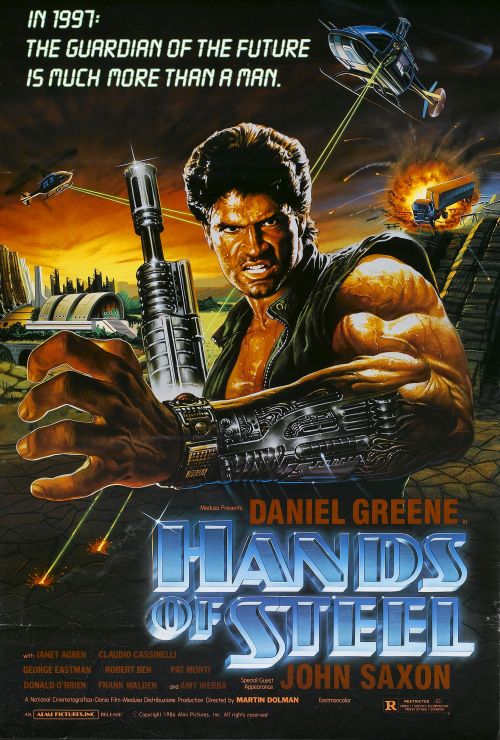
Hands of Steel (1986)

By Richard Winters

My Rating: 2 out of 10

4-Word Review: He’s made of steel.

Paco (Daniel Greene) is a man who gets injured in an accident and then rebuilt as a cyborg in an operation financed by evil industrialist Francis Turner (John Saxon). Paco is then programmed to assassinate the head of a competing faction, but at the last second he is unable to do it, due to still harboring a conscience from his human side. He then hides out at a desolate Arizona hotel/bar run by the attractive Linda (Janet Agren) who he soon forms a bond with, but Turner and his men track Paco down and are determined to enact revenge for his disobedience.

The storyline could best be described as a variation to the Six Million Dollar Man. In that one a man was rebuilt to help the secret service on missions for ‘good’ while here the protagonist is programmed to carry out evil tasks, but refuses. It all might’ve been more interesting had it not been produced by an Italian film company where all the speaking voices are dubbed, which gives it an amateurish quality.

The isolated desert location only helps to make an already visually boring film even more so and the place certainly gets a lot of customers for being stuck literally in the middle-of-nowhere. The action is passable, but relies heavily on arm wrestling matches (yes you read that right) that are not exciting at all.

The plot features many logical loopholes that make little sense if you start thinking about it. For instance the cyborg gets shot at in close range, but he does not get injured or killed, but you would think the metal, circuitry or the skin surrounding it would still be affected or damaged. Later on when the bad guys are chasing him down in the desert by shooting at him from a helicopter the cyborg ducks out of the way from the bullets as if he fears getting hit by them, but why since we’ve seen earlier that they have no effect?

Greene’s performance is incredibly one-note and one of the main reasons the film is so boring. John Saxon is the only recognizable face in the cast although there is also George Eastman who played one of the killers in Mario Bava’s Rabid Dogs and appears as a similar type of baddie here. However, that film was way better than this one and more worth your time to watch.

My Rating: 2 out of 10

Released: August 29, 1986

Runtime: 1Hour 34Minutes

Rated R

Director: Sergio Martino

Studio: Almi Pictures

Available: VHS
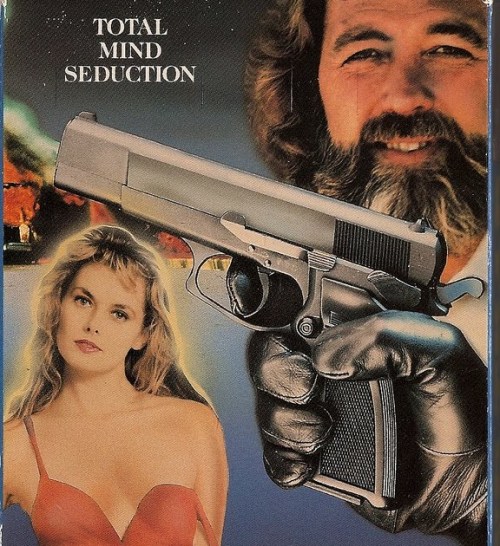
Mind Trap (1989)

By Richard Winters

My Rating: 2 out of 10

4-Word Review: Avenging her father’s murder.

Shana (Martha Kincare) is an actress who stars in low budget action flicks. Her father works at a secret lab where they do experiments in areas of holograms and mind control, which elicits the attention of dangerous foreign agents who want to use these experiments for their own nefarious gain. They end up killing not only Shana’s father, but her sister and mother too and forcing Shana to pledge a vendetta on all those who murdered them while using what she has learned from being in action films to take them down.

Even though this is nothing more than a mindless actioner it does manage to have a few unique scenes, which is the film’s only saving grace. The opening one features a woman getting attacked while inside a trailer home that is set onto a moving truck. The bit featuring a room equipped with the old clapper light switch in which simply clapping one’s hands will force the lights to turn on or off and then having a ‘battle’ where one person claps for them to go on and another immediately claps to have them shut off, which continues on for a couple of minutes, is amusing.

Another segment has a woman (Jacquie Banan) getting gang raped by the bad guy, but then Shana mocks the man’s ability to ‘get-it-up’ and makes him so self-conscious that he is unable to achieve an erection and thus unable to complete the intended assault.

Overall though the film is flat and forgettable and the star Martha Kincare, who depending on the camera angle resembles a young Justine Bateman, is not believable at all. Just because one may perform in action movies does not mean that person knows the first thing about handling a real gun or taking on real-life secret agents, which makes the already flimsy plot completely absurd.

Dan Haggerty and Lyle Waggoner are given top billing, but seen only briefly while playing characters that have little to do with the main story. Maureen LaVette, who portrays the Russian agent, but was born in Iowa puts on such an over-the-top Russian accent that it becomes annoying and enough to force some viewers to watch the film with the sound turned down, which really wouldn’t be a problem since the banal dialogue sucks anyways.

My Rating: 2 out of 10

Released: August, 1989

Runtime: 1Hour 30Minutes

Not Rated

Director: Eames Demetrious

Studio: AMI Video

Available: VHS

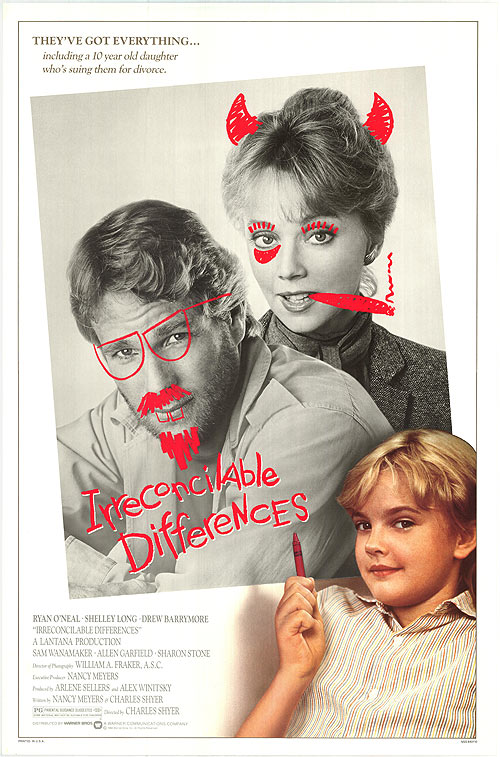
Irreconcilable Differences (1984)

By Richard Winters

My Rating: 6 out of 10

4-Word Review: Girl divorces her parents.

Nine-year-old Casey (Drew Barrymore) has decided she’s had enough of her parents (Shelley Long, Ryan O’Neal) and wants to get a divorce from them by using the emancipation law, which states that a minor can be freed of their parents if it is found that they have not meet their legal or equitable duty. Her mother and father fight this in court, but in the process are forced to expose all their skeletons including the awkward way they first meet, their affairs and eventual disdain for the other.

What surprised me most is O’Neal’s presence. His career has become so tarnished by his own real-life accusations of poor parenting that I would’ve thought this material would hit too close-to-home and he’d avoid it, but at the time this was considered a career resuscitator for him even though it ended up being only a brief one. His performance is actually quite funny making this his best work since What’s Up Doc?

I was equally impressed with Long who plays completely against type. Normally she’s best as snotty, prissy types, but here she reveals a much more vulnerable side and does quite well. At one point I even felt some genuine sympathy for her, which is something I’ve never felt at any other time with any of the other parts that she has played.

Sharon Stone, who gets listed in the opening credits as being ‘introduced’ even though she had already had a part in another theatrical feature Deadly Blessing that came out three years earlier, lends strong support. The way her character transitions from a wide-eyed free-spirit to bitchy Hollywood diva is quite entertaining and she looks great especially when topless. However, the bit where she exposes her excessively hairy armpits is gross and kind of tainted my image of her the rest of the way.

The script, which is based loosely on the relationship between Peter Bogdanovich and his wife Polly Platt with the Sharon Stone character representing Cybill Shephard who became the other woman, is sharp and filled with a lot of Hollywood in-jokes. The two funniest bits are the conversations between the guests at a chic Hollywood party as well as a glimpse of O’Neal’s disastrous attempt to direct a big budget rip-off of Gone With the Wind by trying to turn it into a musical.

The film though spends too much time on the parents while almost forgetting about Barrymore who’s only seen sporadically. The story also takes too long to play out with a final reconciliation segment that is overdone and sappy and helps to lose the wonderfully cynical tone that the film had earlier.

The only truly interesting aspect about the film is that Barrymore later used this same emancipation law to divorce herself from her real parents when she turned 15 and stated in interviews that she did it based off of the idea that she got from doing this movie.

My Rating: 6 out of 10

Released: September 28, 1984

Runtime: 1Hour 53Minutes

Rated PG

Director: Charles Shyer

Studio: Warner Brothers

Available: DVD

Punchline (1988)

By Richard Winters

My Rating: 7 out of 10

4-Word Review: The perils of standup.

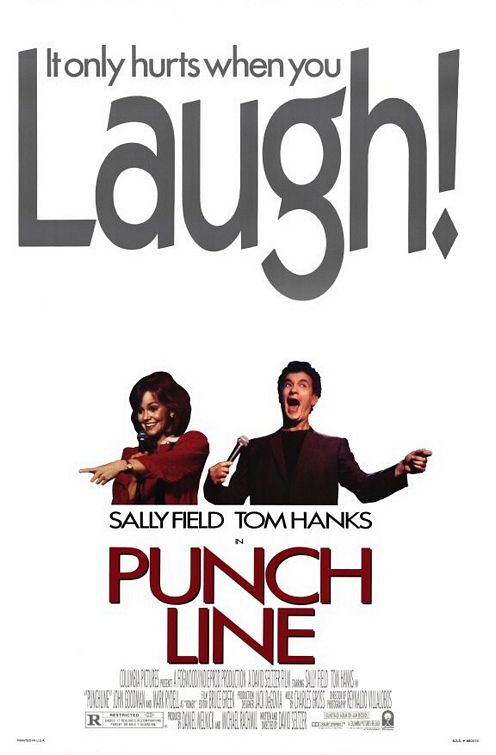
Lilah (Sally Field) is a New York housewife who enjoys making people laugh and takes a stab at stand-up, but finds the experience challenging and ends up paying someone $500 for jokes, but they don’t go over well. Then she meets Steven (Tom Hanks) a struggling med student who moonlights at the same comedy club that she does. Steven is genuinely funny, but so highly insecure that he ends up self-destructing at the most crucial times. He tries to help Lilah hone in her comedic skills while she gives him confidence.

The film, which is written and directed by David Seltzer, nicely analyzes the very unfunny side of the comedy business particularly its emphasis on how one must toil away at seedy clubs, hecklers, low pay, drunken audiences and a permeating sense of insecurity. Hanks abrasive character is spot-on and a good composite of those still stuck in the trenches and bitter about not yet being discovered. In fact I had wanted the surliness of his character to be played up even more as I had come into contact with struggling comedians during my time when I dabbled in improv and found a lot of them to be basket cases of insecurity and when not onstage were quite unpleasant to be around.

In fact it was because the Hanks character was so unlikable and even more so in some of the earlier versions that the script sat on the studio shelf for so long before it finally got the green light. To help compensate certain overreaching attempts were put in to soften his persona, which only ends up hurting the film’s authenticity. One scene has him inside a hospital doing one of his comedy acts for the patients and as he is leaving he suddenly shows this extreme concern for a sick child that he doesn’t even know and he immediately runs over to him, which seemed forced.

Another bit has him onstage and suffering from an extreme emotional breakdown when he sees his father sitting in the audience. Many people harbor demons from the past and frosty relationships with their parents, but they don’t have such over-the-top reactions especially when in front of an audience, which only helps to make this scene reek of hackneyed melodrama.

His friendship with Field, which I initially found cute as the two are complete opposites, gets ruined when a romantic angle unwisely gets thrown in. These two had very little in common, the Field character was married with three kids, ten years older than him and not particularly stunning, so I didn’t see the chemistry or reason for the sudden attraction on Hanks’ part. Having him gush all over her after only knowing her for a brief time is unrealistic. His personal struggles including the fact that he had been evicted from his apartment and had no money would be occupying his mind so much that a potential relationship wouldn’t even enter into it.

Fortunately the film recovers with a strong ending and Field is excellent, but I wished that we had seen more of a backstory to her character and were able to witness the very first time that she ever ventured out onto the stage. The supporting cast offers great performances including John Goodman as Field’s husband who initially isn’t supportive of her stand-up ambitions, but eventually warms up to it. Mark Rydell is solid as the club owner and Mac Robbins has a touching moment as an aging comedian who has seen it all before in a film that offers a revealing look at the comedy business.

My Rating: 7 out of 10

Released: October 7, 1988

Runtime: 2Hours 2Minutes

Rated R

Director: David Seltzer

Studio: Columbia Pictures

Studio: DVD, Blu-ray, Amazon Video, YouTube

Willy Milly (1986)

By Richard Winters

My Rating: 2 out of 10

4-Word Review: Girl turns into boy.

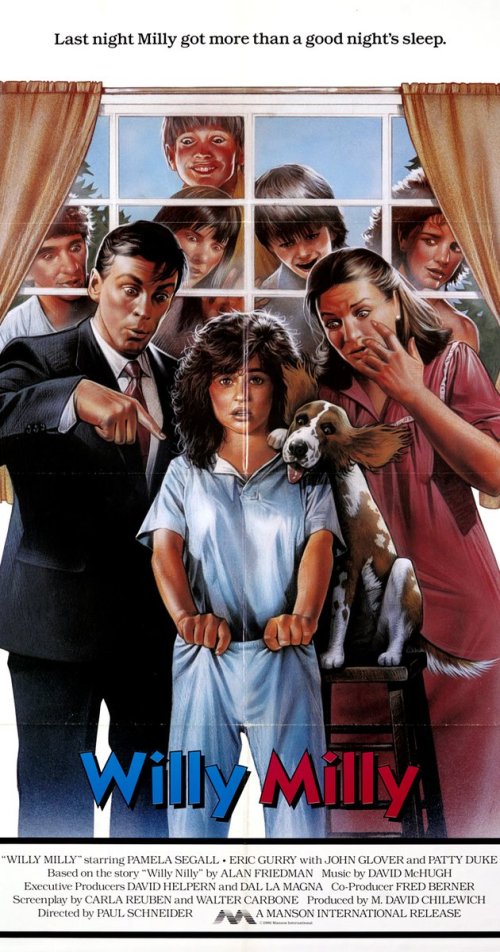
Milly (Pamela Adlon) is a teen who dreams of one day becoming a boy. One day she purchases a magical potion from a kid named Malcolm (Seth Green), which promises to make her wish come true as long as she takes it during the next solar eclipse, which she does. Now as a boy she changes her name to Willy, but finds mixed reactions from those around her. Her father (John Glover) likes the change, as he always wanted a son, but her mother (Patty Duke) doesn’t. He/she starts going to a different school, but finds that both genders have their equal share of problems.

Although the storyline may sound novel it really isn’t and this thing suffers from being just another generic ‘80s teen movie. The humor of having Milly suddenly waking up with a penis and the shocked reactions of her family and friends is not played-up enough while the myriad of issues that this sort of change would produce gets woefully underexplored. Instead it devolves into the typical teen dramas that we’ve seen done before and no need in seeing again.

The most annoying aspect deals with the proverbial bully storyline. I realize every school has got one, but it would be refreshing to have a high school movie that didn’t feel the need to always have to take this redundant route. This one, which gets played by an actor named Jeb Ellis-Brown, is particularly dull and what’s worse is that he looks scrawny and could be easily be beat-up by the kids he is supposedly intimidating.

Adlon’s performance, who gets billed under the last name of Segall, is irritating and a major detriment. For one thing she looks a bit androgynous from the start and then when she does turn into a boy all she does his cut hair short and that’s it even though her voice stays high pitched and her mannerisms remain girly making it seem more like just another female with short hair. There are a few good moments with Glover as the father as he tries to ‘train’ her to be more like a ‘man’, but Duke is horribly wasted in a small and forgettable supporting part.

The material is dated and these days this same storyline could be used minus the magical potion and instead tackled as a storyline dealing with a transgender teen. I also had problems with the Eric Gurry character who plays a teen friend to Willy that is stricken to a wheel chair. Initially I thought it was great that they introduced a character who had a handicap, but then it gets treated as being nothing more than a psychosomatic condition, which demeans all those victims of spinal cord injuries who are permanently paralyzed and unable to walk ever even if they wanted to.

There’s a film called Just One of the Guys that came out around the same time as this one and had a similar theme, but in that one the teen character only pretended to be a guy and it was much funnier and more perceptive.

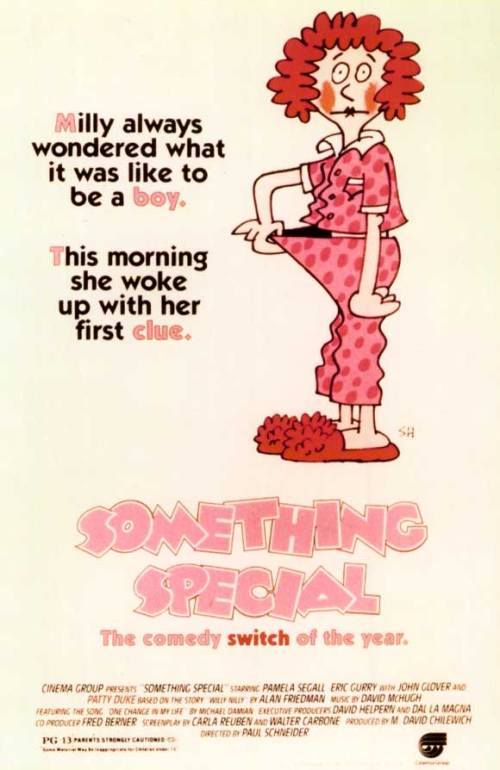
Alternate Title: Something Special

My Rating: 2 out of 10

Released: November 14, 1986

Runtime: 1Hour 23Minutes

Rated PG-13

Director: Paul Schneider

Studio: Concorde Pictures

Available: VHS

Bright Lights, Big City (1988)

By Richard Winters

My Rating: 4 out of 10

4-Word Review: He’s hooked on cocaine.

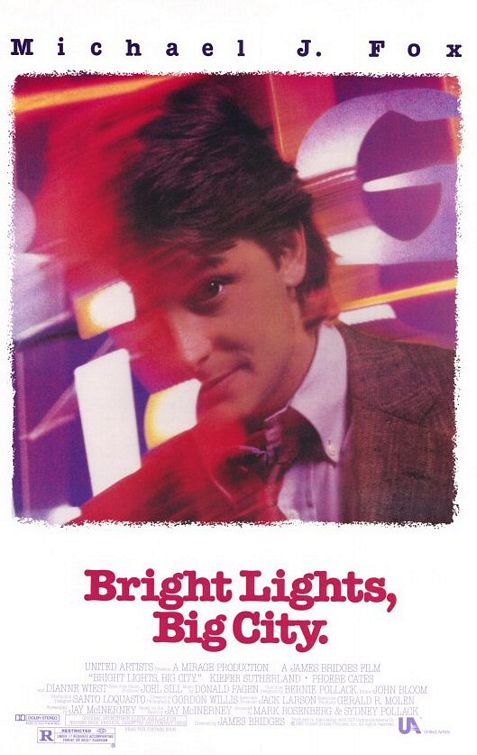
Jamie (Michael J. Fox) is a 24-year-old living in the big city and working as a fact checker for a national magazine. He spends his evenings hanging out at the clubs and taking cocaine while also reeling from the break-up to his wife (Phoebe Cates) and death of his mother (Dianne Weist). As his addiction worsens he loses his job and his entire life unravels in a matter of a week.

The first half-hour is excellent as it gets the vibe of city life as well as the ‘80s subculture just right. The club scenes has an authentic feel and the stresses and politics at his job all ring true and this is a far better portrait of corporate life in the 80’s for the upwardly mobile than The Secret of My Succe$s, which Fox did just previous to this one.

The film also contains a few outlandish moments including a surreal one where Jaimie dreams of speaking to a fetus that is still inside a mother’s womb that is worth checking-out just for its amazing special effects. A later scene, where Fox and his friend Kiefer Sutherland release a ferret inside his former boss’ office, gets too wildly silly and should’ve been excised.

Fox is good in a difficult role and I liked the idea of this all-American young actor taking on a more edgy part. His youthful, clean-cut looks contrasted against the jaded backdrop of the nightlife helps make the shock effect even more profound as his personality slowly disintegrates. However, the scene where he tries to ‘reconcile’ with his ex-wife while she is on the runway modeling fashion clothes and in front of hundreds of people makes his character look ridiculous and irrational.

Cates is cute, but I didn’t like her short hair and she speaks only a few words during the whole thing although the part where she gets plaster smeared over her face and is only able to breathe through straws stuck in her noise is interesting. Swoosie Kurtz though as Jaimie’s loyal co-worker behaves in much too idealized fashion to be believable. If a woman invites a man over to her apartment for dinner it’s most likely because she has a romantic interest in him and will not be so selflessly gracious to want to sit around and listen to him go on-and-on about the break-up with his wife that he is still emotionally attached to, nor want to offer him money that she knows she’ll never get back.

Wiest as Jaimie’s mother is miscast as she looks too young to be his parent and in reality was only 13 years older than Fox. Having her character want to hear about her son’s sexual conquests with other females and even seemingly getting off on it as she listens to it is just plain odd and not like any mother I’ve ever seen. Her dying sequence comes off as contrived and something that was thrown in to get the audience to be sympathetic to its main character, but it proves pointless. A person doesn’t need the loss of a parent to become hooked on drugs as being around people that do it is enough of a motivator and the film would’ve been stronger and less glossy had it taken this approach and avoided the soap opera side-trips.

The shallow ending offers no insights except to say that ‘drugs are bad’. The drama gets so protracted that by the time our protagonist does have his meltdown, which is while attending a chic party, it feels more like a relief because it signals that the thing is finally coming to an end in a story that is too unfocused to be convincing.

My Rating: 4 out of 10

Released: April 1, 1988

Runtime: 1Hour 47Minutes

Rated R

Director: James Bridges

Studio: United Artists

Available: DVD

Permanent Record (1988)

By Richard Winters

My Rating: 5 out of 10

4-Word Review: Coping with friend’s suicide.

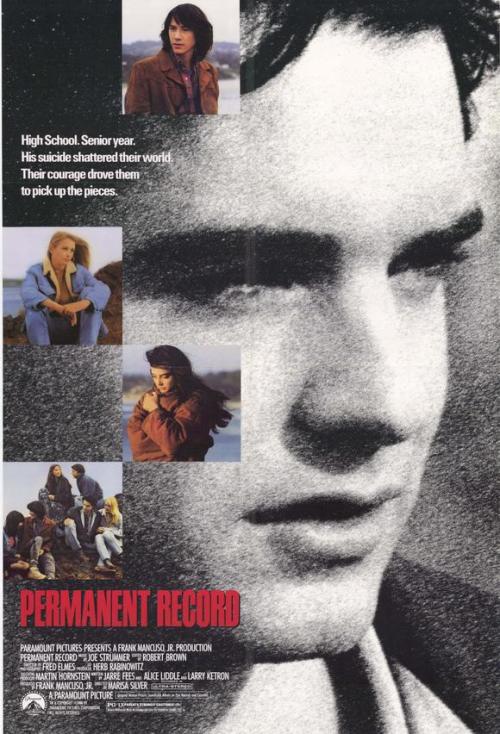
David Sinclair (Alan Boyce) is a popular high school student who seems well on his way to a successful and happy life, but then unexpectedly he commits suicide by jumping off a cliff. Now his friends ponder about why they didn’t notice the signs and the news hits his best friend Chris (Keanu Reeves) particularly hard.

There were many movies dealing with the teen suicide issue that came out during the ‘80s and I remember watching one, a TV-movie called ‘Silence of the Heart’ starring Chad Lowe, in a social studies class at school. This film takes a slightly different approach from those in that it doesn’t concentrate on the motives of the victim, but instead analyzes how their actions affect the people that knew him.

It’s interesting to a degree, but the film glosses over too much and takes too long to get going. Quite a bit of time is spent watching David mopping around looking despondent and stressed, which is frustrating because the film doesn’t clue you in as to why he is feeling this way, so eventually his scenes start to have a redundant feel to them. It also gets annoying because if it is obvious to the viewer that David is struggling with inner turmoil, then why can’t his friends, who supposedly know him best, not pick up on these same signs as well?

The most irritating thing about the movie though is the presence of Reeves. Most of the teen characters in the film are believable, but Reeves unfortunately comes off too much like a caricature of his more famous airhead role in Bill and Ted’s Excellent Adventure. Instead of being a young adult in-the-making like the others Reeves’ character is more the stereotypically grungy, metal head, stoner still stuck in juvenile purgatory and possessing every annoying teen cliché out there. Having him go from being a vapid adolescent to an introspective one was too much of a dramatic arch and I almost wished that his character had been the one that jumped since Boyce was the better actor. The scene involving the actual jump gets badly botched too and it’s Reeves’ presence that ruins it as he follows Boyce to the cliff unaware of what he is going to do and then overacts when he does, which makes what should be the film’s saddest moment unintentionally funny instead.

The ending is quite powerful, but everything else is sterile. Some intriguing issues are certainly brought up, but then never fully addressed. This is particularly true in regards to David’s family who seem to adjust from the shock much more quickly than any of his friends when in reality I would think they would be the ones to take it the hardest and should’ve been the focal point of the film while Reeves could’ve been pushed to the very back and seen only briefly.

My Rating: 5 out of 10

Released: April 22, 1988

Runtime: 1Hour 31Minutes

Rated PG-13

Director: Marisa Silver

Studio: Paramount

Available: DVD, Amazon Video, YouTube

Author! Author! (1982)

By Richard Winters

My Rating: 4 out of 10

4-Word Review: Playwright has family issues.

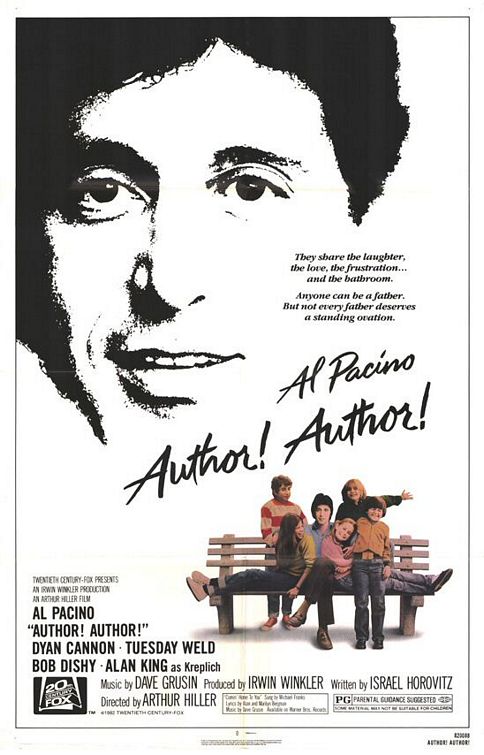
Ivan (Al Pacino) is a playwright struggling to get his next creation ‘English with Tears’ financed and produced. While he has managed to attain the necessary funding he still has a second act that everyone feels ‘needs work’, but before he can tackle that his wife Gloria (Tuesday Weld) leaves him for another man (Frederic Kimball). Now he must contend with raising the five kids alone with four of them being hers from a previous relationship.

The screenplay was written by Israel Horovitz and loosely based on his own experiences as a single parent. Horovitz has written many plays, over 70 of them, several have been considered at least in their day as groundbreaking, so this thing seems incredibly contrived by comparison. The scenes dealing with Ivan’s struggles in regards to his play and the politics that ensue in order to get it made are the most interesting aspects of the movie and the story should’ve solely focused on this angle while the home-life stuff proves sterile and better suited for a sitcom.

The kids seem too connected to the adult world around them. Children can certainly be astute at times, but they still dwell in their own little bubbles and this film shows no awareness of that and instead has them saying lines that more likely would’ve been uttered by an adult. Benjamin H. Carlin has a few cute moments as the young Geraldo, but Ari Meyers, who would later go on to star in the TV-show ‘Kate and Allie’ gives the best performance when she breaks down into tears as she describes the hardships of being booted around from one household to the next.

It’s nice seeing Pacino doing light comedy, which is a real change of pace for him, but he’s too intense and does not play off of Weld, who is more emotionally restrained, well at all. The scene where he tries to physically drag her into a taxi cab isn’t funny, but scary instead and most likely would’ve had those who were standing around witnessing it trying to intervene, or calling the cops.

Dyan Cannon is not effective as the kooky actress who stars in his play and then later moves in with him. Had her character’s eccentricities been played up more she might’ve at least been amusing, but the script doesn’t go far enough with this and having her call him up out-of-the-blue and ask to go to bed with him seemed too outrageously forward. There was some dramatic potential when, after she moves in with him and his kids, she is then asked to move out when Weld’s character comes back into the picture. This could’ve opened the door to a lot of dramatic fireworks and given the film a real lift, but instead she just leaves quietly and is essentially forgotten, which then begs the question why even bother introducing her character at all?

The scenes where Ivan frets about his play and the audience reactions to it are the best parts of the film because it shows the inner anxieties of just about any playwright or screenwriter out there, which is why this should’ve been the central point of the movie as it is the only thing that helps the story stand out. By comparison the family life stuff is generic and filled with too much manufactured cutesiness. It also wastes the talents of Alan King who is mildly amusing, at least at the beginning, as the play’s producer as well as the legendary comedy team of Bob Elliot and Ray Goulding who play the part of the play’s financiers.

The film’s title song ‘Coming Home to You’, which plays over the opening credits as well as the closing ones is so overly sugary that it is enough to make you want to turn the movie off before it’s even begun. It got nominated for a Razzie award for worst original song and it should’ve won as there could not be anything that would be worse, but what is even more amusing is that no one gets credited for singing it, which should’ve been a signal to director Arthur Hiller not to feature it in the film because if the song’s own singer is embarrassed by it then who else would like it.

My Rating: 4 out of 10

Released: June 18, 1982

Runtime: 1Hour 50Minutes

Rated PG

Director: Arthur Hiller

Studio: 20th Century Fox

Available: DVD

Foxes (1980)

By Richard Winters

My Rating: 4 out of 10

4-Word Review: Growing up too fast.

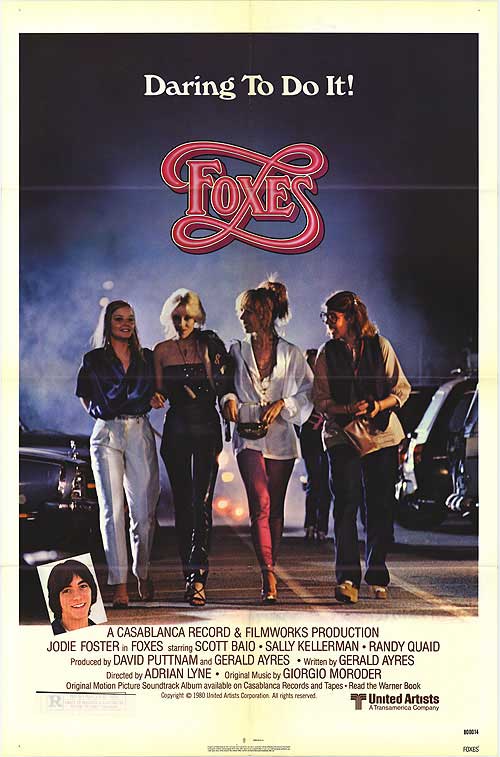
Four teenagers living in the San Fernando Valley face life in the fast lane. Madge (Marilyn Kagan) is the nerd who’s having a fling with a 30-year-old man (Randy Quaid). Deidre (Kandice Stroh) shifts from boyfriend to boyfriend while Annie (Cherrie Currie) is tormented by an abusive father and runs away from home only to get caught up in the drug scene. Jeanie (Jodie Foster) is the mature one of the bunch who tries to keep them from getting into too much trouble as well as getting them out of a jam when needed, but she has struggles of her own particularly dealing with her mother (Sally Kellerman) who brings home men who are virtual strangers to spend the night with and seems as lost and confused as Jeanie’s teen friends.

This marked Adrian Lyne’s feature film debut and from a purely cinematic perspective it’s intriguing. I liked the cinema vertite feel and in many ways this is an early forerunner to Larry Clarke’s groundbreaking Kids that came out 15 years later as the camera follows the teens around on their excursions without having any connected storyline nor does it try to make any moral judgement on what occurs. Instead it plays more like docudrama showing how things are without overdoing the shock value, but what I liked best was the fact that it portrays the adults as being just as screwed up and in certain ways even more lost while society at large is captured as being equally jaded to the point that the teens are simply reflecting the behaviors of the environment around them.

Probably the most surprising aspect is the part dealing with Madge, who is still in high school, having an ongoing relationship with a 30-year-old man, which the film treats as being no big deal. It’s not completely clear if Madge is 17 or 18, but many of today’s viewers will find the casual way the film approaches this topic, which includes an eventual wedding between the two that is happily attended by her friends, as being  ‘creepy’ and most likely a taboo storyline for any film made today.

The irony is that Madge ends up causing the most destruction in the relationship as Quaid’s character unwisely goes away on a business trip and allows her complete use of his place where she then decides to hold a party that gets expectedly out-of-control. It even includes a graphic fight breaking out that is portrayed quite brutally including having a girl hit and knocked down by another guy. This scene also features Laura Dern, in her first credited film role and wearing braces and glasses, as an awkward teen that crashes the place.

The casting of Foster and Scott Baio as her guy friend is interesting as the two had starred in quirky gangster comedy Bugsy Malone just 4 years earlier and the scene where the two have an ongoing conversation while walking around in a large, open junkyard is one of the best parts of the movie. Baio is initially fun as this geeky teen with limited social skills, but later on becomes this mini-hero on a skateboard that gets too cute and Hollywood-like. Foster on the other hand is solid and it’s interesting seeing her playing a more emotionally vulnerable character and even at one point breaking down and crying.

The film manages to have a few interesting scenes here and there, but it takes too long to build any momentum and it’s never as compelling as it would like to be. There are also a few too many moments where it defaults to the contrived clichés, which hurts its efforts at gritty realism.

My Rating: 4 out of 10

Released: February 29, 1980

Runtime: 1Hour 46Minutes

Rated R

Director: Adrian Lyne

Studio: United Artists

Available: DVD, Blu-ray

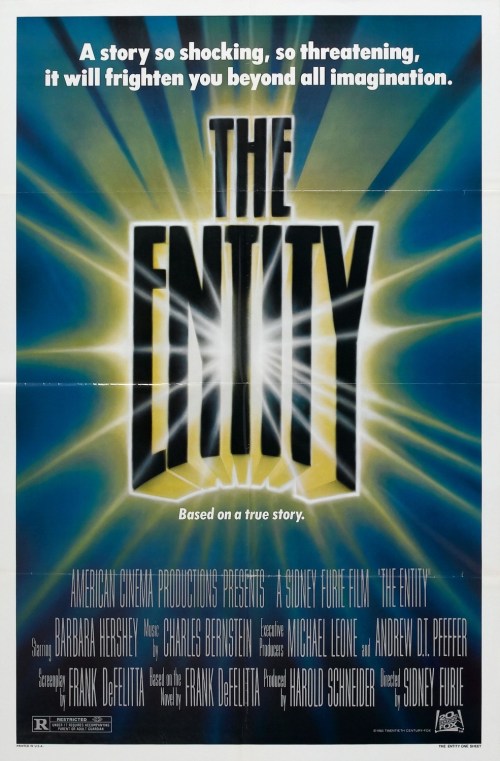
The Entity (1983)

By Richard Winters

My Rating: 4 out of 10

4-Word Review: Invisible mass attacks mother.

Carla Moran (Barbara Hershey) is a single mother living with her three children who finds herself attacked one night in her home by an invisible being who proceeds to viciously rape her. When she tells this to her psychiatrist (Ron Silver) he initially doesn’t believe her, so she employs the help of two parapsychologists (Raymond Singer, Richard Brestoff) who come to her home and record the paranormal activity. With the help of Dr. Cooley (Jacqueline Brookes) who heads their department, they build a life-sized replica of Carla’s home in a gymnasium complete with liquid helium, which they hope to use on the mysterious entity in order to trap it.

The ghostly attacks aren’t impressive and consist mainly of seeing close-ups of Hershey’s face being rammed against the wall, or bedsheets, flying glass, shaking furniture and a musical sound effect reminiscent of a hammer rhythmically pounding against a sheet of metal. The attack scenes quickly become redundant and the ghostly presence is never seen, which eventually makes them yawn inducing whenever they occur. There are also many long dramatic interludes between the attempted scares that try to put a psychological spin on the proceedings, but come off more like pop psychology instead.

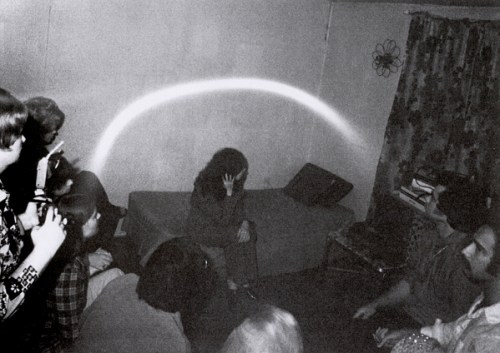
The whole thing is inspired by an actual incident which occurred on August 22, 1974, but incorrectly stated as happening in October, 1976 during the film’s denouncement. In the real-life case a woman by the name of Doris Bither (1942-1999) met two parapsychologists named Barry Taff and Kerry Gaynor while visiting a local library and told them of her repeated rapes inside her home by three ghosts who she considered to be of an Asian descent. She invited the men to her small Culver City, California home, which they found to be extremely cramped and dirty. During the event the men felt some unusual sensations and saw colorful orbs fly through the air, which was enough to inspire Frank De Felitta to write a novel about it, which later lead to this movie.

The film though would’ve worked better had the initial setting been Carla’s visit to her psychiatrist and then everything else played out in small segments as a flashback while she described her encounter. There was much speculation that these things were all just inside Bither’s head since she had suffered from substance abuse and a traumatic upbringing, but none of that gets touched upon in the movie. Instead we are left to believe that these strange occurrences are actually happening, but the film would’ve been more multi-dimensional had the viewer been allowed to question whether it was real, or simply an effect of mental illness.

Hershey gives a fine performance and shows what a great actress she is by playing a character that was completely opposite from the carefree/hippie-like ones that she played during her film appearances of the ‘70s. Silver though is annoying as the psychiatrist as his character unwisely gets too involved with his patient even though most other doctors in his position would be convinced that the woman was bat-shit crazy and keep themselves at an emotional distance from her. His attempts at trying to talk her out of going through with the experiment done at the gymnasium is irritating as it does nothing but hold up the story while failing to add an interesting dramatic tension.

The film’s freakiest aspect are the moments where Hershey’s bare breasts, in an attempt to show them being molested by the invisible hand of the ghost, start to ripple and show indentations seemingly on their own. How they were able to pull this off since this was well before visual computerized effects I’m not sure, but it is impressive and some may find it even strangely erotic.

On the whole though the film is frustrating as never explains why any of this occurs. The cause of the actual incident remains murky even though most would say that the woman was just looney, but since this film has already taken liberties with the real-life event why not at least throw in some sort of halfway plausible theory as nothing is worse than sitting through an overlong film that puts out many intriguing questions, but fails to supply them with any tangible answers.

(The Culver City, California home where the events that inspired this movie purportedly took place.)

(An actual photograph taken during the August 22, 1974 encounter.)

My Rating: 4 out of 10

Released: February 4, 1983

Runtime: 2Hours 5Minutes

Rated R

Director: Sidney J. Furie

Studio: American Cinema Productions

Available: DVD, Blu-ray