Category Archives: 80’s Movies

It’s My Turn (1980)

By Richard Winters

My Rating: 5 out of 10

4-Word Review: Her relationships don’t last.

Kate’s (Jill Clayburgh) life is in flux. She’s living in Chicago with her boyfriend Homer (Charles Grodin), but feels they are not ‘connecting’ and secretly longing for something more. She travels to New York both for a job interview and to attend her widowed father’s (Steven Hill) wedding. It is there that she meets Ben (Michael Douglas) who is the son of Emma (Beverly Garland) the woman Kate’s father is to marry. Ben is a former professional baseball player with struggles of his own including dealing with an unfaithful wife and a daughter. Kate and Ben hit-it-off during the weekend that she is there and eventually go to bed, but will their new found passion be enough to break them away from their other relationships that they’re still trying to save?

To some extent the film has a fresh feel by portraying the budding romance in less of a mechanical way with dialogue and situations that flow more naturally. The scene where Kate and Ben compete with each other by playing all sorts of different video and table games inside a recreational room is fun as is the old timers baseball game that they attend, which features many real-life baseball legends including Mickey Mantle, Roger Maris, and Whitey Ford to name just a few. I’ll also give kudos to Daniel Stern playing a long haired nerdy student who proceeds to disrupt Kate’s algebra class that she is teaching with a lot of redundant questions.

Unfortunately the film doesn’t take enough advantage of its unique storyline. Grown children of a bride and groom to be usually don’t fall in love while attending a wedding event for their parents and the film should’ve focused solely on this scenario including what their parent’s reaction would be to it once they found out. Both Kate and Ben should’ve also been shown calling home to their mates during their time in the Big Apple, which would’ve heightened the drama as we would’ve seen how emotionally conflicted they were to their old relationships despite their new found feelings for each other.

Douglas is a bit miscast as he doesn’t have the necessary upper body muscular build of an athlete. He also looks too young to be a part of the old timer’s game as he was only 32 at the time and many athletes are still playing professionally at that age. The other participants were clearly in their 40’s and 50’s, which means most likely Ben would’ve never have been invited to take part in the event as he hadn’t been away from the game for enough years.

Spoiler Alert!

The biggest downfall though is with the ending that proceeds to leave everything in limbo. Not only does Kate break-up with Homer, but her budding relationship with Ben never comes to fruition. Sitting through a movie just to watch the main character end up right back at square-one is both frustrating and pointless. There needed to be more of a conclusion to her romantic fate. If she learned to become a lifelong single and enjoy it then great, or she found someone else that’s great too, but at least offer some finality instead of just leaving all wide open, which makes the viewer feel like they’ve been treated to only half of a movie.

My Rating: 5 out of 10

Released: October 24, 1980

Runtime: 1 Hour 31 Minutes

Rated R

Director: Claudia Weil

Studio: Columbia Pictures

Available: DVD, Amazon Video
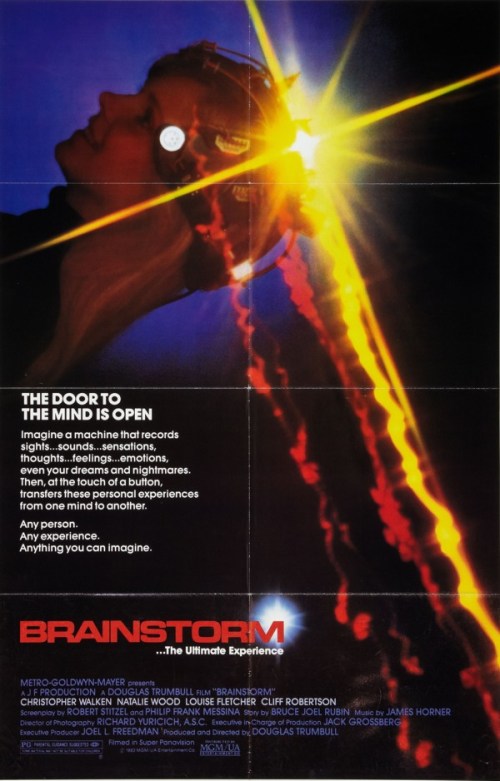
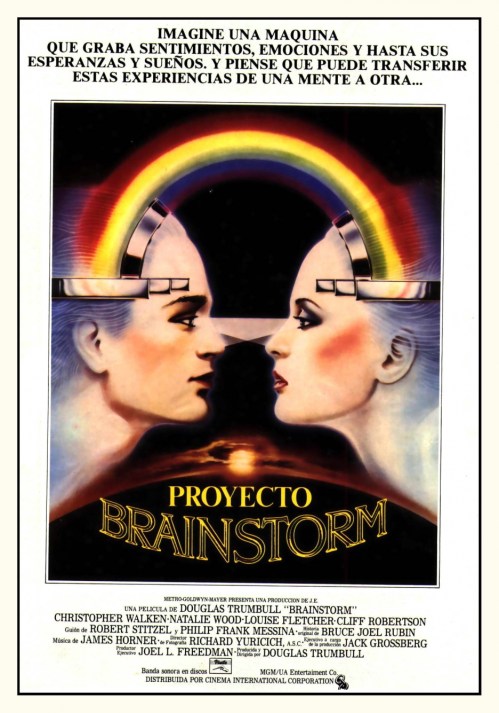
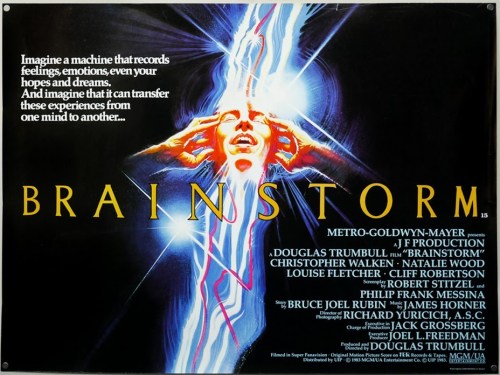
Brainstorm (1983)

By Richard Winters

My Rating: 4 out of 10

4-Word Review: They corrupt his invention.

Michael (Christopher Walken) heads a team of researchers who’ve been able to create an invention that allows the sensations from one person’s mind to be recorded onto tape and then transferred to someone else’s. Michael and his team see this as a profitable enterprise, but become uneasy when the government, who want to use it for military purposes, tries to intervene and take over. When Michael attempts to stop them he is fired, which forces him to take extreme measures to destroy the plant before the machine can be made.

This is to date the last feature film to be directed by special effects guru Douglas Trumbull and on a visual level it’s an inspiring ride particularly during the first half. I was also impressed with how the technology that the researchers used in the film didn’t have that dated quality to it like so many other films from that era,  which proves what a keen eye for detail Trumbull had as everything at least on the visual side looks believable and helps keep the film interesting.

Unfortunately the story, which was written by Bruce Joel Rubin, who had intended to direct the film himself years earlier before the financial backing pulled out, is quite contrived and the complete opposite from the state-of-the-art effects. The plot goes off into too many different directions and the pace lumbers along too slowly. The side-story involving Michael’s reconciliation with his wife Karen (Natalie Wood) makes the thing seem more like a romance and should’ve been discarded while the main story suffers from having two different screenwriters, Robert Stitzel, Philip Frank Messina, working off of an idea that was not their own and results in an unfocused final product.

Spoiler Alert!

The climatic sequence, in which Michael and Karen are able to destroy the plant remotely through the phone lines, is too far-fetched. Destroying the plant doesn’t really stop the government from moving forward with their plans anyways as they could simply rebuild the factory and come up with a tighter security system to alleviate the loophole that Michael used so he wouldn’t be able to do it again.

End of Spoiler Alert!

The concept of an invention that would allow someone to essentially read another person’s mind doesn’t really jive as the film portrays the thoughts and memories that people have to be quite linear when in reality it’s more fragmented. Sometimes people can have several conflicting thoughts and emotions going on at the same time making it virtually impossible for another person to decipher the barrage of flashing images that they would encounter from someone else.

The film’s biggest notoriety though is the fact that it was Natalie Wood’s last movie project and while most of her principle scenes where already completed before her untimely death the few that remained were shot using her younger sister as a stand-in. Wood’s presence though and her character are completely transparent and she could’ve been written out of it and nothing would’ve been lost. Louise Fletcher, who plays a bitchy, chain smoking research scientist, gets a far more plum role and ends up being the film’s scene stealer especially with her prolonged death scene. I also got a kick out of Joe Dorsey, who plays this graying middle-aged man who locks himself inside his basement and then uses the device to watch himself having sex with a hot blonde babe over and over again until he becomes completely shut off from the rest of his family and illustrates to a degree an interesting precursor to the porn addiction phenomenon.

My Rating: 4 out of 10

Released: September 30, 1983

Runtime: 1 Hour 46 Minutes

Rated PG

Director: Douglas Trumbull

Studio: MGM

Available: DVD, Blu-ray, Amazon video, YouTube

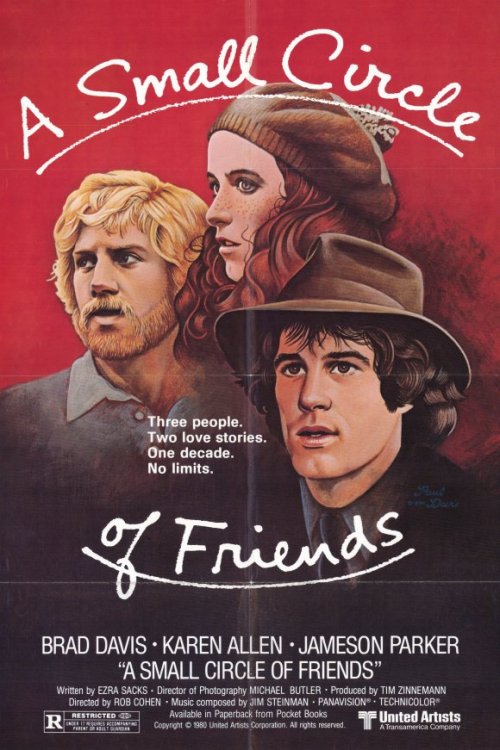
A Small Circle of Friends (1980)

By Richard Winters

My Rating: 5 out of 10

4-Word Review: Three friends sleep together.

Leonardo (Brad Davis), Jessica (Karen Allen), and Nick (Jameson Parker) are students attending Harvard University during the late ‘60s. As they become intertwined with the events of that turbulent era they also form a strong bond that lasts through their school years and on into young adulthood. Leonardo has a relationship with Jessica at first, but it doesn’t work out, so Nick steals her away. Initially Leonardo is angered, but he eventually adjusts and the three later form a ménage a trois.

This was the first film directed by noted producer Rob Cohen and overall I liked the feel. The narrative is fragmented and dreamlike, but it also has a nice nostalgic quality. The script is broadly written, but still gives one a good sense of what life was like on a college campus during that period. The final scene where Leonardo visits an underground student revolution movement where they resort to violent, unlawful means to achieve social change I found to be the most compelling.

Davis gives another great performance and I’m always amazed at the way he can play an effective gay character such as he did in the homoerotic Querelle, but still manage to pull off being a flaming heterosexual too. Allen says little, but her piercing emerald eyes had me hooked on her regardless. Parker is stiff and boring, but still successfully works as an anchor to the other two who are aggressively idealistic.

It’s also fun to see Shelley Long in her film debut. Her character has little to do with the main plot, but watching her portray a man during a stage production while wearing a mustache and male body hair glued to her chest is a hoot.

Usually with these types of films the viewer gets treated to a plethora of overplayed period rock hits, but not here. Instead it’s a loud, booming orchestral score that gets both obnoxious and pretentious as it makes it seem like this is an epic of some kind when in reality it’s just a simple story of young people learning to cope in the real world and the music should’ve reflected that with a quiet folk rock sound.

The film also doesn’t take advantage of the unorthodox sexual activity of its main characters. Three friends, even in these more liberal times, rarely end up becoming a sexual trio. Having this story element introduced late and then quickly dropped is frustrating and should’ve been more explored as it is the one unique thing in an otherwise derivative film that is good enough to get a passing grade, but not much else.

My Rating: 5 out of 10

Released: March 12, 1980

Runtime: 1 Hour 53 Minutes

Rated R

Director: Rob Cohen

Studio: United Artists

Available: DVD

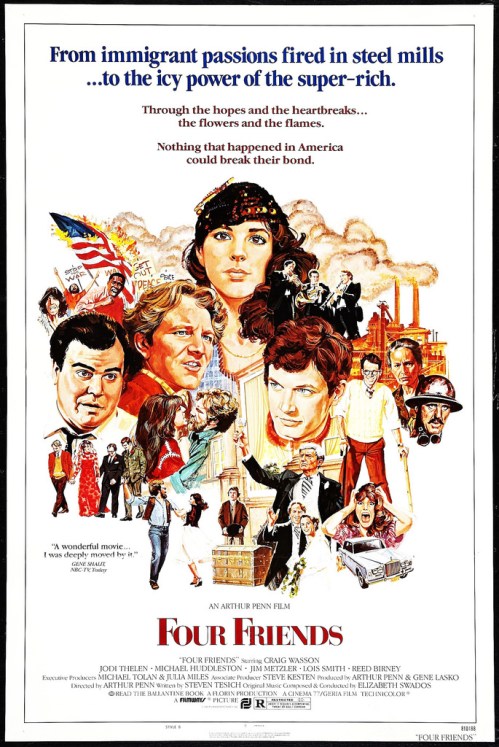
Four Friends (1981)

By Richard Winters

My Rating: 3 out of 10

4-Word Review: Living through the ‘60s.

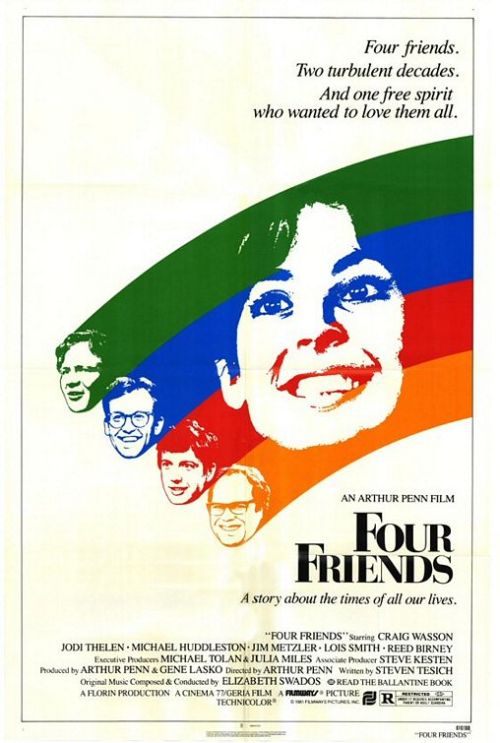
Four male friends from Indiana go from high school to college and then on into young adulthood while remaining close and supportive. All of them have a passion for Georgia (Jodi Thelen) a very independent woman who enjoys playing-the-field when it comes to men and at various points has jumped into relationships with the four of them individually and at different times. Yet it is Danilo (Craig Wasson) who seems to be the most infatuated with her and he spends his life chasing after her, but finds that when they are together all they do is fight.

The story is apparently very loosely based on the experiences of screenwriter Steve Tesich who immigrated to this country from Yugoslavia at a very young age. The film starts out realistically enough, but quickly devolves into a whimsical tale that introduces interesting plotlines only to resolve them in cutesy ways that ends up making this sprawling tale quite shallow.

One of the biggest detriments is the casting of Craig Wasson who is a horrible actor as he can convey only one type of emotion, which is that of anxiousness and only one type of facial expression, which is that of nervousness. If he dares to try to expand his limited acting abilities away from these two things it comes off as unconvincing. Hs character like all the rest have no appeal as they never grow or evolve and seem put in simply as props to help carry the transparent tale.

I did like Thelen who plays the part of a spacey, free-spirited woman quite well, but even here it ends up getting clichéd. The other male characters have no distinguishable qualities and she sleeps around with them like they are toys on her own personal roulette wheel. Wasson’s character was her exact opposite and the two share no real chemistry making their eventual romance come off as being quite forced.

The film also contains some campy over-the-top dramatic elements that are unintentionally laughable and ridiculous. One takes place during a wedding party where while in front of hundreds of guests the bride’s father goes inexplicably crazy and shoots his daughter, then groom and eventually himself. Later on during a performance art show one of Thelen’s friends, in an apparent drugged stupor, accidently puts her foot on the accelerator while sitting in a car that’s parked inside a building, which sends it crashing through the wall and spiraling several stories to the ground.

The one aspect that I did like is that it didn’t resort to the Forrest Gump formula where the main characters get involved directly into all the famous historical events of the era, but instead view them from afar, which is more realistic. However, the film doesn’t show enough ‘60s nostalgia and half the time you forget the setting is even in that time period.

I admire the ambitious concept, but it takes on too much and would’ve been better had the script been more focused and less sprawling. Nothing here is compelling or memorable and the viewer is left with a genuinely flat feeling when it is over.

My Rating: 3 out of 10

Released: December 11, 1981

Runtime: 1 Hour 54 Minutes

Rated R

Director: Arthur Penn

Studio: Filmways Pictures

Available: DVD

Just Between Friends (1986)

By Richard Winters

My Rating: 0 out of 10

4-Word Review: Friends share same guy.

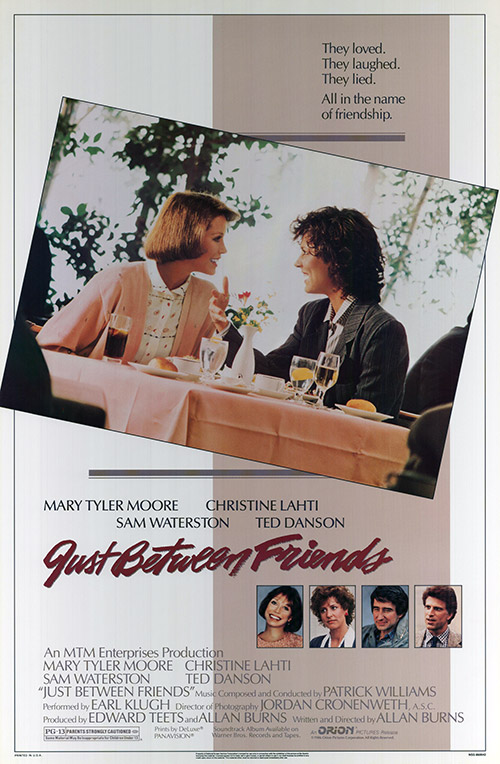
Holly (Mary Tyler Moore) and Sandy (Christine Lahti) become friends while attending an aerobics class. Holly then invites Sandy over to her home for dinner unaware that Sandy is having an affair with her husband Chip (Ted Danson). Sandy is equally unaware that the man she is seeing is her new best friend’s mate. After the awkward experience is over Sandy decides to call off her relationship with Chip only to have him die unexpectedly a little bit later. Sandy then tries to help Holly get back on her feet, but without ever confiding with her that she was at one time ‘the other woman’. When Holly is cleaning out her husband’s office she comes across incriminating photographs of Sandy and Chip together and decides to angrily confront her with it.

One of the biggest drawbacks to the film is the casting of Moore in the lead. She’s an actress I’ve always liked, but here she is too old for the part. She was already pushing 50 at the time and Danson, who was 11 years younger, comes off more like an older son than a husband. In fact the opening shot has an extreme close-up of her where you can clearly see the age lines etched on her face making her later conversation where she asks her hubby if they should have another child seem utterly absurd. The intended idea of showing how completely opposite Holly and Sandy are seems more like a generation gap than contrasting personalities and watching Moore in an exercise outfit is genuinely disturbing as she is too thin and her ribs jut right through her shirt.

Lahti’s character is crass and snarky and not at all likable. The idea that she would know nothing about the personal life of the man she was seeing isn’t believable. Now I’ve never been involved in an affair, but I would think if someone is really into someone else, even if it is as the other woman, they’d want to know as much about him as they could including having some knowledge about who he was married to instead of being completely in the dark with what they were up against.

The affair angle gets introduced too suddenly and then right away she gets invited over to Holly’s for dinner and the awkwardness ensues, which isn’t half as funny or compelling as it could’ve been. The film should’ve shown how the affair began as well as to why Chip was unhappy with Holly, which never gets thoroughly explained, and then had the dinner scene played out later on when the viewer was more engrossed with the situation and characters.

There is also a lot of embarrassing comedy that gets mixed into the already cringy drama and only helps to unnecessarily prolong the scenes. The satirical jabs at the on-air news talent are particularly poor as it exaggerates how dumb they are in a film that is supposedly trying to be realistic otherwise. I don’t exactly know what writer/director Allan Burns has against newscasters, but both he and James L. Brooks produced the ‘Mary Tyler Moore Show’, which portrayed Ted Baxter, the newscaster on that series, as being a complete imbecile and here the news anchors are shown in much the same way, but by this time it comes off like an old, overplayed joke.

Having Danson die in the middle was a big mistake as his character was the only thing that brought in any interesting dramatic tension and the film flat lines the rest of the way without him. Allan Burns had some success producing TV-series despite the dubious distinction of having created ‘My Mother the Car’, but clearly making movies was beyond his capabilities and it’s no surprise that he never directed another film after this one.

My Rating: 0 out of 10

Released: March 21, 1986

Runtime: 1 Hour 50 Minutes

Rated PG-13

Director: Allan Burns

Studio: Orion Pictures

Available: DVD (MGM Limited Edition Collection), Amazon Video, YouTube

Circle of Power (1981)

By Richard Winters

My Rating: 4 out of 10

4-Word Review: Weekend retreat becomes brutal.

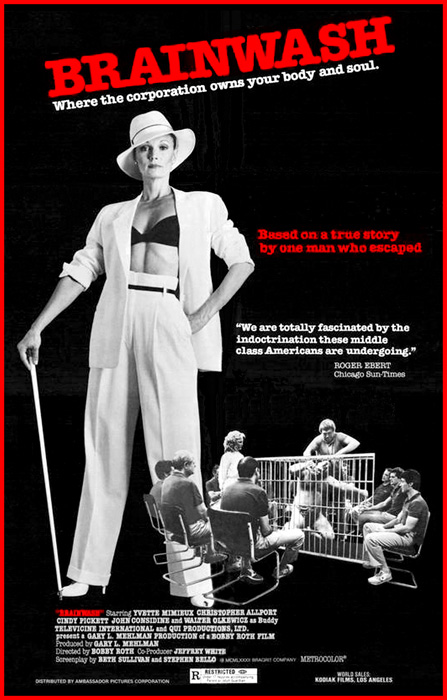
Executives of a company spend a weekend at a hotel where they’re a part of a large group awareness training that will better prepare them to achieve their full potential in both their business and personal lives. The encounter group is headed by Bianca Ray (Yvette Mimieux) who implements disturbing activities for the participants to go through that become increasingly more abusive and degrading.

This film is based off of the non-fiction novel ‘The Pit: A Group Encounter Defiled’ by Gene Church which documented a 1972 four day encounter group of top executives from the Holiday Magic company and many of the outrageous activities they were required to go through all under the cloak of learning to ‘bring out their inner dynamic’. Many of the activities that the characters in the film are forced to perform are similar to the ones depicted in the book, but amped up for the sake of drama. Some definitely get disturbing including having one participant, played by Walter Olkewicz, forced to strip naked in front of the group and then told to stand on a chair while the others mock his overweight body before having him locked into a cage and feed scraps of food that he must eat up directly from the floor.

Unfortunately the shock value gets muted by having characters that are too cardboard.  The viewer ultimately has no emotional bond to any of them and therefore the increasingly degrading circumstances that they go through achieve no profound impact. It also happens much too quickly as right from the start they are asked to do crazy things. I have no doubt that these encounter groups can sometimes go too far and there have been documented evidence of some even resulting in deaths, but it occurs gradually. A level of trust needs to be achieved to the point that the participants let down their guard and then the darker and twisted stuff gets introduced instead of just having it from the beginning like it gets played here, before any of the people have been psychologically ‘neutered’.

There is also no background given, or at least not a sufficient one, to the people who run the encounter group who are portrayed in a very one dimensional, creepy way that quickly becomes boring.  The issues of how did they decide to get into this line of work and what makes them so brazen to think they can get people to do these outrageous acts and get away with it is never addressed.

The ending is limp. What happens to the employees once they return to work is never captured nor the fate of the people running the retreat and whether they were ever sued or arrested. The idea is an intriguing one and there’s a potential for a really interesting movie to be had, but the plot needed more context and the characters to be better fleshed out.

Alternate Titles: Brainwash, Mystique, Naked Weekend

My Rating: 4 out of 10

Released: November 19, 1981

Runtime: 1Hour 37 Minutes

Rated R

Director: Bobby Roth

Studio: Ambassador Film Distributors

Available: VHS

That Championship Season (1982)

By Richard Winters

My Rating: 2 out of 10

4-Word Review: Their reunion turns sour.

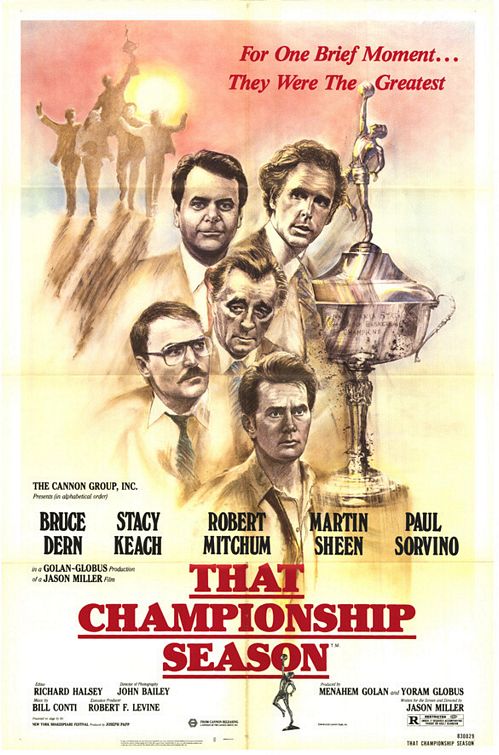
On the 25th anniversary of when they won the state high school basketball championship four members of the team get together with their coach (Robert Mitchum) to celebrate. George (Bruce Dern) who made the winning shot is now the town’s mayor and up for reelection. James (Stacy Keach) is a high school principal while his younger brother Tom (Martin Sheen) has become a vagabond alcoholic. Phil (Paul Sorvino) is the most successful of the group even though his business methods aren’t always ethical. It’s his revelation that he has had an affair with George’s wife that sends the gathering into a freefall where long dormant secrets from all the members slowly come to the surface.

The film was written and directed by Jason Miller, best known for playing Father Karras in The Exorcist, and the play version, which he also wrote won him the Pulitzer Prize. Despite the rave reviews of the play I was genuinely shocked how lifeless and boring the film is. It takes 35 minutes before any real conflict is introduced and once it does it’s all very contrived. The opening half-hour is nice as it was filmed on-location in Scranton, Pennsylvania, which was Miller’s hometown, but the second half is done completely inside one home, which makes it very stagey. Flashback sequences were done to help make it more cinematic, but unwisely cut by the film’s producer.

The plot thread dealing with Sorvino’s character having an affair with Dern’s wife seemed so utterly contrived that I literally had to roll my eyes when it gets brought up. It’s almost like they had to throw in something to keep it interesting so why not just make it the oldest, most clichéd soap opera-like thing they could think of. What’s worse is we never see this woman in question despite her being the catalyst for all the drama nor any explanation of where she is or what she is doing.

The acting is good for the most part, which is the only reason I’m giving this thing even 2 points, but at times the performers have trouble rising above the melodramatic material including the scene where Keach tries to put on a cry while describing his mistreatment by his father, which sounds very fake and unintentionally laughable.

Sorvino walks around with jet black hair except for a big white patch on the back of his head, which is distracting and gets shown a lot, but never mentioned by any of the other characters. I’ve never seen anyone with that condition, except for someone who intentionally highlighted it like that and even so I don’t think that was the case here. The producers should’ve had that spot dyed black like the rest of his hair to avoid the distraction, or had one of the other characters joke about it in passing, so the viewer didn’t have to keep wondering why they are the only ones seeing it and nobody else was.

The final scene where the men listen to a tape of when their team scored the winning shot, which brings tears to their eyes, is the only segment that rings true and hits home how high school for some people can be the highlights of their whole lives and everything afterwards is all downhill. The rest of the movie though is an exercise in boredom and filled with sterile characters dealing with generic issues.

My Rating: 2 out of 10

Released: December 9, 1982

Runtime: 1Hour 50 Minutes

Rated R

Director: Jason Miller

Studio: Cannon Film Distributors

Available: DVD

Hands of Steel (1986)

By Richard Winters

My Rating: 2 out of 10

4-Word Review: He’s made of steel.

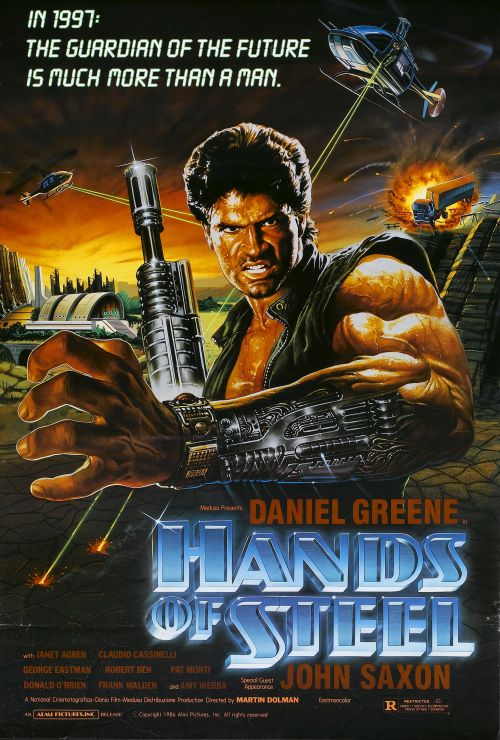
Paco (Daniel Greene) is a man who gets injured in an accident and then rebuilt as a cyborg in an operation financed by evil industrialist Francis Turner (John Saxon). Paco is then programmed to assassinate the head of a competing faction, but at the last second he is unable to do it, due to still harboring a conscience from his human side. He then hides out at a desolate Arizona hotel/bar run by the attractive Linda (Janet Agren) who he soon forms a bond with, but Turner and his men track Paco down and are determined to enact revenge for his disobedience.

The storyline could best be described as a variation to the Six Million Dollar Man. In that one a man was rebuilt to help the secret service on missions for ‘good’ while here the protagonist is programmed to carry out evil tasks, but refuses. It all might’ve been more interesting had it not been produced by an Italian film company where all the speaking voices are dubbed, which gives it an amateurish quality.

The isolated desert location only helps to make an already visually boring film even more so and the place certainly gets a lot of customers for being stuck literally in the middle-of-nowhere. The action is passable, but relies heavily on arm wrestling matches (yes you read that right) that are not exciting at all.

The plot features many logical loopholes that make little sense if you start thinking about it. For instance the cyborg gets shot at in close range, but he does not get injured or killed, but you would think the metal, circuitry or the skin surrounding it would still be affected or damaged. Later on when the bad guys are chasing him down in the desert by shooting at him from a helicopter the cyborg ducks out of the way from the bullets as if he fears getting hit by them, but why since we’ve seen earlier that they have no effect?

Greene’s performance is incredibly one-note and one of the main reasons the film is so boring. John Saxon is the only recognizable face in the cast although there is also George Eastman who played one of the killers in Mario Bava’s Rabid Dogs and appears as a similar type of baddie here. However, that film was way better than this one and more worth your time to watch.

My Rating: 2 out of 10

Released: August 29, 1986

Runtime: 1Hour 34Minutes

Rated R

Director: Sergio Martino

Studio: Almi Pictures

Available: VHS

Mind Trap (1989)

By Richard Winters

My Rating: 2 out of 10

4-Word Review: Avenging her father’s murder.

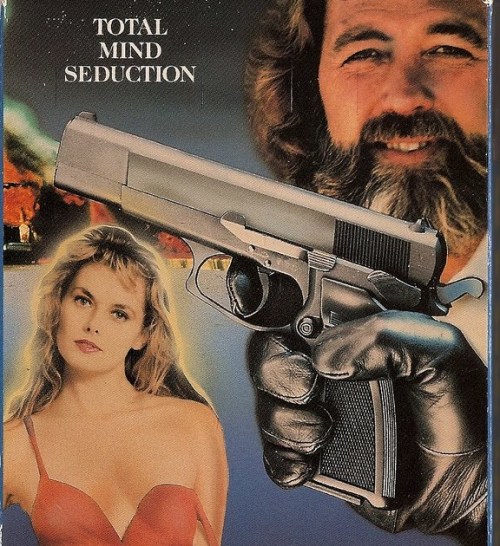
Shana (Martha Kincare) is an actress who stars in low budget action flicks. Her father works at a secret lab where they do experiments in areas of holograms and mind control, which elicits the attention of dangerous foreign agents who want to use these experiments for their own nefarious gain. They end up killing not only Shana’s father, but her sister and mother too and forcing Shana to pledge a vendetta on all those who murdered them while using what she has learned from being in action films to take them down.

Even though this is nothing more than a mindless actioner it does manage to have a few unique scenes, which is the film’s only saving grace. The opening one features a woman getting attacked while inside a trailer home that is set onto a moving truck. The bit featuring a room equipped with the old clapper light switch in which simply clapping one’s hands will force the lights to turn on or off and then having a ‘battle’ where one person claps for them to go on and another immediately claps to have them shut off, which continues on for a couple of minutes, is amusing.

Another segment has a woman (Jacquie Banan) getting gang raped by the bad guy, but then Shana mocks the man’s ability to ‘get-it-up’ and makes him so self-conscious that he is unable to achieve an erection and thus unable to complete the intended assault.

Overall though the film is flat and forgettable and the star Martha Kincare, who depending on the camera angle resembles a young Justine Bateman, is not believable at all. Just because one may perform in action movies does not mean that person knows the first thing about handling a real gun or taking on real-life secret agents, which makes the already flimsy plot completely absurd.

Dan Haggerty and Lyle Waggoner are given top billing, but seen only briefly while playing characters that have little to do with the main story. Maureen LaVette, who portrays the Russian agent, but was born in Iowa puts on such an over-the-top Russian accent that it becomes annoying and enough to force some viewers to watch the film with the sound turned down, which really wouldn’t be a problem since the banal dialogue sucks anyways.

My Rating: 2 out of 10

Released: August, 1989

Runtime: 1Hour 30Minutes

Not Rated

Director: Eames Demetrious

Studio: AMI Video

Available: VHS

Irreconcilable Differences (1984)

By Richard Winters

My Rating: 6 out of 10

4-Word Review: Girl divorces her parents.

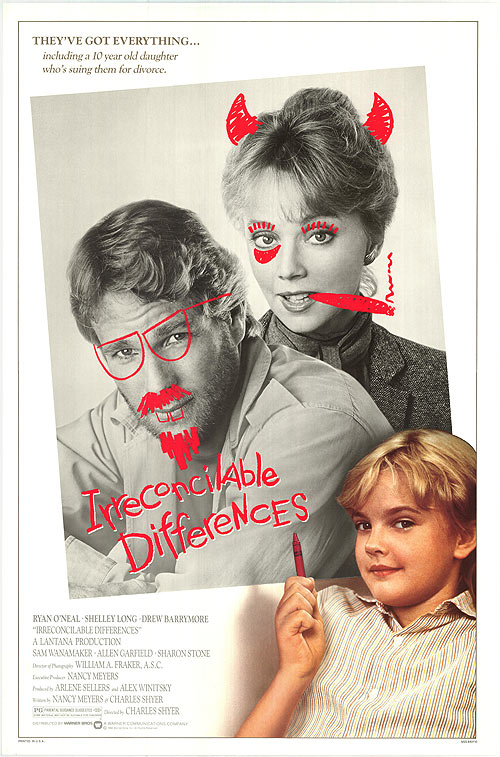
Nine-year-old Casey (Drew Barrymore) has decided she’s had enough of her parents (Shelley Long, Ryan O’Neal) and wants to get a divorce from them by using the emancipation law, which states that a minor can be freed of their parents if it is found that they have not meet their legal or equitable duty. Her mother and father fight this in court, but in the process are forced to expose all their skeletons including the awkward way they first meet, their affairs and eventual disdain for the other.

What surprised me most is O’Neal’s presence. His career has become so tarnished by his own real-life accusations of poor parenting that I would’ve thought this material would hit too close-to-home and he’d avoid it, but at the time this was considered a career resuscitator for him even though it ended up being only a brief one. His performance is actually quite funny making this his best work since What’s Up Doc?

I was equally impressed with Long who plays completely against type. Normally she’s best as snotty, prissy types, but here she reveals a much more vulnerable side and does quite well. At one point I even felt some genuine sympathy for her, which is something I’ve never felt at any other time with any of the other parts that she has played.

Sharon Stone, who gets listed in the opening credits as being ‘introduced’ even though she had already had a part in another theatrical feature Deadly Blessing that came out three years earlier, lends strong support. The way her character transitions from a wide-eyed free-spirit to bitchy Hollywood diva is quite entertaining and she looks great especially when topless. However, the bit where she exposes her excessively hairy armpits is gross and kind of tainted my image of her the rest of the way.

The script, which is based loosely on the relationship between Peter Bogdanovich and his wife Polly Platt with the Sharon Stone character representing Cybill Shephard who became the other woman, is sharp and filled with a lot of Hollywood in-jokes. The two funniest bits are the conversations between the guests at a chic Hollywood party as well as a glimpse of O’Neal’s disastrous attempt to direct a big budget rip-off of Gone With the Wind by trying to turn it into a musical.

The film though spends too much time on the parents while almost forgetting about Barrymore who’s only seen sporadically. The story also takes too long to play out with a final reconciliation segment that is overdone and sappy and helps to lose the wonderfully cynical tone that the film had earlier.

The only truly interesting aspect about the film is that Barrymore later used this same emancipation law to divorce herself from her real parents when she turned 15 and stated in interviews that she did it based off of the idea that she got from doing this movie.

My Rating: 6 out of 10

Released: September 28, 1984

Runtime: 1Hour 53Minutes

Rated PG

Director: Charles Shyer

Studio: Warner Brothers

Available: DVD