Category Archives: 70’s Movies

Capricorn One (1978)

By Richard Winters

My Rating: 6 out of 10

4-Word Review: Mars landing is fake.

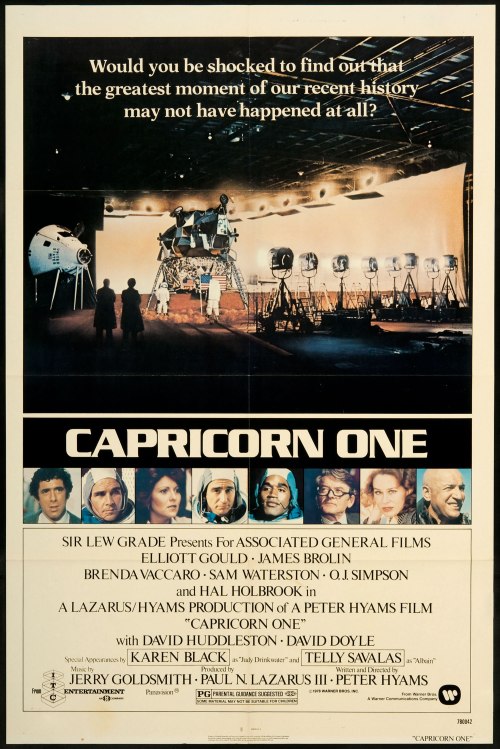
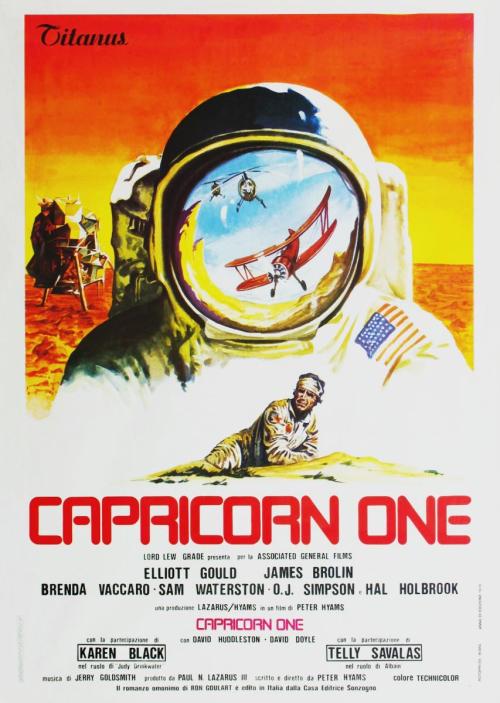
Due to finding out about having a faulty life support system James Kelloway (Hal Holbrook), who heads the NASA mars mission, decides to have the three astronauts (James Brolin, Sam Waterston, O. J. Simpson) removed from inside the rocket just before it is ready to blast off. He then allows the rocket to take off leaving everyone on the ground with the mistaken impression that the astronauts are still inside. The astronauts later walk onto a soundstage that is made to replicate the mars surface where they pretend to be walking on the planet live on television. As the rocket stays on mars the three astronauts remain trapped inside the NASA space center unable to let even their families in on their secret, but when the rocket returns to earth it gets accidently destroyed. Since the three men are still thought to be inside and since the government wouldn’t want to whole world to know it was a hoax the men are forced to make a daring escape across the hot desert in order to avoid being killed.

The script was originally written in 1969 and was an attempt by director Peter Hyams to take advantage of the moon landing conspiracy that was going on at the time, but no studio was willing to take it on, so it took 9 years and a change of planets before it finally got the green light. I’m not a big fan of conspiracy theories as I think a lot of them are too dependent on a great many people working together and being able to keep a secret in order for them to be pulled off. Since it’s hard for just two people to pull off a crime such as a murder without one eventually turning on the other, or breaking down under pressure, then it’s even harder to believe hundreds could keep quiet it in order to successfully pull off the so-called moon landing hoax, or that at some later time one of them wouldn’t have divulged the secret to a family member, friend, or even anonymously to the press.

In either case it’s an entertaining movie for the most part although the first hour is spotty and it only really gets gripping during second-half. To some degree I thought it would’ve been more interesting had the focus been on the people setting up the ruse and working to make the soundstage look like mars than on the astronauts. It also might’ve been more impactful to the viewer had they been given the idea that the landing was real and only when the men are seen walking on the mars surface does the camera pull back to show that it was all fake instead of revealing the conspiracy right from the start.

The problem that I had though was with Elliot Gould’s character. Don’t get me wrong I liked the way he plays the part as a sort-of disheveled, loser hero who strikes out with the ladies, but the fact that the government is on him so quickly and trying to kill him before he has even written one single report about the mars landing makes little sense. Later on he gets bailed out of jail by his boss, played by David Doyle, who openly admits to hating Gould and immediately fires him the second he pays his bail, but why spend company money on someone you don’t like and don’t want working for you?

Spoiler Alert!

The ending features a well photographed aerial chase through the skies that is very exciting, but the wrap-up in which James Brolin, who is the last surviving astronaut that manages to escape the deadly clutches of the government and appears to shock of everyone at his own funeral seems to ruin the premise. For conspiracy theories to hold their mystique there needs to be the idea that the bad guys were able to get away with it and that it is actually possible to successfully kill off all the possible leaks and manage to hold the rest to strict secrecy. By having someone survive only proves the point that I made earlier and thus makes all those other conspiracy theories that permeate modern culture seem dubious as well because mostly likely the same result would’ve ultimately happened with those that happened with this one.

End of Spoiler Alert!
My Rating: 6 out of 10

Released: June 2, 1978

Runtime: 2 Hours 3 Minutes

Rated PG

Director: Peter Hyams

Studio: Warner Brothers

Available: DVD, YouTube, Amazon Video, Blu-ray
Harper Valley PTA (1978)

By Richard Winters

My Rating: 3 out of 10

4-Word Review: She gets her revenge.

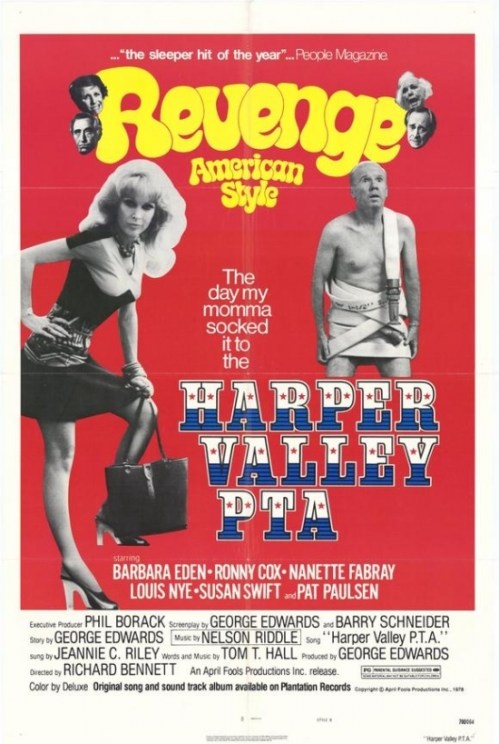
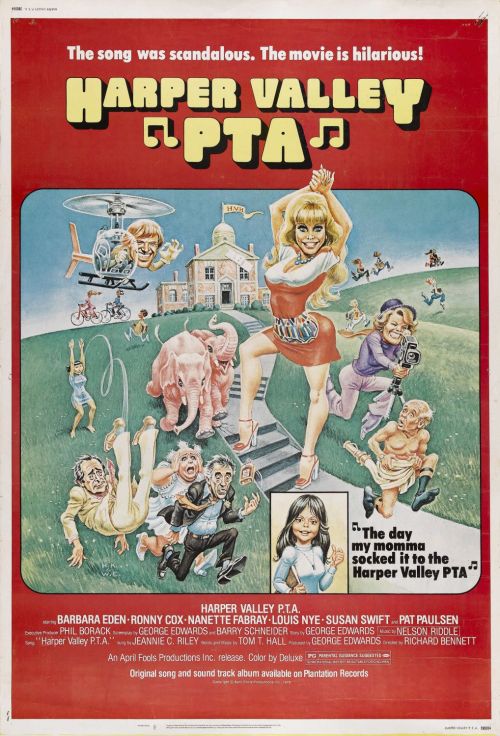
Based on the hit 1968 song the story centers on Stella Johnson (Barbara Eden) whose liberated single life style and provocative way of dressing is considered ‘scandalous’ by the prudish members of her local school board. They give a letter  to her daughter Dee (Susan Swift) to be send home for Stella to read, which informs her that if she doesn’t ‘clean up her act’ they’ll have her daughter expelled. Stella then goes to the school board meeting and exposes all of their dirty secrets and then continues the harassment by playing dirty pranks on them one-by-one.

The song, which was written by Tom T. Hall and sung by Jeannie C. Riley, was a cute novelty ditty that encompassed the social rebellion of the late ‘60s through the scope of small town southern life. The film though ruins the song’s appeal by overplaying its theme and losing touch with its core issue.

The song had a very heavy country tinge to it making it seem that the setting should’ve been the Deep South, but for some reason the film takes place in Ohio instead. It also has the time period as being the present day, late ‘70s, which makes some of the lines in the song, which Stella reiterates pretty much word-for-word when she tells the board members off, seem dated and out-of-touch. Stuff like sock-it-to and ‘Peyton Place’ referred to hit TV-shows that by the late ‘70s had already been off the air for years, so the film should’ve either updated the script to make it more topical to the times, or had the time period be in the ‘60s, which like with the southern locale would’ve given the film a far stronger atmosphere.

Having Stella tell off the board members like in the song seemed sufficient, but having her continue her efforts by pulling elaborate pranks on them made it come off like overkill and in some cases borderline cruel and even criminal. The fact that other people in attendance at the board meeting clap and cheer when Stella humiliates the PTA board makes it seem that these people are on their way out and don’t have much of a hold over anything, so watching Stella continue to humiliate them further is not emotionally satisfying. They’re also so easily taken advantage of that the pranks cease to be either entertaining or funny.

The only segment that is genuinely fun is the one where a sex ed. film gets shown to the high school students. The film seems to be an actual product from the early ‘60s and features rather graphic animated illustrations. We unfortunately only get treated to a couple of minutes of it even though it was the funniest thing in the movie without ever actually trying to be.

Eden looks gorgeous and probably even hotter than she did in ‘I Dream of Jeannie’ minus the harem outfit. If you watch this for basic eye candy then you’ll be satisfied, but she speaks initially with a southern accent that she ends up losing by the second half.

John Fiedler gives good support by appearing fully nude in one segment despite not having the physique for it, so I commend his bravery. Audrey Christie shows equal regard by exposing herself with her head completely shaved, but overall the only character that I really liked was Susan Swift’s who seems the most relatable and like with the song her character should’ve been the central one and not Eden’s.

The threadbare premise gets stretched out far longer than it should. The story and the many pranks have a very redundant and mechanical quality to them that quickly becomes old. I’m not sure whose idea it was to try to turn the song into a movie, but it was one that should’ve been shot down quickly and never seen the light-of-day.

My Rating: 3 out of 10

Released: June 2, 1978

Runtime: 1 Hour 42 Minutes

Rated PG

Director: Richard C. Bennett

Studio: April Fools Productions

Available: DVD

Special Delivery (1976)

By Richard Winters

My Rating: 6 out of 10

4-Word Review: Stolen loot in mailbox.

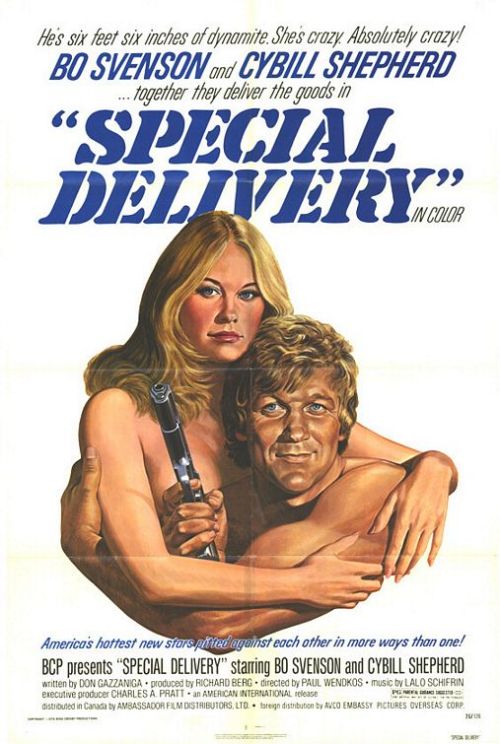
Jack Murdock (Bo Svenson) manages to pull off a daring bank robbery, but in an effort to elude the police he stashes the bag of money inside a mailbox and then waits for the late night mailman to open it up, so he can retrieve it. In the meantime he must deal with ditzy Mary Jane (Cybill Shepherd) who resides in an apartment just across the street from the mailbox and witnesses what Jack has done. She agrees to help him, but only if she can get a part of the take. They also must deal with a local bartender named Graff (Michael C. Gwynne) who is also aware of what Jack did and becomes determined to get at the cash before they do.

Although the film is labeled as a comedy it really isn’t. There are a few quirky conversations between Jack and Mary Jane, but it’s not much and most of the movie is quite gritty and tense. Watching the men trying to escape from the police by precariously climbing up the side of a building using nothing but a rope is realistically done and had me on the edge-of-my-seat. The scene where Mary Jane gets surrounded by a gang of bikers who try to rape her borders on being quite unpleasant and should’ve been excised as it adds nothing to the story, but in either case it solidifies this has being a hard-edged action flick that is anything but funny.

The plot is solid for the most part with my only complaint being that I’ve never seen, in any city that I’ve lived in, an outdoor mailbox with a late night mail pick-up of Midnight, or in this case 11:45 PM. Most mail boxes list 5 or 6 PM as the latest pick-up time and it would’ve worked better had it been earlier anyways as the darkness takes away a bit from the action. I also wanted the mailbox location to have been on an actual street corner and not a studio backlot as it would’ve given the film a more genuine atmosphere.

Svenson is amiable in the lead and seeing this really big, physical guy being so relatively soft-spoken creates a likable character. I also enjoyed the line he says to a group of bikers that he decides to single-handedly take on: “There’s one of me and only three of you.”

Shepherd is also quite good. I know I’ve bashed her in some of other film roles, but here her personality fits the part as she creates a kooky lady with a nice balance between being both eccentric and conniving.

Spoiler Alert!

The ending though is the one time that the film sells itself out as it features the two driving in a van that goes off a cliff and bursts into flames. The bad guys think Jack and Mary Jane were killed, but they managed to somehow escape it before it went over, but the film never shows us how this was done, which is a cop-out.

There is also a tacked-on twist that features the couple, having now successfully eluded both the bad guys and authorities, vacationing on a cruise ship where they catch the attention of two women, one of whom is the wife of the manager (Sorrell Booke) of the bank that Jack robbed. The women plot to make a play at Jack because they can tell from the outfit that Mary Jane is wearing that they are rich and therefore want to get at their money, but why reintroduce a character like the bank manager into the story when he was only seen briefly at the beginning and had very little to do with the main plot? And for that matter why should a wife of a bank manager plot to rob somebody else as she should be living an affluent lifestyle to begin with?

End of Spoiler Alert

Overall I found this to be a surprisingly fun movie that enters in just enough offbeat ingredients to make it original, but keeps the action consistently coming, which should be enough to please those that like excitement.

My Rating: 6 out of 10

Released: July 12, 1976

Runtime: 1 Hour 38 Minutes

Rated PG

Director: Paul Wendkos

Studio: American International Pictures

Available: VHS

The Lady Vanishes (1979)

By Richard Winters

My Rating: 4 out of 10

4-Word Review: Where’s the old lady?

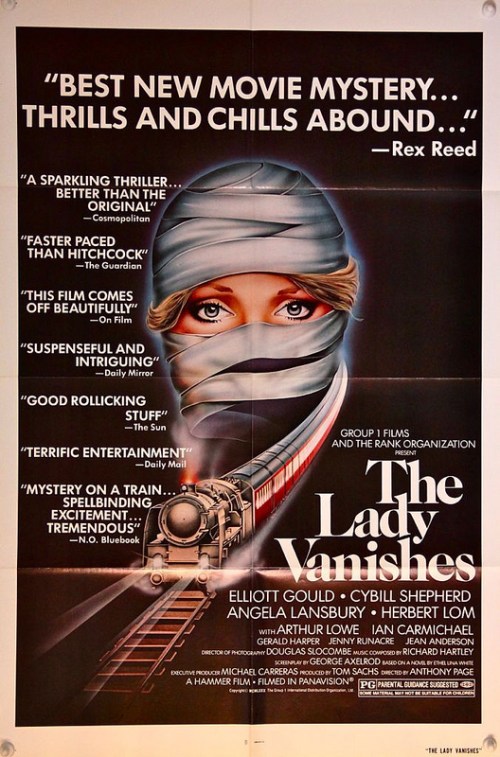
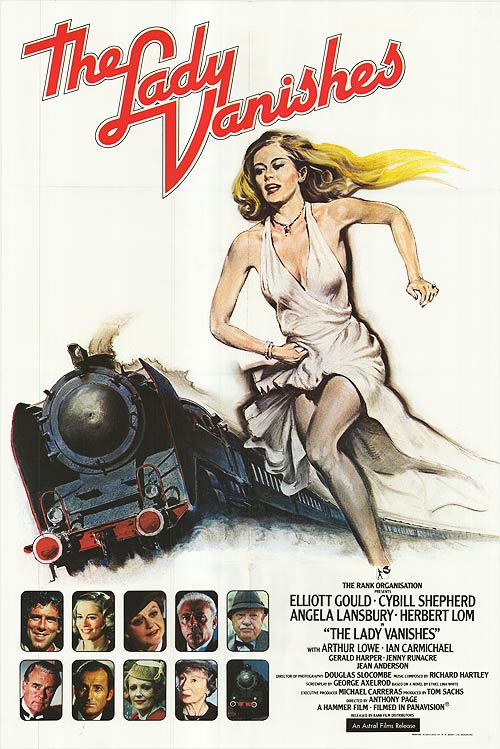
In 1939 while traveling by train from Bavaria to Switzerland American Heiress Amanda (Cybill Shepherd) befriends an English nanny named Miss Froy (Angela Lansbury). The two sit across from each other inside a train compartment. When Amanda awakens from a nap she notices that Miss Froy has disappeared and when she asks others where she went to everybody denies having even seen her. Amanda starts to question her own sanity and tries to use the assistance of American photographer Robert Condon (Elliot Gould) to help her figure out what is going on.

This film is a remake of the classic 1938 movie of the same name, which was directed by Alfred Hitchcock and based on the novel ‘The Wheel Spins’ by Ethel Lina White. I last saw the original over 30 years ago while attending college, so my memories of it are fuzzy and I’ll be unable to compare the two. However, I do remember enjoying it and feeling that this thing doesn’t quite reach the same level.

The biggest issue is the casting of Shepherd. I think she’s a gorgeous lady, I loved seeing her in the low cut white dress and at one point she even appears to bravely do her stunts by jumping off a moving train, but her acting is not up to par. She can be great as a bitchy, sarcastic woman or even as a kooky eccentric, but as someone we want to root for or sympathize with, no way. Some of her former co-stars including Bruce Willis and Christine Baranski have described her as being cold and competitive to deal with and that’s the exactly same vibe I get every time I see her. Her efforts to cover that up in an attempt to play a more likable character doesn’t work, so instead producers should cast her in parts that mesh with her personality while getting someone else more affable for this role.

Gould has the same problem. He looks bored and out-of-place and I don’t know why the nationalities of the two lead characters, which had been British in the original, were changed to American here, but it doesn’t help. Besides there is absolutely no chemistry between he and Shepherd, which makes the romantic angle come off as quite forced. He was also considerably older than her and they should’ve at the very least cast two people more in the same age range.

Even the great Angela Lansbury is all wrong here. She still gives the role a stellar performance with her best moment coming when her eyes well up with tears as the other passengers openly contemplate throwing her off the train and into the clutches of an SS officer standing outside, which proves that the truly great stars don’t need any speaking lines to convey just the right emotion.  However, she was only in her 50’s at the time and didn’t come off looking elderly. Dame May Whitty played the part in the original and was in her 70’s, which is what the age of the actress playing the part here should’ve been.

The basic premise is still entertaining enough to keep things passable, but I would’ve liked the mystery angle played up more by showing things only from Amanda’s perspective until the viewer started to question her sanity as well. The scene where Amanda sees the name Miss Froy written in the dust of a train window by the Lansbury character earlier and then having that name strangely disappear off the window after they go through a tunnel makes no sense. This was supposed to be a ‘realistic’ thriller and therefore surreal elements should not have been thrown in.

The climactic sequence is entertaining, Arthur Lowe is enjoyable in a supporting part, and the Austrian scenery is luscious, but the movie is marginal and only helps to make the viewer appreciate the original more than anything.

My Rating: 4 out of 10

Released: May 8, 1979

Runtime: 1 Hour 35 Minutes

Rated PG

Director: Anthony Page

Studio: Rank Film Distributors

Available: DVD, Amazon Video

Silent Running (1972)

By Richard Winters

My Rating: 5 out of 10

4-Word Review: He saves the forest.

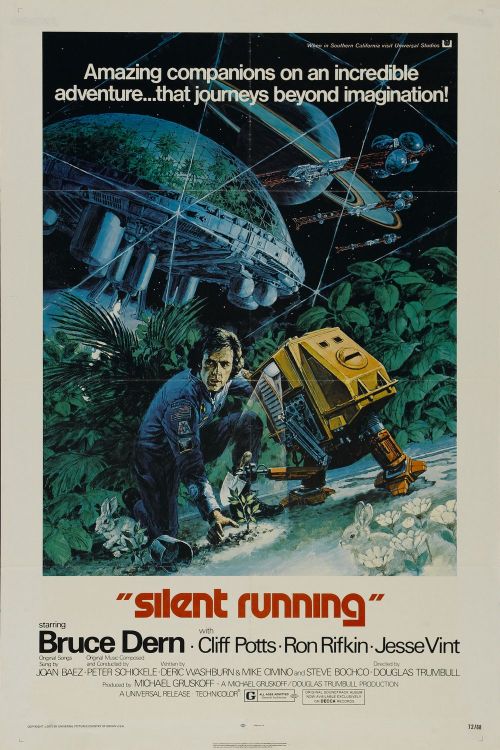
Freeman Lowell (Bruce Dern) is a member of a 4-man space crew residing on a shuttle called Valley Forge that house underneath giant glass domes plant and animal life that was made extinct back on earth. One day the crew is ordered to destroy these domes, but Freeman refuses and kills his fellow crew members when they attempt to. He then jettisons the craft further into space and uses robotic drones to help keep the forests alive, but is horrified to learn that the members of another space ship called the Berkshire have been able to locate him and now want to board his vessel where they’ll soon find out what he has done.

This film marks the directorial debut of special effects wiz Douglas Trumbull and much like with his ‘80s effort Brainstorm is strong on visual design, but lacking in story substance. The script never bothers to explain what caused the plant life on earth to die, or why they are suddenly forced to destroy the domes on the ship. It’s almost like the three screenwriters, which included Michael Cimino, were merely content to come up with a very basic concept with a lot of simplistic plot devices bundled together.

The way Freeman is able to trick his superiors on the other end of the radio relay into making himself look innocent is so pathetically easy that it is hardly entertaining to watch. I would’ve thought in such as technologically advanced age that there would be cameras installed on the ship, so others could monitor what happens and not simply rely on verbal feedback from the crew.

The story’s second and third acts are in desperate need of more conflict. Instead of wasting time showing cutesy, silly scenes of Freeman playing poker with the drones there should’ve been a bad guy nemesis on the ship trying to thwart Freeman’s attempts to save the forest. The way he is able to kill off the other crew members is too easy especially the Cliff Potts character as all Freeman has to do is lightly push down on Potts’ neck with the handle of a shovel and it’s enough to kill him even though I thought he had just been briefly knocked unconscious as Freeman never bothers to check the man’s pulse and this was the type of character who could’ve come back to life and hide out on the ship while creating trouble.

Attempts to add some intrigue by having the plants in the forest suddenly die off mysteriously is utterly lame. I immediately presumed that it was because of a lack of sunlight, but Freeman the so-called botanist takes several days and lots of research until he finally comes up with this same conclusion, which is pathetic.

The songs by Joan Baez are loud and shrill and having to listen to three of them simply to bulk up the runtime only proves how empty the script is. The numerous flashback sequences showing footage that the viewer has already seen earlier are equally unnecessary.

Dern is good and helps hold the thing together in a role that I felt was tailored made for his acting style and was surprised to learn that he was only given the part after 17 others had turned it down. I also liked the outer look of the space craft even though you could clearly tell that it was a miniature. Unfortunately there are not enough compelling elements in the story to keep it interesting and the long stretches where little happens will easily bore most viewers.

My Rating: 5 out of 10

Released: March 10, 1972

Runtime: 1 Hour 30 Minutes

Director: Douglas Trumbull

Rated G

Studio: Universal Pictures

Available: DVD, Blu-ray, Amazon Video, YouTube

Saturday Night Fever (1977)

By Richard Winters

My Rating: 7 out of 10

4-Word Review: He’s a disco star.

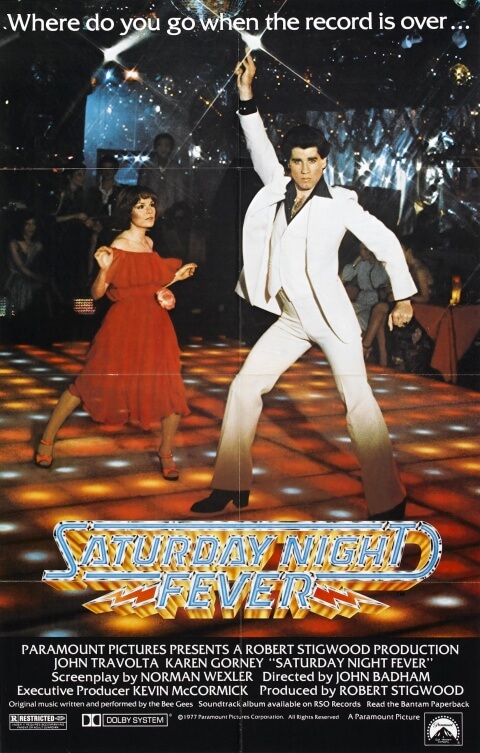
This film is based on a 1976 story that was published in New York Magazine entitled “Tribal Rites of the New Saturday Night” by Nik Cohn, which for many years was considered a factual account of the disco trends of the young people at the time who frequented the disco 2001 Odyssey nightclub, but it later turned out, through the confession of its author, to have been totally fabricated. The story here centers on Tony (John Travolta) who still lives with his parents while working for low wages at a Brooklyn paint store, but longing for a more exciting existence. Despite being a ‘nobody’ during the week on Saturday nights he’s a star as he takes to the disco floor and has all the women flocking to him. Annette (Donna Pescow) is one of those women, but Tony finds her too unattractive and instead has eyes for Stephanie (Karen Lynn Gorney) who he wants as his dance partner in order to win a contest.

From the ads and promotions you’d think this was nothing more than a lightweight teeny bopper romance looking to take advantage of the current disco trend, but the film is much more than that. In fact the dance sequences are boring and thankfully director John Badham keeps these segments contained although I would’ve cut back on them even more. The real essence of the film is Tony’s relationship with his friends, family and world as a whole. The film works as a terrific composite of what life in Brooklyn during the ‘70s amongst the teens and young adults was really like as they try to forge their way into young adulthood while fighting to find their place in it.

Travolta gives an outstanding performance mainly because he’s one of those actors who isn’t afraid to expose the vulnerabilities of the characters that he plays as Tony isn’t a completely likable person and many times acts quite arrogant and callous, which leaves the viewer feeling like they’ve seen an unfiltered portrait of a real person with all the edges showing instead of just a manufactured image.

Pescow is great in support. The image of her holding out a hand full of condoms is the one thing I’ve remembered vividly from the movie from when I first saw it over twenty years ago and the scene of where she is assaulted in the back seat of a car by Tony’s friends is genuinely heart breaking.

My only quibble with her is the moment where Tony informs her that he is choosing a different dance partner for the contest and she immediately breaks down crying. My belief is that most people because of personal pride will not wear their emotional vulnerabilities that openly especially if they are downtrodden like her character. Instead I think she would’ve responded to the news in a sort of aloof/defiant way like saying ‘fine if you don’t want me then I don’t want you’ before walking away and then crying about it later in private.

Gorney’s performance was the one that I really didn’t like as her put-on Brooklyn accent is too affected. With Pescow you could tell it was the genuine thing as she was from the region originally, but Gorney was born in Beverly Hills and attended college in Pittsburgh, so her attempts at putting on an accent was not needed or warranted and made her character seem too much at Tony’s working class level when I thought the idea was to show that she wasn’t.

As for her relationship with Tony I liked the concept that these two were genuine opposites, but I wished the movie had played this up more. She’s initially cold towards Tony and rejects his advances and then a few days later without him having done anything differently she’s suddenly warmed up to him. I would’ve liked some situation created where she was forced to hook-up with Tony as a dance partner because her original partner took ill or something and then had the frostiness between them continue and melt away only when they are on the dance floor.

Spoiler Alert!

The ending is a bit limp. The fact that the two don’t end up getting into a long term romantic relationship, but instead agree to be ‘just friends’ is good as too many movies with this type of formula always seem to want to strive for the ideal love scenario, but in most real-world cases that just isn’t practical and these two had too much that was not in common and getting past those things would’ve proved futile.

However, the dance contest is a letdown as the film introduces a Puerto Rican couple who dance better than Tony and Stephanie, but Tony is still awarded the trophy supposedly because of racism, but why throw in this plot point so late? We’ve been following the trials and tribulations of Tony and Stephanie the entire way through not the Puerto Rican couple who we know nothing about. If the movie wanted to make a statement about racism at the club it should’ve been brought out much earlier and not at the very last minute when it becomes essentially pointless.

End of Spoiler Alert!

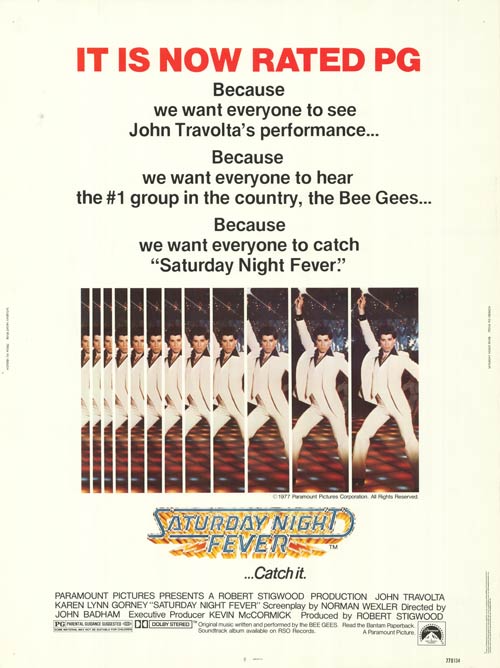
Overall though it’s a great movie that deserves its classic status as the characters and dialogue are richly textured and the film makes its message through subtle visual means without having to telegraph it. However, the PG-rated version, which was released two years later in an attempt to reel in the teen audience, sanitizes the story to the point that it takes out the heart of the film and should be avoided.

My Rating: 7 out of 10

Released: December 12, 1977

Runtime: 1 Hour 58 Minutes (R-rated version) 1 Hour 52 Minutes (PG-rated version) 2 Hours 2 Minutes (Director’s cut)

Director: John Badham

Studio: Paramount

Available: DVD, Blu-ray, Amazon Video, YouTube

Twilight’s Last Gleaming (1977)

By Richard Winters

My Rating: 6 out of 10

4-Word Review: Nuclear silo under siege.

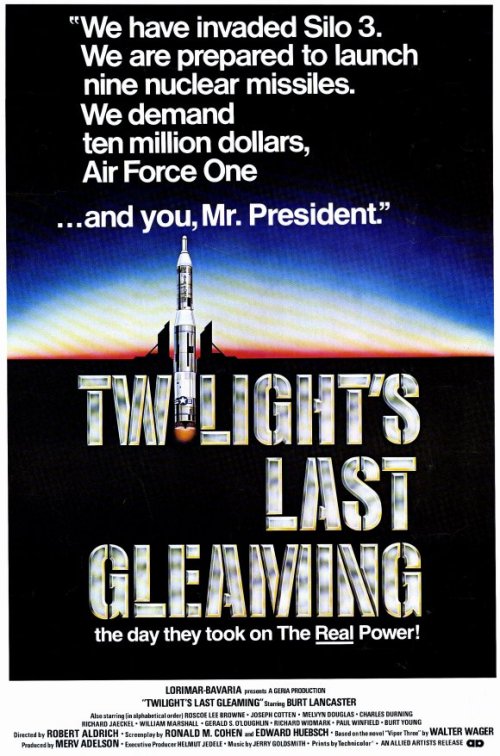
Loosely based on the novel ‘Viper Three’ by Walter Wager the story centers on Lawrence Dell (Burt Lancaster) a former military general who was sent to prison on trumped on murder charges, but manages to escape and is now out for revenge. With the help of three accomplices (Paul Winfield, William Smith, Burt Young) he breaks into a nuclear silo and threatens to launch it unless the President (Charles Durning) agrees to come clean on the government’s secret agenda in regards to the Vietnam War.

I’ve never read the film’s source novel, but have been told that this takes many liberties with it. The biggest problem is that it jumps ahead too quickly showing the four men right away breaking into the silo when it should’ve started back further to when they escaped from the prison and how they were able to get the access codes in order to break into the silo system to begin with. Winfield has a few great lines and Smith’s hair-trigger personality allows for interesting conflict, so these characters should’ve remained, but instead they are unwisely killed off leaving only Lancaster to pace around nervously, which quickly becomes boring.

Whenever someone escapes from prison the nearby area gets warned usually through the media. Certainly military personnel would’ve been put on high alert and thus making Dell’s ability to break into the silo, which was too easy to begin with, much less likely. The fact that a crazed general could break into a silo system and threaten to start WW III and have it never leaked to the media is highly unlikely as well, which along with various other loopholes makes this thing hard to fully get into.

Charles Durning is a great supporting actor, but here is badly miscast as the President. His facial expressions during his phone calls with the other Generals warning him of what is going on are unintentionally comical and too much time gets spent focusing on him contemplating on whether he’ll given into Dell’s demands until it seems like he is the star and Lancaster only a secondary player. Having him described as being an ‘honest politician’ and ‘a President who would never lie’ seems like an oxymoron as I don’t think a politician could even survive in Washington if they weren’t able to spin the truth sometimes and only helps to make the character seem too idealized.

Spoiler Alert!

This thing though really ‘jumps-the-shark’ at the end as I cannot imagine any circumstance where the secret service would allow the President of the United States to enter into a nuclear silo all alone and be used as a hostage. If they were real desperate they might try to pawn off an imposter in an attempt to fool them, but never the actual President as it would put him into too vulnerable a position. Also, the ‘shocking secret’ about why the U.S. got involved in the Vietnam War really isn’t all that earth shattering and certainly not worth sitting through simply to find out.

End of Spoiler Alert!

Director Robert Aldrich’s prolific use of the split screen is the one entertaining aspect and almost enough to overlook its other many faults, but at best it’s only a mindless programmer that manages to elicit minor tension only if you don’t think about it too hard.

My Rating: 6 out of 10

Released: February 9, 1977

Runtime: 2 Hours 26 Minutes

Rated R

Director: Robert Aldrich

Studio: Allied Artists

Available: DVD, Blu-ray

Behind the scenes of Five Easy Pieces (1970)

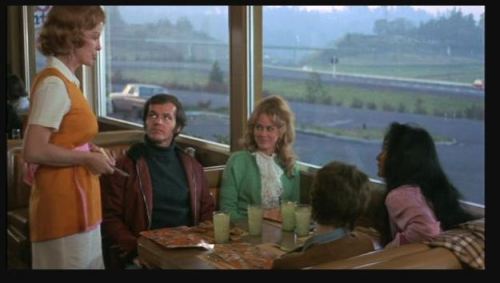
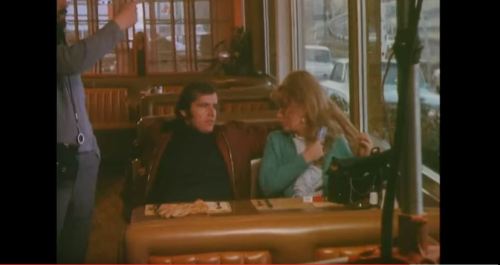
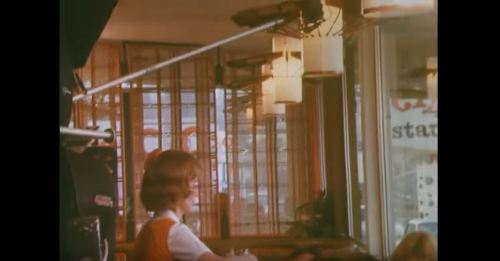
We celebrate this July 4th by looking back at a iconic American classic ‘Five Easy Pieces’. The film is best known for its memorable scene inside a Denny’s Diner, so I thought it would be fun to show some stills of that scene being filmed, which was in November of 1969 as well as what those same locations look like today. First, here’s a shot of the scene where Jack Nicholson confronts a stubborn waitress (played by Lorna Thayer).

Here’s how that very same booth looks like today:

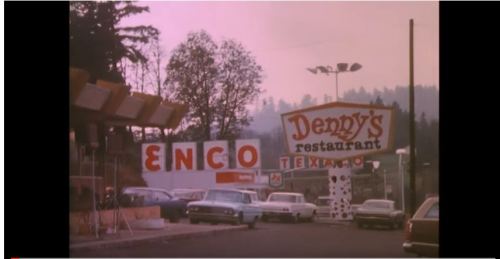
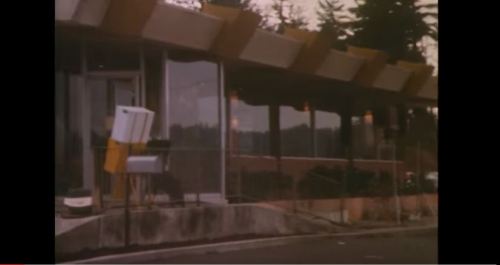
The film was shot at a Denny’s restaurant in Eugene, Oregon. Here’s some shots of its exterior in 1969:

Here’s a shot of the restaurant today. Surprisingly it hasn’t changed too much:

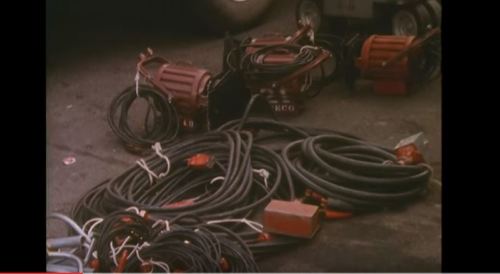
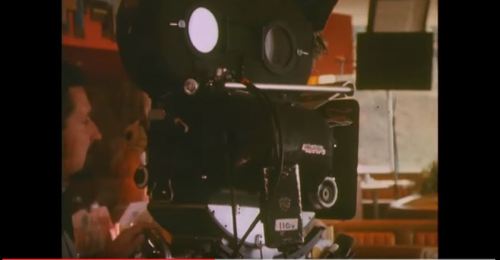
Here’s a shot of the lighting equipment used for the scene:

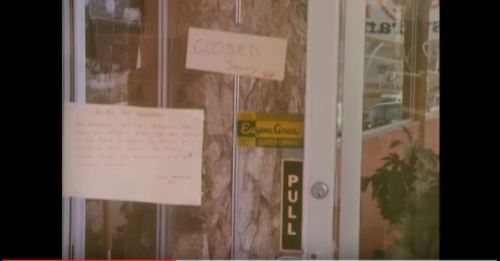
Here’s the sign customers saw on the Denny’s door the day the movie was shot.

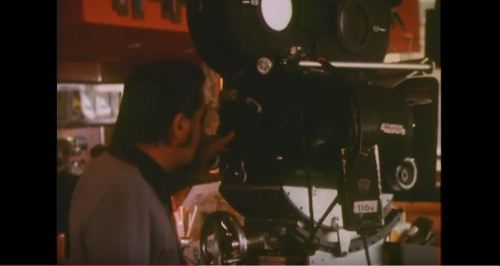
Cinematographer Laszlo Kovacs getting ready to shoot the classic scene:

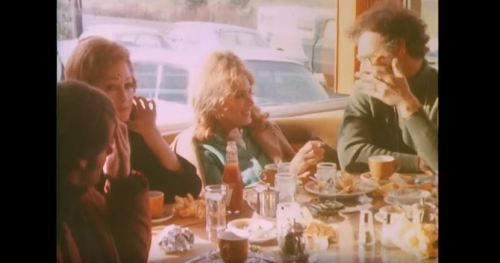
Here’s Director Bob Rafelson, Karen Black, Lorna Thayer, and Jack Nicholson sitting around the lunch table and rehearsing their lines for the now famous scene:

Kovacs checks the lighting levels as Nicholson and Black prepare:

Getting the boom mike into place:

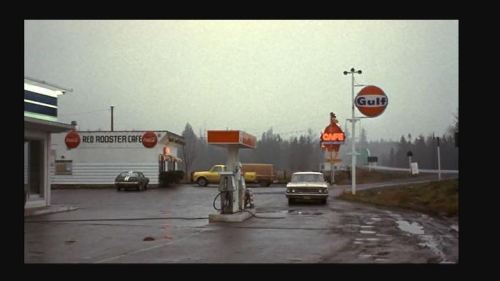
Here’s a shot of the final scene where Nicholson decides to abandon Black:

And here’s how that location looks like today:

The Carey Treatment (1972)

By Richard Winters

My Rating: 6 out of 10

4-Word Review: A Pathologist solves mystery.

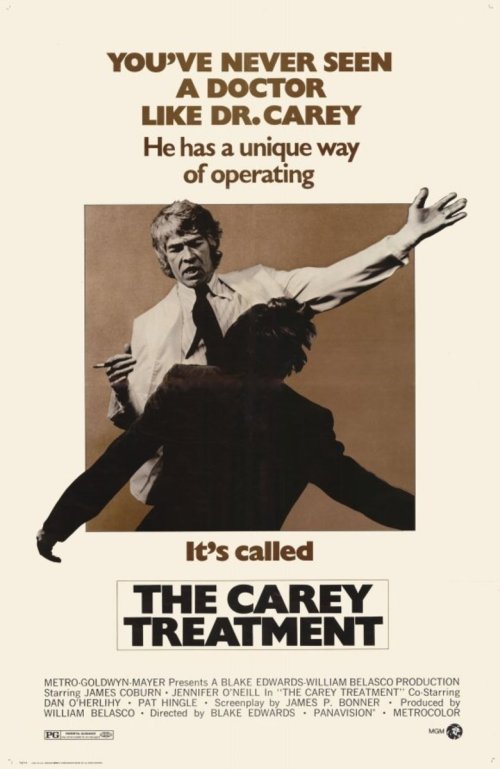
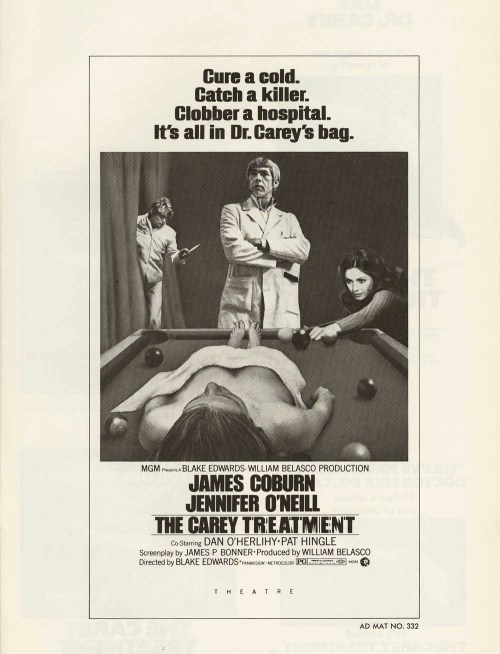
Based on an early Michael Crichton novel, the story centers around Dr. Peter Carey (James Coburn), who starts a new job as a pathologist at a local Boston hospital and soon finds himself embroiled in a mystery when his good friend Dr. David Tao (James Hong) gets accused of performing an illegal abortion on the daughter of the hospital’s chief surgeon (Dan O’Herlihy), which later kills her. Carey is not convinced that his friend performed the procedure and sets out to prove his innocence when the police are of no help.

This film was noted for its behind-the-scenes turmoil including accusations from director Blake Edwards that he was belittled by the film’s producer William Belasco in front of the crew and told that he would never work in Hollywood again and afterwards having the film edited without his permission. Edwards later sued and his experiences working on this project became the basis for his 1980’s film S.O.B., which savagely satirized the movie making business and the people who ran it.

The plot isn’t bad and attempts are made to give the viewer an authentic feel of the medical profession. One of the better moments is when the doctors perform an autopsy on the victim although I wished they would’ve shown more of the actual corpse on the examining table instead of cutting away from it in an attempt to be ‘tasteful’ as I felt the procedure and what the men discussed during it to be genuinely educational.

Having a hip doctor suddenly turn into an amateur sleuth is the film’s biggest drawback. Coburn plays the part well, but a guy who’s never investigated a case before wouldn’t be so seasoned with the way he handles suspects and tackles clues. He comes off too much like a professional detective who’s spent years in the business and not just a regular person who stumbles into the situation without knowing what he’s doing. The slick way that he solves the case and gets the necessary information is impressive, but not believable. Most people would’ve simply hired a private detective to investigate it and not spent hours away from their job trying to do it themselves, or if they take on the task they would most assuredly have make some mistakes, which this guy never does.

The mystery has enough intriguing elements to remain engaging, but the ultimate reveal is dull and makes one feel like they sat through a big buildup to nothing.

My Rating: 6 out of 10

Released: March 29, 1972

Runtime: 1 Hour 41 Minutes

Rated PG

Director: Blake Edwards

Studio: MGM

Available: DVD (Warner Archive), Amazon Video, Youtube

Three Days of the Condor (1975)

By Richard Winters

My Rating:  4 out of 10

4-Word Review: Who can he trust?

Joe Turner (Robert Redford) works at a New York City CIA office, which fronts itself as a literary agency for historical books. One day Joe decides to sneak out the back way in order to grab some food at a local deli. While he is away a team of assassins headed by Joubert (Max Von Sydow) enter the place and kills everyone inside. Turner, who goes under the code name Condor, returns to find his co-workers dead and no idea who did it, or why. He contacts the CIA headquarters, which is run by Higgins (Cliff Robertson), but soon decides he can’t really trust them and attempts to somehow find a way to survive on his own without returning to his apartment, as he is afraid the killers may be there. Through sheer desperation he kidnaps a woman (Faye Dunaway) at gunpoint and forces his way into her apartment where he hopes he will be able to buy himself enough time until he can figure out what is going on.

The film, which is based on the novel ‘Six Days of the Condor’ by James Grady, has an intriguing set-up, but ultimately gets ruined by having a protagonist become too skillful and shrewd at everything until he ceases to be just a regular guy on the run. For instance he is able to get into a telephone switchboard center much too easily and then uses the skills he had apparently learned as an Army Signals Corps technician to trace a call and find the whereabouts of the bad guy, but this is something a regular person couldn’t do and thus the tension is lost because it’s no longer just an everyman trying to survive, but instead a super-smart individual with convenient knowledge for every situation.

The script has too many situations where the bad guys make unbelievable dumb decisions as well making it seem that the odds really aren’t as stacked against our hero as it initially seems. For instance there is a scene where Redford invades the home of the CIA Deputy Director (Addison Powell) who is supposedly the man behind-the-scenes who had ordered the hit. Redford sits in a downstairs office of the home and plays music very loudly from a stereo until it awakens the CIA director and he comes down to investigate, but wouldn’t you think someone who works in a secret organization would know enough not to walk into a trap as he does here, but instead call the police if he heard a noise downstairs, or if he does come down at least do it while also holding a gun? Also, as a CIA director living in a mansion he should certainly have his home rigged with a security system, but Redford is able to get inside without a sweat even though we are never shown how. Also, why does Sydow the hit man not shoot Redford when he is alone with him in an elevator, which would be a perfect opportunity instead of waiting and trying to do it later at long distance when the two are outside and Redford is in a middle of a crowd and much harder to target?

The film’s lowest point though comes with Redford’s relationship with Dunaway. Only a woman with severe mental problems would magically ‘fall-in-love’ with a stranger in less than 24-hours after he accosts her with a gun and forces his way into her apartment. Even if one would argue that it’s the Stockholm syndrome it’s highly unlikely it would occur so quickly.  There’s even a stylized love making scene that seems too similar to the sex scene in another Dunaway film The Thomas Crown Affair. Besides with all the stress that Redford’s character was going through I’d think he’d be unable to perform in bed, or concerned that she was simply leading him on in order to put him in a vulnerable position, so she could take advantage of it and escape.

Von Sydow’s character, who’s willing to switch allegiances almost instantaneously depending on who’s paying him, is the only truly unique thing about this otherwise shallow thriller. Director Sydney Pollack, who appears briefly as a passerby on a sidewalk, does give the material the slick treatment and captures New York City nicely. There is also a well-choreographed fight scene inside Dunaway’s apartment, but the unsatisfying, limp ending leaves open too many unresolved issues.

My Rating: 4 out of 10

Released: September 24, 1975

Runtime: 1 Hour 57 Minutes

Rated R

Director: Sydney Pollack

Studio: Paramount

Available: DVD, Blu-ray, Amazon Video, YouTube