Category Archives: 70’s Movies

Drive-In (1976)

By Richard Winters

My Rating: 5 out of 10

4-Word Review: Mayhem at the movies.

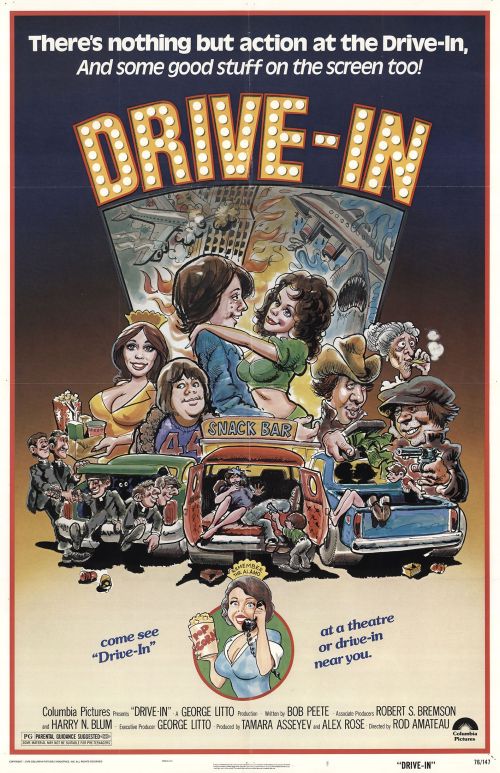
It’s just another evening at the drive-in movies in a small Texas town except this time there’s more action in the theater than in the movie being shown. As the people watch the latest action flick known as ‘Disaster ’76’ on the big-screen there’s all sorts of commotion going on around them. Gifford (Trey Wilson) and Will (Gordon Hurst) are two bumbling amateur crooks who plan on robbing the concession stand during the show. Glowie (Lisa Lemole) is the fed-up girlfriend of Enoch (Billy Milliken), who leads the local teen gang, and who desires a more clean-cut guy like Orville (Glenn Morshower), but Enoch and his obedient thugs try to prevent this potential union from happening. There’s also the paranoid African American Dr. Demars  (Bill McGhee) who frets about having to live in the middle of ‘Klan Country’, but still manages to take his wife (Gloria Shaw) to the show, but also ends up in the process having several inadvertent encounters with the volatile Enoch.

Rod Amateau’s name may not be as well known as other notoriously bad filmmaker’s like Ed Wood Jr. or Tommy Wiseau who helmed the infamously awful The Room, but he probably should be. Not only did Amateau create ‘My Mother the Car’, but he also did ‘Supertrain’, which are considered two of the worst TV-shows ever produced. He also wrote and directed The Garbage Pail Kids, which usually lands high on everyone’s terrible movie list. However, his directorial effort here isn’t bad and for awhile even engaging. My favorite part is a scene done inside a roller skating rink where we see real teenagers, that are age appropriate and with varying body-types, behaving very much like small town teens of that era would. It’s like a taking a time machine back to the simpler times and seeing how things really were, but without the pretension.

The performances are if anything quite lively including Morshower, best known as Aaron Pierce from the series ’24’, in his film debut and sporting a full, bushy head of red hair. It’s also great seeing Lisa Lemole in a prominent role as she later left acting in 1985 when she married Mehmet Oz better known as Dr. Oz. This also marks the acting debut of Trey Wilson, who went on to play many colorful supporting characters before having his career cut short by an unexpected death at the young age of only 40. Gary Lee Cavagnaro, who’s more famous for playing Engelbert in The Bad News Bears, is amusing too as Morshower’s younger brother.

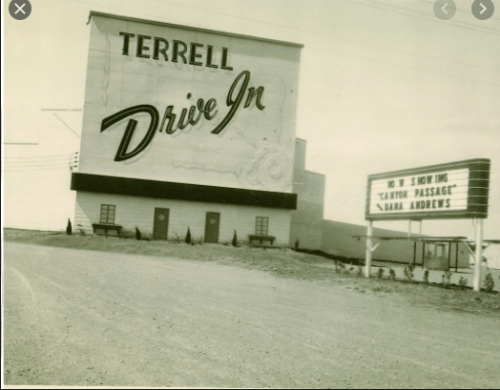
Unfortunately despite a promising start the film ultimately flounders especially during the second act as too much cartoonish silliness gets in the way of any subtle realism. At the end the cars of the customers slowly file out of the drive-in like what had occurred was no big deal and the viewer is left feeling the same way. The stakes needed to be higher and the event needed more of a long-lasting consequence. A funny idea would’ve had the mayhem cause actual destruction to the drive-in while the disaster flick played perhaps even having it burn down to a cinder. Since the theater in real-life got demolished just a few years after this was shot it might’ve been possible and thus allowed the film to leave more of lasting visual impression than it does.

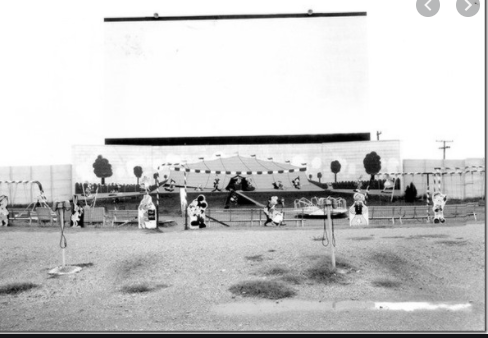
The Drive-in theater in Terrell, Texas as it looked in 1975 when the film was shot.
The same location as it looks now.

My Rating: 5 out of 10

Released: May 26, 1976

Runtime: 1 Hour 36 Minutes

Rated PG

Director: Rod Amateau

Studio: Columbia Pictures

Available: DVD-R (Sony Choice Collection)
The Conformist (1970)

By Richard Winters

My Rating: 8 out of 10

4-Word Review: Trying to fit-in.

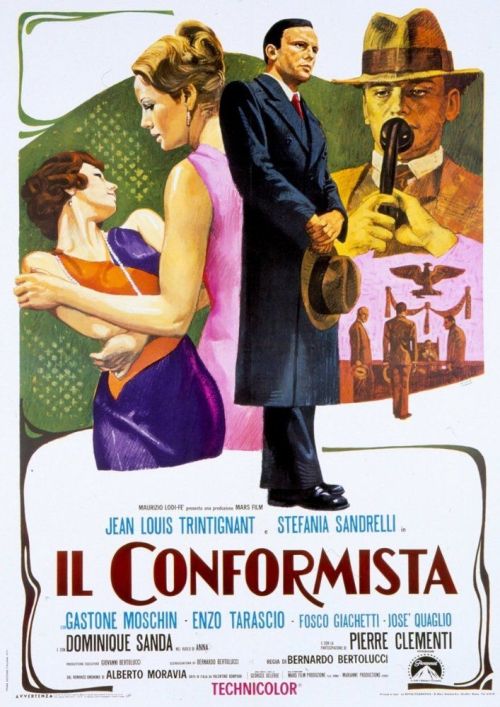
Marcello (Jean Louis Trintignant) is living in Italy during WWII and a member of the fascist secret police. He longs to be a part of acceptable society and partaking in the conventions of what he believes is a normal life including settling down and getting married even if it’s to a woman Giulia (Stefania Sandrelli) that he doesn’t really love. He gets ordered to assassinate Quadri (Enzo Tarascio) who was one of his professors back in college, but who has now been deemed an anti-fascist by the government.  Marcello uses the guise of his honeymoon as an excuse to travel with Giulia to Paris in order to carry out his mission. However, once there he begins to have feelings for the professor’s wife Anna (Dominique Sanda) and becomes unable to carry out the assignment despite being aware that Anna is only using him to get to Giulia, which is who she truly desires.

This film became a benchmark in Bernardo Bertullici’s career and was his first box office success that allowed him the ability to go on and direct even bigger  classics such as The Last Tango in Paris and 1900.  While the visuals are impressively stylistic I do agree with many critics that too much emphasis is placed on the sets, that gives it an almost over-the-top kitschy feel, while drowning out the story, which is handled in a more subtle way, in the process. The plot is still captivating, but a good movie should have a nice balance and as critic Gene Siskel stated in his review it’s more of a ‘show than a story’ and reviewer Keven Thomas labeled it a ‘bravura style Fellini’, which I consider to be a very accurate description.

The story is based on the 1951 novel of the same name by Alberto Moravia, but apparently Bertolucci had never read it when he pitched the idea to Paramount and managed to wow the studio execs into loving the idea simply by relying on the the description of the story giving to him by his then-girlfriend who had read it. When he finally did read it he did so while writing it into a screenplay at the same time.

There are many differences though between the source novel and the film with the movie leaving out a lot of Marcello’s childhood backstory that I felt was needed. The book examines Marcello’s penchant for killing lizards and even the neighbor’s cat as well as his witnessing his father’s abusing of his mother and the vandalization of a family photograph, which the film doesn’t touch on. The book also gets into more detail about why Marcello is tormented by his classmates where in the film we see Marcello being harassed, but it’s never made clear why.

Spoiler Alert!

The ending gets changed too. In the book Marcello has an interesting philosophical debate with Lino, a chauffer who sexually abused him as a child, but this conversation is left out of the movie. Marcello also, along with his wife and child, gets gunned down while driving in their car, but surprisingly the movie doesn’t have this part either. You would think that they would since action makes for a good visual, and I’m not sure for the reason why it was left out/revised except that Bertolucci may have feared it would be too similar to the finale in Bonnie and Clyde and didn’t want to seem like he was replicating that one.

End of Spoiler Alert!

Overall despite these deviations I still found it impactful particularly the ambush scene on a lonely road, which was the one thing that I remembered about the movie after having not seen in for several decades. The strong performances help too especially Trintignant’s brooding portrayal though being French born he spoke his lines phonetically without knowing what they meant and then later had them dubbed by Sergio Graziani in post production. The two lead actresses are splendid too and although the parts were originally offered to the more famous Brigitte Bardot and Anouk Aimee I felt it came off better with the then unknowns particularly Sandrelli who’s energetic and almost child-like at the beginning only to behave like jaded, middle-aged woman by the conclusion.

My Rating: 8 out of 10

Released: July 1, 1970

Runtime: 1 Hour 53 Minutes

Rated R

Director: Bernardo Bertolucci

Studio: Paramount

Available: DVD, Blu-ray

Stork (1971)

By Richard Winters

My Rating: 6 out of 10

4-Word Review: Outcast falls in love.

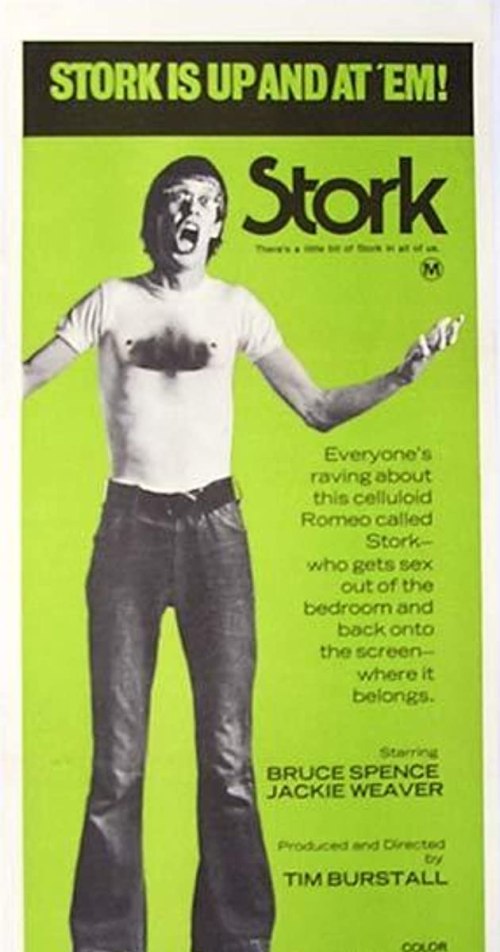
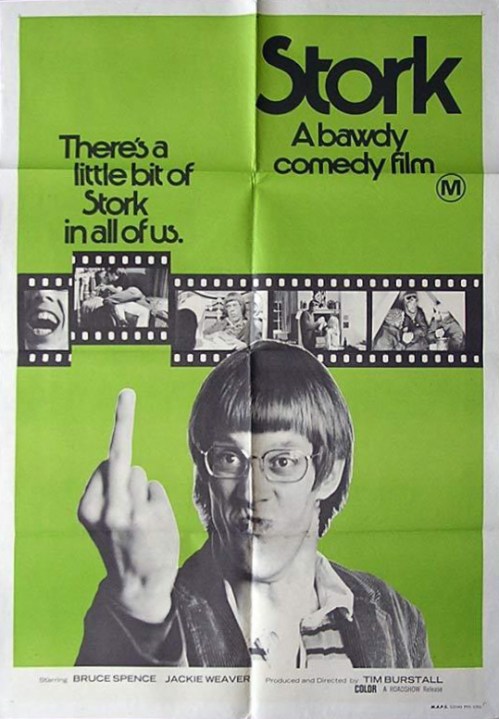
Graham (Bruce Spence), who goes by the nickname Stork, is a rebellious left-wing radical who finds working to be an impediment to his time and freedom and therefore is routinely fired. After losing his most recent job by doing a striptease in the office he’s allowed to move-in to his friend Westy’s (Graeme Blundell) apartment, which he also shares with Clyde (Helmut Bakaitis), Tony (Sean Myers) and Anna (Jacki Weaver). Anna is promiscuous and sleeps interchangeably with both Clyde and Tony, and on rare occasion, even Westy. Stork wants in on the action, but Anna is more concerned with finding him a job instead eventually though they have sex only to have Anna inform everyone that she is pregnant, but nobody knows whose baby it is.

The film was a landmark in Australian cinema in that it became the first box office success in Aussie history and cemented the idea that domestic films made in Australia could find an audience. Before that most Australian theaters only showed movie from Britain and Hollywood, so this film and its success helped usher in what became known as Australia’s New Wave. This was also the first film written by the prolific David Williamson, which he states was an autobiographical account of his own life and based on the hit play ‘The Coming of Stork’, which also starred Spence.

The funniest aspect of the film is simply Spence himself, whose tall, gangling body and freakish looking face gives the movie its necessary edge. He initially wanted to quit during the production as he felt he wasn’t right for the part nor ready to take on the pressures of movie acting, but director Tim Burstall convinced him to stay, which is good as the movie wouldn’t have worked without him. Weaver is also quite enjoyable playing a more subdued personality, which is in complete contrast to Stork’s, which is what makes their relationship intriguing.

I enjoyed the dream-like segments where Stork imagines himself working at different alternative jobs with the best one being the one he does in Antarctica, but the film is unable to maintain the fast pace style that was needed for the quirky material to work. Too many long, drawn-out segments in-between the fantasy moments that does nothing, but drag the whole thing down. The story is unfocused with too much time spent on Stork looking for a job while the relationship angle get pushed to the side until the third act.

The characters are not well defined either. Stork is certainly a rebel, but what made him become this way? It would’ve helped had we learned more about his relationship with his family and is upbringing, but that never comes. Anna’s sleeping around is quite unconventional particularly doing it with men who live together, but we’re never given much insight to what makes her tick, nor how the men accept this behavior as most, especially during that era, would be possessive and not keen with ‘sharing’ a girl with their friends, but why they’re so opened-minded is never made clear.

Spoiler Alert!

The ending, which has Anna getting married to Clyde, but letting Stork tag along creating another threesome scenario, leaves open too many unanswered questions. It would’ve been nice had more been shown of this new arrangement and whether it was able to work-out, but since it doesn’t it becomes an unsatisfying character study.

My Rating: 6 out of 10

Released: December 27, 1971

Runtime: 1 Hour 25 Minutes

Not Rated

Director: Tim Burstall

Studio: Roadshow Films

Available: DVD (Region 4 Import, Out-of-Print)

Killer’s Delight (1978)

By Richard Winters

My Rating: 2 out of 10

4-Word Review: Detective tracks down killer.

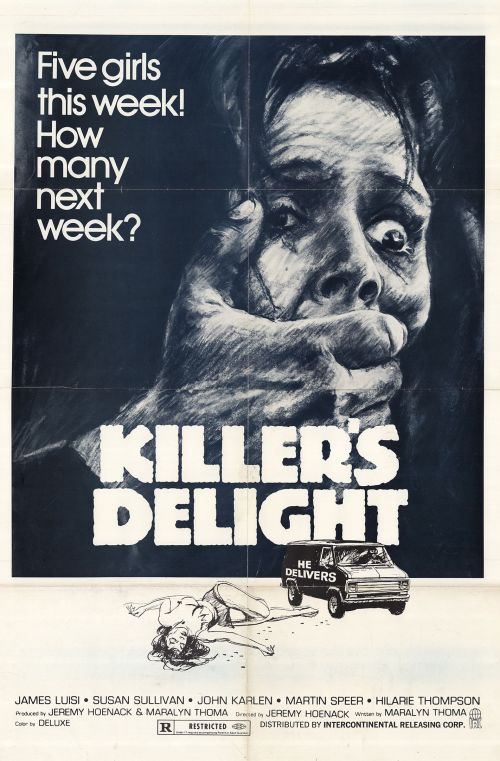
Inspired by the Ted Bundy case the film centers around Danny (John Karlen) a middle-aged man with mommy issues who wears different disguises in order to entice young women into his rundown old van where he then promptly assaults and kills them. Vince (James Luisi) is the police detective who, despite having an affair with Carol (Susan Sullivan), is also a dedicated family man with a teen daughter himself and who spends his waking hours trying to track down this killer that the rest of the cops in his department seem almost ambivalent about.

The film tries to take a different approach from the exploitive nature of other 70’s thrillers by emphasizing more the police work than the actual killings although there’s still moments of nudity and violence. The main problem is that the detective work that gets shown and the clues that he finds isn’t all that interesting and comes along a little too easily. At one point Vince breaks into the suspect’s house without a warrant, but any good defense attorney would have any evidence seized during an illegal search thrown out and a competent cop would know this. I also found it hard to believe that Vince would be the only policeman pursuing the case as I’m sure with the media pressure there’d be a whole department working on it much like in the real Bundy case that even included a network of police departments in several states.

The killings are very routine and ultimately comes-off like the same scene get replayed over-and-over again with each new victim that comes along. It seemed hard to believe that any rational person would want to get into such a junky van driven by such a creepy-looking guy anyways. Bundy at least was handsome and in many cases feigned a disability like pretending he had sprained his arm and wearing a sling, which would then make his intended victims feel more at ease, but the guy here doesn’t do any of that. The ultimate explanation for what motivates him to do what he does is straight out of the Norman Bates book of psychology and is cliched as hell. With the real Bundy it was much more complicated and to some extent no convenient explanation at all other than he may have simply been ‘wired wrong’ from birth.

The film’s only bright spot is Susan Sullivan, who looks quite beautiful here, but even she ended up getting on my nerves when her character stupidly forgets to lock her front door allowing the killer to easily walk right into her apartment. What kind of idiot, knowing that she is a mark for the killer and fully aware that he knows where she lives, would forget to do this?

Overall this is just a sleazy excuse for entertainment that is no better than the myriad of other grade-B schlock out there and in some ways is even worse because it pretends to take a more elevated approach to the potentially exploitive material, but it really doesn’t and it’s also painfully predictable at every turn.

Alternate Titles: The Dark Ride, The Sports Killer

My Rating: 2 out of 10

Released: August 7, 1978

Runtime: 1 Hour 25 Minutes

Rated R

Director: Jeremy Hoenack

Studio: Intercontinental Releasing Corporation

Available: DVD

Storm Boy (1976)

By Richard Winters

My Rating: 6 out of 10

4-Word Review: A boy raises pelicans.

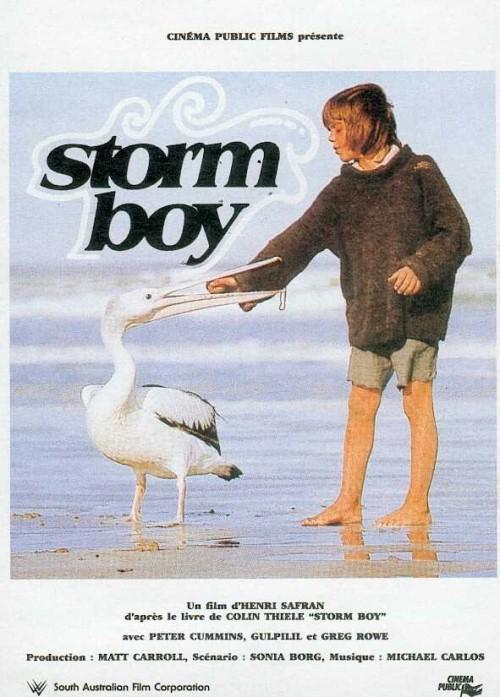
Mike (Greg Rowe) is a 10-year-old boy living in a ramshackle home near the ocean on Australia’s southern coast. He lives with his reclusive father Tom (Peter Cummins) who wants no connection with the outside world and won’t even allow his son to have a radio. One day Mike meets Fingerbone (David Gulpilil) an aborigine living alone on the beach due to a falling out with his tribe. Together they come upon a group of hunters shooting at birds. Fingerbone is able to scare them away, but not before they’re able to shoot and kill a mother pelican leaving her young to die of starvation. Mike decides to take the baby birds home with him and despite his father’s initial objections he’s allowed to keep them. The bird’s require a lot of food, but Mike is able to keep them fed and once they’ve grown he and his father set them free, but one of the bird’s, whose name is Mr. Perceval, comes back and Mike grows a strong bond with him.

The film is based on the children’s book of the same name written by Colin Theile, which won many awards. The film has acquired many legions of fans as well, but filming it proved to be quite complicated. Training the birds took 12-months and many times they’d fly off during the filming including one of them flying into a nearby private party that scared many of the party goers there. They also had the challenge of trying to get the Rowe to interact with the bird as he was initially quite scared of them.

Personally I’ve never found pelicans to be all that cute or lovable and their large beaks are an odd sight second only to that of the toucan’s. I did though enjoy seeing the baby pelicans who don’t even have any feathers on them and was hoping more time would be spent on to their feeding and caring, but the movie glosses over this part pretty quickly.

The bird storyline is in fact only one part of the movie as the script also focuses on several other threads including a local teacher (Judy Dick) trying to get the father to allow Mike to attend school with the rest of the children. There’s also a segment where a bunch of young men in dune buggies come out of nowhere late one night and proceed to tear up, with their vehicles, the home that Mike and his father live in. I suppose the reason this is put in is to show how the bird warns Mike of the impending danger, which gets him out of the house, but otherwise it has no connection to the rest of the plot and it’s left a mystery to what motivated these young men to do it nor are they ever seen or heard of again.

The performances are quite good, which is the one thing that holds it all together. Cummins as the father impressed me the most because he is so different here than any of the other parts he’s played. Gulpilil is entertaining too and has some of the most lines, which is the exact opposite from Walkabout where he had none. Rowe is excellent as well despite the fact that he wears the same clothes the whole way through. Only at the very end is he seen wearing something other than his drab green sweater, but I felt for the sake of body odor he should’ve had a variety of outfits to wear all the way through. I realize they were poor, but even poor people don’t usually wear the same clothes everyday for months on end.

Spoiler Alert!

The ending, in which the bird gets shot by a group of hunters, most likely the same ones that killed the bird’s mother, is very predictable, which is the film’s biggest drawback. No real surprises and the life lesson’s are pretty routine and something seen in a lot of children’s stories, so if you take the pelican out of it it’s not all that special. The constant gray, overcast sky gets a bit depressing to look at too, but the film has found a loyal following and was remade to a degree in 2019, where Geoffrey Rush plays a now grown Mike and relating back to his kids about his adventures when he was young. It also stars Gulpilil as the father of Fingerbone Bill.

My Rating: 6 out of 10

Released: November 18, 1976

Runtime: 1 Hour 25 Minutes

Not Rated

Director: Henri Safran

Studio: Roadshow Films

Available: DVD-R (Region Free), Blu-ray (Region 0)

Citizens Band (1977)


By Richard Winters

My Rating: 6 out of 10

4-Word Review: The CB radio craze.

Spider (Paul LeMat) makes a living repairing CB radios in the home he shares with his crochety father (Roberts Blossom). In his spare time he monitors channel 9 on his own CB, which is used as an emergency channel to report motorists who are in distress. When he comes into contact with a disabled plane that crashes right onto the highway and he’s not able to use his CB to call for help due to some kids clogging up the channel with idle chit-chat he goes on a crusade to destroy the radios of everyone in town who are misusing the frequency. While doing this he also dates a cheerleading coach Pam (Candy Clark) who he’s engaged to marry unaware that she has a thing for his brother Dean (Bruce McGill) the local high school gym teacher.

The film, which was written by Paul Brickman, who went onto greater success writing/directing Risky Businesshas its share of quirky characters/moments that paints small town life in a romanticized but humorous way. To a degree it succeeds, but the people are a bit too nice for their own good. There are many scenarios where just about anyone else put into the same situation would respond in an angry way and yet here everyone remains mild mannered no matter what hits them, which may be dryly funny at first, but after awhile gets one-dimensional.

Small town people are no different than anyone else and if one finds out that your fiancée is suddenly seeing some other guy, especially after you’ve given her a ring, most would become upset and the way Spider takes it in such a ho-hum way doesn’t seem natural. Later when the two brothers finally confront each other there’s no fight, or even shouting, they just end up hugging each other, which I guess is nice, but it would’ve been better had there been some action or confrontation, which this film sorely lacks. Maybe having them breakout into a fist fight that destroys the apartment in the process, but done in a slapstick way only to eventually, once they’ve exhausted themselves, forgive and forget.

The two women (Marcia Rodd, Ann Wedgeworth), who meet at random during a bus ride only to find that they’re married to the same man (Charles Napier), has the same issue. Once they confront the two-timer there’s no fireworks at all. They pretty much instantaneously forgive him and then proceed to have a genteel conversation about where everybody is going to live instead of watching the two give the guy the business, which would’ve been more entertaining. There is a scene where the two women let the cows escape from the guy’s truck, but even this gets botched because we never see the cows run through the town and all the destruction they would most likely create.

The rest of the film works on the same level. Too much emphasis on the subtle with nothing really standing-out. The characters respond to everything with the same laid-back manner until there’s no distinction between them. Eventually it just flatlines. Instead of being this offbeat look at small town life it becomes more a whimsical fairy tale where the people don’t resemble actual folks.

I believe this is the main reason why this film did so poorly at the box office where it recouped a paltry $850,000 back from its initial $5 million budget. The studio thought it was due to the title because of the word ‘band’ being in it and people mistakenly thinking it was a musical, so they reissued it as Handle With Care, but it did no better. This also became yet another film directed by Jonathan Demme that fared well with the critics, but not the public and this trend continued with his films all the way through the 80’s before he was finally able to hit-pay-dirt with Silence of the Lambs.

My Rating: 6 out of 10

Alternate Title: Handle With Care

Released: May 18, 1977

Runtime: 1 Hour 38 Minutes

Rated PG

Director: Jonathan Demme

Studio: Paramount

Available: Amazon Video, YouTube

Deadly Hero (1975)

By Richard Winters

My Rating: 6 out of 10

4-Word Review: Bad cop stalks witness.

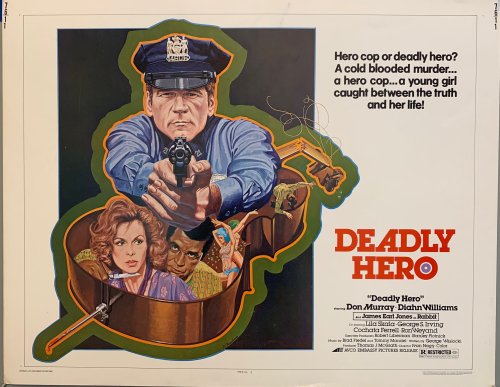
Sally (Diahn Williams) is a beautiful cellist living alone in a New York apartment. One day while returning home she gets abducted by an assailant named Rabbit (James Earl Jones) who forces his way at knifepoint into her apartment. Mrs. Broderick (Lilia Skala), a concerned neighbor, calls the police  and soon officers Lacy (Don Murray) and Billings (Treat Williams) arrive at the scene. When Rabbit tries to leave with Sally Officer Lacy stops him at gunpoint. Rabbit holds a knife to Sally’s throat threatening to kill her, but Lacy persuades him drop it. When he does Lacy then shoots him in cold blood. During the subsequent investigation Lacy insists that Rabbit was coming after him with a knife and had no choice but to shoot. Sally though knows the truth and while she’s reluctant to come forward at first she eventually does causing Lacy to begin stalking her and threatening her life unless she agrees to recant.

The film, which was directed by Hungarian native Ivan Nagy, has a wonderful New York City vibe that brings out the ambience of its neighborhoods and street culture better than most other films that were directed by Americans. The Seamus Murphy Dance Troupe, which makes up the artists who perform the dance numbers in the play that Sally plays her cello in, helps add an eclectic moody vibe that I liked.

The acting isn’t too bad either. Murray comes-off as a bad cop caricature, but he does it so well it can almost be forgiven though I didn’t like the segment intercut into the first act showing him speaking at a campaign rally for a local politician (George S. Irving) as he had not met this man until after the shooting when he gets deemed a ‘hero’ and therefore this scene should not have been interjected into the film before the story actually got there.

Williams is alright as the victim in what should’ve capitulated her into more film work, but during filming she found herself at constant odds with director Nagy prompting her to leave the acting profession and pursue a law career instead where she’s known as Diahn McGrath. There’s an interesting supporting cast here too including Jones who gives a colorful performance as the thug and brief glimpses of Danny DeVito and Debbie Harry in bit parts.

The main issue with the film is that the characters are not fleshed-out enough for us to understand what motivates them, or why they do what they do. Why is Lacy so angry and why does he decide to shoot an unarmed man? We’re told that he’s  had violent tendencies in the past, but we’re never shown it, nor any explanation for a possible cause. He’s also seems to be in a happy marriage with a younger woman, but you’d think such a psychotic person would be unable to hide his ugly side from his wife and yet the film portrays the spouse as being completely clueless to his dark nature.

Sally’s need to come forward with the truth even when faced with strong pressure not to adds more questions than answers. Why does she feel so compelled to put Lacy away even if so doing could risk her career and life? Many people would get intimidated and back-off on their pursuit for justice when given all the drawbacks, so what is it about her character that decides to forge on when others wouldn’t? This needed insight unfortunately never comes.

Spoiler Alert!

The ending devolves into a standard psycho-on-the-loose formula in which Lacy tracks down Sally and takes her to a remote farm in Upstate New York where he plans to kill her, but his reasoning doesn’t make sense. If she disappears he’d become the prime suspect and it’s very unlikely, whether she testified or not, that his job would ever get reinstated, so why then even bother?

The film’s first two acts examined the inner politics of a city police department and did it in a vivid, realistic manner, which is where the focus should’ve stayed. A far creepier ending would’ve had the corrupt police brass refuse to believe Sally’s allegations, which would allow Lacy to remain on the force despite his many transgressions, so she’d not only have Lacy as her threat, but all of his police friends as well.

My Rating: 6 out of 10

Released: December 14, 1975

Runtime: 1 Hour 41 Minutes

Rated R

Director: Ivan Nagy

Studio: AVCO Embassy Pictures

Available: DVD, Amazon Video

Fire Sale (1977)

By Richard Winters

My Rating: 3 out of 10

4-Word Review: Burn down the store.

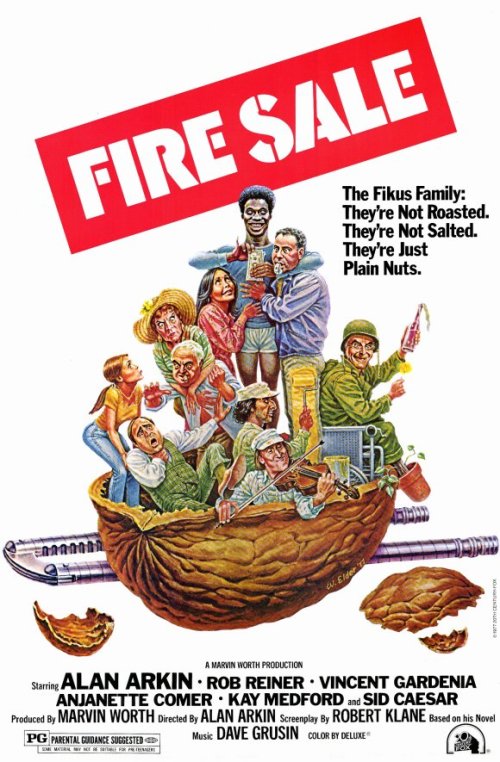
Benny Fikus (Vincent Gardenia) is the elderly owner of a struggling clothing store, who has decided the only way to recoup costs will be to have it burn down and then collecting money on the fire insurance policy. He has convinced his mentally ill brother Sherman (Sid Caeser), who still believes that WWII is happening, that the store is really a front for the Nazi Headquarters and thus motivating Sherman to destroy it. To make his alibi iron-clad Benny takes a trip with his wife Ruth (Kay Medford) to Florida when the arson is expected to occur. During the trip Benny has a heart attack causing his son Russell (Rob Reiner) to take over the business. When he realizes that the place is bankrupt he decides to cash-in the fire insurance policy and use those funds to help regenerate the place. When Benny recovers from his heart attack and realizes what Russell’s done the two, along with Russell’s older brother Ezra (Alan Arkin), go on a mad dash to stop Sherman from setting the fire before it’s too late.

It’s hard to imagine just how badly botched this thing is as I approached it with high expectations. Arkin had already directed the brilliant Little Murders, which is one of the best dark comedies ever made. Robert Klane, who wrote the screenplay and book of the same name that the movie is based on, had also 6 years earlier written the screenplay for Where’s Poppa?, another cult masterpiece. So, with those great films already under the filmmaker’s belts you’d expect good things from this and yet it’s pretty awful right from the beginning.

The main problem is that there’s no running theme. Little Murders centered around the isolating effects of urbanization and Where’s Poppa? dealt with the harsh realities of caring for elderly parents.  This film though has no point to it. Lots of sloppy, slapdash comedy as director Arkin and writer Klane seem more concerned with getting a cheap laugh than telling a story. The sets have no cinematic style making it look better suited for a low-grade sitcom. The score by Dave Grusin, is too generic with overtones more on-par with a cartoon. A good movie should have music that is distinct and matches the tone of the script, which this one doesn’t.

I’ve always considered Reiner the weakest link from the classic ‘All in the Family’ TV-show and while his talents have been much better served as a director this movie was made when producers were still trying to turn him into a star, but the attempt fails. That only thing that he does that could be considered ‘comical’ is the running joke of him going into wheezing fits from his asthma every times he gets stressed-out, which gets overdone. He shares no chemistry with Arkin and they’re too far apart in age to be a believable brotherly pair.

Anjanette Comer, who was married to Klane at the time this was filmed, gets wasted in a thankless bit as Arkin’s beleaguered wife and the scene where she tries to commit suicide by locking herself inside a refrigerator is pointless because it never shows how she got rescued. Caeser as the would-be arsonists relies too heavily on  zany slapstick that is inconsistent in tone with the rest of the film.

Medford, as Arkin’s and Reiner’s put-upon mother, is alright, but the person that impressed me most was Gardenia whose frantic, over-the-top delivery as the exasperated father/business owner is quite good and his energy, even though he is not the star, helps propel the film. He’s even good when he’s in a comatose state and doesn’t move at all. I was particularly amazed during a segment where Reiner and Arkin crawl over him during an altercation and Arkin accidently kicks him in the head, but Gardenia does not flinch and remains very much in character.

My Rating: 3 out of 10

Released: June 9, 1977

Runtime: 1 Hour 25 Minutes

Rated PG

Director: Alan Arkin

Studio: 20th Century Fox

Available: DVD-R (Fox Cinema Archives)

Bread and Chocolate (1974)

By Richard Winters

My Rating: 9 out of 10

4-Word Review: He has no home.

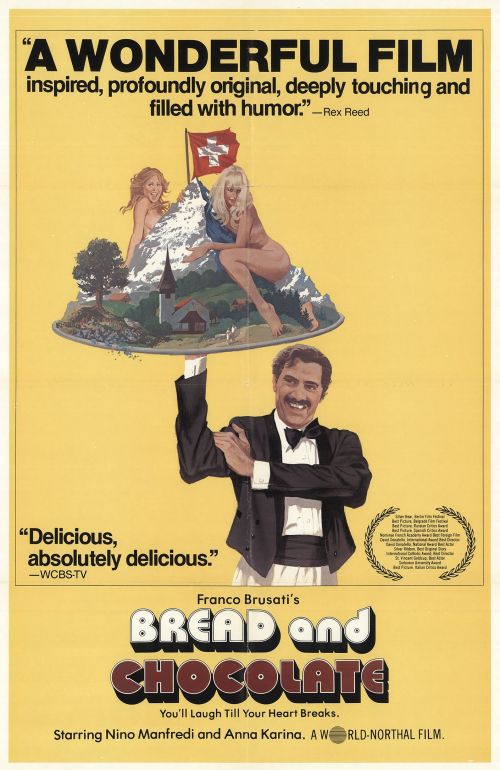
Nino (Nino Manfredi) has moved to Switzerland to work as a guest worker in that country since he’s unable to find employment that pays a living wage in his homeland of Italy. In order to provide for his family he works various odd jobs and then sends the money back home to his wife and kids who he has not seen in years. There are many other foreigners from other countries competing for the same jobs as Nino including a Turkish worker (Gianfranco Barra) who vies for the head waiter position at a fancy restaurant that Nino also wants, but even though the two don’t get along they’re still forced to room together in a cramped attic apartment. Nino’s only source of companionship comes in the form of a friendship that he has with Elena (Anna Karina) a Greek who lives across the street from him in an equally small loft. He moves in with her and her son when he gets kicked out of his other place, but because she’s also a guest worker striving to make ends meet she has no time for a relationship making Nino feel like an unwanted outsider no matter where he goes.

This critically acclaimed film really allows the viewer to get to know their characters and the desperation that they feel. Many viewers today may be unaware of the guest worker program that many European countries took part in during the 60’s and 70’s, so watching this will be an educational experience as well as a good character study. What I found most fascinating though was the issue of racism. Most people wouldn’t consider Switzerland to be a ‘racist’ country, so it’s interesting to see how this element can creep in anywhere and it doesn’t have to hinge on one’s skin color either as the Swiss end up picking on the Italians simply because they aren’t from there, poor and ‘stealing their jobs’, so are therefore in their minds deserving of being looked down upon, much like foreign workers in this country can sometimes feel.

The film also makes keen observations in regards to the rich versus poor and how having a lot of money can sometimes make one a weaker person less able to handle challenges. This comes to a head with Nino’s friendship with an Italian Industrialist (Johnny Dorelli) who despite living a lavish lifestyle commits suicide after losing a custody battle with his ex-wife even though Nino hasn’t seen his family for years and lives in near squalor, but because he’s toughened to the hard times he’s able to preserve and remain upbeat where the rich man couldn’t.

There’s many memorable moments, so many that it would be hard to list as the story and characters are so multi-layered the laughs and insights come in literally just about every frame. Many will consider Nino’s visit with some farm workers who out of desperation have moved into a chicken coop and start behaving like the chickens they tend, which is funny and unique, as the film’s highlight. However, my favorite part came when Nino decides, in an effort to move up in society, to pretend that he’s Swiss and even dyes his hair blond and begins speaking in a Swiss accent. Then while at a bar he watches a soccer match between Switzerland and Italy on the TV and even though he initially cheers for the Swiss team he can’t help but eventually shout out in excitement when Italy scores a goal, which just proves the old saying: You can take a person out of their homeland, but you can never take the homeland out of the person.

The film’s most redeeming quality though is showing the strong bond that forms between the guest workers. Even if they’re at first strangers and from different countries they immediately offer support and friendship to Nino no matter where he goes simply because they are going through the same hardships as he, which becomes a wonderful testament to the hearty human spirit.

My Rating: 9 out of 10

Released: January 18, 1974

Runtime: 1 Hour 40 Minutes

Director: Franco Brusati

Studio: Cinema International Corporation

Available: DVD, Blu-ray (Region B/2)

High Rolling in a Hot Corvette (1977)

By Richard Winters

My Rating: 6 out of 10

4-Word Review: Two guys drop out.

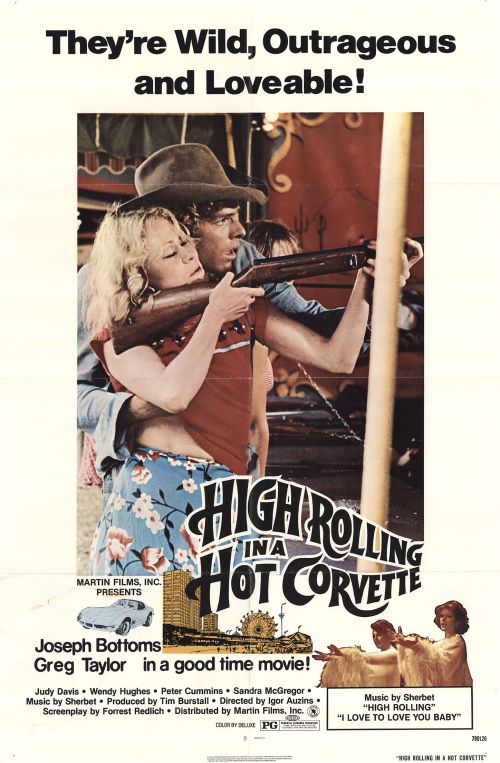
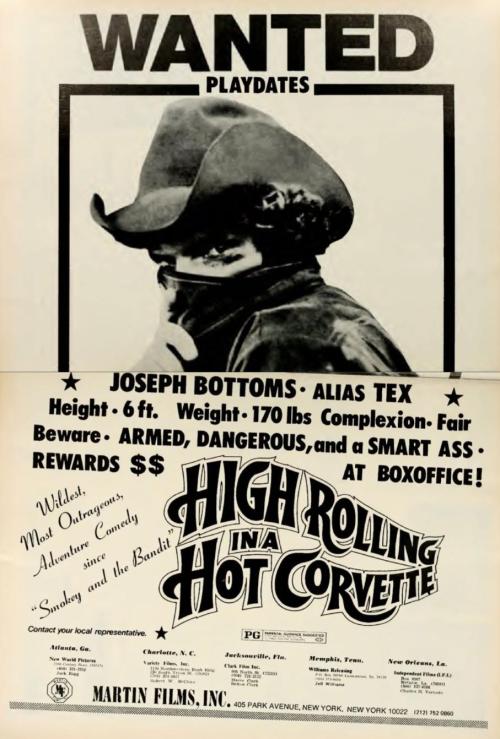
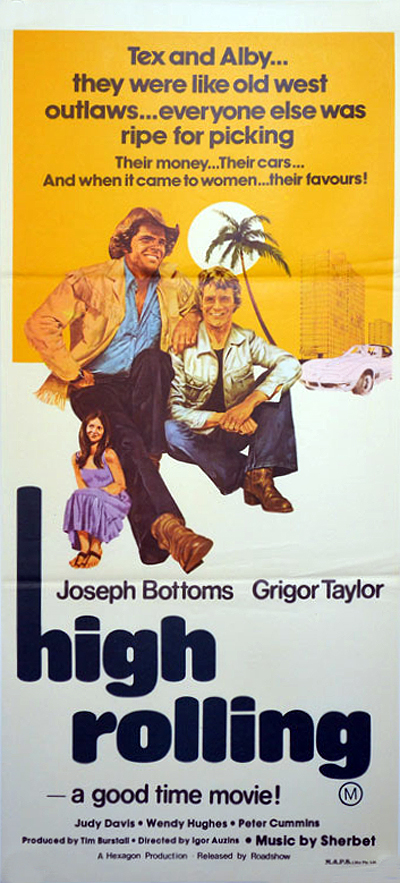
Tex (Joseph Bottoms) and Alby (Grigor Taylor) are two friends working at a carnival who decide, after Tex gets fired when he’s caught having sex with a female customer, to breakaway from the grind by heading out to the Gold Coast and Surfer’s Paradise. They hitch a ride with Arnold (John Clayton) who drives a snazzy green Corvette. After he takes the two to a hotel for the night he comes-on to Alby, who beats Arnold up that puts him into an unconscious state. When Tex finds out what happened they decide to make a run for it by driving away in Arnold’s green corvette, which to their shock is loaded with bags of marijuana. They use Arnold’s money from his wallet to help them get into ritzy nightclubs where they meet up with attractive singers Susie and Barbie (Sandra McGregor, Wendy Hughes), but once the money is spent they’re forced to rob a tour bus full of passengers, but just as they’re ready to escape with the loot Arnold returns with his muscular friends and an ugly confrontation ensues.

This is another Australian flick where it could’ve easily been filmed here and you’d never know the difference. Whether it’s intentional or not the American influence is quite strong including having them eat at such restaurants as Kentucky Friend Chicken and McDonald’s. The Outback is the one area that can help Australia stand out, but the two never go there and stick to the lushly green coastal region, which again looks no different than many of the landscapes in the U.S.

They even hire an American actor for the lead, which I felt was a mistake. Apparently they thought it would be easier to sell to distributors abroad if not all the actors spoke with an Aussie accent, but Bottoms, who is the younger brother of the more famous Timothy Bottoms, isn’t a good enough actor to make anything that he does onscreen either interesting or memorable. His reckless wild boy behavior comes-off as affected and forced and the way he aggressively comes-on to women would be considered misogynist and sexual harassment by today’s standards. Plus, there’s never any explanation for why this Texan would be working the carnival scene in Australia to begin with.

The tone of the film when compared to its trailer, which can be seen on YouTube, is far more grim and dramatic. The trailer gives you the impression it’s a comical, freewheeling adventure that will bring you back to your youthful days of rebellion, when really it’s more about them desperately living on the edge, getting beat-up and seeking shelter in an abandoned church when it rains. If anything it makes the creature comforts of suburbia, even with some of the compromises that come with it, seem not so bad by comparison.

These guys aren’t too smart either and it becomes harder and harder to keep siding with them with each jam they stupidly get themselves into. Driving off with the Corvette was just asking for trouble since they didn’t bother to change the license plate, so any cop could scan the number and realize that the vehicle was stolen. When they rob the bus, which is the best moment in the movie, they don’t wear any masks, so they’ll be easily identifiable. It also makes you wonder why if these bums needed money so bad they couldn’t just find a job like the rest of us instead of robbing innocent people, which is not a nice thing to do and makes the viewer not want to like these guys who are, at least in theory, supposed to be the protagonists.

The filmed is helped by the appearances of two young Australian actresses at the start of their careers. Hughes is beautiful as the showgirl that they meet but her part is ultimately too small. I was afraid Judy Davis, who plays a hitchhiker that they pick-up, would have the same fate, but she returns later on to give the cops a wild car chase driving the Corvette that makes it worth it.

The film though lacks any discernable point or message. The characters show no  arc and behave the same way at the end that they did at the beginning. Nothing conclusive is giving to their ultimate fate. Will they be able to live on the road and on-the-edge all of their lives? This hardly seems possible, but the movie makes no effort to answer this question causing it to be vapid and undistinguished from the plethora of other road movies out there.

My Rating: 6 out of 10

Released: August 4, 1977

Runtime: 1 Hour 21 Minutes

Rated PG

Director: Igor Auzins

Studio: Hexagon Productions

Available: DVD-R