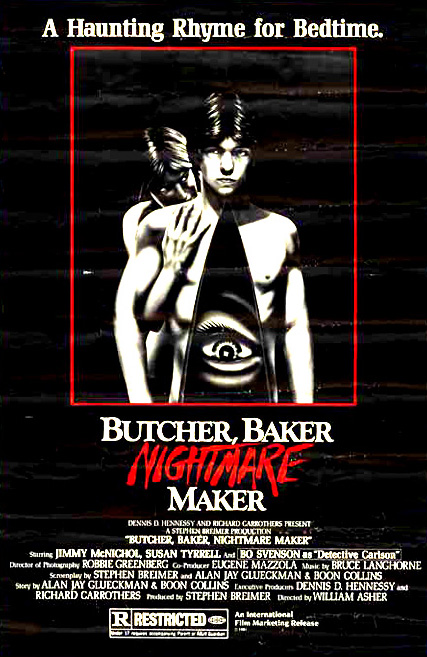
Night Warning (1982)

By Richard Winters

My Rating: 6 out of 10

4-Word Review: His aunt is crazy.

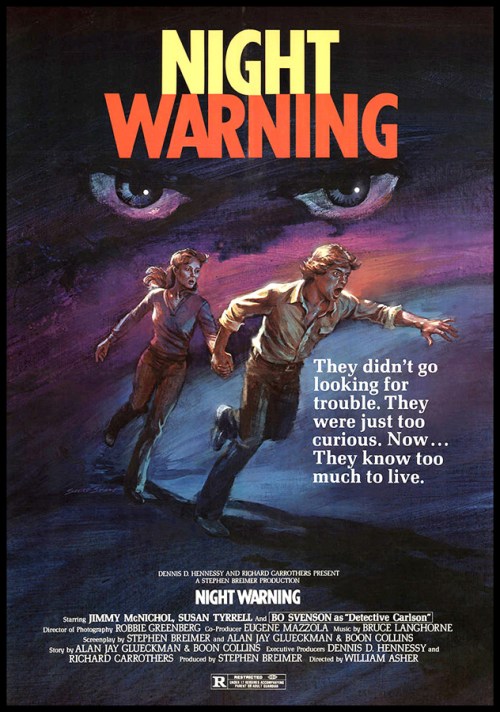
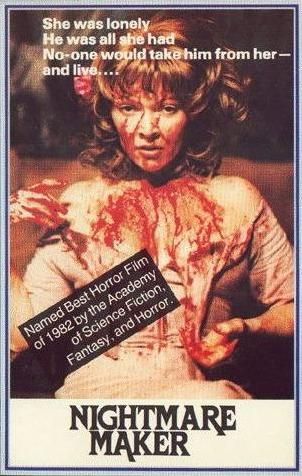
Billy (Jimmy McNichol) has been orphaned since age 3 ever since his parents died in a tragic car accident. For the past 14 years he’s been living with his neurotic aunt Cheryl (Susan Tyrrell), but now that he’s turning 17 he’s ready to move-out. Cheryl though doesn’t want Billy to leave her as she harbors dark incestuous feelings for him and will do anything, even kill in order to keep him with her.

The film was directed by William Asher, who mainly worked on family oriented material like the TV-show ‘Bewitched’ and the beach party movies from the 60’s, so doing this was a stretch for him, but results aren’t bad. Although there’s little gore the well-shot opening sequence in which the father gets decapitated by driving into a truck hauling wooden logs is impressive and more than makes up for it and it even gets shown twice.

The big payoff though is Susan Tyrrell’s performance, which gets completely off-the-charts. She had a love-hate relationship with her real-life mother and the two spent many years not talking to each other and I think this as well as some of the treatment that she received in Hollywood particularly with her working relationship with director John Huston while doing Fat City she used to channel the anger and rejection of her character and it really works. Watching her become more and more unhinged as the film progresses and her increasingly odd facial expressions and voice tones is a treat onto itself and makes catching this otherwise hard-to-find flick worth it.

McNichol’s acting unfortunately cannot match hers and I was shocked to see that he got top billing over her as his talent level, pedigree isn’t even close. His character though is even more annoying as I found it hard to believe that he wouldn’t have seen red flags to his aunt’s mental illness far sooner. The film makes it seem that he had no concerns about his aunt until he turned 17, but I would think living with her for 14 years there would be signs of it earlier. It’s also hard to feel for someone who is so painfully naïve and walks into his aunt’s devious traps when anyone else would’ve know better. It’s dubious too that the aunt would wait until the kid was 17 before making sexual overtures, but I suppose that’s a whole other issue.

Bo Svenson’s as a brash, unethical cop who is profoundly racist and homophobic becomes a strain too. I’m sure at the time this was considered simply ‘soft satire’ that lightly pokes fun at the bad cop stigma, but now it comes off as dated and unpleasant and probably the whole reason why the film hasn’t received a DVD/Blu-ray release.

Julia Duffy, best known for playing Stephanie on the TV-show ‘Newhart’ is on hand in support and although she was already 30 at the time plays Billy’s teen girlfriend and even appears topless, which may interest the voyeurs. However, any story that hinges on one of the characters being put on trial and then found not guilty by a jury due to temporary insanity I just can’t buy into and I don’t think has ever happened at least not in this country. There’s also too much ‘scary music’ that gets played particularly during scenes inside the house that just isn’t needed and almost becomes a distraction and I wish directors and producers would realize that the quiet/natural ambience can be far creepier than any soundtrack.


My Rating: 6 out of 10

Alternate Title: Butcher, Baker, Nightmare Maker

Released: January 1, 1982

Runtime: 1Hour 36Minutes

Rated R

Director: William Asher

Studio: Royal American Pictures

Available: VHS

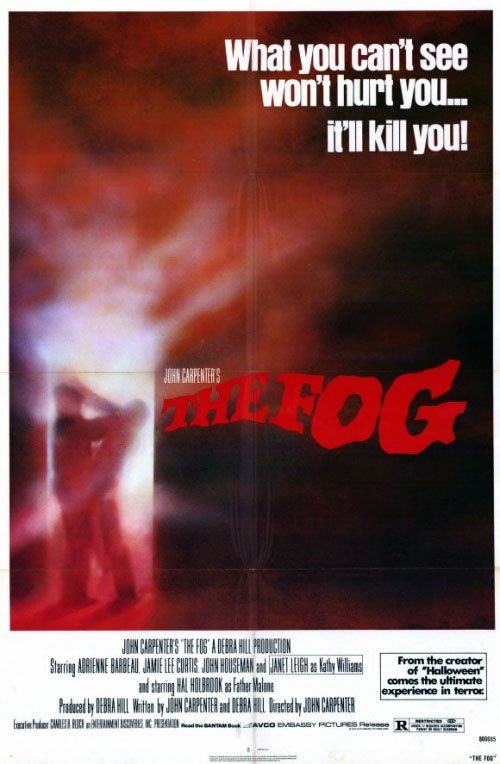
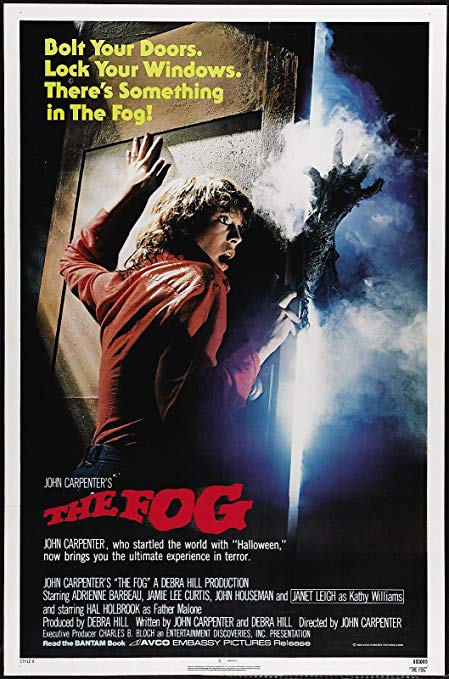
The Fog (1980)

By Richard Winters

My Rating: 3 out of 10

4-Word Review: Ghostly fog haunts town.

As the town of Antonio Bay gets ready to celebrate its 100th year of existence a mysterious fog creeps into the area at midnight and then strange unexplained events begin to occur. The town’s priest Father Malone (Hal Holbrook) finds a secret diary detailing how 6 of the town’s founders intentionally sank a ship 100 years earlier. Now the ship’s ghostly victims have returned seeking revenge by insisting that 6 people from the community must die in order to make-up for the 6 that originally killed them.

John Carpenter’s follow-up to his highly successful Halloween has gained a fervent following, but in the end it really doesn’t amount to much. Maybe my expectations were too high as I had a friend who talked this up as being great, but the scares are lacking despite a good first act that nicely builds the atmosphere and has some effective visuals particularly the shots of the fog rolling in.

The interesting premise though gets ruined by having things explained too quickly. Sometimes a little mystery can go a long way and not knowing what’s causing the strange occurrences and only having it answered at the very end, or possibly not at all, would’ve made it scarier and more intriguing. The backstory makes the ghosts come off like sympathetic victims looking for justice and therefore less threatening. Instead of being this entity with no known boundaries they become logical, emotional beings that makes the scenario too contained and civilized and less intense than it could’ve been.

You wait for things to finally gel, but it never really does. The victims get attacked in a matter of seconds and the camera then quickly cuts away before any blood or violence is shown. The ghosts aren’t seen much either and amount to shadowy figures from a distance when they are with occasional glowing red eyes, but otherwise they lack visual flair.

Having three heroines was a mistake especially since Jamie Lee Curtis seems bored in her role and almost like she didn’t even want to be there. Her real-life mother Janet Leigh conveys far more energy and she could’ve easily been the star with Curtis cut out completely. The two do share a few scenes together, but frustratingly never any lines of dialogue.

Adrienne Barbeau, who at the time was Carpenter’s wife, is okay as a late night DJ working out of a lighthouse, but her over-the-air pleas to her young son Andy (Ty Mitchell) to get out of his house to escape from the ghosts came off as unintentionally funny. The simultaneous climaxes that occur at two different locations with some cast members fighting off the ghosts inside a church while Barbeau does the same inside the lighthouse doesn’t work and if anything the finale should’ve happened completely inside the lighthouse since that was a more unique setting.

The direction is competent and it’s not like this film, which was remade in 2005, is a bad one it’s just not particularly exciting or interesting. The horror needed to be amped up and the pacing quicker particularly as it got into the second act. The only moment in the film that impressed me had nothing to do with the horror, but instead was the shot showing Barbeau walking down a long, winding outside stairwell to get to the lighthouse, which was filmed on-location at the historic Point Reyes Lighthouse in Marin County, California.


My Rating: 3 out of 10

Released: February 8, 1980

Runtime: 1Hour 30Minutes

Rated R

Director: John Carpenter

Studio: AVCO Embassy Pictures

Available: DVD, Blu-ray, Amazon Video, YouTube

The 7th Annual Horrorween Film Festival: October, 2018

We’re proud to announce for the 7th straight year our annual Horrorween Film Festival here at Scopophilia where we scour the dusty VHS bins to find you the most obscure, the most bizarre and hopefully the scariest horror movies around from the 60’s, 70’s, and 80’s. Some of them you might never of heard of while others you might’ve forgotten about. This year we go all over the globe to find lost gems not only from here in the states, but from Australia and even a couple Italian giallos. Whether it’s a slasher film or a thriller, or just a good old fashioned ghost story we try to keep the variety coming. Hopefully we’ll find a few good ones in the process, but like in past years there’s no guarantee.

Blazing Saddles (1974)

By Richard Winters

My Rating: 7 out of 10

4-Word Review: Black man becomes sheriff.

Classic western parody centers on a new railroad being built during the 1870’s and how an attorney general named Hedley Lamarr (Harvey Korman) connives to have it run through a town called Rock Ridge, but in so doing devises a plan to have the residents run out, so the railroad can be put in. He hires a bunch of outlaws to ride into the town and terrorize the people hoping they’ll be scared off and move, but instead they put in a request to the state’s governor (Mel Brooks) for a sheriff. The inept governor gets tricked into hiring a black man named Bart (Cleavon Little) to act as the sheriff, which sends the racist residents of Rock Ridge into an outrage.

The film was known at the time for its outlandish humor, which thanks to political correctness is now considered even more outrageous and would most likely have no chance of being made today. The film’s biggest sticking point deals with its excessive use of the N-word, which writer/director Brooks was pressured to take out by the studio executives (along with many other things), but he resisted insisting that co-writer Richard Pryor and star Little had their blessing to keep it in and that most of the letters he received that were critical of the word being used were from white people. Personally I felt that it was realistic for its setting, which was supposed to be 1874, so in that regard it worked.

The stuff that got on my nerves was the constant anachronistic jokes dealing with people that weren’t even alive when the film’s setting took place. This type of humor gives the film too much of a campy feel and should’ve been scrapped. I was also disappointed when Gene Wilder talks to Little about his past and how he was accosted by a gun-toting 6-year-old, but the film doesn’t cut away to a reenactment of this, which would’ve been hilarious to see, even though it does do this when Little talks about his own past.

The funniest bits that I did find myself laughing-out-loud to where the ones involving Brooks as the cross-eyed governor, but I was frustrated that the streaming video that I watched did not have the scene where Brooks goes to the town of Rock Ridge and mistakes the wooden dummies that are there as being real-people. I remember this scene vividly when I watched it on network TV back in the 80’s and thought it was hilarious, but apparently this segment is only available on the Blu-ray version.

The acting by the supporting cast is great with Korman getting the best film role of his career. Liam Dunn is memorable as the town’s pastor and I got a kick out of Jessamine Milner as a racist old lady who later tries to make amends with Bart, but only under certain conditions. Madeline Kahn is quite good too in a send-up of Marlene Dietrich and rumor has it that she intentionally gave a bad performance in Mame, which was filming at the same time, just so the director would fire her, so she could then get the part here, but still be paid for that one as her contract stipulated guaranteed pay as long as she was terminated and didn’t quit.

The only bad performance comes from Little, who is just too serene and laid back almost like he’s treating the whole thing as a joke and doesn’t get into his part at all. I would’ve expected to see some anger from his character over the way he had been treated by white folks, but none is conveyed and instead he comes off like some guy picked off the street who mouths his lines and that’s about it. The part was intended for Richard Pryor who would’ve given the role the extra edge that it needed.

Spoiler Alert!

As controversial as the film is it’s the bizarre ending that has always had me the most baffled as it breaks the fourth wall and has the characters without warning go from the western time period into the modern-day. When I first saw this years ago I thought it was the weirdest thing I had ever seen and didn’t like it as I felt it ruined the story as I was enjoying seeing the town’s residents take matters into their own hands by literally beating up the bad guys as well as realizing that their racist ways were wrong. Having them suddenly thrown onto a Hollywood backlot made it too gimmicky and took away any possibility for some minor depth/message that the story might otherwise have had.

In retrospect I can only conclude that Brooks did this to show that these characters were never meant to be a part of the true west. In fact the whole reason that attracted him to the project, which was based off of an idea by Andrew Bergman, was because of its so-called ‘hip-talk’, which had 1974 expressions done in an 1874 setting.

If this was the case then the film should’ve started out with the characters in the modern day and then transported them via a time machine into the old west. The movie is so goofy anyways that I can’t see how this funky added element could’ve hurt it and then at the end when they return to the present it would’ve seemed more fluid and less like a cop-out where the writer’s ran out of ideas, so they decided to just go weird.

My Rating: 7 out of 10

Released: February 7, 1974

Runtime: 1Hour 33Minutes

Rated R

Director: Mel Brooks

Studio: Warner Brothers

Available: DVD, Blu-ray, Amazon Video, YouTube

Lost and Found (1979)

By Richard Winters

My Rating: 2 out of 10

4-Word Review: Fighting keeps couple together.

Adam (George Segal) is a college professor vacationing in France whose car collides with that of British divorcee Tricia (Glenda Jackson). He tries to get her to write a letter admitting that she was at fault, but she instead writes the exact opposite while doing it in French, so he wouldn’t know. When he finally catches on to this he tracks her down at the ski resort and again collides with her this time on skis. Eventually they find a way to reconcile and even fall in love before finally marrying yet when they return to the states they start fighting again over just about anything until it seems that is all that they do.

Sloppy, poorly structured romance should’ve never been given the green light. The characters are bland and one-dimensional and the humor cartoonish while the couple’s relationship is strained to the extreme. The story has no momentum and the inane fighting seems put in simply to give it some comical conflict that leads nowhere and eventually becomes tiring.

The main problem is that the two reconcile too quickly. Viewers who watch these types of films enjoy wondering whether ultimately the couple will get past their differences and tie-the-knot, which is what compels them to keep watching, but here any suspense of that is ruined when they get married within the first half-hour and thus the arguments that they have afterwards is anti-climactic. The film would’ve worked better had the two remained antagonistic. The conflict could’ve started in the French Alps and then continued onto the college campus by having the Jackson character work as a prof in the same department as Segal and had their animosity only slowly melt away when they’re forced to work on some project together with the wedding bells then coming in only at the very end.

What makes this movie odd is that it reteams Jackson and Segal as well as the writer/director team of Melvin Frank and Jack Rose who all did A Touch of Class together just 6 years earlier. One would presume that this would be a sequel to that one with Segal and Jackson playing the same characters that they did before, but that’s not the case. In retrospect that’s how it should’ve been played and it would’ve then avoided having to show the dumb, over-the-top way that the two meet here, which is so forced and corny that it cements this has being a bad movie before its even barely begun.

The supporting cast manages to add some life. I got a kick out of Maureen Stapleton as Segal’s free-spirited, hippie-like mother, but she was only 52 at the time and didn’t even have any gray hair making her look much too young to have given birth to a middle-aged man in his 40’s and was in fact only 9 years older than Segal in real-life. Paul Sorvino is amiable as a talkative cabbie and the segment where he and Jackson try to resuscitate Segal after a failed suicide attempt is the only mildly amusing bit in the film.

The ski resort scenery is picturesque although it was actually filmed at Lake Louise in Alberta, Canada and not in the French Alps like the movie suggests. You also get to see John Candy in a brief bit and Martin Short in his film debut, but everything else falls painfully flat and I couldn’t help but feel that the entertainment world had passed both director Melvin Frank and Jack Rose by. They had written and directed many successful comedies during the 40’s, but what passed off for funny back then now seemed seriously dated and it should be no surprise that they both only did one more movie after this one.

My Rating: 2 out of 10

Released: July 13, 1979

Runtime: 1Hour 46Minutes

Rated PG

Director: Melvin Frank

Studio: Columbia Pictures

Available: DVD-R, Amazon Video

Big Jake (1971)

By Richard Winters

My Rating: 4 out of 10

4-Word Review: Grandfather tracks grandson’s kidnappers.

In 1909 a group of outlaws led by John Fain (Richard Boone) raid the McCandles homestead and kidnap their grandson (Ethan Wayne). Martha (Maureen O’Hara) is the home’s matriarch who decides that the help of the army and Texas Rangers just won’t do and the family’s estranged grandfather, Big Jake McCandles (John Wayne) will. Big Jake, who was once a legendary gunfighter in his day has been roaming the west alone for many years, but once he gets word that his grandson has been kidnapped he snaps into action using the help of an old Apache associate named Sam (Bruce Cabot) to help track where the kidnappers are.

This another film where in Leonard Maltin’s review book he gives two different takes of the film depending on which version, older vs. newer, that you have. I realize Maltin does not review all of the movies that are in his book, but whoever reviewed this movie in the older versions gave it only 2-stars and describes it as an ‘uneasy combination of a traditional Wayne western and a Butch Cassidy-type spoof’. In the newer versions Maltin or whoever did the review now suddenly likes it and gives it 3-stars calling it ‘an underrated western that’s well paced and handsomely shot’. The only consistency between the two is that both consider Boone’s performance as being ‘especially good’.

For me the original review is far more accurate. Although the film does start out with a rather offbeat, Avant-garde opening everything that comes after is formulaic and mechanical. The plot is too basic and not all that exciting or gripping you never see or learn much about the boy who has been kidnapped and therefore one’s concern for his safety wanes. It starts out right away with the violent kidnapping without any backstory and then deviates into a lot of side-story adventures until you almost forget about the kidnapping plot completely only to finally come back to it with a so-so shootout finale. In a lot of ways the kidnapping theme could’ve been excised completely as the only time it gets amusing is during Wayne’s bantering with his co-stars as they ride around looking for the bad guys, so everything should’ve centered on that while possibly changing the plot around to them looking for gold or lost treasure instead.

Wayne’s presence is the biggest detriment as he has played this domineering, stubborn old codger for far too long and there needed to be a fresh new spin put on it, but none is supplied. I was hoping for one brief moment that the arrogant, brash Wayne character might be proven wrong at something, or forced to swallow his immense pride just to keep things balanced, but of course its only everyone else that has do that while the mystical Wayne proudly plods on like he can do no wrong.

I thought the introduction of the automobile into the plot, where some of the men decide to ride in those while Wayne stubbornly sticks with his horse, might offer this by having the old-fashioned character eventually forced to modify his thinking and embrace change and modernization. In reality everyone must eventually have to do this at some point in their lives, so The Duke should too, but instead here the reverse occurs, where those that adapt to change are made to look foolish while the hard-headed Wayne rides off unblemished, which to me made it too agonizingly predictable.

Having Wayne’s real-life son Patrick playing Big Jake’s feisty and rebellious son is fun, but I wanted their confrontations to be played up more. Christopher Mitchum is okay too as Big Jake’s other kid who rides a motorbike and this was the last movie that Mitchum did with Wayne because afterwards he quit speaking to him due to Wayne’s right-wing leaning politics, which I found ironic since 25 years later he ran for a California congressional seat as a conservative republican.

O’Hara is sadly wasted and seen only during the film’s first 15 minutes and then that’s it. Singer Bobby Vinton also appears at the beginning, but his acting is terrible and fortunately for the viewer his time on the screen is brief.

The only thing that I liked about the movie is the gorgeous view seen outside the ranch home in the opening scenes and I wished that the entire story had taken place in the home so we could keep enjoying its breathtaking surroundings, which was filmed on-location in the Mexican state of Durango. Otherwise everything else is a bore.

My Rating: 4 out of 10

Released: May 26, 1971

Runtime: 1Hour 50Minutes

Rated G

Director: George Sherman

Studio: National General Pictures

Available: DVD, Blu-ray, Amazon Video

Heartburn (1986)

By Richard Winters

My Rating: 6 out of 10

4-Word Review: Husband cheats on wife.

Rachel (Meryl Streep) writes for a magazine as a New York food critic and meets Mark (Jack Nicholson) at a wedding that they both attend. Mark is a political columnist who’s known around Washington for being quite a ladies man, but the two get into a relationship anyways and then eventually despite their reluctance married. Things go smoothly for a while and Rachel even starts to think that she has a ‘perfect marriage’, but then as she is about to give birth to their second child she realizes that he has been having an affair.

The film is based on Nora Ephron’s autobiographical novel dealing with her marriage and subsequent divorce to newspaper reporter Carl Bernstein. The book starts out with her ready to give birth to the second child, but the movie unfortunately takes a more linear approach to the narrative as it plods along through the initial courtship and wedding even though the red flags are clearly there and the viewer knows exactly where it’s going. The story would’ve worked better had it started at the 50-minute mark where Rachel finds out about the affair and then through brief flashbacks shown how the relationship began, which would’ve cut the runtime, which is too long for such slight material anyways, and helped make the proceedings seem just a little less predictable.

A lot of the humor doesn’t work either. The sequence involving the wedding ceremony and Rachel not sure if she wanted to go through with it which keeps the guests there for hours gets botched because I don’t believe the people would’ve remained sitting there for so long. When she finally does decide to proceed with the wedding the guests all look strangely refreshed when in reality most if not all would’ve been long gone and it would’ve been funnier to see them getting married inside an empty room save for one bored wedding guest who remained there simply because it couldn’t find a ride home.

The dream-like segments where an Alistar Cooke-like character talks about Rachel’s marriage problems while hosting a TV-show is too surreal and should’ve been excised because doesn’t fit the tone of the rest of the film, which is more reality based. The segment where Rachel finds out that Mark is having an affair and then it cuts to a shot of her holding a pie that she is taking to a dinner party is too obvious as the viewer immediately gets a strong sense that the pie will eventually be going onto Mark’s face and when it finally does it’s not funny, but anti-climactic instead.

The script fails to add any new insight into an already tired subject and the characters aren’t likable as they have too much of an elitist coastal feel about them and their lifestyles won’t resonate or connect with anyone living in another part of the country. There are just too many people in this whose only concern or form of entertainment is having catty gossip/conversations dealing with who’s cheating on whom, which quickly becomes derivative.

Streep and Nicholson are good and its interesting seeing them play together here as they also starred together just a year later in Ironweed playing two diametrically different people. Unfortunately Jack, who is for the most part quite likable, doesn’t look or behave at all like the real-life Bernstein, which his character is supposedly loosely based on. Dustin Hoffman, who had already played Bernstein in All the President’s Men was the first choice for the role and he would’ve been perfect, but for whatever reason he turned it down.

Ultimately though the film’s biggest drawback is simply Rachel herself as she frets and nitpicks about everything and her anxiety-ridden ways would most likely annoy any man, which makes the ultimate affair when it finally does happen seem inevitable and not a shock at all. When she ponders to Mark about if they should get married and she tells him that she fears she’ll drive him crazy and Mark replies ‘you already are’ I felt like saying ‘she’s driving the viewer that way too.’.

My Rating: 6 out of 10

Released: July 22, 1986

Runtime: 1Hour 49Minutes

Rated R

Director: Mike Nichols

Studio: Paramount

Available: DVD, Amazon Video, YouTube

Footloose (1984)

By Richard Winters

My Rating: 3 out of 10

4-Word Review: A town bans dancing.

Ren (Kevin Bacon) is a teenager from Chicago who moves with his mother (Francis Lee McCain) to a small town in Utah where he finds that dancing has been banned by the town’s fiery minister (John Lithgow). He becomes determined to try and change that and convinces the other kids including his new found friend Willard (Chris Penn) that dancing really isn’t all that bad. He also falls for the minister’s daughter Ariel (Lori Singer) who is far more liberated than you’d expect someone from a religious upbringing to be.

I remember when this film came out and I intentionally refused to see it as I felt that the plot was too absurd to be believable. I was born and raised in a small Midwestern town of about 7,000 people and the idea that some lone minister could overtake it and start making extreme rules that everyone would follow especially in the modern era of the 80’s is just not realistic. If the town was really small and isolated with a population of like 200 then maybe but the one portrayed in the film comes off as being fairly big and was filmed mostly in American Fork, Utah, which in the 1980 census had a population of 13,606. Having a scene dealing with a literal book burning makes the thing even campier and made me believe this would’ve worked better had the setting been the 1950’s.

There is also no explanation to what the penalty would be if one is caught dancing. Everyone acts like it would mean jail time or something like that when most likely it would just be a small fine and since when have teens ever been that compliant when it comes to rules? There are several scenes where they are seen with joints, so if they’re willing to fudge the law in that respect then why not do it with the dancing too?

The concept is loosely based on an actual incident that occurred in Elmore City, Oklahoma in 1978 where the local teens challenged a city ordinance that banned dancing. However, the incident there made more sense because it was an ordinance that had been on the books for over 90 years. Many cities and towns have old ordinances and laws that are no longer relevant, or followed, but just haven’t been officially removed as opposed to some minister coming into a town and implementing a new law that everyone is forced to comply with. The town was also much smaller (population of only 653 in 1970) than the one portrayed in the movie, so religious sentiment would be more able to oppress the rest of its citizens.

The drama for the most part is limp and does not justify its runtime as there are long segments that have nothing to do with the main story including cringe worthy scenes where we watch Singer dangerously trying to leap between two moving cars and a game of chicken between tractors with Bacon and another teen driving them. There’s also a B-storyline dealing with Bacon trying to teach Penn how to dance, which gets corny.

The most annoying aspect though for me was Singer’s character as she doesn’t seem like a minister’s kid at all. She behaves in too much of a free-spirited way and I would think someone raised in such a repressed environment would reflect some religious traits and yet Singer conveys none. Having her religious at the start and even opposed to dancing and then become tolerant to it after she meets Bacon would’ve created an interesting character arch. Also, if she behaved in a cult-like manner due to her strict upbringing then it would’ve made the minister character more menacing because the viewer would be made to feel that was what he wanted to turn the rest of the town into.

Lithgow is a great actor, but he’s not right for this type of part as he is too young and was only 12 years older than Singer who played his daughter. A much older actor would’ve better illustrated how the older generation was desperately trying to cling onto their old way of life in an ever changing world and how completely detached they were from modern teens. Also, the character here doesn’t seem threatening enough as he is unable to control his own daughter so then how is he expected to control the rest of the town?

The opening bit done over the credits showing the different types of dancing feet is the best thing in the movie although some may take a liking to Bacon’s dancing inside an abandoned warehouse although much of that was done with the help of body doubles.  Otherwise this empty-headed movie, which was remade in 2011, has very little to recommend.

I did want to mention too that recently there was an 80’s podcast that I listened to where they reviewed this movie and one of the critics complained that the town had only white kids and acted like somehow that was not politically correct, but having grown up in a small town during the 70’s and 80’s I can vouch for the fact that there were little if any minorities there and therefore having an all-white cast, whether it is politically correct or not, was realistic.

My Rating: 3 out of 10

Released: February 17, 1984

Runtime: 1Hour 47Minutes

Rated PG

Director: Herbert Ross

Studio: Paramount

Available: DVD, Blu-ray, Amazon Video, YouTube

A Touch of Class (1973)

By Richard Winters

My Rating: 5 out of 10

4-Word Review: Sexual liaison turns romantic.

Steve (George Segal) is an American businessman working in London who meets Vickie (Glenda Jackson) a divorced mother of three. Despite being married he immediately takes a liking to Vickie after sharing a cab ride with her and makes no secret that he’d like to have a ‘no-strings-attached’ sexual affair. Vickie approves of the idea, but wants a more romantic setting, so Steve whisks her off to Malaga, but things get complicated when Steve’s friend Walter (Paul Sorvino) shows up on the same trip and constantly gets in the way.

Surprisingly this limp comedy got nominated for Best Picture, which is really hard to believe since there isn’t anything all that funny or original about it. In fact it seems very similar to another picture that writer/director Melvin Frank did in the ‘60s called The Facts of Life, which starred Lucille Ball and Bob Hope and had almost the exact same plot.

The biggest problem is that it doesn’t take enough advantage of its comical potential. Having Steve’s wife Gloria (Hildegard Neil) show up with the kids unexpectedly and want to go on the trip with Steve should’ve been played out much more as it was ripe with comic potential, but instead the film nixes this idea after introducing it and nothing is more annoying than a movie, which sets-up an interesting idea only to then backtrack on it.

Paul Sorvino’s character is equally wasted and his presence could’ve created far more complications that never transpire. In return the movie falls back to a lot of lame situations that seem thrown in for cheap laughs like Steven suddenly going through back spasms, or challenging a 13-year-old kid to a golf game that has nothing much to do with the main plot and basically comes off as forced and lame. The arguments or ‘spats’ that couple have are equally inane and this culminates with the two throwing furniture and clothing at each while in the hotel room, which sends this supposedly ‘sophisticated’ adult comedy dangerously close to becoming benign slapstick instead.

The third act in which the two rent out a flat and continue to have the affair even after they return to London doesn’t improve things. Jackson is supposedly this single mother and yet after she moves into the flat she seems to essentially abandon the kids who disappear from the movie altogether. It also seems hard to believe that Steve’s wife wouldn’t at some point start to catch on to the fact that something was going on as these things eventually will catch up with a person and there’s just so many close calls one can have before finally getting caught and yet here that never happens.

The fact that Steve is very open about his marriage to Vickie and even confides in having previous affairs makes Vickie seem really stupid for wanting to get involved with him in the first place. Supposedly she just wants casual sex as much as he does, but then refers to their trip as a ‘romantic’ one making it seem like she has the idea that this will turn into a relationship. When things do finally sour one doesn’t feel sorry for her as she was old enough to know better and anyone with an IQ over 2 would’ve seen the red flags from the start, so why didn’t she?

The only interesting aspect about the movie is that Jackson won her second Oscar for it, which was highly unusual since she had just won her first one 2 years earlier and quite unexpected making many people consider a recount was necessary as they were convinced it had to have been a mistake. It’s not that Jackson gives a bad performance because it is actually quite good, but Marsha Mason, who was the predicted front-runner, gave a superior one in Cinderella Liberty and she should’ve won it.

For years many people wondered what it was about Jackson’s acting in this film, which is a very ordinary fluffy movie at best, that made her stand out to the Academy judges and beat such long odds. A few years back I read somewhere, and I can’t remember where it was at this point, that the reason she won it was for one particular moment where Segal tells her that the relationship is over, but instead of her breaking down and crying like the script asked for she puts her head into her hands and remains silent for several seconds. Director Frank argued with her about doing this, but she insisted she wasn’t the type of woman who cries easily and therefore doing it the other way seemed more natural to her and in turn this impressed the judges when they watched the movie because her character responded to something in a completely unexpected way, which apparently was enough for her performance to stand out.

My Rating: 5 out of 10

Released: June 20, 1973

Runtime: 1Hour 46Minutes

Rated PG

Director: Melvin Frank

Studio: AVCO Embassy Pictures

Available: DVD, Amazon Video

The Delta Force (1986)

By Richard Winters

My Rating: 3 out of 10

4-Word Review: Elite operation rescues crew.

Based on the real-life hijacking of TWA flight 847, which occurred on June 14, 1985, the story centers on a Boeing 707, which gets hijacked by a terrorist group lead by Abdul (Robert Forster).  The terrorists take over the plane and force it to fly to Beirut, Lebanon where they then separate the Jewish passengers and those that were in the Marines from the others. These hostages are then transported to a prison cell in Beirut while twelve other terrorists come on board. Major Scott McCoy (Chuck Norris) and Colonel Nick Alexander (Lee Marvin) head the Delta Force team assigned to rescue the remaining passengers on board while killing off the terrorists.

The film was directed by Menahem  Golan who headed the Cannon Production Company which was notorious for producing a lot of cheap, cheesy, grade-B action flicks during the ‘80s and initially I was fearing the worst although this one is surprisingly tolerable and adequately funded. The opening scenes inside the plane prove to be moderately intense with Hanna Schygulla a stand-out as the brave stewardess.

The second act though veers off in too many directions with the hostages essentially becoming forgotten as it then focuses more on the elite squad of soldiers, which dilutes the narrative too much. Eventually they’re just too many characters to keep track of and too many scenarios that occur outside of the airplane until it becomes confusing and overreaching. A good film should stick to only a few main characters that the viewer can connect with and keeping them in the majority of the scenes, but this thing takes on more than it can chew making the viewer feel detached from what is going on the more it progresses.

The third act gets filled with a lot of over-the-top actions segments that looks like it was taken straight out of a comic book and diminishes the realism that had come before it. Norris shows no screen presence at all and only comes alive when he is doing an action stunt while Marvin, who was much older and not in the best of health during the production, shows much more onscreen energy. It almost seemed like it would’ve been better had Norris not been in it at all especially with the way the film tries to portray him as being this mystical, super human figure that borders on being corny.

The music is geared for an American propaganda film and the film’s mindset is that the US is always the good guy in no matter what foreign mission or policy it takes on. It also conveys the idea that might equals right while the proportion of terrorists who are killed, which is essentially all of them, compared to only one American soldier seemed way off-kilter.

Forster gives an outstanding performance as the villain as he literally disappears into role while conveying a foreign accent that seemed so genuine I almost thought his voice had been dubbed. The terrorists are portrayed as being just as nervous as the hostages if not more so, while at certain random moments showing a surprisingly human side, which is well done, but unfortunately everything else here is formulaic and fraught with too much of an emotional appeal.

My Rating: 3 out of 10

Released: February 14, 1986

Runtime: 2Hours 9Minutes

Rated R

Director: Menahem Golan

Studio: Cannon Film Distributors

Available: DVD, Amazon Video, YouTube