Category Archives: Thrillers/Suspense

Daddy’s Gone A-Hunting (1969)

daddys gone a hunting

By Richard Winters

My Rating: 7 out of 10

4-Word Review: Don’t kill his baby.

Cathy (Carol White) moves from England to San Francisco and almost immediately meets Kenneth (Scott Hylands) and the two get into a relationship. Cathy though slowly sees a dark side to him that she doesn’t like so she breaks up with him, but only after she finds out that she is pregnant. Since she is struggling to make it on her own she decides to have an abortion, which her friend Meg (Mala Powers) informs her is no worse than having a ‘hangnail’. When Kenneth learns of this he becomes enraged and promises revenge. He continues to stalk her from afar as she gets into a new relationship and then eventually marries prominent politician Jack Byrnes (Paul Burke). When she becomes pregnant again Kenneth reappears and tells her that this baby must be killed to make up for the one she ‘murdered’. After the baby is born he kidnaps it setting off a police manhunt throughout the city to find him and save the child.

Although this is a thriller you would hardly know it at the beginning as the movie starts out with a bouncy jazz score that does not create any type of menacing mood. It also initially dwells on Cathy and Kenneth’s early courtship and even has a sappy love song played over scenes of them kissing and walking hand-in-hand, which is awkward and even corny. I believe all thrillers should give some clue or warning to the tension and horror that is coming right from the start and this one doesn’t, which is weak.

However, after the first fifteen minutes it starts to get going from the suspense end and the rest of the way it is good if not excellent. I liked how the viewer is kept in the dark as to whether Kenneth is really stalking Cathy or it is all in her paranoid mind, which helps add an extra level of intrigue.

Director Mark Robson’s career was up and down, but he really scores here. The shot of a close-up of a cat’s eye showing the reflection of Cathy and Kenneth making love on a sofa was novel. I also liked how the abortion sequence is handled by showing a stark shot of the operating table coupled with Cathy’s nervous expression, which is surprisingly quite effective and brings out the horrors of the procedure, but without going overboard. I also appreciated that a real infant is used and not just a doll wrapped in a cloth like with some films. Showing a real live kicking and crying baby especially in close-ups makes it all the more emotionally compelling for the viewer when Kenneth tries to harm it.

Hylands is fantastic in the lead and one of the reasons this film works. He has the perfectly creepy face and menacing ability and this is by far his best performance in his long, but otherwise undistinguished career. White is also really good although she was far from being the producers first choice. Her blonde hair, accent, and angelic features make a perfect contrast to Hyland’s. Paul Burke is solid as the husband. It’s a bland part, but he tends to be good in those.

Although the abortion issue continues to be a hot and emotional topic for most this is not a political film and the emphasis is on being a thriller. However, when you couple this with screenwriter Larry Cohen’s It’s Alive movies you can probably assume he has an agenda in this political arena. Some may enjoy the way Kenneth relentlessly torments Cathy and refuses to allow her to forget what she did. He also kills the doctor who performed the procedure and what he does with the dead body afterwards is well…interesting.

Cohen and co-scripter Lorenzo Semple Jr. put their very creative minds in full gear here. The scenarios are well thought out and the tension builds at a great pace. The climatic sequence that takes place on top of the Mark Hopkins hotel at the Top of the Mark bar is exciting and visually well captured.

The only major flaw I saw with the film is at the beginning when Kenneth first sees Cathy standing on the sidewalk in downtown San Francisco he grabs some snow that is on a nearby car, makes it into a snowball, and then throws it at her to get her attention, but why in the world would there be snow on a car in downtown Frisco? This is never explained, but I felt it should have been.

My Rating: 7 out of 10

Released: July 2, 1969

Runtime: 1Hour 48Minutes

Rated M

Director: Mark Robson

Studio: National General Pictures

Available: VHS, DVD (Warner Archive), Amazon Instant Video
Special Effects (1984)

special effects

By Richard Winters

My Rating: 5 out of 10

4-Word Review: Murder her on film.

Snuff movies have become the thing of urban legends and apparently tapped into society’s morbid curiosity. It is really surprising how many movies and TV-shows have dealt with the topic especially recently. It all started in 1971 with the film Snuff that purportedly dealt with an actual murder of an actress done in front of the camera even though it was faked and not very good, but the film’s tagline ‘Filmed in South America where life is CHEAP’ is at least amusing. There have been films that have tried to make it look very convincing particularly the disturbing ‘Guinea Pig’ series from Japan as well as Cannibal Holocaust that got director Rogero Deodato taken to court to prove that he didn’t actually kill his cast. Although there have been executions, assassinations and suicides that have been recorded and sometimes put into documentaries there has yet to be a performer murdered in front of the camera for commercial purposes.

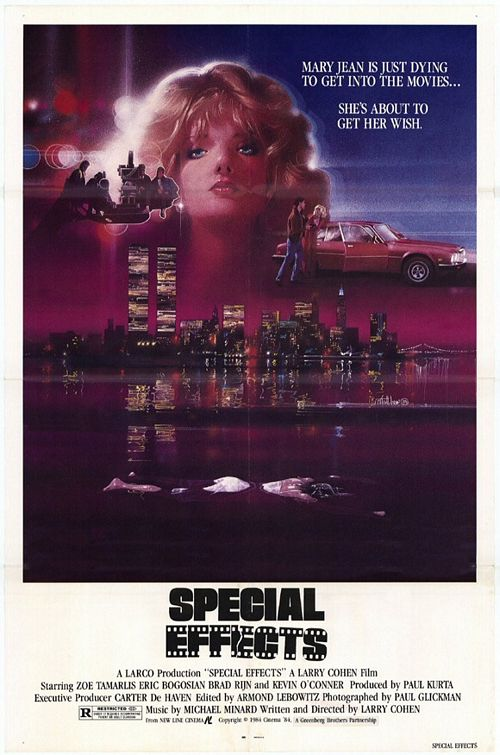
In today’s movie writer/director Larry Cohen takes this concept and gives it an intriguing spin. Neville (Eric Bogosian) is a down-and-out filmmaker. His last picture bombed at the box office and he is looking to make a buzz with his next project. He is fascinated with the capturing of the killing of Lee Harvey Oswald and how movies can never quite recreate death in the same way. Struggling actress Andrea (Zoe Tamerlis) answers an ad and shows up in his apartment/studio for an audition. Neville uses the allure of potential fame to get the women into bed with him, which he usually films with a camera hidden behind a two-way mirror. During the sex Andrea begins to belittle him, which angers him enough that he strangles her. Realizing that he has the murder captured on film he decides to use it to his advantage. He disposes of the dead body and then hires another woman named Elaine (also played by Tamerlis) who looks just like Andrea to star in his next film. He will then incorporate the scene of the murder into the movie. Audiences will think it was done with special effects and be so impressed with how realistic it looks that it will give Neville numerous accolades for his film making skill and bring him back to the top of the directing world.

Cohen uses the story as an excuse to expose the seedy, unglamorous side of low budget filmmaking many of which based on his own observations from working in the business. One of the more startling revelations that he shows is how the movie world is such an allure to some people that they will completely sell-out to get into it even if it means losing their dignity. This comes to a head in what is probably the film’s strongest scene when Neville is very rude and brash with Elaine when he first meets her. He shouts at her like she is sub-human and simply a piece of property, but the prospect of starring in a movie is so strong that she doesn’t walk out of there like most people would probably want to do. What is worse is the fact that Neville is aware of this and realizes he can get away with it.

The movie also looks how demeaning it can sometimes be being a filmmaker as well. Having to work and deal with various personalities and egos as well as fighting to remain in control of the project and vision. He also shows how exhausting the research phase of a production can be and how breakthroughs and inspirations usually come about by complete accident. The extended scene dealing with them trying to find an actress who resembles Andrea and auditioning hundreds of different women without any luck only to come upon Elaine by complete accident when they go to a Salvation Army store is a good example of this.

Cohen also infuses some creative camera work and directorial flair. The opening sequence showing Andrea prancing around topless in what looks to be the Oval Office of The White House has panache. The shot showing rows upon rows of hundreds of headshots of young and aspiring actresses, which includes an amusing one of Dustin Hoffman in his Tootsie character, lining the floor is impressive. I also liked the way Neville’s apartment is captured when Andrea first walks into it as well as extreme close-ups of circuit breakers being put back into a circuit box, which is really cool.

Tamerlis is fantastic in the lead. She shows a great awareness and natural acting ability in front of the camera. She plays the dual roles with two very distinct personalities and accents both of which are good. Her presence makes the film more interesting and the scenes that she is not in lack the same energy.

Bogosian easily conveys the obnoxious sarcastic personality of his character, but at times his facial expressions seem to be either lacking or over-exaggerated. Brad Rijn who plays Andrea’s husband who later gets involved in Neville’s project is weak and annoying. In some ways he seems to be the right pick for someone playing a country hick, but he has no charisma and looks too scrawny especially with his clothes off.

For a low budget 80’s flick the film has enough twists and a good enough pace to be marginally entertaining. The only thing that I really didn’t like was the synthesized electronic music score that drones on endlessly like in one of those 80’s porn flicks. I think the reason I liked the scene where Andrea’s dead body is shown inside a parked car in a lonely area of Coney Island is because it didn’t have any music and instead used the natural ambience of the location, which helped make it distinct and should’ve been done with the rest of the movie.

My Rating: 5 out of 10

Released: November 16, 1984

Runtime: 1Hour 33Minutes

Rated R

Director: Larry Cohen

Studio: New Line Cinema

Available: VHS, DVD

Q (1982)

Q

By Richard Winters

My Rating: 5 out of 10

4-Word Review: Giant bird eats humans

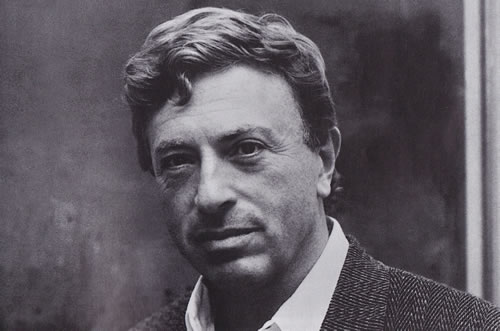
In celebration of cult writer/director Larry Cohen turning 72 on July 15th all this month on Mondays I will review five of his films that he did during the 80’s. Now Cohen will probably never win an Academy Award and may never be mentioned in the same context as Spielberg, Kubrik, or Hitchcock, but the man has had one hell of a career nonetheless. He has been writing for either television or movies since the late 50’s and continues to churn out creative, innovative stories and scripts. Not all of them are completely successful and some of them do misfire, but his ability to survive in the difficult, competitive Hollywood landscape and make his movies on his terms with virtually no studio interference is an amazing achievement in itself and therefore deserves recognition.

larry cohen 3

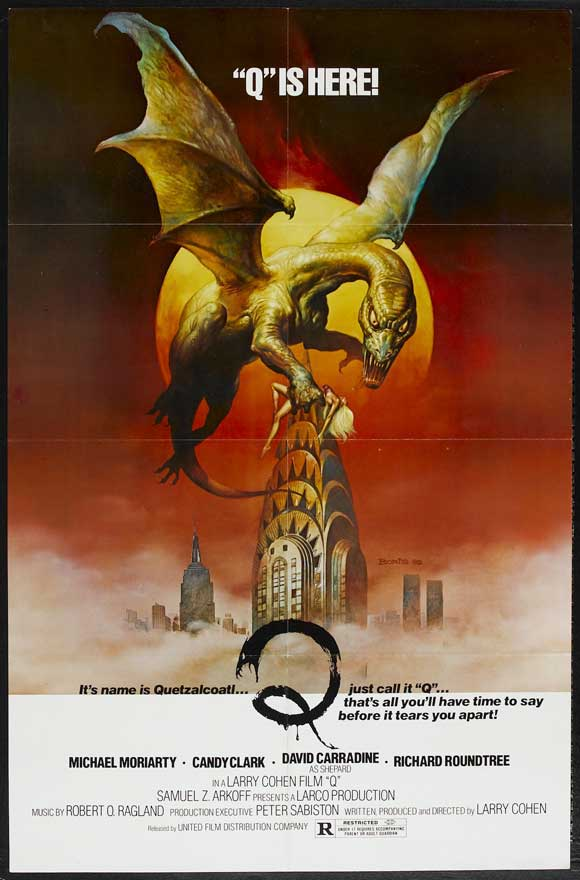
This film like most of his others has a completely outlandish plot this time involving a giant lizard-like bird that is actually the Aztec god Quetzalcoatl brought back to life and nesting inside the top crown of the Crysler Building in downtown Manhattan. The bird lays a giant egg and feeds itself on unsuspecting people.  Jimmy Quinn (Michael Moriarty) is an out-of-work lounge singer who comes upon the bird’s nest accidently while running from the cops after a botched jewelry store robbery. He decides to use his knowledge of the whereabouts of the bird to his advantage and demands that the city pay him a million dollars before he leads them to it.

Despite the crazy plot the execution is rather conventional. There are long periods of seemingly unending dialogue that is not interesting and does not propel the movie along. The bird attacks are too brief and needed to be strung out more. The movie would have worked much better and had it had a consistent tongue-in-cheek approach and editing that was more kinetic and lucid-like.

Moriarty saves the film with entertaining, edgy performance. This is a man who is known for his erratic behavior off-screen, which pretty much killed his career. In 1971 while performing on stage in a play in Houston he suddenly broke from character and told the audience as well as his fellow cast members that he felt tired and didn’t want to continue and then promptly walked off stage and went home. He was also fired from his most famous role as Ben Stone in the hit series ‘Law and Order’ for similar types of odd incidents and yet that is exactly why he is so perfect here. He gives the thing a much needed boost of weird energy and I especially liked the part when he leads two of his partners in crime up to the bird’s nest and when the bird starts feeding on them he climbs down the ladder shouting:

“Eat them! Eat them! Crunch! Crunch! Eat them! Eat Them!”

I also enjoyed when he is sitting at the bargaining table with the city and police officials demanding a million dollars before he tells them the whereabouts of the bird and insisting that it all must be tax free because:

“I’ve never paid taxes before in my life and I don’t intend to start now.”

His character is lazy, conniving, cowardly, bombastic, self-centered, egotistical, talentless, and deluded and yet strangely endearing and I even felt a bit sorry for him at the end. Candy Clark as Joan his more grounded and conscientious girlfriend makes for a good contrast.

I wasn’t as crazy about David Carradine as the tough New York cop who deals with Jimmy during his investigation. Carradine seems too aloof and detached and this doesn’t help to create any tension. Richard Roundtree as his partner is much better and I would have had him the sole investigator and cut Carradine out completely.

The special effects are a little bit better than what I had initially feared for a low budget 80’s flick, but they are not real great either. The bird when shown flying through the air just doesn’t seem gigantic or frightening enough and ends up looking like a poor man’s Ray Harryhausen creation. The final shootout with the bird was clearly done on a matted screen and looks very tacky. I actually thought the baby bird that comes out of the egg was the only halfway scary and effective moment in the whole film.

What Cohen does get right is reflecting the ambience and culture of the New York neighborhoods and crowded street culture. The aerial footage of New York’s skyline is also spectacular.

My Rating: 5 out of 10

Released: October 29, 1982

Runtime: 1Hour 33Minutes

Rated R

Director: Larry Cohen

Studio: Larco Productions

Available: VHS, DVD, Blu-ray

King of the Gypsies (1978)

king of the gypsies

By Richard Winters

My Rating: 5 out of 10

4-Word Review: Daddy is a psycho

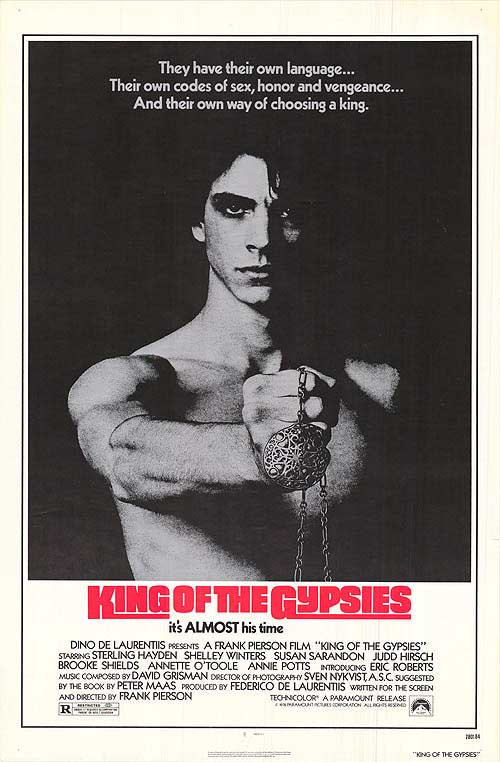
Dave (Eric Roberts) is the rebellious son of Groffo (Jud Hirsch) who no longer wants to be a part of the gypsy clan that he was raised in and instead a part of the American dream. However, when Dave’s grandfather Zharko (Sterling Hayden) lies dying in his hospital bed he gives the coveted medallion to Dave making him the new king of the gypsies. This sends Groffo into a jealous rage and orders two men to go out and kill Dave who now must elude them while trying to get his life together and help get his younger sister Tita (Brooke Shields) out of the clan as well.

Although far from being a complete success the film does manage to have a few unique and even memorable moments. The best is when a young Dave is used as a decoy in an attempt to rob a jewelry store. His mother Rose (Susan Sarandon) pretends to be a customer looking over some diamonds. When Dave creates a ruckus she tries to calm him down by having him drink a glass of water while also having him swallow a diamond that she has discreetly lifted from the display table. They are then able to walk out of the store when the merchants are unable to prove that they stole it only to have Rose later retrieve the jewel when Dave poops it out. Having Groffo put a 10-year-old Dave behind a wheel of a car and drive it down a busy Brooklyn Street is about as nerve-wracking as any car chase I’ve seen. The scene where Groffo tries to physically force Dave to have sex with his own mother is also incredibly startling.

However, despite these few interesting moments the film overall never really gels. The first half showing how the gypsy people live seems a bit clichéd and the way they openly cheat other people in order to make a living makes them unlikable and uninteresting. The only time it ever gets half way compelling is when it shows Dave struggling to survive on the mean streets of New York after he runs away from his psychotic father. Unfortunately this gets ruined when it constantly brings his family and past coming back to haunt him. The cat and mouse game that he plays with his father is not original and Hirsch makes for a very boring villain. He is unable to convey a menacing quality and thus there is never any real tension. The violin soundtrack compliments the gypsy tradition, but eventually becomes annoying.

Roberts is solid in his film debut. His voice-over narration coupled with his raw delivery is effective. Had the film focused solely on him and left out the silly gypsy sub-plot it would have worked much better.

Sarandon gives it some energy and she has the most effective accent. Shields is pretty much wasted and appears in only a handful of scenes. The biggest irony here is that the two played a mother and daughter before in Pretty Baby, which came out just 7 months before this one.

Hayden really seems to be having fun as the bombastic self-proclaimed King Gypsy. Watching him feud at the beginning with Michael V. Gazzo who plays the head of another gypsy clan is somewhat diverting. It is also interesting to see Shelly Winters in a part that has less than three speaking lines. This woman never seemed to ever want to shut up both on-screen and in interviews, so seeing her in a part that allows for so little dialogue is quite a novelty, but she still succeeds with it particularly in the part where she grieves over her dead family members.

It is fun to see a young Danielle Brisebois as well as Matthew Labyoreaux who later went on to play Albert in ‘Little House on the Prairie’. Annie Potts is good in a brief part and Patti LuPone makes her film debut in an uncredited bit.

My Rating: 5 out of 10

Released: December 20, 1978

Runtime: 1Hour 52Minutes

Rated R

Director: Frank Pierson

Studio: Paramount

Available: VHS, DVD, Amazon Instant Video

I Can Make You Love Me (1993)

stalking laura 2

By Richard Winters

My Rating: 7 out of 10

4-Word Review: Stalking is his passion.

To any true film fan TV-Movies have always been considered vastly inferior to the theatrical kind and I would be the first to agree.  However, there is one area where they can shine and that is in their depictions of true-life crimes. Mainly this is because they give it more time as they are usually shown in two parts over consecutive nights.  Also, their lower budgets worked better in recreating the docu-drama style.

Over the years there have been some classics in this area that have helped bring substance to the headlines as well as a better understanding of the victims, the perpetrators and the investigation. Some of the best that I would suggest would be Helter Skelter (1976) starring the Emmy-award winning Steve Railsback as Charles Manson.  The Deliberate Stranger (1986) with Mark Harmon as serial killer Ted Bundy.  There is also Deadly Intentions (1985), A Death in California (1984) with Cheryl Ladd as a woman who falls in love with her rapist, and my personal favorite Fatal Vision (1984) about the infamous Dr. Jeffrey Macdonald.

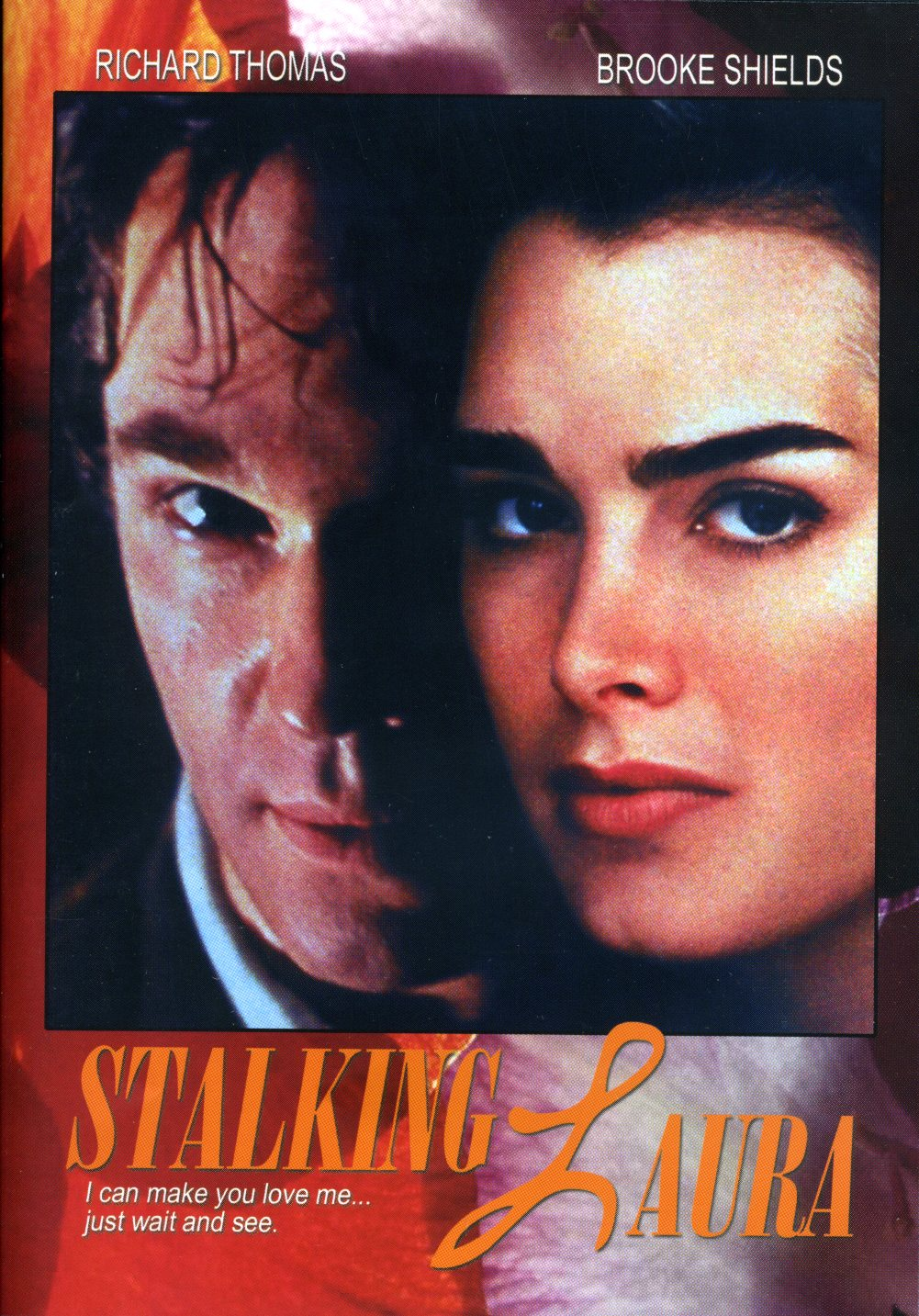
This film deals with the case of Richard Farley (Richard Thomas) that helped develop California’s first anti-stalking laws. Farley was a pudgy, middle-aged man who worked as a computer programmer at a company named ESL in Sunnyvale, California in 1984.  He had been there for 9 years and had no criminal record, but became unhinged when he met an attractive 23- year- old new employee named Laura Black (Brooke Shields).  He began to follow her around constantly as well as sending her gifts and love letters on a daily basis.  When she refused his advances he became even more persistent.  This continued for 4 years until, through his obsession, he ended up losing his job, his house, and his entire life savings, but his stalking continued. Black finally filed a restraining order against him, which sent him into a rage.  He armed himself with an array of guns, stormed the company and shot seven employees including Black, who managed to survive.

Unlike some of the previous movies that I mentioned above, this film did not get the two-part treatment.  Everything that happened gets crammed into 95 minutes, which makes a lot of it seem rushed.  Although the events took place over a four year period, the movie gives you the impression that it was just a few quick months. For the sake of time the film seems to leave certain interesting facts out, which is a shame.  For instance, in real-life Farley actually stood in front of Black’s house for hours going through every conceivable combination on her garage door opener until he was finally able to crack it.  There are also certain things that Farley expressed to Black through his letters that he ends up telling verbally to her here, which causes some of the dialogue to seem awkward.

The film was also not given much of a budget.  It was filmed on a grainy, videotape type of film stock that looks like it was done on somebody’s camcorder.  The story took place in California and yet for whatever reason it ended up being filmed in Topeka, Kansas and the differences in the landscapes are obvious and even a bit disconcerting.

Where the film really seems to come together is during the final 30 minutes where it recreates the office shooting. This sequence is well choreographed and makes you feel like you are right there.  The conversations that Farley has with the negotiator during these scenes are revealing.  I was confused after reading the accounts of the incident as to why Farley would have only shot Black once (in the shoulder) and then allowed her to escape.  Apparently, through his conversations with the negotiator, this was his intention.  He only wanted to injure her and then force her to survive so she would have to live with the ‘guilt’ of having ‘caused’ this by refusing to go out with him.

Another big selling point is the performances of the two leads. Richard Thomas as Farley is astounding.  He does not resemble the actual Farley, but makes up for it with a convincing portrayal that leaves a lasting impression. Shields is excellent as well. Normally I never gave her much credit in the past, but found a new appreciation for her acting ability here.  She does an especially good job during the scenes where she is shot and trying to escape.  It seemed like she was genuinely stressed and in real pain.

Another thing I liked here is that the character of Laura Black is portrayed as being very determined, resourceful, and strong.  She had to struggle with the company about this matter as initially they sided with Farley and was convinced that she must have ‘lead him on’. I felt it was a testament to her strength that she continued to keep working at the company and was still working there five years later when this film was made.

If you find true-life crimes to be intriguing and enjoy seeing them recreated to help your understanding of them, then TV-movies are you best source for this type of genre.  I felt that this case, with its myriad of psychological implications, was no different.

My Rating: 7 out of 10

Released: February 9, 1993

Runtime: 1Hour 32Minutes

Alternate Title: Stalking Laura

Not Rated

Director: Michael Switzer

Studio: Leonard Hill Films

Available: DVD

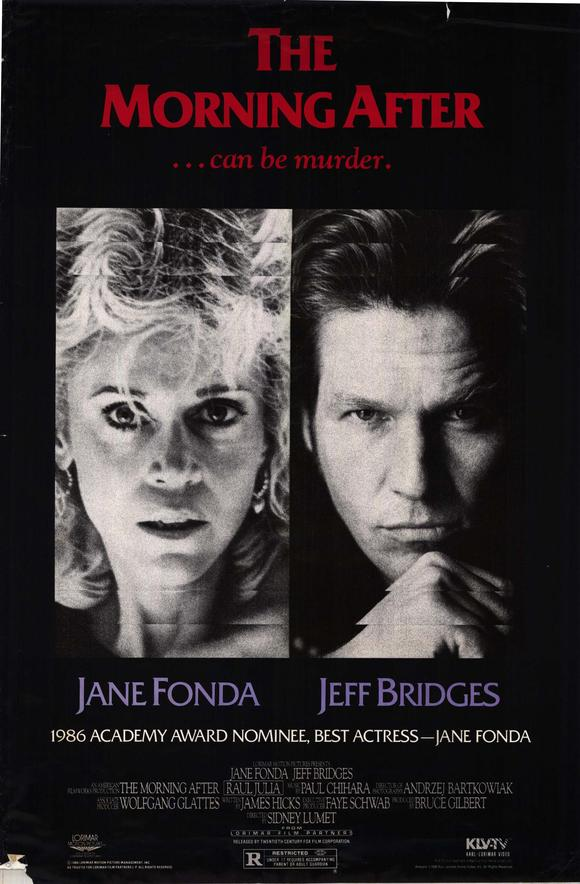
The Morning After (1986)

the morning after

By Richard Winters

My Rating: 5 out of 10

4-Word Review: She can’t remember anything.

Alex (Jane Fonda) is an out of work actress and alcoholic who is prone to black outs. One morning she wakes up to the find that the man lying beside her has been murdered. She isn’t sure if she did it or not as she can’t remember anything. She cleans up the place and then by chance meets Turner (Jeff Bridges) a former cop who tries to help her prove her innocence.

Starting out right away with her waking up to find the dead body doesn’t work. Some background to the character would have been better as without it the viewer doesn’t particularly care about the character’s predicament. It took me a long while before I could get into it and even then it was only at a lukewarm level. The laid-back and melodic jazz soundtrack doesn’t help. For a thriller it is completely out-of-place and as good as a director as Sidney Lumet is he seems to have problem in that area as the musical score selected for Family Business another film that he did was also a terrible choice.

The film has one interesting twist near the middle, but the pacing is so slow that whatever intrigue it gave me quickly subsided, which is the film’s biggest problem. It doesn’t know if it wants to be a thriller, mystery, drama, or love story. Too much time is spent dealing with Alex’s budding relationship with Turner, which isn’t interesting. By the time they do get back to the mystery you really don’t care anymore. There are also not enough suspects and I had figured out who the culprit was long before the revelation comes about.

Fonda is competent particularly in a teary-eyed emotional sequence where she tries to somehow justify her pathetic self-destructive existence. The character though is unappealing and it may take a while for the viewer to warm up to her if at all. I did like her in the blonde, puffy 80’s hairstyle, but at the half way mark she changes back to her more natural brunette look, which I felt made her look older.

Bridges character helps stabilize Fonda’s and in that regards his presence is helpful, but having them meet by complete chance and then having him get so involved in her quandary seemed implausible. It would have been better and made more sense had he been a longtime friend who she turned to in her time of crisis. Although Raul Julia has a less screen time he still adds a lot more energy than Bridges.

Kathy Bates, Bruce Vilanch, and Frances Bergen (Candice’s Mom) can all be seen in brief bits. I also want to mention Richard Foronjy who nails the caricature of a streetwise big city cop perfectly.

Although the film is now 27 years old it really isn’t too dated. Only two issues in this area come to mind. One is when Alex can’t get any money out of the bank because it is closed due to a holiday and there doesn’t seem to be any such thing as ATM machines. Another occurs when a police investigator asks the Raul Julia character if he is gay by using a derogatory term, which wouldn’t go over today. However, Julia’s comeback line “How bad do you want to know?” is a good one.

My Rating: 5 out of 10

Released: December 25, 1986

Runtime: 1Hour 43Minutes

Rated R

Director: Sidney Lumet

Studio: Lorimar Productions

Available: DVD, Amazon Instant Video

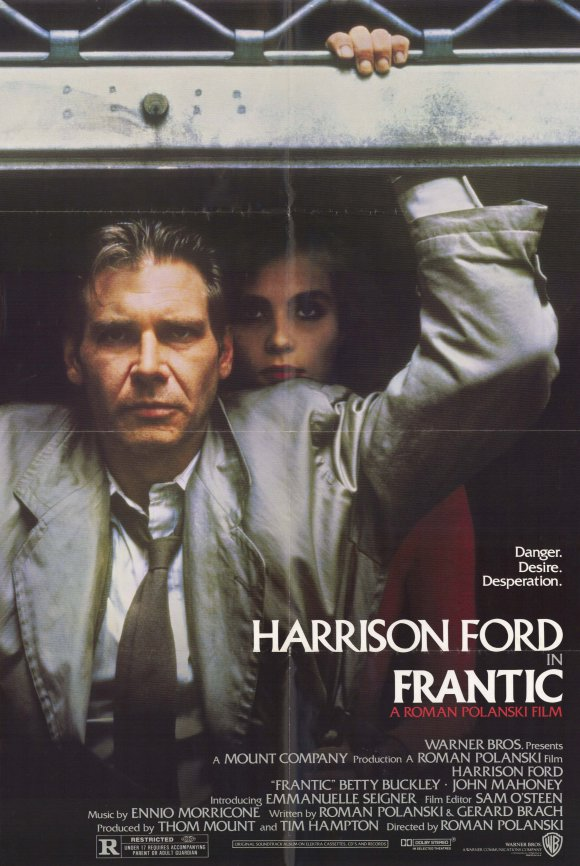
Frantic (1988)

frantic

By Richard Winters

My Rating: 6 out of 10

4-Word Review: Where is his wife?

Dr. Richard Walker (Harrison Ford) and his wife Sondra (Betty Buckley) travel to Paris where he is to take part in a medical conference. They find when they get to the hotel room that they have a suitcase that looks like theirs, but is the wrong one. They call the mistake into baggage claims, but think nothing more of it. As Richard takes a shower his wife gets a call and then disappears. When Richard gets out of the shower he can’t find her anywhere. Asking around he finds some clues that leads him to believe that she was kidnapped and that it may have something to do with the mysterious suitcase.

The film starts out well with an interesting premise and some good Hitchcockian touches, but eventually it becomes just another conventional thriller that gets overblown and is full of loopholes. One that really annoyed me the first time I saw it has to do with Richard going to a local bar to ask if anyone has any information. He does this twice and both times a bar patron that is sitting next to him overhears the conversation and comes up with a crucial bit of information. If this were to happen once it would be considered a really lucky break, but to happen twice makes it seem too convenient and coincidental. However, the biggest plot hole is when the bad guys come to the hotel to kidnap the wife and hold her for ransom until they get their suitcase when instead they should have just taken the suitcase since it was RIGHT THERE to begin with.

Ford’s brash demeanor doesn’t seem particularly right for the part. Normally he can get away with it and even make it charming in a caustic sort of way, but here it doesn’t work. I did like that everything is seen from his point of view and the viewer is as perplexed as he is about the circumstances. One part has him crumpling up a piece of paper and eating it and I kept wondering how many takes they made him go through on that one before they got it right.

Emmanuelle Seigner, who at the time was director Roman Polanski’s girlfriend, comes off best. The two married about a year after the film was released and now 23 years and 2 kids later they are still a couple. She plays Michelle who Richard meets along the way and helps him find the bad guys with her inside information. I liked her youthful appeal and the contrasting ages and perspectives between her and Ford’s character make their scenes together interesting. However, the punk outfit she wears does nothing for her and looks tacky and at this point woefully out of style.

The on-location shooting in Paris helps give the film an extra appeal. I realize this is mainly because of Polanski’s exile there, but it is to the film’s benefit. I liked how the viewer mainly just sees the street scenes and local pubs and roadways giving the whole thing a sort of tourist perspective.

There is one exciting and very well filmed sequence showing Richard walking on a narrow and steep rooftop in order to get into Michelle’s apartment that proves to be the film’s most intense moment. Otherwise this thing never clicks and tends to get less suspenseful as it goes on. For basic entertainment it is okay, but there is little if any payoff. This pales badly alongside Michelangelo Antonioni’s L’avventura, which is another film with pretty much the same premise, but instead that one takes things in a much more offbeat, fascinating, and mind-expanding direction.

My Rating: 6 out of 10

Released: February 26, 1988

Runtime: 1Hour 59Minutes

Rated R

Director: Roman Polanski

Studio: Warner Brothers

Available: DVD, Blu-ray, Amazon Instant Video

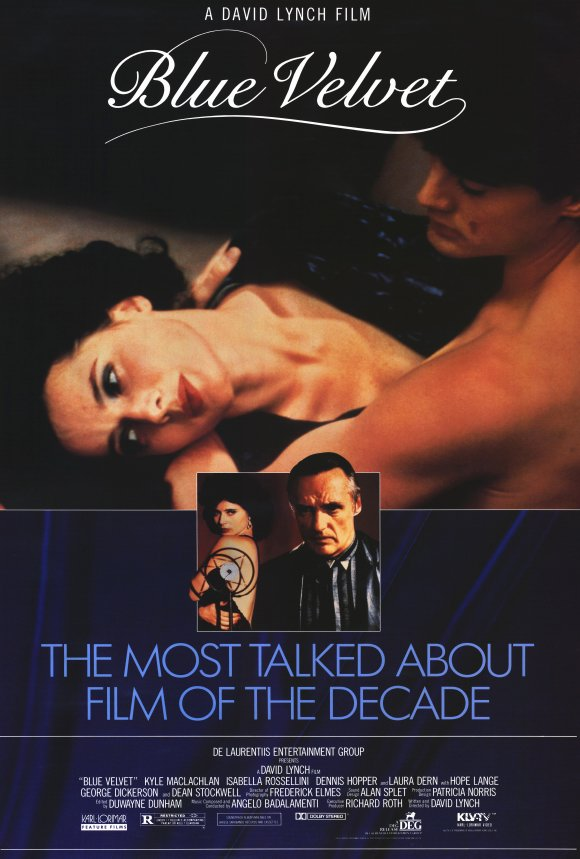
Blue Velvet (1986)

blue velvet 1

By Richard Winters

My Rating: 6 out of 10

4-Word Review: Whose ear is it?

Jeffrey (Kyle MacLachlan) is a young man living in a quiet small town who one day finds a mutilated human ear in an empty field. This gets him involved with a murky kidnapping case involving Dorothy (Isabella Rossellini) and a strange sinister man by the name of Frank (Dennis Hopper).

The offbeat plot evolves well and remains if nothing else captivating. Hopper makes the most of what was at the time his ‘comeback’ role creating a memorable villain. The casting of Rossellini was an inspired choice as she adds a unique flavor to the proceedings and sings a cool rendition of the title tune. The scene involving Dean Stockwell and his strange clan leaves a memorable impression as well.

Director David Lynch keeps a tight grip on his uniquely odd vision and makes sure that it permeates every sight and sound in the picture. The best part, or at least my favorite, comes at the beginning when the camera zooms into a nicely manicured front lawn until it shows an extreme close-up of all the bugs crawling around underneath it in the dirt.

I first saw this film upon its initial release and was mesmerized by it, but now twenty plus years later it doesn’t seem quite as cutting edge as it once did. There have been so many similarly weird films in the intermittent years that this one becomes lost in the shuffle and even dated.

Several scenes get stretched longer than they should be and the second half becomes draggy. The scene where Jeffrey is chased down by an angry boyfriend of Sandy (Laura Dern) only to have the naked Dorothy jump out of the bushes where the boyfriend then apologizes profusely seems now unintentionally funny. The contrived ending, which features a chirping mechanical robin, looks cheesy and tacky.

Despite the fact that the film has not stood the test of time it still has its moments, but it is no longer as fresh or original and the Hopper character is not as frightening as he once was.

My Rating: 6 out of 10

Released: September 19, 1986

Runtime: 2Hours

Rated R

Director: David Lynch

Studio: De Laurentiis Entertainment Group

Available: VHS, DVD (Special Edition), Blu-ray, Amazon Instant Video

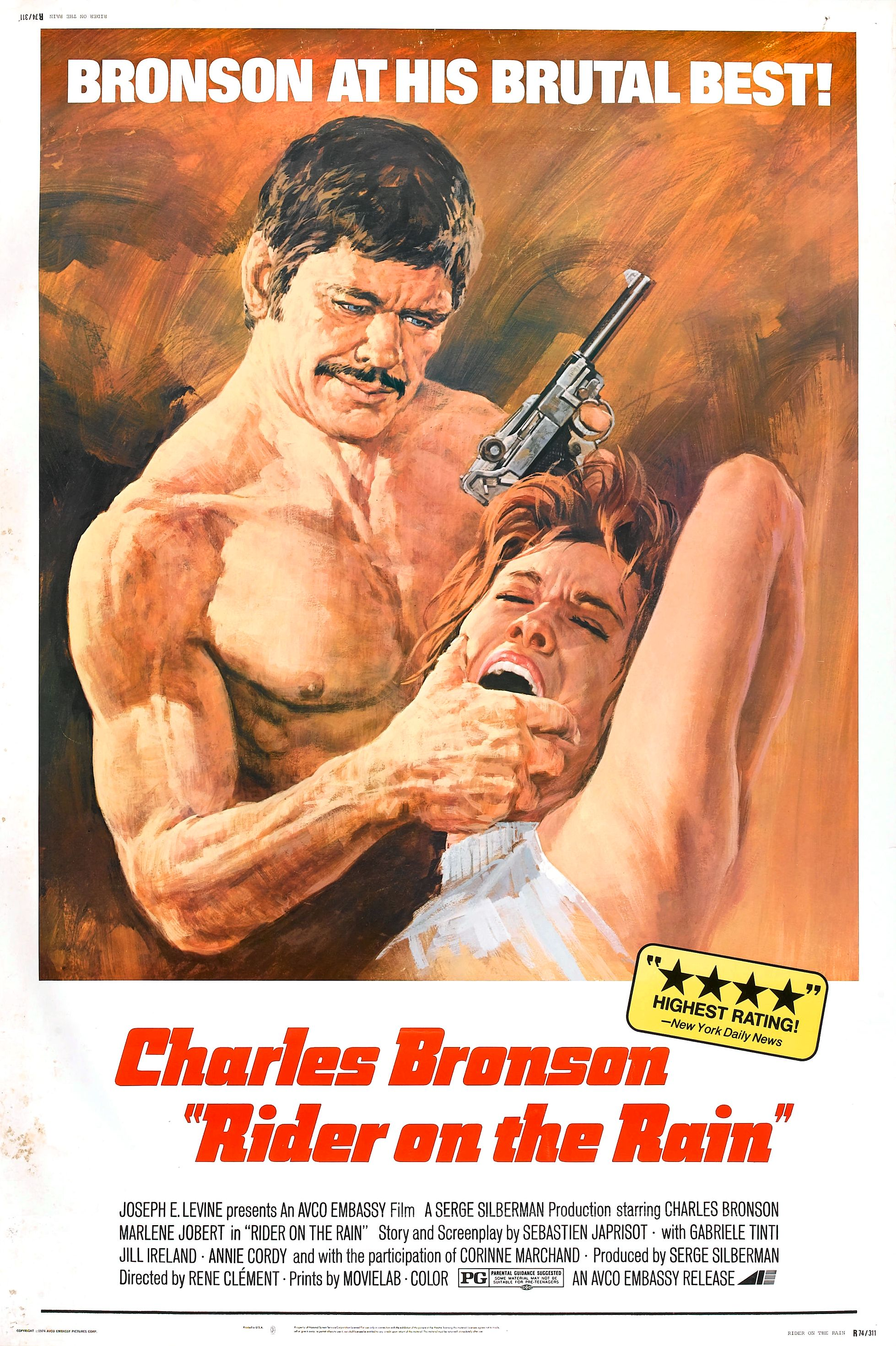
Rider on the Rain (1970)

rider on the rain

By Richard Winters

My Rating: 5 out of 10

4-Word Review: Chuck is in control. 

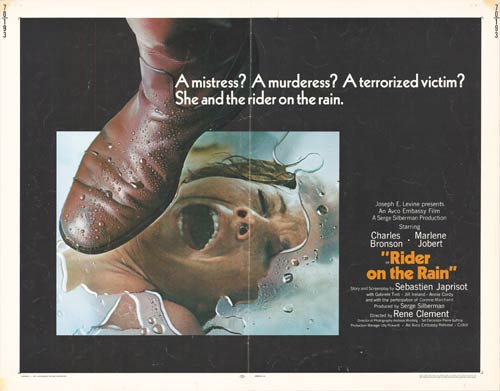
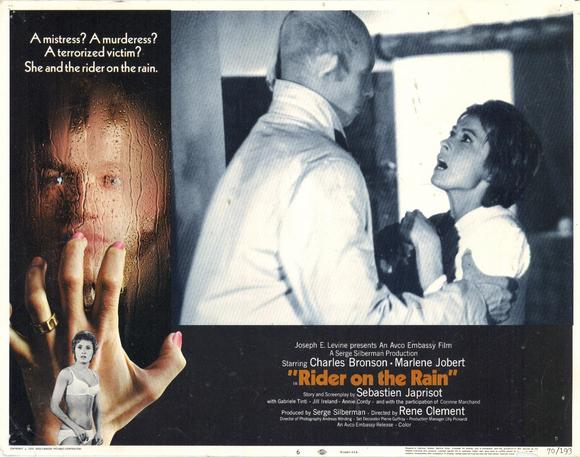
Supposedly the inspiration of The Doors song ‘Riders on the Storm’ this stylish mystery deals with Mela (Marlene Jobert) a beautiful young woman who finds herself being stalked by a strange bald headed man carrying a mysterious red bag. He follows her to her home where he then rapes her. She manages to get her hands on one of her husband’s rifles and shoots the man dead. She throws his dead body over a cliff and into the sea where she thinks that will be the end of it, but then an American by the name of Harry Dobbs (Charles Bronson) shows up who seems to know all about it and will not leave Mela alone until she confesses to the whole thing.

Director Rene Clement is a master at his craft. Every shot and scene has an evocatively stylish flair particularly at the beginning. The lighting, camera work, editing, and moody score by Francis Lai are first rate and help grab the viewer in right away and keep them hooked. There are strong shades of Hitchcock, but like with Hitch the performers become nothing more than pawns to the director’s vision. The actors seem a bit stifled and unable to create any nuance to their characters. Everything is done to propel the story, which is fine, but sometimes expanding the scenes to allow the actor’s to expound more gives a film a fresh and natural flow, which is lacking here. The rape sequence relies almost completely on the breathing sounds of Mela and some interesting edits, which I felt was good, but it could have been even more provocative and cutting edge had this part been extended and a little more graphic.

While the script by Sebastien Japrisot is full of intriguing twists and nicely complex the middle part dealing with Harry’s seemingly unending interrogation of Mela goes on much too long and bogs things down. I would have liked to have seen a little more variation of their roles where at times Mela would get the upper-hand, but for the most part Harry remains in complete control and Mela is dominated and confused throughout, which isn’t as interesting.

rider on the rain 2

Jobert is sexy and adds a definite sparkle to the film. Normally I prefer women with long hair, but her short cut gives her a youthful appeal. Her blue emerald-like eyes make a great contrast to her reddish hair and her freckles helps accentuate the youthful and naïve quality of the character. Her husband Tony played by Gabriele Tinti, has the chiseled boyish looks of a male model with a pair of baby blue eyes that is almost as stunning as Marlene’s making this couple enjoyable to watch for their looks alone for both male and female viewers.

Bronson is at his tough guy best. He takes on seven men in a room and kicks their ass without breaking a sweat. Unfortunately that is all the action that there is and there needed to be more of it. Jill Ireland appears briefly as a character that has little to do with the plot, but looks gorgeous nonetheless.

The film’s final plot twist is rather boring and the conclusion is weak and non-eventful. Mystery fans may enjoy the film’s winding story, but Bronson enthusiasts will be disappointed at the film’s lack of action.

rider on the rain 3

My Rating: 5 out of 10

Released: January 21, 1970

Runtime: 1Hour 55Minutes

Rated R

Director: Rene Clement

Studio: AVCO Embassy Pictures

Available: VHS, DVD

Cold Sweat (1970)

cold sweat

By Richard Winters

My Rating: 7 out of 10

4-Word Review: Chuck won’t be intimidated.

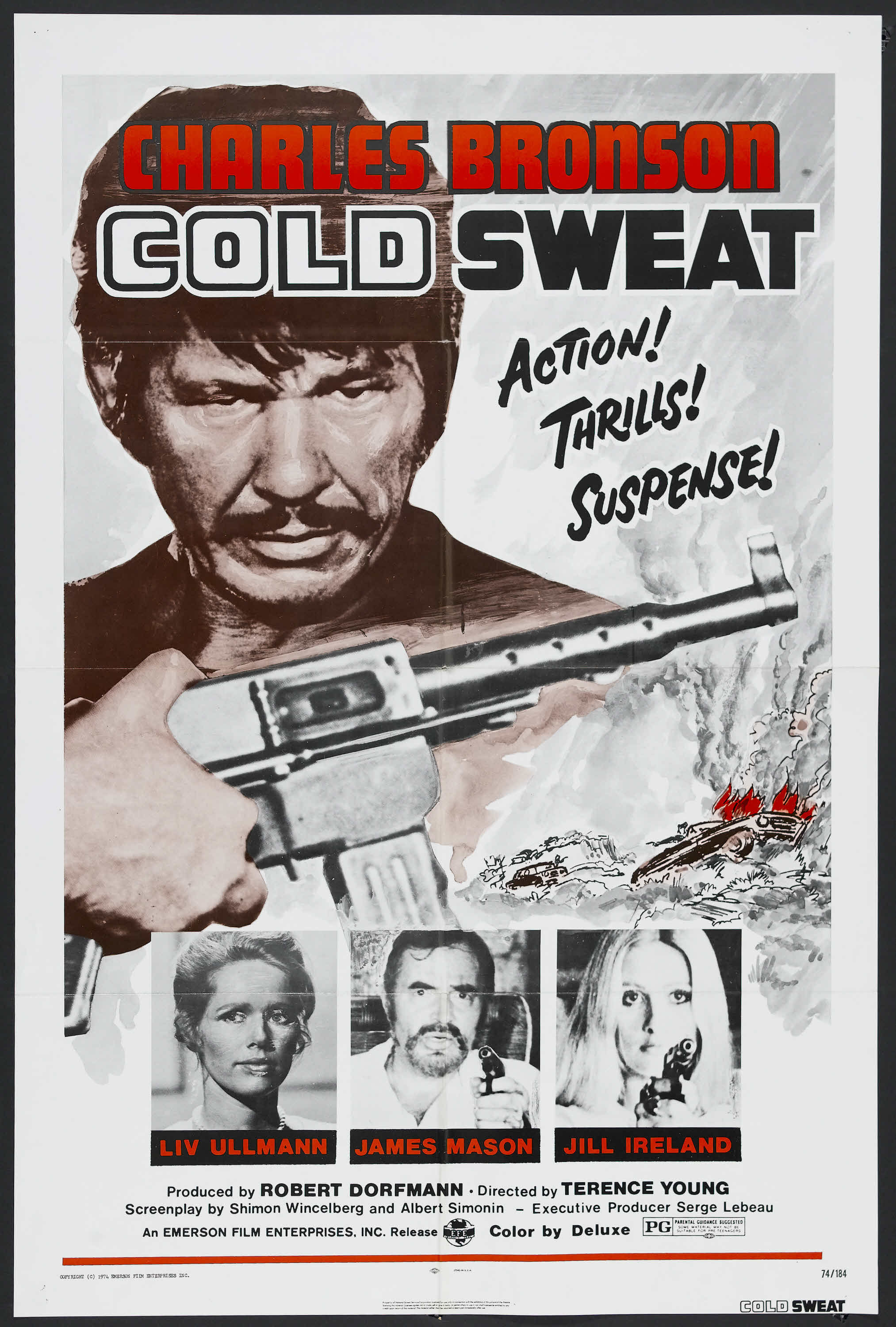
Joe Martin (Charles Bronson) is a man living with a past. Ten years earlier he was part of a prison break led by corrupt Captain Ross (James Mason). Joe was selected as the getaway driver, but after he witnesses one of them kill a police man he decides to drive off with the car and strand the others. Now he is living the quiet life in the south of France with his new wife Fabienne (Liv Ullmann) and her daughter Michele (Yannick Delulle), but as he starts to settle into his new lifestyle he finds that the old gang has tracked him down. They want him to be the boat driver in a drug deal they have planned and they won’t take ‘no’ for an answer. Fabienne and her daughter Michele are brought along for collateral, but Joe has a trick up his sleeve and instead kidnaps Ross’s girlfriend Moira (Jill Ireland) and puts her in an isolated cabin and when all parties converge onto the place is when the tensions and action boils over.

This is a simple film with the most basic of storylines. The characterizations are standard with no gray areas in-between. The good guys are really good and the bad guys really bad and nothing is ever nebulous as the tried and true formula gets followed from beginning to end. However, I liked it. Sometimes it is nice to have a film that isn’t trying to reinvent the genre and does things in a compact, crackling non-think style where the viewer can sit back and enjoy an old fashioned white knuckler without having to be challenged. After a slightly awkward start the film begins to roll and then never lets up. Chuck puts his gruff, stoic caricature to the hilt here helping propel the viewer emotionally into the action as he finds increasingly novel ways to overpower the baddies just as the odds look stacked against him.

Having him married to Ullmann was offbeat casting, but it works. Ullmann who has quite possibly one of the most expressive faces in all of cinema seems game for the proceedings. It was nice seeing her in something different than a brooding Ingmar Bergman drama. She gets right into the fray and becomes an integral part of the story and succeeds quite well.

The always reliable and many times brilliant Mason sports an American accent and its fun. He also takes part in a great death scene that gets amazingly prolonged until his increasingly pale complexion becomes genuinely disturbing.

Ireland shows flair as a jaded hippie type. Her and Chuck’s sparring clicks and casting the real-life couple as characters with animosity for the other is cute. I just wished that director Terence Young had played it up more and given Ireland more screen time.

Having the second half of the film take place almost exclusively at an isolated locale gives the picture added personality, but what impressed me the most was the action. In particular was a car chase along the long, winding French roads. I know the car chases in Bullitt and The French Connection get the honors for having the best and most famous chase sequences, but the one here comes amazingly close. I found myself turning uncomfortably in my seat as Chuck’s car travels each curve at high speeds and when he takes the auto off the road and onto the rugged terrain I was out of breath. The foot chase between Fabienne and her daughter and one of the lone gunmen along the ragged, rocky landscape is equally exciting and well captured at different angles.

This one is sure to please Bronson fans as it has all the ingredients his films are known for. My only complaint is with the DVD transfer available on Amazon Instant. Normally I love the way Amazon has made available films that are hard or even impossible to find and most of the time picture quality is decent to good, but here it looks like someone’s old home movie with a color that is faded and at certain spots completely washed out. It also very grainy and looks like it was taken from an old film stock, or lost VHS tape. The less than ideal presentation unfairly taints what is otherwise a solid production that deserves a much better looking reissue.

My Rating: 7 out of 10

Released: December 18, 1970

Runtime: 1Hour 34Minutes

Rated PG

Director: Terence Young

Studio: Fair Film

Available: DVD, Amazon Instant Video