Category Archives: Obscure Movies

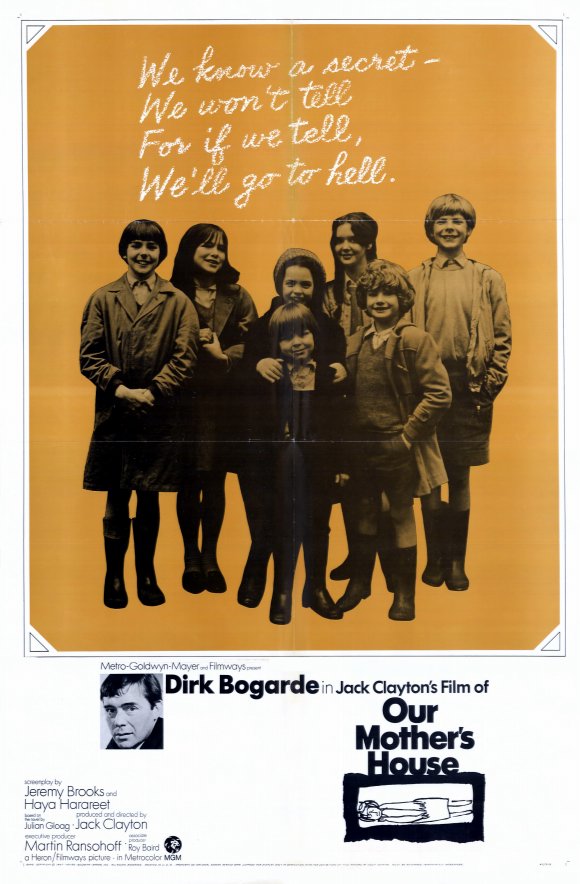
Our Mother’s House (1967)

our mothers house 1

By Richard Winters

My Rating: 6 out of 10

4-Word Review: Life after mother dies.

Seven children live with their mother inside a large English house. She is sickly and when she dies they decide to keep it a secret by burying her body in the back garden and then continuing on as normal as they fear they will otherwise be sent off to an orphanage. Things go surprisingly well for the most part, but then their alcoholic father Charlie (Dirk Bogarde) reappears after a long absence, which sends everything spiraling out of control.

Director Jack Clayton lends an amazing amount of control and freedom to the child performers and the result is fantastic. The kids give solid performances and really carry the movie. Margaret Brooks as Elsa is a standout and shows great maturity especially with the way she stands up to the Bogarde character. Phoebe Nicholls is also terrific and looks like a young Sandy Dennis. Mark Lester did this just before doing his star turn in Oliver and he is cute, but his stuttering is annoying.

Although the character is obnoxious, one-dimensional and predictable Bogarde does a fine job as always in his part in what was a bit of an offbeat turn for him as he doesn’t appear until about forty-five minutes in. Yootha Joyce is entertaining with her bit as the children’s callous nanny. She has interesting facial expressions and voice tones, which makes the most of her otherwise small role. She is probably most famous for playing the equivalent of the Mrs. Roper character in the British version of ‘Three’s a Company’, which was ‘Man about the House’ and it is a shame that alcoholism cut both her career and life short.

The film weaves an interesting atmosphere and this is the type of story where you have no idea where it is going. I also liked some of the side diversions that Clayton incorporates including having the children take a boat ride around the famous Dinosaur Court in the Crystal Palace Park. Erected in 1854 these were the very first dinosaur sculptures ever made in the world.

I also found it interesting that there are scenes showing the children praying and even reading Bible verses. This is not a spiritual film in any way and I personally have no stand on the issue, but it brought to mind how mainstream films today never show anyone ever praying even though a lot of regular people still do it and by putting it into the story it makes it more realistic instead of less.

The only real issue that I had with the movie that otherwise has some very intriguing elements is the ending, which comes pretty close to being a copout and leaves way too many loose ends open.

My Rating: 6 out of 10

Released: October 9, 1967

Runtime: 1Hour 44Minutes

Not Rated

Director: Jack Clayton

Studio: MGM

Available: YouTube

The Magic Garden of Stanley Sweetheart (1970)

the magic garden of stanley sweeheart

By Richard Winters

My Rating: 3 out of 10

4-Word Review: An aimless, carefree lifestyle.

Based on the novel by Robert T. Westbrook who also wrote the screenplay the film centers on Stanley (Don Johnson in his film debut) an underground filmmaker living in an apartment that is almost continually bombarded with the noise of a construction site next door. He has big dreams and ambitions, but at times seems awkward and unsure of himself. He meets Cathy (Dianne Hull) who he initially is just interested in for sex, but then he starts to fall-in-love with her and when she breaks up with him he finds it hard to handle.

The movie starts out well. I enjoyed the free-style direction and narrative. Cutting back and forth showing things as they are versus how Stanley would like them to be is fun, but the film deviates away from this when it would have been more interesting had it stayed this course all the way through. There is a certain element of one of Andy Warhol’s anti-movie movies here where the film tries to challenge the viewer’s conventional understanding of protagonists, plot, character development and all around narrative structure and it is no surprise that Warhol really liked this movie. It does have a strong cinema vertite approach that gives you a feeling like you are right there with the characters and to a certain extent helps bring the 60’s back to life.

Unfortunately the direction is too lackadaisical and unfocused and the story is uninteresting. Looking more at Stanley’s underground films could have given it a little more bite, but we only get a glimpse of one of his movies and then that thread is pretty much forgotten. The second half of the film centers on Stanley’s relationship and ultimate break-up with Cathy, which is too contrived and does not compliment the film’s otherwise offbeat approach. Funky and irreverent moments of humor are lost with a storyline that doesn’t seem to know where it wants to go or what to say. Tighter editing could’ve helped avoid some long stretches where nothing seems to happen.

The film though still has some interesting and unique scenes. I got a kick out of Stanley’s cluttered apartment and how he has to smell his food in his refrigerator to see what is still edible and for entertainment he stamps on cockroaches crawling across his floor. The part where he masturbates in a bathtub while reading a letter written by his mother is hilarious. His attempts at making a porno by getting his actress (Holly Near) good and drunk only to get her hornier than he is amusing. The naked body painting sex orgy that he has with two young nubile roommates has a nice sensual quality.

Don Johnson is excellent and the one thing that keeps this wandering film together and he can be seen totally nude from both the front and back. Hull allows for some diversion as a sheltered young lady who is initially shocked by the open sexuality around her, but eventually learns to embrace it. Native American actress Victoria Racimo is hot with her clothes on and off and reminded me a lot of 70’s adult film star Hypathia Lee. Brandon Maggart makes the most of his small bit as a gay man trying to come onto Stanley while inside a café. Michael Greer offers some edginess as Stanley’s slightly menacing friend Danny. His violent death that occurs near the end of the film and in front of his shocked mother does leave an impression, but we don’t know enough about the character for it to make much sense and just another thing put into the film without seemingly much thought.

My Rating: 3 out of 10

Released: May 26, 1970

Runtime: 1Hour 50Minutes

Rated R

Director: Leonard Horn

Studio: MGM

Available: None at this time.

Is There Sex After Death? (1971)

is there sex after death 2

By Richard Winters

My Rating: 4 out of 10

4-Word Review: It’s all about sex.

This is basically a compilation of vignettes all satirizing America’s new found sexual revolution and is not all that different from other similar ‘underground’ films of that period and should best be viewed as simply a relic of its era.

Some of the bits could be considered clever, but they fail to build any momentum. The one joke premise loses steam halfway through eventually making the constantly quirky insights by the constantly quirky characters tiresome and redundant. The sex and nudity, while in abundance, also become a turn-off. The majority of the participants, especially those in the nudist colony, are so old and out of shape you really wish they would have just left their clothes on.

Writer/director Alan Abel who also acts as the host and interviewer comes off best. His unblinking deadpan seriousness, even when in the middle of complete perversity, is right on target. It also features a funny interview with transvestite Holly Woodlawn, some spontaneous on the street moments and a climatic ‘Sex Olympics’. In fact if you get this on video it might be worth it to just fast forward it to that point.

My Rating: 4 out of 10

Released: October 24, 1971

Runtime: 1Hour 42Minutes

Rated X

Director: Alan Abel

Studio: Abel-Child Productions

Available: VHS

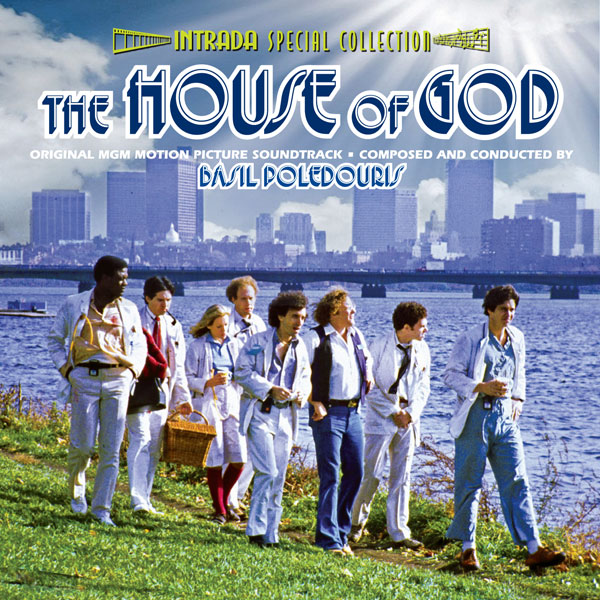
The House of God (1984)

the house of God 2

By Richard Winters

My Rating: 7 out of 10

4-Word Review: Caustic look at medicine.

This is an interesting, honest, and incisive look at the inner-workings of an average, everyday hospital. Here we have a group of interns fresh out of medical school that come face-to-face with the harsh realities of the hospital ‘business’. Their youthful ideals and energy is soon stamped out and replaced by apathy and indifference because of the ‘system’.

Even if you have no connection to the medical field you may still find this relatable. The hospital business really is just like the everyday business world with the same politics and contrasting personalities. In particular there’s the Jo character, which is well played by Lisa Pelikan. She is called a ‘slurpy’ and can best be described as a ‘company person’ someone with no outside life and thus becomes married to her job. She goes “all out” for every patient, even if they don’t want it, simply to hide her own emptiness and need for approval. You can find one in any office as well as an administrator who is completely oblivious to what is going on and tries to solve all issues by simply talking in circles.

The core group of interns is very identifiable. They start out as one, but eventually break apart. Some adopt the system and even play into it. Others begrudgingly learn to accept it while still others decide to simply drop-out altogether.

It is hard to put this film into any one type of category. It starts out as a sort of absurdist comedy, but then becomes much more realistic. There are moments of both satire and drama, but the second half becomes all serious.

There’s no real cinematic style and the overall visual quality is blah. The film can’t really be described as entertaining either. It’s more like an informative film by someone in the know. If you want to be ‘educated’ about what a hospital environment is really like then this needs watching. Charles Haid’s “Fatman” character alone makes it worth it.

Based on the novel by Samuel Shem this film was shelved by its studio and never released either theatrically or on video, which was unusual since this is a quality picture. This was supposedly from pressure by the American Medical Association who felt it painted too much of an unflattering light on hospitals although the book was even more critical. Finding a copy can be difficult although recently it has been broadcast sporadically on THISTV network.

house of God 1

My Rating: 7 out of 10

Released: None

Runtime: 1Hour 48Minutes

Rated R

Director: Donald Wrye

Studio: MGM

Not available at this time.

The Pleasure Seekers (1964)

the pleasure seekers

By Richard Winters

My Rating: 5 out of 10

4-Word Review: Finding romance in Spain.

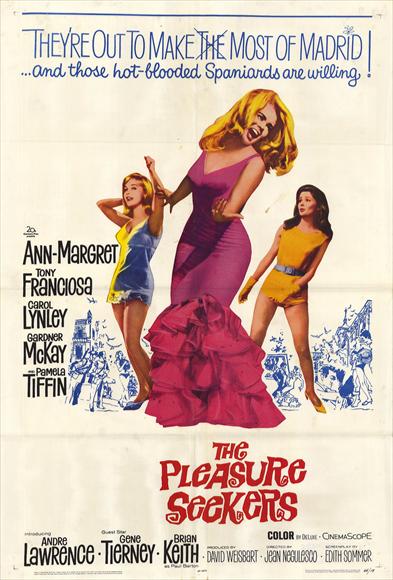
Three young American women decide to room together in Madrid. Fran (Ann-Margret) is the flirtatious, sexy one. Maggie (Carol Lynley) is more stoic and sensible while Susie (Pamela Tiffin) is the most naïve of the trio. Fran falls in-love with a dashing young doctor while Maggie has an affair with her much older boss Paul (Brian Keith) and Susie tries to get her playboy boyfriend Emilio (Anthony Franciosa) to settle down and marry her.

The film is cute and engaging for the most part and helped mainly by the performances and contrasting personalities of the three female leads. Ann-Margret is quite sensual especially when she sings and dances in her bikini on the beach. She also does a great rendition of the film’s title tune and I was at a lost as to why it wasn’t played over the opening credits as it has a definite verve and bounce. Lynley is solid as the more jaded worldly-wise of the three and helps give the story an anchor. Tiffin is amusing with her wide-eyed comments and despite being considered dumb turns out to be quite clever in the way she manipulates her womanizing boyfriend.

I was hoping the film would focus more on their living arrangement as it is evident from the beginning that their different habits and perspectives would be ripe for interesting comic scenarios. Instead the film veers almost exclusively to the romance angle, which makes the film one-dimensional and dangerously close to being completely vapid. Certain prime comic set-ups do not get followed through on and the part where Susie allows herself to be lead into Emilio’s car before she even knows his name is just too recklessly insane even for a more innocent era. The songs are sparse and spread so far apart that you almost forget that it is a musical. I did like the flamingo dance segment done on stage by a talented male performer and then later at the beach by two children who couldn’t have been more than 3-years-old.

Normally I am a great admirer of Brian Keith, but his appearance here is all wrong. His gruff, brash manner does not work as a love interest and there is absolutely no chemistry between he and Lynley making their love affair seem unbelievable. This was also Gene Tierney’s last film.  She gets a rather thankless, small part as Keith’s jilted, bitter wife. Her hair is much shorter and she looks very middle-aged and lost all her youthful beauty that she had during her classic film roles of the 40’s and 50’s, but her confrontation with Lynley during a party is okay.

Basically this is an updated version of Three Coins in the Fountain, which was done by the same director and the only difference being that it took place in Rome. The film is pleasant enough to be watchable, but rather empty and mindless and best suited for romantics looking for an evening of mild entertainment.

My Rating: 5 out of 10

Released: December 25, 1964

Runtime: 1Hour 46Mintutes

Not Rated

Director: Jean Negulesco

Studio: 20th Century Fox

Not Available at this time.

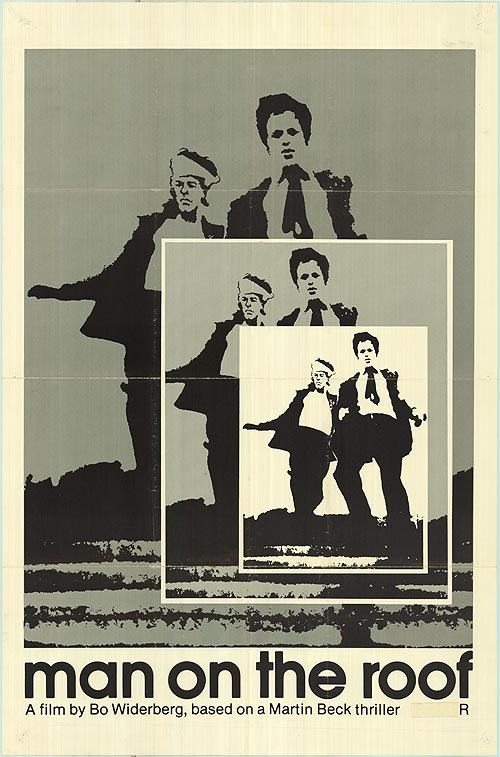
Man on the Roof (1976)

man on the roof 3

By Richard Winters

My Rating: 6 out of 10

4-Word Review: Sniper shoots at police.

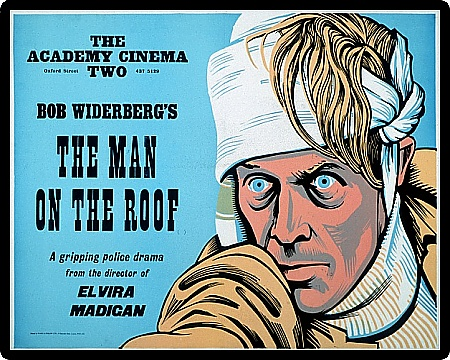
Police officer Stefan Nyman (Harald Hamrell) is shot and killed by an unknown gunman. During the investigation police detective Martin Beck (Carl-Gustaf Lindstedt) finds that Nyman was an officer who used brutal and sometimes unethical conduct in his dealings with suspects. Beck begins to consider this as a possible motive, but before he can decide on that the sniper climbs on top of a high rise building in downtown Stockholm and begins shooting and killing all uniformed officers.

The first hour of this Swedish production is different from just about any other police drama you’ve seen. The investigation is slow and meticulous and the identity of the killer is kept a complete mystery.  There is no heart pounding soundtrack and all the scenes are handled in a nicely subdued fashion.  The tension mounts slowly, but deliberately until it finally wraps you into it and becomes riveting.

By contrast the second hour is handled completely differently to the point that it almost seems like two movies in one. The second half becomes this high adrenaline action pic that includes an exciting helicopter crash, but it all proves jarring when compared to the first hour.

man on the roof 1

The story is also too reminiscent of the real-life Charles Whitman incident that occurred in Austin, Texas in 1966.  The ending is much too abrupt and leaves open too many loose ends and a more composite portrait of the killer would have also helped.

This film definitely has its moments both in action, drama and dialogue and is considered highly influential to the modern police dramas that we see today, but the way it comes together is a mishmash. Director Bo Widerberg was known for his poor planning and constantly rewriting scenes and dialogue sometimes while he was sitting on the toilet. The behind-the-scenes atmosphere of his productions was filled with chaos and confusion and the results can be easily detected here. Viewers that enjoy the first half may not like the second one and vice versa.

man on the roof 2

My Rating: 6 out of 10

Released: October 1, 1976

Runtime: 1Hour 50Minutes

Rated R

Director: Bo Widerberg

Studio: Svensk Filmindustri

Available: DVD (Region 2)

Clara’s Heart (1988)

claras heart

By Richard Winters

My Rating: 3 out of 10

4-Word Review: Clara dispenses her wisdom.

Leona (Kathleen Quinlan) is spending some time at a Jamaican resort trying to recuperate from the sudden loss of her infant daughter. There she meets Clara (Whoopi Goldberg) who is working as a maid there. The two quickly strike up a friendship and Leona then hires Clara to come home with her and take care of her 10-year-old son David (Neil Patrick Harris). David does not like Clara at first, but the two eventually attain a strong bond especially after his parent’s divorce.

After some box office failures with her comical films Goldberg decided to go back to doing drama with so-so results. The whole way that Clara gets hired on as a nanny seems awkward, forced and too quick and screenwriter Mark Medoff should have thought up a better scenario. Clara isn’t completely likable as she has a pushy personality and dispenses her opinions on her employers whether they ask for it or not. Eventually David’s father Bill (Michael Ontkean) stands up to her, but I think others would have confronted her sooner or even fired her.

The runtime is much too long for such slight and predictable material. The whole second half gets consumed with this deep dark secret about the death of Clara’s son Robbie and when she does finally tell David the story it is a nasty one especially for a supposedly ‘family friendly’ film such as this one. It also brings out the question that if Clara raised a son that was so very troubled why then would she be so confident about knowing how to raise someone else’s?

Harris is outstanding in his film debut and really helps to carry the movie along. The sarcastic and glib comments that he spews out is the film’s highlight.  The big glasses that he wears seemed too reminiscent to the Corey Haim character in Lucas, which came out just a couple of years before this one. I was also confused why during a school swim meet he would be the only one wearing a T-shirt when all the other swimmers weren’t.

Spalding Gray appears in support as Leona’s new boyfriend. The script though does not take advantage of Gray’s unique talents and the film would have been better served had they allowed him to ad-lib and improvise.  Also, the woman who plays Bill’s new love interest looks too much like Leona and in a visual medium such as this it is usually better to emphasize contrast.

The production values are good and I loved the large home that David’s family lives in and the by-the-lake location. However, the material is too formulaic and Clara’s and David’s bonding sessions become strained and corny. The film’s ‘feel-good’ message is lost in an approach that is sterile, mechanical, and by-the-numbers.

My Rating: 3 out of 10

Released: October 7, 1988

Runtime: 1Hour 48Minutes

Rated PG-13

Director: Robert Mulligan

Available: VHS, Amazon Instant Video

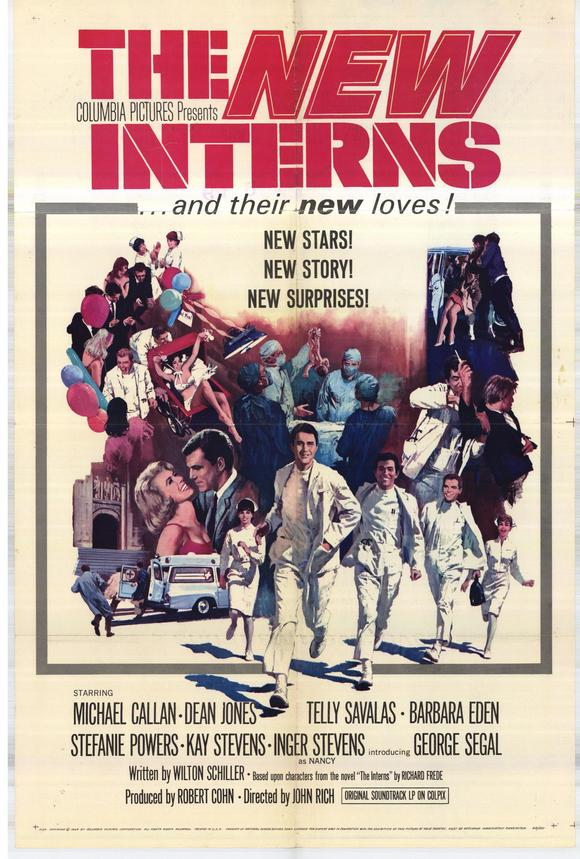
The New Interns (1964)

the new interns

By Richard Winters

My Rating: 6 out of 10

4-Word Review: More interns more drama.

It’s another year and time for a new set of young interns to infiltrate the New North Hospital.  Lew (Dean Jones) and Gloria (Stefanie Powers) who became engaged at the end of the first film are now married, but Lew is diagnosed as being sterile and the couple cannot have children, which causes a strain on their marriage.  The caustic Tony (George Segal) who used to be a gang member on the streets and has worked his way up to being an intern looks to leave his troubled past far behind only to have his new girlfriend Nancy (Inger Stevens) attacked and raped by his former gang member friends, which sends him on a one man mission for revenge.

Although the film goes on a bit too long and isn’t quite as compelling as the first one I still felt it was an improvement.  The stories and themes are grittier and don’t have the fluffy or formulaic romance angle. The fact that the interns are housed in a rundown condemned building in order to save on costs allows for some amusing moments as the tenants must make due with all sorts of quirks that come with the old building. There is also a rather startling scene showing an actual baby coming out of the womb who is not crying or breathing  and the doctors attempts to revive it, which is both disconcerting and vivid.

The only story thread that doesn’t work is the rape one. The biggest issue here being that Nancy flirts and even jokes with Tony while she is in the hospital and only a few hours after being attacked, which seemed highly unrealistic as is her acting like the whole incident was ‘no big deal’ and they should just move on from it and not bother to catch the perpetrators. Then a couple of days later she attends a party and something there subtly reminds her of the incident, which sends her into an irreversible catatonic state, which seemed too extreme in the other way. However, Tony’s confrontation with the rapist inside the hospital and his later operation on him to save is life is good.

Segal is impressive. He played so many touch feely lead roles during the 70’s that he acquired almost a benign persona, but here his character is quite brash and acerbic and his confrontations with the equally acerbic Dr. Riccio (Telly Savalas) are fun. Stevens is also quite good as his love interest and it is a shame that she ended up killing herself in 1970 just as it seemed that her film career was ready to take off.

As with the first film one can spot a lot of up-and-coming stars including Barbara Eden, Dawn Wells, George Furth, Marianna Hill, and Adam Williams. One can also spot Bob Crane very briefly during a wild party segment. There is also Sue Ann Langdon as a drug addicted prostitute who speaks in a hip lingo and fakes paralysis simply to get some drugs that will satisfy her fix. This also a unique chance to see Jimmy Mathers the younger brother of Jerry famous for starring in ‘Leave it to Beaver’ and who looks just like him.

A few actors reprise their roles from the first one including Savalas who appears here completely bald even though in the first one he had hair. Powers is effective as the opinionated and stubborn Gloria a woman unhappy that she can’t have a baby and unwilling to accept adoption as the answer. Kaye Stevens reprises her Didi character and takes part in a funny vaudeville act. There is also Michael Callan reappearing as Alec who in the first film ended up having a nervous breakdown, but no mention of that here. The part where he dresses up as a woman to get into the girl’s dorm and his ‘conversation’ with his therapist offer some added levity.

My Rating: 6 out of 10

Released: June 1, 1964

Runtime: 2Hours 3Minutes

Not Rated

Director: John Rich

Studio: Columbia Pictures

Not available at this time.

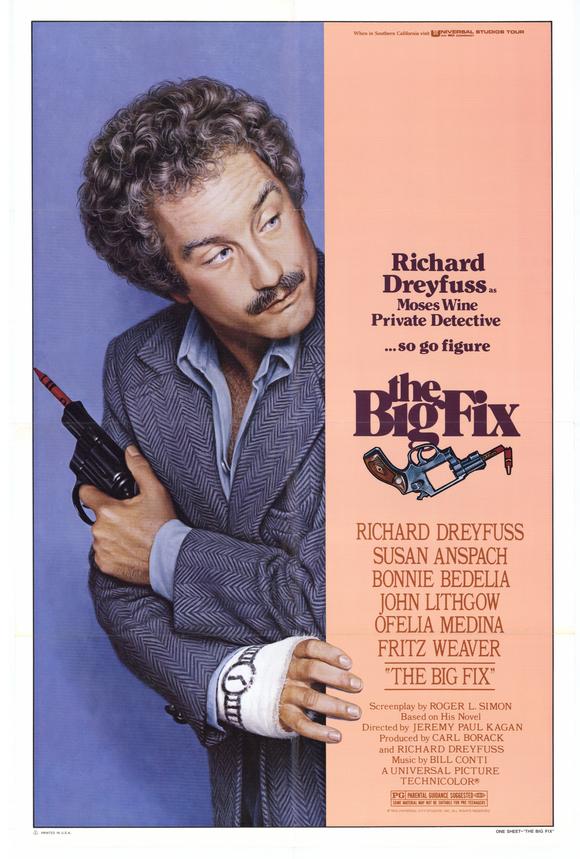
The Big Fix (1978)

the big fix

By Richard Winters

My Rating: 6 out of 10

4-Word Review: 60’s radical turned detective.

Moses Wine (Richard Dreyfuss) was at one time a student radical during the tumultuous 60’s, but now it is 1978 and he is working as a private eye. Most of his cases are unexciting and even mundane, but then Lila Shay (Susan Anspach) a woman he had a fling with during his college days shows up asking for his help. She is now working for a candidate running for governor and she wants Moses to find Eppis (F. Murray Abraham) a former student radical himself who has now gone underground, but seems to be smearing her candidate’s campaign and hurting his ability to be elected. Moses takes the case on a whim, but finds it to be much more complex and dangerous than he bargained for.

The film is based on the novel by Roger L. Simon who also wrote the screenplay and it is almost like a revisionist private eye movie. Everything that we’ve come to accept in this genre gets turned upside down and for the most part with great and amusing success. Moses is not a tough, brawny, stoic figure like most detectives in these films, but instead a little shrimp of a guy that can easily get hyper and frazzled and is certainly never cool under pressure. Many times he will bring his two young sons on the case with him and even use there insight to help him solve the case. He makes mistakes and even has to write certain things down to avoid forgetting them unlike those other detectives that always seem to remember even the smallest tidbits of information. By making the Moses character more human he becomes better relatable and the viewer feels almost like they are in his shoes, which is what makes the story work.

Simon’s script also is a great character study showing how the student protestors from the 60’s have now begrudgingly and awkwardly taken on adult roles and even become a part of the dreaded ‘establishment’. This comes to a head with the Abraham character the one time head of an underground movement that now is seen living in suburbia as a ho-hum family man. His line about why so many of his fellow radicals ‘sold-out’ and became a part of the suburban culture is an excellent and keen observation.

Dreyfuss is perfect in the role as a wise-guy, cynical smart ass. Most of the times characters and actors with these traits are off-putting, but somehow with him it is always engaging. The character is also nicely multi-dimensional. He is acerbic and brash one minute, but then singing lullabies over the phone to his children the next. He acts like his has ‘moved on’ from the 60’s, but then later on tears come to his eyes when he looks at a film of some old student protests. Dreyfuss also broke his wrist just before filming began and so they wrote it into the script and it becomes a funny running gag as different people ask him how he broke it and each time he tells them something that becomes increasingly more outrageous and amusing.

Bill Conti’s musical score is bouncy and distinctive and gives the film an added kick. He also employs several different styles including ragtime, disco, electronic and even a ballad by Leon Redbone.

The mystery is full of twists and close attention must be paid, but it is doubtful anyone will figure the surprise at the end. Baby boomers that lived through the period may be more connected to this than others, but it is still entertaining and a terrific time capsule.

My Rating: 6 out of 10

Released: October 6, 1978

Runtime: 1Hour 48Minutes

Rated PG

Director: Jeremy Kagan

Studio: Universal

Available: VHS, Netflix streaming

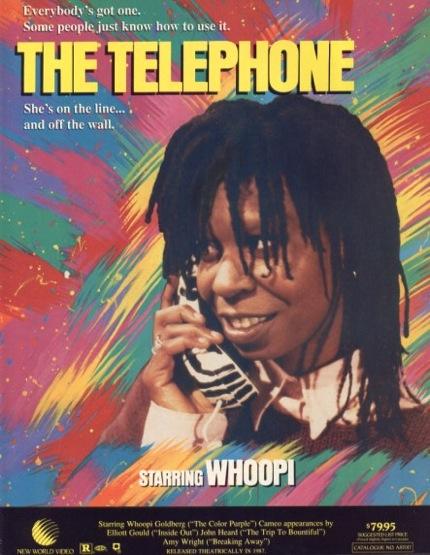
The Telephone (1988)

the telephone 2

By Richard Winters

My Rating: 1 out of 10

4-Word Review: I liked the owl.

Vashti Blue (Whoopi Goldberg) is an out-of-work actress sitting inside her dreary small apartment and having conversations with people over the phone. She also argues through a locked door that she shares with the women next door while waiting for a call from an agent for a job opportunity that never comes.

I am all for experimental cinema, which is the best way to describe this misguided project, but to work it still needs an artistic design and focus and this has none. It pretty much comes off as somebody’s cheap home video where a camera is turned on and then someone is allowed to rant and rave without pause for eighty minutes. Some could blame Rip Torn who is an actor turned first-time director here, but in subsequent interviews he has complained that Whoopi wouldn’t listen to any advice or direction that he gave and pretty much made his presence insignificant.  You could also blame the screenplay, which was written by the very odd pairing of Terry Southern and Harry Nilsson. Southern is best known for penning the screenplay for Dr. Strangelove while Nilsson is a famous singer/songwriter whose best work was doing the song ‘Everybody’s Talking’ that was the theme for the classic film Midnight Cowboy. However, Whoopi took great liberties with the material and ad-libbed a lot, so what was originally put down on paper and what is left on the screen could be minimal.

The conversations that Whoopi has over the phone ranges from lame to ridiculous. One includes calling the police and trying to get them to arrest a video store owner because he rented her a tape of Christmas in July with a scene excised is too absurd to be even remotely amusing. The Whoopi character also incorrectly stated that Frank Capra was the director of the film when it reality it was Preston Sturges.  Goldberg puts on a variety of accents including British, Japanese, Indian, and Southern as well as a few others, but her Irish one is suspect and her impression of John Wayne is terrible.

The apartment set is dull and bleak. The viewer feels trapped and with such little visual design their eyes and thoughts are apt to wander. Cutaways are sorely needed, but there are none. An infuriating moment is when there is a sound of a loud car pile-up outside, but despite this being a visual medium the camera never cuts away to show any of it. This was probably due to budget constraints, but what is even more perplexing is that there are sounds of people screaming, police sirens and even rioting and then a half minute later it all suddenly stops for no explained reason.

The supporting cast is eclectic but wasted. Noted character actor Severn Darden, in his last film role, appears in a brief bland bit as Whoopi’s neighbor. Elliot Gould gets a few minutes as Whoopi’s former agent and seems to be seriously slumming as he was a headline star during the seventies and now sadly stuck in this. John Heard is the only one who comes off best as a caustic, brash telephone repairman.

Whoopi’s two pets upstage the human cast by a mile. Her pet owl is very cute and I dug the goldfish particularly when he gets sucked down the drain of her bathtub and she must use a plunger to save him, which is the only time there is any action in the entire movie.

My Rating: 1 out of 10

Released: January 22, 1988

Runtime: 1Hour 20Minutes (The DVD cover states it’s 1Hour 36Minutes, but it is wrong.)

Rated R

Director: Rip Torn

Studio: New World Pictures

Available: VHS, DVD