Category Archives: Movies with Nudity

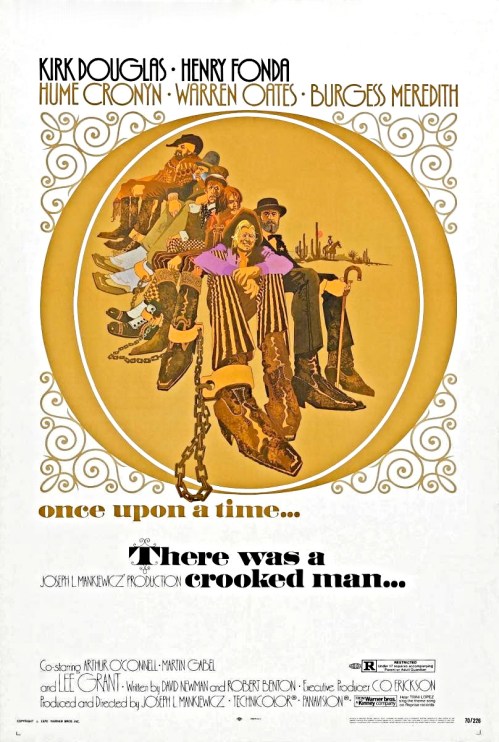
There Was a Crooked Man…(1970)

there was a crooked man 2

By Richard Winters

My Rating: 8 out of 10

4-Word Review: Money in snake pit.

Paris Pittman (Kirk Douglas) is a rugged bandit who at times can be quite charming, but also cunning and ruthless. When he gets sent to an escape-proof Arizona prison he becomes determined to find a way out while using the skills of his fellow prisoners, who he has all promised will get a share of some stolen loot that he has hidden in the desert, to help him do it. Woodward Lopeman (Henry Fonda) is the prison’s new warden. He’s on to Paris’s manipulative ways and becomes equally determined to stop him from escaping while also subtly attempting to reform him.

During the social/sexual revolution of the late ‘60’s many film genres took on society’s new attitudes while also taking full advantage of the new found freedoms by showing things that had previously been taboo. Comedies, dramas, action films and even sci-fi movies were suddenly breaking new ground, but the western for the most part remained entrenched with the old-school values at least until the ‘70’s, but this film is one of the early entries into what became known as the revisionist western where age-old dramatic trappings where suddenly given a whole new spin and the caricatures of good and evil became much murkier.

Here the ‘good guy’ is to some extent the bandit who works outside of the system while seeing all the hypocrisies from those still working within it. The people getting robbed are no longer ‘God-fearing’ innocent town folk, but instead the greedy establishment who enslave blacks and use the façade of religion for their own self-interests.  Woman are no longer virginal maidens waiting to be properly married, but instead sexually oppressed young ladies eager to pursue their horny desires behind their parents back if they can get away with it. Those that still remain loyal to the old ways of doing things such as with Fonda’s character are now seen as being out-of-touch and unreasonably rigid to an inflexible, dated system.

Watching the western genre suddenly ‘grow-up’ as it where and show things that only a few years earlier would’ve been unthinkable is a lot of fun and the script meshes in a good amount of snarky humor, which keeps things consistently lively and comical. Even the music score gets a new slant. Typically music themes in westerns had a booming, orchestral sound, but here it’s much jazzier and modern.

Douglas is engaging and makes a great adversary to Fonda. Fonda, who just a year earlier shocked filmed audiences with his brilliantly creepy portrayal of a psychotic gunman in Once Upon a Time in the West goes back to his old form as the stoic good guy and does it quite well although I was confused why he is seen in the first half walking with a limp and a cane due to being shot only to go without it and walk normally during the second half.

The support cast, all men in their 50’s and 60’s and seen for years in the old fashioned westerns, but now clearly relishing the chance to be bawdy and irreverent are in fine form as well. Burgess Meredith is quite funny as an old codger who has worn the same underwear for 35 years and refuses to take it off even for a bath. Hume Cronyn lends equally good support and I loved the scene where he adds giant tits onto a drawing of an angel. This also marks the film debut of Pamela Hensley who became best known for her work on the TV-shows ‘Buck Rogers in the 25th Century’ and ‘Matt Houston’.

There are clearly other comical westerns out there, but this one, with a script co-written by Robert Benton, manages to still have a good story, some very exciting moments and even a great twist ending. The prison used in the film was built specifically for the production and great effort was put in to make it seem authentic to the period. The detail that was put into it along with the rock quarry where the prisoners work in is impressive and worth catching just for that.

My Rating: 8 out of 10

Released: December 25, 1970

Runtime: 2Hours 6Minutes

Rated R

Director: Joseph L. Mankiewicz

Studio: Warner Brothers

Available: DVD, Amazon Instant Video
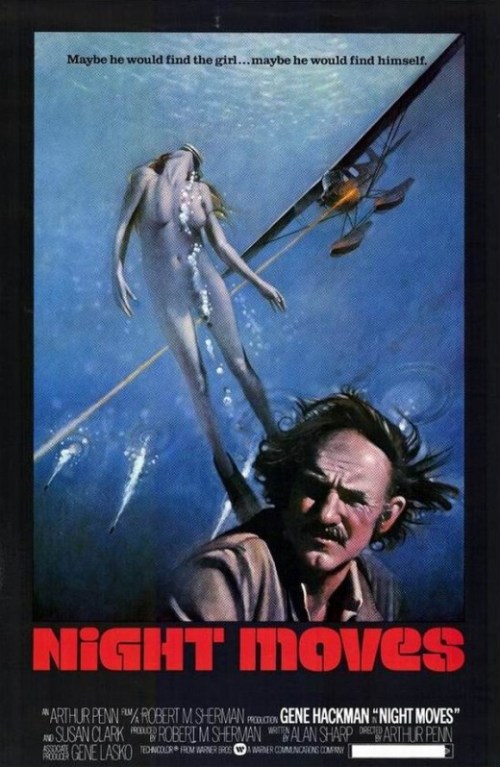
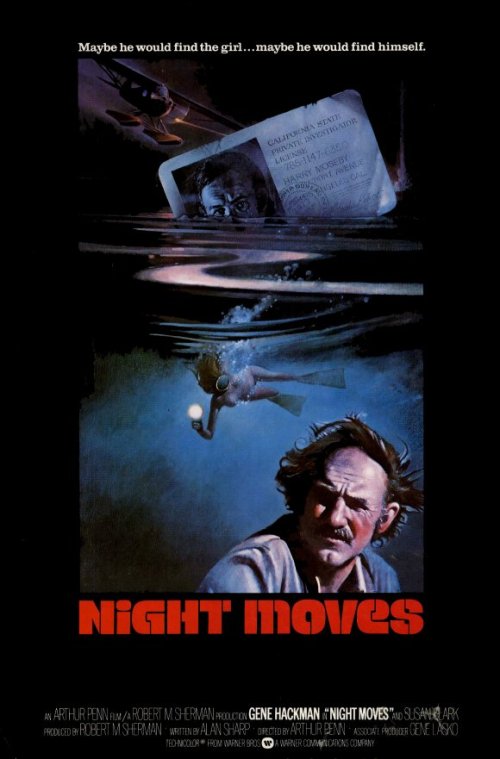
Night Moves (1975)

night moves 1

By Richard Winters

My Rating: 7 out of 10

4-Word Review: Searching for runaway teen.

Harry Moseby (Gene Hackman) is a down-on-his-luck former football player who is now working as a private detective. The cases are not interesting and when his wife (Susan Clark) begins having an affair he feels like his life has hit rock bottom. Then he gets what he thinks is just another routine case which is finding the missing runaway teenage daughter (Melanie Griffith) of an aging, alcoholic actress (Janet Ward). The case though harbors many dark and unexpected turns that eventually gets Harry wrapped up into a world of art smuggling and murder.

To me one of the lasting impressions of the film, which I have seen many times over the years, is the way it incorporates nighttime into the story. The majority of the action and dialogue take place very late and makes full use of the sound of the night bugs croaking and chirping. In fact this becomes ‘the music’ for the scenes and helps create a third character as it reveals the darkness harboring inside the characters.

Hackman gives another outstanding performance playing a protagonist struggling against loneliness and frustration while realizing that it may be an inevitable part of life and something that cannot be ‘defeated’. His best line comes when he describes where he was when the Kennedys were shot. When John F. was assassinated he was playing football and still full of dreams, but then 5 years later when Bobby was killed his life had already fallen into an apathetic rut.

Jennifer Warren is good in support and looks terrific during a topless lovemaking scene. Griffith, Edward Binns and James Woods do quite well in their respective roles and the lesser-known Janet Ward plays a pathetic, boozing old broad about as well as anyone could.

The majority of the story is talky, but still intriguing. The only action comes near the end when Harry gets attacked by a seaplane while he is out on a boat. This scene is especially good because it plays off of the famous airplane segment in North by Northwest and is almost as riveting including the memorable and unique way Harry is finally able to identify the mysterious pilot.

The script, by Alan Sharp is overall smart, but does suffer from a few moments where things don’t make complete sense. One of those is when Griffith finds out that Harry plans on taking her back to her mother which she insists will ‘never’ happen, but then in the next shot we see her getting into his car, which I would think she’d resist doing for fear that she would be placing herself into too much of a vulnerable position and he would use the opportunity to ‘kidnap’ her and take her back to where she didn’t want to go.

Another moment comes when Griffith leaves a message on his answering machine that alerts Harry about something she feels he should look into. He begins listening to it, but then shuts it off when his wife enters the room yet he never goes back to listen to the rest of it even after Griffith later turns up dead.

When a death occurs on a movie set Harry is the one who gets called in to analyze the film footage showing the mishap, which isn’t realistic as the police would’ve been the ones doing the investigation and they most likely would’ve confiscated the footage in order to be used later as possible evidence.

night moves 2

My Rating: 7 out of 10

Released: June 11, 1975

Runtime: 1Hour 39Minutes

Rated R

Director: Arthur Penn

Studio: Warner Brothers

Available: DVD, Amazon Instant Video, YouTube

Oh! Calcutta! (1972)

oh calcutta 1

By Richard Winters

My Rating: 1 out of 10

4-Word Review: No clothes no problem.

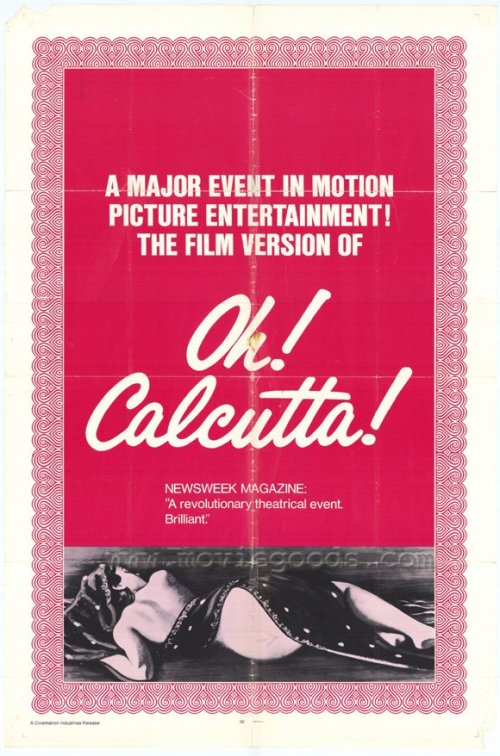
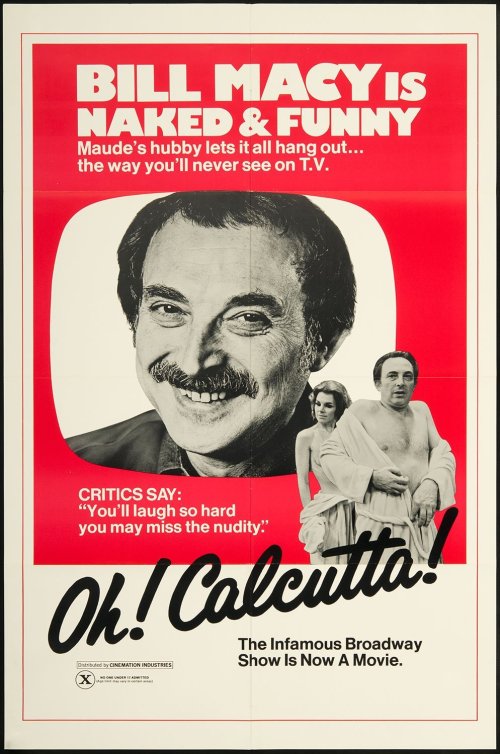
This film is based on the long running stage play that ran from June 17, 1969 to August 12, 1972 and later revived in the ‘80s to become one of the longest running shows in Broadway history. This version was taped in front of a live audience on a closed sound stage and then broadcast on pay-per-view, which eventually was transferred to theaters in ’72. It has a mainly nude cast performing in skits with a sex related theme and later became popular for featuring Bill Macy who went on to star as Walter in the hit TV-show ‘Maude’.

The film starts out interestingly enough as it shows the audience members filing in and examines the nervous looks on their faces as this was when nudity on stage was all still quite new and controversial. The film then cuts back and forth between the audience and the backstage cast who are in-the-buff and getting ready to perform.  They then come out on stage in bathrobes and do an Avant-garde-like dance sequence in which their names get matted over the screen while they flash the audience.

It then goes into the skit portion and everything goes rapidly downhill from there. The first segment isn’t funny at all and actually quite disturbing. It deals with two adults pretending to be teens who are starting to become aware of their sexual awakenings. The boy, who is named Jack, takes out a ruler in order to put it up Jill’s ‘thing’ to make sure it will be deep enough to fit in his ‘thing’. She becomes reluctant, so he tackles her and forcibly rapes her while killing her in the process. Unable to grasp what he has done he props her up and has a ‘conversation’ with the corpse before walking away and allowing the camera to zoom in on a close-up of her vacant, empty eyes.

The second segment deals with the cast reading letters of sexual fantasies written by anonymous authors that isn’t as titillating as it sounds. The third segment deals with a man who has become bored with his sex life and wants his reluctant girlfriend to try out some new fetishes. This segment is particularly boring because during the time the couple is having sex the viewer is treated to watching three minutes of a matted picture of a city skyscraper instead.

After this there is a skit dealing with a conservative couple inviting over some swingers as well as a segment dealing with an examination done at a doctor’s office, which is has a vaudeville theme and comes complete with cheesy cartoon sound effects.

There was a time when the mention of sex or nudity shown of any kind would be deemed ‘controversial’, but that period is long gone and this insipid thing hasn’t aged well at all. In fact there are old episodes of the ‘Love Boat’ that are more provocative and funnier than anything you’ll see here.

oh calcutta 2

My Rating: 1 out of 10

Released: June 16, 1972

Runtime: 1Hour 40Minutes

Not Rated

Director: Jacques Levy

Studio: Cinemation Industries

Available: DVD (out-of-print)

Hollywood Cop (1987)

hollywood cop 3

By Richard Winters

My Rating: 2 out of 10

4-Word Review: Renegade cop saves child.

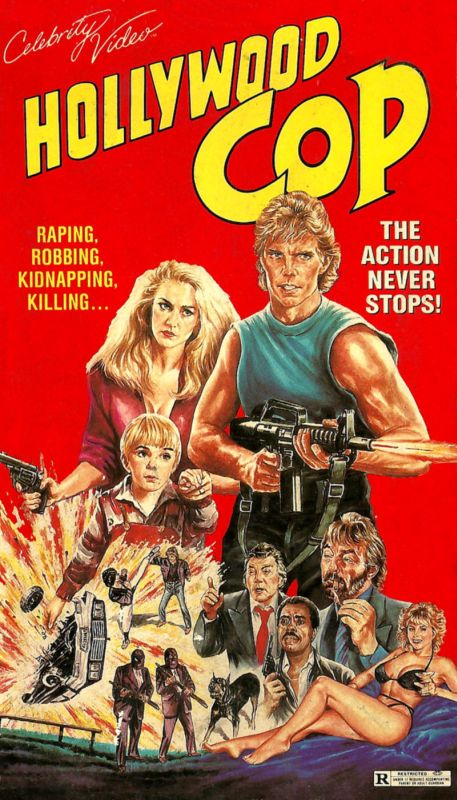
When Rebecca (Julie Schoenhofer) has her child Stevie (Brandon Angle) kidnapped by gangsters she finds that the police are of no help. Then she meets Turkey (David Goss) a cop that likes to work outside the system and he soon takes on the bad guys single-handedly even after it gets him fired from the force by his supervisor (Cameron Mitchell) who does not appreciate Turkey’s renegade ways.

A sleep inducing, run-of-the-mill action flick that was made to cash in on the popularity of Dirty Harry and the ‘Miami Vice’ TV-show with the Turkey character being a warped combination of Harry Callahan and Sonny Crockett. The plot is banal and the action redundant with a pounding, cheesy soundtrack that would be better suited for an ‘80’s porn movie.  Despite a few opening shots photographing Tinsletown’s iconic imagery the majority of the action take place in cheap looking backlots where the crew could film without having to get a permit and thus making the setting of the story and film’s title pointless as the whole thing could’ve just as easily taken place in Omaha, Nebraska and been just as effective or in this case ineffective.

The only thing that is slightly diverting is the casting of the small child who looks to be no older than five, but gets a major chunk of screen time and whose acting is far superior to that of his older co-stars. The scene where he has a ‘conversation’ with a Doberman that is guarding him and his attempts to ‘make friends’ with the animal can be considered depending on one’s perspective as being either endearing or laughably ridiculous. My only real complaint with him is the fact that he gets backhanded several times by the bad guys and even bleeds from the nose and mouth and yet he never cries. There is simply no way a young child of that age wouldn’t immediately break out into tears if they were hit like that and the fact that he doesn’t makes the already hokey scenario seem all the more fake.

Goss is terrible in the lead with his acting coming off almost as badly as his perm hairdo. Why the character is given such a stupid nickname as Turkey is never explained, but would’ve worked better as the film’s title instead. Schoenhofer is equally pathetic as the boy’s mother and her attempts at showing distress look more like someone suffering from stomach pains. I was also confused how an ordinary suburban housewife would be so adept at using a gun or expertly able to drive a speeding car during their chase with the gangsters.

Jim Mitchum, who is the son of the legendary actor Robert Mitchum and looks just like him, gets listed as the film’s star despite having very little time in front of the camera.

It’s hard to imagine how anyone even the most undemanding viewer could find this thing ‘cool’, or that the filmmakers actually thought there would be people out there who would like it. Good for a few unintentional laughs and that’s it although the film’s biggest joke is its opening title sequence in which every actor in the cast gets their name listed in a star on Hollywood’s Walk of Fame, which is funny since none of these actors could ever come close to getting their own star in real-life.

My Rating: 2 out of 10

Released: September 22, 1987

Runtime: 1Hour 40Minutes

Not Rated

Director: Amir Shervan

Studio: Peacock Films

Available: DVD-R


Coming Apart (1969)

coming apart 1

By Richard Winters

My Rating: 2 out of 10

4-Word Review: Psychiatrist secretly films people.

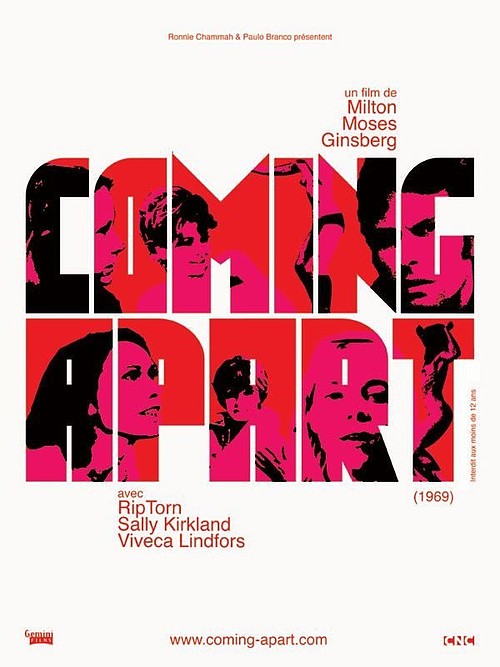
Rip Torn plays a psychiatrist living in a Manhattan apartment who has a camera secretly film everything that goes on there. Many of his female patients including Joann (Sally Kirkland) talk about their intimate desires and his ex-wife Monica (Viveca Lindfors) shares her darkest secrets thinking he is the only one hearing it, but instead a glass box resembling an antique camera sits in the living room and takes it all down.

The film’s concept is novel and if executed in a slightly better manner could’ve been brilliant. Without a doubt it breaks all the old filmmaking conventions and was year’s ahead-of-its-time. The sexual openness of its characters and tawdry subject matter make it quite voyeuristic and real. The actors have an amazingly natural quality to their delivery giving one the idea that it was ad-libbed when in actuality it wasn’t.

Kirland gives an emotionally over-the-top performance that is both remarkable and riveting. Her meltdown at the end in which she proceeds in slow motion to tear up the apartment is quite memorable and the best part of the whole film.

Writer/director Milton Moses Ginsberg manages to keep things relatively fresh by continuously introducing situations that become increasingly more provocative including a party that turns into a sex orgy and explicit love making between Torn and Kirkland that could almost be considered pornographic. There’s even an interesting scene involving a young lady looking to be barely 18 coming to the apartment with her baby in a carriage and propositioning herself to Torn and then having the two make love on the floor while the baby, still in the carriage, cries next to them. There is also a segment featuring recorded phone conversations that Joe has with his fellow psychiatrists that I found to be revealing as well.

Unfortunately despite these creative efforts the film is agonizingly boring to sit through. No matter what is going on in the scene the viewer is still forced to stare at the same wall, same mirror, and same skyline for almost two-hours. The scenes needed to be broken up with cutaways that would’ve taken the viewer out of the apartment and given them some other visual element to look at. Simply turning on a camera that’s nailed to the floor and then filming whatever happens in front of it is not a movie, but more like C-Span and the ultimate result is a failed experiment lacking the necessary cinematic touches that would have made it come off as a fluid whole.

My Rating: 2 out of 10

Released: October 26, 1969

Runtime: 1Hour 51Minutes

Not Rated

Director: Milton Moses Ginsberg

Studio: Kaleidoscope Films

Available: DVD

Jagged Edge (1985)

jagged edge

By Richard Winters

My Rating: 6 out of 10

4-Word Review: An old Corona typewriter.

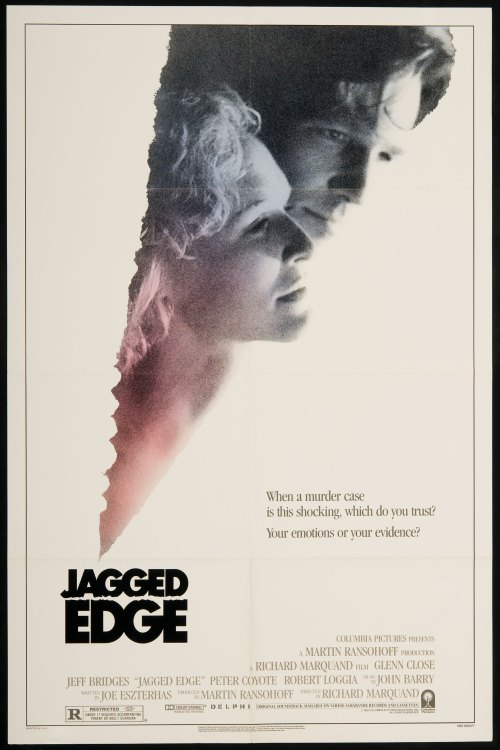
Rich socialite Paige Forrester (Maria Mayenzet) is brutally murdered in her own home the victim of wounds done by the jagged edge of an unusually curved hunting knife. Her husband Jack (Jeff Bridges) claims he was knocked unconscious and didn’t come to until after she was killed and the assailant gone, but when evidence points to his head wound being self-inflicted he gets arrested for the crime. Teddy Barnes (Glenn Close) becomes his reluctant public defender. She is initially not convinced of his innocence, but the more she gets to know him the more she believes it while also allowing herself to become romantically involved with him. As the court case progresses there are many twists and turns including mysterious, anonymous notes typed with the use of an old typewriter and sent to Teddy, which reveal intriguing clues about her client.

The film, written by Joe Eszterhas, has all the trappings of a great court drama. Lots of clues that go either way making the viewer unsure if the defendant is really guilty or not and working very much like real trials do. I felt for the most part the trial procedures were well research and believable including all the meticulous investigating that Barnes does on her own before the trial even begins. The only thing in this area that could’ve been done better was trying to string out the suspense a bit more by prolonging the length of the jury deliberation. In real-life this can go on for several days, even weeks, but this film made it seem like it was only a few short hours.

Close gives an outstanding performance in a part that was originally intended for Jane Fonda. I love the way she can show such a wide range of emotions and the simple, but effective way that her character’s eyes well up with tears as she listens to the testimony of a rape victim is one the ingredients that makes all of her performances impactful and endearing. Veteran actors Robert Loggia, as a gruff, foul-mouthed detective, and John Dehner as a stern, hard-lined judge are also terrific. I also liked the way Teddy’s children are portrayed as being much more savvy to the world and not just there to say cute and precocious things.

Spoiler Alert!!!

The film’s biggest downfall tough is with its twist ending as Teddy ends up finding the typewriter that had written all those mysterious notes inside Jack’s closet and convincing her that he had actually been guilty all along despite getting off as innocent. She then takes the typewriter with her back to her house and then a few hours later Jack breaks into her place and in an effort to ‘silence her’ tries to kill her, which is all quite ridiculous.

For one thing I didn’t understand why Jack would hide the typewriter in a closet that is only a few feet from where he and Teddy slept. The guy lives in a gigantic mansion, so why not place it where it would be hard-to-find and not where she could easily come upon it. Also, he doesn’t need to kill her at all, he simply needs to retrieve the typewriter, which she leaves sitting on the staircase and he walks right past it. Without the typewriter there is no evidence. He takes it back and destroys it and she has nothing on him. Trying to kill her like the character here proceeds to do is the dumbest thing possible because he would be killing her in the exact same manner that he did in his wife, which would immediately make him the prime suspect and quickly arrested. The Jack character had been so smart otherwise that I’m sure he would’ve thought of this, which makes the wrap-up quite weak and unfortunately hurts what is otherwise a slick and entertaining production.

End of Spoiler Alert!!!

My Rating: 6 out of 10

Released: October 4, 1985

Runtime: 1Hour 48Minutes

Rated R

Director: Richard Marquand

Studio: Columbia Pictures

Available: DVD, Amazon Instant Video
Sweet Revenge (1976)

sweet revenge

By Richard Winters

My Rating: 6 out of 10

4-Word Review: Pretty lady steals cars.

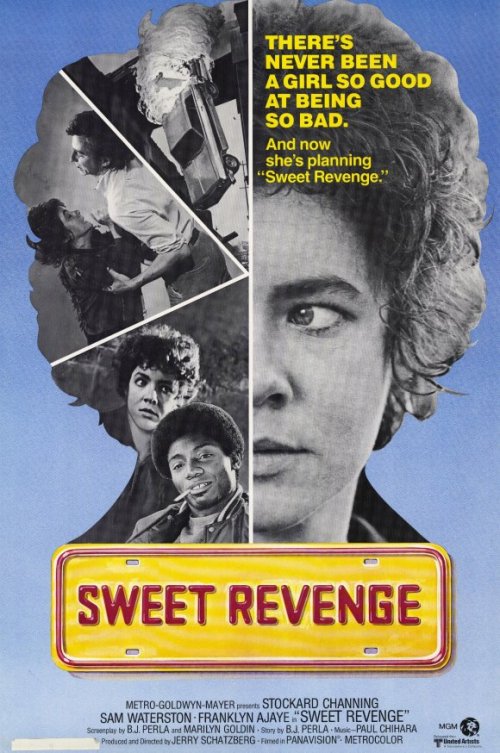
Despite squatting in an abandoned house, having no job, no money and virtually no life Vurrla (Stockard Channing) becomes obsessed with getting herself a brand new Dino Ferrari. She knows how to steal cars, so she decides to steal a Porsche, resell it to unsuspecting buyers and then a few days later steal the same car back and resell it again and continue this process until she has secured enough to pay for the Ferrari. The plan works smoothly, but public defender Le Clerq (Sam Waterston) has been following her and determined that she turn herself in before she gets herself into even deeper trouble.

As I watched this movie I found myself quite perplexed as to how Leonard Maltin in his Movie Guide could’ve given this thing a ‘bomb’ rating. This is certainly not a four-star flick, but it’s far from being bad one either. The plot moves along at a nice breezy pace with an engaging combination of drama, action and humor. The characters are believable and interact with each other in interesting ways. The on-location shooting of Seattle, which was done by renowned cinematographer Vilmos Zsigmond who died just this past New Year’s, is quite vivid and focuses on some of the city’s lesser known neighborhoods, which should be fun for those from the area as it is sure to bring back a flood of memories.

Channing is dynamic and especially enjoyable when she puts on different wigs and a variety of accents as she tries to sell the cars to different people and I wished these segments were played up more. Waterston’s character is much more controlled and practical making the two play off each other in revealing ways. Franklyn Ajaye lends great support as Vurrla’s streetwise friend and Richard Daughty is amusing as Vurrla’s dimwitted cohort and I was surprised that he seemingly disappeared off the face of the planet and never did a thing after this. This also marks the acting debut of Daryl Anderson who appears briefly getting out of his car and going inside only to have Vurrla sneak up and steal it a few minutes later.

On the negative side the film could’ve used a little more action. There is one car chase that occurs near the end, which turns inexplicably tragic and hurts the film’s otherwise lighthearted tone. The ending is frustratingly vague and outside of watching a Ferrari burn into a cinder offers no finality to the character’s eventual fate. There is also a segment where Channing and Daughty go shopping at a grocery store and for a brief couple of seconds the scene is shown through the lens of a black-and-white security camera making the viewer believe that the two are being monitored and will soon be arrested since they are shop lifting, but nothing ever happens, so why insert that shot if it serves no purpose?

My Rating: 6 out of 10

Released: June 16, 1976

Runtime: 1Hour 30Minutes

Rated PG

Director: Jerry Schatzberg

Studio: MGM

Available: DVD (Warner Archive)

Cover Me Babe (1970)

cover me babe 3

By Richard Winters

My Rating: 3 out of 10

4-Word Review: Student filmmaker alienates everyone.

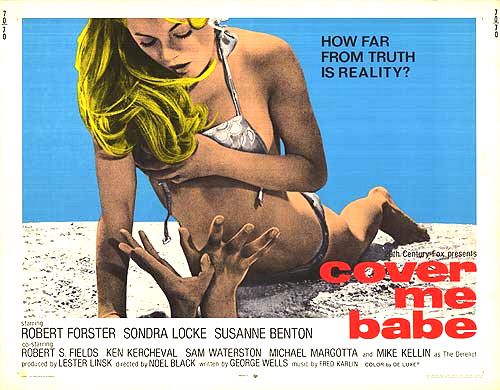
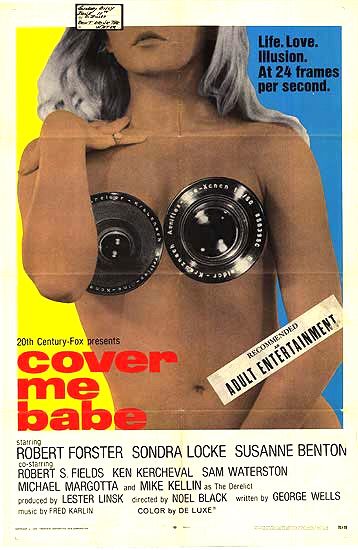
Tony Hall (Robert Forster) is a student filmmaker who feels he is a great director in the making and not afraid to let everyone know it. He becomes obsessed with capturing reality as it is and people’s emotional responses. He goads those around him including his own girlfriend (Sondra Locke) into doing things they are uncomfortable with simply so he can capture that uneasiness and the facial expressions that come with it. Some feel he is going too far, but the more they try to reel him in the more boundaries he pushes.

I’ve attended a film school in Chicago back in the early ‘90s, so for me I found this plot to be intriguing. In a lot of ways, at least at the beginning, I thought they captured the arrogance of these young would-be student directors who are convinced they are the next Kubrick or Scorsese in-the-making quite well. Their elitist attitude and willingness to compromise good taste and common sense simply to attain a shock effect to get attention are all very real.

Unfortunately the film goes overboard especially with the lead character who quickly becomes unlikable. I don’t mind a certain bit of cockiness or a say-it-like-it-is persona, but this guy is downright rude, smug, abrasive and even cruel. You spend the whole time hoping someone will punch him in his face, but it never happens and I believe this is the sole reason why this film failed at the box office as no one wants to sit through an entire movie watching a person whose behavior they can’t stand.

His excessively rude attitude towards a studio head (Jeff Corey) who wants to offer him an opportunity make a feature film is particularly confounding. It’s similar to Troy Duffy the real-life subject of Overnight and the director of The Boondock Saints who became quite arrogant to everyone once he got himself a Hollywood contract, but at least in Duffy’s case he had gotten his proverbial foot-in-the-door and therefore felt it was ‘safe’ to let his obnoxious side out, but the Forster character here doesn’t yet have one and you’re compelled to feel that the guy must be mentally ill to think he ever will by behaving in the outrageous way that he does.

Forster gives a solid performance, but the character seems too similar to one he just got done doing in Medium Cool and bordered almost on type casting. Locke is okay as the girlfriend and can be seen fully nude at the beginning, but why she would want to stick with such a jerk is hard to understand and makes her character annoying because of it. I realize some gals have the ‘bad-boy syndrome’, but it goes overboard with it here.

The film lacks a cinematic touch and its best part comes at the beginning where we watch a student film with a dream-like sequence in a Federico Fellini style that is actually pretty good. Another memorable bit comes near the end where Forster broadcasts to a group of students his own film, which features a scene showing a man jumping off a ledge and then panning over to reveal the shocked expressions of the people on the ground who witnessed it as well as the students watching it on film.

cover me babe 2

My Rating: 3 out of 10

Released: October 1, 1970

Runtime: 1Hour 25Minutes

Rated R

Director: Noel Black

Studio: 20th Century Fox

Available: None at this time.

Ishtar (1987)

ishtar

By Richard Winters

My Rating: 2 out of 10

4-Word Review: Songwriters travel to Morocco.

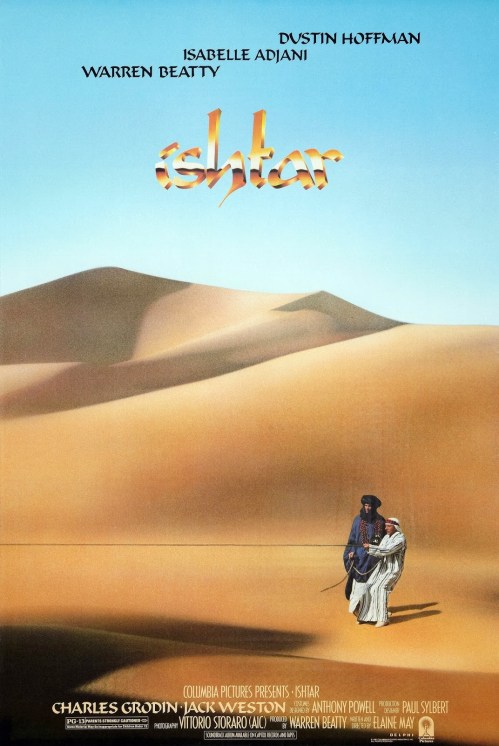
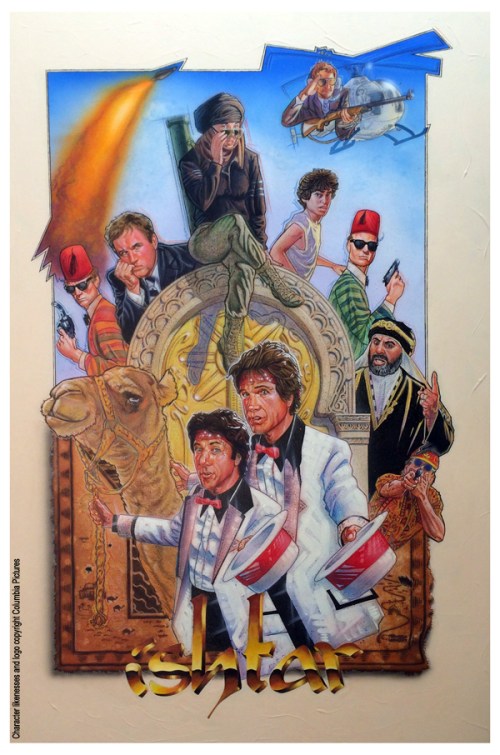
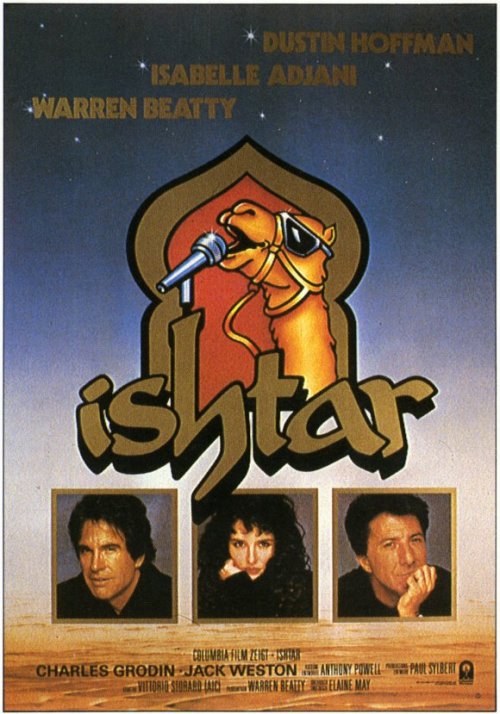
Clarke (Dustin Hoffman) and Lyle (Warren Beatty) are losers-at-life that now in their middle-age years are convinced that they have talent as songwriters even though this opinion is shared by no one else. They manage to get themselves a talent agent (Jack Weston) who tells them that the only place he can get their act booked is at a club in Morocco. The two, desperate for any attention they can get, decide to take him up on the offer, but once they arrive they become swept up in international intrigue with the Emir of Ishtar and the CIA.

This film was a notorious flop in its day not only with its cost overruns, production delays and box office receipts, but with its behind-the-scenes discord between star Beatty and writer/director Elaine May. It seemed that critics and film goers alike considered it a bomb, but I came into this thing with an open mind. May has written some great scripts in the past and is known for her impeccably dry humor. I was convinced that in this day-and-age of broad comedy and over-the-top farces American audiences were simply not geared to pick up on the subtleties of the humor.

Unfortunately five minutes in it becomes painfully clear this thing is every bit as bad as its reputation states. The humor relies too heavily on the two main characters spending what seems like hours on end sitting around trying to come up with bad lyrics for their already dumb sounding songs and then singing them in an off-key, tone deaf kind of way. This may elicit a mild grin for a minute or so, but after spending the first twenty minutes on it, it gets really annoying. Even at the end as the two crawl on the desert floor they continue to work on these same lyrics, which by that time has become as dried up as the desert itself.

The insane, almost incoherent plotline is another issue. It’s like two diametrically different stories clashed precariously into one with only the thinnest of threads holding it together. What starts out as a sardonically amusing look at two middle-aged men chasing an elusive dream suddenly becomes the second reel of Raiders of the Lost Ark without warning. The wild array of loosely structured coincidences that the two go through as they reluctantly find themselves more and more inadvertently involved with the intrigue around them is so flimsily plotted and poorly thought out that it’s not even worth the effort to describe other than to say it makes little sense, is unexciting and most of all not funny.

The main characters are a turn off as well and not comically engaging as intended. The idea that two men hitting 50 would suddenly decide to chuck their relationships and jobs to chase after a songwriter career despite not getting any positive feedback from anyone else to convince them that they even possessed the ability to do it and which usually doesn’t pay well anyways seems weird and bordering on mental illness. Having the characters in their early 20’s and just starting out and willing to take any remote venue they could in order to get their first ‘big break’ would’ve worked better, or portrayed these middle-aged men as once being famous and now desperate for a comeback, or even has-been CIA agents caught up in one last case of intrigue. Just about any other scenario would’ve made more sense than the one that ultimately gets used.

Hoffman is a great actor, but his efforts here are wasted on the weak material. Beatty does well playing a dimwit and the scene where he ‘beats up’ on Adjani who he thinks is a boy is probably the only funny moment in the film. Isabelle Adjani though, who was dating Beatty at the time, is miscast in a role that doesn’t convey her talents and seems almost degrading especially the scene where she lifts up her dress at a crowded terminal and exposes her breasts in effort to prove to Hoffman that she is really a female.

This movie is in some way so amazingly bad that I was almost convinced that it was intentional and if that was the case then at least in that area it can be considered a success.

ishtar 2

ishtar 3

My Rating: 2 out of 10

Released: May 15, 1987

Runtime: 1Hour 47Minutes

Rated PG-13

Director: Elaine May

Studio: Columbia Pictures

Available: DVD, Blu-ray, Amazon Instant Video

Ea$y Money (1983)

easy money

By Richard Winters

My Rating: 4 out of 10

4-Word Review: Breaking his bad habits.

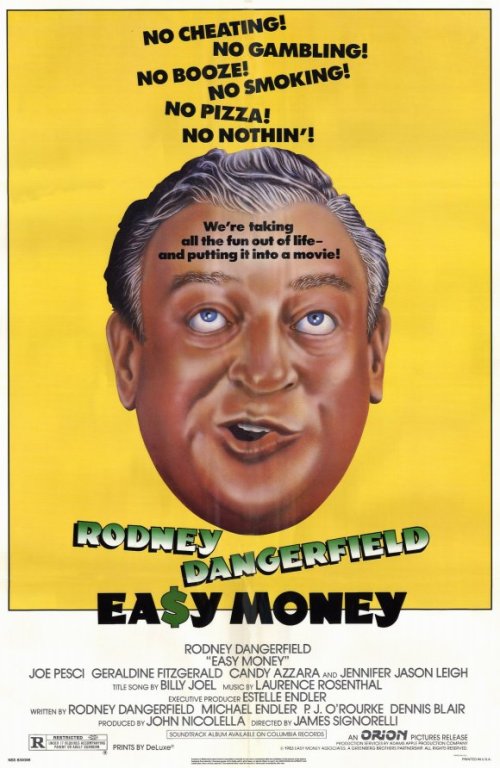
Monty Capuletti (Rodney Dangerfield) is a married man with two teenage daughters who is trying desperately to make ends meet while working as a child photographer. His oldest daughter Allison (Jennifer Jason Leigh) is set to get married to a man named Julio (Taylor Negron) that Monty does not approve of. Attending the wedding is Monty’s rich, but hateful mother-in-law (Geraldine Fitzgerald) who promptly dies on her way back home. At the reading of her will she stipulates that she will give her entire fortune to Monty, but only if he gives up all of bad habits, which includes his drinking, gambling and drug use. Monty isn’t sure he can do it, but his eager family members try to coach him into trying.

This was Rodney’s first starring vehicle after his breakout success in Caddyshack, but the script doesn’t take advantage of his comic ability. The opening sequence in which the viewer gets an understanding of the character’s personality visually by having the camera pan through his cluttered work area is great and probably the best part of the whole movie, but trying to confine his edgy persona into the sterile role of a suburban dad isn’t effective. His wife, played by Candice Azzara, is much too young and good looking a woman and would typically be way out of his league. His daughters are also too attractive and he was already in his 60’s at the time, which made him much better suited for a grandfatherly role. A much funnier plot would’ve had him stuck with his adult daughters still living at home because they were too ugly to find suitors and his desperate attempts to con someone into marrying them just so he could get rid of them and be able to enjoy  his ‘golden years’ in peace.

The script is limp and doesn’t get going with its main premise until the second half with the first part dealing with the daughter’s on-again, off-again relationship with her new husband that goes nowhere and seems added in solely to pad the running time. The idea of Monty having to give up his bad habits is poorly thought out as well as there is no third party coming in to observe that he sticks with it, or hidden cameras placed somewhere to monitor him. It leaves everything up to his family members to ‘keep him on track’ even though they could’ve lied and covered up for him and his ability to cheat at any time was wide open.

The film also does not take enough advantage of the jokes that it does have. One scene has him, in a bout of frustration, swearing at a fat kid that is not behaving, but the camera never cuts back to the parent’s shocked expression, which would’ve been the best part. Another segment has Julio and his friend trying to sneak into Rodney’s house late at night in an attempt to win back Allison, but in the process they snap off the power lines connected to the home and knock out the electricity yet the film never gets the response of the rest of the household when this occurs and instead quickly cuts away and never comes back to it making it seem almost like it never happened. Last, but not least is a scene where Rodney gets an exercise bike for Christmas and tries it out only for him to go crashing into the Christmas tree and hitting his head against the window and yet no one jumps up to see if he is alright even though I would think that would be the most natural response for someone, especially family members, to do.

There is also a scene involving drunk driving, which I found interesting only because 5 years later the movie License to Drive also had a similar scene, but in that one it was somehow considered more controversial and labeled in bad taste even though the scene here I thought was worse because it was done by the main characters, or in this case Joe Pesci who plays Rodney’s best friend.

The segment where Rodney gets shot in the buttocks and forced to hang in midair at the hospital while his injuries are allowed to heal is quite funny as is the scene involving male runway models showing off Rodney’s latest ‘regular guy’ fashions, but outside of these two segments the film falls flat in a script that never gains any traction and is wildly unfocused. Billy Joel of all people sings the film’s title tune in a song that is catchy, but I’ve never heard played on the radio even though all the rest of his tunes seemingly are.

My Rating: 4 out of 10

Released: August 19, 1983

Runtime: 1Hour 35Minutes

Rated R

Director: James Signorelli

Studio: Orion Pictures

Available: DVD, Blu-ray