Category Archives: Movies Based on Novels

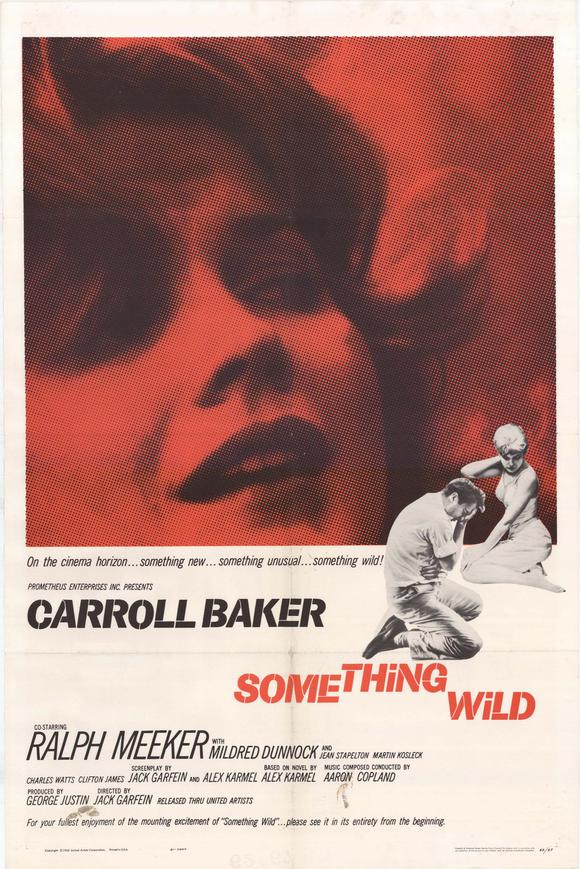
Something Wild (1961)

something wild 1

By Richard Winters

My Rating: 5 out of 10

4-Word Review: Rape and its aftermath.

Mary Ann (Carroll Baker) is raped one night while she is walking home from school. For whatever reason she decides not to go to the police and instead keeps the whole incident to herself, but living with her domineering mother (Mildred Dunnock becomes too much and she decides to run away. She finds herself a cheap apartment in a seedy part of the city and a job at a five and dime store. However, the emotional effects of the rape begin to gnaw at her psychologically. She no longer wants to get close to anyone, which alienates her from those around her. She considers suicide, but at the last minute is saved by Mike (Ralph Meeker) who takes her back to his modest basement apartment. There he imprisons her and refuses to let her leave until she falls in love with him.

In some ways this film was ahead-of-its-time. The dazzling opening credit sequence by Saul Bass is eye popping. Director Jack Garfein who at the time was married to Baker and just off of his success of The Strange One continues his push of exploring ideas with dark psychological undertones. The rape scene for its time is surprisingly graphic and the film doesn’t have a single line of dialogue uttered for the first fifteen minutes. New York gets captured in a cinema vertite style reminding me of the influential ‘Naked City’ TV-series that was out at the same time. The black and white photography helps accentuate the story’s grittiness and the surreal dream sequence that Mary Ann has towards the middle of the film is visually creepy and impressive.

Although not the strongest of actresses Baker still manages to give a compelling performance and although she was already pushing 30 she still looked very much like she was 18 or even younger. Meeker an outstanding actor who unfortunately isn’t very well known is solid. The film also offers a great chance to see young stars in the making including Diane Ladd in her film debut as well as Jean Stapelton as Mary Ann’s nosy neighbor and Doris Roberts as a petulant co-worker. There is even Clifton James with a full head of hair.

Unfortunately the film ultimately misses-the-mark and part of the problem is Mary Ann’s decision of not going to the police after she is attacked, which is never explained. This could have been because of the stigma placed on rape victims at the time, but it still comes off as frustrating and even off-putting to the viewer. Mike’s apartment is just a little too bare-bones looking almost like a prison cell instead. Maybe this was the director’s attempt at symbolizing how ‘imprisoned’ Mike and Mary Ann were, but if that was the case it was much too obvious. Realistically someone usually enlivens and personalizes the place where they live by at least putting up a few pictures on the walls. Also, Mary Ann’s doesn’t seem to put up much of an attempt at escaping. Mike locks the door from the inside and then passes out drunk and she could have just gone through his pockets to get the key. She is also left alone for several hours a day while he goes to work, which would have been enough time to cut through the bars on the windows, broken through the door, or even yelled for help out the open window.

Cinematically it has its moments particularly during the first hour, but the story itself seems dated and the character’s motivations confusing and unclear ultimately making it an experimental misfire.

My Rating: 5 out of 10

Released: December 23, 1961

Runtime: 1Hour 52Minutes

Not Rated

Director: Jack Garfein

Studio: United Artists

Available: DVD, Amazon Instant Video
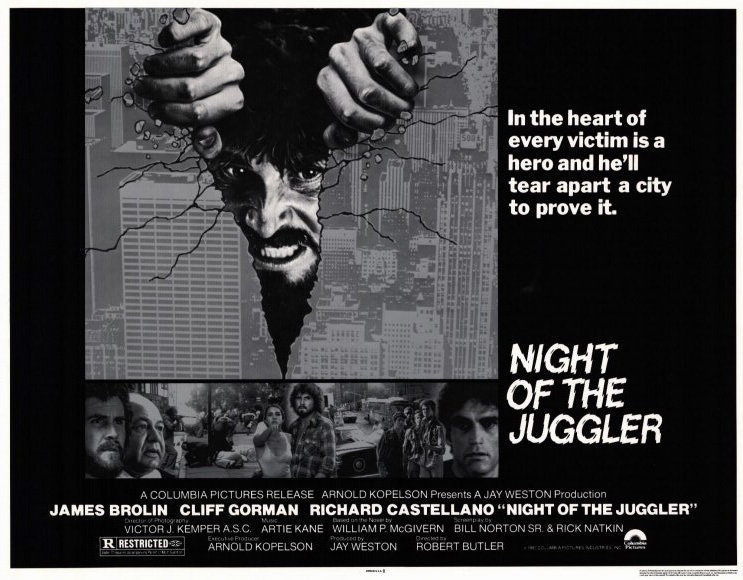
Night of the Juggler (1980)

night of the juggler 2

By Richard Winters

My Rating: 4 out of 10

4-Word Review: A father’s relentless search.

Sean Boyd (James Brolin) is a divorced man and retired cop now working as a truck driver and raising his twelve-year-old daughter Kathy (played by Abby Bluestone who now works as a talent agent) in the not-so-nice section of New York City. Gus Soltic (Cliff Gorman) lives in a rundown building slated for destruction and kidnaps Kathy mistakenly thinking she is the daughter of a rich man who can pay him a high ransom. Instead he now must contend with Sean who will stop at nothing to get her back and stalks Gus with a relentless determination to find her.

The film is based on the William P. McGivern novel who was a noted mystery writer who brought an extra degree of realism to his stories. Director Robert Butler nicely keys in on this by not having a loud, pounding music score and instead relying on the natural ambience to create the tension. The film has an incredible amount of action that almost seems non-stop. The car chase that goes through park pathways and even crowded city sidewalks is amazing. The climatic foot chase in the catacombs of the underground city tunnels is atmospheric as is the foot chase through abandoned properties where Sean not only pursues Gus, but must also fight off a Hispanic street gang that are right on his heels. The scene where Dan Hedaya seemingly destroys every display window in the city with his automatic rifle aimed at Sean’s head is both effective and amusing.

Despite its strong gritty nature the film does manage to have a few amusing scenes including Sean stealing a street preacher’s car with the preacher still in it as he pursues Gus.  I also liked the scene where Lieutenant Tonelli (Richard S. Catellano) is enjoying a dish of yogurt until the vendor tells him how it gets made. Unfortunately there are a few moments that end up being funny in an unintentional way including Sean’s intense confrontation with strippers (played by famous 70’s/80’s porn stars Serena and Sharon Mitchell) while inside an adult peep show.

Brolin physically looks perfect for the role especially with his black beard and mustache that gives him a Charles Manson-like quality, but overall he is a bit sterile. Gorman is effective as the psycho and even has a few moments of unexpected tenderness. Castellano comes off best as the tubby, but stoic detective.

The film has its share of flaws including having Gus grab the girl in broad daylight in the middle of a park with dozens of other people around, but no one except for her father does anything to try and stop him. I realize that the city was still under the stigma at the time of the Kitty Genovese case in which a woman was raped and murdered and many witnesses either saw or heard it and did nothing to help, but this scene  is still a bit unrealistic. Also, Gus kidnaps the wrong girl because both girls were wearing blue overalls, but the chances of two pre-teen girls living in a cosmopolitan city wearing overalls especially when one of them is from a rich and snooty area seems slim-to-none.

Overall despite all the action the film still comes off as jarring and jumbled and strangely uninvolving. The incessant focus of showing New York as bleak and apocalyptic becomes one-dimensional. The story itself is run-of-the-mill and forgettable.

My Rating: 4 out of 10

Released: June 6, 1980

Runtime: 1Hour 41Minutes

Rated R

Director: Robert Butler

Studio: Columbia Pictures

Available: VHS

The Hireling (1973)

the hireling

By Richard Winters

My Rating: 6 out of 10

4-Word Review: His love isn’t reciprocated.

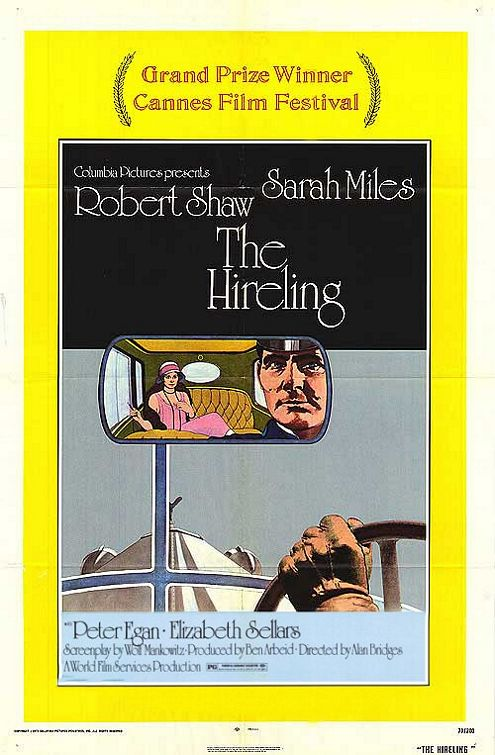
Based on the L.P. Hartley novel the film examines the unusual relationship between a rich English widow named Lady Franklin (Sarah Miles) and her chauffeur Steven Ledbetter (Robert Shaw). The setting is just after the First World War and Lady Franklin has suffered a nervous breakdown after the untimely death of her husband. Steven drives her from place-to-place and helps her out of her depression while also forming a strong attachment to her. Once she recuperates she no longer calls upon his services as much, which hurts him. She then forms a relationship with the much younger Hugh Cantrip (Peter Egan). His personality is the complete opposite of Steven’s and when Steven finds out that Hugh is still seeing another woman on the side it angers him. When he goes to Lady Franklin to inform her of this as well as profess his love for her things do not go well and soon spirals out-of-control.

The film is exquisitely photographed by director Alan Bridges with a haunting score by Marc Wilkinson that is excellent. The period atmosphere is perfect and the slow pace not only reflects that era, but the book to which it is based. Some may be put off by the pace as it is for the most part quite talky although the last half-hour has more action and final showdown is quite intense. The element I really liked about the film are the brief cutaways showing people listening in to other’s conversations and people always being careful what they say and great concern with always playing their ‘proper role’ in society. It really helps build a cloistered feeling for the viewer and gives them a better understanding to the meltdown that occurs at the end.

Miles gives another great performance and she essentially plays two characters here with the fragile, wide-eyed woman at the beginning and the more confident, emotionally distant person that she turns into at the end. Shaw is excellent as always. It is almost amazing to see how someone with such a strong personality as his could get hidden underneath the rather bland and proper character that he portrays at the beginning, but he comes through full-force at the end, which is chilling and terrifying.

The film makes some great statements about the inequities of a rigid social caste system as well as the unrealistic, rigid demands that were placed on people especially in past eras that did not completely take into account the human being underneath or their natural emotions. It is also a great testament to the loneliness of unrequited love, which is sadly a perennial element of the human experience. Although the film stays faithful to the novel the ending has been changed, which may or may not go over well with some viewers.

My Rating: 6 out of 10

Released: June 10, 1973

Runtime: 1Hour 35Minutes

Rated PG

Director: Alan Bridges

Studio: Columbia Pictures

Available: DVD (Region 1 & 2)

Goodbye, Columbus (1969)

goodbye columbus 2

By Richard Winters

My Rating: 8 out of 10

4-Word Review: Dating a rich girl.

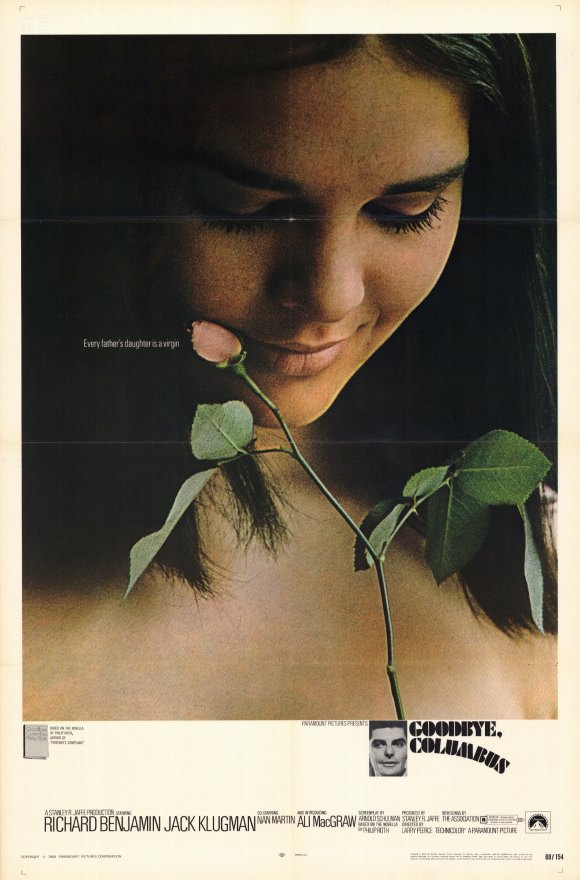
One day while at a pool party Neil (Richard Benjamin) becomes infatuated with beautiful Brenda (Ali MacGraw) and proceeds to begin a relationship with her. He has just recently graduated from college and still not quite sure what direction he wants to take in life. He doesn’t want to fully ‘drop-out’, but isn’t so excited about diving in to the corporate business world where making a lot of money is the only focus. Brenda on the other hand is from a rich Jewish family who enjoys her privileged lifestyle, but not always the pretension that comes with it.  She continues to date Neil simply out of spite to her mother (Nan Martin) who doesn’t approve, but as things progress their differences and values become more pronounced and sends the relationship teetering on the brink.

Director Larry Peerce did some high quality films during the sixties and it is unfortunate that by the seventies his output dropped off. I think overall this is his most complete work and a wonderful compliment to the Philip Roth novella from which it is based. The location shooting is outstanding and one of the main things that gives the film a personality. The giant suburban house in which Brenda’s family lives makes one of the biggest impressions not only with its large exterior, but interior as well where every room is wallpapered with its own distinct color and design. The library where Neil works is also visually impressive especially with its large marble columns and painted cathedral ceilings.

The film is filled with a lot of memorable and amusing scenes. Neil’s interactions with Brenda’s ten-year-old younger sister Julie (Lori Shelle) is entertaining not only with a game of hoops that the play, but most especially their ping pong contest that they play later. Neil’s attempted conversation with a deaf man while inside the library is funny as is seeing Neil sneaking into Brenda’s bedroom each night when the parents are asleep. You also got to love Neil’s shocked response when he finds out Brenda has not been taking the pill and the scenes at the wedding reception of Brenda’s brother is filled with a lot of keen observations. If you look closely you will be able to spot Bette Midler, Michael Nouri, Jacklyn Smith and Susan Lucci as wedding guests.

MacGraw has never looked more beautiful and Peerce spends several minutes lovingly photographing her swimming in the pool, which isn’t bad. Her performance as a spoiled rich girl going through fits of rebellion, but not quite ready to completely break from her soft lifestyle is on-target and proves that she is not just a pretty face, but an excellent actress as well. Although already 30 at the time she plays a 20-year-old quite convincingly.

Michael Meyers as Brenda’s older brother Ron is a scene stealer not only with his empty ‘discussions’ with Neil, but also with the way he orders around the other workers as a supervisor at a job he wouldn’t have had, had he not been the owner’s son. This proved to be his one and only movie appearance. He eventually became a physician in real-life and wrote an autobiography entitled ‘Goodbye Columbus, Hello Medicine’.

In some ways I saw a lot of similarities to this film and The Graduate and consider it to be just as much of a classic. I enjoyed the way the film explores the different stages of the relationship and the final argument the two have is quite revealing.

My Rating: 8 out of 10

Released: April 3, 1969

Runtime: 1Hour 41Minutes

Rated R

Director: Larry Peerce

Studio: Paramount

Available: VHS, DVD, Laser disc, Amazon Instant Video, YouTube

The Mind of Mr. Soames (1970)

the mind of mr soames 1

By Richard Winters

My Rating: 6 out of 10

4-Word Review: Man child faces world.

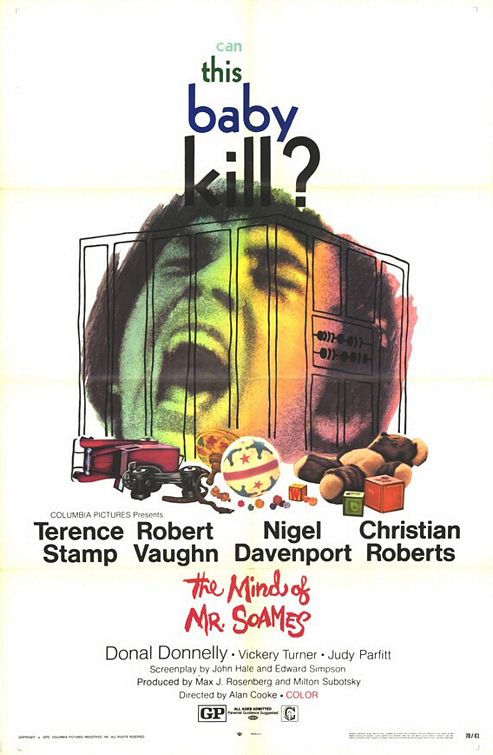
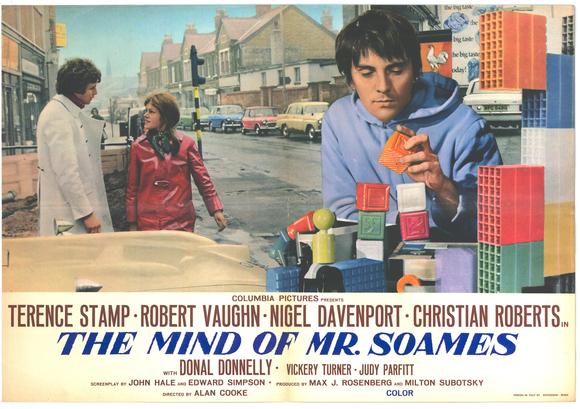
Due to a complication at birth a man (Terence Stamp) is born into a coma and for thirty years he has stayed that way. Now due to medical advancement they can stimulate the part of the brain that is asleep, thus allowing him to awaken into consciousness. The problem is that he will be a virtual infant and have to taught at a much quicker pace than a normal child.

Outside of a few implausibility’s the story is handled in an overall realistic manner. The pacing is tight and compact and the cinematography by Billy Williams is outstanding with excellent framing. Stamp plays the part with conviction and overall makes a believable grown up baby.

The story itself is much more complex than it initially looks as it takes a good examination into the science approach vs the humanistic one. It shows how truly complicated the human being is and the great balance it takes to successfully raise one. It also takes a few good potshots at the obtrusiveness of the media.

The stories most interesting angle though comes when the adult child escapes and goes out into the real world where we see what a tight inner fabric society is and the complete inability that the ‘pure’ human, with no prior connections to it would have.

However, in the end this movie is a disappointment as it gives us no conclusion and we never see the end result. Was this man child successfully raised? Which approach was the best and did he ever fully adapt to the world around him? We never know because it never tells us. The whole idea for the film looks to have been made only to bring up certain issues with no attempt at a complete story.

the mind of mr soames 2

My Rating: 6 out of 10

Released: October 12, 1970

Runtime: 1Hour 32Minutes

Rated GP

Director: Alan Cooke

Studio: Columbia Pictures

Available: DVD-R

Up the Sandbox (1972)

up the sandbox 2

By Richard Winters

My Rating: 7 out of 10

4-Word Review: Housewife has secret fantasies.

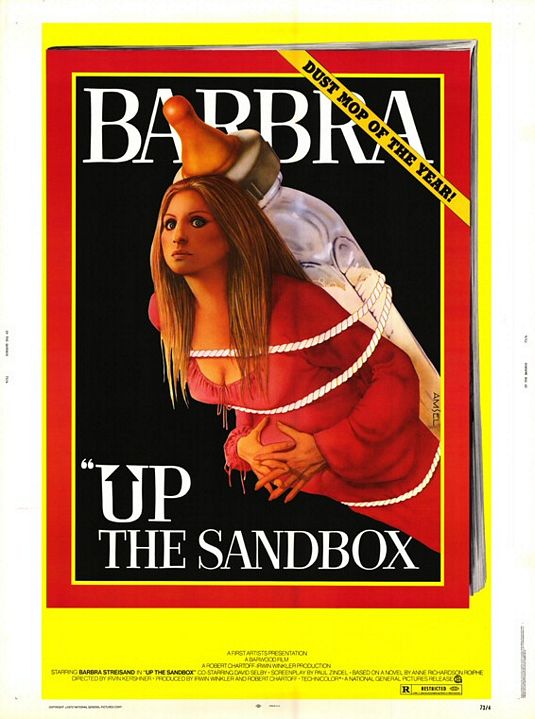
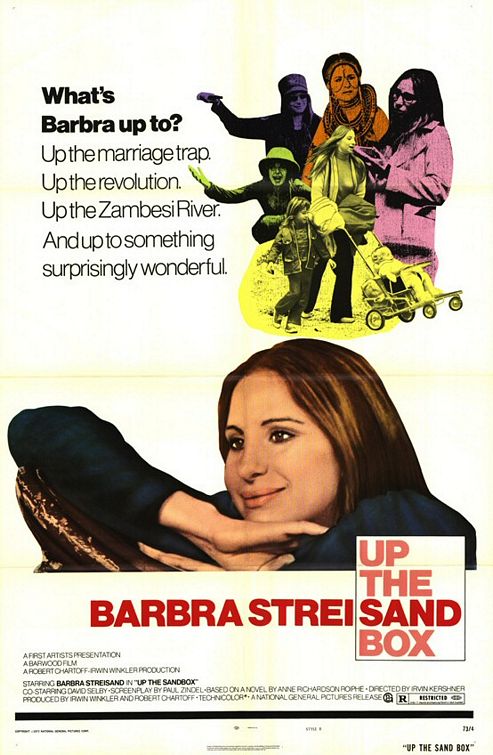
Margaret (Barbra Streisand) is a neglected housewife taking care of her two children while her husband Paul (David Selby) busily works on his novel and thesis. She lives in a rundown New York apartment that seems to have bugs crawling from everywhere. Her nagging mother (Jane Hoffman) pressures her to move back with them to the suburbs, but she enjoys the excitement and independence of city life over lily white suburbia, so she resists. Now she finds that she is pregnant with her third child and this along with the other stresses causes her to slip into secret fantasies that become more and more outlandish.

This film didn’t do well upon its initial release and is a bit forgotten, but deserves a look simply for its unique and memorable fantasy segments. The scene where she joins a black militant group that gets inside the Statue of Liberty and wires it with explosives is pretty good as is the part at a party where her stomach suddenly balloons out as if she is pregnant and when she pushes it in it makes her breasts larger. The scene where she meets a Fidel Castro-like dictator who takes off his shirt to expose that he has female breasts is funny and the finale that takes place inside an abortion clinic is interesting. The best though is when she is captured by an African tribe of topless women. The shot of their grossly overweight leader whose gigantic, sagging breasts seem to overlap her entire body ends up being the film’s most lasting image.

Hoffman is hilarious and a perfect caricature of a meddling mother of adult children. The part where Margaret fantasies about stuffing her mother’s face into an anniversary cake and then the two roll around on the floor where Margaret then punches her in the face had me laughing-out-loud.

Paul Zindel’s script nicely balances the fantasy with the gritty reality of urban living. It also envelopes the feminist issues with the social upheaval of the times and the speech that Margaret gives about women needing to be less like men and more like themselves is excellent.

Director Irvin Kerschner makes fine use of the New York locales giving the viewer an eclectic taste of its crowded neighborhoods and street culture as well as its epic skyline. I loved the cinema vertite style that has a sophisticated and trendy feel.

Streisand herself seems to be having a lot of fun and purportedly this is her favorite out of all the films that she has done. This was just before she went through her frizzy hair phase and the long straight style that she has here I feel makes her look sexy.

The pace is unusual especially for a comedy in that it isn’t frantic and does not have any quick edits. Instead the set-ups are quite slow and seem at times to be almost dramatic before throwing in a surprise punchline. Personally I liked this approach, but the unconventional style might have proved confusing to certain audience members who didn’t know what genre to place it in and may have been the reason for the poor box office returns, which is shame as the production overall is excellent and intriguing.

up the sandbox 1

My Rating: 7 out of 10

Released: December 21, 1972

Runtime: 1Hour 37Minutes

Rated R

Director: Irvin Kerschner

Studio: National General Pictures

Available: VHS, DVD

Natural Enemies (1979)

natural enemies 2

By Richard Winters

My Rating: 6 out of 10

4-Word Review:  Man kills his family.

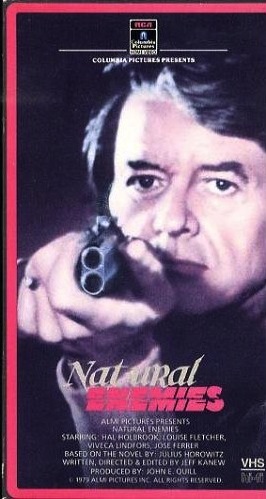
Paul Steward (Hal Holbrook) is a middle-aged suburban father who wakes up one morning having decided that by the end of the day he will shoot and kill his wife and three children with his hunting rifle. His rationale being that life is full of inevitable disappointments and his kids are ill prepared to face life’s harsh realities, so by killing them he will be in a sense ‘protecting’ and ‘saving’ them. The rest of the film deals with conversations he has with his friends debating on whether he should go through with it or not.

Writer/director Jeff Kanew is probably best known for having done Revenge of the Nerds and this film is probably as different from that one as you can get. It is an excellent and interesting directorial debut for the most part. It is not completely successful, but you have to give him credit for putting such challenging material onto the screen. It is based on the novel by Julius Horowitz, which was probably never intended to be made into a movie, but Kanew uses the voice-over narration to its full effectiveness and I loved the quant and remote setting of the colonial home that Paul resides in.

It is really the conversations and the ongoing philosophical debates that Paul has with various acquaintances that gives it a fascinating and intellectual subtext. I especially liked his discussion with Harry (Jose Ferrer) a concentration camp survivor as well as an unintentionally amusing one with a cab driver who complains that a 247 a month rent on a 3 bedroom apartment in Queens is ‘too expensive’ even though you would be unable to find one there that cheap today. The strongest is the one that he has with his wife Miriam (Louise Fletcher) at the end that proves to be not only revealing, but riveting.

The scene where he has sex with five prostitutes is also quite well done including having classical music played over the sex scenes, which creates an unusual erotic quality. The conversation he has with them is equally interesting, but I would’ve liked to have seen a few more verbal reactions from the women.

I’ve always considered Holbrook to be one of the finest actors around and his performance here is flawless and helps give the film its impact. Fletcher is also quite good playing the polar opposite of her Nurse Ratched character. Here she is vulnerable and fragile instead of rigid and authoritative and even has a scene inside a mental hospital as a patient. The fact that she can play such different characters so solidly proves what a brilliant actress she is.

The tone is incessantly bleak and downbeat, which could easily be a turnoff for most viewers, but doesn’t lessen the validity of many of the points that it makes. There is a strong Ingmar Bergmanesque quality to this that I really liked and this film could prove quite provocative for those looking for something that is thought provoking and outside of the mainstream.

My Rating: 6 out of 10

Released: November 1, 1979

Runtime: 1Hour 40Minutes

Rated R

Director: Jeff Kanew

Studio: Cinema 5 Releasing

Available: VHS

The Sporting Club (1971)

the sporting club 2

By Richard Winters

My Rating: 4 out of 10

4-Word Review: Haves versus have-nots.

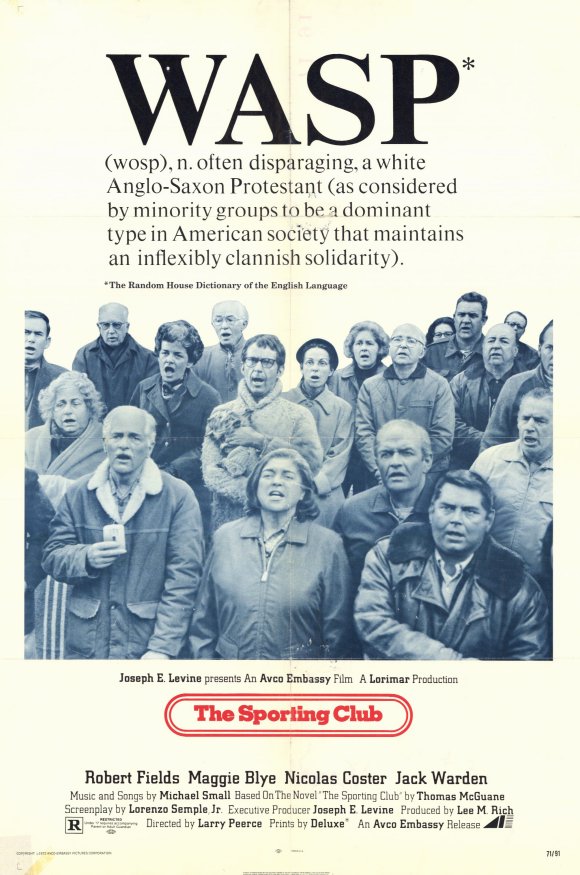
Jim (Nicholas Coster) finds out that his business is going under and he barely has any money left. To escape the stress he decides to take a trip to the wilderness of northern Michigan for a little R&R. Unfortunately once there he meets his friend Verner (Robert Fields) who has built a shooting range in his basement and wants to challenge everyone to a duel. The snotty sporting club that Jim belongs to wants to boot him out when they realize he is no longer making an income and rebel- rouser Earl Olive (Jack Warden) gets into a war with the elitist at the sporting club, which sends things spiraling out-of-control between the two sides with Jim right in the middle.

Based on the Thomas McGuane novel the film has the right concept, but not the fluid essence or wry humor of his writing. Some of his later work that was brought to the screen fared better. This film version is too uneven and takes too long to get anywhere. It becomes somewhat intriguing when we are given the idea of this set-up of a wild shoot-out between Olive’s biker gang and the elderly members of the club, but just as things seem to be getting interesting the film veers into a radically different direction and has all the sporting club members getting into a bizarre sex orgy. This may sound funny or even sexy, but it really isn’t as all the people were in their 60’s or 70’s and seeing their naked bodies cavorting around comes off as gross and sick.

The satirical jabs at the snotty club members are funny to some extent. They represent society’s old order people still clinging to age-old traditions and values even though the rest of the world around them is changing. They boast about their exclusive club membership even though it no longer has any allure and their stubbornness only makes them more insignificant and absurd. The scene where they stare blankly like lost children at the blown-up remnants of their cottage is probably the best moment in the film. However, their caricatures end up going overboard they become too illogical and ridiculous like crazed stupid creatures instead of human beings.

Most anti-establishment films of the era, which in the end is what this is, usually cast young stars in the lead, but here we have Coster who was already middle-aged making it look too much like the old guard vs. the old guard, which did not connect with the young filmgoers and they stayed away. The middle-age audience of the time was the establishment themselves and they found the film’s crass humor and scenarios off-putting and thus the film alienated everybody and bombed terribly at the box office.

Robert Fields gives an excellent performance as a budding sociopath and his scenes have an added tension. Warden is also very good in an unusual role for him as a joint smoking trouble maker who loves to rock-the-boat. The gun duel he has with Fields is interesting and his presence helps give the film a few extra points. Margaret Blye has a beautiful face making her a pleasure to look at no matter what she is doing. Jo Ann Harris is also sexy and the scene where she strips down to her panties with the phrase ‘my grandmother loves me’ stenciled on the rear is fun.

The film is weird enough to be worth a look as a curio. Director Larry Peerce infuses some interesting camera work into the proceedings and Michael Small’s moody folk rock score deserves its own album. Despite the locale looking very much like Michigan it was actually filmed near Hot Springs, Arkansas.

My Rating: 4 out of 10

Released: February 28, 1971

Runtime: 1Hour 45Minutes

Rated R

Director: Larry Peerce

Studio: Avco Embassy Pictures

Available: None at this time.

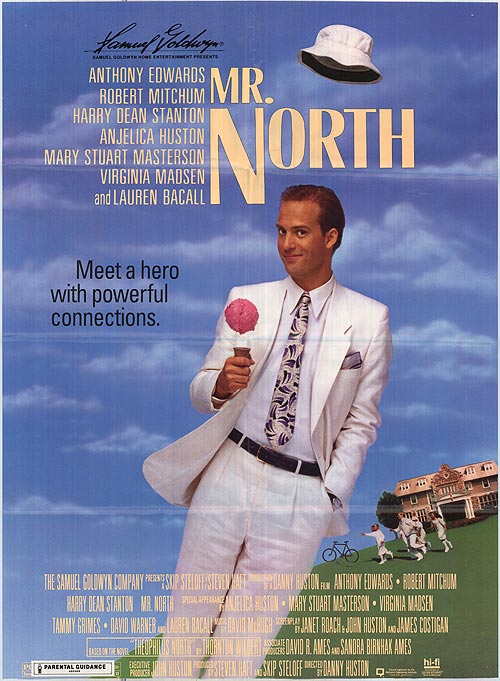
Mr. North (1988)

mr north 1

By Richard Winters

My Rating: 3 out of 10

4-Word Review: He has static electricity.

Theophilus North (Anthony Edwards) is a young man who arrives in the town of Newport Rhode Island in the 1920’s. He has little money or connections, but soon attracts attention with his ability to give off small electrical shocks to anyone he touches. Rumors abound that he can heal sick people with this power and everyone wants to meet him, but the town Dr. (David Warner) is not as impressed and accuses him of practicing medicine without a license and a court battle ensues.

The North character is quite likable. He is self-assured, but never obnoxious or overbearing and is sensitive to everyone he meets and always seems to have wise advice to give no matter what their ailment or problem. However, he starts to get to be a little ‘too good’ and it borders on being annoying. It would have been nice to have seen him with at least one flaw or transgression simply to prove that he was human. His electrical charge ability isn’t all that impressive and the way people become so in awe of it is overblown and dumb.

He also helps the Mr. Bosworth (Robert Mitchum) character who has a bladder control issue by giving him pills, which is nothing more than peppermint, but assures him it will ‘cure’ his ailment. Eventually it does suggesting that incontinence is a psychological problem, which is ridiculous as it is almost always a medical one and makes this an insult to anyone who suffers from it.

The tone is pleasing and the recreation of the period is satisfactory, but the pacing is off. Nothing at all happens during the first hour and only slightly gains traction during the end. The scene where North gets chased by a mob of people looking for him to cure them is amusing, but seems to shift this otherwise whimsical fable-like tale into an all-out farce.

The supporting cast is fun. Eccentric actress Tammy Grimes is good as Mitchum’s spoiled adult daughter who tries to make things as difficult for North as she can. Harry Dean Stanton puts on an very effective Limey accent and Lauren Bacall is interesting in a rare sympathetic role. David Warner is terrific as always as the heavy and it should have been played up even more.

The film is directed by Danny Huston who is the son of the legendary John Huston who also co-wrote the screenplay and his sister Angelica appears very briefly. Unfortunately the film is too predisposed at being one of those ‘feel-good’ movies and in the process becomes formulaic and one-dimensional. The final result is a slick, but slow moving production that is empty and forgettable.

mr north 2

My Rating: 3 out of 10

Released: July 22, 1988

Runtime: 1Hour 33Minutes

Rated PG

Director: Danny Huston

Studio: The Samuel Goldwym Company

Available: VHS, DVD, Amazon Instant Video

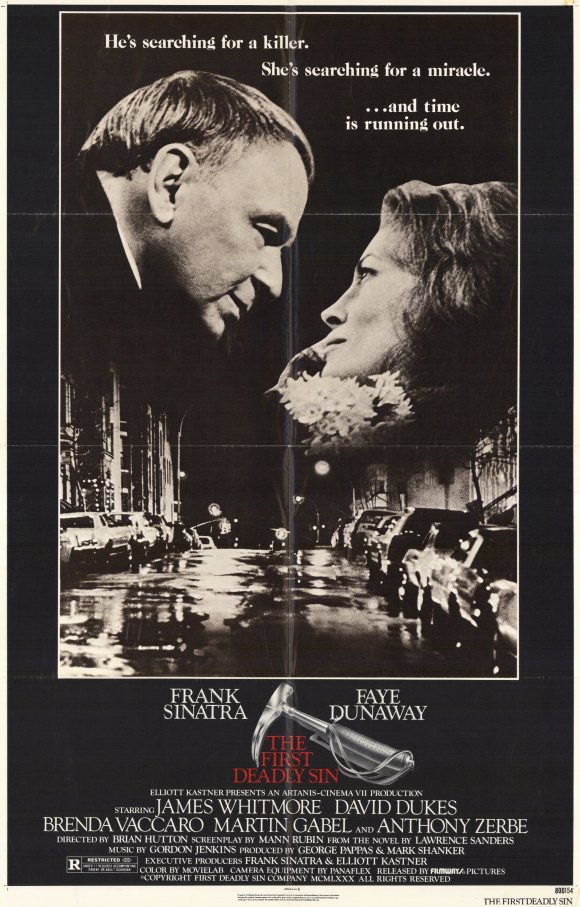
The First Deadly Sin (1980)

the first deadly sin

By Richard Winters

My Rating: 4 out of 10

4-Word Review: Aging cop tracks killer.

Based on the best-selling novel by Lawrence Sanders the story centers around Edward Delaney (Frank Sinatra) a cop only weeks away from retiring who becomes obsessed with tracking down a serial killer who hits people on the back of their heads with a sharp edge hammer as they are walking down the street. The problem is he has only a few clues to go on and his wife Barbara (Faye Dunaway) is in the hospital suffering from a mysterious illness that causes him additional stress and strain.

The film takes a refreshingly different approach to police work than what you will usually find in most Hollywood cop pictures. Instead of emphasizing exciting car chases and thrilling shoot-outs it instead analyzes the meticulous and often times tedious work that goes into following up every little lead while working inside a rigid system and under superiors that aren’t always supportive.  For the most part this is done quite well and at times it is even enlightening, but the whole first half is spent with Delaney trying to figure out what type of weapon was used in the killing even though we the viewer know what it is since we are shown the actual murder at the very beginning thus making the first hour seem quite derivative.

Having the film cut back and forth between scenes of Delaney and the killer doesn’t work. The psycho is played by David Dukes probably best known for playing the man who tries to rape Edith Bunker in a classic episode of ‘All in the Family’. He is a good actor, but scenes showing him alone are clichéd and at times even unintentionally funny. Director Brian G. Hutton should’ve cut them out completely as having the viewer come to realize who it is along with Delaney would have deepened the mystery angle and made it overall more intriguing.

The scenes with the sick wife don’t work either. For one thing we never find out what the mysterious illness is, which is highly frustrating and annoying. It also doesn’t make the plot or character any more interesting. Dunaway is a superior actress and she makes the most of the role’s limitations, but I felt an actress who was more Sinatra’s age would have made it more realistic instead of casting a woman who was 27 years younger.

I have always enjoyed Sinatra in his detective roles, but the character here isn’t as caustic as in some of his older films. For the most part he is pretty benign and even kind of boring. Joe Spinnell though makes the most of his bit part as an overzealous doorman who believes in rigidly following the rules and taking great pride in his doorman duties, but quickly willing to bend them the minute he is given some bribe money.

The final showdown between Delaney and the killer is quite unusual and much more low-key than you might expect. I enjoyed the twist that comes with it, but it lacks a strong impact and the film would have been better served had it had just a little more action.

This movie is also famous as being Bruce Willis’s film debut. He can be seen at the 1Hour 34Minute mark coming into a bar as Delaney walks out. He has a cap over his head and covering his eyes, but you can clearly see just by looking at his mouth that it is him.

My Rating: 4 out of 10

Released: October 3, 1980

Runtime: 1Hour 52Minutes

Rated R

Director: Brian G. Hutton

Studio: Filmways Production

Available: DVD, Amazon Instant Video