Category Archives: Movies Based on Actual Events

Dead Ringers (1988)

By Richard Winters

My Rating: 7 out of 10

4-Word Review: Twin brother’s relationship erodes.

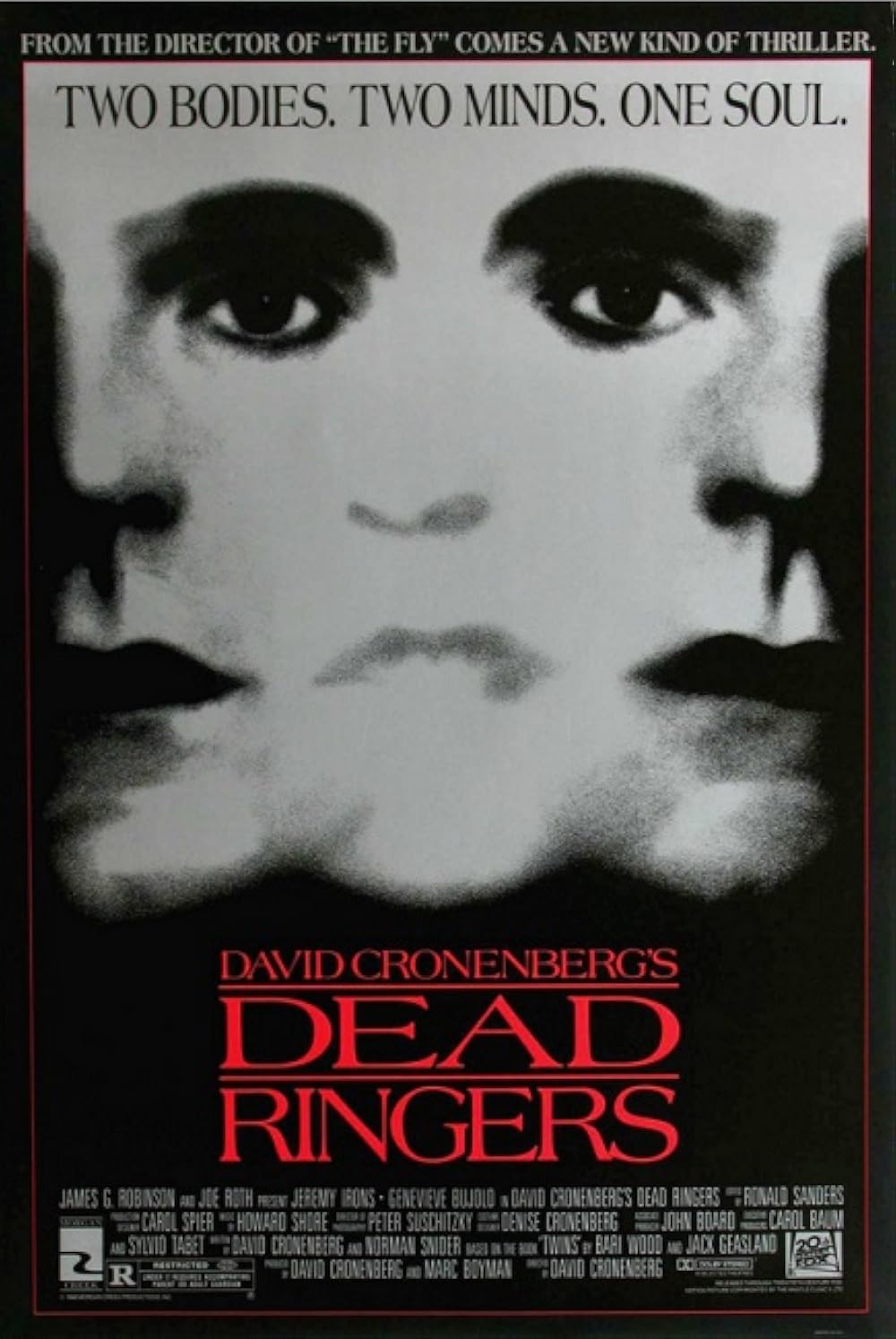
Twins Elliot and Beverly (Jeremy Irons) work at a clinic as gynecologists with Elliot being the more outgoing of the two. Elliot routinely dates women many of them patients at their clinic but will then ‘hand them off’ to Beverly who is the shyer of the two and unable to get women without Elliot’s help. Since Elliot likes variety in his relationships, he’s okay with Beverly getting the women once he’s lost interest in them and the women can never tell the difference. Things though begin to change when Claire (Genevieve Bujold) enters into the picture. She, like the ones before her, was a patient whom Elliot is quickly able to hook-up with and then after a brief fling is given to Beverly, but this time Beverly falls for her in a deep way and not so eager to drop her. Claire also becomes aware that she’s been tricked by the two and has a confrontation with Elliot about it while she continues to see Beverly on the side. Beverly though becomes conflicted with his dual loyalties unable to handle how fractured his relationship with his brother, who he used to be quite close to, has become spiraling him into a depression that ultimately leads to a dangerous drug addiction. 

In 1981 David Cronenberg became interested in doing a movie about twins and producer Carol Baum sent him articles about Steward and Cyril Marcus. These were identical twins who were gynecologists working and living together in New York City. On the morning of July 17, 1975 both were found dead inside Cyril’s cluttered apartment in what had initially been perceived as being a suicide pact, which was later ruled out, but both did die within a few days of the other. While their deaths generated may articles and even a novel the cause to what circumstances lead to them dying together has remained open and thus Cronenberg decided to ‘answer’ that question with this story though he had to go through many years of different producers, screenwriters, and various different drafts before this version was finally given the green light.

If you’re a fan of Cronenberg, particularly his gore, which he’s best known for, then you may be disappointed with this as there really isn’t much. There are still some disturbing moments including the garish genealogical instruments that Beverly pays an artist, played by Stephan Lack, to create which he then plans on using on one of his patients, to the shock of his medical staff, which is a creepy moment. There’s also a dream sequence where Claire bites off a membrane connecting the two brothers, which is cool, but brief. There was also a scene shot that had the head of one of the twins coming out of the stomach of the other one, but this didn’t go over well with the test audiences, so it got cut, but I really wished had been left in. 

It’s really Irons and his incredible performance as the twins that makes this such an engaging movie to watch. Having one actor playing dual roles has certainly been done before, but never quite this effectively. Even though they look exactly alike I really got the sense these were two different people and Irons ability to craft such diverse personalities and postures, this was achieved by putting his weight on the balls of his feet while playing one of them and having his weight put on his heels while playing the other helps to, in a very subtle way, create a strong distinction and a hypnotic presence that sucks you into the story and never lets you go. 

My only quibble is that rarely have I seen twins that you couldn’t tell apart in some way. I noticed that Irons did have some minor moles on his right cheek and then another on the left side of his head near his eye. In the movie both of the brothers have these lesions in the exact same place, but I think in reality they wouldn’t, so they could’ve masked the moles on one of the characters through make-up, so it would only show on one of them and that could’ve been a way to tell them apart physically. There’s also the issue with one of them given a women’s name, which Claire does question at one point. Beverly gets quite defensive when it’s brought up insisting that his name is spelled in the ‘masculine’ way, but on the credits it’s spelled out just like it would had the name been given to a female, so I felt there should’ve been more explanation of why he’d been given an unusual name as it was something that would certainly come off as odd to many and I don’t think I’ve ever heard of a man with that name. 

I also had some problems with Bujold’s character as she seems to be plopped in solely to get the story going and start the process of having the brother’s strong bond dissolve, but for a character to generate such a pivotal thing I think she should’ve stood out more. What was it about this woman that created a division between the boys that the other women hadn’t? I would’ve liked seeing her more involved in the conflict possibly confronting Elliot in an angry way, not the conciliatory one we see here, and forbidding Beverly to see him, which would’ve helped make her more prominent versus just being a story device. 

My Rating: 7 out of 10

Released: September 23, 1988

Runtime: 1 Hour 53 Minutes

Rated R

Director: Michael Cronenberg

Studio: 20th Century Fox

Available: DVD, Blu-ray, Peacock, PlutoTV, Roku,Tubi, Amazon Video, YouTube
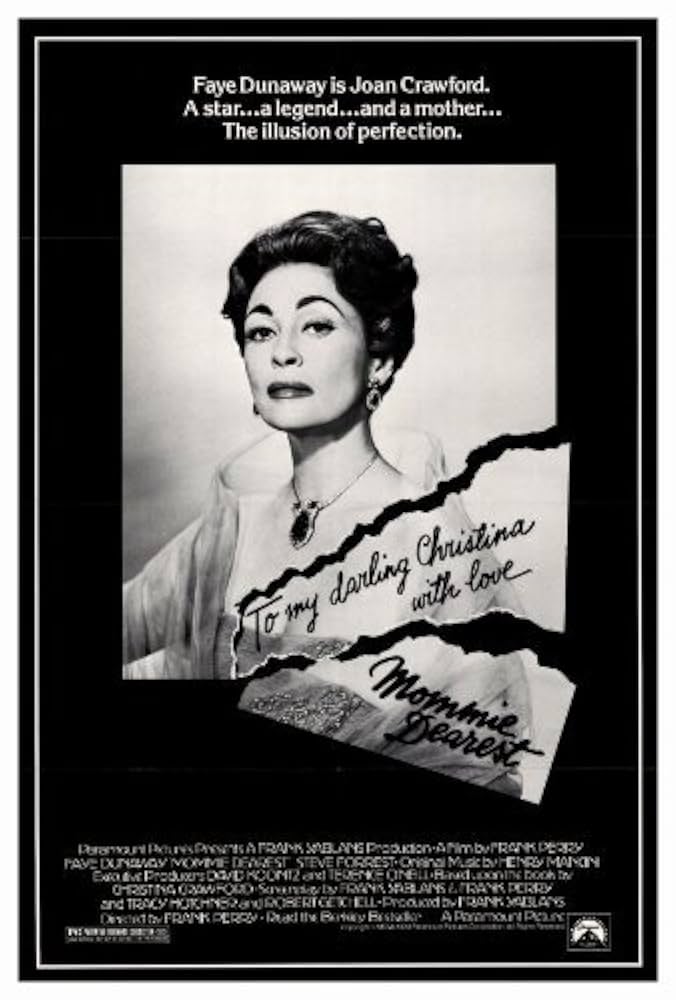
Mommie Dearest (1981)

By Richard Winters

My Rating: 6 out of 10

4-Word Review: Treating her children cruelly.

Joan Crawford (Faye Dunaway) is a famous actress who longs to have children, but unable to have any of her own. The adoption agencies reject her attempts to get a child because she’s divorced and a career woman, so she gets her boyfriend Gregg (Steve Forrest), who’s rich and influential, to pull-some-strings, which ultimately gets her a baby girl named Christina (Mara Hobel). Joan though proves to be a very strict parent and enforces harsh rules, which Christina rebels from and this leads to even harsher consequences. As Christina grows older, (Diana Scarwid) she begins a life on her own away from her mother including a fledgling acting career where she stars in the soap opera ‘Summer Storm’, but when she gets ill her mother, desperate to recharge her failing career, takes over Christina’s role while she’s recovering in the hospital that further erodes their already tenuous relationship. When Joan ultimately dies and Christina finds that both her and her brother have been written out of the will she decides at that point to write a tell-all book that will scratch away the glossy image of her famous mother and instead paint a ‘true’ portrait of who she really was.

The film is based on the autobiography of the same name written by Christina Crawford that was published in 1978 to much controversy as both family and friends denounced it as sensationalized and not an accurate portrait of Joan. Nonetheless it was a best seller, which quickly lead to a movie deal. Dunaway was excited to take the role convinced it would lead to her second Oscar, but instead, despite being directed by the talented Frank Perry, it was perceived as camp by both the critics and the public alike forcing Paramount to retool its marketing campaign selling it more as a dark comedy much to the dismay of the film’s producer Frank Yablans, who insisted it should be perceived as a serious drama.

On the one hand I think some of it is true. I have no doubt that Joan was a very strong-willed woman who had very particular ideas on child-rearing. Anyone who’s scratched-and-clawed their way to the stardom and able to maintain it over several decades would certainly have to be a driven person and I’m sure some of that would have to rub off in their home life. The scenes where she pushes Christina to be a better swimmer, so that she learns to understand the competitive world out there, made sense and parents pushing their children can happen a lot. Having her being controlling and a clean freak wasn’t all that surprising either and these scenes felt honest and revealing.

The problem is that the film makes no attempt to humanize Joan and instead becomes obsessed with portraying her as being a monstrous kook that scares everyone who’s around her including her dedicated servants who act in petrified fear every time they come near her.  The film fails to show any nuance and becomes a big trash feast intent at making her look as awful as possible and leaving no room to even consider the other side, which because she had already died by the time this movie was released, she wasn’t able to give. The most ridiculous moment, which wasn’t in the book, is when she goes into Christina’s room late at night while wearing white face cream that makes her appear almost demonic and then flies into a rage when she notices a wire hanger in her closet that is so over-the-top I’m surprised the cast and crew didn’t break out laughing while it was being shot.

There are issues with Christina too as she’s a little too good to be true. There are several scenes that had it been tweaked just a bit could’ve made her the difficult one instead of the mother. Case in point is when she refuses to do things that her mother asks that could easily be seen by some as Christina being a mouthy brat unwilling to do as she’s told and Joan simply stepping to create some discipline, which is why some attempt at balance would’ve helped and made it seem less like a cheap soap opera.

Spoiler Alert!

Another dumb scene comes near the end when Joan jumps on Christina and begins to strangle her and needs to be pulled off by two other women in the room (Rutanya Alda, Joycelyn Brando). It makes it look like she was close to dying had the two ladies not intervened, but Christina was at the time a grown woman and much younger than Joan, so she should’ve been able to defend herself and fight back. Having her essentially just lay down and take it seemed unrealistic and turning it into an all-out physical cat fight between the two would’ve far more entertaining and believable. Yet despite all this the production values are still top notch and in a tabloid sort of way it’s entertaining.

My Rating: 6 out of 10

Released: September 16, 1981

Runtime: 2 Hours 9 Minutes

Rated PG

Director: Frank Perry

Studio: Paramount

Available: DVD, Blu-ray, PlutoTV, Amazon Video, YouTube

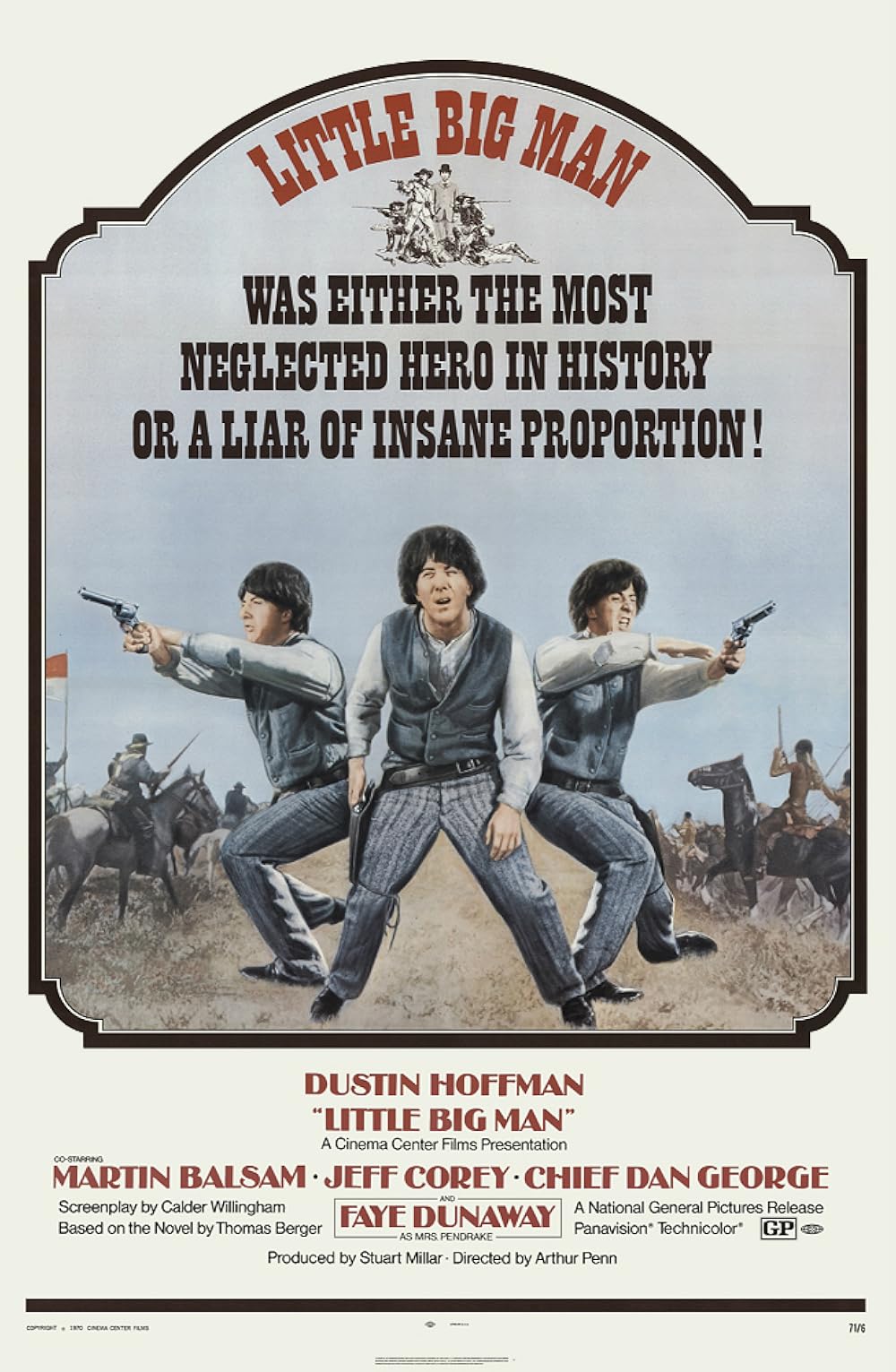
Little Big Man (1970)

By Richard Winters

My Rating: 8 out of 10

4-Word Review: Raised as an Indian.

Jack Crabb (Dustin Hoffman) has reached the age of 121 and agrees to a taped interview with a reporter (William Hickey). He recounts his life events including being kidnapped by Cheyenne Indians in 1859 when he was 10 and befriending their tribal leader Old Lodge Skins (Chief Dan George) who gives him the nickname Little Big Man. He then goes on to elaborate other life events like being captured by the U.S. Calvary where he is placed in the home of a Reverend (Thayer David) and his beautiful wife (Faye Dunaway) who despite her professed Christianity is having an affair with a soda shop owner, which disillusions Jack from religion altogether. He also goes through his marriage to a Swedish immigrant named Olga (Kelly Jean Peters) and how she gets kidnapped by the Cheyenne during a stagecoach ride and Jack’s attempts to find her, which reunites him with Old Lodge Skins and leads him to meet General Custer (Richard Mulligan), who he initially admires, but eventually learns to despise.

The film is based on the 1964 novel by Thomas Berger of the same name and wonderfully mixes the whimsical style of that book into the movie and maintains overall an excellent balance between quirky moments, of which there’s many and jarring scenes dealing with Indian Massacres by the U.S. Calvary, which remains effectively disturbing and impactful despite all the humor that goes on in between. The impressive cinematography by Harry Stradling Jr. that manages to capture the Big Sky Country, filmed on-location in Montanna where many of these historical events actually occurred, in all of its glory and makes you feel like you’ve genuinely been physically transported back to that era.

The most amazing element though, which comes up right away, is the makeup effects on Hoffman where he’s made to look about as elderly as you can get and hats-off to makeup artist Dick Smith to achieve it in such an effective way. While aging of characters has been attempted in other films, I’ve never seen it so realistic as here and in fact it still holds claim even after all these years in the Guiness Book of World Records as ‘The Greatest Age Span Portrayed by a Movie Actor’. My only quibble is that his eyes as an old man appear to be blue even though for the rest of the movie Hoffman’s eyes are clearly brown.

The acting all around is superb starting of course with Hoffman and then moving onto Dunaway whose first attempt at comedy this was and she’s really funny if not a complete scene-stealer. Thayer David awesome too as her bombastic minister husband and I wished there had been more scenes with him. Chief Dan George is quite memorable as the Indian Chief, he became the first Native American ever nominated for an Oscar for his work here, in a part that was originally intended for Marlon Brando who thankfully turned it down as having a genuine Native American makes it so much more compelling. Great work too by the lesser-known Kelly Jean Peters whose frantic screams of terror, as she’s being kidnapped, I found to be both funny and frightening at the same time.

While it doesn’t affect one’s enjoyment of the movie, the film does have a few drawbacks, or moments that could’ve been done slightly better. Having Hoffman constantly come back into contact with people he had been with years earlier got a bit too cute for its own good. I was okay with some of it, like his reunion with the Indian Chief, but having him literally re-meet everyone he had known before got unrealistic and almost monotonous. I also couldn’t understand why the people he meets again don’t recognize him right away as is the case with Dunaway, as Hoffman has a very distinct face that really doesn’t change much even as he ages, so forcing him to have to remind her who he was should’ve been quite unnecessary. Same goes in reverse with the reunion with his sister, played by Carole Androsky, I immediately recognized her voice even before seeing her face, but for Hoffman it takes a long time to remember who she is, but if I the viewer could detect her voice right away why couldn’t he?

Another issue is when he meets his wife Olga many years later when she’s become a part of an Indian tribe. When he married her she had a very strong Swedish accent and due to the language barrier could only say a very few words, basically just ‘Yah’. Then, when he sees her again, she speaks fluent English, but how could she have learned that by being in an Indian tribe? Also, she had completely lost her accent, which I don’t believe would happen. I’ve known people who have lived in this country for 30 or 40 years, but where originally from somewhere else and no matter how long they’ve been here, or how ‘Americanized’ they may become they still retain their original accent, or at least sufficient hints of it.

Spoiler Alert!

There’s also issues with the General Custer character. Acting wise I felt Richard Mulligan nailed it as he integrates a great blend of comic self-importance to him, but on the satire end it goes a little too far. He gets portrayed as being a complete buffoon with a clownish logic and such a severe narcissistic ego he’s unable to realize when everyone else around him thinks he’s an idiot. There were many different issues that went into the Battle of Little Big Horn, or more commonly known as Custer’s Last Stand, and this movie answers it by saying the guy running it was a self-deluded moron, which I suppose comically and emotionally is satisfying, but doesn’t sufficiently tackle the others nuances that were also involved. There’s also the argument over the demise of Wild Bill Hickok though having him get killed by a little kid was historically inaccurate I felt it was so humorously ironic that I was willing to forgive it.

The ending, where in the book Old Lodge Skins dies, but in the movie he doesn’t, annoyed some fans as well. Director Arthur Penn admitted in interviews that the earlier script drafts had him dying, but then he felt that would be ‘too depressing’ so they had him live, but I felt with such a picturesque back drop that having him lay down for his final resting place was appropriate. He was really old anyways and had also become blind, so having him get up and be led away by Hoffman was just prolonging the inevitable anyways, so they might as well have him go down when it was his time as ‘cheating it’ like they do here doesn’t really add all that much.

My Rating: 8 out of 10

Released: December 23, 1970

Runtime: 2 Hours 27 Minutes (Uncut) 2 Hour 19 Minutes (Studio Version)

Rated GP

Director: Arthur Penn

Studio: National General Pictures

Available: DVD, Blu-ray, Amazon Video, PlutoTV, YouTube

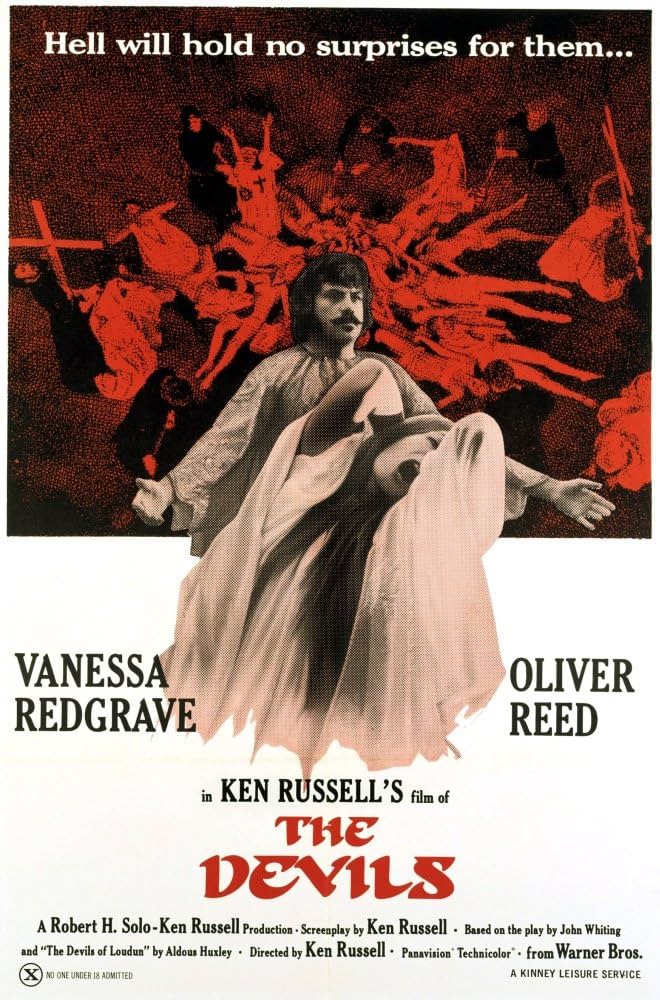
The Devils (1971)

devils1

By Richard Winters

My Rating: 9 out of 10

4-Word Review: Burned at the stake.

In the year 1634 the governor of Loudon, a small fortified city, dies, making Urbain Grandier (Oliver Reed), a priest with a secretly decadent lifestyle, the one in control. He’s idolized by the townspeople and the head nun at the local convent, Sister Jeanne des Anges (Vanessa Redgrave), secretly has sexual fantasies about him though because she suffers from having a hunch on her back is rarely ever seen outside and Urbain himself doesn’t know she exists. When Urbain secretly marries Madeleine (Gemma Jones) Jeanne becomes jealous causing her to confide to Father Mignon (Murray Melvin) that she’s been possessed by Urbain as well as accusing him of dabbling in witchcraft. This then leads to an inquisition headed by Father Pierre Barre (Michael Gothard) and a public exorcism, which has the nuns in the church strip and perform perverse acts before Urbain and his new wife are arrested and put on trial.

The story is based on the actual event, which was written about in the book ‘The Devils of Loudun’ by Aldous Huxley that was later turned into a stageplay. After the play’s success United Artists became interested in turning it into a movie and signed-on Ken Russell to direct due to his recent success in helming Woman in Love. Russell read the source material and became in his words ‘knocked-out by it’ and ‘wanted others to be knocked-out by it too’. This then compelled him to write an extraordinarily over-the-top script full of sex, violence, and graphic torture that so shocked the studio execs when they read it that they immediately withdrew their initial investment and refused to fund the picture threatening the project from being made even though many of the sets, constructed by set designer Derek Jarman, has already been painstakingly completed, but fortunately for them Warner Brothers swooped-in at the eleventh hour, which allowed the production to proceed.

The film’s release was met with major controversy with many critics of the day, including Roger Ebert who gave the film a very rare 0 star rating, condemning it. Numerous cuts were done in order to edit it down to a version that would allow it to get shown with the original British print running 111 minutes while the American one ran 108. Both were issued with an ‘X’ rating though even these cut out the most controversial scene, known as ‘The Rape of Christ’ segment, in which a group of naked nuns tears down and then performs perverse acts on a giant-sized statue of Jesus. This footage was deemed lost for many years before it was finally restored in a director’s cut version, that runs 117 minutes, that was shown in London in 2002. Yet even today this full version is hard-to-find with Warner Brothers refusing to release it on either DVD, or Blu-ray. They’ve even turned down offers from The Criterion Collection who wanted to buy it. While there was a print Warner released onto VHS back in the 80’s, this same version, got broadcast on Pay-TV, it’s edited in a way that makes the story incomprehensible, and only the director’s cut is fluid enough for the storyline to fully work.

It’s hard to know what genre to put this one into as this isn’t your typical movie and watching it is more like a one-of-a-kind experience that very much lives up to its legend and just as shocking today as it was back then. Yet, outside of all of its outrageousness it is quite effective. Each and every shot is marvelously provocative and the garishly colorful set pieces have a mesmerizing quality. The chief color scheme of white that lines the walls of the inside of the convent seemed to interpret to me the interior of a mental hospital, which helps accentuate the insanity of the frenzied climate. While things are quite over-the-top its ability to capture the mood of the times, the cruel way people treated each other and how they’re all steeped in superstition as well as the dead bodies from the plague that get stacked about, are all on-target and amazingly vivid.

The acting is surreal with both Reed and Redgrave stating in later interviews that they consider their performances here to be the best of their careers. Reed’s work comes-off as especially exhausting as he gets his head shaved and then is ridiculed in a large room full of hundreds of people before burned to death with make-up effects that are so realistic it’s scary. Redgrave, who walks around with her head twisted at a creepy angle, is quite memorable during the scene where she physically punches herself for having sexual fantasies, even puts a crucifix in her mouth at one point and masturbates with a human bone. Dudley Sutton and Murray Melvin with their very unique facial features and Michael Gothard, who initially comes-off with his long wavy hair as an anachronistic hippie flower child, but who becomes aggressively evil as the makeshift exorcism proceeds, all help round-out a most incredible supporting cast.

While the cult following for this remains strong and getting stronger and demand for a proper, director’s cut studio released DVD/Blu-ray is high Warner continues to rebuff the requests. There are though ways to find versions through Bing searches. Streaming services Shudder and Criterion Channel have shown the most complete prints to date, running roughly 111 minutes with most of the controversial scenes, including the Rape of Christ moments though these scenes are of a poorer, grainy and faded color quality since they never went through a professional digital transfer, but overall it’s still one of those movies you should seek-out because not only is it fascinatingly brilliant, but it’s something that could never be  made today and a true testament to the wild, unfiltered cinema of the 70’s that will forever make it the groundbreaking, unforgettable decade that it was.

My Rating: 9 out of 10

Released: July 16, 1971

Runtime: 1 Hour 57 Minutes (Director’s Cut)

Rated R (Originally X)

Director: Ken Russell

Studio: Warner Brothers

Available: DVD-R

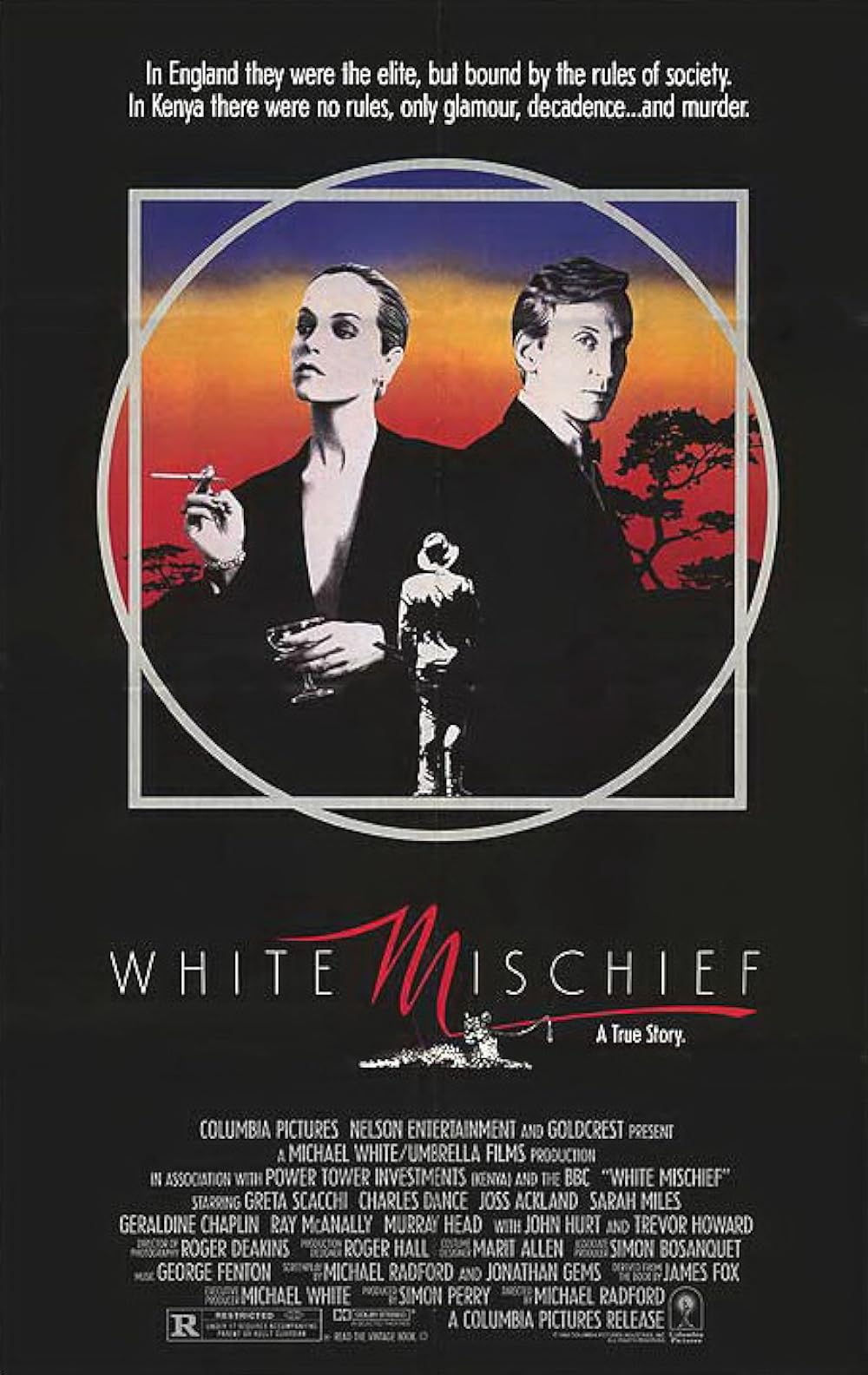
White Mischief (1987)

whitemischief

By Richard Winters

My Rating: 7 out of 10

My Rating: Unsolved murder in Kenya.

During the Second World War many British aristocrats with money escaped the tensions and horror in Europe by relocating at a settlement in Kenya that became known as Happy Valley. Here without the typical societal restraints of back-home they were able to indulge in all their provocative desires including rampant drug use and promiscuous sex. One such philanderer, possibly the most notorious of the bunch, was Josslyn Hay the Earl of Erroll (Charles Dance). He had already had various trysts with many of the women there including Alice (Sarah Miles) before dumping her due to her drug addiction. He then sets his sights on Diana (Greta Scacchi). She is married to Jock (Joss Ackland) who is older than her by several decades, and the two share a marriage of convenience with a pre-nuptial agreement that if either falls in love with someone else the other person will not impede it. Earl goes after Diana aggressively and despite some initial reluctance the two eventually become an open couple. Jock puts up a stoic front and allows her to go with him without any resistance, but internally he seethes with rage. Then one night Earl gets shot dead while driving his car in an isolate area. Did Jock pull the trigger?

The film is based on the book of the same name written by James Fox that was published in 1982 and in-turn based on the real-life incident that occurred on January 24, 1941 where the Earl of Erroll, like in the movie, is was found dead in his car and Jock, being the prime suspect, was put on trial, but then found not guilty due to a lack of evidence. For decades it sat as an unsolved case with no answers to what really happened until 1969 when Fox, along with fellow writer Cyril Connelly, became fascinated with the subject and began researching it vigorously. The book contains many interviews with people who lived through the ordeal and give first person accounts of the trial proceedings. Fox even traveled to the Kenya region to get a better understanding of the area and people and came to the conclusion that Jock had been the culprit with new evidence he unearthed, which makes up the book’s entire second-half though officially the case remains open.

The movie’s best quality is its visual element especially its ability to capture the expansive beauty of Africa as the film’s director Michael Radford proudly proclaimed before production even started that “films of Africa should be made by Africans” and you really get that sense here. The screenplay by noted playwright Jonathan Gems is also superb with it’s use of minimalistic dialogue where the conversations and characters never say too much, many times just brief sentences, and the emphasis is much more into what is implied.

On the negative end the attempts at eroticism are pathetic and overdone. The most absurd moment comes when the Sarah Miles character, during the open casket viewing portion of Earl’s funeral, reaches under her skirt and masturbates in full view of everyone before eventually putting her ‘love juices’ on the deceased, which came off as ridiculous and simply put in for a cheap laugh, or misguided ‘shock value’ and hard to imagine it occurred in reality. Both Scacchi’s and Dance’s characters are quite boring and their love scenes lack spark making the whole affair angle seem quite predictable.

The film’s saving grace though is with Ackland’s character where you really get inside his head and see things from his perspective. Normally in most films the jilted spouse is portrayed as someone to fear and a one-dimensional jealous machine who serves no purpose other than to get revenge. Here though we feel his quandary and sympathize with his internal struggle of trying to take the high road while also wracked with hurt and betrayal. Instead of being the culprit we ultimately see him as a sad victim even as his personality completely unravels by the end and because of this aspect I felt the movie works and is worth seeking out. Director Radford probably said it best when he stated that the film was about “people who have everything and yet have nothing. It’s about people who want to possess what they can’t possess” and with the excellently crafted Josh character you can really see that.

This is also a great chance to see acting legend Trevor Howard in one of his last performances. He was suffering severely at the time from his alcoholism and cirrhosis that he comes-off appearing like a wrinkled corpse put upright and there’s several scenes where he’s seen just standing there, but says nothing due to the filmmakers fear that he wouldn’t remember his lines, or if he did wouldn’t be able to articulate them. However, he does come through during a pivotal moment inside the prison when he visits Ackland and what he says and does there is great. John Hurt’s performance is the same way as initially he’s seen little and says no more than a couple of one word responses to the point I thought he was wasted, but then at the end he reappears and comes-on strong in an unique way.

My Rating: 7 out of 10

Released: November 10, 1987

Runtime: 1 Hour 47 Minutes

Rated R

Director: Michael Radford

Studio: Columbia Pictures

Available: VHS, DVD (Import Reg. 2), Amazon Video, Roku 

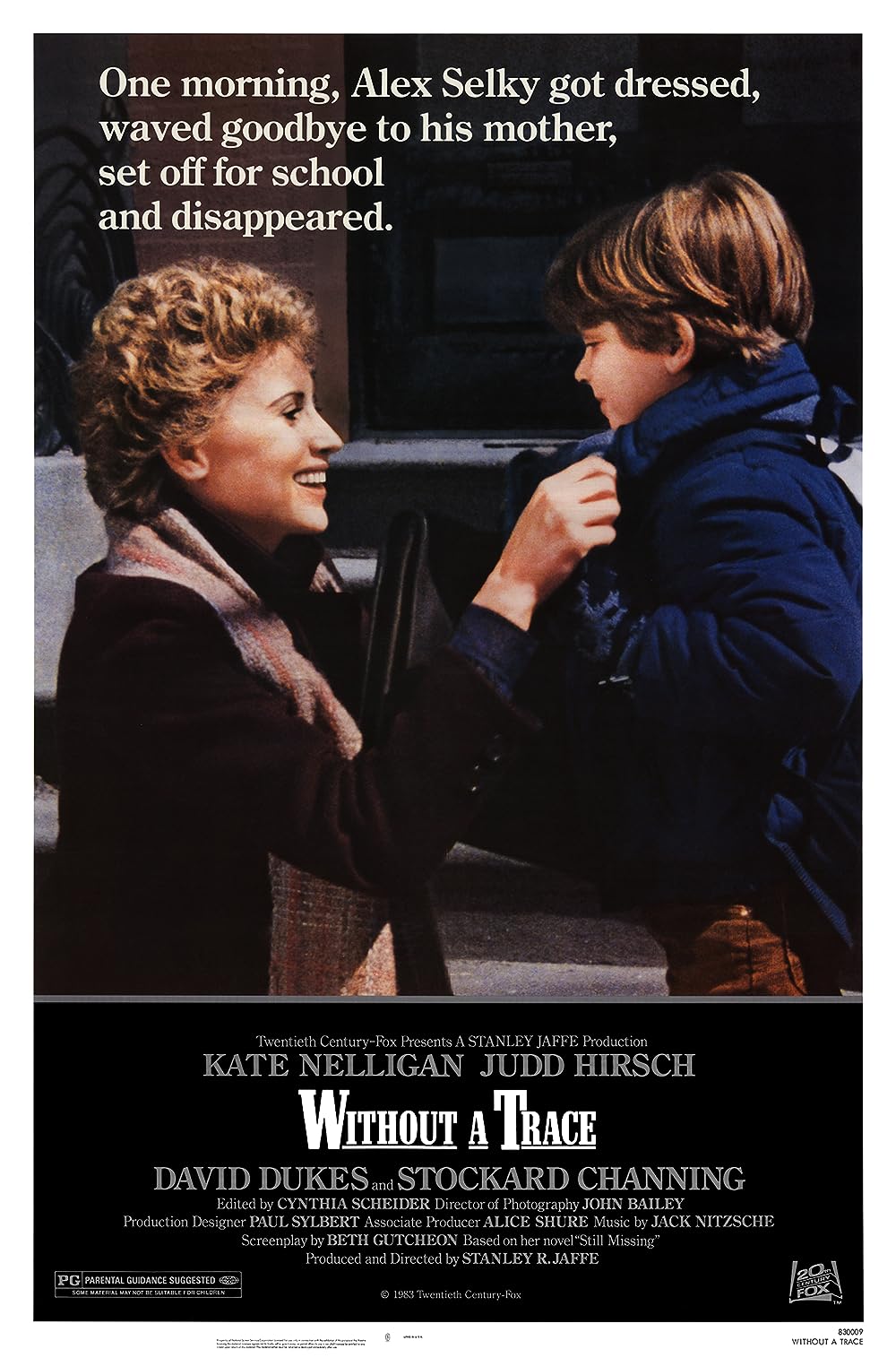
Without a Trace (1983)

without

By Richard Winters

My Rating: 7 out of 10

4-Word Review: Her child goes missing.

Susan (Kate Nelligan) works as a college professor while also raising her 6-year-old son Alex (Danny Corkill) as a single parent. Alex normally walks 2-blocks to his school every morning in their Brooklyn neighborhood, so Susan thinks nothing of it when she waves goodbye to him as he turns the corner towards his school while she goes the other way to her job. However, when she returns home and finds that he’s not there she begins to worry. She calls her friend Jocelyn (Stockard Channing), who has a daughter the same age as Alex, only to learn that Alex never showed up to school that day. She then immediately calls the police and Detective Al Manetti (Judd Hirsh) becomes the lead investigator in the case to find the child.

The story is loosely based on the real-life case of Etan Patz who disappeared one day while walking to school on May 25, 1979. Not only did he become the first child to appear on a milk cartoon for missing children, but it also inspired Beth Gutcheon to write a novel, which was a fictionalized account of the his case that was later purchased by producer Stanley R. Jaffe in the amount of $350,000 to turn it into a film, of which Gutcheon was hired to write the screenplay.

While the film has a riveting quality that keeps you watching it does also have a certain ‘genteel atmosphere’ that critic Leonard Maltin complained about in his review, that keeps it a bit sterile for its own good. The film acts like child abduction is almost a novelty that’s rare to happen and shocking when it does though kids can go missing each and every day in this country. The detective states that children can be sexually molested by adults though if children came forward about it they’d ‘never be believed’ or ‘taken seriously’, which is something that I think has certainly flipped the other way in this day and age. He also brings up the subject of child porn, which gets called ‘chicken porn’ here, and parents respond in a naive way to this concept, which again is something I think most adults in this era would’ve been familiar with its existence and not act like they’re being told about something completely new they had never heard about.  The police also ‘set-up-shop’ in the women’s apartment turning it into a virtual police station and remain there day-and-night for 6-weeks, which I couldn’t see happening now.

The sequence with a psychic, played by Kathleen Widdeos, I found unintentionally laughable. Her ‘visions’ are quite vague and when she gets pressed to give something specific, like the license plate number of the car, or identity of the kidnapper, she can’t. Yet the mother acts relieved when the psychic says the child is still alive, but since her ‘information’ is so nebulous she could be a con artist making it all up and no one would know the difference.

David Dukes, who plays the ex-husband and father of the child, who at this time was best known for playing the man who tried to rape Edith Bunker, in a memorable episode of the classic TV-show ‘All in the Family’ of which he received several death threats, plays the only character that shows any emotion and thus the only one who stands-out. The movie also examines the detective’s home-life, which I didn’t feel was needed. Normally I say it’s good when we learn more about a cop’s private side, but since he wasn’t the film’s protagonist I didn’t find it necessary and only helps to lengthen the film’s runtime, which was too long anyways and could’ve neatly been told in only a 90-minute time frame instead of 110 minutes.

I did come away liking Nelligan’s performance, some critics at the time labeled her as coming-off as ‘cold’, but I felt she did alright, but was kind of disappointed that Stockard Channing didn’t get the lead instead. At the time Nelligan was considered the up-and-coming star while Channing had been mostly relegated to comedy including two failed sitcoms, but in retrospect Channing has become the better known actress and proven to be highly versatile, so seeing her in the part of mother would’ve been quite interesting and she might’ve even been able to do it better.

Spoiler Alert!

My biggest beef though is with the ending, which is much different than in the actual incident. In the Patz case his body was never found and it turned into a cold case for many years before a man named Pedro Hernandez came forward in 2012 and confessed to the crime. Here though the boy gets found alive having been kidnapped to help take care of a man’s disabled adult sister, but it’s very hard to fathom how much help a 6-year-old could be expected to give an adult woman nor has there ever been in the annals of crime where a kidnapping has been done for this reason. Having the kid immediately answer the door of the home he is supposedly being ‘confined in’ hurts the tension and would’ve been more suspenseful had the police had to search the place before finally finding him hidden somewhere. Also, if the kid is able to open the front door then what’s stopping him from running out at some point and finding help?

The fact that a neighbor woman named Malvina Robbins (Louise Stubbs), who lives next door to the kidnappers and keeps calling the police about it, but they ignore her, really hurts the credibility of the Manetti character who we’re supposed to like and he’s portrayed as being ‘super dedicated’. If that’s the case then he should’ve followed-up on every single lead he could’ve even if he thought some of them might be ‘cranks’ it shouldn’t matter because you just never know. The fact that he doesn’t do this even after she calls the police hundreds of times makes it seem like a dereliction of duty who should be investigated for not  following up and certainly not some ‘hero’.

I realize most audiences want some sort of resolution and making a movie like this that doesn’t have one might prove frustrating, but in real-life a lot of cases like these don’t get resolved, or if they do the findings are a grim one. To have a movie stay realistic the whole way only to tack-on a feel-good ending does a disservice to the many parents whose missing children never come home and thus hurts it from being as insightful and compelling as it could’ve been.

My Rating: 7 out of 10

Released: February 4, 1983

Runtime: 1 Hour 50 Minutes

Rated PG

Director: Stanley R. Jaffe

Studio: 20th Century Fox

Available: DVD-R, VHS

Eureka (1982)

eureka1

By Richard Winters

My Rating: 6 out of 10

4-Word Review: He discovers some gold.

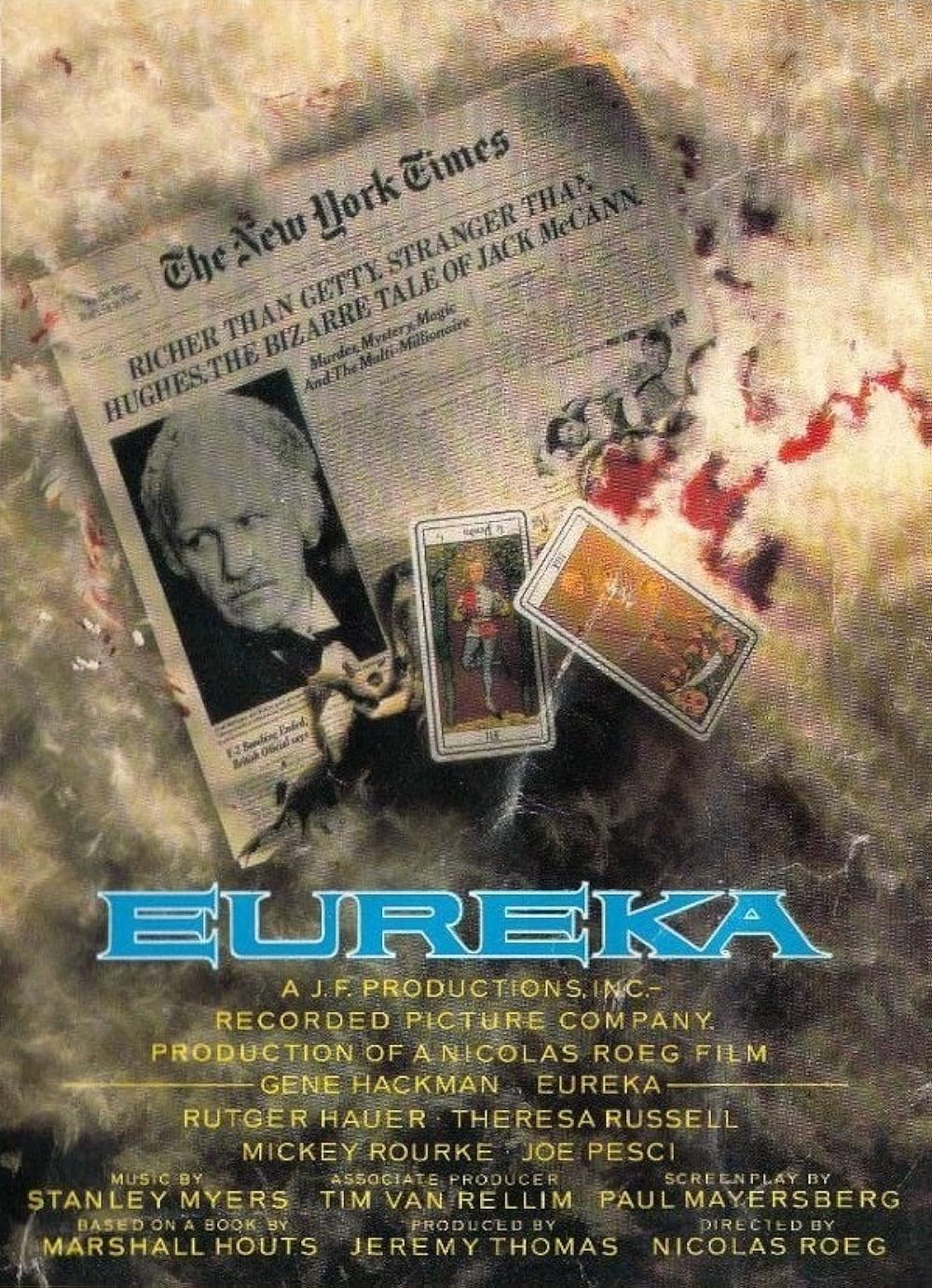
Jack (Gene Hackman) has been searching the Yukon for over 15 years in the hopes of one day coming upon some gold. Then one day he finds it and becomes super rich. 20 years later he’s living on his own island, married, and with a grown daughter named Tracy (Theresa Russell). Jack though has grown ornery through the years and has managed to alienate most of his family including Tracy’s husband Claude (Rutger Hauer) whom Jack can’t get along with and the two regularly argue to the point that it also affects his relationship with his daughter. Jack is also at odds with the local mobsters headed by Mayakofsky (Joe Pesci) who wanted to open a casino on the island and are willing to resort to any violent means necessary in order to get that done.

The film is based loosely on the life of Sir Harry Oakes who, like with the main character here, scoured many countries looking for gold for 15 years before finally laying claim to a fortune. He then retired to the Bahamas and ultimately was found murdered in 1943 in a crime that has remained unsolved. The studio though did not know what type of audience to aim the film to and thus shelved it for a year only to release it to limited theaters where it managed to recoup a paltry $123,572 out of its initial $11 million budget making it one of the biggest box office bombs in history.

As a visual exercise, given its director, its a spellbinding ride. Director Nicholas Roeg approaches it as a fable-like tale and creates the artic in a surreal type of way giving it an almost outer-worldly look and feel. To an extent this works and there’s a few memorable scenes including a barefoot man lying in the cold who blows his head-off, via a loaded gun, in one very unexpected, shocking moment that’s very realistically grisly. The death by blowtorch, which happens a bit later is effectively vivid as well. However, there’s other metaphysical elements like a mysterious stone that gets handed to Jack that alludes a bit too much to a magical quality and takes away that this is actually based on a true story and instead makes it seem like it’s all just a made-up metaphorical fable, which starts to have a pretentious quality.

The plot is too thin and the second act labors badly. Joe Pesci is a dynamic actor, but here his part is boring and he doesn’t come-off as threatening enough to give his scenes the proper tension. There’s also no insight given to why the gangsters choose to pick-on Jack, as this is a man who is quite rich and could hire his own protection and enforcers and not someone you’d think could be easily intimidated. So why bother with him at all and just find another island to build a casino on? In the real-life incident Harry Oakes went out of way to try to ban casinos from the entire island nation as he did not approve of gambling and thus caused the ire of the criminal underworld, but the movie doesn’t bother to explain this and thus makes the motivations of the bad guys confusing.

Acting-wise its a joy to watch especially Hackman. He has played so many heroes in his film career that it’s fun seeing him be a jerk and he does it well particularly when he gets on his alcoholic wife about ‘laying off the sauce’. Ed Lauter, who’s usually a heavy, is entertaining with this constant nervous look on his face as he ends up being the reluctant middle-man who gets played by both sides. Rutger Hauer is brilliant as usual giving each of his moments a creepy finesse as only he can do. Two of his more memorable bits are when he swallows a small piece of gold while in Jack’s presence and when he has a meltdown at a formal dinner party and angerly, even frighteningly, demands they all must go home.

Of course being that she’s the director’s wife you get ample visuals of Theresa Russell with and without clothes on. The two became a couple while filming Bad Timing a few years earlier and despite a nearly 30-year age difference got married. I’ve often think it’s odd though when a husband directs a movie in which she’s in bed naked with another man, in this case Hauer, who’s also sans clothes. Don’t know if many other husbands would like that idea as the erotic scenes weren’t necessarily needed though I kind of wonder if it’s not another case of the trophy wife syndrome where the old guy wants to brag to the world: look at this hot little number I get to go home to and you don’t and thus the nude scenes are just there to make all the other guys jealous.

Spoiler Alert!

The climactic court room scenes, in which Hauer is placed inside a cage during the proceedings, aren’t effective. Mainly because he acts as his own lawyer and questions Russell on the stand who goes on a long, teary-eyed, rant about her father and his perceived psychological motives, that ceases to be the proper question/answer decorum that would be expected in a regular court setting. It’s unlikely that any judge would let this go on the way it does, or that the jury, or other attorneys would be so captivated as they are and not begin rolling their eyes after awhile, or objecting to the histrionics. Having Hackman killed off doesn’t help things as he was the guy the viewer most connected with while Hauer was a creepy guy who behaved erratically and expecting the audience to suddenly emotionally side with him at the end was an overreach.

Released: May 20, 1983

Runtime: 2 Hours 10 Minutes

Rated R

Director: Nicholas Roeg

Studio: United Artists

Available: DVD-R, Blu-ray

Looking for Mr. Goodbar (1977)

looking

By Richard Winters

My Rating: 7 out of 10

4-Word Review: School teacher sleeps around.

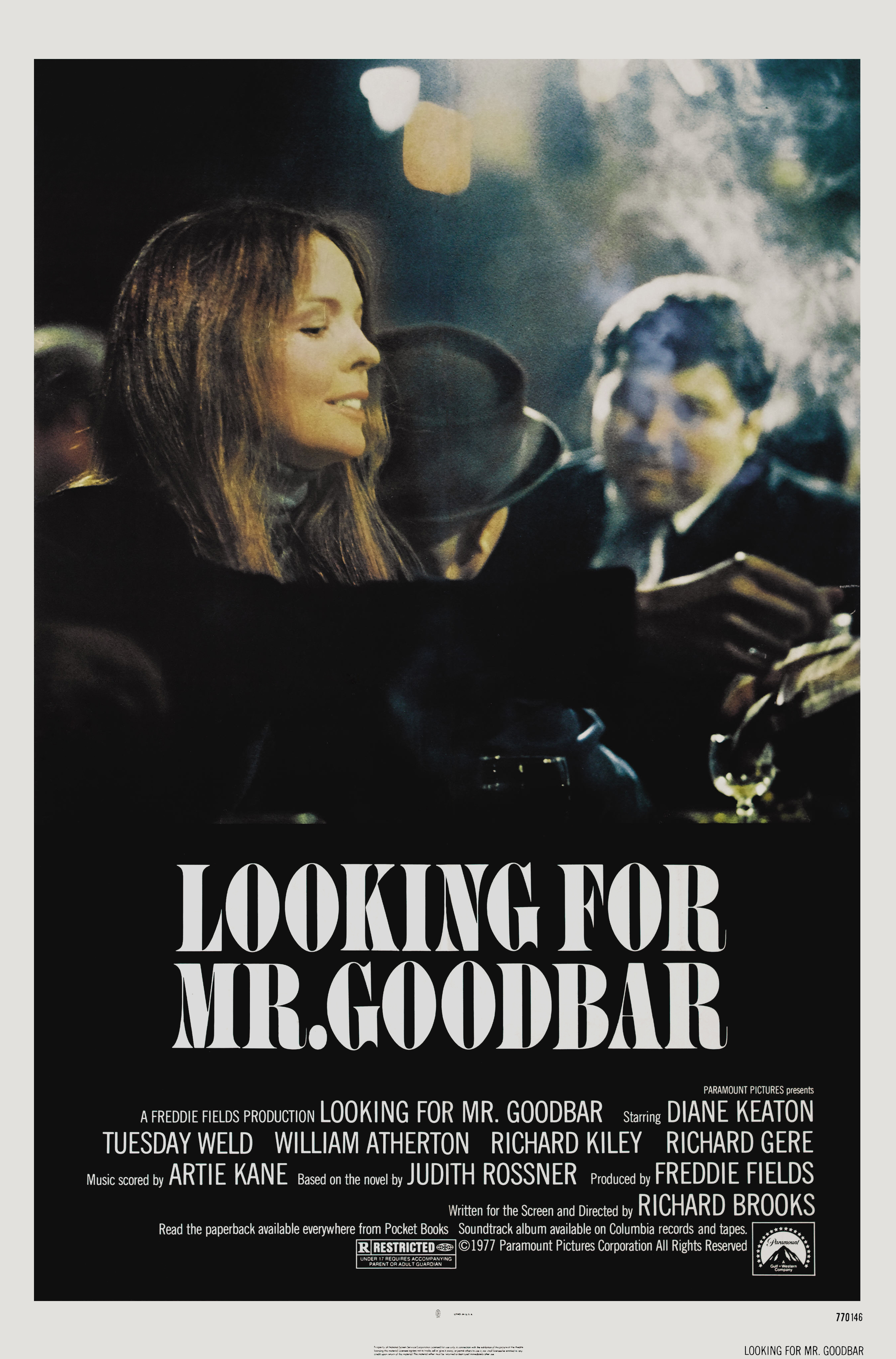
Theresa (Diane Keaton) is a young school teacher trying to get over the break-up with Martin (Alan Feinstein) a married college professor of whom she’d been in a relationship with for several years. Tired of living with her parents (Priscilla Pointer, Richard Kiley) and her domineering father she decides to get a studio apartment near the club scene. She picks-up Tony (Richard Gere) at a bar one night and takes him home. His volatile, drug induced behavior scares her at first, but eventually she enjoys his unpredictable ways. When he disappears for long periods she begins bringing more strangers home finding the one-night-stands to be a liberating change from her repressive catholic upbringing, but the more she partakes in this edgy lifestyle the more danger she puts herself in.

The film is based on the Judith Rossner novel of the same name, which itself is based on the true story of Roseann Quinn. Quinn was a school teacher living in New York City who had a propensity of bringing home men she’d meet from a bar that was across the street from her studio apartment. On the evening of January 1st, 1973 she invited John Wayne Wilson, a man she met at the bar, back to her place for intended sex, but instead it resulted in murder when he was unable to achieve an erection and he felt she was making fun of him.

Rossner read about the incident in a newspaper and became intrigued with the case and intended to write about it for an upcoming article in Esquire magazine, but the editor feared legal action since it was based on an actual case and reneged on the assignment, so Rossner turned it into a novel using fictional names for the real-life people. It got published in 1975 to rave reviews and instantly became a best seller, which caught the attention of writer/director Richard Brooks who had turned other true crime stories into hits such as In Cold Blood and felt he could do the same with this. In fact the film did quite well as it raked in $22.5 million and was the top movie in the country on its opening weekend.

While Rossner openly detested the film version I felt it does a great job of exposing the bleak, lonely existence of the 70’s single’s scene and how sexual liberation can end up being just as much of a trap, if not more, as monogamy. The dim, dark lighting, particularly inside Theresa’s apartment brings out the grim existence, and twisted personalities, of its characters nicely. The viewer feels as caught up in the depressing, aimless world as the protagonist and its the vividness of the 70’s young adult, city culture that makes this an excellent film to see simply to understand the motivations of the people who lived it. While on paper reading about someone that was a school teacher for deaf students during the day turning into a reckless, sexually promiscuous lady by night may seem shocking and hard to fathom, the film seamlessly fills-in-the-blanks to the extent  that you fully grasp, from her stifling family and religious upbringing as well as her painful break-up and insecure body image, to what drove her to it and thus cultivates a very revealing character study.

Keaton, Kiley and Tuesday Weld, who plays Theresa’s older sister who experiments with the wild lifestyle herself, are all stand-outs, but the film also has some great performances from actors who at the time were unknowns. Gere is especially good, quite possibly one of the best acting jobs of his career, as the creepy, but still strangely endearing Tony. LeVar Burton has very few lines, but still makes an impression with his pouty facial expressions as the older brother to one of Theresa’s deaf students. Tom Berenger though turns out to being the ultimate scene stealer as the psychotic who’s so on edge with his personal demons that he lashes violently out over the smallest of provocations.

Spoiler Alert!

While the film is known mainly for its notorious ending, which still packs a bit of a punch, its effect is muted by director Brooks unwisely telegraphing it ahead of time. Virtually the whole movie is done from Theresa’s point-of-view and yet at the very end it cheats it by having a scene between Gary and his gay lover giving the viewer an unnecessary warning about his mental state, which wasn’t needed. For one thing in the real-life incident the assailant was a married man and not gay, so adding in the gay subtext and using it to explain his psychosis could be considered homophobic and armchair psychology. It also hurts the shock value as the audience knows what’s coming versus having them as surprised as Theresa when he suddenly lashes out unexpectedly, which would’ve made for a more emotionally impactful, gripping finish.

My Rating: 7 out of 10

Released: October 19, 1977

Runtime: 2 Hours 16 Minutes

Rated R

Director: Richard Brooks

Studio: Paramount

Available: DVD

Buster and Billie (1974)

buster2

By Richard Winters

My Rating: 5 out of 10

4-Word Review: Dating a loose woman.

Buster (Jan-Michael Vincent) is a high school senior living in rural Georgia during the late 1940’s. He’s been dating Margie (Pamela Sue Martin), but finds her to be stuck-up and her unwillingness to have sex makes him frustrated. He begins seeing Billie Jo (Joan Goodfellow), who has moved into town and due to having limited social skills puts-out for the other boys by allowing them to have sex with her, one after the other, in the woods late at night. Buster at first dates her simply for the action, but eventually the two get into a serious relationship and he breaks-up with Margie. They begin going out publicly letting the whole town know that they’re a couple, but the other boys become jealous as they can no longer have easy sex like they use to and thus plot a dark revenge.

The story is based loosely on an actual event that occurred in Florence, South Carolina in 1948 that the film’s screenwriter Ron Turbeville remembered hearing about growing up. The recreation of the era though lacks style and this may be in large part due the film’s limited budget. While it gets a zero in  atmosphere I did at least like the way it doesn’t sugar coat things for nostalgic purposes. The teens behave in the same ways they do now and thus it’s gritty on that level.

The acting is good surprisingly even from Jan-Michael who in his other films tended to have a cardboard presence, but here he gives the thing most of its energy. He even appears, shockingly, fully nude and in fact this was the first mainstream American movie to show a male naked from the front, of which Jan stated in later interviews he was quite proud to expose of his well-endowed ‘equipment’. Goodfellow is also seen nude and is quite attractive though I wish she had more to say. Robert Englund, in his film debut, is the most memorable playing an albino with brown hair and his pale complexion makes him look creepier, at least I felt, than he did as Freddy Kruegar.

I didn’t understand though why Buster would risk his social standing for this ostracized girl. I got that Margie was annoying, so breaking-up with her wasn’t a stretch, and Billie was essentially ‘easy-pickings’, but why go public with it? It made more sense that they would’ve seen each other on the sly, but not wanting to risk the social scrutiny of letting everyone know about it. This would’ve clearly lost Buster’s social status not only amongst his friends, but the town as a whole including his own parents, so why add on all that needless stress? Billie too was very shy, so becoming center stage and having all eyes on her would be something she most likely would’ve wanted to avoid, which makes the second act overly idealistic.

It’s also frustrating that Billie doesn’t say much. You want to get to know this person, but never really do. The only time she’s ever given any insight is when Buster explains to his parents why she had sex with all the other guys (in order to be liked), but this is something we should’ve heard coming-out of her lips instead of his. By having Buster do almost all the talking, even when they’re alone together, makes it seem like she’s mentally handicapped, which I don’t believe was the intent and yet ultimately that’s how it comes-off and thus making their romantic moments sterile and uninteresting.

Spoiler Alert!

The final sequence though is where it really falls apart as the boys inadvertently kill Billie when they gang rape her (during a rainstorm even though the sky is still clear and sunny). Buster then tracks them down at a pool hall where he single-handily beats them up and ultimately kills two of them, but the guys just allow themselves to be beaten without attempting to throw a punch, which is not only unrealistic, but boring. Having a big brawl, where each side fights equally would’ve been far more exciting. The twist in which Buster somehow gets released from jail the day after her funeral, so that he can decorate her gravesite with all the flowers that he’s stolen from everyone else in town is far-fetched and overly forces the sentiment.

My Rating: 5 out of 10

Released: August 21, 1974

Runtime: 1 Hour 40 Minutes

Rated R

Director: Daniel Petrie

Studio: Columbia Pictures

Available: Amazon Video

The Onion Field (1979)

onion2

By Richard Winters

My Rating: 7 out of 10

4-Word Review: Guilt over partner’s death.

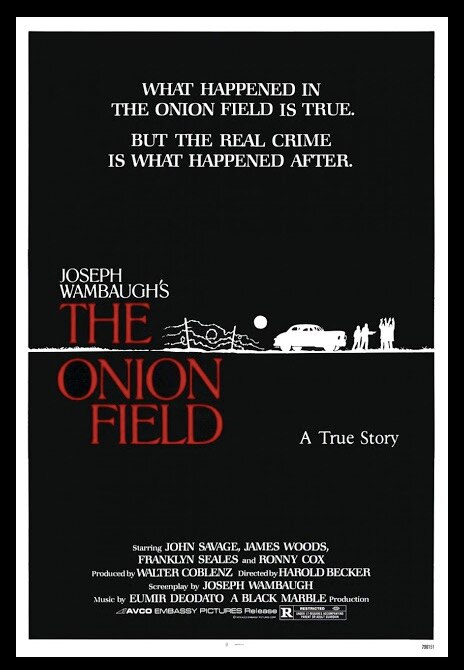
Los Angeles police detectives Ian Campbell (Ted Danson) and Karl Hettinger (John Savage) are on-duty driving around in an unmarked police car when they spot two men, Gregory Powell (James Woods) and Jimmy Smith (Franklyn Seales), driving suspiciously, so they pull them over. While Campbell is talking to Powell, Powell is able to pull out a gun he had hidden in his trousers forcing Campbell to drop his weapon. Hettinger is then told to give up his weapon as well, which he does, or risk seeing his partner get shot. The two cops are then taken at gunpoint to an remote onion field where in the darkness of night Campbell is shot and killed, but Hettinger escapes and manages to run 4 miles until he finds someone and gets help. While the two criminals are eventually apprehended and found guilty it is Hettinger that suffers the most from the guilt of surviving when his friend and partner didn’t and from the humiliation of being the subject of a police video detailing what not to do when stopping a vehicle, which leads him to a severe mental breakdown in both his personal and professional life.

The story is based on the actual incident that occurred on March 9, 1963 with the traffic stop happening on the corner of Carlos Avenue and Gower Street in Hollywood and the murder happening off of Interstate 5 near Bakersfield. It was written into a novel by former cop turned author Joseph Wambaugh in 1973. I remember reading it when I was 14 and finding it captivating from beginning to end. While the film stays faithful to it I still felt it wasn’t as effective and in a lot of ways not as gripping. Even though it was a long time ago I remember the part about Powell’s ‘disguise’ where the only thing he changed about his features was putting a distinctive mole on his left ear lobe, which sounded completely absurd. This is discussed in the movie, which gets a subtle eye roll from Smith his partner, but the irony is, which is talked about in the book and not the film, is that the witnesses from the robbery that Powell was in described the mole to the police and this litrerally threw the detectives off for awhile as they kept searching for a man with a distinctive mole that Powell had since removed, so as silly as it sounded, his idea had actually worked, but the movie never gives this pay-off.

The chase through the onion field is also really hurt. I remember finding this section the most captivating part of the book and finding it a truly tense and horrifying moment that seemed to go on forever and a major element of the story, but in the movie this moment gets trimmed down significantly. Years ago, when I first saw the movie on TV, I thought it was because they had edited it down due to time constraints in order to get more commercials in, but when I finally viewed the full version on DVD I found this wasn’t the case. For whatever reason the chase in the onion field lasts for only a few minutes and not done from Hettinger’s perspective, which is what made it such an intense reading and it’s a real shame as it makes the movie much less impactful then it could’ve been. It turns the whole onion field incident into a side story instead of the main event.

The performances by Woods and Seales are outstanding and the element that really gives the film its energy they also look exactly like the people they’re playing to the point it’s almost freaky. Woods is especially creepy and he literally demands your attention with each moment he’s in it. Seales though, whose career never really took off and he died at the young age of 37 from AIDS, is excellent too as he plays someone who is very timid especially when initially with Powell, but brazen at other points and the way his and Powell’s relationship evolves both through their criminal and then when behind bars is quite fascinating. The scream that he lets out when Campbell gets shot, which was not in the script and completely improvised, has a very riveting effect and the one thing about the film that I had remembered from watching it decades earlier.

Unfortunately the two leads, the people we’re supposed to be the most connected with, are quite boring. It’s not like it’s the actors faults either. Danson, this was his film debut, is not bad, but his character isn’t fleshed out enough. Other than enjoying playing the bagpipes we don’t learn much else about him and nothing he says his captivating, or interesting. The same with Savage his inner turmoil and mental breakdown really doesn’t have the intended emotional impact in fact his moments bogs the movie down and you can’t wait until they get back to the bad guys who as rotten as they are what gives the movie its liveliness. I realize that Wambaugh felt it was very important to get Hettinger’s story out there and it was the whole reason that motivated him to write the book, but I came away feeling, at least movie wise it would’ve worked better had it just focused on the two crooks and their weird ‘friendship’.

On the whole it’s still an adequate production that holds enough interest and makes some good points about an important event that shouldn’t be forgotten, but at times it also seems like an overreach. Wambuagh’s insistence that everything be as accurate as possible gives the narrative a cluttered feel particularly with all the various court proceedings with each one having a different set of attorney’s, judges, and courtrooms which becomes dizzying instead of riveting. Pairing certain elements down would’ve helped as it’s not quite a completely effective, despite the great effort, as it could’ve been and without question another incidence where the book is far better.

My Rating: 7 out of 10

Released: September 19, 1979

Runtime: 2 Hours 6 Minutes

Rated R

Director: Harold Becker

Studio: AVCO Embassy Pictures

Available: DVD, Blu-ray