Category Archives: Moody/Stylish

Blood Simple. (1984)

blood simple 2

By Richard Winters

My Rating: 8 out of 10

4-Word Review: Love triangle turns deadly.

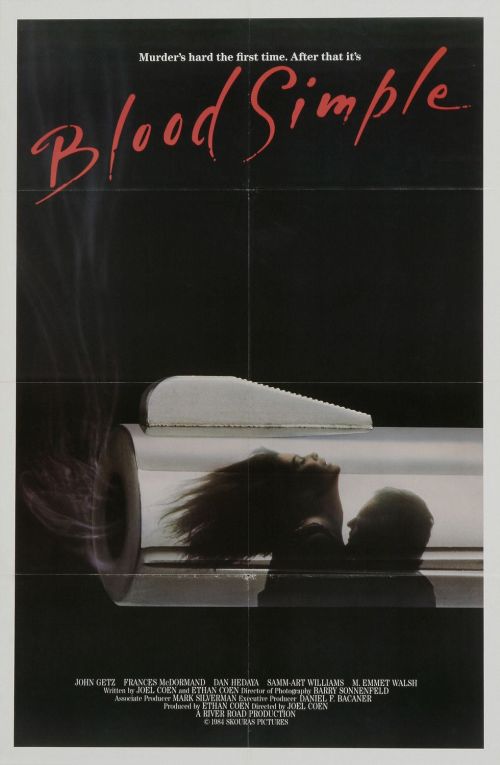
Julian (Dan Hedaya) is a jealous and controlling husband who suspects that his wife Abby (Frances McDormand) is cheating on him. He hires a sleazy private detective named Loren (M. Emmet Walsh) to follow her around only for Julian to ultimately learn, to his shock, that not only is she fooling around, but it is with Ray (John Getz) who is one of his employees. Filled with rage Julian then asks the detective if he’d be willing to kill both of them for a price. Loren says he will, but then fakes the murder simply so he can collect the cash, which then leads to a myriad of twists.

This marks the Coen brother’s feature film debut and I was surprised to learn that every major studio passed on it and it wasn’t released to theaters until it got a favorable response after being screened at the Toronto Film Festival. The film is filled with the directorial flair that we’ve become accustomed to in their movies. I particularly enjoyed the inventive camerawork with my favorite shot being a tracking one done down a bar top in which the camera somehow leaps over a drunk’s head. The opening shots showing the desolate, dry and heat soaked Texas landscape helps give the film a gritty flair and the brief, clip-like dialogue that seems more like sound bites is quite interesting and helps reveal more by what the characters don’t say than by what they do.

McDormand is terrific in her film debut and her angelic-looking blue eyes help make her character more appealing to the viewer while the rest of them come off as being pretty vile. I was also impressed with how her Texas accent here sounds just as effective as the Minnesota one that she did in Fargo.

Hedaya does well playing the type of part he’s become best known for and I’ll give him credit for allowing himself to be put into a hole and having dirt thrown on him, but when he gets shot it is clear that his eye lids are fluttering and chest moving up and down, which should’ve been equally obvious to his shooter as well.

The story is slick, but the character’s actions not so much. Both Julian and the detective sneak into Ray’s house, but park their cars, which have very distinctive features, right in front of the home in which any neighbor looking out their window could report seeing it later when speaking to the police. Ray’s actions are even dumber as he gets fingerprints all over the murder weapon and then foolishly carries a dead body into his car where it doesn’t take a genius to know that the victim’s blood will most likely seep all over his backseat cushions.

The story appears to take place in the summer as the daytime scenes show the characters sweating, but then at nighttime we see the character’s breath, which makes it seem more like a winter time setting. I also thought the viewer should’ve been shown how the detective was able to doctor the photos to make it look like Abby and Ray had been shot as this was well before the age of personal computers or photo cropping.

There is another scene near the end where Abby, in an effort to escape from her killer, climbs out of her bedroom window and into a neighboring room. However, there was no ledge for her to climb onto making it almost impossible for her to do what she did, which is why I think they didn’t even attempt to show it and was simply something that we are expected to ‘forgive’ in order to enjoy the rest of the movie.

Despite these minor flaws I still found it to be an inventive film and one of the better attempts at creating a modern-day film noir that should be considered the standard for all others that followed.

My Rating: 8 out of 10

Released: October 12, 1984

Runtime: 1Hour 39Minutes

Rated R

Director: Joel Coen

Studio: Circle Films

Available: DVD, Blu-ray
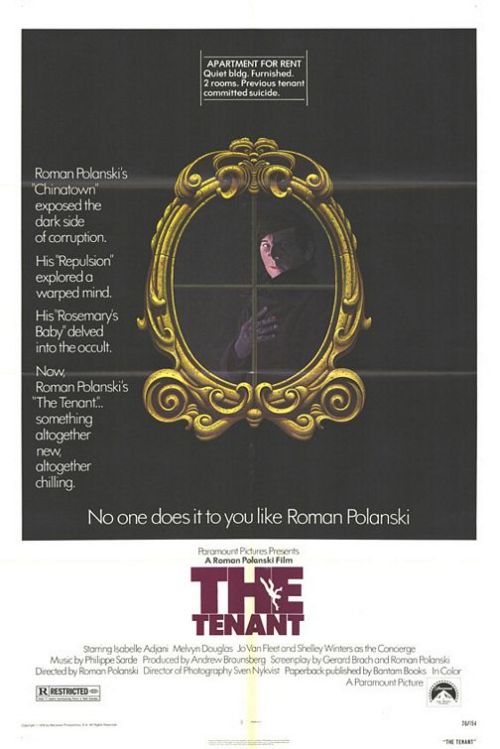
The Tenant (1976)

tenant 1

By Richard Winters

My Rating: 10 out of 10

4-Word Review: He loses his identity.

This intriguingly odd horror film may well be Roman Polanski’s best work and even better than Rosemary’s Baby as it manages to be scary in a unique way while also bringing to light many of the subtle ugliness of everyday life. Here Polanski plays a tenant who moves into an apartment were all the residents, and even the landlord (Melvyn Douglas), act slightly peculiar. The woman who lived in the apartment before him killed herself by jumping out the window and as he continues to live there he starts to feel a connection towards her while also getting the idea that somehow the other residents are in a conspiracy against him.

The film’s brilliance comes from the fact that the horror and tension is not based on any of the usual devices.  No ghosts, monsters, or psychos here. Instead the viewer gets sucked into the harsh realities of the modern urban world. The feelings of isolation, people who are cold and impersonal and apartments that are bleak and small as well as showing how these urban jungles swallow up our identities until we’re just another face-in-the- crowd.

This amazingly deep and penetrating study gets astutely underplayed with no action and little or any true scares. The tension comes through its psychological implications and the paranoia that only the Polanski character feels. Are these people really out to get him, or is it all just in his head? There are no definite answers, but theme and ideas are quite real. It’s a sort of twisted version of Rear Window and extension of Repulsion that may require a second viewing in order to completely appreciate.

Polanski scores on all levels as his performance is interesting and his ability as a director to make you feel the smallness and bleakness of the character’s apartment is also amazing. You are given a very real sense of the room’s dimensions without any inclination that it was done on a stage, or with the presence of a film crew. The eerie segments are subtle but successful with imagery that is both strange and lasting.

My Rating: 10 out of 10

Released: May 26, 1976

Runtime: 2Hours 5Minutes

Rated R

Director: Roman Polanski

Studio: Paramount

Available: DVD, Amazon Instant Video, YouTube

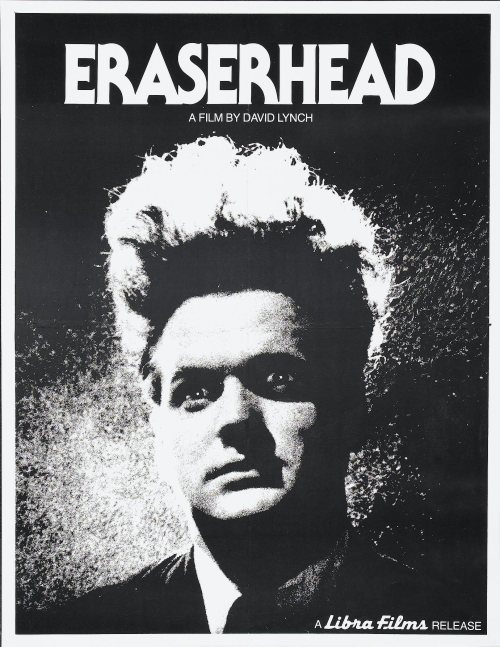
Eraserhead (1977)

Eraserhead

By Richard Winters

My Rating: 6 out of 10

4-Word Review: Couple has deformed baby.

In David Lynch’s first feature length film, a movie that took almost 5 years to make and had a good deal of it financed by Sissy Spacek and her husband, we have a surreal almost cryptic-like tale detailing a lonely man named Henry (Jack Nance) and his ultimate descent into a madness as he is forced to take care of severely deformed child while also harboring the dark urge to kill it.

It is hard to say whether one can like or dislike this as it goes so far out of the conventional form of film narrative that it seemingly defies all genres and puts itself into a category all its own. On a sheer technical level it is quite impressive especially when you factor in its shoestring budget and array of production set-backs. Each scene is meticulously detailed with wild and unsettling imagery that on a purely visual level will be more than enough to leave an impact. Overall the film is cold, ugly and unyielding, but helped tremendously by Nance’s presence as a sort of detached everyman who seems as confused and aloof to his surroundings as the viewer.

To me the most jarring image is the baby, which is incredibly lifelike. Had it came off looking fake, or like some puppet or Claymation attempt the film would’ve been a failure, or deemed laughable, but this thing is freaky looking to the extreme and Lynch spares no expense in getting the camera close up to it, which could force some viewers to turn away. Supposedly it was made from the embalmed fetus of a calf, but no one knows for sure and the crew was forced to blind fold themselves when Lynch set it up, so the secret would never come out. Either way it is effective and it manages to move its eyes and mouth almost like it were real and coming off as far more authentic than any computerized effect.

Spoiler Alert!

Of course the most confounding thing about the film is its story and symbolism’s that can be interpreted in a million different ways depending on the viewer’s own perspective. For what it’s worth I’ll give you my interpretation, which isn’t that complicated. To me the deformed baby symbolizes Henry’s soul, which has been mangled by the soulless world that he lives in, which would explain why he is so extremely passive because he is simply a walking zombie. The scene where his head pops off and the ugly child’s head pops into its place only reinforces this. The lady that he sees in the radiator is an angel from heaven and the beautiful lady that lives across the hall from him is the devil who entices him with sex, but when she realizes he has no soul to take, just an ugly mangled remnant of one, which gets exposed to her when she sees him standing in the doorway, she quickly loses interest and moves onto someone else. When he finally kills the baby he is essentially killing himself, which then explains why he ends up in the final scene in heaven with the lady in the radiator.

The man in the planet that we see at the beginning represents Henry’s own subconscious as he quarrels within his mind at the thoughts of killing the child. The man could also represent the world at large and how it controls everyone with its levers, which when Henry finally kills himself they start to have sparks fly from them and the man struggles in containing them, which shows that Henry has now ‘broken free’ from the man and this world by taking his own life.

End of Spoiler Alert!

Some consider this a horror pic, but I found certain parts of it to be quite funny in a darkly humorous way particularly the segment where Henry goes to visit his girlfriend’s parents. To me the most horrifying thing about is the way it challenges the viewers to question their own morality by forcing them to face the difficult quandary or what they would do if put into the same situation as Henry and forced to care for a hideous looking baby that some would consider would be better off dead.

My Rating: 6 out of 10

Released: September 28, 1977

Runtime: 1Hour 29Minutes

Not Rated

Director: David Lynch

Studio: Libra Films International

Available: DVD (Criterion Collection), Amazon Instant Video

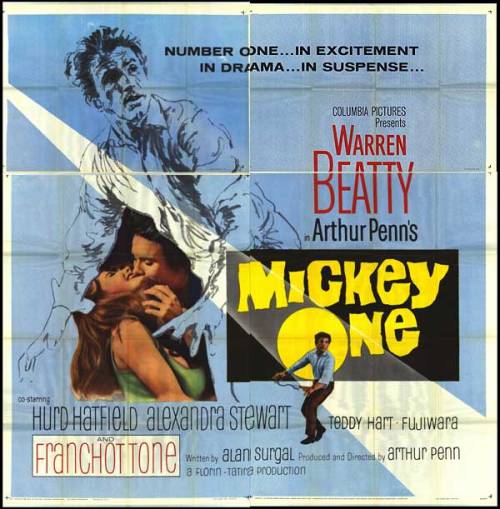
Mickey One (1965)

mickey one 1

By Richard Winters

My Rating: 6 out of 10

4-Word Review: Comic hides his identity.

Warren Beatty plays a successful night club comic who’s living the good life until he falls into disfavor with the mob. He decides to go on the run by burning his social security card and getting a new one with a Russian name on it that is so hard to pronounce that everyone just calls him Mickey One. After spending time on the streets of Chicago he finally gets himself another gig at a club run by Ed Castle (Hurd Hatfield), but the better things get for Mickey the more paranoid he becomes convinced that he is being watched and followed at every turn and unable to relax for even a second.

This film marks the first pairing of Beatty and director Arthur Penn and their next project, Bonnie and Clyde, was a great success, but the results here are only so-so. The idea of trying to replicate the artsy French New Wave films of the late ‘50s and early 60s is intriguing, but poor pacing and a lack of consistent style hurts it. An early scene taking place inside an automobile junkyard has just the right combination of crisp editing and camerawork to give it an enticing visual quality, but then the film veers off into too many talky segments. It manages to recover at the end by giving the viewer a strong sense of the paranoia that the main character is feeling, but wide shifts in the film’s dramatic tone hurts it overall making this more of an interesting curio than a classic.

Beatty is okay, but he tends to be a bit too detached and his attempts at stand-up comedy are unfunny despite the many shots of audience members laughing. Hatfield is terrific in support and his presence significantly helps. Franchot Tone is also quite good in a part that features no lines of dialogue.

The film does have some unique and memorable moments. Tone’s strange art exhibit that he names the Yes Machine that he constructs on the ice rink of the Marina Towers is engaging particularly when he sets it on fire only to have it put out and ruined by the Chicago fire department. The best moment though is when Beatty tries to do a stand-up routine in an empty and darkened room with only a bright spotlight shining on him and a mysterious, unseen man sitting behind it, which has the perfect blend of mood and style and a scene I wished had been extended.

My Rating: 6 out of 10

Released: September 27, 1965

Runtime: 1Hour 32Minutes

Not Rated

Director: Arthur Penn

Studio: Columbia Pictures

Available: DVD-R, Amazon Instant Video

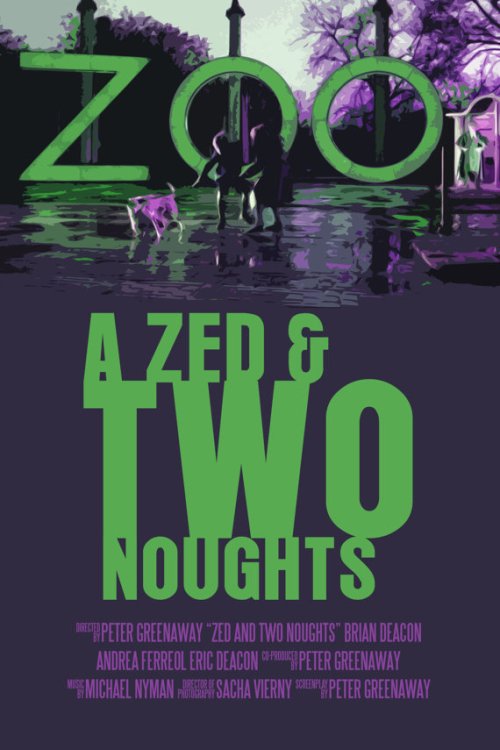
A Zed & Two Noughts (1985)

zed 3

By Richard Winters

My Rating: 6 out of 10

4-Word Review: They’re really into decay.

Oswald and Oliver (Brian and Eric Deacon) are twin brothers working at a zoo who become devastated to learn that both of their wives have died in the same freak accident in a car driven by Alba (Andrea Ferreol) who survives, but without her leg. Initially the brothers’ are angered with her, but this slowly grows into a strange attraction, which eventually forms into a ménage a trois. To help with their grief they begin doing time-lapse photography of the decaying process. They start with dead animals before deciding on a human subject with Alba as their chosen ‘star’.

From a completely visual level this film can be considered a great success. This was the first of ten projects that Director Peter Greenaway and cinematographer Sacha Vierny collaborated on and the result is stunning. The vivid contrasting colors, lighting and symmetrically designed sets make each and every shot look like its own painting. This is also one of the few films that completely transcend its era. Usually one can tell what decade a movie is from by watching it for only a few minutes, but this film is unlike any other ‘80s movie made, which is an achievement unto itself.

The best part of the movie is its depiction of the real-life decaying process captured in time-lapse form. I realize this may sound extremely morbid and ‘sick’, but it’s a natural process of the world we live in and if taken from a purely scientific perspective quite an interesting and fascinating phenomenon to watch. It gives the film a unique one-of-a-kind edge and something I wished had been shown even more.

The film’s drawbacks are the characters that come off as too weird and twisted, which is an issue in a lot of Greenaway’s movies that are always technically brilliant, but lacking in emotion or empathy. A good movie, no matter how ‘artistic’ it may be still needs relatable characters to help propel it and instead this movie has what amounts to mouth pieces in disguise as people who are simply used to relay a concept, but in no way connected to anyone you’d ever meet in real life. This results in leaving the viewer cold and making the film more of an ‘Avant-garde experiment’ than an actual story.

My Rating: 6 out of 10

Released: October 4, 1985

Runtime: 1Hour 55Minutes

Not Rated

Director: Peter Greenaway

Studio: British Film Institute

Available: VHS, DVD, Blu-ray

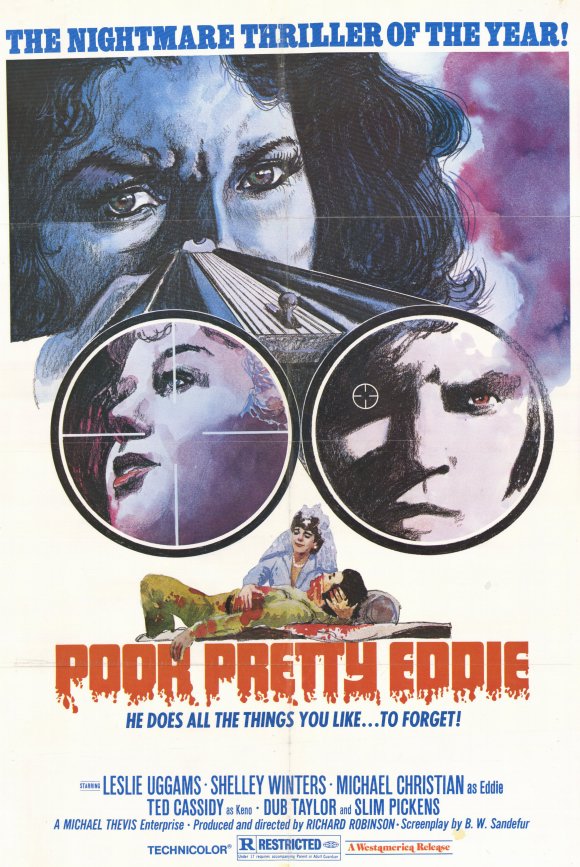
Poor Pretty Eddie (1975)

poor pretty eddie 1

By Richard Winters

My Rating: 6 out of 10

4-Word Review: Wrong turn to hickville.

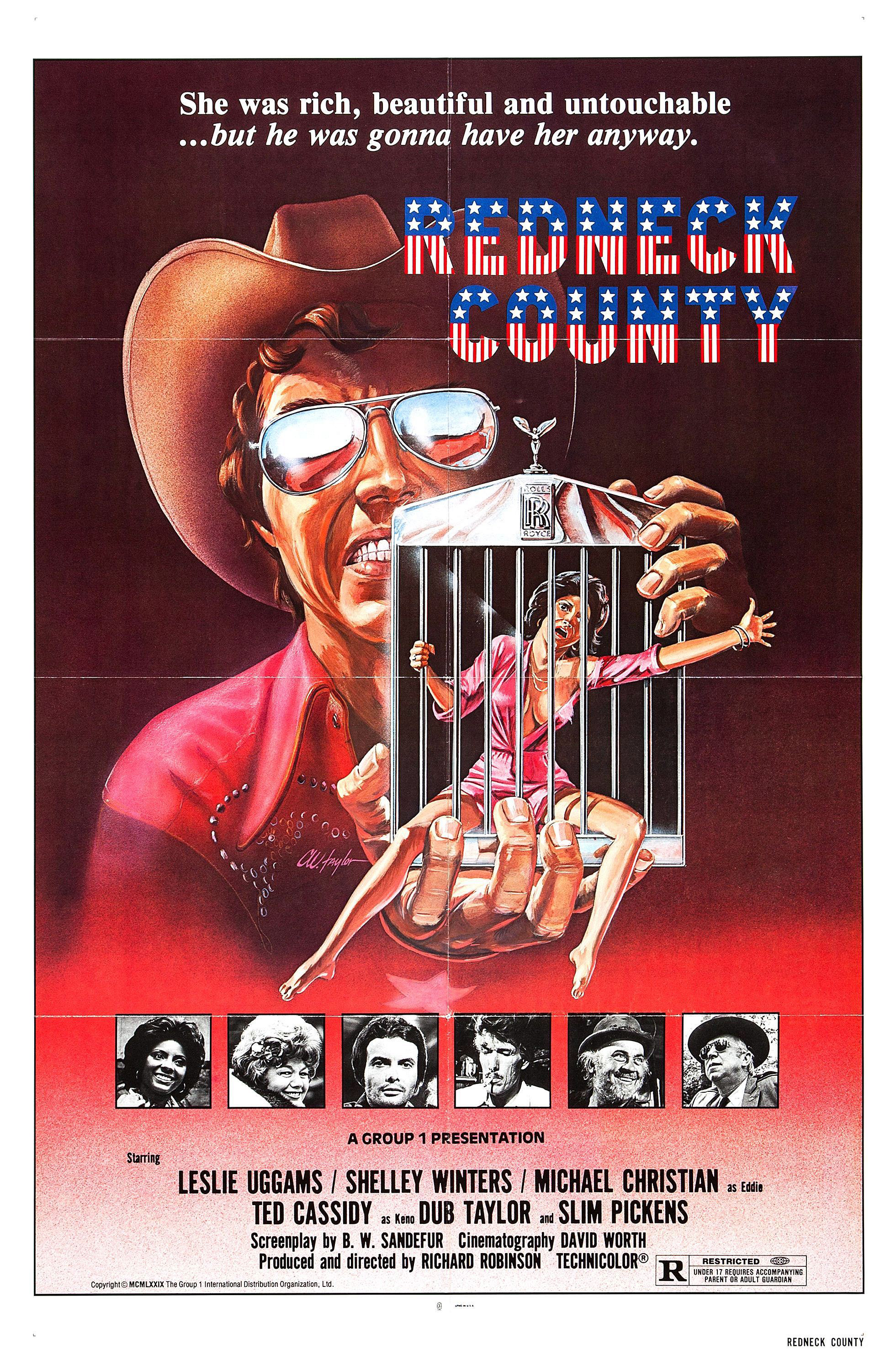
Liz Weatherly (Leslie Uggams) was simply looking for a break from her hectic touring schedule and a chance to take some nature photos when her car breaks down on a lonely southern dirt road near an isolated lodge run by an aging, overweight lush (Shelley Winters) and her much younger boyfriend Eddie (Michael Christian). Eddie recognizes Liz as being a famous singer and since he has dreams of that nature as well tries to convince her to help him get his foot-in-the-door, but his talents do not match his ambitions and he fails to impress her. He then delays the repairing of her car hoping to wear her down and work things into a sexual relationship. When she resists this he rapes her and traps her at the remote hotel with no vehicle for escape. When she goes to the police the backwoods sheriff (Slim Pickens) humiliates her further, which crumbles her inner strength and makes her feel like a droid to the perversion around her that ultimately has her forced into a shotgun wedding.

This turgid drama is full of provocative southern gothic elements and wallows in areas that others fear to tread. The creative camerawork and backdrop sounds are impressive especially for a low budget film and the slow motion violence adds an evocative touch that stays with you long after it’s over. The character’s sexual repression gets relayed in an equally interesting way by showing scenes of them sucking and slurping their food like it’s a sexual substitute.

poor pretty eddie 3

Prolific character actor Pickens gets one of his best roles as the slimy hick sheriff in a part he seems almost born to play and Dub Taylor is spot-on as a self-imposed backwoods judge who creates a makeshift trial in the middle of his ragtag bar while also amusingly comparing Yankees to hemorrhoids. Ted Cassidy is good as well and makes a strong impression despite having limited lines.

I was not as impressed with the female performances as star Uggams comes off as too cold and one-dimensionally rigid without showing any type of preliminary vulnerability. Winters is competent as always, but playing a lonely, aging, pathetic woman begging for love is too similar to the character that she played in Lolita and making it seem more like typecasting.

The climactic bloody shootout is fun, but ends up being more of a spectacle than anything.  B.W. Sandefur’s script lacks any type of twist, introduces psychological elements that it fails to follow through on and wades in tired southern stereotypes making this a warped piece of ‘70s cinema that falls just short of being a cult classic.

poor pretty eddie 2

My Rating: 6 out of 10

Alternate Titles: Redneck County, Heartbreak Hotel, Black Vengeance

Released: June 16, 1975

Runtime: 1Hour 22Minutes

Rated R

Director: Richard Robinson, David Worth

Studio: WestAmerican Films

Available: DVD

A Bell from Hell (1973)

bell from hell

By Richard Winters

My Rating: 4 out of 10

4-Word Review: A psycho returns home.

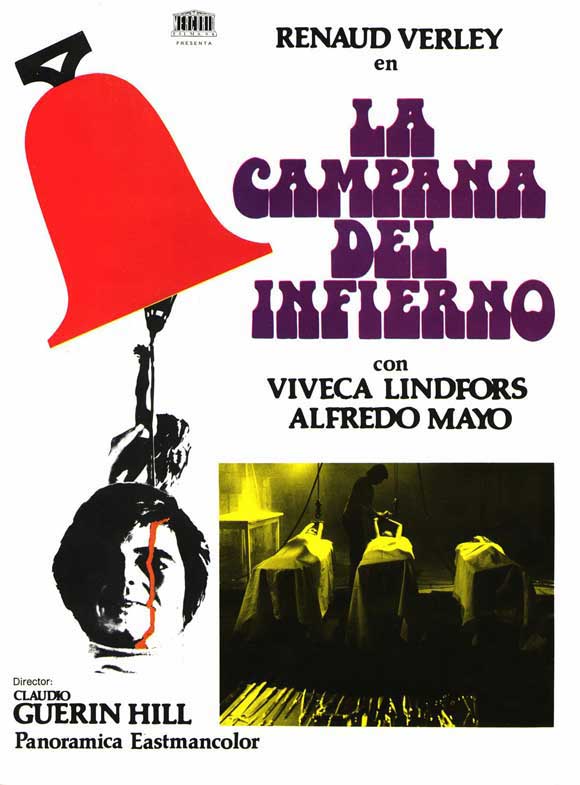
After being locked up for years in an insane asylum Juan (Renaud Verley) is released and allowed to return home to his wheelchair bound mother Marta (Viveca Lindfors) and three sisters who had him put away in an attempt to get at his inheritance. Now Juan wants revenge and does so by trying to have his mother stung to death by a horde of angry bees and his sisters cut up at a meat processing plant, but both of his attempts fail. They survive and turn-the-tables by having him encased alive at the local church’s bell tower that is being erected, but just when they think he’s dead they find that he may not be.

This film’s most notorious claim to fame is that its young director Claudio Guerin fell to his death from the very bell tower he had constructed for the movie on the last day of shooting, which is a shame since he showed strong potential for being a gifted filmmaker. If there is one thing that holds it all together and keeps it captivating it’s with its visual quality. Despite the limited budget Guerin shows a keen eye for an array of interesting camera angles and shots. The atmosphere is thick and remains creepy throughout even though it doesn’t have any actual scares.

Unfortunately the script by Santiago Moncada lacks the same type of creativity with a cliché-ridden storyline that meanders and at times feels like it’s going nowhere. The muffled English dubbing makes it hard to hear all of the words that the characters are saying and the ending plays like a tired rehashing of an Edgar Allan Poe story that provides no surprises.

The film’s most provocative moment is when Juan kidnaps his sisters and hangs them naked on meat hooks at the processing plant, which is filled with imaginative close-ups and edits and a major precursor to the so-called ‘horror porn’ that we’ve become used to today. However, the film doesn’t go far enough with it and pulls back after an interesting set-up, which becomes a testament to the production as a whole that has great potential, but only mediocre results.

bell from hell 2

My Rating: 4 out of 10

Released: October 1, 1973

Runtime: 1Hour 33Minutes

Not Rated

Director: Claudio Guerin

Studio: AVCO Embassy Pictures

Available: DVD, Amazon Instant Video

The Strawberry Statement (1970)

strawberry statement 4

By Richard Winters

My Rating: 5 out of 10

4-Word Review: Students go on strike.

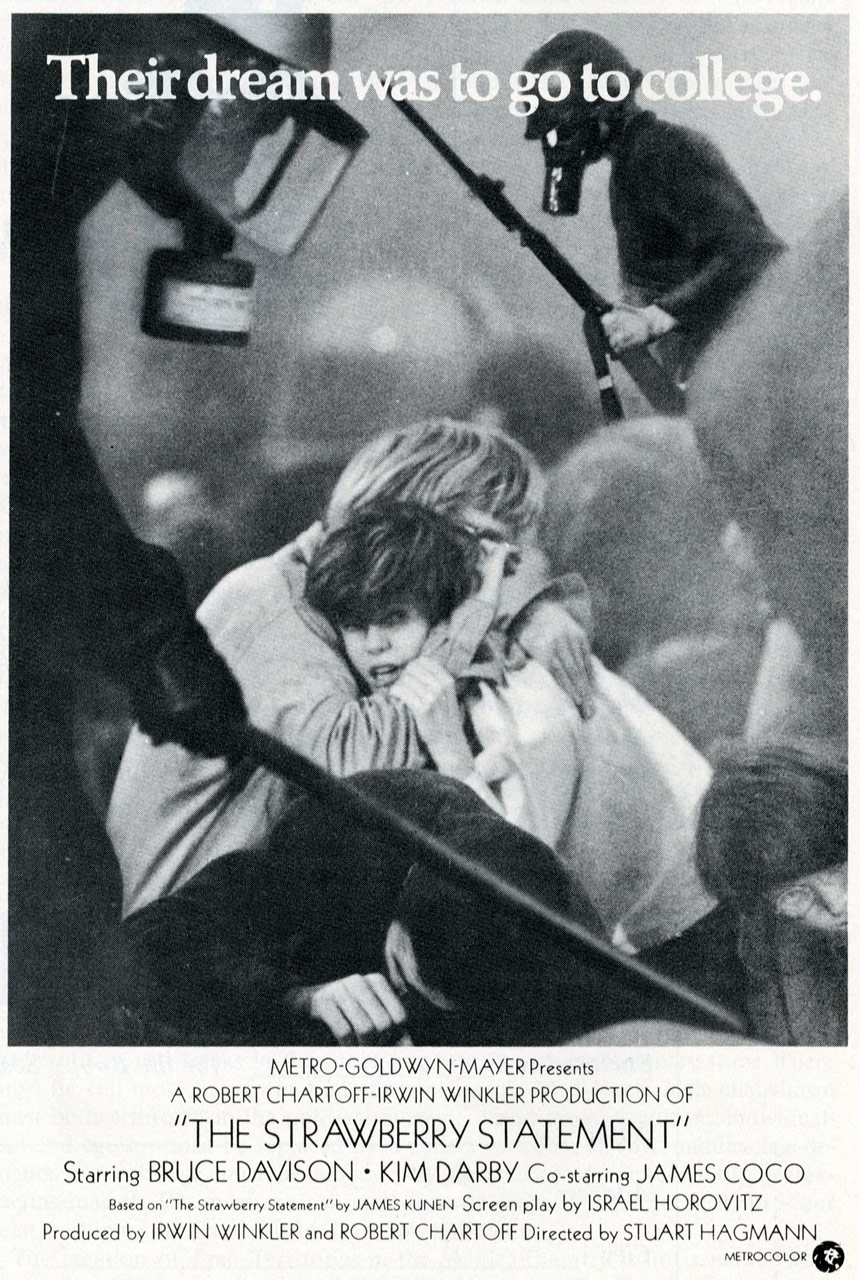
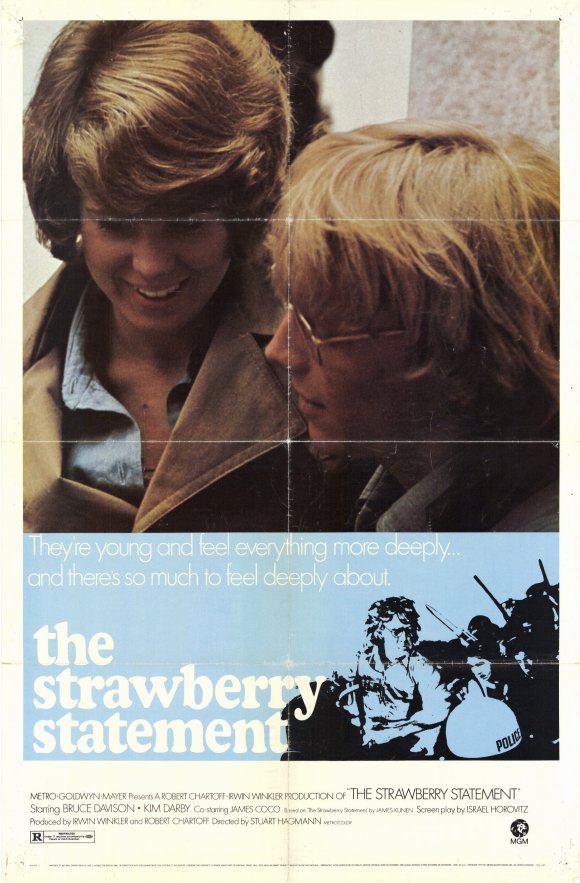
Simon (Bruce Davison) is a young college student attending a university simply as a means to get an education and find himself a good job. He has no real interest in the student revolt going on, but as a lark and a way to meet girls, he decides to passively get involved with students who have taken over the administrator’s building in protest of the school’s plan of building a gymnasium in an African American neighborhood. Slowly Simon finds himself taking up more of their cause and embracing their stance especially after meeting Linda (Kim Darby) who is much more of a student radical, but the two are ill-prepared for the brutal outcome when exasperated school officials have the police violently storm the building and haul the students out.

The film is based on the book ‘The Strawberry Statement: Notes of a College Revolutionary’ by James Kunen, which in turn is based on his experiences of being involved in a student sit-in that took place at Columbia University in April of 1968. The book’s narrative had more of an engagingly detached manner as it looked at the contradictions and hypocrisies of both sides while the screenplay by Israel Horovitz is nothing more than a commercialized effort to cash in on the counter-culture emotions of the time while glossing over or ignoring some of the book’s more perceptive points. The plot is too loosely structured and relies heavily on artsy camerawork and moody music to propel it until you get an hour into it and realize that nothing much has really happened. The whole thing would’ve been better focused had it been done with a voice-over narration by the main character.

strawberry statement 3

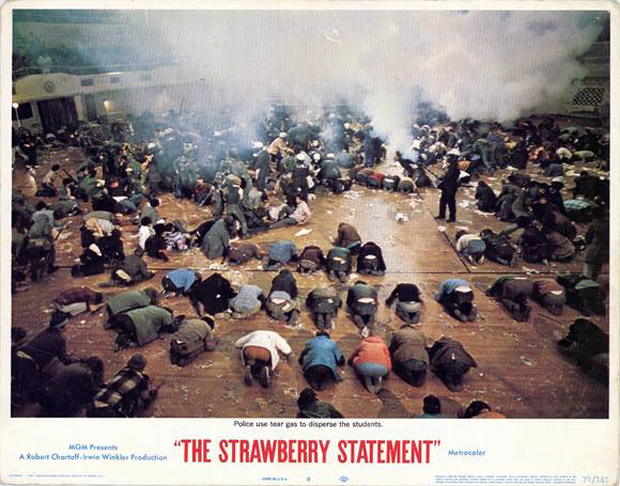
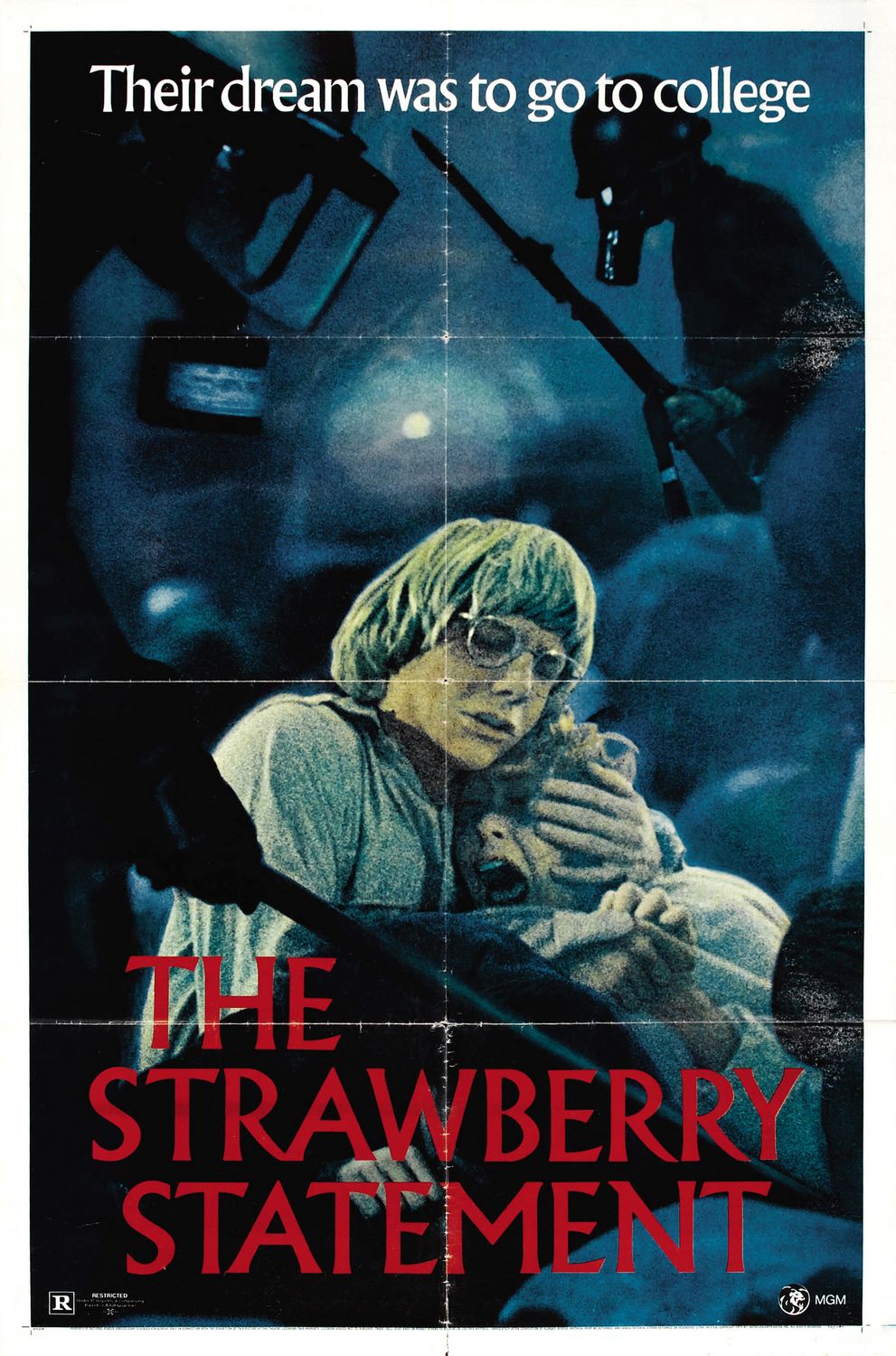
Although at times it borders on being pretentious I still found director Stuart Hagmann’s camerawork to be intoxicating especially the bird’s eye view of the students forming into several large circles as a way to block the police from entering and taking them out. Some of the scenes involving the demonstrations look staged and phony especially when compared to similar scenes of actual protests that were captured in Medium Cool that came out around the same time. However, the scene where the students grab a police officer, strip off his pants and force him down the slide and onto the swings at a children’s playground is downright amusing. The climatic sequence where the students are violently herded out of the building while sprayed with tear gas is well captured and by far the most startling and memorable thing about the movie.

Davison gives a solid performance and creates a middle-of-the-road character that is engaging enough to hold the thing together. It’s also great seeing Bud Cort playing an atypical role of an amorous girl-crazy coed who’s constantly looking to get laid. This film also marks the film debuts of David Dukes, Jeannie Berlin, Paul Willson, Andrew Parks, Kristina Holland and soap actress Jess Walton. You can also spot Horovitz and Kunen in brief cameo parts as well as character actor James Coco as a deli owner who’s all too willing to have his placed robbed simply so he can collect the insurance money.

Although they wanted to shoot the movie at Columbia where the incident actually occurred they were unable to get permission and were forced instead to do it at Berkeley, which in some ways helped it as the liberal, free-spirited look and mood of the region helped match the tone of the story. Ultimately though the film fails to ever really gel and comes off as being too placid and generic while failing to distinguish itself from the myriad of other student protest movies from that era.

strawberry statement 2

strawberry statement 1

My Rating: 5 out of 10

Released: June 15, 1970

Runtime: 1Hour 49Minutes

Rated R

Director: Stuart Hagmann

Studio: MGM

Available: DVD (Warner Archive), Amazon Instant Video

3 Women (1977)

3 women 1

By Richard Winters

My Rating: 6 out of 10

4-Word Review: Three women share bond.

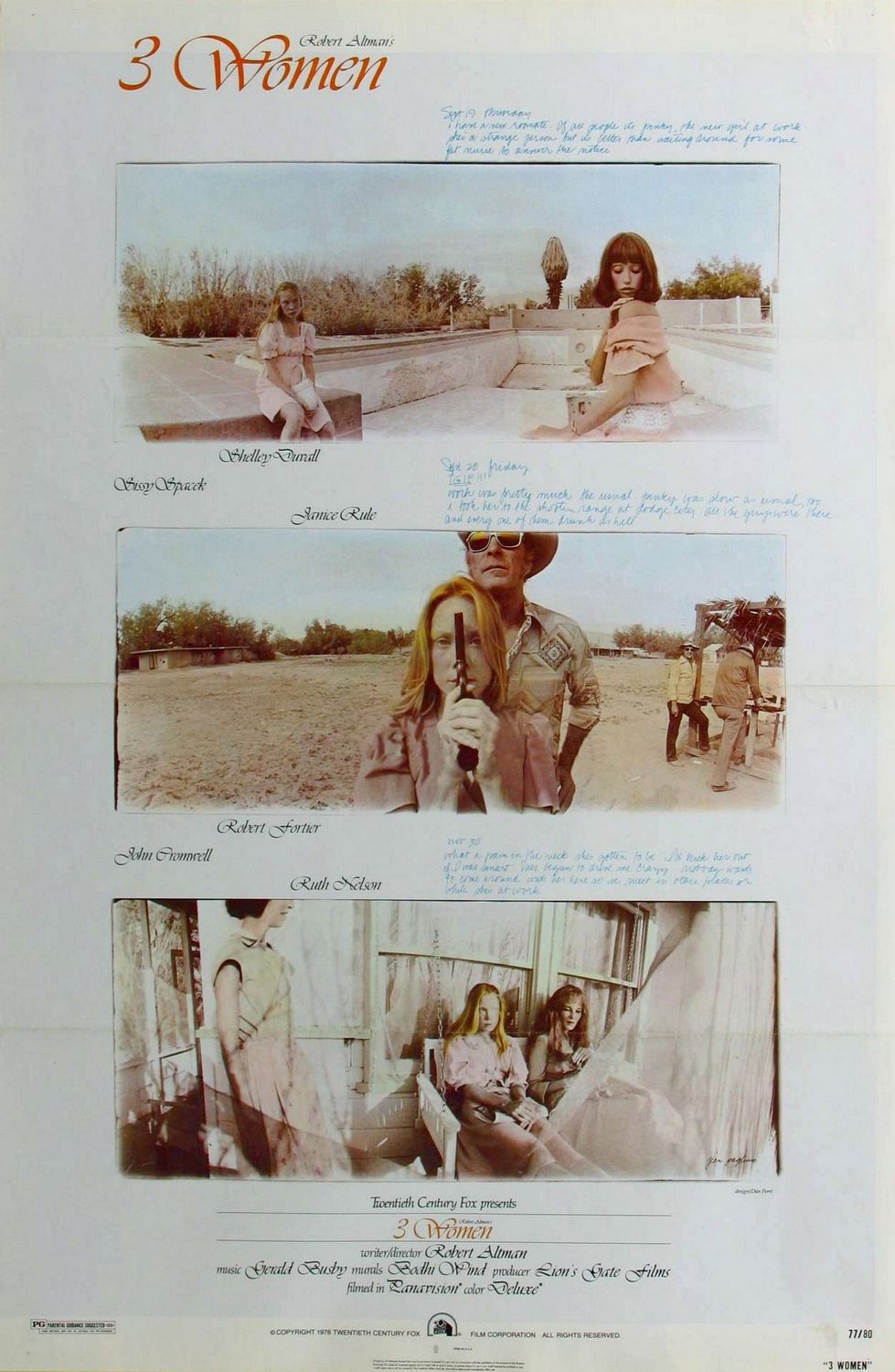
Pinky (Sissy Spacek) is a young woman still searching for an identity who gets a job at a senior health spa. She becomes attracted to one of the trainers there named Mille (Shelley Duvall) and when Millie posts a notice that she is looking for a roommate Pinky is the first to respond. Since Millie is quite lonely she initially enjoys the attention that Pinky gives her and her still adolescent tendencies coincides with Millie’s paternal ones. Things though turn rocky and when Millie kicks Pinky out of the apartment in a rage Pinky responds by attempting to commit suicide by drowning herself. After she is saved the two begin to switch identities with Pinky becoming more aggressive and snarky while Millie becomes the passive one. Their merging identities also includes Willie (Janice Rule) a pregnant bar owner whose provocative murals hold an entrancing grip on Pinky.

This cerebral film, which was produced without any type of script and based solely on some of Robert Altman’s dreams was made during the director’s heyday when he could literally get just about anything he wanted financed by a movie studio. In fact it was while driving to catch a plane that Altman told his traveling partner to stop off at the studio so he could pitch this idea to the them, which he assured him would only take ‘a few minutes’, which it did. Even though it became a critical darling it did poorly at the box office and was in and out of the theaters in a matter of a few weeks.

Overall I’m a big fan of Altman’s work, but found this one to run longer than needed with what seemed like a lot of extraneous dialogue much of which was ad-libbed by the performers. The idea that people can shift between being passive or aggressive at any given time depending on the circumstances is an interesting one and I certainly enjoyed the murals, which were made specifically for the film, but the appropriated title should’ve been ‘2 women’ instead of 3 as Rule’s character barely says anything and is hardly seen at all.

Spacek gives the best performance and in my opinion she was the best thing about the movie. Duvall is good too and it was entertaining to see her playing more of the grounded one as usually she’s cast as the kooky types. I also thought it was cool that both Duvall’s and Spacek’s characters where from the same hometown’s in Texas as the actresses were with Duvall’s being Houston and Spacek’s was Quitman.

It is also fun seeing Dennis Christopher in an early career role appearing late in the film as a delivery man. Altman also casts real-life couple John Cromwell and Ruth Nelson as Pinky’s parents. Both Cromwell, who is also the father of actor James Cromwell, and Nelson were blacklisted in the 50’s during the McCarthy era and in fact this marked Nelson’s first film appearance in 29 years.

The dream sequence is cool, but everything else comes off like a weak version of Persona, which was far superior. The surreal ending leaves too much open to personal interpretation, which was frustrating. I also thought it was dumb that Millie reads Pinky’s diary entries out loud like she is a second grader and they really should’ve had her do it as a voice-over. It was also the first childbirth I had ever seen were the baby comes out of the womb without an umbilical cord.

My Rating: 6 out of 10

Released: April 3, 1977

Runtime: 2Hours 4Minutes

Rated PG

Director: Robert Altman

Studio: 20th Century Fox

Available: VHS, DVD, Blu-ray, Amazon Instant Video

The Holy Mountain (1973)

holy mountain 1

By Richard Winters

My Rating: 7 out of 10

4-Word Review: They search for immortality.

In what seems like a sort-of sequel to Jodorowsky’s cult hit El Topo this film deals with the same type of Christ-like figure and religious metaphor’s. The story centers on a man known as The Thief (Horacio Salinas) who meets up with an alchemist (Alexander Jodorowsky) who introduces him to seven people representing the planets of the solar system as well as the sins of greed, lust and power. The group is instructed to leave their worldly possessions behind as well as their individual identities so that they can become one while they trek up the treacherous terrain of the Holy Mountain where they hope to acquire immortality.

In a lot of ways this film is superior to El Topo simply because it has a bigger budget and more slickly handled. The background sets are dazzling and at some points even amazing. On a purely visual level this film borders on being brilliant and could be enjoyed simply on that note alone. I also really enjoyed the humor and satire. The war manufacturer that makes psychedelic ammunitions to appease the younger generation is great as is the naked woman implanting a giant phallic object into a robotic machine in order to allow it to obtain an orgasm and given birth to a baby robot.

Jodorowsky’s excessive use of shock elements is here as well and for some it becomes the main point of watching it. Within the first 30 minutes alone you’ll see two beautiful women being stripped naked and having their heads shaved. An old man taking his glass eye out and placing it in the hands of a young girl and a young boy being castrated and then putting his testicles into a glass jar, which he places on a shelf lined with other glass jars filled with other testicles. Later on there’s even a scene showing a cow mating with another and a shot of a naked elderly man breast feeding another man. By the end it all starts to get rather mind numbing, but on a purely exploitative level it’s kind of fun because it’s something that most likely could never be filmed today and thus cementing why 70’s cinema is so special and in many ways much more interesting and outrageous than the stuff coming out today.

In the end though it comes off like overkill with a message that gets lost amidst all of the shock elements. It also seems quite contradictory as supposedly this is a spiritual film, but with so much sex and gore it becomes more like a pornographic one and for the most part that’s what many viewers will take from it, which ultimately makes this heavy-handed, experimental production a failed effort.

My Rating: 7 out of 10

Released: November 29, 1973

Runtime: 1Hour 55Minutes

Rated R

Director: Alejandro Jodorowsky

Studio: ABKCO

Available: DVD, Blu-ray, Amazon Instant Video