Category Archives: Low Budget

Below the Belt (1980)

below the belt 1

By Richard Winters

My Rating: 4 out of 10

4-Word Review: Waitress becomes a wrestler.

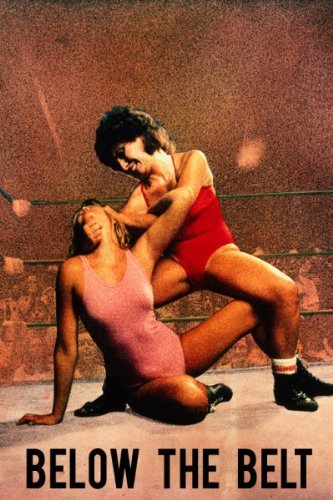
Rosa (Regina Baff) works as a waitress at a sports arena who one day catches the eye of wrestling promoter Bobby Fox (John C. Beecher) after she decks a guy who tries to get fresh with her. Fox is in need for a new wrestler to promote and feels she’d make a perfect fit despite her having no experience in the sport. Since she is bored with her job and low on funds she decides to take him up on his offer, but finds that life in the wrestling world can be quite lonely and grueling and the promises of fame and fortune are fleeting.

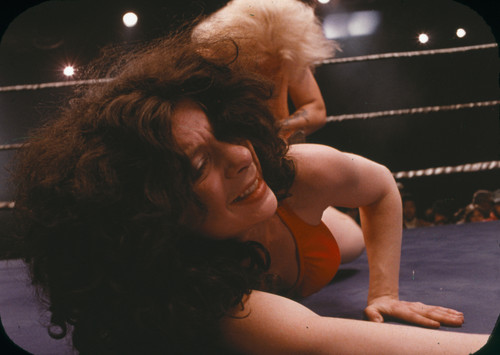
Unlike Grunt! The Wrestling Movie, which was reviewed last week, this movie does not take a fan’s perspective of the business nor does it get caught up in the colorful caricatures or silly storylines. Instead it reveals a rather bleak look at the hardships faced by those working the circuit and how emotionally and physically taxing it can be living on the road and going paycheck-to-paycheck. In fact there is more footage shown of them behind-the-scenes preparing for a bout than an actual match although the climax does feature Rosa, dubbed the Mexican Spitfire, taking on defending champion Terrible Tommy (played by real-life wrestler Jane O’Brien) who plays dirty, doesn’t have any front teeth and even beats up on the referee.

Comical moments get spread throughout, but they tend to get overplayed and don’t work. What grabbed me was the main character and how relatable her situation was particularly the way her life was unfocused and her inability to stick with any job for too long, which her boyfriend and father nag her about, but then when she tells them about her new found wrestling passion they scoff and show no support. I also liked how the film examines both side of the age spectrum including Thalia (K.C. Townsend) who lies about her age and pretends to be older than she is simply so she can escape her tedious small-town life and get into the wrestling circuit, which she considers her ‘big break’ while on the other end there’s Verne (Sierra Pecheur) who’s in her late 30’s and been in the business for many years and now feels trapped and unable to get out.

Baff, with her plain looks, is a good representation of the average young woman still struggling for direction, but her thin body made me think she wouldn’t be able to handle the rigor of the sport in real-life. Shirley Stoler is on the opposite end as she was quite overweight and humorously carries around a handgun with her to fight off all the would-be rapists that she feels are lurking in the shadows and ready to attack her at any minute. Dolph Sweet is also memorable as an aging wrestler who reluctantly realizes that the business and his passion for it have passed him by.

There’s a heavy dose of blues music that gets played frequently throughout. To some extent the soundtrack, with songs sung by Billy Preston, Jennifer Holliday and the Voices of Deliverance, lends flavor and distinction to the proceedings, but it also ends up becoming overdone and intrusive in a film that is alright, but tries a little too hard to make its point.
below the belt 2

My Rating: 4 out of 10

Released: December 10, 1980 (Filmed in 1974)

Runtime: 1Hour 34Minutes

Rated R

Director: Robert Fowler

Studio: Atlantic Releasing Corporation

Available: VHS
Grunt! The Wrestling Movie (1985)

grunt

By Richard Winters

My Rating: 4 out of 10

4-Word Review: Who is masked wrestler?

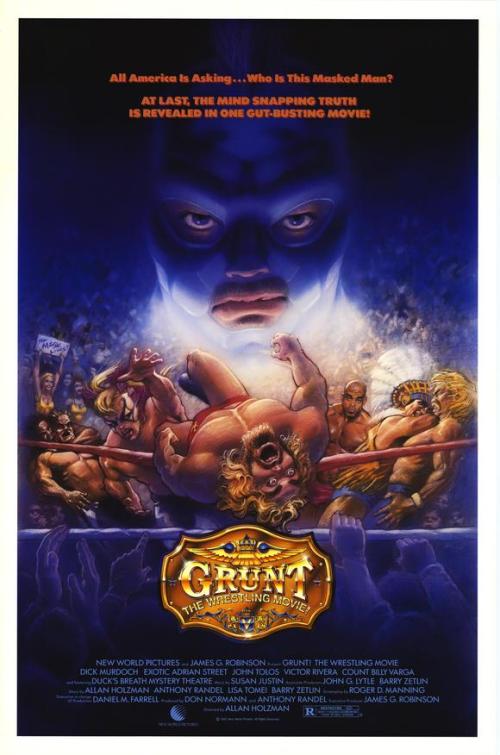
On October 13, 1979 Mad Dog Joe De Curso (Greg ‘Magic’ Schwarz) has a violent wrestling match with defending champion Skull Crusher Johnson (Greg Rivera). During the melee Johnson accidently gets his head stuck in the ringside ropes where Mad Dog decapitates him with one swift kick. The wrestling world then goes into an uproar with the biting question on everyone’s mind ‘Does a defending champion lose his title when he loses his head?’ that nobody, not even the commissioner seems willing to answer. After spending 90 days in jail Mad Dog gets released, but suffers from severe depression and eventually jumps to his death off of a bridge. Yet documentary filmmaker Leslie Uggams (Jeff Dial) thinks that Mad Dog is still alive and working under the disguise of a masked wrestler whose identity is unknown. Uggams begins a crusade of trying to unravel the mystery by interviewing those who knew Mad Dog best while also following the masked wrestler around to his events and trying to get to know both him and his French lady manager Angel Face (Lydie Denier).

The first 10 minutes of this thing is brilliantly bizarre that has just the right mix of offbeat humor, wrestling action and cinematic quality to make it interesting, original and hilarious. I am no wrestling fan myself, but director Allan Holzman manages, at least in the opening segment, to draw the uninitiated into the wrestling world by unfolding all the side dramas, storylines and over-the-top characters that fans of the spectacle find so enjoyable. The bit is also filmed in black-and-white with a sort-of foggy back drop that helps give it a surreal effect while also playfully making fun of the event and those who watch it.

Unfortunately the remainder of the movie is unable to sustain that same momentum becoming instead an overplayed one-joke that goes nowhere. It also spends too much time in the ring where the viewer is forced to watch one wrestling bout after another until it becomes more like a pay-per-view event than a movie.

One of the few non wrestling segments that I did enjoy is when the masked man and Angel Face go onto Wally George’s ‘Hot Seat’ TV-Program. George was a notoriously combative conservative talk show host during the ‘80s and the precursor to Rush Limbaugh and Bill O’Reilly. He was also the father to actress Rebecca De Mornay who has spent her entire career trying desperately to downplay that fact. Liberal guests would come onto his show and almost immediately be berated before being thrown off, which is what happens to the masked man and Angel Face, but not before George gets into the masked man’s face and demands he take it off, which is pretty funny.

Adrian Street, a wrestler who dresses in drag, is a scene stealer and the segment with the masked man being interviewed on his show is equally good. I also enjoyed Denier as the rambunctious manager who flashes an opposing player during one of the mask man’s wrestling matches and carries around a pet poodle who wears a mask similar to her clients.

The scene involving a bout between two lady wrestlers with the song ‘She Was a Mighty Big Girl for Her Age’ is good and the match where the masked man takes on four dwarf wrestlers is an absolute howl, but the film is geared too much to the hardcore fan and those with very little interest in the ‘sport’ will find it off-putting and overtly silly.

My Rating: 4 out of 10

Released: November 24, 1985

Runtime: 1Hour 29Minutes

Rated R

Director: Allan Holzman

Studio: New World Pictures

Available: VHS, DVD-R, Amazon Instant Video

The Happiness Cage (1972)

mind snatchers

By Richard Winters

My Rating: 5 out of 10

4-Word Review: They control his mind.

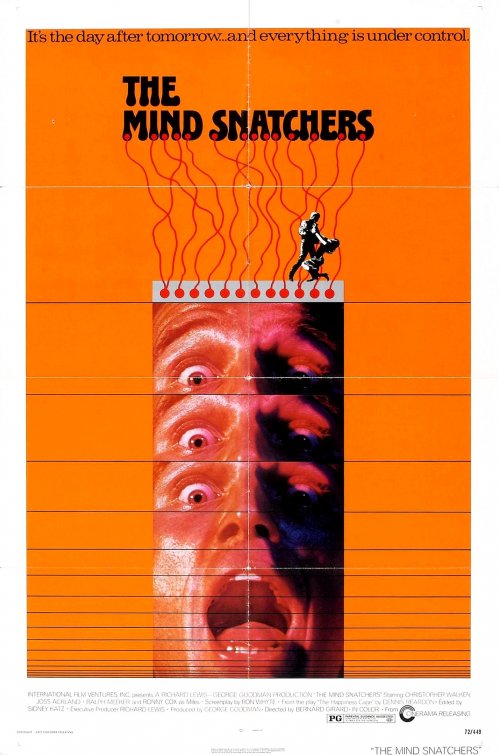
Christopher Walken plays James Reese a veteran of the Vietnam War who has issues with aggression. After numerous arrests he gets shipped off to a hospital in Europe run by Dr. Frederick (Joss Ackland) and overseen by a U.S. General (Ralph Meeker). There they do tests on the patients by implanting special devices into their brains that connects to their pleasure centers and can quell their aggressive behavior by having them feel a pleasurable sensation every time a button is pressed from a remote.

Walken’s performance is outstanding and Ronny Cox as his fellow patient is also quite good especially the part where he has the device implanted into his own brain, which turns him into a sad, pathetic, child-like state. Bette Henritze gives an interesting performance as well as a naïve, middle-aged nurse hired to make the patient’s stay more ‘happy’ by supplying them with books and board games only to be attacked and raped by Cox and then forced to play a game of checkers with him afterwards.

The story, which was based on a play by Dennis Reardon, certainly has its moments. In fact I was surprised how caught up into I got since the production values are close to appalling. The film was shot in Denmark in a building that looks like it was formerly a rundown mansion converted into a makeshift hospital for the sake of the movie. It all looks embarrassingly cheap and the idea of having a big hospital with a full-time staff and even a barbed wire fence and guard dogs, but only three patients is quite hard to believe.

Had the budget been bigger it might’ve been able to reach a broader audience. Bernard Girard’s direction is okay for the limitations that he was given, but the film’s faded, grainy stock and overall amateurish look becomes a turn off from the beginning and something that it cannot overcome. The plot itself is interesting, but the concept has been filmed before and with better results.

Alternate Title: The Mind Snatchers

My Rating: 5 out of 10

Released: June 28, 1972

Runtime: 1Hour 32Minutes

Rated PG

Director: Bernard Girard

Studio: Cinerama Releasing Corporation

Available: DVD, Amazon Instant Video

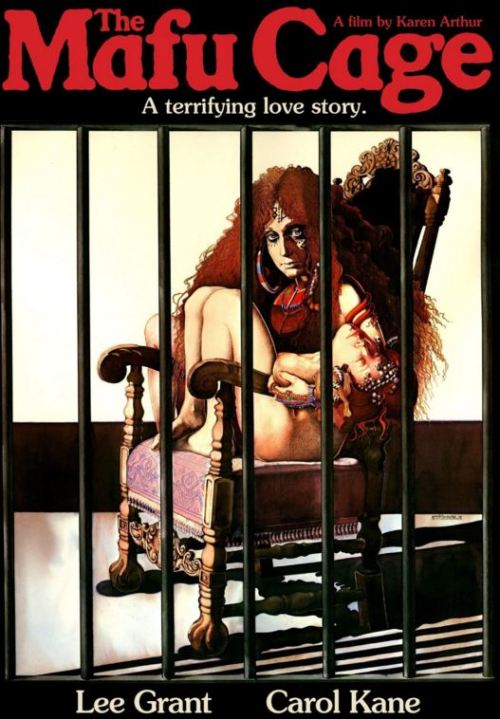
The Mafu Cage (1978)

Capture 66

By Richard Winters

My Rating: 3 out of 10

4-Word Review: Her sister is psycho.

Ellen and Cissy (Lee Grant, Carol Kane) are two sisters living together in a dilapidated mansion, where they keep a pet ape named Mafu locked in a cage that sits in their living room. One day Ellen finds that Mafu has died so at the insistence of Cissy, who says she will kill herself unless they get another one, she goes to a local zoologist (Will Geer) and buys another. Things go well at first, but Cissy’s behavior becomes increasingly more erratic and she takes her frustrations and anger out on the new ape in abusive ways.

The film was directed by actress-turned-director Karen Arthur by a script written by Don Chastian who was another actor and based on a play by Eric Wesphal. I really wasn’t sure what these characters or this bizarre story was supposed to mean. I thought being the ‘70s and a female director that it would have symbolic connections to feminism or even lesbianism, which does get alluded to briefly, but overall the message is confusing and unfocused. The pacing is poor and about 10 minutes in I was already quite bored with it.

The only real saving grace is Kane’s presence who gives a startling performance as a psychotic woman. I had always admired her talent, but became even more impressed with her after seeing this. Her most amazing/bizarre moment is when she dresses up as an African warrior complete with red body paint and then later soaks in a tub filled with blood red water while carrying on an impromptu phone conversion with herself.

I had mixed feelings in regards to Grant whose age difference between Kane is 25 years making her look more like a mother figure than a sister. It was also hard to sympathize with her character as she refuses to have Cissy institutionalized or even examined by a mental health professional even though her behavior is dangerously erratic and only a completely irrational person would choose to ignore it or think that it will somehow ‘magically’ improve, which of course it doesn’t

The ape was the one performer that I enjoyed the most and fortunately a real one was used. The way the chimp responds to things and interacts with Kane are genuinely fascinating to watch and makes him a natural scene stealer without even trying. However, the part where she beats him with a metal chain is quite disturbing supposedly he was never actually hit and the credits do list an animal agency was present during filming and monitored it, but it’s difficult to watch nonetheless.

Patient viewers may find certain segments and imagery to be interesting and the film does improve a bit as it progresses, but overall it’s a weird curio that will leave most people indifferent and confused.

Alternate Title: Don’t Ring the Doorbell

My Rating: 3 out of 10

Released: December 1, 1978

Runtime: 1Hour 42Minutes

Rated R

Director: Karen Arthur

Studio: Clouds

Available: VHS, DVD


Slacker (1991)

slacker

By Richard Winters

My Rating: 8 out of 10

4-Word Review: A movie about nothing.

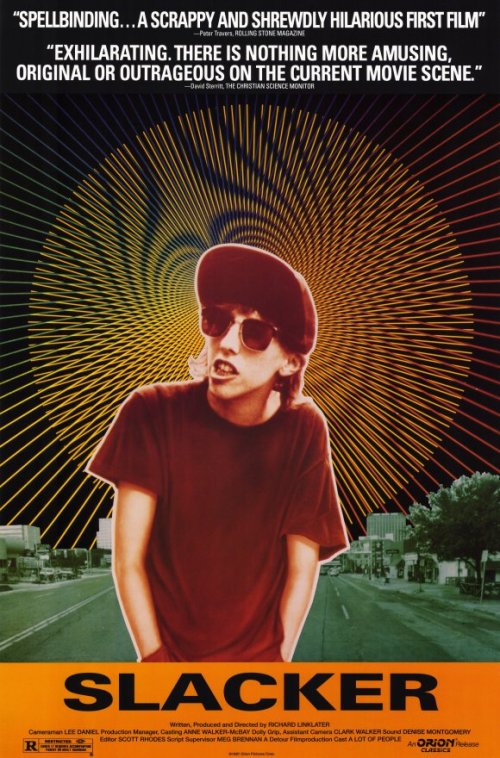
A look at a day-in-the-life of society’s left behinds that filter the streets, bars and coffee shops of Austin, Texas. The viewer hears a wide variety of weird topics, theories and extreme political points-of-view from the detached 20-something crowd as the camera winds its way from one conversation to the next and never stopping on any one person for longer than a few minutes.

This was considered at the time of its release to be a major breakthrough for the independent film movement and one that remains an inspiration for many indie filmmakers today. It succeeds because it proves you don’t need a big budget, state-of-the-art effects or even a compelling story to work. It washes all those things away and gets down to the very essence of why we watch movies, which is because we are all secretly voyeurs intrigued with seeing how the ‘other half’ lives without having to get our own feet wet in the process. The characters, as offbeat as they and their conversations may be, have a definite element truth to them and this film manages to convey reality far better than 95 percent of the other movies out there.

Some of my favorite conversations, which seem mostly ad-libbed, involved the one with the guy who was obsessed with the JFK assassination and his ‘shocking’ new revelations involving Jack Ruby’s dog. There are also the two young men inside a bar who talk about the ‘subliminal messages’ of the Smurf cartoons and the film’s director Richard Linklater who opens the film with a discussion on how every choice that we don’t make continues off and has a reality of its own. I also liked the anarchist (Louis Mackey) who talks about the man who assassinated President McKinley simply because all you ever hear about are the Kennedy and Lincoln assassinations and never anything about anything about the other two.

I also liked Teresa Taylor, who was the former drummer for the Butthole Surfers, playing a woman trying to sell a vial containing singer Madonna’s Pap smear and the guy who locks himself inside a room with what seems like hundreds of TV’s that run all day and night. However, I was a bit disappointed that during this scene we get shown a video of a man who supposedly shots the camera with his rifle and although he does indeed aim his gun at the lens he never fires it, which I found to be a letdown.

Some may consider these characters, in our very job oriented culture, to be ‘losers’ simply because they ‘aren’t working’ and being ‘productive members of society’, but director Linklater takes a different perspective by stating in an interview that he feels slackers are instead a ‘step ahead’ and ‘rejecting the social hierarchy before it rejects them’.

To some extent I agree as I was pretty much the same way at that age, but I also couldn’t help but think what these same characters were doing now 20 years later. It’s easy to be detached when you’re younger, but when a person reaches middle-age and the financial responsibilities become stronger, it’s not, so I kept wondering if these same people may have now ‘sold-out’ or even ‘grown up’. I also wondered how they may have evolved in other ways for instance the guy who was so into the conspiracies of the JFK assassination may now have crossed over to ones involving 9/11 and the young man that was really into TV’s may now be a Blu-ray player nut instead. If anything this is a movie crying out for a sequel and one that could easily be just as fascinating as the first one especially if it involved the same people.

My Rating: 8 out of 10

Released: March 22, 1991

Runtime: 1Hour 37Minutes

Rated R

Director: Richard Linklater

Studio: Orion Classics

Available: VHS, DVD, Blu-ray (Criterion Collection), Amazon Instant Video


The Harrad Experiment (1973)

the harrad experiment

By Richard Winters

My Rating: 6 out of 10

4-Word Review: College promotes sexual freedom.

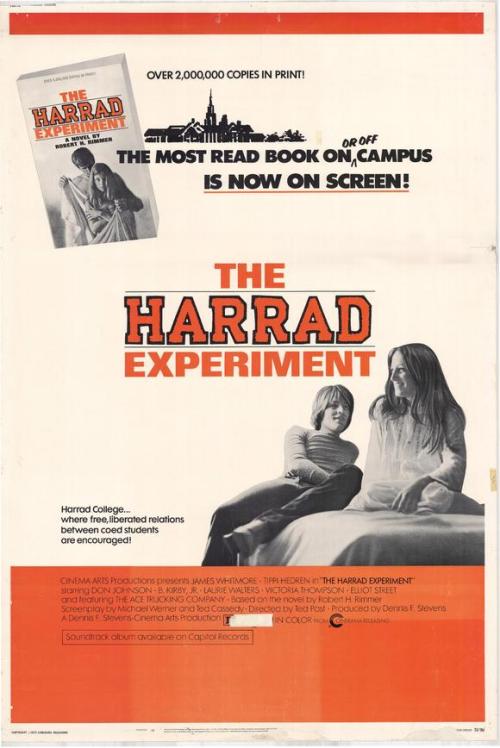
Based on the novel by Robert H. Rimmer the story centers on a group of students who attend a socially progressive college where sex between multiple partners is expected and promoted. The school is run by Phillip and Margaret (James Whitmore, Tippi Hedren) who feel conventional marriage is an unrealistic ideal that creates the idea of ‘ownership’ over someone else, which in turn causes jealousy. They hope to end these problems and change the cultural norms by having the next generation accept more of a group marriage mentality.

The film nicely avoids the smarmy T&A factor by portraying nudity in a natural non exploitative way while also having characters that are believable and a good representation of the young generation from that era. The different ways that the students respond to the unique environment and the realization that they aren’t quite as sexually liberated as they thought remains the story’s focal point of interest.

The film also allows for a great chance to see young stars in the making. Laurie Walters, who later went on to star in the TV-show ‘Eight is Enough’, gives a sensitive portrayal of a young woman who’s still shy about her body and not quite ready to enjoy sex outside of the bounds of romance as she had initially thought. Bruno Kirby is good as well playing a student who’s so filled with insecurities that it prevents him from having any sex at all. Don Johnson though gives the best performance as a cocky student who uses the program simply as a way to ‘score’ with women only to later learn that even he needs some emotional bonding too.

The always reliable Whitmore is solid as the stoic instructor and Hedren gets one of her best roles outside of her most famous one in The Birds with her titillating moment coming near the end when she strips off her clothes and tries to entice Johnson to make love to her right out in the open and in front of everyone. Actor Ted Cassidy, who co-wrote the script, can also be seen briefly sitting at the counter of the local café.

Although the film does manage to bring out a few provocative elements I still felt even without having read the novel that is was only skimming the surface. Having the story focus on only a few of the couples isn’t as captivating as it could’ve been had it instead taken a broader look at all of the students. The low budget gives the production a cheap look and a few too many sappy love songs get thrown in an attempt to turn it into a ‘70s romance instead of keeping it more of a psychological drama that it should’ve been.

A sequel called Harrad Summer, which follows these same students who take what they’ve learned and try to implement it into their adult lives, was released one year later and that will be reviewed later on this week.

My Rating: 6 out of 10

Released: May 11, 1973

Runtime: 1Hour 37Minutes

Rated R

Director: Ted Post

Studio: Cinerama Releasing Corporation

Available: VHS, DVD

Where Does It Hurt? (1972)

where does it hurt 1

By Richard Winters

My Rating: 4 out of 10

4-Word Review: Corruption at a hospital.

It’s funny how names like Ed Wood Jr. or Tommy Wiseau get mentioned in just about anyone’s list of bad movie director’s, but Rod Amateau’s never does, but should. Not only did he produce ‘My Mother the Car’ and ‘Supertrain’, which are considered two of the worst TV-series ever to be broadcast, but he also directed the notorious Garbage Pail Kids as well as Son of Hitler and The Statue, which featured a jealous David Niven going around the bathrooms and gay bathhouses of London looking for a man whose penis matches the one that his wife created for a life-sized statue that she says replicates her lovers.

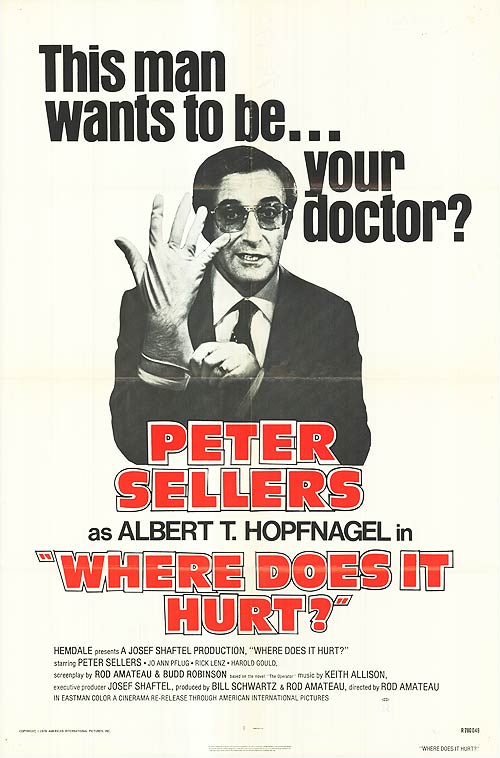
While this film isn’t quite as bad as those it comes close. It stars Peter Sellers who was at a career nadir due to financial mismanagement and willing to take on any low budget job offer he was given. Here he plays the corrupt head of a hospital that uses an array of schemes to bilk patients and insurance companies out of thousands of dollars. Rick Lenz plays a patient who becomes aware of the shenanigans going on and tries to bring Sellers and his staff down, but finds that they seem to have a trick up their proverbial sleeves at every turn.

The film manages to have a few amusing moments, but comes off more like a gag reel than a story. The characters are exaggerated and unlikable. We are supposed to side with Lenz and his predicament, but he so stupidly allows the doctors to take advantage of him at the beginning that it becomes hard to. The whole thing gets sillier by the second until by the end it’s completely inane. It also makes light of some serious issues that were handled better in Paddy Chayefsky’s The Hospital, which came out just 8 months before this one.

To some degree it’s fun seeing Sellers, who was noted for his wide range of dialects, taking a stab at an American accent and he almost pulls it off except for a few moments including the one where he pronounces orifice as AW-ifice.

The supporting cast made up of lesser known talents proves to be game here. Pat Morita, still years away from his breakout role in The Karate Kid, is genuinely amusing as a lab tech with an inferiority complex and at one point even speaks in a British accent. Harold Gould is good as an incompetent Dr. and J. Edward McKinley, best known for his many appearances on ‘Bewitched’ as one of McMahon and Tate’s primary clients, is funny as the Hospital commissioner who relentlessly tries to nab Sellers and eventually after repeated missed opportunities is able to.

In better hands this might’ve had a chance, but the low budget, irritating country music soundtrack and cheap jokes pretty much sink this thing before it even has a chance to get started.

My Rating: 4 out of 10

Released: September 29, 1972

Runtime: 1Hour 28Minutes

Rated R

Director: Rod Amateau

Studio: Cinerama Releasing Corporation

Available: None at this time.

The Visitors (1972)

visitors 1

By Richard Winters

My Rating: 3 out of 10

4-Word Review: His past comes back.

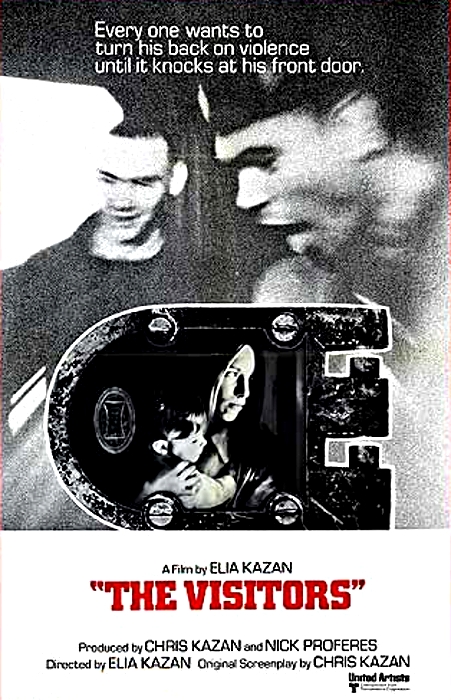
Vietnam veteran Bill (James Woods) has moved back into civilian life while enjoying the quietness of the country with his girlfriend Martha (Patricia Joyce) and her infant son. One day in the dead of winter while Bill is away shopping two of his former war buddies Tony and Mike (Chico Martinez, Steve Railsback) come by for an unexpected visit. When Bill returns he is not happy to see them and when Martha asks him why he tells her of how while in Vietnam he had witnessed the two raping a woman and later he decided to report it, which got the two men sent to prison. Now that they are out he is afraid they may be looking for revenge. Tony insists that he’s forgiven Bill for what he did, but Mike’s intentions are much more ominous especially with the way he eyes Martha. As the night wears on the tensions mount until festering over into anger and mayhem.

The story is loosely based on an actual crime that occurred in Vietnam on November 19, 1966 when five American soldiers kidnapped and gang raped a 21-year-old Vietnamese woman who they later killed. One of the soldiers, who did not take part in the crime, but did witness it, reported the incident to his superiors, which eventually got the other men convicted and imprisoned.

The incident was first made into a movie in 1970 in Michael Verhoeven’s o.k. and then 19 years later Brian De Palma did another version of it called Casualties of War, which starred Michael J. Fox. This version differs from the other two in that it only alludes to the crime, but never shows it. Instead it hypothesis on what might’ve happened had those who were convicted came back to revisit the one that had turned them in.

Story wise the film works to a degree as it reveals things in layers, which helps hold the mystery and filming the majority of it inside one lonely, isolated house gives it an effectively claustrophobic feeling, but the production values are extremely low and resembles more someone’s lost home movie than a feature film directed by a one-time Hollywood legend. The background sound is mainly made up of a howling wind noise, which helps heighten the creepiness, but then during the second half director Elia Kazan inserts music, which becomes a distraction.

The ending leaves open a wide array of unanswered questions along with a lot of murky character motivations that makes the whole thing seem pointless and ill-conceived. The only interesting element to get out of it is seeing Woods and Railsback in their respective film debuts. Railsback is especially good in a part he seems born to play and one he honed to even greater success years later in The Stunt Man.

My Rating: 3 out of 10

Released: February 2, 1972

Runtime: 1Hour 28Minutes

Rated R

Director: Elia Kazan

Studio: United Artists

Available: Amazon Instant Video

Psychopath (1973)

psychopath 3

By Richard Winters

My Rating: 0 out of 10

4-Word Review: TV host kills parents.

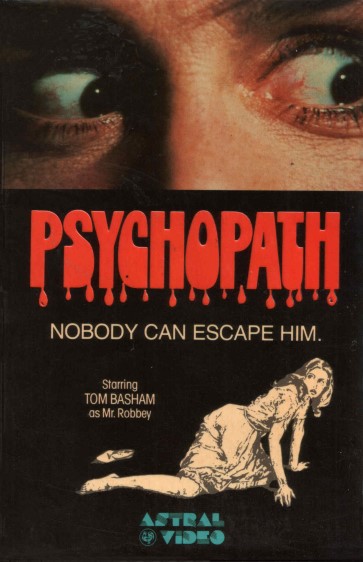
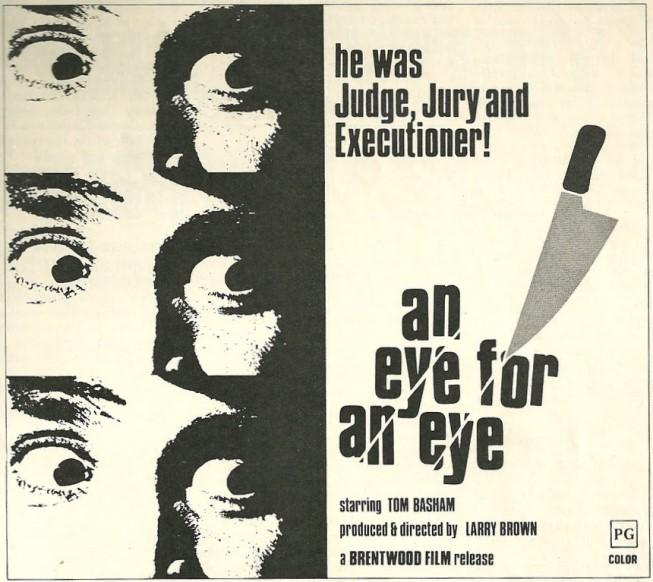
Mr. Rabbey (Tom Basham) is a puppeteer who hosts a popular children’s show on TV as well as working at the local hospital where he performs puppet shows for the sick children. It is there that he becomes aware of the abuse that children receive at the hands of their parents and decides to try and put a stop to it by stalking the parents he considers to be responsible and killing them.

This low budget ‘70s excursion fails at its own novel concept by creating unlikable victims that makes the viewer enjoy seeing them get offed and to a degree sympathize with their killer. The over-the-top way the parents berate their children, which is poorly acted to boot, gives the thing a Reefer Madness-like quality. It also doesn’t explain what happens to the children after the parents are killed or who takes care of them. Whether this was made as a social statement or simply using the idea to make an offbeat horror film is unclear, but it fails on both ends.

Basham, whose next film wasn’t until 35 years later when he starred in The Appearance of a Man, certainly has a creepy look and I liked his bowl haircut and beady eyes, which are put to full use with lots of close-ups, but the banal material doesn’t allow for any interesting characterizations. The movie also marks the film debut of John Ashton who appears as a police detective as well as an early role for Margaret Avery who plays a nurse.

There are some ‘70s horror films where you have to forgive the long periods of stodgy drama, derivative dialogue and wooden characters if it can at least have a few scary moments or gory special effects, but this film never gets there. Instead it’s mechanical and unimaginative with amateurish production values that supplies zero scares or shocks.

psychopath 2

Alternate Title: An Eye for an Eye

My Rating: 0 out of 10

Released: September 28, 1973

Runtime: 1Hour 24Minutes

Rated PG

Director: Larry G. Brown

Studio: Intercontinental Releasing Corporation

Available: VHS
The Dorm that Dripped Blood (1982)

the dorm that dripped blood

By Richard Winters

My Rating: 2 out of 10

4-Word Review: Yet another slasher flick.

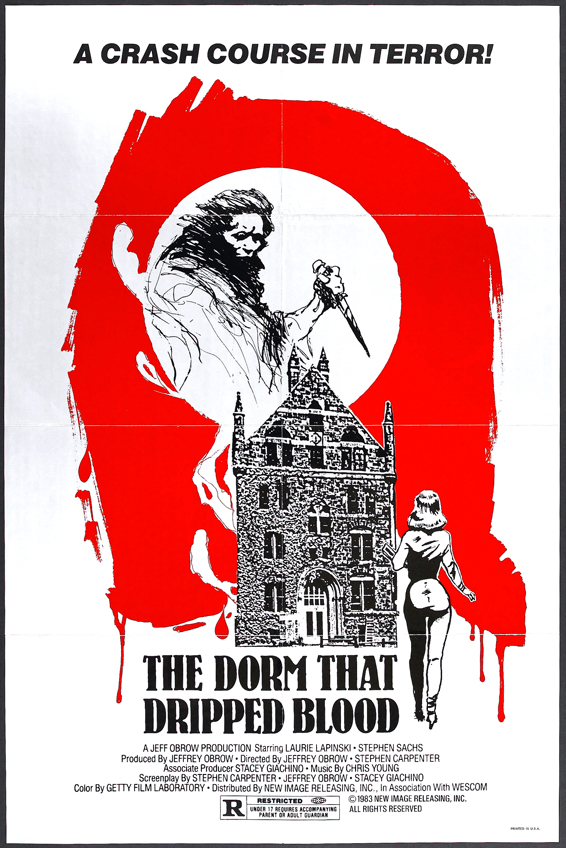
If, based on its misleading title, you’re figuring this thing will be filled with hot sorority babes having their late night beer parties ruined by an unscrupulous masked killer who does unethical things with an ax then you’ll be sorely disappointed as that is not what you’ll get here. Instead you’ll be treated to a story about five volunteers who clean out an abandoned dorm that looks more like a business building, so that it can be renovated into apartments. During the process they become menaced by a mysterious killer who begins hacking them off one-by-one.

This movie’s one and only claim to fame is that it marks the film debut of Daphne Zuniga who gets promptly killed off within the first 15 minutes by having her head run over by a car! The rest of the cast is not up to the acting standards of a high school play including leading lady Laurie Lapinski whose monotone delivery does nothing to enliven the proceedings.

The gore is okay and probably the only reason I’m giving it 2 points. The scene where the killer beats a man’s head in with a bat looks pretty realistic and the part where he drills into another man’s skull isn’t bad either. The tension though, or what little there is of it, is hurt by having long stretches that feature nothing but extraneous dialogue and wooden characters.

Some fans of the film will point to its so-called surprise ending as a redeeming element. Yes, the identity of the killer is not who you’re expecting, but you know that from the start since the character of the mentally unstable John Hemmit (Woody Roll) is too obviously pushed as being the suspect from the beginning, so you know it has to be someone else. Finding out who the real killer is not interesting as it has no real connection to anything that came earlier and was pretty much done in a random way where the writer/director choose a character you’d least expect, so it would seem like a ‘great revelation’, but with no other logic behind it.

Dull and uninspired this is yet another in a long line of rip-off slasher flicks that adds nothing unique or interesting to the genre and unless you want to see Zuniga in an early performance it’s not worth seeking out.

the dorm that dripped blood 3

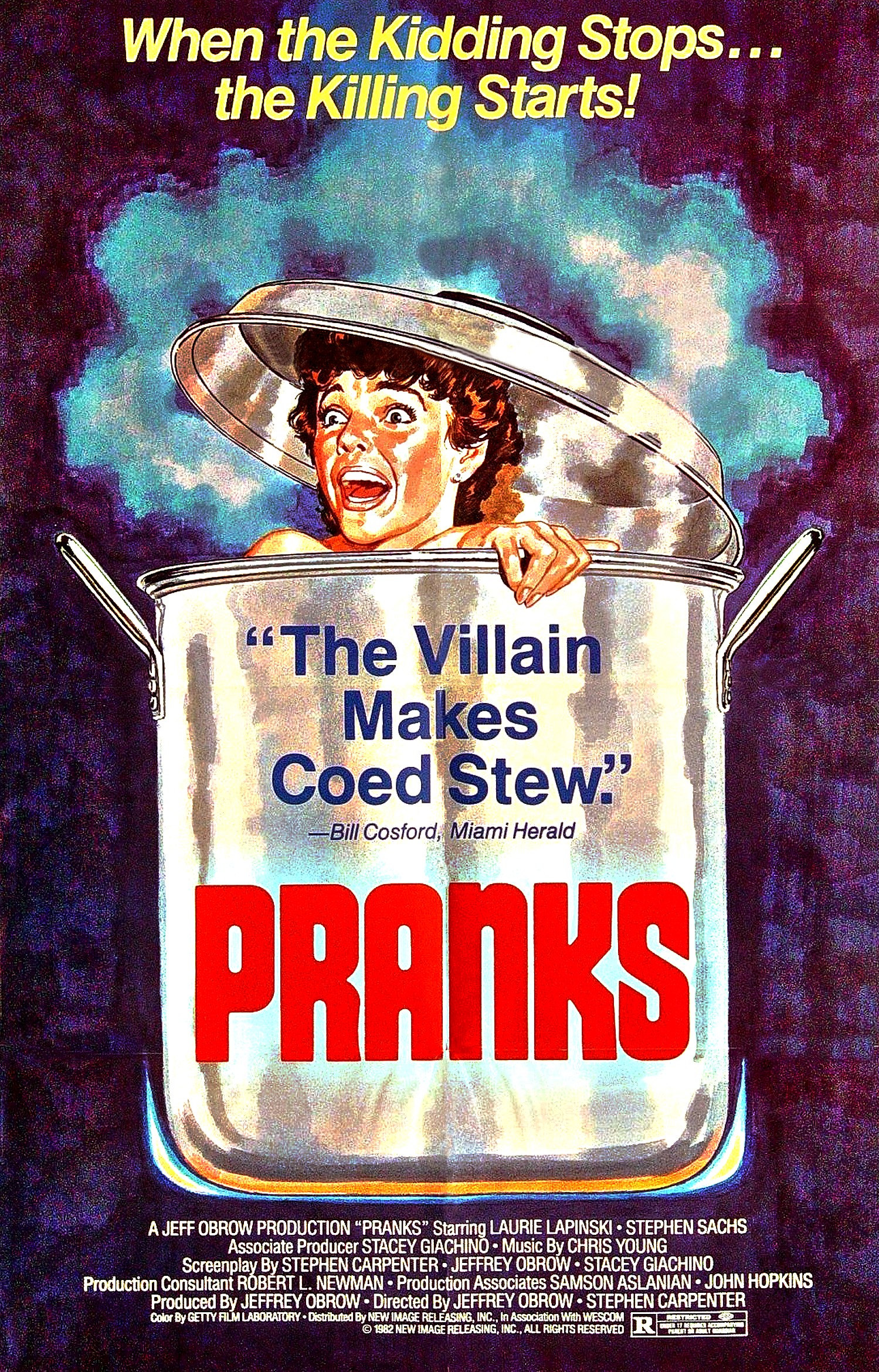
Alternate Titles: Death Dorm, Pranks

My Rating: 2 out of 10

Released: April 12, 1982

Runtime: 1Hour 28Minutes

Rated R

Directors: Stephen Carpenter, Jeffrey Obrow

Studio: New Image

Available: DVD, Blu-ray, Amazon Instant Video