Category Archives: Drama

Kes (1969)

kes 1

By Richard Winters

My Rating: 6 out of 10

4-Word Review: Boy trains a kestrel.

Billy (David Bradly) is a poor working class youth living in Yorkshire who finds his existence to be bleak and pointless. He is bullied constantly by his older brother Jeb (Freddie Fletcher) and ignored by his burdened mother (Lynne Perrie) while also being picked on at school. As means of some solace he finds a nest of baby kestrels inside an abandoned building. He takes one of them and keeps it in his backyard shed where he trains it, which in return gives him a sense of purpose.

The film is based on the novel by Barry Hines who also wrote the screenplay and although the plot is basically the same it does vary in two major ways. The first one being that in the book everything takes place in one day and with a lot of use of flashbacks to explain the backstory, which I liked better, but here it’s given a linear narrative. The book also explains a bit more about the otherwise absentee father and even has one scene involving him while here the character is non-existent and never even mentioned.

On a purely cinematic level it is well made and nicely exposes Billy’s hopeless working class world without ever being heavy-handed. The drama is fresh and natural with each scene and character ringing true. The segments involving the training of the bird is the most engaging and I wished had been extended.

The children are fantastic without being too cute or precocious and respond to things in ways that are honest to their nature. The adult cast is good as well although not as likable. The teachers and school administrators, with their very old fashioned approach to discipline, come off as genuine jerks. At one point one of them even raps the open palms of the children’s hands with a cane, which makes their eyes well up with tears and is unpleasant to watch.

The worst is the segment involves Billy’s physical ed. teacher Mr. Sugden, which is played by Brian Glover who was an actual high school instructor at the time as well as a former wrestling. Here he plays a coach who brutally bullies his students in a scene that makes its point and then goes on too long with it. I also didn’t like that director Kenneth Loach superimposes the score of the soccer (football) game that the students are playing onto the screen, which wasn’t necessary as who wins the game was not important at all and hurt the film’s realism by distracting the viewer and taking them out of the story.

Some have complained about the thick dialect of the characters, which makes it hard at times to understand what they are saying. Certain American versions have been dubbed to make the lines uttered clearer although the version I watched, which was from the Criterion Collection, seemed to have the original accents intact, which I preferred as it kept it more authentic and for the most part I didn’t have any problem with it.

Spoiler Alert!

The only real issue that I had with the film is its downbeat ending. I realize that it is the same as the one in the book, but felt a bit frustrated that every time there is a movie dealing with a child taking care of an animal it always for some reason has to end in tragedy, which made it a bit formulaic. The kid never gets a break and having the falcon get killed at the end was like rubbing salt into the wound. The bird that actor Bradly buries apparently died of ‘natural causes’ but at the time he was under the belief that it had been killed simply to suit the purposes of the film and the angry reaction that you see on his face was very real.

End of Spoiler Alert!

kes 2

My Rating: 6 out of 10

Released: November 16, 1969

Runtime: 1Hour 50Minutes

Rated GP

Director: Kenneth Loach

Available: DVD, Blu-ray, Amazon Instant Video

3 Women (1977)

3 women 1

By Richard Winters

My Rating: 6 out of 10

4-Word Review: Three women share bond.

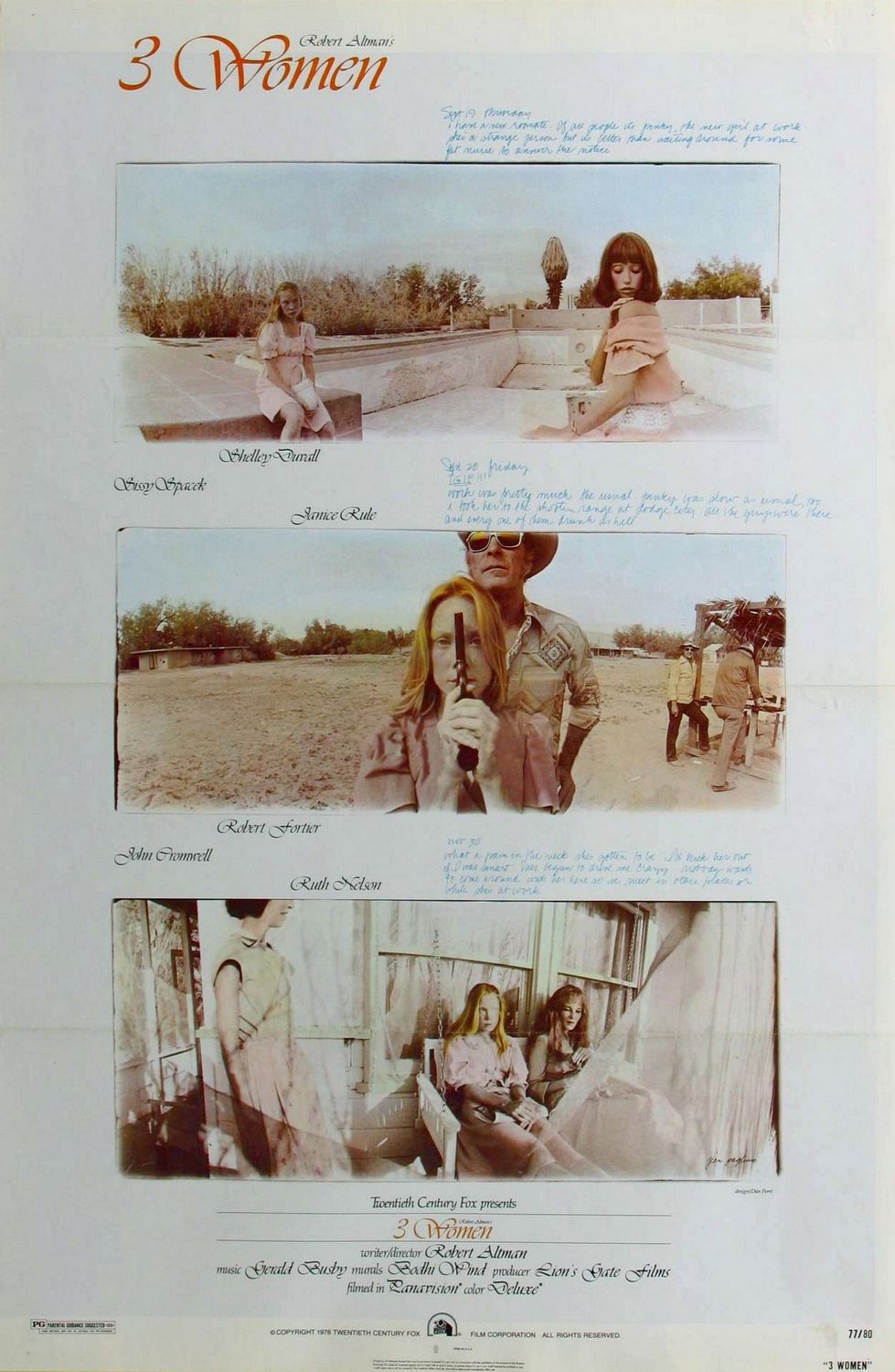
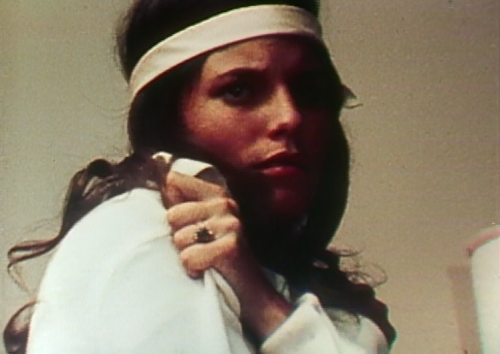
Pinky (Sissy Spacek) is a young woman still searching for an identity who gets a job at a senior health spa. She becomes attracted to one of the trainers there named Mille (Shelley Duvall) and when Millie posts a notice that she is looking for a roommate Pinky is the first to respond. Since Millie is quite lonely she initially enjoys the attention that Pinky gives her and her still adolescent tendencies coincides with Millie’s paternal ones. Things though turn rocky and when Millie kicks Pinky out of the apartment in a rage Pinky responds by attempting to commit suicide by drowning herself. After she is saved the two begin to switch identities with Pinky becoming more aggressive and snarky while Millie becomes the passive one. Their merging identities also includes Willie (Janice Rule) a pregnant bar owner whose provocative murals hold an entrancing grip on Pinky.

This cerebral film, which was produced without any type of script and based solely on some of Robert Altman’s dreams was made during the director’s heyday when he could literally get just about anything he wanted financed by a movie studio. In fact it was while driving to catch a plane that Altman told his traveling partner to stop off at the studio so he could pitch this idea to the them, which he assured him would only take ‘a few minutes’, which it did. Even though it became a critical darling it did poorly at the box office and was in and out of the theaters in a matter of a few weeks.

Overall I’m a big fan of Altman’s work, but found this one to run longer than needed with what seemed like a lot of extraneous dialogue much of which was ad-libbed by the performers. The idea that people can shift between being passive or aggressive at any given time depending on the circumstances is an interesting one and I certainly enjoyed the murals, which were made specifically for the film, but the appropriated title should’ve been ‘2 women’ instead of 3 as Rule’s character barely says anything and is hardly seen at all.

Spacek gives the best performance and in my opinion she was the best thing about the movie. Duvall is good too and it was entertaining to see her playing more of the grounded one as usually she’s cast as the kooky types. I also thought it was cool that both Duvall’s and Spacek’s characters where from the same hometown’s in Texas as the actresses were with Duvall’s being Houston and Spacek’s was Quitman.

It is also fun seeing Dennis Christopher in an early career role appearing late in the film as a delivery man. Altman also casts real-life couple John Cromwell and Ruth Nelson as Pinky’s parents. Both Cromwell, who is also the father of actor James Cromwell, and Nelson were blacklisted in the 50’s during the McCarthy era and in fact this marked Nelson’s first film appearance in 29 years.

The dream sequence is cool, but everything else comes off like a weak version of Persona, which was far superior. The surreal ending leaves too much open to personal interpretation, which was frustrating. I also thought it was dumb that Millie reads Pinky’s diary entries out loud like she is a second grader and they really should’ve had her do it as a voice-over. It was also the first childbirth I had ever seen were the baby comes out of the womb without an umbilical cord.

My Rating: 6 out of 10

Released: April 3, 1977

Runtime: 2Hours 4Minutes

Rated PG

Director: Robert Altman

Studio: 20th Century Fox

Available: VHS, DVD, Blu-ray, Amazon Instant Video

The Mean Season (1985)

mean season

By Richard Winters

My Rating: 4 out of 10

4-Word Review: Killer taunts newspaper reporter.

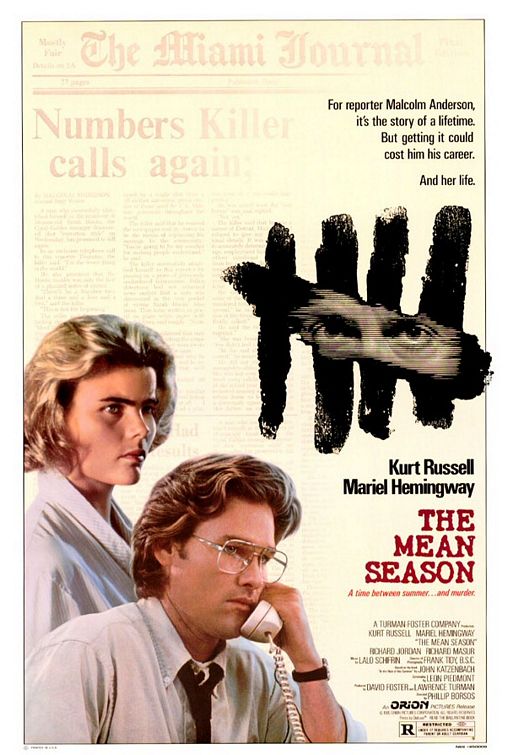
Feeling burned out from years of reporting on the local crime scene journalist Malcolm (Kurt Russell) has promised his girlfriend Christine (Mariel Hemingway) that he wants to get out of the business and move away to somewhere quiet and less hectic. Just as he’s ready to quit he gets a call from Alan Delour (Richard Jordan) the man who has been committing the recent killings that Malcolm has been covering in his newspaper. Malcolm sees this as a goldmine of information and thus delays his resignation. The two then begin a weird cat-and-mouse relationship until Malcolm becomes more of the story than the killer.

The movie starts out promisingly with a realistic look of the inner-workings of a big city newspaper. The film was shot during the overnight hours in the actual newsroom of The Miami Herald with Herald reporters used both as extras and consultants. Richard Masur makes for the perfect composite of a newsroom editor and I liked how the film shows the behind-the-scenes politics and the thin line reporters’ tow between reporting the news and becoming it.

I loved the on-location shooting done throughout Florida that helps bring out the varied topography of the state. Masur’s view out of his office window is dazzling and the climatic chase through the Everglades is exciting as is the speedboat ride in the swamps. The shot of a distant storm on the edge of an open field nicely juxtaposes the tension and dark story elements. The phrase Mean Season is actually a term used to describe a South Florida summer and gets mentioned in an early scene by a radio announcer as he is giving the weather report.

Russell is solid in the lead and it’s great and a bit unusual to see a protagonist who is not playing the nerd type wearing glasses. The segment where he jumps across a bridge as it’s going up and then watching him tumble down when he reaches the other side is well shot. Jordan makes for a good villain that manages to convey both a sinister side and a vulnerable one. Richard Bradford also deserves mention playing a tough cop that is at times quite abrasive, but also sensitive particularly in a couple of scenes where he comes into contact with scared children, which are two of the best moments in the movie.

The provocative concept has potential, but the film doesn’t go far enough with it. Instead of becoming this searing expose on journalism and the media it timidly steps back and turns into just another run-of-the-mill, by-the-numbers-thriller that becomes predictable, formulaic, and just plain boring during the second half and helps make this movie a big letdown.

My Rating: 4 out of 10

Released: February 15, 1985

Runtime: 1Hour 43Minutes

Rated R

Director: David Borsos

Studio: Orion Pictures

Available: VHS, DVD, Blu-ray, Amazon Instant Video, YouTube

The Flight of the Phoenix (1965)

flight of the phoenix 1

By Richard Winters

My Rating: 8 out of 10

4-Word Review:  Fighting the desert elements.

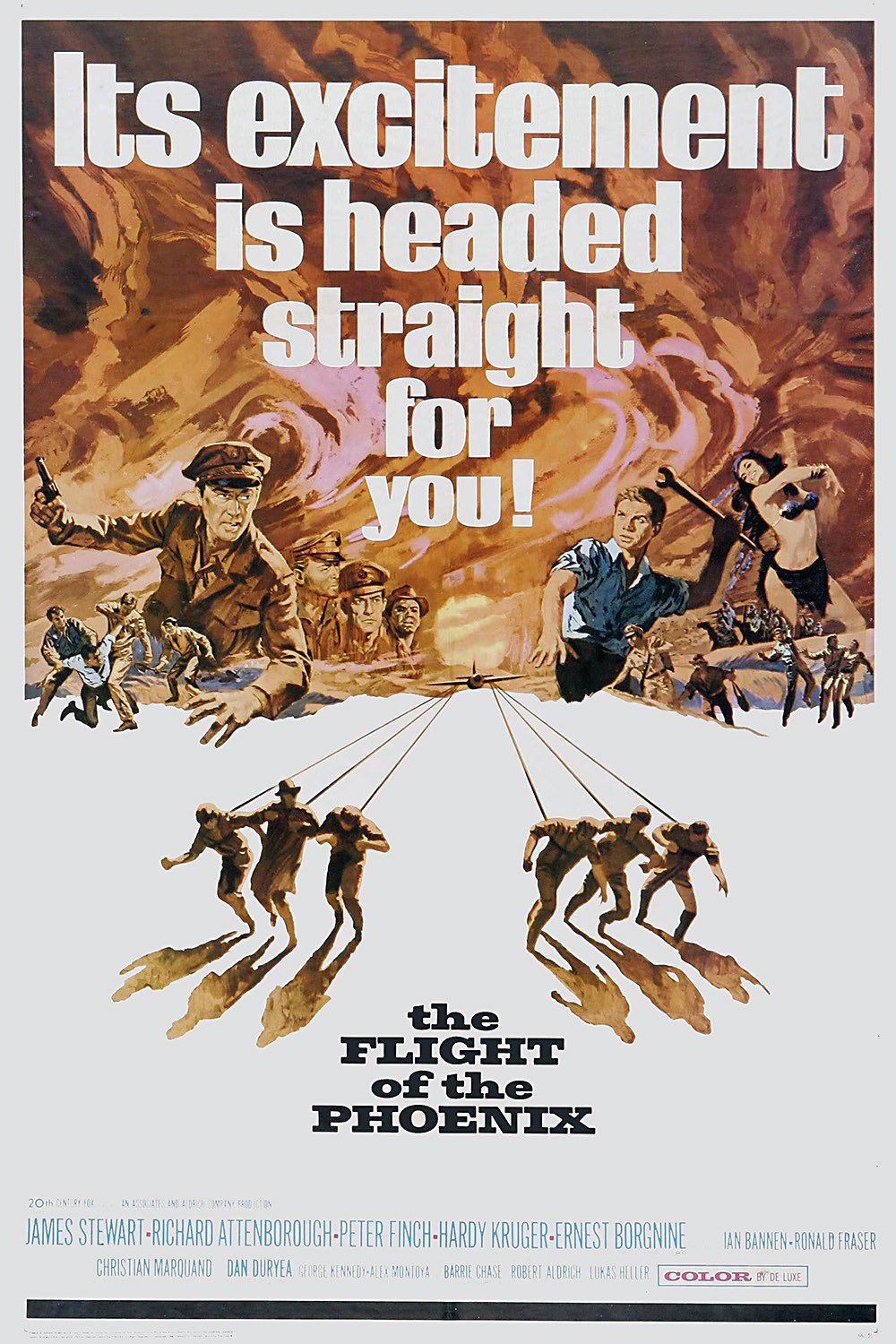
A cargo plane flying to Benghazi and piloted by Frank Towns (James Stewart) is forced to make a crash landing in the middle of the Sahara desert when a freak sand storm shuts down the plane’s engines. Of the 14 men on board two are killed instantly when several oil drums break loose during the crash which also injures a third. The rest of the men find themselves stranded in the searing heat with only dates as their food and a 2 week supply of water. The radio communication was destroyed during the crash and they are too far off their main route for anyone to find them. One of the passengers, Heinrich Dorfmann (Hardy Kruger) who works as a plane designer believes he has a way to take what’s left of the wreckage and build it into a new plane, which will then be able to fly the men out of there. Initially everyone else is skeptical, but eventually they begin working during the night to put it together while continuing to fight the elements and themselves in the process.

What makes this film stand out from the rest of the epic adventures is the fact that there is no good guy versus bad guy here. Every one of the individuals has their own unique character flaws and must learn to overcome them and their egos in order to work together as a team. The characterizations are realistic and multi-faceted making their conflicts believable from start to finish and helping to create a story that is gripping on both an adventure level and a psychological one.

Stewart is outstanding in the lead and I enjoyed seeing him play a part that is cynical and savvy and with less of the humble, country boy charm that he is known for. Kruger is solid in support and watching his confrontations with Stewart and then their eventual respect for each is the film’s main highlight. Richard Attenborough is also good as the sort-of moderator between the two and I also enjoyed Peter Finch as the brave and honorable Captain as well as Ronald Fraser as his sergeant who doesn’t quite share his same courage or sense of duty.

I was disappointed to some extent that it wasn’t filmed on-location in the Sahara and instead in Arizona and California although the desert locales look authentic enough even though eventually after two hours it becomes monotonous visually. Director Robert Aldrich keeps things believable including having the men visibly slow down physically as the days wear on as well as growing beards, which is something that sometimes gets overlooked in other stranded dramas although I was still confused why the Finch character formed a goatee instead of a full beard.

The climactic sequence is both nerve-wracking and exhilarating particularly the scene where Stewart tries to start the plane with only 7 cartridges remaining and with each one failing. Whether the logistics of this could actually occur is a big question, but it still remains grand entertainment.

flight of the phoenix 2

My Rating: 8 out of 10

Released: December 15, 1965

Runtime: 2Hours 22Minutes

Not Rated

Director: Robert Aldrich

Studio: 20th Century Fox

Available: VHS, DVD

Brother John (1971)

brother john 1

By Richard Winters

My Rating: 7 out of 10

4-Word Review: Is an apocalypse coming?

Upon the death of his sister, John Kane (Sidney Poitier) returns to his hometown in Alabama to attend her funeral, but the town’s mayor (Bradford Dillman) and sheriff (Ramon Bieri) think he is an outside union agitator there to stir up trouble with the local factory. Doc Thomas (Will Geer) is an old man who’s been in the town his whole life and knows better. He recognizes that John has a special gift of some kind and can see into the future, but what John proclaims is not good as he states that an end of the world is coming and the human race will have to justify their existence to the almighty.

This film, which was written by Ernest Kinoy and directed by James Goldstone, is unique in that it never reveals too much and keeps the viewer in a shroud of mystery the whole time. We’re given certain hints that John may hold a special power, but never any explanation, which in some films could prove frustrating, but here it makes it intriguing and unusual. Everything is given the low-key treatment including a memorable scene where a racist police officer (Warren J. Kemmerling) invades an African American home bent on teaching John ‘a lesson’ by taking him into the basement only to get a surprise whooping of his own when John proves to be far superior.

Poitier is billed as the star, but he seems constrained in a part that allows for very little emotion. Geer is the one that gives the film its biggest impact particularly with the conversation that he has with Poitier while sitting in a jail cell at the end. I also got a kick out of the fact that he was able in a passing conversation to mention Frankfort, Indiana which was the town that he had been born and raised in, in real-life. Bieri is also quite good as the town’s corrupt sheriff who’s racist on one end, but then when things get out-of-control he then ‘negotiates’ with the town’s black pastor (P. Jay Sidney) to see if they can work together to quell the unrest.

Although the setting is supposedly Alabama it was actually filmed in the town of Marysville, California and for the most part it’s successfully able to camouflage it, but not quite. The ending like the rest of the film is vague and answers little of the questions that the plot puts forth, which may be a turn-off to some, but I enjoyed it. In an era where so many other films were intent on making statements and broad characterizations this one pulled back and much like with religion and faith kept things at an elusive level, which gives it a more sophisticated flair.

My Rating: 7 out of 10

Released: March 24, 1971

Runtime: 1Hour 35Minutes

Rated GP

Director: James Goldstone

Studio: Columbia Pictures

Available: VHS, DVD, Amazon Instant Video, YouTube

Lisa, Bright and Dark (1973)

lisa bright and dark 1

By Richard Winters

My Rating: 4 out of 10

4-Word Review: Teen has mental illness.

Based on the acclaimed novel by John Neufeld the story centers on Lisa (Kay Lenz) a teenage girl who begins behaving in strange ways. She feels that she is suffering from some sort of mental illness and asks her parents (John Forsythe, Anne Baxter) if she can see a psychiatrist, but they refuse as they were raised in an era where mental illness was considered a ‘character flaw’ that didn’t occur to ‘respectable’ people and psychiatry was still thought of as a ‘new-age’ type of practice. Her friends (Debralee Scott, Jamie Smith-Jackson, and Anne Lockhart) think differently and try to get her the help that she needs, but when that fails they then read up on psychotherapy themselves and try to help Lisa with their own brand of therapy.

This film, which aired on NBC in November of 1973 as a Hallmark Hall of Fame presentation, was critically acclaimed at the time, but it has not aged well. I applaud the effort at trying to destigmatize the myth of psychiatry, but the drama often times comes off as strained and unintentionally funny. The sappy songs by Rod McKuen are abysmal and enough to drive the viewer as batty as the main character.

I found it strange how enlightened Lisa’s teen friends were about mental illness and wasn’t quite sure that I bought into it. I would think they would be just as confused and frightened of Lisa’s behavior as the adults and maybe try to stay away from her completely. Seeing how sympathetic Lisa’s classmates are to her condition is nice, but not realistic. At that age I would imagine some of the teens would ostracize and mock Lisa while considering her some sort of ‘freak’ and the film would’ve been better balanced had at least shown briefly some of that, which it doesn’t. The idea that these girls could read a few books by Sigmund Freud and then be able to perform psychotherapy is laughable and the whole thing would’ve been better served had it taken place in a college setting as the students all look college-aged anyways and the plot would’ve been more believable because it could’ve had her working with students or interns that were majoring in psychiatry.

The film never bothers to give any type of explanation for Lisa’s issues nor any inkling as to whether she was able to find some sort of adjustment through medication or therapy. It all seems like an excuse to promote the acceptance of psychiatry to the mainstream and not about the main character at all, which makes it come off as a thinly veiled ‘message movie’ and nothing more.

Lenz, who for a time was married to singer/actor David Cassidy, does well in the title role, but I didn’t care much of her toothy smile. It is fun seeing Anson Williams and Erin Moran in supporting roles as they both later became cast members to the long running TV-show ‘Happy Days’. Richard Stahl also appears as the father of one of the girls, but has his voice dubbed for some reason, which was quite strange.

My Rating: 4 out of 10

Released: November 28, 1973

Runtime: 1Hour 15Minutes

Director: Jeannot Szwarc

Studio: Hallmark Hall of Fame Productions

Available: DVD (Out-of-print)

The Great Waldo Pepper (1975)

great waldo pepper 1

By Richard Winters

My Rating: 7 out of 10

4-Word Review: Flying the unfriendly skies.

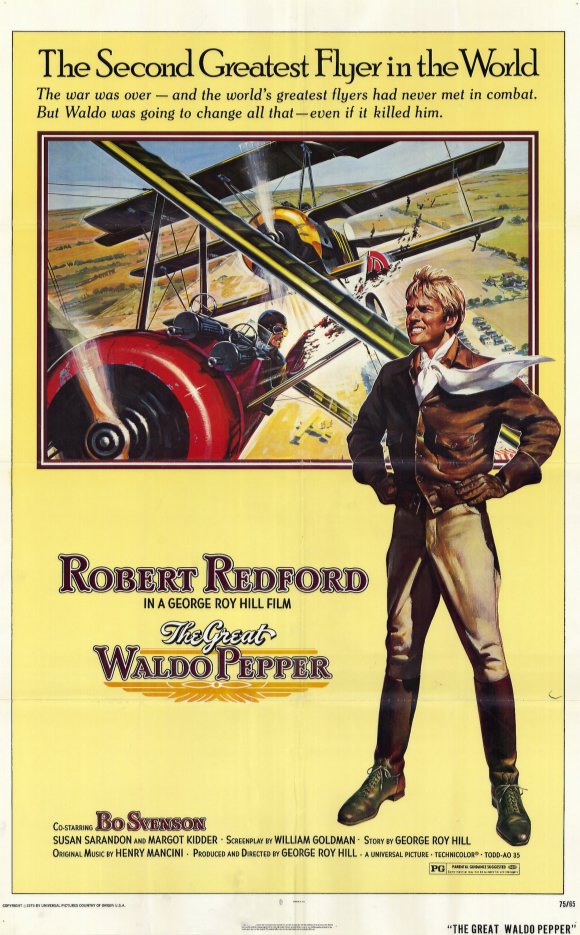
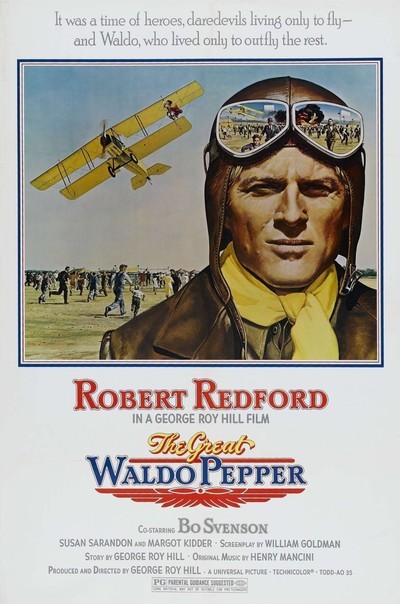
Waldo Pepper (Robert Redford) makes a living traveling the Midwest during the 1920’s and giving rides on his biplane to the eager public of the small towns that he goes through as well as doing airplane stunts at aerial shows. He misses his years during WWI when he was a fighter pilot trying to take on the German flying ace Ernest Kessler (Bo Brundin). Later when Pepper is grounded and can no longer fly legally he gets a job as a stunt man in Hollywood. It is there that he meets Kessler who is now working as a consultant on a movie about his flying days and the two agree to relive their war battle by having a duel to the death in the skies.

The aerial footage is the film’s greatest asset and it is amazing particularly since the actors did all their own stunt work and without any type of protection. When we see actor Bo Svenson walk out onto the wing of the plane while in midair and even fall through it it’s all real and it makes you hold your breath. The scene where Redford flies his plane underneath another one in an attempt to save Susan Sarandon who has walked out onto the wing and then unable to come back is equally nerve-wracking.

great waldo pepper 3

The film’s biggest fault and probably the reason why this big budgeted picture became an unexpected box office flop is because its unable to retain the breezy fun loving atmosphere of Redford’s and Hill’s two earlier collaborations. The film starts out amusingly enough, but then becomes quite serious when it features two deaths. The first one is good because it is completely unexpected and hits home the fact that stunt flying can have a dangerous side, but then the film has another death occur just 10 minutes later and it’s far more gruesome and drawn out while sucking all the lightheartedness out, which it’s never able to recover from.

I’ve never been overly impressed with Redford as an actor. Sure he’s great looking and competent at times, but he always has too much of a laid back persona and unable to ever show any intensity even though he did manage to grow on me more as the film progressed. The supporting cast of Svenson, Philip Bruns and a young Susan Sarandon fare better and help keep the film afloat.

The third act where Waldo meets his idol only to find that the man isn’t quite as successful or exciting when he is on the ground as he was in the air is where the film gels as it makes some strong points about our culture’s need for hero worship and their climactic aerial duel is both thrilling and amusing.

great waldo pepper 2

My Rating: 7 out of 10

Released: March 13, 1975

Runtime: 1Hour 47Minutes

Rated PG

Director: George Roy Hill

Studio: Universal

Available: VHS, DVD, Amazon Instant Video, YouTube

Desperate Characters (1971)

desperate characters

By Richard Winters

My Rating: 6 out of 10

4-Word Review: A marriage without love.

Sophie and Otto (Shirley MacLaine, Kenneth Mars) are stuck in a marriage that has fallen into a real rut. They no longer are able to communicate. Sure they ‘speak’ to each other, but neither one listens or seems to even care. Sophie has had a past affair, which Otto became aware of, but forgiven. The two now try to march on like nothing has happened, but the cracks clearly show even when they both deny it. Sophie looks for some answers from her friends, but finds that their marriages aren’t any better and that there may not be any solution other than just sticking with it.

The film to a degree has a provocative flair and seems almost cutting edge for its day. There is no music and the background sound is made up of the ambience of everyday, big city life. The opening shot consists of the camera slowly zooming into the couple’s New York loft with only the distant sound of children playing, which not only helps the viewer feel very integrated to the city that the characters live, but their quiet isolation as well.

The film also has very little action. The only real moment where things happen is when Otto chases a stray cat through their apartment in order to box it up and take to a vet to test for rabies after its bitten Sophie, which for what it is worth is quite interesting. The rest of the film deals with dialogue, but handled in a more sophisticated way than most as it has a consistent conversational tone that not only makes it more genuine, but something that the viewer must ‘read into’ in order to understand. Frank D. Gilroy’s script, which is based on a novel by Paula Fox, never once ‘tells’ the viewer what to think or feel. Instead we are shown regular people with everyday issues discussing the same things that real people do and it’s all left up to the viewer to interpret what it means, which in many ways I found highly refreshing.

Mars gives an outstanding performance in what was apparently his personal favorite and quite atypical from his other body or work, which mainly consisted of over-the-top comic characterizations. Even more surprisingly is that he gets featured in a nude scene from the back. MacLaine is also exceptional in what many fans consider her best work. She is usually effective with strong characters, but here she’s quietly vulnerable while being featured in a rare nude scene for her as well and her case from the front.

The film’s greatest weakness is that it comes off as rather cold and distant. It would’ve been more revealing had it shown even in flashback when the couple was happy and when or what seemed to happen to turn things for the worse. The film also has the philosophy that there is no alternative to their situation and that being in a ‘bad’ or unhappy marriage is better than being alone as it doesn’t even bother to ever touch upon the benefits of single life or an alternative lifestyle, which in the end makes this film seem old fashioned and dated despite its otherwise Avant-garde approach.

My Rating: 6 out of 10

Released: September 22, 1971

Runtime: 1Hour 27Minutes

Rated R

Director: Frank D. Gilroy

Studio: Paramount

Available: VHS, DVD, Amazon Instant Video, YouTube

The White Dawn (1974)

white dawn 2

By Richard Winters

My Rating: 5 out of 10

4-Word Review: Trapped in the artic.

In 1896 three whalers inadvertently become lost from the rest of their crew and stranded all alone on an artic island. There is Billy (Warren Oates) who is the impulsive and belligerent one of the bunch and Daggett (Timothy Bottoms) who is more quiet and introspective as well as Portagee (Louis Gossett Jr.). After wandering in the snow and cold for many days they finally come upon an Eskimo tribe who takes them in with food and shelter. The men though never seem to fully appreciate what the Eskimos have done for them while at times even exploiting their kindness, which eventually leads to tensions from both sides.

Filmed on-location on Baffin Island in northern Canada it is based on the novel ‘The White Dawn: An Eskimo Saga’ by James Houston who also wrote the screenplay. He lived with the Inuit people during the 50’s and 60 and helped spread their art and culture to the rest of the world. The film though doesn’t seem all that revealing. Much of what happens is rather predictable and with scenes that tend to ramble. There are also other moments that are a bit bizarre like the scene during a celebration where two girls take off their shirts and then lock lips and proceed to blow air into each other’s mouths at an accelerated rate that might’ve been more interesting had it been explained what exactly they were doing and why.

The characters are dull and transparent in Oates’ case genuinely unlikable. The Eskimos lack any individual distinction and most viewers will fail to find themselves emotionally attached to anyone onscreen. The film probably would’ve worked better had it been a smaller tribe and just one person that they had rescued.

There are also a lot of scenes featuring animal deaths and cruelty that may upset some viewers. On the one hand I liked that it kept things real and hunting is certainly a part of their culture especially at that time, but some of it does get graphic. One scene has the group grabbing a goose from different ends and then literally pulling it apart while later on they slaughter some walruses that are peacefully bathing in the sun.

The film’s dark ending is interesting and the time the three attempt to escape from the tribe by stealing one of their boats is also intriguing, but otherwise I was aloof with it most of the way. I admire the attempt of bringing the Eskimo culture to a wider audience and the film really isn’t a bad movie, but it’s not a particularly gripping either.

My Rating: 5 out of 10

Released: July 21, 1974

Runtime: 1Hour 50Minutes

Rated PG

Director: Phillip Kaufman

Studio: Paramount

Available: DVD, Amazon Instant Video

The War Lord (1965)

the war lord 1

By Richard Winters

My Rating: 7 out of 10

4-Word Review: Knight wants a woman.

Medieval tale set in the 11th century dealing with a Norman Knight named Chrysagon (Charlton Heston) who with his group of men take over a Druid’s Village and make it ready for the Duke who will then eventually rule it. During his time there Chrysagon meets the beautiful Bronwyn (Rosemary Forsyth) and becomes smitten. The problem is that Bronwyn has already been prearranged by her father (Niall MacGinnis) to marry Marc (James Farentino) yet Chrysagon imposes a little known right, which allows the Lord of a Domain to sleep with a virgin woman on her wedding night, but only if he agrees to return her back to her suitor by dawn. Her father complies, but then Chrysagon refuses to give her up once the night is over, which causes great outrage with the village as well as Chrysagon’s own men particularly his brother Draco (Guy Stockwell) who begins to challenge Chysagon’s authority.

The film paints a realistic portrait of medieval times by exposing the rigid social caste system that people were forced to live by with almost no ability for individual choice. The plot is compelling, but what I really enjoyed were the fighting sequences that take up almost the entire second hour and are filled with  ingenious maneuvers and creative attempts by each side to try and take advantage of the other without having the benefit of guns or any other form of ammunition.

Outside of Heston who is stiff as always the acting is uniformly strong. Stockwell who was the older brother of Dean lends a good menacing touch particularly with the way he starts out as loyal only to have his darker side slowly seep through. Richard Boone, best known for his starring role in the ‘50’s western ‘Have Gun-Will Travel’ is solid as Heston’s second-in-command and who remains amazingly stoic and sensible throughout. Forsyth is quite alluring as the love interest and Maurice Evans is also good as a meek and ineffectual Priest.

Director Franklin J. Shaffner, Heston, Evans and character actor Woodrow Parfrey all reteamed three years later to star in the much better known Planet of the Apes and while that film has gone on to become an influential classic this one has remained in relative obscurity, which is unfortunate as its production values are equally high, the story just as interesting and action sequence just as exciting making it yet another lost classic awaiting discovery by a new generation of fans.

My Rating: 7 out of 10

Released: November 17, 1965

Runtime: 2Hours 3Minutes

Not Rated

Director: Franklin J. Shaffner

Studio: Universal

Available: VHS, DVD, Blu-ray (Region B)