Category Archives: Drama

J. W. Coop (1971)

jw 2

By Richard Winters

My Rating: 8 out of 10

4-Word Review: Rodeo star makes comeback.

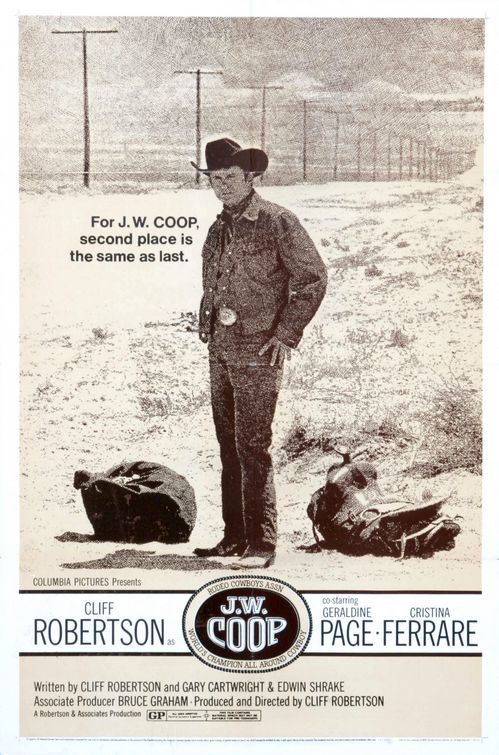
J.W. Coop (Cliff Robertson) has just spent 9 years in prison. After finally being released he finds that the world has changed quite a bit. He’s no longer the big rodeo star that he once was and younger, more educated men have now taken his place. There’s also the new hippie movement that he isn’t quite sure what to make of. With his mother (Geraldine Page) growing senile and no other friends to turn to he decides to take one last stab at the rodeo circuit and determined to beat the odds and become the champion because for him second place is the same last.

The film has a wonderfully gritty quality to it that fully immerses the viewer into the western rodeo landscape and lifestyle. The rugged characters and conversations seem authentic without ever being condescending. The film reveals a lot about the inner toughness needed to survive in that environment as well as the competiveness and eventual loneliness.

Robertson’s stab at directing is flawless and convinced me that he should’ve done more movies behind the camera. He uses several techniques that make the rodeo experience vivid for the viewer including filming a point-of-view shot from on top of the bronco as well as even more impressively showing one taken from underneath a horse as it is running. I also liked the shot where the screen gets split into four squares with each of them showing some of the many hotels that he stays at during his travels on the circuit, which visually hits home how exhausting life on the road can be. There’s also a haunting segment shot late at night at a lonely oil rig that is brief, but quite memorable.

Former model Cristina Ferrare, who is probably best known as being the ex-wife of automaker John DeLorean as well as host of ‘Home and Family’ gets a rare turn at acting playing a hippie who falls in love with Coop.  Her performance is solid even though I found it hard to believe why such a young woman would fall for a man who is so much older, less educated and having not much more money than she does. Their relationship goes on far longer than I realistically would expect, but I still liked the idea of how two people from two very different backgrounds and generations can still manage to connect. Robertson’s performance is equally good and the film also has the novelty of casting Page as his mother even though in real-life she was actually one year younger than he was.

The segment where a throne of teen girls jump out of a trailer and beg for Coop’s autograph as well as the ending in which Coop, with his leg in a cast, attempts to ride a bull are the only two times that it overreaches in a film that is otherwise quite honest and uncompromising and particular good at mixing subtle comedy with stark drama.

My Rating: 8 out of 10

Released: October 3, 1971

Runtime: 1Hour 52Minutes

Rated PG

Director: Cliff Robertson

Studio: Columbia Pictures

Available: DVD, Amazon Instant Video
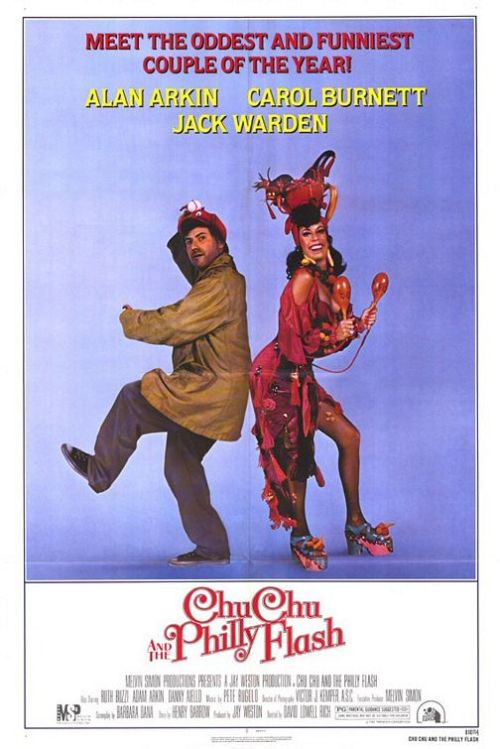
Chu Chu and the Philly Flash (1981)

chu chu 4

By Richard Winters

My Rating: 3 out of 10

4-Word Review: Goofy couple steals briefcase.

Flash (Alan Arkin) is a former big league pitcher who is washed up while living on the city streets selling stolen watches that don’t work. Emily (Carol Burnett) is a former dance instructor who is equally down-and-out and now makes a meager living doing dance routines on the streets while wearing a Carmen Miranda outfit. The two inadvertently meet one day while coming into contact with a briefcase that has stolen government documents. They agree to give it back to the men who are demanding it, but only for a price, which only helps to get them into more and more trouble.

This offbeat comedy, which was written by Barbara Dana who at the time was married to Arkin, has a few funny, dry humored moments at the beginning that makes it somewhat passable, but it’s unable to sustain any type of momentum and does not have enough action or comedy to keep it engaging. The middle half is slow and boring and the ending, which takes place at an amusement park, is too full of forced humor and sloppy slapstick to be considered either funny or entertaining. The film also never explains what specifically these secret plans are, or who these men are that are chasing after it, which only proves how poorly thought out and threadbare the plot really is.

The relationship between the two main characters doesn’t work either. They seem to let their guards down too easily for people that have been living alone and on the skids for so long and having them share more of a bickering and distrustful chemistry would’ve made it more realistic and edgy. The whole middle half is spent hearing them telling each other about their woeful pasts, which is neither compelling nor insightful and only bogs the film’s already slow pace down even further. These are the type of wacky character who can only be effective if put into comically frantic scenarios of which there needed to be much more of.

Arkin manages to give a pretty good performance playing a surprisingly subdued character that does not go off on hyper rants like the characters in some of his other film roles do, which is a good thing. However, Burnett is completely wasted despite seeing her in a Carmen Miranda outfit, which is a definite hoot. The only one who is genuinely funny is Danny Aiello as the exasperated bad guy.

Danny Glover can also be spotted in an early role as a homeless person trying to spy on Burnet and Arkin to see what they’re up to, but his part is one of the corniest ones in the movie and should’ve been dropped completely. The San Francisco setting may remind one of the classic comedy What’s Up Doc?, which also took place in that city and had a similar storyline dealing with a misplaced briefcase, but that film was far more consistently funny and took more advantage of the bay area locales while this one only focuses on the rundown areas of the city.

My Rating: 3 out of 10

Released: August 28, 1981

Runtime: 1Hour 32Minutes

Rated PG

Director: David Lowell Rich

Studio: 20th Century Fox

Available: VHS

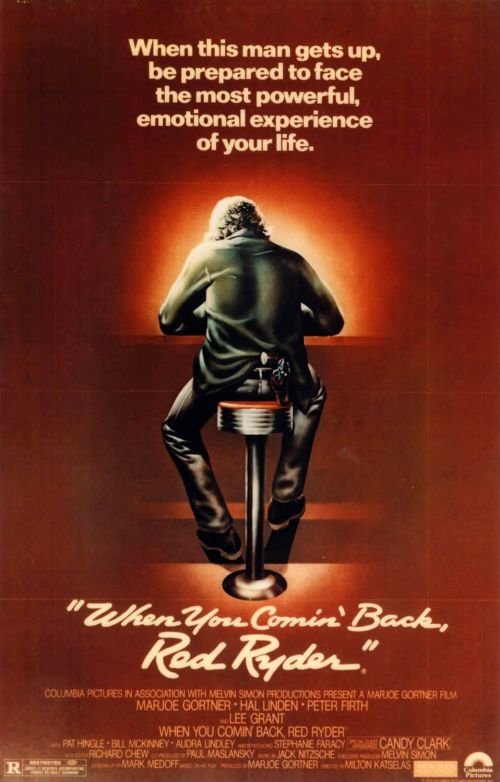
When You Comin’ Back, Red Ryder? (1979)

when you comin back red ryder 2

By Richard Winters

My Rating: 5 out of 10

4-Word Review: Terror at a diner.

The year is 1968 and the setting is a small, lonely diner nestled at the border of Texas and New Mexico. Richard (Hal Linden) and his violinist wife Clarissa (Lee Grant) arrive for a morning cup of coffee. There is also Angel (Stephanie Faracy) the diner’s lone waitress and Stephen (Peter Firth), who was nicknamed Red during his youth due to his red hair at the time, but besides them the place is empty and peaceful. Then Teddy (Marjoe Gortner), an unhinged Vietnam vet and his hippie girlfriend Chery (Candy Clark) enter. They are without money and stranded with a broken down van, which makes Teddy particularly volatile as he begins harassing the others with evasive questions before eventually terrorizing them all by trapping them inside the place and forcing them to do whatever weird, sick thing he asks.

The film is based on the 1973 Off Broadway play by Mark Medoff, who also wrote the screenplay. In many ways it’s similar to the 1967 black-and-white drama The Incident in which Tony Musante and a young Martin Sheen trap several subway riders inside a subway car and spend the rest of the night terrorizing them simply for their own personal amusement.  Both films are structured the same with the first part examining the characters before they arrive at the scene and revealing a bit of the personal dramas that each of them face and then spending the second half showing them trapped in a claustrophobic setting and forced to deal with their reluctance at confronting their fears.

The 1967 film though outshines this one as there were more characters, which gave it a better variety of personalities as well as bad guys that were menacing and believable. Gortner is too much of a ham making him more irritating than scary. The part was originally played by Kevin Conway during its Off Broadway run and his performance won many accolades, which should’ve been enough for them to have offered him the chance to reprise the role here. Gortner, who also produced seemed intent at trying to use this as a vehicle to promote himself as being a ‘serious’ actor, but he was too old for the role from the beginning since he was already in his mid-30’s at the time this was shot while vets coming back from the war during the ‘60s where only in their late teens or early 20’s.

The film only gets mildly interesting during the confrontation sequence inside the diner, which takes 45 minutes of the film’s 2-hour runtime just to get there. The way the characters respond to Gortner’s scare tactics and the supporting cast’s performances, who are all far better actors than Gortner, is the movie’s only compelling element, but even here there are issues. The biggest one being that the people seem too wimpy and today’s viewers will get frustrated at how overly compliant they are to Gortner’s demands and never once try to overpower him despite having ample opportunity.

The movie is also notorious for featuring some rather shocking moments of nudity. It starts out with a full body shot of Candy Clark in the buff, who was married to Gortner in real-life at the time this was made and that isn’t too bad, but then it proceeds to later show 48-year-old Linden in nothing but speedo shorts doing sit ups with his butt crack clearly exposed. Still later there is a scene where 52-year-old Lee Grant has her shirt hoisted all the way over her head with her breasts in full view and then paraded around the diner in mocking fashion. The film’s most over-the-top moment though comes when Gortner himself is stripped naked and bent over a table while having a proctoscope shoved up his rectum as he continues to have a conversation with the man who’s doing it.

Filmed on-location in Fabens, Texas, which was also the site of a famous scene in The Gateway, and Las Cruces, New Mexico the movie just doesn’t convey enough tension to make it compelling or worth catching. It would’ve worked better had it skipped the first half dealing with the backstories of the characters, which was never a part of the original play anyways and just gone straight into the diner sequence while also casting a leading actor that had some actual acting training.

when you comin back red ryder 1

My Rating: 5 out of 10

Released: February 9, 1979

Runtime: 1Hour 58Minutes

Rated R

Director: Milton Katselas

Studio: Columbia Pictures

Available: VHS

The Leather Boys (1964)

leather boys 1

By Richard Winters

My Rating: 6 out of 10

4-Word Review: Befriending a gay biker.

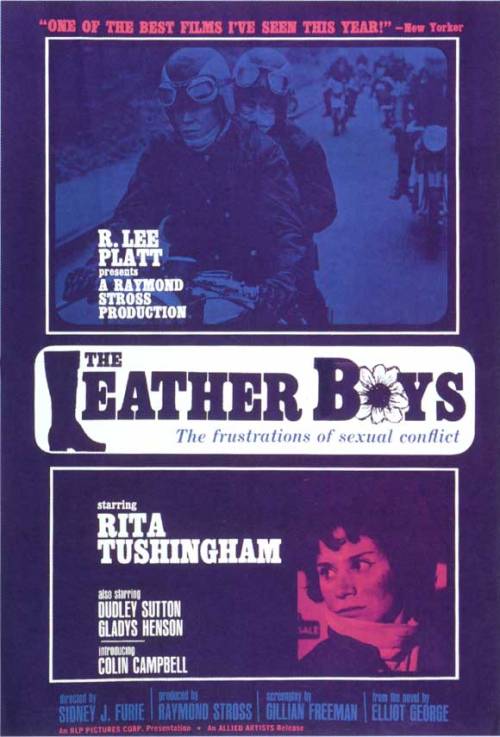
Reggie and Dot (Colin Campbell, Rita Tushingham) are young and in love, at least they think they are. They want to rush off and get married, but Reggie’s father (Lockwood West) feels that they ‘don’t know the meaning of the word’ and he gets proven right as immediately after they tie the knot they are at odds with each other. Reggie begins looking for companionship elsewhere and meets up with a fellow biker named Pete (Dudley Sutton). Pete and Reggie quickly become best friends and begin hanging out together, but Pete is secretly gay and has more of an interest in Reggie than just a friendship.

Director Sidney J. Furie, whose career has now spanned 6 decades, has done a lot of duds in his time, but this isn’t one of them. The stark black-and-white photography helps bring out the bleak working class existence of the characters and the variety of locales used including a nicely captured cross country motorbike race make the story captivating and believable.

The performances are outstanding. Tushingham is especially good at displaying a genuinely nasty side to her character at the most unexpected times. Gladys Henson, who plays the widowed grandmother, is also excellent and the scene where the others argue while right in front of her about how they consider her to be ‘an elderly inconvenience’ who needs to be sent away to a retirement home is downright heart wrenching. Sutton though is the most dynamic in a risky role that helped jettison him to stardom. His distinctive facial features galvanize the viewer’s attention and the ambivalent expressions that he makes particularly when in the presence of Dot are priceless.

Spoiler Alert!

The film though takes too long to get to its obvious conclusion as we have a pretty good idea from the beginning that Pete is gay, so having to wait until the very end for this to finally get revealed seems to be stretching the story out longer than necessary. Most likely Pete would’ve made some sort of pass at Reggie at some point earlier anyways especially since the men shared the same bed. The film also ends with Reggie walking away from Pete and essentially ‘abandoning’ him once he realizes that he is gay. The music that is played over the scene conveys the idea that this is the ‘right’ thing to do and parlays the conventional attitude of the time that there is something ‘wrong’ with Pete, which doesn’t make this as much of a landmark movie as it’s widely considered since its ultimate message is still entrenched with the biases and bigotry of that era.

End of Spoiler Alert!

My Rating: 6 out of 10

Released: March 8, 1964

Runtime: 1Hour 48Minutes

Not Rated

Director: Sidney J. Furie

Studio: Allied Artists

Available: DVD, Amazon Instant Video


The Harrad Experiment (1973)

the harrad experiment

By Richard Winters

My Rating: 6 out of 10

4-Word Review: College promotes sexual freedom.

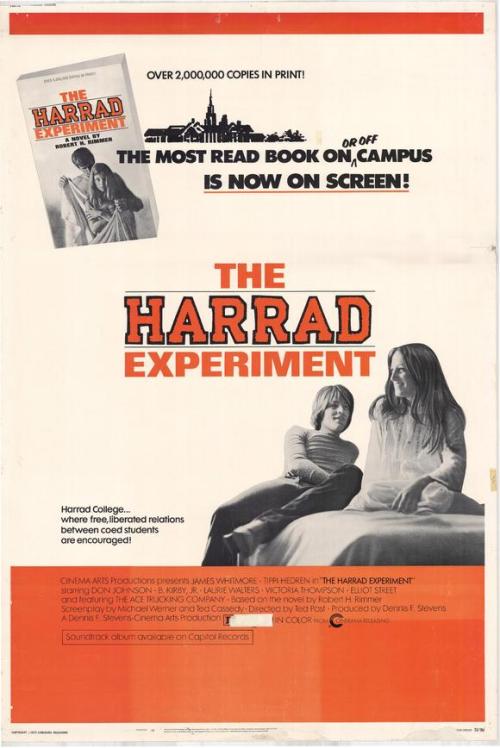
Based on the novel by Robert H. Rimmer the story centers on a group of students who attend a socially progressive college where sex between multiple partners is expected and promoted. The school is run by Phillip and Margaret (James Whitmore, Tippi Hedren) who feel conventional marriage is an unrealistic ideal that creates the idea of ‘ownership’ over someone else, which in turn causes jealousy. They hope to end these problems and change the cultural norms by having the next generation accept more of a group marriage mentality.

The film nicely avoids the smarmy T&A factor by portraying nudity in a natural non exploitative way while also having characters that are believable and a good representation of the young generation from that era. The different ways that the students respond to the unique environment and the realization that they aren’t quite as sexually liberated as they thought remains the story’s focal point of interest.

The film also allows for a great chance to see young stars in the making. Laurie Walters, who later went on to star in the TV-show ‘Eight is Enough’, gives a sensitive portrayal of a young woman who’s still shy about her body and not quite ready to enjoy sex outside of the bounds of romance as she had initially thought. Bruno Kirby is good as well playing a student who’s so filled with insecurities that it prevents him from having any sex at all. Don Johnson though gives the best performance as a cocky student who uses the program simply as a way to ‘score’ with women only to later learn that even he needs some emotional bonding too.

The always reliable Whitmore is solid as the stoic instructor and Hedren gets one of her best roles outside of her most famous one in The Birds with her titillating moment coming near the end when she strips off her clothes and tries to entice Johnson to make love to her right out in the open and in front of everyone. Actor Ted Cassidy, who co-wrote the script, can also be seen briefly sitting at the counter of the local café.

Although the film does manage to bring out a few provocative elements I still felt even without having read the novel that is was only skimming the surface. Having the story focus on only a few of the couples isn’t as captivating as it could’ve been had it instead taken a broader look at all of the students. The low budget gives the production a cheap look and a few too many sappy love songs get thrown in an attempt to turn it into a ‘70s romance instead of keeping it more of a psychological drama that it should’ve been.

A sequel called Harrad Summer, which follows these same students who take what they’ve learned and try to implement it into their adult lives, was released one year later and that will be reviewed later on this week.

My Rating: 6 out of 10

Released: May 11, 1973

Runtime: 1Hour 37Minutes

Rated R

Director: Ted Post

Studio: Cinerama Releasing Corporation

Available: VHS, DVD

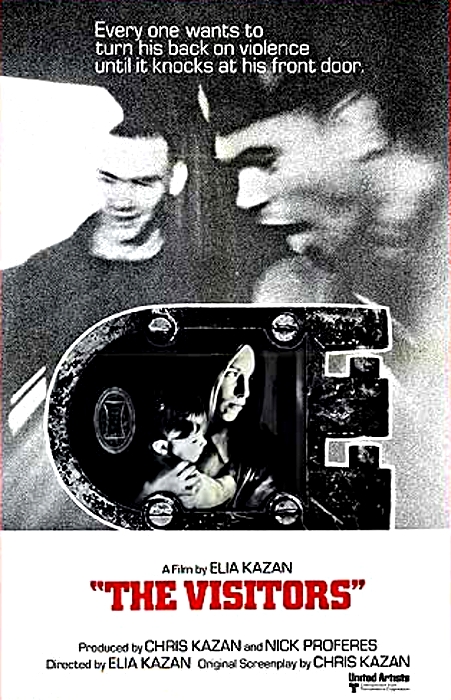
The Visitors (1972)

visitors 1

By Richard Winters

My Rating: 3 out of 10

4-Word Review: His past comes back.

Vietnam veteran Bill (James Woods) has moved back into civilian life while enjoying the quietness of the country with his girlfriend Martha (Patricia Joyce) and her infant son. One day in the dead of winter while Bill is away shopping two of his former war buddies Tony and Mike (Chico Martinez, Steve Railsback) come by for an unexpected visit. When Bill returns he is not happy to see them and when Martha asks him why he tells her of how while in Vietnam he had witnessed the two raping a woman and later he decided to report it, which got the two men sent to prison. Now that they are out he is afraid they may be looking for revenge. Tony insists that he’s forgiven Bill for what he did, but Mike’s intentions are much more ominous especially with the way he eyes Martha. As the night wears on the tensions mount until festering over into anger and mayhem.

The story is loosely based on an actual crime that occurred in Vietnam on November 19, 1966 when five American soldiers kidnapped and gang raped a 21-year-old Vietnamese woman who they later killed. One of the soldiers, who did not take part in the crime, but did witness it, reported the incident to his superiors, which eventually got the other men convicted and imprisoned.

The incident was first made into a movie in 1970 in Michael Verhoeven’s o.k. and then 19 years later Brian De Palma did another version of it called Casualties of War, which starred Michael J. Fox. This version differs from the other two in that it only alludes to the crime, but never shows it. Instead it hypothesis on what might’ve happened had those who were convicted came back to revisit the one that had turned them in.

Story wise the film works to a degree as it reveals things in layers, which helps hold the mystery and filming the majority of it inside one lonely, isolated house gives it an effectively claustrophobic feeling, but the production values are extremely low and resembles more someone’s lost home movie than a feature film directed by a one-time Hollywood legend. The background sound is mainly made up of a howling wind noise, which helps heighten the creepiness, but then during the second half director Elia Kazan inserts music, which becomes a distraction.

The ending leaves open a wide array of unanswered questions along with a lot of murky character motivations that makes the whole thing seem pointless and ill-conceived. The only interesting element to get out of it is seeing Woods and Railsback in their respective film debuts. Railsback is especially good in a part he seems born to play and one he honed to even greater success years later in The Stunt Man.

My Rating: 3 out of 10

Released: February 2, 1972

Runtime: 1Hour 28Minutes

Rated R

Director: Elia Kazan

Studio: United Artists

Available: Amazon Instant Video

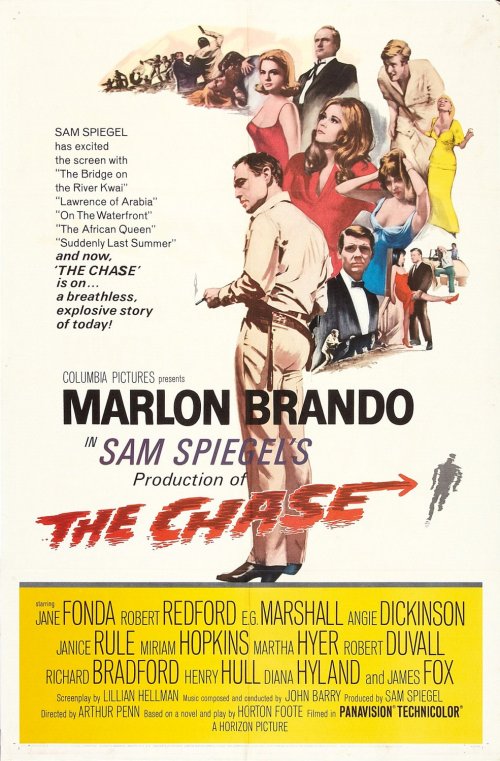
The Chase (1966)

chase 1

By Richard Winters

My Rating: 6 out of 10

4-Word Review: A town on edge.

Bubber Reaves (Robert Redford) has escaped from prison and looks to return to the small Texas town where he grew up in. It is there that his wife Anna (Jane Fonda) resides, but she is now having an affair with Jason (James Fox) who is the son of the town’s influential millionaire Val (E.G. Marshall). Deep-seated tensions that had long remained dormant eventually rise and boil over. The sheriff (Marlon Brando), who is not particularly popular with the locals, wants to bring Bubber back alive, but a certain group of men have other ideas and are willing to physically and violently stop the sheriff if they have to in order to get their way.

The film was notorious in its day for its behind-the-scenes discord that was almost as entertaining as the conflicts onscreen. Producer Sam Spiegal gave director Arthur Penn no authority over the final cut and screenwriters Horton Foote and Lillian Hellman who along with Penn where in constant disagreements over the story angles and character focus. Yet with all that going on the final product is still slick enough to remain entertaining and compelling.

Much of this can be attributed to the talented supporting cast. Janice Rule is spicy as the haughty husband stealer and Robert Duvall is memorable in an atypical role as a timid man who avoids all confrontation even when his wife (Martha Hyer) openly makes out with another man while right in front of him. Miriam Hopkins, in her second-to-last film appearance, leaves a strong impression as well playing Bubber’s elderly, but still feisty mother.

On the other end there is Fonda who is wasted in a small role that gives her little to do. Redford, with his All-American good looks is miscast and fails to reflect the grittiness of the rest of the characters. Brando’s presence is also a detriment as his patented moodiness becomes off-putting instead being the portal to the character’s ‘inner angst’ as it’s intended although the scene where he gets beaten to a pulp and then walks all bloodied out in front of the other townspeople who stare at him with indifference is an impactful moment.

The ending culminates with an explosive finale inside a junkyard, but the majority of the film lacks any action. It’s more of a soap opera than a chase, which makes the title misleading and even disappointing to those that may come into it expecting an action flick, which it isn’t. The setting is also supposed to take place in Texas and even though certain shots do resemble the Lone Star landscape it was actually all filmed inside the borders of California.

My Rating: 6 out of 10

Released: February 17, 1966

Runtime: 2Hours 15Minutes

Not Rated

Director: Arthur Penn

Studio: Columbia Pictures

Available: DVD, Amazon Instant Video
Lovin’ Molly (1974)

lovin molly

By Richard Winters

My Rating: 4 out of 10

4-Word Review: Two men one woman.

Molly (Blythe Danner) is a free-spirited woman living in a small Texas town during the 1920’s. Gid (Anthony Perkins) and Johnny (Beau Bridges) are best friends who also both like her. Molly likes them as well, but can’t seem to decide which of the two she loves better, so to solve things she gets married to Eddie (Conard Fowkes). This doesn’t go over well with the other two, but as time goes by she continues to see them and even has children from both of them, which causes a stir in her small community. Not only does she become the product of the local gossip, but virtually ostracized as well. However, Molly is undeterred about what everyone else thinks and sticks to her independent ways.

Based on the Larry McMurtry novel the film was directed by the legendary Sidney Lumet, but you would hardly know it. The production looks cheap and rushed and lacks atmosphere or period detail. The scenes are flatly shot with very little visual design or imagination. The whole thing comes off as something that did not get any major studio backing and was forced to look to private investors for funding, which unfortunately was just not enough.

Filming it on location in Bastrop, Texas which is also the setting of the story helps a little as the town has many historical buildings, which heightens to some extent the period atmosphere, but I would’ve liked to have seen more of it. The dry Texas landscape is also nicely captured and makes the viewer feel like they are living in the state themselves with each and every shot. The one thing though that really impressed me was how realistically the characters aged as the story, which spans 40 years, progresses. In most films the actors are forced to wear a ton of makeup, which gets overdone, but here very little of it was used and it looked far better.

Danner, who these days is best known as the mother of Gwyneth Paltrow, is excellent in a rare turn as a leading lady and even appears fully nude from the front and back. Perkins is solid in support and I enjoyed seeing Bridges with a bowl haircut. The star though that really steals it is Edward Binns as Perkins’ father whose caustic and to-the-point remarks are gems.

Fred Hellerman’s flavorful bluegrass score is pleasing, but the film itself fails to elicit much emotion. The only times that it does become mildly interesting is when the characters do a voice-over narration by reading off of passages lifted directly from its source material making me believe that this should never have been filmed in the first place and left simply in its novel format.

My Rating: 4 out of 10

Released: April 14, 1974

Runtime: 1Hour 38Minutes

Rated R

Director: Sidney Lumet

Studio: Columbia Pictures

Available: DVD (Region 2), Amazon Instant Video

Firstborn (1984)

first born 2

By Richard Winters

My Rating: 4 out of 10

4-Word Review: Mom’s shitty new boyfriend.

Wendy (Teri Garr) is a divorced mother living with her two teenaged sons Jake (Christopher Collet) and Brian (Corey Haim in his film debut). She begins to feel lonely and insecure when her ex Alan (Richard Brandon) finds another woman and gets remarried. On the rebound she latches onto Sam (Peter Weller) a drifter who can’t seem to hold down a job and deals drugs on the side. He moves in and begins an antagonistic relationship with older son Jake that spirals out-of-control and turns the once peaceful household into a war zone.

I liked the realism particularly the way the anger and animosity come to a head slowly. The characters and dialogue are believable and the film portrays teenagers far more accurately than most other ‘80s flicks. The violent confrontation at the end is exciting, but in some ways I found the way Jake locks horns with his equally bullying English teacher Mr.  Rader (James Harper) as being just as compelling if not more.

On the negative end the plot is by-the-numbers and does not offer any twist or interesting added angle. The characters don’t grow or change and the film lacks a much needed denouncement where we could’ve seen how the ordeal helped them evolve as a family.

Garr is perfectly cast as a vulnerable character and the idea of a lonely divorcee finding someone on the rebound while conveniently ignoring the red flags until it is too late happens quite a lot. Collet is tolerable, but gets out shined by his younger costars including Sarah Jessica Parker as his girlfriend and Robert Downey Jr. as his school chum as well as Haim who clearly display more on-camera charisma and show why they all ended up with the longer, more memorable careers.

corey haim

sarah jessica 2

Weller is convincing as the heavy, but the film is one-dimensional and fails to offer any insight. If you want to catch this simply to see the young stars before they were famous then it will be a fun flick despite the subject matter, but overall it’s nothing special and has an atrocious music score.

My Rating: 4 out of 10

Released: October 26, 1984

Runtime: 1Hour 40Minutes

Rated: PG-13

Director: Michael Apted

Studio: Paramount

Available: VHS, DVD, Blu-ray

The Pursuit of Happiness (1971)


pursuit of happiness 2

By Richard Winters

My Rating: 5 out of 10

4-Word Review: Justice isn’t always fair.

Everything seems to be going William Popper’s (Michael Sarrazin) way. He is a young college student with a great looking girlfriend (Barbara Hershey) and from a rich family. One night he takes a trip to the grocery store. It is raining and he accidently hits and kills a woman who walks out onto the street between two parked cars. Since William has several unpaid traffic tickets, is part of the anti-establishment movement and seems to have a generally belligerent manner he gets arrested for her death. His rich father (Arthur Hill) hires a successful lawyer (E.G. Marshall), but William is a major idealist who doesn’t want to compromise on anything and the more he fights for his ideals the deeper it gets him into trouble.

The film, which is based on a novel by Thomas Rogers, certainly makes some great points about our modern day American justice system where everything seems more based on the image that the defendant tries to present than the actual facts. Unfortunately most viewers today are already quite jaded by this and the message comes off as old and redundant.

The biggest problem is with Sarrazin. He has always had a bit of a transparent quality and I’ve defended him in some of his other roles, but here he helps to bring the whole thing down. He conveys no anger or emotion of any kind even though it’s supposedly his passion for the truth that causes him to behave the way he does. His comes off as limp and lifeless making me wonder how such a bland guy could attract a girlfriend at all let alone a really beautiful one. His character is also a bit too stubborn and strangely naïve to the point that the viewer isn’t completely empathetic with his cause as it becomes painfully obvious that he is only hurting himself by refusing to back down at all while most rational people would’ve likely buckled under just enough to get themselves out of the jam.

The script unfortunately is more intent on making a statement than telling a story as we are given no conclusion to the character’s plight. He escapes from jail and takes a flight to Mexico, but then it just ends leaving open a wide array of unanswered questions and making the viewer feel like they’ve seen only half a movie.

Ruth White, in her last film appearance, gives a strong performance as Walter’s Archie Bunker-like grandmother. It’s also great to see Marshall playing a more hard-lined version of the defense attorney role that he was famous for from ‘The Defenders’ TV-show. Robert Klein is engaging as Walter ‘60s radical college friend and David Doyle is good as Walter’s cellmate. Charles Durning, Ralph Waite and Rue McClanahan can be seen in small roles and this also marks William Devane’s film debut.

pursuit of happiness 3

My Rating: 5 out of 10

Released: February 23, 1971

Runtime: 1Hour 33Minutes

Rated GP

Director: Robert Mulligan

Studio: Columbia Pictures

Available: DVD, Amazon Instant Video