Category Archives: Drama

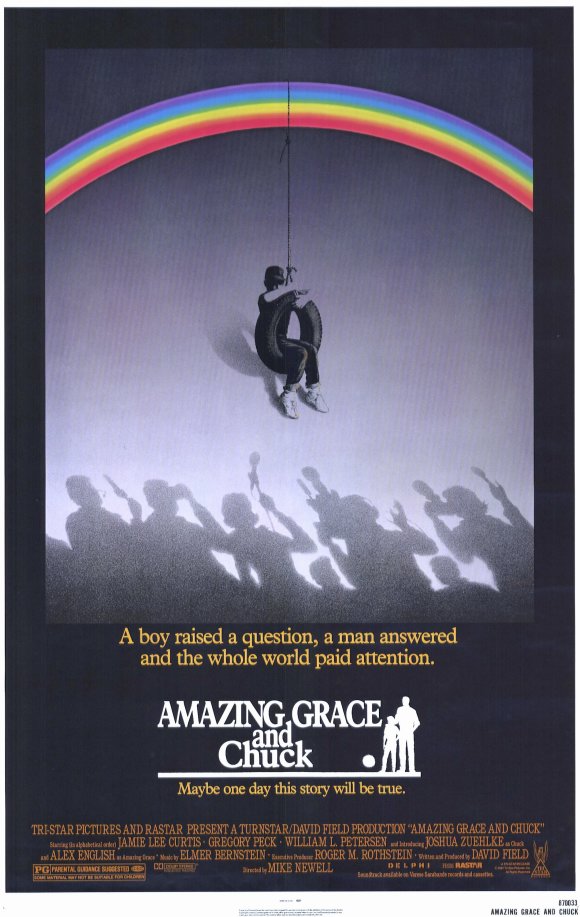
Amazing Grace and Chuck (1987)

amazing grace

By Richard Winters

My Rating: 1 out of 10

4-Word Review: Kid stops playing baseball.

After touring a nuclear missile plant 11-year-old Chuck (Joshua Zuehlke) becomes traumatized at the prospect of nuclear war and wants to come up with some way to help prevent it. His solution is to quit playing little league baseball until there is complete nuclear disarmament as his pitching skills are impressive and therefore his talents will be sorely missed and thus make a strong statement to others about his commitment. After reading about him in a newspaper Amazing Grace (Alex English) a star basketball player for the Boston Celtics decides to do the same thing. He even moves to Livingston, Montana where Chuck resides so the two can carry on their self-styled protest together. Soon other athletes jump onto the bandwagon until a genuine movement is created that eventually gets the attention of world leaders.

The plot is indeed idealistic if not extraordinarily fanciful and has the stigma of being written by David Field who later went on to write the script for ‘Invisible Child’ a notorious Lifetime movie that has gained a cult following for having one of the dumbest plotlines ever and this one isn’t all that far behind. My eyes were already rolling before it even began, but I still wanted to give it a chance. Mike Newell’s direction is competent and Zuehlke’s performance in this his one and only film appearance is convincing and it even has a cameo appearance by coaching legend Red Auerbach.

I found it almost unnatural though that any kid could have such a strong resolve and commit to such a major sacrifice as at that age they can go through a lot of different phases and whatever they may be into one day can be something completely different just a few days later. Even responsible adults can have a hard time sticking to their commitments, so expecting a kid to do so seemed almost outlandish, but I forgave it because his Dad was a fighter pilot and therefore it made it more personal.

I was even willing to forgive the second act, which gets increasingly more strained and implausible by the minute because of the presence of Chuck’s father (William Petersen) who manages to keep things somewhat grounded by being the film’s only cynical character. However, the idea that a famous and successful player, which is played by an actual former NBA star who gives a wooden performance, would read a short article about a kid in a newspaper and that would be enough to ‘inspire’ him to quit everything and move to the middle of nowhere is just downright ridiculous as is Chuck being called to White House all alone and not accompanied by his parents, so that he could speak with the President (Gregory Peck) who begged him to start playing again because his stubborn stance has somehow hurt their bargaining power with the Russians.

The third act though is when it all gets to be too much and something that no logical or rational person will be able to swallow no matter how optimistic they may be. The film also enters in a side story dealing with Grace being stalked by a terrorist group threatening to kill him unless he goes back to playing basketball, which seemed to come from some completely different movie altogether and makes this already implausible story all the more absurd.

I’m all for a ‘feel-good’ movie, but there has to be some bearing in reality and when every player around the world quits playing and all the children quit speaking in order to show their solidarity for Chuck then this thing becomes just plain stupid and takes the concept of wish fulfillment to ridiculously new and embarrassing heights.

Of course there are some who feel the ‘positive message’ outweighs its otherwise fairy tale-like theme. There is even one reviewer on Amazon who shows his students this movie as a way to teach them the importance of having a ‘cause’. I for one think this would be a bad thing to show to young viewers because it gives them the idea that fighting for social change will be a quick and satisfying experience while also making them ‘famous’ in the process, which seems to be setting them up for a tremendous fall when they actually get out into the real world and find things to be the exact opposite.

My Rating: 1 out of 10

Released: May 19, 1987

Runtime: 1Hour 56Minutes

Rated PG

Director: Mike Newell

Studio: Tri Star Pictures

Available: VHS, DVD-R, Amazon Instant Video, YouTube

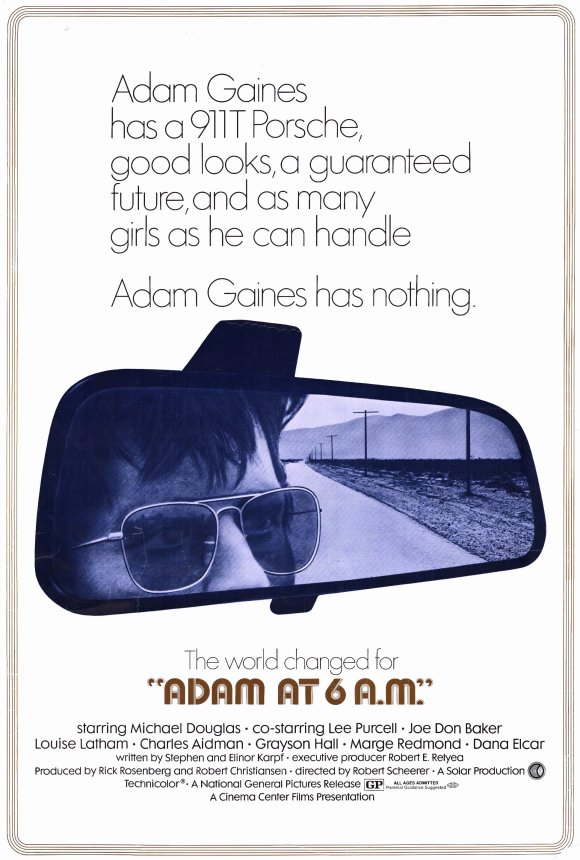
Adam at 6 A.M. (1970)

adam at 6am

By Richard Winters

My Rating: 8 out of 10

4-Word Review: He searches for direction.

Adam Gaines (Michael Douglas) is a Professor of Semantics at a local California college and although his future looks bright and stable he can’t help but feel ‘processed’ and bored. When his aunt dies he travels to Missouri to attend her funeral and then on whim decides to stay there for the summer while working a rugged job clearing out a forest in order to install power lines. He also meets and falls in love with the attractive Jeri Jo (Lee Purcell), but then just as things seem to becoming together he suddenly gets the itch to leave and start a new adventure somewhere else.

This is the type of character study that they just don’t seem to make anymore, which is creating characters that are not satisfied with society’s ‘perks’ and still feeling the need to go off and find themselves, which films of that era emphasized as being more important. Filmed on-location in Cameron and Excelsior Springs, Missouri the Midwest gets captured in authentic detail. The population is portrayed as being conservative and limited, but not hick or stupid. The film also has a lot of quiet moments with no dialogue, which helps recreate the heartland’s slower and more neighborly atmosphere.

Purcell, in her film debut, is outstanding as a typical small-town girl with just enough sexiness and flirtation to be alluring, but ultimately unable to break away from her local roots and share Adam’s more expansive worldly views. Louise Latham as her conniving mother is also good as is Joe Don Baker as a field hand who befriends Adam despite having vastly different intellectual backgrounds. It’s also great seeing Meg Foster in film debut popping up early as one of Adam’s girlfriends and sporting not only her incredibly exotic pair of eyes, but her topless body as well.

Adam’s conversation with Grayson Hall’s character during the funeral where she tries to mask her inability to understand the word ‘semantics’ is amusing and I also enjoyed his ‘debate’ with Dana Elcar’s character in regards to Blow Up and the other ‘filthy’ movies of the modern generation. The scene where the laborers go to a bar and pick-up some ‘hot chicks’ is fun as well, but the film’s best moment comes at the end when a routine trip to a convenience store to pick up some ice cream becomes unexpectedly captivating and climaxes with a memorable final shot.

My Rating: 8 out of 10

Released: September 22, 1970

Runtime: 1Hour 40Minutes

Rated GP

Director: Robert Scheerer

Studio: National General Pictures

Available: VHS

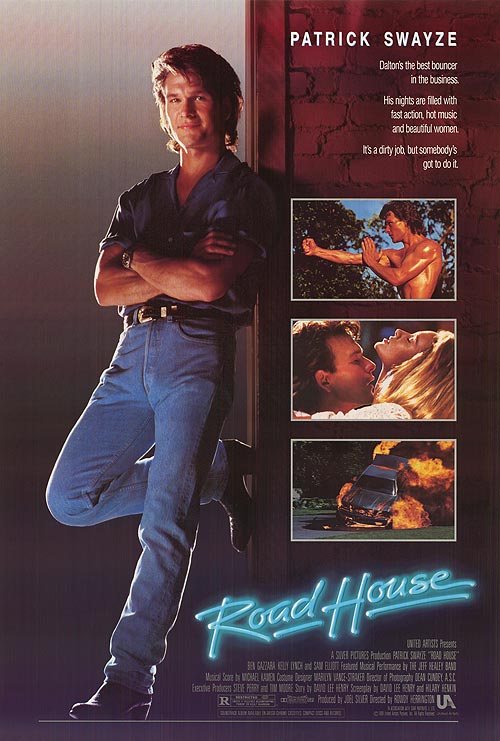
Road House (1989)

roadhouse

By Richard Winters

My Rating: 3 out of 10

4-Word Review: Bouncer cleans up bar.

After opening up a bar in a small town outside of Kansas City Tilghman (Kevin Tighe) looks to find a bouncer strong enough to handle the tough clientele and yet smart enough to run the staff and stay out of harm. He turns to Dalton (Patrick Swayze) whose reputation meets his standards. Dalton wastes no time in cleaning up the bar and making it profitable, but when the town bully who is a rich and unscrupulous businessman name Brad Wesley (Ben Gazzara) wants in on the action things become quite ugly quite quickly.

Had this film been done as a parody of all those macho 80’s action flicks this thing could’ve been brilliant as the over-the-top ingredients are already there, but instead it takes itself seriously and ends up being unintentionally funny. Everything gets played up to the extreme. The characterizations are broad while the story elements are predictable and formulaic. Even the fight sequences are stale and tiring although the scene where Wesley has a monster truck crash through a car dealership and crush all the vehicles isn’t bad.

The dopey script is filled with one implausible plot point or cliché after another. I found it hard to believe why Dalton, who makes $500 dollars a night and demands $5,000 upfront, would have to settle for an upper loft of a horse barn for his living quarters, which is too conveniently located across the pond from Wesley’s mansion. Strippers at a small town bar isn’t realistic nor is having a hot babe clientele who are provocatively dressed and looking more in tune for a posh nightclub in some hip cosmopolitan city.

Swayze is dull in the lead and his stoic ‘manliness’ comes off as boring. Sam Elliot who shows up later as one of Dalton’s pals from the past would’ve made the movie much more interesting had he been the star and about 20 years younger. He has a few great lines including the one that he says as he enjoys the derriere of Dalton’s girlfriend as she walks away “That girl has way too many brains to have an ass like that.”

Red West who made a career working as a stunt double makes for an affable everyman playing a shop owner who Dalton befriends. Kelly Lynch is gorgeous as Dalton’s girlfriend and I found her sex scenes with him and brief nudity amusing since she later went on to play the upset mother of a teen porn addict in the infamous Lifetime movie ‘Cyber Seduction’.

Spoiler Alert!

My favorite part was the ending when several of the townspeople get together and take turns shooting at Wesely before ultimately killing him, which is clearly inspired by the real life event that like in the movie occurred in a small town outside of Kansas City. The town was Skidmore, Missouri and on the afternoon of July 10, 1981 the townspeople upset with decades of violence from the town bully named Ken McElroy got together in the main street of town and shot and killed him as he sat in the cab of his pickup and then just like in the movie covered up for each other, so nobody was arrested. The town, which sits in the far reaches of Nodaway county as had a few more strange occurrences since then including a bizarre 2001 disappearance of an 20-year-old who literally vanished into thin air when he went outside to put some jumper cables into a shed and the 2004 killing of a pregnant woman who had her fetus cut out of her womb. I traveled to the place in 2007, but fortunately was able to get through it without incident.

End of Spoiler Warning!

Main street Skidmore, Missouri where the shooting took place on July 10, 1981. Where the white car is parked is roughly where Ken McElroy's pickup was when he was shot. Photo taken by me in 2007.

Main street Skidmore, Missouri where the shooting took place on July 10, 1981. Where the white car is parked is roughly where Ken McElroy’s pickup was when he was shot. Photo taken by me in 2007.

My Rating: 3 out of 10

Released: May 19, 1989

Runtime: 1Hour 54Minutes

Rated R

Director: Rowdy Herrington

Studio: United Artists

Available: VHS, DVD, Blu-ray, Amazon Instant Video

St. Elmo’s Fire (1985)

st elmos fire

By Richard Winters

My Rating: 3 out of 10

4-Word Review: Introducing the brat pack.

Seven friends from college start out on the rocky road of adulthood while learning to hold down full-time jobs and having long term relationships. Kirby (Emilio Estevez) is obsessed with an older woman (Andie MacDowell) who doesn’t reciprocate his same interest. Alec (Judd Nelson) wants to get married to Leslie (Ally Sheedy) despite the fact that he has already cheated on her with several other women. Wendy (Mare Winningham) is secretly in love with Billy (Rob Lowe) who is married to someone else and Kevin (Andrew McCarthy) has a secret crush on Leslie while Jules (Demi Moore) still seems to be in perpetual party mode.

I would’ve liked some explanation as to why there was a nude fat guy walking around in the opening scene at the hospital, but otherwise I felt the beginning was okay. The dialogue has a believable conversational quality and friends sticking together lends out a nice vibe although the scene where Alec dunks Billy’s head into a toilet after he loses his job would’ve ended that friendship for me quite quickly. The setting was supposed to be Georgetown University, but ended up being shot at the University of Maryland instead. I liked the tree lined streets and snazzy apartment neighborhoods, but was surprised how kids just out of college could afford such ritzy places.

The main fallback is the male characters that even for guys seem too full of extreme contradictions. Alec expects loyalty from his girlfriend Leslie even though he’s fooled around on her, but because somehow they were ‘meaningless’ to him then they should be overlooked. Billy is already married and has a kid, but shows no ability or interest in holding down a job and expects his wife to still ‘believe in him’ even though he hits on every woman in sight. Kevin expresses major cynicism towards marriage and relationships and then suddenly expounds on his ‘love’ for Leslie when he is alone with her like he is speaking straight out of a Harlequin romance novel.

The worst though is Kirby who shows definite signs of being a creepy stalker/psycho by chasing after a woman that clearly isn’t that in to him. He sniffs her pillows when alone in her apartment and disrupts one of her parties by barging into it dripping wet with rain and angered that he wasn’t invited. Then when she doesn’t show up to one of his parties he becomes enraged and travels all the way up to her remote mountaintop ski lodge and pounds on her door like he is ready to beat her senseless. What’s even more ridiculous is that she finds his behavior to be ‘flattering’ instead of scary making me wonder if she’s crazier than he is.

The women fare better. Winningham is a great nerdette and Sheedy allows for some genuine sympathy. I even liked Moore who does a fun caricature of an 80’s party girl and her scene inside a homeless shelter was interesting, but having her flip-out so severely and quickly after losing her job was, like with everything else, overdone.

The film’s musical score is the best thing while the drama is over-the-top and impossible to take seriously.

My Rating: 3 out of 10

Released: June 28, 1985

Runtime: 1Hour 50Minutes

Rated R

Director: Joel Schumacher

Studio: Columbia Pictures

Available: VHS, DVD, Blu-ray, Amazon Instant Video, YouTube

The Ragman’s Daughter (1972)

the ragmans daughter

By Richard Winters

My Rating: 5 out of 10

4-Word Review: Reminiscing about old times.

Tony, who is a middle-aged man (Patrick O’Connell) working a boring job at a cheese factory and stuck in an equally dull marriage with two kids, reminisces about his younger years when he met a beautiful woman named Doris (Victoria Tennant) and they committed petty thievery while also riding around on his motorbike. The film then intercuts between scenes of him when he’s younger, which is played by Simon Rouse in his film debut, and his life now where he struggles to make ends meet.

This film marks the directorial debut of Harold Becker as well as the acting debut of the lovely Tennant. It also marked the last of the British ‘kitchen-sink’ dramas that focused on the hardships and struggles of the working class. The story is a strange mix of gritty reality and romantic fantasy that has a few good moments, but as a whole doesn’t really work and if there is one thing that holds it all together its Kenny Clayton’s soothing and distinctive melodic score.

Part of the problem is that not enough happens. Tony is able to break into shops with too much ease and the way he is able to crack open a safe in less than a minute would make even a professional safe cracker jealous. Their robberies needed to have a little more tension or comedy to help keep it interesting instead of sliding into a pace that meanders so leisurely that it eventually becomes boring.

Tennant’s character is another issue. She is incredibly gorgeous and looks ripe for a magazine cover as a fashion model, which made me wonder why she would so quickly fall head-over-heels for Tony who has no money or job and is average looking at best. To some degree I could understand her need to break free from her oppressive and strict parents, but a beautiful woman like that would have many other potential suitors in her life and not simply dependent on Tony as being her only outlet.

Spoiler Alert!

The final twenty-minutes improves as Tony ends up getting caught and going to jail, which helps add some genuine drama. However, when he finally gets out he learns that Doris died tragically in a motorbike accident, which seemed unnecessarily severe. A much better ending would’ve had them reuniting for just one day and although now married to other people still managing to share some sort of special bond.

End of Spoiler Alert!

The film, which had a very limited release, has some potential, but suffers from a visual approach that at times looks too much like a shampoo commercial and a premise that doesn’t have enough action elements to keep it compelling.

My Rating: 5 out of 10

Released: November 11, 1972

Runtime: 1Hour 34Minutes

Not Rated

Director: Harold Becker

Studio: 20th Century Fox

Available: DVD (Through Netflix)

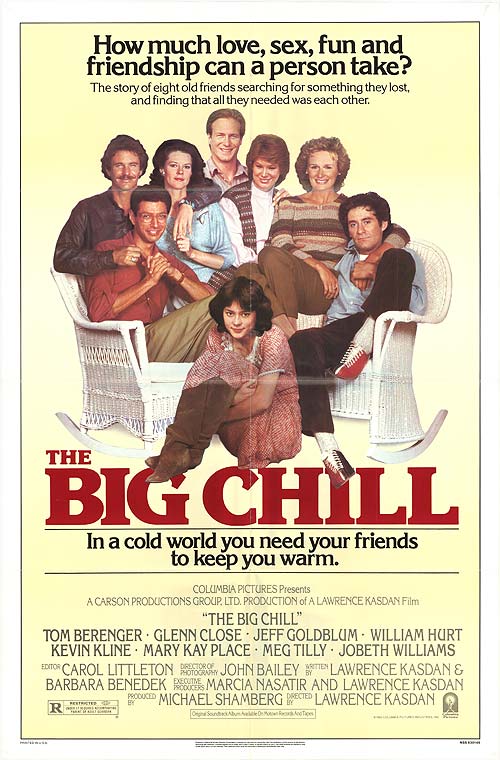
The Big Chill (1983)

big chill

By Richard Winters

My Rating: 6 out of 10

4-Word Review: Friends from college reunite.

When one of their friends from their college days commits suicide the other seven get together for his funeral. Alex was living the unconventional, hippie lifestyle and with his much younger girlfriend Chloe (Meg Tilly) still connected to the ideals of his college days while his other friends had ‘sold out’ and taken on the more materialistic values of the ‘80’s. Alex’s death then represents the ultimate demise of their carefree, idealistic ‘60’s existence and how much they have changed since then, which they now must all learn to come to terms with.

This film has been closely compared with Return of the Secaucus Seven, which was reviewed last week. According to writer/director Lawrence Kasdan he never saw that film or even heard of it when he did this one. I actually preferred this over the John Sayles movie. For one thing it made a little more sense. Having old friends reunite for a funeral seemed more realistic than having them come together each year like in that one as most people once they enter into adult life have a tendency to move on making new relationships and not always have time for their old ones. There’s also no magical ‘cosmic bond’ holding this group together either. Many of them have evolved more than some of the others including William Hurt’s character who is still a recreational drug user while Kevin Kline’s has taken on more of the responsible adult role and this contrast comes to an interesting head at one point.

Tilly’s performance as a young flower child personified is great because it forces the others to see how they once were, but now can no longer relate to. Don Galloway plays the older husband of Karen (JoBeth Williams) while representing the ‘50’s generation and their contempt for the counter-culture. He has an interesting scene in which he expounds on what he feels was Alex’s ‘lack of focus and responsibility’ that clearly gets on the nerves of the others and I had wished the character had remained for the duration as it his presence was brimming for a great ultimate confrontation.

The entire thing was filmed on-location in Beaufort, South Carolina apparently because of Kasdan’s love for the film The Great Santini, which had also been done there. The deep south certainly seems like an odd setting as it doesn’t reflect the ‘60’s values or lifestyle at all, but it’s scenic nonetheless especially the scene where Hurt and Kline go jogging down a deserted main street of town that has an almost surreal quality.

Scenes where shot with Kevin Costner playing Alex, but then cut, which was a mistake as the character starts to attain too much of a mythical and elusive quality and seeing some moments with him even in flashback would’ve helped create an image of an actual person for the viewer. Some of the more existential conversations that the characters having during their group discussions are superb and right on-target and help to demystify the ‘60’s experience and those that lived it, which I found refreshing since other media forums for nostalgic reasons seemed to want to perpetuate it instead. In some ways it’s a shame that the characters and story has to be so closely tied to the Baby Boom generation as it stigmatizes it as a period piece when by-and-large the experiences they have going from the college stage to the adult one are quite universal.

My Rating: 6 out of 10

Released: September 30, 1983

Runtime: 1Hour 45Minutes

Rated R

Director: Lawrence Kasdan

Studio: Columbia Pictures

Available: VHS, DVD, Blu-ray, Amazon Instant Video

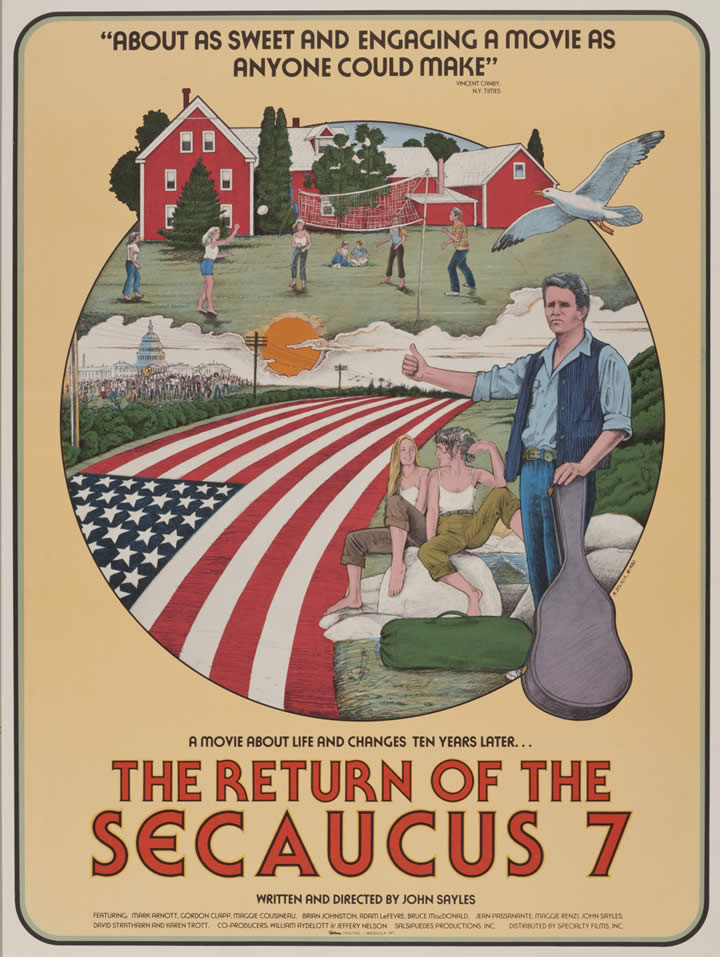
Return of the Secaucus Seven (1980)

return of the secaucus 7

By Richard Winters

My Rating: 3 out of 10

4-Word Review: They like to talk.

Seven people who were friends during college reunite ten years after having been arrested while on their way to a demonstration of the Vietnam War. Mike and Katie (Bruce MacDonald, Maggie Renzi) are the hosts and live together while also both being school teachers. J.T. (Adam LeFevre) is a struggling musician looking to finally take a stab at the big time by moving to L.A. Irene (Jean Passanante) is a speech writer for a conservative politician who brings along her new boyfriend Chip (Gordon Clapp) while Maura (Karen Trott) has just broken up with her boyfriend Jeff (Mark Arnott) and starts a fling with J.T. only to have Jeff reappear and wanting to start the old relationship back up.

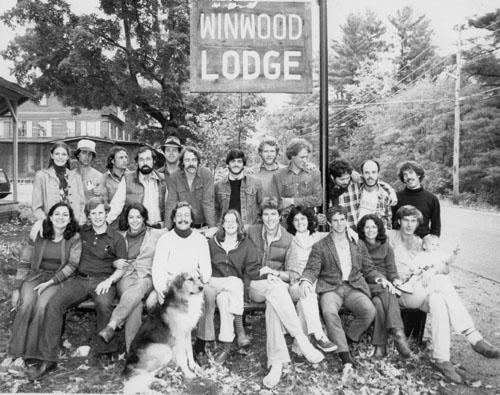
This film is noted as being the forerunner of the independent film movement. It was made on a budget of less than $60,000, but first time director John Sayles manages to camouflage it well. The variety of shots and camera angles never allow you to realize that the whole thing was done in one location, a ski lodge that he managed to rent out for the summer at a low rate. The dialogue has a great conversational quality and the characters are nicely textured and multi-dimensional making it seem like the camera is capturing an actual reunion. The acting, which was mainly done by performers who had never appeared in a film before is equally good with my favorite being Sayles himself who appears as the character Howie who has one really good scene where he warns his friend Mike to think ‘long and hard’ about getting married while his wife stands behind him looking none too happy hearing him say it.

The biggest problem is that not enough happens. There’s a lot of talking, but story wise it is almost plotless. The few action segments deals with the men playing a rough game of basketball and also a trip to a river bed where they go skinny dipping to the background music of yodeling, but these scenes tend to meander while adding little to the character development.

It’s nice seeing a movie that attacks gender stereotypes by having the woman being the one to change a flat tire as well as having all the nudity shown being that of the men and not the ladies. There are also a few touching moments where Irene is willing to give J.T. a significant amount of money to help him in his struggling career without expecting any payment back, but in the end it all goes nowhere. The characters are just too genteel, which fails to create any type of interesting drama. I was more intrigued with exploring what these people were like in college and how they had changed after entering the adult world, but the film barely touches on that, which to me made it boring and empty.

return of the secaucus 7 2

My Rating: 3 out of 10

Released: April 11, 1980

Runtime: 1Hour 43Minutes

Rated R

Director: John Sayles

Studio: Salsipuedes Productions

Available: VHS, DVD, Hulu

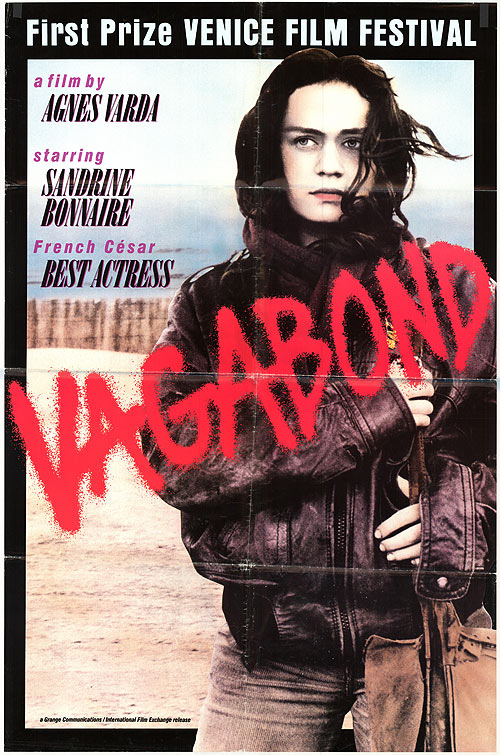
Vagabond (1985)

vagabond 1

By Richard Winters

My Rating: 6 out of 10

4-Word Review: She has no home.

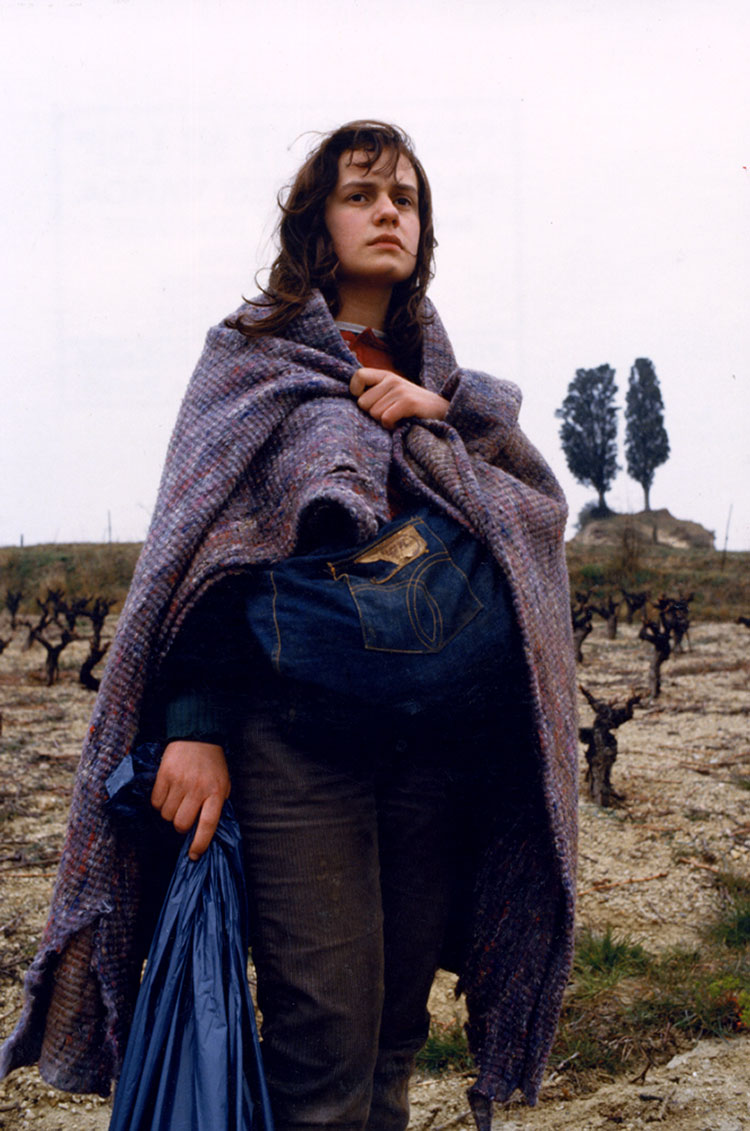
Mona (Sandrine Bonnaire) is a young woman of about 20 who wanders the South French countryside in the dead of winter searching for food and money. She camps out in a small tent wherever there is space including at one point even a cemetery. She is offered a few odd jobs here and there, but she never lasts long in them and resents being ‘bossed around’. She makes a few acquaintances along the way and even a couple of male lovers, but like with her jobs she doesn’t get settled with anyone for too long.

The best aspect of this critically acclaimed French film that is directed by the legendary Agnes Varda is that it avoids the political correctness. Most films especially Hollywood ones tend to portray the poor and homeless as humble and contrite, but the main character here is anything but. She is arrogant and aloof to those around here even the ones that offer her help. She acts strangely entitled in even in the direst of situations and in many ways almost oblivious to how truly desperate she is. Varda creates a richly textured character that while not likable and sometimes even confounding still manages to be always fascinating.

The narrative works in vignette style starting with some farmhands finding her dead, frozen body in a field and then progressing backwards showing the last few weeks of her life and the people that she met. To some degree this is interesting as it reveals how others see her some of whom are even jealous of her ‘freedom’ and ‘independence’ while also exploring how everyone can make a lasting impression on others even if they seem insignificant and the encounter brief. However, the segments where these characters speak directly to the camera comes off as jarring, clumsy and heavy-handed and it would’ve been nice had these same reactions been worked into the story in more of a subtle and sophisticated way.

My biggest issue with the film and in many ways it’s most disappointing aspect is that we learn nothing of this woman’s background. What exactly brought her to do this? Was it by choice or circumstances? Where’s her family and what about her upbringing? None of this is shown or talked about making this character study not only frustrating, but incomplete.

The character also gets sexually assaulted at one point, which to a degree brings added realism, but she is shown not to suffer any post-traumatic stress from the incident, which was not believable. Also, having the film begin with her death hurts the tension and it would’ve been more compelling had we not known her ultimate fate until the very end.

vagabond 2

My Rating: 6 out of 10

Released: December 4, 1985

Runtime: 1Hour 45Minutes

Not Rated

Director: Agnes Varda

Studio: MK2 Diffusion

Available: DVD (Criterion Collection)

Welcome Home, Soldier Boys (1971)

welcome home soldier boys

By Richard Winters

My Rating: 5 out of 10

4-Word Review: War veterans destroy town.

Four Green Berets (Joe Don Baker, Allan Vint, Elliot Street, Paul Koslo) return home from a stint in Vietnam. Initially they stop off at the home of one of the men’s parents, but find that none of them are ready to settle down, get a job, and play ‘within-the-rules’, so they set out on a cross country road trip, but when their car breaks down they end up paying more than they should for the repairs by an unscrupulous mechanic (Timothy Scott). This along with dealing with a society that does not seem to appreciate what they did for their country gets them angry. When they arrive in a small town ironically called Hope their simmering frustrations boil over. Using their army ammunition they go on a rampage destroying the town and everyone in it causing the National Guard to come in to try and stop them and creating for them a war zone all over again.

For a low budget 70’s flick this isn’t too bad. Richard Compton’s direction is slick, nicely photographed and paced well enough to retain a passing interest. The music, which features songs written and sung by actress/singer Ronee Blakely is okay and to a degree fits the mood. The script by Gordon Trueblood has believable dialogue and doesn’t seem intent on being purely exploitive.

Unfortunately the film fails to show much insight into the personality or experience of being a veteran. No flashbacks or discussions about it. In many ways these characters could simply have been regular, non-descript young men from any background who were not yet ready to enter into the adult world and take on adult responsibilities, which in the end is what makes this whole thing rather generic and its ‘statement’ more self-important than it really is.

Baker does quite well in the lead and although he sometimes gets a bad rap for his acting I’ve come to feel that it is unfair. The way his character here is so diametrically opposite from the one that he played in Walking Tall just two years later proves without a doubt that he is a talented thespian if given the right material.

Jennifer Billingsley though is wasted in a thankless role as a prostitute who rides with them for a little ways before getting thrown out of the vehicle at high speeds. Leonard Maltin incorrectly states in his book that her character is gang raped, which isn’t too true. She has consensual sex with one of the men, but then gets kicked out when she demands $500 for her services instead of $100 that they were willing to pay her.

The violent, climatic ending is the film’s most notorious claim to fame, but it takes too long to get there, lasts for only a couple of minutes and then ends too abruptly. It’s also absurd and outrageous to believe that these men would end up killing innocent people simply as a way to vent their anger at being cheated by a car mechanic. After all if everyone responded the same way when a car mechanic overcharged them then there would be no small towns left anywhere.

My Rating: 5 out of 10

Released: December 10, 1971

Runtime: 1Hour 30Minutes

Rated R

Director: Richard Compton

Studio: 20th Century Fox

Available: DVD-R (20th Century Fox Cinema Archives)

The Catamount Killing (1974)

catamount killing 2

By Richard Winters

My Rating: 3 out of 10

4-Word Review: They’re wracked with guilt.

Mark (Horst Buchholz) is a recent divorcee who has moved to a small town and gotten a job as the new bank manager. The bank is small and not adequately guarded giving him the idea to pull off a robbery as an inside job. He seduces the emotionally fragile Kit (Ann Wedgeworth) into helping him with his plan. Initially things go smoothly, but then they begin feeling guilty over what they’ve done especially since the robbery involved the death of someone else. Then Kit’s daughter Iris (Louise Caire Clark) becomes suspicious that her mother might’ve been involved, which causes the couple to unravel in dramatic fashion.

I hate to use the fact that this is a low budget film as a reason for why it’s poor as not every movie has to have state-of-the-art special effects to be entertaining and good story telling and competent direction are still the foundation of a good movie and that can be accomplished on the most miniscule of budgets. However, this film, which was filmed on location in Bennigton, Vermont, looks cheap and stale. The camera work is unimaginative and it does not take advantage of some of the historical landmarks in the town where it was filmed making the background and setting look blah and uninteresting. Its loud, crashing orchestral music score would be better suited for a Hollywood epic and is pretentious and out-of-place here.

The set-up moves too fast and could’ve been the result of watching the American version, which is 11 minutes shorter than the European one. Either way it’s poorly constructed with the two falling in love and plotting the crime without much background information given about them making it all seem forced and rushed. The robbery itself isn’t unique and when compared to other bank robbery movies this one is weak and forgettable.

Buchholz gives a strong performance, which helps the limp material to some degree. Wedgeworth is outstanding. Somehow her soap opera-styled histrionics and Texas accent is something I’ve always found appealing and makes for a fun performance. This also mark the film debut of Polly Holliday who appears briefly sporting a foreign accent that does not sound too believable.

There are enough twists to keep it plausible and mildly engrossing, but the ending lacks impact and like the rest of the movie falls flat. The plot is based off the novel ‘I’d Rather Stay Poor’ by James Hadley Chase, which I suspect would be a far superior version to this.

catamout killing 1

My Rating: 3 out of 10

Released: August 11, 1974

Runtime: 1Hour 22Minutes (American Version)

Rated PG

Director: Krzysztof Zanussi

Studio: Starlight

Available: VHS, DVD-R, Amazon Instant Video