Category Archives: Drama

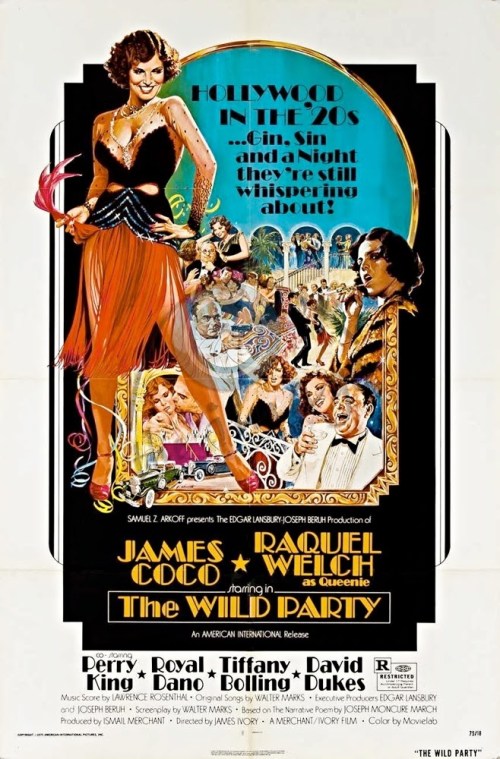
The Wild Party (1975)

By Richard Winters

My Rating: 3 out of 10

4-Word Review: Slumming actor stages comeback.

The year is 1929 and Jolly Grimm (James Coco) the once successful silent film star now finds himself, with the advent of talking pictures, to be in low demand. Although his movies once made a killing his style of humor is now considered cliched and with no studio willing to fund his latest pic he’s forced to use his own money to get it made. He holds a lavish party in his mansion inviting many Hollywood elites who he hopes will show an interest in his movie once he screens it to everyone, but instead his guests are more into each other as the party quickly devolves into a wild sex orgy with even Jolly’s faithful girlfriend Queenie (Raquel Welch) cheating on him with a much younger and better looking actor (Perry King).

The story is loosely based on the 1926 poem of the same name by Joseph Moncure March while the Jolly character was inspired by Fatty Arbuckle a famous silent film comic who was accused and the later acquitted of the rape and manslaughter of actress Virginia Rappe in 1921. The script though by Walter Marks doesn’t seem to know what tone it wants to take as at times it seems like a trenchant drama while at other moments it comes off as a surreal comedy. The original intent was to turn it into a musical, which would’ve been a better idea as the lack of cohesion causes the pacing to be completely off and never allows the film to build any tension or momentum.

The party scenes are not interesting or provocative and in many ways it’s a poorman’s version of Day of the Locust which came out at the same time and had a similar theme, but a far stronger impact. The sex is stagy and mechanical and seeing all the guests sprawled in a symmetric way on the floor the next day throughout the mansion looks too surreal-like to be even remotely believable. The party’s only interesting moment is when Jolly has a meltdown by going on a long angry rant that reveals his ugly side to his guests, but the filmmakers botch this sequence by focusing solely on Coco instead of cutting away to show the shocked reactions of the party-goers.

Coco, in his only starring vehicle, does quite well in a role I didn’t think he was equipped for. Welch gives an equally strong performance, possibly the best of her career, but the relationship of their two characters made no sense. Director James Ivory tries to flesh them out by having the two at different moments go on long soliloquys explaining what attracted them to the other, but in both cases it rings hollow. So what if Coco treated Welch with respect and asked her ‘deep questions’ when they first meet, which is apparently why she fell for him, he’s no longer doing that now, so why stick with him? Coco’s statement, that he couldn’t ‘live without her’ comes off as equally absurd since every time he talks to her he’s abusive.

The relationship angle should’ve been scrapped as it’s Jolly’s mental deterioration that is more interesting.  A far better and more realistic scenario would’ve had Coco coming onto a young starlet such as Queenie at the party but she would reject his advances and then later when he saw her with a younger actor it would set off his already shaky ego, which would then precipitate the violence.

Spoiler Alert!

The shooting that occurs at the end isn’t effective. The film is filled with so many lulls that by the time it finally gets to it you really don’t care who dies and who doesn’t. Having it occur the next morning after the party is already over seems anti-climactic and something that should’ve been witnessed by all the guests. It’s also a bit frustrating to have it end so abruptly without any aftermath or denouncement given.

End of Spoiler Alert!

Tiffany Bolling and Perry King add some zest in support especially with their facial expressions and the sultry dance done by Chris Gilmore (who gets billed here as Annette Ferra) adds a weird sensual vibe. However, having David Dukes’ character break the fourth wall and begin speaking directly to the camera as he describes the party guests is a distraction, which only  further cements this as a misguided misfire that needed better focus.

My Rating: 3 out of 10

Released: March 4, 1975

Runtime: 1 Hour 47 Minutes (Director’s Cut)

Director: James Ivory

Studio: American International Pictures

Available: DVD, Amazon Video

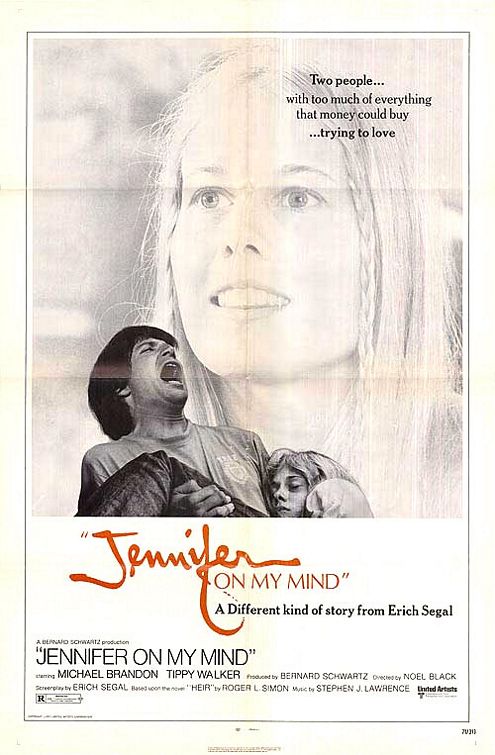
Jennifer on My Mind (1971)

By Richard Winters

My Rating: 3 out of 10

4-Word Review: Girlfriend becomes heroin addict.

While vacationing in Venice Marcus (Michael Brandon) meets up with Jennifer (Tippy Walker) a young free-spirit whose beauty and carefree ways immediately smitten him and the two begin a relationship, but Jennifer’s impulsive ways doesn’t allow it to last. He later learns that she’s a heroin addict and tries to help her overcome it, but to no avail. After she disappears for several months she then suddenly shows up at his doorstep wanting to rekindle old-times. At first he’s happy to see her, but then learns that her addiction has grown worse and after reluctantly giving her an injection that turns out to being fatal he then goes into a panic and tries to get rid of the dead body as he fears he’ll be implicated for her death otherwise.

After the success of Love Story screenwriter Erich Segal was a hot commodity and given free-reign to write any concoction he wanted and this script, which is based on the Robert L. Simon novel ‘Heir’ is the result.  The story though is poorly structured and seems to focus more on Marcus and his efforts to get rid of the body than on giving any meaningful insight to the drug addiction experience. There’s also severe shifts in tone where it’s dramatic one minute and then has weird dream-like humorous segues where Marcus sees visions of his dead grandfather (Lou Gilbert) who cracks corny jokes.

Director Noel Black, whose career looked bright after doing the critically acclaimed cult hit Pretty Poison, manages to infuse some nice on-location scenery, particularly that of Venice,  but technically botches many other moments. The worst comes when Jennifer tries to jump off the roof of her house, but she goes from being in her backyard to on the rooftop in a matter of seconds, which isn’t realistic. She then jumps off it even though it’s a 2-story building with another rooftop of a different section of the home beneath her, which is where she should’ve landed, but instead the film in a poorly edited bit that doesn’t even show the actual jump has her landing in a flower bed.

The Marcus character, who has inherited his grandfather’s fortune and therefore doesn’t have to work for a living, is too smug to be likable and most viewers will find his privileged situation off-putting. He also doesn’t seem, despite his insistence, to be all that ‘in-love’ with Jennifer especially with the callous ways he tries to get rid of her body and in one really creepy moment even professes to the corpse that he feels closer to her now than when she was alive. I also couldn’t understand why this non-descript guy would be constantly attracting the attention of violent bikers and hippies. One instance occurs when he is doing nothing more than standing at a pier of a lake and within seconds finds himself surrounded by three bikers who come out of nowhere and then later on as he’s driving down a busy highway some hippies decide to harass him at random but no one else.

Jennifer character is equally annoying as the viewer learns little about what makes her tick. Walker’s acting career ended after this film as she left Hollywood disillusioned with the business after having an affair with George Roy Hill when she was only 16 and he was 42 while filming The World of Henry Orient. Her life, like the character in the film, then  took a strong downward spiral as she opened up an art gallery in New Haven, Connecticut which eventually closed. In a 2015 interview published in the New Haven Register she was living in a cramped 1-bedroom apartment that was infested with cockroaches after having spent several years being homeless and surviving off of social security and what little monthly money her brother in Texas sent her.

The film’s  only saving grace are the performances of its supporting cast . I enjoyed Peter Bonerz as a psychiatrist who barrages into Marcus’ home and tries to give him an impromptu therapy session. Chuck McCann is amusing too as a motorist who tries to help Marcus change a flat, Barry Bostwick and Jeff Conaway enliven things as two antagonistic minstrels and Robert De Niro is great as a gypsy cab driver. Otherwise this thing is a complete mess that like a bad car accident is garish enough to keep you watching, but offers nothing in return.

My Rating: 3 out of 10

Released: November 10, 1971

Runtime: 1 Hour 30 Minutes

Rated R

Director: Noel Black

Studio: United Artists

Available: DVD-R (MGM Limited Edition Collection), Amazon Video

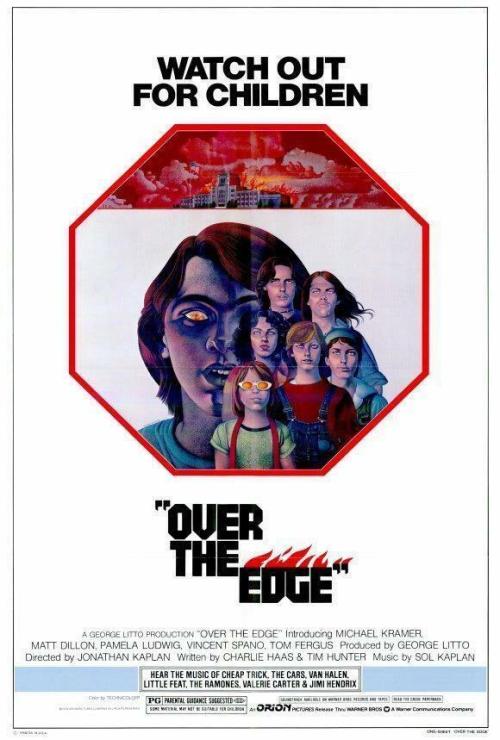
Over the Edge (1979)

By Richard Winters

My Rating: 5 out of 10

4-Word Review: Out of control teens.

The teenagers in the planned community of New Granada, Colorado find themselves bored and constantly getting into trouble. The town was designed for adults with no consideration given for them. The recreation center is their only outlet, but that closes at 6 PM allowing for too much idle time in the evenings. Vandalism and other petty crimes soon commence, but when one of the teens (Matt Dillon) gets shot and killed by a cop (Harry Northup) his friends rebel by locking all the parents inside the local Junior High School while they’re having a meeting and not allowing them to leave.

The story, which was co-scripted by Tim Hunter who went on to even greater success by directing River’s Edge, which had a similar theme, is based on true events that occurred in the early 70’s in a planned community of Foster City, California. Like in the film no consideration was given to the teens during the planning phase causing them to become bored and resort to crime and rebellion, which lead to an article being written about in the San Francisco Examiner that attracted the attention of Hunter and Charles S. Haas who thought it could make good material for a movie. They traveled to the town and interviewed many of the teens first-hand to get a good idea about their feelings and thoughts.

There are elements about the movie that I enjoyed, which is mainly the way it captures the community, which was filmed on-location in the Colorado towns of Aurora and Greeley. I especially liked how the cinematography focuses on the barren desert landscape and the cookie-cutter homes built in the middle of it without showing any downtown, which helps to accentuate how unimaginative and soulless a lot of these suburban places really are.

The presence of Matt Dillon, in his film debut, helps as well. He was 14 at the time and only attended the audition simply as an excuse to get out of going to school without any intention of actually getting a part, but onscreen he shows a strong acting flair and outshines his other co-stars to the extent that he should’ve been made the lead and it’s a shame when his character exits so quickly.

The idea by director Jonathan Kaplan was to try and make this seem like a documentary, which works to some extent. I liked how the cast was made up of  little known actors that most viewers will not recognize makes it seem like ordinary people and not actors at all. The use of the music though is what I had a problem with. The songs that get heard in the background by such bands as Cheap Trick, The Ramones and The Cars are perfect and convey a punk attitude that the kids were feeling, but the instrumentals that are played during some of the action sequences was not needed. Again, if this is supposed to seem like a documentary then very little music should be used as real-life doesn’t have an ongoing soundtrack and by implementing one in, even if it was composed by the director’s father Sol Kaplan, was a mistake.

I also had a problem with the film’s climactic sequence in which the teens lock the adults in the school and then go about vandalizing their cars outside. This is the film’s only unique moment and should’ve been played-up much more, but the tension from this doesn’t get stretched out as much as it should. I would’ve liked this scene to take up more of the movies and played out almost like a thriller by trapping the adults in the place for several days until you start to fear they might never get out and even turning-the-tables on them by having the kids order them around and forcing them to do humiliating things just for their own amusement.

Although the movie received very little reception when it was first released, which was only a limited engagement, it has managed to find a cult following and critical acclaim since. There are some keen moments particularly the way it portrays the out-of-touch adults who are always convinced that their kids are ‘angels’ while it’s someone else’s that is the troublemaker, but the script makes its point early and then just proceeds to repeat it over and over again until it gets redundant.

My Rating: 5 out of 10

Released: July 7, 1979

Runtime: 1 Hour 35 Minutes

Rated PG

Director Jonathan Kaplan

Studio: Orion Pictures

Available: DVD, Amazon Video, YouTube

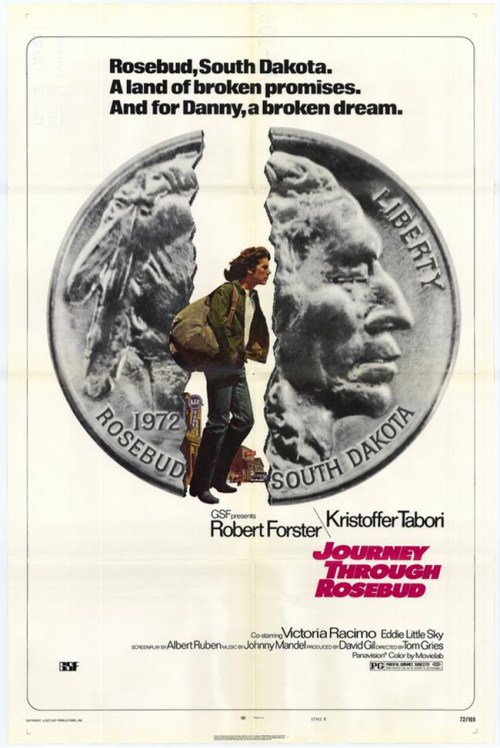
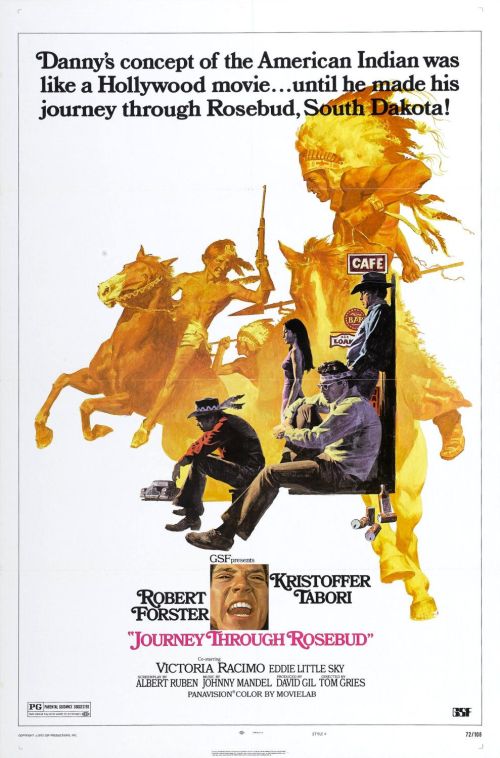
Journey Through Rosebud (1972)

By Richard Winters

My Rating: 3 out of 10

4-Word Review: Draft dodger visits reservation.

Danny (Kristoffer Tabori) travels to a South Dakota Indian reservation as he tries to escape the draft and troubles at home. He meets up with Frank (Robert Forster) who is an Indian living there and who has issues of his own, which is mainly his alcoholism and that at the age of 32 he still lives with his mother in a ramshackle home with no prospects at a secure, good paying job. Danny learns first-hand of the struggles of the modern-day Indian while also take part in some of their rituals and customs.

The film’s best element is the performance by Forster who goes outside his comfort zone by playing a Native American and doing it with conviction. Normally he’s entertaining as a brash-talking tough guys, but here his character is much more restrained and in one sad moment even falls to the ground and begins crawling around in a drunken state while those around him look on with contempt and disdain that is gut-wrenching to see while also exposing his courage as a performer by putting himself in such a pathetic looking state that not all actors would be willing to do even if the script called for it.

Tabori is equally enjoyable and in the few films that I’ve seen him in I’ve become convinced that he was a potentially strong leading man who never quite got his fair shot. His thin frame and youthful age belie a strong inner presence that helps to make his dynamic between Frank and himself potentially interesting, but the film neglects to follow through with it enough.

As for the action there is unfortunately not enough of it. The only time something does occur is when a group of Indians go on private land to rustle and kill cattle, which includes a very grisly shot of them slashing the animal’s throat that may make many viewers uncomfortable. Otherwise it flatlines from the first frame to the last and almost comes off like a minor league educational film dealing with the issues of reservation life than a movie with an actual story. In fact it’s so slow that I started to feel a group of amateurs with good intentions, but limited ability made it, but instead it was directed and written by a couple of Hollywood veterans who should’ve known how to better pace a story, so why that wasn’t done here I don’t know.

The film received a very limited release with the explanation that the studio didn’t think they could find the right target audience for it, but I think it was more to the fact that they knew it was boring and no one, even those that connected with the theme, would want to sit through it. The film is more like some small day trip excursion where someone visits a small no-name town, takes part in benign events there and then leaves without any of it having much impact on them, which is exactly how the viewer feels after watching the movie.

My Rating: 3 out of 10

Released: March 2, 1972

Runtime: 1 Hour 33 Minutes

Rated GP

Director: Tom Gries

Studio: GSF

Available: None at this time.

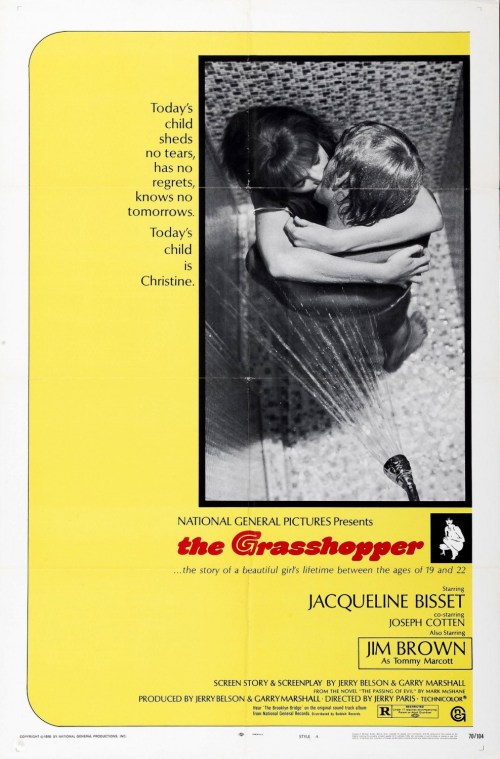
The Grasshopper (1970)

By Richard Winters

My Rating: 6 out of 10

4-Word Review: Runaway becomes  a showgirl.

Christine (Jacqueline Bisset) is a 19-year-old who’s bored with her life living in rural British Columbia and decides one morning to run away from home and meet up with her fiance Eddie (Tim O’Kelly). He gets her a job as a bank teller, but she finds this boring too, so she runs away from him and moves in with a Vegas comedian (Corbett Monica) who gets her work as a showgirl, but Christine’s inability to ever settle down and her impulsiveness leads her to spiral downhill until she’s eventually forced into prostitution.

Initially I was leery about this one as it was directed by Jerry Paris an actor-turned-director who mainly directed episodes from TV-shows as well as the infamous sequels to the Police Academy franchise and for awhile this thing did not look much better than those, but just when I thought it would be nothing more than a sanitized TV sitcom-like foray into the runaway scene it improved. The second-half has some genuinely gritty moments and the behind-the-scenes look of the showgirl lifestyle is well handled and realistic.

Bisset is excellent and her performance pretty much makes the movie, but she’s not completely right for the part either. For one thing she doesn’t look anything like 19 and was in fact 25 when she did this. She also wears too much make-up. I had no problem with this when she became a showgirl as it’s expected, but initially she should’ve had more of a plain look, which would’ve made her transition into the jaded world more visually striking.

On the flip-side I enjoyed her character and found it refreshing that she wasn’t portrayed as being so completely innocent, but in many ways her own worst enemy. The scenes where she goes out on the Vegas runway with her teeth painted black shocking some in the audience as well as handing a bank customer a note pretending that the place is being robbed reveals some intriguing self-destructive tendencies. It also makes her seem very much like a grasshopper, which was a far better title than ‘The Passing of Evil” that was used for the Mark McShane novel that the film is based on.

Jim Brown, who traditionally plays intimidating characters comes off as surprisingly gentile and sympathetic one here and the inter-racial marriage that he has with Bisset was way ahead-of-its-time. Ramon Bieri gets a great role in his film debut as a rich, arrogant tough who always expects to get his way and watching him chow down on his food is memorable. This also marks the film debut of Ed Flanders, who wears a wig here and looks far older than he did in the ‘St. Elsewhere’ TV-show that he starred in 12 years later.

The ending in which Bisset talks a airplane pilot (William Callaway) into writing ‘Fuck It’ in the sky, is funny, but the film’s overall impact is light. Adding in scenes of Bisset’s home-life growing up and during more innocent times might’ve made her transition stronger, but overall despite a few good moments it never quite comes together as a fluid whole.

My Rating: 6 out of 10

Released: May 27, 1970

Runtime: 1 Hour 36 Minutes

Rated R

Director: Jerry Paris

Studio: National General Pictures

Available: DVD-R, Amazon Video, YouTube

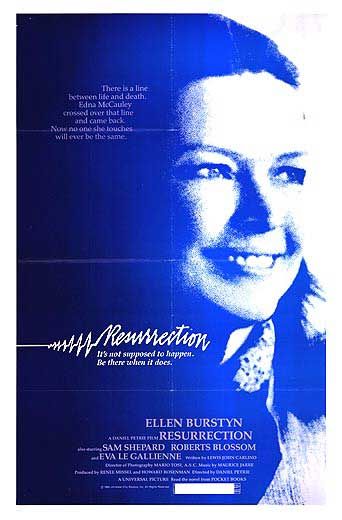
Resurrection (1980)

By Richard Winters

My Rating: 6 out of 10

4-Word Review: She can heal people.

Edna (Ellen Burstyn) manages to survive a car crash and briefly finds herself in the afterlife, but ends up coming back to this world along with an amazing power to heal sick people with the simple touch of her hands. This makes her a celebrity in the small Kansas community that she lives, but others question her ability and wonder, especially since she refuses to acknowledge religion, if it may have a satanic origin. Her newfound boyfriend Cal (Sam Shephard) thinks she may be the second coming and becomes determined to get her to admit this even if it’s through violent means.

The story is loosely based on the life of Rosalyn Bruyere a self-described clairvoyant and medical intuitive who also acted as a consultant to the film. Although initially conceived as a thriller the script by Lewis John Carlino instead takes a more spiritual route, which I found refreshing. I also enjoyed the way director Daniel Petrie captures the vast Texas landscape, which despite the setting being in Kansas, was fully shot inside the Lone Star state.

The scenes of the afterlife are interestingly captured, but I found it baffling why Edna would just write this off as being ‘weird dreams’ and not connect it to any religious connotations. Having these visions then get ‘interpreted’ by her Grandmother (Eva Le Gallienne) seemed heavy-handed as even if a person was not religious themselves they would still be able to connect-the-dots on their own without it having to be explained.

The healing scenes work off of a murky logic. Edna is told after the accident that she is paralyzed from the waist down due to a blood clot in her spine and yet after she learns of her healing ability she places her hands on her legs to help her walk again, but if the root cause of the issue is actually in the back shouldn’t that be where she places her hands instead? The scene where a woman (Madeline Sherwood) who suffers from 2 degenerative vertebrates in her back, but is able to stand-up  after she sees Edna doesn’t make sense either. Standing with missing vertebrae is liking walking without a knee or cartilage. It’s just not scientifically possible, so unless Edna’s healing can cause bone mass to grow where they isn’t any then I’m not sure how they her powers actually work.

I thought it was a bit loopy too that when Shepherd’s character gets injured in a bar fight his buddies take him to Edna’s isolated farmhouse miles away for her to stop the bleeding, but this is when Edna’s healing ability had not been fully established, before this she had only stopped the nose bleed of a young girl, which some might consider simply a fluke, so the most rational thing would’ve been to take him to a nearby hospital instead. The scene would’ve worked better had Edna been in the bar when Shepherd got injured and then jumped in to heal him after he got stabbed.

I didn’t feel Shepherd’s character had the right chemistry to make Edna want to have a relationship with him either. His beady-eyed stare made him look creepy and his father (Richard Hamilton) had accused Edna of being satanic, so why would she want anything to do with that family? He also came off too much like a nondescript redneck like all the other rednecks that made up that small town. Edna was clearly an outsider, so for her to be attracted to someone I would think that person would need to be an outsider as well.

I could never understand why Edna was so resistant to religion, or so completely confident that her powers weren’t heavenly sent. I got that her Christian zealot father (Roberts Blossom) may have turned her off from religion altogether and she didn’t want to deal with the pressures of being considered Christ-like, which is understandable, but I’m not sure Burstyn was the right choice to effectively pull off that type of character. I love Ellen and think she’s a great actress, but she’s also a very spiritual woman in real-life and it pretty much gets conveyed in her performance here whether that was the intention or not. An actress that displayed more of a cynical, snarky attitude, only to have her outlook change once these powers took hold would’ve created a more interesting and dramatic arch.

The third act has Edna going to Los Angeles where her powers are tested by researchers, but these scenes don’t have any satisfying conclusion to them, which I found frustrating. However, the scene that Edna has with her dying father I felt were strong and the best moment of the whole film.

The spiritual element gets left open to interpretation depending on one’s own perspective, which is good. It also has a really great, and to some degree, surprise ending, but I didn’t like the freeze-frame shots taken from the film shown over the closing credits, which cheapens it as this is typically something done on TV-shows and not movies.

My Rating: 6 out of 10

Released: September 26, 1980

Runtime: 1 Hour 43 Minutes

Rated PG

Director: Daniel Petrie

Studio: Universal

Available: DVD

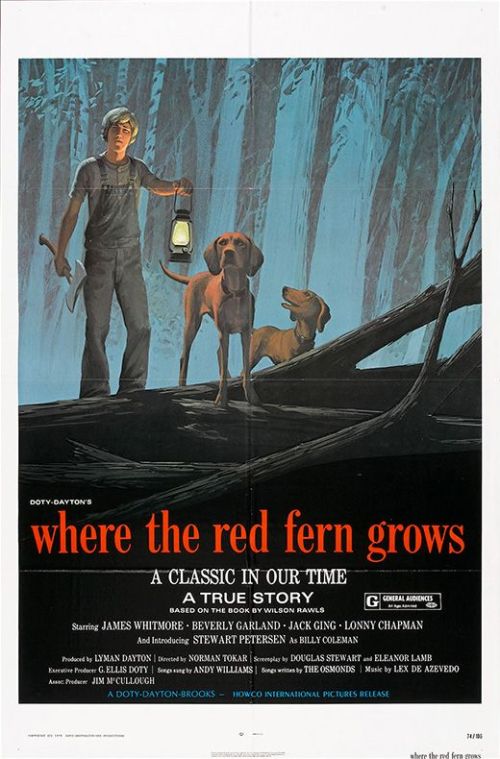
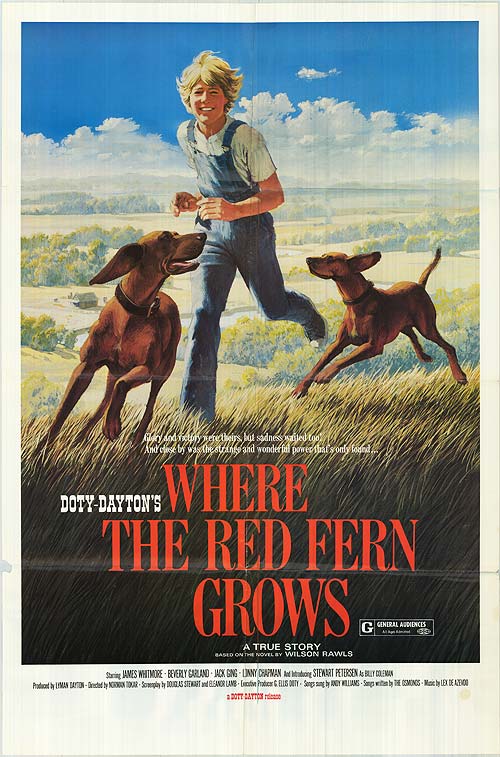
Where the Red Fern Grows (1974)

By Richard Winters

My Rating: 6 out of 10

4-Word Review: Kid raises two hounds.

Billy Colman (Stewart Petersen) is a 12-year-old boy living on a farm in rural Oklahoma during the depression. He becomes obsessed with owning a coon hound which he can train to hunt raccoons. His family is too poor to buy him one, so he spends his summer doing a number of odd jobs until he’s finally able to buy two Redbone Coonhound puppies, which he raises and trains into becoming championship hunting dogs.

The film is based on the 1961 novel by Wilson Rawls, who provides the opening voice-over narration and the script here closely follows the action of the book. It was directed by Norman Tokar, who seemed to specialize in stories of young boys bonding with their pets as he also directed the film versions of Big Red and Rascal. The production was clearly done on the low budget side, which is distracting at first, but eventually meshes with the stark, rural, and economically challenged setting quite nicely.

While the story seems believable enough and may open some viewer’s eyes, such as my own, to the sport of coon hunting, which still thrives today in certain parts of the country, I found certain elements of it to be hard to believe.  For instance Billy decides to walk all the way from his lonely farmhouse to the town of Tahlequah, which is 30 miles away and apparently able to do it in one day. I was also not sure how he would be able to find the town since he did not travel along any type of highway or road, but instead trudged through open fields and without the benefit of either a map or a compass.

The scene where Billy intentionally trips a nasty boy by the name of Rubin (Rex Corley) which causes the kid to fall on the ax that he is carrying and dies seemed questionable from a modern day viewpoint simply because everybody believes the story that Billy tells them and no charges were made. The film and book, which I remember reading in the 6th grade and in fact this is the only part of the story that I remembered, portray this as being an unintentional accident, which it was. However, these days the kid could potentially be put on trial for manslaughter charges especially since there was clearly bad blood between the two, but maybe it is a testament of simpler times that everyone, including seemingly the victim’s parents, believe the story he tells them without question, but in any other era that might not have been the case.

I found it interesting to see Beverly Garland, whom I first became aware of when she played Fred MacMurray’s second wife in the TV-show ‘My Three Sons’ and who looked quite middle-aged then, but for some reasons gets cast here as a young housewife and manages to somehow pull it off despite nearing 50 at the time. Petersen though, who got cast after a long auditioning process of over 500 candidates, is only adequate, but doesn’t quite hit the mark especially with his inability to convey anything other than one facial expression. I also thought the coonskin cap that he ends up wearing made him come off looking like a Davy Crockett or Daniel Boone Jr. although maybe back in the day that was considered ‘cool’.

Certain animal right’s activists of today may not take kindly to what was once considered just a ‘charming’ coming-of-age tale. Although no actual killing of any animal is ever shown it is certainly heavily implied. It got to the point where I started to feel sorry for the raccoons particularly during the hunting competition where night after night different hunters would go out into the forest to see how any many they could catch and then come back with the numerous pelts that they skinned from them making me wonder if there could possible be any raccoons left to kill.

Spoiler Alert!

The film though does manage to end on a strong note although even here this gets botched because as the family goes to the dog’s grave to see this magical red fern growing on top of it we also see a big boom microphone hanging down from the top of the screen , which completely sucks all the magic right out of the scene. This same story was remade in 2003 and in 2018 a 45-minute documentary was released showing behind-the-scenes footage/stills of the movie as it was being made and also featuring interviews with the actors.

My Rating: 6 out of 10

Released: June 21, 1974

Runtime: 1 Hour 37 Minutes

Rated G

Director: Norman Tokar

Studio: Doty-Dayton Releasing

Available: DVD, Amazon Video, YouTube

Liar’s Moon (1980)

By Richard Winters

My Rating: 3 out of 10

4-Word Review: Couple harbors dark secret.

During the summer of 1949 in a small Texas town Jack (Matt Dillon), who has just turned 18, falls for Ginny (Cindy Fisher) who is 17. Jack is from the poor side of town and helps out his father (Hoyt Axton) on a family run farm while Ginny lives a more privileged life as the daughter of the town’s banker (Christopher Connelly) As Jack and Ginny’s relationship progresses they find stiff resistance to it from their mutual parents particularly Ginny’s father, but they don’t know why. In order to get married they go to Louisiana to elope, but Ginny’s father hires a detective (Richard Moll) to track them down and bring his daughter back no matter what the cost.

The one aspect about the movie that I did like is that it paints its small town characters in a generally positive light. Too many times movies that deal with stories that took place in a bygone era always seem to portray the characters as being more dopey than people of today, or more racist and meaner especially if it takes place in the south, but fortunately that doesn’t occur here. Instead we get shown regular, everyday people that you could easily meet today that just so happen to have lived a long time ago.

The film also has a nice leisurely pace to it and the romantic angle doesn’t seem quite as rushed, which is good, but the film also lacks finesse. The only part of the movie that has any atmosphere or cinematic flair is the opening flashback sequence, which gets done in black and white, while the rest of it pretty much flat lines. The scene where three men get royally drunk on some strong whiskey and another one where the town’s young men try to tackle a baby hog at the fair are the only times when there’s spontaneity or verve.

The story itself is too obvious and too many clues are given away, so by the time the ‘shocking’ secret get revealed you pretty much had guessed it way earlier. A few extra twists are thrown in during the final 15 minutes, but overall it becomes soap opera laden and too similar to the tragedy tinged teen romances of the 70’s that gives the whole thing a formulaic feel.

The eclectic cast is really the only interesting aspect about the film with Dillon giving a solid performance and Fisher looking quite beautiful even when she is constantly crying, which is pretty much all she does during the final third. Academy Award winning actor Broderick Crawford, whose last film this was, gets completed wasted in a pointless role that has very little screen time and the same goes for Yvonne De Carlo who speaks here in what sounds to be an Irish accent. Susan Tyrrell though is strong playing another one of her fringe characters, this time in the form of a prostitute, who comes off as cold and snarky at first, but eventually becomes surprisingly sympathetic.

Spoiler Alert!

Two different endings were filmed and distributed and which ending you saw depended on which theater you attended. One has the main character dying while the other one doesn’t, but both come-off as rather cheesy and make you feel like sitting through this thing really wasn’t worth it.

My Rating: 3 out of 10

Released: September 2, 1982

Runtime: 1 Hour 46 Minutes

Rated PG

Director: David Fisher

Studio: Crown International Pictures

Available: DVD, Amazon Video.

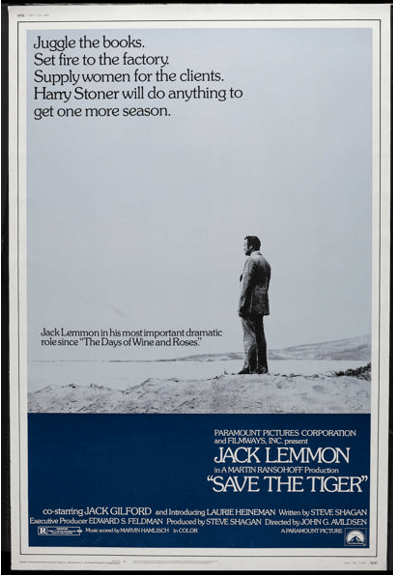
Save the Tiger (1973)

By Richard Winters

My Rating: 8 out of 10

4-Word Review: Arson is the solution.

Harry Stoner (Jack Lemmon) seems to be the embodiment of the American Dream living in a large house in an exclusive neighborhood and driving a  fancy car, but underneath the facade he’s struggling. His apparel business is on the brink of financial collapse and he decides along with his business partner Phil (Jack Gilford) to torch the place so they can collect on the insurance money, but the closer they get to the date the more despondent he becomes.

The producers realized upfront that this was not going to be an audience pleaser  and therefore made it on a small budget with Lemmon agreeing to waive his usual fee and instead working for scale, which at the time amounted to $165 a week. The effort though paid off as this film is able to tell its story with unflinching honesty without having to make the usual compromises in order to gain mass appeal.

What I really liked is how the main character gets attracted to the tantalizing aspects of corruption just like the world around him as opposed to how it’s done in most other films where the protagonist somehow manages to rise above the fray and remains magically immune from the corruptible forces. What’s even better is that it shows how sometimes even good people can be driven to do bad things especially when up against a system that is cold and unyielding.

John G. Avildsen’s direction has a nice day-in-the-life feel especially the way it captures Harry’s routine at work and all the contrasting personalities and egos he must deal with as well as a hectic and seemingly never ending pace. I also enjoyed Harry’s hook-up with a hippy (Laurie Heineman) and how despite their vast age differences and perceptions they’re still able to form an interesting bond. How a transient woman who has worked no job could somehow get a house sitting opportunity at a dreamy Malibu pad is a good question, but the scene there between the two is one of the film’s best moments and Lemmon’s raw meltdown at that point is what most assuredly netted him the Oscar.

I enjoyed Gilford’s performance as well and was impressed seeing him in a rare dramatic role, but his character seemed more like a metaphor to Harry’s conscience than a real person and his constant yammering about arson being a federal crime becomes redundant. Harry’s mental breakdown onstage brought unneeded surrealism to a film that otherwise pushed hard for gritty reality and the result is jarring. Having him see images of his dead army comrades sitting in the audience looks inauthentic as their dead pale faces appear to be covered with nothing more than theatrical make-up.

It also would’ve been nice had there been some conclusion to the arson scenario. The viewer is left hanging with the idea that they will go through with it, but nothing is conclusive. I realize with the budget restraints that showing a burning building as the final image would’ve been difficult but helpful and giving us some sort of hint whether Harry and his partner were able to pull it off, or got caught would’ve been nice too. Besides Thayer David, who plays the arsonist, is so good in his role that he should’ve been in more scenes anyways.

Overall though I liked the cynical tone and how the script doesn’t pull any punches while it paints a terse, vivid portrait of the so-called American Dream and how those that appear to be living it aren’t always so happy.

My Rating: 8 out of 10

Released: February 14, 1973

Runtime: 1 Hour 40 Minutes

Rated R

Director: John G. Avildsen

Studio: Cinema International Corporation

Available: DVD, Amazon Video, YouTube

One is a Lonely Number (1972)

By Richard Winters

My Rating: 7 out of 10

4-Word Review: Adjusting to being single.

Amy (Trish Van Devere) is shocked to learn that her husband (Paul Jenkins) of 10 years wants to move out and get a divorce. She thought they had a happy marriage, but apparently he was seeing another woman on the side. Now she must learn to survive on her own and get a job despite not having any work experience.  She must also get back into the dating scene but finding quality men is tough as most are only interested in having sex while others pretend to be single when they’re really not.

David Seltzer’s script, which is based on the short story ‘The Good Humor Man’ by Rebecca Morris, is full of interesting insight on just how tough divorce can be on women particularly from that era where wives much more dependent on their husbands financially and not expected to venture into the work world as much as they are now. Mel Stuart, best known for directing documentaries as well as the original Willy Wonka and the Chocolate Factory,  proves quite adept with the material making it seem almost like a documentary and I especially liked his use of the hand-held camera and the way it would glide through the different settings that Amy was in and making the viewer feel like they were right there with the characters.

Although her name has come back into the headlines in 2017 when she and her adult son were accused of imprisoning a teenage girl in their Malibu home against her will, Van Devere has otherwise fallen into complete obscurity having not appeared in anything since 1993. I have often wondered if her career would’ve achieved more prominence had she not gotten married to George C. Scott when she did, which obligated her during the 70’s to star with him in many of his film’s which were box office bombs and critically panned and tarnished her star power. Here though she’s excellent playing an even keeled woman who isn’t sterotypically emotional. Her only gaffe comes when she breaks down crying while inside a clothing store, which didn’t come off as genuine and should’ve been taken out especially since she ends crying later on in two other scenes.

Janet Leigh is equally good as Amy’s snarky, man-hating friend. I was also impressed with Jonathan Goldsmith, who goes by the last name of Lippe here, who is better known by today’s audiences as the ‘Most Interesting Man in the World’ from the Dos Equis beer commercials. Here he plays a creep who doesn’t look or act anything like his TV- counterpart, as a job coordinator who expects to be ‘rewarded’ by Amy for finding her a job.

The film’s only drawback is that it doesn’t analyze the marriage enough as we’re never given any understanding for why Amy misses her husband, or why she would’ve fallen in love with him in the first place since he pretty much comes off as a selfish, indifferent jerk every time he is shown. Having some flashbacks to when she was married might’ve helped flesh out the character’s personality by showing her at different stage in her life instead of just focusing on the one. Otherwise this is a solid sleeper that hasn’t dated too badly and is waiting to be discovered by a new audience.

My Rating: 7 out of 10

Released: June 19, 1972

Runtime: 1 Hour 37 Minutes

Rated PG

Director: Mel Stuart

Studio: MGM

Available: YouTube