Category Archives: Black & White

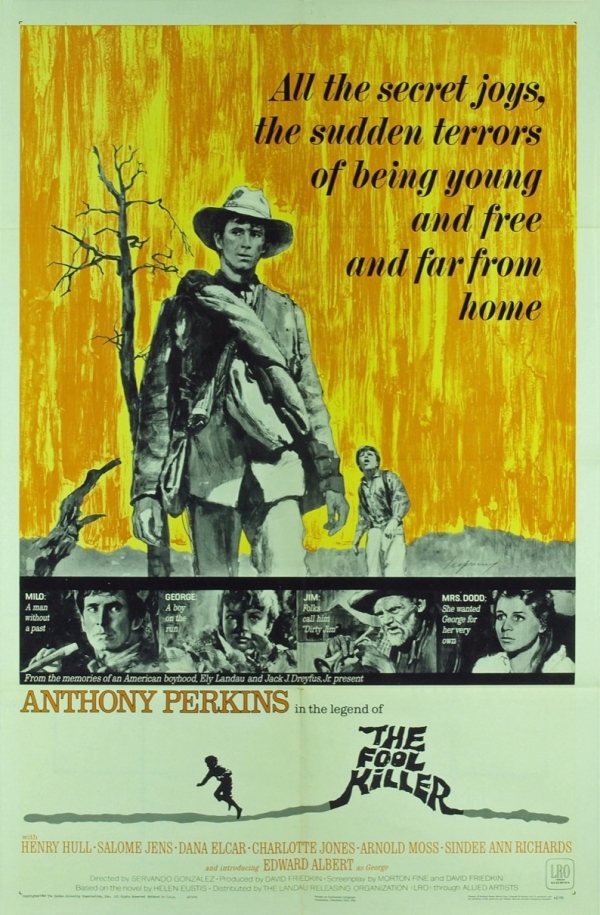
The Fool Killer (1965)

fool killer

By Richard Winters

My Rating: 6 out of 10

4-Word Review: Kid roams the countryside.

George Mellish (Edward Albert) is a 12-year-old boy who runs away from home after a particularly harsh beating at the hands of his foster parents. As he roams the Tennessee countryside he meets Dirty Jim (Henry Hull) an old man who takes him into his rundown home and fills his head with all sorts of stories about an eight foot ax-wielding man who kills people he deems to be foolish. After a bout of illness George runs away from Jim and late one night meets Milo (Anthony Perkins) a loner who carries an ax and acts strangely. Initially George thinks that he is ‘the fool killer’ Jim described, but the two soon become friends even though strange ax murders begin to occur everywhere they go.

Servando Gonzalez’s direction is excellent and the one thing that keeps this otherwise thin story intriguing. This was his only English language film and he uses a variety of different camera angles and editing styles to create a sort of hypnotic effect. The on-location shooting is vivid and their ability to recreate the look and feel of the late 1800’s is solid including having the characters occasionally speak with poor grammar, which helps with the authenticity.

The only thing about Gonzalez’s direction that I did not like is where they have a nighttime scene that was clearly filmed in the daytime, but done with a darkened lens to ‘fool’ the viewer into thinking it is night. This process has been done many times in the past, but it never works. Even with the dark lens the sky is too bright and you are unable to see any stars. I remember this done a few times on the old ‘Brady Bunch’ TV-show and I always found it disconcerting. The reason is usually because by law child performers are not allowed to work past a certain late hour, so if the script calls for a nighttime scene they try to compensate using this trick, but it always looks tacky. My solution would be to get the parent’s permission to allow the young performer to work late for one night or alter the script to have the scene done in the daytime.

Despite some good production values and an interesting narrative the story itself, based on a novel by Helen Eustis, is limp and doesn’t have enough action. The middle section, which features a lot of conversations between Milo and George, gets boring and the pace comes to a screeching halt. The George character also gets a bit annoying. I realize he is a young and the story takes place in a more innocent era, but the kid falls too easily for anything and everything he is told and seems to have no center, which eventually becomes off-putting.

For what it is worth Albert is good in the lead in what was his film debut and so is Perkins although with this he was risking getting typecast. I thought Henry Hull in one of his last roles was highly engaging and I also really liked Arnold Moss as a bombastic preacher giving a fiery sermon under a tent during a religious revival. Since the movie otherwise does not have much happening this scene tends to be pretty electrifying and vivid particularly the looks on the people’s faces as he preaches to them.

There is a sort-of surprise ending, but it is not that big of a deal and most viewers will probably see it coming long before it happens and they might also say to themselves ‘I sat through two hours of this just for that!’ as well. If the story had been a little richer with more twists or a subplot this might have been memorable, but as it is the final result is empty.

My Rating: 6 out of 10

Released: April 28, 1965

Runtime: 1Hour 39Minutes

Not Rated

Director: Servando Gonzalez

Studio: Allied Artists Pictures

Available: VHS
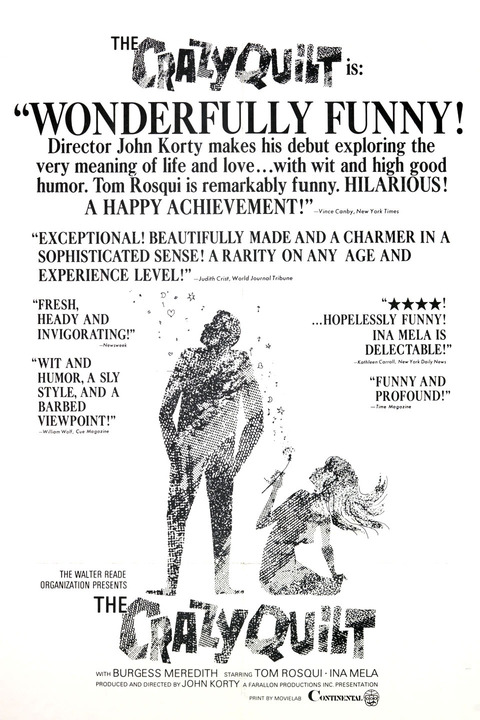
The Crazy-Quilt (1966)

crazy quilt 2

By Richard Winters

My Rating: 6 out of 10

4-Word Review: Married to your opposite

This film is based on the short story ‘The Illusionless Man & the Visionary Maid’ by Allen Wheelis and centers around Henry (Tom Rosqui) a hard-bitten realist with no illusions to anything. He lives a rather solitude life working as a termite exterminator. Then one day while walking in a park he bumps into Lorabella (Ina Mela) who is his complete opposite. She is full of ideals, dreams, and fantasies. Despite an awkward courtship the two get married and the film deals with the rocky, winding road that it takes.

This was the directorial debut for John Korty who later went on to direct the critically acclaimed TV-movies ‘Go Ask Alice’ and ‘The Autobiography of Miss Jane Pittman’. His talents are on full display here as he institutes a visual design to a story that initially doesn’t have any. I loved some of the picturesque moments particularly when Henry and Lorabella take a long quiet walk in a wide open field that eventually stretches all the way into a forest. The black and white cinematography gives it just the right cinema vertite feel and the music is perfect especially the flute solo. In an age of overblown plots and mind numbing special effects it is nice to see someone take a risk with a story that is subtle, basic, and restrained. There is some nice simple, but profound moments here that could never be replicated in the big budget productions, but have a great impact here. Despite the whimsical nature many people are sure to see a bit of themselves in the characters and it is its ability to tap into that very basic, universal truth that makes this film special and unique.

The casting is astute. Rosqui is spot-on as the realist. He has a perpetual scowl on his face that is just right for the character and seems to remain even in the brief moments when he is smiling. Mela is equally good. Her expressive eyes, delicate features, and wispy voice perfectly reflect the traits of her character and the camera captures her well. She never appeared in another movie and I was sad to hear that she died at a young age.

Initially I was put-off by the Lorabella character falling so madly in-love with Henry after she bumps into him and following him all around even though he responds to her in a very cold and reticent way. I felt it was unrealistic that someone wouldn’t notice the obvious aloofness, but then I realized that is the characters whole problem. She projects traits onto the people she meets as well as everything else in life from her own quirky mind that aren’t really there. This comes to an amusing head when she has affairs with various different men where she shows the same tendency and ends up consistently getting the same empty result. These vignettes are the funniest moments in the film as well as the scene where she bakes Henry a chocolate cake that is shaped to look like a giant termite.

I really have only a few complaints with the film. One is the voice-over narration by Burgess Meredith. Meredith has a great voice and a few of his lines are gems particularly his opening monologue and
the very last one. However, there were moments when I would rather have heard what the characters were saying especially when the couple goes to an art museum as I thought it would be interesting to hear the different interpretations each character had to each display. Near the end in an attempt to show the characters aging Henry’s hair is dyed white, but it looks tacky like it was frosted on in a similar way that is done to white Christmas trees. I also thought it was strange that in the very final scene his hair suddenly goes back to being black, which didn’t make any sense.

Since this film is very obscure and had a limited run upon its initial release the only way to obtain it is through the director’s personal website at www.johnkorty.com The neat thing here it that when you order a copy Korty personally signs the DVD and even sends you a letter along with it. For a lifelong film collector such as myself I thought that was pretty cool and it even made my day.

My Rating: 6 out of 10

Released: October 3, 1966

Runtime: 1Hour 10Minutes

Not Rated

Director: John Korty

Studio: Continental Distributing

Available: DVD at www.johnkorty.com

A Child is Waiting (1963)

a child is waiting

By Richard Winters

My Rating: 7 out of 10

4-Word Review: Help for retarded children.

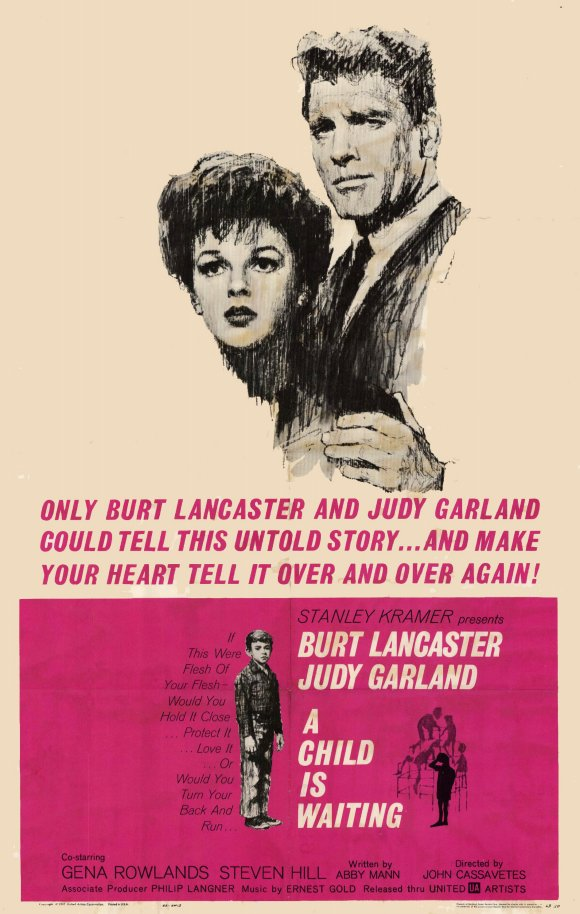
Jean Hanson (Judy Garland) is a woman looking for direction in her life. She takes a job with Dr. Matthew Clark (Burt Lancaster) who runs a school for children with mental handicaps. She finds the work to be more taxing than expected, but also forms a strong attachment to one of the boys named Reuben Widdicombe (Bruce Ritchey).  Dr. Clark notices this bonding and considers it to be a potential problem so his has Jean moved to another building, which causes Reuben to become very upset and displays his anger in all sorts of anti-social ways.

This film is raw and compelling and offering a refreshingly vivid non-sanitized look into work with the mentally handicapped. Director John Cassavetes and screenwriter Abby Mann take off all of the Hollywood gloss and shows things in a real and uncompromising way. The majority of the children are disabled and not actors. Their responses and behaviors are genuine. Some of the best moments are when Cassavetes turns on the camera and then just let things happen particularly when Garland and Lancaster visit a hospital for mentally handicapped adults as well as when they put on a play celebrating Thanksgiving with the children as the performers.

The film is tastefully done and avoids showing some of the cruelties people with these disabilities go through and instead only talks about them lightly. What I really liked though was that it shows things from the adult perspective particularly those of the parents and the difficult adjustment they have as well as the array of emotions. The meeting between a group of doctors discussing which schools for which handicapped children should be given more money and which one of them had a better potential to being more self-sufficient was equally interesting. The movie also makes great use of silence to help propel the emotion and thankfully keeps the music to a minimum.

Garland was a good choice simply for her perpetual look of concern on her face, which remains throughout. However, she has a very worn and haggard appearance and looking much older than the forty years that she was and by looking at her here it should come as no surprise that a mere seven years after filming this she would be dead.

Lancaster is splendid and this may be one of his best roles of his already illustrious career. His soothing and calm voice is perfect for the part and his best moment comes when he patiently tries to teach the children how to correctly annunciate certain words.

Ritchey is good as the child and has a face that is very cute and full of expression. However, he seems to suffer from a severe speech impediment that makes it difficult to understand what he is saying. I wasn’t sure if he suffered from this in real-life, or it was just done for the part, but since he never appeared in any other film role makes me believe that he did.

Steven Hill is also superb playing Reuben’s father a man who turned his back on his son and virtually abandoned him when he was diagnosed as being mentally handicapped only to at the very end have a change of heart.

My Rating: 7 out of 10

Released: January 14, 1963

Runtime: 1Hour 42Minutes

Not Rated

Director: John Cassavetes

Studio: United Artists

Available: VHS

The Luck of Ginger Coffey (1964)

the luck of ginger coffey

By Richard Winters

My Rating: 7 out of 10

4-Word Review: He needs a job.

Ginger Coffey (Robert Shaw) is a middle-aged man living in Montreal whose dreams and ambitions far outweigh his grim predicament. He moves from one low paying job to another convinced that his lot in life will improve. His wife Vera (Mary Ure) decides to leave him and Ginger tries to win her back while juggling two jobs and hoping to get a promotion in one that never seems to come.

As a vivid look at the daily lives of the everyday working class this film hits a solid bullseye. The conversations between the co-workers and the monotonous and sometimes demeaning job interview process and Ginger’s on-going arguments with his wife and daughter are all true to form. There is no pretension and director Irvin Kershner keeps everything at a bare-bones minimum giving it almost a documentary style and making the viewer feel immersed in the bleak environment. The outdoor shots of the city are unexciting and cinematically unappealing, but help reflect the grim level. Watching Ginger get kicked out of his apartment and have to carry what is left of his belongings and then place them on the outside sidewalk while he goes in to visit his daughter in her school is quietly powerful.

Robert Shaw is excellent. This is a man who had by all accounts had a very dominating and proud personality in real-life and usually played characters with the same traits, so seeing him play against type and succeed is interesting. What is really effective is that he makes the character very human and likable despite his constant goof-ups, which keeps the viewer compelled to his situation.

Ure, who at the time was married to Shaw in real-life, gives an equally outstanding performance. Her perplexed facial expressions are perfect and the fact that we see her character grow and become more confident is good.

I also must mention Liam Redmond as Ginger’s cantankerous boss, who is nicknamed by his employees as ‘Hitler’. Ginger’s rushed job interview that he has with him is one of the film’s highpoints as is the moment when Ginger dashes away from him when he is caught making a personal phone call.

The only real complaint I have with the film is the ending, which is for the most part non-existent. I have seen vague wide-open endings in my movie viewing lifetime, but this thing is a cop-out and really boring one at that. I think when a viewer has spent nearly two hours empathizing with his difficult  and precarious situation that they deserve some sort of finality, or at least a hint of what became of him and whether he ever did find that ‘luck’ that he was so convinced was out there.

My Rating: 7 out of 10

Released: September 21, 1964

Runtime: 1Hour 40Minutes

Not Rated

Director: Irvin Kershner

Studio: Continental Distributing

Available: YouTube

All Fall Down (1962)

all fall down

By Richard Winters

My Rating: 7 out of 10

4-Word Review: Don’t idolize older brother.

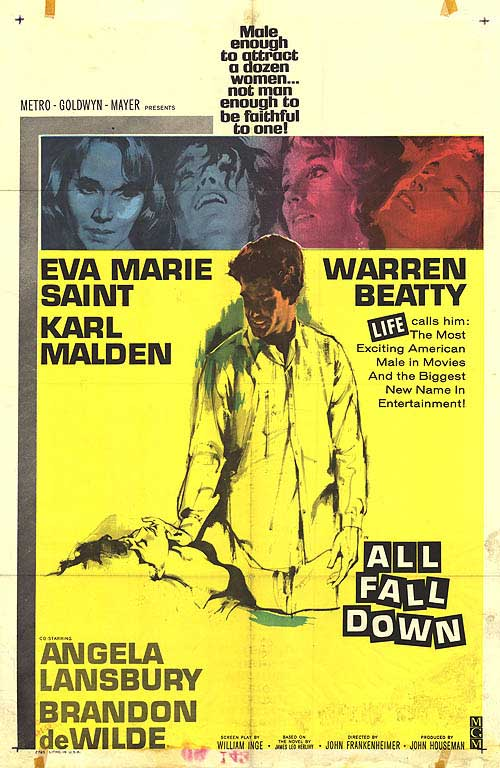
Berry-Berry (Warren Beatty) is the malcontent son of Annabell and Ralph Willart (Angela Lansbury, Karl Malden) who is unable to hold down a steady job, is in constant brushes with the law, and beats up his girlfriends. Yet women seem attracted to his rugged good looks, his parents continue to dote on him and overlook his flaws and his younger brother Clinton (Brandon De Wilde) idolizes him. All that changes when Echo (Eva Marie Saint) comes to visit. Clinton falls for her, but when she meets Berry-Berry she instead goes for him. When he mistreats her Clinton finally sees his brother for who he is and decides to take matters into his own hands.

Although overall this is a great production one of the biggest problems I had with it is the name for the leading character. Who names their kid Berry-Berry? I have never heard of that name before and it sounds corny and silly even annoying every time it comes out of one of the character’s mouths. I was almost surprised that the actors didn’t crack-up every time they had to say it. I felt there should have been an explanation for it, but none ever comes. In my mind giving a kid that stupid name is probably the whole reason he became so troubled and difficult in his adult life.

As for the character itself I wanted more of a history to see why he became the way he did. There is no backstory and in that regard the film seems weak and even frustrating. Despite being billed as the star Beatty is not really seen all that much especially during the first hour and in some ways the film comes off more like an ensemble drama. Also, having women fall for him after literally just setting their eyes on him seemed exaggerated and overdone.

Beatty has all the necessary leading man qualities, but in this instance I don’t think he was right for the part. His performance is too reserved and aloof. I didn’t see him conveying the deep seated anger that the part demanded. In many ways it is De Wilde who gives a far stronger performance and steals the film. His boyish face and charm makes for a fantastic contrast to Beatty’s.

Lansbury is sensational. She was only in her thirties at the time, but plays a woman in her fifties and does so convincingly as well as putting on a good accent. Two of her best moments come when her husband brings home three homeless men for the holidays and she insists they only want money and not the comfort of human companionship that her husband believes and the way she proves it is amusing. The part near the end where she defends her eldest son despite all his ugly flaws is brief, but strong and one of the film’s defining moments.

Saint is also excellent in support and so is Madame Spivy. She was a bar owner in real life and plays one here. She had a masculine build and a very no-nonsense demeanor, which comes out when she throws the under aged Clinton out of her establishment.

Director John Frankenheimer does well with the material. The on-locations shooting done in Key West, Florida is striking particularly at the beginning. His use of a rain storm makes a particularly strong dramatic sequence even stronger. However, the screenplay was written by William Inge and based on a novel by James Leo Herlihy. Inge was a noted playwright and the script seems more suited for the stage as it is quite talky and lacking in cinematic elements.

My Rating: 7 out of 10

Released: March 28, 1962

Runtime: 1Hour 51Minutes

Not Rated

Director: John Frankenheimer

Studio: MGM

Available: DVD (Warner Archive), Amazon Instant Video

All the Way Home (1963)

all the way home 2

By Richard Winters

My Rating: 8 out of 10

4-Word Review: Life must go on.

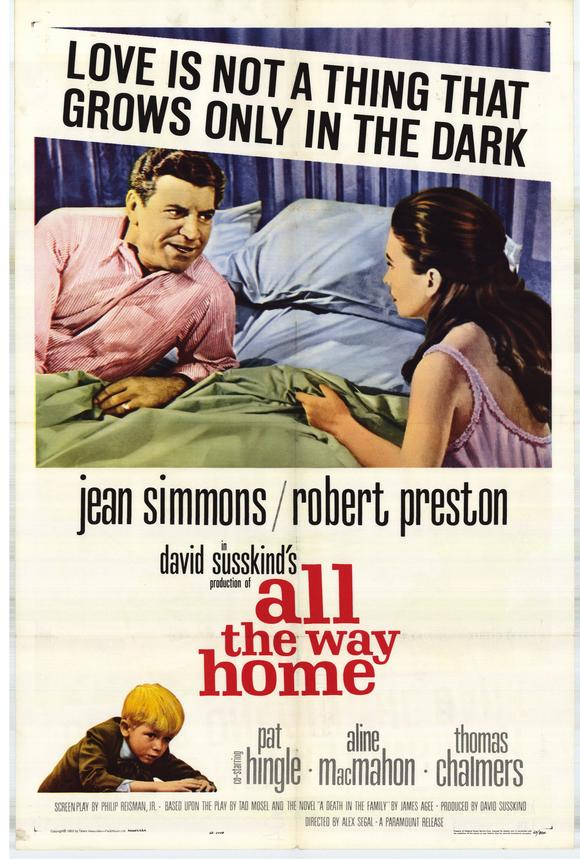
Based loosely on the childhood experiences of writer James Agee who is best known for penning the screenplay to the classic film Night of the Hunter.  The story here looks at how a southern family copes and in particular the young boy Rufus (Michael Kearney) after their father (Robert Preston) is tragically killed in a car accident.

Based on Agee’s unfinished novel ‘A Death in the Family’, which was also made into a stageplay the film makes loving tribute to the era. The sets and even the Model T car driven by the father are all authentic. In fact it was filmed near the exact neighborhood in Knoxville where Agee grew up. The mannerisms and dialogue are true to the period without any compromising for a more modern audience. The revisionism which has become so trendy in today’s period piece films is thankfully missing here. The slower and gentler pace seemed reflective of the era and I found it refreshing.

Preston gives one of his best roles second only to his signature one in The Music Man. He doesn’t get killed until the second half of the film, so the viewer gets to know and like the character and thus feels the pain of the loss along with the family members. We never see the actual accident nor given any explanation for what happened, which is just as well. Too many times filmmakers seemed compelled to have to give a reason for everything even though in life that is not always possible, so it is nice that here they did not fall into that trap. This emphasis instead is on how the family members cope and the emotional impact of the loss, which is something everyone must go through at some point and it ends up being quite compelling.

Kearney gives a terrific performance and one of the best from a child actor that I have seen. He is cute without ever being precocious. Watching him observe everyone else around him are some of the best moments in the film. It also brings up the great point that sometimes children are better at adapting to tragic events than their adult counterparts.

Durable character actor Pat Hingle gives one of his most interesting performances as Preston’s nervous and hyper brother. Preston has a great line in describing him when he says: “Talking to him is like putting socks on an octopus.”

Aline MacMahon is good as the kind, but stern aunt. I particularly liked the moment where Rufus falls to the ground in an emotional tantrum, but she restrains the others from helping him and insists that it is important that he learns to get himself up on his own. Jean Simmons as the mother and wife is also splendid, but seems to get better as the movie progresses particularly in her conversation with Rufus at the end, which is touching.

My Rating: 8 out of 10

Released: October 17, 1963

Runtime: 1Hour 37Minutes

Not Rated

Director: Alex Segal

Studio: Paramount

Available: Amazon Instant Video

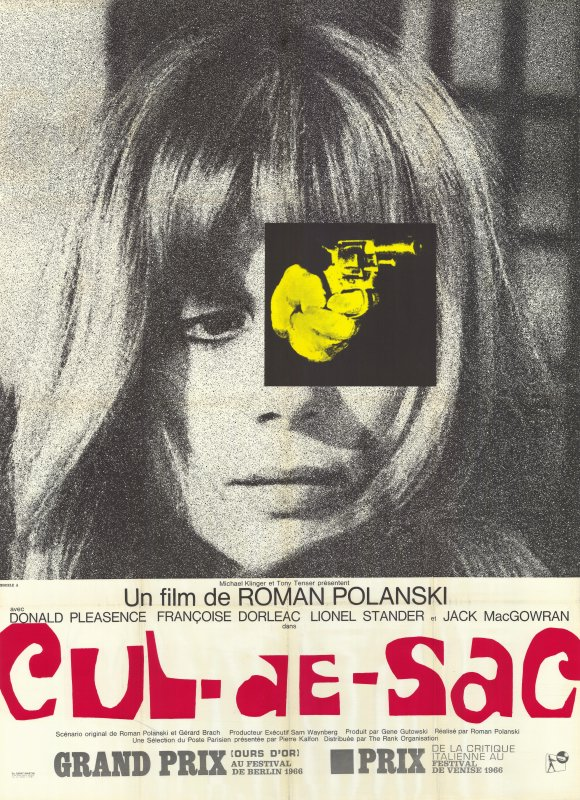
Cul-De-Sac (1966)

cul de sac 2

By Richard Winters

My Rating: 8 out of 10

4-Word Review: Bubbling beneath the surface.

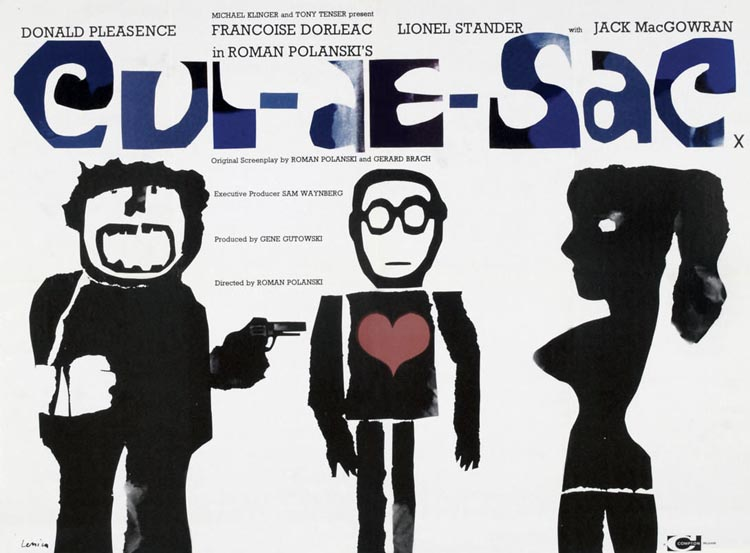
Albie and Richard (Jack MacGowran, Lionel Stander) are two gangsters on the run. Albie is injured with a gunshot wound and their getaway car has broken down. They come upon an isolated castle owned by George (Donald Pleasance) who lives there with his new wife Teresa (Francoise Dorleac, who tragically died in a car accident just one year after this film was released). George is very passive and timid and pretty much allows Richard to have his way as he takes over the place and his wife and yet as the situation progresses different shades of the character’s personalities begin to come to light.

Roman Polanski leaves his strong directorial touch from the exquisite opening shot, which shows an old car being pushed along on a desolate road amidst a very flat landscape until the end. In the hands of any other director this otherwise odd story probably would not have worked. Like with A Knife in Water Polanski makes great use of the quiet and serene atmosphere and as a viewer you feel like you are right there with the characters.  Filmed on-location at the Lindisfarne Castle on Holy Island in Northumberland, England the movie makes great use of the tranquil setting. I found it almost hard to believe that there was a film crew there as the isolation really grabs you and sucks you in. The quiet moments are the film’s strongest and I just loved the hooting owl heard in the background. The idea of filming it in black and white nicely compliments the film’s dark psychological undertones.

The film’s novelty is watching how the characters evolve and interact with one another. Donald Pleasance gives one of his best performances as the cowardly George. There have been many weak and frighten characters in cinema history, but Pleasance makes the character here quite interesting and the way he finally shows some bravado at the least likely moment is fascinating. Stander also excels with a character that initially comes off as a brute, but at strange times reveals a trusting and even child-like manner.

The movie can be viewed in different ways and doesn’t fit distinctly into any type of genre. To a degree it can work as a dark psychological character study, a mystery, film noir, a thriller, or macabre comedy. Approaching it as a comedy works best Polanski has not always had great success in that area and some of his comedies in particular the ill-advised Pirates have been complete disasters, but this one works. The best scene is when some of George’s old friends come to visit and bring along their bratty son who becomes an absolute terror to everyone.

The odd ending is open to interpretation and leaves a lasting impression. This is also a great chance to see Jacqueline Bisset in her film debut. She appears during the second half wearing glasses and saying little, but is as beautiful and alluring as ever.

cul de sac 1

My Rating: 8 out of 10

Released: November 7, 1966

Runtime: 1Hour 57Minutes

Not Rated

Director: Roman Polanski

Studio: Tekli British Productions

Available: DVD (The Criterion Collection) Blu-ray, Amazon Instant Video, Netflix streaming

Tall Story (1960)

tall story

By Richard Winters

My Rating: 6 out of 10

4-Word Review: The game is rigged.

June Ryder (Jane Fonda) is a boy-crazy college coed who has her sights set on Ray Blent (Anthony Perkins) the star of the school’s basketball team. Ray ends up being as infatuated with June as she is with him and the two decide to get married, but before they do they purchase a motor home from Ray’s friend Fred (Tom Laughlin). Unfortunately they don’t have enough of the required money until a mysterious stranger gives Ray $2,500 to blow the upcoming game his team has with the Russians, which puts Ray in a difficult quandary.

The film has a nice fluffy appeal and was based on the hit stage play, which in turn was based on the novel ‘The Homecoming Game’ by Howard Nemerov. The college campus atmosphere for its time period seems realistic. It is refreshing to have the adult faculty portrayed as normal human beings relating to the students on a relatively equal level and vice versa as opposed to the trend that started in the 70’s and went full-throttle in the 80’s where adults in these types of films were written as preachy, oppressive, out-of-touch, authoritative humorless pricks. In fact Marc Connelly as Professor Osman was my favorite character as he looked and spoke like a true professor and helped balance the silliness by being the most normal of the bunch. Anne Jackson as the wife of Professor Sullivan (Ray Walston) comes in a close second and has some amusing moments and a few good comeback lines particularly near the end.

Fonda is perfect as a character lost in her own little world and enthusiastically going by the beat of her own drummer while oblivious to the consternation she causes to those around her. Initially the character is written a little too aggressively making her too deluded and like a stalker, but fortunately that gets toned down and she becomes likable enough. Perkins is great as her boyish counterpart and the two even sing a duet together.

The pacing is a bit poor. Initially it is very zany and fast paced making the thing seem almost like a live action cartoon, which doesn’t work at all. The film then slows down and becomes a draggy only to rectify things with a funny conclusion. If you like things that are cute and undemanding then this should work although the sequence in which Ray comes into the game and singlehandedly wins the game after the team is far behind is just too contrived and over-blown for even Hollywood standards. The humor is light and comes in spurts with some of it managing to elicit a few chuckles. One of the few interchanges that I liked consisted of:

June: “Did you know that elephants only mate once every seven years?”

Ray: “There are some that do it every six years.”

June: “They’re nymphomaniacs”

Spoiler Alert!

One of the biggest problems with the film is the ending as Ray decides to play in the game and win it for his team despite keeping the money that he was paid in order to throw it. However, there is just no way a criminal organization would let anyone keep that money especially when the other party did not uphold their end of the bargain. Most likely they would track down Ray and June and exact a very unpleasant revenge. However, the film never even touches on this and instead shows Ray and June buying the motorhome and riding happily off into the sunset while leaving open a major loophole in the process.

My Rating: 6 out of 10

Released: April 6, 1960

Runtime: 1Hour 31Minutes

Not Rated

Director: Joshua Logan

Studio: Warner Brothers

Available: VHS, DVD (Warner Archive), Amazon Instant Video

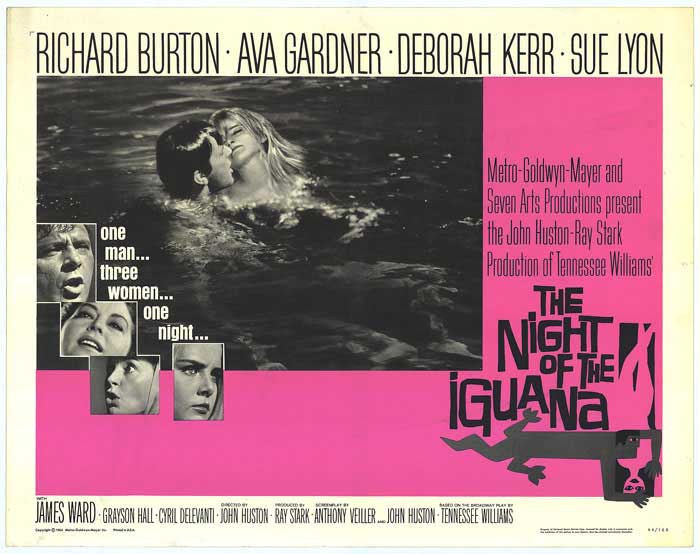
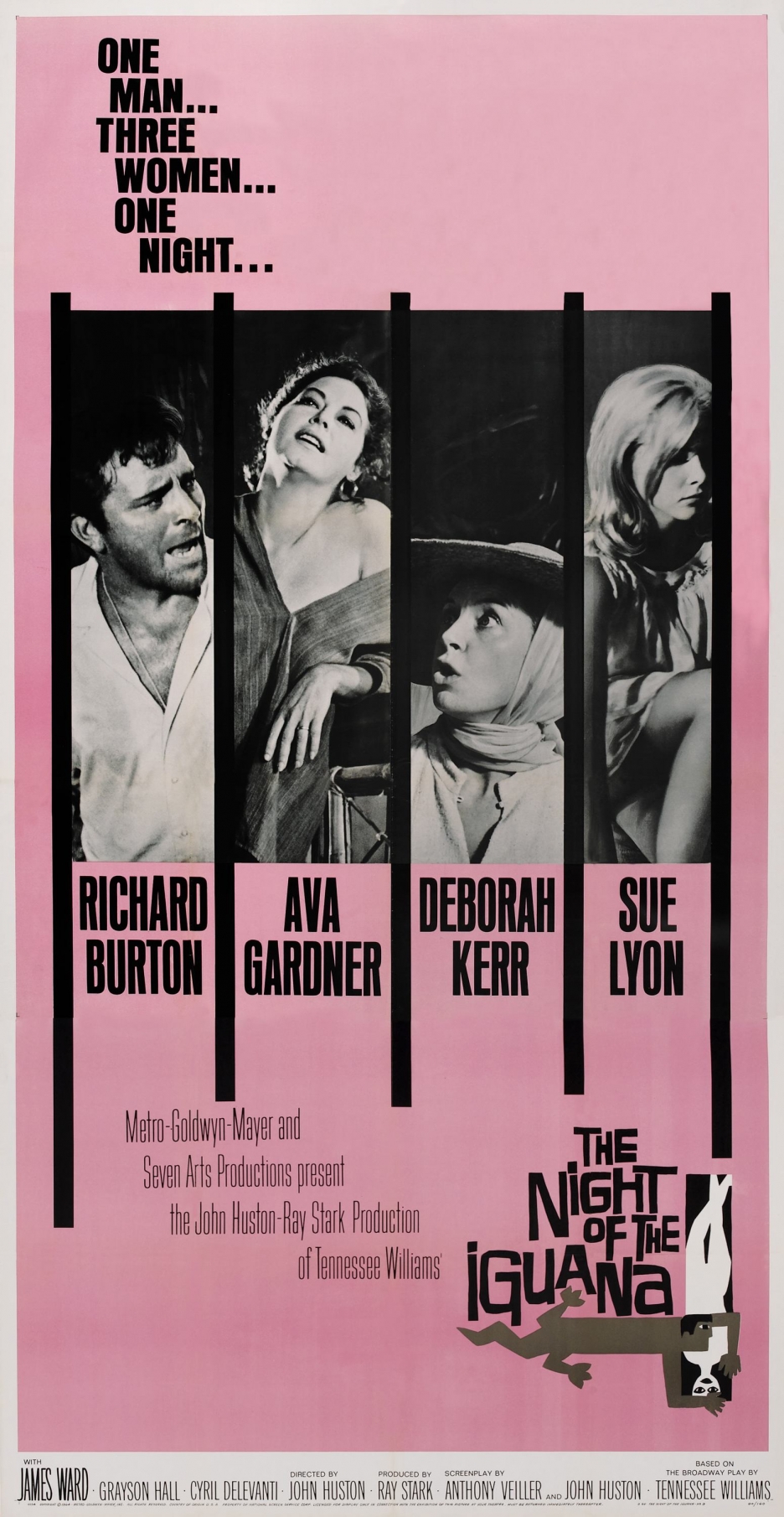
The Night of the Iguana (1964)

night of the iguana 2

By Richard Winters

My Rating: 6 out of 10

4-Word Review: Flawed clergyman loves women.

Lawrence Shannon (Richard Burton) loses his job as a clergyman when rumors surface of indiscretions he had with a young female parishioner, which pushes him to preach a ranting sermon at the pulpit that eventually drives all the members of the congregation out of the building. He then gets a job as a tour guide in Mexico and has the chore of leading a bus load of middle-aged women around the country. Charlotte (Sue Lyon) is a young nymph who takes a liking to Lawrence much to the chagrin of her over-protective chaperon Judith Fellowes (Grayson Hall). When Charlotte is caught in Lawrence’s bedroom late at night Ms. Fellowes promises that she will have it reported and get him fired. Unable to handle a another potential job loss Lawrence takes the bus load of women to an isolated seaside hotel run by Maxine (Ava Gardner) an old friend of his. He hopes that by somehow trapping them there he will be able to convince Ms. Fellowes to drop the charges, but along the way he meets Hannah (Deborah Kerr) who he starts to fall in-love with.

Unlike most of Tennesse William’s other plays this one, at least the first half, is full of energy and comical nuance. I found the group of ladies and Lawrence’s exasperated dealings with them to be quite amusing and the film moves along at an engaging pace. The second half though bogs down with more of William’s signature brooding drama that ends up hurting the flow. In many ways this film seems like two movies in one and the difference in tone and pace never gels. Despite a good nighttime conversation between Kerr and Burton I kept hoping the ladies and Ms. Fellowes would come back and felt the film was weaker without them.

Legendary director John Huston hits most of the right buttons here although it is not his best work. I was surprised and impressed to learn that Maxine’s hotel was built specifically for the production in an otherwise deserted region of the country. The building had an authentic old look and helped give the film added style and personality. I had mixed feelings with the black and white photography. On one had it helps bring out the dark recesses of its flawed characters and accentuate the moodiness of William’s script, but it also takes away from the exotic beauty of the locale.

Burton is good as usual and playing the part of an emotionally fractured, alcoholic character seems right up his alley. Gardner is great as the brassy Maxine and the scene of her making out with her two young, shirtless, maraca playing male assistants along the beach late at night is genuinely steamy. Kerr is in fine form as well and her more restrained demeanor makes a nice contrast to Gardner’s.

Lyon’s acting isn’t quite up to her costars and she seems particularly out of her league during her scene with Burton, but in the looks department she is unmatched. She is more filled-out and mature than in Lolita and in many ways even hotter. The scene of close-up shots of her moving her hips to a tune at a Mexican bar may excite some of the male viewers.

The under-rated Hall is excellent in her role as the heavy. Her craggy face and personality are perfect for the part and it rightly got her a supporting actress nomination.

In the final analysis this is not a bad version of Tennessee William’s material, but not a great one either.

night of the iguana 1

My Rating: 6 out of 10

Released: August 6, 1964

Runtime: 1Hour 58Minutes

Not Rated

Director: John Huston

Studio: MGM

Available: VHS, DVD, Amazon Instant Video

The Caretakers (1963)

the caretakers 2

By Richard Winters

My Rating: 6 out of 10

4-Word Review: Doctors with opposing viewpoints.

Two doctors working at a psychiatric hospital come at odds with each other over how to treat their patients. Dr. Donovan MacLeod (Robert Stack) believes in a more humanistic approach in treating mental illness including group therapy and more patient freedoms. Dr. Lucretia Terry (Joan Crawford) is hard-lined and exacts rules on her patients that have severe penalties if broken. The film examines their infighting and how it affects their patients.

Director Hall Bartlett has a nice cinema-verte style to the material that manages to avoid being ‘Hollywoodnized’ or overtly sanitized. The subject is approached in a matter of fact way and the patients are not portrayed as ‘crazy’ or ‘scary’, but instead as sick people looking to get well and learning how to do it. The opening sequence done over the credits and featuring all sorts of moody artsy drawings have an excellent avant-garde flair.

Polly Bergen is effective as Lorna a middle-aged mother and housewife who suffers a nervous breakdown and begrudgingly becomes a member of Dr. MacLeod’s therapy group. Some of her acting particularly when she is having her breakdown is theatrical and over-the-top, but I did like the way Bartlett shows things from her perspective allowing the viewer in a visual sense to feel what she is going through and makes one compassionate and sensitive to her condition.

It is great to see Crawford as always and the scene showing her in a leotard and teaching the other nurses judo lessons is a gem and much too brief. I was hoping to have her play up the part of the heavy more making her almost like a Nurse Ratched, which she could have easily done to perfection, but unfortunately the script doesn’t take advantage of it. I was also disappointed that we never see Crawford ever dealing directly with her patients, which seemed to me should have been necessary.

Stack in the lead is terrible and completely wrong for the part. The role required a man with a more youthful appeal instead of the middle-aged Stack who never displays the kind of sensitivity and compassion that his character supposedly has. Instead he delivers his lines in a stiff and monotone fashion and comes off like he came from the old school of acting.

The scene where his character allows the patients to go to an outdoor park for a picnic and mingle with the staff unsupervised seemed to be pushing the plausibility meter to the extreme. It also makes him look like a complete schmuck who should have known better especially when one of his patients leaves the picnic and runs away while he chases after her in a panic.

The supporting cast is outstanding showcasing many up and coming stars and is one of the major highlights for watching the film. Barbara Barrie is great as the silent and troubled Edna. Janis Paige is excellent as the brassy prostitute Marion. Susan Oliver gives one of her best performances as a young nurse who is just learning how to deal with those with mental illness and Robert Vaughn is also effective as Lorna’s long suffering and confused husband. This is also a great chance to see a young Van Williams before he starred as the Green Hornet as well as the beautiful Sharon Hugueny whose promising acting career was cut short when she was hit years later by a speeding police car.

If you come to this film looking for genuine insight into the illness you will be disappointed as it goes only to the most elementary level into the area of psychiatry. MacLeod’s speeches about how his group therapy can be a ‘cure’ to mental illness are shallow and almost laughable. However, for the era the film manages to be gritty and slick enough to pass as entertainment.

My Rating: 6 out of 10

Released: August 21, 1963

Runtime: 1Hour 37Minutes

Not Rated

Director: Hal Bartlett

Studio: United Artists

Available: VHS, DVD, Amazon Instant Video, Netflix streaming