Category Archives: 70’s Movies

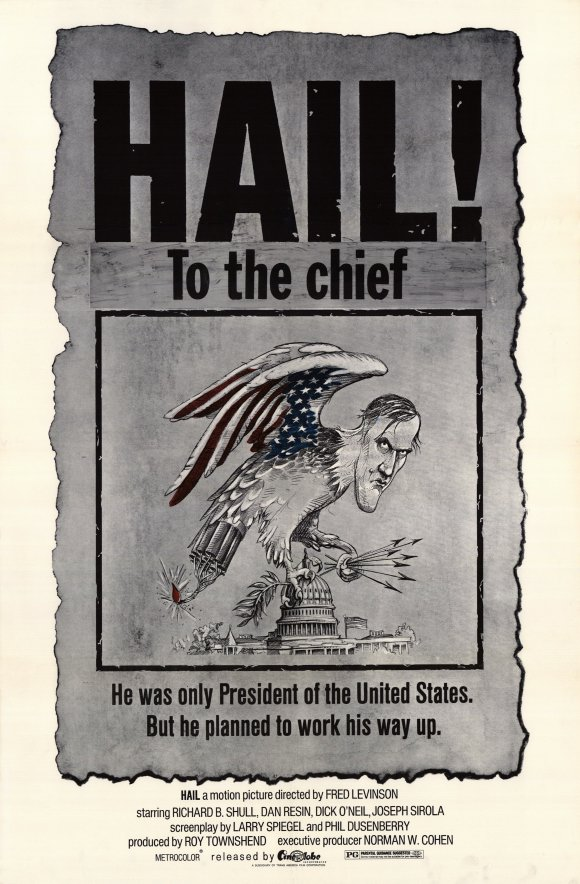
Hail (1973)

hail 2

By Richard Winters

My Rating: 6 out of 10

4-Word Review: The President goes nuts.

The President of the United States (Dan Resin) is going insane and it has become painfully obvious to all those around him. He wants to suspend congress and elections and has created concentration camps where hippies and other ‘liberal subversives’ are taken and he even drowns mice in buckets of water for relaxation. His staff decides it is up to them to take him out before he puts the country at risk. They hold a gumball lottery and whoever picks the gumball that has the number one on it will be chosen to carry out the assassination. The oldest member of the group who is 90 gets it, but when he chokes on the gumball while chewing it before putting in his dentures it is then up to the Secretary of Health (Richard B. Shull), but the President has spies that have infiltrated the group and is fully aware of what they are trying to do and has a secret plan of his own.

This film is satire the way it should be. It makes fun of both sides and manages to get more hits than misses. It was made in an age before political correctness and wasn’t afraid of who it might offend and thus throws it all out there in a creatively reckless and experimental fashion making it enjoyable all the way through. The pace is breezy and a terrific time capsule to a bygone era.

There are some unique scenes here that you won’t see anywhere else. Some of the highlights include a 4-man ‘hand band’ where a group of men get together to play ‘The Yellow Rose of Texas’ for an audience by cupping their hands together. The scene where the President’s army attacks and beats hippies at a commune that is done in slow motion and to the tune of ‘Amazing Grace’ by Judy Collins is effective and the twist ending involving a wooden leg isn’t bad either.

Director Fred Levinson shows great potential. The variety of camera angles, stylish editing and knowing humor are all first-rate and should have been the start of a great career. Unfortunately the rumor is that Richard Nixon didn’t like the film and considered it a personal insult and used his connections to put pressure on the studios not to distribute it, which eventually led to it falling into complete obscurity. The only other thing that Levinson did afterwards was directing the famous Hertz commercials that featured O.J. Simspson sprinting through an airport terminal, which is a real shame and waste.

Gary Sandy, who later became famous for playing Andy Travis in the classic TV-series ‘WKRP in Cincinnati’ is highly engaging as a radical hippie leader who disguises himself as an army general. Brandon Maggart is also amusing as a nervous National Guard Sergeant.

The only weak link is Resin as the President. He is probably best known for playing the Tidy Bowl man in some TV-commercials during the 70’s. Here his performance is sterile and one-note. Shull and Dick O’Neill come off as much more interesting simply because they are far better actors.

The film is dated, but in a fun way. It brings back to life the chaotic atmosphere of the era and makes you feel like you are being thrown into the middle of it. The film is extremely rare and hard-to-find, but worth a look if you can locate it.

My Rating: 6 out of 10

Alternate Title: Hail to the Chief

Released: July 27, 1973

Runtime: 1Hour 25Minutes

Rated PG

Director: Fred Levinson

Studio: Cine Globe

Available: None at this time.
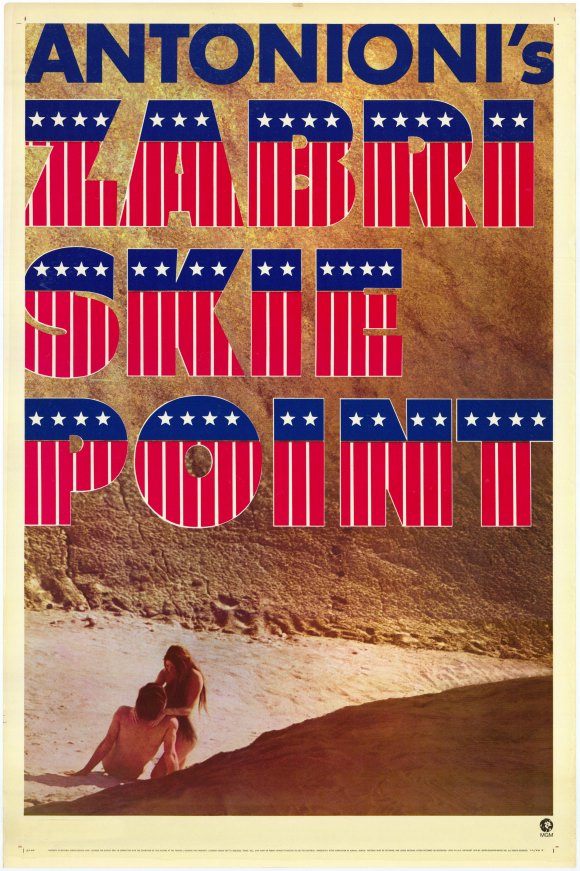
Zabriskie Point (1970)

zabriskie point 2

By Richard Winters

My Rating: 8 out of 10

4-Word Review: Blow up the house.

Two young adults, a product of the turbulent sixties and from opposite ends of the social spectrum, meet and fall-in-love. Daria (Daria Halpern) is an anthropology student while Mark (Mark Frechette) is a dropout who’s wanted by the police. Together they try to endure the hypocrisies and materialism of a capitalistic society.

Writer/Director Michelangelo Antonioni’s camerawork is one-of-a-kind and if you see this film for one reason then see it for this. Everything gets captured in intricate, focused detail and the shots of the desert landscape are breathtaking. The scenes where Mark flirts with Daria while piloting his airplane while she is still on the ground is genuinely cool.

The sprawling, modernistic mansion in the middle of the barren landscape is visually imaginative. Seeing it get blown up is a bit depressing, but when it gets done 10 different times from 10 different angles then it becomes a unique cinematic experience. The exploding refrigerator and flying food, which is done in slow motion, as well as the ten or so different couples who make love on the desert floor at the same time is equally arresting.

Having the two leads played by amateurs with little or no acting experience ends up working well. There is a very natural and honest quality to their delivery that most professional actors in their quest to put on a ‘performance’ wouldn’t be able to convey. Rod Taylor on the other hand is wasted in a small and uninteresting role as is character actor Paul Fix.

This film was unfairly overlooked and criticized upon its initial release, but now deserves a fresh look. Having a scathing take on American society done by a foreigner isn’t quite fair, but his comments on capitalism are good nonetheless. The story itself is quite thin, but when it is as visually intoxicating and emotionally kinetic as this then who cares.

My Rating: 8 out of 10

Released: February 9, 1970

Runtime: 1Hour 50Minutes

Rated R

Director: Michelangelo Antonioni

Studio: MGM

Available: VHS, DVD

The Public Eye (1972)

the public eye 1

By Richard Winters

My Rating: 3 out of 10

4-Word Review: He follows her around.

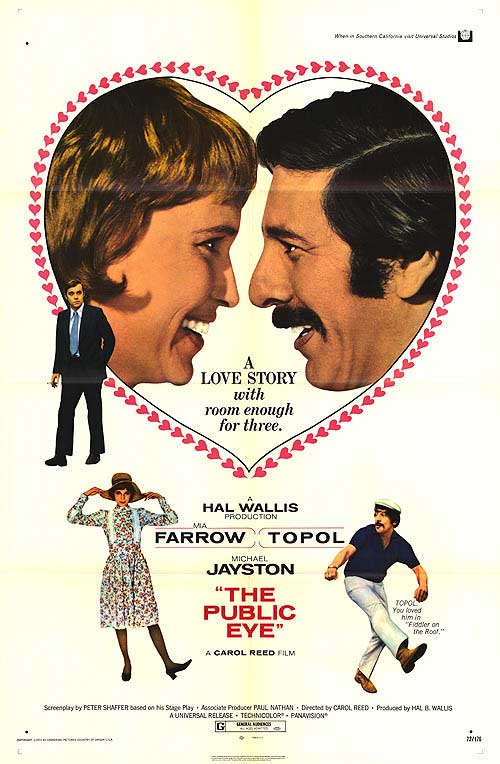
This film, which is based on the Peter Schaffer play, deals with Charles (Michael Jayston) an uptight British accountant who thinks that his wife Belinda (Mia Farrow) is having an affair. He hires Julian (Topol) a goofy private detective to follow her around and see where she is going and what she is doing everyday while he is at work. Unfortunately for Charles Julian starts to fall in love with Belinda as he is following her and she in him, which only further complicates matters since she was initially not seeing anyone and all those trips that Charles thought were so suspicious were simply innocent excursions.

The biggest problem with this film is that it is too lightweight probably more so than even other lightweight films. Nothing really happens. Julian just follows Belinda around much to her amusement, but the two don’t share any dialogue nor ever consummate their pseudo-relationship. The film simply spends long drawn out sequences showing the two following each other throughout the streets of London and occasionally giggling at their ‘little game’ and that is about it. You keep waiting for that second act to kick in, but it never does, which after 95 minutes starts to make the whole thing almost pointless.

Topol is miscast in the lead and ends up being the film’s weakest link when he should have been the strongest. He was fresh off his award winning performance in Fiddler on the Roof and this movie was supposed to make him into a leading man, but the attempts at turning him into a variation of Inspector Clouseau fail badly. His bright white suit that he wears looks garish and ridiculous especially for an undercover spy. Watching him constantly stuffing his face with food starts to get obnoxious and his buffoonery becomes more annoying than engaging.

Farrow is appealing and her natural child-like fragility is perfect for the part. The scene where she states to the shock of an upper-crust crowd at a formal dinner party that rapists should be punished by having their ‘thing’ cut off publicly is amusingly edging and the film would have been better had it gone a little more in this route.

Jayston is the one that comes off best. He plays the proper British gentlemen with all his staid mannerisms perfectly. What I really like though about him is the fact that he does love Belinda, but just doesn’t know how to show it effectively.

This was an odd project for legendary director Sir Carol Reed whose final film this was. The story doesn’t allow for much visuals although the way Reed captures London both from aerial shots as well as the downtown streets that Belinda visits is excellent. The movie almost seems to work as a tour guide of London, which in some ways is the best thing that can be said about the film.

My Rating: 3 out of 10

Alternate Title: Follow Me

Released: July 18, 1972

Runtime: 1Hour 35Minutes

Rated G

Director: Carol Reed

Studio: Universal

Available: Netflix streaming

They Might Be Giants (1971)

they might be giants

By Richard Winters

My Rating: 4 out of 10

4-Word Review: He thinks he’s Holmes.

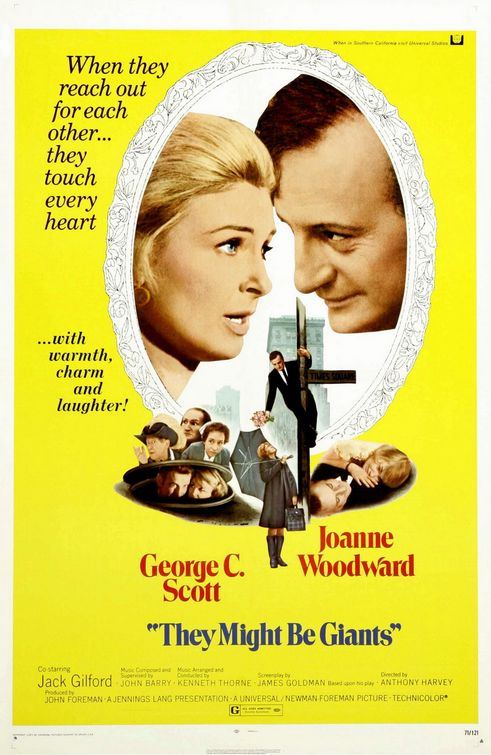
After the death of his wife Justin Playfair (George C. Scott) starts to think he is Sherlock Holmes and begins playing the part by smoking a pipe, wearing a deerstalker cap and playing a violin. His brother Blevins (Lester Rawlins) feels he needs to be institutionalized and hires a psychiatrist named Dr. Watson (Joanne Woodward) to analyze him. Watson finds Justin’s fantasy role-playing to be intriguing and reluctantly begins following him around on his fanciful jaunts to find clues from the evil Professor Moriarty and eventually the two begin a quirky romance.

The film, based on a play written by James Goldman, starts out with some potential. The musical score by John Barry has an interesting ominous quality to it. The idea of pitting the practical minded Dr. against the fanciful Playfair is initially engaging. Watching Woodward getting more and more exacerbated by Scott’s constant whims of fancy and refusal to ever to see reality is funny and lightly satirical. The film though drops off terribly when Watson loses all judgment and falls in love with the man despite the knowledge that he is clearly mentally ill. Watching the two frolic through New York City searching for meaningless clues to a mystery that doesn’t really exist makes the film pointless as well as losing all tension, momentum and plot. Having her fall in love with him at the very end might have worked, but having this otherwise sensible and intelligent woman get sucked into Playfair’s fantasy world so quickly is jarring and unbelievable. What is worse is that initially Playfair seems to be working on a real case and there is even a scene where he gets shot at, but then this side-story is frustratingly dropped without any explanation or conclusion.

Scott is in top form and this is an interesting follow-up to his Patton role that he did just before this. Woodward though steals it. She has never done much comedy in her career, but proves to be quite adept to it here. One of the funniest scenes has her trying feebly to cook a meal for Playfair in her cramped apartment despite having no skill at it.

Anthony Harvey’s direction is okay. I liked the way he captures the downtown streets of Manhattan during the rain. However, the film’s most interesting segment takes place in an all-night grocery store where over a loudspeaker are announcements of great sales and deals despite the fact that there are no customers. Eventually a police chase takes place inside there, which ends up being genuinely amusing on a silly level.

The vague wide-open ending cements this as being a complete waste of time and makes the whole thing a big build up to nothing. I realize that this is intended to be whimsical, but even then there needs to be some grounding and this film has none.

My Rating: 4 out of 10

Released: June 9, 1971

Runtime: 1Hour 38Minutes

Rated G

Director: Anthony Harvey

Studio: Universal

Available: VHS, DVD, Netflix streaming

Invasion of the Body Snatchers (1978)

invasion of the body snatchers 3

By Richard Winters

My Rating: 8 out of 10

4-Word Review: Aliens create human clones.

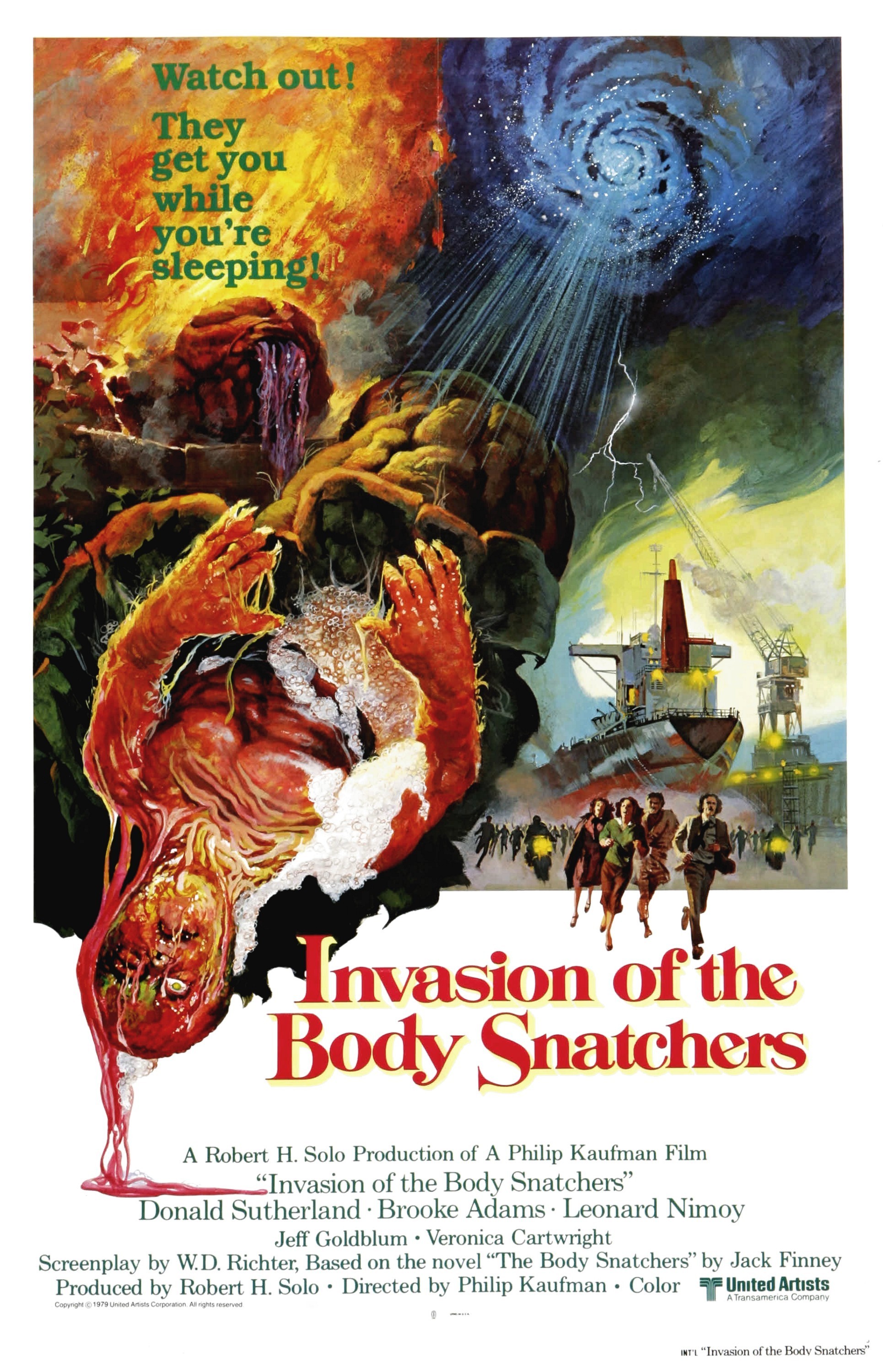
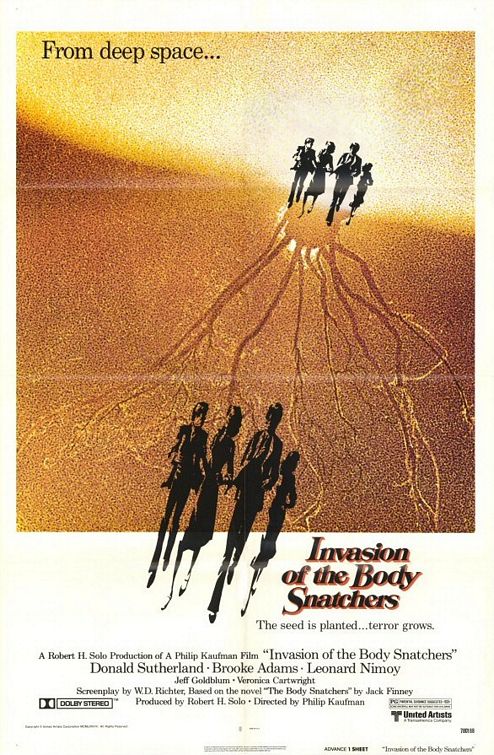
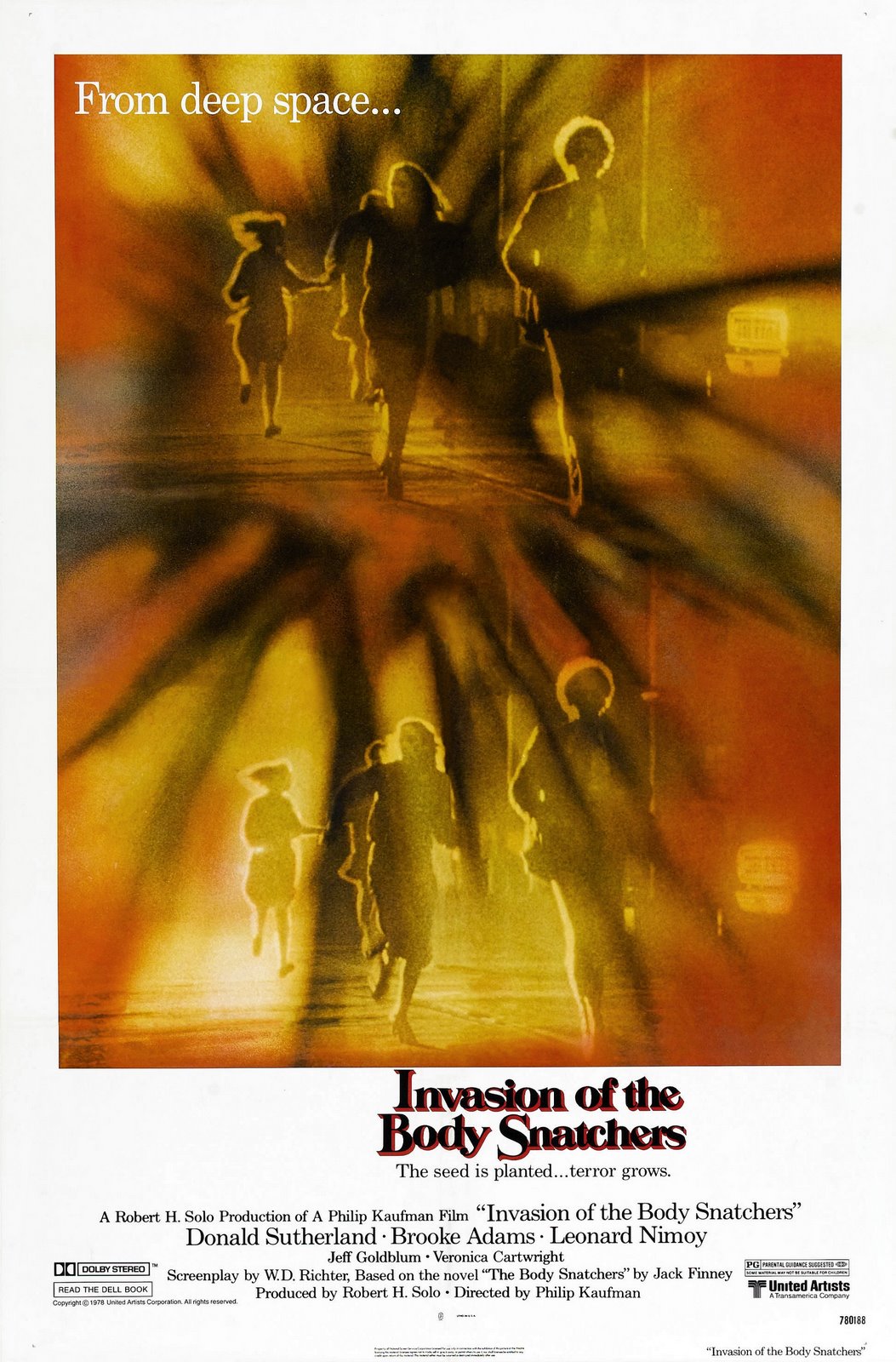
Matthew Bennell (Donald Sutherland) is a public health inspector who finds that people around him are beginning to behave strangely. It starts with his friend Elizabeth (Brooke Adams) who insists her boyfriend Geoffrey (Art Hindle) has somehow ‘changed’. Soon other people are saying the same thing and they slowly realize that human clones are being created from alien pods while the people sleep. These clones look exactly like the people they have replaced, but are devoid of any emotion. Matthew and Elizabeth along with married couple Jack and Nancy (Jeff Goldblum, Veronica Cartwright) try to escape, but find themselves increasingly outnumbered in this creepy remake of the 1956 classic.

Talented director Philip Kaufman who has never gotten enough credit does a masterful job of weaving an updated version of the tale with more contemporary sensibilities. The balance between sci-fi, thriller and drama really works. The story is perfectly paced and the characters and situations remain believable throughout. Transferring the setting from a small town to San Francisco was inspired. Kaufman captures the sights, sounds and everyday ambience of the city better than just anybody who has done a film there and I really loved the shot of an early morning fog settling in on the top of the Transamerica Pyramid.

The special effects are fantastic. The opening sequence showing the alien spores raining down on the city and hitting onto plant and tree leaves where they form into flowers is very authentic looking and nicely captured. The coolest part though is watching the clones of the humans form out of the pods particularly the sequence showing Bennell’s clone coming to life while he sleeps. Seeing a dog with a human head is wild and Bennell’s destruction of a pod factory is also quite exciting. Denny Zeitlin’s electronic music score is distinctive, but not overplayed and effectively used at key moments although I did feel that there should have been some music played over the closing credits instead of just dead silence.

invasion of the body snatchers 2

Sutherland is good, but his 70’s style afro isn’t. The part where he tries in vain to warn various city officials of the impending invasion, but can make no headway is a perfect portrait of government bureaucracy and almost a horror movie in itself. Adams is beautiful and the way she can somehow make her eyeballs quiver has to be seen to be believed. Goldblum is fun as a brash struggling writer who never seems to know when to stop talking and has a conspiracy theory about everything. Cartwright plays a panicked woman better than anybody and Leonard Nimoy is solid in a sort of Spock-like role where the character believes everything must have a logical conclusion.

There are also some neat cameo appearances as well. Robert Duvall can be spotted at the beginning swinging on a swing. Kevin McCarthy who starred in the original steps into where he left off in the first one as a man running into traffic and warning motorists of the invasion. Don Siegal who directed the first film plays a cab driver and famous cinematographer Michael Chapman can be seen briefly as a janitor. Director Kaufman casts himself in a bit part as a man banging on the glass of a phone booth while Sutherland is making a call.

This movie is smart and stylish and in a lot of ways I liked it better than the original. The only real drawback is the fact that it becomes increasingly clear that these people aren’t going to escape and the drawn out chase sequence becomes more depressing and defeating than exciting.

invasion of the body snatchers 1

My Rating: 8 out of 10

Released: December 20, 1978

Runtime: 1Hour 55Minutes

Rated PG

Director: Philip Kaufman

Studio: United Artists

Available: VHS, DVD

End of the Road (1970)

end of the road

By Richard Winters

My Rating: 6 out of 10

4-Word Review:  Too weird for words.

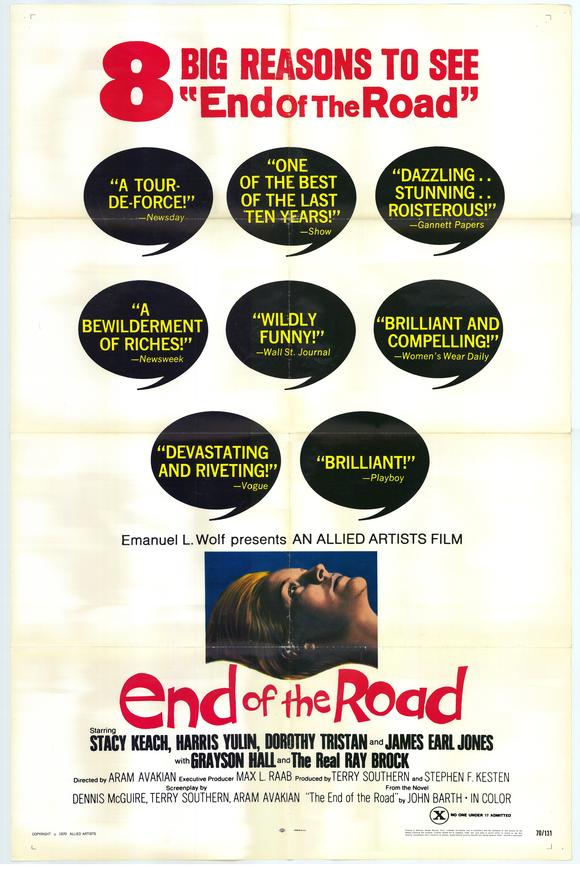
A bizarre adaptation of John Barth’s already bizarre novel detailing the story of a man (Stacy Keach) who goes into a catatonic state at a train station and is then sent to a strange mental hospital run by a weirdo named Doctor D (James Earl Jones). After he is considered to be ‘cured’ he takes a job as a college professor and proceeds to have an affair with the wife (Dorothy Tristan) of one of his colleagues (Harris Yulin).

It has been noted that author Barth disliked this film version of his novel and it is easy to see why. It gives only a basic outline of the story while leaving out all of the deeper meanings. It also tried to tie the story to the chaos and rebellion of the 60’s even though the book was written in 1955. The final result is a confusing mess that never comes together. The characters behave strangely and with no understanding to their motivations it becomes impossible to relate to them or anything else that goes on. Most viewers, especially those that are not familiar with the book, will easily become confused after the first five minutes if not sooner.

On the positive end the filmmaking style is refreshingly audacious in a way that is rarely seen anymore. Everything is thrown out there no matter how outrageous with little regard to mainstream acceptance. The kinetic imagery and music has a certain hypnotic effect that keeps you connected to it even if you don’t understand what is going on. The film culminates with a very intense, grizzly, and tasteless abortion sequence that will not be soon forgotten by anyone who sees it. Jones gives one of the most bizarre and over-the-top performances that you will ever see anywhere and anyone who is a fan of his or has an interest in acting MUST see him in this film.

It’s a misfired experiment that manages to be enough of a period artifact to make it interesting as a curio. It definitely has the ability to stay with you after it is over.

My Rating: 6 out of 10

Released: February 10, 1970

Runtime: 1Hour 50Minutes

Rated X

Director: Aram Avakian

Studio: Allie Artists Pictures

Available: DVD 

Electra Glide in Blue (1973)

electra glide in blue 2

By Richard Winters

My Rating: 9 out of 10

4-Word Review: Motorcycle cop turns detective.

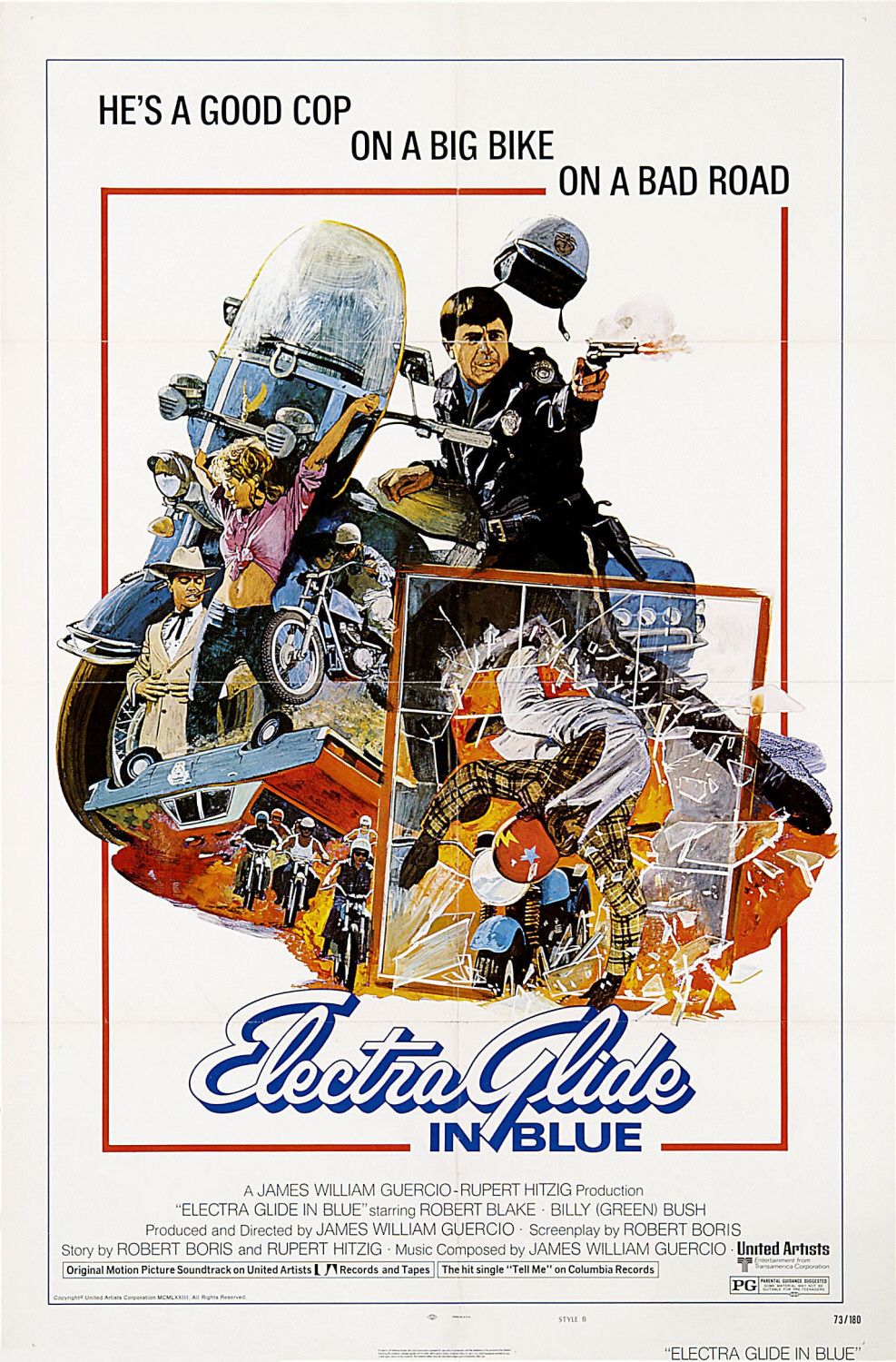
John Wintergreen (Robert Blake) is a motorcycle cop tired of giving out traffic tickets and interested in a more intellectual job like working in the homicide division as a detective. By chance he comes along an isolated desert hut with a dead body in it that appears to have been a suicide, but he is not convinced even though everyone else is. During the coroner’s investigation it is found to indeed have been a murder, which impresses senior detective Harve Poole (Mitchell Ryan) so much that he asks John to become his assistant. At first he is excited about his new opportunity, but finds the position has hidden drawbacks of its own and eventually he becomes just as frustrated with it.

The film shows police work in an offbeat and revealing light. How many cop movies have you seen showing policemen handing out traffic tickets? May sound boring and monotonous, but actually it is just the opposite. The arguments that the drivers give to try and get out of the fine are amusing and very on-target. This film goes well beyond the typical Hollywood prototype of a policeman and instead we get to see real people with a wide variety of personalities that make up the force. There is also a cool motorcycle chase that features wipe-outs done in slow motion.

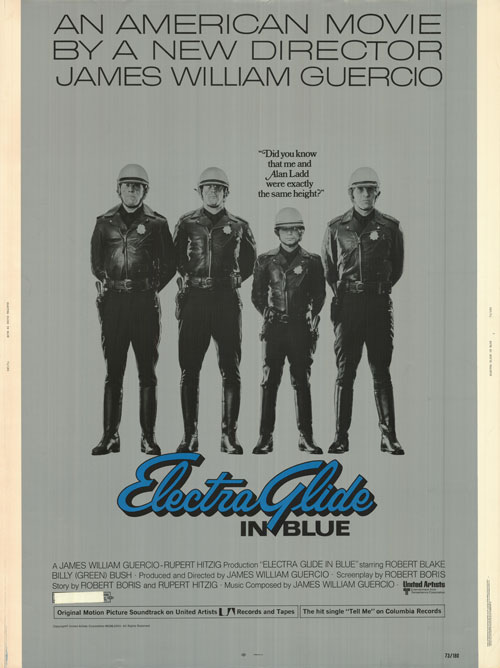
Director James William Guercio may be better known for his musical contributions, but his directing is spot-on from the first frame until the last. The opening scene has a wonderfully visual style and the photography of the desert landscape is expansive and vivid looking almost like it could have been filmed yesterday. The fact that this is his only film output is a real shame as he has a keen eye for directing that is far better than some veteran directors and it is a waste that he hasn’t done more.

Blake fits into his role solidly and it almost seems like the part was written specifically for him. The visual digs at his short height are cute and I liked seeing the character evolve and the way he becomes disillusioned with Harve, a man he initially admires and eventually tells-off in biting style is well done.

The dialogue has a nice conversational quality to it and John’s exchanges with both and Harve and his police partner Zipper (Billy Green Bush) are excellent. Jeannie Riley who has fallen off the cinematic radar and should not be confused with the singer who sang ‘Harper Valley P.T.A.’ gives quite a good performance as Jolene an alcoholic woman with big Hollywood dreams only to be stuck in a sad little town. The scene where Harve brings John to a bar so can ‘meet his girlfriend’ only to find that John has been sleeping with her too is priceless.

The anger and detachment between the police and the hippies of the day are well captured. The film has a great lyrical quality to it where every shot and scene seems to be a story in itself. The foreshadowing is excellent and the ending scene is not only a bit of a shocker, but also features one of the most amazing tracking shots you will ever see put onto film. A definite classic waiting to be rediscovered.

electra glide in blue 1

My Rating: 9 out of 10

Released: August 19, 1973

Runtime: 1Hour 54Minutes

Rated PG

Director: James William Guerco

Studio: United Artists

Available: VHS, DVD, Blu-ray

Everything You Always Wanted to Know About Sex *But Were Afraid to Ask (1972)

everything 1

By Richard Winters

My Rating: 9 out of 10

4-Word Review: Woody takes on sex.

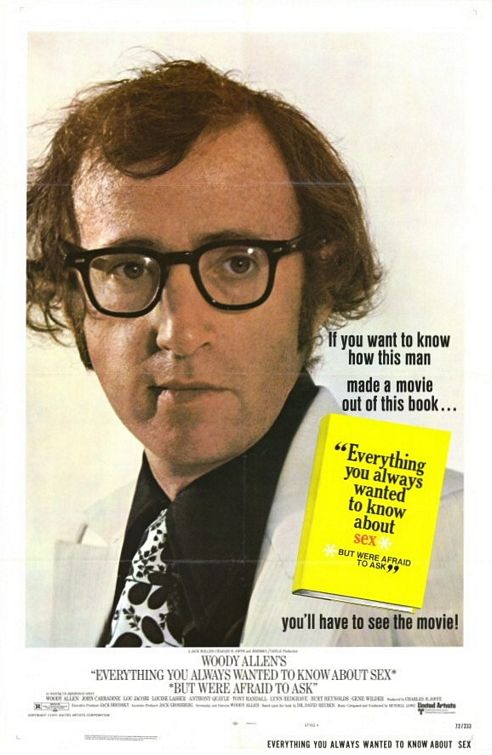
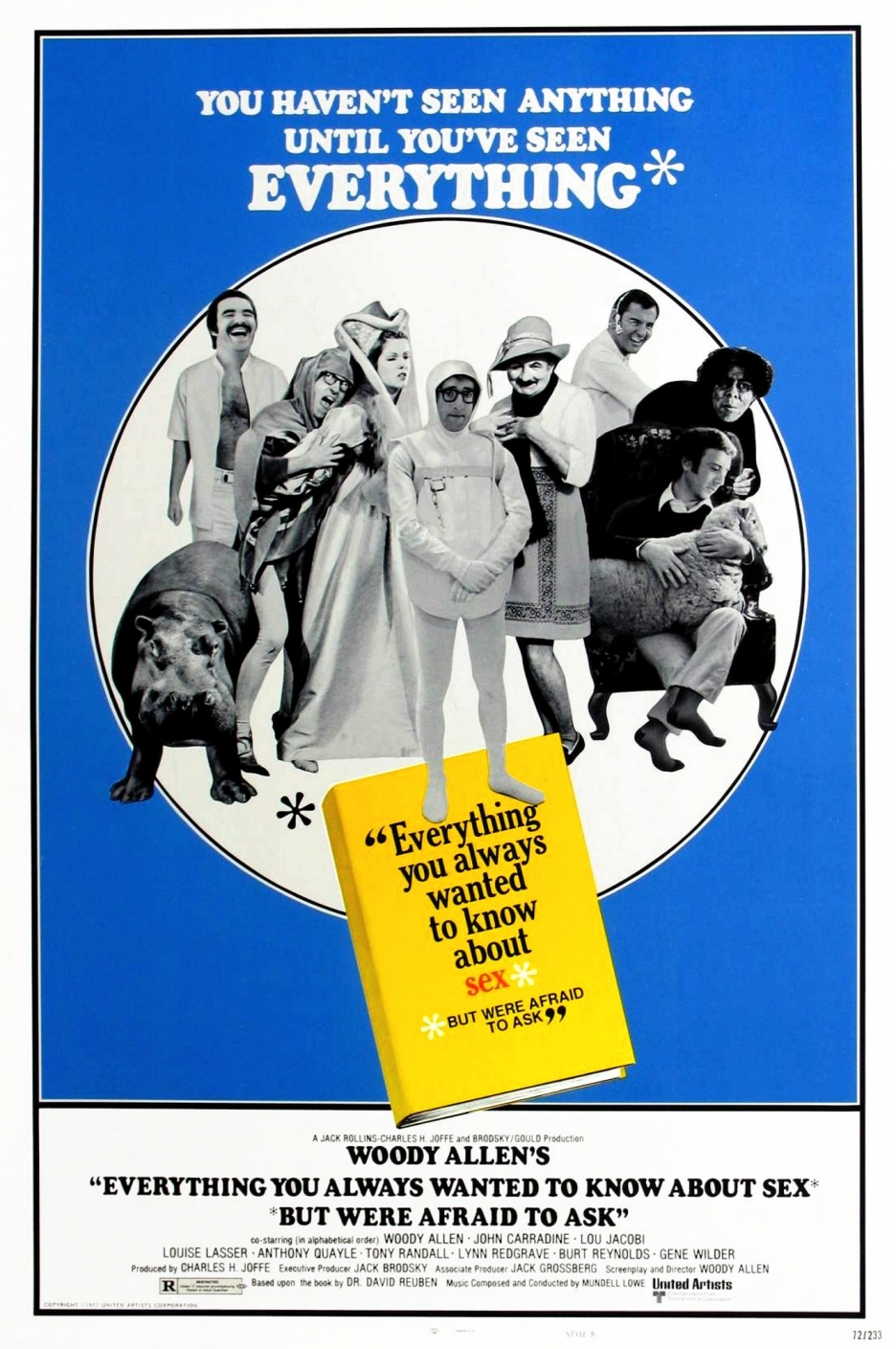
This is a very loose adaptation by Woody Allen of the famous sex manual written by David Reuben, but given a comic spin. This was made when Allen was at his absolute peak as nearly everything is funny and original.

Some of the jokes are outrageously over the edge even for today. The highlights include Gene Wilder’s incredibly long reaction shot after a shepherd informs him that he has fallen in love with one of the sheep from his flock. Another highlight includes Allen trying to fight off a giant ‘monster breast’ by using a Crucifix and a giant bra. Cross dresser Lou Jacobi getting caught in a women’s dress while visiting a friend’s house is another classic as well as ‘What’s My Perversion’ a very brilliant and inspired send up of ‘What’s My Line’. Of course the best may be, should I say, the climactic sequence involving the control room of the inside of a man’s brain as he goes through ejaculation.

everything 2

The only negative is the second segment entitled ‘Why some Women can’t have orgasms’ is a misfire. The joke of having Allen and Lasser talk in only Italian with no subtitles wears thin pretty quickly. The only pluses from this segment involve seeing Allen in a pair of trendy glasses as well as watching an electric dildo catch on fire.

In a lot of ways I consider this to be Allen’s best comedy. Just about everything works and it’s all laugh- out-loud funny. Even the few things that don’t are still creative enough to get kudos.

everything 3

My Rating: 9 out of 10

Released: August 6, 1972

Runtime: 1Hour 28Minutes

Rated R

Director: Woody Allen

Studio: United Artists

Available: VHS, DVD, Amazon Instant Video

The Centerfold Girls (1974)

the centerfold girls

By Richard Winters

My Rating: 5 out of 10

4-Word Review: He doesn’t like models.

A psycho (Andrew Prine) who believes it is wrong to pose nude for a men’s magazine stalks several models that have appeared in a particular pin-up calendar and proceeds to kill them off one-by-one.

If you can get by its low budget roots you may find it entertaining as the acting is generally good and the scenes lively. There are a few good twists and nice looking ladies with an abundance of nudity. The best part about the film is that it creates a sinister atmosphere where everyone ends up being twisted in some way. It also creates the impression that being beautiful may actually be a curse as these girls are either getting snubbed by other women who are jealous, lustfully attacked, or exploited in every direction.

The film has the psycho stalking three different models and is therefore broken up into three different segments. The first has definite shades of Last House on the Left as the young lady falls prey not only to this psycho but also a gang of wild hippies who harass and humiliate her. The second part works like a variation of And Then There Were None as the killer follows a group going to a castle on a deserted island to do a photo shoot and then kills them all off one-by-one. Although the interior shots in this segment are too dark and too much emphasis given to a howling wind sound it is still compactly done. The third story is the best because the model is more aggressive and fights back as well as featuring a surreal shot of a foot chase amongst a large grove of dead trees.

Prine is perfect for the psycho role. He puts verve in his deliveries and wears horn rimmed glasses that definitely makes him look the part. However, it would have been nice to have seen some background to his character and learn why he became the way he was as well as an explanation for how he manages to obtain the model’s phone numbers and addresses. Also, where does he get the money to do all the traveling around and why must he wear the same black suit throughout the entire film as even nut cases know how to shower and change their clothes.

My Rating: 5 out of 10

Released: August 8, 1974

Runtime: 1Hour 31Minutes

Rated R

Director: John Peyser

Studio: General Film Corporation

Available: VHS, DVD

California Split (1974)

california split

By Richard Winters

My Rating: 4 out of 10

4-Word Review: Guys addicted to gambling.

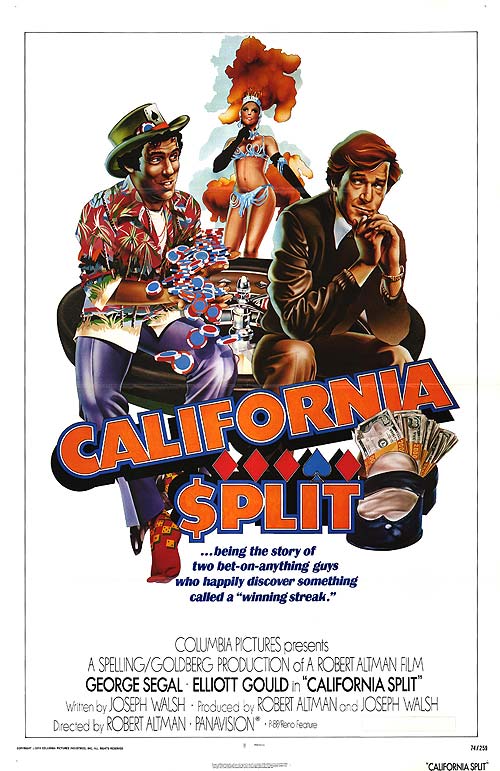
There is a scene in The Gambler, which is a similar movie to this one and came out around the same time, where actor James Caan’s character is on the beach with his mother. He writes in the sand $44,000. This is the amount he owes in gambling debt and the amount he needs from her. He can’t bring himself to ask her directly so he writes it instead. His mother gasps when she sees the amount and then asks “How is such a thing possible?!” It is for that reason that making a movie about someone with a gambling addiction is so intriguing. What exactly is it that could propel someone to act so foolishly with their money? Unfortunately both films promised a lot, but delivered little. Worse yet both are uninvolving and boring.

In this case the film fails to ever get inside the character’s heads. We have no idea what personality traits a gambler may have nor their background or relationships. We simply see two rather bland middle-aged men getting together and going through their gambling paces. Apparently the idea was to show a gambler doing his thing and hope to find some ‘truth’ from it. Well it doesn’t work. It’s tantamount to a novice writer scribbling out some rambling prose and hoping to get a story. It all just proves that the filmmakers have no more insight into this phenomenon than anyone else.

Director Robert Altman seems more interested in keeping things light and entertaining. Normally his eccentric touches help compliment the film, but here it gets in the way. For example there is a long drawn out scene featuring Bert Remsen’s character that likes to dress up like a woman that is completely unnecessary and bogs everything down.

Elliot Gould’s wise guy, wise cracking ways become obnoxious and never once does he come off as a man gripped by an addiction. George Segal shows a little more of an emotional downside, but it seems forced.

The film hits its mark only once and that is when it focuses on a big poker game, played in Reno, by the country’s top players. Listening to Gould describe to Segal all the traits of each player is interesting. It helps show what a psychological game poker really is, but unfortunately it doesn’t get to this part until the very end and then only for a short while.

In the category of ambiance Altman scores as usual. The faces of the people at the casinos are etched in character. You can almost smell the hanging second-hand-smoke and Dorothy Showalter’s brassy, slightly off-key singing gives the soundtrack a distinct flavor.

My Rating: 4 out of 10

Released: August 7, 1974

Runtime: 1Hour 48Minutes

Rated R

Director: Robert Altman

Studio: Columbia Pictures

Available: DVD, Amazon Instant Video