Category Archives: 70’s Movies

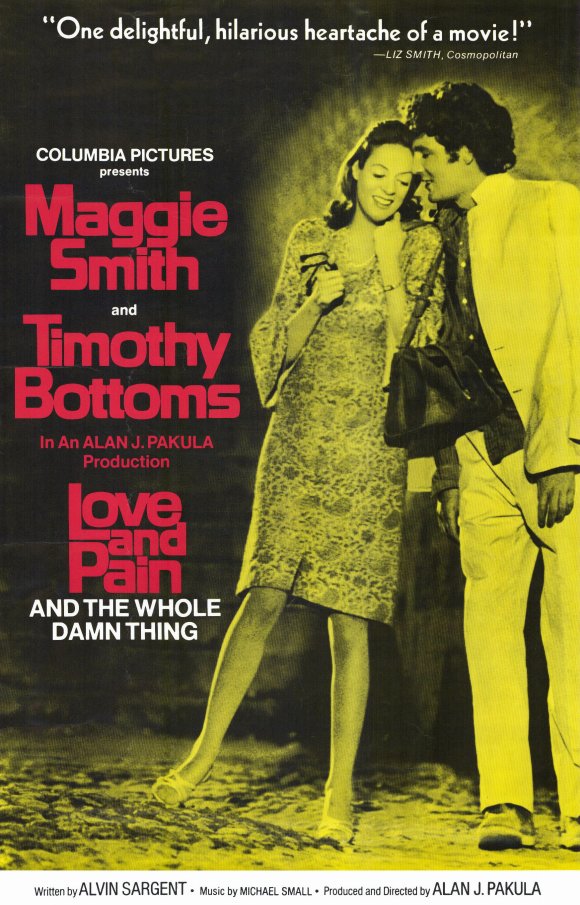
Love and Pain and the Whole Damn Thing (1973)

love and pain and the whole damn thing

By Richard Winters

My Rating: 6 out of 10

4-Word Review: Introverts fall in love.

Walter (Timothy Bottoms) is a shy young man in his early 20’s riding through Spain as part of a cycling tour group. Impulsively he ditches this group and joins a bus touring one of which Lila (Maggie Smith) an equally shy woman in her 30’s is a part of. At first the two hardly speak, but eventually they get past their social quirks to form a tight, romantic bond.

The awkwardness and insecurities of the two characters is wonderfully captured and it is nice to see a film examine a romance between people that are not physically beautiful or affluent. The music score is subtle and Alan J. Pakula’s direction approaches the material in a nicely sensitive fashion along with the Spanish scenery that gives the production an exotic feel.

Smith is excellent as usual. Her performance and character is different from anything else that she has done making it a real treat to watch. The scene where she calls home to her family as well as the one where she gets locked inside a remote outhouse is quite amusing.

I would have liked to have seen a little more interaction with the other people on the bus as the supporting cast is almost non-existent and focuses too much on the two main characters making it seem like there are the only ones in the entire country of Spain, which gives the viewer a very isolated type of feeling. This may have been the intention and done as a way to show what it is like being introverted, but I didn’t care for it.

Although the two characters are offbeat the film follows too much of a romantic blueprint that eventually makes it formulaic despite a good start. Its biggest transgression is having one of the characters like in Love Story get afflicted with some mysterious illness that is never explained and put in to create cheap dramatic turmoil.

Overall though the film is okay and has a few touching moments. Those that enjoy romance may like it a bit better as well as fans of Maggie Smith.

My Rating: 6 out of 10

Released: April 19, 1973

Runtime: 1Hour 50Minutes

Rated R

Director: Alan J. Pakula

Studio: Columbia Pictures

Available: DVD

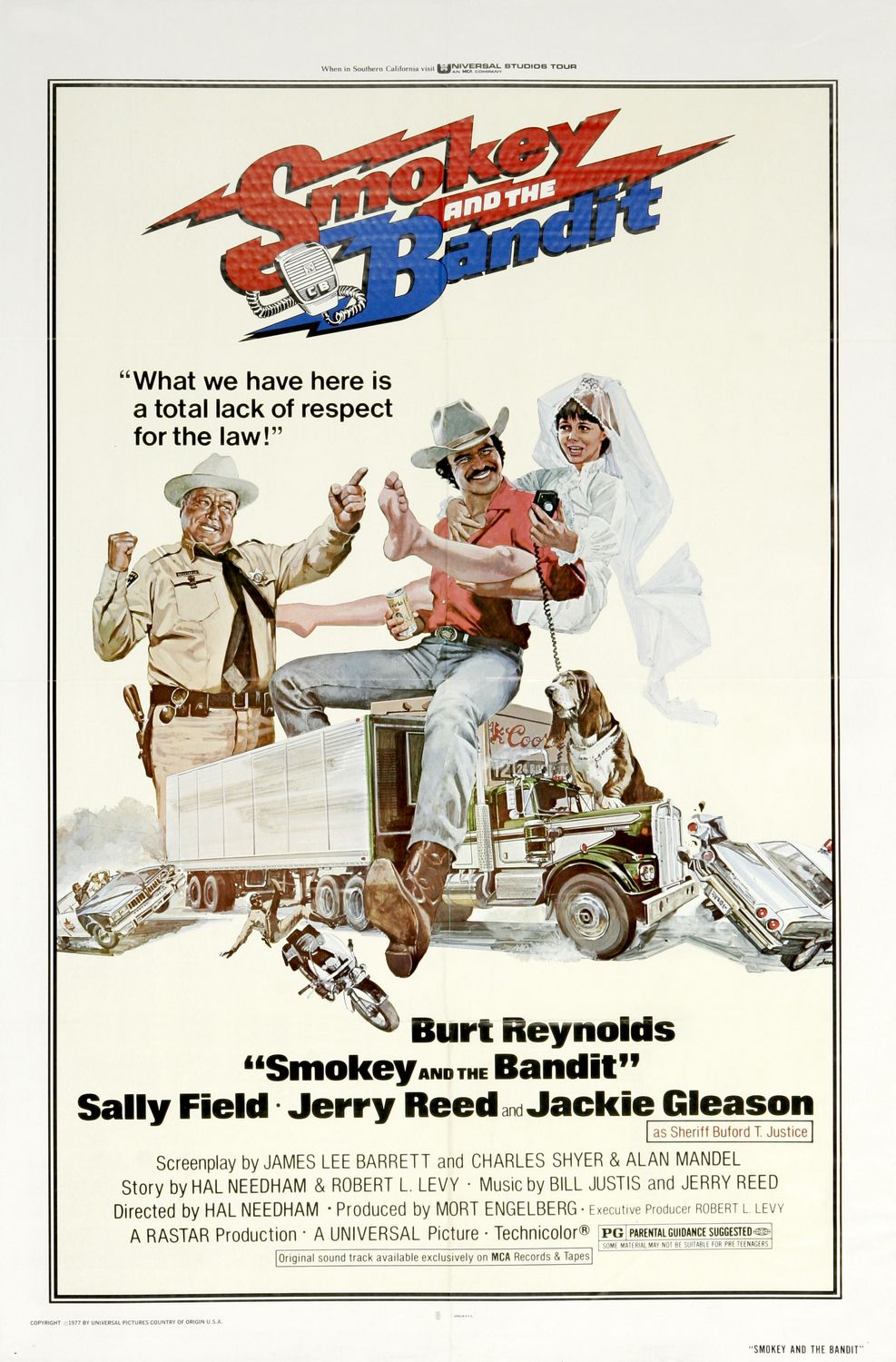
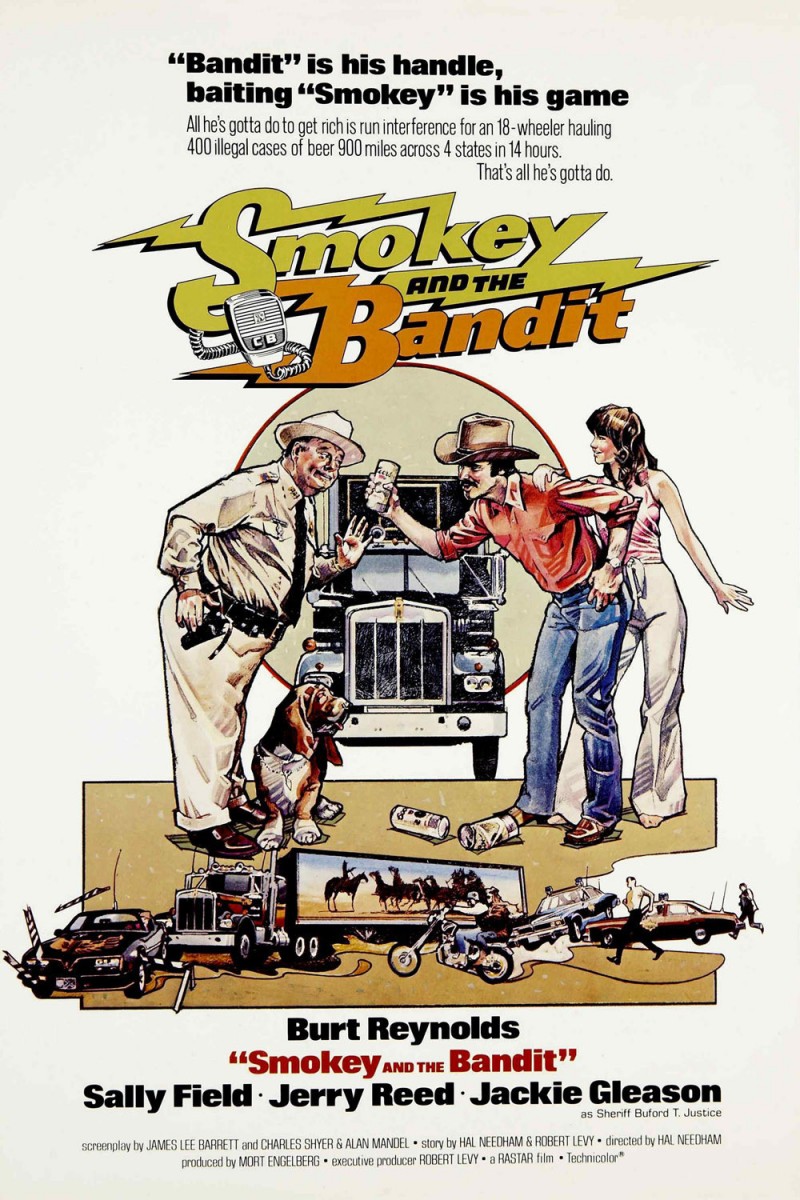
Smokey and the Bandit (1977)

smokey and the bandit 1

By Richard Winters

My Rating: 7 out of 10

4-Word Review: On the road again.

Hal Needham is to bad movies like a cow is to milk and yet when compared to his later efforts this really isn’t too bad especially when you factor in that the main goal was to create light entertainment, which is what this amounts to.

The ‘story’ involves truck driver Cledus (Jerry Reed) bootlegging beer across state lines. Partner Bandit (Burt Reynolds) acts as a decoy by driving in front of the truck in a car with a souped up engine. Jackie Gleason plays the sheriff out to get them.

The set-up could have been played out more and would have been funnier if it had. Sally Field is a nice addition and has a rare turn of being portrayed as a sexy lady. Her initial banter with Reynolds is fun, but having their relationship immediately turn romantic bogs everything down. It would have worked better had things stayed slightly antagonistic and then turned lovey-dovey only at the very end.

Reynolds has always had great charm and it’s played to the hilt here. His laugh alone is infectious, but he seems a little bit too laid back and detached. He goes through all sorts of wild car chases, but neither he nor is car ever receive even a little scratch. The police are also too inept and it would have been nice if they had, even momentarily, apprehended Reynolds just too prove they were a viable threat and given this thing a little tension.

Gleason is fun and his presence gives this film most of its points. Unlike Reynolds he isn’t so detached and he infuses his part with a lot of energy. His ad-libbed scatological lines at the beginning are great as is his coined “sumbitch” phrase. Seeing him stubbornly continue to drive his squad car even as it becomes increasingly smashed up is a good piece visually.

However, the film tends to water-down his character, which was a mistake. The biggest problem is the fact that he is initially portrayed as an intimidating figure. Then it proceeds to show him constantly out ranked and out managed by the other police forces in all the other counties he goes into while chasing Reynolds. Eventually it makes him seem too ineffectual and stupid. It would have worked better had the chase taken place solely in Gleason’s county, therefore having him stay funny, but still maintaining his menacing presence. It also would have been nice to have more direct confrontations between him and Reynolds although the one they do have is pretty good.

Needham was a former stunt man so the actual star of the picture is supposed to be the stunt work, but this area seems pretty derivative and features stuff that has been done hundreds of times before. The chases should’ve been extended and shot from more exciting angles. The climatic chase sequence is weak and can’t even hold a pinkie to the one used in The Blues Brothers.

Overall though it has enough good banter and star chemistry to be amiable.

smokey and the bandit 2

My Rating: 7 out of 10

Released: May 27, 1977

Runtime: 1Hour 36Minutes

Rated PG

Director: Hal Needham

Studio: Universal

Available: VHS, DVD, HDDVD, Blu-ray, Amazon Instant Video

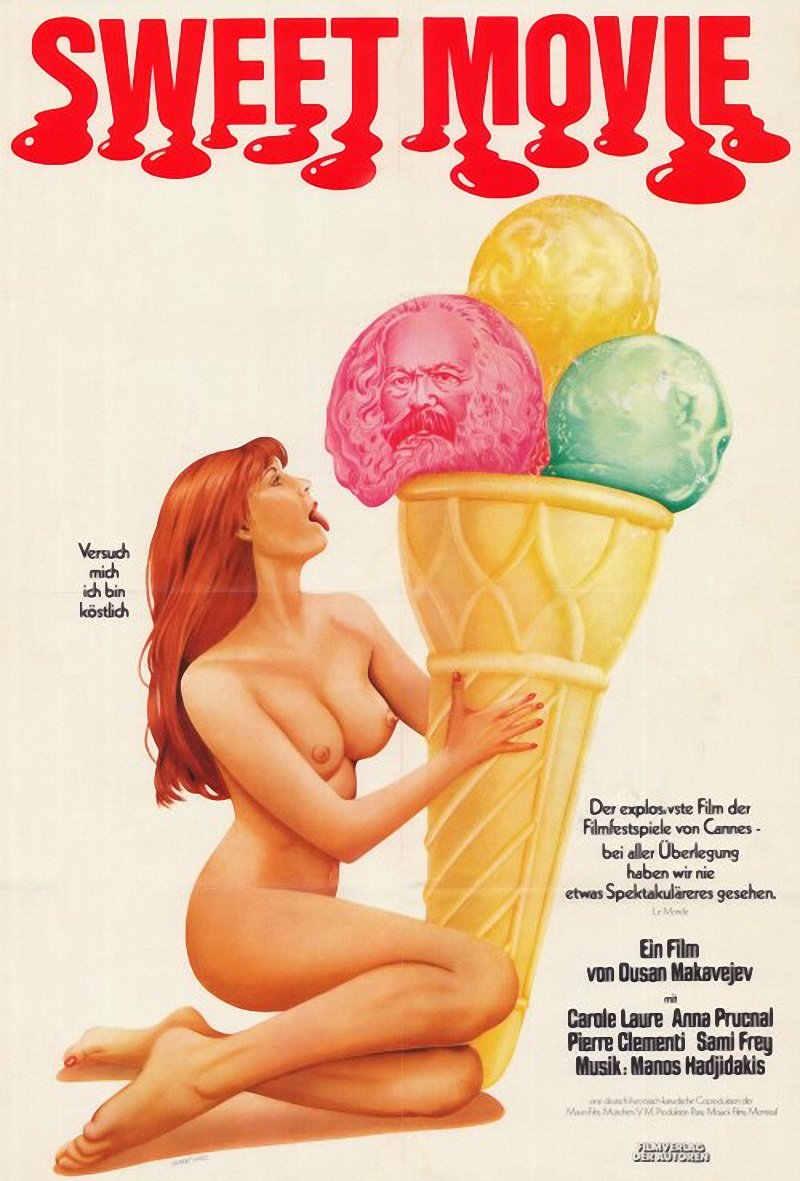
Sweet Movie (1974)

sweet movie

By Richard Winters

My Rating: 8 out of 10

4-Word Review: Every fetish is shown

Unfairly labeled as excessive and perverse, this film is really a fascinating and intricate study into the recesses of the sexual mind. It looks at sex in all its complexities and exposes it as a very primal need with a personality of its own.

The film starts off with an amusing satire on the media and how they have commercialized sex. It involves a game show were a rich millionaire must choose which female virgin he would like for a wife and even has a doctor on hand to examine them and make sure each one is genuine.

This becomes the ongoing theme, which is how society loves to ‘package’ sex and yet really can’t. Director Dusan Makavejev feels that the sexual instinct is too deep to be able to channel completely. The rest of the film goes off on wild tangents that may not make sense to some, but the intent is not to tap into the logical mind, but instead the sexual senses. In the process it tries to bring out the sexual side of the viewer by digging deeply into their own subconscious mind.

The final result is an almost non-stop barrage of unique, lasting visuals. Some are funny, stimulating and at times even grotesque. Yet sex has all these qualities so any movie realistically dealing with it should have it as well. Overall despite the controversial approach it becomes lyrical, compelling, and quite well-shot.

By not boxing sex into any type of ‘standard’ is what makes this different from just about any other erotic film out there. Most directors seem to feel that two sweating bodies between satin sheets are all you need to make a film ‘sexy’. Here you get something much more daring and expansive by showing sex in both its beauty and ugliness. Outside of bestiality and necrophilia just about every other fetish gets examined including interracial sex, sex with minors (never shown, but strongly implied), food sex, vomiting, scatology, water sports, and even violent sex. Sometimes it gets vulgar yet still remains provocative and fascinating to the more open-minded.

Star Carole Laure is incredibly beautiful and submits herself to her demanding role with a reckless abandon that is refreshing if not unprecedented and helps make the film impactful.

There’s some really amazing sequences including having Laure carted around in a suitcase with only her head sticking out. This is also one those rare films outside of Paul Morrissey’s Trash that features more shots of the male genitals than the females.

Obviously there will be those that will find the whole thing disgusting and offensive as it is very explicit even by today’s standards. This film could very well go beyond most people’s ‘comfort zones’ so I don’t want to suggest it to anyone unless they are fully prepared for what they are about to see, but for those who are game it could come off as a unique one-of-a-kind experience.

My Rating: 8 out of 10

Released: June 12, 1974

Runtime: 1Hour 38Mintues

Rated NC-17

Director: Dusan Makavejev

Studio: Maran Film

Available: DVD (The Criterion Collection)

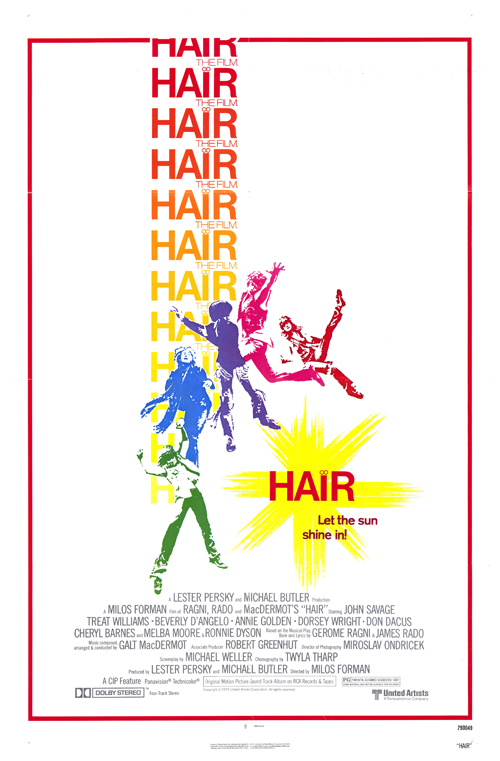
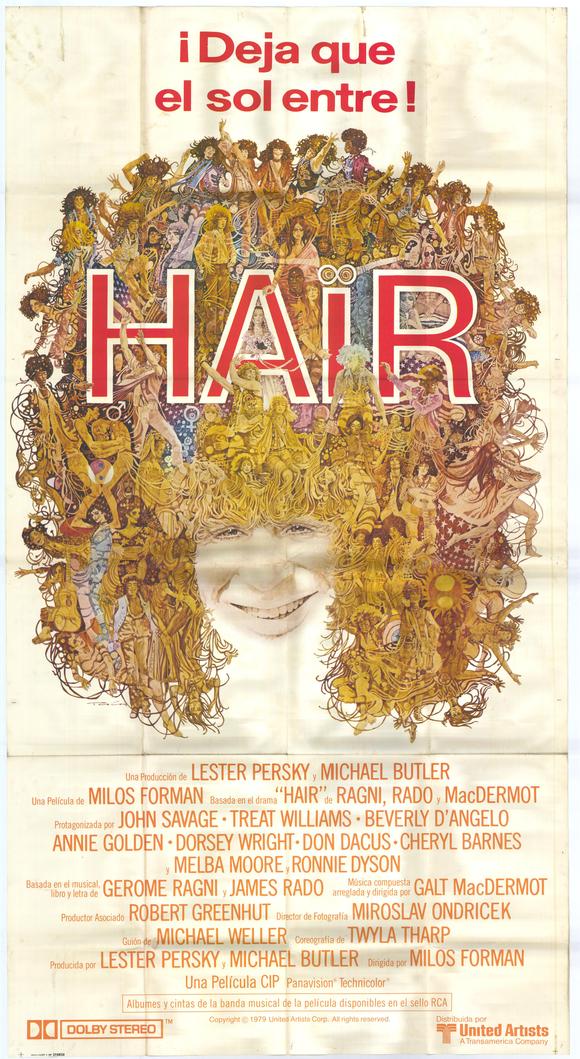
Hair (1979)

hair 2

By Richard Winters

My Rating: 5 out of 10

4-Word Review: Hippies versus the establishment.

A young draftee (Savage) goes to New York to join the army. Along the way he inadvertently walks into a ‘happening’ of hippies in Central Park who begin to socialize with him and the rest of the film looks at their efforts at trying to get him not to go.

It is easy to see how during its era this stage play would have been an exciting even vibrant experience. It perfectly captures the moods, thoughts and uniqueness of the period. However this film version doesn’t. It’s made ten years too late and the spirit just isn’t there. Even the protest rallies seem mechanical and manufactured. The period was known for its bright psychedelic colors and yet here everything is gray and bland. The camera angles should have been more unconventional and Twyla Tharp’s much ballyhooed choreography looks like nothing more than jumping around with song renditions that are horrible.

The hippies themselves are also a problem. For one thing Treat Williams looks too old as their leader. They also appear too clean-cut as these guys are literally sleeping on the streets and yet none of them have a beard.

hair 3

A few good moments do abound. Williams’ constant confrontations with the establishment are fun. Having them crash a society party and then having Williams dance on a table with Charlotte “Facts of Life” Rae is great. The dramatic twist at the end is powerful and really hits home at how impersonal and sad that war really was.

Savage looks and talks like the country boy he is playing, which is good, but his brief attempt at singing is downright awful. Brad Dourif was the original choice for the part and I think he would have done better.  Beverly D’Angelo is enticing as a snooty girl who transforms into a hippie one and Miles Chapin is amazing simply because he was a 28-year-old man that managed to convincingly look and act like a 17-year-old.

One quibble involves the wearing of the same army outfit by several different people. The uniform is originally worn by a general who is on the short side. They steal it and put it on Williams who is much taller and yet it still fits perfectly. They then put it on Savage who is much thinner and yet strangely it fits perfectly on him as well.

hair 4

My Rating: 5 out of 10

Released: March 14, 1979

Runtime:  2Hours 1Minute

Rated PG

Director: Milos Foreman

Studio: United Artists

Available:  DVD, Blu-ray, Amazon Instant Video

Rollercoaster (1977)

rollercoaster

By Richard Winters

My Rating: 5 out of 10

4-Word Review: Extortionist blows up rollercoasters.

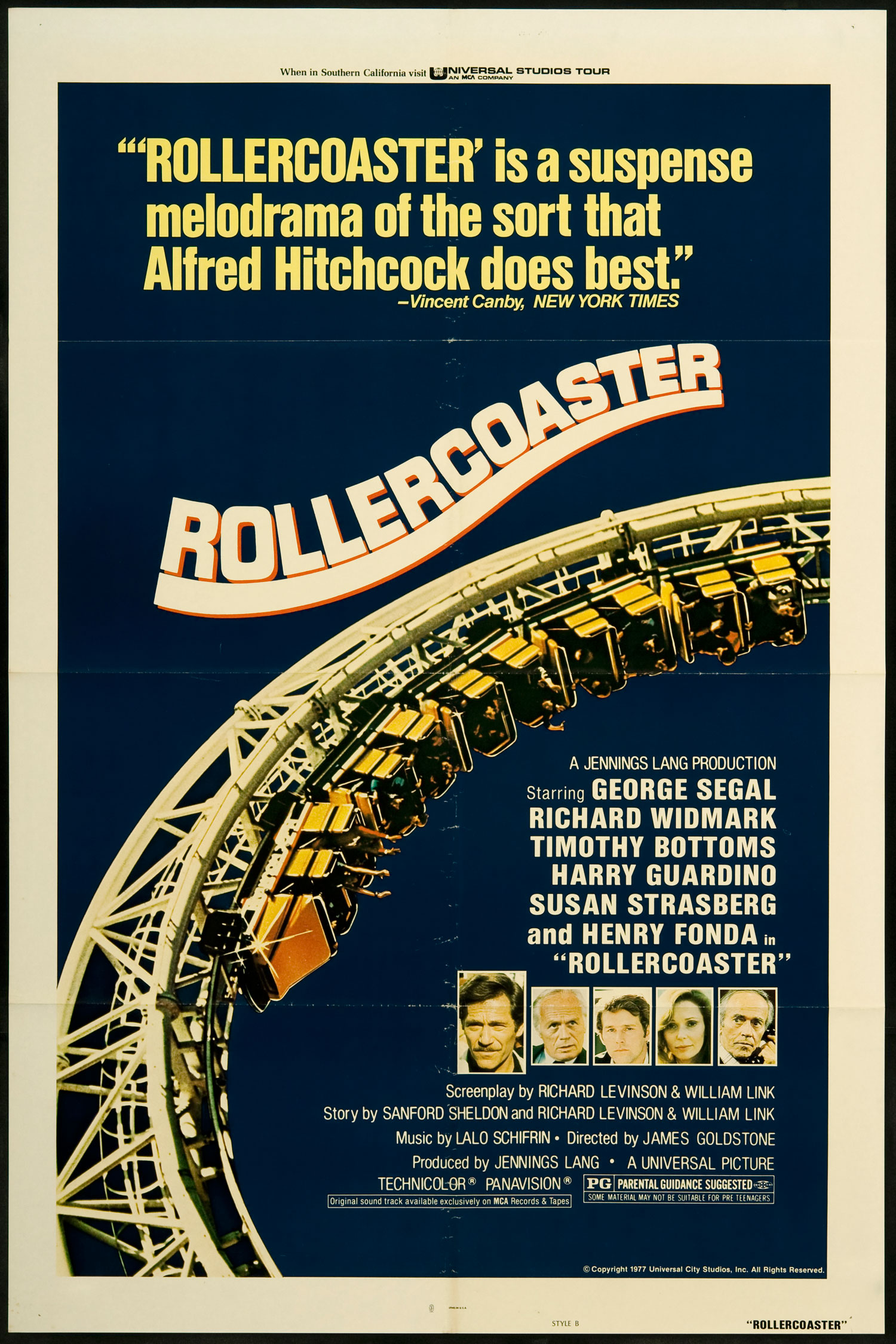
A young man who is never given a name and is played by Timothy Bottoms is able to make home-made radio controlled bombs that he attaches to roller coaster rides at amusement parks. He threatens to blow up a major one during a big event unless he is given 1 million dollars. It is then up to Harry Calder (George Segal) the chief investigator to find the extortionist and the two end up playing an elaborate game of cat-and-mouse.

The film’s pacing is poor. It opens with the extortionist blowing up a roller coaster and Segal coming to investigate and then all of a sudden it cuts to an uninspired ten minute segment involving Segal’s family life before it finally gets back to the investigation. Outside of seeing a young Helen Hunt as his daughter, the family scenes offer nothing and should have been scraped completely.

Despite having ‘disaster epic’ written all over it the filmmaker’s unwisely decided to make this more of an ‘intellectual thriller’ with very little action or special effects. The only real action/special effects come at the beginning when Bottoms blows up a coaster and everyone on it comes crashing down. However, it looks too sanitized and fake as it is far too obvious that it is dummies inside of the coaster cars and not real people.

As the villain Bottoms has got to be one of the dullest you will ever see. Absolutely nothing about him is interesting and there is no back story given as to why he is doing this or how he manages to be so very clever. Henry Fonda is wasted in a ridiculously small and insignificant role and one wonders why he would have even taken it.

Segal plays his part with a good ‘everyman’ quality that makes him easily relatable and it is nice to see him living in an apartment that is reasonably sloppy. It is also fun to watch him ride a roller coaster while everyone else is screaming he just sits there looking bored. Richard Widmark is equally good and possibly at his most gruff and abrasive and the sparing relationship that he has with Segal is entertaining. The intricate cat-and-mouse game that Segal plays with Bottoms isn’t too bad either. There are a few impressive shots where the camera is mounted on the front roller coaster car and then is glided along the tracks at high speeds giving the viewer of a very realistic feeling of actually being on a roller coaster.

Ultimately the film just does not live up to expectations and needed more special effects, more action, more suspense, and just plain more disaster. The bad guy should’ve been more distinctive and a much more prominent role for Fonda as some feel he may be one of the great actors of all time so if you got him use him.

My Rating: 5 out of 10

Released: June 17, 1977

Runtime: 1Hour 59Minutes

Rated PG

Director: James Goldstone

Studio: Universal

Available: DVD

Sheila Levine is Dead and Living in New York (1975)

sheila levine is dead and living in new york city

By Richard Winters

My Rating: 3 out of 10

4-Word Review: Heartbreak in the city.

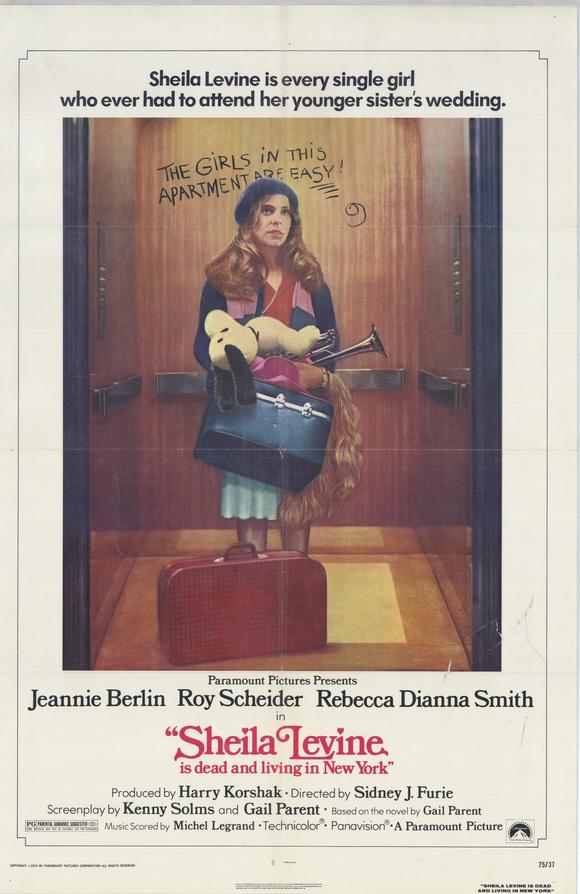
Sheila Levine (Jeannie Berlin) is a recent college grad who moves to New York City in search of a more exciting and glamorous lifestyle, but finds a long line of heartbreak and empty opportunities instead. When her younger sister gets married before she does she becomes jealous, but refuses to give up and continues to strive to make her mark no matter how small it might be.

Based on the Gail Parent novel the film manages to hit a few marks. Her nagging mother and the exchange that she has with a job placement coordinator at an employment agency is good. However, the idea that a woman’s sole purpose in life is to get married and then not have to work afterwards is seriously dated and will not connect with today’s viewers.

The main character isn’t exactly likable either. She is bossy and intrusive with her roommate and seems to think that because she is a college grad that should entitle her to only ‘creative’ and interesting jobs that doesn’t involve typing. She is also strangely naïve as she gets picked up by a middle-aged man (Roy Scheider) at a bar, goes back to his place for sex and then somehow thinks that means he is in love with her and is genuinely shocked when he bluntly tells her that he was simply appeasing his ‘animalistic instincts’. We are supposed to feel sorry for her, but instead it’s more fun seeing her get slapped down.

Berlin is the daughter of Elaine May who was the queen of sardonic humor and I came into this thing with high hopes, but her performance is only so-so. She does indeed look very Jewish and the perfect composite of the Rhoda Morgenstern TV character and a young Joan Rivers. However, her incessant whiny and nasally voice may be too much for some.

Scheider manages to be pretty solid. I was never impressed with his acting range, but here he gives quite possibly his best performance in what is most likely his least known role.Sidney J. Furie’s lifeless direction though makes the production come off like a filmed stage play with scenes that seem to go on forever.

Michel Legrand’s melodic orchestral score is out-of-place and better suited for a romance. There is also a song with a funky 70’s sound that gets played at regular intervals and becomes increasingly annoying.

I was expecting this to be a quirky, dry humored comedy, but found it to be more of a stilted drama that relied too much on the obvious and at times became almost painful to watch. The romantic angle between Scheider and Berlin is unbelievable and ultimately quite corny, which impedes the film from achieving any type of true potential.

My Rating: 3 out of 10

Released: May 16, 1975

Runtime: 1Hour 52Minutes

Rated PG

Director: Sidney J. Furie

Studio: Paramount

Available: YouTube

The Night Porter (1974)

the night porter 3

By Richard Winters

My Rating: 8 out of 10

4-Word Review: A strange sadomasochistic relationship.

As the title suggests this film deals with the darkness of the human mind, relationships, sex and society as a whole and has a Freaudian theme of exploring the weird sexual obsessions of those who on the outside may seem perfectly functional and ‘normal’.

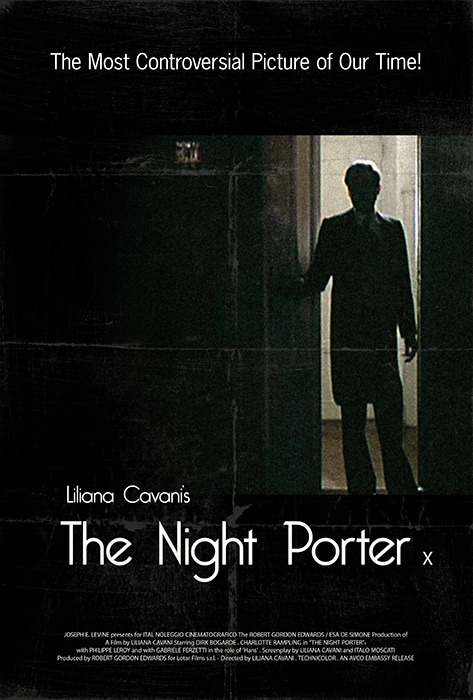
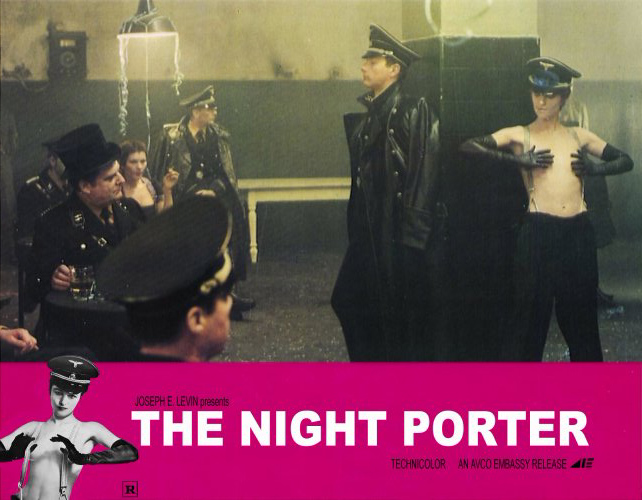
The story focuses on a concentration camp survivor Lucia (Charlotte Rampling) who twelve years later, by chance, meets her former captor Maximilian (Dirk Bogarde). She is now married while he is working as a night porter at the hotel she is staying at. The twist here is that she decides to go back to him and continue the bizarre sex rituals they once had.

The film’s most interesting aspect is focusing on the long term psychological ramifications of those surviving traumatic experiences. It looks both at the victims and the captors who now must learn to ‘rationalize’ their guilty conscious and it questions whether anyone can truly function normally after surviving such severe circumstances or whether society has any ability to make someone ‘adjust’.

This is definitely complex material and director Liliana Cavani has a good grasp on it. The shot compositions are full of stark shadows with a definite emphasis on the surreal, which comes to play the most during the sadomasochistic fantasy segments.

The problem with the film lies in the fact that it doesn’t have the intended strong impact. There’s no momentum or discernible tension. The characters are complex, but not that interesting and we really don’t care particularly what happens to them.

The films strongest point is actually in its final sequence, which brings the whole thing together. Like in any great movie there’s the one shot that says it all and here it’s the final one where visually, without saying anything, it shows just how isolated these outsiders truly are. It also exposes how their personal demons have imprisoned them and how dysfunctional society is at handling them.

the night porter 2

My Rating: 8 out of 10

Released: April 3, 1974

Runtime: 1Hour 58Minutes

Rated R

Director: Liliana Cavani

Studio: AVCO Embassy Pictures

Available: VHS, DVD, Blu-ray, Amazon Instant Video

Billy Jack (1971)

billy jack 2

By Richard Winters

My Rating: 6 out of 10

4-Word Review: That’s one mean kick.

Barbara (Julie Webb) is the daughter of Mike (Kenneth Tobey) who is the deputy sheriff of the nearby town.  She comes home one day after having run away and advises him that she is now pregnant, but has no idea who the father is as she had taken part in a sex orgy at some hippie commune, which outrages her father so much he beats her severely. To escape she hides out at the nearby alternative Indian school run by Jean (Delores Taylor), but Mike tries to use his authority as an officer to force them to turn her over and it is up to half-breed Billy Jack (Tom Laughlin) to protect her and the rest of the school from the town’s vindictive force and prejudice.

Although this movie has justifiably been lambasted for years as being more political propaganda than an actual story it still has some surprisingly effective moments. One of the best is the fight scene that takes place in the middle of town where Billy fights off the bad guys by using a Hapkido fighting technique where he raises his leg and kicks his assailant in the face with his foot. Some of the skits done in the school by the students as well as other young performance artists are fun particularly the one where the parents and teens are forced to reverse roles and the majestic aerial photography of the rustic New Mexican landscape is breathtaking.

Writer/director Laughlin casts himself in the title role, which in some ways seems a little bit like a vanity project. The character is poorly defined and subsists too much on a mystique. Having him somehow survive being shot in the stomach is too extreme and Laughlin gives a very one-note performance and is able to show only one emotion, which is that of a brooding, constant anger.

Taylor, who was Laughlin’s real-life wife, comes off better. Her face is weathered and she is no beauty by the conventional standard, but she seems to genuinely exude the values of her character and the scenes showing her after she is raped as well as the one where she begs Billy Jack to surrender during a shootout are emotionally charged and well down.

billy jack 3

The rest of the supporting cast is so-so with the adults coming off better. It’s a great chance to see young stars in the making including Howard Hesseman and Richard Stahl a comic actor whose deadpan delivery is second-to-none. Some of the young school girls are cute including Debbie Schock who at the time was Laughlin’s kid’s real-life babysitter. However, the teens acting is poor and they are given too much screen time without any ability to carry the film. The worst is Stan Rice who plays Martin and whose frozen facial expressions and monotone delivery makes him seem like he is a zombie.

David Roya as Bernard Posner the main antagonist in the film gives a decent performance, but the character’s motivations are confusing. He is aggressive with everyone and yet when Billy Jack appears he freezes up even though Billy is nothing more than a shrimp of a guy wearing a dorky looking hat. One scene in a café has Billy going on a long overly-dramatic rant and he turns his back to Bernard who remains frozen in terror even though he could’ve easily just whacked Billy in the back of his head and knocked him out. Another scene has Billy standing next to Bernard’s car who is in the driver’s seat and orders him to drive the vehicle into the lake, which he obediently does even though I thought he could’ve put the car into reverse and either run Billy over or forced him to jump into the lake instead.

The idea was to show that Bernard was a coward, but even a coward can act aggressively if given the upper-hand and by having him behave in such a strange way makes these scenes and the film as a whole seem very implausible and amateurish. Apparently actor Roya had these very same concerns and he argued with Laughling about them, which ended up creating a lifelong rift between the two.

The characterizations are broad, but on an emotional level it still works particularly the final scene where the students line-up and defiantly raise their fists into the air as Billy Jack is being driven away. The film’s pacifist stance while still delivering a high quota of violence has taken a beating by the critics through the years, but I saw it a little bit differently. I interpreted the message to be that pacifism is good in theory, but not always effective in execution.

billy jack 1

My Rating: 6 out of 10

Released: May 1, 1971

Runtime: 1Hour 54Minutes

Rated GP

Director: Tom Laughlin

Available: VHS, DVD, Blu-ray, Amazon Instant Video, Netflix streaming

Alucarda (1977)

alucarda 2

By Richard Winters

My Rating: 2 out of 10

4-Word Review: Another Exorcist rip-off

Justine (Susana Kamini) arrives at a convent after the death of her parents. She meets up with a strange young woman named Alucarda (Tina Romero) who almost immediately professes her true love for Justine and the two make a weird pact. Alucarda then seems to become possessed and it rubs off on Justine sending the nuns and priest at the convent into a panicked frenzy to rid both girls and the place from the evil presence.

This bizarre, cheap Mexican production comes off like someone’s drug induced acid trip. Yet it has still managed to acquire a small cult following and even has one reviewer at IMDB calling it ‘brilliant’ even though I found it to be anything but and only reconfirms that there is somebody out there that will like anything. Juan Lopez Moctezuma’s direction is unfocused and undisciplined. The story borders on being almost incoherent with wild twists and story arches that occur at a breakneck pace. The special effects are tacky and there isn’t a single scare in the whole thing.

This supposedly takes place in the 18th century, but the priest wears a wardrobe that looks like he is from China even though the setting is Mexico and the outfits worn by the nuns defy any era and appear to be made by a costume designer who was drunk. The pounding rock-like score has a resemblance to music from Tangerine Dream, but a much weaker version and doesn’t connect with the time period that the story is in. It has elements that will remind you of Suspira and Ken Russell’s The Devils, but both of those films are far superior to this one and only make you wish you were watching those instead.

The acting is amateurish and over-the-top, but star Romero has an interesting look in her eyes and reminded me a bit of a young Genevieve Bujold. There is an abundance of nudity and low-grade eroticism that may make it appealing to some. I did get a kick out of the way the nuns and priest overact and wilt at simply the mention of the devil and Satanism, which I found to be unintentionally funny.

This is just another attempt to cash in on the success of The Exorcist and like the rest of them fails miserably. This isn’t entertaining even on a camp level and I would suggest avoiding it completely.

alucarda 1

My Rating: 2 out of 10

Released: March 10, 1977

Runtime: 1Hour 14Minutes

Rated R

Director: Juan Lopez Moctezuma

Studio: Yuma Films

Available: DVD

Money Talks (1972)

money talks

By Richard Winters

My Rating: 6 out of 10

4-Word Review: It’s all about money.

Allen Funt the creator of ‘Candid Camera’ returns with his second cinematic feature all centered around pranks and stunts done on unsuspecting regular people to see just how far they will go when presented with the allure of money. The film examines the deep seated psychological effect that money has in society and how it controls what people do and in some cases what they don’t do.

This feature is an improvement over Funt’s first. Fortunately he keeps the majority of it on a comic level and avoids trying to make unnecessary ‘profound’ social statements. The film is also faster paced and although the music is still annoying it isn’t as bad and has a bit more of a funky beat. Some of the stunts aren’t necessarily all that funny and few become rather redundant and predictable. However, the majority of them I liked and even found fascinating including the one where a woman walks down the street and intentionally allows dollar bills to fall out of a hole in her pocket and drop to the ground behind her and how surprisingly many people would pick them up and chase after her to give them back. The funniest one is where a mild mannered middle-aged woman gets a job answering phone calls for a man who she finds out is a professional hit man. Hearing her diligently taking down an order and answering questions over the price of a hit while trying to mask her shock and remain calm had me laughing-out-loud.

A few of them are definite artifacts of a bygone era including the many relentless attempts a woman goes through to try to retrieve a simple five dollar bill that is lodged beneath a car tire. Another segment has a bare foot hippie girl begging for money on a street sidewalk and her startlingly naïve willingness to go back to a strange man’s apartment who approaches her and says he has shoes for her, which she almost does until Funt and crew advise her not to.

A few of the pranks have celebrities in disguise. My favorite was the one with actress Marian Mercer pretending to be a waitress and asking beforehand how much of a tip the customer planned to give her, so she could plan out what type of service she would give him. The segment where comedian Henny Youngman has no money to pay a hot dog vendor, so instead he tells the irritated man a bunch of lame jokes as ‘payment’ is quite funny and I wished it had been extended longer. Muhammad Ali’s bit isn’t quite as good, but his personality is as engaging as ever.

The film also has some good interviews including an opening bit where a commercial jingle writer comes up with on-the-spot a ditty for the film’s theme, which is not bad. Dominic the knife sharpener becomes almost a show in itself with the flamboyant way that he tries to bargain with Funt over not only how much he should be paid to sharpen his knives, but also for his fee to appear in the film. The interviews with hippies who don’t have jobs and don’t want them could have been more interesting had we seen what happened to them twenty years later and if they were still adamantly in the non-work camp, which I doubt. Funt also interviews his own 6-year-old daughter who is surprisingly more perceptive than you might think.

My Rating: 6 out of 10

Released: August 30, 1972

Runtime: 1Hour 21Minutes

Rated PG

Director: Allen Funt

Studio: United Artists

Available: Amazon Instant Video, Netflix streaming