Category Archives: 70’s Movies

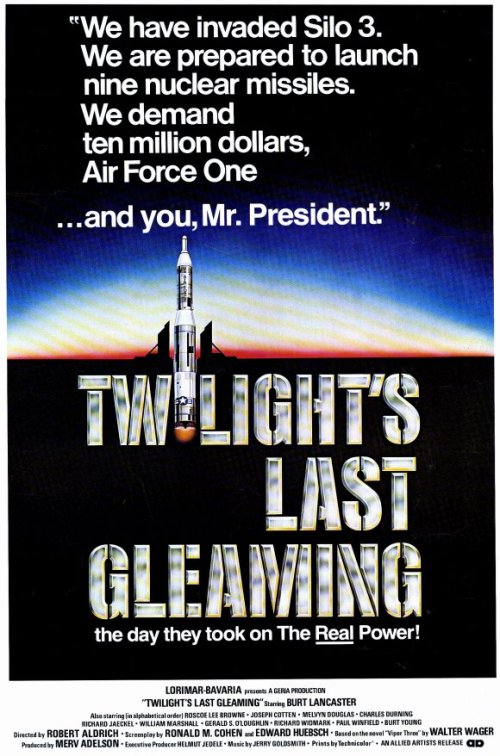
Twilight’s Last Gleaming (1977)

By Richard Winters

My Rating: 6 out of 10

4-Word Review: Nuclear silo under siege.

Loosely based on the novel ‘Viper Three’ by Walter Wager the story centers on Lawrence Dell (Burt Lancaster) a former military general who was sent to prison on trumped on murder charges, but manages to escape and is now out for revenge. With the help of three accomplices (Paul Winfield, William Smith, Burt Young) he breaks into a nuclear silo and threatens to launch it unless the President (Charles Durning) agrees to come clean on the government’s secret agenda in regards to the Vietnam War.

I’ve never read the film’s source novel, but have been told that this takes many liberties with it. The biggest problem is that it jumps ahead too quickly showing the four men right away breaking into the silo when it should’ve started back further to when they escaped from the prison and how they were able to get the access codes in order to break into the silo system to begin with. Winfield has a few great lines and Smith’s hair-trigger personality allows for interesting conflict, so these characters should’ve remained, but instead they are unwisely killed off leaving only Lancaster to pace around nervously, which quickly becomes boring.

Whenever someone escapes from prison the nearby area gets warned usually through the media. Certainly military personnel would’ve been put on high alert and thus making Dell’s ability to break into the silo, which was too easy to begin with, much less likely. The fact that a crazed general could break into a silo system and threaten to start WW III and have it never leaked to the media is highly unlikely as well, which along with various other loopholes makes this thing hard to fully get into.

Charles Durning is a great supporting actor, but here is badly miscast as the President. His facial expressions during his phone calls with the other Generals warning him of what is going on are unintentionally comical and too much time gets spent focusing on him contemplating on whether he’ll given into Dell’s demands until it seems like he is the star and Lancaster only a secondary player. Having him described as being an ‘honest politician’ and ‘a President who would never lie’ seems like an oxymoron as I don’t think a politician could even survive in Washington if they weren’t able to spin the truth sometimes and only helps to make the character seem too idealized.

Spoiler Alert!

This thing though really ‘jumps-the-shark’ at the end as I cannot imagine any circumstance where the secret service would allow the President of the United States to enter into a nuclear silo all alone and be used as a hostage. If they were real desperate they might try to pawn off an imposter in an attempt to fool them, but never the actual President as it would put him into too vulnerable a position. Also, the ‘shocking secret’ about why the U.S. got involved in the Vietnam War really isn’t all that earth shattering and certainly not worth sitting through simply to find out.

End of Spoiler Alert!

Director Robert Aldrich’s prolific use of the split screen is the one entertaining aspect and almost enough to overlook its other many faults, but at best it’s only a mindless programmer that manages to elicit minor tension only if you don’t think about it too hard.

My Rating: 6 out of 10

Released: February 9, 1977

Runtime: 2 Hours 26 Minutes

Rated R

Director: Robert Aldrich

Studio: Allied Artists

Available: DVD, Blu-ray
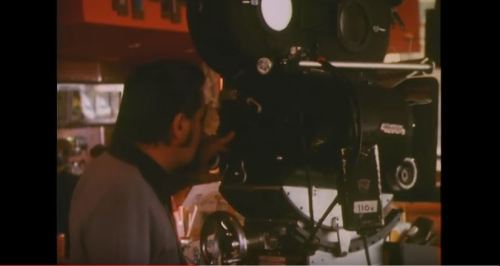
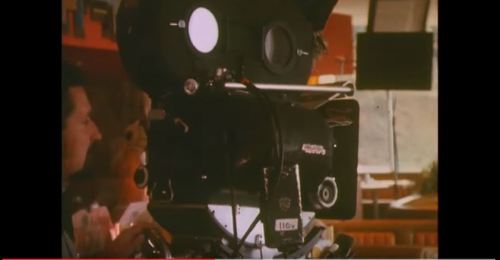
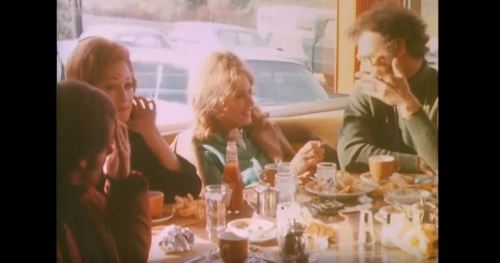
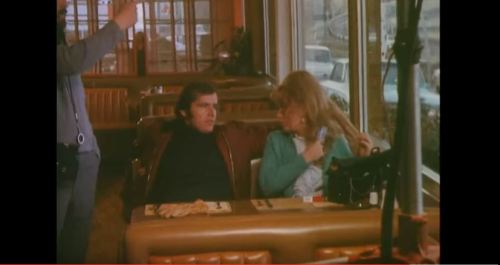
Behind the scenes of Five Easy Pieces (1970)

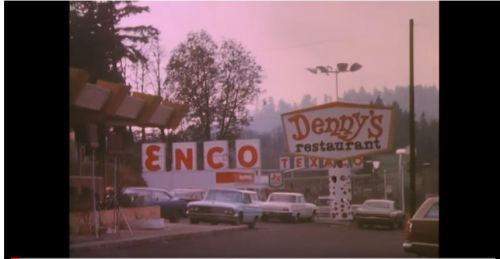
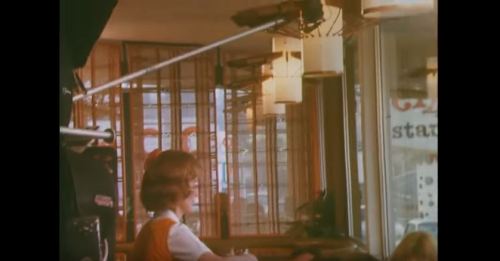
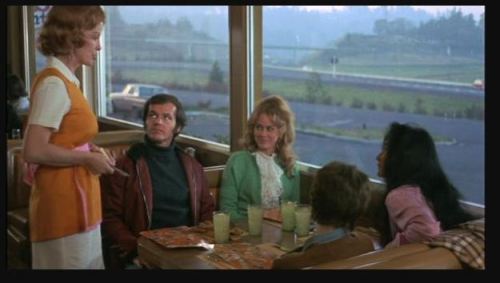
We celebrate this July 4th by looking back at a iconic American classic ‘Five Easy Pieces’. The film is best known for its memorable scene inside a Denny’s Diner, so I thought it would be fun to show some stills of that scene being filmed, which was in November of 1969 as well as what those same locations look like today. First, here’s a shot of the scene where Jack Nicholson confronts a stubborn waitress (played by Lorna Thayer).

Here’s how that very same booth looks like today:

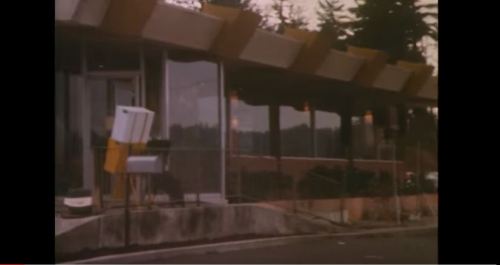
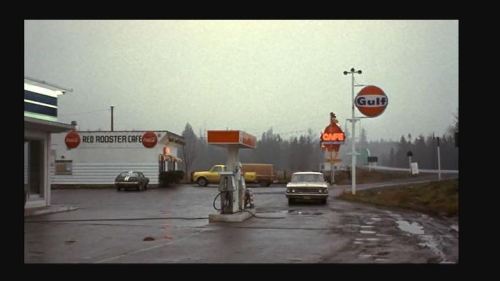
The film was shot at a Denny’s restaurant in Eugene, Oregon. Here’s some shots of its exterior in 1969:

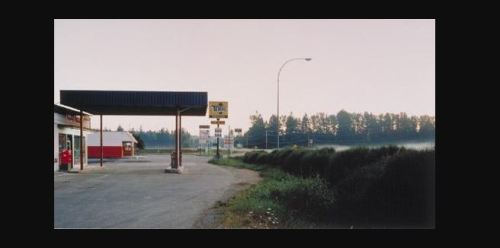
Here’s a shot of the restaurant today. Surprisingly it hasn’t changed too much:

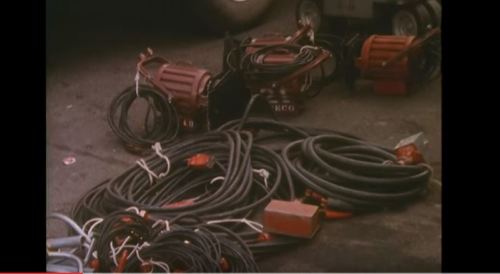
Here’s a shot of the lighting equipment used for the scene:

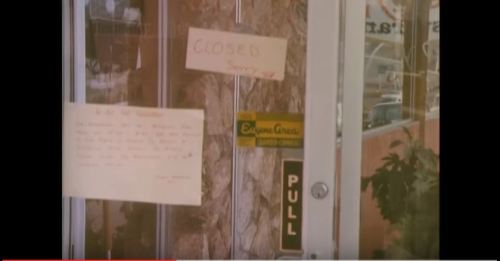
Here’s the sign customers saw on the Denny’s door the day the movie was shot.

Cinematographer Laszlo Kovacs getting ready to shoot the classic scene:

Here’s Director Bob Rafelson, Karen Black, Lorna Thayer, and Jack Nicholson sitting around the lunch table and rehearsing their lines for the now famous scene:

Kovacs checks the lighting levels as Nicholson and Black prepare:

Getting the boom mike into place:

Here’s a shot of the final scene where Nicholson decides to abandon Black:

And here’s how that location looks like today:

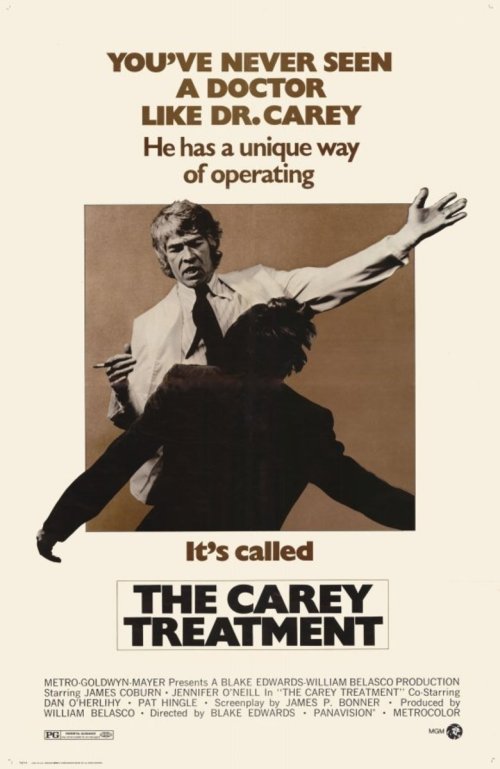
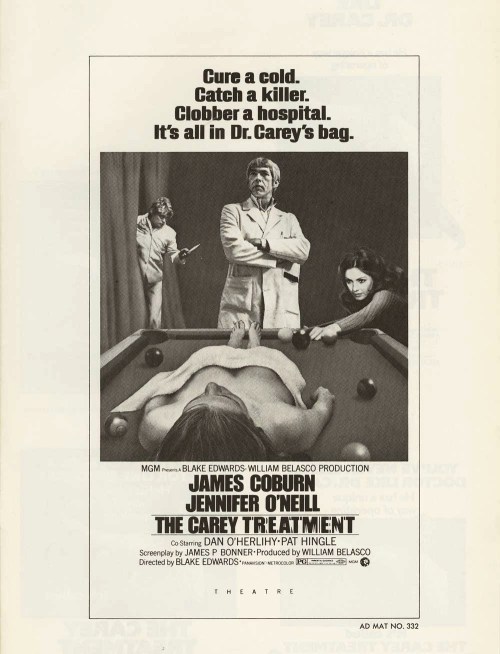
The Carey Treatment (1972)

By Richard Winters

My Rating: 6 out of 10

4-Word Review: A Pathologist solves mystery.

Based on an early Michael Crichton novel, the story centers around Dr. Peter Carey (James Coburn), who starts a new job as a pathologist at a local Boston hospital and soon finds himself embroiled in a mystery when his good friend Dr. David Tao (James Hong) gets accused of performing an illegal abortion on the daughter of the hospital’s chief surgeon (Dan O’Herlihy), which later kills her. Carey is not convinced that his friend performed the procedure and sets out to prove his innocence when the police are of no help.

This film was noted for its behind-the-scenes turmoil including accusations from director Blake Edwards that he was belittled by the film’s producer William Belasco in front of the crew and told that he would never work in Hollywood again and afterwards having the film edited without his permission. Edwards later sued and his experiences working on this project became the basis for his 1980’s film S.O.B., which savagely satirized the movie making business and the people who ran it.

The plot isn’t bad and attempts are made to give the viewer an authentic feel of the medical profession. One of the better moments is when the doctors perform an autopsy on the victim although I wished they would’ve shown more of the actual corpse on the examining table instead of cutting away from it in an attempt to be ‘tasteful’ as I felt the procedure and what the men discussed during it to be genuinely educational.

Having a hip doctor suddenly turn into an amateur sleuth is the film’s biggest drawback. Coburn plays the part well, but a guy who’s never investigated a case before wouldn’t be so seasoned with the way he handles suspects and tackles clues. He comes off too much like a professional detective who’s spent years in the business and not just a regular person who stumbles into the situation without knowing what he’s doing. The slick way that he solves the case and gets the necessary information is impressive, but not believable. Most people would’ve simply hired a private detective to investigate it and not spent hours away from their job trying to do it themselves, or if they take on the task they would most assuredly have make some mistakes, which this guy never does.

The mystery has enough intriguing elements to remain engaging, but the ultimate reveal is dull and makes one feel like they sat through a big buildup to nothing.

My Rating: 6 out of 10

Released: March 29, 1972

Runtime: 1 Hour 41 Minutes

Rated PG

Director: Blake Edwards

Studio: MGM

Available: DVD (Warner Archive), Amazon Video, Youtube

Three Days of the Condor (1975)

By Richard Winters

My Rating:  4 out of 10

4-Word Review: Who can he trust?

Joe Turner (Robert Redford) works at a New York City CIA office, which fronts itself as a literary agency for historical books. One day Joe decides to sneak out the back way in order to grab some food at a local deli. While he is away a team of assassins headed by Joubert (Max Von Sydow) enter the place and kills everyone inside. Turner, who goes under the code name Condor, returns to find his co-workers dead and no idea who did it, or why. He contacts the CIA headquarters, which is run by Higgins (Cliff Robertson), but soon decides he can’t really trust them and attempts to somehow find a way to survive on his own without returning to his apartment, as he is afraid the killers may be there. Through sheer desperation he kidnaps a woman (Faye Dunaway) at gunpoint and forces his way into her apartment where he hopes he will be able to buy himself enough time until he can figure out what is going on.

The film, which is based on the novel ‘Six Days of the Condor’ by James Grady, has an intriguing set-up, but ultimately gets ruined by having a protagonist become too skillful and shrewd at everything until he ceases to be just a regular guy on the run. For instance he is able to get into a telephone switchboard center much too easily and then uses the skills he had apparently learned as an Army Signals Corps technician to trace a call and find the whereabouts of the bad guy, but this is something a regular person couldn’t do and thus the tension is lost because it’s no longer just an everyman trying to survive, but instead a super-smart individual with convenient knowledge for every situation.

The script has too many situations where the bad guys make unbelievable dumb decisions as well making it seem that the odds really aren’t as stacked against our hero as it initially seems. For instance there is a scene where Redford invades the home of the CIA Deputy Director (Addison Powell) who is supposedly the man behind-the-scenes who had ordered the hit. Redford sits in a downstairs office of the home and plays music very loudly from a stereo until it awakens the CIA director and he comes down to investigate, but wouldn’t you think someone who works in a secret organization would know enough not to walk into a trap as he does here, but instead call the police if he heard a noise downstairs, or if he does come down at least do it while also holding a gun? Also, as a CIA director living in a mansion he should certainly have his home rigged with a security system, but Redford is able to get inside without a sweat even though we are never shown how. Also, why does Sydow the hit man not shoot Redford when he is alone with him in an elevator, which would be a perfect opportunity instead of waiting and trying to do it later at long distance when the two are outside and Redford is in a middle of a crowd and much harder to target?

The film’s lowest point though comes with Redford’s relationship with Dunaway. Only a woman with severe mental problems would magically ‘fall-in-love’ with a stranger in less than 24-hours after he accosts her with a gun and forces his way into her apartment. Even if one would argue that it’s the Stockholm syndrome it’s highly unlikely it would occur so quickly.  There’s even a stylized love making scene that seems too similar to the sex scene in another Dunaway film The Thomas Crown Affair. Besides with all the stress that Redford’s character was going through I’d think he’d be unable to perform in bed, or concerned that she was simply leading him on in order to put him in a vulnerable position, so she could take advantage of it and escape.

Von Sydow’s character, who’s willing to switch allegiances almost instantaneously depending on who’s paying him, is the only truly unique thing about this otherwise shallow thriller. Director Sydney Pollack, who appears briefly as a passerby on a sidewalk, does give the material the slick treatment and captures New York City nicely. There is also a well-choreographed fight scene inside Dunaway’s apartment, but the unsatisfying, limp ending leaves open too many unresolved issues.

My Rating: 4 out of 10

Released: September 24, 1975

Runtime: 1 Hour 57 Minutes

Rated R

Director: Sydney Pollack

Studio: Paramount

Available: DVD, Blu-ray, Amazon Video, YouTube

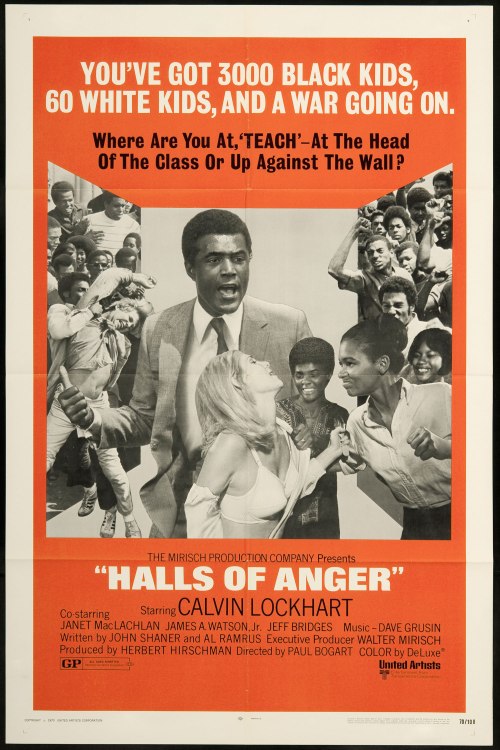
Halls of Anger (1970)

By Richard Winters

My Rating: 4 out of 10

4-Word Review: High school student integration.

Quincy Davis (Calvin Lockhart) is a respected educator who’s asked to transfer to a predominantly black school where it will be his duty to welcome in white students into the mix. Things do not go smoothly and Davis finds himself at the center of many heated confrontations as the black students resent the new white kids and try to make life miserable for them hoping that they will eventually give up and leave.

The film starts out interestingly enough and I found myself caught up in the plight of these students, both black and white, and wondering how they were eventually going to learn to get along. So many films from that period dealt with the opposite angle by examining the difficulties of black kids integrating into a white school making this reverse perspective a refreshing change of pace by showing how racism and hate can come from both ends.

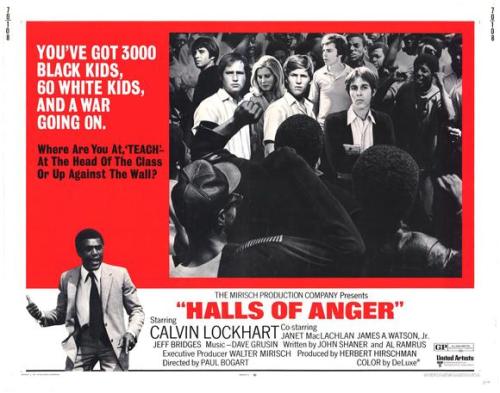
Unfortunately not a lot happens. The film’s poster conveys the idea of rioting in the halls and physical altercations, but those things prove to be quite mild. There is one brief segment where a group of black girls gang up on a white woman (Patricia Stich) inside a locker room and strip off her clothes in an effort to see if she is ‘blonde all over’, but that is about it.

In fact the only interesting aspect to the film was the behind-the-scenes discord and how the filmmakers didn’t really practice what they preached onscreen. According to an August 1970 Life magazine article the black extras where paid only $13.20 a day while the whites got $29.15. The dressing rooms were segregated and director Paul Bogart proved indifferent towards the black performer’s concerns by refusing to hear out any of their complaints with regards to the script.

The only point to watching the movie is to see young stars-to-be in some early roles. I especially got a kick out of Rob Reiner with a full head of hair and no mustache and seeing Ed Asner as a Phy Ed. teacher who tries very ineffectually to break up a fight. Jeff Bridges is also on tap as one of the white students and he should’ve been made the star as his performance is quite effective and it would’ve been a stronger film had he been given the most screen time.

My Rating: 4 out of 10

Released: April 29, 1970

Runtime: 1Hour 36 Minutes

Rated GP

Director: Paul Bogart

Studio: Columbia Pictures

Available: DVD-R (MGM Limited Edition Collection), Amazon Video

The Promise (1979)

By Richard Winters

My Rating: 1 out of 10

4-Word Review: Girl gets new face.

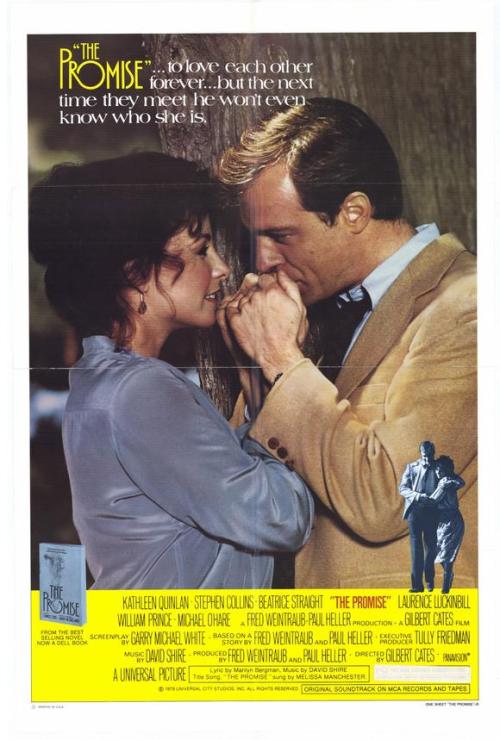
Michael Hillyard (Stephen Collins) is from a rich background and set to take over his family’s thriving business. He wants to marry Nancy (Kathleen Quinlan) who has a troubled past, but Michael’s mother (Beatrice Straight) does not approve and tries to prevent it. Michael and Nancy decide to proceed with their wedding plans anyways, but then get into a car accident that completely disfigures Nancy’s face. While Michael lies comatose his mother makes a deal with Nancy; she’ll pay for a plastic surgeon (Laurence Luckinbill) to repair her appearance as long as she agrees never to make contact with Michael again. Years later as Nancy becomes a successful photographer Michael by chance meets up with her and wants to use her photographs as part of his business. Nancy’s face is now different and her name has been changed so Michael does not know it is really her. Will the two be able to rekindle their relationship and will Nancy ever confide in him her secret?

The biggest loophole is with the plastic surgery. Face reconstruction even in this technology advanced age is still a very complex thing and most people that receive ‘new faces’ after an accident still look a bit ‘off’ and you can tell it’s not their natural one. Rich woman who pay plastic surgeons millions to look younger many times end up appearing disfigured instead and that’s after using some of the best surgeons they could find, so how then in the year 1979 could some doctor not only make a woman’s newly constructed face look completely natural, but actually even better than the original one?

Nancy’s face doesn’t really change either. No make-up effects are used on Kathleen Quinlan’s appearance to manipulate her looks outside of giving her a different hairstyle. She also speaks with the SAME voice, so Michael should still be able to recognize her when she spoke, so then why doesn’t he?

Michael’s character has issues too. When he comes out of his comatose state his mother informs him that Nancy was killed, but wouldn’t you think that after he recovered he would want to visit Nancy’s gravesite and when he couldn’t find it he would become suspicious that she really wasn’t dead?

Also, later on in the film Nancy decides to go to a spot in a park where the couple had years earlier hidden a necklace underneath a rock as a sort of symbolic gesture that the two would remain loyal to one another until death. When Nancy arrives she finds the necklace gone and then Michael walks out from the trees holding it like he was waiting for her to arrive, but the two hadn’t been speaking to each other, so how would he know that she was going to return there? Was he simply going to stand there for days, weeks, months holding that necklace and waiting for a chance encounter that at some point she might decide to come by?

The script also lacks conflict. The mother’s vindictiveness needed to be amped up. Michael and Nancy should’ve also formed other relationships and thus created more difficulties when they tried getting back together. Instead everything conforms to a chick-flick formula with an uninspired script that telegraphs it all from the get-go.

Even romantic diehards may have a hard time with this one, which includes an achingly awful opening song that for some weird reason was nominated for an Academy Award even though it may be enough to make some turn the film off even before it has begun. From a trivia angle I found it interesting that Carey Loftin, who played the mysterious truck driver who terrorized Dennis Weaver in Duel, plays the truck driver here as well who crashes into their car in a visually impressive fashion that is the movie’s only convincing moment.

My Rating: 1 out of 10

Released: March 8, 1979

Runtime: 1Hour 37Minutes

Rated PG

Director: Gilbert Cates

Studio: Universal

Available: VHS

The Culpepper Cattle Company (1972)

By Richard Winters

My Rating: 5 out of 10

4-Word Review: Life on cattle drive.

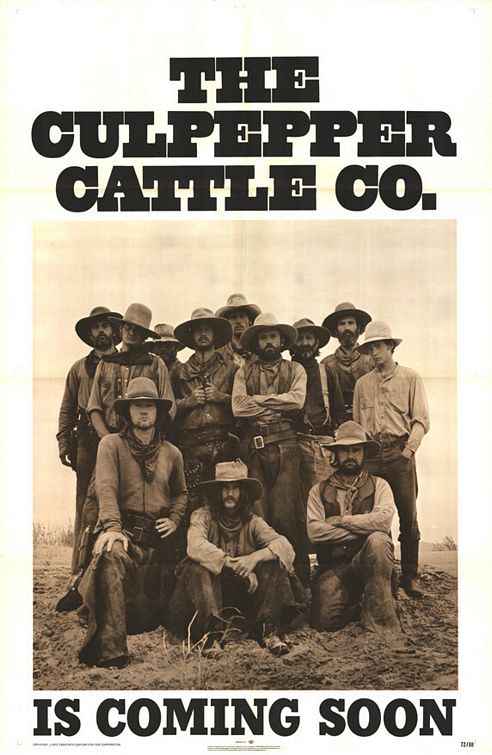
Feeling that life on the farm is boring Ben (Gary Grimes), a young teen of about 16, begs cattle company owner Frank Culpepper (Billy Green Bush) for a job on his upcoming cattle drive. Frank reluctantly agrees, but Ben soon finds what a tough and unglamorous job it is and he makes many mistakes that not only jeopardize the safe delivery of their herd, but the men’s lives as well.

The film marked the directorial debut of famed commercial photographer Dick Richards and was hailed at the time for its attention to detail and realism although for the most part there are a lot of inaccuracies including the men using a type of rifle that was not yet invented during the setting’s time period and the cowboys wearing beards even though most of them from that era just had mustaches. There is also an overuse of music. A gritty movie aiming for realism should rely on natural sound for its ambience and not music to create the mood. The melody itself is pleasing, but it’s the exact same score that was used in the The Flim-Flam Man, that came out 5 years earlier.

The story is episodic with a few too many cutesy ironies and dramatic arches. Certain segments aim for authenticity while at other times it gets completely overlooked for instance when Ben has his horse stolen he must walk the rest of the way to the next town, which is several miles and yet when he gets there he doesn’t look all that exhausted or dehydrated. The one part at realism that I did like is when he is shown taking a poo in the open and using tree leaves to wipe himself, which is interesting as that was one topic that has never been tackled in any other cowboy movie that I’ve seen.

The best thing is Grimes who looks like he was whisked away after his stint on Summer of ’42 and thrown immediately onto this one. His tender, wide-eyed gaze is perfect for the part and I enjoyed seeing the begrudging friendship evolve between him and the other men even as he continued to make life harder for them with one mistake after another.

Spoiler Alert!

The film’s biggest drawback is the violent ending in a film that had been pretty much lighthearted up to then. The climactic shootout is too similar to the one in The Wild Bunch and seemed almost like a trendy cliché as so many other westerns from that period were reverting to a similar type of climax. The idea that this was to convey that Ben as growing up into manhood as he takes it on himself to single-handedly defend a religious group from persecution of a corrupt landowner gets botched because once the bullets start flying he passively stands around with the same deer-in-headlights look that he had all along and does nothing to help as all of his friends from the cattle drive who came to his aid are systematically killed. Instead of coming off as growing up the character seems more like the same naïve screw-up that he had been throughout and continuing to stupidly get himself and everyone else into dangerous jams making him almost like a curse to anyone who dared befriend hm. The blood bath is not exciting either, but instead quite jarring and the whole thing leaves the viewer with an unnecessary depressed feeling when it’s over.

End of Spoiler Alert!

My Rating: 5 out of 10

Released: April 16, 1972

Runtime: 1Hour 32Minutes

Rated PG

Director: Dick Richards

Studio: 20th Century Fox

Available: DVD, Blu-ray (Region B/2), Amazon Video
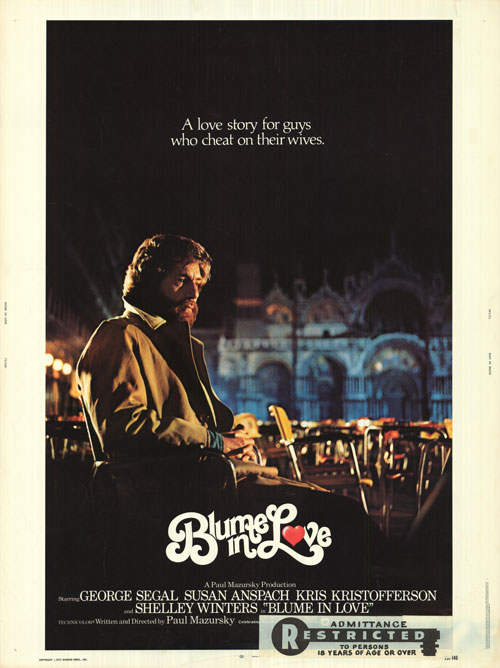
Blume in Love (1973)

By Richard Winters

My Rating: 4 out of 10

4-Word Review: Cheating husband seeks reconciliation.

Stephen Blume (George Segal) is a successful divorce lawyer who suddenly finds himself stuck in a break-up of his own when his wife (Susan Anspach) catches him cheating with his secretary and then leaves him. Now Blume becomes obsessed with winning her back and even starts up a friendship with her new live-in lover (Kris Kristofferson), but as his frustrations boil over he begins to react in violent ways when he can’t get what he wants.

Director Paul Mazursky delivers another insightful look at love and marriage and how the two aren’t always compatible. The narrative works in a fragmented style where clips of the different stages of the relationship are shown at various times and allows the viewer to see the many changes the two go through particularly with our protagonist whose internal flaws are ingloriously displayed for all to see. Normally this could prove a turn-off, but Segal manages to keep the character painfully human enough to be engaging most of the way even though he eventually overstays his welcome.

Mazursky gives the proceedings an artsy, cinema vertite flair especially with the way he captures St. Mark’s Square in Venice and by creating an offbeat romance that is filled with caustic humor. I also enjoyed the supporting cast including Marsha Mason as Blume’s new girlfriend who has a strong bit when she tearfully admits that she will ashamedly remain with Blume even after he acknowledges to her that he thinks only about his wife when the two make love.

Donald F. Muhich is fun as the psychiatrist. He was Mazursky’s real-life analyst and got paid back by being cast in four of his movies. His facial expressions and responses to his patients are so spot-on that it makes you feel like you’re attending an actual patient-doctor session.

Even Kristofferson does well in a part that takes advantage of his laid-back acting style though his character’s friendship with Blume gets overplayed. I felt even the most easy going of people would’ve drawn some boundaries and never have tolerated an ex-husband being around as much as he was. The scene where he finally does punch Blume, which should’ve come a lot sooner, gets totally botched because it has Kristofferson breaking down into a teary-eyed wail right afterwards for no apparent reason.

The film’s biggest flaw though is its manufactured happy ending that makes no sense. Blume was clearly too selfish and immature to have a healthy relationship with anyone and the fact that Anspach decides to accept him back even after he forcibly rapes her is absurd. Both characters were in need of some major psychological counseling and not each other. The fact that the film for the majority of its runtime plays like an anti-love story only to end up throwing in a clichéd wrap-up like all the other formulaic romances makes it a sell-out and a waste of time for the viewer looking for something intelligent and different only to find out that it really isn’t.

My Rating: 4 out of 10

Released: June 17, 1973

Runtime: 1 Hour 55 Minutes

Rated R

Director: Paul Mazursky

Studio: Warner Brothers

Available: DVD, Amazon Video

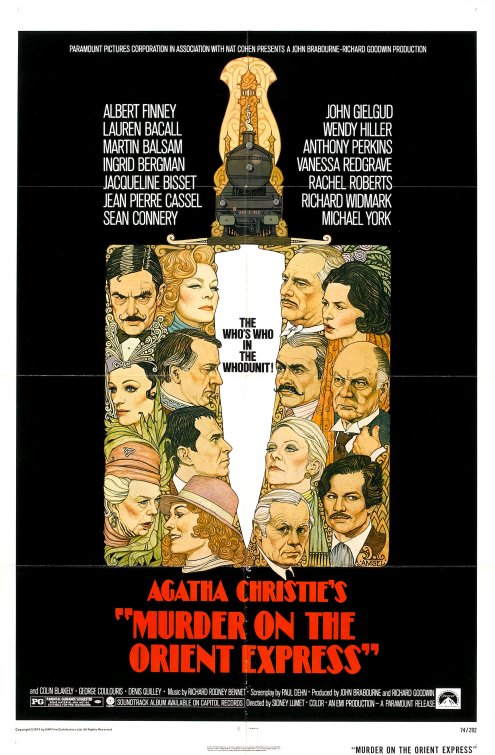
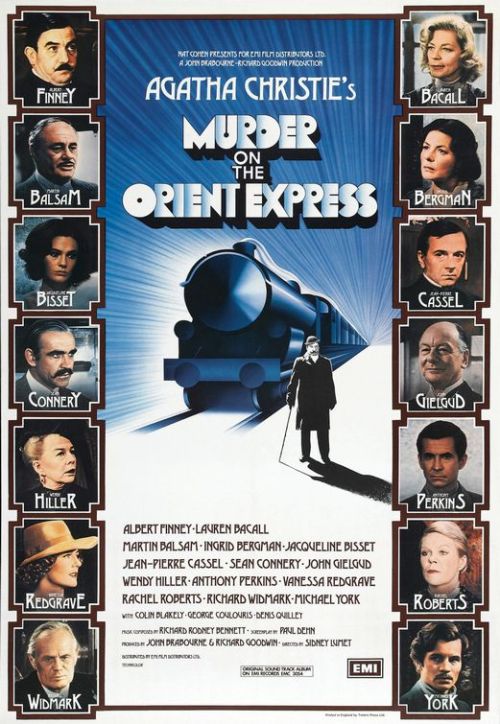
Murder on the Orient Express (1974)

By Richard Winters

My Rating: 8 out of 10

4-Word Review: They all did it.

The time is December, 1935 and world-renown detective Hercule Poirot (Albert Finney) boards the Orient Express as an unexpected guest who’s able to find a spare compartment due to his friendship with the train’s owner (Martin Balsam). During the night one of the other passengers (Richard Widmark) is found dead and it is up to Poirot to solve the crime while the train remains stalled by a large snow bank.

This production is considered by many to be the best film version of any of Agatha Christie’s novel-to-screen attempts and in fact the author herself said as much when she attended a showing of the movie on the night of its premiere. Director Sidney Lumet’s ingenious touch is on-target the whole way as he creates a nice blend of kitsch and camp until the over-the-top costumes, playfully sharp dialogue, and glossy camerawork become more of the fun than the mystery itself.

In fact it’s Lumet’s ability to capitalize on the little things and control every minute detail that makes it so captivating even on repeat viewings. Their ability to turn an abandoned warehouse into a bustling train station is just one example. I also enjoyed the moment when the train leaves the station that gets done to the sound of a waltz composed specifically for the film by Richard Rodney Bennett. Originally they were going to have train sounds edited in and had hired a sound engineer who had spent his whole life recording these noises for specifically this purpose only to get the disappointment of his life when he was told that they had decided to go with the music alone, which crushed him so much that his eyes welled up with tears and he never returned.

Finney’s performance is outstanding. He was not someone you’d have in mind initially for this type of part, but through his brilliant acting and effective make-up he disappears into the role and immerses the viewer in the presence of this highly eccentric character and his unusual habits including the way he puts both his hair and moustache into a hair net before going to bed and reads a newspaper while wearing gloves.

The star studded supporting players are perfectly cast for their parts too. Anthony Perkins nicely plays-up his nervous man routine while Wendy Hiller is enjoyable as the caustic aging Princess who wears a constant frown because her doctor advised her that smiling ‘was not good for her health’. Widmark has an amusing conversation with Poirot particularly with his inability to correctly pronounce the detective’s last name and Ingrid Bergman shines in a small bit as a poor, but devoutly religious woman, which was enough to net her the Oscar for best supporting actress.

Spoiler Alert!

The murder scene in which all the passengers file into Widmark’s cabin and systematically take turns stabbing him is, like with everything else, astutely captured particularly with the way it’s shot by using only a blue tinged light as its sole light source. Lumet craftily uses a two-camera set-up here in which one camera captures the characters and the other focuses on Lauren Bacall’s character’s reactions to it as she stands at the doorway as a lookout. Bacall was never known as an actress to show much vulnerable emotion, but here, at least through her facial expressions, she does quite well. However, this segment also reveals a fatal flaw as Poriot’s cabin was right next to Widmarks’s and earlier in the film he was able to hear the conversations going on in the cabin next him almost perfectly, but then as each participant takes turns stabbing Widmark they say something out loud and yet for whatever reason Poirot never hears this, which makes you wonder why.

End of Spoiler Alert!

The script, by Paul Dehn, gets talky but is saved by its amusing verbal exchanges and Lumet’s use of different lenses to capture it, so I didn’t find it a problem in a movie that deserves its classic status both a mystery and cinematic achievement. The remake directed by Kenneth Branagh is set to be released in November.

My Rating: 8 out of 10

Released: November 24, 1974

Runtime: 2 Hours 8 Minutes

Rated PG

Director: Sidney Lumet

Studio: Paramount

Available: DVD, Blu-ray (Region B/2, A/1)

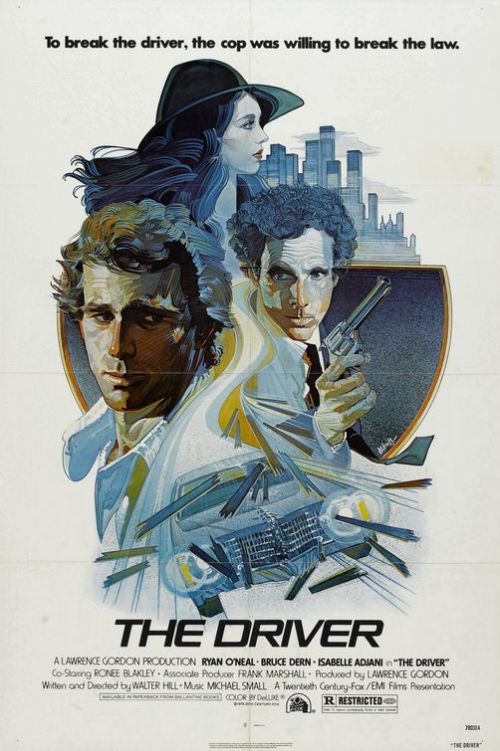
The Driver (1978)

By Richard Winters

My Rating: 8 out of 10

4-Word Review: A professional getaway driver.

Ryan O’Neal plays a man who makes a living as a getaway driver for crooks leaving the scene of a crime. His driving skills are superior and in the criminal underworld his services are in high demand. Bruce Dern plays a police detective obsessed with catching this elusive driver. He makes a deal with a couple of bad guys (Joseph Walsh, Rudy Ramos) to hire this driver for their next robbery and then set him up for a police trap. The Driver is initially reluctant to work with the two, but eventually joins them only to ultimately look for help from a beautiful French woman known as the Player (Isabelle Adjani) to get him out of his jam.

I’ve never been much of an O’Neal fan, but here his lack of acting depth makes the movie more intriguing. The part was originally intended for Steve McQueen who would’ve given the role the stereotypically gritty treatment, but O’Neal has more of a boyish male model demeanor which makes you question whether he is tough enough, or brazen enough to handle the driving demands, so seeing him flourish when you’re not quite expecting it gives the character an interesting edge. I also liked the fact that at times even he conveys nervous facial expressions as he takes the vehicle through dangerous turns, which helps show even the ‘cool guys’ are human.

Dern easily steals the picture as he continues to find entertaining ways to give unique and memorable touches to all the characters that he plays. The dialogue that his character utters conforms yet again to his patented delivery. For instance he accuses his partner (Matt Clark) of possibly being a ‘fruitter’. In the past men of the gay persuasion were sometimes called ‘fruits’, but never a ‘fruitter’ which is a word he totally makes-up and would be considered inane and silly if said by anyone else, but when said with Dern’s patented delivery it makes the character seem even more unhinged and threatening instead. In fact Dern’s conversations with Clark are some of the movie’s best moments.

Although Adjani’s screen time is limited and I still enjoyed her presence and the fact that she doesn’t show any of the typical female vulnerability, but instead seems more stoic than any of the men makes her stand out from other female characters of that era. It’s also fun seeing her facial expression turned to an almost catatonic state during the film’s high octane final chase sequence.  Ronee Blakely doesn’t fare quite as well as she says her lines in too much of a monotone fashion though the ironic way that her character meets her demise does deserves a few points.

The chases are exciting particularly the opening one, which is done at night and the one done inside a car garage in which O’Neal intentionally destroys the car that he is driving in an attempt to teach the two other occupants that he is with a lesson. The cat-and-mouse scenario inside an abandoned warehouse that makes up the bulk of the film’s final chase is slick as well, but I felt there needed to be at least one more chase added as the film gets talky in-between and away from the action, which is what people that come to these type of films genres expect especially with the title that it has.

Writer/director Walter Hill shows a keen eye for detail and manages to capture everything, even an abandoned parking garage with a stylish allure. The script is smart and sophisticated with the character’s expressing themselves by using only the most minimum of words possible. The plot has a unique quality, but still manages to stay believable and why this thing failed at the box office and was chastised by the critics at the time is hard to understand, but it’s gained a strong cult following since and deserves more attention for being years ahead-of-its-time.

My Rating: 8 out of 10

Released: July 28, 1978

Runtime: 1Hour 31Minutes

Rated R

Director: Walter Hill

Studio: 20th Century Fox

Available: DVD, Blu-ray (Region B/2)