Category Archives: 70’s Movies

A Small Town in Texas (1976)

small1

By Richard Winters

My Rating: 4 out of 10

4-Word Review: Chased by crooked sheriff.

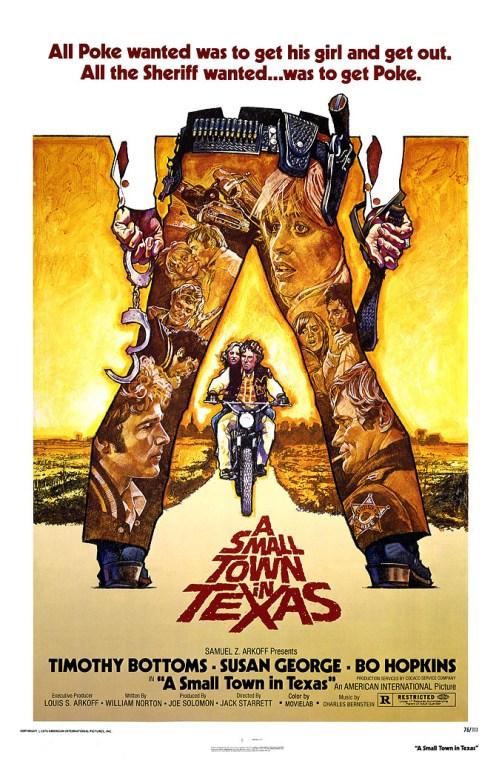
Poke (Timothy Bottoms) returns to his hometown in Texas after serving a 5-year sentence for marijuana procession. He finds that his girlfriend Mary Lee (Susan George), during the time he was away, has gotten into a relationship with the sheriff Duke (Bo Hopkins) who was also the man who convicted Poke that got him sent away. Poke begins harassing Duke for messing around with Mary Lee and follows him to a political event where Duke is in charge of guarding Jesus Mendez (Santos Reyes) who’s running for congress. It is here that he witnesses an assassin shooting Mendez and then watches Duke kill the shooter and take an envelope out of the killer’s pocket and put it in the trash. Poke retrieves the envelope and finds $25,000 inside. When Duke comes back to get the envelope and sees it’s gone he puts out an APB to have Poke arrested, which leads to an all-out car chase.

I couldn’t help but wonder if this was one of the career outputs that screenwriter William Norton considered ‘stupid’ as he was noted to having told his nurse on his deathbed that she ‘wasn’t dumb enough’ to have known any of the movies he had written. It’s not like it’s bad, but it isn’t particularly exciting either and takes 50-minutes before the first car chase gets going. Laying the ground work for the story is too leisurely. Instead of having Poke and Duke discuss how he had convicted him years earlier the drug bust should’ve been played-out right at the start to at least have given it a little more action.

The chases are impressive once they get going and at one point I literally winced as a car crashed into another and made me feel like I was actually in the vehicle and feeling the impact. Another has a police vehicle bursting into flames and a cop getting out screaming while flames shoot out his back, which was surprising since they must’ve blocked off the entire town center (filmed in Lockhart, Texas) to do it and most likely took an entire day to do, so there clearly was no compromising on the quality of the stunt work just because it was shot on-location versus in a closed studio lot. You also get to see a car crash through a giant block of ice, which marked a cinema first.

Bottoms though is weak creating a transparent character with no interesting arch, or personality and doesn’t even seem to be from Texas as unlike the others he has no Texan accent. Susan George at least conveyed an authentic sounding accent while masking her British one, so her presence gets strong points. Hopkins lends some interesting nuance as the bad guy and the sheriff wasn’t played-up as being an aging authoritarian, small-minded hick like in other films from this genre. Sure he was later found to be corrupt, but more like a cog in a bigger game instead of the center of it.

Spoiler Alert!

Story-wise there’s a lot of unanswered questions like why was Mendoza shot, which is later revealed to have been orchestrated by C.J. Barry (Morgan Woodward) a rich rancher who initially seemed very much behind Mendoza’s campaign, so why the double-cross? Why also would they think it would be a good idea to openly kill one of the men working for them? Who’s going to want to do a hit for them in the future if word gets out that the organization will use you as cover? Since this was a candidate for a major political party it was hard to believe that the investigation would be left solely to the small town sheriff to pursue as I’d be pretty sure federal agents would get called in.

My Rating: 4 out of 10

Released: June 2, 1976

Runtime: 1 Hour 36 Minutes

Rated R

Director: Jack Starrett

Studio: American International Pictures

Available: DVD-R (MGM Limited Edition Collection)
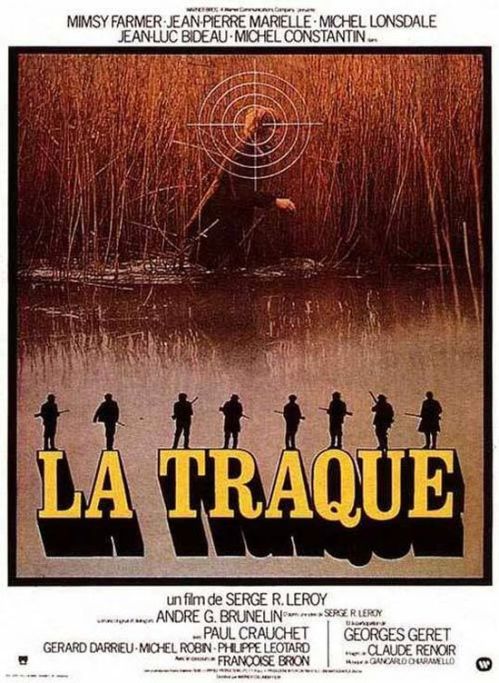
The Track (1975)

track3

By Richard Winters

My Rating: 9 out of 10

4-Word Review: Hunters chase down woman.

Helen (Mimsy Farmer) is an American who has traveled to rural France in order to teach at a local university. At the train station she meets Philippe (Jean-Luc Bideau) who agrees to take her to the isolated cottage where she is to stay. Along the way they come into contact with Philippe’s boisterous friends who drive them off the road. The men are going out for a wild pig hunt and a few of them particularly Paul (Philippe Leotard) shows a sexual interest in her, but Philippe assures her that they’re ‘harmless’. While Helen moves in to her new place the men go off on their hunt, but when she walks outside to check-out a nearby barn she again comes into contact with Paul along with his brother Albert (Jean-Pierre Marielle) and Chamond (Michel Robin). Paul uses the opportunity to rape her while Albert holds her down and Chamond acts as the lookout. As they are about to leave Helen shoots and critically injures Paul with Chamond’s gun, which he had inadvertently set down, before she goes on the run deep inside the forest. The rest of the group tries tracking her down in an attempt to negotiate some sort of deal, so she won’t go to the authorities, or silence her permanently if she still insists that she will.

Some have labeled this the French version of Straw Dogs, but I consider it much more like Deliverance. In that film you had middle-aged suburbanite males wanting to prove their ‘macho manhood’ by roughing it in the wilderness for a weekend only to find that they weren’t quite as prepared for the harsh elements as they thought. This film works in kind of the same way. The men go hunting to get in touch with their rugged side, but when forced to face tough issues, like helping a woman in distress, they succumb to group pressure and prove ultimately to be wimpy.

Unlike other films in the rape/revenge genre the main character here is shown the least. Farmer does well during the rape segment and screams and fights in a way that elicits genuine horror, but otherwise her facial expressions and mannerisms are quite one-dimensional though I was impressed with the way she did her own stunt work and forced to navigate her way through some difficult and inhospitable terrain.

The main focus is on the male characters who are fascinating and multi-faceted. The most interesting aspect is how they start-out seeming benign and domesticated only to slowly unravel into a aggressively threatening group. The segment where they kill a pig and the animal struggles after being shot will make some animal activists uncomfortable, but like with Jean Renoirs’ Rules of the Game, which had a hunting segment even more graphic than here, it does effectively illustrate that if people are willing to kill an animal for sport; how thin is the line for them to cross-over to a person?

The lack of a soundtrack is a plus. Many thrillers will have a pounding score and sometimes it works to accentuate the tension, but here the natural sounds particularly Helen’s heavy breathing as she runs through the underbrush is far more effective. There’s also no forewarning of what’s going to happen nor buildup. Everything occurs out of nowhere. Most victims who survive a crime will say the same thing that things were peaceful and normal one minute and then all hell broke loose the next.

Spoiler Alert!

The only two things I might’ve done differently had I directed was not showing the rape. As rape scenes go this one is rather mild, but my feeling was it would’ve been creepier had the viewer been in the dark about what occurred as were initially the other men. They’re told the story that the gun went off accidentally and the woman ran in a panic only for them to slowly learn the dark details later on. Having the viewer come to this realization along with the other men would’ve added an extra layer to the story versus it being spelled out.

While the ending is effectively unsettling I still wanted a denouement showing how the strains of this experience changed them, which would’ve added insight. Overall though it’s a brilliant especially for the way it reveals how some of the men considered themselves more ethical than the others only to end up being no better. Everyone likes to feel that they, or their friends, would do the right thing when put in a stressful situation and ‘be the hero’, but this movie expertly examines how that might not always be the case.

Alternate Title: La Traque

Released: May 14, 1975

Runtime: 1 Hour 32 Minutes

Not Rated

Director: Serge Leroy

Studio: Warner Brothers

Available: DVD-R (French with English Subtitles) (dvdlady.com, jfhi.com)

Loose Shoes (1978)

loose1

By Richard Winters

My Rating: 3 out of 10

4-Word Review: Lame parody of movies.

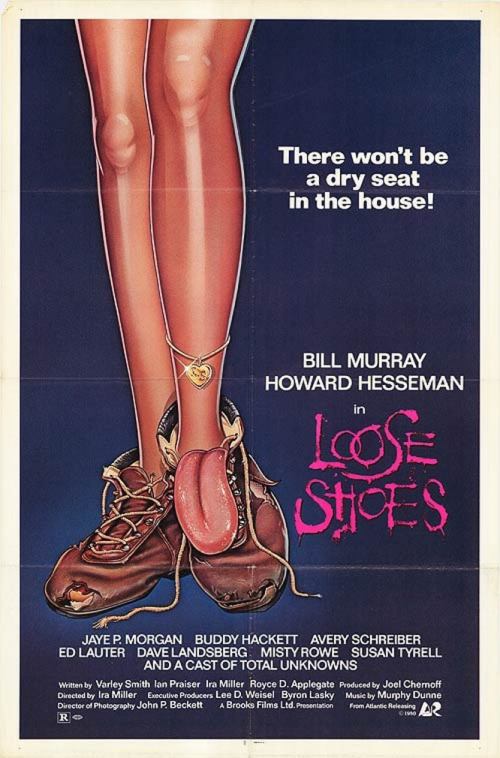
In 1967 an improv group, which Chevy Chase was an early member, began that called themselves Channel One, who performed improvisational skits making fun of current events and TV-shows. Instead of doing them on stage in front of audience they filmed it and then played them on three different TV screens at a theater in Greenwich Village. When these proved successful the collection of filmed skits were then toured around the country at college campuses and got a favorable reaction, so the producer decided to turn it into a feature length film. At the time this was considered a novelty as the movie, which was called The Groove Tube, would have no plot and just be a collection of skits, but it proved popular enough that it gave others the same idea. From this came Tunnelvision, American Raspberry, and probably the most famous one Kentucky Fried Movie. 

In 1977 Ira Miller, who had worked with Mel Brooks on his projects and was a member of Second City during the 60’s, became inspired to do his own version of this. He financed it using most of his own money. The concept was for it to be a parody of recent movies and structured similar to movie previews one would see at theaters before the main feature would begin. The working title was Coming Attractions and to keep costs low he cast young, unknown talent like Bill Murray, who agreed to work for a small fee in order to get the exposure, or B-actors that he knew who as a favor would work at below scale for a day in order to help him out. Initially it got such a bad reaction from test audiences that it was shelved for several years, but then after Meatballs was released, which made Murray a star, it was re-released under its new title in order to capitalize on his fame.

The film suffers from production values that are so cheap I’ve seen high school projects that were done better and it doesn’t help that the DVD issue looks like it was copied straight off of a VHS tape. Both IMDb and Wikipedia list the original runtime as 84 minutes, which is incorrect as it was actually 74 minutes, but the DVD version only goes 69 minutes and cuts out several segments including ‘Jewish Star Wars’, which is alright as even with the abbreviated runtime it still felt like it was never going to end and adding in the stuff that was edited out would’ve just prolonged the agony. It would’ve helped had there been some consistent characters like a family going to the theater to see a feature and becoming increasingly annoyed at the ongoing previews. After each skit it could’ve cutback to their reaction, which would’ve given it some minimal structure and focus that otherwise is sorely lacking.

Some of the segments had potential like the ‘Invasion of the Penis Snatchers’, but Miller approaches the material too much like a gag writer where he’s more interested in the punchline instead of playing out a funny scenario. The skit that has Jaye P. Morgan doing a send-up of Nurse Ratched needed to be extended as she could’ve done it hilariously. The segment that spoofs the Woody Allen film Play it Again Sam isn’t exactly funny, but David Landsburg’s impression of Allen is so spot-on that it’s entertaining nonetheless. Murray’s segment where he plays a prisoner on death row is okay and you even get to see him at one point with his head shaved. I also liked the bit with Susan Tyrrell as a woman stuck in the boonies only here the hicks are open-minded and even features a virtually unrecognizable Ed Lauter as a free-spirited, cocaine sniffing, redneck sheriff.

The best moment ‘Dark Town After Dark’ comes at the very end and features a send-up of a Cab Calloway dance number with the song ‘Loose Shoes’ being sung. The lyrics of which came from a comment made by President Gerald Ford’s Secretary of Agriculture Earl Butz. He was on a plane flight to California with entertainers Sonny Bono and Pat Boone. Boone asked him why republicans weren’t able to attract more blacks. He responded by making a comment that forced him to resign once it got out: “I’ll tell you what coloreds want. It’s three things: first, a tight pussy, second, loose shoes, and third, a warm place to shit.”

My Rating: 3 out of 10

Released: September 1, 1978 as Coming Attractions. Re-released August 1, 1980 as Loose Shoes

Runtime: 1 Hour 14 Minutes (Original Cut). 1 Hour 9 Minutes (DVD Version).

Rated R

Director: Ira Miller

Studio: Cinema Finance Associates

Available: DVD, Amazon Video

The White Buffalo (1977)

white

By Richard Winters

My Rating: 5 out of 10

4-Word Review: Buffalo haunts his dreams.

Based on the novel by Richard Sale, who also wrote the screenplay, the story, which takes place in 1874, centers around Wild Bill Hickok (Charles Bronson) who’s suffering from reoccurring dreams involving a giant white buffalo. He travels to the west in order to find the beast and confront it. It’s there that he meets Crazy Horse (Will Sampson). The two initially don’t get along. Bill is not a fan of Indians and once said “the only good Indian is a dead one”, but the two share a common bond as they’re both after the elusive buffalo in Crazy Horse’s case it’s to avenge the death of his infant daughter who was killed when the beast violently attacked their campsite. Having formed an uneasy alliance the two, along with old-timer Charlie Zane (Jack Warden) go out into the cold, wintry terrain in search for it while debating over whose land this country really belongs to: the white man or the Native Americans.  

Story-wise the film lacks any explanation for why Hickok is having these dreams, or what exactly the image of the white buffalo is meant to represent if anything. The plot goes off on a lot of tangents including a segment where Hickok visits an old-flame (Kim Novak) that doesn’t have much to do with the central story, nor propel the plot along, and could’ve easily been cut. There’s also a few proverbial gun fights though they’re generic in nature, don’t add much excitement, and quickly forgotten. 

Bronson gives his typical wooden performance though seeing him with dark circular glasses and sporting long hair does make him, in certain shots, resemble Ringo Starr. The rest of the cast if filled with familiar B-stars in minor roles including Stuart Whitman and Cara Williams, who have an amusing bit as a vulgar couple whom Hickok shares a stagecoach ride with. Jack Warden, who’s almost unrecognizable, has a fun moment when he takes out the glass eye that he’s wearing much to the shock of Crazy Horse.

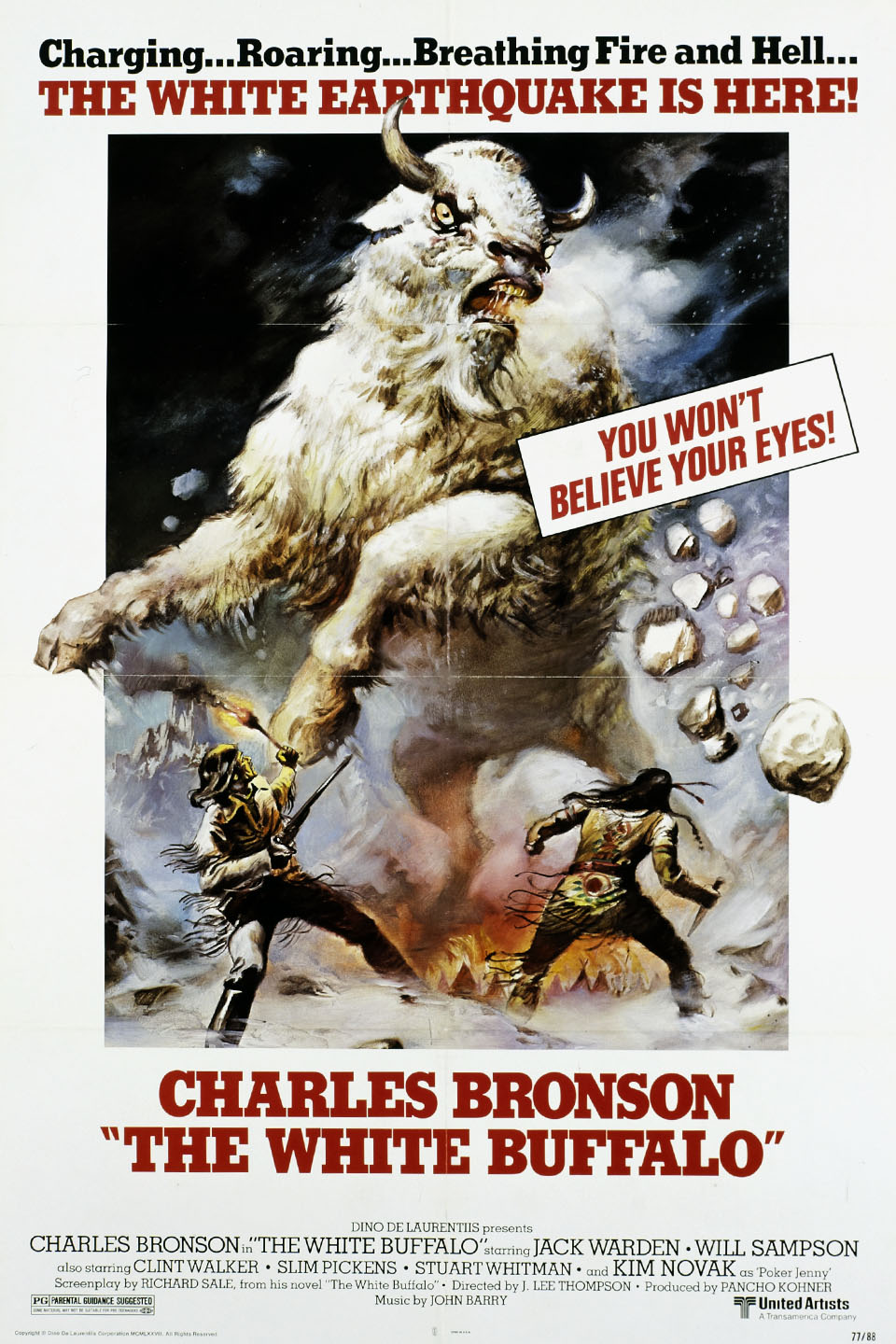
The only diverting element is the opening dream sequence that’s done over the credits where the viewer looks right into the eye of the beast close-up. Normally I’m not a fan of outdoor shots done on a sound stage, which always comes-off looking artificial, but in this instance it helps accentuate the surreal elements. The climactic sequence though in which both Hickok and Crazy Horse come face-to-face with the buffalo doesn’t work as it becomes painfully clear that the beast is special effects generated especially when Crazy Horse gets on top of it and repeatedly stabs it, which looks like someone stabbing into a sofa cushion with tacky fur stuck to it. We also never get to see a full-shot of the buffalo, just its head, so it’s difficult to gauge how big it really was. The truly disappointing part is that the illustration of the buffalo on the film’s promotional poster seen above is far more impressive looking than anything you’ll actually see in the movie.

Probably the only interesting aspect about the production is not what occurred in front the camera, but behind-the-scenes. Will Sampson, who’s by far the better actor and the story could’ve been centered around his character alone and it would’ve made it a more interesting movie, refused to read his lines for over 24 hours when he became aware that white actors had been hired to play the roles of the Native Americans and only went back to performing his role once the producers agreed to casting actual Indians for the parts. This then directly lead to the American Indian Registry of the Performing Arts, which he founded. 

My Rating: 5 out of 10

Released: May 6, 1977

Runtime: 1 Hour 37 Minutes

Rated PG

Director: J. Lee Thompson

Studio: United Artists

Available: DVD, Blu-ray, YouTube (with ads)


Rape of Love (1978)

rape1

By Richard Winters

My Rating: 7 out of 10

4-Word Review: Assault victim seeks justice.

Nicole (Nathalie Nell), a young nurse, goes bike riding one day to a friend’s house. Four men (Marco Perrin, Gilles Tamiz, Bernard Granger, Daniel Auteuil) spot her at a cafe and begin following her in a van. Once she reaches a remote area they drive her off the road and force her into the back of the van where she’s taken to a remote shed and brutally raped and humiliated. Once it’s over she’s brought back to the dark road, thrown to the pavement, and warned not to tell anyone. Initially she feels ashamed and doesn’t want to talk about it, but then while making a house call to one of her patients (Marianne Epin) she sees a picture of one of the rapists on the wall, who’s apparently a married family man living a normal life. She’s enraged that these men can go on living like nothing happened while she remains emotionally and mentally shaken. She becomes motivated to bring them to justice despite both her mother (Tatiana Moukhine) and boyfriend (Alain Foures) advising her not to.

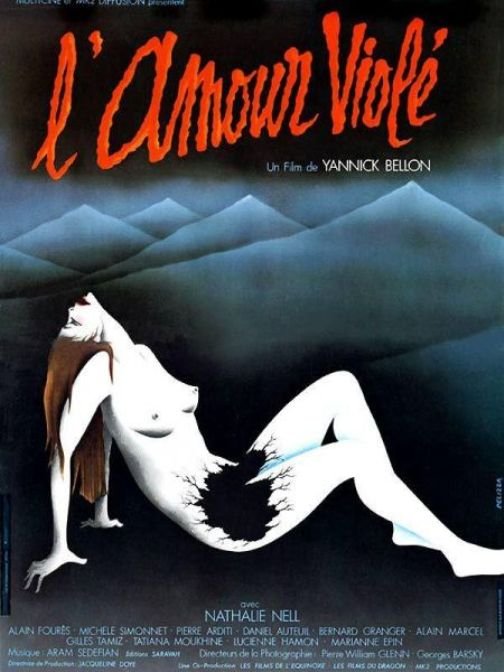
This film was written and directed by Yannick Bellon, a feminist who had  worked on documentaries before doing this one. It bears a striking resemblance to Meir Zarchi’s I Spit on Your Grave, both were filmed around the same time and neither production was aware of the other. Bellon had wanted to make a movie about rape that didn’t sanitize it and would capture it in the most explicit and violent way possible. While Zarchi’s movie has gone on to achieve cult status this one has fallen into obscurity even though despite some flaws it’s easily the better of the two.

The rape scene is quite graphic though I was actually expecting it to go on longer. It lasts for about 10-minutes, which is just enough time to give the viewer a very raw and uncomfortable taste of the crime’s viciousness without exploiting it and then unlike with the Zarchi movie the film shifts back into a drama instead of a revenge horror flick. I liked this transition better as it gives greater depth to the characters including the rapists who aren’t shown as being one-dimensional backwoods thugs like in the other movie, but instead regular citizens who you’d think were nice guys if you didn’t know better. One scene even has them discussing at a bar what they feel would be a suitable punishment for a criminal who had committed another crime, showing how these men, as terrible as they are, still have a warped idea of morality for others.

I also liked the way it focuses on Nicole’s psychological recovery though here I felt it got a bit botched. Having her examined after the incident by a male doctor I didn’t think worked as she’d not trust a male being in that emotional state and insist instead on a female physician. She also expresses later to a friend (Michele Simonnet) that she no longer likes people to touch her even as her friend touches her while she says it, which doesn’t make much sense. She also goes right back to riding her bike even though I’d think it would take her a long time if ever before she’d do that again.

rape2

Her relationship with her boyfriend and the way they no longer have sex, which frustrates him is interesting particularly the scene where he’s shown angrily walking down the street and comes upon a prostitute. I thought the film was going to have him take his frustrations out on her and thus showing how this ‘good guy’ could be, under certain circumstances, just a violent as the rapists he hates, which could’ve brought out an insightful irony, but the film only teases the idea and eventually doesn’t go there.

The reaction of the rapist’s wife who begs Nicole not to take the case to court as it would be stripping her of a ‘fine husband’ and her kids from a ‘wonderful father’ seemed absurd. I would presume most wives would be disgusted to find out what their husbands had done and would want to leave them, or at the very least refuse to believe that they had committed it. Then again I was not living in France during the 70’s, so I can’t say I know how that culture would view rape. I know they consider affairs in a much more liberal way where it’s not always the deal-breaker like it is here, but to frame rape as just being another of his ‘flings’ seemed a bit too open-minded.

Spoiler Alert!

The climactic court battle falls flat. Having the men immediately confess to what occurred once they were questioned by the authorities didn’t seem realistic. After all she didn’t decide to press charges until 6-months later, there was no semen sample, no DNA, and no other witnesses. The men could’ve denied everything and most likely gotten-off. The film ends without the viewer finding out the verdict and never knowing how stiff their penalties were, or weren’t.

I wasn’t so keen about the boyfriend, who left Nicole once she decided to go public about the rape, coming back at the end and rekindling the romance. I felt this sent the wrong message. Sometimes when a person decides to do what they think is right then that means sacrificing everything and learning to live with it including losing friendships with people that don’t agree with what they’re doing. It’s a bridge one crosses that you can’t go back on. Having her adjust to being an independent single woman, or finding a new boyfriend that wouldn’t bail on her during her time of need would’ve been a better resolution.

rape3

My Rating: 7 out of 10

Released: January 11, 1978

Runtime: 1 Hour 55 Minutes

Not Rated

Director: Yannick Bellon

Studio: Les Films de l’Equinoxe

Available: DVD-R (French with English Subtitles) (j4hi.com)

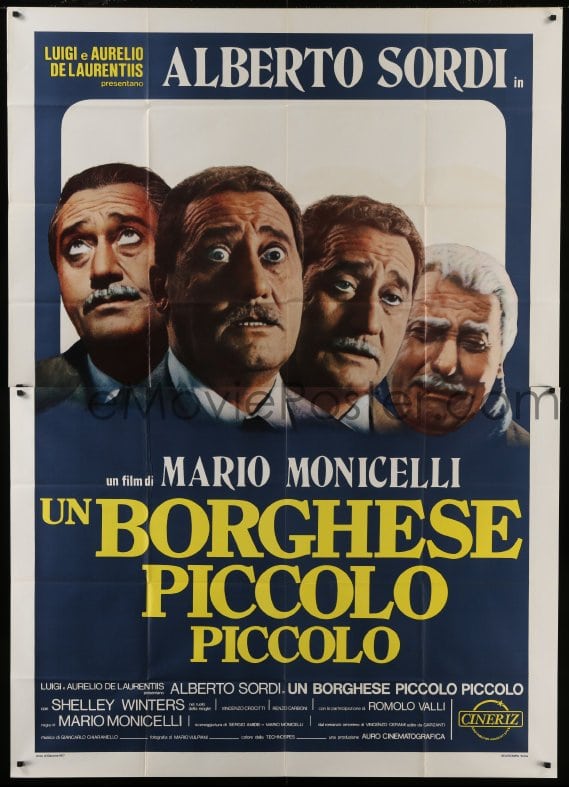
An Average Little Man (1977)

average1

By Richard Winters

My Rating: 9 out of 10

4-Word Review: Father avenges son’s death.

Giovanni (Alberto Sordi) is an accountant who’s ready for retirement. His son Mario (Vincenzo Crocitti) is following in his father’s footsteps by becoming an accountant as well. He has passed all of his exams and fully qualified, but competition is tough, so his father tries to use his leverage to get his son hired there, or at least have his name pushed to the top of the list. Unfortunately on the morning of the interview Mario is killed by a stray bullet from a bank robbery that was occurring across the street. Giovanni is devastated and the news is so shocking to his wife Amalia (Shelley Winters) that she has a stroke and is no longer able to speak, or walk, or even feed herself. Giovanni doesn’t trust the system to bring the killer (Renzo Carboni) to justice, so he decides he must do it himself by stalking the man and then eventually kidnapping him.

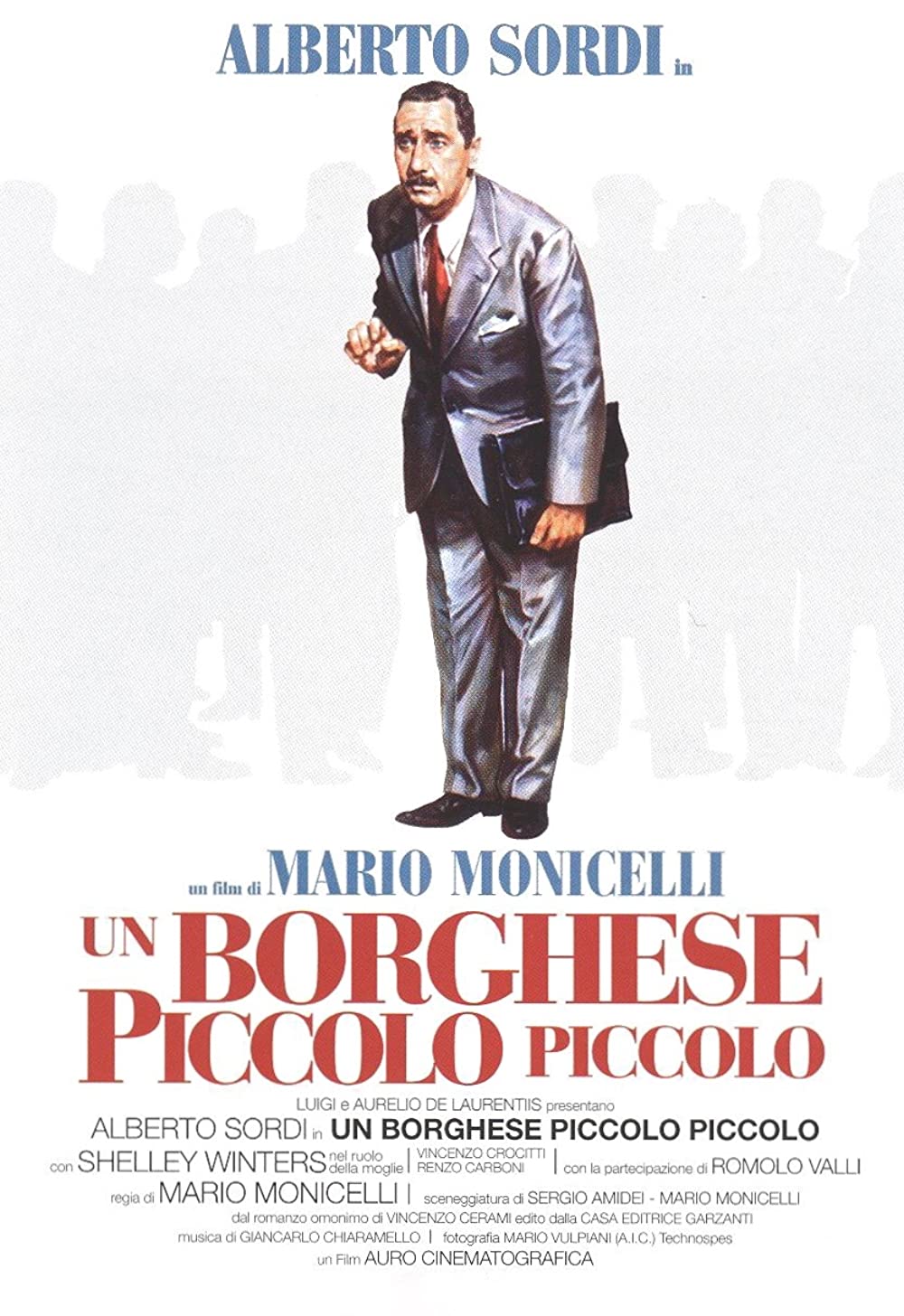
The film, which is based on the novel ‘A Very Normal Man’ by Vincenzo Cerami, who also wrote the screenplay, is filled with many memorable moments. I got a kick out of Giovanni’s tiny car that looked like something he could wear instead of ride and the way he gets around a traffic jam by driving it on the sidewalk. The mounds of paperwork in his office where no one can see each other because they’re literally swallowed up by them is a funny visual as is Giovanni’s supervisor (Romolo Valli) who cleans the dandruff off of his hair and onto his desk. There’s also a scene that is both darkly humorous and highly disturbing where because the cemeteries are filled to capacity the remaining dead bodies must be stored inside a warehouse with each casket put one on top of the other. Families and mourners crowd in to find which one has their loved one in it, but because of the gas coming out of the decomposing bodies that create sporadic explosions that cause the caskets to go tumbling.

The appearance of American actress Shelley Winters is another shocker in that she’s dubbed with an Italian speaking woman. Hearing her in a voice that is clearly not her own is at first disconcerting, but she gives a brilliant performance nonetheless. Normally she’s known for her talkative nature, both for the parts she plays in front of the camera, but also in her real-life interviews, yet she reflects a comatose woman quite convincingly and her facial expressions, particularly when she’s brought into the cabin to observe the killer’s torture, are excellent.

Sordi, a well known Italian film star and comedian, does well too and it’s interesting seeing his hair go from salt-and-pepper to fully gray as the movie progresses. His character though isn’t exactly likable. While he sees himself as being ‘selfless’ as he sacrifices everything, and potentially breaking the rules, for the love of his son, he seems more selfish because why should his son get a unearned break over all the other candidates? While he has his funny share of moments he’s also a bit unhinged even at the beginning with his almost naive belief that a system he knows is corrupt is now somehow ‘morally’ obligated to give him and his son a favor. Maybe this was the intended ironic point, but it would’ve played better had the son been less of a vapid, empty shell.

Spoiler Alert!

What makes this film stand-out from virtually any other is its extreme shift in tone where it starts as a satirical comedy, but ends as a grim thriller. Many script experts will insist this ‘can’t be done’ and in Hollywood would be considered forbidden. It also doesn’t have the inciting incident occur until an hour in even though books like ‘Save the Cat’, which is the ‘screenwriter’s bible’, will tell you it must happen within the first 5 pages of any script. There’s also no forewarning to the killing it’s just a completely random event with no connection to anything that came before, which again most people in the movie business will say is a ‘mistake’.

While I might’ve done it slightly differently by having Giovanni go insane when one of the supervisors refuses to hire his son after promising him they’d do it and then kidnapping that individual to make it seem a little more connected to the first half, I’m still impressed with how effectively it all works either way. It literally breaks every screenwriting rule and still succeeds and should be used as an example to anyone insisting that movie scripts that don’t stringently conform to the Hollywood formula will fail as this one clearly doesn’t.

average2

My Rating: 9 out of 10

Released: March 17, 1977

Runtime: 1 Hour 58 Minutes

Rated R

Director: Mario Monicelli

Studio: Cineriz

Available: DVD-R (Italian with English Subtitles) (Moviedetective.net)

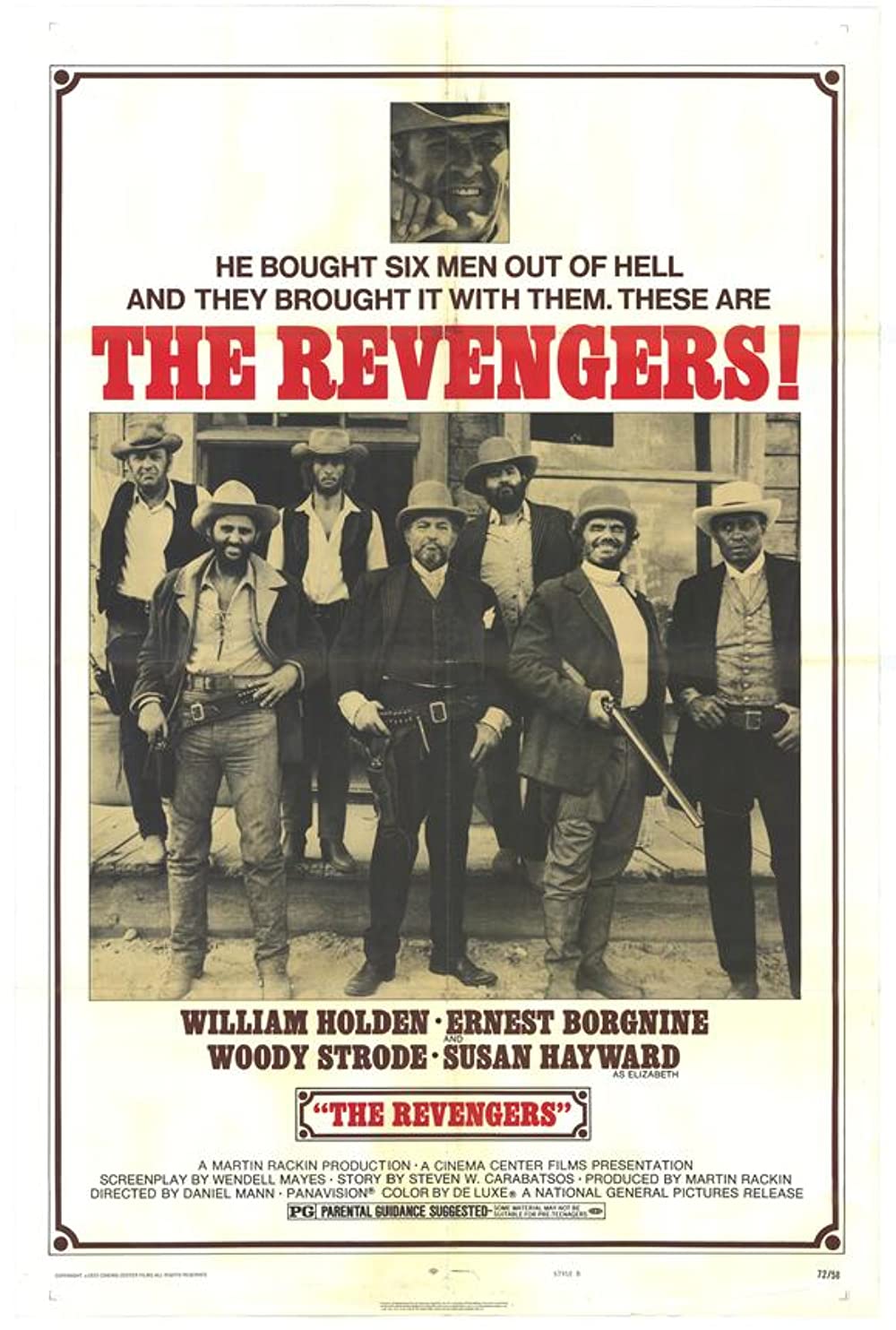
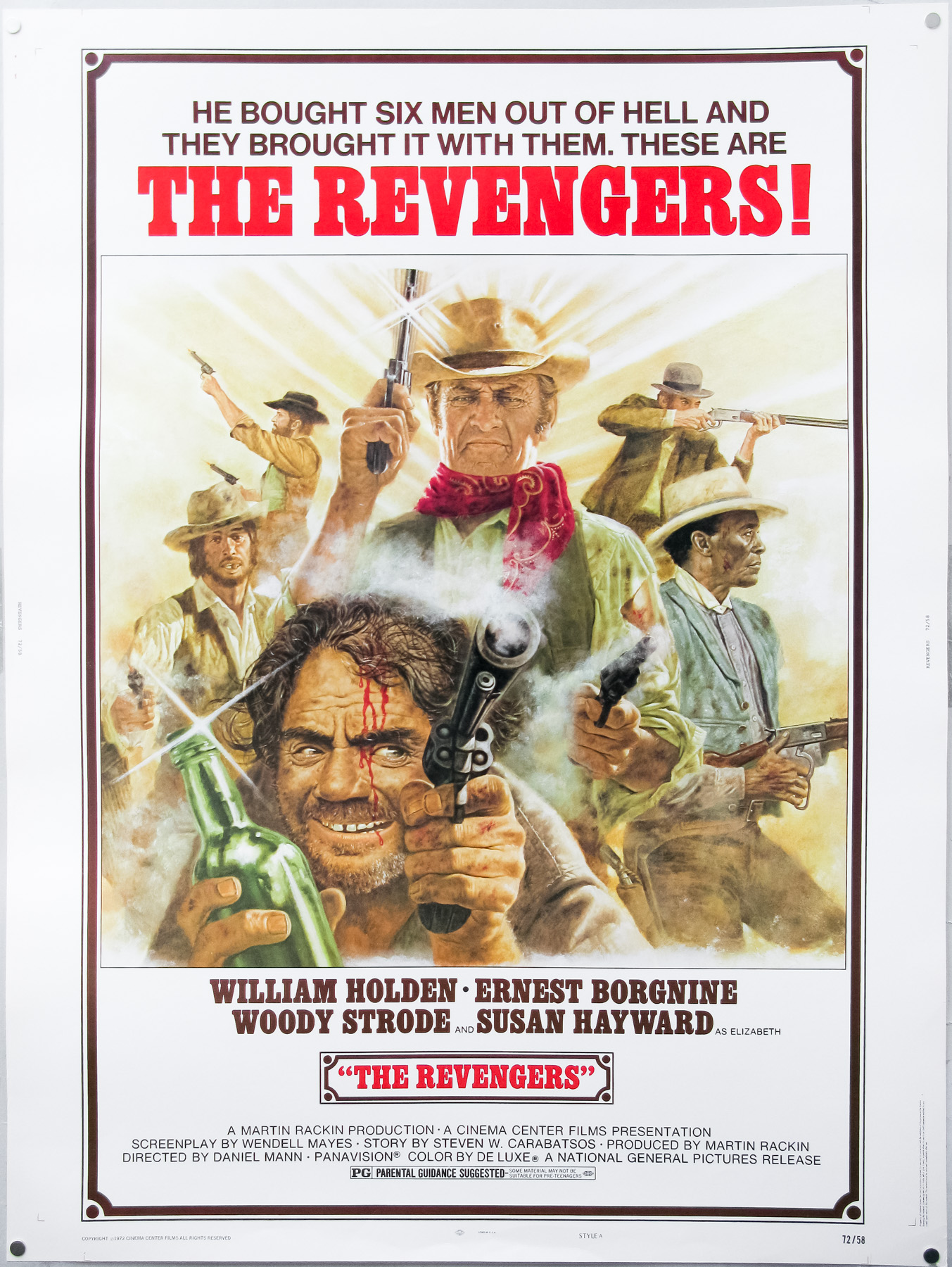
The Revengers (1972)

revengers1

By Richard Winters

My Rating: 7 out of 10

4-Word Review: Avenging his family’s massacre.

John Benedict (William Holden) is a rancher who returns to his home and family in Colorado after serving in the Civil War. While out one day hunting a mountain lion a group of Comanche Indians kill his family. When he races back to his home he finds only his friend Free (Arthur Hunnicutt) still alive. Free informs him that the Indians were lead by a white man (Warren Vanders). John then becomes compelled to seek vengeance and hires a group of convicts that he finds at a Mexican prison to help him in his quest.

This was one film that took me by surprise and a testament to the fact that if you go into a movie with low expectations you might end up liking it better than you thought. The review in Maltin’s book gave it the notorious ‘Bomb’ rating and critics at the time labeled it a Wild Bunch rip-off, or even a western cousin to The Dirty Dozen. All of which is true, but it still has an amiable quality and enough twists to keep it moderately enjoyable. Ernest Borgnine is a stand-out and many have considered this his best performance outside of Marty.

The concept of finding prisoners to act as the sort-of good guys makes it fun, particularly as Holden must tour the prison camp to pick which ones he wants, but the idea that they’d all stay loyal to him once they got out was an over-reach. The film has them abandoning him for a while, but then all coming back like they couldn’t survive without him, which is ridiculous as these are grown men and if needed could cheat and steal on their own to get by. They’re also use to working independently so the fact that they’d need someone to ‘lead’ them and openly submit to that is hard to believe. Having one or two stay with John while the rest went on their way would’ve been realistic and also helped the viewer bond with the characters as there’s too many and it becomes cluttered.

I didn’t like either that Zweig (Reinhard Kolldehoff) is shown to be a man who must be chained to a post and kept away from the other prisoners due to extreme anti-social behavior and yet when he’s with John and the group he shows none of these signs. If a person has anti-social tendencies in one situation it will come out again and won’t simply ‘disappear’ because it’s a different environment. Trying to allude that Chamaco (Jorge Luke) is possibly the illegitimate son of John from some long ago brief affair and then these two would magically meet in such a random way is pushing the odds too much. While Borgnine’s character if amusing the fact that this impoverished man, who doesn’t have enough money to bathe, would be on top of all the gossip and information is suspect. How is this guy, who smells so bad nobody gets near him and if he tried to overhear a conversation they’d immediately walk away once they got a whiff, be able to collect the info that he does?

Spoiler Alert!

The film has what seemed like a potentially novel twist where Chamaco shoots John and supposedly kills him. Initially I thought this was kind of cool as it’s rare that a protagonist dies in the middle of a movie and then it would be up to this vagabond group of misfits to finish the job for him out of loyalty, which if it had done this would’ve given it distinction. Unfortunately the bullet misses John’s heart by an inch and he’s brought back to health by a kindly nurse named Elizabeth (Susan Hayward), but this becomes pointless. For one thing he makes a full recovery, at least have him suffer some lasting injury, which would most likely happen to gun shot victims in real-life. For instance maybe he could no longer raise his right arm to shoot and be even more dependent on the group to help him. Why even have him get shot at all if it’s just going to be forgotten by the end like it didn’t even happen? Having him then forgive Chamaco and harbor no hard feelings and get along even better than before is a level of graciousness few people if anyone would have in that circumstance.

It seemed like the only reason the shooting took place was as an excuse for Susan Hayward’s character to exist, but I’m not sure why it was necessary. She’s a great actress and this was her last film, but the romance angle doesn’t work and nothing comes of it as he leaves her once recovered and never returns like it was a blip on the radar. She also says at one point that she’d still like to start a family even though it’s pretty obvious that she was over 50.

The villainous Tarp character could’ve been handled better as well. He had the potential at being this enigma that everyone talked about, but never saw like the Keyser Soze character in Usual Suspects. The mystery of the man could’ve been built-up, but this gets ruined when they find him rather quickly during the middle part only for him to then escape. Waiting until the very end for his appearance would’ve made the finale more exciting and tense, which otherwise falls flat.

revengers2

My Rating: 7 out of 10

Released: June 21, 1972

Runtime: 1 Hour 46 Minutes

Rated PG

Director: Daniel Mann

Studio: National General Pictures

Available: DVD-R, Blu-ray, Amazon Video

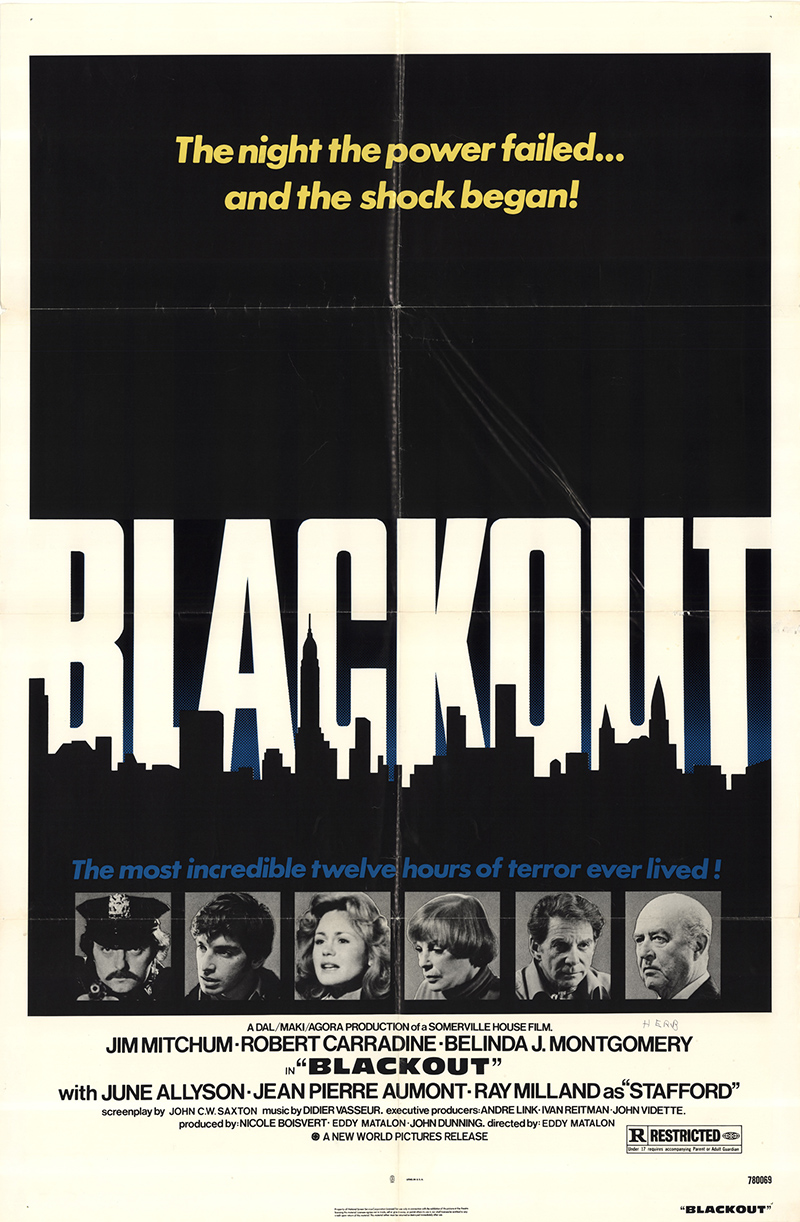
Blackout (1978)

blackout

By Richard Winters

My Rating: 6 out of 10

4-Word Review: Criminals invade apartment complex.

Inspired by the actual power blackout that occurred in New York City on July 13-14, 1977 the story centers on a group of felons lead by Christie (Robert Carradine) who are being transported to another prison. Along the way their police van crashes and the van drivers are killed instantly, but the felons survive. When they climb out they find that the city is without power. Using the police uniforms of the two dead drivers as well as their weapons they’re able to sneak their way into a nearby apartment complex under the pretext that they’re policemen and therefore the security guard allows them in only to be immediately killed once he does. The crooks then terrorize the residents by conning their way into each of the apartments the same way they did to get into the complex. Once they’re inside they rob the tenants and at certain points even kill them. Dan (James Mitchum) is an off-duty police officer who breaks into the complex to help save Annie (Belinda Montgomery) who’s being attacked and screaming for help from her balcony. He then single-handily goes about trying to track down the armed group despite being outnumbered.

This was yet another example where the entry in Leonard Maltin’s book does not accurately describe what occurs as whoever wrote the review states that it’s ‘balanced with black comedy’ though there’s really no comedy in it except for a brief exchange between a husband and wife attending a Greek wedding, which occurs at the beginning, but after that it’s all gritty drama.

The production was directed by Eddy Matalon who started his career doing music videos for Bridgette Bardot during the 60’s before graduating to soft-core porn in the 70’s under the pseudonym Jack Angel. He eventually, in 1977, tried his hand at horror with the universally derided Cathy’s Curse before following-up with this one, which fares better and as a grim thriller even succeeds though it’s not perfect.

My biggest complaint is that it cuts out too many pivotal moments. It shows how they enter into one apartment and even choose another because it has triple locks cluing them in that a rich person with a lot of expensive stuff must live there, but there’s other times when it does not show why they break into the apartments that they do. There’s hundreds of dwellings inside the complex and they weren’t going to be able to bust into all of them, so the reason for why they choose the ones that they do needed to be shown each time. There’s also a segment where Mitchum shoots and kills one of the perpetrators in the hallway, but it’s never documented where they take the body, or if they just leave it there for all to see.

Some of the stuff gets a bit over-the-top like when they kill the guard and then stage it to look like a suicide, but why would these desperate crooks care to take the time to do that? They’re in a rush to rob as many residents as they can before the power comes back on, who why not just put the dead guard’s body into a back room and be done with it? Tying Mitchum up into a contraption that would electrocute him once the power came back-on seemed too similar to the campy predicaments that would be the cliffhanger for each episode of the ‘Batman’ TV-show. These two-bit thieves wouldn’t have the care, or sophistication to do that. Either kill the guy, or tie him up the conventional way, but getting excessively overboard with it seemed too theatrical and predictably gives him just enough time to escape.

Mitchum is enjoyable. I liked how at the beginning he tries to chase down a purse snatcher, but fails, which shows that he’s not perfect and relatable, which makes you want to root for him even more to stop the bad guys. I did though have misgivings with Montgomery’s character who gets raped, but immediately after that she saves two people trapped in an elevator and even delivers a baby, which is too quick a recovery from such a traumatic event.

Aging stars from Hollywood’s gold era appear as the residents, but are given little to do especially June Allyson who’s seen for less than 5-minutes. Ray Milland’s segment had potential as he plays this rich, stuffy guy who refuses to give the intruders the combination to his safe even as they torture his wife. Eventually he gives in, but it would’ve been fun had he remained stubborn. They’d burn-up his place, which they do anyways, and kill his wife, but he’d still refuse to give it out. Then when the cops finally do arrive he could say in his last dying breath amidst the burned cinders “At least they never got the combination.”

My Rating: 6 out of 10

Released: August 25, 1978

Runtime: 1 Hour 32 Minutes

Rated R

Director: Eddy Matalon

Studio: Cinepix Film Properties

Available: DVD, Blu-ray

The Villain (1979)

villain

By Richard Winters

My Rating: 2 out of 10

4-Word Review: An inept western robber.

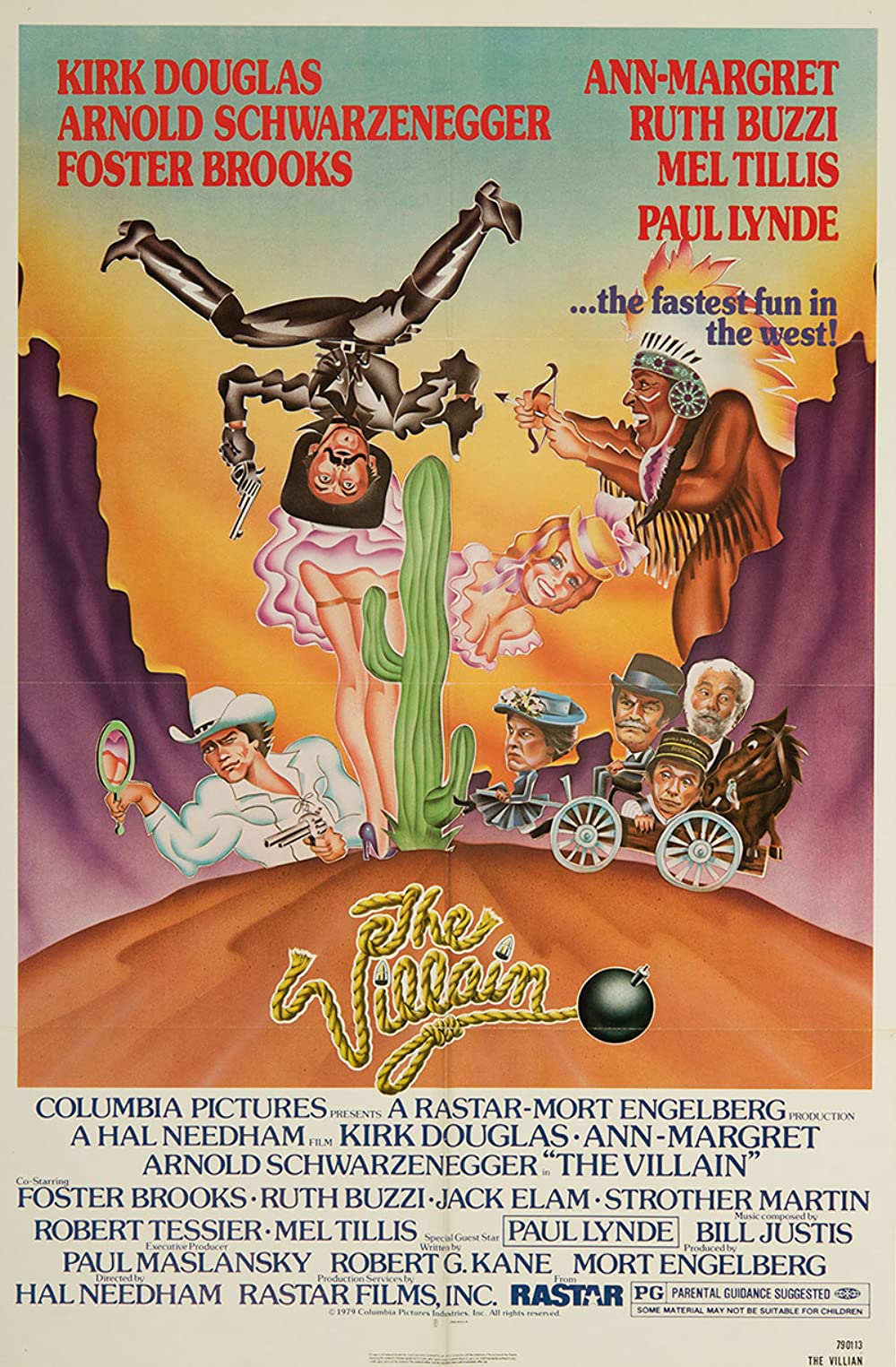
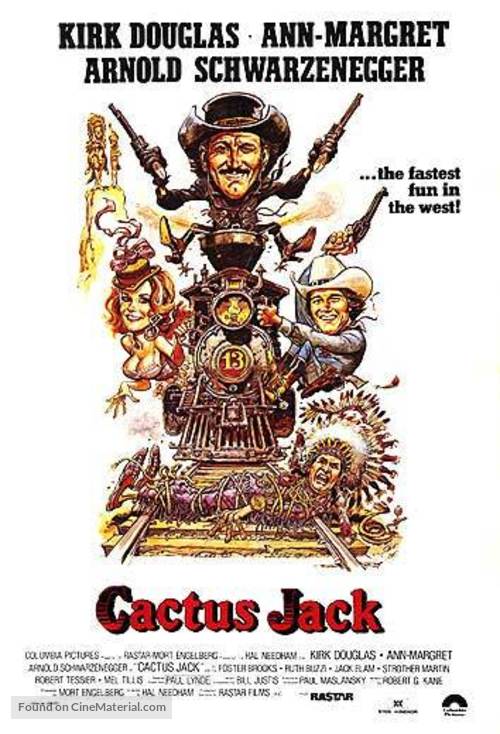
Cactus Jack (Kirk Douglas) is an aging western outlaw who’s hired by Avery Simpson (Jack Elam) to commit a robbery. Charming Jones (Ann-Margaret) is a beautiful, young woman who’s being escorted west by Handsome Stranger (Arnold Schwarzenegger) and is also carrying a large sum of money. Cactus Jack sets up an array of elaborate traps to try and rob them, but fails each time, so he enlists the help of a local Indian tribe headed by Nervous Elk (Paul Lynde) to assist him.

After the box office success of Smokey and the Bandit and Hooper executives at Columbia Pictures were apparently convinced that stunt man-turned-director Hal Needham could do no wrong and thus gave him a ton of money to direct a movie of his choice. Needham decided to do a send-up of the Road Runner cartoons, but as a live-action. The result though isn’t amusing, or lively with not enough stunt work and what you do see had already been shown many times before in other movies. The script by Robert G. Kane, who was a former joke writer for Dean Martin, is unimaginative and gets stuck in a one-dimensional gear where Cactus Jack continually tries to rob the two, but fails, which takes over 90-minutes to play-out while the old Road Runner cartoons where able to do it in less than 5.

There’s also quasi-surreal moments where Jack paints a tunnel opening onto the side of a mountain with black paint and yet Arnold and Ann are able to drive through it like it were a real tunnel. There’s another segment where Jack pours glue onto some train tracks, which Arnold and Ann are able to drive over without getting stuck while Jack does, but why? I realize this is supposed to be a silly movie and logic should not be demanded, but it just shows how lame it is where the director and writer do not challenge themselves to come-up with a clever way, that works within the realm of reality, for the protagonist to get out of their jam and instead lowers the bar to such an extent that they throw-out anything stupid and figure it will suffice.

Kirk for his part has a lot of fun. Some may feel he took it because his career was waning, but Needham had been the stunt coordinator on many of his movies back in the 60’s, so the two were friends and Douglas eagerly accepted the offer. At age 61 he looks great and did many of his own stunts, which is even more impressive, but no matter what the pratfall his character never gets injured. Despite the common belief many cartoons do at times show the antagonist like Wily E. Coyote getting banged-up and wearing bandages, bruises, and even walk with a crutch, so having Jack get that way and yet still determined to commit the crime would’ve been funnier.

Schwarzenegger is funny too simply for being this big, brawny guy who’s painfully naive though why someone would be walking around in the old west speaking with an Austrian accent needed to be questioned. Mel Tillis does mention at one point that he ‘talks funny’, but I felt that should’ve been a running joke where all the characters mention it when they meet him. It also would’ve been nice to have seen his character evolve and not remain so clueless by upping-the-ante with an exciting climactic battle/gunfight between he and Kirk at the end, which doesn’t happen.

Famous character actors like Strother Martin, Ruth Buzzi, and Foster Brooks are completely wasted. Mel Tillis does his stuttering routine (twice), which I’ve never found amusing though he also does the soundtrack and his singing is great. Initially I thought Ann-Margaret was miscast as she was too old for the part, but they make her look convincingly young and by the end I appreciated her presence.

The best by far is Paul Lynde as Indian Chief Nervous Elk, or as he says it N-e-e-e-e-rvous Elk. Today’s more sensitive audiences may not like a white guy playing a Native American, nor wearing an Indian styled head dress. I don’t know this for sure, but I suspect it’s the reason why the movie has never received an official studio DVD/Blu-ray release nor is it available on streaming, which is unfortunate. Yes, it’s political incorrect, but it’s done in such a goofy, campy way that it manages to become stupid funny and the only part that had me chuckling.

Everything else borders on being pathetic and all it succeeds at doing is getting you wanting to watch an actual cartoon, which will be far more sophisticated and entertaining than anything you’ll see here.

villain2

Alternate Title: Cactus Jack

My Rating: 2 out of 10

Released: July 20, 1979

Runtime: 1 Hour 29 Minutes

Rated PG

Director: Hal Needham

Studio: Columbia Pictures

Available: DVD-R

The Rubber Gun (1977)

rubber1

By Richard Winters

My Rating: 6 out of 10

4-Word Review: Making cash dealing drugs.

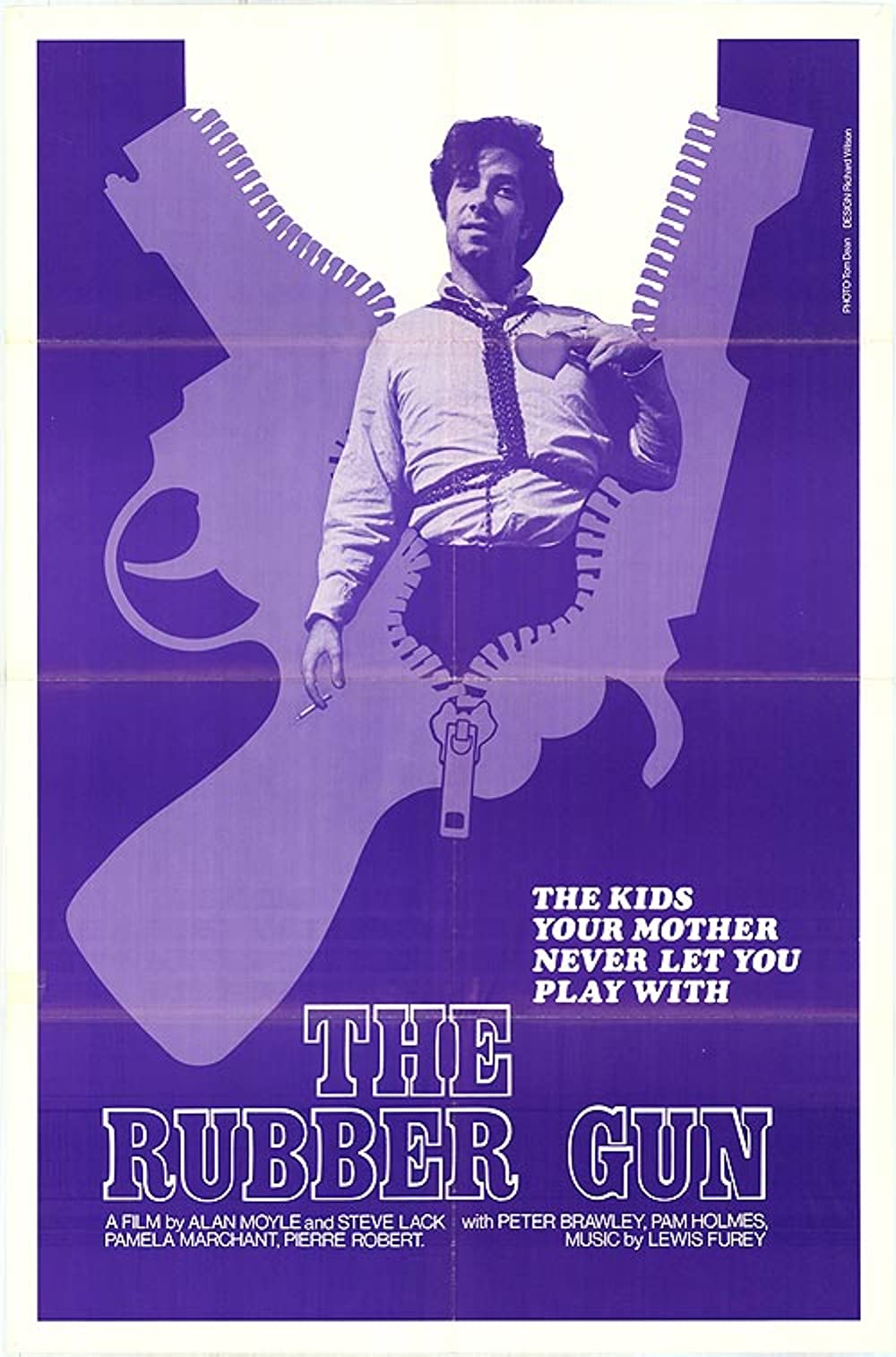
Steve (Stephen Lack) is a cash-strapped would-be artist who hasn’t made any money with his art exhibits in the past 5 years and has turned to drug dealing in order to bring in some income. He lives in a cramped, rundown studio apartment in Montreal with his makeshift ‘family’ who are also dealers as well as addicts. Bozo (Allan Moyle) is a student at nearby McGill University who is doing a thesis paper on drug use with the controversial position that it has positive effects and chooses Steve’s family as his subject, but without letting them know what he’s doing. Steve though is beginning to have second thoughts about being in the business as he sees what it does both on himself and those around him especially Pierre (Pierre Robert) a bi-sexual heroin addict who’s the father of a young daughter that he doesn’t seem able to take care of and whose addiction has caused him to become a narc with the police feeding him heroin in order to get info on Steve and the family.

Fascinating, experimental film that’s quite similar to Dealingbut with much more of an avante-garde flair. Director Allan Moyle, whose first film this was, takes the Paul Morrissey approach where he gives the actors a general idea of what the scene was about, but then lets the performers ad-lib the lines. The result is much more of a conversational quality where discussions ramble on a bit, much like in real-life, but remain revealing and amusing throughout.  Instead of feeling like you’re watching a movie it seems more like a documentary giving one a rare vivid view of the counterculture movement north of the border.

Probably the biggest surprise is Stephen Lack, who also co-wrote the screenplay and co-produced. I saw him in Scannerswhich he did 4 years after this one, and felt he gave one of the worst performances of a leading man I had ever seen and one of the main reasons that film didn’t succeed as well as it could’ve. Here though he’s amazingly engaging. Maybe it’s because he’s playing an extension of himself as I have no doubt that this is loosely based on his own experiences as a struggling artist, but the guy is quite funny in virtually everything that he says and does and I enjoyed how we see all different sides to his character from his partying one to more of a responsible one and by the end disillusioned with dealing. He even has a scene where he talks about regularly visiting his parents each week, who are quite conservative and unaware of his ‘occupation’, though it would’ve been even more fun to see the actual visit versus just discussing it.

My favorite character was Rainbow a small child, the daughter of Pierre and his girlfriend, who couldn’t have been more than 3 who goes on with her playing as the grown-ups in the room talk about drugs and other things. The image of innocence inside a room of jaded debauchery is darkly amusing. What’s better is that unlike most other movies she’s not given any cutesy lines to say and simply allowed to be herself, which makes her all the more engaging. Despite what’s initially perceived as ‘bad parenting’ you still get the feeling that these fringe adults do love the kid and in their dysfunctional way care for her, which ultimately makes the characters more appealing to the viewer instead of less.

The film has an obvious low budget look, with faded color, grainy stock, muffled sound, and choppy editing. Some may consider this a detraction, but it also helps accentuate the fringe realism with a kick-ass soundtrack to boot. In an era now where everyone his trying to make a movie on their phones with virtually no money this film should be used as a prime example on how to get it done by creating multi-dimensional characters and then allow the actors to fill-out the details through their improvisation, which helped lead writer/director/star Moyle to a Hollywood contract where he went on to make even more interesting movies on a bigger budget.

My Rating: 6 out of 10

Released: April 24, 1977

Runtime: 1 Hour 26 Minutes

Not Rated

Director: Allan Moyle

Studio: St. Lawrence Productions

Available: None