Category Archives: 60’s Movies

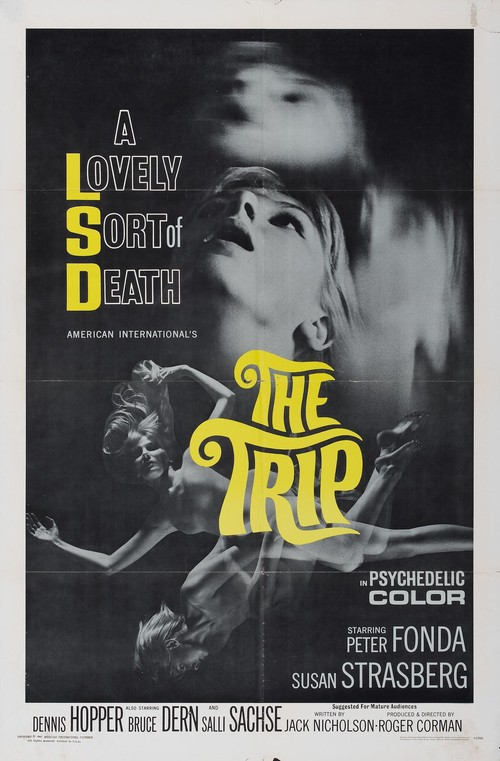
The Trip (1967)

the trip

By Richard Winters

My Rating: 5 out of 10

4-Word Review: He tries some acid.

Jack Nicholson wrote the screenplay to this film which is based loosely experiences he had while taking LSD as well as the break-up of his marriage to actress Sandra Knight. The story centers on Paul (Peter Fonda) a director of TV commercials whose marriage to Sally (Susan Strasberg) is on the rocks. He has a need to ‘find himself’ and seeks help from his friend John (Bruce Dern) who is a self-styled acid guru. John gives Paul some acid while promising that he will stay with him during his drug induced trip. The rest of the film then deals with Paul’s experiences both in his mind and in his dealings with the outside world while he is hallucinating.

To prepare for the film Nicholson, Fonda and Dennis Hopper, who appears in a minor supporting role, all took part in a group LSD trip and the various visions that they experienced are incorporated here. Director Roger Corman also tried LSD at a different time to prepare for the film. The only one not to try it was Dern who was staunchly opposed to recreational drug use and in fact even his character doesn’t take any as evidenced by a scene where everyone is taking a puff of some marijuana and when it gets passed to him he simply passes it to the next person without trying even though everyone else does.

The scenes recreating the acid trip are not all that interesting or imaginative. It’s all pretty much what you would expect with a barrage of artsy colorful designs popping up at the viewer in split second intervals that reminded me very much of looking through a kaleidoscope. The images aren’t coherent, nor meant to be, and become vapid in the process. The scene involving Paul sitting on a merry-go-round while trying to justify his existence to Hopper who is dressed in a devil-like costume gets quite tedious.

Things improve during the second half when John, who promised he would stay at Paul’s side during his trip, ends up leaving him momentarily to retrieve some apple juice. During this time Paul escapes from the home he is in and goes out onto the city streets. The editing and effects here are impressive and ahead of its time. Some of the visits he has with the people he meets prove interesting including an offbeat conversation that he has with a lady that he meets inside a Laundromat as well as one he has with a very young girl inside her house.

Although he starts out shaky I felt Fonda’s performance was pretty good and this may be one of the best roles of his career. Strasberg who receives second billing appears just briefly and has very few speaking lines. Dern is always fun when he is playing eccentric or intense characters, but here where he is playing a relatively normal one he is boring. His part was originally written for Nicholson to play and I think he would have done better.

I was expecting some sort of tragic or profound-like ending especially with the opening paragraph that starts the film and is read by a narrator with a very authoritative newsman-like voice describing the ‘horrors’ of drug use and how it is becoming a serious societal problem. However, nothing really happens. The movie just kind of stops and that is it. The weak conclusion hurts what is already a so-so film making it like the drug itself an interesting experiment, but nothing more.

My Rating: 5 out of 10

Released: August 23, 1967

Runtime: 1Hour 25Minutes

Not Rated

Director: Roger Corman

Studio: American International Pictures

Available: VHS, DVD, Amazon Instant Video

Daddy’s Gone A-Hunting (1969)

daddys gone a hunting

By Richard Winters

My Rating: 7 out of 10

4-Word Review: Don’t kill his baby.

Cathy (Carol White) moves from England to San Francisco and almost immediately meets Kenneth (Scott Hylands) and the two get into a relationship. Cathy though slowly sees a dark side to him that she doesn’t like so she breaks up with him, but only after she finds out that she is pregnant. Since she is struggling to make it on her own she decides to have an abortion, which her friend Meg (Mala Powers) informs her is no worse than having a ‘hangnail’. When Kenneth learns of this he becomes enraged and promises revenge. He continues to stalk her from afar as she gets into a new relationship and then eventually marries prominent politician Jack Byrnes (Paul Burke). When she becomes pregnant again Kenneth reappears and tells her that this baby must be killed to make up for the one she ‘murdered’. After the baby is born he kidnaps it setting off a police manhunt throughout the city to find him and save the child.

Although this is a thriller you would hardly know it at the beginning as the movie starts out with a bouncy jazz score that does not create any type of menacing mood. It also initially dwells on Cathy and Kenneth’s early courtship and even has a sappy love song played over scenes of them kissing and walking hand-in-hand, which is awkward and even corny. I believe all thrillers should give some clue or warning to the tension and horror that is coming right from the start and this one doesn’t, which is weak.

However, after the first fifteen minutes it starts to get going from the suspense end and the rest of the way it is good if not excellent. I liked how the viewer is kept in the dark as to whether Kenneth is really stalking Cathy or it is all in her paranoid mind, which helps add an extra level of intrigue.

Director Mark Robson’s career was up and down, but he really scores here. The shot of a close-up of a cat’s eye showing the reflection of Cathy and Kenneth making love on a sofa was novel. I also liked how the abortion sequence is handled by showing a stark shot of the operating table coupled with Cathy’s nervous expression, which is surprisingly quite effective and brings out the horrors of the procedure, but without going overboard. I also appreciated that a real infant is used and not just a doll wrapped in a cloth like with some films. Showing a real live kicking and crying baby especially in close-ups makes it all the more emotionally compelling for the viewer when Kenneth tries to harm it.

Hylands is fantastic in the lead and one of the reasons this film works. He has the perfectly creepy face and menacing ability and this is by far his best performance in his long, but otherwise undistinguished career. White is also really good although she was far from being the producers first choice. Her blonde hair, accent, and angelic features make a perfect contrast to Hyland’s. Paul Burke is solid as the husband. It’s a bland part, but he tends to be good in those.

Although the abortion issue continues to be a hot and emotional topic for most this is not a political film and the emphasis is on being a thriller. However, when you couple this with screenwriter Larry Cohen’s It’s Alive movies you can probably assume he has an agenda in this political arena. Some may enjoy the way Kenneth relentlessly torments Cathy and refuses to allow her to forget what she did. He also kills the doctor who performed the procedure and what he does with the dead body afterwards is well…interesting.

Cohen and co-scripter Lorenzo Semple Jr. put their very creative minds in full gear here. The scenarios are well thought out and the tension builds at a great pace. The climatic sequence that takes place on top of the Mark Hopkins hotel at the Top of the Mark bar is exciting and visually well captured.

The only major flaw I saw with the film is at the beginning when Kenneth first sees Cathy standing on the sidewalk in downtown San Francisco he grabs some snow that is on a nearby car, makes it into a snowball, and then throws it at her to get her attention, but why in the world would there be snow on a car in downtown Frisco? This is never explained, but I felt it should have been.

My Rating: 7 out of 10

Released: July 2, 1969

Runtime: 1Hour 48Minutes

Rated M

Director: Mark Robson

Studio: National General Pictures

Available: VHS, DVD (Warner Archive), Amazon Instant Video

The Great Escape (1963)

the great escape 3

By Richard Winters

My Rating: 8 out of 10

4-Word Review: Tom, Dick and Harry

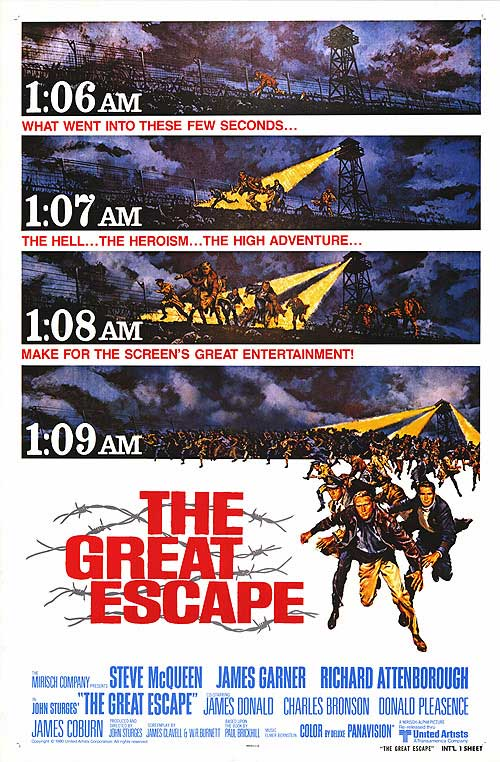
Based on a true story involving POW’s in an ‘escape proof’ German Prison camp who devise a way to get out by digging three tunnels, which will go under the barbed wire fence and allow them to get out under the cover of a nearby forest. They decide to build three tunnels and call them Tom, Dick and Harry, so if the German guards discover one of the tunnels they can simply continue to work on the other two.

The producers built a complete replica of Stalag Luft III were the actual events took place and used Wally Floody who was a prisoner of the camp and took part in the escape as an advisor. The movie moves at a polished pace grabbing in you immediately and keeping you involved all the way through. The characters share a great camaraderie and it’s a terrific testament to teamwork and how by everybody playing a little role can help make great things happen. Their resolve and ‘can-do’ spirit is infectious and one of the major reasons the film is so compelling. The bouncy, upbeat patriotic music is good although it gets played a lot and most viewers will most likely hear it playing in their head long after it is over.

I did feel that the depiction of the camp seemed a bit too cozy. The men are allowed to freely walk around and congregate in large meetings where they make their plans and it seemed to me that a heavily fortified prison camp wouldn’t allow for that, or at least be more on top of things. I wouldn’t say the German’s are portrayed on a ‘Hogan’s Heroes’ dumb level, but at times it gets close. For instance when the James Garner character lifts the wallet out of the pocket of one of the guards he does not become aware that it is missing for what seems like several days and then when he does he doesn’t suspect the Garner character and instead goes back to him and naively asks for his help in finding it. When the Germans find one of the tunnels there are no reprisals even though I and some of the others in my movie group who watched it with me felt that there should have been. Also, when the Steve McQueen character attacks one of the German guards when they shoot his friend who is trying to escape he is not sent to the cooler even though he had previously been sent there for far less infractions.

On the acting side it is all top-notch. McQueen is as cool as ever. I love his detached manner and rugged willing to take risks personality. His escape by motorcycle, which was added into the story by his request, is exciting and one of the most memorable moments in the film. Charles Bronson is good as one of the characters who are most instrumental at digging the tunnels however I felt that it seemed a bit far-fetched and like tacky Hollywood melodrama that he had spent so much time working inside the tunnels only to suddenly get claustrophobic about them just as they are trying to escape. David McCallum has very few words, but gets gunned down in exciting style at a train station. I normally love James Coburn and his character is appealing, but his attempt at an Australian accent is atrocious.

Spoiler Alert!

Despite its title the film really doesn’t seem like all that great of an escape. For one thing out of the predicted 250 that were supposed to escape through the tunnel only 76 made it out before the Germans caught onto it and closed it off. Of those 76 there are 50 who get caught, rounded up and shot at point blank range. 12 get returned to the camp and only 3 actually make it to safety. When the Steve McQueen character gets sent back to the cooler in the film’s final scene I felt a bit frustrated and depressed and that the big ballyhooed escape had really lead nowhere.

My Rating: 8 out of 10

Released: July 4, 1963

Runtime: 2Hours 52Minutes

Not Rated

Director: John Sturges

Studio: United Artists

Available: VHS, DVD, Blu-ray, Amazon Instant Video

The Crazy-Quilt (1966)

crazy quilt 2

By Richard Winters

My Rating: 6 out of 10

4-Word Review: Married to your opposite

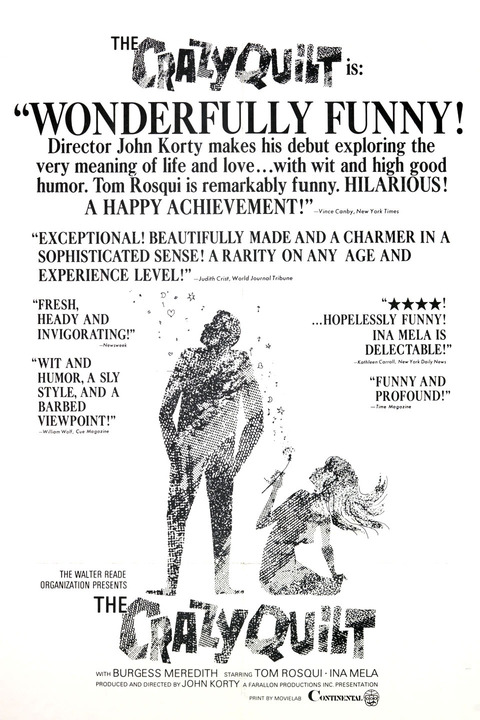
This film is based on the short story ‘The Illusionless Man & the Visionary Maid’ by Allen Wheelis and centers around Henry (Tom Rosqui) a hard-bitten realist with no illusions to anything. He lives a rather solitude life working as a termite exterminator. Then one day while walking in a park he bumps into Lorabella (Ina Mela) who is his complete opposite. She is full of ideals, dreams, and fantasies. Despite an awkward courtship the two get married and the film deals with the rocky, winding road that it takes.

This was the directorial debut for John Korty who later went on to direct the critically acclaimed TV-movies ‘Go Ask Alice’ and ‘The Autobiography of Miss Jane Pittman’. His talents are on full display here as he institutes a visual design to a story that initially doesn’t have any. I loved some of the picturesque moments particularly when Henry and Lorabella take a long quiet walk in a wide open field that eventually stretches all the way into a forest. The black and white cinematography gives it just the right cinema vertite feel and the music is perfect especially the flute solo. In an age of overblown plots and mind numbing special effects it is nice to see someone take a risk with a story that is subtle, basic, and restrained. There is some nice simple, but profound moments here that could never be replicated in the big budget productions, but have a great impact here. Despite the whimsical nature many people are sure to see a bit of themselves in the characters and it is its ability to tap into that very basic, universal truth that makes this film special and unique.

The casting is astute. Rosqui is spot-on as the realist. He has a perpetual scowl on his face that is just right for the character and seems to remain even in the brief moments when he is smiling. Mela is equally good. Her expressive eyes, delicate features, and wispy voice perfectly reflect the traits of her character and the camera captures her well. She never appeared in another movie and I was sad to hear that she died at a young age.

Initially I was put-off by the Lorabella character falling so madly in-love with Henry after she bumps into him and following him all around even though he responds to her in a very cold and reticent way. I felt it was unrealistic that someone wouldn’t notice the obvious aloofness, but then I realized that is the characters whole problem. She projects traits onto the people she meets as well as everything else in life from her own quirky mind that aren’t really there. This comes to an amusing head when she has affairs with various different men where she shows the same tendency and ends up consistently getting the same empty result. These vignettes are the funniest moments in the film as well as the scene where she bakes Henry a chocolate cake that is shaped to look like a giant termite.

I really have only a few complaints with the film. One is the voice-over narration by Burgess Meredith. Meredith has a great voice and a few of his lines are gems particularly his opening monologue and
the very last one. However, there were moments when I would rather have heard what the characters were saying especially when the couple goes to an art museum as I thought it would be interesting to hear the different interpretations each character had to each display. Near the end in an attempt to show the characters aging Henry’s hair is dyed white, but it looks tacky like it was frosted on in a similar way that is done to white Christmas trees. I also thought it was strange that in the very final scene his hair suddenly goes back to being black, which didn’t make any sense.

Since this film is very obscure and had a limited run upon its initial release the only way to obtain it is through the director’s personal website at www.johnkorty.com The neat thing here it that when you order a copy Korty personally signs the DVD and even sends you a letter along with it. For a lifelong film collector such as myself I thought that was pretty cool and it even made my day.

My Rating: 6 out of 10

Released: October 3, 1966

Runtime: 1Hour 10Minutes

Not Rated

Director: John Korty

Studio: Continental Distributing

Available: DVD at www.johnkorty.com

The Sidehackers (1969)

sidehackers

By Richard Winters

My Rating: 2 out of 10

4-Word Review: Rape, murder and mayhem

This low budget flick is probably best known as having aired on an episode of the old ‘Mystery Science Theater 3000’ TV-show. At the time the writers had not watched the movie all the way through before deciding to use it for the show and when they came upon a rape sequence half-way through it they had to edit it out and have Crow  simply explain that the character was now dead. It is also famous for being directed by Goldie Hawn’s then husband Gus Trikonis. In fact Goldie auditioned for one of the parts in the film, but since she wasn’t well known at the time she got turned down.

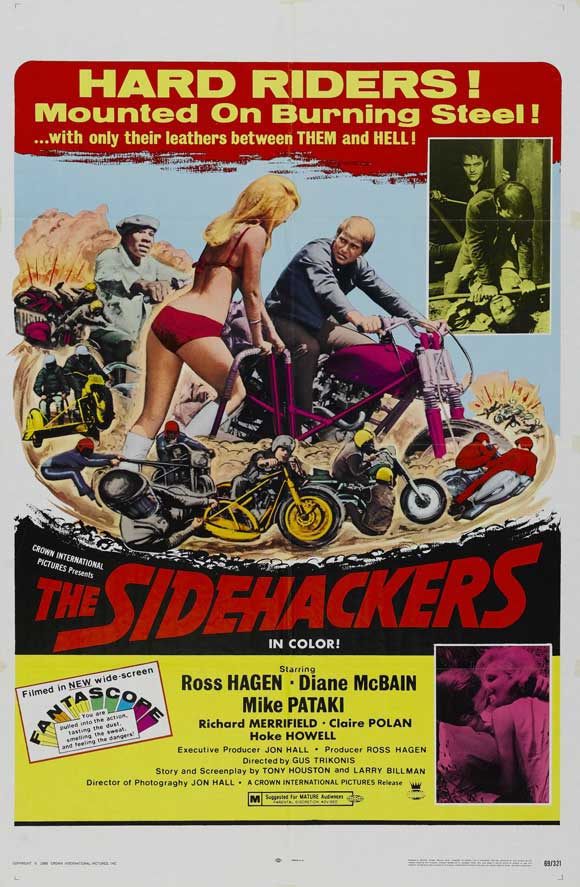
The story centers around Vince (Ross Hagen) a motorcycle racer involved in the sport of sidehacking where a passenger rides along in a sidecar connected to the motorcycle and uses his body weight to help steer the bike around curves and turns.  The psychotic J.C. (Michael Pataki) watches the sport and wants to work with Vince, but Vince becomes aware of J.C.’s volatile personality and turns him down. This angers J.C. and later when his girlfriend Paisley (Claire Polan) falsely accuses Vince of having tried to rape her J.C. flies into a rage. He and his men attack and beat up Vince and then rape and murder Vince’s girlfriend Rita (Diane McBain). Vince then spends the rest of the film trying to track down J.C. and getting his revenge.

The only diversion of this otherwise run-of-the-mill drive-in drama is the scenes involving the racing, which is better known as sidecarcross. Trikonis captures the racing in vivid style giving the viewer a good feel of the sport. Personally I thought it would be excessively dangerous for the passenger who puts himself into a very vulnerable position as he tries to steer the bike from the side and could easily fall off, or be hit by the other bikes that zoom around him. The shots of the crowd seem to show them as really being into it, but I felt that after watching it for a few minutes it would get monotonous.

With that said it is still the most interesting aspect of the film and I felt the story should have revolved around it. For instance having J.C. try and sabotage one of Vince’s races, but instead the racing scenes are shown only at the beginning before devolving into just another stale and redundant revenge drama. The dialogue is stilted, the characters bland, and the direction lifeless. Boredom quickly sets in and never goes away.

The music score is particularly horrendous. With the exception of the final fight scene when it does have a nifty psychedelic quality it is very sappy and terribly harmonized. Hearing it played over shots of Vince and Rita frolicking merrily through some open fields may be enough to make some viewers gag.

Pataki gives a good intense performance as the psycho and at times goes a bit over-the-top, but with this type of production that can only help it. The rest of the acting like everything else seems amateurish. If you want to seek this film out simply to catch the scene that was cut from the TV broadcast I would say it isn’t worth it. The sequence is not all that graphic and it is shown only as a flashback, which takes less than a minute.

My Rating: 2 out of 10

Released: May 12, 1969

Runtime: 1Hour 22Minutes

Alternate Title: Five the Hard Way

Rated M

Director: Gus Trikonis

Studio: Crown International Pictures

Available: DVD (The Savage Cinema Collection)

Anne of the Thousand Days (1969)

anne of a thousand days 2

By Richard Winters

My Rating: 7 out of 10

4-Word Review: Off with her head

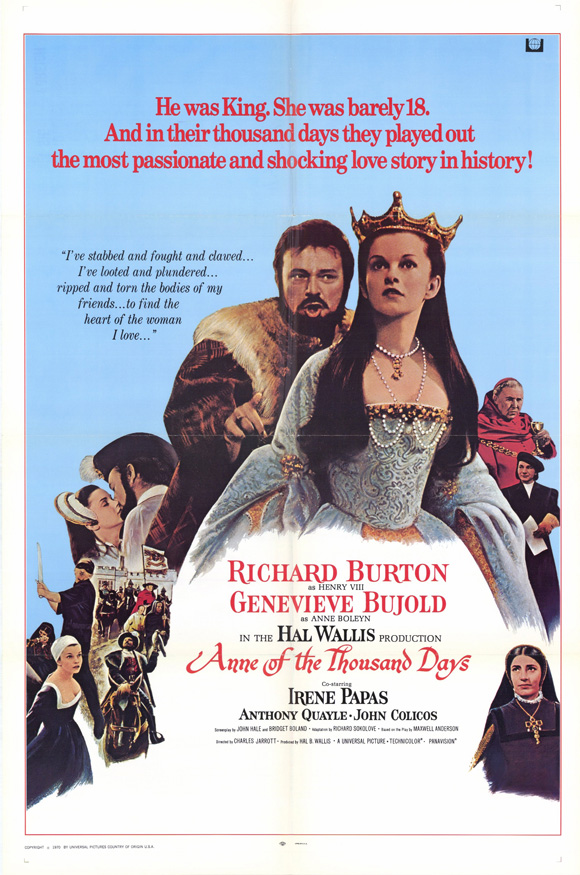
Based on historical fact the setting is 1527 King Henry VIII (Richard Burton) is bored with his current wife Catherine of Aragon (Irene Pappas) and becomes intoxicated by the beauty of 18-year-old Anne Boleyn (Genevieve Bujold). Initially she resists the advances of the King and finds him unappealing, but once she gets a whiff of all the power that being a Queen can give she falls in-love with him. The King wants her to bore him a son, but their first child turns out to be a girl, which causes their marriage to sour. Their acrimony is furthered when their second child turns out to be a stillborn son. Eventually the King grows tired of Anne and hires Thomas Cromwell (John Colicos) to find a way to get rid of her. Cromwell tortures some servants into saying they had sexual liaisons with Anne which gets her placed under arrest and awaiting trial and execution.

Bujold gives a powerful and mesmerizing performance and I am surprised that she didn’t win the Oscar. However, Burton, who is an actor that I admire, seems uncomfortable in his role and just walking through his part.

The story itself is compelling and because it is based on fact makes it all the more amazing. It moves along at a good pace and the viewer can’t help but get absorbed in it. This is no stuffy costume drama and it is probably tawdrier than any soap opera out there. However, Charles Jarrot’s direction is a bit stale. The sets and costumes are great, but the atmosphere and cinematic style is missing and the whole thing seems too much like a filmed stage play.

My biggest quibble with the film is that it doesn’t stay completely accurate. Historians insist that the King does not offer Anne any type of reprieve nor does he visit her after she is imprisoned like he does here. While this scene is nice because it does humanize him who in every other way is despicable it doesn’t help the viewer better understand the story or the people in it by inserting something that really didn’t happen.

My Rating: 7 out of 10

Released: December 18, 1969

Runtime: 2Hours 25Minutes

Rated M

Director: Charles Jarrott

Studio: Universal

Available: VHS, DVD, Amazon Instant Video, Hulu

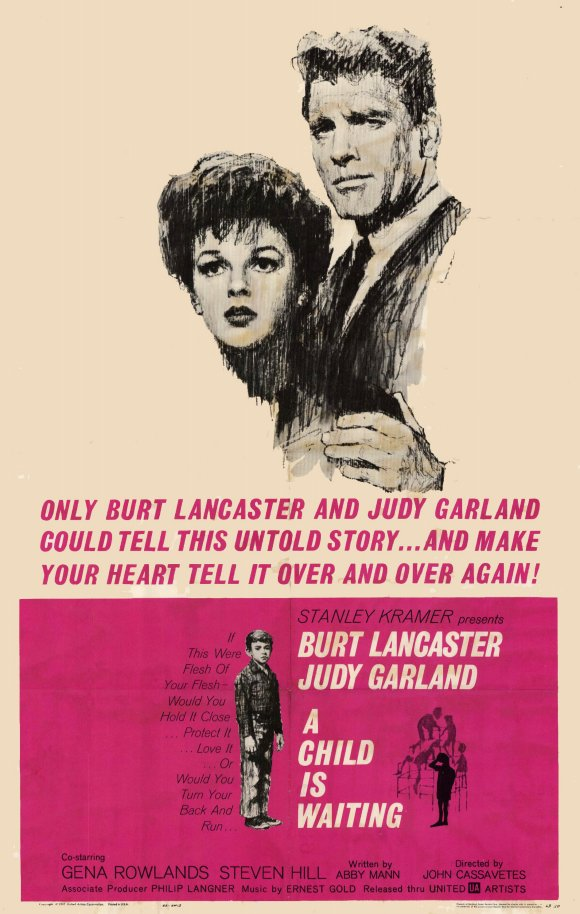
A Child is Waiting (1963)

a child is waiting

By Richard Winters

My Rating: 7 out of 10

4-Word Review: Help for retarded children.

Jean Hanson (Judy Garland) is a woman looking for direction in her life. She takes a job with Dr. Matthew Clark (Burt Lancaster) who runs a school for children with mental handicaps. She finds the work to be more taxing than expected, but also forms a strong attachment to one of the boys named Reuben Widdicombe (Bruce Ritchey).  Dr. Clark notices this bonding and considers it to be a potential problem so his has Jean moved to another building, which causes Reuben to become very upset and displays his anger in all sorts of anti-social ways.

This film is raw and compelling and offering a refreshingly vivid non-sanitized look into work with the mentally handicapped. Director John Cassavetes and screenwriter Abby Mann take off all of the Hollywood gloss and shows things in a real and uncompromising way. The majority of the children are disabled and not actors. Their responses and behaviors are genuine. Some of the best moments are when Cassavetes turns on the camera and then just let things happen particularly when Garland and Lancaster visit a hospital for mentally handicapped adults as well as when they put on a play celebrating Thanksgiving with the children as the performers.

The film is tastefully done and avoids showing some of the cruelties people with these disabilities go through and instead only talks about them lightly. What I really liked though was that it shows things from the adult perspective particularly those of the parents and the difficult adjustment they have as well as the array of emotions. The meeting between a group of doctors discussing which schools for which handicapped children should be given more money and which one of them had a better potential to being more self-sufficient was equally interesting. The movie also makes great use of silence to help propel the emotion and thankfully keeps the music to a minimum.

Garland was a good choice simply for her perpetual look of concern on her face, which remains throughout. However, she has a very worn and haggard appearance and looking much older than the forty years that she was and by looking at her here it should come as no surprise that a mere seven years after filming this she would be dead.

Lancaster is splendid and this may be one of his best roles of his already illustrious career. His soothing and calm voice is perfect for the part and his best moment comes when he patiently tries to teach the children how to correctly annunciate certain words.

Ritchey is good as the child and has a face that is very cute and full of expression. However, he seems to suffer from a severe speech impediment that makes it difficult to understand what he is saying. I wasn’t sure if he suffered from this in real-life, or it was just done for the part, but since he never appeared in any other film role makes me believe that he did.

Steven Hill is also superb playing Reuben’s father a man who turned his back on his son and virtually abandoned him when he was diagnosed as being mentally handicapped only to at the very end have a change of heart.

My Rating: 7 out of 10

Released: January 14, 1963

Runtime: 1Hour 42Minutes

Not Rated

Director: John Cassavetes

Studio: United Artists

Available: VHS

The Luck of Ginger Coffey (1964)

the luck of ginger coffey

By Richard Winters

My Rating: 7 out of 10

4-Word Review: He needs a job.

Ginger Coffey (Robert Shaw) is a middle-aged man living in Montreal whose dreams and ambitions far outweigh his grim predicament. He moves from one low paying job to another convinced that his lot in life will improve. His wife Vera (Mary Ure) decides to leave him and Ginger tries to win her back while juggling two jobs and hoping to get a promotion in one that never seems to come.

As a vivid look at the daily lives of the everyday working class this film hits a solid bullseye. The conversations between the co-workers and the monotonous and sometimes demeaning job interview process and Ginger’s on-going arguments with his wife and daughter are all true to form. There is no pretension and director Irvin Kershner keeps everything at a bare-bones minimum giving it almost a documentary style and making the viewer feel immersed in the bleak environment. The outdoor shots of the city are unexciting and cinematically unappealing, but help reflect the grim level. Watching Ginger get kicked out of his apartment and have to carry what is left of his belongings and then place them on the outside sidewalk while he goes in to visit his daughter in her school is quietly powerful.

Robert Shaw is excellent. This is a man who had by all accounts had a very dominating and proud personality in real-life and usually played characters with the same traits, so seeing him play against type and succeed is interesting. What is really effective is that he makes the character very human and likable despite his constant goof-ups, which keeps the viewer compelled to his situation.

Ure, who at the time was married to Shaw in real-life, gives an equally outstanding performance. Her perplexed facial expressions are perfect and the fact that we see her character grow and become more confident is good.

I also must mention Liam Redmond as Ginger’s cantankerous boss, who is nicknamed by his employees as ‘Hitler’. Ginger’s rushed job interview that he has with him is one of the film’s highpoints as is the moment when Ginger dashes away from him when he is caught making a personal phone call.

The only real complaint I have with the film is the ending, which is for the most part non-existent. I have seen vague wide-open endings in my movie viewing lifetime, but this thing is a cop-out and really boring one at that. I think when a viewer has spent nearly two hours empathizing with his difficult  and precarious situation that they deserve some sort of finality, or at least a hint of what became of him and whether he ever did find that ‘luck’ that he was so convinced was out there.

My Rating: 7 out of 10

Released: September 21, 1964

Runtime: 1Hour 40Minutes

Not Rated

Director: Irvin Kershner

Studio: Continental Distributing

Available: YouTube

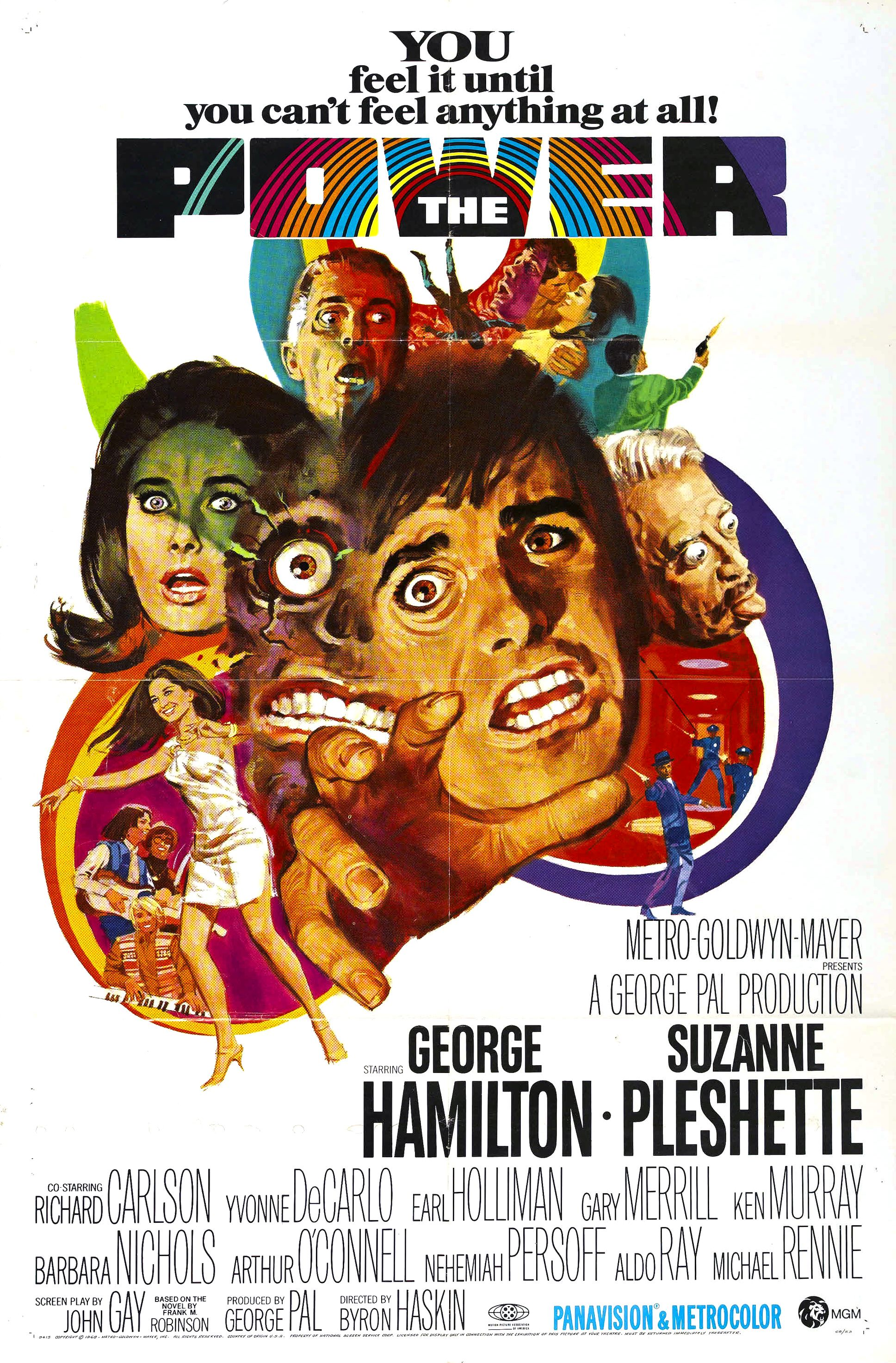
The Power (1968)

the power 2

By Richard Winters

My Rating: 6 out of 10

4-Word Review: Who has the power?

Professor Jim Tanner (George Hamilton) is the head of a scientific research group who come to realize that one of their members has strong telekinetic powers and is slowly killing off the other members one-by-one by fantastic and bizarre means. It is up to Jim and his assistant Margery (Suzanne Pleshette) to find out who it is and try to put a stop to it before they become his next victim.

There are definite shades to Agatha Christie’s classic mystery novel ‘And Then There Were None’ and in fact that title even gets mentioned here. Despite a pace that ebbs and flows Director Byron Haskin gives the proceedings a flashy and creative flair. Watching Jim getting attacked by toy soldiers in a display window is cool as is the part where he gets stranded in the middle of a desert. The ending features visuals of faces melting and skeletons dancing that reminded me a bit of the one in Raiders of the Lost Ark. I also enjoyed the scene showing an actual heart inside a man’s body getting squeezed and forcing it to stop.

The supporting cast is fabulous and almost of half of the film’s entertainment alone. Yvonne De Carlo is terrific in a brief, but fun bit as the tipsy wife of one of the victim’s. Gary Merrill is solid as a hard-bitten police detective and Aldo Ray is good as a menacing bad guy. Michael Rennie better known for his starring role in another sci-fi classic The Day the Earth Stood Still is effective here as the mysterious Arthur Nordlund, but my favorite of them all would have to Arthur O’Connell as the nervous and high-strung Henry Hallson. The look on his face after he is spun around at high speeds in a space compressor is probably the film’s best moment.

Where the film fails is that this mysterious person’s powers are much too broad with no limitations of any kind. I can handle the idea of telekinesis, but this guy can also make walls of buildings grow and make doorways disappear. He can even change the words on street lights to go from ‘Don’t Walk’ to ‘Don’t Run’. To me this made it seem too fabricated and far-fetched. Even in sci-fi there needs to be same perimeters and basis of logic of some kind and this film offers none. The fact that there is never any explanation given for how this person got these amazing powers, or what might have caused it makes it even weaker and hurts what is otherwise an interesting idea.

My Rating: 6 out of 10

Released: February 21, 1968

Runtime: 1Hour 48Minutes

Not Rated

Director: Byron Haskin

Studio: MGM

Available: DVD (Warner Archive)

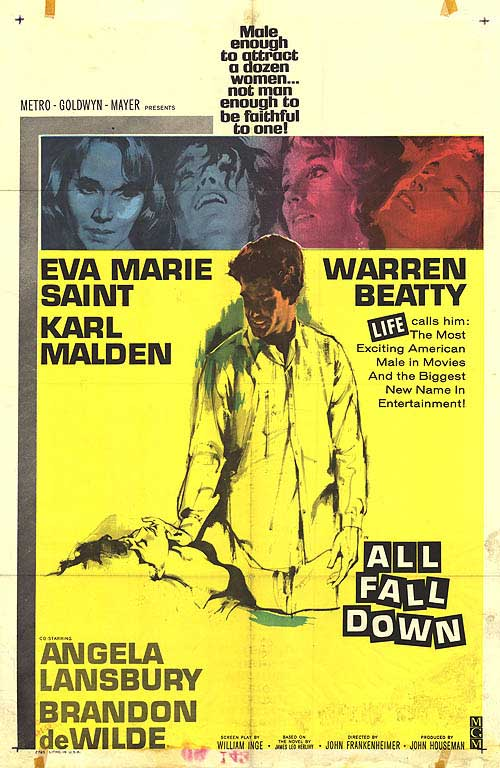
All Fall Down (1962)

all fall down

By Richard Winters

My Rating: 7 out of 10

4-Word Review: Don’t idolize older brother.

Berry-Berry (Warren Beatty) is the malcontent son of Annabell and Ralph Willart (Angela Lansbury, Karl Malden) who is unable to hold down a steady job, is in constant brushes with the law, and beats up his girlfriends. Yet women seem attracted to his rugged good looks, his parents continue to dote on him and overlook his flaws and his younger brother Clinton (Brandon De Wilde) idolizes him. All that changes when Echo (Eva Marie Saint) comes to visit. Clinton falls for her, but when she meets Berry-Berry she instead goes for him. When he mistreats her Clinton finally sees his brother for who he is and decides to take matters into his own hands.

Although overall this is a great production one of the biggest problems I had with it is the name for the leading character. Who names their kid Berry-Berry? I have never heard of that name before and it sounds corny and silly even annoying every time it comes out of one of the character’s mouths. I was almost surprised that the actors didn’t crack-up every time they had to say it. I felt there should have been an explanation for it, but none ever comes. In my mind giving a kid that stupid name is probably the whole reason he became so troubled and difficult in his adult life.

As for the character itself I wanted more of a history to see why he became the way he did. There is no backstory and in that regard the film seems weak and even frustrating. Despite being billed as the star Beatty is not really seen all that much especially during the first hour and in some ways the film comes off more like an ensemble drama. Also, having women fall for him after literally just setting their eyes on him seemed exaggerated and overdone.

Beatty has all the necessary leading man qualities, but in this instance I don’t think he was right for the part. His performance is too reserved and aloof. I didn’t see him conveying the deep seated anger that the part demanded. In many ways it is De Wilde who gives a far stronger performance and steals the film. His boyish face and charm makes for a fantastic contrast to Beatty’s.

Lansbury is sensational. She was only in her thirties at the time, but plays a woman in her fifties and does so convincingly as well as putting on a good accent. Two of her best moments come when her husband brings home three homeless men for the holidays and she insists they only want money and not the comfort of human companionship that her husband believes and the way she proves it is amusing. The part near the end where she defends her eldest son despite all his ugly flaws is brief, but strong and one of the film’s defining moments.

Saint is also excellent in support and so is Madame Spivy. She was a bar owner in real life and plays one here. She had a masculine build and a very no-nonsense demeanor, which comes out when she throws the under aged Clinton out of her establishment.

Director John Frankenheimer does well with the material. The on-locations shooting done in Key West, Florida is striking particularly at the beginning. His use of a rain storm makes a particularly strong dramatic sequence even stronger. However, the screenplay was written by William Inge and based on a novel by James Leo Herlihy. Inge was a noted playwright and the script seems more suited for the stage as it is quite talky and lacking in cinematic elements.

My Rating: 7 out of 10

Released: March 28, 1962

Runtime: 1Hour 51Minutes

Not Rated

Director: John Frankenheimer

Studio: MGM

Available: DVD (Warner Archive), Amazon Instant Video