Tag Archives: Robert Shaw

Avalanche Express (1979)

avalanche2

By Richard Winters

My Rating: 2 out of 10

4-Word Review: Defector on a train.

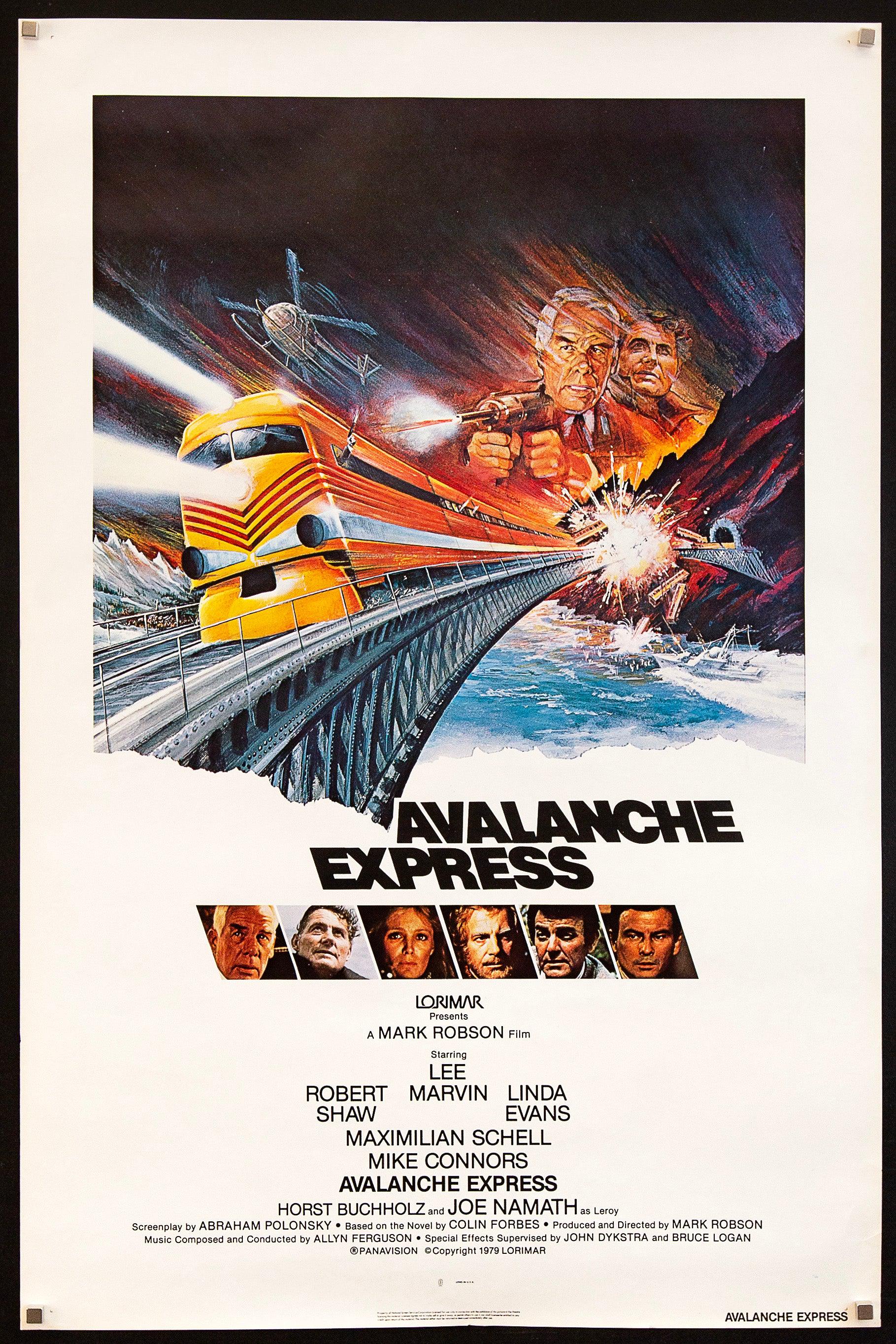
Based on the 1977 Colin Forbes novel of the same name the story centers around General Marenkov (Robert Shaw) a soviet agent who’s decided to defect to the west. Harry (Lee Marvin) is the CIA agent in charge of extraditing Marenkov back to the U.S., but to do so they must travel via train across Europe. Nikolai (Maximilian Schell) is a KGB agent assigned to stop Marenkov’s escape and tries many ways to stymie his trip before finally settling on creating an avalanche, which will not only impede the train ride that Marenkov and Harry are on, but if done right should completely destroy it and end the lives of everyone inside.

The film was noted for its many difficulties during the shoot including the death of its director Mark Robson from a heart attack with only 2-weeks left of filming forcing Monte Hellman to step in and complete the production. The biggest problem though was that during the post-production it was deemed that the opening scene, which featured Shaw speaking to his soviet counterparts in broken English, should be redone with Russian dialogue. However, Shaw too had already died from a sudden heart attack in August and thus was no longer able to come-in for reshoots, so they settled on his voice being dubbed by Robert Rietti for that scene. This would’ve been fine had they stopped there, but instead they came to the conclusion that for the sake of consistency Shaw’s voice should be dubbed by Rietti for the entire film, which was a huge mistake.

Shaw has a highly distinctive and wonderfully articulate delivery and for the viewer to miss out on that is downright criminal. I think most audiences could’ve forgiven that his voice sounded a bit different during the opening bit and probably wouldn’t have even cared or noticed since they were so busy focusing on the subtitles anyway. It becomes like a bait and switch, since Shaw’s name headlines the cast, but since somebody else does his speaking it’s like he’s not really in it and thus a big rip-off to his fans who came to see the movie simply because of him.

The special effects are equally abhorrent. There’s been many movies that have created fake snow scenes, but this one has to be the cheapest looking one yet. The falling flakes look more like Styrofoam and the white stuff on the ground resembles foam from a bathtub especially as the vehicles slush their way through it like it’s a white liquid. The sequence showing the train gliding down the tracks is clearly of the miniature variety and will fool no one.

The casting is a mess too especially the appearance of Joe Namath, a great football player, but a threadbare actor who has no business being in a big budget Hollywood picture. He’d be okay for a TV-movie with other B-performers, but for something that’s supposed to be taken seriously his presence makes the thing even more tacky than it already is. Even stalwart leading man Marvin fails here as he shows no emotion even when it’s warranted, like when he gets word that train they’re on is headed for disaster and yet he remains hyper stoic like he’s a robot with no feelings. Having him get shot dead early on only to return later isn’t the gotcha they thought it would be as I was predicting he’d reappear as there’s simply no way a big-name star like him would sign onto a movie just to be killed off right away.

Linda Evans is good simply because she has the ability of playing a cold, bitchy lady quite well. It could almost be described as her forte and her snippy comments and icy behavior towards Marvin during the first half are engaging and helps give the proceedings a bit of a dramatic flair. Turning the two into lovers though during the second half ruins all the underlying tension and since they don’t share much of a chemistry anyways having them remain adversarial throughout would’ve worked better.

Schell as the villain is as cardboard as he was playing the bad guy in The Black HoleHis career is long and distinguished, but his success is clearly not in these types of roles though he does at least get the film’s one good line. It comes when he’s told he must go undercover in disguise by playing someone who does not smoke. Since his character is a chain smoker, he panics that he won’t be able to go on without a cigarette and exclaims “That’ll kill me’.

My Rating: 2 out of 10

Released: October 19, 1979

Runtime: 1 Hour 28 Minutes

Rated PG

Director: Mark Robson

Studio: 20th Century Fox

Available: DVD-R (Warner Archive), Amazon Video, YouTube
End of the Game (1975)

endofgame

By Richard Winters

My Rating: 7 out of 10

4-Word Review: Unable to prove crime.

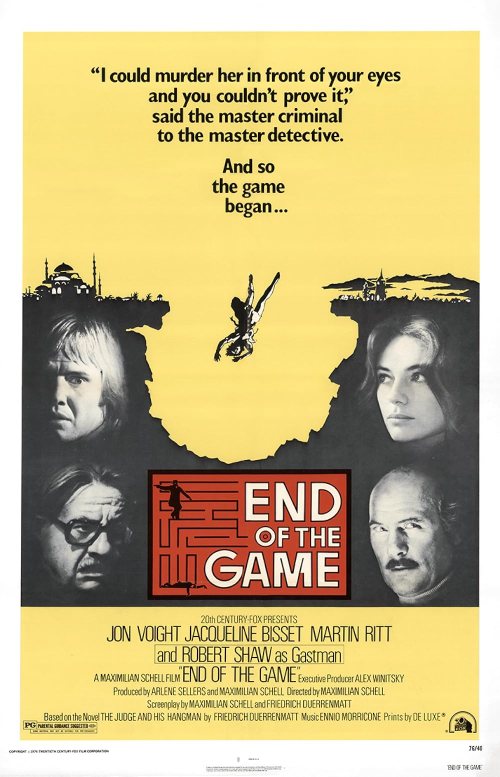
Richard Gastman (Robert Shaw) makes a bet with his young friend Hans (Martin Ritt) that he can commit a crime in front of him, but Hans will be unable to prove who did it. Later Hans’ girlfriend (Rita Calderoni) plunges to her death from off of a bridge. Hans is convinced Gastman did it, but just like he predicted he cannot prove it. 30 years pass and Hans is now a police commissioner with only a few months to live due to suffering from stomach cancer. His Lieutenant Schmied (Donald Sutherland) is found shot to death inside his police vehicle. He’d been assigned by Hans to keep tabs on Gastman as Hans was still intent on making him pay for what he did to his girlfriend, but he again can’t prove that Gastman killed Schmied though he’s certain that he did. Walter (Jon Voight) gets assigned to the case, but Hans can’t be completely honest with him about the case, so instead he sets Walter up to witness firsthand the brutality of Gastman for himself.

The story is based on the 1950 novel ‘The Judge and the Hangman’ by Frederich Durrenmatt who also wrote the screenplay and has a very amusing cameo as a man who plays chess against himself and always loses. The novel was first adapted into a broadcast for German television in 1957 and then again in 1961 for British TV, and then it got adapted for a third time for Italian television and then a fourth as a TV-movie for French broadcast before finally making it’s way to the big screen with this version, which so far has been the last adaptation to date.

The film was directed by Academy Award winning actor Maximillian Schell who was unable to get along with either of his leading actors with Shaw accusing him of being a ‘clockwatcher’ and ‘pocket Hitler’ while Voight described him as being humorless and overly demanding. The film is well directed for the most part, but an unusual reliance on humor almost kills it. The story itself is certainly not meant to be funny, but Schell implements comedic moments particularly in the first half when they’re not needed and almost a distraction. This is particularly evident during Schmied’s funeral and earlier when Schmied’s body is found and another cop drives the corpse to the hospital with Donald Sutherland, in an unbilled bit, playing the dead man and his body twisting around in weird ways as the car goes down the curvy road, which is humorous, but unnecessary and doesn’t help propel the plot. Initially too the corpse is spotted by some pedestrians who stare at it through the car window and seem amused by it, which isn’t exactly a normal reaction people have when witnessing someone who has just died. Possibly this was meant to show the public’s distrust, or disdain for the police, but if that were the case it should’ve been explained and elaborated.

The casting is unusual as it features Ritt in the lead who’s better known as a director, but here ultimately shines and becomes the film’s only likable character though the way he behaves throughout still makes him seem sketchy like everyone else. Shaw, who complained that he never got paid the $50,000 that he was owed for doing this, is commanding as usual, but Voight who wears a shaggy bleached blonde look comes-off as creepy right away. Technically the viewer is expected to side with his character, at least upfront and consider him a ‘good guy’, but right away Voigt telegraphs it in a way that makes him seem ‘off’ and hence kind of ruins the stories eventual twists.

For those who like complex whodunits this might fit the bill. The plot certainly does constantly unravel in surprising ways and no one should be bored, but the characters are cold and unlikable. There’s no one to root for and therefore the viewer is not as keyed into the outcome as they would’ve had they been more emotionally invested. The editing is also quite choppy and there seems to be certain key elements that get left out, which most likely due to the fact that the original runtime was 106 minutes, but the DVD version, the only one publicly available at this time, runs a mere 92 minutes.

My Rating: 7 out of 10

Released: September 21, 1975

Runtime: 1 Hour 46 Minutes (Director’s Cut) 1 Hour 33 Minutes (DVD Version)

Rated R

Director: Maximillian Schell

Studio: 20th Century Fox

Available: DVD-R

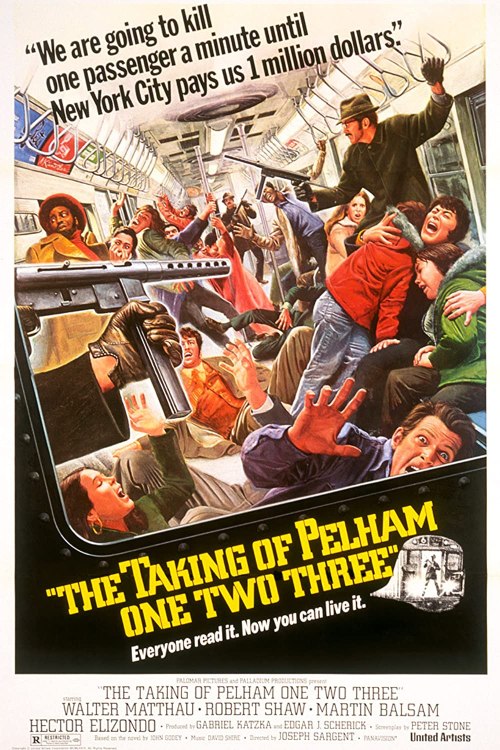
The Taking of Pelham One Two Three (1974)

taking

By Richard Winters

My Rating: 8 out of 10

4-Word Review: Subway passengers held hostage.

Four men wearing disguises and going by code names: Mr. Blue (Robert Shaw), Mr. Green (Martin Balsam), Mr. Grey (Hector Elizondo), and Mr. Brown (Earl Hindman) board the same subway car, this one being the Pelham 1-2-3, at different locations. Once all four are onboard they take out their guns and take over the subway car by holding both passengers and conductor hostage. For their release they demand $1 million in ransom to be paid in 1-hour and for every minute that it is late one passenger will be killed. They communicate these demands to Lt. Zack Garber (Walter Matthau) who is a part of the New York City Transit police. As Mr. Blue and Garber communicate with each other over the radio and the city races to meet the crooks demands Garber begins to try and surmise who these men are and how they’ll be able to get away with it since they’re trapped in an underground subway. Garber is convinced that it will not work and the men will eventually be caught unaware that Mr. Green, who used to work for the subway system until he was, in his mind, unfairly terminated, has come up with an ingenious contraption that can override the dead-man’s switch and allow the train to keep running even with no one at the controls.

The film is based on the best-selling novel of the same name by John Godey, who was a subway enthusiast and came-up with the plot after spending many years using the subway system. While the movie rights for the paperback were sold for $450,000, in anticipation that it’d make a great movie, the film almost didn’t get made due to the reluctance of the Metropolitan Transit Authority to allow the production to be filmed on-location.  Much of the reason stemmed from their fear that it might give ‘kooks’ the idea to pull-off a real-life heist, but eventually they caved once screenwriter Peter Stone added in the fictional contraption that could override the dead-man’s switch.

As a caper/action flick it is quite exciting from literally the first-frame to the last, but it’s some of the other added elements that make it a standout. I really enjoyed how the city of New York becomes like a third character and the unique, brash attitude of the people. Every character, no matter how small the part, has a distinct personality and memorable. My favorites were Mari Gorman as the feisty hooker, Michael Gorrin, as the elderly passenger convinced that the subway car must eventually come to a stop even as it careens out-of-control and everyone else panics. I also enjoyed Louie Larebee as an alcoholic woman, who is so drunk that she passes out when the crime begins and sleeps through the whole thing as well as Carolyn Nelson, the real-life wife of the film’s director Joseph Sargent, playing a college coed who believes she can stop the train through sheer mind control and meditation.

On the ground there’s some great character bits too including Tom Pedi as an aging, misogynist who doesn’t like the idea of having to work alongside women, nor that he should stop cursing because of it, who walks right into the line-of-fire when he stubbornly refuses to listen to the kidnappers warnings. Kenneth McMillan, is very funny as an exasperated street cop trying to direct traffic, and Dick O’Neill lends moments of drama as an outspoken transit employee who doesn’t like the idea of giving into the kidnappers demands and isn’t shy about voicing his disapproval, which leads to a tense confrontation with Matthau.

Matthau’s anti-hero take where he seems initially like nothing more than a aloof, laid-back guy, who doesn’t seem to have the cunning, or initiative to defeat the bad guys. At one point even openly insults a group of Japanese reporters who he thinks can’t speak English only to learn to his regret that they can, is excellent and in patented Matthau style seems to be able to do it without much visible effort.

Shaw is solid, but I felt there needed to be an explanation for how he got bought into the scheme, which never comes and ultimately is the film’s only real weak point. His personality is so different from the other men in the group that I couldn’t understand why he’d want to pull-off a robbery with them, nor why, being such a careful planner that his character is shown to be, he’d only realize as the crime is happening that the Mr. Gray was too much of a hot-head and not right for the job, as I’d think he would’ve observed this much earlier during the planning stage and had Gray removed before the actual crime had ever been carried out. Having scenes of the backstory spliced in would’ve helped made it more complete.

This was remade as a TV-movie in 1998 and then as another feature film in 2009 that starred Denzel Washington in the Matthau role and John Travolta playing Shaw’s part. I never saw the TV version and it’s been many years since I viewed the theatrical remake, but I remember finding it a letdown mainly because it centered too much around Travolta, who would go on long rants that bogged down both the pace and plot making it not nearly as exciting as this one.

My Rating: 8 out of 10

Released: October 2, 1974

Runtime: 1 Hour 44 Minutes

Rated R

Director: Joseph Sargent

Studio: United Artists

Available: DVD, Blu-ray, Amazon Video, YouTube

Figures in a Landscape (1970)

figures1

By Richard Winters

My Rating: 5 out of 10

4-Word Review: Chased by a helicopter.

Ansell (Malcolm McDowell) and MacConnachie (Robert Shaw) are two men on the run in the middle of a bleak, desolate desert. What they are escaping from is never clear, but they’re constantly hounded by a helicopter that seems intent at stopping them. They come upon a small village and steal food and supplies and then continue on their escape, but find trying to get along with each other is just as challenging as avoiding the copter.

I’m a big admirer of Joseph Losey’s films and I also enjoy movies that have an air of mystery and don’t feel the need to have to explain everything, but this attempt at avante garde doesn’t work. The Barry England novel or which this is based and received high critical praise when it came out in 1968 at least made it clear that these two were soldiers who were deserting for whatever reason, but the movie doesn’t even mention this. We’re simply left with a nothing-burger of seeing two guys we have no emotional connection with scurrying around the countryside, which gets old fast and has nothing to keep it compelling though the bird’s eye shots of them on the ground looking like dots as they run at least allows it to live up to its title.

Fans of the film will admit that the story is lacking, but the helicopter sequences and stunt work more than makes up for it, but I found this aspect to be underwhelming. The camerawork of showing the copter bearing down on them while splicing in shots from the pilot’s point-of-view is well handled, but it’s not as exciting as could’ve been because when the pilots have a chance to shoot the men they don’t. McDowell’s character explains that they (the helicopter pilots) are just ‘toying with them’, but the viewer can’t be expected to get wrapped-up in a silly cat-and-mouse contest that has no life or death consequence.

Much of the blame for why this comes-off more like a misguided experiment than an actual movie, can be attributed to Shaw, who was given permission to rewrite the script and promised to have it completed by the time shooting began, but didn’t. Apparently revisions were being made on a daily basis and no one knew where the plot was going, or how to end it, which ultimately makes for a flat and detached viewing experience.

The two leads do quite well with McDowell interesting as the younger of the two, but still more emotionally mature. Shaw is equally fine giving off a maniacal laugh that I’ve never heard him do before. Their bout with diarrhea at a most inopportune time is amusing. While some may find it gross it’s something that could happen to those who haven’t eaten in awhile and feeding off canned food, so in that way the movie tackles a realistic subject other escapees-on-the-run movies shy away from though the shaving aspect was a problem in reverse. I didn’t understand why Shaw would feel it’s so important for them to remain clean shaven when they’re just trying to survive and there’s no explanation for how they were able to remain without beards at the beginning when they were running around with their hands tied behind their backs.

In any case the movie desperately needed a conclusion as way too much is left open-ended. There should’ve been a final twist, like in an episode of the ‘Twilight Zone’ that makes sitting through it worth it. Ultimately it lacks focus with a concept better suited for a novel and never should’ve been made into a movie in the first place.

My Rating: 5 out of 10

Released: July 14, 1970

Runtime: 1 Hour 50 Minutes

Rated R

Director: Joseph Losey

Studio: 20th Century Fox

Available: DVD, Amazon Video

A Town Called Bastard (1971)

town

By Richard Winters

My Rating: 6 out of 10

4-Word Review: Where is rebel Aguila?

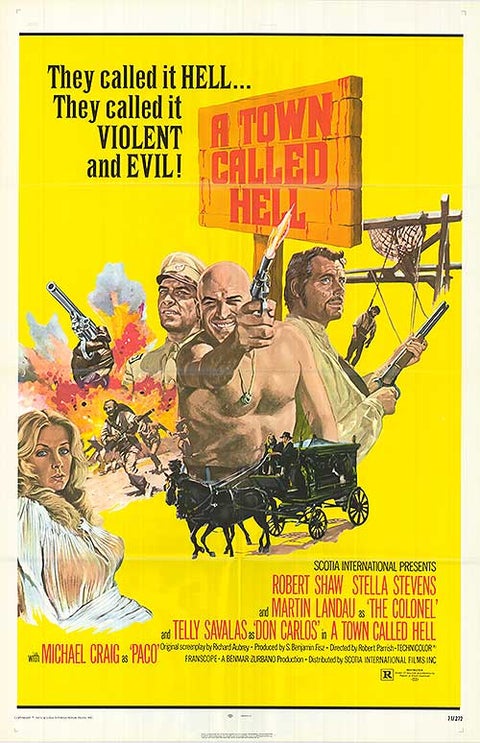
In 1895 a rebel leader named Aguila (Robert Shaw) massacres a small Mexican town. Ten years later he resides as a reformed priest in a town run by the corrupt Don Carlos (Telly Savalas). One day a beautiful widow named Alvira (Stella Stevens) arrives looking for the man who killed her husband during the massacre from 10 years earlier. Don Carlos agrees to help her despite having no idea who the killer is, or that it might have something to do with the priest. Things get more complicated when the army colonel also arrives determined to seek out justice by finding the elusive Aguila.

The film has many issues most of which is it comes off as a spaghetti western wannabe that has some of the entertaining elements of those films, but put together in a clumsy fashion. The town really doesn’t resemble an actual place, or a destination that people would live in since there only seems to be about 4 buildings, a church, a salon, and a couple of shops, making me wonder where all the townspeople that are seen milling about resided. There’s also an overuse of dubbing. Al Lettieri, who can be a spectacularly great villain especially in his unforgettable performance in The Gatewayand while he plays another bad guy here, but he gets wasted since his voice is dubbed with a high pitched one that takes away from his menacing quality. Even Robert Shaw has his voice dubbed from time-to-time, which is quite disconcerting.

The narrative is confusing as it jumps back and forth from the present to the past, but doesn’t make it clear that it is doing this, so you’ll see scenes with Shaw at the beginning as a rebel leader and then suddenly he’s a priest without explaining how the two are connected. The Fernando Rey character and the actor playing Alvira’s husband look too much alike making me think, especially since the story jumps between different time periods, that the characters were one and the same with one being slightly younger with the scenes done 10 years earlier though that ends up not being the case.

The cast does help particularly Savalas who seems to relish playing the bad guy and although he’s done this type of part a few too many times is still perfect, but his character gets killed-off too quickly and way too easily, which is a big letdown since his presence helps drive the movie. He gets replaced in essence with Landau, who plays a sociopath in the same over-the-top way, but a good film needs only one crazy not two men playing the same character in the same type of way until it becomes like a caricature.

Shaw is of course quite good though his character for the most part hangs back and doesn’t do much until near the end. The opening scene where he leads the attack on the village has energy, but the shot of a long line of spit oozing out of his mouth as he shouts orders left an icky lasting impression. Stevens is quite beautiful in a natural way without the help of make-up and this was the last film where she had a youthful look as she appeared increasingly more middle-aged after this one.

The nasty subtext was the one thing that makes it fun. There’s a lot of stuff shown here that they just couldn’t do today like the opening bit where the townspeople are viciously gunned down inside their church and the gunmen than laugh and celebrate while the dead, bloody bodies lay at their feet. The scene where a desperate man gleefully hangs his own, innocent wife in an attempt to save himself is memorable and it’s this type of element that keeps it interesting because you just don’t know what it’s going to show next and in the process reflects the ugly savagery of the true, old west.

Alternate Title: A Town Called Hell

Released: June 17, 1971

Runtime: 1 Hour 37 Minutes

Rated R

Director: Robert Parrish

Studio: Benmar Productions

Available: DVD, Blu-ray (Import Non-English), Amazon Video, Plex

Diamonds (1975)

diamonds2

By Richard Winters

My Rating: 3 out of 10

4-Word Review: Testing a security system.

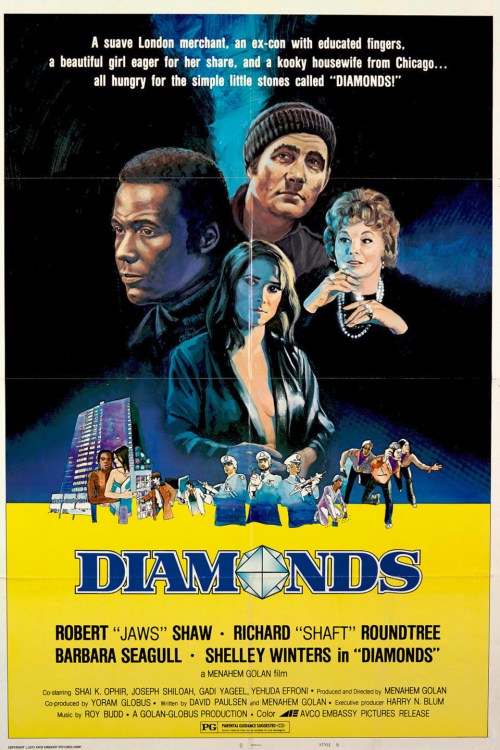
Charles and his twin brother Earl (both played by Robert Shaw) share an intense rivalry that comes-out during their judo karate contests. Charles wants to top his brother at everything including getting the better of him at his own expertise, which is that of security specialist who has created a vault in Tel Aviv that holds a cache of diamonds and is supposedly impenetrable. Charles is determined to rob it and uses the help of expert safe crackers Archie (Richard Roundtree) and Sally (Barbara Hershey).

While the film has some great location shooting of Israel making it seem almost like a travel log of the region and the final third where the three try to pull off the elaborate robbery does get a bit intense, though it’s nothing special, the movie on the whole falls flat. A major reason is that it was directed by Menahem Golan, who along with his cousin created the notorious film production company The Cannon Group, which produced a lot of cheesy, bubble gum action flicks during the 80’s. This film works very much like those with poor character development, in fact there’s really no development at all, and a plot that steals all sorts of elements from other and better heist movies.

Overall it’s pretty much the same storyline as $, Perfect Fridayand to a lesser extent Topkapibut all of the things that made those movies so much fun to watch goes missing here. The lack of interplay between the characters is the biggest issue. Shaw, Roundtree, and Hershey are all great actors, but they’re not given anything interesting to say. The twin brother concept does not get played-up enough and Charles’ twin is seen just a few times with the only difference being a shaggy wig that Earl wears as opposed to Charles crew-cut, but both brothers have the exact same mole on the left side of their mouths and while identical twins can have many similarities, skin blemishes isn’t one of them. Shelley Winters also pops-up sporadically as an American tourist, but her part is completely inconsequential and not needed at all.

The heist itself does involve some sophisticated maneuvers including having them walk on the ceiling by using a suction-cup type contraption, but the film fails to show any of the preparation. In the other heist films seeing how the crooks rehearsed the robbery and working through their disagreements and divergent personalities was half-the-fun, but that all goes missing here. How Shaw goes about meeting Roundtree and company is pretty flimsy too as he catches them during the middle of an attempted safe cracking and then hires them on-the-spot supposedly because he’s been monitoring them for 5 years and feels they’d be a perfect match for his scheme, but why should it take him so long to come to this conclusion and these safe crackers must not be as cunning as they seem if they’ve been watched closely for 5 years and not had any hint that it was going-on.

Spoiler Alert!

The crime itself gets pulled-off way too easily and there’s no moment where a crucial mistake gets made, or some sort of unexpected slip-up, so things never get as intense as it could’ve. There’s also an added character that gets thrown-in who kidnaps the son of the security guard in order to get the guard to give-out the combination to the safe, but no scenes are shown for how Shaw and company met this kidnapper, or what deal he made with him in order to get him to agree to along with their plans.

The finale has a very anti-climactic feel as Roundtree is able to retrieve the diamonds, but then Shaw forces him to put them all back, so they come away, after all that effort, empty-handed. Ultimately Shaw does hand him a $100,000 check, but this was paltry compared to the $10 million they would’ve gotten with the diamonds making the viewer feel like the film wasn’t worth sitting through if the characters just end up in the same situation that they were in when it began. While no movie that has Robert Shaw in it can be completely bad as his presence alone can elevate even the most inept material this one unfortunately does come close.

My Rating: 3 out of 10

Released: October 22, 1975

Runtime: 1 Hour 48 Minutes

Rated PG

Director: Menahem Golan

Studio: AVCO Embassy Pictures

Available: DVD-R

A Reflection of Fear (1972)

reflection

By Richard Winters

My Rating: 4 out of 10

4-Word Review: His daughter is disturbed.

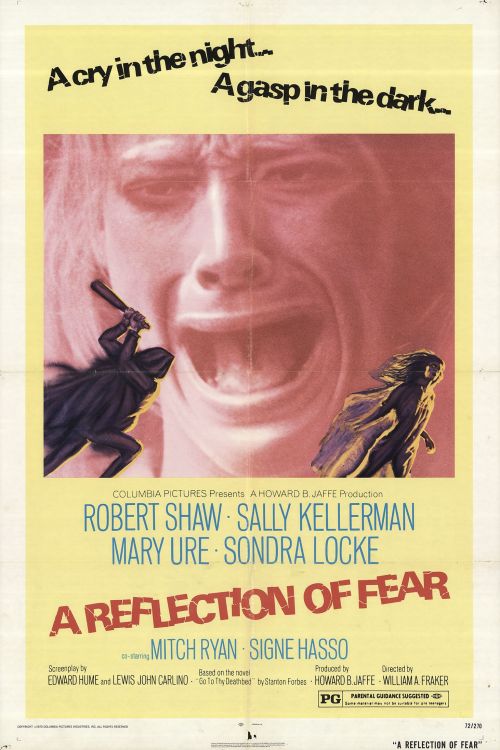
Marguerite (Sondra Locke) is a lonely teen girl living with her mother Katherine (Mary Ure) and grandmother Julia (Signe Hasso). Through her alienation she creates an imaginary world with her dolls including one named Aron who she routinely has conversations with, but who also argues with her from time-to-time. Marguerite’s estranged father (Robert Shaw) comes to visit in order to ask Katherine for a divorce, so that he may marry Ann (Sally Kellerman). He also starts to rekindle things with Marguerite though Ann feels the two are getting much too close and fears they may be forming an incestuous relationship. Soon after both Katherine and Julia turn-up dead having been bludgeoned to death by a mysterious intruder, but who did the dirty deed? Was it an angry Marguerite, or her father, or was it the doll named Aron, who Marguerite insisted spoke to her even though no one else believed her.

The only reason to catch this obscurity is for the performance of Locke who’s absolutely brilliant. Despite being 27 at the time, she still looked like a teen and her attempt at speaking in an English accent is effective and I almost thought it had been dubbed, but it wasn’t. Her presence completely dominates the film making the supporting players seem almost non-existent and it convinced me that her relationship with Clint Eastwood, in which he according to her autobiography wouldn’t allow her to do any other projects that he wasn’t involved in, was a big mistake as she was clearly, as evidenced here, a highly gifted actress that never got her full due.

With that said I was kind of surprised to see Shaw in a film that didn’t allow him to shine and forced him to take a backseat. I can only imagine the reason that he did it was so he could work with his wife Ure, whose alcoholism had relegated her to only supporting parts toward the end of her career and in fact this was her last film before she was discovered dead in her dressing room at the young age of 42 from an accidental drug overdose. The two, for what it’s worth, do work well together. The hateful looks that she gives Shaw here seem authentic and you’d never know the two were a couple in real-life.

The story, with a screenplay co-written by Lewis John Carlino and based on the book ‘Go to Thy Deathbed’ by Stanton Forbes, has potential, but never gels. The scenario seems like it would’ve been better for a half-hour episode of the ‘The Twilight Zone’ and stretching it to a 90-minute length offered in too many slow spots where nothing much seemed to happen. The only time there’s any action is during the murder sequences, which could’ve been played-up more, otherwise it’s a lot of talk that fails to build-up the suspense or mystery in any interesting way.

Spoiler Alert!

The main problem that I had was that it was obvious to me that the doll was just a projection of Marguerite’s repressed anger, so the big reveal where she’s found to be the killer was not a surprise at all and in a lot of ways just a letdown. Had the filmmaker’s made an attempt to show the doll actually speaking instead of only been glimpsed in a shadowy way, which made it clear that he was just a figment of her imagination, then maybe there would’ve been more suspense because the viewer might actually have been made to believe that he was real, but the way it gets done here is not intriguing.

Having Shaw find out at the end that his daughter was actually a boy just made things even more confusing. Some have lauded this has being the first film with a transgender theme and a precursor to Sleepaway Camp, which is great, but what’s it all supposed to mean? Was Marguerite’s transgender issues the reason for her anger and why she lashed out into murder? Was this also the reason why her mother and grandmother kept her locked away and cut-off from potential friends, or was this instead Marguerite’s choice? None of this gets answered, which ultimately makes the film a pointless excursion.

My Rating: 4 out of 10

Released: November 15, 1972

Runtime: 1 Hour 29 Minutes

Rated PG

Director: William A. Fraker

Studio: Columbia Pictures

Available: DVD-R, Blu-ray

The Caretaker (1963)

By Richard Winters

My Rating: 6 out of 10

4-Word Review: Homeless man moves in.

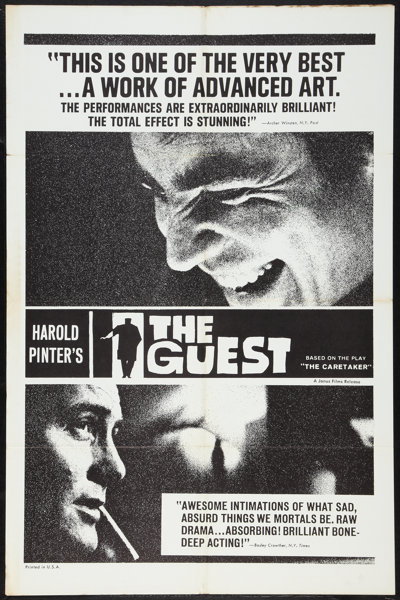
Based on the Harold Pinter play the story centers around Aston (Robert Shaw) who suffers from an undisclosed mental illness and lives alone in a cramped, cluttered room of an abandoned home that his brother Mick (Alan Bates) is trying to renovate. Mac Davies (Donald Pleasence) is a homeless man that Aston invites to stay with him, but Mac proves to be a difficult roommate and when Aston asks him to leave Mac refuses and instead tries connive with Mick to have Aston thrown out instead.

From a purely technical standpoint this is a brilliant film as Clive Donner’s direction perfectly captures the claustrophobic setting. It can be hard to recreate a truly cluttered interior, but this room really comes off looking like a storage closet with so many items crowded into it that you wonder how the performers were even able to move around or how the camera crew could fit in to film it. You eventually lose touch with this being a movie at all, but instead start to feel like you’re right in there with the characters as the camera creates an incredible intimacy with the people on the screen until it’s like they’re breathing right on you.

The performances are impressive and the one thing that keeps the viewer captivated as there is very little action otherwise. All three starred in the stage production and basically did this for free as the budget was so low that they couldn’t be paid upfront and were promised a percentage of the profits if the film went into the black. Shaw is particularly interesting as he has played so many dominating characters in the past that watching him portray someone who is shy and unassuming and still do it with equal effectiveness is a testament to his talents while Pleasence, who wears heavy make-up to make him look much older than he really was, is almost unrecognizable.

My only complaint is that not enough happens. I’ve seen and enjoyed many of Pinter’s other plays that were turned into films and although this one is well crafted it still lacks the necessary payoff. I kept waiting for that great dramatic moment that seems from the very beginning to be just bubbling underneath the surface, but it never materializes. I wanted more of an arch that the characters and material seemed ripe for and to have it just end the way it began with not much occurring in between is a real disappointment. Again, the performance and camerawork keep you captivated, but it all adds up to being much ado about nothing and the story’s ultimate message/point being quite murky.

Alternate Title: The Guest

My Rating: 6 out of 10

Released: July 2, 1963

Runtime: 1 Hour 45 Minutes

Not Rated

Director: Clive Donner

Studio: Janus Films

Available: DVD (Region 2)

Jaws (1975)

By Richard Winters

My Rating: 10 out of 10

4-Word Review: Shark in the water.

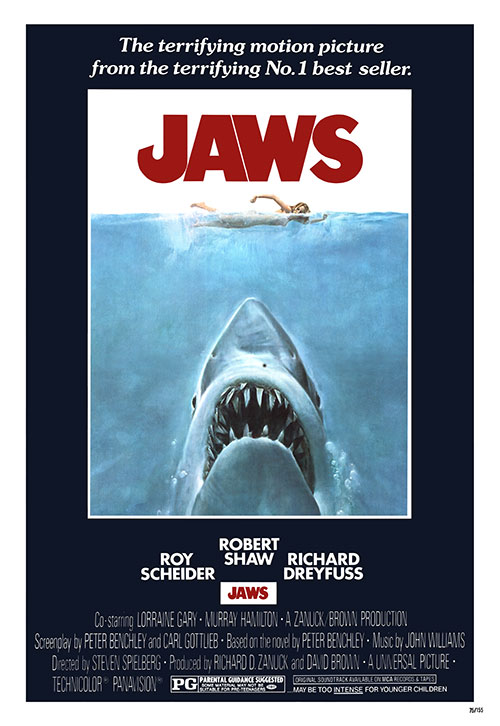
A young woman (Susan Backlinie) goes out for a swim late one night only to have her severed hand wash up on shore the next day, which causes the Amity Police chief Martin Brody (Roy Scheider) to fear that her death may have been caused by a shark. Amity mayor Larry Vaughan (Murray Hamilton) doesn’t want his town to risk losing business, so he has his coroner deny that a shark was responsible and hence the beach remains open, but then more attacks occur. Eventually an eccentric shark hunter named Quint (Robert Shaw), Matt Hooper (Richard Dreyfuss) from the Oceanographic Institute and Brody head out on a small fishing vessel called Orca to locate the shark and then kill it, but they find the underwater beast to be far bigger and more cunning than they had ever imagined.

With its exceptional ability to slowly build tension and keep the viewer riveted from the first frame to the last easily makes this the quintessential thriller. John Williams’s legendary score adds to the murky ambience and in many ways is more memorable than the shark itself. Director Steven Spielberg wisely adds a secondary layer to the narrative by creating colorful and distinctive characters, most notably Quint, who gives the proceedings a flavorful nuance and makes the conversations and interactions that occur between the three inside the boat more interesting than what happens in the water.

The most amazing thing though is how little the shark is actually seen and in fact you don’t even get a glimpse of him until about an hour in. Part of this was due to the difficulty of getting the mechanical creation to perform properly in salt water, but in the end this became a blessing in disguise as it’s the mystery and allusion to its large size that makes it so riveting. The viewer feels as helpless and confused as the men on the boat, which makes the climactic sequence when the shark suddenly does jump onto the boat all that more impactful.

Spoiler Alert!

The film though does deviate heavily from the Peter Benchley source novel and a legitimate argument can be made as to which one presents the story better. In the book the tone is darker and the characters less likable. For me this makes it more intriguing from a psychological bent as it conveys the idea that humans are like the shark that they hunt as they both selfishly devour everything around them. Spielberg though didn’t care for this interpretation so the novel’s darker subtext gets erased, but it still made me intrigued, as much of a classic as this movie is, to see a reboot where the narrative stayed more faithful.

Some of the book’s subplots got too involved particularly the one dealing with the mayor’s connections to the criminal underworld, so I’m glad that one got toned down.  However I felt the one though dealing with Hooper’s affair with Brody’s wife (Lorraine Gary) should’ve been left in as it would’ve added extra tensions between the two while on the boat while also seeing how people can learn to work together even when they hate each other.

In the book Hooper dies when the shark attacks the cage that he is in while in the movie he is able to escape and somehow hide from the shark. This though seemed unrealistic as sharks have special sensing organs known as electroreceptors that allow them to detect the electromagnetic field emitted from a moving animal or at close range even the heartbeat of an immobile one, which means the shark most likely would’ve figured out where Hooper was hiding and gotten him.

In the book the shark dies from its many wounds just as it gets a few feet from Brody while in the movie it’s killed when the scuba tank that it has in its mouth explodes when hit by a bullet, but a 2003 episode of Mythbusters proves that in reality this wouldn’t have happened. My main beef though is that by having the shark literally blow-up into little pieces it denies the viewer the chance at seeing what the beast looked like as a whole. Supposedly this was one giant of a shark, so viewing it strung up at the end would’ve been a cool thing to have seen.

End of Spoiler Alert!

Despite these many differences the film still works splendidly and I don’t mean to imply that it doesn’t, but I would still suggest reading the book afterwards as it gives the story and characters an added dimension.

My Rating: 10 out of 10

Released: June 20, 1975

Runtime: 2Hours 4Minutes

Rated PG

Director: Steven Spielberg

Studio: Universal

Available: DVD, Blu-ray, Amazon Video, YouTube

The Hireling (1973)

the hireling

By Richard Winters

My Rating: 6 out of 10

4-Word Review: His love isn’t reciprocated.

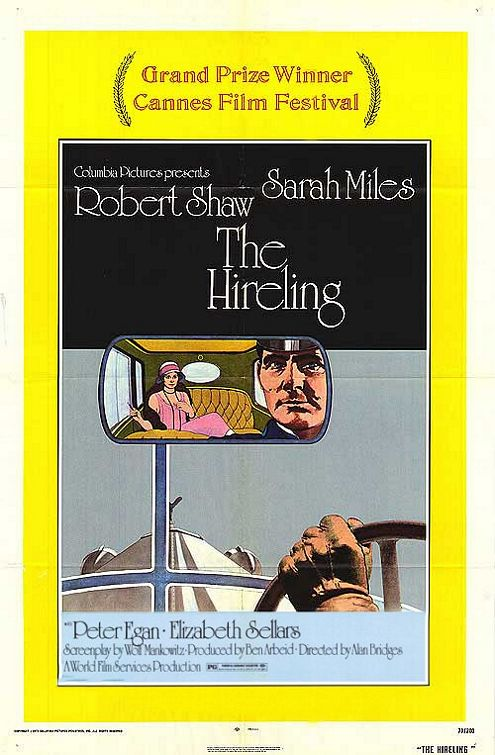
Based on the L.P. Hartley novel the film examines the unusual relationship between a rich English widow named Lady Franklin (Sarah Miles) and her chauffeur Steven Ledbetter (Robert Shaw). The setting is just after the First World War and Lady Franklin has suffered a nervous breakdown after the untimely death of her husband. Steven drives her from place-to-place and helps her out of her depression while also forming a strong attachment to her. Once she recuperates she no longer calls upon his services as much, which hurts him. She then forms a relationship with the much younger Hugh Cantrip (Peter Egan). His personality is the complete opposite of Steven’s and when Steven finds out that Hugh is still seeing another woman on the side it angers him. When he goes to Lady Franklin to inform her of this as well as profess his love for her things do not go well and soon spirals out-of-control.

The film is exquisitely photographed by director Alan Bridges with a haunting score by Marc Wilkinson that is excellent. The period atmosphere is perfect and the slow pace not only reflects that era, but the book to which it is based. Some may be put off by the pace as it is for the most part quite talky although the last half-hour has more action and final showdown is quite intense. The element I really liked about the film are the brief cutaways showing people listening in to other’s conversations and people always being careful what they say and great concern with always playing their ‘proper role’ in society. It really helps build a cloistered feeling for the viewer and gives them a better understanding to the meltdown that occurs at the end.

Miles gives another great performance and she essentially plays two characters here with the fragile, wide-eyed woman at the beginning and the more confident, emotionally distant person that she turns into at the end. Shaw is excellent as always. It is almost amazing to see how someone with such a strong personality as his could get hidden underneath the rather bland and proper character that he portrays at the beginning, but he comes through full-force at the end, which is chilling and terrifying.

The film makes some great statements about the inequities of a rigid social caste system as well as the unrealistic, rigid demands that were placed on people especially in past eras that did not completely take into account the human being underneath or their natural emotions. It is also a great testament to the loneliness of unrequited love, which is sadly a perennial element of the human experience. Although the film stays faithful to the novel the ending has been changed, which may or may not go over well with some viewers.

My Rating: 6 out of 10

Released: June 10, 1973

Runtime: 1Hour 35Minutes

Rated PG

Director: Alan Bridges

Studio: Columbia Pictures

Available: DVD (Region 1 & 2)