Tag Archives: Entertainment

Harry and Walter Go to New York (1976)

By Richard Winters

My Rating: 7 out of 10

4-Word Review: Two vaudevillians rob bank.

Harry and Walter (James Caan, Elliot Gould) are two down-on-their-luck marginally talented comedians living in the 1920’s who go to jail when they’re caught trying to rob their audience members during a tacky onstage ‘psychic’ stunt that goes horribly wrong. While in the slammer they meet up with Adam Worth (Michael Caine) a rich man from society’s upper crust who enjoys robbing banks just for the thrill of it. They come upon the blue print for his next proposed heist and take a picture of it and then after they escape from jail challenge Adam on who will be able to rob the bank first.

This is one of those 70’s movies that I found to be refreshingly original and quite funny, but when it was released it was met with harsh reviews and was a bomb at the box office. After some bad test audience reactions it was heavily cut much to director Mark Rydell’s dismay who felt a lot of the better jokes went missing although producer Tony Bill and star Caan blame Rydell for the film’s failure and insist that much of the humor in the original script was never even filmed or used.

I can’t explain why the film didn’t do well as I personally found as bank heist movies go this one to be quite  unique. So many bank robbing films from that era, and even today, paint the scheme in a one-dimensional way by portraying the robbers, who we are usually supposed to sympathize with, as a modern-day Robin Hood, while the cops and those out to stop them are represented as being the greedy,oppressive establishment, but this film takes things a step further, which is what I found interesting. The competition aspect gives it an extra.,likable edge and really made me want to root for Harry and Walter and their gang of losers who take on the arrogant Caine and his snotty buddies. Instead of the viewer just being intrigued at how they’re able to pull of the robbery as is the case with most heist films we are much more emotionally invested with its outcome.

Caan and Gould are what Warren Beatty and Dustin Hoffman should’ve been in Ishtar. These guys are definite losers, but still appealing and comical at the same time. Caan has never been known for his comedy and he has referred to this movie as ‘Harry and Walter Go to the Toilet’, which is a shame because he shows nice energy here and is able to keep Gould in check by not allowing him to drone on and steal the spotlight as he can sometimes do when left alone or with a less capable co-star.

If the film fails at all it’s by entering in too many supporting players. The title mentions only Harry and Walter and they should’ve pulled off the heist alone with maybe only Keaton tagging along for balance. As it is though a whole massive group gets in on it to the point that the two leads have little to do. While the group is busily trying to figure out how to open the safe Harry and Walter are on stage trying to extend a stage play  The film still works pretty well despite this issue, but technically the two men should be at the center of the action and in a lot of ways they really aren’t and in fact become almost like supporting players by the end.

The film also goes on too long with the denouncement being far more extended than it should, but it’s still a fun, breezy watch that reflects the gilded age flavor well and uses leftover sets from Hello Dolly to enhance the scenery perfectly.

My Rating: 7 out of 10

Released: June 17, 1976

Runtime: 1 Hour 55 Minutes

Rated PG

Director: Mark Rydell

Studio: Columbia Pictures

Available: DVD, Blu-ray, Amazon Video

Split Image (1982)

By Richard Winters

My Rating: 6 out of 10

4-Word Review: Their son becomes brainwashed.

Danny (Micheal O’Keefe) is a struggling athlete who’s feeling overwhelmed by the demands and pressures of college life. He meets-up with Rebecca (Karen Allen) who invites him to a weekend stay at what turns out to be a religious cult run by Kirklander (Peter Fonda). It is there that Danny becomes brainwashed into the organization and cuts off all ties with his parents (Brian Dennehy, Elizabeth Ashley) who decide they have no option but to kidnap him and then have him deprogrammed by a brash, caustic deprogrammer (James Woods) who they find to be rude but helpful

This film is very similar to Ticket to Heaven that was produced in Canada and has the same story and structure. The Canadian production though is a bit better especially with the way it examines the protagonist getting acclimated into the cult. Both films have the young man becoming brainwashed in a matter of one weekend which to me is too quick. The Canadian film though at least examines the different activities that they go through to wear him down and it gets in your face with it, so the viewer feels as exhausted as the young man when t’s over while this film glosses over that part making the transition seem too extreme. The Canadian film also detailed the character’s constant inner turmoil even after he’d been indoctrinated while here Danny behaves like a light switch that completely changes from his old self in a snap and then never looks back, which is less realistic

The B-story dealing with a romance that he has with Rebecca while in the group degrades the the story to a sappy opera level and should’ve been left out. Allen certainly is perfect for her role as her bright, beaming blue eyes gives her character that brainwashed appearance, but the extended conversations she has with Danny are strained making me believe that the scenes inside the cult should’ve been cut as they’re corny instead of compelling and focused instead  solely on the parents point-of-view at trying to get him out.

The film though does score with the deprogramming segment, which gets much more extended here. Director Ted Kotcheff uses elaborate visual effects to convey Danny’s point-of-view and unlike in Ticket to Heaven the deprogrammer doesn’t allow the family and friends to sit-in on his sessions as he feared they won’t understand his methods, which is more believable.

Ashley as the mother is great especially her meltdown near the end with Danny when he tries to physically attack her.  I had some problems though with Dennehy’s character as he seemed much too calm and laid back and even starts singing as they drive to the cult location even though most people would be nervous and then later showing him breaking down and crying as he watched an old video of Danny is too overwrought.

Woods though perfectly captures the anti-hero with his intended brashness being more amusing than offensive. The part where he plays-out a scene to the movie Dr. Jekyll and Mr. Hyde starring Spencer Tracy was I’m convinced ad-libbed and a great example of  how his acting genius gives this movie a needed edge and whose presence keeps it watchable.

My Rating: 6 out of 10

Released: October 3, 1982

Runtime: 1 Hour 50 Minutes

Rated R

Director: Ted Kotcheff

Studio: Orion Pictures

Available: VHS, Amazon Video

Love at First Bite (1979)

By Richard Winters

My Rating: 5 out of 10

4-Word Review: Dracula dates fashion model.

After being kicked out of his castle by the Romanian government Count Dracula (George Hamilton) moves to New York City where he starts up a relationship with the beautiful, but troubled fashion model Cindy (Susan Saint James). Her boyfriend Jeffrey (Richard Benjamin) who also acts as her psychiatrist, is not pleased by this and becomes obsessed with destroying the count by using all the old vampire killing methods, but the count always stays one step ahead of him, which is enough to send Jeffrey to the mental hospital.

Although this film isn’t well remembered it was a big hit when it came out and a comeback movie of sorts for Hamilton whose dramatic leading man roles during the 60’s and early 70’s had completely dried-up by this time. His foray into comedy was a last ditch effort to save his floundering career and the gamble paid off as he’s quite funny and almost like a natural.

Saint James on-the-other-hand seemed too old for her role as she was already in her mid-30’s, but she manages to pull it off surprisingly well. Normally having a film character invite a stranger, in this case the Count, who she has just met at a club back to her place would be considered insane, but here it works as a nice satire on the one-night-stand fad of the 70’s and the on-going conversation that the two have as they proceed to make-out is by far the funniest bit in the film. I also liked how her messy apartment nicely reflected her screwed-up life and personality.

Unfortunately the film falls flat when it introduces the Jeffrey character. Benjamin has played this obnoxious jerk-type one time too often and although he is quite good at it, it was still getting to be old shtick and it’s easy to see why he quit acting soon after and went into directing. The whole thing would’ve worked better had it focused exclusively on Saint James and Hamilton and analyzed their attempts to make their offbeat relationship work, which could’ve put a fresh spin on the vampire theme instead of devolving it into Jeffrey’s dumb attempts at trying to destroy the Count  by using all the cliched methods like garlic, mirrors, etc., which quickly becomes stale and cartoonish.

The film does have a lot of famous cameos including the two stars of ‘The Jeffersons’ TV-show who appear separately in bit parts. Arte Johnson also successfully hams it up as the Count’s faithful assistant in a comic send-up of Dwight Frye’s role in Dracula. Overall though there’s more misses than hits, which includes the ill-advised flying bat special effects that comes off looking so hokey that it almost demotes this to a B-movie level.

My Rating: 5 out of 10

Released: April 13, 1979

Runtime: 1 Hour 36 Minutes

Rated PG

Director: Stan Dragoti

Studio: American International Pictures

Available: DVD, Blu-ray

Rolling Thunder (1977)

By Richard Winters

My Rating: 4 out of 10

4-Word Review: No hand no problem.

Major Charles Rane (William Devane) returns home to a hero’s welcome after spending 7 years a prisoner of war. As part of the ceremony he’s given 2,555 silver dollars to commemorate each day that he was held in captivity. A few days later a group of thugs invade his home looking for the silver dollars and when Rane refuses to tell them where they are they stick in his hand into his garbage disposal before shooting both his son and wife dead. Now with a hook for a right hand he goes on an unrelenting search for the killers determined to kill each and every one of them while using his hooked hand as a weapon.

What might’ve been considered violent and groundbreaking back in 1977 seems awfully trite and formulaic now. Paul Schrader’s original screenplay portrayed Rane as a racist and the story culminated with him indiscriminately shooting a group of Mexican’s as a metaphor to America’s involvement in Vietnam, but of course studio execs considered this ‘too edgy’ so everything got watered down and all that gets left is a benign and predictable revenge western updated to the modern-day.

The much ballyhooed violence isn’t all that gripping either. Originally there was a graphic shot that showed a prosthetic hand being sliced up in the disposal, but test audiences became repulsed by it causing the studio execs to take the shot out of the film even though by today’s standards that might not be considered as disturbing as it was back then and might even have given the film some distinction, which it is otherwise lacking.

The scene where the son and mother are killed is poorly handled too because we never see them actually shot as it’s done off camera. This then negates the horror of it and makes it less emotionally compelling with even a quick shot of their bloodied bodies needed for the necessary strong impact. I also thought it was weird that when Rane comes back to the scene of the crime we’re shown the sofa where the two were killed on, but there are no blood stains on it even though most likely there should’ve been.

Devane’s performance is a detriment as well as he is unable to effectively convey the character’s intense, brooding nature. The film would’ve worked better had Tommy Lee Jones, who appears here briefly, been given the lead as he, even in the few scenes that he is in, gives off the required intensity perfectly while Devane is seemingly overwhelmed by the part’s demands making it easy to see why he never became the big screen star that the producers were hoping for.

Linda Hayne’s role was not needed and despite her beauty pretty much just gets in the way. She plays Rane’s girlfriend who begins to date him after his family’s slaughter and tags along with him in tracking the killers, but she tends to be a bit annoying with too many conversations centering around Rane’s need to ‘get over’ his family’s death and seemingly treating his loss like it should be a minor inconvenience that he should simply ‘move on’ from. There is a moment where he seems ready to throw her out of the car and leave her stranded in a field, which would’ve nicely illustrated the character’s obsessed and loner nature, but like with everything else in the film it gets softened by having him dump her later on in a more civil way, which again becomes like a cop-out to the story’s otherwise rough theme.

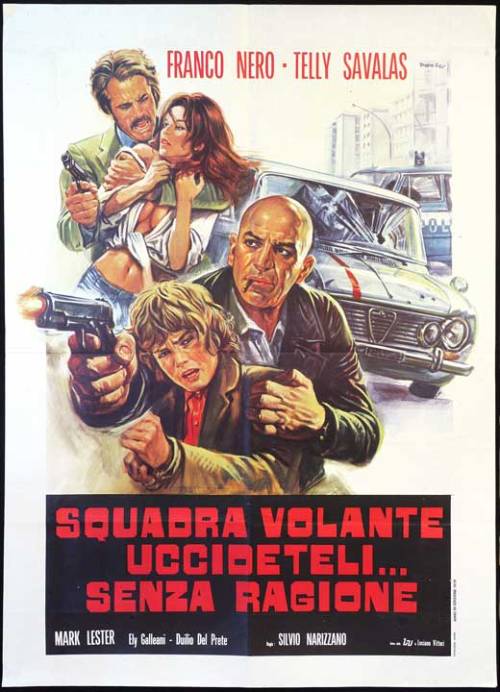
The shoot-out inside a chapel is pretty good and I really liked James Best as the bad guy with all the sweat pouring down his face, which was apparently accomplished by having him wear ice cubes underneath his hat. Having Devane use his hook to grab, quite literally, Luke Askew by the balls I suppose deserves some kudos too, but overall it’s a bland viewing experience that fails live up to its hype with the whole hooked hand as a weapon concept needing to be played up much more. The movie’s poster makes it seem like it will be a lot cooler flick than it actually is.

My Rating: 4 out of 10

Released: October 14, 1977

Runtime: 1 Hour 35 Minutes

Rated R

Director: John Flynn

Studio: American International Pictures

Available: DVD

Rafferty and the Gold Dust Twins (1975)

By Richard Winters

My Rating: 5 out of 10

4-Word Review: Lost souls go traveling.

Rafferty (Alan Arkin) works as a driving instructor and is also an alcoholic. One day while relaxing at a park he meets him up with a kooky lesbian pair known as Frisbee (Mackenzie Phillips) and Mac (Sally Kellerman) who have both been recently released from prison. Initially the pair kidnap Rafferty at gunpoint and force him to take them to New Orleans, but Rafferty soon develops a bond with them as they go jaunting around the west looking for excitement and diversion from their otherwise boring lives.

This film works differently from the usual road movie as there’s no real structure to it at all. In some ways this is more realistic as the romanticism is erased and we’re left with nothing more than random events that leads to no conclusion other than dispelling the myth that hitting-the-road will somehow lead to some new self-awareness as these character’s lives remain just as directionless upon their return as it was when they left. Watching the petty crimes that they commit in order to survive ends up being the film’s only entertaining value in what is otherwise a meandering and flat story.

Phillips gives a good performance as a tough, street smart juvenile delinquent who I felt was channeling her own precarious upbringing as the daughter of singer John Phillips in order to have been able to play the part with such a vivid authenticity. If anything she gives the film a much needed edge and is the only real good thing about it.

Kellerman is okay and even sings a country tune, but what impressed me most was how young they made her appear as she was nearing 40 at the time, but she looked more to be in her early 20’s. Arkin surprisingly manages to stay restrained and never once goes into one of his patented hyper rants, but in the process comes off as too mellow and allows his two female co-stars to act circles around him.

The film also features some good supporting work by a cast full of faces who you’ve seen before, but don’t quite know what their names are. Alex Rocco is particularly engaging as a shyster that Arkin meets in a casino who clings to the trio as a hanger-on before getting inadvertently dumped, which was a shame as I liked his energy. Charles Martin Smith has an engaging bit as a naive soldier on a 15-day army leave who gets robbed by Phillips and then tries to relentlessly track her down.

Director Dick Richards won many accolades for his first flick The Culpepper Cattle Company and the realism it gave to the old west and he seems to be taking the same approach here by connecting the modern-day road movie to the rugged individualism of the bygone cowboy, but it doesn’t come off as effectively as it could’ve. A stronger cinematic approach that captured the western landscape would’ve made it more visually appealing as well as having a soundtrack that wasn’t so generic.

Spoiler Alert!

The ending is a bit perverse by today’s standards as Kellerman leaves them so Arkin then poses as Phillips’ father in order to get her out of the orphanage and allow the two to travel to Uruguay. The intent at the time may have seemed innocuous as Arkin was simply filling the role as her surrogate father, but these days many viewers will consider it ‘creepy’ and presume that the middle-aged man was trying to take advantage of this 15-year-old’s desperate situation in order to have a sexual relationship with her.

My Rating: 5 out of 10

Released: February 2, 1975

Runtime: 1 Hour 29 Minutes

Rated R

Director: Dick Richards

Studio: Warner Brothers

Available: VHS

Ladies and Gentleman, The Fabulous Stains (1982)

By Richard Winters

My Rating: 7 out of 10

4-Word Review: Teen forms punk band.

Corinne (Diane Lane) is an angry 17-year-old who lashes out at a TV-reporter during an interview when she describes the challenges of trying to make-ends-meet while working at a fast food place after the death of her mother. Her tirade resonates with other teens and this new found celebrity gives her the idea to form her own punk band called The Stains.  She goes on tour with two other bands and makes a splash by going out on stage wearing a wild skunk-like hair-do and a see-through blouse. This gets her media attention and a fan following, but will her new found fame last, or will it just go to her head?

This interesting look at the punk band scene, that could make a great companion piece to The Decline of Western Civilization, was filmed in a sardonically humorous pseudo-documentary style, but unfortunately did not fare well when it was initially released. After getting a bad response when it was first shown in Denver in October of 1982 the studio shelved the film for 2 years,inserted a new tacked-on ending and then sold it to the USA Network where it became a staple to their weekend, overnight programming and quickly garnered a cult following.

The film still does not get as much attention as I think it deserves and tends to get overshadowed by the overrated This is Spinal Tap. This film though is a lot grittier and that fact that it was directed by Lou Adler, who worked for many decades in the music business, helps give it an authentic appeal as it analyzes the underside of the music business by showing how the majority of bands live on society’s fringe while excising the glitz and glamour completely. It also astutely examines the inner-conflicts and raging egos that go on behind-the-scenes and how the almost constant back-stabbing infects the mind-set of those trying to break-in.

The script was written by Nancy Dowd who is best known or penning Slap Shot and this film works in much the same way as that one by placing it in a similar setting of an economically strapped, working class Pennsylvania town. The shots of the gray, rundown region is what really gives this film an extra edge and helps the viewer identify with why the characters will do almost anything to get out of it. One of the best shots comes while watching Corinne walking around outside as she makes plans for her band while in the backdrop we see the grimy steel mill life that she’s grown-up in and hitting-home how her dreams for her punk band isn’t based so much on rebellion, but more on hoped for escape.

I loved Lane’s acerbic personality and her hilariously caustic opening interview with a TV-reporter really sets the tone for the rest of the film while also helping to solidify that this isn’t going to be just another mainstream Hollywood flick like Almost Famous, which I felt painted rock band life in too much of a sugar coated way, but instead something with a real attitude. In fact I was disappointed that Lane’s salty sarcasm wasn’t played-up even more as it’s funny and on-target and made it easy to see how her character was able to galvanize such a mass following.

On the slight downside I felt her relationship with her two band-mates (Marin Kanter, Laura Dern) with one of them being her sister and the other her cousin got underplayed. The irony is that Dern sued her mother, actress Diane Ladd, in court in order to work on the movie as Ladd felt she was too young to travel on-location to do the shoot. Dern obviously won the battle, but the fight seemed hardly worth it as she ends up having very little to say or do.

Spoiler Alert!

The only time that things becomes insincere is when the Looters head singer (Ray Winstone) performs the opening act for The Stains and is met with a hostile response by her fans, so in retaliation he informs them that Corinne is a corporate sell-out and just like that they all turn on her. Having an entire stadium of young people go from rapid fans to extreme haters in a matter of seconds is just not realistic and one of the reasons why I believe this film did not do well upon its initial release and required a different ending put in, which was filmed several years later, in order to help salvage it.

My Rating: 7 out of 10

Release: October 16, 1982

Runtime: 1 Hour 27 Minutes

Rated R

Director: Lou Adler

Studio: Paramount

Available: DVD, Amazon Video, YouTube

Nekromantik (1987)

By Richard Winters

My Rating: 6 out of 10

4-Word Review: They like dead bodies.

Rob and Betty (Robert Schmadtke, Beatrice Manowski) are a couple into necrophilia. Rob’s job as a street sweeper allows him to steal human body parts, which he brings home and stores in jars. One day he is able to sneak home a decomposed body and his wife makes love to it, which makes him jealous. Then he loses his job causing his wife to leave him and forcing him into an even darker mental spiral.

Director Jorg Buttgereit has stated that he never intended to be a serious filmmaker and made this simply as a means to rebel at the German film rating system, which would routinely edit out violent scenes from their films and ‘to shock as many people as possible.’ In that category it does succeed, but what I got most out of it was how funny it is with the ‘romantic’ sequence where a couple throws a severed head back and forth between each other in  a sort of playful, loving way while soft, romantic music plays in the background being the funniest.

There’s also an interesting film-within-a-film concept here where it makes pointed observations on the effects of horror movies on the general public while using its characters to inadvertently convey that message. The best scene here involves Robert going to a horror movie inside a theater, which shows  a woman onscreen getting ambushed by her attacker and then cut up by his knife, but the camera then cuts back to the movie audience and observes their detached and ambivalent  expressions even as the screams of the woman continue on the screen, which to me was the film’s most frightening and revealing moment.

The gore factor is of course quite high uses the technique first done in Cannibal Holocaust  where it cuts back and forth between an actual animal killing to that of a human getting cut open until you can no longer differentiate the real from the fake. The special effects are quite authentic looking despite the minuscule budget and even features a cat death although thankfully I think that one was improvised.

The acting by Manowski is excellent as she shows no hesitation or restraint with her role in a demanding part most other actresses would’ve refused. Her onscreen presence adds erotic energy and it’s too bad she didn’t remain in it for the whole duration as it’s only when the two leads interact that it gets  the most interesting. In fact a backstory showing how they first met and what started them off into their sick habit would’ve been nice.

If you’re into trashy gore this flick is for you although it’s more sickening than scary and in fact I don’t consider it a horror movie at all, but more a dark comedy, a very dark one. This was followed 4 years later by a sequel, which continues the story right where this one leaves off,  has the same director and star, and I’m told is even more graphic.

My Rating: 6 out of 10

Released: November 19, 1987

Runtime: 1Hour 15Minutes

Not Rated

Director: Jorg Buttgereit

Available: DVD, Blu-ray, YouTube

The Brood (1979)

By Richard Winters

My Rating: 6 out of 10

4-Word Review: Wife creates dwarf murderers.

After suffering a mental breakdown Nola (Samantha Eggar) is sent away to a secluded clinic run by Dr. Hal Raglan (Oliver Reed) who uses unorthodox methods to heal his patients. Once she gets sent there strange murderers resembling dwarfs begin to terrorize her family members including her daughter Candice (Cindy Hinds) who they kidnap. Her husband Frank (Art Hindle) is convinced there’s some connection between these strange killers and the institute so he goes there to confront the Dr., but is ill prepared to the secret that awaits him.

Through the years this film has become a staple to director David Cronenberg’s work and is well filmed with shadowy lighting and fluid camerawork that help create an ongoing creepy feel as well as Howard Shore’s pounding score. The film’s ultimate moment though remains Eggar’s bizarre ‘birthing’ scene where she takes a blood drenched embryo and licks it, which apparently was something she improvised on-the-spot. It remains perversely disturbing even by today’s standards, but was cut from the release at the time and only now is intact with the Criterion Blu-ray in all its glory or gruesomeness depending on your point-of-view.

The story though isn’t as clever as the filmmakers think as I was able to figure it out almost immediately and having to watch a protagonist take 90-minutes to come to the same conclusion that took me only 10-minutes makes for a rather annoying and dull plotline. There’s also no explanation for why Nola is able to have the ability that she does. If it’s connect it to the experimental therapy she’s going through then fine, but others in that group should , or at least some of them, be able to do the same thing, but they’re not, so why is that?

There’s also a murder scene that comes in the middle of the movie that to me didn’t seem logical. It entails the dwarf murderers coming into the kindergarten class that Candice is attending and using toy hammers that they pick-up from a nearby table to bludgeon her teacher to death. Normally toy hammers are lightweight,  so no matter how hard or how long a person may swing it at their victim it’s highly unlikely that it would be able to crush their skull. I also thought all of the children who witnessed the crime would’ve run out of the room screaming instead of just one and having them then stand around the body quietly whimpering afterwards sounded forced and fake.

Reed’s dark and commanding presence always helps every movie that he is in although it’s a bit weird that he becomes the ultimate hero especially after the opening scene in which he is emotionally abusive. Eggar, whose eyes look strangely wider and more rounder here, has her acting meddle put to the test by portraying a person that I didn’t think she had the ability to do, but she proves quite qualified.

The young Hinds is surprisingly effective despite her extremely young age, but Hindle is transparent as the protagonist. I realize that he acts as a sort of buffer to the craziness, but he lacks an edge and unable to match the energy of his flamboyant co-stars.

Horror fans should find this thing adequate, but for me the story is too basic and predictable they’re needed to be some sort of secondary angle or side-story. Supposedly Cronenberg was inspired to write this after dealing with the custody battle he had with his own ex-wife, Margaret Hindson, who had worked with him on many of his earlier projects. According to him Eggar’s character reflected many of her same traits.

My Rating: 6 out of 10

Released: May 25, 1979

Runtime: 1Hour 32Minutes

Rated R

Director: David Cronenberg

Studio: Canadian Film Development Corporation

Available: DVD, Blu-ray (Criterion Collection), Amazon Video

The Driller Killer (1979)

By Richard Winters

My Rating: 6 out of 10

4-Word Review: Electric drill relieves stress.

Reno (Abel Ferrara) is a New York apartment dweller who frets over his inability to pay his bills and the constant noise coming from a punk band next door who perform at all hours of the day and night and to which his landlord (Alan Wynroth) refuses to do anything about. The pressures to finish his latest painting, which he hopes to sell, become too much, so to alleviate the tension he takes a power drill out onto the streets and kills random homeless people with it late at night. For awhile this is enough but he eventually decides to use it on other people in his life who he feels have wronged him, which includes not only his girlfriend,but an art gallery owner (Harry Schultz) who refused to purchase his painting.

This is a definite step above the usual horror fare and seems in many ways like an arthouse film. It’s ability to capture New York’s dark urban underbelly gives the viewer a strong taste of what the main character is going through until you almost feel like you’re trapped there alongside him. The talky segments that come in-between the killings, which are usually the boring parts in most other horror films, are surprisingly captivating as they vividly convey all the reasons why Reno is so angry and give the viewer much the same feeling.

When the killings finally do start to happen it’s not so much the graphic violence that’s disturbing, but the fact that we relate to the man who’s doing it. We’ve understood his pent up rage by seeing how the unrelenting, impersonal urban system continually works against him making the murders act like a stress reliever not only to the killer, but the viewer as well as it breaks both us and him away from the never ending challenges of everyday life, which the film essentially portrays as being the real horror. Instead of being repelled by the bad guy we connect to him sending this movie into a far darker psychological realm than most.

While Ferrara shows a gifted ability as a director the film almost defeats it’s unique edge by dwelling too much on the urban hell hole theme as it makes its point and then drags it out by hitting-it-home again and again. The footage of the punk band becomes excessive too until it almost becomes more like a musical docu-drama. The killings aren’t very imaginative either as one quickly becomes like the other eventually making them seem like throwaway scenes that quickly lose their impact.

The film’s ending is particularly disappointing as it fades out before we know what happens to either the main character or his girlfriend (Carol Slaughter). A good horror film needs a strong finish and this one cops-out like it didn’t know how to end it, so it just leaves it up to the viewer to guess. While I commend its effort to take the genre into a more complex and unusual area I still felt it could’ve gone even further with its warped premise than it does.

My Rating: 6 out of 10

Released: June 15, 1979

Runtime: 1Hour 36Minutes

Not Rated

Director: Abel Ferrara

Studio: Navaron Films

Available: DVD, Blu-ray, Amazon Video, YouTube

Angst (1983)

By Richard Winters

My Rating: 5 out of 10

4-Word Review: Madman attacks peaceful family.

A serial killer (Erwin Leder) gets released from prison despite still having the urge to kill. He initially tries to strangle a female cab driver (Renate Kastelik), but she throws him out of her car before he can do it. He then goes running through the woods until he comes upon an isolated home. He breaks into it and kills each of the three family members living there one-by-one before eventually taking their lifeless bodies with him in the trunk of his car while he drives aimlessly around Austria.

This film is based on the real-life Austrian case of Werner Kniesek who murdered a family of three in their home on January 16, 1980 shortly after being released from prison. In that case Werner had known one of the victims previously while the movie its portrayed as if the killer has no connection to the occupants at all. In the actual crime Werner also killed the family’s cat where in the movie the pet is a dog, which the killer not only allows to live, but eventually befriends.

I’ve spent years complaining how most horror films aren’t very realistic, so I suppose I really can’t complain when one finally does decide to go all-in with graphic realism and not spare anything. The film certainly succeeds in being like a grisly true-life crime, but in the process it’s not very scary either. You know right from the start where it’s going, which makes the eventual violence come off as agonizingly drawn out and pointless. It’s like footage caught on a closed-circuit camera where you have no emotional bond with the people or action and when it’s over you’re left feeling drained and ambivalent.

Many people have praised the innovative camera work, which is provocative and some have even compared this to Henry: Portrait of a Serial Killer, but that film was more compelling in the way the main character was able to entice regular people to help him with his crimes while here there is virtually no dialogue or character arcs. There’s basically no story either just a graphic dramatization of a random crime that gets excessively drawn-out.

Leder is excellent and I liked how he portrays his character as being nervous, anxious and perpetually frightened as opposed to the stereotypical way of showing psychos who are robotically cold and relentlessly evil.  His voice-over narration allows for moments of insight too particularly when, as he is killing his victims, his thoughts are instead focused on past wrongs that were inflicted onto him from years ago by others, which made me believe this could very well be the thought pattern of most killers who selfishly remain fixated on their own personal injustices even as they callously destroy others.

The acting by the supporting cast is impressive too not so much from what they emote since they’re given very little to say or do, but more with the way they sacrificed  their bodies for the project particularly when the killer drags their lifeless corpses over broken glass (no mannequins or dummies were used) and down several flights of stairs. I also loved the dog and in fact he’s the highlight that allows for moments of levity and even comic relief in an otherwise unrelentingly grim film that will appeal only to a select group of people.

My Rating: 5 out of 10

Released: May 2, 1983

Runtime: 1Hour 27Minutes, 1Hour 15Minutes (Director’s Cut)

Not Rated

Director: Gerald Kargl

Available: DVD, Blu-ray, Amazon Video, YouTube