North Avenue Irregulars (1979)

By Richard Winters

My Rating: 7 out of 10

4-Word Review: Church ladies battle mobsters.

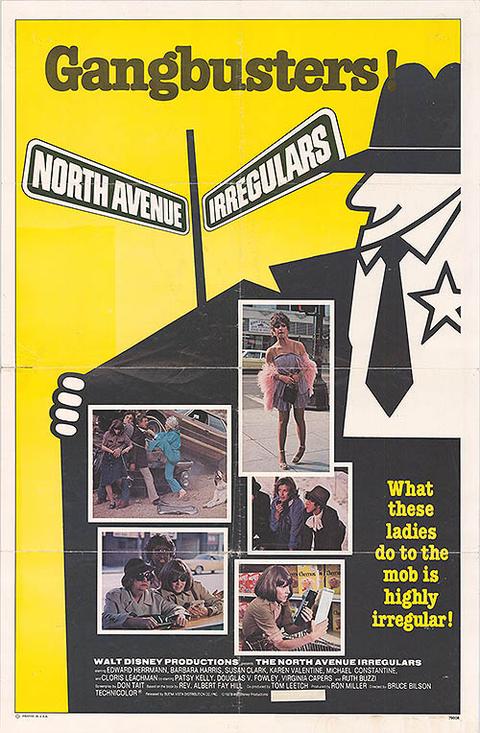
Reverend Michael Hill (Edward Herrmann) becomes the new pastor at the North Avenue Presbyterian Church, but right away things get off to a rocky start when the church’s funds get gambled away on a horse race. When Hill tries to retrieve the money he finds out that it is an illegal gambling joint run behind a dry cleaning business, who are always able to skillfully remove their presence before the police arrive. Hill goes on TV to lambaste organized crime in their town, which catches the attention of two treasury agents (Michael Constantine, Steve Franken) who want Hill to help them close down the gambling joints by having him hire men from his church to place bets at the parlors, but all of the men refuse. Hill then asks for the help of the church women who agree to do it and after some initial setbacks begin to make headway in taking down the area mobsters.

Usually I always say it’s important for films that are aimed for a young audience to have children playing the protagonist, but in this case the children characters have only small supporting roles and yet the film still manages to deliver the laughs. The main reason is the talented female cast who have distinctive personalities and convey comic form in different ways. Cloris Leachman is amusing as the middle-aged cougar with long finger nails, Virginia Capers is quite funny too as a heavy-set woman who doesn’t allow her big build to stop her from running several blocks in order to tail the bad guys and the variety of vehicles she drives with funny phrases painted on their windshields, which are all from her husband’s used car dealership, are humorous too. Barbara Harris as a suburban mother who chases the mobsters while driving in a station wagon packed full of kids in it is great too.

What may be surprising to many is that it’s all based on true events that occurred to Revenrend Albert Fay Hill when he took over as the minister at the North Avenue Presbyterian Church in New Rochelle, NY in 1961. It was there that he became a crusader against organized crime after the murder of a young man for not repaying his gambling debts. Like in the movie his fight gained the attention of US Treasury agents who wanted him to get his male parishioners to place bets with the mobsters, but the men all refused so he recruited their wives whose efforts managed to shut down several gambling houses, which lead to a front page write-up in The New York Times as well as Look magazine.

Of course the movie exaggerates things for comic effect, but it’s forgiven because the stunts are quite funny, which culminates in a massive car pile-up consisting of the demolition of 14 cars at the cost of $155,000. The scene involving the church getting blown up is amusing too because behind-the-scenes when it was first done the cinematographer forgot to put film in the camera forcing the crew to painstakingly rebuild the church just so they could try to do it all over again.

The film’s only weak element is Herrmann whose performance is certainly sincere and likable, but he’s never funny while Constantine is hilarious as the exasperated agent who has a virtual nervous breakdown dealing with the women and for that reason the film would’ve been more engaging had he been the lead character. I was also confused why the Reverend was  a single parent as there’s no explanation I could remember for what happened to the wife. In the book that this film is based, and in the true-life incident, the minster was married, so why was it decided that he should be single here? I got the idea it was because they wanted to create a romance between he and his secretary played by Susan Clark, but since nothing much comes from that it seemed unnecessary.

My Rating: 7 out of 10

Released: February 9, 1979

Runtime: 1 Hour 40 Minutes

Rated G

Director: Bruce Bilson

Studio: Buena Vista

Available: DVD, Amazon Video, YouTube
The Front (1976)

By Richard Winters

My Rating: 6 out of 10

4-Word Review: Covering for blacklisted writers.

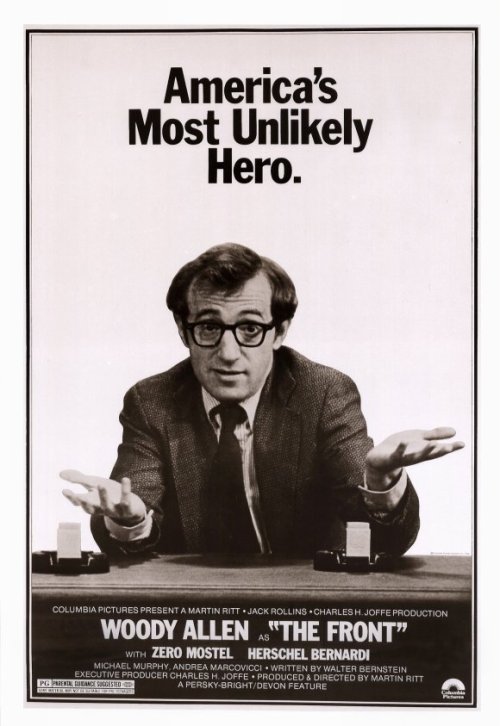
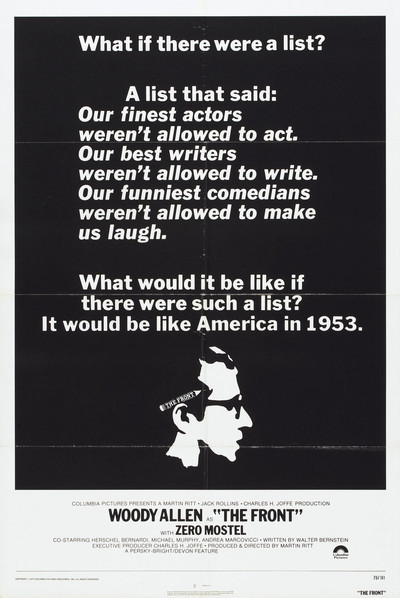
In 1953 during the height of the Red Scare where many working in Hollywood were blacklisted if they had any connections with communist sympathizers writer Alfred Miller (Michael Murphy) suddenly finds himself out of work and unable sell any of his scripts. He asks his friend Howard (Woody Allen) who works as a cashier at a cafe to act as a ‘front’ for him by selling his scripts to producers and acting as if he wrote them instead of Alfred. In exchange Howard would be able to collect 10 % of the profit, which he readily accepts. Soon Alfred’s other writer friends hire Howard to sell their scripts, which quickly makes him financially comfortable, but he soon sees the dark side of the business especially when he gets investigated for being communist sympathizer himself.

The film was written and directed by those who personally went through the blacklisting when it happened, which is great, but the film cannot seem to decide whether it wants to be a drama or comedy and takes too much of a timid, middle-of-the-road approach that is neither impactful nor memorable.  Lots of prime comedic potential gets completely glossed over like when Howard is forced to do a rewrite on a script in a hurry despite having no background, or knowledge on how to do it. This occurs twice and both times the film fails to show what he does to get out of the jam, he is shown for a couple of seconds on the phone presumably with Alfred getting advice, but it would’ve been funny hearing their conversation and seeing him quite literally sweat his way through the process.

Spoiler Alert!

The drama gets handled in too much of a genteel way too making the intended message mild and not something that completely connects emotionally with the viewer. The scene where Zero Mostel jumps out of a hotel window when he realizes his career is over happens much too fast. One second we hear the window being opened and the next second the camera quickly pans over to see that Mostel is no longer standing in the room making it seem more like he just disappeared into thin air. The ending where Howard finds himself forced to testify in front of the House of UnAmerican Activities panel is weak as well. The final 20 minutes is spent with this big build-up of what Howard will do when he is put in front of them, but the payoff is slight and hinges on him telling them to go ‘fuck themselves’, which is such an overused expression in this modern age that it hardly resonates as it once might’ve been.

End of Spoiler Alert!

Allen is an obnoxious protagonist that I did not find funny or sympathetic. He became so unlikable that I started wanting to see him get caught and even humiliated, which I don’t think was what the filmmakers intended the viewer to feel. I also thought it was ridiculous that this scrawny, dorky looking guy would be so brazen to come-on to hot looking women like he does. I know in the movies that he directs this always occurs and I looked past it as Woody simply revealing his diluted, narcisstic ego, but this film was done by a different director, so things should’ve been presented in a more realistic way by having the beautiful women laugh at Woody when he attempted to ask them out and forcing him to settle for someone his physical equal. I realize that Andrea Marcovicci’s character falls for Woody because she thinks he’s the writer of the scripts, but I would think after she went out with him for awhile she’d start to realize he wasn’t the same person she thought he was and not have to have it explicitly spelled out  for like it ultimately is.

It would’ve worked much better had Michael Murphy been cast as Howard as he was more able to convey likable qualities. Zero Mostel is also quite strong as the desperate comedian and had his character been cast in the lead it would’ve given the viewer a stronger feeling of what it was like to be blacklisted during that era as the story would’ve been told from the victim’s point-of-view instead of having those directly affected by the McCarthyism relegated to only supporting parts.

My Rating: 6 out of 10

Released: September 30, 1976

Runtime: 1 Hour 35 Minutes

Rated PG

Director: Martin Ritt

Studio: Columbia Pictures

Available: DVD, Amazon Video, YouTube
Midnight Madness (1980)

By Richard Winters

My Rating: 4 out of 10

4-Word Review: All night scavenger hunt.

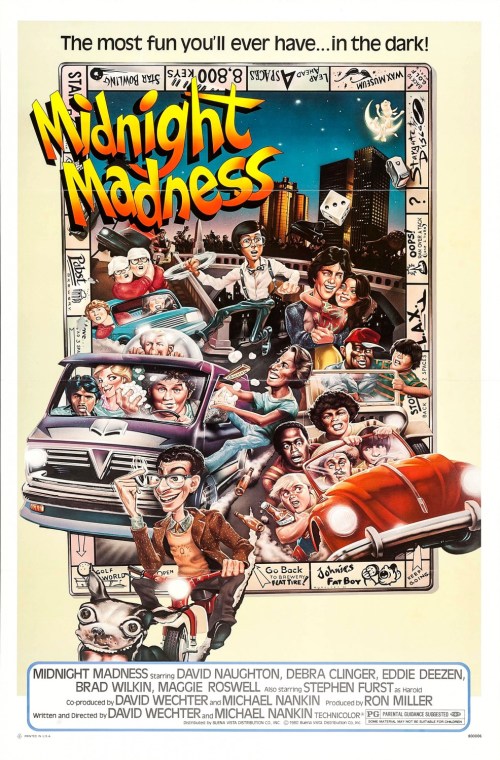
Leon (Alan Solomon) is a geeky college student who comes up with an elaborate scavenger hunt to be played by his fellow students. The object of the game is to pick-up on certain clues hidden throughout the city of Los Angeles and each team must solve the clue given to them before they can move onto the next one. The game is played by 5 teams who have 5 members each: David Naughton heads the preppy Yellow team, Maggie Roswell plays the leader of the nerdy girls red team, Eddie Deezen leads the geeky white team, Brad Wilken leads the green team, which is made up of party animal jocks, and Stephen Furst heads the anti-social/misfit blue team.

On the surface this comes off as just another crude, sophomoric 80’s teen comedy complete with gross out humor of having to watch overweight Furst constantly stuffing his face with food, which is genuinely painful to watch when you realize that in real life he had a big issue with diabetes that made him retire from acting and he ultimately died from the illness. The film fails to have anything all that funny in it and it doesn’t even show any skin from its attractive female cast, which most likely was a result of it being financed by Disney.

The game itself though is kind of interesting and posses some legitimate logic oriented clues that force both the viewer and participants to think it through in order to solve. There is also some interesting on-location shooting done in famous landmark locations throughout Los Angeles including the Griffith Observatory, Grauman’s Chinese Theater, and the Westin Bonaventure Hotel, which helps give this otherwise low budget production a bit of a visual spark.

Even with these elements in place the film fails to take full advantage of its setting. If this is all supposed to take place during the wee hours of the night then there really shouldn’t be such large crowds present at the locations they go to including tours going on at the Pabst Blue Ribbon beer plant. It would’ve been more of a surreal ambiance had it just been the players of the game roaming around an otherwise shuttered city while everyone else was fast asleep. The final part of the game takes place in the daytime, which again ruins the nightime/midnight theme and effort should’ve been made to have the entire story take place while it was dark.

The story is also full of a ton of logic loopholes including never explaining how Leon was able to get his face painted on the side of beer cartons at the beer plant as well as a wide assortment of other issues. One also had to wonder why Leon goes to such great lengths to create such an elaborate game that doesn’t really seem to benefit him directly. If this kid is so smart to create such an intricate game then why doesn’t he put his creative energies into forming a profitable business so he doesn’t have to live in a rundown apartment that has paper thin walls and a crabby landlady screaming at him every time he makes any noise?

The cast has some familiar faces in small roles including Paul Reubens (aka Pee Wee Herman) in a bit part at a game arcade and Marvin Kaplan, an aging character actor best known for his work in Adam’s Rib and the TV-show ‘Alice’, as an overwhelmed hotel desk clerk. Kudos also go out to Irene Tedrow as an elderly and quite obnoxious landlord and Dirk Blocker, who is the son of famous ‘Bonanza’ star Dan Blocker and looks just like him, as a dim-witted party animal who just can’t get enough beer.

Naughton though is quite stale in the lead and doesn’t seem to have much acting talent at all although I did like the in-joke of seeing him drink a Dr. Pepper since he’s probably best known for singing the ‘I’m a Pepper’ jingle in TV commercials during the 70’s. This also marks Michael J. Fox’s film debut who plays the younger brother to Naughton though the subplot dealing with his anger at being taken for granted by his older sibling is misplaced and heavy-handed in a film that is otherwise super silly.

My Rating: 4 out of 10

Released: February 8, 1980

Runtime: 1 Hour 52 Minutes

Rated PG

Director: Micheal Nankin, David Wechter

Studio: Buena Vista Distribution Company

Available: DVD, Amazon Video, YouTube
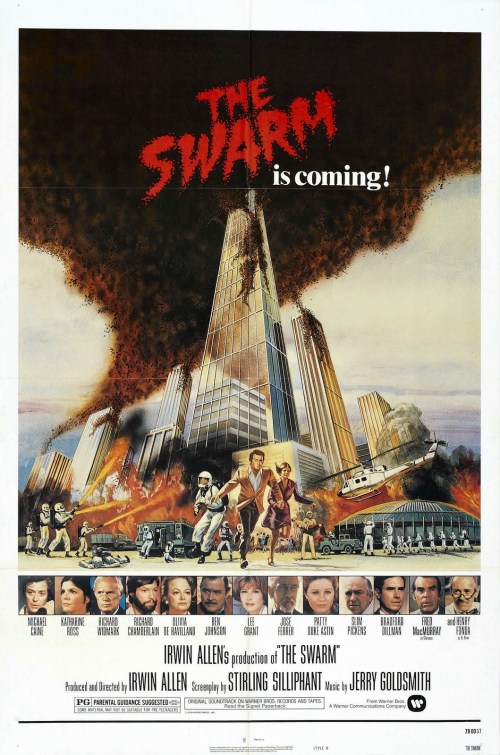
The Swarm (1978)

By Richard Winters

My Rating: 1 out of 10

4-Word Review: Killer bees invade Texas.

When his parents (Robert Varney, Doria Cook) are attacked by African Killer Bees while out on a picnic their young son Paul (Christian Juttner) manages to escape by jumping into their car and driving off. He then drives into the small town of Marysville, Texas where he tells the people about what happened. Scientist Bradford Crane (Michael Caine) and Army General Slater (Richard Widmark) are put in charge, but neither can agree on what strategy to use. Meanwhile Paul gets some of his friends to go back out to the park where the attack occurred to set fire to the hive, but instead of killing the bees it gets them to swarm onto the nearby town and the unsuspecting citizens.

Director/producer Irwin Allen was by the late 70’s known as the disaster master after having by that time either produced or directed 4 ( he ultimately ended up making 7) disaster flicks for both TV and the big screen many of which like The Poseidon Adventure and The Towering Inferno made a ton of money, so he was riding high coming into this one only to have it bomb monumentally at both the box office and with the critics. He took the failure of this film so personally that he refused to ever mention it and even walked out of an interview when he was asked about it.

In retrospect it’s easy to see why it failed as the special effects just aren’t interesting enough. Watching repetitive shots of swarming bees can only go so far and the victims just lay there without having their skin show any signs of swelling from the multiple stings, which you’d expect them to have. The shots from the point-of-view of the victims, which shows the bees in a giant form, is the only cool thing though, like everything else in the film, this ends up getting overdone and corny.

The script is ripe with unintentionally funny moments including having the authorities attempt to kill the bees by spraying at them with a flame thrower, which doesn’t seem to affect the bees at all and instead only sets buildings on fire as well as some of the people. The idea that the bees were set off by an alarm siren at a military base, which somehow sounded exactly like their mating call is too preposterous to believe and only makes the ‘science’ behind the film completely silly.

The film also makes the mistake of having the setting be in Texas, but not actually filming it there. Sure there’s a few shots of some famous Houston landmarks that get briefly shown, but the majority of it was clearly shot on a studio backlot in California and any true Texan will easily spot this as the topography and landscape between those two states are quite different. Had the film been made on-location it would’ve helped give it a little more character, which it is otherwise lacking.

The cast is made up of a lot of famous names, but they all get wasted. Lee Grant appears only briefly as an aggressive TV reporter that for the most part has little to do with the progression of the plot. Fred MacMurray, in his last film appearance, plays a rival to Ben Johnson who both compete for the affections of Olivia de Havilland, but all three get killed off in the second act, so what’s the use of introducing this potential story arc if it ends up not really going anywhere?

Caine makes for one of the most boring screen heroes in film history and gets seriously upstaged by Henry Fonda, who plays one of the scientists trying to create a serum to combat the deadly bee stings, even though Fonda is confined to a wheelchair the whole time. This was the first of many ‘paycheck movies’ that Caine did and in fact he admittedly never even bothered to read the script before agreeing to sign on, but still felt it was worth it as he was able to use the funds to purchase a nice mansion in Malibu unfortunately for the viewer there’s no such mansion just boredom instead.

My Rating: 1 out of 10

Released: July 14, 1978

Runtime: 2 Hours 35 Minutes

Rated PG

Director: Irwin Allen

Studio: Warner Brothers

Available: DVD, Blu-ray (Warner Archive), Amazon Video, YouTube

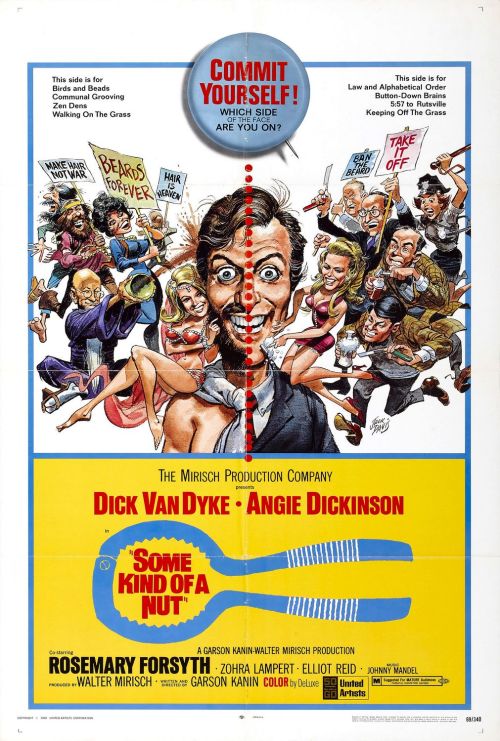
Some Kind of a Nut (1969)

By Richard Winters

My Rating: 1 out of 10

4-Word Review: Grow beard, lose job.

One day while out on a picnic in Central Park with his fiance Pamela (Rosemary Forsyth) Fred (Dick Van Dyke) gets stung on his chin by a bee. The sting takes too long to heal, so in order to avoid having to shave over it he grows a beard, which doesn’t go over well at his job. When his boss (Peter Turgeon) tells him to get rid of it and he refuses it leads to his firing, which mobilizes his co-workers to walk off of their jobs in protest.

Writer/director Garson Kanin has written many funny and award-winning screenplays with Adam’s Rib and Born Yesterday being two of his most famous ones, but this script seems like it was written by a completely different person altogether. The idea of Van Dyke bucking-the-system and discarding conventional mores has definite potential especially since it was filmed in the late 60’s when a lot of that was going on, but the movie goes nowhere with it. Instead of dealing with the ramifications of his rebellion the plot pivots to his ex-wife’s (Angie Dickinson) attempts at reconciliation, which is too contrived and has nothing to do with the main theme.

Van Dyke has one brief moment of non-conformity and then immediately snaps back into being his staid self without showing any real growth or change. Instead of him directly organizing the effort to have his co-workers walk off their jobs on his behalf it’s actually another associate (played by David Doyle) who inspires it while Van Dyke stands back in awe like a main character who has become a passive bystander in his own movie.

There was no need for three female love interests either. Forsyth was the youngest so in some ways it made more sense for her to connect to his rebellious side, but instead it’s Dickinson his ex-wife. However, it’s never made clear what lead to their divorce in the first place, so unless they tackle that direct issue then whatever reconciliation they have will only lead to another break-up down-the-road. Zohra Lampert, who plays this beatnik type lady that Van Dyke befriends and goes out drinking with, is far more lively here than the other two actresses and showed just enough bohemianism traits to fit with the film’s attempted non conformist theme.

There are some interesting camera shots like a close-up of the actual bee sting and a segment, which I thought was real cool when I was in the third grade and first saw this film, showing a map of the nation and then a red miniature car similar to the one Van Dyke and Forsythe are riding in driving around on it to  each city on their trip. However this amounts to just being a shallow way to cover-up how boring and empty the script really is, which meanders too much on scenes that don’t propel the story along. A good example of this is when Forsyth and her two brothers (Elliot Reid, Steve Roland) chase Van Dyke around his apartment complex in an attempt to shave off his beard, which seemed like a futile waste of energy because he could just regrow it in a matter of a few days, so why even bother?

Released: October 1, 1969

Runtime: 1 Hour 30 Minutes

Rated M

Director: Garson Kanin

Studio: United Artists

Available: Amazon Video

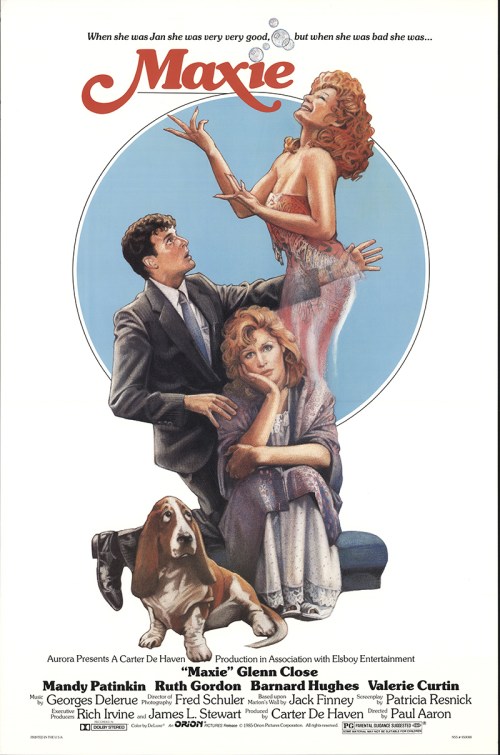
Maxie (1985)

By Richard Winters

My Rating: 0 out of 10

4-Word Review: Silent film star resurrects.

Nick (Mandy Patinkin) and his wife Jan (Glenn Close) move into a San Francisco home that was once lived in by Maxie Malone (also played by Close) a 1920’s flapper that died in a car crash the night before her big audition and who now haunts the place. She eventually inhabits Jan’s body and with the help of Nick tries to get the big Hollywood break in the 80’s that she missed out on in the 20’s.

The biggest problem is the title character that’s supposed to be amusingly ‘eccentric’, but comes off as obnoxious instead. Her belief that she should be the ‘life of the party’ no matter where she goes and her obsession with becoming a famous star makes her narcissistic and self-centered. She also shows no awareness of social propriety that every other functioning human being does as she throws herself quite literally at every attractive man she sees including married ones, which would be considered outrageous behavior by today’s standards and even more so from the era from which she came. Instead of being a person transported from a different time period she’s more like a cartoonish entity from a completely different universe.

Her affected Jersey-like accent is extremely annoying and why she’d even be speaking in one had me confused. Maxie’s spirit is taking over the body of Jan who does not have an accent. The spirit is using Jan’s legs, arms, eyes, mouth and ears, so then wouldn’t it be logical that the spirit would then use Jan’s voice as well?

Patinkin is equally irritating like the way he puts up with his boss (Valerie Curtain) openly and aggressively coming-on to him at work and for all to see and he doesn’t have her reported for harassment. What’s worse is when she threatens to fire him he begs her for his job even though she should be the one looking for work and not him.

The third makes this dumb script, which is based on believe it or not a novel by Jack Finney who also wrote ‘Invasion of the Body Snatchers’, even dumber by having Maxie get a part in a commercial, but without the benefit of having any resume, head-shot or agent, which casting directors insist is a must to even be considered.  From that she then gets asked to do a screen test for the starring role of a big budget remake of ‘Cleopatra’, but all she did in the commercial was play this lady victim tied to some railroad tracks, so what from that brief performance made the producers of ‘Cleopatra’ think she’d be ‘perfect’ for a starring role in their big Hollywood project?

I realize Close most likely took the part because she wanted the fun of playing two different characters, but Jan is so buttoned-down and shy that she becomes completely transparent making Maxie the only one you remember.

My Rating: 0 out of 10

Released: September 8, 1985

Runtime: 1 Hour 38 Minutes

Rated PG

Director: Paul Aaron

Studio: Orion Pictures

Available: DVD

Repo Man (1984)

By Richard Winters

My Rating: 7 out of 10

4-Word Review: Alien in the trunk.

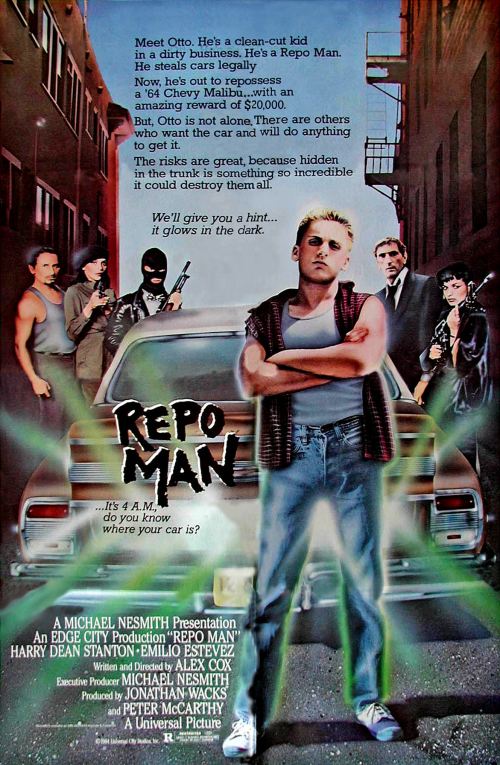
Otto (Emilio Estevez) has trouble accepting authority, which causes him to get fired from many of his jobs. He eventually gets courted into the car repossession business, which he at first resists, but then, especially with its lure of quick cash, he grows into. This then leads him in pursuit of a Chevrolet Malibu with a $20,000 bounty on it driven by a very strange man (Fox Harris) who harbors a glowing radioactive substance in its trunk that kills anyone who comes into contact with it.

The film’s best selling points is that it gives one a gritty feel of what being stuck in society’s poor underbelly is really like as it traps the viewer inside the inner-city of Los Angeles with its almost non-stop capture of its rundown buildings, which becomes like a dominant third character. The viewer then begins to share the same anxiety, anger and frustrations of the people in a place they don’t really want to be, but with no idea of how to get out of it. The only time the film shows the more vibrant area of L.A. is during a brief shot of the skyline from a distance making it come off like a far away place that’s out-of-reach.

The rebel mystique gets better explored and examined here than in other 80’s films where the term ‘rebel’ seemed to apply exclusively to mouthy suburban teens who didn’t like their parent’s rules and would wear punk attire because it was ‘trendy’. Here you get a much more authentic feeling of being an outsider and the unglamorous, desperate qualities that comes with it.

Writer/director Alex Cox also examines the thin, merging line between being a conformist and non-conformist and the ironic/contradictory results that can occur. This gets best captured with the character of Duke (played with gusto by Dick Rude) who is an in-your-face-I-don’t-like-any-rules street punk one minute only to turn around and tell his girlfriend at another moment that he wants to get married and have kids because ‘everybody else is doing it’.

Estevez gives his signature performance here though his excessive cockiness becomes a bit of strain, which fortunately gets tempered in the scene where he gets shot at and panics showing that even a streetwise brash kid like himself has  his limits, which makes it all worth it. Harry Dean Stanton as his partner is terrific and the vast 40 year age difference between the two isn’t apparent at all. Olivia Barash is quite good too without even trying. Her likable unrehearsed quality makes for a refreshing contrast to all the rest who are more compelled to put on a facade and for the this reason I wished she had been in it more.

Honorable mention should also go to Fox Harris who plays Parnell the driver of the much sought after car even though in real-life he couldn’t drive and he got the vehicle in a few accidents and even damaged other props on the set in the process. Normally this would’ve gotten him fired, but because he had been the only actor who was nice to Alex Cox when he worked as a lowly security guard at the Actor’s Studio and before he became a director, he choose to stick with him despite the problems, which shows that if your nice to everybody even those that have very little social standing it can come back in rewarding ways in the long term.

My Rating: 7 out of 10

Released: March 2, 1984

Runtime: 1 Hour 32 Minutes

Rated R

Director: Alex Cox

Studio: Universal

Available: DVD, Blu-ray (Criterion Collection), Amazon Video, YouTube

Scandal (1989)

By Richard Winters

My Rating: 5 out of 10

4-Word Review: Politician has an affair.

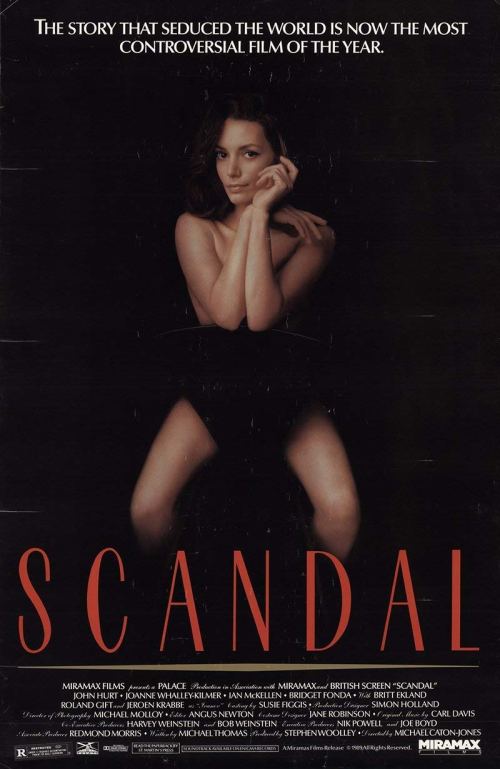
Based on the Profumo affair that rocked the British parliament in 1963 the story centers around an exotic dancer named Christine Keeler (Joanne Whalley-Kilmer) who catches the eye of Stephen Ward (John Hurt) a doctor with a thing for attractive young ladies. She moves in with him and the two share an unusual relationship where he pimps her and her friend Mandy (Bridget Fonda) out to members of the conservative party. Her sexual affair with one of the high-ranking officials of parliament, John Profumo (Ian McKellen) eventually reaches the attention of the press and leads to far-reaching ramifications for all involved.

Part of why this movie didn’t work for me and may not for others is that politicians getting involved in a scandal is no longer a big deal. We’re living in an age where political figures have been caught having affairs, even while in office, and it isn’t enough to have them removed. Yet this film expects the viewer to be in jaw-dropping shock from the first frame to the last even though in this cynical age it would be more shocking if one actually lived a squeaky clean life.

The first hour meanders along from one racy sex scene to the next until it almost seems like a soft core porn flick with no story. I had no idea where any of this cavorting around was going to lead and wasn’t really all that intrigued in finding out either. First time director Michael Caton-Jones takes too much of a detached approach to his characters. They all come off like wild sexual animals unable to control their inner urges, but with no other discernible differences making everything that goes on seem like one giant frolicking blur with no point.

Hurt gives a great performance, but I didn’t understand the motivations of his character. Why doesn’t he want to sleep with Christine and instead get more turned-on listening to her stories about her having sex with other men? What about him makes him this way, which the film should’ve helped answer, but doesn’t.

Whalley is too old for her part as she was supposed to be playing someone who was 19, but in reality was already 29. Having a true 19-year-old play the part, and have a definite look of innocence about her, may have given the provocative material a little more bite.  Her character also has the same issues as with Hurts. I got how she wanted to get away from her impoverished surroundings and sleeping with rich influential men could help her do that, but I didn’t understand why she liked her Hurt, or their unusual relationship.

The film ends with the court proceedings, which like with everything else doesn’t have the impact that it should. While the attention to detail and accuracy is impressive it would’ve worked better had it began with the trial and then worked backwards through flashback showing how they all got there instead of the linear narrative that it does take, which is too plodding. Focusing on only one of two characters would’ve helped too instead of trying to encompass so many of them where none of them are all that interesting or distinct.

My Rating: 5 out of 10

Released: March 3, 1989

Runtime: 1 Hour 46 Minutes

Rated R

Director: Michael Caton-Jones

Studio: Miramax

Available: DVD, Blu-ray (Region B/2)

That Cold Day in the Park (1969)

By Richard Winters

My Rating: 4 out of 10

4-Word Review: Spinster takes in boy.

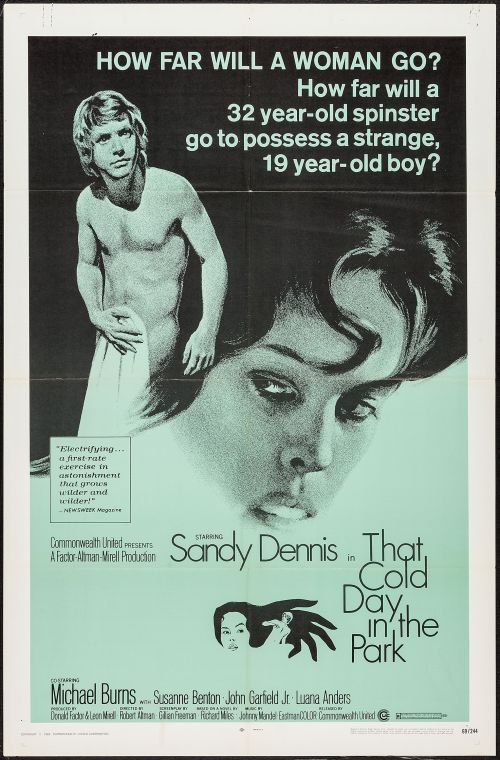
Frances (Sandy Dennis) is a rich, but lonely woman living a reclusive life inside her luxury Vancouver apartment with only her service staff to keep her company. One day she spots a teen boy (Michael Burns) sitting all alone on a park bench while it’s raining. She decides to invite him up to her apartment where she gives him food and a shower and becomes very attached to him despite the fact that he does not speak. Unbeknownst to her he has a whole other life with friends and family, but decides to exploit Frances’ generosity for his own gain only to learn that Frances has her own devious plans in mind.

The film’s only interesting aspect is Robert Altman’s direction, which is far different from the later movies that he did in the ’70’s, which emphasized conversations going on by secondary characters who weren’t always even in the scene, which here occurs only once when Frances goes to a doctor’s office, but is otherwise non-existent. Instead Altman successfully captures Frances’ isolated condition including the quiet apartment atmosphere where the viewer feels as trapped inside the four walls of the place as the character’s and the idea that there was an actual film crew on the set with the actors seems almost hard to believe. I also enjoyed the way the boy’s family life is shown by having the camera remaining outside and peering into the house’s windows to capture the action and dialogue going on inside.

The film fails though to be compelling as there is no reason given for why Frances feels so compelled to bring in this boy, or why this otherwise pretty, able-bodied woman should be so alone in the first place. One scene even has another middle-aged suitor propositioning her with a relationship, which she coldly refuses, but why? Is she more into teen boys and if so this needs to get explained and the reason given for it.

Dennis is an interesting actress, but isn’t up to playing characters with a sinister side and she’s a bit too young for the role. An older woman such as Ingrid Bergman would’ve been far better able to convey the age disparity between the two characters, but she unfortunately refused the part when offered. Burns is only adequate and the fact that he doesn’t initially speak makes the dynamics between the two interesting and the film should’ve delayed the fact that he could talk until the end, instead of revealing this in the middle part, which takes away any potential for mystery and intrigue.

Spoiler Alert!

The ending, which consists of Dennis trapping Burns inside her apartment makes no sense. The fact that she nails the windows shut is ridiculous as he would only need to pry the nails out of the wood, which he successfully does to a few of them anyways, in order to open the windows back up and get out. He is also physically stronger than her and the fact that she uses no weapon means he could overpower her if he wanted. Besides his family already knew where he was as his sister (Susanne Benton) came to visit him and would most likely come looking for him when he didn’t come home, so having it end by portraying him as a helpless hostage with no way of escaping is quite weak and unsatisfying.

My Rating: 4 out of 10

Released: June 8, 1969

Runtime: 1 Hour 46 Minutes

Rated R

Director: Robert Altman

Studio: Commonwealth United Entertainment

Available: DVD, Blu-ray (Region B/2), Amazon Video

Get to Know Your Rabbit (1972)

By Richard Winters

My Rating: 6 out of 10

4-Word Review: Businessman becomes a magician.

Donald (Tom Smothers) is tired of the rat-race and decides one day to impulsively walk off of his job  and become a trained tap dancing magician under the tutelage of Mr. Delasandro (Orson Welles). While the pay isn’t good he enjoys the freedom of being on the open-road and avoiding the stress of climbing up the corporate ladder despite the efforts of his former boss (John Astin) who tries anything he can to get Donald to come back and work for him.

This was Brian De Palma’s first studio made venture and he borrows heavily from the same type of surreal comedy that he used in his two earlier independent films Hi Mom! and Greetings. While not all of the gags hit there’s enough inventive camera work and editing to keep it interesting making the fact that the studio ultimately hated the final product and fired De Palma from the project all the more perplexing. This film follows the exact same blue print of De Palma’s earlier work. Had they not watched those films and just hired him based on recommendation? If so then they have no one else to blame but themselves.

While I enjoyed the eclectic energy there are too many comic bits that veer way off from the main storyline and have absolutely no connection to the main plot. The script, by Jordan Crittenden, would’ve been stronger had all the humor been focused around a main theme as it ultimately comes-off as too much of a hodgepodge with no connecting message to it at all. What’s even worse is that some of the gags have a lot of comic potential that aren’t played-out to the fullest, which makes it even more frustrating.

Smothers is quite boring and seems unable to convey any other expression except for a smiling deer-in-headlights look. Apparently behind-the-scenes he didn’t get along with De Palma and refused to show-up for necessary retakes making me think he should’ve been the one fired as he could’ve been easily replaced by a wide array of other comic actors who would’ve done a far better job. Even Bob Einstein, who appears very briefly as a brash fireman, gets far more laughs than anything Smothers does throughout the entire movie.

Fortunately the supporting cast is excellent and one of the reasons that helps keep the film afloat. Welles is especially good as the washed-magician with the scene where Smothers and he get stuck inside their escape sack while trying to perform the trick being the funniest moment in the movie. Astin is amusing too as Smother’s former boss who slowly turns his room inside a seedy hotel into a thriving office. Katharine Ross is also a delight in a perfect send-up of a starry-eyed groupie.

Spoiler Alert!

The ending though in which Smothers finds himself back working inside the same type of corporate office job that he had tried to escape from at the beginning is a disappointment. Sometimes cyclical endings can be clever and ironic, but here it’s more of a cop-out. We never get any sense of how the experiences that the character goes through changes him making it all seem quite shallow and pointless. It also completely forgets about the Orson Welles character, who gets written-out after the second act even though his presence was one of the most entertaining aspects of the movie.

My Rating: 6 out of 10

Released: June 7, 1972

Runtime: 1 Hour 31 Minutes

Rated R

Director: Brian De Palma

Studio: Warner Brothers

Available: DVD-R (Warner Archive), Amazon Video, YouTube