The Straight Story (1999)

straight story

By Richard Winters

My Rating: 9 out of 10

4-Word Review: Old man on lawnmower.

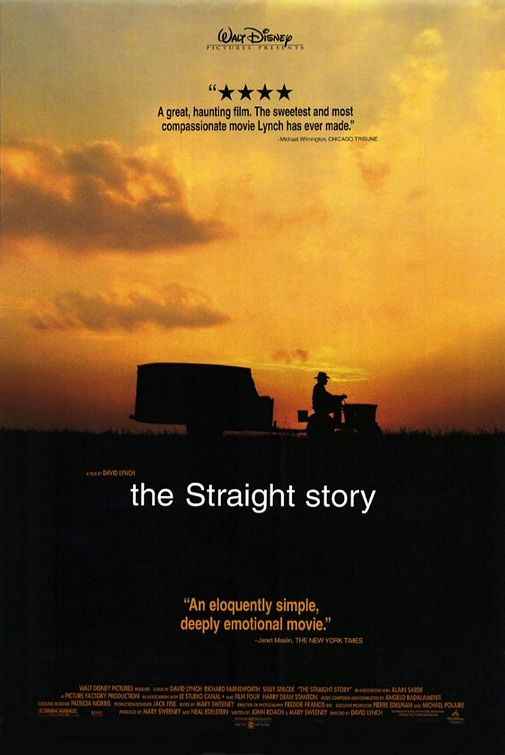
Richard Farnsworth plays Alvin Straight, an older man with health problems who decides to travel from Iowa to Wisconsin on a rider mower to visit his sick brother.

This film is a true achievement. For every flamboyantly bizarre film David Lynch has done he equals it here with his restraint. He truly proves himself a complete director and a sensitive one at that. He shows a deep respect for his subject and the area. Nothing is overplayed or exaggerated. It is the type of film no one thought Hollywood could do. Based on a true story they go along the same route the real Alvin took. The drama is not compromised and everything is handled in a dignified way. It propels itself on the quite eloquence of his journey and the people he meets. The soft pace is stunning especially when you realize that it is still quite captivating.

Farnsworth is perfect for the role. In many ways you feel he is Alvin Straight. He exudes so much of the same qualities of the character that you are convinced that they share some spiritual connection. His lines and little stories are both touching and powerful. Yet it is his deep expressive blue eyes that you remember the most. At any given time they can convey both his personal strength and sensitivity. Sissy Spacek is also terrific. Her portrayal of his mentally handicapped daughter is so convincing that you really can’t see the acting.

This is an emotional film and one that makes the viewer feel good without being manipulative or using any of the old conventions. The simplicity is refreshing. The only minor drawback is the meeting with his brother. Talented actor Harry Dean Stanton plays his brother yet he is only given a few lines. You wish he had more and we were able to see a more complete relationship. Even so this is still a wonderful movie.

My Rating: 9 out of 10

Released: September 3, 1999

Runtime: 1Hour 52Minutes

Rated G

Director: David Lynch

Studio: Buena Vista Pictures

Available: VHS, DVD
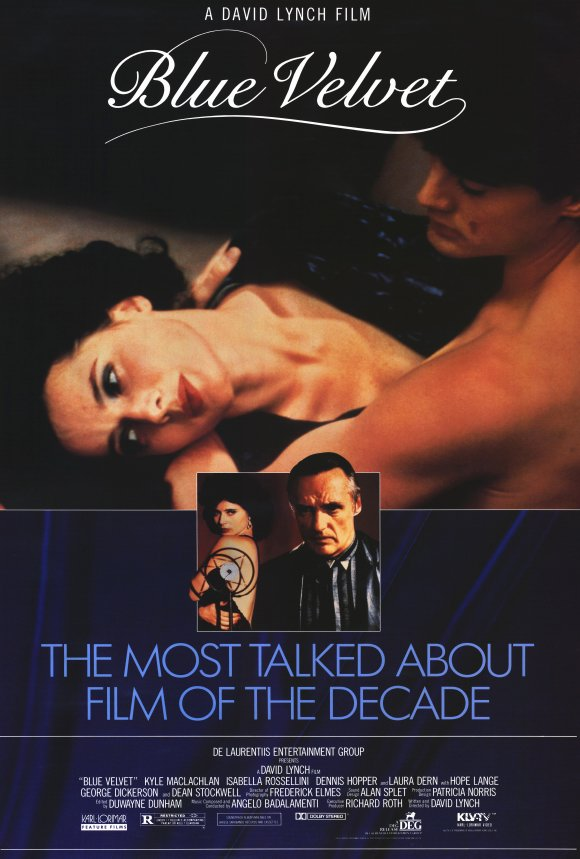
Blue Velvet (1986)

blue velvet 1

By Richard Winters

My Rating: 6 out of 10

4-Word Review: Whose ear is it?

Jeffrey (Kyle MacLachlan) is a young man living in a quiet small town who one day finds a mutilated human ear in an empty field. This gets him involved with a murky kidnapping case involving Dorothy (Isabella Rossellini) and a strange sinister man by the name of Frank (Dennis Hopper).

The offbeat plot evolves well and remains if nothing else captivating. Hopper makes the most of what was at the time his ‘comeback’ role creating a memorable villain. The casting of Rossellini was an inspired choice as she adds a unique flavor to the proceedings and sings a cool rendition of the title tune. The scene involving Dean Stockwell and his strange clan leaves a memorable impression as well.

Director David Lynch keeps a tight grip on his uniquely odd vision and makes sure that it permeates every sight and sound in the picture. The best part, or at least my favorite, comes at the beginning when the camera zooms into a nicely manicured front lawn until it shows an extreme close-up of all the bugs crawling around underneath it in the dirt.

I first saw this film upon its initial release and was mesmerized by it, but now twenty plus years later it doesn’t seem quite as cutting edge as it once did. There have been so many similarly weird films in the intermittent years that this one becomes lost in the shuffle and even dated.

Several scenes get stretched longer than they should be and the second half becomes draggy. The scene where Jeffrey is chased down by an angry boyfriend of Sandy (Laura Dern) only to have the naked Dorothy jump out of the bushes where the boyfriend then apologizes profusely seems now unintentionally funny. The contrived ending, which features a chirping mechanical robin, looks cheesy and tacky.

Despite the fact that the film has not stood the test of time it still has its moments, but it is no longer as fresh or original and the Hopper character is not as frightening as he once was.

My Rating: 6 out of 10

Released: September 19, 1986

Runtime: 2Hours

Rated R

Director: David Lynch

Studio: De Laurentiis Entertainment Group

Available: VHS, DVD (Special Edition), Blu-ray, Amazon Instant Video

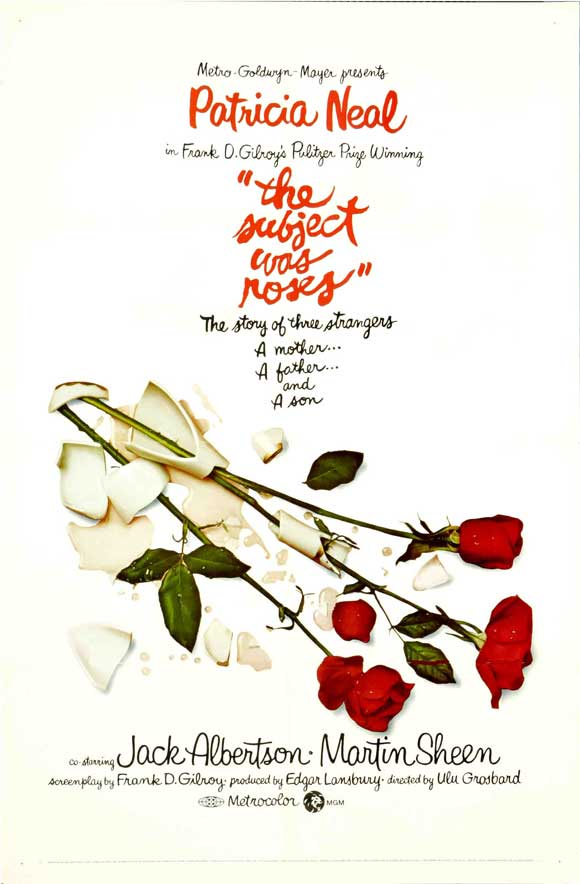
The Subject Was Roses (1968)

subject was roses

By Richard Winters

My Rating: 7 out of 10

4-Word Review: This homecoming isn’t happy.

Tim (Martin Sheen) arrives home from the war to find that things aren’t going well with his parents John and Nettie (Jack Albertson, Patricia Neal). Their aloofness towards each other slowly becomes more apparent and seems to come to a head when Tim decides to buy his mother a bouquet of roses and his dad pretends it was his idea. When Nettie realizes it wasn’t John who bought them she leaves the house and doesn’t return, which causes John to panic and try to find her.

This movie has a compelling quality to it and is the old-fashioned type of drama that they don’t seem to make anymore. The characters are real and believable and will probably remind one of their own parents, or even themselves and their marriages. The dialogue has a great conversational style and the viewer feels like they are eavesdropping onto an actual household. The action happens slowly, but deliberately and is devoid of any neat and tidy wrap-ups.

However, the film is also a bit frustrating. We are never explicitly shown what it is that is troubling Nettie so terribly. We are given some definite hints of things bubbling just underneath the surface, but there is nothing that completely comes out into the open. The viewer becomes primed for some great revelation, but when it doesn’t come and the characters end up remaining in the same situation as when it began it makes the whole thing seem pointless.

Neal is outstanding and the main catalyst for why this works. This was her first film after she had suffered several near fatal strokes in 1965. Although she does very well one can still see some subtle effects of it like the way she walks and her speech being just a little bit slower, but in context with the role it makes her seem older than she really is and therefore better for her role. I was surprised at how physically demanding the part was including having her dance rigorously around the living room with Sheen as well as having to aggressively fight off Albertson’s unwanted advances. Her sad and pained facial expressions leave the most lasting impressions.

Although it was Neal who I felt should’ve won the Oscar it was actually Albertson who did. His performance, which he recreated from the Broadway play that also netted him the Tony, is solid especially for doing a character that at times is off-putting. He does get the film’s best line “The humping that I am getting isn’t worth the humping that I am getting.”

The story takes place in the 1940’s and is basically a loose autobiographical story of Frank D. Gilroy who wrote both the award winning play and screen version. For the most part it succeeds with its retro look, but the music by Judy Collins doesn’t fit. Personally, I love Collins as a vocalist, but her raw, moody folk music sound seems out of place for a 40’s setting and takes the viewer out of the story in the process.

Transferring a story done for the stage to the big screen is never easy, but director Ulu Grosbard manages to make it cinematic. None of it was done on a soundstage, but instead the apartment was built inside a warehouse in the same Bronx neighborhood where Gilroy grew up and painstaking detail was done to give it an authentic lived-in look. The scenes done at their lakeside cabin is also effective as it captures the blossoming spring time landscape and gives a nice soothing feeling. You also get to witness Sheen skipping stones across the lake several times something that I could never get the hang of myself.

My Rating: 7 out of 10

Released: October 13, 1968

Runtime: 1Hour 47Minutes

Not Rated

Director: Ulu Grosbard

Studio: MGM

Available: VHS, DVD (Warner Archive)

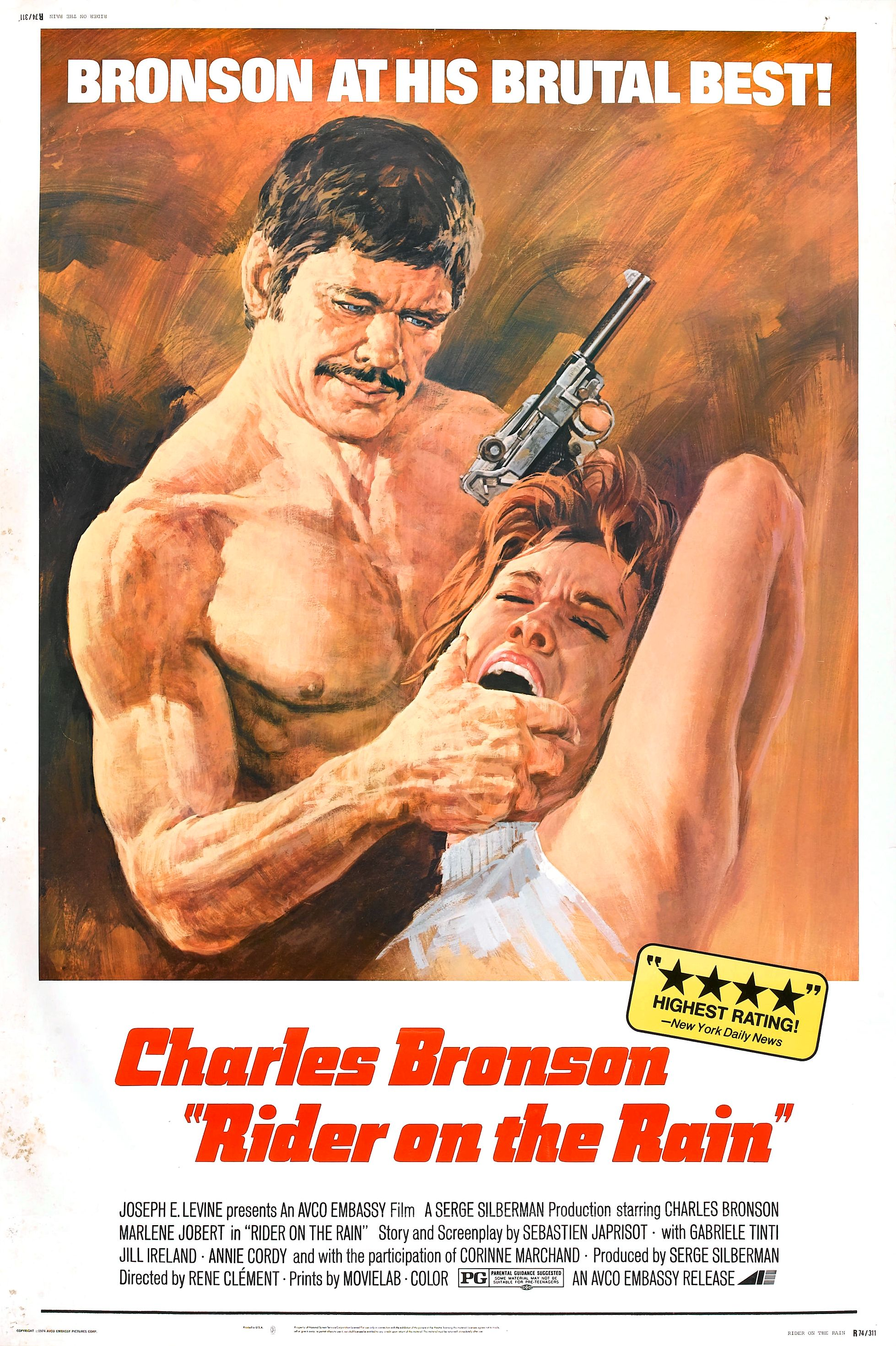
Rider on the Rain (1970)

rider on the rain

By Richard Winters

My Rating: 5 out of 10

4-Word Review: Chuck is in control. 

Supposedly the inspiration of The Doors song ‘Riders on the Storm’ this stylish mystery deals with Mela (Marlene Jobert) a beautiful young woman who finds herself being stalked by a strange bald headed man carrying a mysterious red bag. He follows her to her home where he then rapes her. She manages to get her hands on one of her husband’s rifles and shoots the man dead. She throws his dead body over a cliff and into the sea where she thinks that will be the end of it, but then an American by the name of Harry Dobbs (Charles Bronson) shows up who seems to know all about it and will not leave Mela alone until she confesses to the whole thing.

Director Rene Clement is a master at his craft. Every shot and scene has an evocatively stylish flair particularly at the beginning. The lighting, camera work, editing, and moody score by Francis Lai are first rate and help grab the viewer in right away and keep them hooked. There are strong shades of Hitchcock, but like with Hitch the performers become nothing more than pawns to the director’s vision. The actors seem a bit stifled and unable to create any nuance to their characters. Everything is done to propel the story, which is fine, but sometimes expanding the scenes to allow the actor’s to expound more gives a film a fresh and natural flow, which is lacking here. The rape sequence relies almost completely on the breathing sounds of Mela and some interesting edits, which I felt was good, but it could have been even more provocative and cutting edge had this part been extended and a little more graphic.

While the script by Sebastien Japrisot is full of intriguing twists and nicely complex the middle part dealing with Harry’s seemingly unending interrogation of Mela goes on much too long and bogs things down. I would have liked to have seen a little more variation of their roles where at times Mela would get the upper-hand, but for the most part Harry remains in complete control and Mela is dominated and confused throughout, which isn’t as interesting.

rider on the rain 2

Jobert is sexy and adds a definite sparkle to the film. Normally I prefer women with long hair, but her short cut gives her a youthful appeal. Her blue emerald-like eyes make a great contrast to her reddish hair and her freckles helps accentuate the youthful and naïve quality of the character. Her husband Tony played by Gabriele Tinti, has the chiseled boyish looks of a male model with a pair of baby blue eyes that is almost as stunning as Marlene’s making this couple enjoyable to watch for their looks alone for both male and female viewers.

Bronson is at his tough guy best. He takes on seven men in a room and kicks their ass without breaking a sweat. Unfortunately that is all the action that there is and there needed to be more of it. Jill Ireland appears briefly as a character that has little to do with the plot, but looks gorgeous nonetheless.

The film’s final plot twist is rather boring and the conclusion is weak and non-eventful. Mystery fans may enjoy the film’s winding story, but Bronson enthusiasts will be disappointed at the film’s lack of action.

rider on the rain 3

My Rating: 5 out of 10

Released: January 21, 1970

Runtime: 1Hour 55Minutes

Rated R

Director: Rene Clement

Studio: AVCO Embassy Pictures

Available: VHS, DVD
My Dinner with Andre (1981)

my dinner with andre

By Richard Winters

My Rating: 5 out of 10

4-Word Review: Talking can be interesting.

 
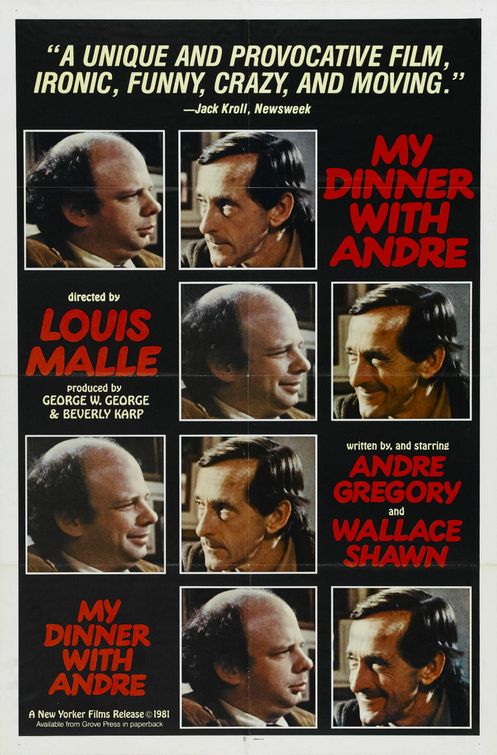
Rare is a film that can be categorized as being daring by what it doesn’t do than by what it does yet this is a film that fits that instance. This is a story about two old friends (Wallace Shawn, Andre Gregory) who meet at a fancy restaurant and have a long, pleasant conversation. That’s it. No big revelations, no cutaways, no side story, no fights, no jokes, and certainly no added cinematic effects. The men merely have the same type of conversation that two educated men on the same intellectual level might also have. Then after two hours they call it a night and go home.

Does this mean that this is a poor or boring movie? No, not really. Sometimes the best directing is just the guts to stick with a concept that is unusual. That is what Louis Malle does here and you have to give him credit. On its own simple terms it actually does succeed. One’s mind certainly does wander at times, but somehow you never lose complete interest. The simple framing and editing are actually effective.

The two stars are competent for what they are doing yet they do not seem to be the best of actors. At times they seem to be simply mouthing their lines and there is no nuance in their delivery. Gregory has a nice deep, resonate voice that almost seems like a radio announcers. He does most of the talking so at least he is pleasant to the ears. Shawn is the exact opposite. His voice is screechy and annoying. Yet he does supply an engaging voice-over narrative at the beginning, which is so fun you wished they had kept it going throughout.

The idea of following a real, genuine conversation is a good one. Sometimes it is interesting to observe all the threads a conversation between any group of people takes. However the conversation here isn’t real. It is clearly scripted out and that hurts it. The first hour is especially poor. It consists mainly of Gregory talking about some wild, fantastical experiences of his. It comes-of as forced and extended. Having some cutaways throughout his talking would have helped because a lot of what he talks about is very visual.

The second hour is better because Shawn gets more involved and they have a real discussion. The topics are more expansive and philosophical. They range from how one perceives reality to the very essence of our being. Of course anyone with some existential friends could have the same conversation, but at least it makes the film more stimulating.

In the end this is an interesting experiment that halfway succeeds. It would have helped had the two men, who seem to be playing themselves anyway, been allowed to have a more natural and impromptu discussion. Even adding a few more people into the mix wouldn’t have hurt. They could have also given it just a little bit more of a visual flair. Although watching the very good way that they listen to one another is a sight in itself. Their listening skills are so good that it almost seems unreal. It is unfortunate that everyone can’t have these same types of skills

My Rating: 5 out of 10

Released: October 11, 1981

Runtime: 1Hour 50Minutes

Rated PG

Director: Louis Malle

Studio: New Yorker Films

Available: VHS, DVD (The Criterion Collection), Amazon Instant Video

Gaily, Gaily (1969)

gaily gaily

By Richard Winters

My Rating: 5 out of 10

4-Word Review: Naive fellow becomes wise.

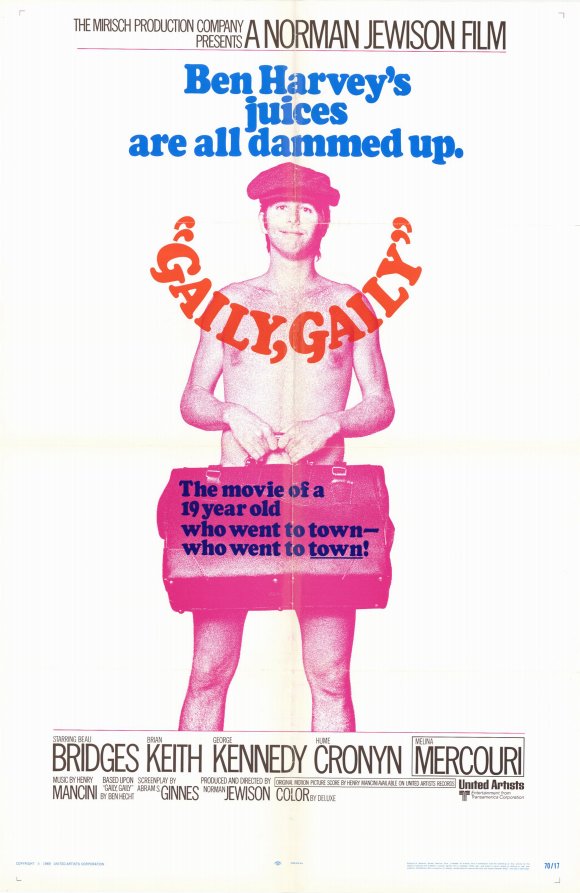
Ben Harvey (Beau Bridges) is a sheltered young man who decides to leave the safe confines of his humble little town and make a go of it in the big city of Chicago in 1910. However, soon after arriving he is robbed of all of his money and then taken in by Lil (Melina Mercouri) a Madame at the local brothel. Ben then gets a job at the city newspaper, but finds corruption at every turn and when he tries to stop it he ends up falling victim to its allure like everyone else.

The first hour is engaging. It features just the right mix of Americana and whimsy. The pace is quick with a wonderfully quirky sense of humor that comes flying fast and furiously. Opening the film by having Ben dreaming of topless women and featuring some very old turn-of-the-century black and white porno pics is funky. I also liked the scene where Ben manages to make all the prostitutes at the bordello he is staying at teary-eyed after reading them a sad story that he had written. The look at Lil’s face when he tells her that his life’s ambition is to ‘change the world’ is a hoot.

Unfortunately the second half deteriorates badly. The scenes become stretched out too long and the attempts are farcical humor lack any cleverness. The side-story about the attempts of a mad scientist Dr. (Charles Tyner) at using a serum he has invented to revive the dead is stupid. The slapstick like chase sequence gets overblown and the whole thing ends on a flat and boring note, which is a shame. The sets and costumes recreating the period atmosphere are wonderful, but put to waste by the silly script. I felt the film could have been more interesting had it taken a more realistic and dramatic route.

Bridges is actually pretty good. He has played the wide-eyed idealist so many times that it becomes a bit annoying, but here he seems to be making fun of it and it works to an extent. However, his extreme naivety at not catching on that the women he is living with are prostitutes is just too over-the-top and makes you almost want to hit him on his head in order to drive some sense into it.

Brian Keith does well playing the type of gruff, brash character that he excels at. George Kennedy though seems stiff and out of place in the setting and does not appear to be particularly adept at comedy.

Mercouri looks to be having a lot of fun here and her singing isn’t bad either. Margot Kidder is fantastic in her film debut and one of the best things about the film. She plays one of Lil’s prostitutes who takes a liking to Ben and I enjoyed how her character goes from being jaded to idealistic and rather naïve. Melodie Johnson is great simply because she is gorgeous to look at. She is now a successful novelist and judging from the pictures on her website is still looking quite attractive.

My Rating: 5 out of 10

Released: December 16, 1969

Runtime: 1Hour 47Minutes

Rated R

Director: Norman Jewison

Studio: United Artists

Available: Amazon Instant Video, Netflix streaming

From Noon Till Three (1976)

from noon til 3 1

By Richard Winters

My Rating: 6 out of 10

4-Word Review: This western gets weird.

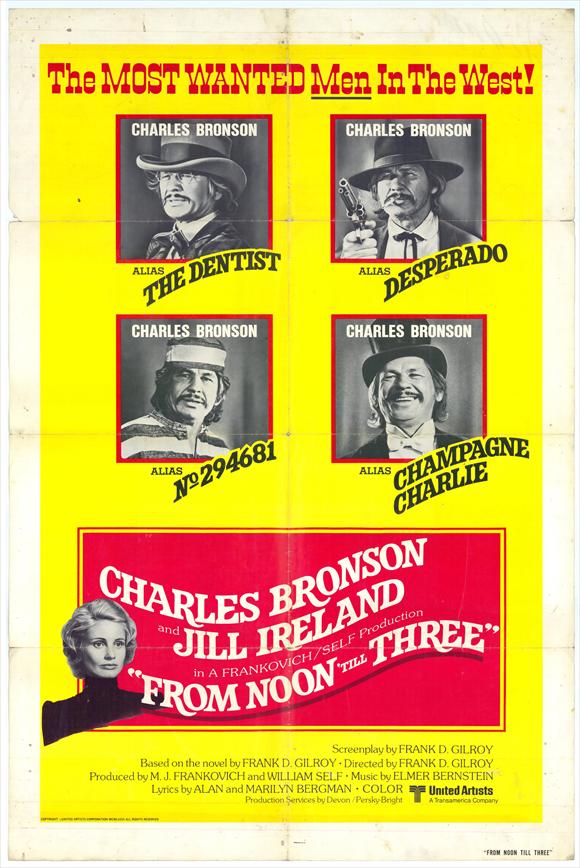
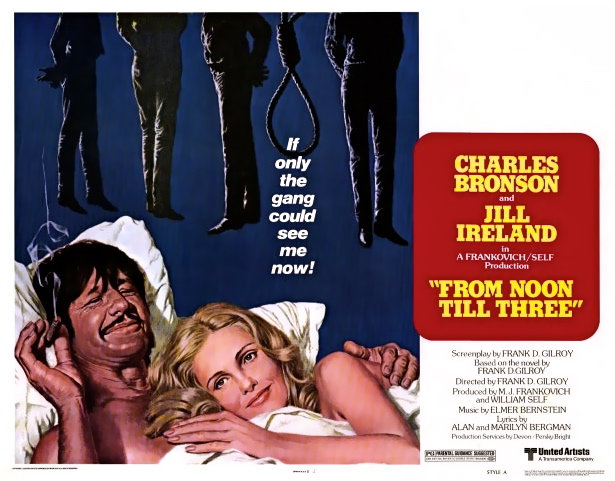
Graham (Charles Bronson) is a part of a four member bank robbing gang on their way to another hold-up. Before they get there Graham’s horse gets injured and has to be shot. Later on they come upon an isolated mansion sitting all alone in the rolling hills of the west. The gang asks the woman owner Amanda (Jill Ireland) if she has a horse for sale. She says no despite the fact that she does, so Graham stays with her while the other three rides off to rob the bank and assures them they will be back with the money at three. During this time Graham and Amanda fall in-love and when three o’clock hits everything goes off-kilter featuring one wild twist after another in this highly unusual one-of-a-kind western.

This film is so offbeat it is hard to describe any of the twists without giving too much away however, after a rather slow start it does become entertaining in a quirky sort of way and filled with amusingly ironic twists. Writer/director Frank D. Gilroy seems to be challenging himself at coming up with one weird plot device after another and keeping the viewer off balance throughout. While this is basically fun it does end up making it more like a gimmick than an actual plot driven, character motivated movie. Categorizing this more as a fable or fairy tale might be more accurate and Elmer Bernstein’s playful, lighthearted score helps cement this.

Bronson is amazingly game for the offbeat material that goes completely against his persona. The change of pace is refreshing and although the part does not call for any great acting range he is still quite engaging and endearing. The part where he talks to Amanda about his inability to ‘get it up’ and the erectile dysfunction that he has suffered from for the past seven years is priceless as is the scene where years later when he meets Amanda again and he unzips his pants and takes out is shriveled penis to show her in order for her to recognize him.

from noon til 3 3

Ireland is good and I loved the variety of dresses that she wears and hairstyle that is put up into a bun. This may be her best performance of her career and certainly the best one that she did with Chuck. She actually becomes the star of the story and even ends up with more screen time than him. As an added treat she sings the film’s closing song over the credits, which she does quite well.

I loved the image of this big mansion all alone in an otherwise stark and barren landscape, which has definite shades of Days of Heaven to it. I was interested in knowing if this was an actual house and where it was located, but the closing credits stated that the entire production was filmed at the Warner Brothers studios in Burbank California making it pretty clear that the home was just a prop built for the movie and most likely torn down after filming, which is a shame.

It is clear visually that Gilroy’s background was more in the writing end than in directing. While the story is full of unbridled wackiness the camera angles, editing, and staging is dull. There is also an opening segment where the men ride up on horseback to the bank and sky is completely cloudy. Then as the camera cuts to show them getting off their horses the sky is now suddenly sunny without a cloud in it. I realize most scenes are not shot in synchronized order and it is hard when filming outdoors to make the weather cooperate, so I am usually forgiving in this area, but this did seem extreme.

If you are in the mood for something different this novelty may do the trick and Bronson fans will be interested in seeing their favorite star in a more lighthearted type of role. The movie also makes a great statement at how the legend can sometimes overshadow the reality and at how people will sometimes perceive things the way they want to see them as opposed to the way they really are.

from noon til 3 2

My Rating: 6 out of 10

Released: August 8, 1976

Runtime: 1Hour 39Minutes

Rated PG

Director: Frank D. Gilroy

Studio: United Artists

Available: VHS, DVD, Amazon Instant Video

Before and After (1996)

before and after

By Richard Winters

My Rating: 8 out of 10

4-Word Review: Son is a murderer.

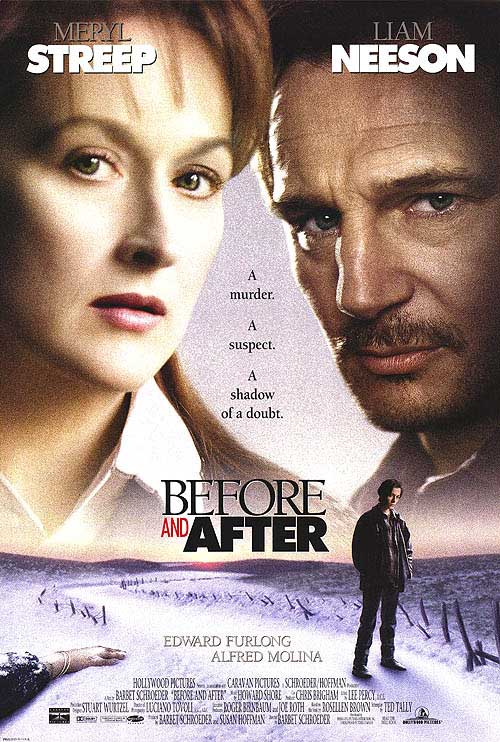
This is a solid drama based on the novel by Rosellen Brown detailing how a family copes after their teenage son Jacob (Edward Furlong) is accused of killing his girlfriend.

Thoroughly engrossing and believable from beginning to end and full of intriguing plot twists. It is fascinating how it examines things from a completely unique perspective namely the family members of the perpetrator, which is rarely ever done. The story is also interesting in that it gets the viewer too become quite attached to Furlong who plays the accused. The film forces the viewer to face and question their own moral judgments, which is good since many films these days seem timid at digging too deeply into anything of a serious nature or forcing the viewer to confront any of their own preconceived notions.

On the negative end the film lacks cinematic style and at times almost looks like it is a TV-movie. Meryl Streep is okay as Jacob’s mother, but this is definitely not one of her better performances. There is a love making scene between her and Liam Neeson that looks mechanical and is completely unnecessary. Viewers who have had family members or friends that have been victims of crimes may find themselves upset with some of the moral conclusions.

Overall this is a strong drama that presents a lot of issues that are timely and haven’t been done anywhere else. Despite a lack of flair or visual style it is still an excellent piece of storytelling with an outstanding performance by Furlong.

My Rating: 8 out of 10

Released: February 23, 1996

Runtime: 1Hour 48Minutes

Rated PG-13

Director: Barbet Schroeder

Studio: Caravan Pictures

Available: DVD, Blu-ray, Amazon Instant Video 

Used Cars (1980)

used cars 3

By Richard Winters

My Rating: 7 out of 10

4-Word Review: Don’t trust car salesmen.

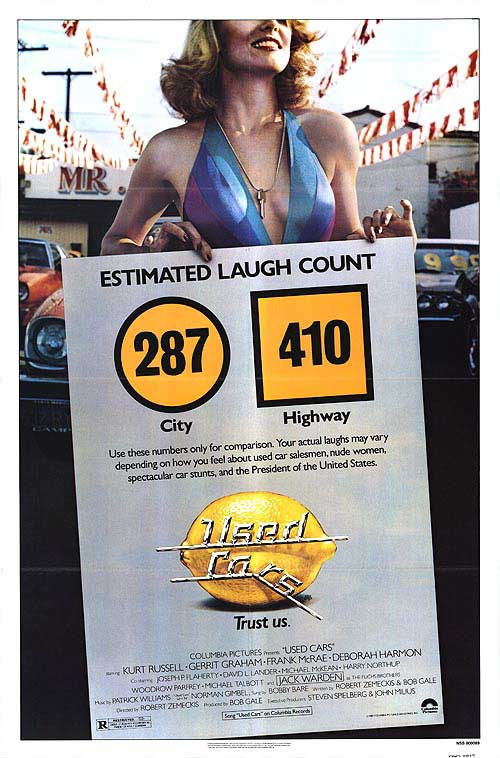
Crazy, zany comedy written and directed by Robert Zemeckis dealing with twin brothers Roy and Luke Fuchs (Jack Warden) who run competing used car dealerships that sit right across the street from each other. The film examines the various shenanigans that each pulls on the other in order to give their business the edge.

Steven Spielberg was the executive producer and the result is taking a rather flimsy plot with an ordinary setting and propelling it to gargantuan proportions with lots of stunts, twists, and action. It teeters precariously to falling over-the-edge with too much of it getting silly and exaggerated, but somehow it manages to save itself by being consistently funny and clever.

Some of the segments really had me laughing even after repeat viewings. My favorite is when they jam the TV signals and then break into a live broadcast with one of their off-the-wall commercials. However, from a purely visual perspective the climax, which features over 250 used cars speeding across the desert in order to get to the dealership before an important deadline is impressive.

Although the humor does manage to hit-the-mark the rest of it is run-of-the-mill. The characters are too dishonest, lowbrow, and scheming, which makes it hard to warm up to any of them. This is especially true with the Rudy Russo (Kurt Russell) character as the film goes overboard in creating the obnoxious salesman stereotype. The suits he wears are loud even from a comedy perspective and only a complete moron would be seen in public wearing them. Russell is also too young and too otherwise hip to be caught up in with the down-on-his-luck salesman caricatures and the part would have been better suited for an actor who was middle-aged. Bringing in Barbara Jane (Deborah Harmon) as his love interest is too forced and their romantic interlude bogs down the momentum.

Warden shines as always and this could be considered his career pinnacle. He plays two very different types of characters and as usual pulls it off in effortless fashion. He shows great energy in a fight sequence as well as in the end while standing in the back of a pickup and dueling with Rudy.

Gerrit Graham comes off as the most likable of the bunch and the running joke involving his superstitious nature works. His dog has to rate as one of the better animal performers and does some really funny tricks.

The cars look like they are genuinely of the used variety and it is great seeing all the old model types that they no longer make. My only real quibble involves the climatic sequence which although fun seemed implausible especially when taken into consideration that the hundreds of cars seen careening across the desert were driven by student drivers and yet none of them broke down, or had an accident, which seemed highly unlikely.

My Rating: 7 out of 10

Released: July 11, 1980

Runtime: 1Hour 53Minutes

Rated R

Director: Robert Zemeckis

Studio: Columbia Pictures

Available: VHS, DVD, Amazon Instant Video

The Night of the Iguana (1964)

night of the iguana 2

By Richard Winters

My Rating: 6 out of 10

4-Word Review: Flawed clergyman loves women.

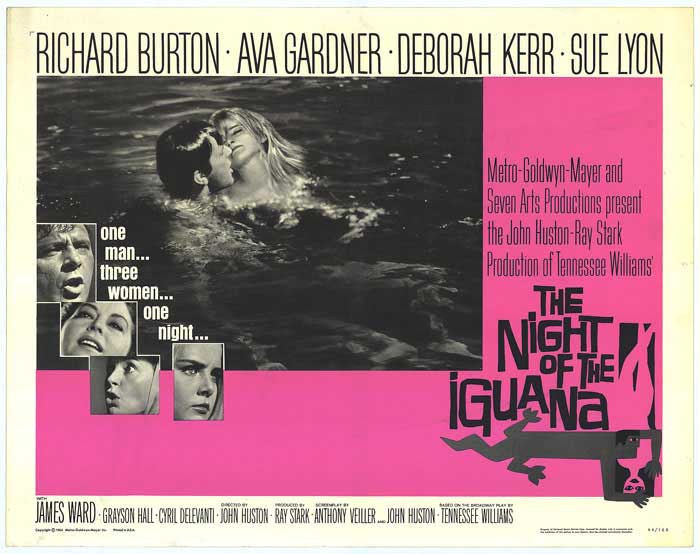
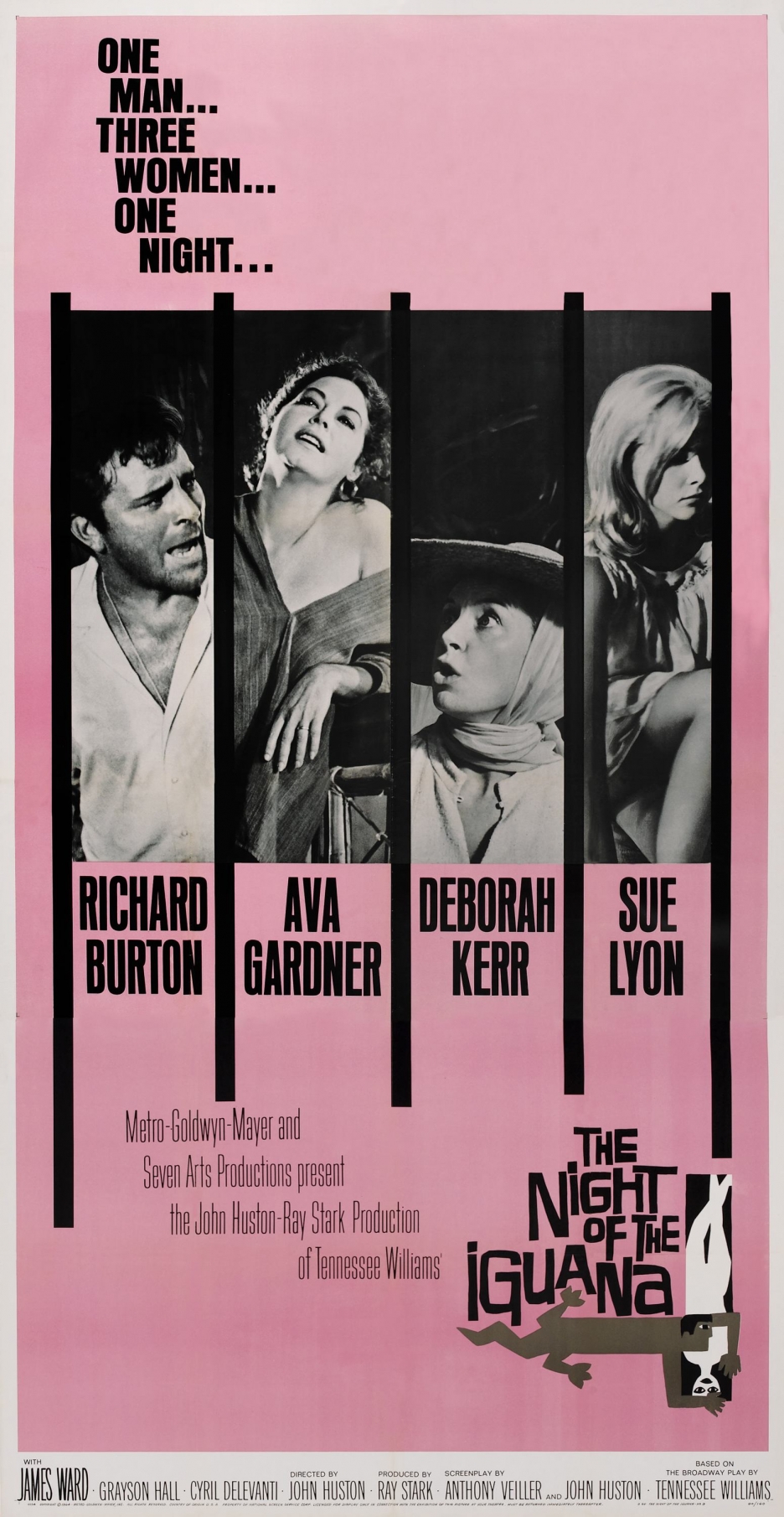
Lawrence Shannon (Richard Burton) loses his job as a clergyman when rumors surface of indiscretions he had with a young female parishioner, which pushes him to preach a ranting sermon at the pulpit that eventually drives all the members of the congregation out of the building. He then gets a job as a tour guide in Mexico and has the chore of leading a bus load of middle-aged women around the country. Charlotte (Sue Lyon) is a young nymph who takes a liking to Lawrence much to the chagrin of her over-protective chaperon Judith Fellowes (Grayson Hall). When Charlotte is caught in Lawrence’s bedroom late at night Ms. Fellowes promises that she will have it reported and get him fired. Unable to handle a another potential job loss Lawrence takes the bus load of women to an isolated seaside hotel run by Maxine (Ava Gardner) an old friend of his. He hopes that by somehow trapping them there he will be able to convince Ms. Fellowes to drop the charges, but along the way he meets Hannah (Deborah Kerr) who he starts to fall in-love with.

Unlike most of Tennesse William’s other plays this one, at least the first half, is full of energy and comical nuance. I found the group of ladies and Lawrence’s exasperated dealings with them to be quite amusing and the film moves along at an engaging pace. The second half though bogs down with more of William’s signature brooding drama that ends up hurting the flow. In many ways this film seems like two movies in one and the difference in tone and pace never gels. Despite a good nighttime conversation between Kerr and Burton I kept hoping the ladies and Ms. Fellowes would come back and felt the film was weaker without them.

Legendary director John Huston hits most of the right buttons here although it is not his best work. I was surprised and impressed to learn that Maxine’s hotel was built specifically for the production in an otherwise deserted region of the country. The building had an authentic old look and helped give the film added style and personality. I had mixed feelings with the black and white photography. On one had it helps bring out the dark recesses of its flawed characters and accentuate the moodiness of William’s script, but it also takes away from the exotic beauty of the locale.

Burton is good as usual and playing the part of an emotionally fractured, alcoholic character seems right up his alley. Gardner is great as the brassy Maxine and the scene of her making out with her two young, shirtless, maraca playing male assistants along the beach late at night is genuinely steamy. Kerr is in fine form as well and her more restrained demeanor makes a nice contrast to Gardner’s.

Lyon’s acting isn’t quite up to her costars and she seems particularly out of her league during her scene with Burton, but in the looks department she is unmatched. She is more filled-out and mature than in Lolita and in many ways even hotter. The scene of close-up shots of her moving her hips to a tune at a Mexican bar may excite some of the male viewers.

The under-rated Hall is excellent in her role as the heavy. Her craggy face and personality are perfect for the part and it rightly got her a supporting actress nomination.

In the final analysis this is not a bad version of Tennessee William’s material, but not a great one either.

night of the iguana 1

My Rating: 6 out of 10

Released: August 6, 1964

Runtime: 1Hour 58Minutes

Not Rated

Director: John Huston

Studio: MGM

Available: VHS, DVD, Amazon Instant Video