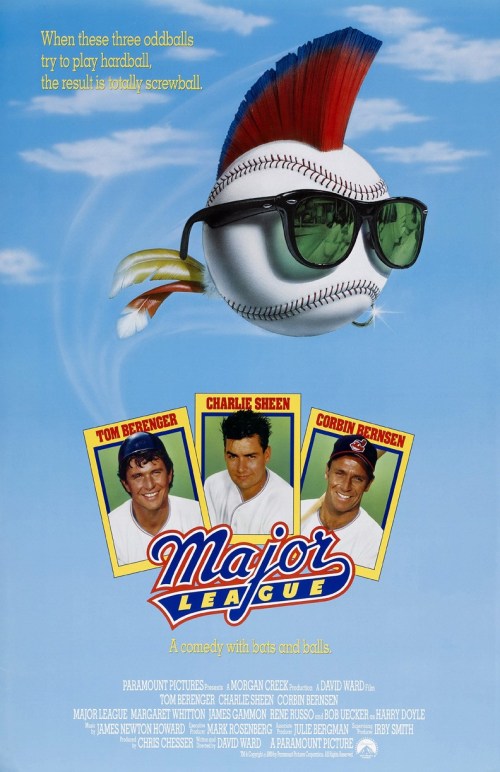
Major League (1989)

major league

By Richard Winters

My Rating: 6 out of 10

4-Word Review: Cleveland Indians become winners.

Rachel Phelps (Margaret Whitton) is the new owner of the Cleveland Indians and her goal is to move the team to the sunnier locale of Miami. She finds a clause in the lease stating that if the team is unable to attract 800,000 in attendance for the season then she will be able to break the contract without penalty. Her plan then is to assemble the biggest bunch of misfits that she can, so that they’ll be so bad nobody will want to watch them, but her idea backfires as the losers somehow find a way to win.

I remember seeing this movie when it was first released and being unimpressed with it as it seemed to be taking the Rocky underdog, lovable-loser theme to redundant heights and beating a tired formula that was already getting stale. It was like The Bad News Bears, but without the interesting subtext. The plot is so obvious that you know where it’s going right from the start and thus making it almost pointless to watch. Unlike Bull Durham it offers no new insights into the nuances of the game and the crude humor is only amiable at best.

However, upon second viewing I found it to be a passable time-filler and the crowd scenes during the film’s climactic game sequence were impressive. Most films, even the good ones, have a hard time recreating the kinetic atmosphere of a live game, but this film manages to hit-the-mark and made me feel like I was watching an actual contest.

The casting is also good with each actor a perfect fit for their part especially Charlie Sheen and Corbin Bernsen. I also enjoyed Chelcie Ross even though he was 46 at that time and looking a bit too old to still be playing. However, his character’s attempts to convert everyone to Christianity particularly the player that practices voodoo is amusing. I also enjoyed James Gammons as the manager as his character is refreshingly sensible and grounded and works as a much needed anchor to the silliness.

Whitton, who hasn’t appeared in a film in over 20 years, is great as the bitchy owner and is hot-looking as well. However, I couldn’t quite buy into the fact that she stubbornly continued to cheer against the team winning even after it became painfully clear that her hoped for low attendance mark would never be reached. If anything their winning would help the team’s market value and she could sell them at a nice profit and move herself to the sunny beach. With all the national cameras most likely trained on her during the playoff game why not, at least at the very end, have her begrudgingly get with the crowd and show some appreciation for what the players had accomplished.

I also got a bit of a kick out of a life-sized cardboard cutout that is created of her and a piece of its dress ripped off with each win that the team gets, but writer-director Ward chickens out on his own outrageous concept by having the figure still wearing pasties and a bikini bottom even after the dress is fully removed. The players still cheer raucously at the sight of it nonetheless, but in real-life I think there would’ve been boos as they most likely would be expecting full nudity and disappointed when it didn’t materialize.

The side story dealing with Tom Berenger’s character trying to reconcile things with his estranged wife that is played by Rene Russo is contrived and unnecessary and with the runtime being so long, especially with such a threadbare storyline, should’ve been cut out entirely. I also found it a bit annoying the way Berenger’s character barges into her apartment and her fiancée’s unannounced and without even bothering to knock. Most people lock their doors behind them once they get inside and thus making his attempts to ‘sneak-in’ unlikely anyways.

The majority of the film was shot in Milwaukee and not Cleveland making me wonder why they didn’t just use the Milwaukee Brewers as the team since their history is almost a dismal as the Indians. It’s also important to note that we are only shown what happens in the pennant and never the World Series, which is just as well as the whole thing is a bit fantastical anyways especially given the rooster’s woeful talent and having them go all the way would’ve been too much of a stretch even for a wishful thinking, feel-good movie such as this.

My Rating: 6 out of 10

Released: April 7, 1989

Runtime: 1Hour 46Minutes

Rated R

Director: David S. Ward

Studio: Paramount

Available: DVD, Blu-ray, Amazon Instant Video, YouTube
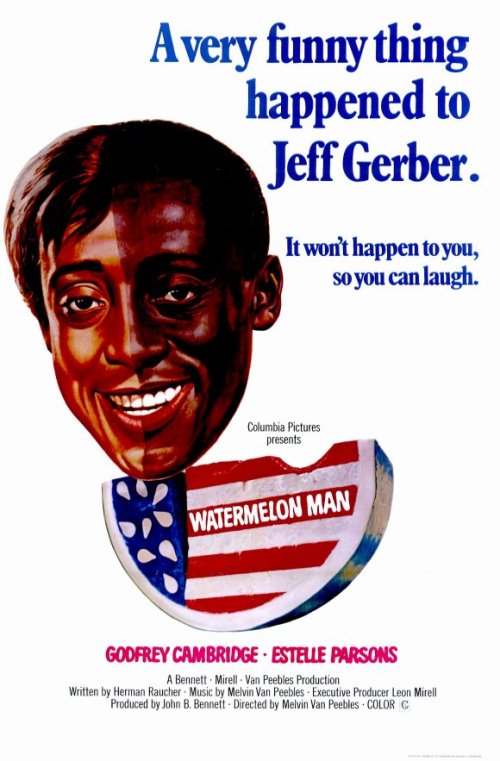
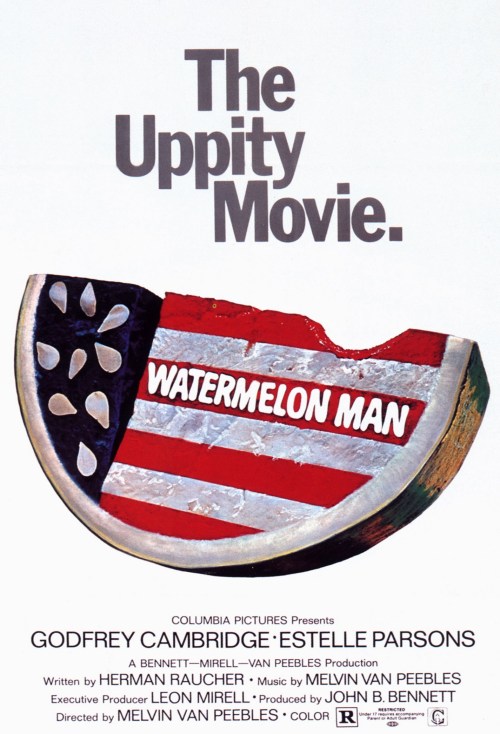
Watermelon Man (1970)

watermelon man 1

By Richard Winters

My Rating: 7 out of 10

4-Word Review: White man becomes black.

Jeff Gerber (Godfrey Cambridge) is a bigoted white man who wakes up one morning having suddenly turned black. At first he thinks he’s spent too much time under the sun lamp, but after he and his wife Althea (Estelle Parsons) try every concoction they can to return his skin back to its normal color and nothing works they finally accept the inevitable. Jeff’s lifestyle then changes in major ways. He loses his friends, his job and even forced to move out of his neighborhood giving him firsthand experience with how drastic the racial lines are.

The film was directed by Melvin Van Peeples who was at the front of the independent film movement during the ‘60s and doesn’t get enough credit for some of the groundbreaking films he made in that era, but this one remains his best and most famous work. While other films chose to present racial issues in very serious and dramatic ways this one takes the wacky comedy route and in a lot of ways becomes far more compelling. Some of the funniest moments comes when the characters discuss racial stereotypes, something filmmakers of today would shy away from for fear that they would be labeled racist, but here by bringing it all out-in-the-open it trusts that the viewer will see how silly and absurd they are without feeling the need to suppress anything.

Although Cambridge is never completely convincing as a white man despite an admirable job by the make-up department he still gives a splendidly engaging performance and without his presence this movie just wouldn’t have worked. Parsons is great as well with her character being quite supportive initially, but then eventually she turns her back on him like everyone else. Mantan Moreland is funny as a café waiter who laughs politely at all of Gerber’s dumb jokes when he is white, but gives him a completely different response once he turns black. Erin Moran can be spotted as the daughter and songwriter Paul Williams has a brief bit as a would-be employer.

There are moments where it shifts awkwardly between drama and comedy and there’s one scene where the action freezes completely and suddenly begins to display on-screen titles, which does nothing but take the viewer out of the story and should’ve been avoided. It also would’ve been nice had there been some explanation for why this all occurred. A potentially funny idea would’ve been having a scene where God decides to change Gerber into a black man to teach him a lesson and having the Almighty portrayed as being African American, which would’ve been considered quite edgy for the period and helped complement the already outrageous storyline.

Despite all the laughs the issues that it brings out are quite startling and not far from the truth, which makes this an integral part at revealing the problems that the black movement had during the early ‘70’s and still does and a film that deserves more critical praise than it’s been given.

watermelon man 2

My Rating: 7 out of 10

Released: May 27, 1970

Runtime: 1Hour 40Minutes

Rated R

Director: Melvin Van Peeples

Studio: Columbia Pictures

Available: DVD, Amazon Instant Video, YouTube

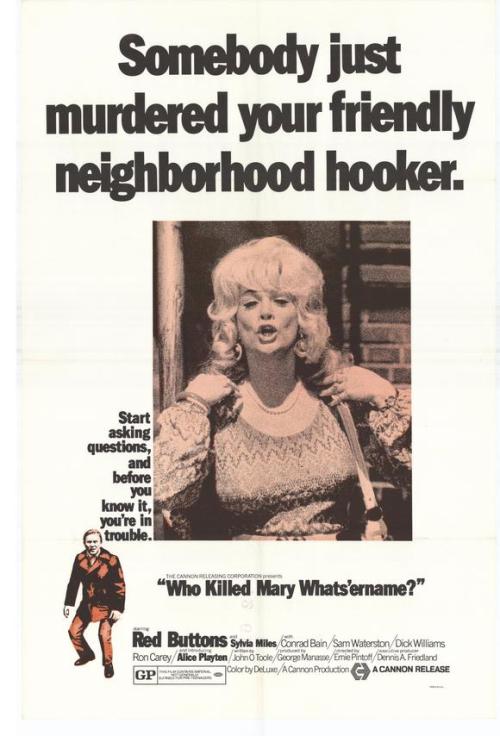
Who Killed Mary Whats’ername? (1971)

who killed mary 2

By Richard Winters

My Rating: 3 out of 10

4-Word Review: Who killed the prostitute?

Mickey (Red Buttons) is a retired diabetic boxer who is appalled to learn that a prostitute was killed in her apartment and no one seems to care. He decides to do the investigation himself and even moves in to her old place. He inquiries about her amongst the locals and begins to get a few leads including that of a young filmmaker named Alex (Sam Waterson) who may have inadvertently filmed her leaving with her eventual killer. Soon Mickey’s grown daughter Della (Alice Playten) and Val (Conrad Bain), a man he meets at a bar, are helping him in his quest, but the things they learn only reinforce how unpleasant and dangerous a hooker’s life can be.

I commend the attempt at taking a gritty look at a seedy lifestyle and its open-minded approach to the women who are in it, but the film’s poor execution makes the whole thing come off as quite amateurish and even laughable. Why a man in his 50’s would become so obsessed with finding the killer of a woman he has never known and only reads about in a newspaper is quite hard to fathom. There are probably hundreds of prostitutes that share similarly sad fates, so why get so revved up about this one? The fact that he is able to get his grown daughter and another man he meets randomly at a bar to help him investigate seems equally unbelievable and the way they are conveniently able to find clues and connect-the-dots before solving the case comes off as too easy.

The action sequences, especially the opening one in which we see the prostitute getting killed, are poorly staged and filled with chopping editing that makes it hard-to-follow and phony looking. When the 50-year-old Buttons takes on a gang of young bikers, which are led by Earl Hindman who later became famous for playing the neighbor on ‘Home Improvement’ whose face was always obscured by a fence, it becomes downright silly. Sure the Buttons character has a background in boxing, but that still doesn’t mean he can take on four guys who are twice his size and the sound effects used for the punches are overdone and cartoon-like.

A similar issue occurs when Buttons saves a prostitute from an abusive pimp while Alex films it. The first time this occurs it is mildly diverting, but then when he saves another one, who is being beaten up by some of the old ladies in the neighborhood, it becomes redundant and corny.

The resolution, in which the killer turns out to be someone no one suspected, is flat and forgettable. It is also poorly thought out as he admits to the Buttons character that he killed the two women because he didn’t want any potential witnesses, but then doesn’t bother to kill Buttons or at least make sure he is dead even after he divulges his secret to him. The killer then just casually walks away without ever allowing the viewer to know if he was caught and charged with the crimes.

My Rating: 3 out of 10

Released: November 12, 1971

Runtime: 1Hour 30Minutes

Rated GP

Director: Ernest Pintoff

Studio: Cannon Film Distributors

Available: None at this time.

Black Devil Doll From Hell (1984)

black devil doll 1

By Richard Winters

My Rating: 0 out of 10

4-Word Review: She fucks a doll.

Helen Black (Shirley L. Jones) is a devoutly religious woman living alone and spending most of her time going to church while also believing sex should only be within the bounds of marriage. One day she visits an antique store and spots a puppet that catches her fancy. She decides to buy it despite vague warnings by the store clerk that it possesses strange powers. When she brings it home it suddenly comes alive, ties her up and begins having sex with her, which she finds that she actually enjoys. When the doll disappears she decides to throw away her religion and become the neighborhood slut instead by picking up strange men wherever she can find them and bringing them back home for raunchy action.

This movie could best be described as the low budget, soft core porn version of Trilogy of Terror and while the story has some outrageously voyeuristic elements the production quality is so poor that it never allows the viewer to get into it. The whole thing is shot on a grainy VHS tape giving it a very amateurish look from the get-go. Certain scenes are out-of-focus and director Chester Novell Turner seems to have no understanding of editing as the camera pans wildly when simply cutting to a certain shot would’ve made more sense. There is a lot of extraneous footage as well including watching Jones walking down the sidewalk that seems to go on endlessly and an overplayed thumping music score that becomes headache inducing.

Just about all the action takes place in Helen’s cramped, rundown home, which has no visual appeal whatsoever. The sex scenes are gross and all the nudity comes from star Jones who is not exactly model quality or someone you’d want to see naked.

The only interesting aspect is the doll itself especially with its vulgar dialogue, but unfortunately he’s not in it enough. The effects used to create him are botched as it is clear when it gets shown from behind that it is not a puppet at all, but a small child, or in this case the director’s nephew.

Sitting through this is an arduous challenge. IMDb lists the runtime as 1Hour and 10Minutes, but the version I saw went almost a full 90 minutes. Some may find a few cheap laughs at the beginning due to its technical ineptness, but watching it all the way through becomes torturous and makes having sex with a puppet, or even killed by one seem enjoyable by comparison.

My Rating: 0 out of 10

Released: August 5, 1984 (straight-to-video)

Runtime: 1Hour 27Minutes

Not Rated

Director: Chester Novell Turner

Not Rated

Available: DVD

The Outside Man (1973)

outside man 2

By Richard Winters

My Rating: 7 out of 10

4-Word Review: Hit man is marked.

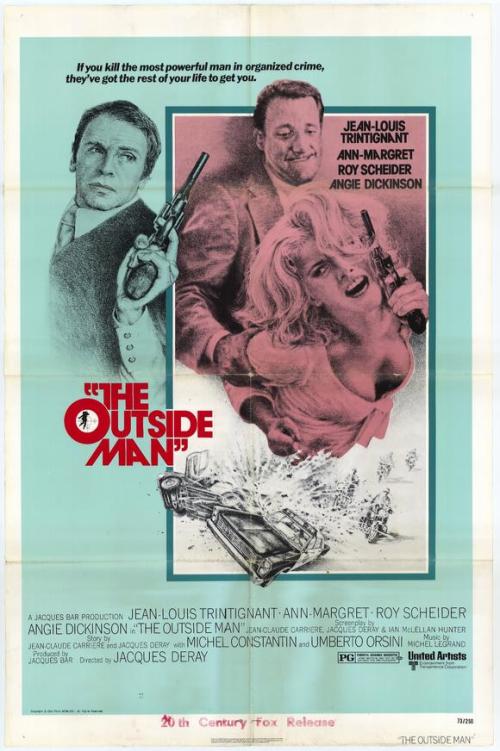
Lucien (Jean-Louise Trintignant) is a French hit man hired by an American family to assassinate a mob boss (Ted de Corsia) who’s living in Los Angeles. He’s able to pull off the job relatively easily, but then after it’s over he finds that he’s been targeted by another hit man (Roy Scheider) who is relentless and chases Lucien all over the city. Nancy (Ann-Margret) is the stripper who comes to Lucien’s aid by getting her boyfriend to create a passport for him so he can return to France, but just as he is about to board the plane he decides instead to stay in the states and turn-the-tables on the man who’s chasing him while finding who is behind the double-cross.

The film, which was done by a French production company, but filmed on-location in the states, is a lot of fun. The many offbeat touches and various stabs at dry humor keep it interesting and original while still remaining suspenseful and exciting. Some of the best moments include a hitchhiker (Edward Greenberg) who tries to convert Lucien to ‘Jesus’ as well the funeral, which eventually turns into a wild shootout amongst the various mob factions and has a corpse embalmed in a sitting position with a cigar in hand.

I also liked the way director Jacques Deray captures Los Angeles. Usually when a film is done in the City of Angels we always get shown shots of the Hollywood Walk of Fame, movie star homes, the beachfront and of course the great Hollywood sign, but here we see none of that. Instead the film captures the city’s less glamorous side including the rundown neighborhoods and even a shootout that takes place in abandoned buildings from an amusement park, which all helps to give the movie a unique vision as well as allowing the viewer to appreciate a side to the city that they may have not known even existed.

Trintignant is terrific and his perpetual look of confusion as he gets faced with one unexpected surprise after another is memorable and helps carry the film. Ann-Margret is solid as the streetwise, but kindly stripper and Scheider is quite good as the steely killer. Georgia Engel, who later became famous for playing Georgette on the ‘Mary Tyler Moore Show’ is funny as a spacy housewife who comes into contact with Lucien as he is trying to run from his killer. I especially liked the way that when a gun is pointed in her face she doesn’t scream or panic, but instead responds with silence and a deer-in-headlights look. This is also a great chance to see a young Jackie Earle Haley in his film debut as her precocious 10-year-old son.

The film’s only real downfall is its ending, which is too downbeat and ambiguous. It’s almost like they spent so much time coming up with creative concepts for the rest of it that by the time they came to the end they just plain rang out of ideas, which is a disappointment, but as a whole it’s still a gem.

My Rating: 7 out of 10

Released: January 18, 1973

Runtime: 1Hour 44Minutes

Rated PG

Director: Jacques Deray

Studio: United Artists

Available: DVD (MGM Limited Edition Collection), Amazon Instant Video

The Legend of Billie Jean (1985)

legend of billie jean 1

By Richard Winters

My Rating: 6 out of 10

4-Word Review: Teen becomes media sensation.

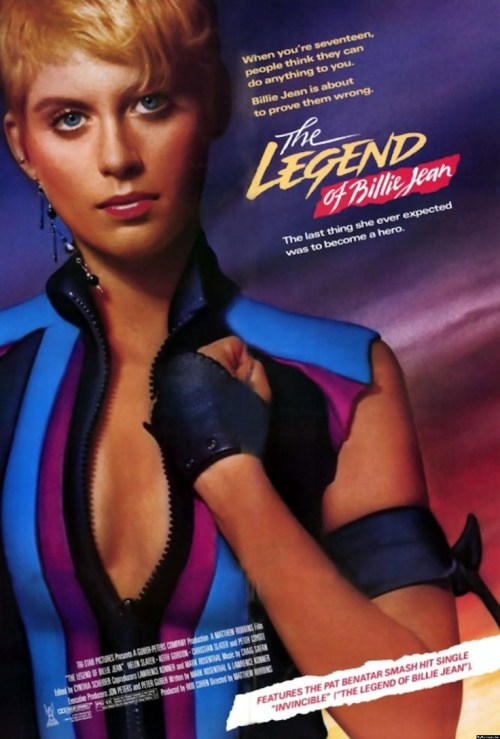
Billie Jean (Helen Slater) is a teen living in a small Texas town who one day decides to take a ride with her brother Binx (Christina Slater) on his motor scooter to a lake for a swim. Along the way they come into contact with some red neck boys who harass the two and damage the scooter. The police do nothing about it, so Billie Jean decides to approach Pyatt (Richard Bradford) who runs a convenience store and is the father to one of the boys. When she asks him for the money that it will cost to repair it he attempts to sexually assault her and Binx ends up shooting the man in the shoulder. This causes the two to go on the run and creates a statewide car chase, which makes Billie Jean a media hero to thousands of teens nationwide.

The movie is a real mixed bag with strong shifts in tone and no clear point-of-view. It starts out as a rather boring, run-of-the-mill teen bullying flick only to turn into a whimsical tale as the teens go out on the road and have one quirky adventure after another. It’s similar to Steven Spielberg’s The Sugarland Express as both lead characters are females and go on the run from the law in Texas while become inadvertent media darlings in the process. Spielberg’s movie is the better film, but this one delves more into the media angle and could’ve made some strong statements, but unfortunately pulls back and keeps things on too much of a lighthearted, innocuous level instead.

Slater is fantastic in the lead and it’s great seeing the boyish Slater in his film debut. I felt though that Martha Gehman and Yeardley Smith as two teen gals who tag along with the other two on their adventure added nothing and should’ve been cut out completely.

Bradford makes for a pretty good heavy, but I had major issues with Peter Coyote as the sheriff. For one thing when Billie Jean reports that her brother’s bike has been stolen he does not immediately pursue the case, but instead decides to ‘wait on it for a few days’, which seemed like he was not doing the job that the tax payers put him into position to do. Then when the chase expands across the rest of the state he somehow gets in charge of tracking her down, which is ridiculous. Once she crosses over the county line, or gets outside of his jurisdiction then it is up to the authorities from that region to handle it, or the state highway patrol and certainly not some two-bit sheriff from a no-name, hick town.

The scene where Billie Jean saves a boy from his abusive father while hundreds of teens look on is great, but everything else is so-so. The film would’ve worked better had it taken a consistent satirical tone from the beginning and not have been so compelled to conform itself to the more simplistic sensibilities of its targeted teen audience.

My Rating: 6 out of 10

Released: July 19, 1985

Runtime: 1Hour 36Minutes

Rated R

Director: Matthew Robbins

Studio: TriStar Pictures

Available: DVD, Blu-ray, Amazon Instant Video, YouTube
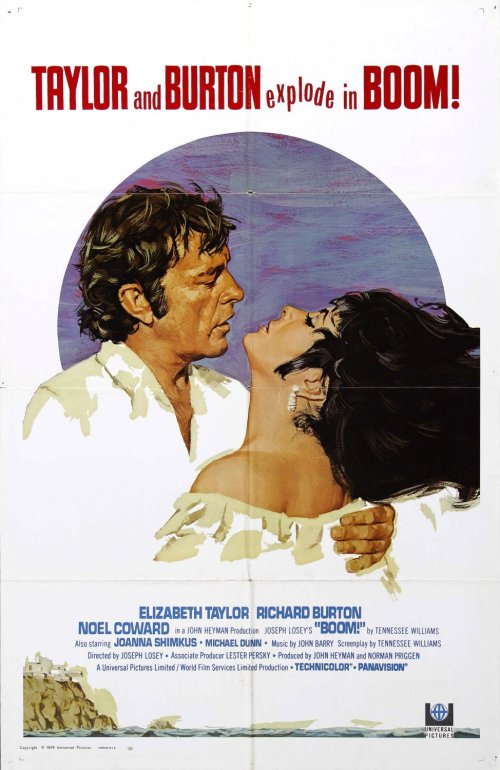
Boom! (1968)

boom

By Richard Winters

My Rating: 4 out of 10

4-Word Review: Bitchy lady rules island.

Flora ‘Sissy’ Goforth (Elizabeth Taylor) lives on a secluded island in a large mansion and surrounded by servants who cater to her every whim. She has alienated most everyone she has come into contact with and relies on her secretary Miss Black (Joanna Shimkus) to write down her autobiography that she dictates to her indiscriminately throughout the day. In comes Chris Flanders (Richard Burton) a nomadic poet living on the skids who infiltrates her palace and her oppressed sexual desires with his ruggedness and mystery. Will Sissy fall under his seductive spell, or does this mysterious stranger have even darker intentions?

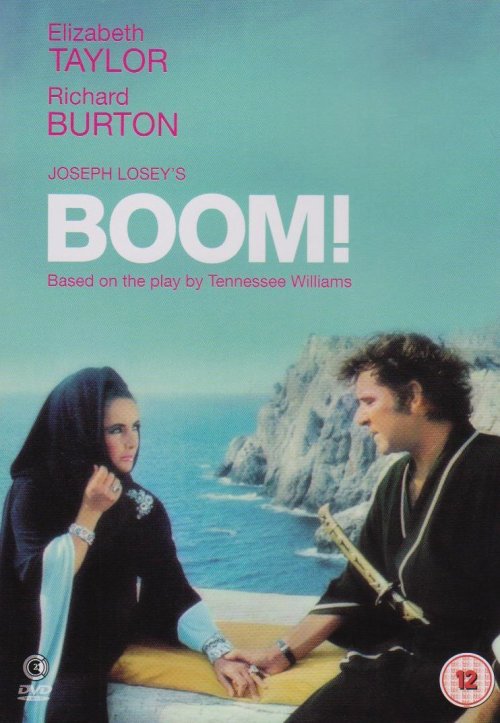
The film was directed by Joseph Losey who is one of the more inventive and groundbreaking directors who ever lived and sadly doesn’t get enough recognition. Unfortunately he was going through a bout of depression when he made this film, which caused him to abuse alcohol and seriously affected the film’s final result although it still manages to be a fascinating visual excursion nonetheless. The location shooting, which was done almost entirely on the island of Sardinia, is dazzling. The shots of the steep cliffs and crystal blue water, which are literally a part of Sissy’s backyard, are breathtaking. The modernistic mansion that she lives in is equally sumptuous particularly with its myriad collection of art paintings and wet bars that seem to pop-up every few feet in whatever room or patio the characters are in.

The acting is also outstanding as Taylor eats up the scenery with her over-the-top bitchiness and unexplained anxiety attacks, which she takes to an unprecedented campy level. The outrageous hat that she wears to her dinner date is quite possibly one of the most bizarre things ever to be put on top of a human head.

boom4

The normally commanding Burton unfortunately comes off as weak in comparison and overall looks uncomfortable in his role. The script originally called for a young man in his 20’s for the part and thus casting Burton, who was already 42 at the time, seemed misguided.

Dwarf actor Michael Dunn is excellent in support. His character utters only three words, but still makes his presence known with the way he shows complete control over his attack dogs while playing of all things Sissy’s bodyguard. Playwright Noel Coward appears in a fun bit as one of Sissy’s friends who she invites over for dinner. The friends secretly disdain each other in private, but put on a superficial friendship when together and apparently this is also how the two performers behaved with each other behind-the-scenes as well.

Unfortunately the script, which was written by Tennessee Williams and based on his play ‘The Milk Train Doesn’t Stop Here Anymore’ leaves much to be desired. The plot meanders on to an unsatisfying conclusion while rehashing old themes that had already been used in his earlier and better known works.

boom2

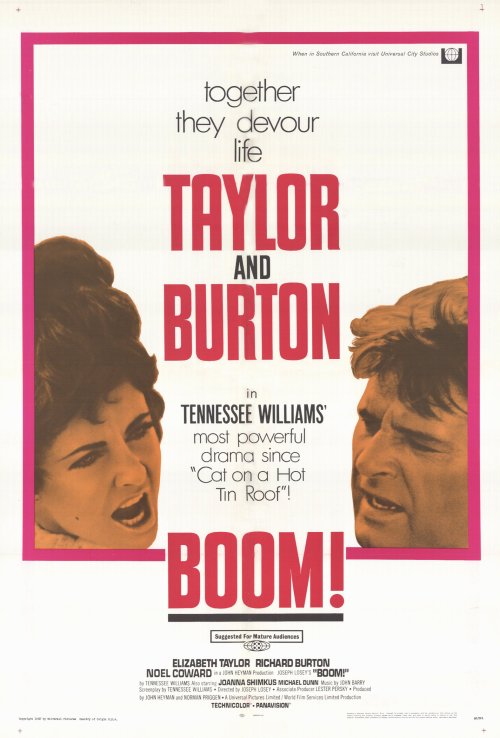
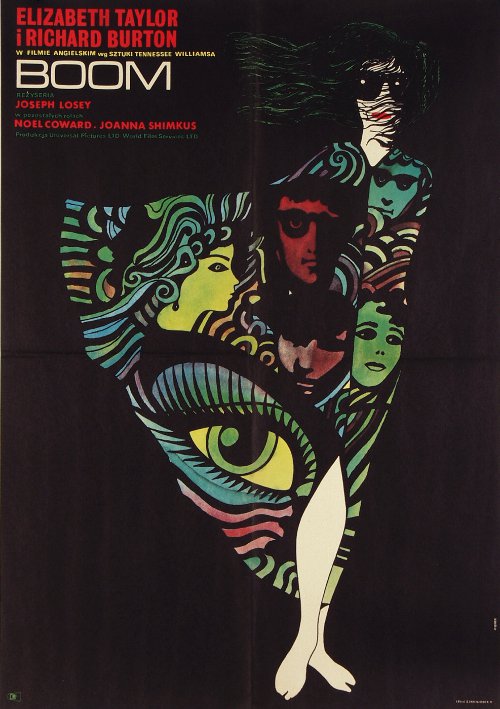
Polish Poster

My Rating: 4 out of 10

Released: May 26, 1968

Runtime: 1Hour 52Minutes

Rated PG

Director: Joseph Losey

Studio: Universal

Available: DVD (Region 2)

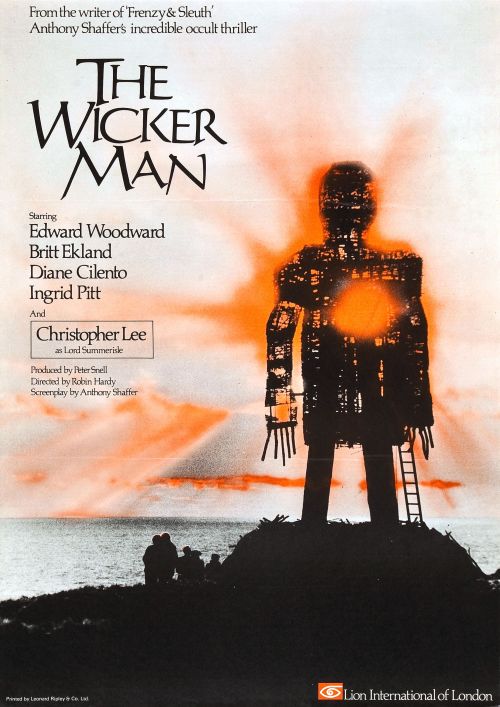
The Wicker Man (1973)

the wicker man 1

By Richard Winters

My Rating: 8 out of 10

4-Word Review: Pagans on an island.

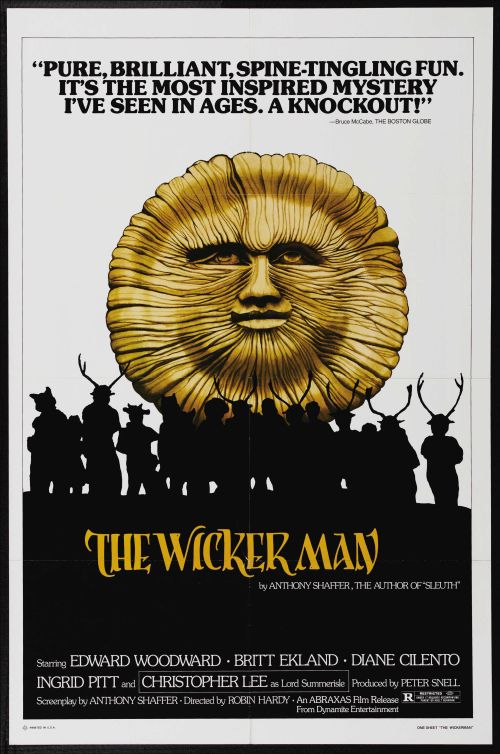
Police sergeant Howie (Edward Woodward) receives a letter stating that their daughter named Rowan Morrison (Gerry Cowper) has disappeared and it compels him to travel by plane to an obscure island village off the coast of Scotland to find her. Once he arrives he finds nothing but resistance from the people and everyone denying that she even exists. He also learns that the people practice a pagan type of religion and begins to suspect that the girl’s disappearance may have something to do with the upcoming harvest celebration and decides to infiltrate the proceedings in order to weed-out the culprits and find the girl.

The film, which was inspired by the 1967 novel ‘Ritual’ by David Pinner, manages to be quite intriguing despite being material better suited for a short story. The whole concept is woven around the big twist that occurs at the end and everything that occurs beforehand is simply a lead up to that, which could’ve been a stretch for feature length but director Robin Hardy’s tight editing and deft use of atmosphere keeps things permanently lodged in the creepy and compelling even though I did figure out at around the 60 minute mark where it ultimately was headed. The film’s original length is supposedly longer than the 1Hour 28Minute release that is currently available, but to be honest I felt this was a perfect runtime for this type of story and stretching it out further would’ve simply been diluting it.

Edward Woodward, who later became familiar to American audiences with his starring role in the TV-show ‘The Equalizer’, is terrific in the lead and I liked that fact that the character wasn’t a completely ‘nice guy’ either, but instead rigidly entrenched in his Christian religious beliefs and arrogantly convinced that his spirituality was superior to anyone else’s. Christopher Lee again makes a good nemesis even though his mod hair style looks a bit goofy. Britt Ekland is on hand as well singing a weird song and even doing a provocative dance although the nude scenes of her from the waist down were done by a body double.

the wicker man 2

The only issue that I had with Anthony Shaffer’s script is the fact that the sergeant must go back to the mainland to get more men from the force to help him search for the girl, which to me was a bit of a loophole because I would think he could’ve just gotten on a phone and called in for more backup without arduously having to travel back. The facts that no one else knows where he is seemed a little implausible as well as most people working on the force have a supervisor that they must report to and who is at least somewhat aware of what case they are working on and where they are traveling to do it.

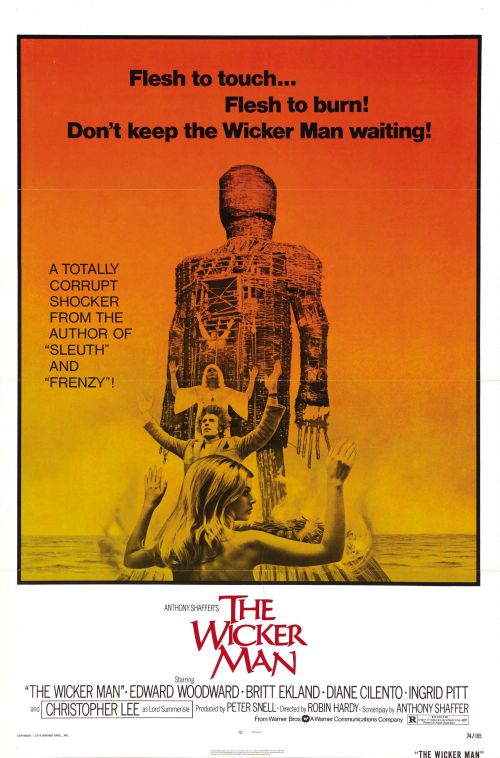
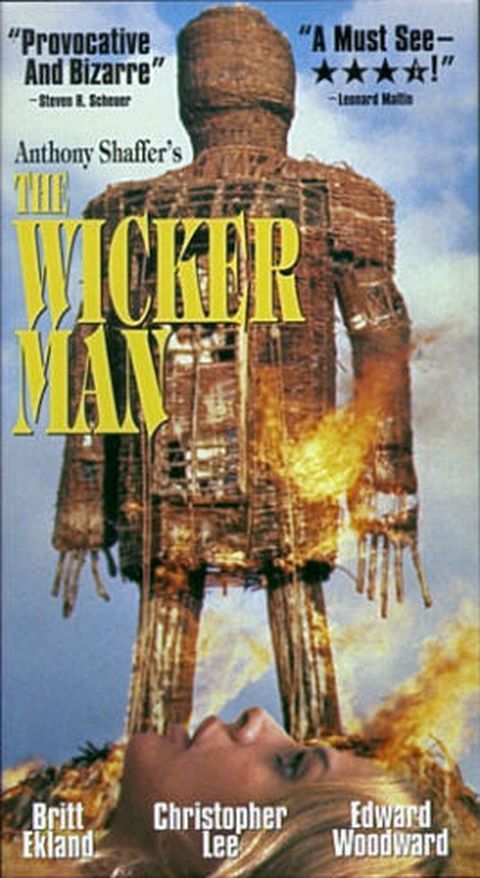
The ending though, which features an actual giant wicker man made of wood is an amazing site. When it gets set on fire with the victim and even some animals trapped inside of it is quite exciting and I liked how the point-of-view shifts between the people who view it from the ground as well as the victim seeing the people on the ground from inside the burning structure.

I remember seeing the 2006 remake starring Nicholas Cage in the theaters. While the details of it are vague I do recollect coming away from it finding grossly inferior in literally every way to this one and something that should be avoided at all costs.

the wicker man 3

the wicker man 4

My Rating: 8 out of 10

Released: December 10, 1973

Runtime: 1Hour 28Minutes

Rated R

Director: Robin Hardy

Studio: British Lion Film Corporation

Available: DVD, Blu-ray, Amazon Instant Video, YouTube
Pee Wee’s Big Adventure (1985)

pee wee big adventure

By Richard Winters

My Rating: 6 out of 10

4-Word Review: Searching for his bike.

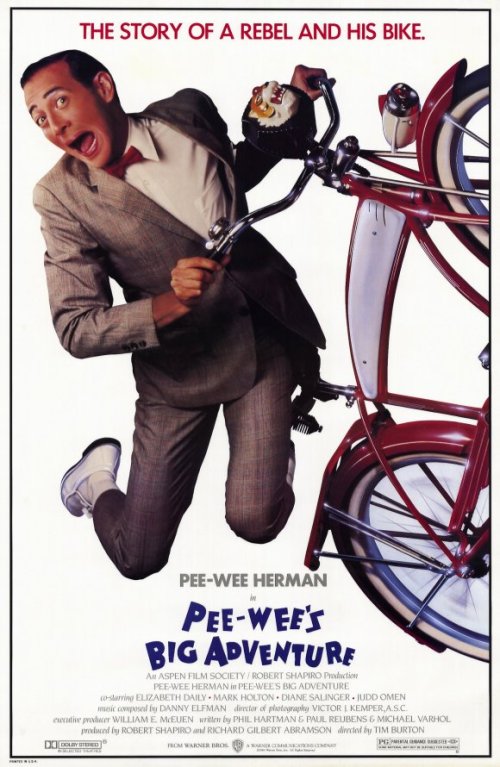
Due to the release this weekend of Pee Wee’s Big Holiday I thought it would be appropriate to go back and take a look at the ‘80s classic that started it all. Here we have Pee Wee (Paul Reubens) living with his small pet dog Speck inside a home full of colorful contraptions. His prized possession is his bicycle, which he takes great care of and carefully chains up every time he leaves it alone. However, a hateful bully named Francis (Mark Holton), who is from an affluent household and used to getting whatever he wants, decides that he wants Pee Wee’s bike for himself. When his monetary offer gets rejected he then hires a professional thief to steal it for him, which sends Pee Wee on a mad frenzy across the country to try and retrieve it.

The movie is an exercise in high camp that could’ve easily failed, but instead it succeeds mainly because it doesn’t put the eccentric main character into the real world, but instead pulls the viewer into the quirky 10-year-old mindset of the protagonist. Here we don’t deal with people who reject or mock him, but instead much like with all children he becomes the ‘king of his own domain’ where he is liked and accepted by most everyone he meets and in control of all situations while the harsher realities get ignored or overlooked completely.

The film also manages to accentuate Pee Wee’s odd personality with garishly colorful set-pieces and odd contraptions that almost become the film’s main attraction. Reubens plays the role in an engaging manner, but the character’s persona is one-dimensional and could border on getting annoying had it been the film’s sole avenue of humor, but fortunately director Tim Burton manages to give the film a complete vision by instilling a storyline and visual design that match the weirdness of its protagonist and makes the proceedings come off as fresh and inventive.

I also liked that it wasn’t geared completely towards children, but instead made to attract those of all ages with a taste for the offbeat and absurd. Going the kiddie flick route would’ve made it come off as formulaic and infantile, but instead by emphasizing the surreal it becomes intriguing and impossible to predict.

The loosely structured script, which was co-written by Reubens and actor Phil Hartman, manages to go a long way on what amounts to being pretty much just a one-joke premise, but it does eventually start to lose steam by the 60-minute mark only to recover in grand style at the end with a delightful chase through the backlot of the Warner Brothers studio. It is similar to the ending used in Blazing Saddles where the film breaks the fourth wall and becomes a movie-in-a-movie although I felt this one was funnier than the Mel Brooks version.

The film is sprinkled with a lot of cameo appearances as well with my favorite ones being Milton Berle as well as James Brolin playing Pee Wee in the Hollywood movie version and Morgan Fairchild as the Hollywoodized version of his girlfriend. I also got a kick out of Jason Hervey who is best known for playing Fred Savage’s older brother in ‘The Wonder Years’ and who does a very funny caricature of a spoiled child film star here.

The film is also known for making the ‘50s instrumental ‘Tequila’ by the Champs a very recognizable melody. In fact it is almost impossible to think of the Pee Wee character and not have that melody start to play in your head, or if you do hear the melody playing somewhere you can’t help but have the image of Pee Wee pop-up when you do. However, in the actual film the song ends up being played only briefly.

My Rating: 6 out of 10

Released: July 26, 1985

Runtime: 1Hour 31Minutes

Rated PG

Director: Tim Burton

Studio: Warner Brothers

Independence Day (1983)

independence day 2

By Richard Winters

My Rating: 3 out of 10

4-Word Review: Getting out of Texas.

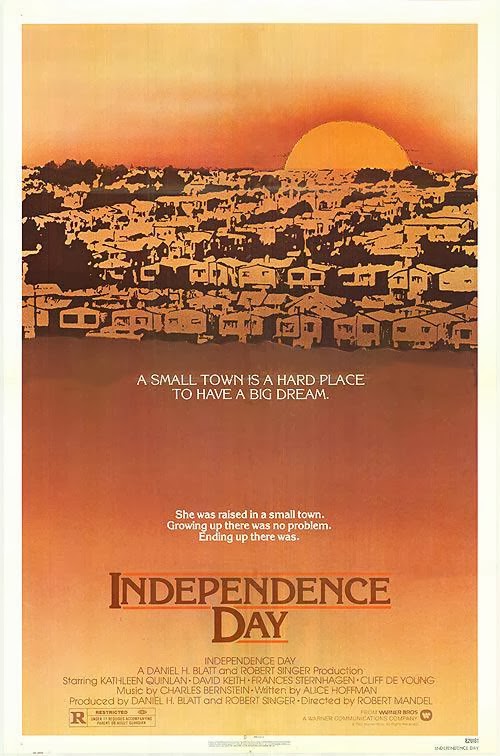
Mary Ann Taylor (Kathleen Quinlan) works as a waitress at her father’s café, but dreams of leaving her sleepy Texas town and going to school in California to study photography. Her mother (Frances Sternhagen) though is in declining health and her current boyfriend Jack (David Keith) wants her to stay which makes her decision to leave all the more difficult.

Shot on-location in Anson, Texas the film is a pleasant time-filler that fortunately doesn’t go overboard with Texas stereotypes, but it’s also rather bland and predictable. Feeling trapped in a small town is by no means a unique feeling and the film doesn’t go far enough with that theme and for the most part just touches the surface. Adding in a second storyline dealing with Jack’s sister (Dianne Weist) being abused by her husband (Cliff De Young) is a bit jarring and doesn’t really fit as there are long periods where Mary Ann is not seen at all and it would’ve made more sense had it been her sister that was being abused and not Jack’s and thus giving her more screen time.

The dramatic arcs are a bit too obvious as well and at times even bordering on being corny. For one thing the abuse issue gets introduced by having Jack visit his sister and asking her husband to borrow some money and then for no reason the husband begins throwing lit matches at his wife while right in front of Jack. Abusive people can certainly be cruel, but they’re not stupid and hurting a woman while her well-built brother sits right there is most assuredly going to get the husband into trouble, so why do it? Having Jack find out about the abuse by coming to the home one day unannounced and hearing shouting and maybe looking into a window and seeing the husband hit her would’ve made far more sense.

Having Mary Ann’s mother, who otherwise looks and acts quite healthy, suddenly fall over with fainting spells and suffering from some disease that never gets explained seemed too manufactured. Mary Ann’s arguments with Jack over whether she should go to school or stay in Texas is equally transparent especially since the two really didn’t have all that much in common and could’ve easily found other dating partners quite quickly.

Having one of the official’s from the photography school drive out to her rural home and personally offer her a full scholarship while telling her she was one of the greatest photographers he had even seen was pretty loopy too. All she did was take pictures of the town’s buildings and people’s faces, so what this guy managed to see that was so ‘brilliant’ and ‘special’ from that is hard to figure.

Quinlan and Wiest give great performances, but the movie is nothing more than lightweight drama that fails to distinguish itself from all the other B-dramas out there.

My Rating: 3 out of 10

Released: January 21, 1983

Runtime: 1Hour 50Minutes

Rated R

Director: Robert Mandel

Studio: Warner Brothers

Available: DVD (Warner Archive)