Category Archives: Mystery

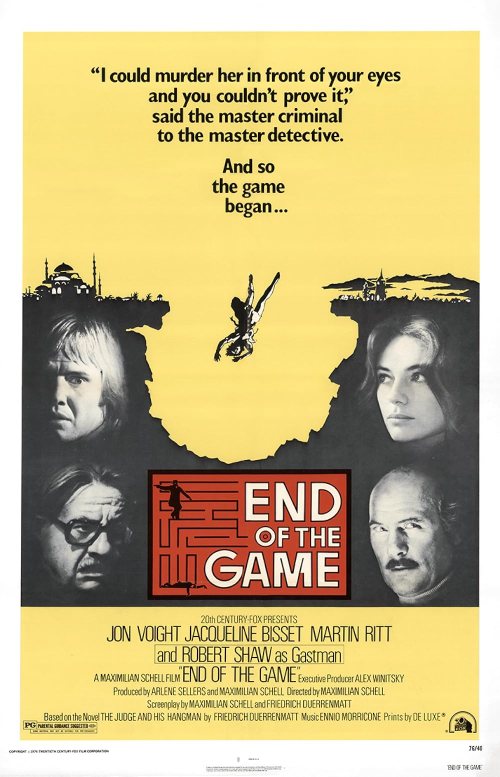
End of the Game (1975)

endofgame

By Richard Winters

My Rating: 7 out of 10

4-Word Review: Unable to prove crime.

Richard Gastman (Robert Shaw) makes a bet with his young friend Hans (Martin Ritt) that he can commit a crime in front of him, but Hans will be unable to prove who did it. Later Hans’ girlfriend (Rita Calderoni) plunges to her death from off of a bridge. Hans is convinced Gastman did it, but just like he predicted he cannot prove it. 30 years pass and Hans is now a police commissioner with only a few months to live due to suffering from stomach cancer. His Lieutenant Schmied (Donald Sutherland) is found shot to death inside his police vehicle. He’d been assigned by Hans to keep tabs on Gastman as Hans was still intent on making him pay for what he did to his girlfriend, but he again can’t prove that Gastman killed Schmied though he’s certain that he did. Walter (Jon Voight) gets assigned to the case, but Hans can’t be completely honest with him about the case, so instead he sets Walter up to witness firsthand the brutality of Gastman for himself.

The story is based on the 1950 novel ‘The Judge and the Hangman’ by Frederich Durrenmatt who also wrote the screenplay and has a very amusing cameo as a man who plays chess against himself and always loses. The novel was first adapted into a broadcast for German television in 1957 and then again in 1961 for British TV, and then it got adapted for a third time for Italian television and then a fourth as a TV-movie for French broadcast before finally making it’s way to the big screen with this version, which so far has been the last adaptation to date.

The film was directed by Academy Award winning actor Maximillian Schell who was unable to get along with either of his leading actors with Shaw accusing him of being a ‘clockwatcher’ and ‘pocket Hitler’ while Voight described him as being humorless and overly demanding. The film is well directed for the most part, but an unusual reliance on humor almost kills it. The story itself is certainly not meant to be funny, but Schell implements comedic moments particularly in the first half when they’re not needed and almost a distraction. This is particularly evident during Schmied’s funeral and earlier when Schmied’s body is found and another cop drives the corpse to the hospital with Donald Sutherland, in an unbilled bit, playing the dead man and his body twisting around in weird ways as the car goes down the curvy road, which is humorous, but unnecessary and doesn’t help propel the plot. Initially too the corpse is spotted by some pedestrians who stare at it through the car window and seem amused by it, which isn’t exactly a normal reaction people have when witnessing someone who has just died. Possibly this was meant to show the public’s distrust, or disdain for the police, but if that were the case it should’ve been explained and elaborated.

The casting is unusual as it features Ritt in the lead who’s better known as a director, but here ultimately shines and becomes the film’s only likable character though the way he behaves throughout still makes him seem sketchy like everyone else. Shaw, who complained that he never got paid the $50,000 that he was owed for doing this, is commanding as usual, but Voight who wears a shaggy bleached blonde look comes-off as creepy right away. Technically the viewer is expected to side with his character, at least upfront and consider him a ‘good guy’, but right away Voigt telegraphs it in a way that makes him seem ‘off’ and hence kind of ruins the stories eventual twists.

For those who like complex whodunits this might fit the bill. The plot certainly does constantly unravel in surprising ways and no one should be bored, but the characters are cold and unlikable. There’s no one to root for and therefore the viewer is not as keyed into the outcome as they would’ve had they been more emotionally invested. The editing is also quite choppy and there seems to be certain key elements that get left out, which most likely due to the fact that the original runtime was 106 minutes, but the DVD version, the only one publicly available at this time, runs a mere 92 minutes.

My Rating: 7 out of 10

Released: September 21, 1975

Runtime: 1 Hour 46 Minutes (Director’s Cut) 1 Hour 33 Minutes (DVD Version)

Rated R

Director: Maximillian Schell

Studio: 20th Century Fox

Available: DVD-R

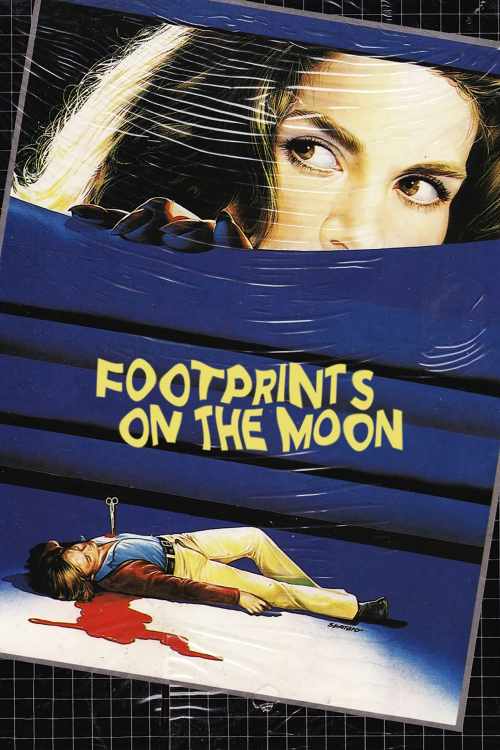
Footprints on the Moon (1975)

footprints5

By Richard Winters

My Rating: 4 out of 10

4-Word Review: Tormented by a nightmare.

Alice (Florinda Bolkan) is tormented by a constant dream involving an old movie she saw when she was younger that dealt with a man being left on the moon to die. She awakens one morning to find that she’s slept for over 2-days and when she arrives at her job she learns that she’s been fired for not showing up and not calling-in. She gets back to her apartment and spots a postcard revealing a hotel, which she vaguely remembers being at. She decides to travel there, which is off the Turkish coast, and meets people who say they’ve seen her before, but while wearing a wig and going by a different name.

The film’s chief asset is the directing by Luigi Bazzone, who had a brief 10-year career where he did 5 films and then inexplicably retired when he was only 46 and never to do another film after this one, which is a shame as he had many more years ahead of him and could’ve helmed a slew of interesting movies in the process. This one definitely relies on a good visual touch. The opening bit done on the moon has certainly a tacky quality, but is also captivating. It doesn’t exactly look authentic, but captured in a way that gives it a dream-like feel and makes it gripping. The island setting that Alice goes to, shot in Phaselis, has such a unique topography that it gives the whole thing a very outer worldly appeal and helps enhance the bizarre story elements.

Bolkan’s presence though does not help. She wears a perpetual scowl, outside of one moment when she smiles to greet a child, that makes her unappealing and hard to sympathize with. She also lost too much weight, reportedly 11 pounds by her own admission, making her look scrawny and like she could tip over with the slightest breeze. She already had a thin frame, so for her to lose anymore, makes her anorexic and not sexy particularly when she goes nude during a shower scene.

Her character is ghost-like and transparent. Some may say this is due to the twist, but for the viewer to get wrapped-up into the character’s quandary they need to see her as a multi-dimensional person. Instead we get someone with no apparent connections to the world around her. Having her go through the plot with some other friend beside her, which she could’ve fed-off of emotionally whenever she got upset, or confused would’ve helped tremendously. Trying to care about a person who’s not fleshed-out doesn’t work and I went through most of it feeling ambivalent about the protagonist’s fate.

Nicoletta Elmi, who plays a young girl that Alice meets while on the island, has far more appeal especially with her striking red hair and clear blue eye, and thus her scenes allow for some intrigue though her conversations with Alice seem to just be repeating themselves. Klaus Kinski is only on hand for a little while and never interacts with anyone making it seem like he’s in some other movie with no connection to this one. In fact his moments could’ve been cut, he only gets shown sporadically anyways, and the movie would not have been hurt by it.

The plot, which was based loosely on the novel ‘Las Huellas’ by Mario Fenelli, doesn’t have enough going on to hold the viewer’s attention. This is yet another example where had it been shortened it would’ve worked perfectly as an episode for the “Twilight Zone’, but here it labors along. It gives out a lot of tantalizing clues at the beginning, but the second act goes nowhere with not enough twists. The concept becomes highly strained with a character that doesn’t interact enough and the few conversations she has are bland and don’t allow the story to progress. The ‘surprise ending’ doesn’t make-up for the lulls and only leads to more questions than answers.

My Rating: 4 out of 10

Released: February 1, 1975

Runtime: 1 Hour 30 Minutes

Not Rated

Director: Luigi Bazzoni

Studio: Cineriz

Available: DVD-R, Amazon Video, Screambox

Private Eyes (1980)

privateeyes

By Richard Winters

My Rating: 3 out of 10

4-Word Review: Inept detectives investigate case.

Inspector Winship (Don Knotts) and Dr. Tart (Tim Conway) are two American detectives hired by Scotland Yard to investigate the murder of two people at a country estate in the 1920’s. Despite receiving a letter from one of the murdered victims asking them to investigate their murder the two prove to be quite inept. The various members of the mansion’s staff begin to turn-up dead one-by-one, which further deepens the mystery as a figure shrouded in a dark robe menaces the two as they investigate the case.

After the surprise box office success of The Prize Fighter, which became one of the most profitable films ever released by New World Pictures, screenwriter John Myhers, who had co-wrote that one, convinced Conway and Knotts to do another one. This one also did well earning a big profit, but for whatever reason it was the last of the Conway/Knotts comedies and they appeared together only once more in a brief cameo as two highway cops in Cannonball Run II

To some degree this is an improvement over their other one because here the entire cast is allowed to be funny and there’s none of the awkward, corny drama. Conway has a few good moments like when he stuffs his mouth full of apricots, or tries to cut a rope tied around Knotts’ hands with a sword that’s still connected to a knight’s armor. These two also get to reveal that they have a sex drive as they fight with each other over who gets to look through a tiny peephole to see the ravishing Mistress Phyillis, played by Trisha Noble, undress.

On the negative end a lot of the comedy falls flat. The opening animated bit, styled after the Inspector Clouseau Pink Panther films, is especially lame and should’ve been nixed. The running gag where the killer leaves notes where the last word never rhymes with the others is amusing for awhile, but gets overplayed. The stunts, pratfalls, and special effects are cheap and despite being filmed on-location at the Biltmore Estate in Asheville, North Carolina you really only get to see a few rooms of it making it seem like a waste.

Conway and Knotts can certainly be amusing at times, but they’ve played these types of characters for so long that they now have become predictable and boring. The Sherlock Holmes-styled parody has been done many, many times and this adds nothing new to the mix. It’s also hard to understand why if these guys are really this hopeless and everyone in the world seems to know it how they’d continue to find work and why Scotland Yard continues to give them employment and doesn’t just let them go. Inspector Clouseau was also very inept, but he always managed through irony and dumb luck to solve the case and come-out still looking like the ‘hero’ to the public, which only helped to bolster his career. These guys though don’t ever get anything right and are perpetually clueless, so why are they detectives to begin with?

A much better idea would’ve been to have placed the setting into the modern day especially since none of the humor, or pratfalls are contingent to the period. They could’ve played two guys who were out of work and saw an ad in the newspaper looking for amateur private eyes and they decide taking a stab at it as a ‘fresh start’. Then all of their bungling would make more sense and actually would’ve been funnier since the comedy would’ve had a more plausible setting.

Spoiler Alert!

Beyond just the bland comedy the case itself, particularly the final explanation, is illogical as it has one of the victims, Lord Morley, played by Fred Stuthman, coming back to life at the end as he essentially faked his own death. This though doesn’t make sense as we see a screaming newspaper headline at the beginning stating that two people were killed, or two bodies found when the car that Lord and Lady Morley were in drove into a lake, so if Lord Morley wasn’t one of the bodies then whose was it?

My Rating: 3 out of 10

Released: April 17, 1980

Runtime: 1 Hour 31 Minutes

Rated PG

Director: Lang Elliot

Studio: New World Pictures

Available: DVD, Blu-ray, Amazon Video

The Double McGuffin (1979)

double

By Richard Winters

My Rating: 4 out of 10

4-Word Review: Briefcase full of money.

Homer (Greg Hodges) is walking outside one day behind the boarding school that he attends where he comes upon a briefcase that’s full of a lot of money. He then runs to tell his friends, Specks (Dion Pride), Billy Ray (Jeff Nicholson), and Foster (Vincent Spano) about it, but when they return to the spot where Homer hide it it’s gone. They then see a man named Sharif Firat (Ernest Borgnine) walking about town carrying it. They track him to a nearby hotel where he’s staying and bug his room to find out that he has hired three gunmen (Lyle Alzado, Ed ‘Too Tall’ Jones, Rod Browning) to carry-out an assassination. The boys though don’t tell the local sheriff (George Kennedy) because they’ve played some practical jokes on him in the past and fear now he won’t believe them, so they go about investigating the case on their own with the help of Jody (Lisa Whelchel) who is a student journalist and good at taking pictures with a camera as well as Arthur (Michael Gerard) who’s an uptight nerdy kid, but a whiz with computers.

After the success of Benji, a film that Joe Camp not only directed, but also wrote, produced and distributed, made over $30 million from a paltry initial budget of $450,000 he became motivated to further direct more movies for a family audience. This one though is definitely intended for adolescences and may even shock some viewers with a few of the scenes as it’s not exactly as family-friendly as Camp’s other films. One of the biggest jaw-droppers is that it features nudity, or in this case a glimpse of Elke Sommar’s breasts that occurs right at the beginning. There’s also some shots of the boys bare behinds when they go skinny dipping as well as scenes inside their dorm rooms where they are seen reading Playboy and drinking, or at least harboring, Coors Beer despite being underaged. They also swear though nothing worse than ‘hell’, which are all things that kids at that age would most likely do, or partake in, but some parents may still not be pleased and fear that it might be a ‘bad influence’ for the real young kids to see.

The four leads, which consists of country singer Charley Pride’s son, are an odd looking bunch mainly because three of them look like they’re senior high school age hanging around with this small kid named Homer who could easily pass-off as being a fourth grader. Seemed hard to believe that he’d be housed in the same room as these older guys and worse yet be playing on the same football team as he’d most likely be injured badly and better suited for the Pee-Wee division. His acting though is more dynamic than the rest, including Spano who may have become the most famous of the bunch, but here doesn’t really have much to do, so that may have been the reason he got cast despite his puny size. I also really enjoyed Whelchel, who later became famous for playing the snotty Blair on the TV-show ‘The Facts of Life’. who is engaging and looking quite young, like about 13 though at the time of filming she was actually hitting 15. Gerard as the pensive and androgynist Arthur has a few fun moments too.

The twists are entertaining for awhile though having the briefcase constantly appearing and disappearing gets tiring. Initially it’s kind of creepy and intriguing, but the segment where the boys open it to find a severed hand and they run a few feet away in fright and then go back to have it no longer there makes it seem like it’s almost magical and not realistic. Homer’s ability to unlock anything simply by using a pocket knife gadget gets played-up too much. It’s okay when he uses it to open the briefcase though you’d think something used to hold a lot of money would have a much more sophisticated lock in place, but when he’s able to continue to pick any lock in virtually any door he wants is a bit much to the point you start to wonder why does anyone even bother putting locks on doors if any kid with a small knife can easily pick-it.

Spoiler Alert!

The film’s biggest downfall though is that not enough happens. The lack of action, especially for a film aimed at the younger set, is appalling. There’s only one chase, done on foot when Borgnine tries to catch-up with two of the boys, who you’d think could easily outrun him since he was 60 at the time and out-of-shape and also in broad daylight with plenty of pedestrians on the street who could’ve easily called-out for help, which makes this moment not very tense at all. The climactic sequence really fizzles as the shooters are apprehended inside their hotel room before the assassination even is attempted, which should’ve gotten played-out more. The concept had plenty of potential, but with so little that actually happens it’s quickly forgettable and hardly worth the effort to seek-out.

My Rating: 4 out of 10

Released: June 8, 1979

Runtime: 1 Hour 40 Minutes

Rated PG

Director: Joe Camp

Studio: Mulberry Square Productions

Available: DVD

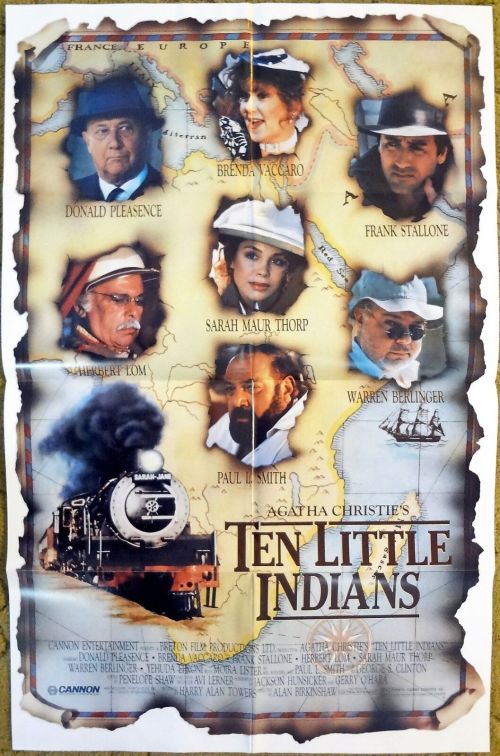
Ten Little Indians (1989)

tenlittle

By Richard Winters

My Rating: 3 out of 10

4-Word Review: Everybody is getting killed.

Ten strangers get together on an African safari. The group includes: A doctor (Yehuda Efroni), a judge (Donald Pleasance), a captain (Frank Stallone), an actress (Brenda Vaccaro), a General (Herbert Lom), a nanny (Sarah Maur Thorpe), a detective (Warren Berlinger), along with a man named Marston (Neil McCarthy), and a couple with the surname Rodgers (Paul L. Smith, Moira Lister). They’ve been invited by a man named Mr. Owen, but upon their arrival he’s nowhere to be found. Instead they hear his voice that’s been recorded onto a phonograph where he tells them that they’ve been invited because they’ve been accused of committing a crime years ago and gotten away with it, but he intends to put a stop to that by killing them off one-by-one. As each guest gets murdered one of the heads from the ten little Indians statues that sits in the middle of the dining room table goes missing.

The film has the distinction of being the third movie version of the story done by producer Harry Alan Towers as the first one was produced in the 60’s and the second, which also starred Lom, in the 70’s. The story itself is based on the Agatha Christie novel ‘And Then There Were None’ though the ending was changed to replicate the stage play, which was considered more upbeat. While in the novel and play the setting was an island here it’s the desert of South Africa, which I liked as it gives the proceedings a distinct atmosphere. However, there’s an unusual moment at the beginning where the natives help carry the guests’ luggage to the camp site, but then halfway there for no explicit reason they turn on them by clicking their tongues in unison and ultimately abandoning them, which is creepy, but there’s never an explanation for why they do this.

The landscape looks hot and dry though there’s no sweat glistening off the actor’s faces leading me to believe it was shot in the winter time and thus the complaints about the heat, which are casually mentioned are invalid. I did get a kick out of one of the tents, the main one, having an upright piano. Don’t know who in the world would want to painstakingly haul a piano into the desert sands, or essentially the middle of nowhere, but the appearance of it gave me a chuckle. I was also amused by the elevated lift, held together by a frayed rope, that each guest is forced to sit-in as it takes them many feet in the air of a wide gorge, in order for them to get to the campsite. The contraption looks flimsy and it’s rather unnerving seeing them get into it and ride it all the way down.

The acting is entertaining and made-up of many B-stars whose faces you’ll recognize though not necessarily their names. Vaccaro fares best as a bitchy, spoiled, Hollywood star whose career has gone on the decline. Lom is good as an aging man whose memories plays tricks on him, but Stallone, who’s the younger brother of Sylvester and could almost pass of as his twin, has little to add. Berlinger had gained a lot of weight to the point that he’s rounder than a beach ball, is adequate, but the normally reliable Pleasance appears elderly and lacking energy making his presence almost sad. Smith continues in the mold of the jail guard in Midnight Express, a part that made him famous, but his heavy breathing and lurking ways are not interesting and his acting one-note.

The mystery angle doesn’t get played-up too well as the guests get killed-off with a boring regularity making it at times seem almost like a low-grade slasher. The characters don’t respond to their stressful conundrum realistically. For instance one of the guests dies by drinking alcohol that was linked with cyanide, but the rest of them in the ensuing days go on eating and drinking even though you’d think they’d be nervous about ingesting anything for fear that whatever they put in their mouths could also poisoned. They also go back to their tents each night and peacefully sleep despite seeing the other guests get offed by a unseen killer, which would’ve made me, and most others too fearful to get any shut-eye and instead stay wide awake for fear that the killer would attack the minute anyone closed their eyes.

Spoiler Alert!

The tension is nil and there’s really no interest in finding out who the culprit is. In the book everyone dies and the authorities are only able to figure out what happened from a message that they find written by the judge. Here both Stallone and Thorp make it out alive though Thorp lets go of the rope that had been around her neck just as Stallone comes to her rescue making me believe that she would’ve hung herself before he would’ve been able to get her out of the noose. The rescue plane flies over them instead of landing making it unintentionally seem like they had been left stranded and not saved after all. Having everyone die except for Stallone, which is what I thought was going to happen, and then having him arrested for the murders he really didn’t commit would’ve been a much more ironic twist.

My Rating: 3 out of 10

Released: May 17, 1989

Runtime: 1 Hour 38 Minutes

Rated PG

Director: Alan Birkinshaw

Studio: Cannon Films

Available: Blu-ray, Tubi

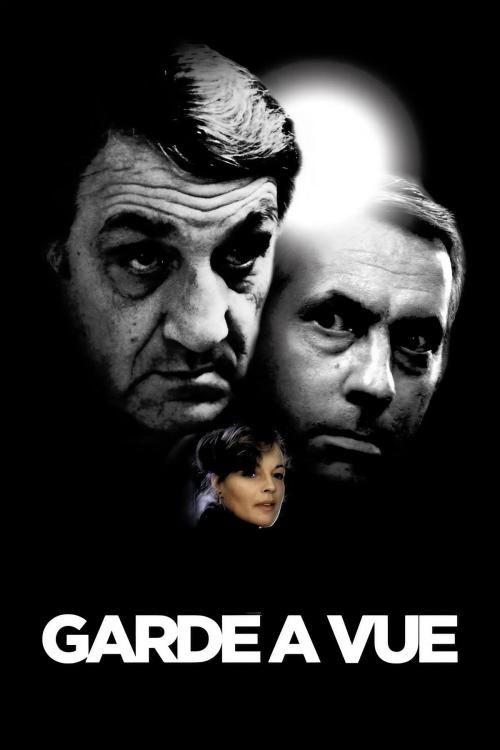
Garde A Vue (1981)

garde1

By Richard Winters

My Rating: 6 out of 10

4-Word Review: Interrogation of a lawyer.

Jerome (Michel Serrault), is a rich and powerful lawyer who is brought into a police station late one night during New Year’s Eve in order to be questioned about the rape and murder of two young girls. Antoine (Lino Ventura) is the lead investigator while Marcel (Guy Marchand) sits in the back and assists him during the interrogation. At first the conversation is light and civil, but as Antoine brings more circumstantial evidence to the forefront Jerome becomes nervous yet insists he’s still innocent. Marcel even implements some physical force against him, but Jerome’s stance never changes. In another room Antoine has a conversation with Jerome’s wife, Chantal (Romy Schneider), who confides to him that she secretly suspected Jerome to be in-love with an 8-year-old girl. Once Jerome gets confronted with this his story soon begins to change.

The film is based on the novel ‘Brainwash’ by John Wainwright and shot entirely in a studio soundstage and in chronological order. Why director Claude Miller would want to film a story that had very little if any cinematic elements to it is a mystery and if anything this might’ve fared better as a stage play. I was initially impressed with the police station room as you’d swear it was an authentic building and not just a prop built for the production. The drenching rain seen pouring down outside the windows is impressive as it gives the viewer a claustrophobic feel and I liked how eventually, when the clock hits midnight, you hear car horns honking outside to represent the New Year. However, every interrogation room I’ve seen, and I watch a lot of confession videos on Youtube from real-life cases, the rooms are very small and with no windows and the film would’ve been better served had it reflected a setting like this as it would’ve brought out better the psychological tension of the suspect and his feelings of the ‘walls closing in on him’, which with here you don’t get.

You can’t help but connect this movie with The Offencewhich starred Sean Connery and was directed by Sidney Lumet. That movie came out 8 years before this one, but had the exact same theme of a suspect being brought in over the murders of some school girls. That movie was well directed but did annoy me for the fact that in that one the suspect, played by Ian Bannen, did nothing, but give off this smirk the whole time.  This one has a much better back-and-forth between the investigator and suspect, which helps keep it compelling as more evidence gets introduced. However, in the Lumet film it had constant shots of this big bright light shining into the camera giving the viewer a point-of-view feeling of what someone in that situation would feel and thus helping hype the sense of urgency of wanting to get out of there, or say anything one needed to in order to stop the pressure, which this film doesn’t do very well. Both films though have cutaways showing the dead girl’s bodies from a distance in a secluded area, which are visually creepy, though again Lumet’s film scores a bit higher in that category too.

Spoiler Alert!

Ultimately the ending is a letdown and rather baffling as it features Jerome caving and admitting to a crime that he really didn’t commit due to the perceived police pressure. For one thing it’s hard to imagine that a seasoned lawyer would be that dumb and wouldn’t just ‘lawyer up’ himself and demand counsel of his own when interrogation got to be too much. I’ve seen a lot of true life interrogations where the pressure put on the suspect was far worse and those people refused to buckle, so seeing the character fall to pieces so relatively quickly especially when he was educated to know better makes the whole thing pathetic.

Didn’t quite get why the wife shoots herself at the end either. Supposedly it’s because she feels guilty about tabbing him for the murder when the real killer eventually gets exposed, but she did it out of honesty as she really felt he had a thing for young girls, so why should she feel tortured about saying something she truly believed? It would’ve been more surprising if she had pulled the gun on Jerome himself as he got into the car and shot him as she would feel, even if he hadn’t been arrested for this crime, that he still had some dark perversions and thus should be killed before he goes and carries out his fantasies on some other girl. Of course if she lied about him having a thing for an 8-year-old in order to get back at him over their contentious marriage then her guilt and suicide would’ve been more plausible, but I didn’t get that from watching it, so if that was ultimately her motivation then the filmmakers should’ve done a better job at intimating it.

This is the rare case where I’d say the Hollywood remake, which came out in 2000 as Under Suspicion and starred Gene Hackman and Morgan Freeman was much better done. It had a better visual balance that didn’t keep the whole thing stuck inside a police room and it better tied-up loose story ends that this one leaves open.

My Rating: 6 out of 10

Released: September 23, 1981

Runtime: 1 Hour 27 Minutes

Not Rated

Director: Claude Miller

Studio: AMLF

Available: DVD, Blu-ray

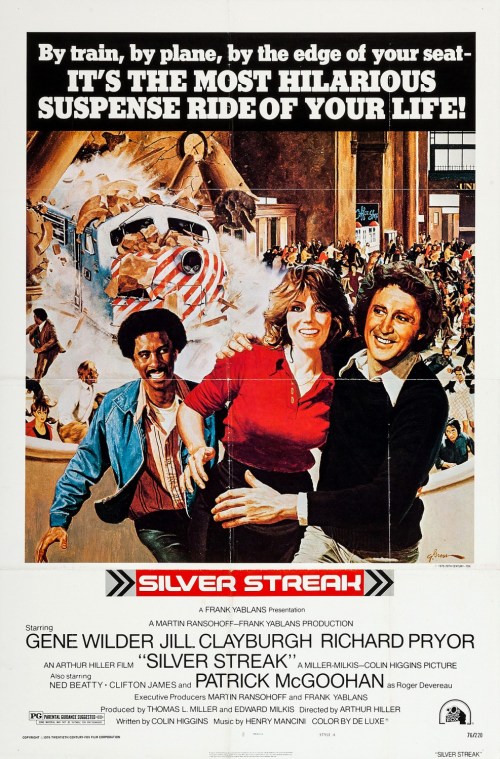
Silver Streak (1976)

silver

By Richard Winters

My Rating: 8 out of 10

4-Word Review: Murder on a train.

George (Gene Wilder) is a book editor taking a train ride from Los Angeles to Chicago. Along the way he gets into a relationship with Hilly (Jill Clayburgh) who is staying in the neighboring compartment. After a night of drinks they go back to her bed and begin making-out only for George to see a murdered body of a professor, whom Hilly works for as his secretary, get thrown off the train. Nobody else sees it except for him and everyone, including Hilly, believe it was a figment of his imagination, but George persists by doing the investigating himself. He goes to the compartment that the professor was staying in to see if he’s there, but instead he meets two men (Ray Walston, Richard Kiel) who throw him off the train. George then must find a way, in the middle of the empty desert, to get back on the train, so as to warn Hilly, whom he fears may be their next victim.

The script was written by Colin Higgins who up to that time was best known for having done Harold and Maude. He said he had always fantasized about meeting a beautiful blonde on a train and when it never panned-out in real-life he decided to write it into a story. Initially he was expecting an uphill battle to get it sold, but to his amazement it instead set-off a bidding war between Paramount and 20th Century Fox who both wanted to purchase the rights and it ended up selling for a then record $400,000. Originally Amtrak was going to be used as the setting for the Silver Streak, but the company became panicked that the film could cause bad publicity for them and ultimately refused to allow the studio to use any of their trains, so the film crew was forced to go north of the border and use the Canadian Rail System in its place while still pretending that it all takes place in the US when really all exteriors are Alberta, Canada and the skyline that gets seen in the distance that’s supposed to be Kansas City is really Calgary.

The reason the film works so well is that the comedy is on-target the whole way, but also manages to deftly blend it in with some nerve wracking action making the viewer let out belly laughs while also sitting-on-the-edge-of-their-seat at the same time. The pace is brisk with some amazing and very realistic stunt work that not only shows the train crashing through the wall of Chicago’s Central station, but also a few scenes with the character’s dueling it out on the roof of the locomotive as it’s going at high speeds. In fact the only slow spot in the entire movie is when Gene and Jilly make-out in the train car, which goes on too long and may make some people, including my conservative parents who watched the film with me when I first saw it on Showtime in 1982, as thinking this might be more a soft core porn flick than an action thriller and about ready to turn-if-off before it finally gets going with the plot.

Wilder, who was not Higgins’ first choice for the role as he intended it to be played by George Segal, is quite engaging and this was the first of several pairings that he did with Richard Pryor, who doesn’t appear until an hour in, but manages to take over quite nicely and makes a strong, memorable impression. Patrick McGoohan is sinister as the villain and one of the rare instances where in an otherwise comedy the bad guy isn’t funny and instead nasty, usually in comedies it’s considered mandatory that all the characters, even the bad guy, have some amusing moments, or lines, but McGoohan is just mean, which enhances the suspense element. Scatman Crothers, who initially seems to be playing an insignificant roles as the train’s porter, but in the end becomes quite crucial in getting everyone saved. Richard Kiel is good, though he speaks no dialogue, as one of McGoohan’s henchmen, in a role quite similar to the Jaws character that he played in two James Bond films that came out a year later, he even walks around with the same mangled up dental work in his mouth.

Spoiler Alert!

While the film works for the most part quite flawlessly I did find a few tidbits to quibble about. One is the scene where Gene accidentally bursts open the patrician door that divides his room from Jill’s who is busy dressing and doesn’t act startled when he suddenly breaks into her room, which I would think anyone, especially in a state of undress, would’ve responded with a scream and a look of shock, which would’ve made the segment funnier if she had.

Later on a police chief, played by Len Birman in a very bad impression of Mike Connors from ‘Mannix’, tells Gene that they know he’s innocent and have simply been putting-up manhunt posters with his picture on it for his own safety, so they could catch him and get him away from the evil McGoohan and his cronies who want to kill him. However, after he explains this he then hands Gene a gun and some bullets and tells him to come along with his men to help nab McGoohan who is still on the train, but how would this police chief know that Gene could handle a gun and was trained on how to shoot it, let alone even need him since his own men were well armed with rifles and could easily shoot down the bad guy themselves? There’s also another moment where the police chief shoots into a large crowd in an effort to hit McGoohan, which sends everyone into a panic and would be considered a major act of negligence for a cop to do.

Another scene has McGoohan explaining to Jill, Gene, and Richard about how he and his men never meant to really kill the professor, or at least not upfront, but when he did die that’s when they had to immediately ‘get’ a lookalike as an imposter to give everyone the idea that the professor was still alive. However, how exactly where they going to be able to find someone who looked so similar to the professor in such a quick, speedy way and then get him on the non-stop, fast-moving train?

The biggest exaggeration for me though is when Gene unhooks the back part of the train from the engine, while standing on a thin ledge and holding on for dear-life via a small metal rail and then able to successfully hop onto the train car that he had just decoupled from the other one. With them both going at high speeds I don’t think he’d be able to do it. Of course in the movie it gets done by a professional stunt man, who was able to time it, and rehearse it, to make it look easy, but in reality the average person would’ve either slipped, or missed grabbing the rail and thus fallen to the side of the tracks. This though could’ve actually been funny as we would then see Gene’s body roll on the ground and initially make it seem like he was hurt, or injured and then have him look up in aggravation and go: ‘Damn, I got thrown off the train for a fourth time!”

My Rating: 8 out of 10

Released: December 8, 1976

Runtime: 1 Hour 54 Minutes

Rated PG

Director: Arthur Hiller

Studio: 20th Century Fox

Available: DVD, Blu-ray, Amazon Video, YouTube

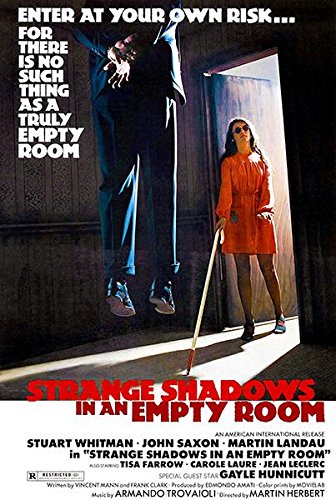
Strange Shadows in an Empty Room (1976)

strange

By Richard Winters

My Rating: 4 out of 10

4-Word Review: Cop’s sister dies mysteriously.

Tony (Stuart Whitman) is a tough-as-nails veteran cop who gets the shocking news that his younger sister Louise (Carole Laure) is found dead at a party she had attended. Initially he presumes it’s George (Martin Landau) a middle-aged doctor whom she’d been having an affair with and who gave her a injection at the party, but later he realizes there might be more to the story than he thought and begins investigating other avenues that leads him to a wild and completely unexpected conclusion.

The film was directed by Alberto De Martino who had done other Italian produced films that were rip-offs of better known Hollywood hits with this one clearly being inspired by Dirty Harry. It was filmed in Montreal and Ottawa, Canada, but done by an Italian film crew making it seem more like an overseas production with very little Canadian elements to it. Overall the quality looks cheap and the story has a lot of twists that don’t make a lot of sense, or are believable.

Two that stood out right away to me is during the party scene where Louise fakes illness simply to get George’s attention to make him come over there and away from his wife. Then when he tries to help her she lets him know it was all a gag. A few minutes later she passes out for real and he responds in a worried way, but you’d think since he got taken advantaged of just moments earlier he’d presume this was just another prank and not take it seriously. Also, at her funeral Tony begins to suspect there’s more to her death than what is known and requests an autopsy be done, but an autopsy is standard procedure that should be done after any unexplained death, especially since the victim was so young, and thus seems absurd that he should have to request it only as her body is already in the casket and ready to be buried.

Whitman, who was nearing 50, looks too old for this kind of thing and it’s hard to imagine he would, in reality, be able to physically keep up with these much younger suspects who force him to chase them around in airports, along crowded city sidewalks, and even in hospitals. He’s not the most ethical guy either as he has no problem drowning one of the men he’s questioning in a sink of water as a method of interrogation, which should normally get an officer in trouble. There’s also no glimpses of his personal life, so we never learn anything about him, or see any other dimension except for his rough cop persona. Most other cop movies, or at least the good ones, do have a few scenes dealing with the policeman’s private side, but here there’s none, which makes the character flat and uninteresting. Having the victim be his sister didn’t make too much sense since she was clearly quite a bit younger than him and making her his daughter would’ve been more believable and more devastating when he has to come to terms with her darker side.

The supporting characters are, just like with Whitman’s, poorly fleshed-out. It’s hard to be intrigued who the suspects are when they all seem alike and say and do nothing that’s interesting. The film does have one long car chase, which has some impressive stunts, but it seemed unnecessary as the man driving away from the cops really didn’t have much to hide and is essentially not interrogated once Whitman catches up to him, and he offers only a little piece to the puzzle, so why tear up the city streets and completely destroy two cars if he’s not in dire trouble? Better to have saved this for the finale with the bad guy who really is the culprit than just some minor player who isn’t seen, or heard of again.

I did enjoy the foot chase through the hospital that comes at the end and even goes through a maternity ward and ultimately onto the roof of the place. The story does feature many twists and I did appreciate the way it shows how policeman can make the wrong guesses on who they think is guilty and go on many long tangents that don’t lead anywhere before they realize their mistake. However, more effort should’ve been made to create unique characters as the ones provided here are wooden and banal.

Alternate Title: Blazing Magnum

My Rating: 4 out of 10

Released: March 9, 1976

Runtime: 1 Hour 39 Minutes

Rated R

Director: Alberto De Martino

Studio: Fida

Available: DVD, Blu-ray, Amazon Video, YouTube

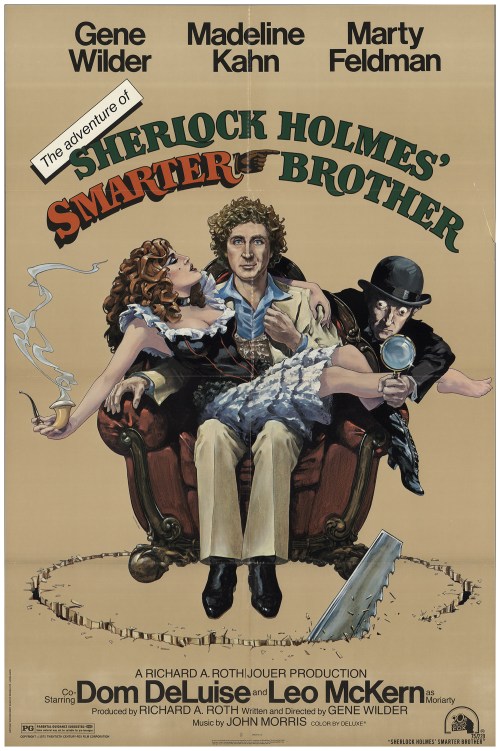
The Adventure of Sherlock Holmes’ Smarter Brother (1975)

sherlock

By Richard Winters

My Rating: 6 out of 10

4-Word Review: Sibling solves the case.

Gene Wilder plays Sigerson Holmes, the jealous younger brother of Sherlock, who is upset that his sibling is so famous for solving crimes while he sits in obscurity having not seen as much success though he feels he’s just as smart if not smarter. One day Sigerson gets a case that his brother doesn’t want to get involved in due to him desiring to lay low for awhile. It involves Jenny Hill (Madeline Kahn) who’s a beautiful music hall dancer who is being blackmailed by an opera singer named Eduardo (Dom DeLuise) over a lewd letter she sent him years ago. However, the document proves to be much more than just a letter and is in fact an important paper that foreign powers will pay high price to get their hands on. Eduardo agrees to sell it to the evil Professor Moriarty (Leo McKern), but will only hand it over to him during one of his operas, which Sigerson and his loyal partner Orville (Marty Feldman) plan to attend in order to intercept the paper before it gets into the wrong hands.

Gene Wilder was approached by producer Richard Roth to do a parody of Sherlock Holmes, but Wilder didn’t like the idea of poking fun of what he felt was an iconic character. Roth told him to think about it and then approached him a week later. By this point Wilder said he had come up with a better idea instead of it being about Sherlock it would focus on his jealous brother Sigerson. Roth found the premise intriguing and suggested Wilder begin writing the screenplay which he did while working on Young Frankenstein. Once completed he asked his friend Mel Brooks to direct, but Brooks declined saying he didn’t like working on projects that were not his own idea, so Wilder took the reins himself calling it a ‘terrifying commitment’.

While the movie has some good moments the Sigerson character is not interesting. For one thing he’s poorly defined. One minute he’s cunning and sharp and then the next he proves dimwitted and clumsy almost becoming another Inspector Clouseu. The comedy should feed off the character, but with it unclear whether he’s brilliant or buffoon it never catches its stride and for the most part the scenes with him in it are boring and the audience doesn’t care if he solves the case nor feel that there’s any redemption if he does. He’s also genuinely unlikable particularly with the way he snaps at Jenny Hill making you almost want to despise the guy and hope he doesn’t succeed. Also, if he really is Sherlock’s brother then I felt there needed to be some scenes with them together and the interplay between the two could’ve been amusing if done right, but this never happens.

Wilder directs the film the way most actors turning director do by having the scenes more extended and allowing the actors to drive the pace and momentum versus the editing. With a so-called ‘zany’ comedy like this that doesn’t work and there’s several segments that go on too long until it becomes dull and looking a bit amateurish. The biggest example of this is when Jenny arrives a Sigerson’s place to tell him about the letter. Their interplay doesn’t go anywhere and ultimately in order to get out of it the characters, for some unexplained reason, break-out into song and dance making it seem like its a musical, which it isn’t, but either way it’s dumb and not funny. During Jenny’s music hall show, which Sigerson and Orville attend, she sings a long song there too, which wasn’t needed and saps the comic energy.

There are though some offbeat moments much of which comes from McKern a usually serious actor who shines in his campy part and really plays it up to the point that he becomes the highlight. The part where he goes to a fortune telling machine, that he has inside his residence, is inspired and his visit with Eduardo in which the two strangely fondle each other and even go to bed together that gives off weird homoerotic vibes is good too in a sort of bizarre ‘what am I looking at’ type of way.

The best part though is when a giant saw blade cuts off the back of Wilder’s and Feldman’s trousers causing their bare behinds to be exposed. They then go to a formal dance party and shock everyone who sees their asses with them still not aware that they’re showing. What’s so interesting about this part is that they both have really good looking butts especially Feldman. You’d think with his freaking looking face that his rear wouldn’t be so hot either, but it amazingly is, so in keeping with our current male ass scorecard we still have Dabney Coleman, who bears his behind in Modern Problemscoming in first and Tim Matheson’s in Impulsebeing a close second and then Wilder and Feldman tying for third place.

My Rating: 6 out of 10

Released: December 14, 1975

Runtime: 1 Hour 31 Minutes

Rated PG

Director: Gene Wilder

Studio: 20th Century Fox

Available: DVD, Blu-ray

Who can Kill a Child? (1976)

who3

By Richard Winters

My Rating: 6 out of 10

4-Word Review: Children kill the adults.

Tom (Lewis Fiander) and Evelyn (Prunella Ransome), who is pregnant, travel to an island off the coast of Spain in order to find some peace and quiet while on vacation. Once they arrive they find the place conspicuously devoid of any adults with many of the shops and bars looking like they’ve been abandoned. The only people around are children who behave strangely and will not talk to Tom, or Evelyn even when spoken to directly. They then come upon an adult survivor named Padre (Antonio Iranzo) who describes to them how the night before the children suddenly went crazy and began killing all the adults on the island without any provocation. Can Tom and Evelyn escape, or will they become yet another victim?

While there’s been other movies detailing children, or even groups of kids, who murder the adults around them this one is considered the granddaddy of all of them and, though not ever verified, the possible inspiration to Stephen King’s Children of the Corn. The film’s creepiness comes not so much with scares, as there’s very little of that, but more through its quiet atmosphere and isolation that grows increasingly more ominous as it goes. Violence-wise it’s scarce with only the minimum of gore though the sequence done over the opening credits, which has grisly real-life footage of victims of the Holocaust as well as both the Korean and Vietnam Wars is not for the squeamish and may be too explicit and grim for some to sit through.

The script was written in only a matter of 4 short days and it shows with character motivations that aren’t particularly well thought out. For instance I didn’t understand why Tom wouldn’t tell Evelyn about what he saw, in regards to the child beating up and eventually killing an old man, and wanted to somehow play down and even lie about what was going on. This is a pregnant woman who has a right to know about the dangers lurking about. Shielding her from the horrifying realities isn’t going to help her be alert and put up her defenses and if anything just make her more vulnerable to be taken advantage of by the kids. What kind of husband lies to his wife about such urgent matters? Does he think because she’s female she won’t be ‘strong enough’ to handle the truth? If so it makes him sexist and not particularly likable because of it.

Tom also is too slow to respond to things. Even after witnessing first hand the children’s atrocities he doesn’t immediately try to arm himself, get off the island, or board him and his wife off in some sort of safe room with a fortified door. Instead they remain pretty much out in the open in an abandoned hotel with both the entrances and exits wide open for anyone to come into. At one point he even gives his wife a sedative and tells her to take a nap inside one of the hotel rooms while leaving the door open as he goes downstairs to speak to the male survivor, but how does he know a kid won’t sneak into the room while he’s gone?

It’s strange too how the children kill a Dutch woman and even strip off her clothes, but when Tom walks in they all scurry away. If they’ve already killed a vast number of adults why would they fear Tom when he comes in and instead not just attack him too? For that matter why does Tom feel so emboldened to walk in on these kids to begin with? He’s seen what terrible things they can do, so why does he risk exposing himself to them? These clearly aren’t normal kids, so he should remain at a safe distance and view what they’re doing from a hiding spot.

While there’s creepy moments and imagery it all mainly comes during the third act and some more scares and action earlier could’ve helped. The special effects aren’t too great either with the shot of the bloodied old man, whose supposedly just been killed, clearly still breathing as his chest heaves up and down, though Tom carries him away like he’s now nothing more than a corpse. Having Padre describe the violent attacks of the children onto the adults from the previous night was disappointing as this should’ve been played out visually, even if through flashback, as it would be much scarier to see this instead of just being told about it.

Spoiler Alert!

The ending has its fair share of suspenseful moments, but again more logic loopholes. When Tom and Prunella are trapped in a room behind a wooden door a small child crawls through the window space and tries to shoot at them, but Tom manages to hit the kid with a bullet first with a rifle he’s found. The other kids then quit trying to break the door down the couple are in once they hear the shot and all go filing away. Tom says this is because none of the other adults responded with aggression and violence towards them like he did. Once they realized, by hearing the gunshot, that Tom meant business they all backed off knowing that he might kill them as well. However, the kids could not see through the door, the tiny window on it was too high up for them to look through, so for all they knew the gunshot was the sound of the small kid shooting the couple with his gun and therefore they should’ve continued the attack and not immediately stopped.

The children are also able to somehow brainwash their peers into doing their evil bidding by simply looking into their eyes, which somehow puts them under a spell. They even use this power to get the fetus inside Evelyn’s womb to attack her, but where do they get this power from? What kind of entity is behind all of this? Nothing gets answered, which leaves too many questions open and thus not as effective as it could’ve been.

My Rating: 6 out of 10

Released: April 26, 1976

Runtime: 1 Hour 53 Minutes

Rated R

Director: Narciso Ibanez Serrador

Studio: Penta Films

Available: DVD (Region 0), Blu-ray (Region B/2)