Category Archives: Mystery

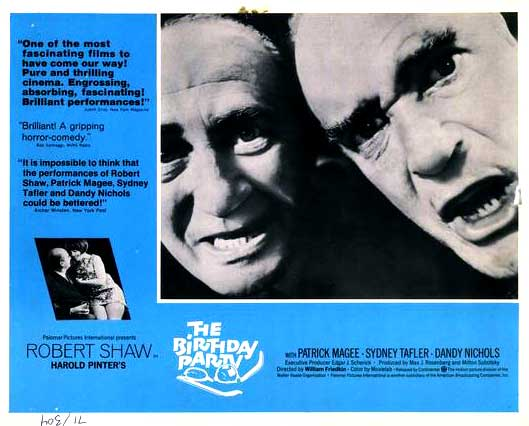
The Birthday Party (1968)

the birthday party 3

By Richard Winters

My Rating: 8 out of 10

4-Word Review: Tear up the newspaper.

Since tomorrow will be my birthday I wanted to come up with a film that had birthdays as its theme and found this bizarre but fascinating obscurity. It is the story based on the play by Harold Pinter of Stanley Webber (Robert Shaw) a mysterious and private man who takes up lodging in a rundown British seaside house. He rents an upstairs room from Mr. and Mrs. Bowles (Moultrie Kelsall, Dandy Nichols) who are quite odd themselves. One day two men dressed in black suits (Patrick Magee, Sydney Tafler) come to pay Stanley a visit. They know something about Stanley’s past and their presence frightens him to the extent that it causes him to have a nervous breakdown.

On the surface this film shouldn’t work. There is an excessive amount of talking with dialogue that doesn’t say much and at times seems absurd. The set is drab and dirty with the camera seemingly locked down inside of it. There is never any explanation about Stanley’s past or what he is running from nor who the men are or what they know about him. The ending is elusive and the viewer will go away feeling more confused than they did at the start.

However, it is these ingredients that make the film so thoroughly intriguing. The seemingly banal dialogue is simply a façade for underlying thoughts and feelings. What Stanley is trying to run from is unimportant because it is really not about him at all and is instead more about ourselves, human nature and the quandary of our existence. It’s an examination of people’s futile attempts at trying to escape from who they are only to have society and life catch up with them. The set could be a metaphor for the inside of Stanley’s head. The grimy and decayed place symbolizes his decayed soul and the men in black suits are his conscience coming to haunt him.

Once you adjust to the eccentric narrative it then becomes a fantastic film for observing subtitles and nuance. Director William Friedkin shows a keenness for detail not only visually, but with the sound as well. The way the Magee character tears up a newspaper and the sound used for it could actually unnerve some viewers. Stanley’s meltdown scene is very unique and overall the direction is superb for such difficult material.

This movie was years ahead of its time, but for some it may be off-putting. However, it should be enjoyed by those who crave the avant-garde. It is also a rare chance to the see the normally strong-willed Shaw playing a very weak and vulnerable character. Nichols is also a stand-out playing an Edith Bunker type with a perverse streak lying just beneath the surface.
the birthday party 1

My Rating: 8 out of 10

Released: December 9, 1968

Runtime: 2Hours 3Minutes

Rated G

Director: William Friedkin

Studio: Palomar Pictures International

Available: VHS, DVD (Region 2)

Night Watch (1973)

night watch 2

By Richard Winters

My Rating: 3 out of 10

4-Word Review: Murder in the window.

Ellen Wheeler (Elizabeth Taylor) is an emotionally unstable woman recovering from a nervous breakdown. Her first husband died in a car crash along with his young lady lover. Now her second husband John (Laurence Harvey) is fooling around with Ellen’s best friend Sara (Billie Whitelaw). One night Ellen witnesses a murder at the abandoned house next door, but because of Ellen’s past mental state no one believes her. Even the police doubt her story, which starts to send her over-the-edge.

I saw this play about a year ago with a group of friends at a local church. It was written by Lucille Fletcher best known for having done Sorry Wrong Number, which was later turned into a classic film starring Barbra Stanwyck. Although the play started out slowly the twist ending was impressive and something no one in the audience had predicted, but what I liked even better was that when you went back and thought about it, it made perfect sense. I thought at the time that it would make a great movie and was interested in seeing what this film did with it. I felt that there was no way they could screw up such a great story, but somehow they managed to do it.

Director Brian G. Hutton adds a lot of elements to make it more cinematic that should have helped it, but it really doesn’t. I liked the flashback sequences showing the car crash of the first husband as well as Ellen visiting the hospital and identifying the bodies. These segments have a good nightmarish visual quality to them, but Hutton goes back to it too often and eventually wears it out. I also liked that the film shows the police inspecting the inside of the abandoned home, which in the play you never see, but I felt they could have done a lot more to make the place seem more distinct and creepy. There is also a skirmish between two people inside the place at the end that you can hear, but not see because it is too dark and shadowy, which was annoying. The music is effectively creepy, but it also has a ringing quality that quickly becomes irritating and gets way over-played.

This was just one of the many misfires that Taylor did during the 70’s that helped extinguish her otherwise illustrious career long before it should’ve. This one fares slightly better than the others, but not by much. Her affected British accent could seem annoying to some and sounds kind of like the put-on one that Madonna sometimes does although for the record Taylor’s is better than hers. Liz’s emotionalism is a bit too theatrical and may come off as unintentionally funny to certain viewers although seeing her go completely nutty is impressive and fun.

Harvey is all wrong as the husband. His cold, detached presence can work in certain roles, but definitely not in this one. In the play that I saw the actor cast in this part looked more middle-aged with a spare tire stomach, balding head, and graying sideburns, which is what I felt the role called for. This is a character that is overburdened with a stressful job and unstable wife and yet Harvey shows none of this. His slick black hair and turtleneck shirts, which were fashionable at the time, make him look like someone still going out to the trendy nightclubs to pick up young chicks… or guys.

Whitelaw is one of the best British character actresses of all-time, but her talents are wasted with a part that doesn’t allow her to show any range. Her blonde hairdo is nice, but Taylor’s histrionics dominate the proceedings and unceremoniously push Whitelaw into the background.

The play had a lot of humor especially with the Mr. Appleby character played here by actor Robert Lange. Unfortunately the movie turns it into a serious drama making it seem more like a soap opera instead of a mystery. I came away from this feeling that the live production that I had seen was far more entertaining and intriguing. I would suggest to viewers to skip this film and wait for a chance to see it done as a play as the movie does not do the story justice.

night watch 1

My Rating: 3 out of 10

Released: August 9, 1973

Runtime: 1Hour 39Minutes

Rated PG

Director: Brian G. Hutton

Studio: AVCO Embassy Pictures

Available: DVD (Warner Archive), Amazon Instant Video

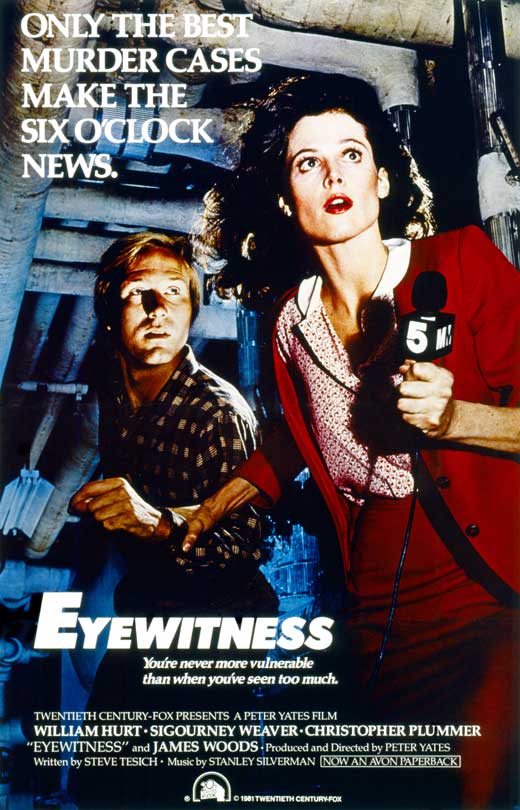
Eyewitness (1981)

eyewitness

By Richard Winters

My Rating: 4 out of 10

4-Word Review: Janitor loves news reporter.

Daryl (William Hurt) is a nighttime janitor at a large Manhattan office building. He spends his otherwise lonely existence obsessing over a local news reporter Tony Sokolow (Sigourney Weaver) and records every news broadcast she is in and watches them each night when he gets home. Then a murder occurs in his office building and Tony covers it for her program. Daryl tries to use his inside knowledge to get closer to Tony, but is reluctant to tell her all the information he knows since he fears that it was his friend Aldo (James Woods) who committed the crime.

Hurt, who usually plays the intellectual type, does well here in the low-key role. Weaver is also excellent doing what she does best which is playing a tenacious no-nonsense woman who can take care of herself. My favorite part with her is when she is accosted by a couple of men with guns, but doesn’t scream, keeps her composure, and manages to get away.

The romantic angle is the film’s strong point. Tony’s on-camera interview with Daryl when she tries to get more information out of him, but he instead gushes about his undying love for her is funny. It is refreshing that when Daryl tells Tony about how he obsesses over her she doesn’t freak out and consider him a stalker, but instead is charmed by it. The two use each other for their own purposes, but the viewer is giving the impression that these are genuinely nice people who just have very contrasting personalities and approaches, which is what makes the budding relationship interesting. However, having them go to bed together and confirm their affections for each other seemed anti-climactic as it was more intriguing wondering if Tony really was starting to have feelings for Daryl, or just using him to get information and the film should have stayed at this level until the very end.

The mystery portion gets lost in the shuffle. The film is slow with very little tension. There are a few good action moments, but there needed to be more. The scene where Daryl almost gets crushed in a trash compactor had definite potential, but needed to be played-out longer. The part where he and Tony are attacked by a dog is very intense, but the climatic sequence where Daryl is chased by the killer through some horse stalls is certainly slick and well-shot, but it comes too late and I had already become bored and detached with it. The identity of the killer was a definite surprise, but it is also a bit preposterous and a little too convenient in the way it somehow manages to tie all the characters into it especially Tony.

Director Peter Yates does some excellent on-location shooting of New York City especially with the crowded streets and neighborhoods as well as Central Park, but the musical score is sparse and lacking. There is a pleasing jazzy score near the beginning that has a nice easy going beat to it, but then outside of a few tense moments there is nothing. This creates a film that is too quiet. Adding an urgent score could’ve helped make it more compelling, or at the very least given it more energy and personality.

There are a lot of familiar faces in supporting roles, but the majority of them are wasted. Morgan Freeman and Steven Hill as the police investigators who banter endlessly
with each other are dull and useless. Kenneth McMillan as Daryl’s handicapped father is dynamic, but pointless to the story as a whole. Christopher Plummer is always reliable, but he has done better. James Woods is good because he is a master at playing unhinged characters and I liked the casting of Irene Worth as Tony’s mother simply because she looked almost exactly like what Sigourney would end up looking when she reaches that age. This is also a great chance to see Pamela Reed in an early role as Daryl’s fiancée.

The film ends up biting off more than it can chew and the idea of mixing a cutesy romance with a murder mystery doesn’t gel and leaves a sterile effect in both areas.

My Rating: 4 out of 10

Released: February 13, 1981

Runtime: 1Hour 43Minutes

Rated R

Director: Peter Yates

Studio: 20th Century Fox

Available: VHS, DVD, Netflix streaming

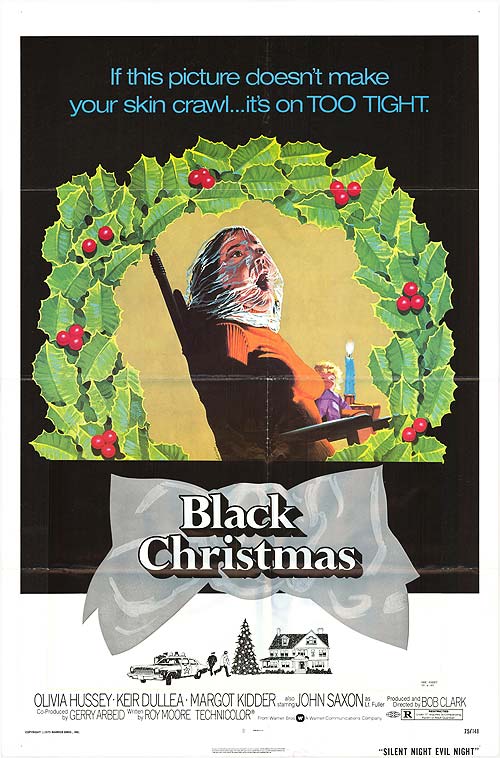
Black Christmas (1974)

black christmas 1

By Richard Winters

My Rating: 8 out of 10

4-Word Review: He’s in the attic.

It’s Christmas time at the sorority house, but as the girls celebrate the season they continue to get harassing phone calls from a strange man who speaks in different and frightening voices. Unbeknownst to them the man has snuck into the attic of their house and the calls are coming in from another room. As the night progresses the girls begin to disappear forcing the lone survivor to fight off the killer by herself.

I have not seen the remake of this film and due to negative response that I have heard I don’t think I want to either. This review pertains to the original only. If you have seen the remake and disliked it you should still give this film a try.  Despite its low budget it is quite effective and it slowly builds up the tension in a nice compact style with a great twist ending.

Of course one of the things that make this movie so good is the humor. I loved Marian Waldman as the alcoholic house mother Mrs. McHenry who stashes bottles of whiskey in all sorts of goofy places. The vulgar Santa who swears even as the kids are sitting on his lap is a hoot and a nice precursor to Bad Santa, but my favorite is the poster of a sweet old lady giving the finger.

One of the best moments on the terror end is the part where the killer’s eyeball can be seen looking through a small crack in the doorway, which is memorable. The scene where the camera pans from each girl’s nervous and frightened face as they listen to the weird voices emanating from the phone receiver is very well done although it would have been even stronger had the Christmas music not have been playing in the background.

The performances are top rate and I liked the fact that the girls all have distinct personalities from one another. Margot Kidder as the vulgar and obnoxious sorority sister Barb is a scene stealer and I’d say this is the best performance of her career. I loved when she calls one of the more conservative members of the group a ‘professional virgin’, or has the audacity to call her own mother a ‘gold-plated whore’. The part where she gets a young kid drunk and even swears in front of him is also funny as is her conversation about a species of turtle that can have sex for three straight days without stopping. Yet through all of her outrageousness director Bob Clark still manages to create a three-dimensional character by showing her as also being lonely, moody, and suffering from asthma, which is good.

Olivia Hussey as Jess is terrific. She is poised, confident, intelligent, and sweet and the type of character the viewer can immediately connect with and care about. Her face has a wonderful fragility about it as well a natural beauty. The look of terror coming from her eyes seems genuine and the horror is made more effective because she responds to it in a believable and relatable way.

Keir Dullea is good as Jess’s high strung boyfriend Peter. I had to chuckle a bit seeing him here as it brought back memories of what playwright Noel Coward once said about him “Keir Dullea gone tomorrow”, which seemed to have some credence since he was starring in the masterpiece 2001: A Space Odyssey just a few years earlier and now delegated to a supporting role in a low budget horror film. I always felt that his reserved and emotionless delivery can work when given the right role and for the most part it clicks here despite the fact that he was pushing 40 at the time and not quite looking college age.

I read one review where the critic complained that he did not feel it was believable for a killer to be hiding in an attic and no one else in the house aware of it, but the house was a big old building and for me it seemed possible especially since it was only for a short period of time. Overall I felt this was a very plausible premise that is handled in a realistic fashion without all the glaring loopholes, which is one reason I continue to enjoy it no matter how many times I’ve seen it.

However, there are a few quibbles. One is the policeman who gets his throat slashed while sitting in an unmarked police car just outside of the sorority home. I would think a seasoned office would be able to spot someone sinking up on him while he is inside a car especially since it was otherwise not a busy street and since it was wintertime I think it would be highly doubtful that he would be sitting there with the driver’s side window rolled down. I also had to roll my eyes at the scene where Jess is trying to get out of the house as she is being chased by the killer and yet for some inexplicable reason the front door conveniently jams even though no had a problem with it before.

Bob Clark shows what a talented director he is and it is too bad his career and life was cut short in a car accident in 2007. It is one thing to have a big budget and access to all the state-of-the-art special effects, but it is another to make a memorable movie on a shoestring. Despite its low budget it doesn’t seem hampered by many of the limitations that other similar films suffer.

Some may prefer lots of gore, which this one has very little of, and a bigger-than-life monster or bad guy, but the reason this is a classic is because they go with the philosophy that less is more. Any self-respecting horror fan should see this film and most likely appreciate it.

My Rating: 8 out of 10

Released: October 11, 1974

Runtime: 1Hour 38Minutes

Rated R

Director: Bob Clark

Studio: Warner Brothers

Available: VHS, DVD (Special Edition), Blu-ray

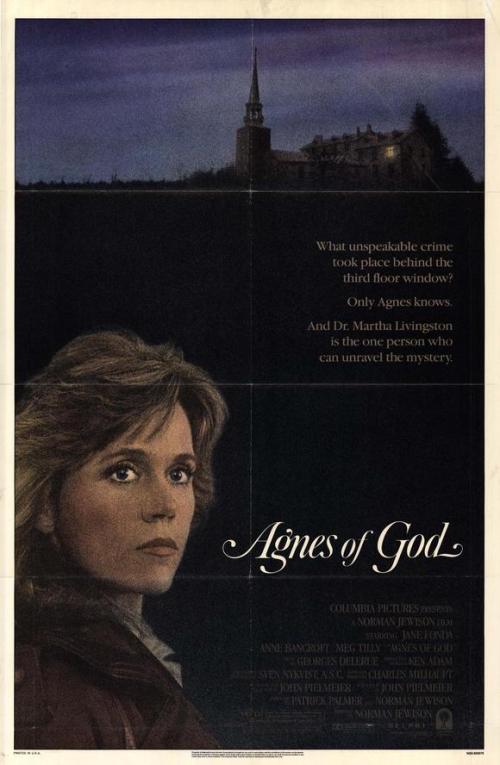
Agnes of God (1985)

Agnes of God 2

By Richard Winters

My Rating: 7 out of 10

4-Word Review: Meg Tilly is marvelos.

Sister Agnes (Meg Tilly) is a young nun found in a convent to have given birth to a baby who then dies. Martha Livingston (Jane Fonda) is the court appointed psychiatrist brought in to investigate the case, but as the investigation ensues it only seems to unearth more and more perplexing twists.

The theology is slight and the film, which is based on the Broadway play by John Pielmeier, approaches the subject matter in a very matter of fact way. It has the mindset that the majority of the viewers are non- religious or disgruntled ex-Catholics and portrays the church as a stubborn, age old institution that is slowly losing touch with our more modern sensibilities.

Yet, refreshingly, it also doesn’t try to tear down the church with every chance it gets. There is a certain level of respect and objectivity. The mother superior (Anne Bancroft) is shown to be very human and multi-faceted. She and Fonda make interesting adversaries. Their love-hate relationship is both interesting and enlightening. There is even a rare scene showing an excited young woman being inducted into the sisterhood as her proud family looks on.

Fonda, with her liberated modern woman persona, seems a very obvious choice to play the no-nonsense psychiatrist. She approaches the role with conviction, but her constant chain smoking seems affected and her emotionalism overwrought. I still say she is better suited for comedy like in Cat Ballou and Nine to Five.

Bancroft is solid as usual. Yet it’s Tilly that is really impressive. She portrays the innocence of her character with an incredible clarity and it’s almost astounding.

The mystery unravels well and keeps you intrigued. Yet the ambiguous conclusion is a bit disappointing. The drama side fares better. It poses a few good insights and ends with an interesting perspective. The film is well done on all levels even though outside of Tilly’s compelling performance there is really nothing that memorable or distinctive about it.

My Rating: 7 out of 10

Released: September 13, 1985

Runtime: 1Hour 38Minutes

Rated PG-13

Director: Norman Jewison

Studio: Columbia

Available: VHS, DVD, Amazon Instant Video

Unman, Wittering, and Zigo (1971)

By Richard Winters

My Rating: 7 out of 10

4-Word Review: These students are killers.

John Ebony (David Hemmings) leaves his job in advertising to follow his dream of becoming a school teacher. He gets a job at an all-boys private school in rural England replacing a teacher who died accidently by falling off a cliff. His pupils soon tell him that they were the ones who killed the teacher and they will do the same to him if he doesn’t do as they say. John can’t find anyone who believes him even his own wife Sylvia (Caroline Seymour) laughs it off. Soon John finds himself a virtual prisoner of his own students and forced to follow their dictates while he tries to figure out who the ringleader is and bring them to justice.

Director John Mackenzie does a terrific job of building the tension slowly. The film works at a deliberate pace allowing the viewer to see things from John’s point-view-of. The slower pace keeps things realistic and therefore more effective. Geoffrey Unswoth’s cinematography is vivid. I loved the way the steep cliffs are captured at the beginning and a camera is thrown off the cliff making the viewer feel like the victim as they see the landscape swirling on screen before completely submerging in water. A nightmare sequence where John dreams of being accosted by the boys in much the same way as his predecessor is visually exciting. The on-location shooting at an actual private boy’s school in Wales only helps to add to the authenticity.

The students themselves are quite effective and much better than their counterparts in the similar Child’s Play where they came off as too robotic. Here they have more diverse personalities. Their snarky behavior and the taunting both to their weaker peers and to John was so on-target that it made me feel like I was right back in high school. Their polite and formal facades are a thin veil to their sinister side that becomes increasingly more apparent as the film goes on. The pinnacle comes when they lock Sylvia in a darkened gymnasium and threaten to gang rape her. The lighting, done exclusively with flashlights and the frenzied action make this a memorably creepy moment.

John makes for a solid protagonist. The viewer can feel and understand his unique quandary and the character is believable enough to help make the movie engrossing from beginning to end. My only quibble would be near the end when the boys ask him to come with them to look for one of the students that have disappeared and he agrees. I thought this was a little hard to believe as it was right after they had tried to attack his wife and the search was being done near the cliffs, which would put John at a vulnerable risk.

The twist at the end is a bit of a surprise and is overall satisfying. Despite what is stated in the review in Leonard Maltin’s ‘Movie and Video Guide’ there is no revelation of any kind after the closing credits. I have seen this film now twice from two different sources and both times the only thing that comes after the credits is the Paramount logo.

My Rating: 7 out of 10

Released: June 13, 1971

Runtime: 1Hour 42Minutes

Rated PG

Director: John Mackenzie

Studio: Paramount

Available: Amazon Instant Video

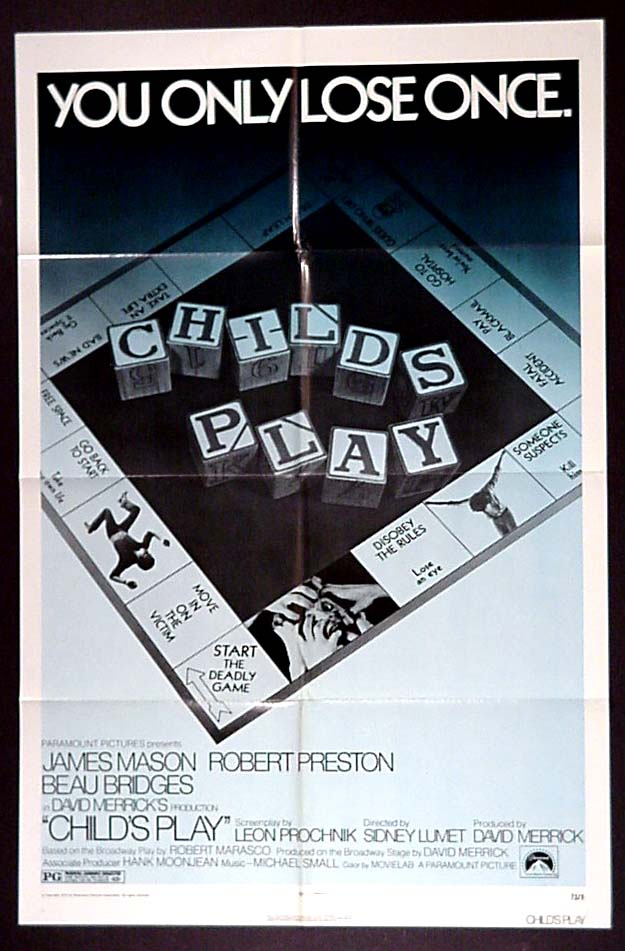
Child’s Play (1972)

By Richard Winters

My Rating: 5 out of 10

4-Word Review: Private school is murder.

If you are looking for a review about the Chucky doll then you will have to wait as that will come at a later time. This is the first film to use that title and it is based on the Broadway play by Robert Marasco who in turn based it loosely on an early Ingmar Bergman movie called Torment. The story deals with an exclusive all-boys school where bizarre unexplained random acts of violence begin to occur between groups of students. New teacher Paul Reis (Beau Bridges) becomes determined to unravel the mystery and begins to suspect that it may have something to do with a long running feud between two of the school’s older instructors Joseph Dobbs (Robert Preston) and Jerome Malley (James Mason)

The film opens right away with a nice creepy tone and a foreboding score that immediately got me wrapped up into it. The dark, shadowy lighting of the interiors helped accentuate the sinister feel. It is also great to have the film shot in an actual boy’s school instead of building sets to recreate the look. Just hearing the floorboards creak underneath the feet of the actors as they walk around helps to create an already strong atmosphere.

Mason is terrific. I think it is impossible for the man to ever give a weak performance even if the script itself is poor. He is captivating every time he is on the screen and his ability to display wide ranging emotions without flaw never ceases to amaze me. Everything always seems to come so naturally with this man in all of his performances that you never see the acting, or technique behind it. It is a shame this movie is so obscure because watching his performance alone makes the film worth seeing and the desperate, lonely character that he plays is interesting in its own right.

Preston doesn’t seem as strong. He is a good actor at times, but not for this type of part and having him wearing a moustache doesn’t help. Supposedly the part was originally intended for Marlon Brando, who would have been more interesting, but he ended up backing out.

Bridges is okay as the protagonist, but he has played the role of a wide-eyed idealist coming into an ugly situation while oblivious to all of the dark aspects a little too often making it an annoying caricature.

The movie fails in the fact that it cannot hold the tension and there are too many talky scenes with little action in-between. The students come off as robotic like and the scenes involving them attacking another student inside a gymnasium looks staged and rehearsed. Director Sidney Lumet would have done better had he used a hand-held camera and gotten right in the middle of the fray making it seem more spontaneous and vivid.

I also had a hard time believing that so many students could get effectively brain washed and sworn to secrecy. I could buy maybe a few, but having so many seemed implausible and ruined the film for me. However, the explanation for the cause to the violence is an original one that I wouldn’t have thought up myself. Also, the surprise twist at the very end is kind of cool.

A similar film to this one entitled Unman, Wittering, and Zigo that also came out in the 70’s and dealt with murder at an all-boys private school will be reviewed next Friday and fares a bit better.

My Rating: 5 out of 10

Released: December 12, 1972

Runtime: 1Hour 40Minutes

Rated PG

Director: Sidney Lumet

Studio: Paramount

Available: Amazon Instant Video

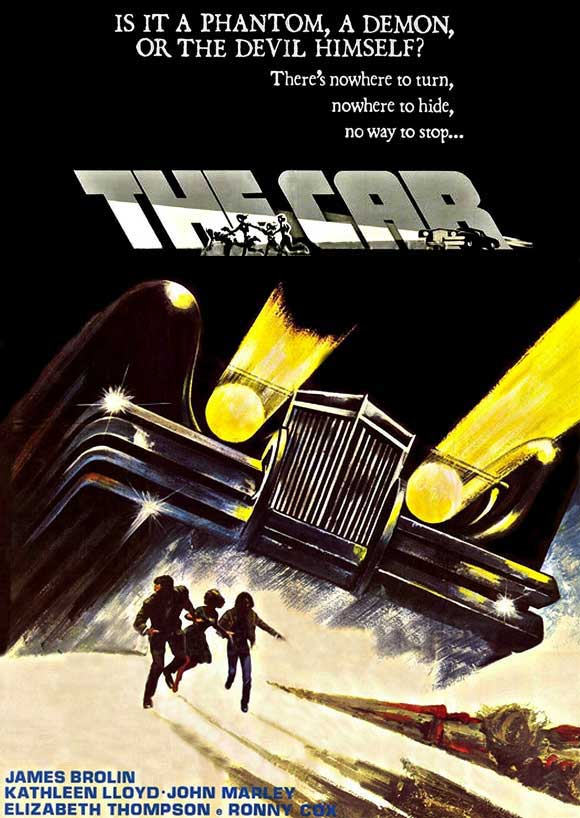
The Car (1977)

By Richard Winters

My Rating: 3 out of 10

4-Word Review: No driver no problem.

This is an expectedly dumb horror film about a driverless car that comes out of the desert and begins to terrorize a small town in Utah.

The film fails to be scary or suspenseful in even the slightest way. It is basically a Jaws rip-off put on wheels, but has no basis in reality and not half as compelling. It takes a weird idea and then submerges it with a conventional narrative. The car attacks are separated by drawn out soap opera style drama making you look forward to the attacks because at least they inject some excitement. The attacks though are pretty sanitized and at times even hokey. The ending is too pat and offers no explanation as to why any of this even occurred. The consistently sunny and picturesque small town scenes are not good at creating a horror atmosphere. The one brief moment where actor James Brolin confronts the car on a lonely desert highway is the only part that offers anything in the way of interesting surrealism.

The car itself really doesn’t look that frightening and resembles a toy car and moves around like it is being run by remote control. Its horn sounds like a cross between one used for a train or a boat and comes off as being more distracting than scary. It behaves more like a thinking animal than a demonic object. It drives away from the police and seems to have a strategy for what it does. The scenes where actress Kathleen Lloyd tries to ‘talk’ to it and its responses to her talking is downright laughable.

For what it’s worth R.G. Armstrong gets one of his better grimy character roles, but Lloyd is completely wasted as usual and Brolin seems as sterile as ever. Ronny Cox must be given credit simply for his wonderfully distressed facial expressions. John Rubenstein is engaging, but then gets killed off too quickly.

Director Elliot Silverstein adds a few nice directorial touches, but it can’t overcome the basic weaknesses of the script. The closing credits features the car seemingly driving around the streets of Los Angeles in apparent attempt to ‘scare’ everyone into believing that it might still be ‘out there’. Of course judging by all the bad drivers L.A. already has this car wouldn’t make much of a difference.

My Rating: 3 out of 10

Released: May 13, 1977

Runtime: 1Hour 36Minutes

Rated PG

Director: Elliot Silverstein

Studio: Universal

Available: VHS, DVD

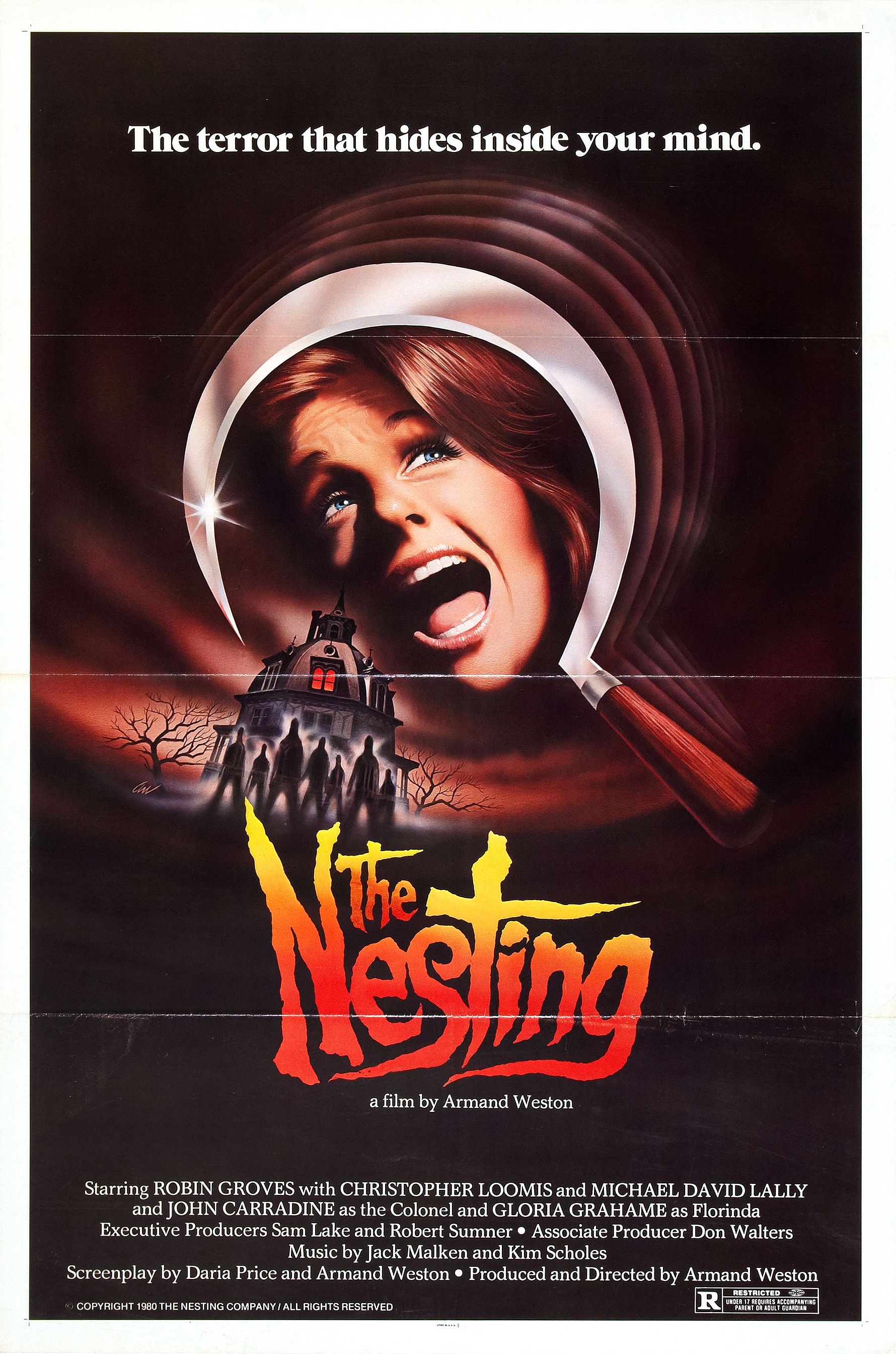
The Nesting (1981)

By Richard Winters

My Rating: 3 out of 10

4-Word Review: House haunted by hookers.

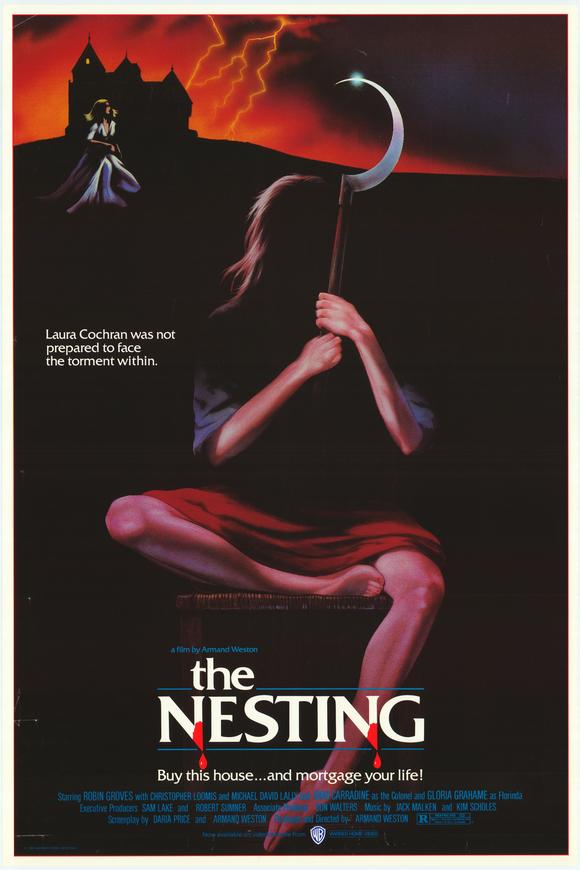
This review will start off a month long theme where in celebration of Halloween every 70’s, 80’s, and 90’s movie reviewed will be a horror one. This film sat in pretty much obscurity until being released by Blue Underground onto DVD and Blu-ray on June 28th. The story deals with Lauren (Robin Groves) a writer who rents an old house that looks strangely similar to the one depicted on the cover of her last novel. Eerie events start to happen and she learns that the building used to be a house of ill-repute and the prostitutes who were murdered there in cold blood are now coming back in ghostly form to seek revenge.

The film was directed by Armand Weston best known for directing porn movies during the 70’s including a couple of edgy, envelope pushing rape and revenge sagas The Taking of Christina and The Defiance of Good.  The directing here is competent enough that it is watchable, but the scares and horror is at a minimum. There are a few moments of creepiness and atmosphere, but it is not sustained and the film is unable to build any momentum, or suspense. The result is rather disjointed and unfocused. The premise borders on being campy and a 104 minute run time is way too long for a plot that offers a meager payoff.

Groves is an unusual choice for the lead. Usually films in this genre cast young college age girls in these roles with high sex appeal and skimpy outfits so that way they will be able to hold the viewer’s (males) attention during the slow parts of which there are many. Groves on the other hand is middle-aged, has an oversized mouth, and a hyper personality that seems better suited for comedy. She does end up having a nude scene, which isn’t bad, but I still felt she wasn’t the right fit.

I did like the idea that the character is given some unusual traits including suffering from agoraphobia (the extreme fear of the outside world) and a kooky creative personality that initially embraces the scares that she receives in the home because she feels it will help stimulate her artistic process. However, the film does not pursue these ideas enough and by the end seemed to have completely forgotten about them.

I was disappointed that Gloria Grahame an Academy Award winning actress was given such little screen time and actually doesn’t even utter a line of dialogue until the final 15 minutes of the movie. This woman was a leading lady during the 40’s and 50’s, but had the misfortune of marrying director Nicholas Ray and then having an affair with Ray’s 17 year old son from a different marriage. She eventually married the son and even had two kids with him, but the resulting scandal ruined her career and demoted her to B-movies afterwards. Still I thought she looked terrific and was better looking than Groves even though she was in real-life twenty-five years older than her. Her best moment is when she crosses a street and then gets hit in rather graphic fashion and run over by a speeding car that gets repeated several times.

Veteran actor John Carradine also appears, but I wished they hadn’t even bothered with him. He appears frail and elderly and speaks his lines in a mumbling fashion.

I did like that the movie was filmed on-location at the Armour-Stiner house in Irvington, New York. This is a unique domed octagonal residence built in 1860 and one of the few left standing. There is even an outdoor scene filmed on the home’s roof where Lauren’s analyst (Patrick Farrelly) falls from a ledge and gets impaled by a weather vane, which proves to be the film’s best gory moment.

The wrap-up and explanation for why Lauren was so strangely attracted to the home is actually kind of neat. I also liked the scene recreating the murderous events where everybody ends up getting shot one-by-one in slow motion. However, the script was in bad need of trimming and revision. There also should have been more special effects sprinkled throughout the production instead of just cramming them all in during the film’s fiery finale.

nesting

My Rating: 3 out of 10

Released: May 3, 1981

Runtime: 1Hour 44Minutes

Rated R

Director: Armand Weston

Studio: William Mishkin Motion Pictures

Available: VHS, DVD, Blu-ray, Amazon Instant Video

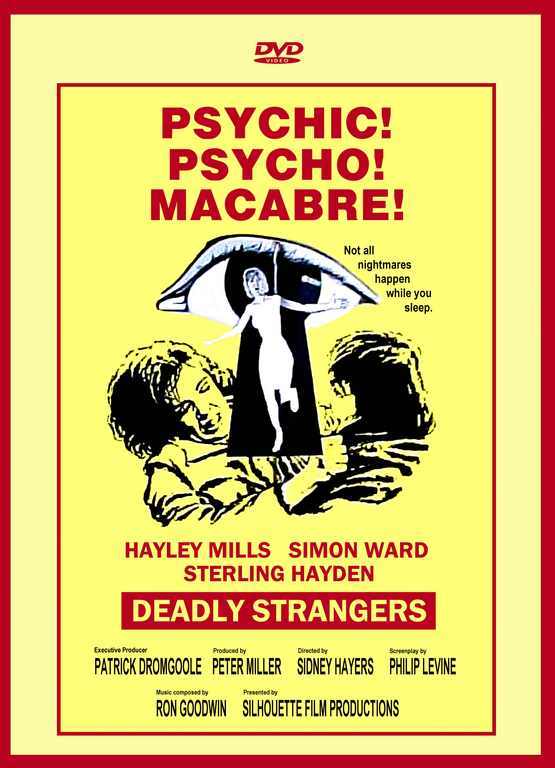
Deadly Strangers (1974)

By Richard Winters

My Rating: 5 out of 10

4-Word Review: Psycho on the loose.

A dangerous mental patient has escaped from a nearby asylum. Belle Adams (Hayley Mills) is the beautiful women whose car has just broken down and she accepts a ride from Stephan Slade (Simon Ward) who just may be that patient.

This seems very similar to See No Evil which also took place in the English countryside and also hid the killer’s identity until the very end. There though it was a big letdown finding out who he was while here it is actually what makes the movie interesting. However, some of the techniques used to conceal the killer’s identity come off as contrived. The opening escape sequence inside the institution, where you see everything from the patient’s point of view is very tacky.

The suspense is minimal and things never really get too intense until the climatic sequence. There are twists and turns throughout, but some of them seem to be put in just to keep the story moving. The overall production values are cheap and the film stock is grainy and faded.

It is nice to see a British movie that doesn’t take place in London. The brown, barren landscape, which looks to have been filmed in the autumn, gives the picture an added visual. The car they drive is another sight as it looks as flimsy as a Yugo.

Mills makes a daring film choice here and it does her well. She no longer has that mousy, awkward look. She is a pretty full grown woman with a nice short haircut. She acts more mature and streetwise without that wide eyed persona that she had in all those Disney movies. Her nude scenes aren’t bad and are even a bit gratuitous.

Ward has never seemed to be that great of an actor. He has always had a tired look on his face and plods through his parts in much the same way. Sterling Hayden is fun playing an aging womanizer and sporting a wild beard and hairstyle. He talks in a goofy Scottish accent and amusingly tries to court Hayley, but unfortunately he is on for only a short time.

The final twist is pretty good, but a real sharp viewer will figure it out before it happens because I did! The film is a nice alternative for Mills despite a tendency to be gimmicky and flat. It is also the only time I have ever seen a policeman pull over a car and when the driver is unable to find his license is simply allowed to drive away.

My Rating: 5 out of 10

Released: February 16, 1974

Runtime: 1Hour 28Minutes

Rated R

Director: Sidney Hayers

Studio: Fox-Rank

Available: VHS