Category Archives: Mystery

Terror Train (1980)

terror train 1

By Richard Winters

My Rating: 4 out of 10

4-Word Review: Killer wears different disguises.

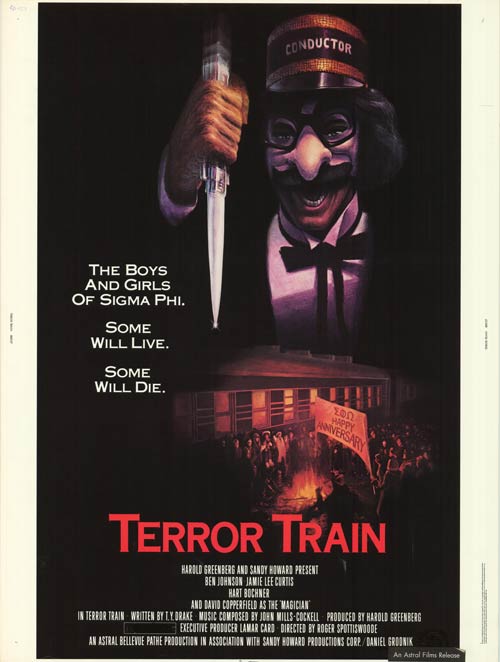
Some frat boys decide to play a nasty prank on a vulnerable student named Kenny Hampson (Derek McKinnon) which causes him to have a mental breakdown and be sent away. Now, three years later the same group of college kids gets together on a train for a raucous New Year’s Eve costume party. The problem is so does a mysterious killer who after killing each of his victims puts on the disguise that they were wearing making it impossible to track him.

Supposedly the idea for the film is the brainstorm of executive producer Daniel Grodnik who after seeing both Halloween and Silver Streak woke up one night with the inspiration of combining the two films and making a slasher movie aboard a train.  I admit when I first saw this film many years ago I thought it was pretty cool, but now upon second viewing it seems formulaic and predictable. It takes too long to get going with the first hour spent focusing on the doings of stereotypically jaded college kids who aren’t very appealing. The scares are few with the only real intense part coming at the end when the Jaimie Lee Curtis character locks herself in a cage and the killer tries desperately to get into it. The gore is also sparse and not impressive including a decapitated head that doesn’t look anything like the victim’s.

There is also a lot of glaring loopholes including having the killer murder someone inside one of the train’s cramped bathrooms and then managing to clean up all the blood, which would have taken a lot of time seeing how much there was of it, and then carting off the dead body without anyone noticing. During the climactic sequence Curtis’s character stabs the psycho in his eye, but later when the killer gets unmasked his eye and face look fine without any indication of scratches or cuts.

Curtis is a fine actress, but her presence did nothing but remind me of Halloween and they would have been better off casting someone else. Ben Johnson, who is technically listed as the star, adds some much needed stature and it is nice having a middle-aged character not portrayed as a clueless out-of-touch drip like they usually are in these types of films. Hart Bochner looks and acts like the perfect caricature of a smart-ass frat boy and its fun seeing him turn from cocky and arrogant at the beginning to desperate and frightened at the end. Magician David Copperfield is on hand essentially playing himself and some of his magic tricks are the most interesting part of the movie.

My Rating: 4 out of 10

Released: October 3, 1980

Runtime: 1Hour 37Minutes

Rated R

Director: Roger Spottiswoode

Studio: 20th Century Fox

Available: VHS, DVD, Blu-ray

The Reincarnation of Peter Proud (1975)

the reincarnation of peter proud

By Richard Winters

My Rating: 4 out of 10

4-Word Review: Reliving a past life.

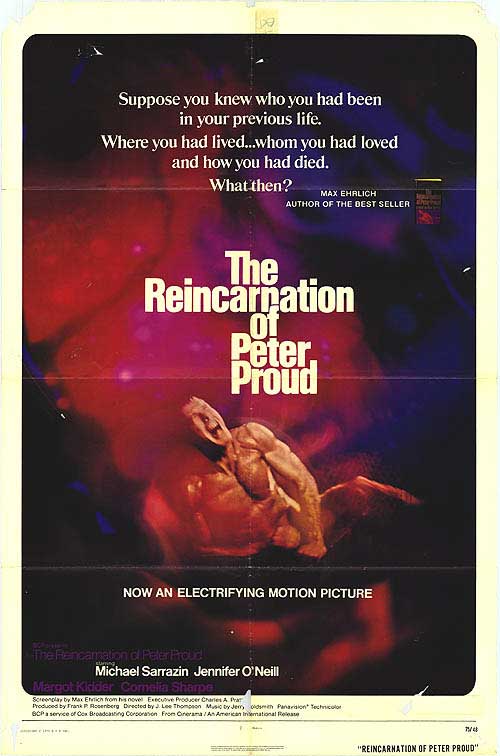
College professor Peter Proud (Michael Sarrazin) starts having reoccurring dreams where he sees himself living a past life somewhere in a small New England town and killed by a woman (Margot Kidder) while out on a lake. The dreams become so strong that they interfere with his job and even his relationship with his girlfriend Nora (Cornelia Sharpe). He travels to Massachusetts in search of the place and finally finds it and even starts a relationship with Ann (Jennifer O’Neill) who may be his daughter from the previous incarnation. He also meets her mother Marcia who is the same woman who he sees killing him in a past life during his dreams. As the three get to know each other tensions and dark secrets eventually begin to surface.

The idea has some potential, but director J. Lee Thompson gives the material a very standard treatment making it seem almost like a pedestrian drama. The dialogue is dull and corny, the characters cardboard and the storyline is predictable and formulaic. For what is supposed to be a horror movie/mystery it is not very compelling or intense. The visions that Peter sees in his dream are quite ordinary and generic and eventually become redundant. In fact the film’s only twisted moment, which is when Peter makes love to Ann, who is technically his daughter from a past life, gets treated like a sweet romantic scene instead of the underlying perverse act that it really is.

The story also gets farfetched including having Peter drives through every town in Massachusetts until he finds the one he is looking for. The character of the dream researcher, which is played by actor Paul Hecht, gets overly enthusiastic about Peter’s statements regarding experiencing reincarnation and becomes almost wide-eyed at the idea of writing a book about it and making millions even though a true researcher would be much more reserved about what Peter was saying and realize it would entail much more years of study before it could even be termed a reality. I also thought it was strange that when they put Peter into a sleep study the machine is unable to read the dreams that Peter is having about his past life. Supposedly this is because they are not dreams, but ‘visions’ of some sort, but wouldn’t that still create brain activity in order for Peter to see them and thus still get recorded on the machine?

Jennifer O’Neill is always great to watch simply because of her beautiful face and Cornelia Sharpe has a few choice nude scenes as Peter’s sarcastic girlfriend, but Margot Kidder is miscast as O’Neill’s mother. For one thing she is the same age as O’Neill and although they try to make her look older by putting some gray streaks in her hair her skin is still quite smooth and in need of some age lines in order to look more authentic. However, the scene where she masturbates while naked in a tub isn’t bad.

The ending is terrible and makes having to sit through this thing a complete waste of time.

My Rating: 4 out of 10

Released: April 25, 1975

Runtime: 1Hour 45Minutes

Rated R

Director: J. Lee Thompson

Studio: American International Pictures (AIP)

Available: VHS

Bells (1982)

bells 1

By Richard Winters

My Rating: 3 out of 10

4-Word Review: Don’t answer the phone.

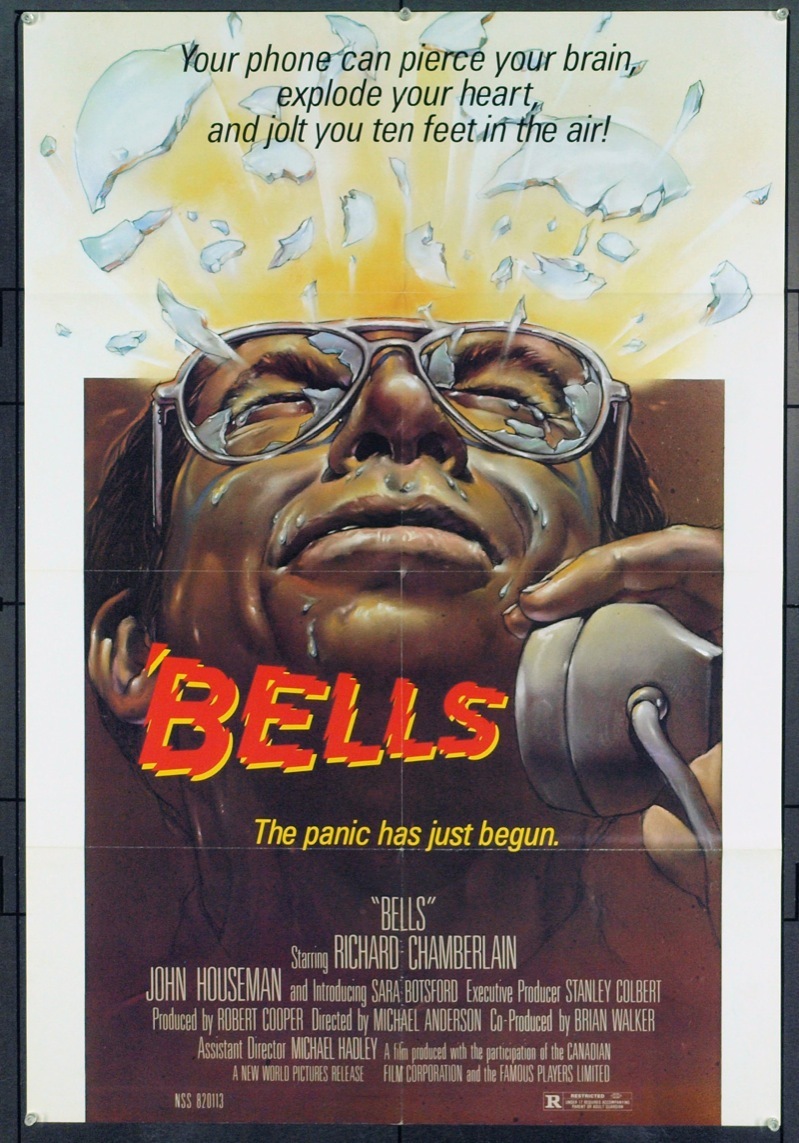
People are being killed throughout the city of Toronto by simply answering the phone. Apparently someone has come up with a device that can create a massive electronic blast that can go through the phone lines and kill anyone listening on the other end. The blast is so strong that it can even melt the receiver. Nat Bridger (Richard Chamberlain) who is a professor at a local college decides to take matters into his own hands and investigate on his own after one of his students is killed and the police seem to do nothing about it.

Initially I found this idea to be intriguing and original, but unfortunately it throws credibility completely out the window. Had it worked more with the idea of sending some loud noise at an extremely high decibel over the phone, which would then blow out the person’s ear drum, or something of that nature then I might have bought into it. Instead it has some sort of unexplained blast that literally makes the person at the other end blow off of their seat and fly backwards crashing into walls and windows, which seems utterly ridiculous and cartoonish. The film also offers no scientific explanation to how this device was created or done, which makes it farfetched and pointless.

Chamberlain’s one-dimensional acting doesn’t help and his presence in the lead role is quite generic as he plays a character that shows the street smarts and fighting ability of a seasoned cop instead of that of a college professor making things even more unrealistic. John Houseman gets a rather thankless supporting role as Chamberlain’s mentor and is pretty much wasted except for a bit where he disrupts a guided tour through a phone company which proves mildly amusing.

The technology is horribly dated making the entire thing a relic of a bygone era and irrelevant to today’s audiences.  The climatic sequence dealing with Chamberlain’s attempts to keep the bad guy on the phone while the police try to trace the number is highly clichéd and more boring than intense. Director Michael Anderson’s attempts to jazz things up a bit by photographing phones in intimidating ways with ominous music playing in the background comes off as unintentionally funny instead of scary.

This Canadian made thriller was originally released under the title above and ran for 95 minutes, but the Warner Home Video version, which was released in 1998 and goes under the title of Murder by Phone was trimmed by 15 minutes. The version reviewed here is from the original release although the film is so silly that watching the shorter cut might be preferred simply because it would mean less time wasted.

My Rating: 3 out of 10

Alternate Title: Murder by Phone

Released: May 11, 1982

Runtime: 1Hour 35Minutes

Rated R

Director: Michael Anderson

Studio: Canadian Film Development Corporation

Available: VHS (as Murder by Phone)

See No Evil (1971)

see no evil

By Richard Winters

My Rating: 7 out of 10

4-Word Review: Psycho stalks blind girl.

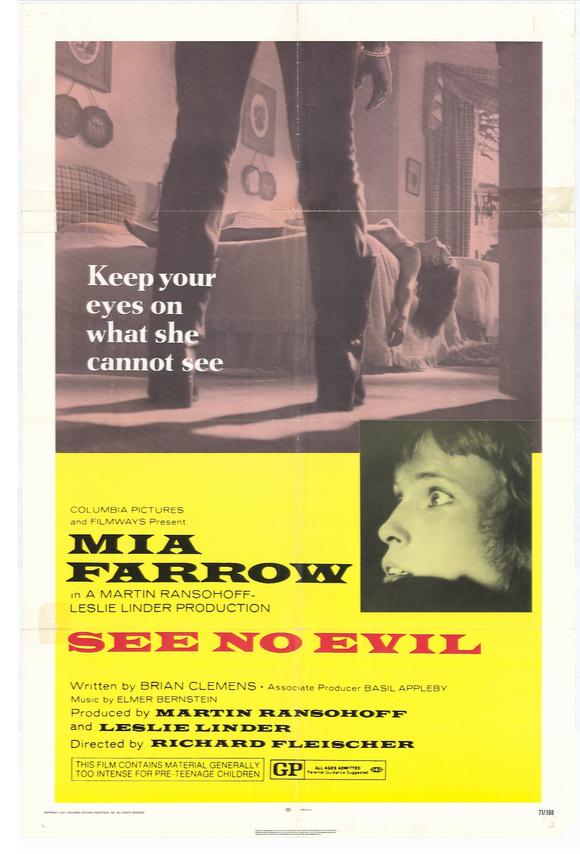
Sarah (Mia Farrow) is a young woman who becomes permanently blinded during a horse riding accident. After months of rehabilitation she returns to her family home in the English countryside. Dealing with her new handicap is awkward at first, but things go genuinely smoothly. Unfortunately a psychotic man harboring a petty grudge lurks in the shadows. One day while Sarah is away he murders her entire family and when she returns he goes after her, but the viewer is as in the dark as she is to his identity as all that is shown are the nifty looking cowboy boots that he walks in.

Veteran director Richard Fleischer takes Brian Clemens compact script and turns it into a visual masterpiece. The camera angles and shot compositions are not only perfect, but highly creative. One of the highlights is when Sarah comes home and doesn’t realize at first that her family is dead and only slowly becomes aware of it along with the viewer. The countryside, which was shot near Berkshire, England, is majestically captured particularly during the horse riding sequences. The pace is fast and intense and never lets up with twists that prove to be quite interesting.

Farrow has a limited range as an actress, but her delicate features and the character’s self-reliant nature make her easily likable and the viewer immediately becomes empathetic to her plight. The rest of the characters are well-rounded and believable with noted character actress Lila Kaye in a small, but memorable role as a gypsy mother.

The fact that the identity of the killer is kept a secret until the very end is an added bonus, but you actually do see his face in an earlier scene, but are not made aware that it is him, which I thought was pretty cool. The only misgivings that I had in this area is the fact that the killer supposedly murders these people in a fit of revenge for accidently splashing water on his precious boots when they drove past him in a car, but then later after he kills them he goes to bed and allows the droplets of blood from his victims to dry on his boots while he sleeps even though I felt with his obsessive preoccupation with them that he would have wiped that off right away. Also, for a man who brazenly murders a family in broad daylight for such a petty reason he seems to get a little too nervous about it afterwards even though if he is that crazy I would think that he would have remained cocky about it and felt that he would be able to murder anyone else who got in his way. He also puts up no fight in the end when he finally gets cornered making him look wimpy and making the climax a bit of a letdown.

Overall though I found this thriller to be highly entertaining and its effect has not diminished through repeat viewings. They don’t seem to be able to make them like this anymore, which is unfortunate.

My Rating: 7 out of 10

Alternate Title: Blind Terror

Released: September 2, 1971

Runtime: 1Hour 29Minutes

Rated GP

Director: Richard Fleischer

Studio: Columbia Pictures

Available: DVD, Amazon Instant Video

Cry Uncle (1971)

cry uncle

By Richard Winters

My Rating: 5 out of 10

4-Word Review: Murder, mystery and sex.

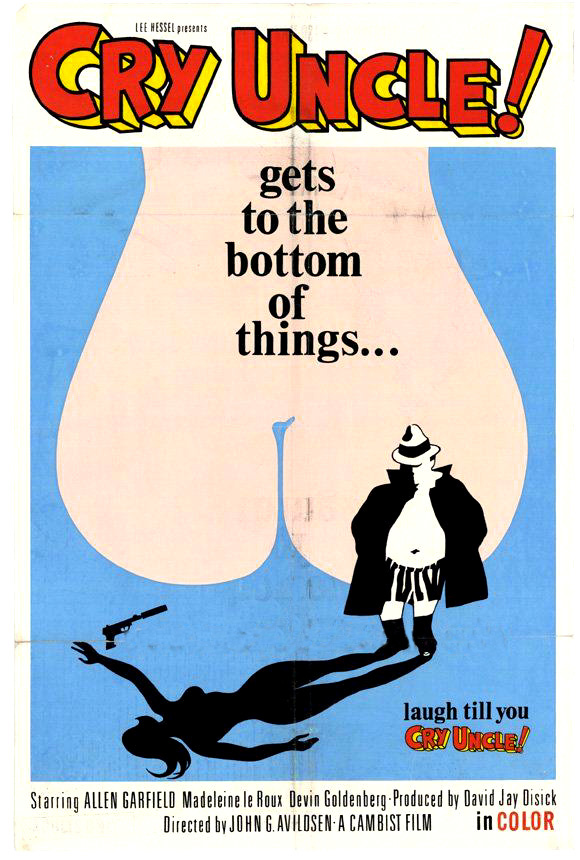
A down-and-out private eye (Allen Garfield) becomes embroiled in a complex case involving murder, intrigue, and a lot of sex.

This is one drive-in flick that definitely does not skimp on the sex. Not only is there a lot of it, but it is very explicit and done in outlandish ways. One features a couple having sex during the national anthem, while another has Garfield having sex with a prostitute while in front of a picture of Jesus. The most notorious though involves Garfield making love to a dead body while ragtime music plays in the background.

Garfield is quite amusing as a character that is always running his mouth off about something although the excessive shots of his nude overweight, out-of-shape body is enough to make anyone sick. Paul Sorvino is also funny in a cameo bit as a policeman plagued with a terrible case of smoker’s cough.

Although she delivers her lines well Madeleine Le Roux as the female lead is not sexy at all. Her face resembles that of Cruella De Vil’s in the Disney version of 101 Dalmatians and her body is very flat making her nude scenes unexciting. She also doesn’t seem too young either. Certain camera angles make her look like a youthful 30 while others give the impression that she is pushing 45.
The film is directed by John G. Avildsen who later went on to do Rocky and The Karate Kid. You can also spot famous schlock director/producer Lloyd Kaufman with a full head of curly hair playing a hippie.

For fans of low-grade, T & A, drive-in fare this one pretty much hits the target and makes the most of its low budget, underground roots although it is unable to sustain the slam-bang funny pace that it has at the beginning with a second half that is not as outrageous or inspired.

My Rating 5 out of 10.

Released: August 17, 1971

Runtime: 1Hour 27Minutes

Rated R

Director: John G. Avildsen

Studio: Cambist Films

Available: VHS, DVD, Amazon Instant Video

Dogs (1976)

dogs

By Richard Winters

My Rating: 3 out of 10

4-Word Review: The Dogs go crazy.

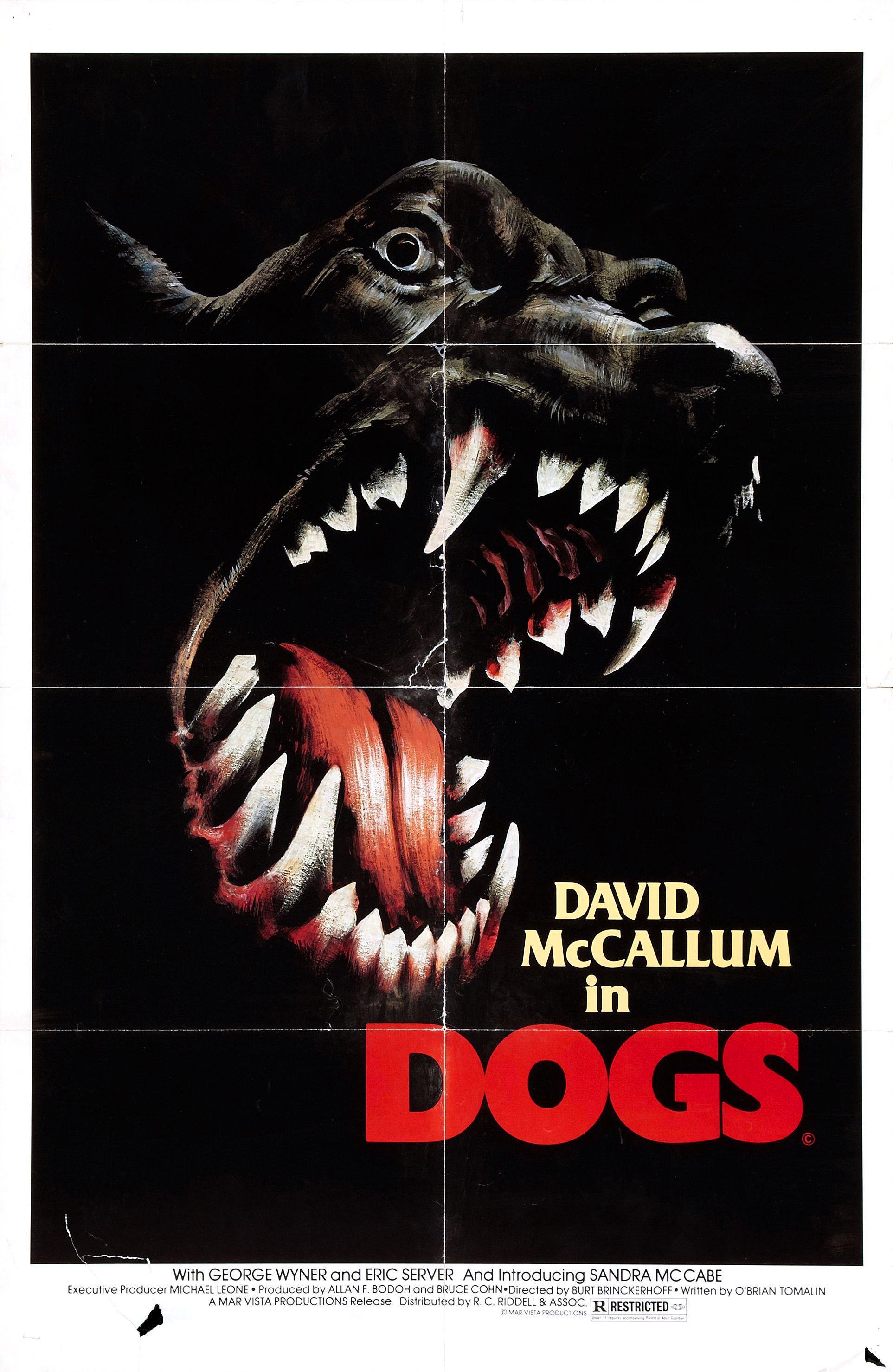
In a small California town the dogs begin to act strangely as these lovable pets are now turning on their owners and going on the attack while acquiring a pack mentality that puts fear into everyone. Harlan (David McCallum) is a professor at a nearby college who along with Michael (George Wyner) who is an expert in animal behavior search for answers while also fighting for their own lives from the onslaught of the attacks.

The film has some potential as actor-turned-director Burt Brinkerhoff adds shades of playfulness to the proceedings. I liked the segment where children bring their pet dogs to a formal showing only to be chased away by the suddenly evil mutts. The mob scenes are somewhat impressive as Brinkerhoff holds a handheld camera right in the middle of the group, which helps accentuate the chaos and fear. The extras who can usually be pretty poor actors in most movies actually seem scared here and give off genuine screams of terror. The scene where the college students become trapped in a library with the vicious dogs staring at them through a glass wall is kind of creepy as is the sound of their howling.

The special effects aren’t quite as successful. The shots of all the human carnage looks very much like people lying perfectly still with spots of food coloring thrown on their clothes.  The shot of a mutilated steer’s head is equally fake looking and it stays on it for too long although the dog attacks themselves are okay. My favorite is when a sweet old lady, which is played by Elizabeth Kerr who later went on to co-star in the ‘Mork and Mindy’ TV-series gets ambushed and eaten by a group of dogs, which includes her own cute little pooch and then dragged away.

McCallum, who is best known for starring in the 60’s spy show ‘The Man from U.N.C.L.E’ as well as ‘NCIS’, is weak in the lead role and whose presence almost seems transparent. He’s made to look like he is a part of the counter-culture with a beard and long hair, but instead comes off looking like some homeless guy that was dragged in off the streets. Sandra McCabe as his female counterpart is pretty pathetic and seems good for having a perpetually frightened look etched on her face, but not much else. Linda Gray who makes her official film debut and is cast in a smaller role should have been given the lead over McCabe as she shows much more flair.

The film’s biggest transgression though it that it never bothers to explain the reason for the dog’s strange behavior there is a brief conversation about some ‘secret experiments’ going on, but nothing that ever gets detailed or exposed. The lack of any true resolution or explanation is not only frustrating, but also makes watching this a rather pointless experience. The film also runs only 82 minutes despite the DVD cover stating that it is 91.

My Rating: 3 out of 10

Released: June 29, 1976

Runtime: 1Hour 22Minutes

Rated R

Director: Burt Brinkerhoff

Studio: American Cinema Releasing

Available: DVD

Rollover (1981)

rollover 1

By Richard Winters

My Rating: 3 out of 10

4-Word Review: What’s in account 21214?

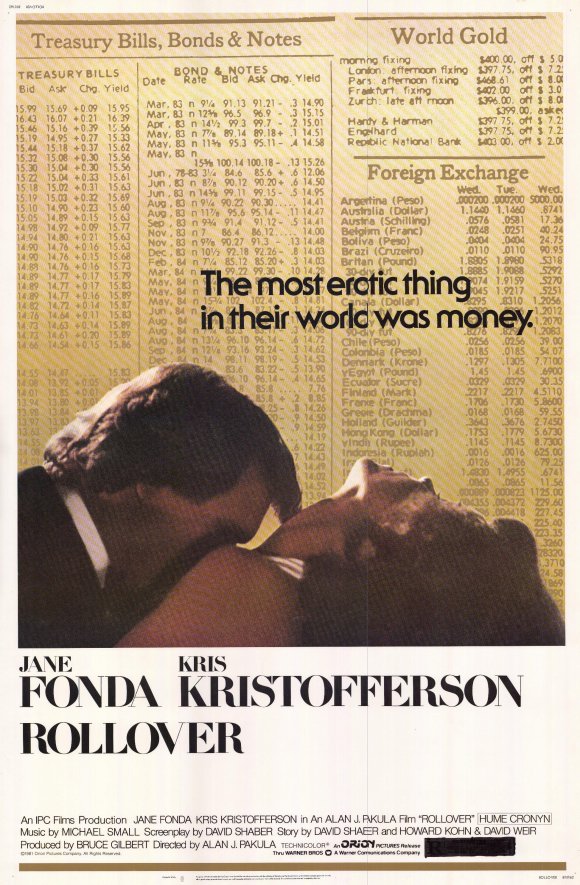
Hubbell Smith (Kris Kristofferson) is the newly appointed president of Borough National a bank that is in desperate need of money. He meets Lee Winters (Jane Fonda) the recent widow of the former chairman of Winterchem Enterprises who is looking to obtain a loan in order to purchase a Spanish processing plant. Hubbell broker’s the $500 million deal with some Arab investors and uses the finder’s fee portion to keep his bank solvent, but suspicions are raised when the money goes into a secret account named 21214 that no one knows anything about and can’t access. When Hubbell does some investigating he finds troubling answers that could lead to economic world collapse.

Director Alan J. Pakula approaches this thing like it is another Klute using not only the same star as that one, but similar type of music. Some of the camera work is dazzling and artsy, but I wondered if this was done to help enhance the script, or simply camouflage all of its holes. The story itself is too talky with a heavy reliance of financial business dealings that could become confusing for the average viewer. The two main characters are rather generic and their passionate making-out is tedious instead of sexy. The action is minimal, which includes a scene where Fonda gets trapped in a limo that is driven by a bad guy that had the potential for being exciting, but unfortunately gets underplayed.

Kristofferson with his Texas drawl is an awfully odd casting choice for a hot shot Wall Street businessman. He grows on you as the movie progresses particularly with the way he remains cool and detached even as his business dealings go horribly awry, but I still felt there were a hundred other actors that would have been better suited for the role.

Fonda is excellent and in many ways badly outplays her costar. Her character though doesn’t make a lot of sense as she is supposedly this famous and highly respected actress, much like Fonda herself and yet wants to be chairwoman of this chemical company instead of just selling her share of the stock after the death of husband and go back to acting, which to me would seem a lot more fun.

In an effort to keep the plot moving the film takes a few liberties with the plausibility. One of the major ones is when Hubbell wants to find out about the secret account and does so by breaking into the office of his superior where he finds in his desk drawer a notebook that lists the computer passcode, which seemed too convenient. In reality I would think a programmer would have to be hired in order to hack the system, which would have taken longer to play out, but also if done right heighten the tension as well as the believability.

Spoiler Warning!!

The film’s biggest transgression is the ending itself, which has the Arabs pulling the money out of the secret fund, which causes mass worldwide economic turmoil and chaos. Not only does this seem to create a whole new movie, but it also minimizes the two main characters and everything that we watched them do for the past two hours. A much better ending would have had the characters come up with some way to avert the collapse instead of the gloomy pessimistic way that it does take, which seems overblown and hard to believe.

End of Spoiler Warning!

My Rating: 3 out of 10

Released: December 11, 1981

Runtime: 1Hour 56Minutes

Rated R

Director: Alan J. Pakula

Studio: Warner Brothers

Available: VHS, DVD, YouTube, Amazon Instant Video

Alice Sweet Alice (1976)

alice sweet alice

By Richard Winters

My Rating: 6 out of 10

4-Word Review: Murder in the church.

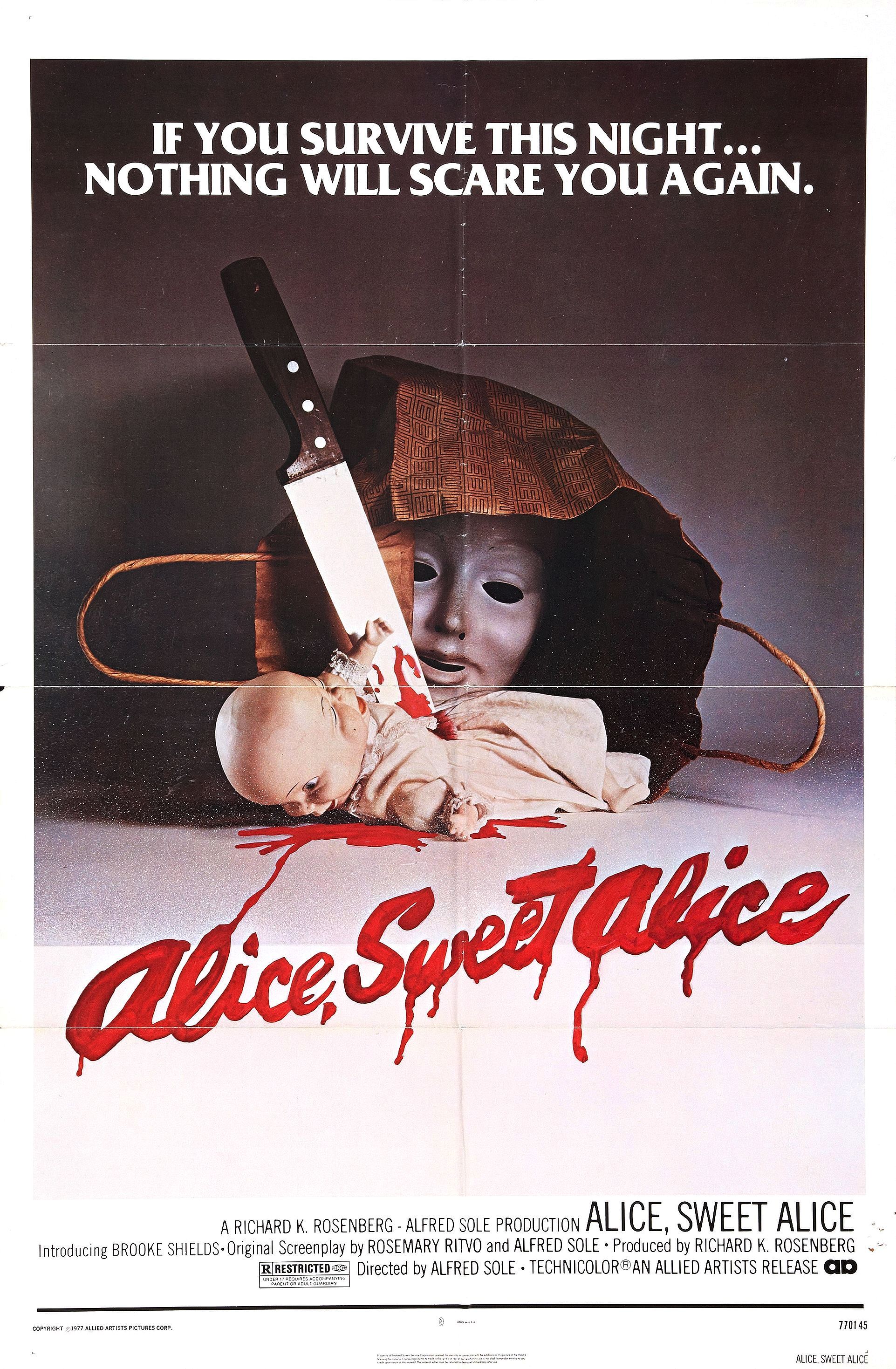
Surprisingly elaborate thriller detailing murders that happen in and around a Catholic church. It focuses specifically on a family whose one daughter Karen (Brooke Shields) is a victim and the other daughter Alice (Paula E. Sheppard) may have been the killer.

This is a well-crafted thriller and much more than just a chance to see a young Brooke Shields. The set design is meticulous with a unique look and sound that is different from just about any other horror film. There are even a few moments of truly creepy imagery. The twisting plot and suspense should be enough to get you caught up in it and keep you guessing.

This is also a multilayered film with a twisted look at the family unit, the 50’s era, and most importantly the Catholic Church. It paints a rather sinister portrait of the church and some of those who attend it while emphasizing the evilness that can unravel behind even the most pristine of pictures. It is harsh, but also revealing and at times even funny.

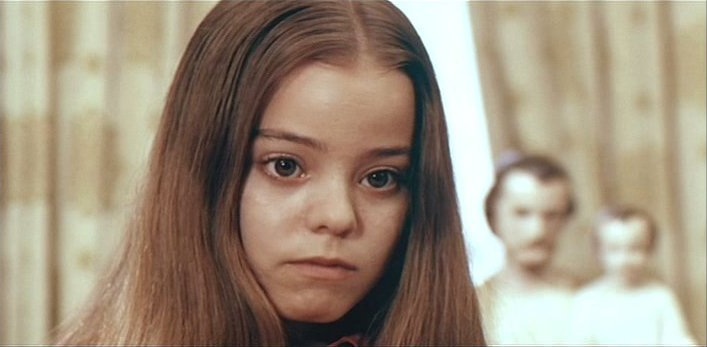
Sheppard is chilling as the evil sister and makes Patty McCormack from The Bad Seed look like a powder-puff-girl. Her unique eyes grab your attention and help accentuate her character and are able to convey both beauty and mischief at the same time. She falls into her difficult role effortlessly and it’s easy to see why she has gained such a wide cult following even though, to date, she has only done one other movie.

paula 2

Brooke of course was re-billed as the star when her fame shot up afterwards. Yet she doesn’t last past the first half-hour and her presence is really not all that significant.

The film’s first third is gripping, intriguing, and even surprising. The final thirty minutes though is a letdown and pretty much ruins the film as a whole. It gives away its final twist too early and then drags along until it culminates with a rather far-fetched climax. It also leaves open a few loopholes and no real closure.

My Rating: 6 out of 10

Alternate Title: Communion

Released: November 13, 1976

Runtime: 1Hour 38Minutes

Rated R

Director: Alfred Sole

Studio: Allied Artists Pictures

Available: VHS, DVD, Amazon Instant Video

The Runner Stumbles (1979)

the runner stumbles 1

By Richard Winters

My Rating: 2 out of 10

4-Word Review: Priest accused of murder.

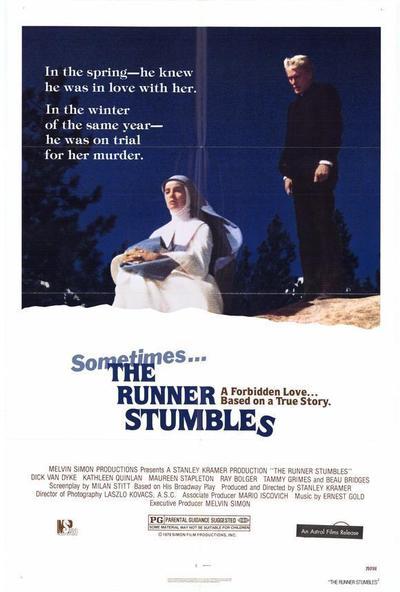
Based on actual events the setting is 1911 in a northern Michigan town where Father Brian Rivard (Dick Van Dyke) presides over a small Catholic parish. He feels frustrated at being stuck in such a depressed town where many of the residents are out of work. In comes Sister Rita (Kathleen Quinlan) to help run the school and the Father immediately takes a liking to her youthful enthusiasm and fresh ideas, but gossip and rumors soon abound when it is found that they are spending too much time together and possibly becoming intimate. When the Sister is found murdered it is the Father who is accused and must fight for his life while straddled with an attorney (Beau Bridges) who seems glib and detached.

One of the biggest problems with the film is the miscasting of Van Dyke in the lead. His performance is stiff, wooden and affected. The chemistry between the two stars is non-existent making the romantic angle seem completely unbelievable. The film would have been better served had a younger man that was more Quinlan’s age and trained in method acting been cast in the part.

Quinlan is excellent in her role, but her efforts become lost as they bounce off Van Dyke’s almost corpse-like presence. Maureen Stapleton adds some excellent support and it’s great to see Ray Bolger in his final film role as the intrusive Monsignor. Bridges is also great as the lawyer and the one thing that livens the film up a little. Had his court scenes been more extended it would have helped the picture immensely.

Director Stanley Kramer, whose last film this was, seems to have lost touch with the modern movie goer. The presentation is stagy and the overly melodic soundtrack does not fit the mood and gets overplayed almost like a radio going on in the background that somebody forgot to turn off. The conversations revolving around the predictably stifling atmosphere of the era add little interest and go on too long as do the debates between giving in to human desires versus religious commitments. The surprise ending hardly makes up for a film that is slow and boring and ultimately making it as stale and stagnant as the small town it tries to portray.

My Rating: 2 out of 10

Released: November 16, 1979

Runtime: 1Hour 49Minutes

Rated PG

Director: Stanley Kramer

Studio: 20th Century Fox

Available: VHS

They Might Be Giants (1971)

they might be giants

By Richard Winters

My Rating: 4 out of 10

4-Word Review: He thinks he’s Holmes.

After the death of his wife Justin Playfair (George C. Scott) starts to think he is Sherlock Holmes and begins playing the part by smoking a pipe, wearing a deerstalker cap and playing a violin. His brother Blevins (Lester Rawlins) feels he needs to be institutionalized and hires a psychiatrist named Dr. Watson (Joanne Woodward) to analyze him. Watson finds Justin’s fantasy role-playing to be intriguing and reluctantly begins following him around on his fanciful jaunts to find clues from the evil Professor Moriarty and eventually the two begin a quirky romance.

The film, based on a play written by James Goldman, starts out with some potential. The musical score by John Barry has an interesting ominous quality to it. The idea of pitting the practical minded Dr. against the fanciful Playfair is initially engaging. Watching Woodward getting more and more exacerbated by Scott’s constant whims of fancy and refusal to ever to see reality is funny and lightly satirical. The film though drops off terribly when Watson loses all judgment and falls in love with the man despite the knowledge that he is clearly mentally ill. Watching the two frolic through New York City searching for meaningless clues to a mystery that doesn’t really exist makes the film pointless as well as losing all tension, momentum and plot. Having her fall in love with him at the very end might have worked, but having this otherwise sensible and intelligent woman get sucked into Playfair’s fantasy world so quickly is jarring and unbelievable. What is worse is that initially Playfair seems to be working on a real case and there is even a scene where he gets shot at, but then this side-story is frustratingly dropped without any explanation or conclusion.

Scott is in top form and this is an interesting follow-up to his Patton role that he did just before this. Woodward though steals it. She has never done much comedy in her career, but proves to be quite adept to it here. One of the funniest scenes has her trying feebly to cook a meal for Playfair in her cramped apartment despite having no skill at it.

Anthony Harvey’s direction is okay. I liked the way he captures the downtown streets of Manhattan during the rain. However, the film’s most interesting segment takes place in an all-night grocery store where over a loudspeaker are announcements of great sales and deals despite the fact that there are no customers. Eventually a police chase takes place inside there, which ends up being genuinely amusing on a silly level.

The vague wide-open ending cements this as being a complete waste of time and makes the whole thing a big build up to nothing. I realize that this is intended to be whimsical, but even then there needs to be some grounding and this film has none.

My Rating: 4 out of 10

Released: June 9, 1971

Runtime: 1Hour 38Minutes

Rated G

Director: Anthony Harvey

Studio: Universal

Available: VHS, DVD, Netflix streaming