Category Archives: Movies with Nudity

Rollerball (1975)

rollerball1

By Richard Winters

My Rating: 6 out of 10

4-Word Review: This game gets nasty.

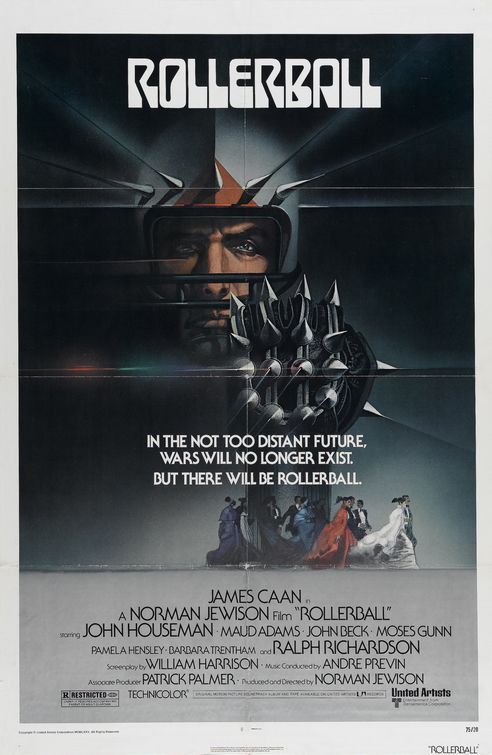
In the not so distant future where no governments or countries exist and corporations control everything a new type of game becomes the rage. It features two teams on roller blades skating around a circular rink while fighting over a silver hand sized ball, which they use to throw into an electronic type of basket and score points. The game features little officiating and can usually cause injury or even death to the players, but one man named Jonathan E. (James Caan) has risen to the top and become a superstar in the sport. Bartholomew (John Houseman) who is the head of the conglomeration doesn’t like this because the idea of the games is to thwart individuality and not promote it. They push Jonathan to retire, but he refuses forcing the games to become even more violent as their way to get rid of him one way or the other, but the more they try to take him down the more he fights back.

The thing I really liked about William Harrison’s script, which is based on a short story of his called ‘Roller Ball Murder’ is how amazingly prophetic it is. Corporations and their rich lobbyists are pulling the strings of the government officials already making them seem as mere puppets and modern day suburbia much like in the movie is really only a tranquilizer  with its comfy lifestyle used to lull everyone into overlooking the many concessions that come with it. The violent games for both the players and fans acts as an escape from their otherwise sterile existence as the outcomes are the only things not already preordained by the corporations and thus giving the players a small sense of control over something.

Unfortunately the film’s set design is not as intuitive as its story and lacks imagination and even seems quite dated. There are no personal computers and the ones that do get shown are quite archaic looking. I have not seen the 2002 version, but this reason alone justifies a remake although the scene where the party guests go outside to play with a ray gun is a keeper.

The game itself isn’t all that interesting and to me came off as a glorified version of roller derby. I thought it should’ve been more graphic and bloody and the film pulls back when it should instead capture the true brutally of the sport. It does get a little more violent as it goes on and I did enjoy the surreal quality of the film’s climatic game where players from both sides end up either killed or severely injured. The segment showing the men preparing for a game by having the Caan character giving pointers to the new players on some of the strategy that is needed helped convey the idea that the sport had a certain technique to it and not simply rollerblading around a rink.

Caan is adequate in the lead, but is upstaged by John Beck as his playing partner as well as Shane Rimmer who plays his coach. It’s great to see John Houseman in his second feature film after his Academy Award winning performance in The Paper Chase, but his close-ups where ill-advised as it made me notice all of his nose hairs and director Norman Jewison should’ve either avoided framing his face from that angle or giving the elderly actor a pair of tweezers to pull them out.

The ending is unsatisfying as it leaves everything on a vague note. We see the fans cheering Jonathan’s moxie, but there is no indication as whether he was able to ultimately stage a revolt, or whether the corporate heads found some other way to get rid of him. In either case I wanted more of a conclusion and the fact that there isn’t any makes it feel like a great concept that wasn’t fully realized.

My Rating: 6 out of 10

Released: June 25, 1975

Runtime: 2Hours 4Minutes

Rated R

Director: Norman Jewison

Studio: United Artists

Available: VHS, DVD, Blu-ray, Amazon Instant Video

The Intruder (1977)

Capture 52

By Richard Winters

My Rating: 4 out of 10

4-Word Review: Terror on the road.

Based on a story by Dean R. Koontz and filmed in France under the title Les Passagers the plot centers on Alex (Jean-Louis Trintignant) who picks up his 11-year-old stepson Marc (Richard Constantini) from school and sets off to drive him across France and into Italy where they are to meet his mother Nicole (Mireille Darc). Along the way they become menaced by a strange man (Bernard Fresson) driving a black van that begins following them. At first Alex thinks nothing of it, but when the van tries driving them off the road they go to the police who prove to be unhelpful, which forces Alex to take things into his own hands in order to save both himself and the boy.

The film starts off well with definite hints to Steven Spielberg’s classic Duel. I enjoyed how initially everything is from Alex’s and Marc’s point-of-view where we do not know the identity of the driver in the black van, which is only seen through the perspective of their rear window that gives the vehicle a creepy presence. The banter between the boy and step father is engaging and the fact that the kid is smart and shows a keen awareness of things and not just there to be cute is great. I also liked the bawdy tune they sing together and the shot of the boy driving the car while the father leans out the passenger side window.

There is an exciting moment where the van tries pushing their car off the highway while they’re on a winding mountaintop road that is well photographed and realistic. The two are subsequently forced to ride the rest of the way in a tattered vehicle that has no windshield and looks almost as beat-up as the automobile in Planes, Trains and Automobiles.

I did not like however that fifteen minutes into the movie we are shown the face of the other driver, which takes away from the intriguing mystery angle that is what made Duel so interesting. The bad guy isn’t frightening and comes off as clumsy and careless, which makes him less threatening. The fact that he does not carry any type of weapon and must resort to grabbing a nearby fire ax in order to attack Trintignant’s character when the two confront each other didn’t make much sense.

Spoiler Alert!

The film’s biggest transgression though is that its twist ending isn’t surprising at all as the mystery man turns out to be the wife’s psycho ex-boyfriend, which is something I had guessed early on and most other viewers probably will too. It also leaves open a tremendous amount of loopholes like why Alex wouldn’t have been made aware of this boyfriend earlier as I’m sure he would’ve been stalking them long before she got remarried and why the boy wouldn’t have guessed that the stranger chasing them was this man as well as most likely he would’ve known about him too. The police investigation, which gets worked in as a sort of side story proves pointless to the plot and the fact that they end up being quite incompetent makes them seem similar to the ‘comic relief’ cops from Last House on the Left, which hurts the tension.

End of Spoiler Alert!

This film has managed to acquire a small cult following and it has good set-up, but it would’ve worked better had it been done solely from the point-of-view of the father and stepson and only revealed the face and identity of the bad guy at the very end.

My Rating: 4 out of 10

Alternate Title: Les Passagers

Released: March 9, 1977

Runtime: 1Hour 36Minutes

Not Rated

Director: Serge Leroy

Studio: Warner Brothers

Available: None at this time.

Losin’ It (1983)

losin it

By Richard Winters

My Rating: 6 out of 10

4-Word Review: Road trip to Tijuana

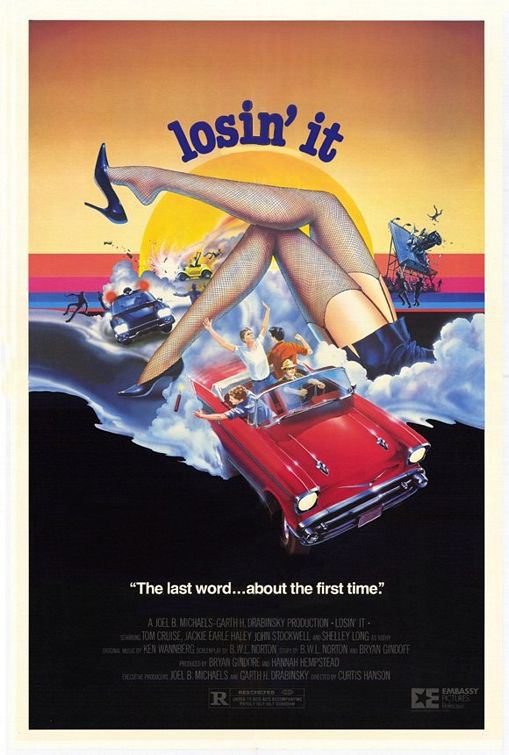
Four classmates (Tom Cruise, Jackie Earle Haley, John Stockwell, and John P. Navin Jr.) load up into a 1957 Red Chevrolet Bel Air to take a trip down to Tijuana where they to hope to lose their virginity to the local prostitutes. Unfortunately they end up getting more than they bargained for as they get harassed by one of the local cops (Henry Darrow) as well as taking on an added passenger by the name of Kathy (Shelley Long) who they meet at a convenience store in the midst of a fight that she is having with her husband and now wants to hitch a ride with them so she can get a quickie divorce.

Although the plot description may sound sleazy this is by far one of the better raunchy teen comedies to come out of the ‘80s. The film was directed by noted horror director Curtis Hanson and written by the prolific Bill L. Norton. The production values are high and although not actually filmed in the real Tijuana it still gives the viewer a realistic sense of the both the street and party scene that is down there. The characters are more multi-dimensional than in the typical teen comedy and the action remains realistic with humor that is amusing without getting overblown.

The film does shift uncomfortably in tone during the second half and features some unpleasant scenes including having one of the boys thrown into a dirty and dangerous Mexican prison while another gets hung up in midair by a crane while being threatened with a blow torch. Initially I didn’t like this shift, but the film still manages to keep things interesting and culminates in a funny car chase back to the border, which due to what the characters have gone through, is more thrilling than in most comedies simply because the viewer is genuinely wrapped up into their plight to get out of there.

Cruise gives an outstanding performance playing completely against type as he is nowhere near his usual cocky self here and instead comes off as shy and awkward and even has the embarrassment of being unable to ‘rise-to-the-occasion’ when alone with one of the women. Haley is quite energetic and funny and Navin as his baby faced kid brother, who’s more sensible than the rest of them despite being the youngest, is a real scene stealer. Darrow, best known for playing Zorro, gets one of his better latter career roles as the corrupt cop.

The film is supposed to take place in 1965 instead of the ‘80s and I wasn’t sure why as what the characters go through could have easily taken place in either decade. The title tune, which gets played both at the beginning and end of the flick, has a very strong ‘80’s sound, which seems jarring and out-of-place in a picture that supposedly has a ‘60’s setting.

My Rating: 6 out of 10

Released: April 22, 1983

Runtime: 1Hour 40Minutes

Rated R

Director: Curtis Hanson

Studio: Embassy Pictures

Available: VHS, DVD

Desperate Characters (1971)

desperate characters

By Richard Winters

My Rating: 6 out of 10

4-Word Review: A marriage without love.

Sophie and Otto (Shirley MacLaine, Kenneth Mars) are stuck in a marriage that has fallen into a real rut. They no longer are able to communicate. Sure they ‘speak’ to each other, but neither one listens or seems to even care. Sophie has had a past affair, which Otto became aware of, but forgiven. The two now try to march on like nothing has happened, but the cracks clearly show even when they both deny it. Sophie looks for some answers from her friends, but finds that their marriages aren’t any better and that there may not be any solution other than just sticking with it.

The film to a degree has a provocative flair and seems almost cutting edge for its day. There is no music and the background sound is made up of the ambience of everyday, big city life. The opening shot consists of the camera slowly zooming into the couple’s New York loft with only the distant sound of children playing, which not only helps the viewer feel very integrated to the city that the characters live, but their quiet isolation as well.

The film also has very little action. The only real moment where things happen is when Otto chases a stray cat through their apartment in order to box it up and take to a vet to test for rabies after its bitten Sophie, which for what it is worth is quite interesting. The rest of the film deals with dialogue, but handled in a more sophisticated way than most as it has a consistent conversational tone that not only makes it more genuine, but something that the viewer must ‘read into’ in order to understand. Frank D. Gilroy’s script, which is based on a novel by Paula Fox, never once ‘tells’ the viewer what to think or feel. Instead we are shown regular people with everyday issues discussing the same things that real people do and it’s all left up to the viewer to interpret what it means, which in many ways I found highly refreshing.

Mars gives an outstanding performance in what was apparently his personal favorite and quite atypical from his other body or work, which mainly consisted of over-the-top comic characterizations. Even more surprisingly is that he gets featured in a nude scene from the back. MacLaine is also exceptional in what many fans consider her best work. She is usually effective with strong characters, but here she’s quietly vulnerable while being featured in a rare nude scene for her as well and her case from the front.

The film’s greatest weakness is that it comes off as rather cold and distant. It would’ve been more revealing had it shown even in flashback when the couple was happy and when or what seemed to happen to turn things for the worse. The film also has the philosophy that there is no alternative to their situation and that being in a ‘bad’ or unhappy marriage is better than being alone as it doesn’t even bother to ever touch upon the benefits of single life or an alternative lifestyle, which in the end makes this film seem old fashioned and dated despite its otherwise Avant-garde approach.

My Rating: 6 out of 10

Released: September 22, 1971

Runtime: 1Hour 27Minutes

Rated R

Director: Frank D. Gilroy

Studio: Paramount

Available: VHS, DVD, Amazon Instant Video, YouTube

Pardon Mon Affaire (1976)

pardon mon affair1

By Richard Winters

My Rating: 7 out of 10

4-Word Review: Married man wants hottie.

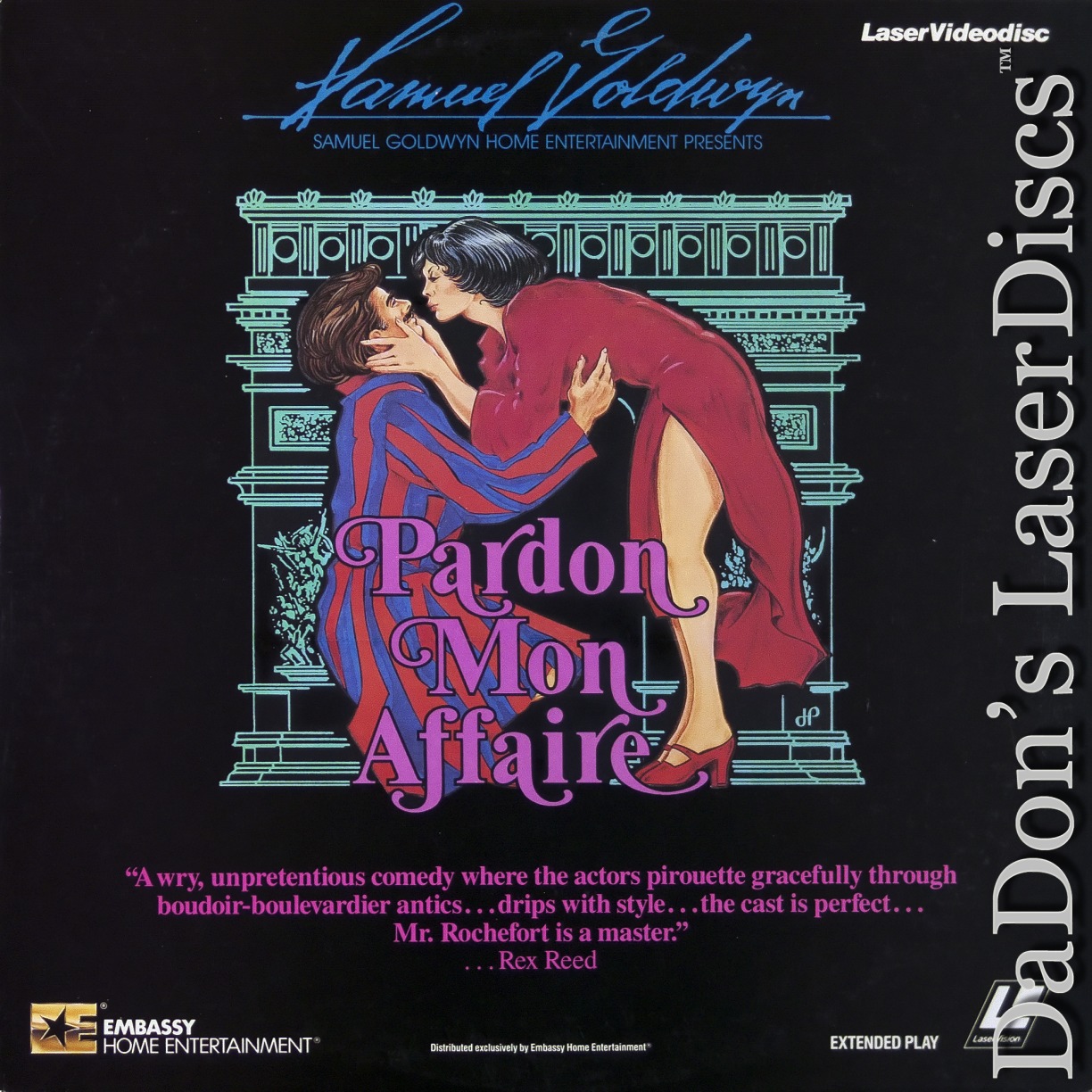
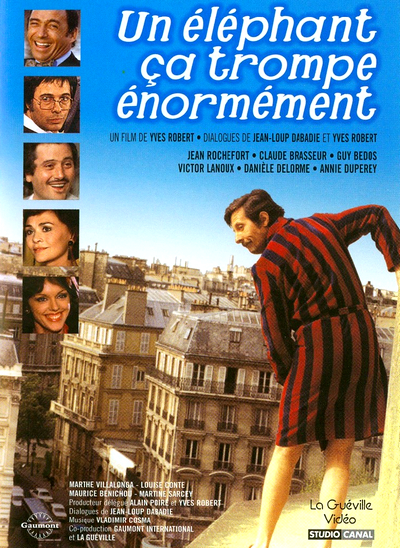
Etienne (Jean Rochefort) is a mild mannered, middle aged man who has lived a practical lifestyle both with his marriage and career and then one day goes absolutely gaga over a beautiful model named Charlotte (Anny Duperey) that he spots by chance in a parking garage. He goes to great, tireless lengths to meet her with no regard to how it is upsetting and even destroying his once quant and secure life.

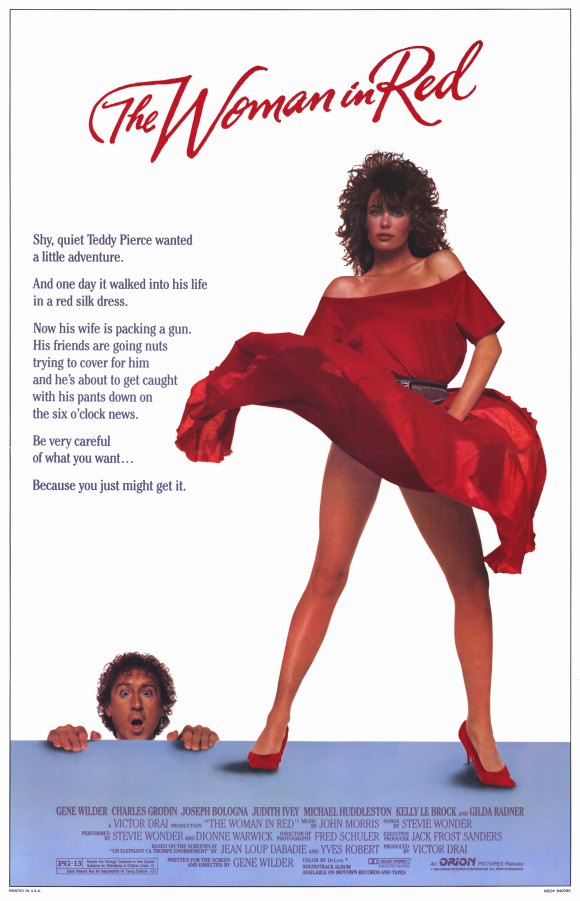
This is the French version of what was later Americanized in The Woman in Red starring Gene Wilder. For the first five minutes the two films are almost identical as the opening scenario plays out in exact same fashion frame-for-frame, but then after that there are some distinct differences with this version being far superior to the remake. The disintegration of Etienne’s friend Bouly’s (Victor Lanoux) marriage is much funnier here as the philandering character gets upset when his wife leaves him we will realize its more because of his inflated, deluded ego thinking that somehow he is such a ‘great’ guy that his wife will tolerate his misgivings and when the harsh reality hits him that she won’t it’s a genuinely amusing meltdown to see. I also liked that the film cuts to a reaction shot of the main character as he observes his friend’s meltdown, which helps tie the scene more into the central plot and something that the Wilder version did not do.

I also liked how this film digs to a deeper level in regards to Etienne’s relationship with his male friends showing how competitive they are at times with each other, which is something that occurs even in the best of friendships, but when it counts they are still there to help their friend out of jam which came off as being very natural and real. The side story dealing with the homely female office worker which is played by Gilda Radner in the remake is also better handled. In the American version like with this one the character mistakenly thinks that Etienne is in love with her and not the model and when he doesn’t show up to their ‘dates’ like she expects she gets quite upset and trashes his car, but here Etienne attributes her outrage to the idea that she is aware that he wants to fool around with the model and thus does these things to defend his wife’s honor, so therefore he does not retaliate when she destroys his property for fear she will then go to his wife and tell her. In the remake this is never explained, which makes the main character’s reluctance to retaliate after his property is damaged seems strange and confusing.

This movie also has a side-story dealing with the daughter’s boyfriend hitting on Etienne’s wife something that only gets slightly touched upon in the remake. Here it gets played out more and the scenes watching this 17-year-old kid clumsily try to come on to this much older woman who has no interest in him are some of the most amusing moments in the movie.

The acting here is far better as well. The Charlotte character seems more like a real person instead of a one-dimensional sex object as LeBrock did. Rochefort is much funnier than Wilder and sports a brown mustache, which makes him seem very Inspector Clouseau-like. The American version, in an apparent attempt to make the protagonist more ‘marketable’ to a mass audience, conforms more to mainstream values by being portrayed as constantly guilt-ridden, but the character here is not shackled with such restraints and the way he recklessly chases after the woman even as it causes him more stress is what makes the movie so funny. It also has some very astute observations about marriage, middle-age, sex and the male animal while the remake is just vapid, silly escapism.

I presume the reason why the nuances of this one didn’t get transferred to the Hollywood version is because the producers felt that American audiences would not be ‘sophisticated’ enough to pick up on them, which is why I tell everyone who considers themselves to be a film lover to be sure to stay abreast of the foreign films that are out there. In most cases they are much more original, creative and observant to the human condition than anything that’s come out of Hollywood and the main reason for this is that they are treated more like an artistic endeavor with the director given full control while here the films are forced to work within a studio driven formula and treated more like a business byproduct made to give a profitable return on their investment and nothing more.

pardon mon affair2

My Rating: 7 out of 10

Released: September 22, 1976

Runtime: 1Hour 45Minutes

Rated PG

Director: Yves Robert

Studio: Gaumont

Available: VHS

The Woman in Red (1984)

woman in red 1

By Richard Winters

My Rating: 5 out of 10

4-Word Review: Lusting after a model.

Teddy (Gene Wilder) seems to have it all. A great wife (Judith Ivey) a good home in the suburbs and stable job, but then one day that all changes when he inexplicably meets Charlotte (Kelly LeBrock) a beautiful model who turns him on so much he can no longer think straight and jeopardizes his marriage in the process. He gets his friends Buddy and Joey (Charles Grodin, Joseph Bologna) to cover for him while he makes any excuse he can to get away and see her. Unfortunately through a misunderstanding the homely Ms. Milner (Gilda Radner) thinks she is the source of Teddy’s affections, so as Teddy tries to get with Charlotte he must also avoid Ms. Milner who is just as relentless.

The film starts off with lots of potential, but is unable to fully deliver. Part of the problem is that it introduces this amusing side-story involving Radner’s character and then abruptly drops it during the second half. Radner makes for a perfect comic foil and her scenes should’ve been played up much more. However, her attempts to get back at Teddy by vandalizing his car is amusing, but you would think that Teddy would want to know why she is so angry at him as he is unaware that he has mistakenly asked her out or at the very least sued her for the damages that she has done and yet the film doesn’t tackle any of this, but realistically should’ve.

Wilder, who also wrote and directed the film, is okay, but it doesn’t take enough advantage of his signature comic rants and high strung persona. Bologna is good as Teddy’s brash, womanizing friend, but I didn’t understand why he got so upset when his wife left him as he had openly fooled around on her with a lot of different women and most men in his situation would rejoice that they were now ‘free’.

The usually reliable Grodin is ineffective and the segment where he pretends to play a blind man that inadvertently tears up a bar is dumb and unfunny. I did however enjoy LeBrock who looks gorgeous throughout.

There are a few amusing moments including Teddy’s attempts at riding a horse despite having no experience, but overall the comedy is spotty. The pacing is poor and the story is disjointed coming off more like a bunch of vignettes strung around a one-joke plot. The only thing that saves it is the ending where Teddy attempts at ‘hiding out’ while standing on the ledge of a tall building that quickly attracts a lot of onlookers who think that his ready to jump, which is the movie’s best moment.

This film is actually a remake of the 1976 classic French film Pardon Mon Affaire, which I will review for next week.

My Rating: 5 out of 10

Released: August 15, 1984

Runtime: 1Hour 27Minutes

Rated PG-13

Director: Gene Wilder

Studio: Orion Pictures

Available: VHS, DVD, Amazon Instant Video, YouTube
The Boys from Brazil (1978)

exorcist

By Richard Winters

My Rating: 4 out of 10

4-Word Review: Mad doctor clones Hitler.

Based on the best-selling novel by Ira Levin the story details an elaborate plan devised by the elusive Josef Mengele (Gregory Peck) who has been hiding out in the jungles of Paraguay and has a secret meeting with several Third Reich war criminals that is overheard by novice Nazi Hunter Barry Kohler (Steven Guttenberg) and relayed to Ezra Lieberman (Laurence Olivier). The plan calls for these war criminals to go out and murder 94 65-year-old men who are living in various parts of the world as Mengele has saved a sample of Hitler’s DNA and impregnated 94 women with it at a Brazilian clinic. These Hitler clones have now grown to adolescence and need to be put in the exact same environment as the real Hitler had been in order to bring out the same personality traits, so it’s important that their fathers die at the same time as Hitler’s real father had. At first Lieberman cannot believe such an outrageous plot, but as the evidence mounts he realizes it is true and he may be unable to stop it.

The film has two great scenes which includes an eye popping death from a steep mountain bridge and a graphic moment where we see in close-up Mengele place the ovum with Hitler’s DNA into the women. Outside of these two moments the film is rather flat and cheesy with certain segments bordering on camp. The plot is intricate enough to keep you involved, but highly implausible and the characters take a long time to realize things that the viewer has already figured out long before.

It is fun seeing Peck playing a bad guy and this was his first villainous role since Duel in the Sun and although he does well in the part the character is so one dimensionally evil that it ultimately makes him boring. Olivier is not effective in the lead and comes off as frail and sickly with certain comical overtones given to the character that don’t work. The final confrontation between he and Peck in which the two roll around on the floor while grappling for a gun looks more pathetic than exciting and apparently the scene had to be reshoot several times because both actors kept breaking out into laughter over the absurdity of it. I did feel though that Guttenberg was perfectly cast as a wide-eyed schmuck that was in way over-his-head.

Spoiler Alert!

My biggest problem with the film though is the ending that turns out to be a big letdown. For one thing it takes place at a remote farmhouse, which seems too similar to a scene in Marathon Man, which came out just two years earlier, had a similar theme and also starred Olivier. It features nine Doberman pinchers with four of them that surround the farm’s owner (played by actor John Dehner) at all times. He uses them for protection as he is convinced someone is out to get him, which could’ve created quite an interesting scenario when Mengele travels to the home to kill him. However, the owner puts the dogs into another room the second Mengele tells him that they make him uncomfortable, which then allows Mengele to shoot the man without any problems, but why have the dogs for protection if you’re just going to put them away the minute some stranger doesn’t like them and if the character is so paranoid why even allow a stranger into your home without at least demanding some form of identification first?

End of Spoiler Alert!

The conclusion is unsatisfying as it leaves open a ton of unanswered questions. Not only is the plot full of loopholes, but it seems like only a springboard to a much more fascinating story, which is trying to hunt down all these Hitler clones that the film fails to realize.

the boys from brazil 1

My Rating: 4 out of 10

Released: October 5, 1978

Runtime: 2Hours 3Minutes

Rated R

Director: Franklin J. Schaffner

Studio: 20th Century Fox

Available: VHS, DVD, Blu-ray, Amazon Instant Video, Netflix Streaming

Wild Beasts (1984)

wild beasts 1

By Richard Winters

My Rating: 3 out of 10

4-Word Review: Animals attack innocent people.

The water of a major metropolitan area becomes contaminated from all the garbage littered along the beaches. The animals of a local zoo drink it and soon go on a rampage. When the zoo’s security system fails the animals get out and start to attack the local citizens. Animal expert Laura Schwartz (Lorraine De Selle) and zookeeper Rupert (John Aldrich) work together to stop the carnage by tracking the animals down and corralling them back to safety.

The film was directed by Franco Prosperi who along with Gualtiero Jacopetti where noted for their quasi shockumentaries of the ‘60’s and ‘70’s that emphasized a lot of violence and nudity and this production works along the same vein. In fact it’s the graphic gore and a camera that lingers on the carnage that helps the film stand out from the rest of the tacky, low budget horror films from the ‘80’s. However, the film also shows a lot of animal cruelty including a mother tiger going into violent convulsions after being put to sleep and rats screaming in pain after being set on fire.

The attacks themselves become quite mechanical and monotonous. The main characters are wooden and seen only in brief intervals, so the viewer never becomes emotionally attached to anyone on screen, which seriously lowers the tension. The film actually only becomes interesting at the end when some children staying at a school drink the water and then become violent towards the adults, which has a nice creepy quality to it and the movie would’ve been better had it chosen this story thread over the other one.

The idea that showing all these discarded heroin needles along the beach and implying that this would be enough to contaminate the city’s water supply is lame and the film’s ‘important’ message about pollution is silly as well. There is also no explanation why none of the adults go crazy like the animals and some of the children do as they would presumably be drinking the same water. The opening sequence shows shots of Seattle where this story supposedly takes place, but the rest of the film was clearly shot in a European city. The production suffers from being convoluted and overblown and lacking any singular vision, which is due in large part to being financed by backers from several different countries.

My Rating: 3 out of 10

Released: February 15, 1984

Runtime: 1Hour 32Minutes

Not Rated

Director: Franco Prosperi

Studio: Shumba International Corporation

Available: VHS, DVD (Region 2)

Compromising Positions (1985)

compromising positions

By Richard Winters

My Rating: 5 out of 10

4-Word Review: Who murdered the dentist?

Bruce Fleckstein (Joe Mantegna) is a successful dentist who puts new meaning to the term ‘bedside manner’ as he flirts with all of his female patients and has affairs with many of them. When he turns up murdered it becomes a question of which of the many suspects did it, which intrigues housewife Judith (Susan Sarandon) and propels her to start her own independent investigation much to the consternation of her husband Bob (Edward Herrmann) who thinks it’s too dangerous. As the clues accumulate so do the advances of police detective David (Raul Julia) that she is working with, which quickly puts her marriage into jeopardy.

The film was produced and directed by Frank Perry who made many influential films during the 60’s and 70’s with his screenwriter wife Eleanor, but after their divorce the quality of his films diminished considerably. The last two that he made were in collaboration with Susan Isaacs with this one based on her novel of the same name. To an extent it works as the mystery angle is realistic enough to be interesting and the dark humor keeps it mildly entertaining.

Sarandon’s presence helps a lot and without her it wouldn’t have worked. Julia plays against type and it’s fun seeing him in more of a subdued type of role. The real scene stealer though is Judith Ivey who has some funny sarcastic lines and should’ve been seen more.

I also really liked how Sarandon’s character remains faithful to her husband despite her conflicts with him and the many advances that she gets from the police detective. Too many Hollywood pictures give the impression that marriage should be one long blissful union and the minute one partner isn’t completely receptive to the needs of the other then that entitles the other to cheat on them. Herrmann’s character is a borderline jerk, but he has legitimate reasons for why he feels the way he does and the movie refreshingly even gives him a moment to vent and explain them. I also thought that Julia’s character comes onto Sarandon much too quickly and the way he barrages into her bedroom while making aggressive advances seemed almost creepy.

The story does have a dated quality. Fleckstein is found to be distributing and printing porn, the kind with consenting adults and not kids, which the film portrays as being a ‘shocking revelation’ even though these days with the proliferation of it all over the net it is nothing but an afterthought to most. I also thought the idea that this guy would have BDSM sex with a lot of married women and even take explicit pictures of them, but still turn around and throw them some lines that he ‘loved’ them and they would all fall for it was ridiculous and unfairly portrayed women as being too easily manipulated and unsophisticated.

The resolution is limp and the film lacks anything that would help make it distinctive or memorable. The humor gets lost by the second half and the Ivey character should’ve been given more screen time and possibly even used as Sarandon’s investigative partner as her caustic take on things are the best thing about it.

My Rating: 5 out of 10

Released: August 30, 1985

Runtime: 1Hour 39Minutes

Rated R

Director: Frank Perry

Studio: Paramount

Available: VHS

The White Dawn (1974)

white dawn 2

By Richard Winters

My Rating: 5 out of 10

4-Word Review: Trapped in the artic.

In 1896 three whalers inadvertently become lost from the rest of their crew and stranded all alone on an artic island. There is Billy (Warren Oates) who is the impulsive and belligerent one of the bunch and Daggett (Timothy Bottoms) who is more quiet and introspective as well as Portagee (Louis Gossett Jr.). After wandering in the snow and cold for many days they finally come upon an Eskimo tribe who takes them in with food and shelter. The men though never seem to fully appreciate what the Eskimos have done for them while at times even exploiting their kindness, which eventually leads to tensions from both sides.

Filmed on-location on Baffin Island in northern Canada it is based on the novel ‘The White Dawn: An Eskimo Saga’ by James Houston who also wrote the screenplay. He lived with the Inuit people during the 50’s and 60 and helped spread their art and culture to the rest of the world. The film though doesn’t seem all that revealing. Much of what happens is rather predictable and with scenes that tend to ramble. There are also other moments that are a bit bizarre like the scene during a celebration where two girls take off their shirts and then lock lips and proceed to blow air into each other’s mouths at an accelerated rate that might’ve been more interesting had it been explained what exactly they were doing and why.

The characters are dull and transparent in Oates’ case genuinely unlikable. The Eskimos lack any individual distinction and most viewers will fail to find themselves emotionally attached to anyone onscreen. The film probably would’ve worked better had it been a smaller tribe and just one person that they had rescued.

There are also a lot of scenes featuring animal deaths and cruelty that may upset some viewers. On the one hand I liked that it kept things real and hunting is certainly a part of their culture especially at that time, but some of it does get graphic. One scene has the group grabbing a goose from different ends and then literally pulling it apart while later on they slaughter some walruses that are peacefully bathing in the sun.

The film’s dark ending is interesting and the time the three attempt to escape from the tribe by stealing one of their boats is also intriguing, but otherwise I was aloof with it most of the way. I admire the attempt of bringing the Eskimo culture to a wider audience and the film really isn’t a bad movie, but it’s not a particularly gripping either.

My Rating: 5 out of 10

Released: July 21, 1974

Runtime: 1Hour 50Minutes

Rated PG

Director: Phillip Kaufman

Studio: Paramount

Available: DVD, Amazon Instant Video