Category Archives: Movies with a rural setting

Zandy’s Bride (1974)

zandy1

By Richard Winters

My Rating: 7 out of 10

4-Word Review: A mail-order bride.

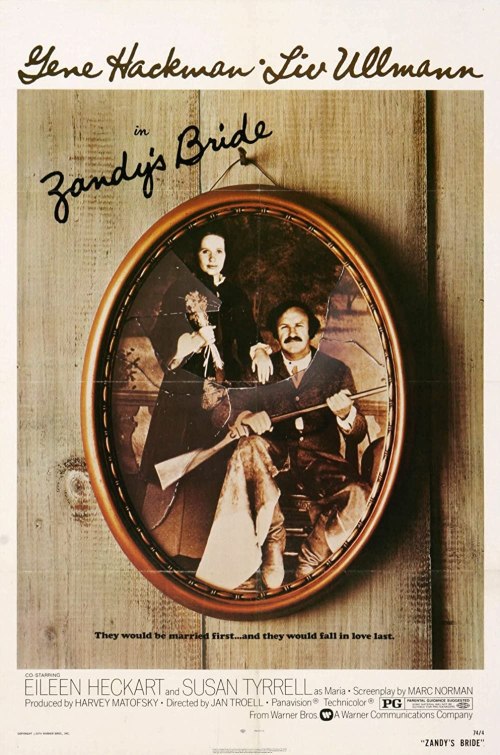
Based on the novel ‘The Stranger’ by Lillian Bos Ross the story centers on Zandy Allan (Gene Hackman) a rancher living in the remote frontier of the American west during the late 1800’s. He finds living alone while maintaining a ranch to be an arduous challenge and thus puts an ad in the newspaper for a bride. The inquiry catches the eye of Hannah (Liv Ullmann), a Swedish woman living outside of Minneapolis. She arrives in Zandy’s hometown, but Zandy is initially not pleased as she’s 32 instead of 25 and he feels she’ll be too old to bear him a son. Begrudgingly he takes her on the long horse ride back to his ranch while informing her there’ll be ‘no turning back’. Their relationship starts out rocky as Zandy expects to be able to order her around and have sex with her at will and is routinely abusive, but complains to his mother (Eileen Heckart) that he cannot understand why she doesn’t like him. Eventually the two, after many years and many fights, form a tenuous bond.

The film was directed by Jan Troell a Swedish director and cinematographer whose films The Emmigrants and The New Land gained international acclaim and won him a contract to direct a Hollywood film. Despite the presence of Ullmann, who had also starred in Troell’s other two films, and having the same frontier setting this one did not do as well either with the critics or the box office and culminated in making Troell’s foray into Hollywood filmmaking, which he said he didn’t like since union rules didn’t allow him to man his own camera like he had always done while making movies in his homeland, a short one.

A lot of the reason for this could be that it starts-off with a brutal rape scene, though not as graphic as in some other films, is still quite unpleasant particularly with Ullmann’s pleading blue-eyes and Hackman callously shouting that he ‘has a right’ as he violently strips off her clothes. While one can appreciate the film’s stark reality, as I’m sure in the remote frontier this sort-of thing could’ve easily happened, it still leaves a bad vibe since Hannah softens to Zandy despite his continually arrogant behavior too quickly. Most women would hate a man forever after that, so for the film to take the approach that love could still blossom is a bit hard to fathom. It should’ve at least taken the entire duration for this to occur instead of entering it in already by the second act.

Hackman is fantastic particularly for taking on such a unlikable role. Most other actors who’ve gained leading man status will rarely do this as they’ll feel it will affect their image, so it’s great to see an actor willing to stretch his range no matter the results. Ullmann is quite good too and it’s almost surreal hearing her speak English when I’ve seen so many films of her speaking in her native tongue. Her character though needed better fleshing-out. With Zandy we can see why he behaves the way he does when he visits his parents (Frank Cady, Eileen Heckart) and witnesses the poor way his father treats his mother, which clearly gives him the mindset that treating women that way is ‘normal’, but we get no such backstory with Hannah. Why did she choose to be a mail-order-bride when she’s so beautiful and you’d expect she’d find many suitors back where she lived? There’s no hint of her family history, or why she ended up in the situation that she does. I also felt she was too assertive too quickly and would’ve liked more of an arc where she starts out shy, but after going through the rigors that she does gains an assertiveness that she didn’t think she initially had.

Spoiler Alert!

The film ends on a hopeful note. Whether one feels this has been earned, or deserved is up to one’s subjective perspective though I was happy to see some redeeming qualities from Zandy as sitting through it watching him behave badly and never learning anything from it would’ve been too unbearable otherwise. I couldn’t help though but wonder during the many times that Zandy abandons her for months on end that one of the men from town wouldn’t have proposed to her in the process. In either case this ends up becoming the first and quite possibly only movie that could be categorized as a love story without any romance.

My Rating: 7 out of 10

Released: May 19, 1974

Runtime: 1 Hour 37 Minutes

Rated PG

Director: Jan Troell

Studio: Warner Brothers

Available: DVD-R (Warner Archive), Amazon Video

Iceman (1984)

iceman

By Richard Winters

My Rating: 8 out of 10

4-Word Review: Brought back to life.

Stanley (Timothy Hutton) is an anthropologist working in the arctic where his team of explorers discover a neanderthal man (John Lone) frozen in the ice from 40,000 yeas ago. The man is taken inside a block of ice to the base where he gets thawed out and resuscitated and then placed inside a simulated environment where he can be studied, but Stanley insists on treating him like a human versus a specimen. He initiates an encounter, which leads to a bonding and Stanley gives him the name of Charlie. Despite the inability to speak the same language, but through the use of a linguistics specialist who is brought in, he begins to learn more about Charlie and how he was on a lonely walk where he was trying to sacrifice himself to the gods in order to save his tribe. When Charlie sees a helicopter flying overhead he races towards it in the belief that it was the mythical god he was looking for called ‘Beedha’ and this motivates him to escape from the lab sending everyone else into a panic in an effort to find him.

Initially, the story does have a ‘roll-your-eyes’ effect with the way Charlie gets revived, which seems too effortless and causes no side effects as he becomes as ‘good-as-new’ even 40,000 years later. Outside of his face he has no body hair, in fact his skin appears baby smooth, even though the presumption would-be that men would’ve had more hair on them than they do now.

Fortunately director Fred Schepisi keeps the proceedings as authentic looking as possible, which helps overlook the story’s implausible leanings. I thought the close-ups the of the red laser cutting through the ice sheet was pretty cool (no pun intended). Filming it on-location in Churchill, Manitoba reflects the arctic climate and far better than having it done on a sound stage. Even the way their personal living quarters where furnished had a nice homey feel though I was confused why there would be a TV present in Lindsay Crouse’s room as I don’t think there’d be any TV station signals in the arctic and thus nothing to watch. (No video stores, satellite dishes, especially in the mid-80’s, or cable either.)

The acting is all-around terrific. Hutton manages to finally lose his boyish appeal that post Ordinary People he had trouble shaking. I liked the curly hair and the grungy post-graduate persona and I enjoyed the short-hair of Lindsay Crouse whose presence does not precipitate a romance, or sexual interest between the two leads. The film intimates that it’s because the Crouse character is supposedly gay, which I didn’t think was needed as it’s quite possible someone could be straight, but still not magically ‘fall-in-love’ with members of the opposite sex even if working closely with them over an extended period of time. The best performance though is that of Lone, who’s Asian, but you’d never have known it and his ability to recreate a troglodyte behavior in a way that seems quite organic is excellent.

The ending created some behind-the-scenes controversy as Schepisi agreed to film the original concept as intended, but then pulled-back on that promise and went ahead and did a different one without informing the studio, which got him canned. I’m not sure what the original ending was like, but the one that gets shown here is perfect as it keeps all the action in the arctic since moving the story off to a different location, or trying to continue the drama of having Charlie enter into modern civilization would’ve been a whole other movie into itself and made the script overly cluttered. Whether the viewer considers Charlie’s ultimate fate to be a happy or sad is up to personal perspective, but for me I found it satisfying.

My Rating: 7 out of 10

Released: April 13, 1984

Runtime: 1 Hour 40 minutes

Rated PG

Director: Fred Schepisi

Studio: Universal

Available: DVD, Blu-ray, Amazon Video, YouTube

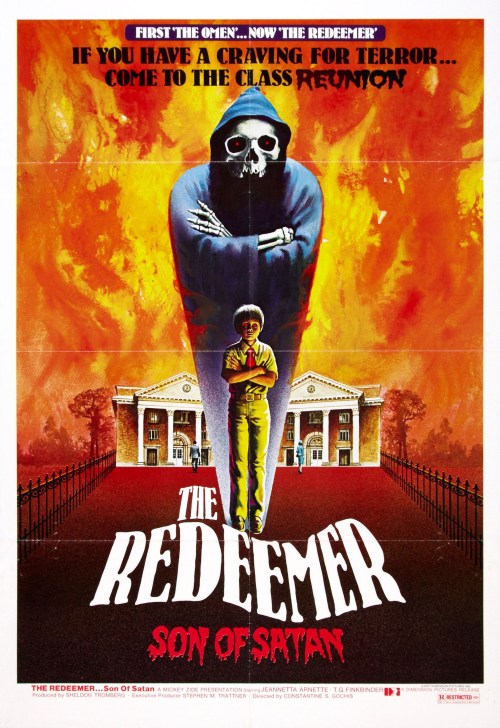
The Redeemer (1978)

redeemer2

By Richard Winters

My Rating: 6 out of 10

4-Word Review: Murdered for their sins.

Six people, who attended the same high school and graduated from the class of 1967, get invited to a reunion. When they arrive they find that the school has been shut down and the building abandoned, but are let in by a kindly janitor. Inside is a room set-up for a party including an array of delicious food and drinks. They partake in the meal, but still wonder why they were the only ones from the class that got invited. They then begin getting killed-off in violent ways and when the remaining survivors try to leave they realize they’ve been trapped inside, but none of them knows who’s committing the killings, or why?

This yet another proto-slasher made long before the release of Halloweenwhich has become the standard. Like with Savage Weekendwhich was reviewed here last October, this movie goes on its own tangents, unlike 80’s slashers, with deviations that make for a fun watch and are filled with a lot of weird twists and imagery.

The entire production was filmed on-location in the town of Staunton, Virginia in the summer of 1976. The Staunton Military Academy was the building used for the setting of the abandoned school. It was loaned out to the producers for one month by Layne Loeffler, who appears briefly near the beginning. He was hoping that by allowing the movie to film there that it would generate enough interest to allow the academy  to open back-up, but the movie didn’t gain as much attention as they thought causing it to eventually be torn down just a few years later.

As with most low budget films it has the expected trappings of an independent feature produced and directed by a bunch of first-timers including a grainy film stock, which detractors of the film used as an excuse to hate it. I felt though that the faded look worked in its favor as it made it seem more like viewing lost footage dug up from years in storage and thus witnessing carnage captured by a hidden camera.

Despite the majority of the cast never doing another movie after this one, which includes both the director and writer, I came away more impressed than disappointed. There are indeed some genuinely scary moments and the killings are surprisingly vivid. In fact they look more realistic than many of the ones done in bigger budgeted movies that came-out later. The pacing is handled much better too and doesn’t have the slow, awkward drama segments like in other horrors. Even the characterizations showing people’s need to impress others while simultaneously putting up facades to hide what they feel others will judge them harshly on, a common occurrence in most high school reunions, is well brought out.

Spoiler Alert!

Many only complaint is the ending that doesn’t offer any final twist. I was fully expecting that the character of the Redeemer, played by T.G. Finkbinder, would ultimately be exposed as a fraud since he did the killings over what he felt were various perceived sins committed by the others and yet the film acts like these brutal murders were somehow justified and the victims ‘deserved’ what they got, which is pretty warped. However, outside of its weird messaging, it’s still an interesting obscurity particularly for slasher film collectors.

Alternate Titles: The Redeemer…Son of Satan!, Class Reunion Massacre

Released: October 25, 1978

Runtime: 1 Hour 24 Minutes

Rated R

Director: Constantine S. Gochis

Studio: Dimension Pictures

Available: Blu-ray, Tubi, Amazon Video

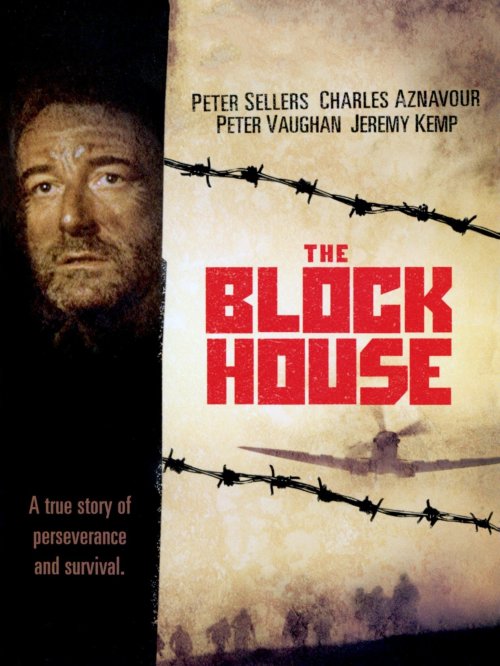
The Blockhouse (1973)

blockhouse2

By Richard Winters

My Rating: 6 out of 10

4-Word Review: There’s no way out.

On D-Day a group of war prisoners on an island that’s run by German soldiers seek shelter from an allied air attack by finding refuge in an underground German bunker, but once inside, they realize to their horror that the shelling outside has blocked-off both the entrance and exit, which essentially traps them in permanently. They are fortunate enough to find a supply room full of enough food and wine to keep them fed for a long time, but as the days wear into weeks and then months and even years they grow tired and despondent about their situation. They try to find ways to break through the cement walls, but their attempts prove futile, which leads all of them into a mental and emotional breakdown.

The film is best known as being one of Peter Seller’s rare dramatic turns where he plays a character that is not funny or colorful. Normally his performances are quite flamboyant and over-the-top and he tends to dominate the spotlight, but here he blends in with the rest of the performers with a rare low-key portrayal that is quite impressive when given how he normally acts. This was yet another project he got involved in during the early 70’s when his career was on the down side and he was desperately taking just about any offer that came along, no matter what the quality, in an effort to bring in money. While some of those movies that he starred in during that period were truly awful (i.e. Where Does it Hurt?) this one, despite its grim theme, is unique and worth checking out particularly for those who enjoy experimental cinema.

The film was directed by Clive Rees, whose only other cinematic directorial effort was When the Wales Came, which had a similar theme about an eccentric man living an isolated existence on an island. While Rees is not as well known as Stanley Kubrick, Sellers insisted in interviews, that he was ‘every bit as good’.  While this statement may seem like an exaggeration I was quite taken aback by the gritty realism and the way the viewer feels just as trapped as the victims. The actors give all-around great performances and you see their character’s ultimate mental decline happen right before your eyes, which is both vivid and gut-wrenching. The story also looks at all aspects of their deterioration where they start to do things they had never done before including conveying certain homo-erotic elements. While none of this gets shown I was still impressed that it at least got lightly touched-on as I feared due to the period and heavy UK censorship, where this film was made, that would be one facet that couldn’t get introduced, but ultimately in a soft way it does.

If you’re looking for an entertaining crowd pleaser than this movie won’t be it. As Sellers rightly stated in his interview it’s meant for serious ‘connoisseur’s of cinema’ only. TV Guide complained that the film in their review ‘goes nowhere’ and it doesn’t reveal a ‘metaphysical reason’ for the character’s predicament, but I really didn’t think one was needed. Sometimes shit just happens and people must learn to adapt to their new harsh reality, or fall apart and in that vein I felt the movie does an excellent job and goes much further into this dark, murky psychological realm than most others would dare.

Spoiler Alert!

The story is based on the 1955 novel of the same name by Jean-Paul Clebert, who also coincidentally lived an isolated existence for many years in an abandoned village. The novel is loosely based on the actual incident that occurred on June 25, 1951 when two German soldiers in Poland were rescued from an underground shelter that they had been trapped in for 6 years. The difference is that in the movie we never see the rescue as it ends with the remaining two survivors stuck in total darkness when the last of their candles goes out. I felt it would’ve worked better had the rescue been shown as well as a better build-up where we would’ve gotten to the know the men better in the prison camp before they were forced underground, which would’ve made their mental declines even more interesting.

My Rating: 6 out of 10

Released: June 1, 1973

Runtime: 1 Hour 33 Minutes

Rated R

Director: Clive Rees

Studio: MGM

Available: DVD, Amazon Video, Tubi

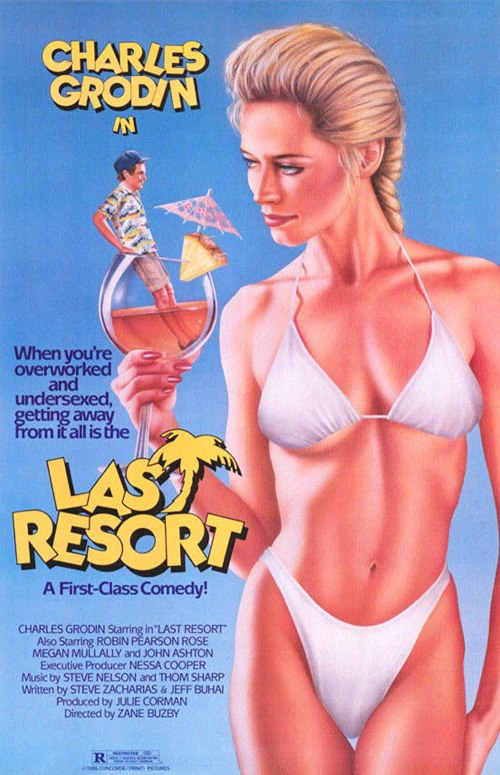
Last Resort (1986)

lastresort1

By Richard Winters

My Rating: 2 out of 10

4-Word Review: Family takes nightmarish vacation.

George (Charles Grodin) is a Chicago salesmen who loses a major client when he calls him fat, which in-turn costs him his job. Feeling the need to get away from the cold Chicago winter and reassess things he decides to take his family to a tropical island for some much needed r-and-r, but finds the place run by crazy people who house everybody in tiny little cabins. The island is also surrounded by a barbed wire fence due to a civil war going on, which soon has George stuck in the middle of it.

This film was directed by Zane Buzby, who appears here as a abusive summer camp counselor and who has since left the directing profession and devoted her life to brining aid to last surviving members of the Holocaust in Eastern Europe, which is a far better way to spend her time than making films like these, which isn’t funny and lacks any type of visual style. Much of the blame for this is the low budget, which makes the movie look cheap right from the start with its stock footage of a Chicago blizzard, the generic music score, and every indoor shot looking quite shadowy as if they weren’t able to afford enough spotlights to give it the properly lighted look. The island setting is bad too looking nothing like an actual island, but instead the brown, sun scorched landscape of a studio backlot.

The story is built around a lot of gags the majority of which aren’t funny, or even slightly original. The concept is the reverse of a National Lampoon’s Family Vacation where Chevy Chase plays the inept father who bungles everything while everyone else around him is normal. Here the father is the normal one and all the other people are nuts, but this doesn’t work as well as the folks behave in such an extremely absurd and obnoxious way that they have no bearing at all to real people and for satire to work it still needs to have some semblance to reality and this thing has none. It’s just insanity for the sake of goofiness with no point to it, which gets old fast.

I’m a big fan of Grodin, but his dry humored, deadpan observations are not put to good use and he ends up getting drowned out by all of the foolishness. I did though at least start to understand why Howard Stern always would accuse him of wearing a wig. To me I never thought he did wear one and Grodin, who disliked Stern immensely as he felt the shock-jock’s humor was too vulgar, would hotly dispute these accusations and even had one segment on his own short-lived talk show during the late 90’s where guests were allowed to tug on his hair just to prove it was natural and wouldn’t come off. However, here for whatever reason it really does appear like some rug plopped onto his skull that doesn’t even fit the dimensions of his head right.

Some of the supporting cast, which consists mainly of yet-to-be-famous, up-and-coming-stars does help a bit. This though does not include Megan Mullally, who plays Grodin’s daughter Jessica, who puts-on a high pitched, squeaky voice that I found really irritating. I did though find Jon Lovitz somewhat amusing as a bartender that can supposedly speak English, but can’t understand anything that Grodin says. Phil Hartman, wearing a blond wig, is a riot as a French gay guy named Jean-Michel who comes-onto Grodin, but my favorite was Mario Van Peebles as a flaming gay man who’s also one the tour guides. Some viewers may complain that his portrayal is too over-the-top and stereotypical, but it’s still campy fun especially at the end when he rips off his wig and suddenly turns into a macho guerrilla soldier freedom fighter.

My Rating: 2 out of 10

Released: May 9, 1986

Runtime: 1 Hour 24 Minutes

Rated R

Director: Zane Buzby

Studio: Concorde Pictures

Available: DVD, Amazon Video, Shout Factory TV, Pluto TV, Tubi

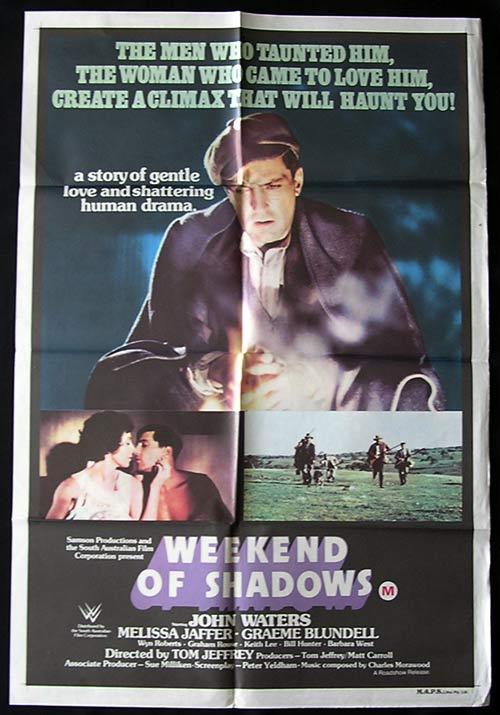
Weekend of Shadows (1978)

weekend1

By Richard Winters

My Rating: 6 out of 10

4-Word Review: Manhunt for murder suspect.

In rural Australia during the 1930’s a farmer’s wife is found murdered inside her home. Suspicions immediately fall on a Polish laborer who had always been deemed ‘peculiar’ by the locals and while there’s no other evidence pointing to his guilt it’s enough to get the men in the community together to form a posse. Sergeant Caxton (Wyn Roberts) hopes that if he can capture the suspect it will help mend his reputation, which had been tarnished while working in Sydney and got him demoted to the small town that both he and his wife (Barbara West) don’t like. Vi (Melissa Jaffer) feels this will be a perfect opportunity for her shy husband, Rabbit (John Waters) to bond with the other men by going along on the hunt, but he resists thinking that the whole thing is just a knee-jerk, mob reaction and wants nothing to do with it, but at the behest of his constantly prodding wife he eventually joins, but learns to regret it.

Out of all of the manhunt movies that are out there this one may be the most unusual in that it doesn’t focus on the suspect at all, in fact you barely ever see him, but instead on the various men in the group. Surprisingly though this manages to be quite effective and I found myself wrapped-up in the various personalities of the participants and how all of them clash with each other at various times. The budget though is quite low, screenwriter Peter Yeldham and director Tom Jeffrey were forced to make many concessions on the script just to get the necessary funding, and while the stark production values will initially be a turn-off, the overall drama, which is based on the novel ‘The Reckoning’ by Hugh Atkinson, will eventually compensate.

I didn’t though like the flashbacks showing Vi and Rabbit’s courtship, which I felt wasn’t necessary and bogged down the tension. The relationship between them is intriguing on a certain level as it shows how wives can have a strong influence over their husbands and get them to do things they wouldn’t otherwise, this same scenario also gets played-out between the constable and his wife, but the scenes showing their dating period offers no further insights and no effort is made to make the actors appear younger even though the courtship had been many years prior.

Spoiler Alert!

While the film was a hit with the critics it sank at the box office recouping only $61,000 of the $495,000 that had been put into it, which soured Jeffrey from directing movies and he helmed only one other, The Last of the Knucklemenafter this one. Ironically Hugh Atkinson was quite impressed with the finished product, which was odd since most of the time author’s of the book which the movie is based are usually not happy with the director’s interpretation of their work, but Atkinon felt Jeffrey ‘got it’ particularly with the ending, which he stated represented the crucifixion. Personally I didn’t see this connection, and neither did Jeffrey, who felt like I did that the story was more about how group dynamics can get out of hand, but Atkinson insisted the crucifixion element was the centerpiece. The ending will be a surprise to many and leaves open many questions, but what you ultimately make of it will be up to your own personal perspective.

My Rating: 6 out of 10

Released: April 12, 1978

Runtime: 1 Hour 25 Minutes

Not Rated

Director: Tom Jeffrey

Studio: The South Australian Film Commission

Available: VHS

The Chant of Jimmie Blacksmith (1978)

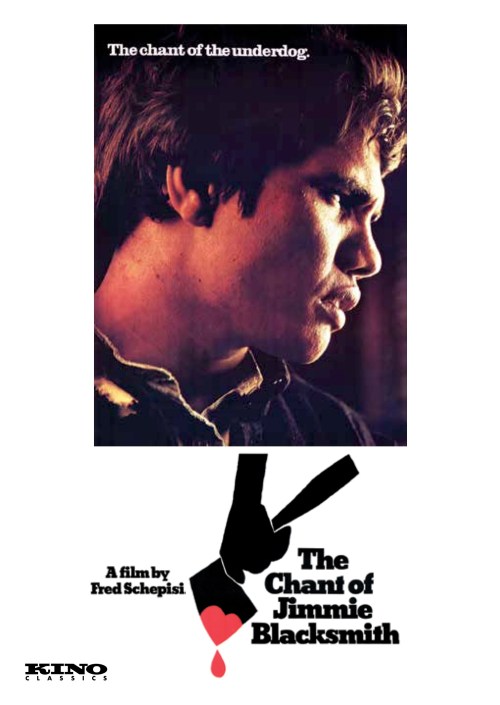
chant1

By Richard Winters

My Rating: 9 out of 10

4-Word Review: Aborigine driven to murder.

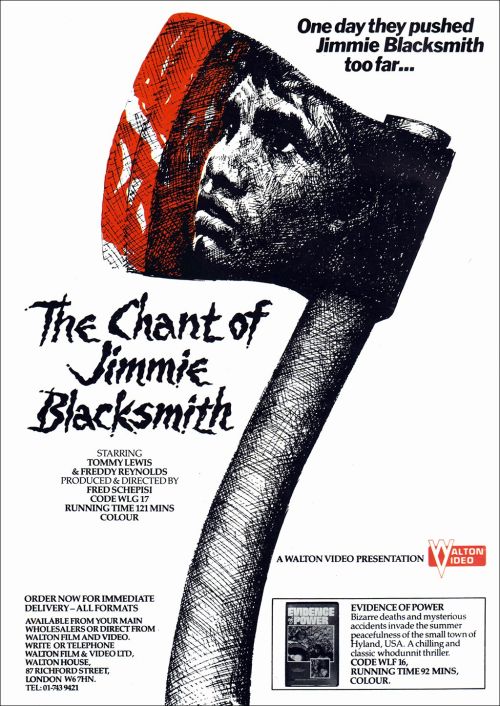
Jimmy Blacksmith (Tommy Lewis) is an aborigine living in Australia during the turn of the century while being raised by the Reverend Neville (Jack Thompson) and his wife Martha (Julie Dawson) as his foster parents. Once he reaches adulthood he goes out into the world looking for a job, but finds racism at every turn, which affects his ability to make an honest living as he’s continually cheated out of wages by his white employers. While doing work for the Newby family he meets Gilda (Angela Punch McGregor) a white woman whom he marries after he thinks he got her pregnant only to later learn that the child was not his. Once the baby is born the Newby’s try to convince Gilda to leave Jimmy and refuse to pay him his salary or provisions for the work that he’s done. Furious at his mistreatment Jimmy enlists the help of his uncle Tabidghi (Steve Dodd) to threaten the Newby women with axes while the Newby men are away in hopes that this will scare them enough to pay Jimmy what he’s owed, but instead things get quickly out-of-control leading to the brutal slaughter of the women and forcing Jimmy and his family to go on the run.

The film is based on the 1972 novel of the same name by Thomas Keneally, which in turn was inspired by the life of Jimmy Governor an Indigenous Australian who was involved in the killings of nine people that precipitated him going on the run for 14-weeks and created one of the largest manhunts in Australian history. While the film did well internationally and was highly acclaimed it was received poorly at the box office in its native country where films dealing with Australia’s troubled history are generally avoided by the public causing director Fred Schepisi to lose his entire investment of the $250,000 that he put into the production.

The film though on its own terms is excellent particularly with its revisionist history approach where the gloss and romanticism of the past get stripped away leaving the viewer with a stark sense of the desperation and cruelty that existed back then. The terrific acting also helps including Lewis, who at the time was working as a bricklayer before being spotted by Schepisi’s wife at the Melbourne airport while he walked by her and this lead to him being given the starring role. Ray Barrett, as a corrupt constable and Punch McGregor, whose lost and forlorn facial expressions allow you to perfectly read her character without much dialogue being needed, are stand-outs as well. My favorite part though, or what resonated with me long afterwards, were the scenes filmed inside the Bundarra Dorrigo State Forest in New South Wales during the manhunt where the unique foliage and large boulders give off an almost surreal vibe.

Some of the issues that I had with the movie, which overall is quite good, centered mainly around its music. For the most part the score is subtle and nonobtrusive, but during the murder sequence it gets loud and obnoxious like it’s warning us something bad is happening, which we really don’t need since we can easily see this with our own eyes. The killings are recreated in a very vivid way and quiet horrifying, so the heavy-handed music hurts the graphic moment instead of accentuating it like it was intended. I also noticed while researching the real Jimmy Governor that he had a beard especially in the photo of him after his capture and yet here Jimmy has no beard even after being on the run, which seemed implausible.

The fact that we have a main character who commits several heinous acts, but we still emotionally side with him is what helps this movie stand-out from Hollywood films that feel compelled to makes protagonists likable to the point that they sanitize history. Here we’re shown that the ‘good-guy’ can do, even if they feel it’s justified, some ugly things and in the real-world the line between right and wrong can sometimes be merged and subjective. This is a message that Australian movies do a great job of conveying while Hollywood, in their zest to create ‘audience pleasers’ tend to modify the facts to conform to what they feel are the accepted pre-conceived narrative/tastes of the audience they’re trying to attract, which ends up creating a weaker product that doesn’t reflect reality.

chant2

My Rating: 9 out of 10

Released: June 22, 1978

Runtime: 1 Hour 48 Minutes

Rated R

Director: Fred Schepisi

Studio: Hoyts Distribution

Available: DVD, Blu-ray, Amazon Video, Tubi

Continental Divide (1981)

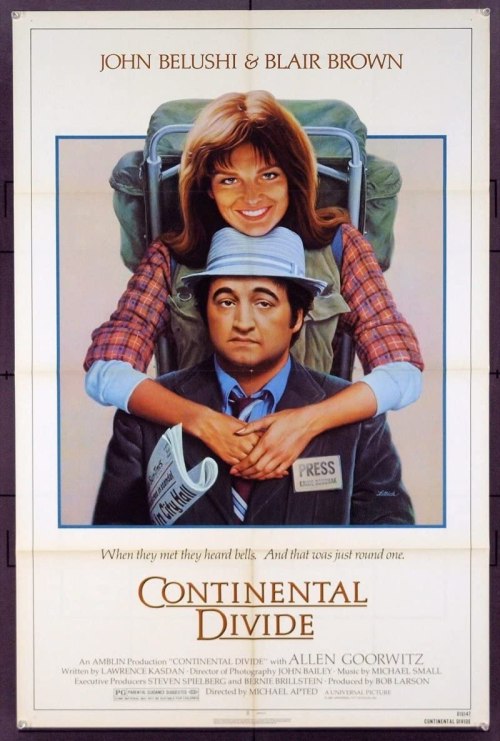
continental1

By Richard Winters

My Rating: 2 out of 10

4-Word Review: Reporter falls for naturalist.

Ernie Souchack (John Belushi) is a newspaper reporter for the Chicago Sun-Times who routinely covers the criminal activity of the local mob, but when his reporting gets a little too close to the action the mob boss (Val Avery) has Ernie beaten-up by a couple of corrupt cops. Howard (Allen Garfield), Ernie’s editor, decides to send him to Colorado for his own protection where he’s assigned to do an interview with the eccentric outdoor enthusiast Nell (Blair Brown). Nell, who spends her days researching eagles, lives alone in a tiny cabin high-up in the Rockies and normally does not take a liking to any reporters. Ernie though moves into her place for 2-weeks and while their initial reactions to one another is frosty they eventually end-up in a romantic relationship.

Hard to imagine that Lawrence Kasdan, who has written and directed so many great movies in his career (Body Heat, The Big Chill), was the screenwriter for this one, but this clearly isn’t his best work. The story is obvious and the set-up too forced. Nothing is worse than watching a movie where you know exactly how it’s going to end right from the start. Part of the problem is that Brown’s character is not played-up enough and she’s nowhere near as feisty as she billed as being. I found it unnerving too that she’d let a strange man burst into her cabin out of nowhere and sleep inside her place in the same room with her without any real protection to stop him from getting frisky if he wanted to. That wooden stick she used wasn’t going to help her especially if he attacked her while she was asleep. For all she knew this guy could’ve been an escaped killer, so what was going to prevent him from assaulting her in the middle of the night?

The main issue though is that these two had absolutely nothing in common, so the odds that a relationship could ever actually form between them is virtually nil. I know that there’s that age-old adage ‘opposites attract’, but there still needs to be a few things that the two have in common, despite the other differences, for that to work. The story’s logic is that spending 2-weeks with someone will be enough to create that romantic feeling, but if that were the case then every teen would automatically fall for their fellow campers each year during summer camp.

I could understand from Belshi’s perspective how Brown would attract him sexually, but what this tubby, out-shape, smoker offered her to make her go so ga-ga over him, I didn’t see. A far more believable romantic partner for her was Max Birnbaum (Tony Ganios) who is a muscular former NFL player who dropped out of society and lived as a hermit in the wilderness. The two share a couple of trysts, but then he conveniently disappears even though he gave the story some potential dramatic conflict and should’ve stayed.

Some people like this movie because it gives you a chance to see Belushi in a wider acting range, but he’s not very funny and doesn’t have anything to say that is either witty or clever. Having the second half of the film shift back to Chicago where Brown comes to visit might’ve been interesting had her character been better defined and we could see her difficulties in adjusting, but since her eccentricities never gets played-up enough these scenes add little.

Spoiler Alert!

I’ll agree with Leonard Maltin in his review where he stated that Kasdan clearly couldn’t come up with a finish and that’s the truth. Having the two go through a quickie, makeshift wedding only to then return to their separate ways and continue to live far apart made no sense and didn’t really ‘resolve’ anything. What’s the use of getting married if you’re never going to see the other person? The script needed more fleshing-out and seems like a broad outline in desperate need of character development and a more creative scenario.

My Rating: 2 out of 10

Release: September 18, 1981

Runtime: 1 Hour 43 Minutes

Rated PG

Director: Michael Apted

Studio: Universal Pictures

Available: DVD, Blu-ray, Amazon Video, YouTube

The Chain Reaction (1980)

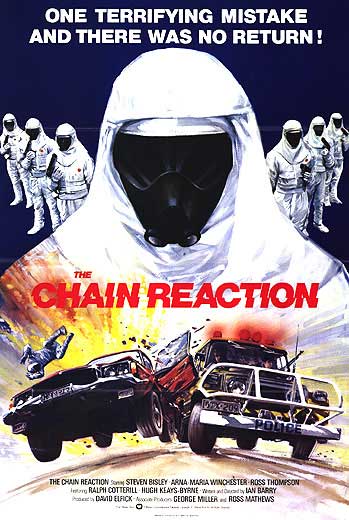
chain1

By Richard Winters

My Rating: 7 out of 10

4-Word Review: Nuclear leak contaminates water.

A nuclear waste site in rural Australia becomes affected by an earthquake, which causes a leak that could contaminate the ground water for hundreds of miles. Heinrich (Ross Thompson), an engineer at the facility who was contaminated by the accident and has only 3-days to live, feels it’s his duty to warn others about what happened, but the company wants the matter to kept a secret. Heinrich manages to escape from the lab, but gets into an accident during a rainstorm on a lonely country road. It is here that he’s rescued by Larry (Steve Bisley) and his wife Carmel (Arna Maria Winchester) who live nearby and take him to their isolated home. Since Carmel has a nursing background she tries to take care of Heinrich at their house even though he now suffers from amnesia and cannot remember anything past 1957. The company though has already sent out a search party looking for him and proceed to terrorize all three once they find them.

The film is a slickly shot sci-fi epic that in many ways seems similar to Mad Maxand in fact both films shared many of the same crew members and this even has a cameo by Mel Gibson who appears briefly as a bearded auto mechanic. The camera captures things in a vivid way and the sharp editing keeps the story moving at a fast pace.

While the plot gets smartly handled and I did find the two main characters to be a bit out-of-place particularly Larry whose outfits and hairstyle look almost campy. The two also don’t have an every day quality about them. Thrillers like these are more exciting when the hero is just a regular person with no special skills and yet still forced to beat insurmountable odds, which is unlike Larry who has expert driving skills and owns a trendy sports car with a souped-up engine.

The way the couple rescue the victim, who they don’t know, by taking him back to their place instead of to a hospital was odd too. Carmel has nursing experience, but not the medicines or equipment that you’d find in a medical facility. They also seem unusually trusting by allowing the man to sleep in one of their bedrooms while they sleep in an adjacent one, but don’t bother to lock their door with the wife lying openly nude for the stranger to just walk-in and attack, or gawk at since there’s a window in the hallway to the room, without any restraint.

The film is noted for its car chases, but they only make up a small fraction of the runtime. One occurs for a few minutes during the second act and then there’s another one at the very end. Both are quite exciting and had me sitting on the edge of my seat with the camera showing things from the driver’s point-of-view and many times through the cracked glass of the windshield making you feel like you’re in the car as it happens. However, I was disappointed that they’re weren’t more of them and both chases take place on the same road and essentially go through the same stunts both times.

Spoiler Alert!

The wrap-up is a bit too quick. For such a nifty, well designed and well crafter set-up I was expecting things to get played-out further. There is though the irony of having a helicopter appear with a news crew that captures the chase when it’s over with the idea that now that the news media is on top of it the truth will get out and everything will be resolved. This though is a far cry from the way things are here in this day-and-age where the media is not trusted by many and having them report on something, even a big story such as this, could only make things worse instead of better.

My Rating: 7 out of 10

Released: September 25, 1980

Runtime: 1 Hour 32 Minutes

Not Rated

Director: Ian Barry

Studio: Palm Beach Pictures

Available: DVD (Region 0)

The Moonshine War (1970)

moonshine1

By Richard Winters

My Rating: 4 out of 10

4-Word Review: Battle over illegal distillery.

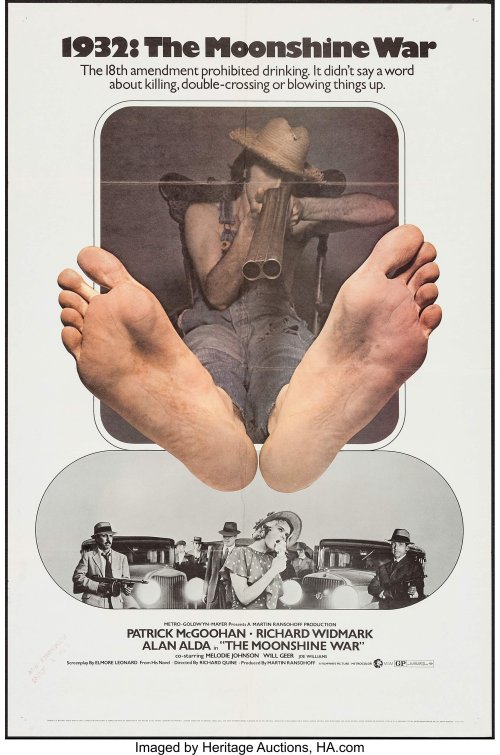
John (Alan Alda), who goes by the nickname of Son, and Frank (Patrick McGoohan) were buddies during the war, but now Son has started up a profitable moonshine business while Frank has become a government agent in charge of arresting those that run illegal distilleries. Frank though is also corrupt and willing to look the other way as long as Son gives him a take of the profits, which Son refuses to do. This forces Frank to bring in Emmett (Richard Widmark) and Dual (Lee Hazlewood) who have violent ways of getting what they want, but when Son still refuses it turns into a shootout with the rest of the town sitting on the sidelines and viewing it as spectators.

The film is based on the novel of the same name written by Elmore Leonard who also penned the script, but Richard Quine’s poor direction impedes the story from achieving its full potential. There’s only a couple of interesting bits one of which takes place inside a café where Dual forces a young couple, played by Claude Johnson and a young Teri Garr who sports a brunette wig, to strip and run around naked, but outside of this there’s not much that’s unique. The editing is choppy as the action jumps from the middle of one scene to another with no set-up in-between. The atmosphere, which is supposed to be the 1920’s does not seem authentic, and the homes, which appear more like shacks, look like they were built in an unimaginative way on a studio backlot. The setting is Kentucky but filmed in Stockton, California where the dry, sandy landscape doesn’t look anything like the Bluegrass state.

I’ll give some high marks to the casting, McGoohan is fun as the agent especially as he tries to speak in an odd sounding American accent, but when Widmark comes along he completely upstages him, which is a big problem. There’s so many offbeat characters within the bad guy clan that putting them all together ends up hurting their potential since Widmark steals it away from all of them. I did like Hazelwood, who’s better known as Nancy Sinatra’s singing partner, in a rare acting bit where he’s genuinely creepy, but not used enough to make the lasting impression that it should’ve. The same goes for Suzanne Zenor, making her film debut, who’s quite delightful as the ditzy blonde, (she played the original Chrissy Snow in the first pilot for ‘Three’s a Company’), but needed to be in more scenes to make her presence truly worth it. Alan Alda is also problematic as his character isn’t seen enough to justify having the viewer root for him and things would’ve worked better had it simply been McGoohan versus Widmark.

The ending is amusing seeing the whole town sitting on the riverbank observing the shootout as if it were some sort of sporting event and the explosive finale, which comes as a bit of surprise, isn’t bad either, but the heavy-handed direction really sinks it. In better hands it might’ve worked better, but ultimately comes-off as a head-scratching misfire that is not one of the author’s best work.

My Rating: 4 out of 10

Released: July 5, 1970

Runtime: 1 Hour 40 Minutes

Rated GP

Director: Richard Quine

Studio: MGM

Available: DVD-R (Warner Archive)